
The following diary segments are from an 1874 diary kept by Roland Henry Woolf (1850-1914) who indicated on the inside cover that he was from Eldorado, Fayette county, Iowa. His parents were Henry Woolf (1824-1919) and Amanda Pitcher (1828-1877) who are buried in West Union, Fayette county, Iowa. In the 1860 US Census the Woolf family was enumerated in Jacksonville, Chickasaw county, Iowa. Ten years before that, they were enumerated in Union, Branch county, Michigan where Roland was born.
From Roland’s diary we learn that he was working as a traveling salesman throughout most of 1874, selling crockery. He spend the first two months of the year on a trip to the East coast and then to Florida—a trip that seems to have been part business, part pleasure. By the end of February he has returned to the upper midwest where he resumes his traveling salesman duties. I have only transcribed the first part of the diary describing his travels to the east coast, to Florida, and then his return to Chicago by way of New Orleans. The remainder of the entries pertain solely to sales.

Transcription

9 January 1874—Made arrangements with John Tyrrell of Burley & Tyrrell for 1874. Also called on Biggs Spencer & Co. and partly made arrangements with them for 1874.
Saturday, January 10, 1874—Cincinnati, St. James Hotel. Called on Tempest, Brockmann, 1 Richmond Street. Manufacturers of WG [white granite] & CC [Cincinnati canners] ware. Called on Frederick Dallas, Manufacturer of WG CC yellow ware, Hamilton Road. 2
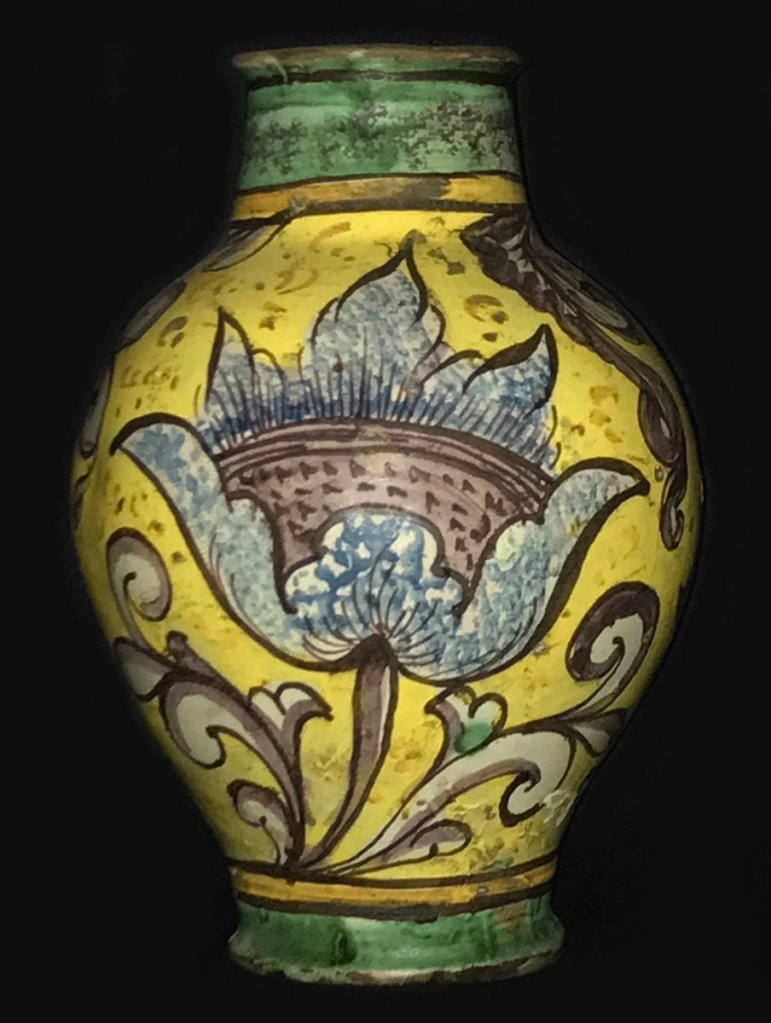
1 The Tempest, Brockmann & Co. was a pottery business established in Cincinnati in 1862 during the American Civil War. Christian E. Brockmann arrived in Cincinnati from Germany in 1848 and started the pottery on Richmond Street in the West End. Their firm was the first to produce commercial whiteware in the Ohio Valley.
2 Frederick Dallas, a native of Scotland, was the founder of the Hamilton Road Pottery in Cincinnati. He came to the United States in 1838 and established his pottery in 1856. Dallas claimed to be the first party in Cincinnati to manufacture a kiln of white granite and C.C. ware. The first definite evidence of this is an advertisement in the 1869 Williams Directory. By 1875, the year after this diary, Dall was no longer producing Rockingham and yellow war—only white granite, C. C. ware, and Parian marble ware, employing 100 hands with a capacity of $100,000 per annum.
Sunday, 11—St. James Hotel. Went to Exposition Building. Also east and west end of city. Also listened to a descriptive sermon in evening at 1st Presbyterian Church on 4th Street by W. F. Johnson, 12 years missionary to India.
Monday, 12—Made arrangements with Frederick Dallas to sell goods on commission in Iowa, Wisconsin, & Minnesota. Also took samples. Hotel expenses St. James Cincinnati from Saturday noon, $8.50. Ticket Cincinnati to Parkersburg, Washington, Baltimore, & Philadelphia on a Pullman Sleeper $10.50
Tuesday, January 13, 1874—…after we leave Grafton, follow up the Valley of Cheat River nearly to top of Allegheny Mountains, Grandest scenery in the world. Railroad runs 9 miles top of mountains. Down east side 17 miles, grade averages 122 feet to mile. Then down Potomac River to south side of Harper’s Ferry, cross Potomac, iron bridge, “Point of Rocks”, down north side to Washington.
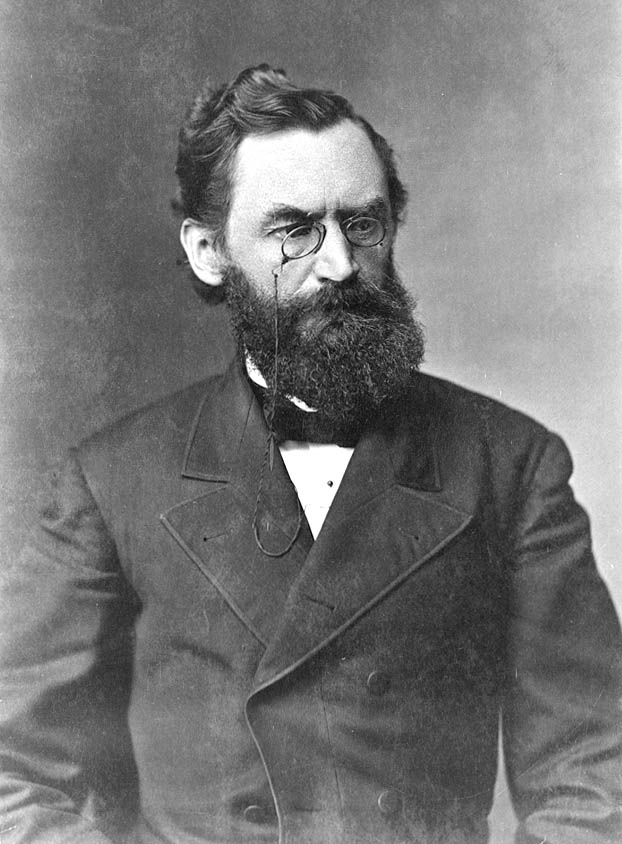
Wednesday 14th—National Hotel $4 Washington City, D. C. Pennsylvania Ave. “Willard’s” Senate chamber speech by [Carl] Schurz of Missouri on Finances & against inflation of the currency. Visited Naval Academy & Capitol grounds. Ford’s Theatre in evening, German actors Janauschek in Shakespeare’s Henry VIII. Hotel expenses National $6.30

Thursday 15th—Passed through Baltimore. Continental Hotel in Philadelphia, Pa., corner of Chestnut, $4 per day. Philadelphia to New York. Hotel Continental $3.20.

Friday, January 16, 1874—Sturtevant House, Broadway, New York. $4 per day. Went to Central Park. Took a Central Park car from Sturtevant House north on Broadway & 7th Avenue. A. T. Stewart’s corner Broadway & 10th. J. Vogt & Co., Park Place. Wallack’s Theatre, corner 13th & Broadway. Lester Wallack in “Man of Honor.” 3 [ ] in Trinity Church corner of Broadway and Wall. Broadway runs north and south…
3 John Johnstone Wallack (1820-1888) was an American actor-manager. He used the stage name John Lester until 1858 when he first acted under the name of Lester Wallack. He was the manager of the second Wallack’s Theater from 1861 until 1882.
Saturday 17—Hotel expenses Sturtevant $13.00 Ticket from New York to Jacksonville, Florida [on the [Atlantic & Coach Line $35.50.
Monday, January 19, 1874—Weldon, North Carolina. Passing through turpentine distilleries south of Weldon and rosin factories. Also through the swamps of N. Carolina and moss region. The nNegroes pull it from the trees and put in the water for 6 months, then it turns [into[ Black Moss. Also passed through cotton plantation north of Florence, South Carolina. Monday afternoon, Charleston, S. C.
Tuesday. 20—Savannah, Ga. Situated at outlet of Savannah river. Also a port of entry. W. Gibbs & Co., importer of Guano from Phoenix Islands in the South Pacific ocean. It is a mixture of bones, shells, &c. Savannah is a city of 26,000. Stopped at Pulaski House. $4 per day. Savannah exports cotton in large quantities to Liverpool. Thermometer 60 degrees.

Wednesday, 21—Grand National Hotel, Bay Street, Jacksonville, Florida. The G. National is the largest hotel in the city. $4 per day. On St. John’s River. Jacksonville population 30,000. Port of entry.
Thursday, January 22, 1874—Took a drive in the afternoon east on the shell [road]. Went three miles and saw the former residence of Tallary [?]. Made arrangements with Mrs. Mary Barse, Duval Street near ocean for two weeks board at $1260 per week. Met Mr. & Mrs. Van Wick’s of Chicago.
Friday 23—at Jacksonville. Thermometer 80 degree. Took a stroll down town. Ladies promenading the street wearing summer costumes, hats, lawn dresses, carrying fans and parasols. Gentlemen wearing straw hats and carrying umbrellas, also linen coats.
Saturday 24—Started at 9 a.m. in a two [ ] scull for South Point, 5 miles from Jacksonville and returned at 12 noon. Mr. Vanwyck mentioned Marietta, Georgia, 20 miles from Chattanooga as a favorite resort of consumptioners. It is 1200 above sea level.
Sunday, January 25, 1874—Attended 1st Methodist Episcopal Church in morning on Duval Street. The Methodists have two white churches, one a Negro one. Also two colored churches. Attended Sunday School of 1st. M. E. in afternoon. Attended Baptist Church in pm. Thermometer 50 degrees.
Monday 26th—Maj. Samuel Barse, Duval Street near ocean. Mr. Gibbs, manufacturer of stoves. Albany, New York. Mr. & Mrs. Gibbs boarding with Mrs. S. Barse. Mr. & Mrs. Searl, importer Japanese goods. Mr. & Mrs. [George W.] Markens, wholesale grocer, and Mrs. and Mrs. Van Wyke.
Tuesday 27—Trip on the Clifton to “Florida Winter Home,” then up the Arlington River. Water oak—shade tree of Jacksonville. Also Oleander & Palmetto. White Pine. Bought some pineapples & bananas from a vessel from West Indies.
Wednesday, January 28, 1874—At apartments on Duval Street. Saw Sir St. George Gore—a baron from England on a hunting expedition up Indian River. Income $250,000 per annum. 4
4 Sir St. George Gore (1811-1878) was a wealthy Irish nobleman from County Donegal who came frequently to the United States to hunt and fish. His favorite animals to hunt were the American bison and he claimed to have personally killed 2,000 of them, and almost as many elk. Gore’s hunting expeditions were legendary and drew loud protests from US officials who claimed he was killing game that the Indians needed to survive.
Also saw F[rancis] E[lias] Spinner, Treasurer of the US. 5
5 “On the recommendation of Secretary of the Treasury Salmon P. Chase, Francis Elias Spinner was appointed by President Lincoln as Treasurer of the United States and served from March 16, 1861, until his resignation on July 1, 1875. Within 60 days of his assuming office, the expenditures of the federal government increased dramatically due to the Civil War. He was the first to suggest the employment of women in government offices. During the Civil War, many of the clerks of the Treasury Department joined the army, and Spinner suggested to Secretary Chase the advisability of employing women. After much persuasion, his suggestion was taken up, and he carried it into effect successfully, though not without much opposition. The women were first employed to count money, and later took up various clerical duties. He eventually hired over 100 women, paid them well, and retained them after the war was over. Spinner’s signature on an 1862 issue United States Note. He signed the different series of paper money in a singular handwriting, which he cultivated in order to prevent counterfeiting. His signature on the “greenbacks” of the United States was the most familiar autograph in the country.”
Thursday 29—At apartments on Duval Street, “Parepa Rosa“, the songstress died the 24th. Boarded a schooner from Nassau, Braham Islands and bought pineapples & bananas.
Friday 30—At apartments on Duval Street. Met Mr. and Mrs. Dickinson from Chicago. “Live oak” a tree that remains green all the time. David Livingston, the African explorer. died June 1873. Saw dispatch in NY Herald of 27th. Took a stroll up St. Johns. Over to Brooklyn with J. N. Searl. importer Japanese goods.
Saturday, January 31, 1874—Mr. Searl gave me a Bamboo watch chain made by the Japanese from bamboo reed, each link separate. Met M. Fullam and family from Chicago—a lumber merchant 12th Street. Call on Mr. White, McCormick Block, Mrs. Van Wyck’s brother-in-law.
Sunday, February 1—Attended church 1st Methodist South 11 a.m. Also Presbyterian in evening.
Monday, 2—Mr. and Mrs. Van Wyck, Mr. & Mrs. Dickinson, Mr. & Mrs. Gibbs, Miss Lewis & R. H. W. took a 6 seat scull and went up St. Johns [river] to Brooklyn and across the river. Recrossed river one mile in 10 minutes. Temperature 68 degrees.
Tuesday, February 3, 1874—Apartments on Duval Street. Mr. and Mrs. Van Wyck, Mr. & Mrs. Gibbs, left for Mellonville, 210 miles on “Star Light.” Mr. White, Mrs. Van Wyck’s brother-in-law, McCormick’s Block. Call on him.
Wednesday, 4—Ticket to Polatka and return.
Thursday, 5—Paid Mrs. Barse 2 1/4 weeks board $27. Left cash at D. G Ambler Bank on Houghton $100. Ticket Jacksonville to New Orleans via Cedar Keyes.
Friday, February 6, 1874—Gainsville 68 miles from Cedar Keyes. The country between Baldwin & Cedar Keyes is a low flat country. Sandy & covered with yellow pines. Principal export, cotton, turpentine & rosin. Col. Sturgeon, U. S. A.
Saturday, 7—Cedar Keyes, Florida. Made one of a party to visit [J. Eberhard] Faber’s Cedar Mills. Met Mrs. Com[modore Foxhall Alexander] Parker, USN. Also Mr. Jabez Sparks [1819-1884] and daughter [Julia Frances Sparks (1847-1912)—the future wife of Hiram Parker (1841-1918], Pottsville, Pennsylvania.
Sunday, 8—Left Cedar Keyes on Emily for the Wm. P. Clyde, 9 miles out with Ex-Gov. [Samuel T.] Day of Florida, Dr., wife [Celeta Cook Weeks], son and two daughters. All for Austin, Texas. 6
6 Ex-Governer Samuel T. Day moved to Caldwell county, Texas, and died there on 26 December 1877.
Monday, February 9, 1874—On board the Wm. P. Clyde, Gulf of Mexico. Clyde, Capt. Livingstone, commander, length 210 feet, burthen 580 tons. Propellor & 2 masts. Thackara, Purser.
Tuesday, 10—On boat Clyde—New Orleans, Key West, and Havana Steamship Company. Saw two sharks following the ship. Also a school of porpoise. Clyde bound from Havana to New Orleans. East Pass, the bar at outlet of Mississippi, 110 miles from New Orleans.
Wednesday, 11—Arrived at New Orleans 10 a.m. H. Cassidy European Hotel opposite the St. Charles on Gravier, corner Carondelet.
Thursday, February 12, 1874—Ticket on Henry Ames 7 for St. Louis, $20. Visited all the principal parks of New Orleans. went to the southern limits of the city. Canal Street, principal street of city. Royal Camp of Common. Gratiot Levee.
7 The steamer Henry Ames may have been the same vessel that factored into the story of the sinking of the Sultana a decade earlier. She finally met her demise later in 1874 when she hit a snag at Waterproof, Louisiana, and went down with the loss of three lives and a cargo valued at $130,000. She was one of the ships in the Merchants’ Southern Line Packet Company established in 1870. Her captain was J. West Jacobs who had formerly captained the steamer Ira Stockdale on the Quachita River.

Friday, 13—On board Henry Ames. Memoranda of Florida—production of Florida, south of frost line on St. John’s and Indian [Rivers]. Pineapple, orange, lemons, grapes, banana, coconuts. mulberries, sweet potatoes. Exports to North, vegetables, oranges and lemons, pecans, & moss.
Saturday, 14—On boat Henry Ames. Thermometer 65 degrees, Cloudy. Memoranda of New Orleans. Visited principal points of interest. Steam ships from Liverpool, Genoa, Hamburg, Cork, Havre, West Indies. Saw preparation for Mardi Gras on 17th [Fat Tuesday].
Sunday, February 15, 1874—On board Henry Ames off Baton Rouge. Sugar plantations in sight from bank. Stopped at Port Hudson to take on board sugar for St. Louis. Casks containing 1,224 f.
Monday, February 16—On board Henry Ames off Natchez, Mississippi. Heavy fog. Boat stuck in mud. Four hours on sand bar.
Tuesday, 17—On board Ames. Capacity 1,800 tons. Length 280 feet. Time from New Orleans to St. Louis, 6 days.
Wednesday, February 18, 1874—Henry Ames off Vicksburg, Mississippi. growing colder 46 degrees.
Thursday, 19—On board Henry Ames.
Friday, 20—Memphis, Tennessee on board H. Ames.
Saturday, February 21, 1874—On board Henry Ames.
Sunday, 22—Mark Twain was writing funny pieces on boat when 1st Mate called out “Mark Twain”=12 feet so Samuel Clemens called himself Mark Twain. He used to be clerk on boat with Captain Jacobs of Henry Ames.
S. Clemens, pilot on Mississippi with Capt. J. W[est] Jacobs, now of Henry James.
Tuesday, February 24, 1874—Southern Hotel, St. Louis, Mo. on 5th Street. $4 per day. Called on crockery houses. Frederick Dallas will be here 25th, so says Manning & Co. Viewed the St. Louis Bridge–3 span iron. Ticket to Chicago $11.
Wednesday, 25—Woods Hotel [Chicago]. Received letters from M. F. I., M. T., etc.
[Roland is back in Chicago before the end of February 1874 and this is when some of his entries are shorter but also some long. He doesn’t stay long in Chicago and it’s on to Waukegan Illinois, Racine Wisconsin, Union Grove, Burlington, Elkhorn, Freeport, Evansville, Madison, Palmyra, Janesville, Oshkosh, and more. He’s taking “teams” so I’m assuming horse teams. He’s back home in Eldorado by the 1st of April and travels all over Iowa. On July 5th he boards the steamer “Miniapolis” and heads to McGregor on the Mississippi River. Then he writes this entry on July 15, 1874:]
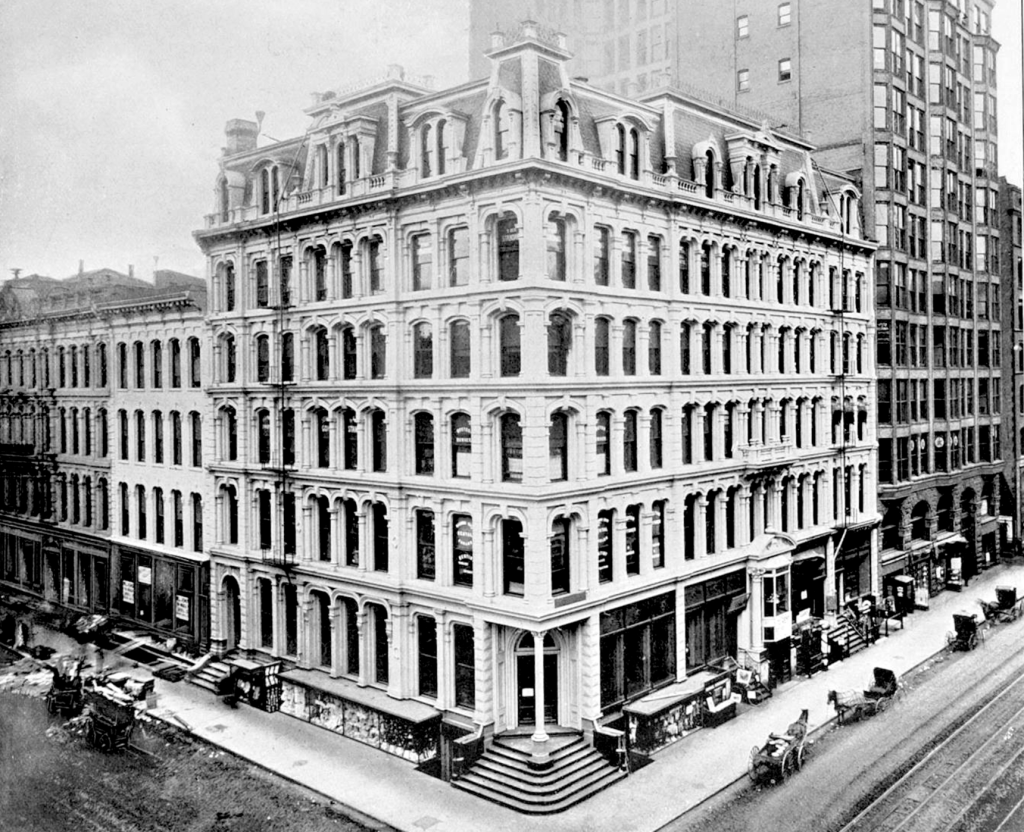
Wednesday, July 15, 1874—Last night was the great fire in Chicago. Burning 60 acres between Vanburen St. and Clark St. and Mich Ave. Loss estimated at 5,000,000. Buildings, homes, Mich. Ave. St. James, Woods and hotels.
 Spared & Shared 23
.jpg)