

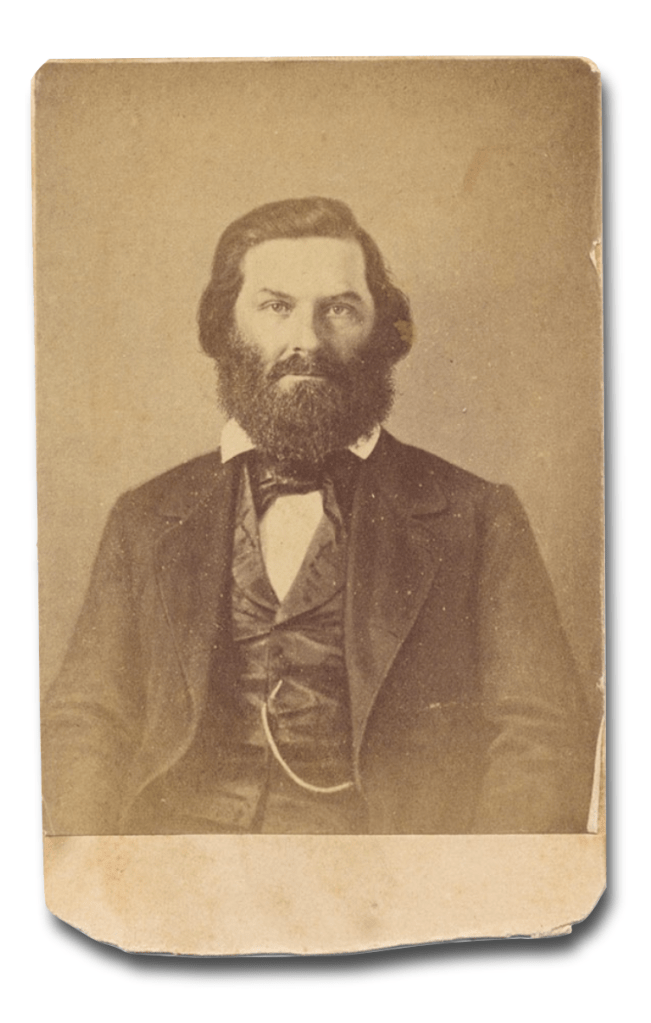
This incredible letter was written by Dr. James McFadden Gaston (1824-1903), the son of John Brown Gaston (1791-1864) and Mary Buford McFadden (1805-1886) of Chester county, South Carolina. Gaston graduated from the University of South Carolina in 1843 and then attended medical lectures at the University of Pennsylvania in Philadelphia. He then earned his Medical Degree from the Medical College at Charleston in 1846. He practiced medicine with his father in Chester District for a time and then moved to Columbia in 1852 where, and at which time he also married Susannah Greening Brumby.
When civil war broke out in 1861, Gaston initially entered the service of his state as a private in the Columbia Grays but he was soon elevated to Assistant Surgeon and served in that capacity at Morris Island and Fort Sumter. In July 1861, he was promoted again to Surgeon and Medical Director of Gen. D. R. Jones’ 3rd Brigade. He wrote the following letter from Manassas Junction on the day after the Battle of Bull Run.
Gaston organized medical services while serving as Chief Surgeon of South Carolina Forces and later as Divisional Surgeon General of the South Carolina Volunteers during campaigns in Virginia and Pennsylvania, which included the battles of Manassas and Gettysburg. Immediately after the conclusion of the Civil War, Gaston left the United States and settled his family in Brazil where he practiced medicine in the city of Campinas. After almost two decades, Gaston returned with some of his family to Atlanta, Ga., where he successfully re-entered American medical life, teaching at the Southern Medical College, publishing articles, and carrying out research. He died in 1903.
Gaston’s papers are not posted on-line but are housed at the University of North Carolina Library.
Transcription
Manassa Junction [Virginia]
July 22, 1861
My dearly loved wife,
To say that I am safe and well, is no common place intelligence after the terrible reports of yesterday. The great battle has been fought and won by us here, and though our forces suffered to a large extent, the destruction which was dealt out to the enemy’s columns, and the entire routing of their troops, with the capture of men and munitions of warm is far beyond what the most sanguine could have anticipated. The Hampton Legion has just arrived the night previous and were among the first to be engaged with the enemy, without being supported in the encounter until they had sustained very serious losses; but it gives me pride to say that the honor of South Carolina was nobly vindicated by their unflinching firmness.
The Lieut. Col. B[enjamin] J[enkins] Johnson was killed early in the action, and Col. Hampton received a shot in the face which unhorsed him, but not proving serious. He returned to the command of his men and led them throughout the engagement. A Mr. Haynesworth 1 from Sumter had his ankle shattered by a cannon ball and I removed his leg at the temporary hospital on the field.
Our gallant 2nd Regt. South Carolina Volunteers were located some distance from the scene of the battle and did not reach the ground until others had been exhausted in the attempt to repel the foe, when our boys were brought fresh into the field, and made a charge upon the enemy lines of the army (which proved to be their [ ] for the last) which turned the day in our favor, and ended in a complete rout of their forces, with ours in close pursuit of them over the hills and hollows of the surrounding country. My friend, Capt. John [S.] Richardson, 2 was slightly wounded, and a number of other men seriously, while but few deaths resulted from this bold move of Kershaw’s regiment.
I think Mrs. Glover 3 may not be afraid that no harm has befallen her son, who I saw on the day previous and found in good health and good spirits, It is very remarkable that with a superior force, the enemy should have been beaten back without causing more loss to our side than has occurred, but one thing is very notable—that the proportion of officers killed and wounded is much greater on our side than on theirs, and indeed they kept themselves out of the way of danger much more than our officers who went in person with their commands upon the field. General Beauregard went out in the very thickest of the fight and urged the troops forward, telling them he intended to share their perils, and fall or conquer with them. President Davis also came upon the field while the enemy were still making resistance, but the tide had turned very decidedly in our favor previous to his arrival.
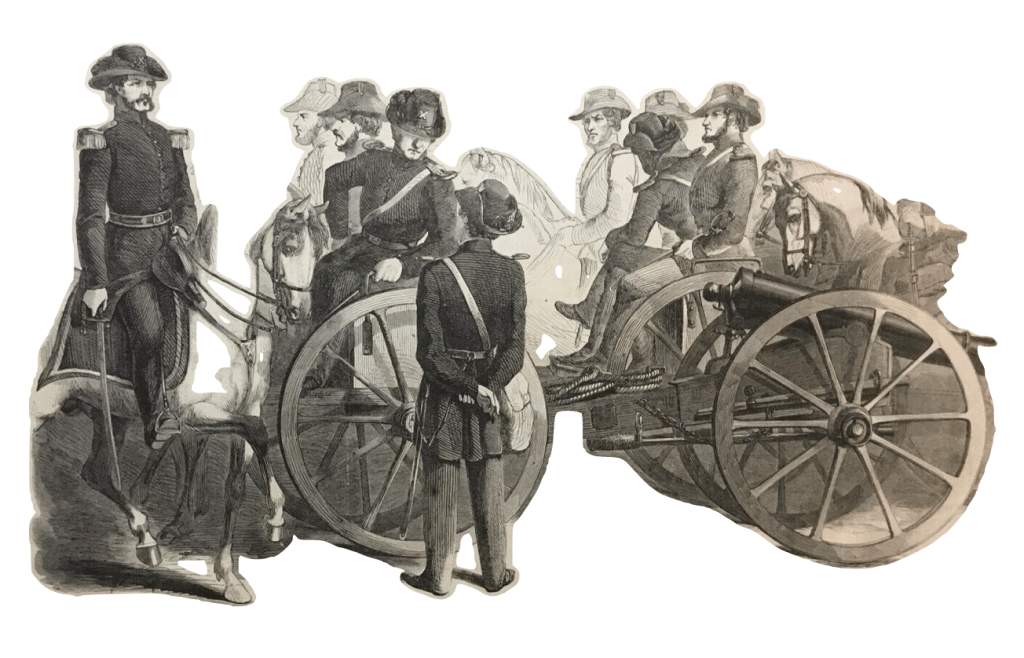
The famous Sherman’s Battery was captured entire from the enemy, all the horses having been killed and in all we have taken about thirty-five pieces of cannon, with perhaps two thousand stand of superior arms, with ambulances, camp equipage, and stores amounting it is thought to maybe half a million dollars worth. The number of prisoners taken is near five hundred while their dead will perhaps reach that number and the wounded cannot as yet be calculated with any certainty, but it is shocking to see them huddled together at the four (4) different hospitals over which we have placed their own surgeons who were taken prisoners, and thus relieved us of much trouble, yet many of their wounded are still being brought in to the junction from the field of battle which is near stone bridge, about five miles distant from here.
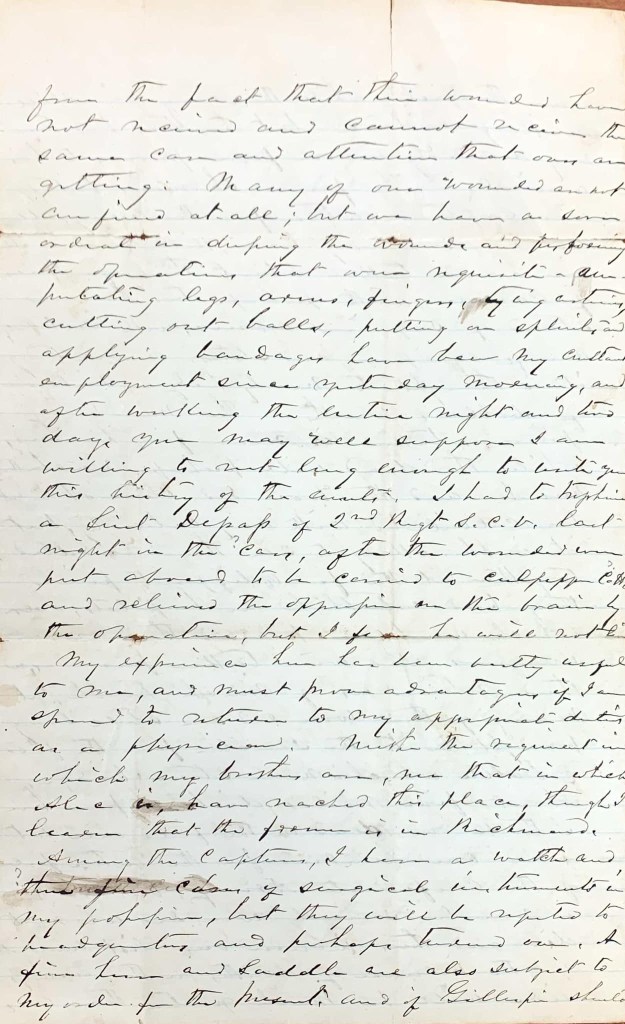
I think our dead on the field will not extend one hundred for the entire force of the Confederate Army, but we have a number seriously wounded who must die and thus increase our list considering yet the increase of deaths on the enemy’s side will be much greater than ours from the fact that their wounded have not received and cannot receive the same care and attention that our are getting. Many of our wounded are not confined at all; but we have a severe ordeal in dressing the wounds and performing the operations that were requisite—amputating legs, arms, fingers, tying arteries, cutting out balls, putting on splints, and applying bandages have been my constant employment since yesterday morning, and after working the entire night and two days, you may well suppose I am willing to rest long enough to write you this history of the events.
I had to trephine a Lieut. [William Lambert] Depass of [Co. E,] 2nd Regt. S. C. Vols. last night in the cars, after the wounded were put aboard to be carried to Culpeper Court House and relieved the oppression on the brain by the operation, but I fear he will not live. 4
My experience here has been vastly useful to me and must prove advantageous if I am spared to return to my appropriate duties as a physician. Neither the regiment in which my brothers are, nor that in which Alec 5 is, have reached this place though I learn that the former is in Richmond. Among the captured [items] I have a watch and a fine case of surgical instruments in my possession, but they will be reported to headquarters and perhaps turned over, a fine horse and saddle are also subject to my order for the present, and if Gillespie should…[page not posted]
But to return to the war, it was thought Saturday that the enemy would make the attack on that day and every arrangement was made to meet them, but failing to come against us, it was determined by Gen. Beauregard to move upon them yesterday morning by three columns and orders were issued accordingly to put the troops in motion early. But before it was commenced, he learned that the enemy had taken the initiative and he prepared to put our force in a condition to resist the attack which was made on the extreme left of our line of defense, extending along Bull Run for six or eight miles. This made it necessary to march troops up from the other points to the left wing and yet not to remove all from any of the points lest the enemy should throw in a column at an unguarded passage. Our reinforcements were therefore slow in coming into action from the distant points and did not represent our full strength, but the very fact of our body of men following another at considerable intervals into the field had no doubt a better effect than to have there the whole army before the enemy at one time as they could not tell when we would ever exhaust our supply of men and as we knew they outnumbered us greatly it was proper to keep them from knowing our strength it possible. Thank God the victory is ours and I trust this may end the war as the army have retired into their former lines with the conviction that we did intend to yield.
Your kind husband, — J. M. F. Gaston
1 2nd Lieut. John R. Haynsworth of Sumter, South Carolina, served in Co. C of the Manning Guards in Hampton’s Legion. We learn from this letter that his shattered ankle necessitated amputation but he did not survive. He died on 21 August 1861 at Warrenton, Virginia, one month after the battle.
2 Capt. John S. Richardson commanded the Sumter Volunteers, Co. D, 2nd South Carolina Infantry. One source says he was slightly wounded in the leg at the Battle of Manassas; another source says slightly in the arm.
3 Possibly referring to J. B. Glover who was a private in Capt. George B. Cuthbert’s Company—Co. I, 2nd South Carolina Infantry. J. B. enlisted at Charleston on 22 May 1861.
4 William Lambert Depass (1836-1881) survived the Civil War and died of heart disease in 1881. William was from Kershaw, South Carolina, and served as a 2nd Lieutenant in Co. E, 2nd S. C. Infantry (2nd Palmetto Regiment).
5 “Alec” refers to Gaston’s brother-in-law, Dr. Alexander Brevard Brumby (1831-1879).



 Spared & Shared 23
One thought on “1861: James McFadden Gaston to Susannah G. (Brumby) Gaston”