
I can’t be certain of the author of this letter signed (I think) “E. Dana.” The Dana family had a long history in Boston and my hunch is that it was written by Edmund Trowbridge Dana (1818-1869), the son of Richard H. Dana, Sr. and Ruth Charlotte Smith. His more famous brother, Richard Henry Dana, Jr., served in the US Senate in 1859 and during the Civil War was a United States Attorney for Massachusetts.
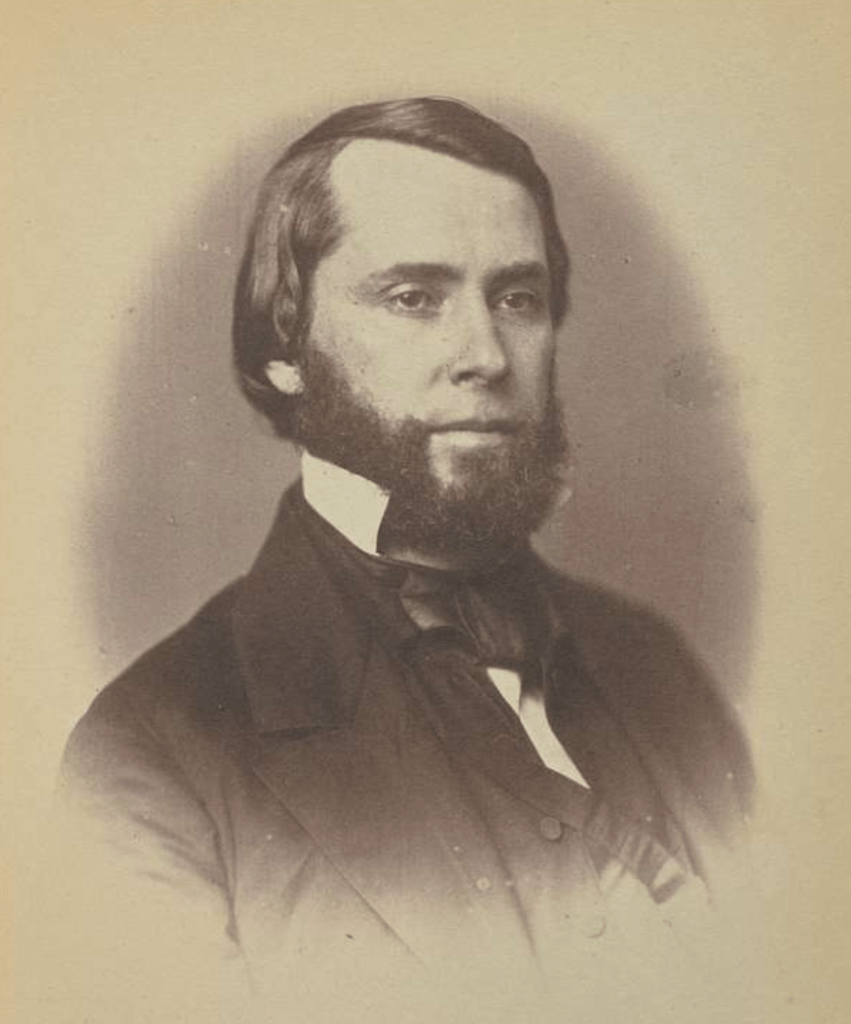
The letter opens with a reference to Virginia congressman Sherrard Clemen’s speech delivered in Congress on 22 January 1861 which was a warning to fellow Southern congressmen that a breakup of the Union would certainly mean the death of slavery—the key sentences in a long speech stating, “Before God, and in my utmost conscience, I believe that slavery will be crucified, if this unhappy controversy ends in a dismemberment of the Union. Sir, if not crucified, it will carry the death rattle in its throat. I may be a timid man; I may not know what it is to take up arms in my own defense. It remains to be seen, however, whether treason can be carried out with the same facility it can be plotted and arranged.” Referring to any fellow statesmen in Congress who advocated secession, he said, “He can take an oath to support the Constitution of the United States, but he can enter with honor into a conspiracy to overthrow it. He can, under the sanctity of the same oath advise the seizure of forts and arsenals, dockyards and ships, and money, belonging to the Union, whose officer he is, and find a most loyal and convenient retreat in State authority and State allegiance.”
The letter ends with a condemnation of the Massachusetts Senators in Congress (outspoken abolitionists) for not having been more outraged and vocal about the perceived treasonous acts of their fellow Congressmen and not trying harder enough to hold the Union together. The Union Meeting held at Faneuil Hall in early February 1861 emerged with a series of resolutions that essentially endorsed the “Crittenden Compromise” as an unsavory, but temporary solution to the secession crisis.
Transcription
Boston, [Massachusetts]
8 February 1861
My dear friend,
I am much obliged for [Sherrard] Clemens’ speech. I have read it with much pleasure— and wish it could be sent all over the South. Perhaps nothing will do them any good—but this must if anything will.
I see that [Henry Winter] Davis of Maryland made a ringing speech yesterday. 1 Is it to be published? if so, as we get only poorly printed copy in our papers—a partial even, I shall be glad if you will send me a copy. I don’t believe you can do a better thing than to send Capt. Holmes one—or indeed any speech that has real back bone in it. The Capt. sets at the Table and in the reading room and fights the Northern secessionists (of which white-livered bread Boston abounds) and Northern disunionists with real old Teutonic grit. It would have done you good to have heard him come down on the last Union meeting at Faneuil Hall.
The Hon. G. L. now gives him the go by—because the Capt. dares to go in for “the Union, the Constitution, and the enforcement of the Laws”—and he throws it in the face of the Bell Weathers to their great discomfort. Was there ever a more pitiable back down than that party North exhibits in their practically annulling all they pretended to fight for in the last canvass—and now refusing sympathy and support to their political friends South in the late campaign.
Here—this party deride Massachusetts & it seems as though they could not say enough of her—and to anything like argument, their reply is—Mass. delegation in the House. Charles Sumner, Henry Wilson, and the inevitable Nigger. Beyond this, their vision does not extend. The fabric of Massachusetts history would be ruined and suffer a total eclipse if left alone to their guardianship and patriotism.
The Capt.’s address is P. Holmes, Tremont House.
As I said before, I think he would be pleased to receive any speech that has back bone in it—like [Henry Winter] Davis, Millen [?], or [Charles F.] Adams—which [ ] he endorses very heartily.
Yours, E. Davis
The temp a.m. from 13o believe in the city. Is 22 in suburbs
1 The gist of Hon. Henry Winter Davis’ speech echoes that of Clemens’ speech. It also addresses the slavery argument thus: “As to slavery, the slavery question represents no interest which now requires to be touched by any department of the government. The mischief that has been done was done at home or South. The great cause of the excitement was the mode in which the recent political canvass had been conducted in the South. It had been by blackening and misrepresenting the true character and designs of the great mass of Northern people…If Southern gentlemen would go home and tell. truth about the North as they know it to be, there would be peace in all the country in a very short time.”


 Spared & Shared 23