
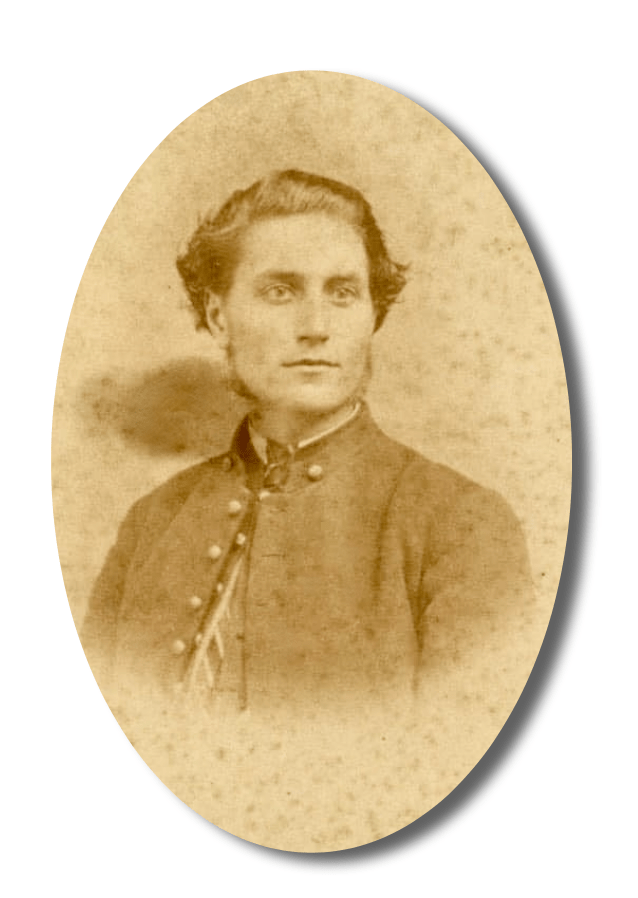
The following letters were written by Pvt. John W. Lund (1837-1863) who enlisted on 18 September 1861 at Sodus, Wayne county, New York to serve in Co. C, 8th New York Cavalry. He was killed on 9 June 1863 in the fighting at Beverly Ford, Virginia.
John’s parents were English emigrants John Lund (1797-1875) and Helen Lund (1799-1854) of Sodus. At the time these letters were written, John’s father was employed as a shoemaker in Pultneyville.

Letter 1
Washington
December 16, 1861
Dear Father and Friends,
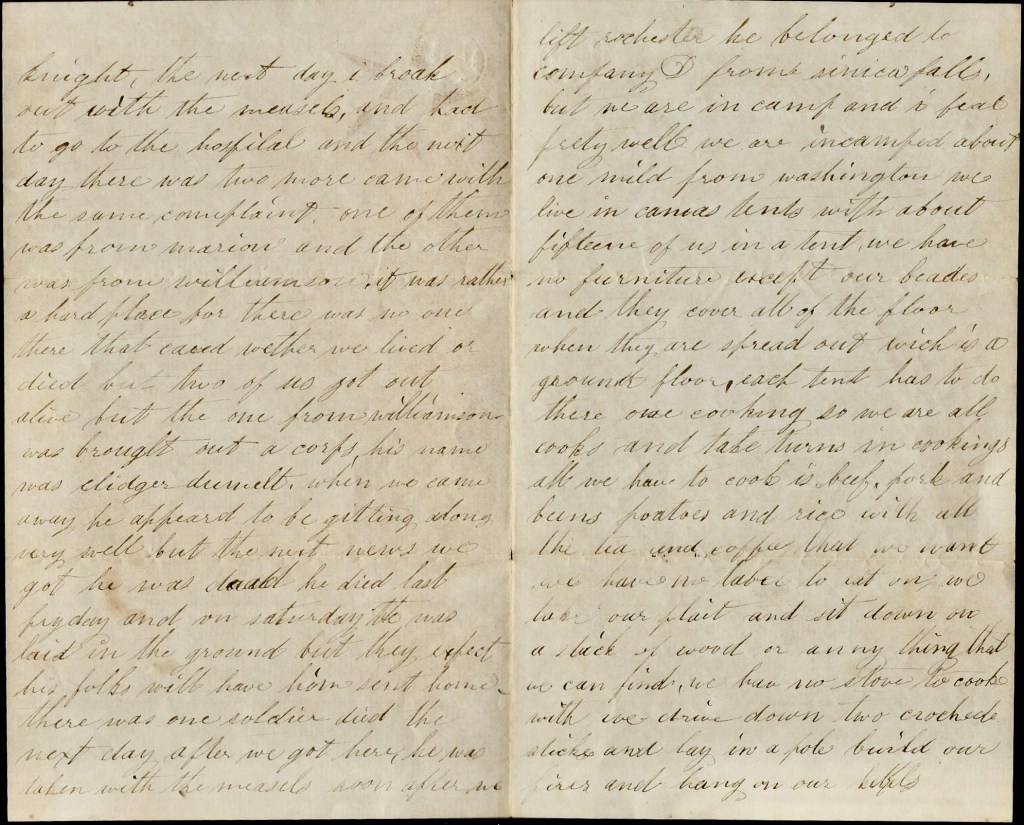
I now take my pen in hand to write a few lines to you that I ought to have done before but have not been able for I have been in the hospital most of the time that we have been here. I caught a very bad cold before we left Rochester and I did not feel very well on the way here. We left Rochester two weeks ago last Thursday. We was two days and most of the third nights on the way. When we arrived here, we was taken to a large house what they called the soldier home and gave us some dry bread and coffee and our bed was the soft side of the floor but I did not stay there but one night. The next day I broke out with the measles and had to go to the hospital and the next day there was two more came with the same complaint. One of them was from Marion and the other from Williamson. It was rather a hard place for there was no one there that cared whether we lived or died but two of us got out alive. But the one from Williamson was brought out a corpse. His name was Elijah Dumalt. When we came away, he appeared to be getting along very well but the next news we got he was dead. He died last Friday and on Saturday he was laid in the ground. But they expect his folks will have him sent home. There was one soldier died the next day after we got here. He was taken with the measles soon after we left Rochester. He belonged to Company D from Seneca Falls.
But we are in camp and I feel pretty well. We are encamped about one mile from Washington. We live in canvas tents with about fifteen of us in one tent. We have no furniture except our beds and they cover all of the floor when they are spread out, which is a ground floor. Each tent has to do their own cooking so we are all cooks and take turns in cooking. All we have to cook is beef, pork and beans, potatoes, and rice with all the tea and coffee that we want. We have no table to eat on. We take our plate and sit down on a stick of wood or anything that we can find. We have no stove to cook with. We drive down two crotched sticks and lay in a pole, build our fires and hang on our kettles. We don’t bake our bread. We have the nest kind of baker’s bread dealt out to us every day. This is the way that we live and a pretty coarse way too.
There has been a great deal of talk about our being discharged and it is not decided yet whether we shall or not. We have not got our horses yet, nor anything to defend ourselves with if the enemy should make an attack on us. If we get discharged, we shall soon be home.
The weather is very pleasant here. We have not had any snow or rain since we have been here. But I must stop. Excuse poor writing for I write with a piece of board across my knee and sit on a stick of wood. From your well wisher, — J. W. Lund
Write as soon as you get this. Direct to J. W. Lund, Washington D. C., 8th New York Cavalry, Co. C.

Letter 2
Camp Selden
January 5, 1862
Dear Brother,
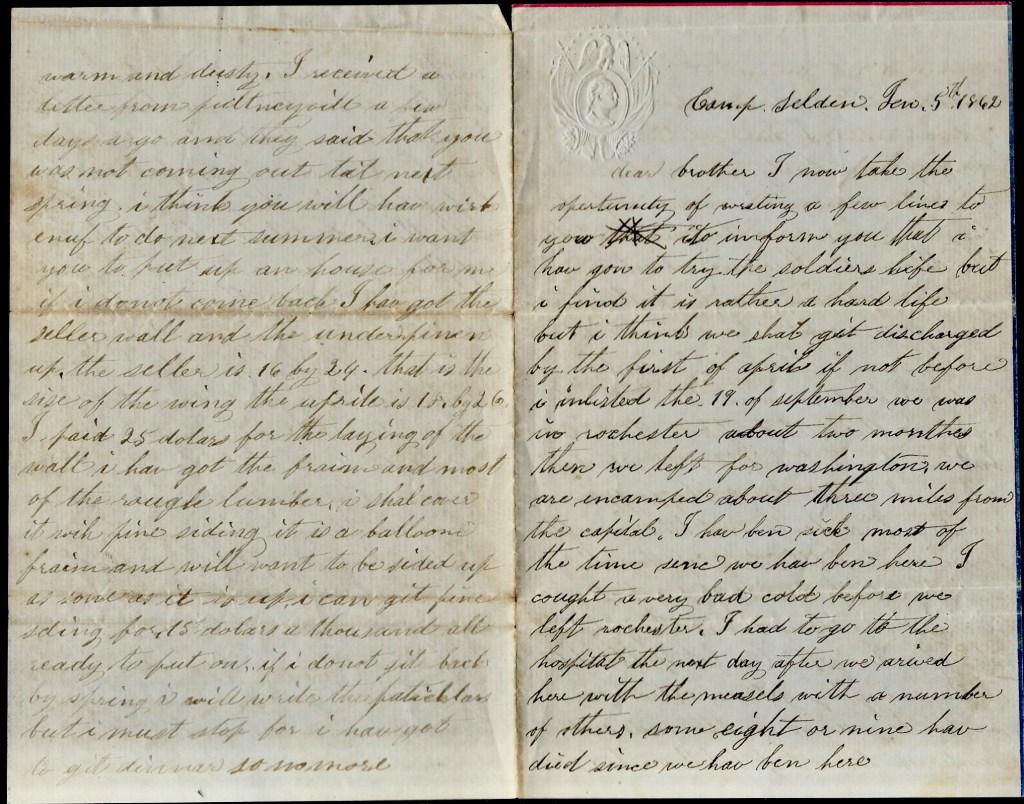
I now take the opportunity of writing a few lines to you to inform you that I have gone to try the soldier’s life but I find it is rather a hard life. But I think we shall get discharged by the first of April if not before. I enlisted the 19th of September. We was in Rochester about two months. Then we left for Washington. We are encamped about three miles from the Capitol. I have been sick most of the time since we have been here, I caught a very bad cold before we left Rochester. I had to go to the hospital the next day after we arrived here with the measles with a number of othres. Some eight or nine have died since we have been here but I had the good luck to get out alive. I have got to be tough and hearty now and feel first rate.
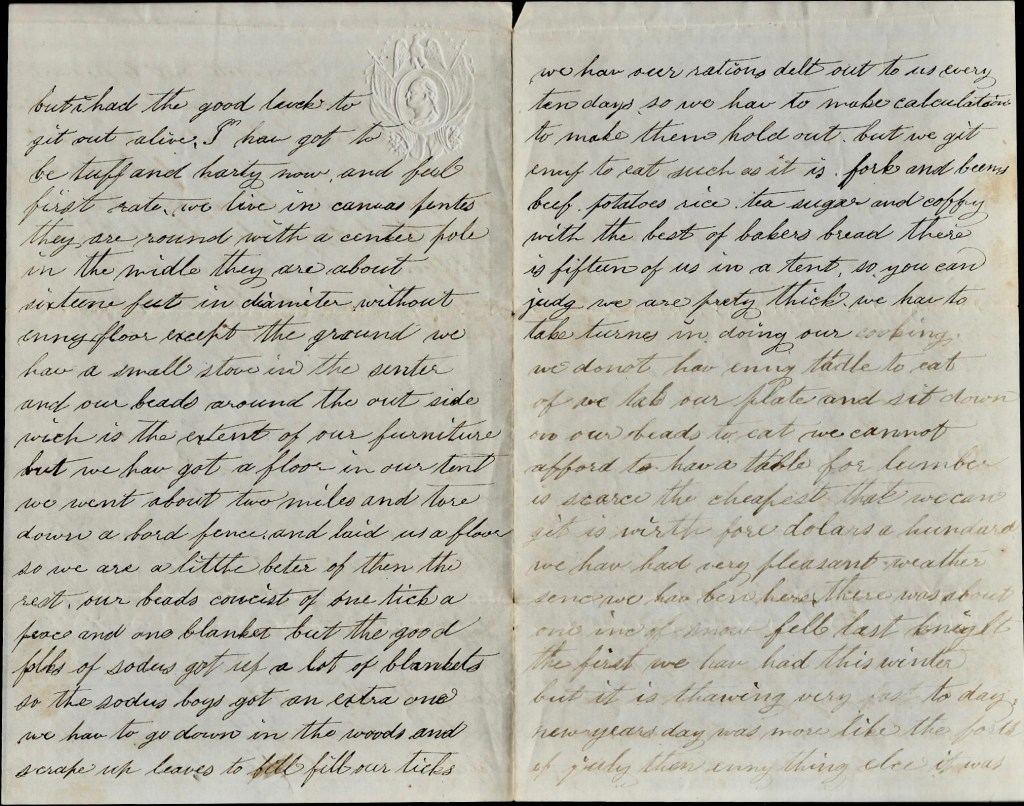
We live in canvas tents. They are round with a center pole in the middle. They are about sixteen feet in diameter without any floor except the ground. We have a small stove in the center and our beds around hte outside which is the extent of our furniture. But we have got a floor in our tent. We went about two miles and tore down a board fence and laid us a floor so we are a little better off than the rest. Our beds consist of one tick apiece and one blanket. But the good folks of Sodus got up a lot of blankets so the Sodus boys got an extra one. We have to go down in the woods and scrape up leaves to fill our ticks.
We have our rations dealt out to us every two days so we have to make calculation to make them hold out, but we get enough to eat, such as it is. Pork and beans, beef, potatoes, rice, tea, sugar, and coffee with the best of baker’s bread. There is fifteen of us in a tent so you can judge we are pretty thick. We have to take turns in doing our cooking. We don’t have any table to eat off of. We take our plate and sit down on our beds to eat. We cannot afford to have a table for lumber is scarce. The cheapest that we can get in worth four dollars a hundred.
We have had very pleasant weather since we have been here. There was about one inch of snow fell last night—the first we have had this winter, but it is thawing very fast today. New Year’s Day was more like the Fourth of July than anything else. It was warm and dusty.
I received a letter from Pultneyville a few days ago and they said that you was not coming out till next spring. I think you will have work enough to do next summer. I want you to put up a house for me if I don’t come back. i have got the cellar wall and the underpinnings up. The cellar is 16 by 24. That is the size of the wing. The upright is 18 by 26. I paid 25 dollars for the laying of the wall. I have got the frame and most of the rough lumber. I shall cover it with pine siding. It is a balloon frame and will want to be sided up as soon as it is up. I can get fine siding for 15 dollars a thousand all ready to put on. If I don’t get back by spring, I will write the particulars but I must stop for I have got to get dinner. So no more.
Letter 3
Camp Selden
Washington D. C.
February 17th, 1862
Sister,
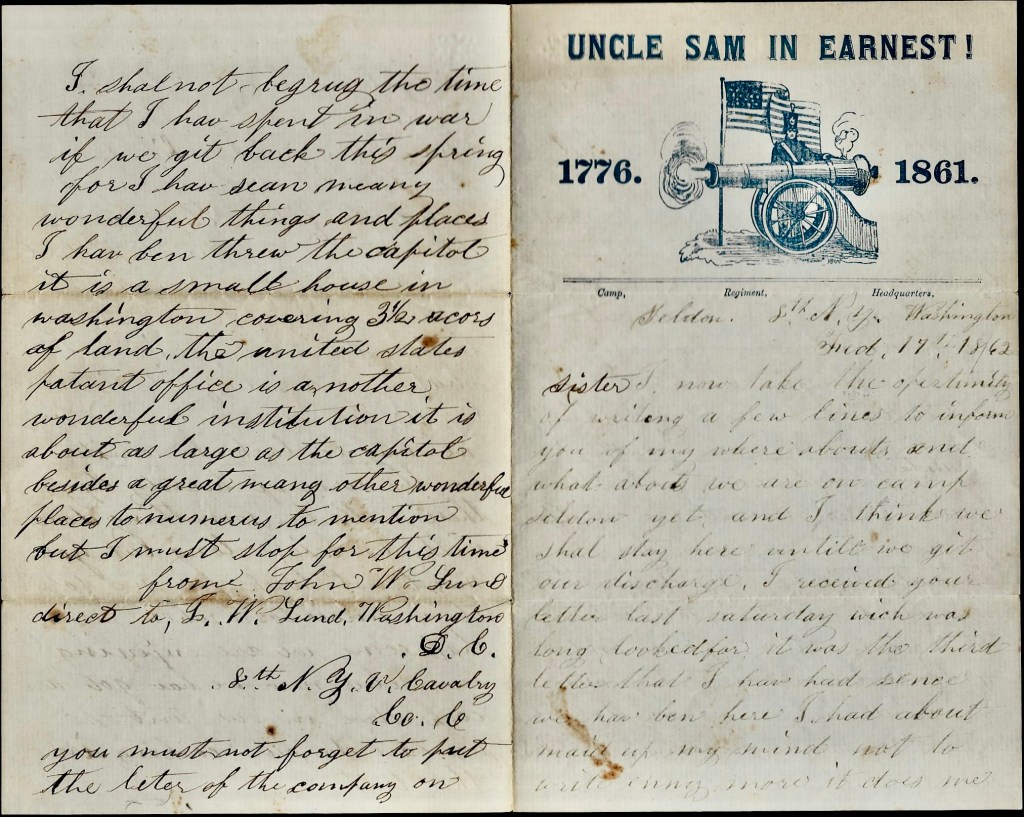
I now take the opportunity of writing a few lines to inform you of my whereabouts and what abouts. We are on Camp Selden yet and I think we shall stay here until we get our discharge. I received your letter last Saturday which was long looked for. It was the third letter than I have had since we have been here. I had about made up my mind not to write any more. It does me a great deal of good to hear from you. I am in good health now except a very bad cold which I have had for a few days. But I have got about over it now. But there is a great deal of sickness in the regiment. There has forty-five died out of this regiment since we have been here. The physician that we have had did not know anything about his business. He got his discharge last week and left. Te Colonel has resigned his commission. He resigned to save his being throwed out. He found out that he would not bear inspection. He would go down town and get so drunk that he would have to be helped off his horse when he came in camp. I think we shall not want any other colonel for we are having so many union victories that they will whip the Sout out before we get ready to fight. There has been seven regiments ordered over the river. They have been waiting for the mud to dry up. One regiment that was encamped close by us has gone over today.
We may be back in Rochester in the course of twenty days. There will be something done with us before long but you must not look for me for it is uncertain when we shall come. We are enjoying ourselves now. We have got a cook stove in our tent so we can do our cooking in the tent.
I shall not begrudge the time that I have spent in war if we get back this spring for I have seen many wonderful things and places. I have been through the Capitol. It is a small house in Washington covering three and a half acres of land. The United State Patent Office is another wonderful institution. It is about as large as the Capitol. Besides a great many other wonderful places too numerous to mention. But I must stop for this time.
From John W. Lund.
Direct to J. W. Lund, Washington D. C., 8th N. Y. Cavalry, Co. C
You must not forget to put the letter of our company on.

Letter 4
Edwards Ferry
March 13th 1862
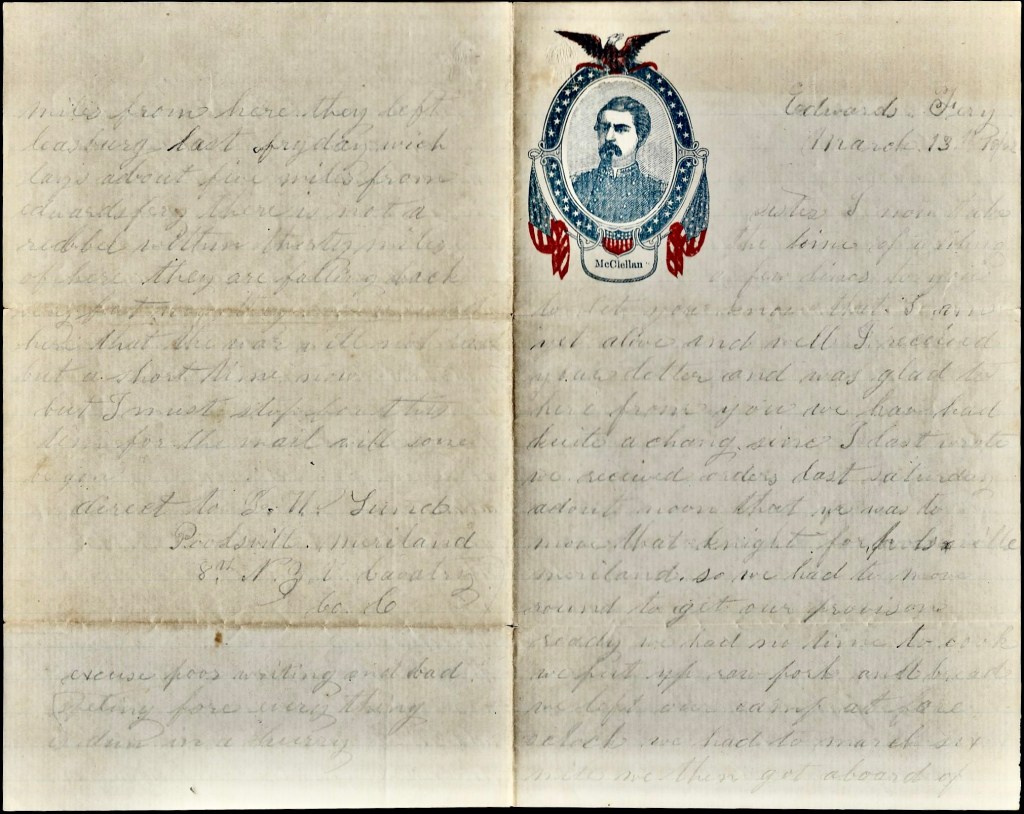
Sister, I now take the time of writing a few lines to you to let you know that I am yet alive and well. I received your letter and was glad to hear from you. We have had quite a change since I last wrote. We received orders last Saturday about noon that we was to move that night for Poolesville, Maryland. So we had to move around to get our provision ready. We had not time to cook. We put up raw pork and bread. We left our camp at four o’clock. We had to march six miles. Then we got aboard of the canal boats and went up the river to Edward’s Ferry about thirty miles from Washington. Poolesville is five miles back from the river but we did not go there. We stopped at Edward’s Ferry and pitched our tents. We was about two days on the way. The canal follows the Potomac river up on the Maryland side.
We received orders the same day that we landed that we was going to be put on the towpath of the canal to guard the canal and keep the rebels from cutting breaks in it so we was equipped with carbines and the next day three companies went down the river and three went up ten miles each way. The other stayed at Edward’s Ferry. There is but nine companies in our regiment now. One of our companies left and has gone into the artillery service. Co. C, H, and I went down the river. We arrived here last night and pitched our tents but I do not know as there is any name for the place. I have not heard of one yet. Edward’s Ferry is about three miles from Ball’s Bluff. You will remember the battle that was fought there where there was so many of the northern men killed. I with a few others went up there last Tuesday to take a view of the place. The rebels has all left there. They have left Manassas Junction which is a few miles from here. They left Leesburg last Friday which lays about five miles from Edward’s Ferry. There is not a rebel within thirty miles of here. They are falling back very fast. We hear that the war will not last but a short time now.
But I must stop for this time for the mail will soon be gone. Direct to J. W. Lund, Poolesville, Maryland, 8th N. Y. V. Cavalry, Co. C
Excuse poor writing and bad spelling for everything is done in a hurry.
Letter 5
Stevenson’s Depot
Charlestown, Virginia
April 23, 1862
Brothers & Sisters & Friends,
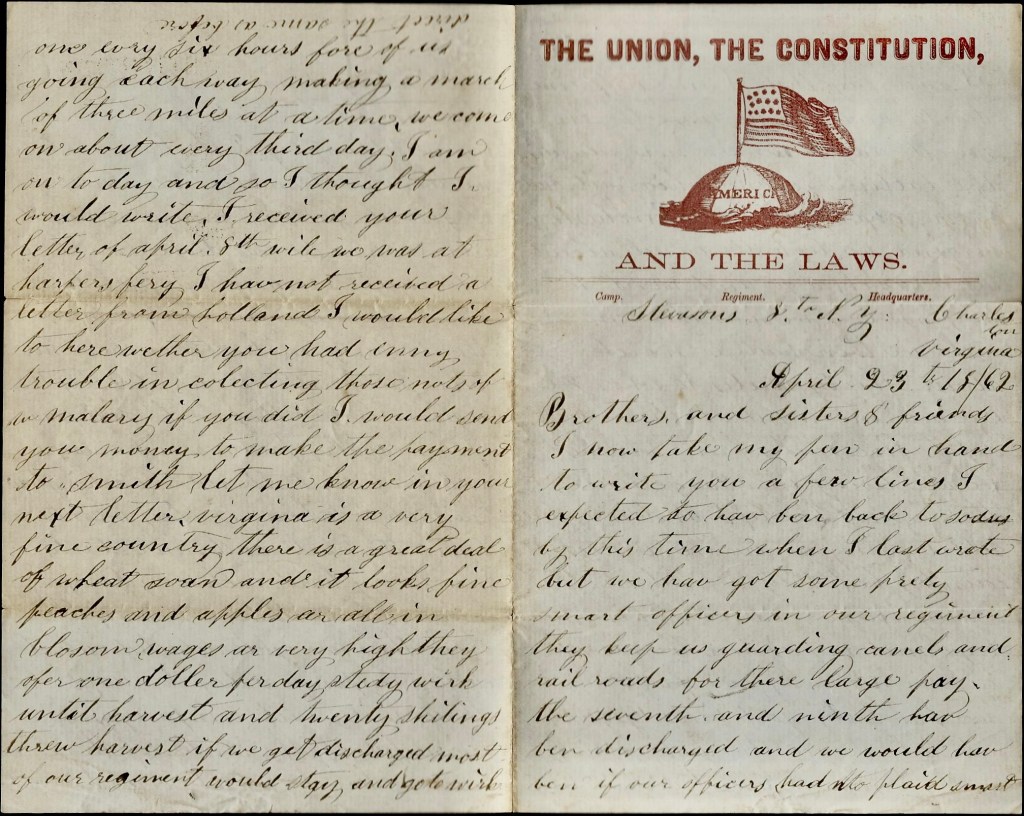
I now take my pen in hand to write you a few lines. I expected to have been bak to Sodus by this time when I last wrote but we have got some prtty smart officers in our regiment. They keep us guarding canals and railroads for their large pay. The 7th and 9th have been discharged and we would have been if our officers had not played smart. I can say that I am tough and hearty and enjoy myself on small wages. We are now guarding the Baltimore & Ohio Railroad from Charlestown to Winchester, Virginia. We left the canal about three weeks ago and went to Harper’s Ferry. We was there one week. We then had to march about thirty miles to where we are now encamped at Stevenson’s Depot, five miles from Winchester. We are living in a large house that a secesh has left and is in the rebel army. We are in a secesh country but they are all in the army except old men, women, boys and negroes, and the negroes are running away very fast.
We have pretty good times by going out into the country and calling on the women about dinner time and taking dinner with them. They use us first rate until we begin talking against their army. We then have to make tracks.
Most of General Jackson’s army was raised around here. He was drove from here a few weeks ago. You have probably heard of the Winchester Battle. He is about thirty miles from here now and pretty well surrounded by the Union troops. They took sixty-one of his cavalry prisoners a few days ago and sent them to Washington. They stopped here as they went down the railroad. Our duty is not very hard. Each company has to guard three miles of the road. There is eight detailed out of each company a day to guard three miles. Each company is encamped at the center of their beat. We have to march over the road once every six hours, four of us going each way, making a march of three miles at a time. We come in about every third day. I am on today and so I thought I would write. I received your letter of April 8th while we was at Harper’s Ferry. I have not received a letter from Holland. I would like to hear whether you had any trouble in collecting those notes of Mallory. If you did, I would send you money to make the payment to Smith. Let me know in your next letter.
Virginia is a very fine country. There is a great deal of wheat sown and it looks fine. Peaches and apples are all in blossom. Wages are very high. They offer one dollar per day steady work until harvest and twenty shillings through harvest. If we get discharged, most of our regiment would stay and go to work.
Letter 6
Harper’s Ferry, Virginia
May 27, 1863
Brother & Sister,
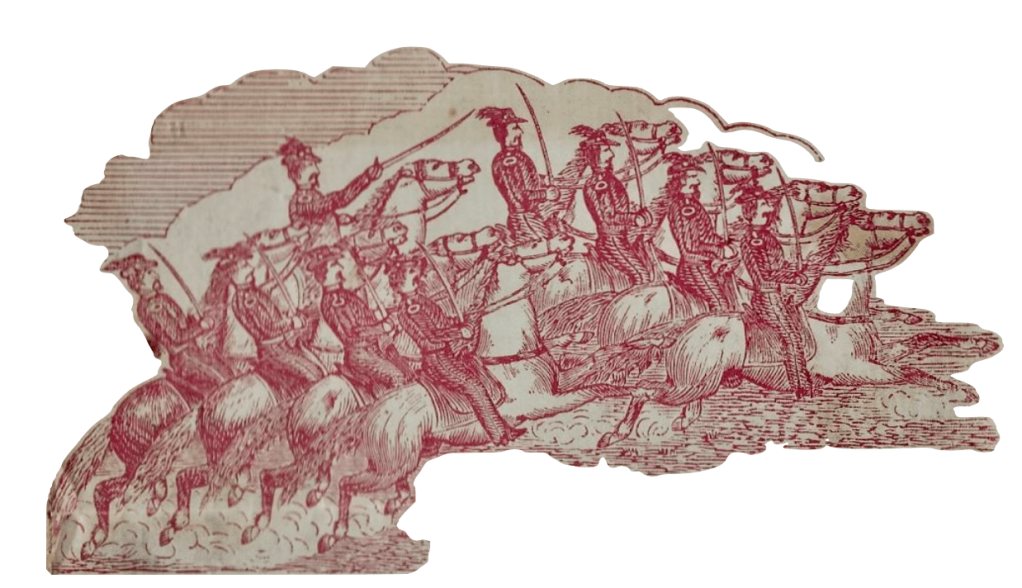
I now take the opportunity of writing a few lines to inform you that I am well and in the land of the living although I am pretty sore and lame with the effects of a long retreat. Last Saturday our regiment was ordered to Winchester to reinforce General Banks who was retreating from Strasburg, that the enemy was after him on double quick. We arrived at Winchester on Saturday night about the time that Banks came in. They were very much cut up and lost a great many of their supply wagons. [See First Battle of Winchester, 25 May 1863]
Everything was quiet through the night but at daylight on Sunday morning, the enemy commenced throwing shells into the town. We made a stand on the outside of the town and kept them out until about eight o’clock when we found they were too strong for us. They were about 30,000 strong and we had but about ten. We had to retreat on double quick, every man for himself. The bullets flew around our heads like swarms of bees. I saw out our captain fall with a great many others. I believe our Lieutenant Brown is safe. He is in Maryland, up the river from us. The rebels chased us about five miles, throwing the bomb shells after us. They are not very pleasant things to have bursting over one’s head.
We met about six thousand coming to reinforce us five miles out of town but it was too late. They had to retreat. We marched about forty miles that day. Arrived at Harper’s Ferry about eight o’clock. We lost all that we had. A great many threw their guns away. I lost my satchel and all the clothes I had. I had some pictures taken that I intended to send to you. I sent one to Lucy the day before we went to Winchester but the rebels has got the rest. We have made a stand on Bolivar Heights one mile from the Ferry. We have been reinforced thirty thousand so if they come here, we will give them fits and if they do not come soon, we shall follow them.
I received your letter yesterday. Was glad to hear from you. Tell Bill Cowley that I did not buy that land of him. I set the fence where the man staked out the line that I bought off it. He has not got as much land as he expected. It is his loss, not mine. He will be some older before I move the fense.


Letter 7
Relay House, Maryland
July 17th 1862
Brother and Sister and Friends,
I now take the opportunity of writing a few lines in answer to the letter received from you last Friday. I had been looking for one a long time before it come. I wrote to Lucy about two weeks ago about the time we arrived here from Harper’s Ferry. I stated in it that we expected our horses by the first of July and sure enough, they came—horses for five companies only—A, B, C, D, and E are mounted and equipped with new sabers and revolvers, We have got a fine lot of horses and good equipments. All we want now is to get our horses trained. Then we will go and see the rebeks again. There is four companies to be mounted yet. They expect their horses every day. When they get them, we shall probably move o Baltimore or Annapolis to drill as the drilling ground is too small here for the regiment to drill on.
We have given up all hopes of coming home now until the close of the war as they have made a call for so many more men and many of us may never get home alive. Our quartermaster was sent home a week ago in a coffin. He appeared to be as tough as any of us but he was taken with the brain fever and died in less than a week. He lived a few miles south of Newark. There is quite a number sick in the hospital with the scarlet fever but we have got a good doctor and they are getting along first rate. We may die in the hospital or we may be cut up by the rebels and we may get through all safe. We cannot tell what will be our fate. But we must take things as they come.
Among all the good things, we have got a new colonel. He took command of the regiment yesterday. He was a captain of the regular army. He appears to be a very fine man. His name is Davis. You stated that I was needed at home to be getting along with the house. I would like t be there but I suppose that I am needed more here. I would like to have the house put up and enclosed this summer if no more in order to save what is done. I would risk but what Holland could put it up to suit me. I intended to put it up plain and cheap for sale or o let, but as things are now, I do not think I can afford to have it done for thirteen dollars a month is a slow way of making money. If Charles Munson wants that lumber, he can have it for just what I paid. I paid 4 dollars a thousand. I do not think that I would like to lend it to him.
We did not have much of anything to do on the Fourth of July. We did not leave camp. It was rather a dull day to us, but I must close for this time. If we leave here soon, I will let you know. The Relay House is within nine miles of Baltimore and 31 miles of Washington. I am tough and hearty and weigh 155 pounds. That is as heavy as ever I weighed so you can judge whether soldiering agrees with me or not. Yours truly, in haste. — J. W. Lund


Letter 8
Hagerstown, Maryland
September 27th 1862
Brother & Sister & Friends,
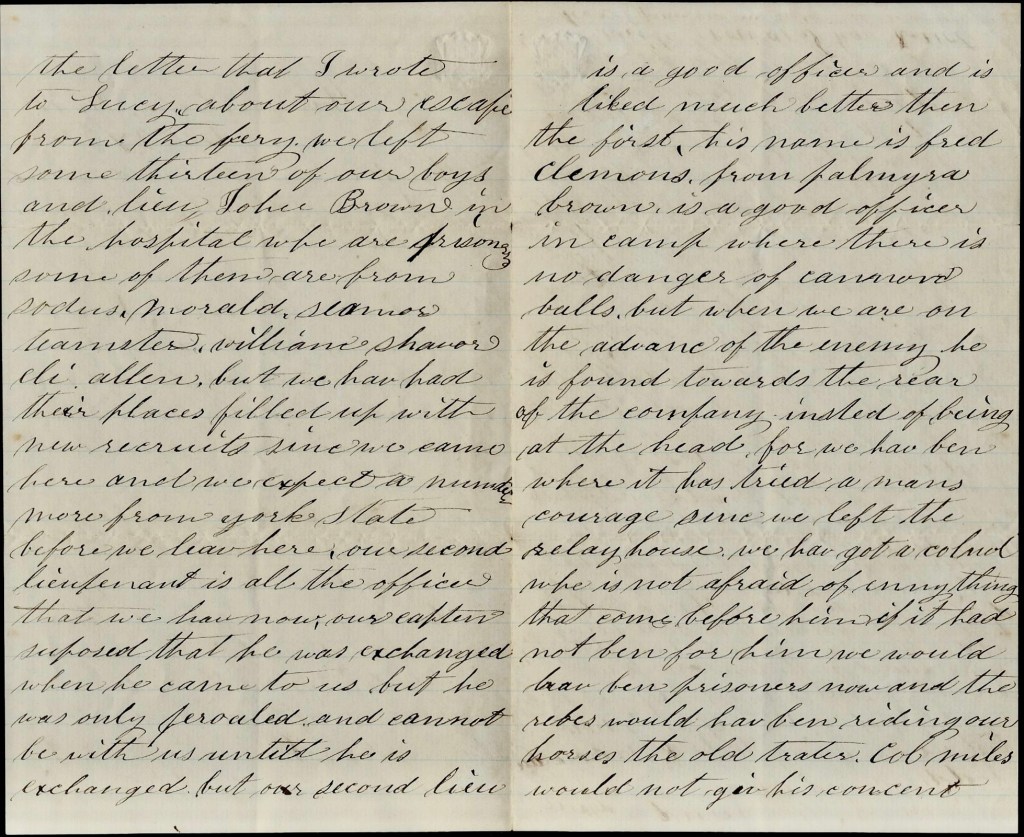
I now take the opportunity of writing a few lines to you, the first that I have had in a month. I wrote to Lucy a week ago but it was written on horseback. You have probably seen it. We have once more come into camp for the purpose of recruiting up our horses as they are pretty badly run down and we have got to have a new supply of team horses and wagons, harness and drivers as the Rebs captured all we had at Harper’s Ferry. I think that I wrote all the particulars in the letter that I wrote to Lucy about our escape from the ferry. We left some thirteen of our boys and Lieutenant John [W.] Brown in the hospital who are prisoners. Some of them are from Sodus—Morrill [D.] Seymour, teamster, William Shavor, Eli Allen. But we have had their places filled up with new recruits since we came here and we expect a number more from York State before we leave here.
Our 2nd Lieutenant is all the officer that we have now. Our captain supposed that he was exchanged when he came to us but he was only paroled and cannot be with us until he is exchanged. But our 2nd Lieutenant is a good officer and is liked much better than the 1st. His name is Fred Clemons from Palmyra. Brown is a good officer in camp where there is no danger of cannon balls, but when we are on the advance of the enemy, he is found towards the rear of the company instead of being where it has tried a man’s courage.
Since we have left the Relay House, we have got a colonel who is not afraid of anything that comes before him. If it had not been for him, we would have been prisoners now and the rebs would have been riding our horses. The old traitor, Col. Miles, would not give his consent to let us leave the Ferry but Col. Davis took leave and left after dark the night before he surrendered. We have been in a number of skirmishes and made some charges on the rebs and have not lost but one man. We lost him the night we left the Ferry. Some of our horses have been wounded.
John Brown was taken very sick the Sunday that we left the Ferry as he expected there was going to be a battle that day and he wanted to get out of it but he is a paroled prisoner now. Our doctor arrived here last night. He said that as soon as Brown was paroled, ge got up and took his valice on his back and started for Frederick on foot, some 18 miles. He got over his sickness pretty quick. He also brought the news that Eli Allen was dead and buried. He died very sudden. His folks has probably heard of it. He wanted to be sent home but as there was no one to look after him, he was buried in the lonesome hole of Harper’s Ferry.
But I must stop for the want of paper. The report is now that we are going to be McClellan’s body guard when we start again. From — J. W. Lund
Letter 9
Belle Plains, Va.
December 11th 1862
Brother & Sister,
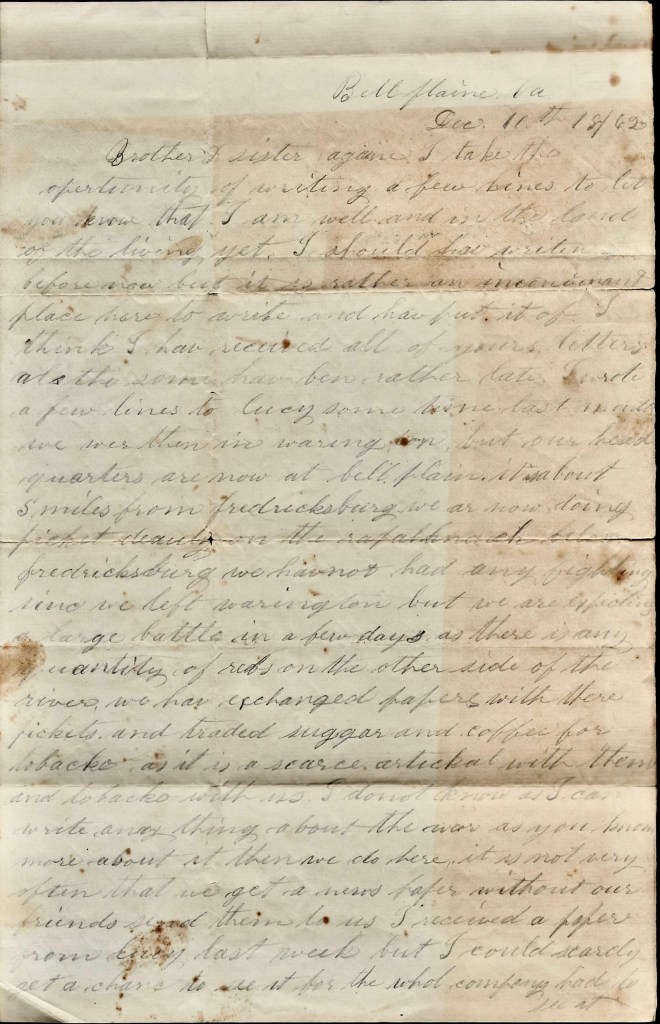
Again I take the opportunity of writing a few lines to let you know that I am well and in the land of the living yet. I should have written before now but it is rather an inconvenient place here to write and have put it off. I think I have received all of your letters although some have been rather late. I wrote a few lines to Lucy some time last month. We were then in Warrenton but our headquarters are now at Belle Plains. It is about 5 miles from Fredericksburg. We are now doing picket duty on the Rappahannock below Fredericksburg. We have not had any fighting since we left Warrenton but we are expecting a large battle in a few days as there is any quantity of rebs on the other side of the river. We have exchanged papers with their pickets and traded sugar and coffee for tobacco as it is a scarce article with them and tobacco with us. I don’t know as I can write anything about the war as you know more about it than we do here. It is not very often that we get a newspaper without our friends send them to us. I received a paper from Lucy last week but I could scarcely get a chance to see it for the whole company had to see it.
We have had some snow here and very cold weather but it is quite pleasant now—but not very pleasant soldiering for we have not had as much as a shelter tent since we came into Virginia. But hard fare will not kill what is left of us or we should have been dead long ago. You wrote that John Balch said he was sick of a soldier’s life. He has not seen any of it yet. Let them follow the 8th Cavalry where they have been for the past three months and they will know something about soldier’s life. I suppose their regiment is exchanged. They will probably have a chance to try it. We have not got a commissioned officer in our company yet. Our Captain and 2nd Lieutenant have got sick of it and resigned, going home and left us. If John Brown is at home, he had better stay there damned coward will get booted out of the company if he comes back. Our Captain is not much better, but our 2nd Lieutenant was a bully boy. We regret losing him but he resigned on the account of his health.
But I must stop for this time. Susan must read this for an answer to her letter and I will write her another time. We are yet the 8th New York Cavalry in Gen. [Alfred] Pleasonton’s Brigade, Gen. Sumner’s Corps. We expect to get home by next spring. I think I shall come on a furlough if not a discharge. From — J. W. Lund

Letter 10
Belle Planes, Va.
January 4, 1863
As I received your letter last night and found paper and stamp, I thought it must be answered. We are now encamped at Belle Plains where we intend to make our winter quarters, We have been here since the Battle of Fredericksburg with the exception of one week we left here last Sunday night on a cavalry raid with Gen. Averell’s Brigade and returned last night. Our first trip was to Warrenton about 45 miles from here. We made a charge into the town the night before New Years. We found a small force of the reb’s cavalry in town but they left as soon as they found we were coming. We cheated them out of their New Year’s dinner that the citizens was getting up for them and took it ourselves. We made some heavy charges on their fresh meats and bee hives and left the next morning for Catlett’s Station and so round home. We expect to go on another in a day or two. I cannot think of anything more to write today so it will be rather a short letter for this time.
I received a letter from Lucy a few days ago and a paper which I shall have to answer in a few days. I would liked a piece of your roast [ ] but it is impossible as we are soldiers now but I hope we shall be out of it by the next Christmas Day that comes round.
We have now got shelter tents and have built log shanties. Some are pretty well sheltered from the weather now. It is just warm and pleasant but I must close for this time as the boys have got a dish of pork and beans for dinner and they are almost ready. I would like you to send me some postage stamps as they are very scarce here. From yours truly, — J. W. Lund


Letter 11
Camp near Stafford Court House
March 2, 1863
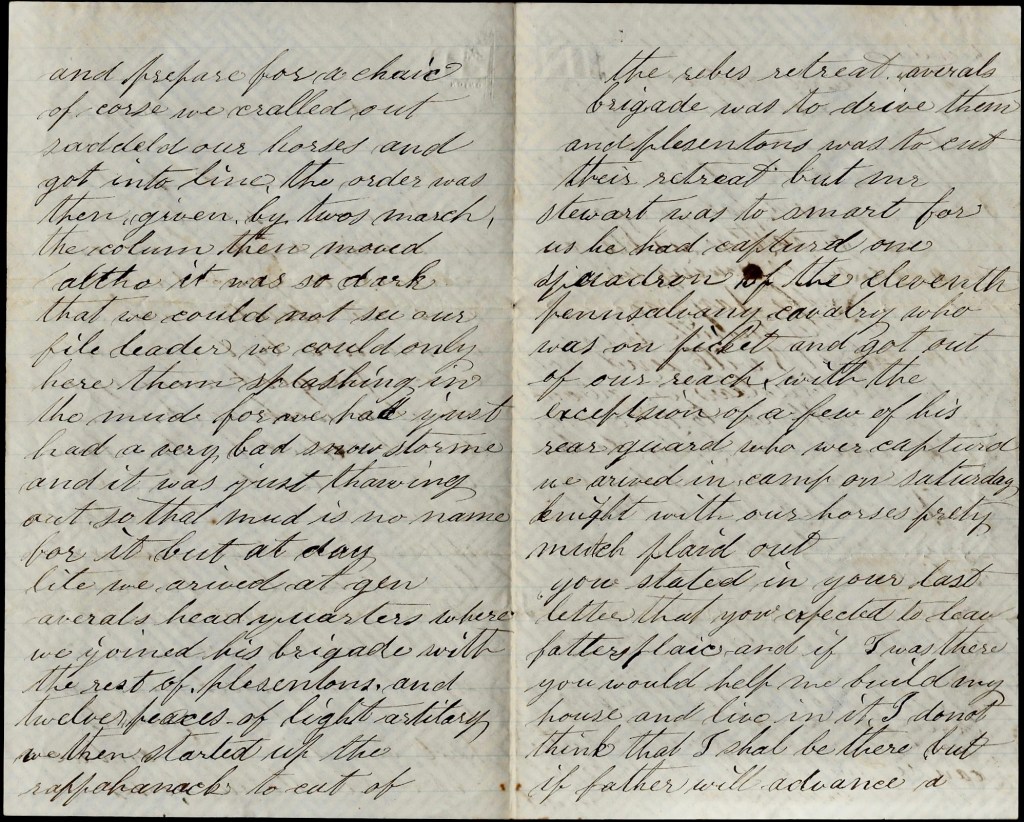
I again have the opportunity of writing a few lines in answer to your last letter which was duly received. We have now left our winter camp for good, arriving here about a week ago. But we do not expect to stay here but a short time. We have had another raid after the reb General [J. E. B.] Stuart but as usual, he has got through safe and sound. Last Thursday morning about 1 o’clock, news came to camp that our pickets had been driven in and we was to saddle our horses and prepare for a chase. Of course we crawled out, saddled our horses and got into line. The order was given by twos, march. The column then moved although it was so dark that we could not see our file leader. We could only hear them splashing in the mud for we had just had a very bad snow storm and it was just thawing out so that mud is no name for it. But at daylight we arrived at Gen. Averell’s Headquarters where we joined his brigade with the rest of Pleasanton’s and twelve pieces of light artillery. We then started up the Rappahannock to cut off the rebs retreat.
Averell’s Brigade was to drive them and Pleasanton’s was to cut their retreat but Mr. Stuart was too smart for us. He had captured one squadron of the 11th Pennsylvania Cavalry who was on picket and got out of our reach with the exception of a few of his rear guard who were captured. We arrived in camp on Saturday night with our horses pretty much played out.
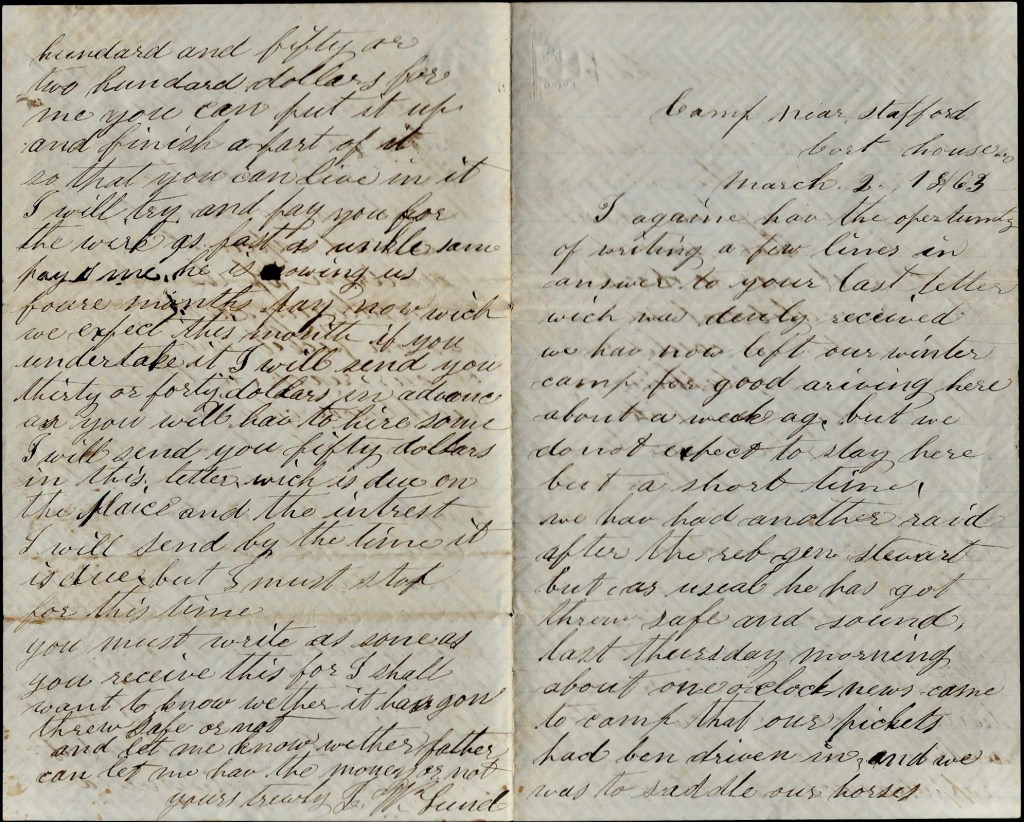
You stated in your last letter that you expected to leave Father’s place and if I was there you could help me build my house and live in it. I don’t think that I shall be there but if Father will advance a hundred and fifty dollars for me, you can put it up and finish a part of it so that you can live in it. I will try and pay you for the work as fast as Uncle Sam pays me. He is owing us four months pay now which we expect this month. If you undertake it, I will send you thirty or forty dollars in advance and you will have to hire some. I will send you fifty dollars in this letter which is due on the place and the interest I will send by the time it is due. But I must stop for this time.
You must write as soon as you receive this for I shall want to know whether it has gone through safe or not. And let me know whether Father can let me have the money or not. Most truly, — J. W. Lund
Letter 12
Camp near Stafford Court House
March 28th, 1863
Brother & Sister & friends,
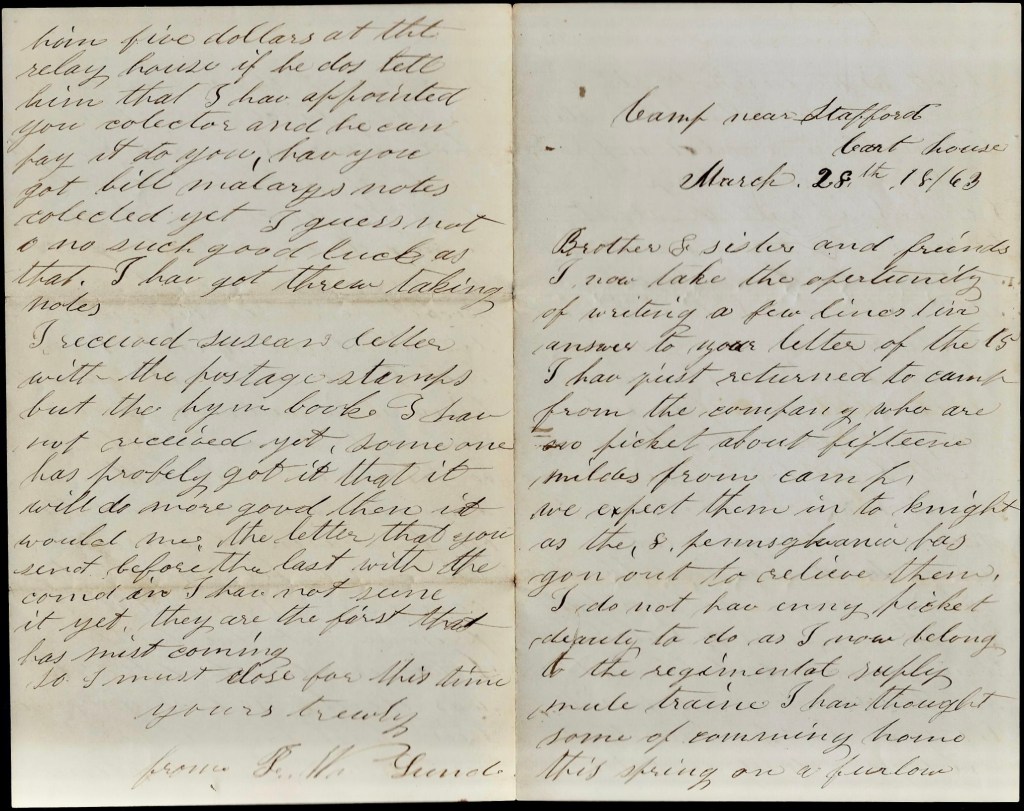
I now take the opportunity of writing a few lines in answer to your letter of the 15th. I have just returned to camp from the company who are on picket about fifteen miles from camp. We expect them in tonight as the 8th Pennsylvania has gone out to relieve them. I do not have any picket duty to do as I now belong to the regimental supply mule train. I have thought some of coming home this spring on a furlough but as we cannot get a pass for longer than 10 days, I thought it would not pay so I have given it up. I think it will be about 18 months before I shall come, if I should be so lucky as to come at all for I do not see as the war is any nearer to a close than it was a year ago.
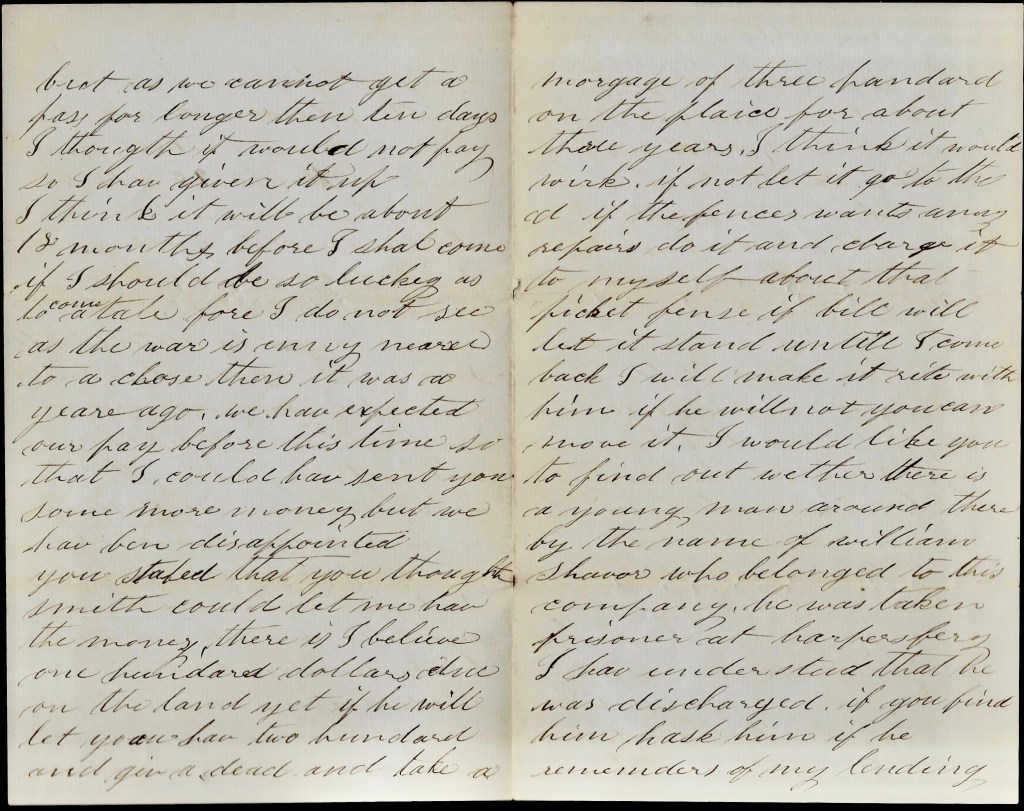
We have expected our pay before this time so that I could have sent you some more money but we have been disappointed. You stated that you thought Smith could let me have the money. There is, I believe, one hundred dollars due on the land yet. If he will let you have two hundred and give a deed and take a mortgage of three hundred on the place for about three years, I think it would work. If not. let it go to the devil. If the fences wants any repairs, do it and charge it to myself. About that picket fence, if Bill will let it stand until I come back, I will make it right with him. If he will not, you can move it.
I would like you to find out whether there is a young man around there by the name of William Shavor who belonged to this company. He was taken prisoner at Harper’s Ferry. I have understood that he was discharged. If you find him, ask him if he remembers of my lending him five dollars at that Relay House. If he does, tell him that I have appointed you collector and he can pay it to you. Have you got Bill Mallory’s notes collected yet? I guess not. No such good luck as that. I have got through taking notes.
I received Susan’s letter with the postage stamps but the hymn book I have not received yet. Someone has probably got it that it will do more good than it would me. The letter that you sent before the last with the comb in I have not seen it yet. They are the first that has missed coming. So I must close for this time. Yours truly, — J. W. Lund
Letter 13
Potomac Station, Va.
May 16, 1863
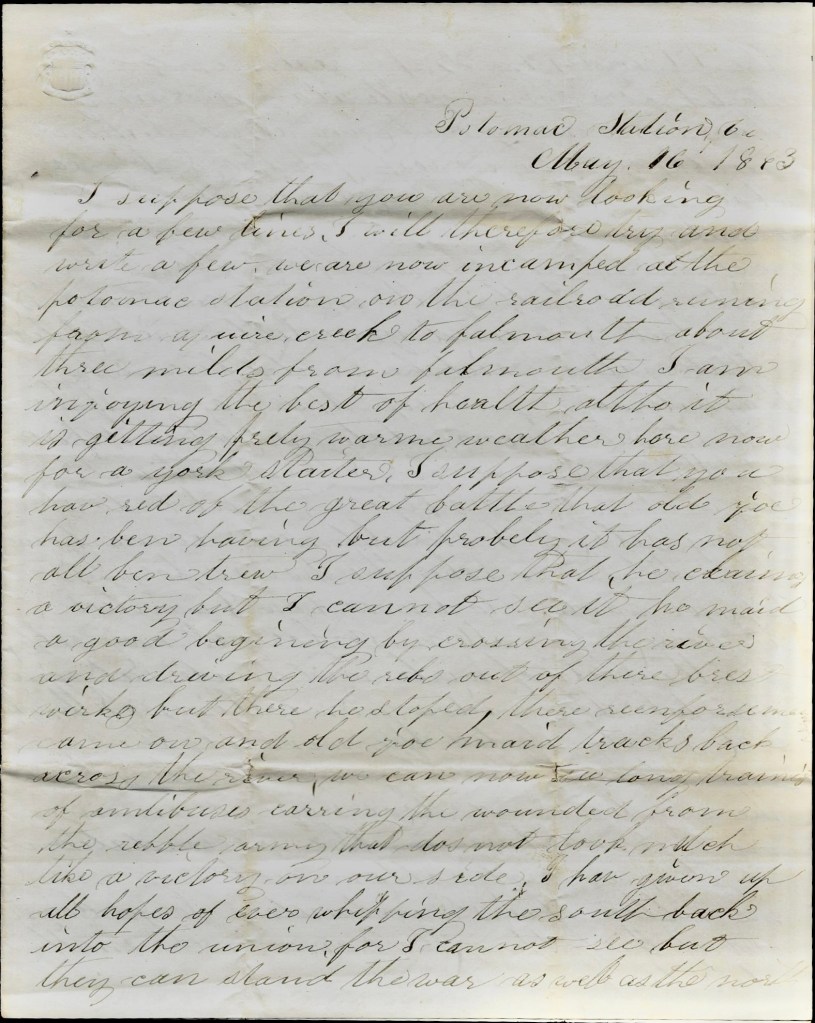
I suppose that you are now looking for a few lines. I will therefore try and write a few. We are now encamped at the Potomac Station on the railroad running from Acquia Creek to Falmouth about three miles from Falmouth. I am enjoying the best of health although it is getting pretty warm weather here now for a York stater. I suppose that you have read of the great battle that Old Joe [Hooker] has been having but probably it has not all been true. I suppose that he is claiming a victory but I cannot see it. He made a good beginning by crossing the river and drawing the rebs out of their breastworks but there he stopped. Their reinforcements came on and Old Joe made tracks back across the river. We can now see long trains of ambulances carrying the wounded from the rebel army. That does not look much like a victory on our side. I have given up all hopes of ever whipping the South back into the Union for I cannot see but they can stand the war as well as the North.
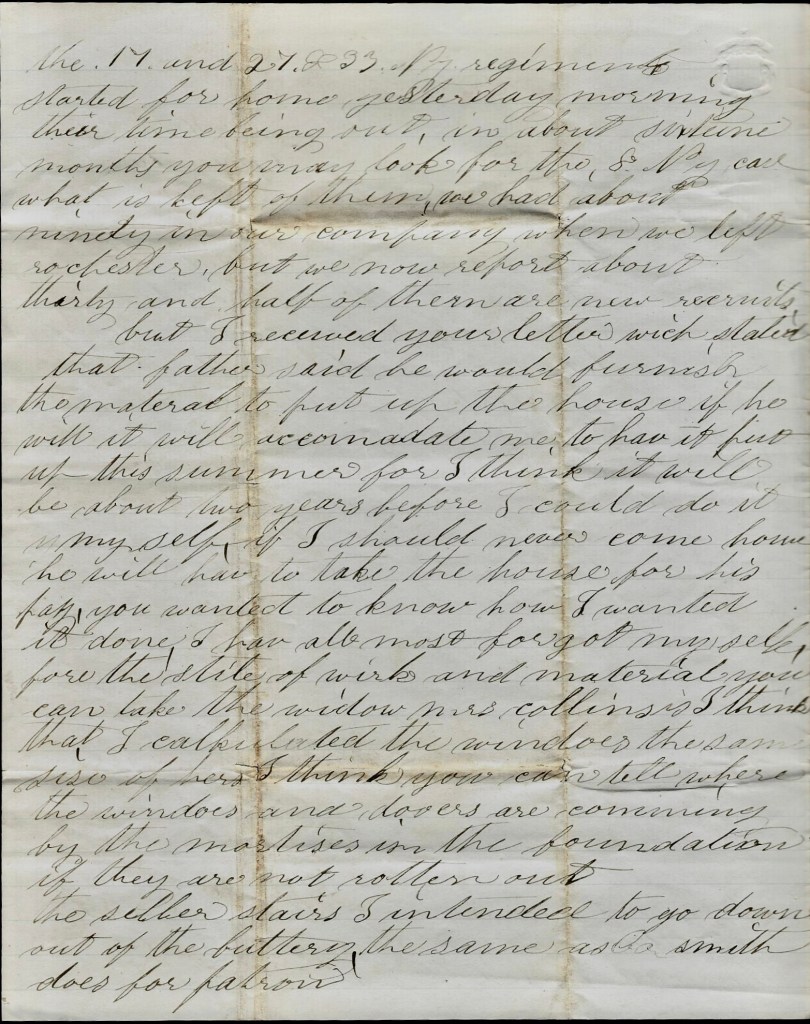
The 17th and 27th & 33rd New York Regiments started for home yesterday morning, their time being out. In about sixteen months you may look for the 8th New York Cavalry—what is left of them. We had about ninety in our company when we left Rochester but we now report about thirty and half of them are new recruits.
But I received your letter which stated that Father said he would furnish the material to put up the house. If he will accommodate me to have it put up this summer for I think it will be about two years before I could do it myself. If I should never come home he will have to take the house for his pay. You wanted to know how I wanted it done. I have almost forgot myself for the style of work and material. You can take the widow Mrs. Collins’. I think that I calculated the windows the same size as hers. I think you can tell where the windows and doors are coming by the mortises in the foundation, if they are not rotted out. The cellar stairs I intended to go down out of the buttery, the same as Mr. Smith does for patrons.
It will suit me if you do not get it exactly as I intended it if you can make it work. If you undertake it, I want you should let me know how you want to do it. You can do it by the day or take it by the job and how much. I will send you forty dollars in this letter which you can have in advance if you do it. If not, I want you should salt it down for me. I do not want no man’s note for it. I think that I have wrote all that I can think of at present. — J. W. Lund
A few lines to Louisa.
Miss Louisa, it was with pleasure that I read those few lines which you wrote me. I did not think that you was so far advanced in writing. I think it was done well. I should like to be there to some of your celebrations. I think you are having pretty nice times. You must go to school and study. Get a good education. It is what will make you great when you are a grown up. I will send you and CHarley a little book to read from the Army of the Potomac. So no more. You must write again. From — J. W. Lind

 Spared & Shared 23