
The following letter was penned by Sarah Abigail (“Abbie”) Jenness (1843-1916), the daughter of Joseph Jenness (1813-1886) and Elizabeth J. Hawkins (1813-1903) of Wolfeboro, Carroll county, New Hampshire. In the 1860 US Census, Sarah was enumerated in her parents’ farmhouse and employed as a 16-year-old school teacher. What emotions stirred within her as she witnessed the boys of her generation enlisting to preserve the Union? Did she surrender her heart to a soldier who never returned from the war? Did tears fall as Wolfeboro revealed the Civil War Monument in 1914, just two years before she met her tragic end in a fire that engulfed her entire home on the Cotton Valley road in Wolfeboro?
Sarah defied societal norms by never getting married. Surprisingly, despite her remarkable achievements, there are no online obituaries for her. She was one of “nine young ladies” in the graduating class of the 1864 Abbott Female Academy in Andover, New Hampshire. Unbelievably, she resided at 431 Shawmut Avenue in Boston in the 1890s, earning a living as a physician! It’s fascinating to note that Sarah graduated from the Boston Medical College in 1889 at the age of 45. She dedicated herself to practicing medicine in Boston, providing care for the underprivileged for a couple of decades before eventually returning to Wolfeboro.
The following letter sheds light on another fascinating aspect of Sarah’s extraordinary life. It reveals that Sarah was residing in Savannah in March 1867, and a search through Ancestry.com records uncovers her role as one of seven teachers in the city, funded by the Freedmen’s Bureau—undoubtedly instructing former slaves. At the time this particular Bureau record was created in 1867, 458 females were enrolled in the school which had a total of 604 students. For more information, visit: https://www.wjcl.com/article/black-history-profile-beach-institute/46826174
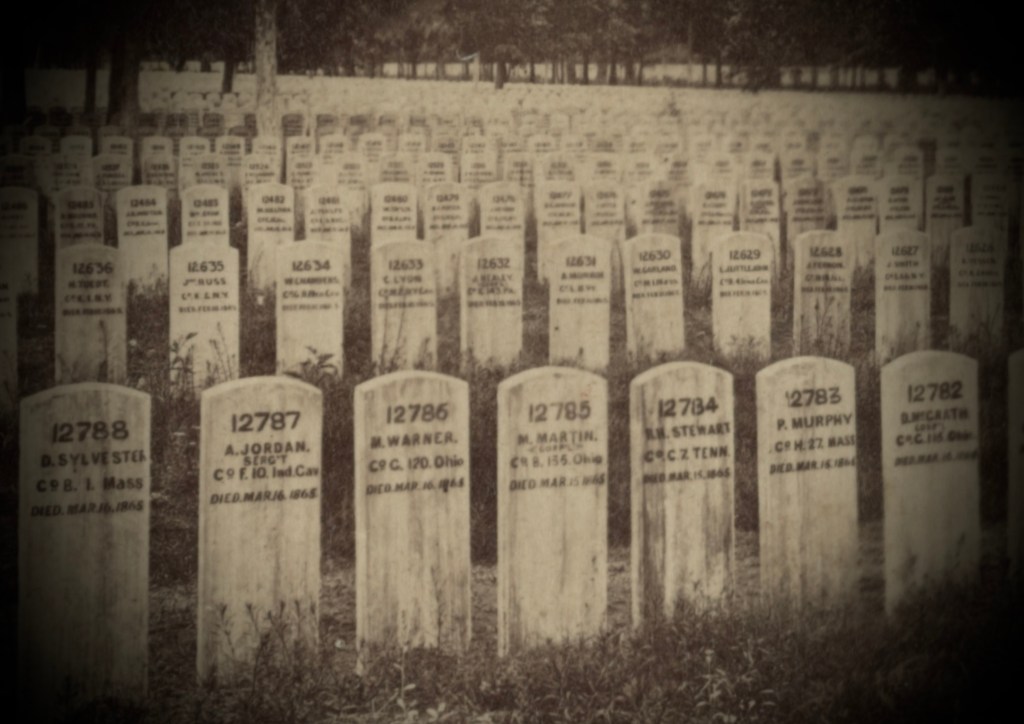
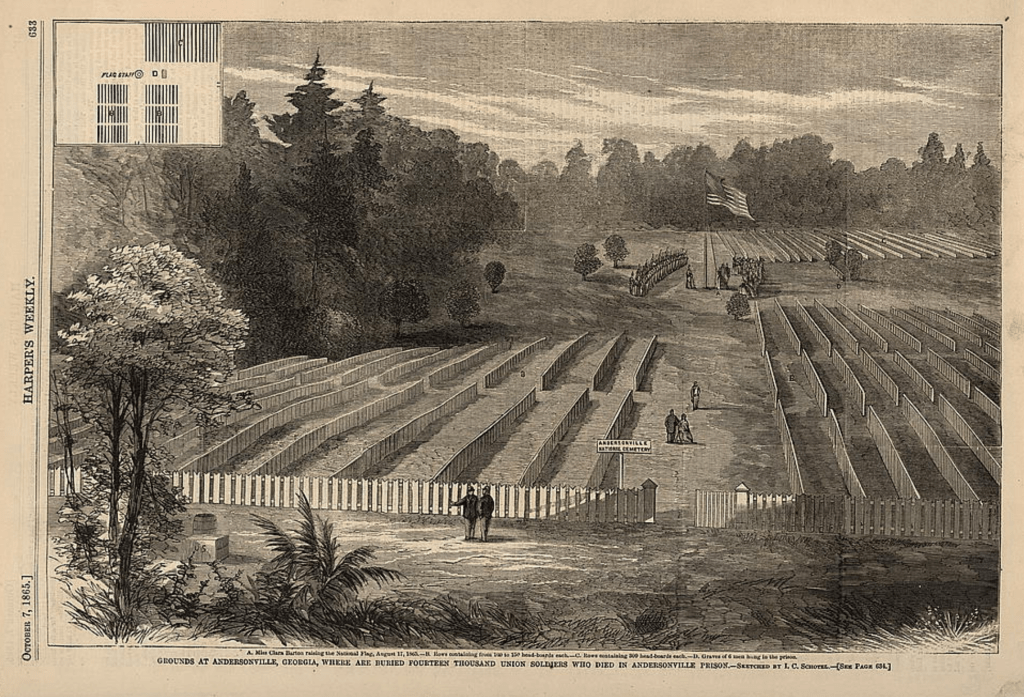
We are also informed in the letter that Sarah had a recent opportunity to visit the Andersonville Prison site in Sumter county, Georgia. During her visit, she took the time to honor the memory of the soldiers who lost their lives while detained there, some of whom were acquaintances. Among them was John Walter Cotton Avery (1835-1864) of Co. G, 1st Massachusetts Heavy Artillery, laid to rest in Grave 4065. He was the son of Walter Avery (1796-1874) and Sally Cotton (1795-1869), neighbors from Wolfeboro, who tragically lost their two youngest sons in the war. In addition to John, they also mourned the loss of Leonidas J. Avery (1839-1863) of Co. B, 16th New Hampshire Infantry, who succumbed to illness at Port Hudson in July 1863.
The following letter is from the personal collection of Greg Herr and was transcribed, researched and published on Spared & Shared by express consent.
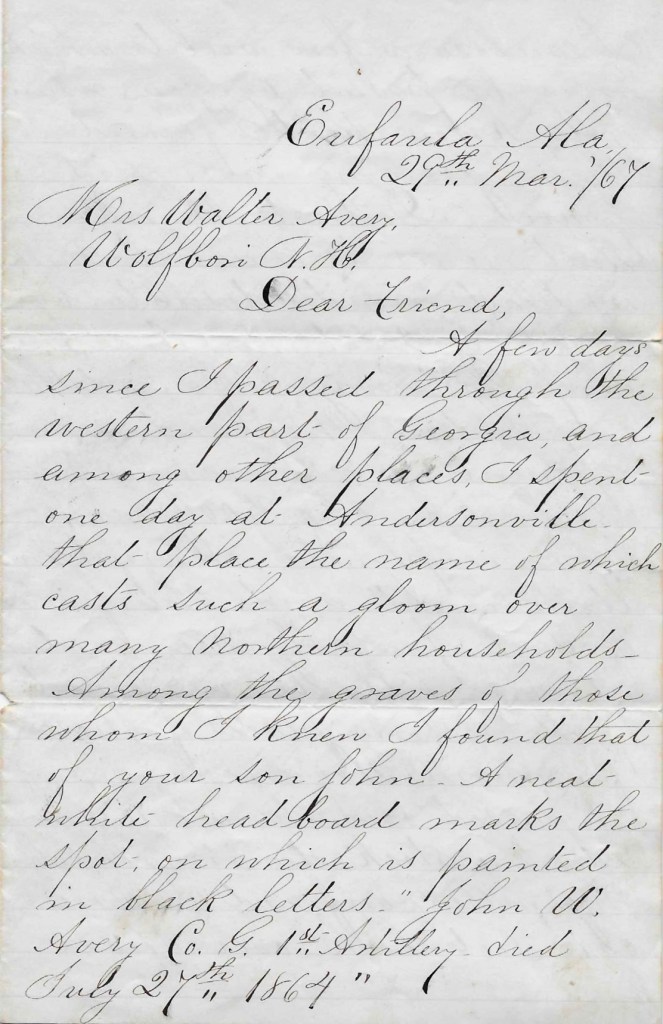
Transcription
Eufaula, Alabama
29th March 1867
Mrs. Walter Avery
Wolf[e]boro, N. H.
Dear Friend,
A few days since I passed through the western part of Georgia, and among other places, I spent one day at Andersonville—that place the name of which casts such a gloom over many northern households. Among the graves of those whom I knew, I found that of your son John. A neat white head board marks the spot on which is painted in black letters, “John W. Avery, Co. G, 1st Artillery. Died July 27th 1864.”
I enclose a few violets which may be prized by you when you know that I found them growing near his grave. Do not think that yours is the only mother’s heart made desolate by knowing that her dear ones sleep far away. I found there over thirteen thousand graves representing as many saddened homes. Over 500 graves bear simply the inscription “unknown” and the friends of such probably are, and always will be ignorant of the resting place of those for whom they mourn.
I passed over the whole ground, saw the stockade in which they were confined, &c. One cannot look over those places without feeling that the cruelty practiced upon our prisoners there was but the legitimate result, caused by the unrighteous system of human slavery—a system which fostered and strengthened all the cruelty of the Southern people. Thank God the blood of our martyred soldiers was not shed without removing that curse from our land.
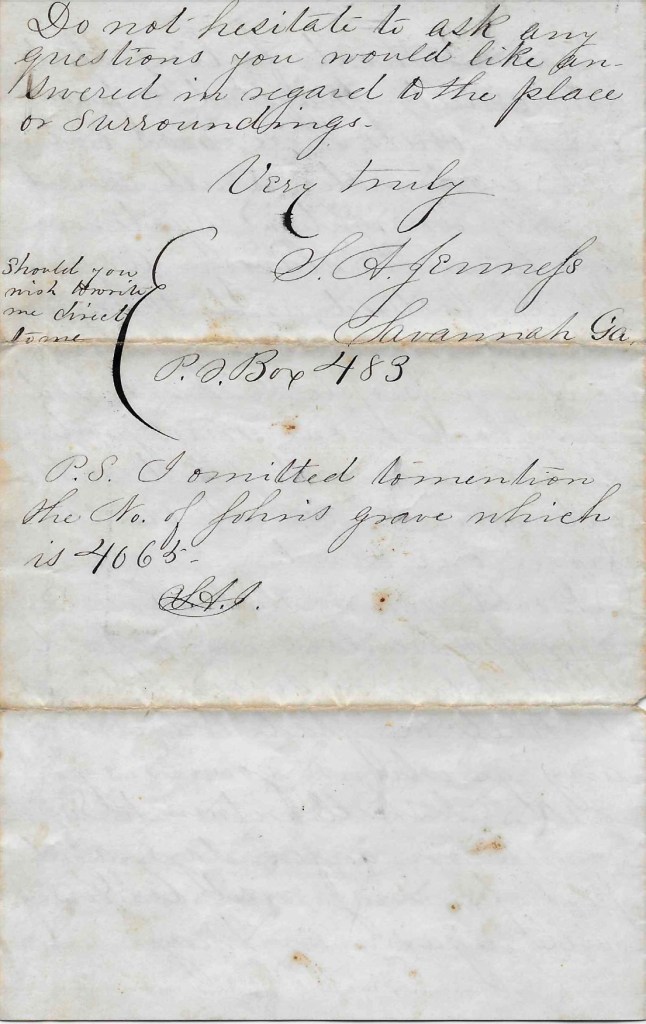
Should you wish to know any particulars in regard to the place or surroundings, I shall be glad to answer any questions you may ask. I shall return to Savannah in a few days and perhaps may visit Andersonville again in May. Do not hesitate to ask any questions you would like answered in regard to the place or surroundings.
Very truly, — S. A. Jenness, Savannah, Ga. P. O. Box 483
P. S. I omitted to mention the No. of John’s grave which is 4065. — S. A. J.

 Spared & Shared 23