
The following letter was written by George W. Hiltner (1842-1910) of Plymouth, Montgomery county, Pennsylvania who was working as a butcher when he enlisted at the age of 19 on 27 September 1861 at Norristown in Co. F, 51st Pennsylvania Infantry. He reenlisted in January 1864 and was promoted a sergeant in April 1865.
George was the son of George Hiltner (1804-1882) and Mary Ann Kulp (1811-1851) but wrote this letter to his step-mother, Maria B. Rapine.
The 51st Pennsylvania might best be remembered for their successful crossing of the Burnside Bridge at Antietam later in 1862, but this letter describes their participation on the Burnside Expedition in which they first captured Roanoke Island and then the City of New Bern, North Carolina. [See a “Bridge for Whiskey: The 51st Pennsylvania and Its Famous Request Examined” by Kevin Pawlak]
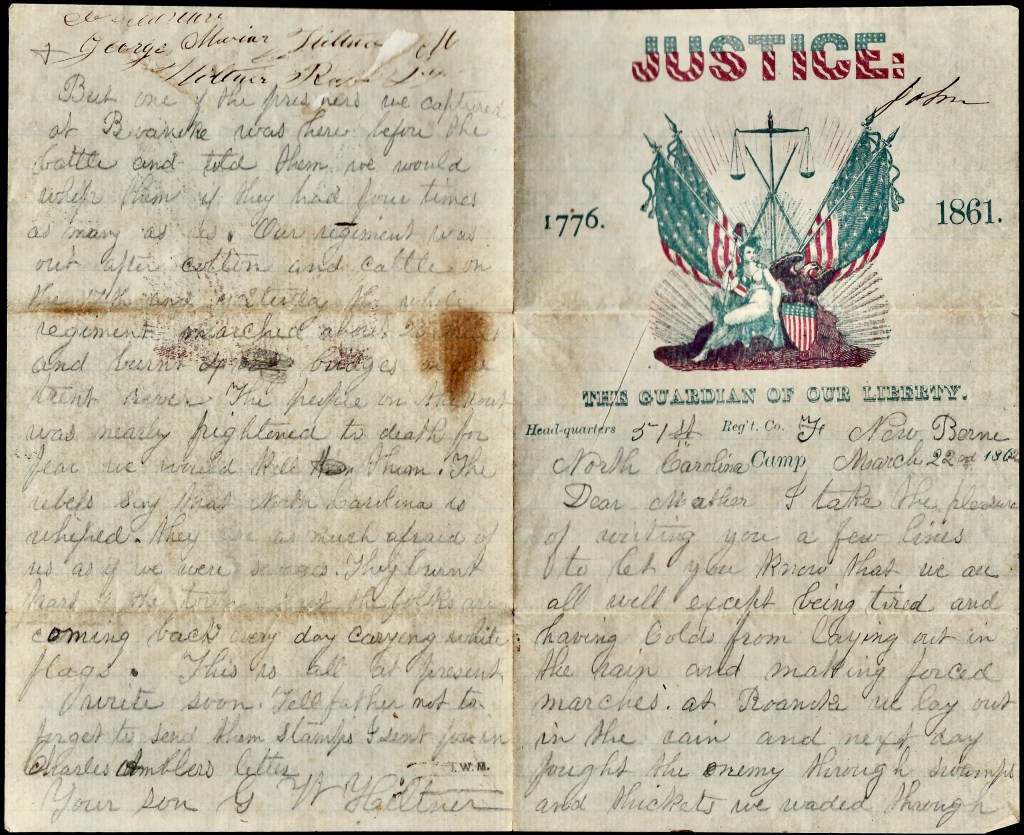
Transcription
Headquarters 51st Regt., Co. F
New Bern, North Carolina
March 22nd 1862
Dear Mother,
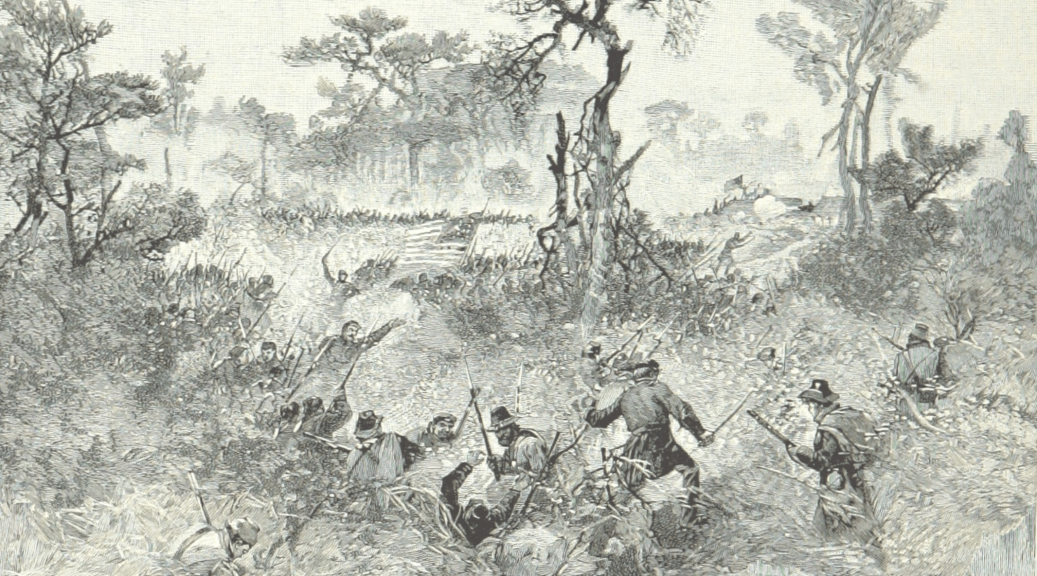
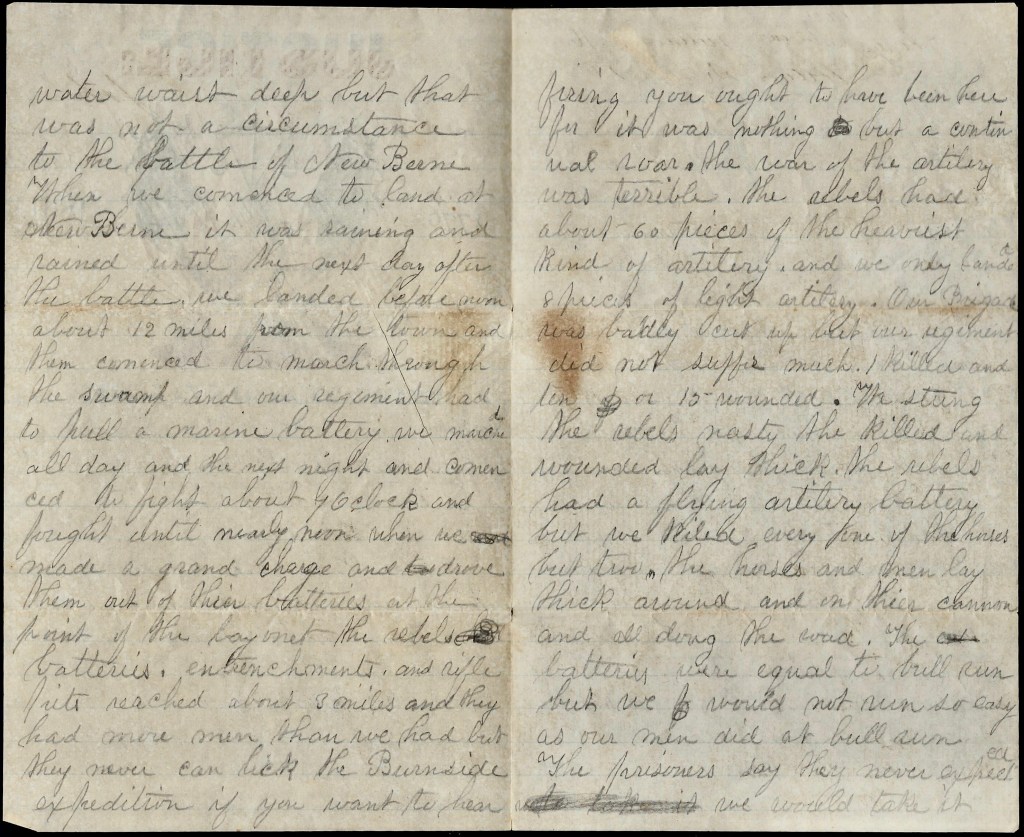
I take the pleasure of writing you a few lines to let you know that we are all well except being tired and having colds from laying out in the rain and making forced marches. At Roanoke we lay out in the rain and next day fought the enemy through swamps and thickets. We waded through water waist deep but that was not a circumstance to the Battle of New Bern. When we commenced to land at New Bern, it was raining and rained until the next day & after the battle. We landed before noon about 12 miles from the town and then commenced to march through the swamp and our regiment had to pull a marine battery. We marched all day and the next night and commenced the fight about 7 o’clock and fought until nearly noon when we made a grand charge and drove them out of their batteries at the point of the bayonet.
The rebel’s batteries, entrenchments, and rifle pits reached about 3 miles and they had more men than we had, but they never can lick the Burnside Expedition. If you want at to hear firing, you ought to have been here for it was nothing but a continuous roar. The roar of the artillery was terrible. The rebels had about 60 pieces of the heaviest kind of artillery and we only landed 8 pieces of light artillery. Our Brigade was badly cut up but our regiment did not suffer much—1 killed and ten or 15 wounded. We stung the rebels nasty. The killed and wounded lay thick. The rebels had a flying artillery battery but we killed every one of the horses but two. The horses and men lay thick around and on their cannon and all along the road. The batteries were equal to Bull Run but we would not run so easy as our men did at Bull Run.
The prisoners say they never expected we would take it but one of the prisoners we captured at Roanoke was here before the battle and told them we would whip them if they had four times as many as us. Our regiment was out after cotton and cattle on the 17th and yesterday the whole regiment marched about 25 miles and burnt 4 bridges on the Trent river. The people on the rout was nearly frightened to death for fear we would kill them. The rebels say that North Carolina is whipped. They are as much afraid of us as if we were savages. They burnt part of the town but the folks are coming back everyday carrying white flags. This is all at present. Write soon. Tell father not to forget to send them stamps I sent for in Charles Ambler’s letter.
Your son, — G. W. Hiltner
 Spared & Shared 23