
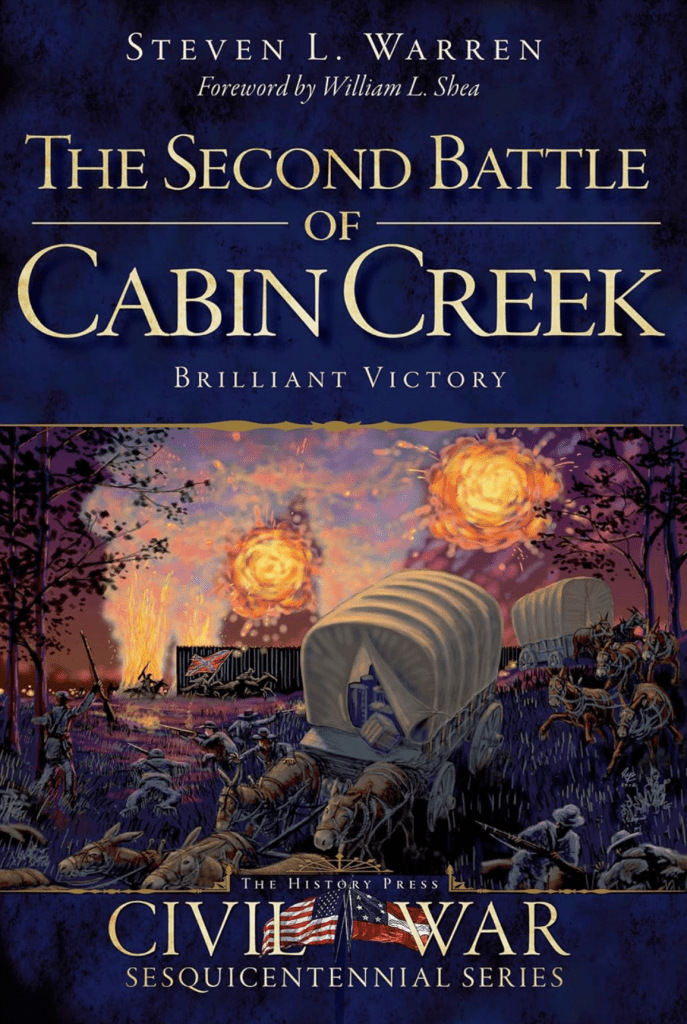
The following rare letter was penned by John M. Davis while serving in Gano’s Brigade in the fall of 1864. He datelined his letter from their encampment near Boggy Depot following a raid north of the Arkansas River to capture a federal supply train from Fort Scott. The combined Confederate force of Texans and Native Americans found and captured the train after a pitched night battle at Cabin Creek, Cherokee Nation on Sept. 19, 1864.
“Watie’s mounted infantry and cavalry excelled at conducting raids on Federal supply lines and outposts. As time went on, Watie’s command included pro southern members of other tribes along with Cherokees. On September 19th, 1864, Watie’s command, along with some white Texas cavalry units under Brigadier General Richard Gano, teamed up to carry out an attack on a large Federal supply train and haying operation that was gathering forage for horses. The train consisted of 205 wagons, and left Fort Scott, Kansas on September 12th, bound for Fort Gibson, Indian Territory, and Fort Smith, Arkansas. It was escorted by both white cavalrymen from Kansas cavalry units as well as Union Cherokee cavalry. This successful and destructive raid occurred near Cabin Creek in the Indian Territory, and is often referred to as the Second Battle of Cabin Creek.” [Source: Iron Brigadier]
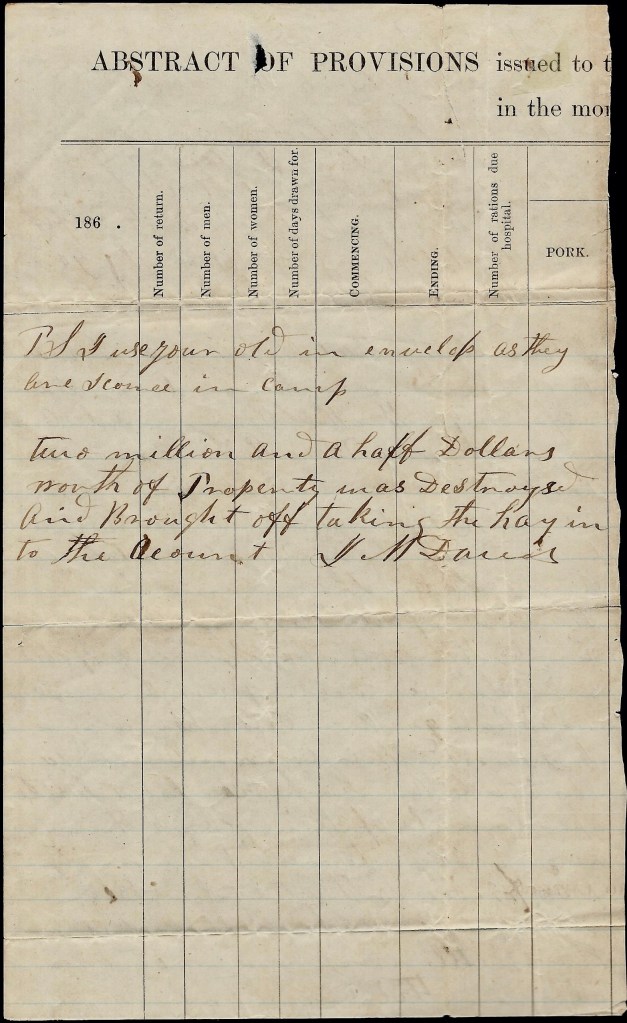
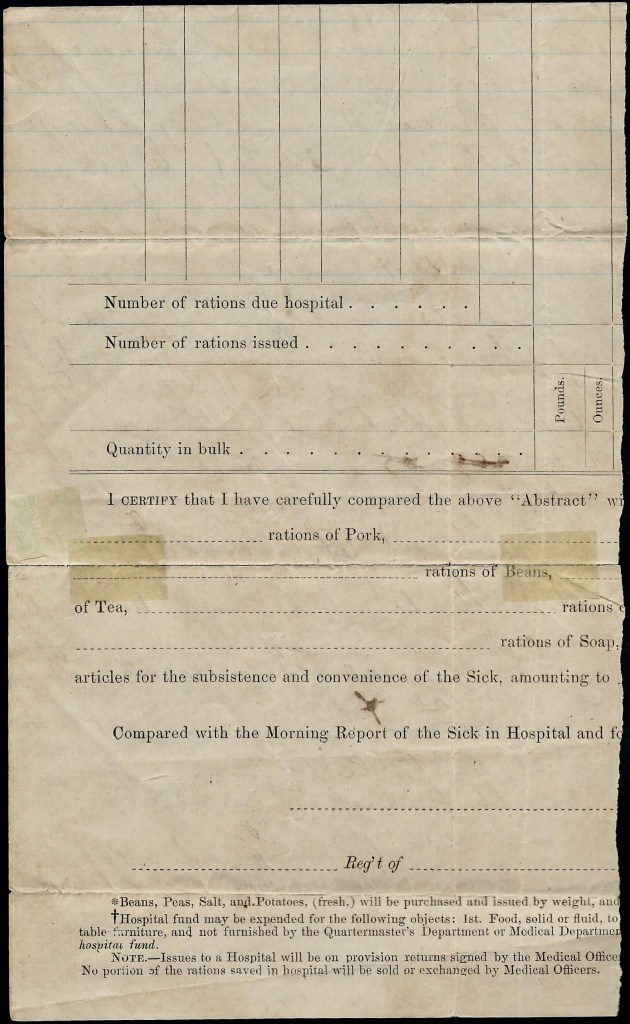
The letter was written on scraps of CSA Provision Forms, further evidence of the scarcity of paper. In his letter, Davis claims that “The boys are [now] dressed in Federal uniforms which saves our women a good deal of hard labor,” after raiding the federal stores.
Transcription
Near Boggy Depot, Choctaw Nation 1
October 6th 1864
Dear sir, I received your favor of the 1st September and I hasten to respond grateful for the blessings of Almighty God in being able so to do.
In relation to your inquiries, I am sorry that I am not situated to answer your questions satisfactory. Mr. Huddleston made a crop on the place this year. It produced good wheat every year it has been sown and made a good corn crop this year I am told by a neighbor that came from there a few days ago.
I went into the war the spring of ’62 and served one year and was discharged and last November I joined this command—Gano’s Brigade 2—and have had but little opportunity of seeing anything about your timber, but my impression is that it has been but little disturbed as there is but little improvement going on in the country.
This Brigade is moving toward Red River now, their horses being worn down by hard service. When we get to Red River I may get to go home. Then I will take a pleasure in giving you any information I can. Excuse this scribble. I am writing you on my mess box with a bad pen and am tired having marched 12 miles today. This Brigade is just off a heavy tour north of Arkansas River where we broke up two Federal stations, killing about 100 Indians and Federals, wounding a good many, taking 111 prisoners, destroying and bring off two million and a half of property wagons, mules, and supplies generally. The boys are dressed in Federal uniforms which saves our women a good deal of hard labor.
I would give you a full detail but duty calls me. I will frank this as I have no stamps. Yours, — John M. Davis
P. S. I use your old envelope as they are scarce in camp. Two million and a half dollars worth of property was destroyed and brought off taking in hay to the account. — J. M. Davis
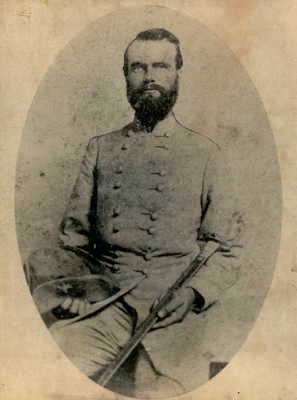
1 Boggy Depot was the location of the first Chickasaw agency in the West and served sometimes as the capital of the Choctaw Nation from 1858 to 1860. During the Civil War it housed the principal Confederate supply depot in Indian Territory. After the war a flour mill and a cotton gin operated northeast of town, and a salt works was established along nearby Salt Creek.
2 Gano’s Brigade existed from its formation in the summer of 1863 to its reassignment under Gen. Hamilton Bee in early 1865. Though the units that composed the brigade changed throughout its existence, they were the Twenty-ninth Texas Cavalry Regiment, the Thirtieth Texas Cavalry Regiment, the First Regiment Arizona Brigade, the Fifth Texas Partisan Rangers, the Thirty-third Texas Cavalry Regiment, Welch’s Texas Cavalry Company, Wells’s Texas Battalion, the Eleventh Texas Field Artillery Battery, and the Seventeenth Texas Field Artillery Battery. Throughout its history Gano’s Brigade fought alongside Confederate Indians, led by Gen. Stand Watie. The brigade’s actions mainly consisted of raids on Union supply trains and troops maneuvering in Arkansas and the Indian Territory.


 Spared & Shared 23