
The following letter was written by Capt. William Wesley Hull (1829-1897) of Co. H, 17th Illinois Infantry. Hull mustered into the regiment in May 1861 as a 1st Sergeant but was commissioned as Captain in April 1862.
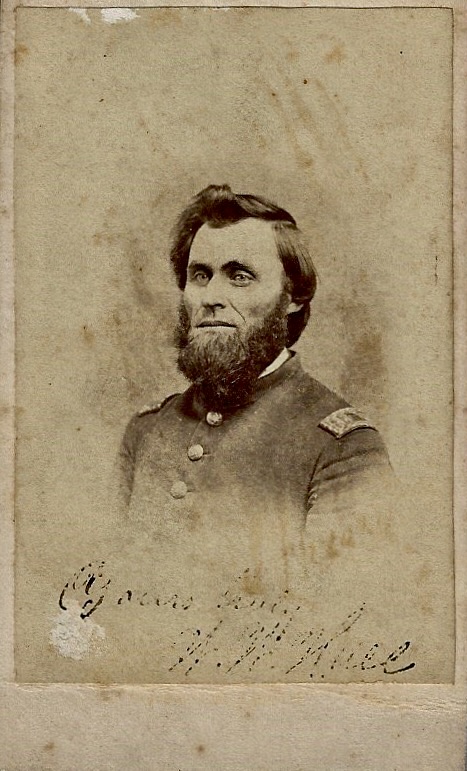
According to Hull’s obituary, he was born in Ohio and came to Fulton county, Illinois, with his father, Phillip Hull, in 1858, settling in Lewiston. When the war broke out, Captain Hull volunteered as a private in the 17th Illinois volunteers, and for gallant services on the field was promoted to the captaincy of company H in that regiment in 1862.” [The Chicago Chronicle, 17 August 1897]. Genealogical records inform us that his father was Phillip Hull (1795-1884) and his mother was Sarah McCracken (1801-1884). He was born in Zanesville, Muskingum county, Ohio. He was married to Mary Ann Messplay on 15 December 1862. After the war, Capt. Hull returned to Fulton county where he farmed and remained active in Republican politics.
Hull’s letter was addressed to Margaret (VanPelt) Millison, the widow of Pvt. John Millison (1828-1863). Private Millison served under Hull in Co. H and met his demise on June 15, 1863. At the time of his mortal injury on the picket line near Vicksburg, Millison was 35 years old. He left behind a wife and four children to bear the weight of his loss. His remains were never returned home, as he lies buried in Section G (Grave 4520) at the Vicksburg National Cemetery. Hull’s correspondence exemplifies the nature of letters that captains were frequently called upon to write. It is understandable that Hull described Millison’s injury with such graphic detail; after a year of penning similar missives, he recognized that widows often sought to understand the “particulars” surrounding their husbands’ deaths. Had he omitted this level of detail in his initial letter, he would likely have been compelled to write a follow-up at a later date.
Transcription
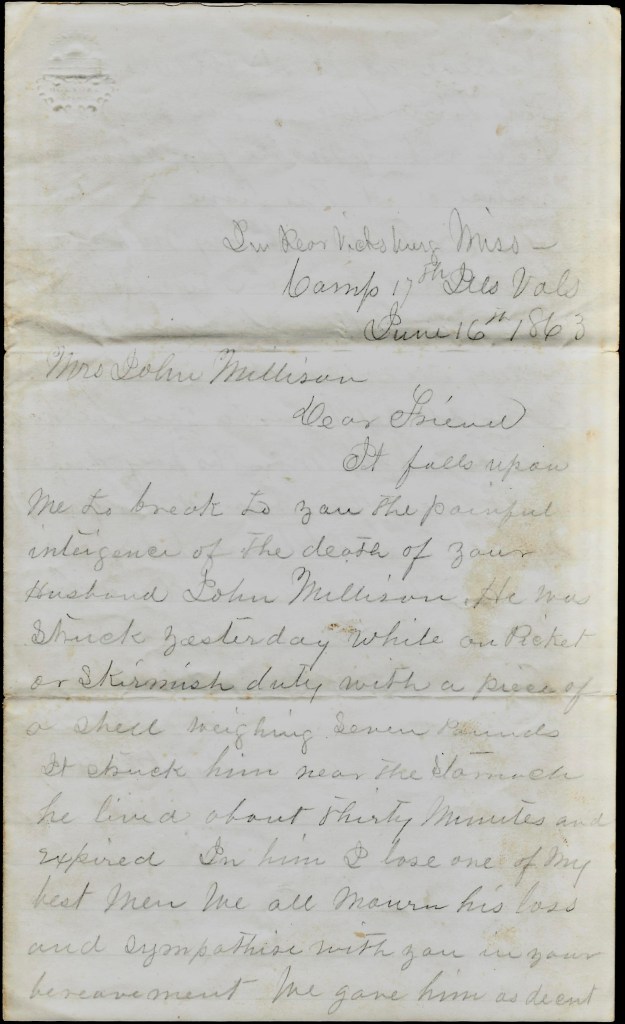
In rear Vicksburg, Mississippi
Camp 17th Illinois Vols
June 16th 1863
Mrs. John Millison,
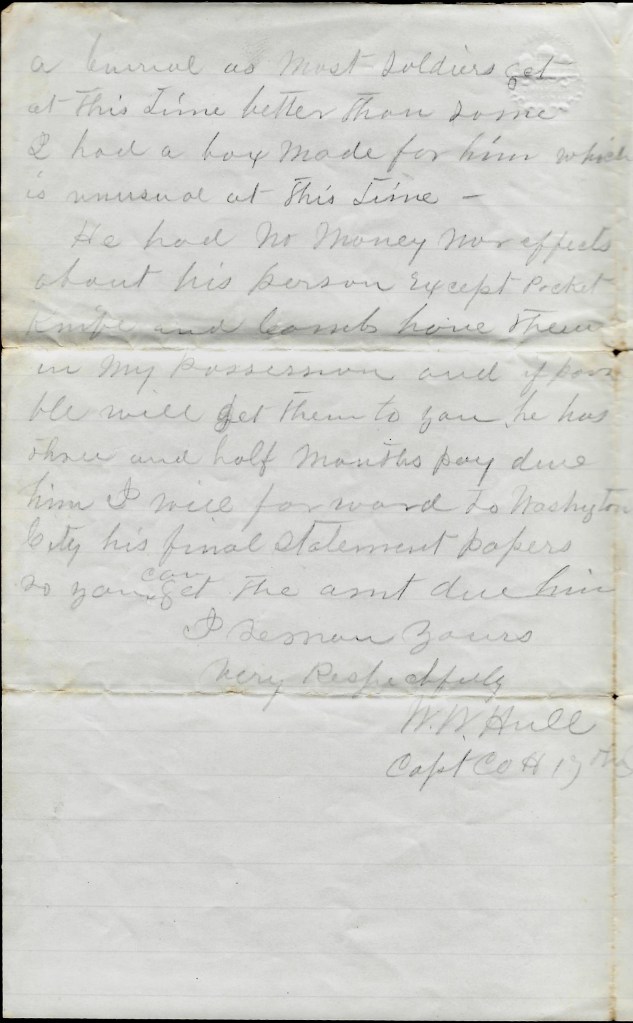
Dear friend, it falls upon me to break to you the painful intelligence of the death of your husband, John Millison. He was struck yesterday while on picket or skirmish duty with a piece of shell weighing seven pounds. It struck him near the stomach. He lived about thirty minutes and expired. In him I lose one of my best men. We all mourn his loss and sympathize with you in your bereavement. We gave him as decent a burial as most soldiers get at this time—better than some. I had a box made for him which is unusual at this time.
He had no money nor effects about his person except pocket knife and comb. Have them in my possession and if possible will get them to you. He has three and a half months pay due him. I will forward to Washington City his final statement papers so you can get the amount due him.
I remain yours very respectfully, — W. W. Hull, Capt., Co. H, 17th

 Spared & Shared 23