
The following letter was written by William Matthew Ratcliff (1833-1864), the son of William Ratcliff (1801-1895) and Lucinda Buckley (1809-1892) of Liberty, Sullivan county, New York. William was a graduate of Union College and Albany Law School in Albany, New York. He served as a lawyer and clerk for the Board of Supervisors for Sullivan County from 1857-1858. He was elected a Judge for Sullivan County on January 1, 1862. Yet, to serve his country, William joined the 143rd New York in August 1862, was commissioned 1st Lieutenant of Co. A, and was made the regimental adjutant in February 1863. He participated in the skirmishing at Suffolk and later at Lookout Valley. He was in the Battle of Chattanooga and at Dallas, Georgia. He was killed in the Battle of Peachtree Creek on 20 July 1864.
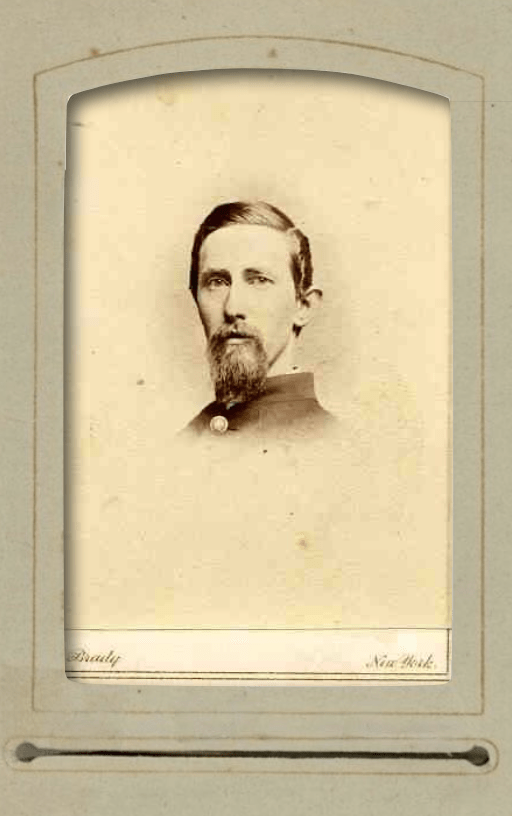
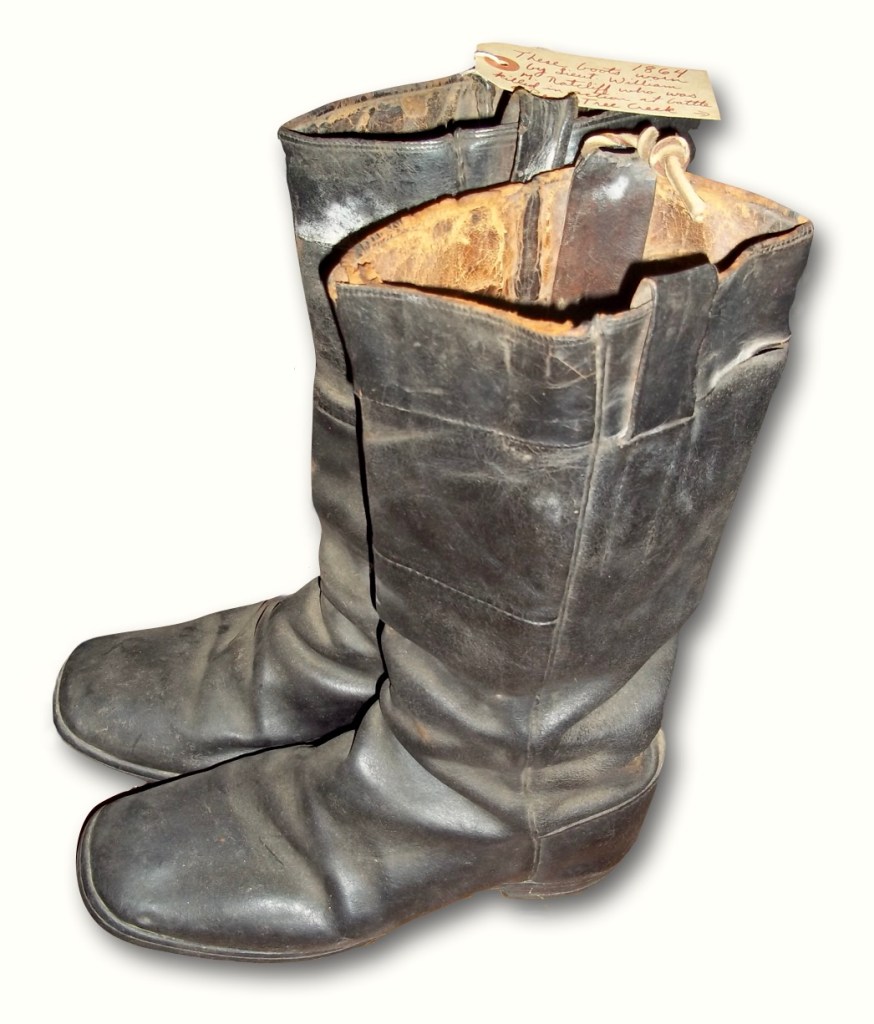
“On July 20th, while attempting to cross Peach ‘Tree Creek, the 20th Corps was furiously assaulted by hard pressed southern forces seeking to break out of the relentless iron cordon that was enveloping them. The 143rd, having established itself on a slight elevation covered with dense underbrush, was hit three times, but refused to give ground. Failing to force back the 20th Corps, the rebel forces now began an orderly retreat toward Atlanta. The victory was not obtained without a price, for “while encouraging the line” Adjutant William Radcliffe “was shot squarely in the front of the neck and killed instantly.” He was “Beloved by everyone,’ wrote the bearer of these sad tidings, Hezekiah Watkins. “Just as I was sitting here,” continued Watkins, “a German officer of the 82 Illinois Regiment, Captain Bruen, remarks: ‘I loved that man more than anyone else in this army’ and his testimony is the testimony of everyone who knew him. If possible his body will be embalmed and sent home, if not he will be buried here with those who loved him so well.'” [page 18, Brass Buttons and Leather Boots; Sullivan County and the Civil War, by Dr. Nathan Weiss.]
Likewise, a diary kept by Isaac Jelliff of the 143rd New York contained the following entry for 20-21 July 1864—the day that Adjutant Radcliffe was killed:
July 20th Wednesday. Hot. Marched forward at 7 A.M. Crossed Peach Tree creek & passed through the Breastwork put up last night by 2nd Div. Grary – Halted behind price of woods – artillery drill – took place for short time. No loss on our side. Marched little further & rested in woods – took dinner. Heavy picket firing in front all A.M. and about noon more rapid fire and charging – Four wounded carried by – 4 P.M. still lay in woods 2nd Div. have passed by – 4 ½ heavy firing with musketry & cannon. Loud yelling – fight increases – We ordered forward in double quick. Went short distance in woods & formed line. E. & W. moved a little forward, down the slope from ridge – bushes thick. Rebels got close to us on right we thought another line of battle in front of us – thought the rebel firing was of our men. We ordered not to fire. Did not till after many of 143rd – been killed or wounded. Rebels came close to our Regt. Our line moved about 8 rods back to the ridge and reformed. The fight became desperate. Firing rapid the 143d lost the most of their men on the first line…The rebels used many explosive balls – when they would strike a bone they would burst and tear a terrible hole in the part struck. In the engagement the 2nd Division was forced back to a line with 1st Div. The battle was hard along the center line. And loss heavy. 1st Div. held its ground. Many rebels were killed & many left on field. Three killed within 2 rods of our line. One of them hit by John Wales of Co. “A”. Regt. behaved well. All feel deeply the loss of Ratcliff. He died at his post. A true soldier. A noble office. One Ball through the Flag Sergt. Morgan’s carried it. His conduct was very commendable —A perfect soldier. The right wing was heavily exposed & suffered most...
July 21 Thursday Hot. All quiet this A. M. Our pickets advanced – many dead rebels still laying in woods in front of us. Ratcliff’s body is to be embalmed and sent home. Busy bringing dead. McWilliams Co. “A” died last night. Rec’d notice H.C. Lybolt Co. B. Entered Hospt. Genl. No General engagement today. Wrote home. The 31st Wisconsin joined our Brig. 750 strong.“
There is an epitaph on Ratcliff’s gravestone that was written by him in an article prior to his death. It says; ‘There is something worse than to pay heavy taxes to support the Government – it is to have no Government, and there is something even better than to live – it is to fall in defense of all that makes life valuable.’”
William wrote the letter to Elias Champlin (1810-1881) of Liberty, Sullivan county, New York.
Transcription
Camp 143 Regt. N.Y.S. Vols.
Near Upton Hill, Va.
January 22, 1863
Elias Champion, Esq.
Dear Sir,
Yours of the 15th inst. came to hand last Tuesday while doing picket duty about eight miles from camp on the Orange & Alexandria R. R. Since returning to camp, I have carefully examined the amount of Mrs. Buckley and have also consulted the boys whom she boarded. Her claim, according to the figures sent to me, is too large. The bill as returned and certified to by me allows her all that she ought to ask, and I am satisfied with all that she is entitled to. Because the government is to pay it, there is no reason that it should be larger than if coming from a private citizen. I do not in the least suppose that you know anything of the correctness of her account.
We have had a few days of cold weather, but it has turned off warmer and I am afraid the rainy season has commenced, as it is getting time and we have had two days steady rain and it is still cloudy. The health of the regiment is generally good. The second death in the regiment at camp was Thomas Abberley—a member of our company who died [at Upton’s Hill] on the 13th inst. Captain [Ira] Dorrance [of Co. E] lost a man two or three days ago. Altogether we have sent six men from our camp to the hospital at Washington. Of these, three have returned to duty, one regularly sent back, and two skedaddled from Convalescent Camp and joined us because they fared better in camp with the regiment than at the Convalescent Camp.
We have exchanged our old muskets for the Springfield Rifle, considered the best piece in the service. The Colonel [David P. Dewitt] effected the exchange without going to our Brigadier and he was much surprised to learn that we had them, as we are the only regiment in the brigade furnished with them.
How is the Fire Co.? I must make arrangements with someone to keep me up on dues. Remember me to all friends. Yours very truly, — Wm. M. Ratcliff


 Spared & Shared 23