
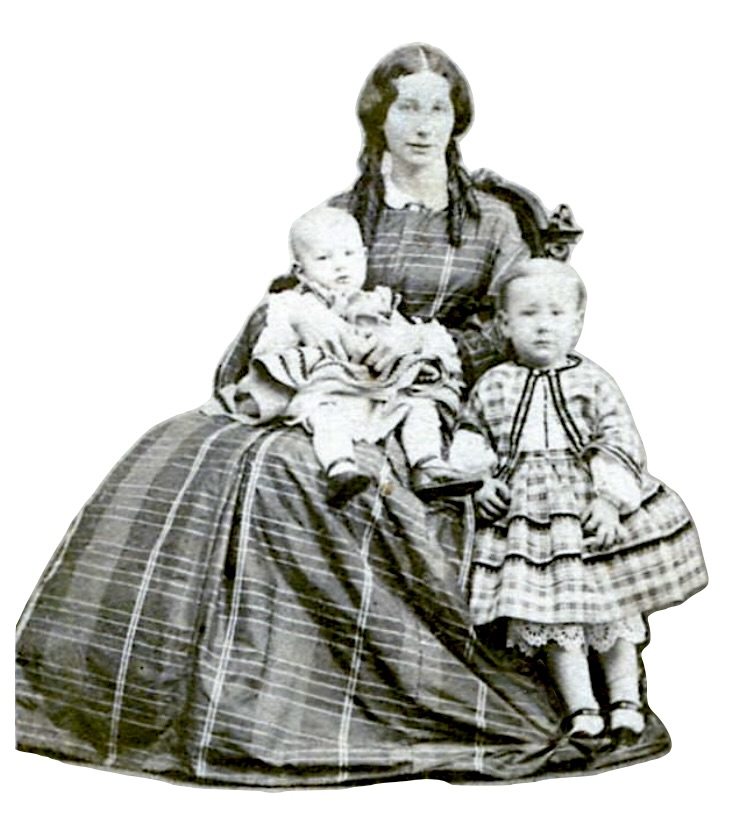
The following letter was penned by someone who signed their name and called themselves a “brother” to John Lowe Smith (1837-1917), a native of Scotland, of Essex county, Massachusetts. I was able to find John but his ancestral record is slim and if he had a brother named David, I could not find him. Likewise, I did not find a brother of John’s wife, Mary Elizabeth Barker (1841-1890), who was named David. John and Mary were married in Lawrence, Massachusetts in October 1859 and named their first-born child David so I think it’s likely he was an older brother of John’s.
I also have not been able to determine whether the author was a citizen traveling to California or whether he was in the Navy.
At the time of the 1860 US Census, John was enumerated in Andover, Essex county, Massachusetts, employed as an “ink maker.” In 1870, he was still in Andover and identified as a “merchant.” During the Civil War, John enlisted in Co. I, 35th Massachusetts Infantry. He wrote hundreds of letters to Mary from 1862-1865, during the Civil War. In one of his posts, he included a letter to his son Davy, along with burned fragments from the American flag which he had clipped away while repairing the colors. He asked his son to keep the clippings in a safe place because they were “part of the flag I’m fighting for.” One letter is preserved in the Library of Congress, dated 29 December 1864 from Petersburg, Virginia.
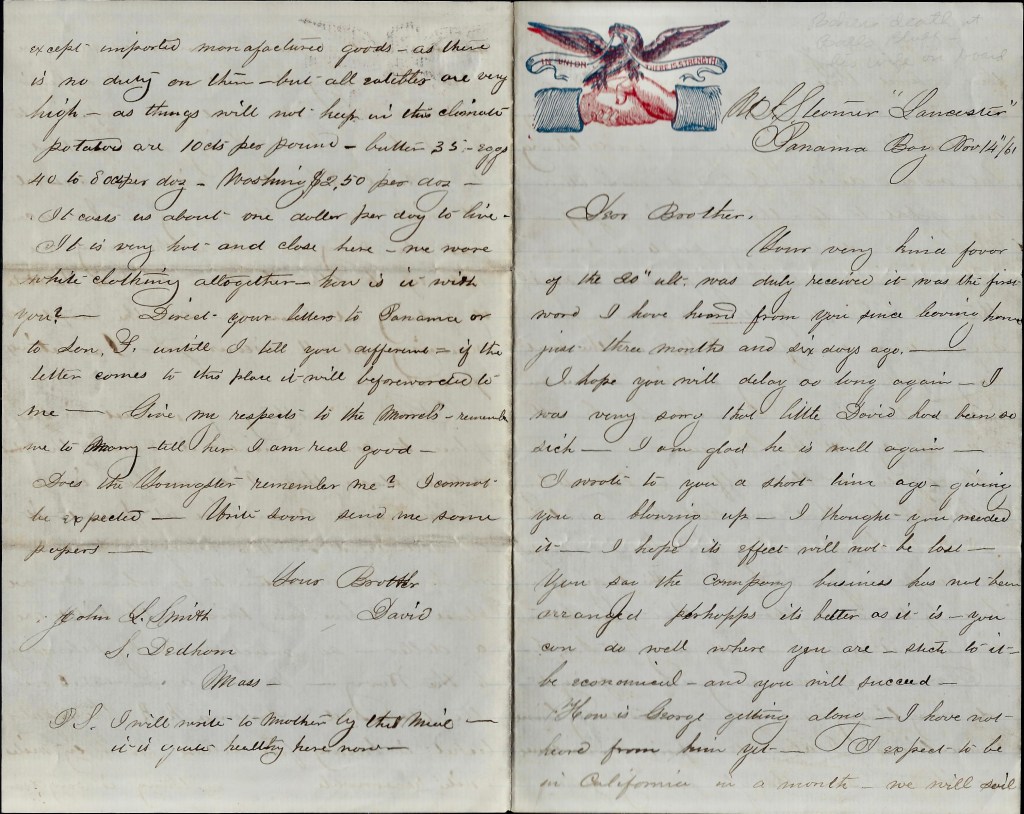
Transcription
U.S. Steamer Lancaster
Panama Bay
November 14, 1861
Dear Brother,
Your very kind favor of the 20th ult. was duly received. It was the first word I have heard from you since leaving home—just three months and six days ago. I hope you will [not] delay so long again. I was was very sorry that little David had been so sick. I am glad he is well again. Iwrote to you a short time ago giving you a blowing up. I thought you needed it. I hope its effect will not be lost.
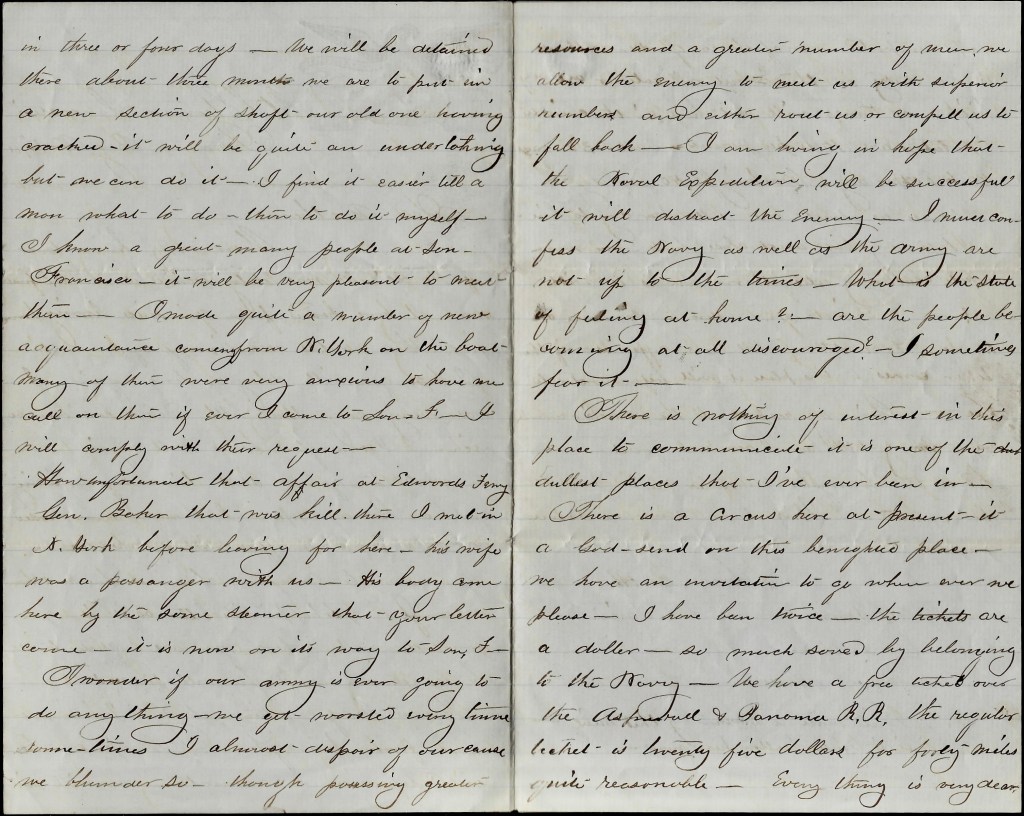
You say the company business has not been arranged. Perhaps it’s better as it is. You can do well where you are. Stick to it. Be economical, and you will succeed. How is George getting along? I have not heard from him yet.
I expect to be in California in a month. We will sail in three or four days. We are to put in a new section of shaft, our old one having cracked. It will be quite an undertaking but we can do it. I find it easier [to] tell a man what to do than to do it myself. I know a great many people at San Francisco. It will be very pleasant to meet them. I made quite a number of new acquaintance coming from New York on the boat. Many of them were very anxious to have me call on them if ever I come to San Francisco. I will comply with their request.
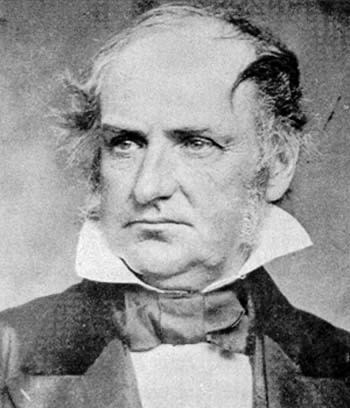
How unfortunate that affair at Edwards Ferry. Gen. [Edward D.] Baker that was killed there I met in New York before leaving for here. His wife was a passenger with us. His body came here by the same steamer that your letter come. It is now on its way to San Francisco. 1
I wonder if our army is ever going to do anything. We get worsted every time. Sometimes I almost despair of our cause—we blunder so. Though possessing greater resources and greater number of men, we allow the enemy to meet us with superior numbers and either rout us or compel us to fall back. I am living in hope that the Naval Expedition will be successful. It will distract the enemy. I must confess the Navy as well as the Army are not up to the times. What is the state of feeling at home? Are the people becoming at all discouraged? I sometimes fear it.
There is nothing of interest in this place to communicate. It is one of the dullest places that I’ve ever been in. There is a circus here at present. It is a God-send on this benighted place. We have an invitation to go whenever we please. I have been twice. The tickets are a dollar-so much saved by belonging to the Navy. We have a free ticket over the Aspinwall & Panama Railroad. The regular ticket is twenty-five dollars for forty miles—quite reasonable. Everything is very dear except imported manufactured goods as there is no duty on them, but all eatibles are very high, as things will not keep in this climate. Potatoes are 10 cts per pound, butter .35, eggs 40 to 80 cts per doz. Washing $2.50 per doz. It costs us about one dollar a day to live. It is very hot and close here. We wear white clothing altogether.
How is it with you? Direct your letters to Panama or to San Francisco until I tell you different. If the letter comes to this place, it will be forwarded to me. Give my respects to the Morrel’s. Remember me to Mary. Tell her I am real good.
Does the youngster remember me? I cannot be expected. Write soon. Send me some papers. Your brother, — David
[to] John L. Smith, S. Dedham, Massachusetts.
P. S. I will write to Mother by this mail. It is quite healthy here now.
1 Edward Dickinson Baker (1811-1861), a personal friend of Abraham Lincoln and a former Representative from Illinois, was killed at the Battle of Ball’s Bluff near Edwards Ferry on 21 October 1861 while serving as Colonel of the 71st Pennsylvania Infantry. Following his death, his body was taken to California where he had superintended the construction of the Panama Railroad and where he had practiced law for 8 years just before the Civil War. He is buried in the San Francisco National Cemetery. He was married to Mary Ann Lee in 1831 in Carrollton, Illinois.
 Spared & Shared 23