
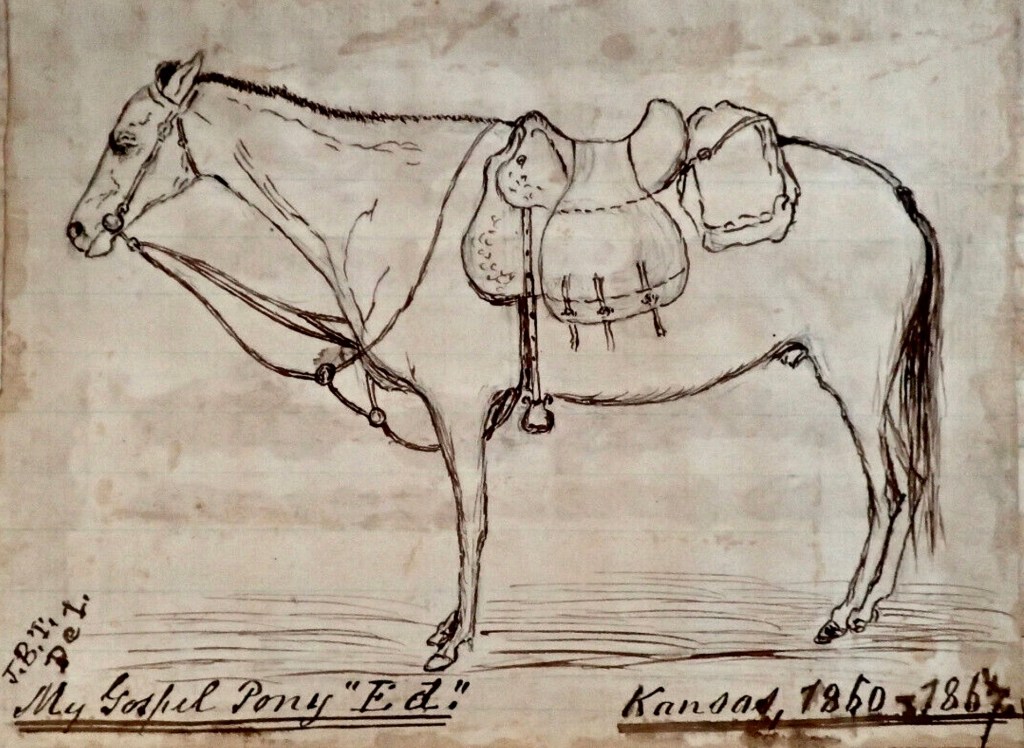
The following words were written by Jeremiah Brower (“J. B.”) Taylor (1817-1893), a New York City coal merchant from Stamford, Connecticut, who had earlier in his life attended Hamilton Literary & Theological Seminary and graduated from the University of the City of New York in 1848. Although licensed to preach by a New York Baptist church, he continued in his business until 1860. In that year he decided to become a Baptist missionary in Kansas. After conducting an exploratory visit to that state, he purchased land there and returned to Stamford in order to sell his house and prepare to move West with his family. On September 26, 1860 he was publicly set apart and ordained to the work of an Evangelist by a regular council of churches, in the Stamford Baptist Church.
The following is an account of J. B. Taylor’s visit to the Sac [Sauk] & Foxes Reservation in Kansas. I assume the account was written in 1863 but the pages I transcribed were not dated. The reservation occupied a tract of land on the headwaters of the Osage River 20 x 30 miles square, “bounded on the north by the Shawnee Reservation, on the east by the Chippeway and Ottawa Reservations, with the Osage Indians some distance south and the Kaws west at Council Grove.”
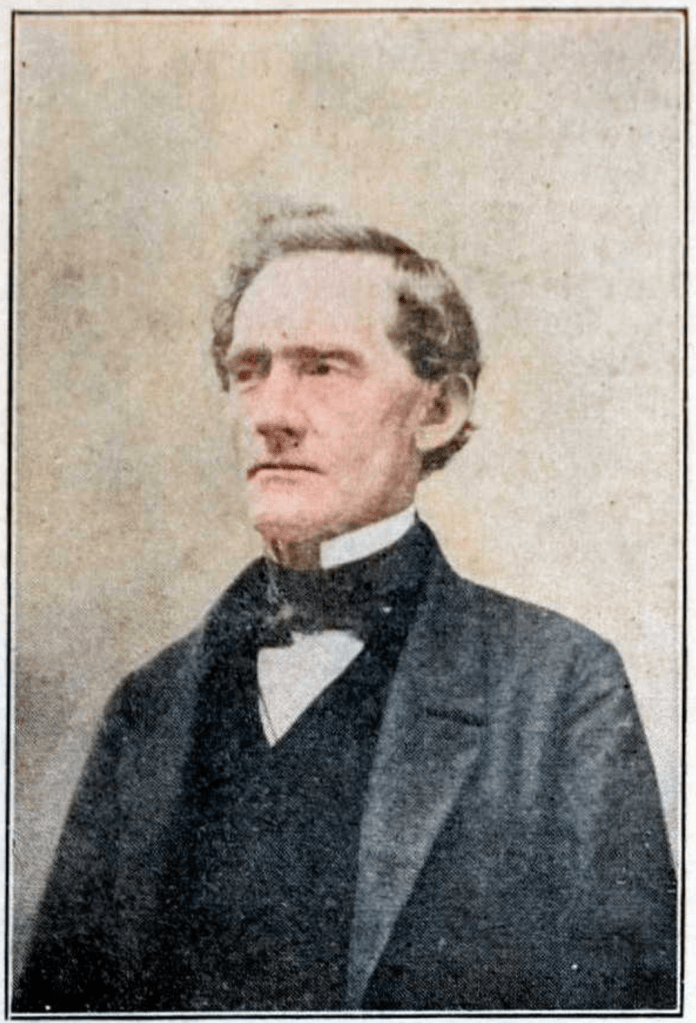
During his visit to the village where he found Chief Keokuk, Jr, J. B. Taylor was introduced to Henry Woodson Martin (1817-1901), who was appointed the Indian Agent for the Sac & Fox Tribes on October 1862 by President Abraham Lincoln. Martin was a native of Floyd county, Kentucky but had relocated to Paris, Edgar county, Illinois by 1837 where he married Catherine Morgan McReynolds (1822-1906). In the spring of 1856, he sold out his interest in a mercantile establishment and relocated to Kansas Territory, taking up residence in the fledging village of Tecumseh on the Kaw River—a few miles east of what would later become Topeka. Though there were pro-slavery settlers in their midst, the Martin’s found other like-minded, antislavery settlers who had come to the territory to make it a Free State. One of these families was my g-g-grandfather, Rev. James Sayre Griffing, a Methodist circuit rider who also made Tecumseh his home. No doubt the Martins attended church in the church my ancestor started in Tecumseh in 1856. He became a prominent merchant in Tecumseh and by 1860, he owned real property valued at $10,000 and had a personal estate of $8,000. Martin was a member of the Kansas State Legislature in 1862. In June 1862, he received appointment as a special agent to accompany a U.S. Army military expedition into Indian Territory to ensure the loyalty of the Native Americans in the Civil War and to raise Native American units to serve in the Union Army. Martin served for several months in the First and Second Indian regiments, rising to the rank of major. In October 1862, he received appointment as agent for the Fox and Saux Indians, a position he would hold from December 1862 to 1867.
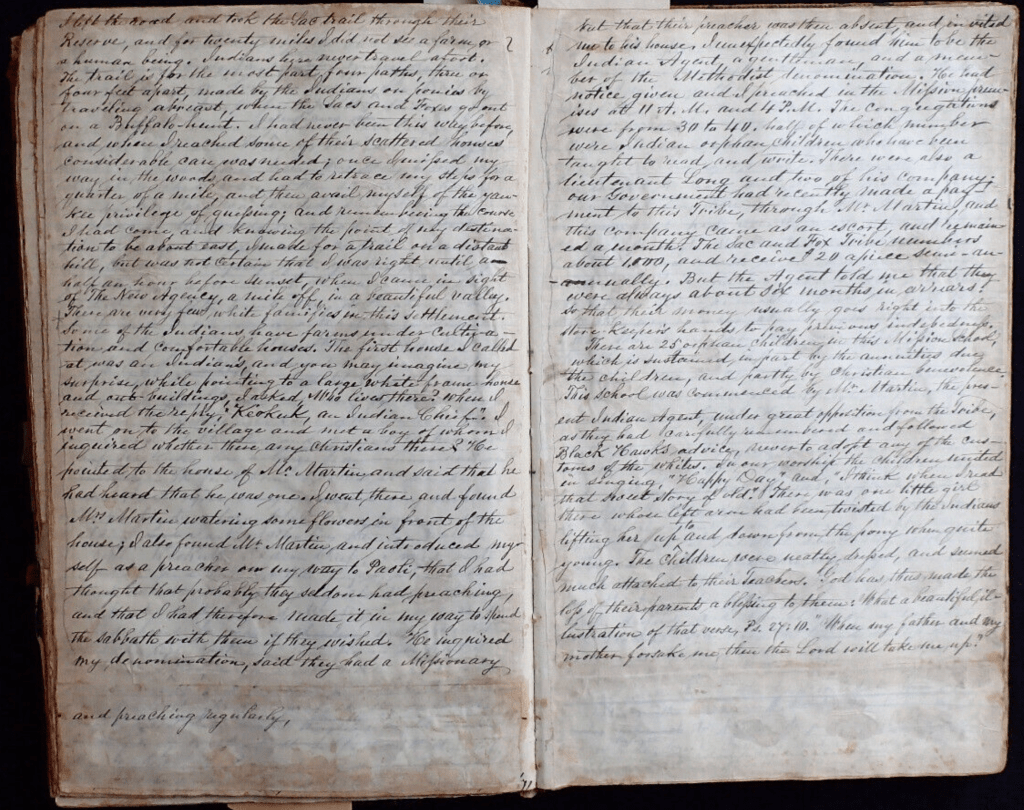
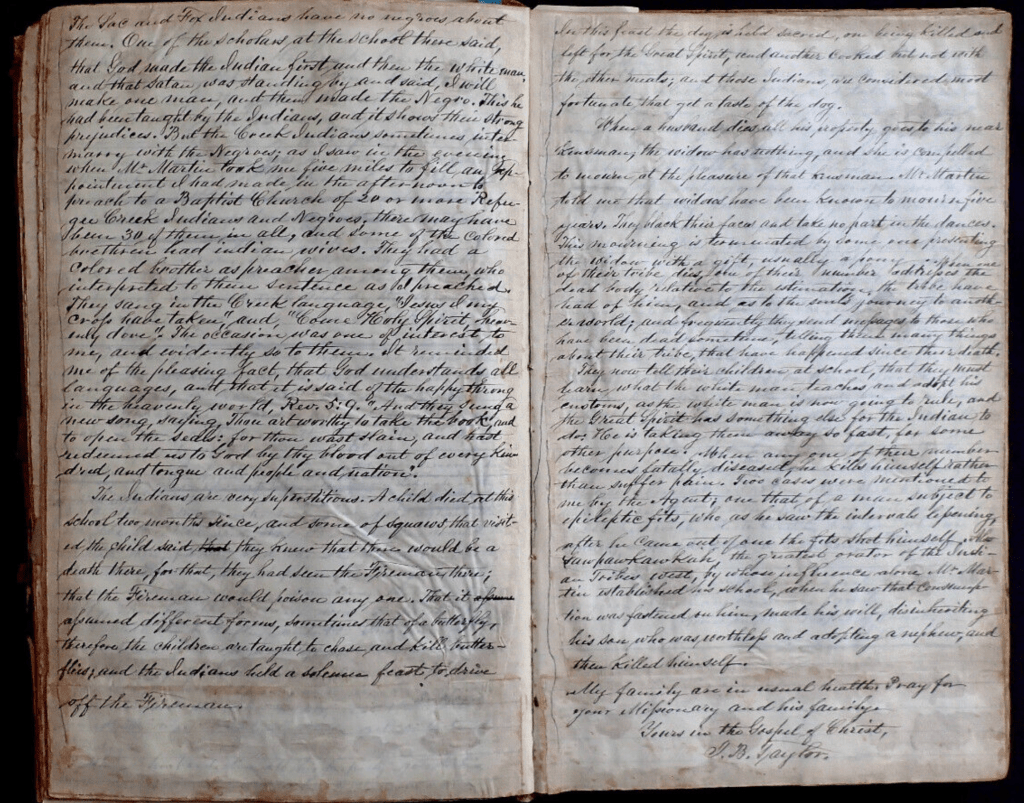
The pages that I have transcribed below were only four pages out of J. B. Taylor’s diary that was auctioned on eBay. I had hoped to purchase it but it sold on 12 January 2025 for $8,200 and so I was unable to transcribe the 400+ pages. I decided to capture what history I could from the pages that were shared by the owner at the time of the auction.

Transcription
I left the road and took the Sac Trail through their Reserve and for twenty miles I did not see a farm or a human being. Indians here never travel afoot, The trail is for the most part four paths, three or four feet apart, made by the Indians on ponies by traveling abreast when the Sacs and Foxes go out on a Buffalo hunt. I had never been this way before and when I reached some of their scattered houses, considerable care was needed; once I missed my way in the woods and had to retrace my steps for a quarter of a mile, and then avail myself of the yankee privilege of guessing; and remembering the course I had come and knowing the point of my destination to be about east, I made for a trail on a distant hill, but was not certain that I was right until a half an hour before sunset when I came in sight of The New Agency, a mile off, in a beautiful valley.
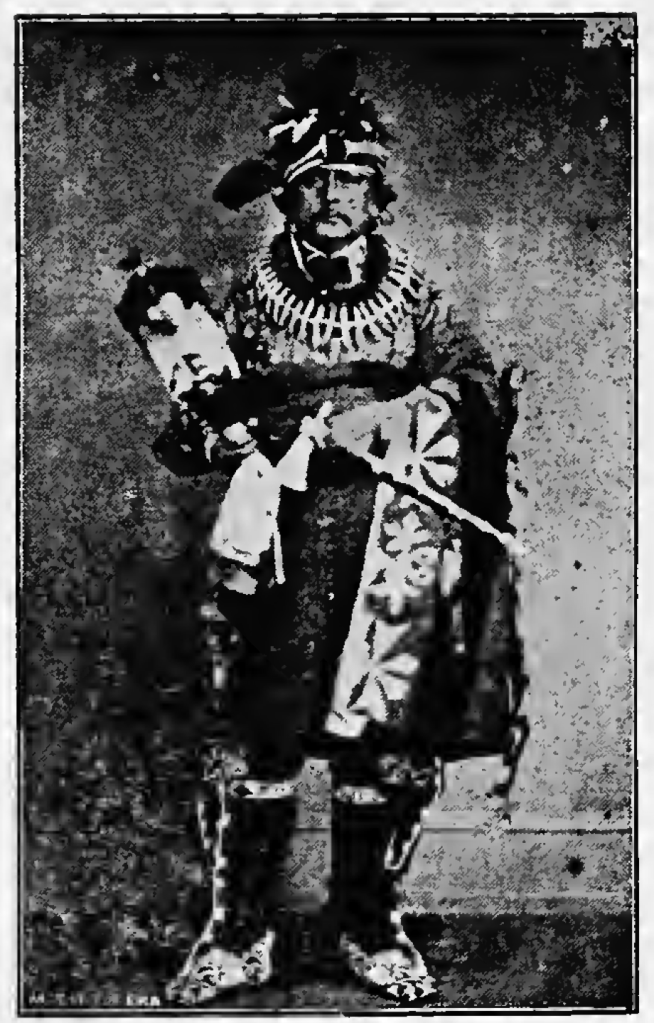
There are very few white families in this settlement. Some of the Indians have farms under cultivation and comfortable houses. The first house I called at was an Indian’s and you may imagine my surprise, while pointing to a large white frame house and out buildings, I asked, “Who lives there?” when I received the reply, “Keokuk, an Indian Chief.” 1 I went on to the village and met a boy of whom I inquired whether there [were] any christians there? He pointed to the house of Mr. [Henry Woodson] Martin and said that he had heard that he was one. I went there and found Mrs. Martin watering some flowers in front of the house. I also found Mr. Martin and introduced myself as a preacher on my way to Paoli; that I had thought that probably they seldom had preaching and that I had therefore made it in my way to spend the sabbath with them if they wished. He inquired my denomination, said they had a Missionary and preaching regularly, but that their preacher was then absent and invited me to his house. I unexpectedly found him to be the Indian Agent, a gentleman, and a member of the Methodist denomination. He had notice given and I preached in the Mission premises at 11 a.m. and 4 p.m. The congregation were from 30 to 40, half of which number were Indian orphan children who have been taught to read and write. There were also a Lieutenant Long and two of his company; our Government had recently made a payment to this Tribe, through Mr. Martin, and this company came as an escort and remained a month.
The Sac and Fox Tribe numbers about 1,000, and receive $20 apiece semi-annually. But the Agent told me that they were always about six months in arrears so that their money usually goes right into the store keeper’s hands to pay previous indebtedness.
There are 25 orphan children in this Mission School, which is sustained in part by the annuities due the children, and partly by christian benevolence. This school was commenced by Mr. Martin, the present Indian Agent, under great opposition from the Tribe, as they had carefully remembered and followed Black Hawk’s advice, never to adopt any of the customs of the whites. In our worship the children united in singing, “Happy Day” and “I think when I read that sweet story of old.” There was one little girl there whose left arm had been twisted by the Indians lifting her up and down from the pony when quite young. The children were neatly dressed and seemed much attached to their teachers. God has thus made the loss of their parents a blessing to them. What a beautiful illustration of that verse, Ps. 27.10. “When my father and my mother forsake me, then the Lord will take me up.”
The Sac and Fox Indians have no negroes about them. One of the scholars at the school there said that God made the Indian first, and then the white man, and that Satan was standing by and said, I will make one man, and then made the Negro. This he had been taught by the Indians and it shows their strong prejudices. But the Creek Indians sometimes intermarry with the Negroes; as I saw in the evening when Mr. Martin took me five miles to fill an appointment I had made in the afternoon to preach to a Baptist Church of 20 or more [on] Refugee Creek—Indians and Negroes. There may have been 30 of them in all and some of the Colored brethren had Indian wives. They had a colored brother as preacher among them who interpreted to them [each] sentence as I preached. They sang in the Creek language, “Jesus I my cross have taken,” and “Come Holy Spirit, heavenly dove.” The occasion was one of interest to me, and evidently so to them. It reminded me of the pleasing fact, that God understand all languages, and that it is said of the happy throng in the heavenly world, Rev. 5:9 “And they sung a new song, saying Thou art worthy to take the book and to open the seals: for thou wast slain and hast redeemed us to God by the blood out of every kindred and tongue and people and nation.” 2
The Indians are very superstitious. A child died at this school two months since and some of the squaws that visited the child said they knew that there would be a death there, for that they had seen the Fireman there; that the Fireman would poison anyone. That it assumed different forms, sometimes that of a butterfly, therefore the children are taught to chase and kill butterflies; and the Indians held a solemn feast to drive off the Fireman. In this feast the dog is held sacred, on being killed and left for the Great Spirit, and another cooked but not with the other meals; and these Indians are considered most fortunate that get a taste of the dog.
When a husband dies, all his property goes to his near kinsman; the widow has nothing, and she is compelled to mourn at the pleasure of that kinsman. Mr. Martin told me that widows have been known to mourn five years. They black their faces and take no part in the dances. This mourning is terminated by someone presenting the widow with a gift, usually a pony. When one of their tribe does, one of their number addressed the dead body relative to the estimation the tribe have had of him, and as to the soul’s journey to another world; and frequently they send messages to those who have been dead some time telling them many things about their tribe that have happened since their death.
They now tell their children at school that they must learn what the white man teaches and adopt his customs, as the white man is now going to rule, and the Great Spirit has something else for the Indian to do. He is taking them away so fast for some other purpose. When any one of their number becomes fatally diseased, he kills himself rather than suffer pain. Two cases were mentioned to me by the Agent—one, that of a man subject to epileptic fits who, as he saw the intervals lessening, after he came out of one of the fits, shot himself. Also Shaw paw kaw kof, the greatest orator of the Indian Tribes west, by whose influence alone Mr. Martin established his school, when he saw that consumption was fastened on him, made his will, disinheriting his son who was worthless and adopting a nephew, and then killed himself.
My family are in usual health. Pray for your Missionary and his family. Yours in the Gospel of Christ, — J. B. Taylor
1 Probably Keokuk, Jr.—later called Moses Keokuk who became an accepted minister in the Baptist Church. Keokuk, his father, died in 1848.
2 Many of the Negroes living among the Creek Indians were former slaves of tribal members who had lived in the upper and lower Creek territories in the Southeast. Intermarriage was common and there were many mixed-race descendants that found themselves on the reservation in Kansas in the 1860s.
 Spared & Shared 23
Thanks for sharing this; I actually purchased the album and am delighted to see others who found value in it.
LikeLike