
The following letter was written by Albert L. Henry (18xx-1863) of Scotland, Windham county, Connecticut, who served in Co. B, 5th Connecticut Volunteers. Albert enlisted on 29 June 1861 and died of disease on 25 March 1863 while in the service.
In his letter, Albert speaks of the First Battle of Kernstown (23 March 1862) and the carnage witnessed following the battle. It was just the opening act of Stonewall Jackson’s 1862 Valley Campaign.

T R A N S C R I P T I O N
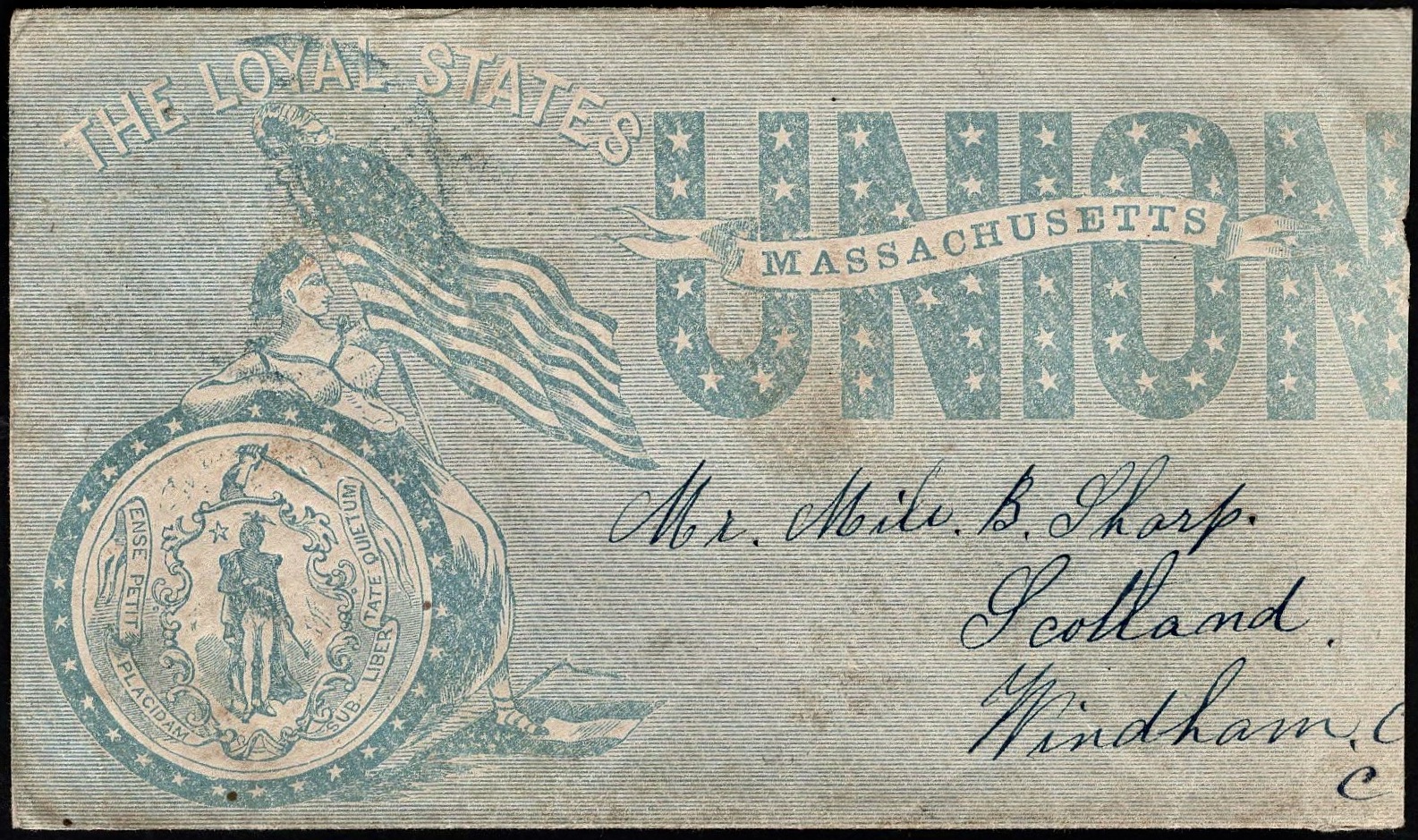
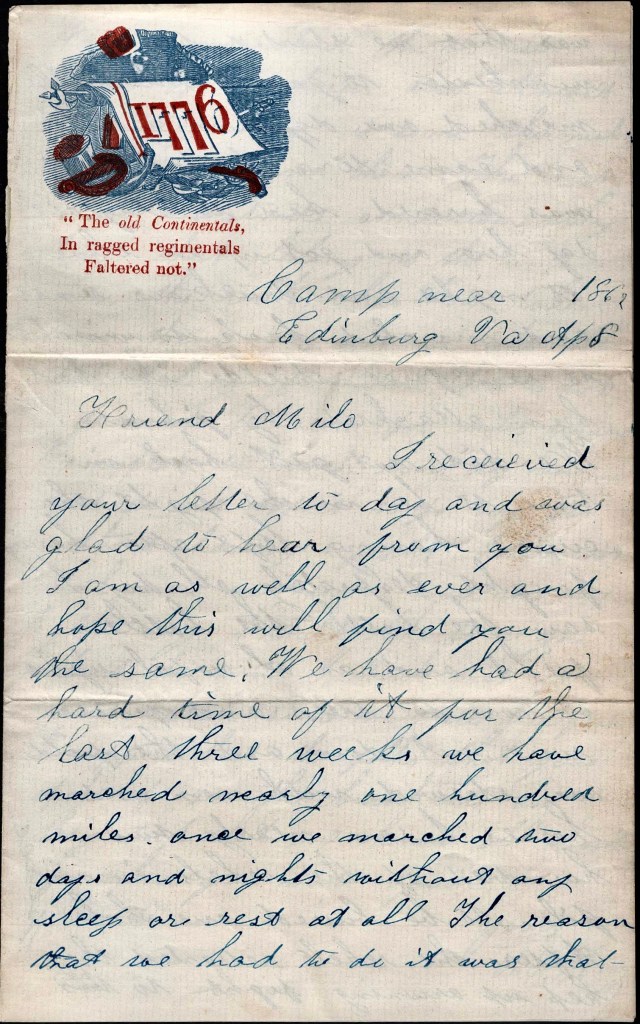
Camp near Edinburg, Va.
April 8, 1862
Friend Milo,
I received your letter today and was glad to hear from you. I am as well as ever and hope this will find you the same.
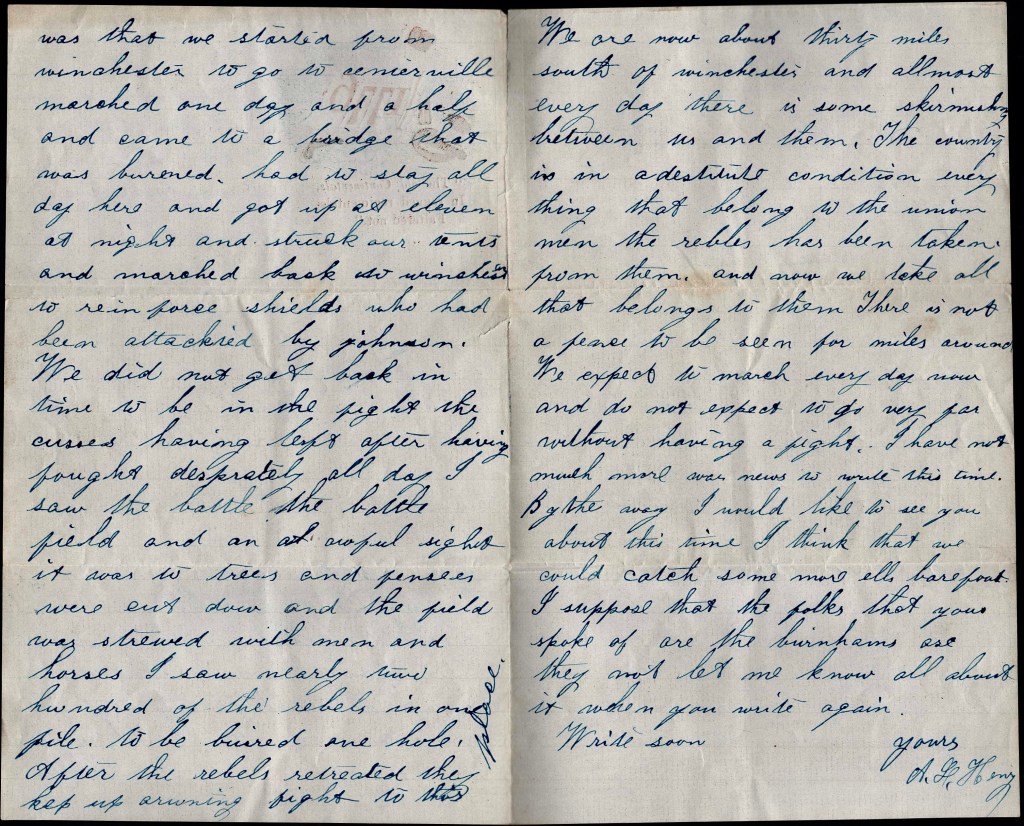
We have had a hard time of it for the last three weeks. We have marched nearly one hundred miles. Once we marched two days and nights without any sleep or rest at all. The reason that we had to do it was that we started from Winchester to go to Centerville, marched one day and a half, and came to a bridge that was burned. Had to stay all day here and got up at eleven at night and struck our tents and marched back to Winchester to reinforce Shields who had been attacked by Johnson [Jackson]. We did not get back in time to be in the fight, the cusses having left after having fought desperately all day. I saw the battlefield and an awful sight it was too. Trees and fences were cut down and the field was strewed with men and horses. I saw nearly two hundred of the rebels in one pile to be buried in one hole. After the rebels retreated, they kept up a running fight to this place.
We are now about thirty miles south of Winchester and almost every day there is some skirmishing between us and them. The country is in a destitute condition. Everything that belong to the Union men, the rebels has been taken from them. And now we take all that belongs to them. There is not a fence to be seen for miles around. We expect to march every day now and do not expect to go very far without having a fight.
I have not much more war news to write this time. By the way, I would like to see you about this time. I think that we could catch some more ells barefoot. I suppose that the folks that you spoke of are the Burnhams, are they not? Let me know all about it when you. write again. Write soon. Yours, — A. L. Henry
 Spared & Shared 23