A 21 year-old farmer from Hardwick, Massachusetts—the son of Alonzo Emmons and Abigail Lawrence—Marcus A. Emmons enlisted for three years’ service in August 1861. Joining Co. K of the 21st Massachusetts Infantry, he was mustered into federal service late in the month and shipped out almost immediately for garrison duty in Annapolis. As part of Ambrose Burnside’s expedition to North Carolina beginning in January 1862, the 21st took part in several major engagements, including the battles of Roanoke Island, New Berne, and South Mills, before they were sent to Viginia during the summer to join the main body of the Army of the Potomac. Emmons’ regiment sustained heavy casualties in the long succession of battles (Bull Run, South Mountain, Antietam, and Fredericksburg), but particularly at Chantilly in September 1862, where they sustained 35% casualties.
Between March 1863 and January 1864, the 21st Massachusetts Infantry served in Kentucky and eastern Tennessee, but they returned to the Army of the Potomac for the spring campaigns of 1864. Emmons performed exceptionaly well in the military, earning promotion to Corporal (Nov. 10, 1862) and then Sergeant (Sept. 1, 1863), before his reenlistment in January 1864. His regiment, however, suffered heavily. Around the time that Emmons was killed in action at Bethesda Church (Battle of Cold Harbor) on June 2, 1864, the 21st had been reduced from around 1,000 men to barely 100, forcing them to consolidate into the 36th Massachusetts Infantry.
Emmons was described by his comrade, James Madison Stone, as “an awkward, unsoldierly appearing man, “but a man of considerable intellectual ability and a man of splendid character, and, so far as I ever saw, he was as brave as the bravest, without any show or parade, but always did his duty faithfully.” [Source: Marcus A. Emmons Papers, 1858-1864. Special Collections. Amherst.]
I received your letter in due season and was glad to hear from you and the Hardwick people again that you were so well generally. Mrs. Frost I am sorry to hear is still blind. It will make it rather bad for Uncle Bill. He will have to set Henrietta his daughter to keeping house. It will come awkward for her for I guess she never was put to work much at housekeeping but there must be a beginning sometime and she had better learn now that 5 years hence.
I am also sorry to hear that Mr. [Martyn] Tupper is so unwell. I would like to come into old Hardwick some of these Sundays and hear him preach. I always liked to hear him preach or speak extemporaneously. Anyone can understand the meaning of what he says. C. L. Warner is bound to drive business this season. I understand he must not work his Carry [?] too hard in his haste to be rich. We live but one life and money is not the best aim for one’s life.
Willard Peck I understand intends to take Miss Bec to wife. I wonder if he is not a little like an impulsive youth. I hope however that the union may prove a happy one. Willard is an honest, faithful man in his labors for other people.
I have a chance to hear the war news about once a week now. The mail comes more regular now. George and I am taking a paper which is printed in Newbern by one of the 25th Regiment Mass. Vols. who now patrol the city. It was a rebel paper & is called the Pilgrim Progress. The rebels retreated in such a hurry that they left everything belonging to the Printing Office unharmed. The paper does not contain much but local news. We are going to send some of the papers to our folks.
We, the 21st, have been in the Battle of Camden [South Mills] since I wrote you before. We had a fatiguing march of 40 miles in 24 hours (besides the battle in that time). In coming back the roads were muddy owing to a shower which occurred after the battle. The road was more slippery than ice. Most everyone fell flat in the mud (which sticks to one like salve). It was the hardest march that ever I went. When we got back to the place where we landed, you would have thought we had been defeated, we came in such confusion and were so tired. There were some of the regiments in the enterprise together. Many of all the regiments were lying beside the road for the last two or three miles. Some of them did not much care of they were taken prisoners, they were so exhausted. But the rear guard brought them most all in. One of Co. B got taken prisoner and the rebels have released him on a parole of honor.
Co. K did not have to fight any though. They were in as dangerous a position for some time as the other companies. The balls—some of them—came as close to my head as I care to have them. One of them knocked some splinters into my face from a small twig nearby. Co. K was marched to the rear of the regiment to prevent the enemy from surprising us in that direction. The underbrush were so thick you could not see three rods in some direction. The enemy were in their own chosen position with a force of artillery, cavalry, and infantry and they were in the edge of a woods and set fire to a fence, the smoke of which covered them very much from our sight. But we whipped them through. The Hawkins Zouaves [9th New York Infantry] suffered severely for attacking them in front, contrary to orders. The 21st had 1 killed and 15 wounded.
Some of the wounded had to be left behind when we went back to the boats. The surgeons of the different regiments drew lots to see which of them should remain to take care of them. The lot fell on Dr. Warren of our regiment. He and the wounded were taken prisoners but the rebels took him and all the wounded that they thought would not get well to Ft. Monroe from Norfolk a few days ago and gave them up. Dr. Warren has got back to the 21st here. He says the rebels made him go down into the hold of the vessel when they were passing their works. They took all his surgical tools and his medicine case and many other things away from him. He thinks Burnside could take Norfolk as most of the rebels have gone to Yorktown.
We have had a Brigade Review today. We have been brigaded again. We are under Col. Ferrero who acts as Brigade General. Reno has command of the 2nd Division. Burnside has been promoted to a Major General and has command of the Department of North Carolina which consists now of three divisions. The 21st Regt. M. V. is on the right of the 2nd Brigade, the New York 51st next, then the Pennsylvania 51st, and the Connecticut 11th on the left. These regiments constitute the 2nd Division.
There has been quite a number of deaths in this regiment and considerable sickness since we have been in this camp but the most sickly time has passed. The 21st cannot report 500 men for active duty now, I don’t think. Co. K had only 88 men in the Battle of Camden. 51 started on the expedition but 13 had to fall out or remain on the boat. Four remained sick on the boat and the others fell out from fatigue before we come up to the rebels. The object of the expedition was to make a demonstration on Norfolk.
But I must close this long letter lest I lose your patience. Write soon and write the local news of Hardwick if not so exciting. From your friend, — Marcus A. Emmons
The following diaries were kept by 1st Sergeant Jesse Stoneman Clum (1840-1915) of Co. C, 118th Ohio Volunteer Infantry (OVI).. According to his obituary, Jesse participated in the battle of Kingston, Tennessee; Mossy Creek, Tennessee, and in the Atlanta Campaign under General Sherman, and then in the Battle of Franklin and Nashville. He was later promoted to Lieutenant of Company D (January 1865).
Jesse was the son of George Clum, Jr. (1808-1862) and Mary Hannah Morrison (1815-1877 of Fort Recovery, Mercer county, Ohio. He was married to Sarah Mellesia McDaniel (1840-1923)—his “better half” as he called her—on 17 August 1862. A month later he enlisted in the 118th OVI.
“Our Regt is strung out for guard duty on the K.C.R.R. from Covington to Paris a distance of about seventy five miles. We spent the winter in building stockades for the protection of the numerous bridges along this line and in gathering up deserters, returned rebel soldiers, rebel recruiting offices, spies & and we done a very good business at it. We brought to justice some hundreds of the rebellious cusses. Those men that were executed on Johnson’s Island lately were formerly our boarders I knew them well.” — Lt. J. S. Parker, Co. B, 118th OVI, 4 June 1863[Source: WTCW]
[Note: These diaries are from the personal collection of Brad Emalfarb and were offered for transcription and publication on Spared & Shared by express consent.]
T R A N S C R I P T I O N
December 8th 1862—Today we came to Paris [Kentucky] as Provost Guard—Dennis Kelley, George Hedrick & Charley Keck. Nothing unusual transpired.
9th— Have been busy all day writing but the hurry is now over and I expect some rest tomorrow. This is a very pleasant day. Has passed pleasantly but nothing unusual transpired. I got two letters today—one from Sarah and one from Jac___.
December 11th—Today took one prisoner. Has been in the Southern Army. Nothing else of interest transpired.
12th—Today I went to summon in witnesses for the man that I took yesterday. Have seen today’s paper which contains the news of Burnside’s Army having crossed the Rappahannock. Nothing of importance has transpired today.
13th—Lieut. [Charles] Gloyd was up from camp today. The Boys are getting along fine. Very warm today. Nothing of interest.
14th—Sunday morning. This is a very pleasant day. Have been indoors most all day. The church bells are ringing for church but I shall not go today. Are very anxious to hear the news from Fredericksburg, Va.
15th—Nothing of interest has transpired. Our armies has been successful both in the East and West.
16th—Today is very cold. Left Paris this morning for camp to bring provision. Nothing of interest at camp. The Boys are well.
17th—The provisions did not come until after dark. Was packed up this morning ready to start when the rest of the Boys came also. The Captain is ordered to his regiment. Last night Jones and the other Boys come from home. Captain has come back. I got the letters from home.
18th—We worked on the fortifications today. Captain [Stone] went to Lexington today and just now returned. Everything is doing fine. Weather is nice.
19th—The air is very cold today. Captain [William D. Stone] went to Falmouth and returned and six of us went to Paris horseback. Returned at 1 o’clock a.m. and almost froze.
20th—I am on guard today. The weather continues mild and agreeable. Nothing of interest has transpired but we finished our stockade.
21st—Sunday. Today was a very gloomy day—raining pretty near all the time. Nothing of interest has transpired today.
22nd—Worked on the blockhouse today. Looks very much like [rain] this evening. Nothing unusual transpired.
23rd—Rained some last night. Don’t feel very well today. Have not done anything. The first day that I have been unwell for some time
24th—Today Mr. Dunnwoody got to camp on a visit to see his son. Also Mr. Ellis. It is raining some today. Tomorrow is Christmas, One year ago tonight was at home and at a ball tripping the fantastic toe.
25th—A merry happy Christmas to all. It has rained pretty near all day. A very disagreeable day for Christmas—at least I would think so if I was at home. Got three letters today. One from my better half.
26th—Got our rations today. Rotten meat is the best. Rained pretty near all day. Got a letter from Sarah today. Do not feel very well today.
27th—I am on guard today. Nothing of importance to relate. Only a very disagreeable day.
28th—Sunday morning. Last night was rallied thrice but nothing very serious and very tired and sleepy today.
29th—Have been working on the stockade today. Lieut. Colonel [John] Walkup paid us a visit today.
30th—Captain [William D. Stone] has gone to Falmouth. Has rained all day. Col. [Samuel R.] Mott has come back with Captain Stone tonight.
31st—I am on guard today as [ ] duty an tonight. I will be on guard till the second hour of the year 1863.
January 1st 1863—Everything is very still and quiet today for New Years. Nothing unusual transpired today.
2nd—Mr. Dunwoody and Mrs. Ellis started home today. Worked on the fortification today.
3rd—Finished the fortifications today. This afternoon six men from Newport, relations of the Boys, came to pay them a visit. It is raining some this evening.
4th—I am on guard. We got our regulation swords today. Wrote home to Sarah tonight.
5th—Nothing of interest has transpired today.
7th—It is raining this morning. Lieut. [Charles] Gloyd has gone to Falmouth. Got a letter today from home.
6th—Has rained pretty near all day and everything looks gloomy. I did not get any letters today and am much disappointed.
8th—Snowed pretty near all night. There is about four inches now. Caught two rebels today.
9th—The snow is finally near all gone. Looks considerable like rain this evening.
10th—Rained very hard last night and until noon today. Captain [Stone] has gone to Falmouth. Got a letter from [brother] Hiram [L. Clum] this evening.
11th—Sunday morning. The weather is very nice and clear. Went to church today. Heard a very dull sermon preached.
12th—Nothing of interest transpired. Got a letter from home.
13th—Don’t feel very well today. Came off guard this morning.
14th—Has rained pretty near all day. Some of our boys are very sick with the sore throat. John Ellis and Tom Winn have gone to the hospital.
15th—Last night it snowed and rained all night. This morning the snow is about eight inches deep. The [Stoner] river has raised and is now bank full.
16th—It is very cold today. Snow about ten inches deep. The train has not come up for two days & we have not got our mail. Today George Mc[Daniel], Jim Johnson, & John Collins went out to get their dinner in the country and stole a setter dog.
17th—The weather is more moderate today. The train went up this afternoon. I got two letters from home this evening and feel very well pleased to hear they are all well.
18th—Sunday. I am on guard today. The weather is very cold. The guards have been in the quarters pretty near all day. Wrote a letter home today.
19th—Some warmer today and the snow is melting fast. This afternoon the pay master came. He only paid us for one month and the odd day so our pay now will run from the 1st of November. Amount of pay received today $22.65.
20th—Went out to get a beef but missed it. Captured a gun. Captain [Stone] does not get to go home as he expected. The sick is not much better. Got a letter from home tonight.
21st—Everything is quiet today. Snow is melting slowly. The [Stoner] river is very high.
22nd—Nothing happened today to interest us. George has gone to the mills. The sick is no better.
23rd—Nothing of interest.
24th—The snow has all gone and it is now very muddy under foot. The waters are very high.
25th—Sunday. Captain went to the Mills to church. Am very lonesome.
26th—Have the bloody flux this morning and feel very bad. My bones aches as does my head.
27th—Feel a good deal better today. Captain & the Boys has returned this evening.
28th—Nothing of importance transpired today.
29th—Captain went to Cynthiana and today I was to the Mills.
30th—Lieut. Rhodes took the teams and went for hay but did not get any.
31st—Lieut. Rhodes has gone to Cynthiana today. My health is excellent. Could not expect it better. Got a letter from Hiram this evening. He is well and hearty. Also got one from Will Topping.
February 1, 1863—This is Sunday morning and as usual is raining for keeps. Our sick is better.
2nd—Lieut. Rhodes has gone to Falmouth today. Got a letter from my better half. Was glad to hear from her once more. Have been working on the pay rolls today.
3rd—Today we received our Enfield Rifles. They are a very nice gun.
4th—Have been fixing the pay roll today. Joseph Kistner died [at Townsend Bridge] this evening of typhoid fever.
5th—Went to Cynthiana with guns and horses. Got three letters from home.
6th—Buried Joseph Kistner today in the Honors of War. We buried him near the stone fence some sixty or 80 yards south of the railroad shanty. I hope this may be the last one we have to bury while in the service.
7th—I am on guard today and the weather is very cold. Captain has gone to Cynthiana.
8th—Sunday. There is a good many of boys sick now. Nothing unusual transpired today.
9th— Have a severe cold and don’t feel very well myself. Got a letter from home and feel very much revived. The tender attached to the wood freight has run off the track on the fill at the north end of the bridge. No serious damage done.
10th—They have just got the tender on the track and are ready to start this morning. I feel pretty bad this morning with a severe cold. George Martin, Perry Clawson, Charles Keck, George Baker and Bernard Drees went to the hospital yesterday evening.
11th—Nothing of any interest has transpired to day. Don’t feel very well. Have a severe cold and sore throat.
12th—Got a letter from home and one from Hiram. Don’t feel so well today. My throat is very sore. Could not speak above a whisper this morning.
13th—Mess one went jayhawking last night. Got seven turkeys and one chicken.
14th—The same routine of camp life today. James Meeks came from the hospital this evening.
15th—Sunday morning. Had inspection this morning.
16th—I am on guard today and feel very well over it.
17th—Today Messrs. Johnston’s and women came to see their boys and pay us a visit this evening. J. W. McDaniel came from home. We was very glad to see him.
18th—This is a very disagreeable day. Raining pretty near all the time.
19th—Nothing of interest in camp today. Weather very pleasant.
20th—Went to Ruddells Mills to bury Capt. Pugles of the 18th Kentucky Vol. Infantry. I was one of the pall bearers. Storming very hard this evening.
22nd—Sunday—It is very disagreeable today. Underfoot is snow and mud some five inches deep.
23rd—There is a great deal of excitement today. Forrest is within a few miles from Lexington. They have taken Winchester, so reported this afternoon. Captain has returned from Cynthiana. Has orders to send 25 men to reinforce Lieut. [Abram] Wancop at Paris. They will take four days rations and start in the morning. Messrs. Johnston’s started home this morning.
24th—Have not heard anything of the rebels. The trains is not running on the road.
25th—The Boys got back this forenoon. They report everything quiet at Paris. The rebels are retreating. Our men following.
26th—Went to Cynthiana today. There is considerable excitement there. The report is that Breckinridge is coming in this direction with a large force.
27th—Capt. has gone to Cynthiana horseback. Gave been drilling pretty hard all day and feel very tired. Captain has returned. Got a letter from Uncle A. G. Morrison.
28th—[no entry]
March 1st 1863—Nothing of interest today.
2nd—Got several letters from home today.
3rd—Has rained pretty near all day today.
4th—I have not felt very well today. Weather very nice.
5th—Got a letter from my better half today.
6th—Captain has gone to Cynthiana this morning. Has returned and will proceed to Ohio immediately for the purpose of catching deserters. This evening John Blake came to see us on a visit.
7th—Rained pretty near all night. The river is very high. Mitchel McDaniel has gone to Cynthiana.
8th—This morning the river is higher than it has been since we have been here.
9th—Nothing of any importance has transpired today.
10th—H. went to press in some hay today and also pressed in some six turkeys and they came very acceptable for we was out of provisions.
11th—Weather very pleasant. John Blake started home this afternoon and Will McDaniel got here on this evening’s train.
12th—Today J. W. McDaniel & myself went and hunted up a stove for our fort and the boys took the wagon and went after it.
13th—Don’t feel very well today. Am on guard today.
14th—Will McDaniel and myself went to Paris today on the train. Nothing unusual.
15th—Sunday morning. Everything kooks like spring. Had the inspection this morning.
16th—J. W. McDaniel went to Paris today. Have been drilling. Got a letter from home.
17th—Have not heard from the Captain since he left us.
18th—Captain has got back this evening. Everything on a stand still. William F. McDaniel also started home today.
19th—Lieut. [John] Rhodes and Lieut. [Abram] Wancop has gone to Cynthiana. Has rained pretty near all day.
20th—I am on guard today. Has rained pretty near all day. Lieut. Rhodes returned from Cynthiana today. Wancop has gone to Lexington.
21st—Saturday, a very lonesome day. Was paid today by Maj. Beecher until the 1st of January.
22nd—Sunday. Had inspection this morning. Have been writing pretty near all day.
23rd—Went to Ruddells Mills for corn. Got twenty bushels. Has rained some today. No news of any importance.
24th—Has rained pretty near all day, Went to Cynthiana this afternoon. Got a letter from Uncle W. F. Morrison today.
25th—Have felt pretty well today for all it was gloomy and rainy all day. This evening was reinforced by two companies of the 115th Ohio.
27th—Have been in camp all day. Feel very tired. Have not got any letter from home for several days.
28th—Was at Cynthiana today. Everything is quiet at headquarters. Got a letter from home today.
29th—Sunday morning. Everything passed off pleasantly today.
30th—Nothing special today. No talk of rebels being near us now.
31st—I am 23 years old today. Got a letter from home last evening.
April 1st—Last night one of our pickets was captured near Cynthiana by guerrillas. They also murdered a Union man living near Cynthiana.
2nd—Was on picket at the Mills last evening. Everything passed off all right.
Clum’s Second Diary; mostly written in pencil and badly smudged in parts. The diary pages also seem rigid as if having been at one time totally soaked in water and then left to dry out. Some of the binding is loose but I think most of the pages are there.
[Editor’s Note: Clum’s second diary is in much worse condition than the first one and though there are entries in it at the beginning they are largely illegible. I don’t know when they began but hardly believe that they picked up just where the first diary stopped. I have started transcribing the second diary in September 1863.
Background: It was on 8 August 1863, authorities dispatched the 118th Ohio to Lebanon, Kentucky, Louisville and Lexington. The regiment remained in Lebanon approximately one week, before officials dispatched it to East Tennessee. They arrived at Kingston, Tennessee on 10 November 1863, where they principally performed garrison duty and protected the city from threatened Confederate attack. Following the Battle of Chattanooga and the Battle of Knoxville, the 118th advanced through Nashville to Mossy Creek, Tennessee. On 29 December 1863, Confederate cavalry attacked the Union position at Mossy Creek. The Northern forces held their ground, but members of the 118th Regiment had forty men killed or wounded.]
SEPTEMBER 1863
September 24, 1863—Left Camp Goring (or Loudon) this morning at half past 4 o’clock. Marched 13 miles and camped at 12 o’clock p.m. a quarter mile west of Sweetwater. Today for the first time in 18 month service I was hauled in an ambulance. I feel considerable better. Passed through the town of Philadelphia at 7 o’clock a.m. At 9 p.m., commenced retrograde movement back to Loudon. Passed through Philadelphia at 12 p.m. Arrived at Loudon at 4 o’clock. As I came back, stopped at Philadelphia and stayed all night.
25th—Got to Loudon at 10 o’clock a.m. Feed considerable better today. Are expecting to cross the Tennessee River this evening.
26th—Stayed last night with Lt. Rhodes at a private house. Regiment did not cross the river. 12 o’clock p.m. regiment commenced crossing to the north side of the Tennessee River. Air is very chilly. Report says the rebs are coming in force. I think it is only rumor.
27th—Sunday. In camp north of the Tennessee river. Considerable excitement prevails. Citizens are in by hundreds and report Bragg’s whole army is moving on us from the most reliable sources. Probably only a part of his forces are coming. 6 o’clock p.m. [Frank] Woolford & [Robert K.] Byrd’s Brigades have been skirmishing with the enemy for the last two days. Our forces are giving back. The trains belonging to the above named brigades came in this evening and crossed to this side. The general opinion is that we will have a fight here tomorrow. I feel better.
28th—Half past 9 o’clock, the ball has opened. They have commenced shelling our boys near Philadelphia 6 miles from here. Half past 10 o’clock have orders to march to meet the enemy. 15 minutes before 11, commenced marching. Went a mile south of town and remained in line of battle. Everything you [look] at proves that we will have a heavy engagement with the enemy in the [ ].
29th—The enemy retired during the night and has gone back the way they came. Ten o’clock have orders to return to the north side of the river and camp. Our cavalry was reinforced by 2500 last night. They will follow the enemy.
30th—We have heard heavy cannonading in the southwest. Think our cavalry has engaged the enemy. We still are encamped north of the Tennessee river. Got a letter from G. W. Mc.
OCTOBER 1863
October 1, 1863—Nothing transpired today of unusual nature.
October 2—Heard from G. W. R. M. [Henry] Poppleman went to the hospital Had battalion drill today for the first time. Our provost guard returned today. Dress Parade this evening.
4th—Sundsay and very lonesome it is too. Had dress parade in the afternoon. Made a very good appearance. No news of interest. Everything is dull.
5th—Weather very cool. Battalion drill this morning and at two o’clock this afternoon. Dress Parade at 6 p.m. No news this evening.
6th—Made our requisitions for clothing. Did not have Dress Parade this evening. Am very anxious to hear from home. Have not got a letter from my wife for seven weeks and it seems like seven years. Commenced messing with captain and lieutenants.
7th—Everything is dismal today. Has rained all day. Nothing of interest transpired.
8th—Had Battalion Drill at 9 in the morning and at 2 this afternoon. Dress Parade at half past 5. James Meeks, Charles Kline, Philip J. Millhoff and George Baker who was left at Lexington, Kentucky, Convalescent Camp returned this evening looking hearty.
9th—Charles D. Keck returned. No drilling today as it is set apart for the boys to wash and clean themselves. Weather cool.
10th—A day long to be remembered by the 118th as the first trial we have had since we left home. How gratifying it is to the soldier to know that he is not forgotten by those at home. Got eight letters from my wife. All are well at home.
11th—Came out on picket last evening. Was very cold last night. Feel very bad. Got a headache which pains me very much.
12th—Nothing special today. All is quiet. Gaining some.
13th—Election day. Our company voted 50 for [John] Brough and 23 for [Clement] Vallandigham. Everything passed off quietly.
14th—It rained all day. Charles Kline and P. Millhoff was detailed to go to the Elgin Battery.
15th—Went foraging but did not get anything. Rained in the evening very hard.
16th—Nothing transpired today worth writing. Wrote to [brother] Hiram & G. W. Mc.
17th—Wrote to my wife today. Was inspected by Capt. Spain. The boys are clearing off ground for winter quarters.
18th—Sunday has rained pretty near all day. Nothing of interest transpired worthy of writing.
19th—Have been busy all day making invoices and posting our clothing book.
20th—One o’clock cannonading in the direction of Philadelphia. 2 o’clock ordered across the river. Wolford’s Cavalry is [ ]. The whole brigade is either captured or have cut their way through. Bivouacked for night.
21st—[illegible]…Our boys have run the rebs beyond Philadelphia. Was on picket last [night]. Did not sleep any.
22nd—9 o’clock a.m. was ordered back across the river. Firing in the direction of Philadelphia. 2 o’clock was ordered back across to the south side of river. Was ordered to detail 32 men to [ ]. 7 o’clock p.m. was ordered back across the river. Are now snug in our tents. The 9th Army Corps came up today. Wolford’s Cavalry have been skirmishing with the enemy all day. Guard back to the north side of the river.
23rd—Has rained continuously all day. No news.
24th—Gen. Burnside and staff came on train last night. A forward movement has begun. Cannonading has been very [ ] this evening. We have orders to be ready at a moment’s notice. [ ] working on the railroad today laying the track.
25th—Quite unexpectedly the Rebs left us last night retreating in the direction of Sweetwater.
26th—There has been some excitement today. We are getting used to the reports of the enemy being upon us. Our men are in line of battle but we have [illegible].
27th—Nothing transpired [illegible.
28th—[Illegible] men have been crossing the river all night. Just as we started from camp the locomotive that we ferried across the river was run backwards of the abutment into the river. James H. Clawson, George Martin & Joseph Beckman [sent as [ ] to Knoxville for rails. Camped for the night 1.5 miles from Loudon near Gen. White’s [?] Headquarters.
29th—At ten o’clock, moved out on the Knoxville road one mile farther and camped. We have nothing to eat today. Captain & Lieutenants dissolved the mess arrangement. Capt. and I have gone into a mess of our own.
30th—Capt. went and procured some corn meal and fresh pork. Have plenty to eat. Has rained pretty near all day. Very disagreeable.
31st—Was inspected today by Col. Young and have been very busy making our payrolls.
NOVEMBER 1863
November 1st, 1863—Has been a very pleasant day. Our company goes on picket tonight. 6 o’clock on picket at B__’s Ford four miles above Loudon, Tennessee. The Rebels are on the opposite side the river on the same duty. We are close enough for to talk to them but have no shot at them nor will not. They are very friendly—talk to us pretty near all the time.
November 2, 1863—I have been very busy today making out our payrolls. Got them completed before dark. Jacob Flowers was sent to company to be reported as private, they having no more use for him as a musician. Weather clear and nice. Got a letter from my wife this evening. Milton Schroyer returned.
3rd—Went out foraging today. Got half bushel eat. Had to pay at the rate of $1.50 per bushel. I think it is rather steep. Was at Lenoir Station. It is considerable of a place for Tennessee as it can boast of a spinning factory & cotton mill.
4th—Everything presents the appearance of rain. Nothing new from the front.
5th—Finished making our quarterly reports. There is some hopes of our getting our clothing.
6th—Our company goes out on picket tonight. Nothing of interest has transpired in camp today.
7th—Was very cold last night as we was on picket. I had to lay out in the open air and it went pretty severe. Drew our clothing this evening but did not get half enough for the company.
8th—Everything is quiet today. No news.
9th—It is very cold today. At 3 o’clock received orders to be ready to march at 4 p.m. Started for Kingston, Roane county, Tenn. (Snowing some—the first we have had this winter.)
10th—The biggest part of our brigade was left on the road last night. About two hundred get to Kingston at 4 a.m. The balance is scattered on the road between here and Loudon. The 25th Michigan played out and camped on the road. About fifty of the 80th Indiana came through.
11th—Have laid in camp all day. Nothing interesting.
12th—Everything quiet. Went to mill today. Capt. [William D.] Stone was put under arrest today.
13th—Has rained some today.
14th—Our company was ordered out on picket at 3 o’clock. The report came that rebs crossed at Huff’s Ferry 1 mile below Loudon. Has rained wondrous today—got very wet. Our regiment crossed to Clinch river and camped on the hill above. Our company was sent with Co. E to guard the wagon train. Returned to the regiment at 9 o’clock. Raining very hard at the time.
15th—Have laid in camp all day. Rebs are reported coming this way from Loudon. They run against our pickets near town Kingston in the evening. At p.m., received orders to be ready to move at a moment’s warning with all the provision we have cooked.
16th—Left camp at half past 4 a.m., marched to Kingston, took position nesar town and threw out our skirmishers. Ten thousand rumors afloat as to the numbers of the enemy. Some say that we are nicely “gobbled.” Big thing, but I “can’t see it.” About noon our regiment relieved the 25th Michigan that was supporting one section of the Elgin Battery three-fourths of a mile from town on the Loudon road. Rumor says the rebs have crossed the Clinch River 12 miles above us and are trying to get in our rear. Capt. Stone was relieved from arrest this morning.
17th—No news of any importance today. This evening four men were detailed to report at 9 o’clock for special duty. We still occupy the camp on the west side of the Clinch River.
18th—Have lain in camp all day. Nothing exciting. Capt. Stone was ordered under arrest again by Col. [Thomas L.] Young, commanding the regiment. The four men detailed last evening went with an expedition commanded by Capt. [Rudolph] Reul, Co. F, 188th OVI to surprise the rebel picket post on the south side of the Tennessee river. They succeeded in capturing 6 men and 8 horses. The names of them four men is Joseph Stein, Andrew Wolfrom, Henry Tholemeir, and Bernard Scholtz. This evening we had rations of corn on the cob issued to us. It certainly ain’t far to the bottom of the meal tub when it comes to that.
19th—Received ordered at 6 o’clock to have all the rations cooked by noon that we have. At 11 o’clock p.m. was ordered into line and marched to Kingston, took position on the hill above and southeast of town.
20th—Remained there until 20th at 8 o’clock a.m., returned to camp and got our breakfast. At 12 p.m., received orders to fall in. Marched to town and took our old position above town. 5 p.m., returned to camp. Raining some.
21st—2nd Lieutenant Abram Wancop, 2 sergeants, 4 corporals, and 25 privates on picket today. It rained all last night very hard. Has cleared off and everything looks nice this evening. We remained in our camp without being disturbed today.
22nd November 1863—Nothing f interest has transpired today. Has rained some today.
23rd—This evening Lt. Amos J. Moore [Co. H] starts with the boat for Chattanooga. Wrote a letter to my wife and brother and sent by him.
[Editor’s Note: Clum’s following diary entry describes the repulse of Joseph Wheeler’s cavalry attack on the Loudon Road near Kingston, which was defended by soldiers commanded by Col. Robert K. Byrd. The Union forces were outnumbered by two to one but Wheeler supposed differently and retreated before noon.]
24th—Received orders at 8 a.m. to move. Crossed the pontoon and took position east of town. There has been considerable firing all morning. At 11 a.m. the firing increased. The Elgin Battery [Renwick’s Elgin Battery Illinois Light Artillery] has opened on them. Our cavalry is skirmishing with theirs. The Elgin does poor work. The shells burst soon after leaving the gun. They have now got one gun from the 5th Indiana Battery (Rodman Gun). It works finely. Towards the middle of the afternoon, the firing ceased and soon quiet was returned with an occasional shot from the battery at long range. At 5 p.m., received orders to return to camp.
25th—Left camp at 4 a.m. and marched to Kingston & took the position we had yesterday. At 9 a.m., received orders to return to camp as the rebs have left us. Our loss yesterday was one man killed and eight wounded. The one killed was done by our [own] battery, the shell bursting soon after leaving the gun and near our men. There is an eclipse on the moon this evening—almost total. Capt. [William] Stone got up a paper and got the company to sign it in reference to his arrest and to the charges contained therein. The Boys all signed it that was here.
26 November 1863—Last night our forces was all moved to the north side of the Clinch river. At 8 p.m. our regiment was ordered to move to Kingston. Took position on the Loudon road. Three rebs came in and gave themselves up. They report the enemy to have gone to Knoxville to reinforce Longstreet. They have Burnside surrounded at Knoxville.
27th—Company is on picket today. Weather very cold. No news today. Relieved by Co. H.
28th—Have been making a pip all day—a pretty looking thing it is too. Nothing from the front today. The report has come in that [George H.] Thomas has whipped Bragg badly [at Chattanooga]. A good many prisoners and several cannon.
29th—Made our monthly report today. The company is on picket. Wrote home to Mother. Very cold. The wind keen and cutting. The boys on picket suffer very much.
30th—Company was relieved by a company of the 16th Kentucky. Got to camp at 2 o’clock. Regiment was inspected by Col. Young. No news.
DECEMBER 1863
December 1, 1863—Weather has been very cold for the last 3 days. I think if I live to get home, I can appreciate the enjoyments. Regiment is ordered on picket at 8 o’clock. My health is most excellent. Never been any better in my life. Our company is posted on the Loudon road half mile from Kingston. Thomas Clawson went to regimental hospital.
2nd—The advance pickets was fired on in part of the night. We still occupy the same position. 5 o’clock p.m. everything quiet.
3rd—Still on picket on the Loudon Road half mile from Kingston. The 3rd Tennessee came in today and the 2nd Tennessee started for Lebanon, Tennessee today. At half past 6 o’clock was ordered to camp. Got to camp at 8 o’clock. Received orders to move everything cooked that we have.
4th—Received orders to march at 4 o’clock a.m. Started at 12 o’clock. Crossed the pontoon to the south side of Clinch river. Started on the Loudon road. [illegible] and at 3 o’clock we commenced skirmishing with the enemy. Our regiment led the advance. We soon brought up our artillery and gave them a few shells when they fled from this [ ] till dark. We continued our advance skirmishing as we went. At sundown we come up to their encampment just twenty minutes after they had left. From this time our advance was slow as they cut trees across the road to obstruct our advance. At 11 p.m. camped at a rebel city [by] the name of Locky. Did not get to sleep until after 2 in the morning. John Barker, Thomas Clawson, Thomas Winn, and Henry Poppleman left at Kingston.
5th—Left Locky’s at 11 a.m. Started on the Loudon road. Our regiment is in the rear today. The roads are very bad as it rained this morning. At 4 p.m., camped four miles from Loudon, distance traveled 7 miles. Everything looks dreary. Nothing to eat but what we brought in our haversacks and not any prospect of getting anymore. The Boys are very much down in the mouth as they never wanted to see Loudon again. It certainly is [the] most God forsaken country I ever saw. Joseph Beckman and William Bates returned to the company.
6th—Have been in camp all day. Nothing of interest. Corporals [William F.] Cary and Edward Huston returned from Chattanooga today. They report that Gen. Thomas has completely annihilated Bragg’s army and is driving them toward Atlanta, Georgia. Got ordered to be in readiness to move at daylight in the morning.
8th—Left camp at 7 a.m. Started on the Knoxville road. Weather very nice for marching. Roads tolerable good. We passed Lenoir at 9 a.m. Arrived [ ]. What property has been destroyed there. Wagons, ammunition and other property. Commenced raining at three o’clock. The roads very slippery. Hard traveling. As we neared Campbell’s Station we began to see evidence of their having been an engagement [see Battle of Campbell’s Station on 16 November 1863]. Then soon we came to where some of the boys were buried—some 8 in number. Here too we begin to see the damage done by our shot and shell. Just in the edge of town we saw a large [ ] some 3 feet in diameter that was torn almost asunder by a solid shot. One house had been pierced by 6 solid shot. They made sad havoc. At 5 p.m., camped for the night 9 miles from Knoxville. Distance traveled [ ] miles.
9th—Left camp at 7.30 a.m. Nothing of interest transpired on the road. Arrived at Knoxville at half past 2 o’clock p. m. As we neared the town we began to see the destructiveness of some houses burned, gardens plowed by the war horse and shell. In fact, everything outside of our rifle pits and fortifications was a heap of ruins. Not a fence to be seen as far as the eye could reach. As we got to the edge of town, George McDaniel met us. He seemed as glad to see us as though we had been parted for years and I was glad to see him. Josiah P. Burt joined his company at Knoxville today. 10 p.m. received orders to march at daylight.
10th—Marched at 7.30 a.m. on the Greenville road. Went 15 miles and camped in a field (camp called Camp Burnside)
11th—Are still in Camp Burnside. We look for the paymaster.
12th—Everything is quiet in camp. No news of any importance. Is raining some this evening.
13th—Weather cold. Can see the snow capped mountains. A very grand scene for one that has never seen them. Sergt. Joseph Marshall, Peter Clawson, and Perry Clawson returned to the company. The two former was on detached service in Mass., the latter in Ohio.
14th—Weather still very cold in Camp Burnside.
15th—Was paid off by E. Beecher for four months. At 12 p.m. started on the march toward Rutledge. Marched 14 miles. Was ordered back 4 miles where we went to camp at 10.30 p.m. I went back 2.5 miles after Lt. [John] Rhodes. Arrived in camp at 12 p.m.
December 16, 1863—Our brigade come to us from Rutledge [illegible] …the entire wagon train of 2nd Brigade and Wolford’s Cavalry was started in the direction of Knoxville. 2 p.m., our company is informed of [ illegible] on the road…was called in at 5 p.m. The entire brigade is [illegible] east from crossroads. We joined our regiment at 6 p.m. At 8 p.m., company was detached for picket. Rebs within two miles. [illegible]
17th—It rained hard all night and until 10 a.m. Very muddy. Cannonading commenced on our right and front. Was relieved from picket at 8 p.m. Our regiment was throwing up rifle pits all last night.
18th—It is getting colder today. Rations of bread [illegible].
19th—Capt. was released from arrest this evening. Weather still very cold.
20th—Moved our camp this evening nearer to woods & water. Weather still very cold.
21st—I went out foraging. Got two little pigs. Walked about 15 miles.
22nd—Been in camp all day. Still very cold.
23rd—Sergt. Enos Herrod returned to company from hospital.
24th—Wrote home today. Have been in camp all day.
25 December 1863—Christmas has come once more and finds me still in the service of Uncle Sam. Left camp at 6 a.m. Got to Strawberry Plains at 12 a.m. Left that place at 8 o’clock. Marched to New Market, distance traveled 18 miles. Got to New Market at 1 a.m.
26th—Moved out on the Dandridge road 1.5 miles and camped. Have had no provision for 2 days. The boys are killing hogs.
27 December 1863—Left Camp Hog one and a half miles south of New Market on the Dandridge road at 3 p.m. Marched to New Market and took the Mossy Creek road. Went four miles and camped near the creek. Raining very hard, Roads slippery & rough. Forage plenty.
28th—Our darky cook Lewis went home. Sun shining bright. No news.
This is an image of Pvt. George A. S. Apger of Co. K, 118th OVI; he was one of the regiment’s wounded at Mossy Creek. (Photo Sleuth)
29th—At 11 a.m., got orders to fall in as there had been heavy firing of artillery and musketry all morning. We expected to have hot work. Immediately we fell in. We was marched to the extreme front on the double quick—a distance of half a mile. We immediately took up position on the left of the road that leads to Morristown and in a strip of timber. The 18th Indiana Battery was about 200 yards to our left and rear. By this time the rebs had got their battery in position and commenced shelling us and they put them in thick & fast, falling around and among us. After remaining under fire for two hours, we was ordered to charge on them so we did, routing them and killing a good many. They now opened on us with grape and canister shot but the most of it went over our heads and doing but little damage.
After being under fire for 3.5 hours, we was ordered to fall back a half mile to the crest of a hill which we did in good order. As we fell back, our enemy withdrew, leaving us in possession of the field. Those of our regiment and wounded who was not gotten off the field when we fell back was stripped of all their clothing, even to socks. At 10 p.m. we was ordered to camp, All feel very tired. Our loss in the regiment was 32 wounded & 5 killed. In Co. [C], 1 wounded—Sergt. Joseph Marshall.
At Mossy Creek, the 118th OVI along with Eli Lilly’s Indiana Battery and three cavalry units fought two Confederate cavalry brigades and two batteries to a standstill. The Union claimed 109 casualties and said they inflicted 400, the Rebels admitted to 300.
30th—Have been in camp all day. Nothing [heard] of the enemy. Weather very cold.
31st—Weather awful cold and our Boys have but very little clothing to cover themselves. In fact, the most of them cannot cover their nakedness.
The following letter datelined from” Camp ten miles northeast of Knoxville” was written by Jesse to his wife Sarah on 11 December 1863. It duplicates most of the information from his diary (between the dates 13 September through 11 December 1863) so I won’t transcribe it again here but I will post photos of the pages so if anyone want to read details in the letter (there are slight variations), they can find them here.
JANUARY 1864
January 1st 1864—Today another in the New Year. A “Happy Pleasant New Year.” How I would like to be home to spend the day with my wife and friends. It would be happiness beyond conception. But it is an impossibility at this time but I hope the day is not far distant when I can return to home & friends to part no more. Nothing of interest has transpired in camp. Very cold indeed.
2nd—Was inspected today by Col. Young. No news of importance today.
3rd—Our cavalry has been in line of battle all morning. The rebs drove in our pickets. Some prospect of another fight soon. Started at dark for New Market in company with Sergt. Schwartz to see Sergt. Joseph Marshall who was wounded on the 29th ulto.
4th—Returned to camp this morning. Marshall is better. No news.
5th—Still in camp near Mossy Creek.
6th—Had a [ ] today, No news of interest.
7th—Weather very cold. Snowing some this evening. The boys are very near naked. If it don’t keep warm, I hardly know what we will do. Almost freeze, I fear. Some of the boys are bare footed.
8th—Last night was very cold. Nothing new today.
9th—Still very cold. Went foraging today.
10th—Sunday has come again. Moved camp half mile to west in the woods. Nice camping ground.
11th—Sun shines warm and pleasant.
12th—No news of importance.
13th—get two letters from home.
14th—Everything quiet.
15th—No news.
16th—Heard cannonading toward Dandridge today.
17th—There has been heavy cannonading in the direction of Dandridge. Nothing new in our front.
18th—Marched at 2 a.m. The roads are very slippery & bad. Got to Strawberry Plain at 11 a.m. Camped 1 mile up the Holston River. Has rained very hard and still continues. From every appearance, we are in full retreat towards Knoxville. It is currently reported in camp that Longstreet has been reinforced by 30,000 from Lee’s army.
19th—10 a.m. no news to relate. The same rumors are offered today that we heard yesterday. 12 M got orders to strike tents and load wagons. At 5 p.m. the wagons moved across the river. The regiment still in camp under marching orders.
20th—Still in camp ready to move at moment’s warning. Left camp at 1 p.m. Our Brigade went to forage 5 miles toward New Market. Got 200 bushels of wheat at a mill. The rebel pickets was near the mill. Had considerable skirmishing while we loaded the wagons. We captured one prisoner. Returned to camp by 8 p.m.
21st—At 2 a.m. was ordered to march. Crossed the river Holston and went two miles and camped. 11 a.m., left camp and marched on the railroad 9 miles toward Knoxville. Cannonading in the rear. Bivouac in an open field.
22nd—Sun shines pleasant. At 11 a.m., commenced falling back. Firing in front. The 9th Army Corps has come in. Moved in line of battle for 3 miles through woods over stone, rock, and everything. Halted at 4 p.m. 4 miles from Knoxville.
23rd—Bivouacked 4 miles from Knoxville. Has been very little firing this morning. This has been the longest day I have seen in Tennessee. Company on picket tonight.
24th—Sunday morning. Sun shines very pleasant this morning. At 3 p.m. company was ordered to join the regiment. Marched 4 miles in northwest direction. Camp was dark in woods 6 miles from Knoxville.
25th—Nothing of importance. Co. in camp 6 miles from Knoxville. Reported this evening that picket post of ours was captured last night. Wrote home.
26th—Rations short. Weather nice.
27th—Company on picket in command of Capt. [Edgar] Sowers [of Co. I]. Skirmishing southwest of us with the 13th Kentucky. Everything is packed ready to move. The rebs are lurking around.
28th—Co. was relieved on picket by Co. H and I. Sun shining pleasantly this evening. Moved camp half mile from here on Knoxville road.
29th—Everything quiet in camp.
30th—Nothing of interest today.
31st—Was to Knoxville. Saw the Boys. They are well. No news.
FEBRUARY 1864
February 1st 1864—Nothing of interest has transpired. It rained some. Lt. [Abram] Wancop started home today.
2nd—Was inspected by Capt. Mosier, 80th Indiana. Weather very nice. Company in good health. Joseph Shaffer sent to the hospital at Knoxville. Capt. Stone is Field Officer of the Day.
3rd—Moved or rather exchanged camps with the 13th Kentucky Our regiment is transferred to 2nd Brigade, 2nd Division, 23rd Army Corps.
4th—Company on picket with Capt. [Samuel] Kennedy of Co. G and Lt. A. J. Moore of Co. H. Some told Rebs advancing on us soon. Hardly think they will. Weather nice for season of year.
February 5th—No news of importance. Looks like rain soon.
6th—Rained last [night]. Got word that the Confeds had sent a Commissioner to Washington. Ask [ ] towards their officers as has been granted their men.
7th—Nothing of interest has transpired. Capt. Stone placed under arrest.
8th—No news. Commenced Battalion drill.
9th—Joseph Stein returned to company from hospital for duty. Capt. Stone court martial commenced. I am witness vs. him. Gen. Schofield arrived at Knoxville. Takes command of 23rd Army Corps.
10th—Get a letter from my wife and one from mother. Am glad to report that things are all right at home.
11th—Nothing of importance transpired today.
12th—Went to town today. Weather was fine. Get word that Harvey Ellis of Co. C] is dead. He died the 23rd of January at New Market, Tennessee.
13th—Regiment was on Brigade drill. Wrote home to my wife and Mother this evening. Looks very much like rain. Weather warm.
14th—Sunday. Company inspection at 3 p.m.
15th—Very cold. No news.
16th—Was inspected by Capt. of 111th Ohio. Weather still very cold. Got a letter from home. Sergt. E. Herrod to hospital.
17th—Last night was very cold. Moved camp 1 mile east of railroad. Capt. Stone went to hospital.
18th—Wrote home to my wife.
19th—Had Battalion Drill in afternoon. No news.
20th—Saw Major General Stoneman at Corps Headquarters—a very plain man with the [ ] vanity about him,
21st—Was in line of battle by 4 a.m. Remained until 6.30 a.m. Struck tents and had everything ready to move by 9 a.m. The excitement had subsided. It’s reported that our cavalry had went out toward the Plains and got frightened at a few rebel cavalry.
22nd—Was reviewed by Lt. Col. of [ ]. of Gen. Grant’s staff. Drew several clothes today, Lt. Atchison has been assigned to our company. Looks loke rain. Do not feel well this evening.
23rd—[illegible]
24th—Marched at [illegible].
25th—Have laid in camp [illegible].
26th—Our boys that was left at camp day before yesterday came up this morning. At 11 a.m. was ordered to take our knapsacks to the railroad and be ready to move at moment’s notice. Weather nice and warm. Get two days rations last night.
27th—Marched at 5.30 a.m. Was ferried across the Holston River. At Strawberry Plains by 10 a.m. Marched 1 mile east of river and camped. Distance marched 2.5 miles.
28th—Laid in camp all day. No news.
29th—Was mustered by Maj. Lester Bliss. 19 absent. Marched at 3 p.m. Raining very hard. Roads very slippery. Camped near New Market. Distance 9 miles…
MARCH 1864
1st March 1864—Got Corp. {Harvey] Ellis’ miniature and other effects. Marched at 5 p.m. Raining Camped at 1.30 p.m. 4 miles from Morristown. Raining very hard.
2nd—Has cleared off. Sun shines very pleasant. 4th Army Corps returning. Moved camp 1 mile east at 10 a.m. Marched at dark on retreat toward Mossy Creek. Roads very bad. Got to Mossy Creek at 1 a.m.
3rd—Camped near church at Mossy Creek at 1 a.m. Bivouacked for night.
4th—Laid in camp all day. Had Dress Parade at 5 p.m. Drum Major Weis was taken prisoner while bringing up an ambulance from rear.
5th—Had Dress Parade at 5 p.m. The 3rd Tennessee had a skirmish with Rebs 5 miles. Our loss 23 prisoners, 21 killed, 3 wounded.
6th—Sent Andrew Kistner to the hospital Knoxville. Had inspection at 10 a.m. Sun shines very pleasant. No news.
7th—Mahlon Erwin on detached duty at headquarters. Weather pleasant.
8th—Had Battalion Drill in afternoon. Dress Parade also.
9th—12 M. Drew 3 days rations and marched at 3 p.m. on Morristown road. Bivouacked 2.5 miles west of Morristown. Distance marched 10.5 miles. Company on picket.
10th—[ ] Marched forward, our cavalry force of 20 men in advance. As our cavalry was entering Morristown, they was fired on by the rebel pickets (100 men). They immediately fell back to our regiment which was deployed to right and left of town. Our Co. C on the right. As we advanced, they fired a few scattering shots from behind the houses and fell back as we advanced. We followed them a half mile beyond town and were halted. Fell back at 12 M. Reached Mossy Creek at 4.30. Distance marched 17 miles.
11th—Laid in camp. Feel very unwell. Drew three days rations.
12th—Regiment moved at 7 a.m. Feel very sick. Was left behind. Train came up at 12 M. and went on to Morristown. 4 p.m. got on cars and came to Knoxville by 7 p.m.
13th—Stayed last night with George Mc[Daniel]. Went to hospital No. 1. Saw Capt. Feel a little better. Have a nice bed and everything to make a man comfortable.
14th—Still in hospital. Feel very bad.
15th—Some better. Weather very cold.
16th—Very cold. No better. Capt. Stone got muster and pay roll blanks for me & I made them out by memory.
17th—Was discharged from hospital No. 1 at 12 M. Boarded the cars and left for Morristown at 1 p.m. Arrived at Morristown 5.30 p.m. Found the regiment. The boys well.
18th—Left Morristown at 7 a.m. on cars. Got to Mossy Creek at 8 a.m. Regiment arrived at 4 p.m. Distance marched 13 miles.
19th—In camp on Mossy Creek, Tennessee. Finished payrolls.
20th—Dennis Kelley and Andrew Wolfrom appointed corporals. Kelley’s to date from January 25th, 1864.
21st—Still i ncamp near Mossy Creek. Nothing of interest.
22nd—Snowing very hard this morning. 4 p.m. regiment went up picket. Snow 10 inches deep. Company on advance picket. Relieved 23rd Michigan.
23rd—Sun shines very bright. Now melting very fast. Was relieved by 25th Michigan at 4 p.m.
24th—Capt. Stone went to hospital at Knoxville, East Tennessee. Skirmish and Battalion Drill. No news of importance.
March 25, 1864—Rained last night and at intervals today. Everything quiet in front.
26th—Raining some this morning. No news.
27th—Nothing has transpired worthy of note this morning. Major Beecher paid the company. Joseph Marshall, Enos Herrod, William Bates, I. Burk, William Clements, George Hedrick, Francis M. Hinton, Andrew Kistner, George McDaniel, George Martin, W. Preston, A. Soupp [?]. Joseph Shaffer, [ ], W. Joseph Stein did not get their pay.
28th—Sent our money home by State Agent. I sent $150. Company sent $1,585.
29th—At 4 p.m. regiment went on picket. Relieved the 111th Ohio. Turned very cold. Snowing some.
30th—Was relieved at 4 p.m. Drew two days rations.
31st—My birthday. 24 years old. Time flies fast.
APRIL 1864
April 1, 1864—The 3rd Division and cavalry left early this morning toward Morristown, Got orders at 9 a.m. to be ready to march at moment’s warning. Had inspection at 9.30 a.m. No news of interest. Received orders at noon to proceed with Sergt. George Black to Strawberry Plains and bring company desks. Got to Strawberry Plains at 7.30 p.m.
2nd—Left Strawberry Plains at 10 a.m. get to camp at Mossy Creek 12 M. J. C. Johnson & George Dunwoody detached.
3rd—No news. All is quiet. Raining some today.
4th—Rained all night and all today. Have orders to be ready to move at moment’s warning.
5th—Moved camp at 3 p.m. 1 mile north. Went on picket at 6 p.m. Relieved the 23rd Michigan. Raining some.
6th—Was relieved by 13th Kentucky at 5 p.m.
7th—One recruit came to our company by the name of Christian Baugher of Liberty township, Mercer county, Ohio. Battalion Drill in afternoon.
8th—Battalion drill at 2 p.m. I had command of [ th] Company. Drew rations. 1 recruit [ ]
9th—George R. McDaniel came up on train from Plains. I was glad to see him. No drill today.
10th—George went back on train, Got a letter from Sarah. One from mother.
11th—Battalion Drill in afternoon. No news of any importance from the front.
12th—Went on picket at 5 p.m. Relieved 25th Michigan. Lieut. Owens in command. Rained very hard.
13th—A very pleasant day. Was relieved by the 13th Kentucky.
14th—Nothing of interest.
15th—ditto.
16th—Samuel Austin [ ]
17th—H. Mann and E. Thompson came to company.
18th—No news.
19th—Nickerson took command of company.
20th—George Austin joined company.
21st—Everything quiet.
22nd—Sergt. Herrod, William Preston and Andrew Kistner returned to company from hospital.
23rd—Gen. Schofield reviewed our Division.
24t—Received orders to be ready to move in the morning. The ofer was countermanded at 9 p.m.
25th—Col. Young, Lt. Wancop and Lt. Robbins returned to the regiment. Have orders to move in the morning at 5 a.m.
26th—Marched at 5 a.m. Passed through New Market reaching Strawberry Plains at 12 M. Get dinner. Marched at 1 p.m. Camped at Flat Rock Creek at 4. Distance 14 miles.
27th—Marched at 5 a.m Arrived at Knoxville at 12 M. Camped 2 miles west of Knoxville, Distance marched 18 miles.
28th—Marched at 5 a.m., raining slightly. Passed through Loveland [?] and stopped at Campbell’s Station half hour. Arrived Lenoir at 4 p.m. Camped near Loudon at 6 p.m. Distance marching 24 miles.
29th—Marched at 5 a.m. Passed through Loudon at 6 a.m through Philadelphia at 9 a.m. through Sweetwater at 12:30 p.m. [illegible]. Capt. Myers, privates Thompson & Barker left at Loundon for transportation. Camped at 6 p.m. Distance marched 19 miles.
30th—Marched at 5 a.m. Passed through Athens at 10 a.m. Roads in poor condition for traveling. Water plenty of good. Camped at 5 p.m. within 1 mile of Charleston. Distance marching 21 miles. John Clements and Peter Clawson missing [?].
MAY 1864
1 May 1864—Rained all night. Drew rations in the morning. Trains have come up. Moved camp south 3/4 mile near Hiawassee River.
2nd—Made out muster tolls. Was mustered by Col. Young. Have orders to march in morning. Lt. Abram O. Wancop took command of company. Lt. Nicherson relieved.
3rd—Marched at 5.30 a.m. Crossing Hiawassee River. Passed through Charleston. Roads in good condition. Passed Cleveland at 12 M. Camped at 6 p.m. at Blue Springs. Thomas Ramsey returned from Corps Headquarters. William Preston started for [illegible].
4th—We started at 6 a.m. [illegible] good condition. Stopped at 1 p.m. at Red Clay, Georgia. [illegible]
5th—Laid in camp all day. Nothing of interest has transpired.
6th—Finished my muster rolls and signed it myself as commander of the company at this time. Capt. [William D.] Stone returned to company last night and assumed command of the company today. Have orders to be ready to march at 3.30 in the morning. Everything denotes that tomorrow the fight commences in the morning. I think it will be one of the most bloody of the war. How well I would like to see my wife but it is an impossibility.
“Everything denotes that tomorrow the fight commences in the morning. I think it will be one of the most bloody of the war. How well I would like to see my wife but it is an impossibility.“
7th—Marched at 5 a.m. in a western direction. Halted about 12 M at Snicker’s Gap 14 miles from Dalton. Camped near Snicker’s Gap. Distance traveled 8 miles.
8th—Marched at 6 a.m. Regiment was sent with artillery by Snicker’s Gap, then turned in a souther direction. Joined the Division at the foot of Rocky Face Mountain. Bivouacked for the night at same place.
9th—Moved south at 9 a.m. Our regiment in the advance next to skirmishers. Skirmished very heavy for 2.5 miles. The Rebs dispute the ground inch by inch. At 4 p.m. our skirmishers drove the Rebs into their rifle pits. Two of our regiment wounded today. At dusk, Co. C and D went on skirmish line as pickets and skirmishers.
10th—This morning our company skirmished very heavy. The Rebs was busy all night making rifle pits. Could hear them talking very plain. At 9 a.m. commenced falling back slowly. Been out on the Rocky Face Mountain.
11th—Laid in camp all forenoon. This afternoon went to see my brother [Hiram] in Co. K., 40th OVI. saw him for the first time in three years. Returned by 10 p.m.
[Editor’s Note: Hiram Clum died of wounds in a hospital at Chattanooga on 20 June 1864.]
12th—Marched at 7 a.m. Passed Tunnel Station. Marched 12 miles. Camped at 5 p.m.
13th—Marched at 4 a.m Passed through Snake Gap. Then moved north. Heavy cannonading all day. Bivouacked for the night.
“Judah’s Division attacks” from David A. Powell’s excellent book, “The Atlanta Campaign, Volume 1, page 294. Powell’s research of Judah’s attack of May 14th by Hascall’s Brigade concludes that the regiments were so intertwined in their haste to attack the Confederate position held by Kentucky’s Orphan Brigade that they were “little more than mobs surging ahead” into “a hurricane of fire.” When Col. Thomas L. Young of the 118th OVI hesitated leading his men beyond the creek, judging it to be impetuous to move forward, it was Brig. Gen. Henry M. Judah, himself accompanying the regiment, that personally ordered the 118th OVI to advance.
May 14th, 1864—Moved at 6 a.m. in northeast direction. Firing very heavy this morning. At 3 p.m. our Brigade was ordered to charge their rifle pits. Our regiment had to go down a steep precipice and then cross a creek [Camp Creek]. The order then came to forward. We had a field to cross some 20 rods [110 yards] to reach them but we never got more than half way across, they poured in such a murderous fire from entrenchments that no troops could stand. The casualties of Co. C is as follows—three killed and fourteen wounded, one missing. Bivouacked for the night near battleground. Names of killed and wounded for Co. C, 118th OVI:
Killed—George Baker, Pvt., Joseph Beckman, Pvt., and James H. Clauson [Clawson], Pvt.
Wounded:
Wm. D. Stone, Capt. Abram O. Wancop, 2nd Lt. George M. Thompson, 2nd Lt. James W. McDaniel, Corp. Dennis Kelley, Corp. George Austin, Pvt. Christian Baugher, Pvt. John Barker, Pvt. Perry Clauson [Clawson], Pvt. Stephen Johnston, Pvt. Charles D. Keck, Pvt. Andrew Kistner, Pvt. Henry Tholemeir, Pvt. Andrew Wolfrom, Pvt. Francis M___, Pvt.
Missing—Jacob Flowers.
Col. Young ordered me take men and go and get our dead and wounded off the field. Was all night at it—a mournful task.
May 15th, 1864—Marched at 10 a.m. in northeast direction to support Gen. Hooker. They charged the enemy’s fort and took it, captured 4 pieces of artillery. I have been very unwell all day. Fell behind the regiment at dark. Distance 5 miles.
16th—Caught up with the regiment this morning. The Rebs have deserted their works last night. Marched at 10 a.m. Passed through Resaca. Waded the Conasauga River. Distance 10 miles.
17th—Marched at 4 p.m. in southeast direction until 12 at night. Camped near a large spring. The enemy is still flying before us. Distance 12 miles.
18th—Marched at 5 a.m. on Atlanta road. Distance marched 9 miles. The boys went for everything that was eatable along the road. The country looks much better here than it did north of Dalton. All are Rebels here. Get two letters from my wife with several from others.
19th—Marched at 8 a.m. on Atlanta Road. The cavalry bring in quite a number of prisoners. Our forces are pushing them very fast. The prisoners say that they won’t fight us any more as their army is so demoralized but I cant see it. This afternoon rode in the ambulance. Feel very bad. Regiment camped at dark. Distance marched 11 miles.
20th—Passed through the village of Cassville this morning, driving the Rebels before us. They was pretty strongly entrenched here but we routed them. Skirmishing in front all day. Camped near a creek. Distance marched 8 miles. I have been very weak and sick all day. Feel very bad.
21st—The teams came up this morning. Get orders that we would stay here until day after tomorrow. Doubtful much after today. Surgeon says I must go to the hospital. Came in an ambulance to Cass STation this evening.
22nd—Sunday but it don’t look much like Sabbath to me. Still laying at Cass Station. No news today. Got in the cars in the evening but did not start until after midnight.
23rd—Get to Chattanooga at 3 p.m. Ain’t had much to eat. get my supper ay the Soldiers House. Also my breakfast.
24th—Came to field hospital No. 8. Feel very bad.
25th—Feel better today. Slept very well last night.
26th—Diarrhea set in last night. Feel very bad today. No news of any importance from the front.
27th—Sun shines very pleasant today. Rested very well last night.
28th—No news from the front. Feel some better today.
29th—Today is Sunday. Sun shines very pleasant today.
30th—Heard this morning that Atlanta was ours.
May 31st, 1864—No news today of interest.
JUNE 1864
June 1st 1864—Still in the hospital at Chattanooga, Tennessee. Feel some better today.
2nd—Had a very large blister put on the back of my neck last night. Pains me very much.
3rd—No news from the front. Only as we get it from the wounded that comes in.
4th—Wrote home today. Everything looks gloomy. Has rained for the last 48 hours incessantly. No news.
5th—A good many of the 20th Army Corps came in today. Mostly convalescents. No news from the front.
6th—No news.
7th—Rained all day.
8th—Still continues to rain.
9th—Was to have went to Knoxville but was too late for the cars.
[Editor’s Note: The following note was written in one of the back pages of Clum’s Diary]
Convalescent Hospital at Chattanooga, Tenn. June [ ] 1864 Yesterday morning a new doctor took charge of our Ward (20). Report says that he is a drafted man from Ohio. At any rate he is a “Green Un” as the boys say. Tries to put on more airs and show his authority than any Major General in the service.
10th—Rained all day.
11th—Everything quiet.
12th—Sunday. Write home today.
13th—Rained today.
14th—Weather nice and clear. My head pains me very much.
15th—No news from the front.
16th—The most of our tent mates was sent to Nashville. Soon after all the 23rd Corps was ordered to be ready to go to Knoxville.
17th—Left Chattanooga for Knoxville at 8 a.m. Arrived at latter place at 6 p.m. and put in Asylum Hospital.
Both sides used the Tennessee Deaf and Dumb Asylum and Knox County Courthouse as hospitals. The Civil War-era courthouse sat across Main Street from the current City-County Building. The forerunner of the Tennessee School for the Deaf, the 1848 asylum building still stands on a hill at today’s Western Avenue and Broadway and now houses Lincoln Memorial University’s Duncan School of Law. It was the Union’s main hospital even when more than a dozen other buildings were needed in 1864. When other hospitals closed that year, federal forces put hospital tents around the asylum.Source: https://archive.knoxnews.com/news/state/knoxville-buildings-became-hospitals-for-both-sides-ep-361036237-357107911.html
18th—Feel very bad today. My bones ache very much. No news of any importance.
19th—Sunday. Feel very much better. Rained very hard this evening.
20th—No news of any importance. This evening quite a number came in from the front. William Bates of our company is one of them.
21st—Looks very much like rain this morning. How well I would like to hear from my wife.
22nd—Walked over in town today. Sun shines very warm.
23rd—No news.
24th—No news.
25th—Rained some today.
26th—Sunday evening. Weather cloudy and warm.
27th—Very warm and sultry.
28th—Walked out to the cemetery this morning. Air cool.
29th—My eyes are very sore. Can scarcely see at all. No news from the front. Was reported that a lot of sick and wounded were coming this evening but they didn’t come.
30th—No news of any importance from the armies.
JULY 1864
July 1st 1864—This evening 400 sick and wounded came up on the train. A good many of our regiment came—nearly all wounded.
2nd—Seen in the Chattanooga Gazette that my brother was wounded in Co. K, 40th Ohio. [He died on 20 June 1864 from his wounds.]
3rd—There is no news of any importance.
4th—July 4th 1864—a very dull day it has been. Had a dinner fixed up in the hospital.
5th—Everything is quiet today. No news from the front.
6th—Have not had a letter from my wife for 8 weeks. It seems that it has been 8 months.
7th—Get a letter from my wife. All well at home. Oh! how glad I was to hear from home.
8th—No news of any importance. Weather very hot.
9th—Rained a little last night. Weather still very warm. Got no papers tonight.
10th—Sunday, got two letters from home. They are all well. Nothing of importance.
11th—Heard that my brother was dead. See his name in Cincinnati Commercial among those interred at Chattanooga June 28th or 29th. His time would have been up in a short time. Hiram—it does seem hard to have to say farewell to one so young as you. For almost three years you crested the fierce tide of this rebellion only to fall a victim to the murderous foe and the deadly gangrene. Brother, it is hard to think of parting. My poor Mother—may God in goodness protect you.
12th—Nothing of interest.
13th—Rained last night. Air cooler.
14th—No news today.
15th—Don’t feel very well. My head pains me very much.
16th—No news from the front nor in the papers.
17th—No news of interest. Weather warm.
18th—Tried to go to my regiment but could not.
19th—Can’t get transportation this morning but could not.
20th—There is no news of any importance. Got the papers this evening.
21st—All is quiet. This is the warmest day I have experienced for some time. Feel very bad. Have a bad headache all day.
22nd—Send in my name for a furlough today. Feel some better.
July 23rd—No news of any importance has transpired here. Some few are going home on furlough. Telegrams from the front report that Atlanta has succumbed to our victorious army.
24th—Sunday has passed and a very lonely day it has been to me. Got the paper Cincinnati Commercial of the 21st. Reported capture of Atlanta with 15,000 prisoners.
25th—Did not get any papers this evening. Have no news of interest.
26th—No news.
27th—Get our furloughs today. Will start for home tomorrow.
28th—Left Knoxville by rail for home in company with John Myers and James W. McDaniel at 7.30 a.m. Got to Chattanooga at 5 p.m. Immediately got on a freight train and started for Nashville.
29th—Got to Nashville at 2.20 p.m. Got transportation and started for Louisville, Kentucky, at 4 p.m.
30th—Got to Louisville at 4 a.m. Got transportation and ferried across the Ohio river by 10 a.m. At 2.20 started to Indianapolis. Arrived there at 9.30 p.m. just in time to be too late for the Belfontaine train.
31st—Sunday. Have to lay here at Soldier’s House [near the Union Depot] all day. Have heard no news. Indianapolis is a miserable, poor looking city. The Capitol Building is a nuisance to the state.
AUGUST 1864
August 1st, 1864—Left Indianapolis at 4 a.m. Got to Union City at 8.20 a.m. Started for Fort Recovery at 9 a.m Arrived there at 4 a.m. Home once more.
[Diary has gap in entries while Clum was on furlough at home.]
August 22nd 1864—Left home for the front.
23rd—Got Louisville this morning. Started for Nashville. got there at 6 p.m.
24th—Left Louisville [Nashville] for Chattanooga at 9 a.m.
[Editor’s note: This draft letter was written in the back of Clum’s diary.]
Nashville, Tenn. August 24th, 1864 Dear Sarah,
We got here last night after dark and all right but very tired. We start for Chattanooga this morning. There is no news that I can hear of. My pet, you must keep in good heart & don’t get sick. Let me hear from you often. I will write as often as possible. I am well. Goodbye my sweet one.
From — J. S. Clum
25th—get to Chattanooga at 6 a.m. Left for the fromt at 9 a.m.
26th—Get to Marietta at 4 a.m. Found our regimental baggage wagon on the north bank of the Chattahoochee river and will stay with them.
27th—Left with the supply train for the front. Got to Corps Headquarters in the night.
28th—Found George McDaniel and James H. Johnson and have been with them all day.
29th—Got to the company this morning. Moved 2 miles tonight this evening.
30th—Marched at 12 M. to the southeast at dark. Threw up works. Laid over night..
31st—Marched southeast at 8 a.m. through a line of works. Some firing in the front this forenoon. Heavy cannonading this afternoon. Built breastworks.
SEPTEMBER 1864
September 1st 1864—Marched daylight in east direction. Struck the railroad at 11.30 a.m. then followed the railroad for 5 miles. The ties are all bust and the rails bent. Camped at 6 p.m.
2nd—There was a very heavy cannonading in the direction of Atlanta last night. All say it was the heaviest they have heard. Marched at 9 a.m. in southwest direction. Skirmishing commenced in the evening. I and company went on skirmish line.
3rd—Rained very hard in the night. Was shelled considerable today. Relieved from skirmish line in the evening.
4th—No news today. All is quiet except skirmishing. One man wounded in Co. A last night.
5th—Desultory firing along the line today. Marched at 8 p.m. in retreat for Atlanta. Rained very hard. Roads in a very bad condition. Mud knee deep.
6th—Camped this morning at 6 a.m Distance marched 5 miles.
7th—Marched at 9 a.m. on road to Decatur. Camped at dusk. Distance marched 8 miles.
8th—Marched at 6 a.m. Got to Decatur at 12 M and camped. Sergt. Samuel Schwartz and Priv. John Collins and August Saupp returned to company.
9th—Made out monthly returns. Also the monthly. The entire Corps camped near this place (Decatur). No news of importance. Feel very tired. Got my old letters of June. Wrote two home.
10th—Have been busy all day straightening our clothing account. It is quite a job. Wrote to Julia A. Hull.
11th—Sunday. Had an inspection. Very warm. Still at work in clothing account.
12th—Company came off picket and had to go on again. This evening made out a pay roll for July.
13th—Have been on picket all day. 1st Brigade went to Atlanta on a visit. No news. Got a letter from my wife.
14th—No news today.
15th—Regiment went to Atlanta. I did not go. Worked in the pay rolls.
16th—Nothing of interest.
17th—Moved camp today.
18th—Worked all day.
19th—Finished pay rolls and the men signed them.
20th—Made out final statements for [Enos] Herrod, [George] Baker, [Joseph] Beckman, James Clauson, and Thomas Clauson [Clawson]. [all killed in Atlanta Campaign]
21st—Nothing of interest today.
22nd—All is quiet.
23rd—Jack McDaniel and Sipps came to see us.
24th—A part of the company on picket.
25th—Sunday. Rained all day.
26th—Drilled today. Col. Yuung is out of the service.
27th—Not paid yet but we are expecting to be paid soon.
28th—Went to the Engineer Battalion to see George McDaniel. All is quiet here. Raining some.
29th—Drilled today. No news.
30th—Brigade went out to Stone Mountain for forage. Loaded 35 wagons. Plenty of sweet potatoes.
OCTOBER 1864
October 1st 1864—Rained very hard last night. Everything quiet.
2nd—Regiment or rather the Division went out on a reconnoitering expedition today. Returned this evening.
3rd—Received orders to be ready to march at 1 a.m.
4th—Privates. August Saupp and George Austin sent to Atlanta. Marched at 10 a.m. Brigade is guarding wagon train. Distance marched 14 miles.
5th—Traveled all last night or rather worked pushing wagons up the hills. Roads very bad. Got to Marietta at 10 p.m. Regiment is detailed to guard the wagon train.
6th—Marched at 11 a.m. Camped at the foot of Kennesaw Mountain 1.5 miles from Marietta.
7th—Still in camp at Kennesaw. Was on mountain top today.
8th—Marched at 11 a.m. Overtook the Brigade at Pine Mountain. Passed through Acworth at dark. Camped at Altoona at 10 p.m.
9th—Laid in camp today.
10th—Marched at 7 a.m. on the Cartersville Road. Passed through Cartersville. Camped at Cassville at 2 o’clock. Distance marched some 15 miles.
11th—Marched at 6 a.m. Passed through Kingston. Camped at 4 p.m. two miles from Kingston on railroad.
12th—Marched at 7 a.m. Got to Rome at 4 p.m. Marched 15 miles.
13th—Marched at 6 a.m. Passed through Rome on Cedar Bluff Road. Gerard’s Cavalry in the advance. Skirmishing commenced at 8 p.m. During the day captured two pieces of artillery and 75 Johnnies. Got back to Rome at dusk.
14th—Marched at 8 a.m. on road to Calhoun. Camped at 4 p.m. Distance 13 miles.
15th—Marched at 6 a.m. Passed through Calhoun and Resaca. Camped at dark. Traveled 20 miles.
16th—Marched at 6 a.m. Passed through Snake Creek Gap. Camped a dark 4 miles from Gap. Distance 12 miles.
17th—Laid in camp all day.
18th—Marched at 5 a.m. on road to Summersville. Stopped at dark. Distance 16 miles.
19th—Marched at 6 a.m. Passed Summersville at 8 a.m. Camped at dark. Distance 17 miles.
20th—Marched at 6 a.m on road to Gaysville, Alabama. Got into Alabama at 10 a.m. Camped at Gaysville at 1 p.m. Distance 14 miles.
October 21st, 1864—Marched at 12 M. Waded the Chattooga river. Got to Cedar Bluff, Cherokee county, Alabama, at 3 p.m. and built works.
22nd—Laid in camp all day. No news. The Coosa River runs near Cedar Bluff.
This scrap of paper was found in the back of Clum’s 1864 diary. It gives the burial location of his brother Hiram S. Clum, Section W., Grave 330, Division No. 1. and also his own address.
JANUARY 1865
January 1, 1865—Sunday morning, the 1st day of the week, the 1st day of the [ ], and the 1st day of the year. In camp at Columbia, Tennessee. Sun shone pretty all day. Some talk of us moving tomorrow…
Monday, January 2, 1865—Marched at 8 a.m. Passed through Columbia and up the Mount Pleasant Pike. Camped at 5 p.m. near Mt. Pleasant. 12 miles. Camp on a stream of pretty water.
Tuesday, January 3, 1865—Marched at 8 a.m. Passed through Mt. Pleasant—a very pretty little village. The roads was in very bad condition. Camped at 5 p.m. on Huckleberry Creek. Distance marched 15 miles.
Wednesday, January 4, 1865—Marched at 7 a.m. Passed through the town of Henryville. Roads in bad condition. Camped at 2 p.m. Have to wait for our supply train to come on. Distance marched 9 miles.
Thursday, January 5, 1865—Marched at 5 a.m. Ground frozen but soon thaws and becomes muddy. At 1 p.m. the 3rd Division came on the same road we was one. Camped at 4 p.m. Distance marched 16 miles.
Friday, January 6, 1865—Laid in camp all day 1.5 miles from Waynesborough. Snowed some. Turned very cold in the evening.
Saturday, January 7, 1865—Have laid in camp all day. Sun shone pleasantly. The mail came in but I was disappointed in getting a letter. There is no news of importance.
Sunday, January 8, 1865—Marched at 7 a.m Roads in good condition. Stopped for dinner. Camped at 4 p.m. two miles from Clifton on Tennessee River. Distance marched 14 miles.
Monday, January 9, 1865—Laid in camp all day. Rained very hard. Received orders to march at 6 a.m. tomorrow. J. P. Dowens drew apr trousers. Company went to river (Tennesee) to load barges.
Tuesday, January 10, 1865—Marched at 6.30 a.m. Camped at Clifton. Distance marched 2.5 miles. Rained all day.
Wednesday, January 11, 1865—Laid in camp all day. Sun shined pleasant but bad under foot. Got rations today.
Thursday, January 12, 1863—Laid in camp all day. Sun shone pretty and warm. Made out charges vs. Andrew Murray for desertion. No news.
Friday, January 13, 1865—Mr. Dunwoody drew pair trousers at company. Laid in camp all day. Weather pleasant and warm. No news of importance.
Saturday, January 14, 1865—Laid in camp all day. Twelve or fourteen transports passed up this morning. Gen. Thomas on board.
Sunday, January 15, 1865—Laid in camp all day. No news of importance.
Monday, January 16, 1865—Very pleasant all day. At work. Was ordered to pack up at 10 p.m. Got on board the transport H. Baldwin.
Tuesday, January 17, 1865—At day light left Clifton going down the river. 16 transports in the fleet. All the 2nd Division on board. Go to Paducah, Kentucky, at 7 p.m.
Wednesday, January 18, 1865—Weather cold. Ohio River in fine boating condition. Passed Ft. Adams on Kentucky side. Chickasaw on Illinois side. Also Golgotha. Stopped at Casytown at dark. Soon left.
Thursday, January 19, 1865—Weather cold. Passed Tray [?] and Tell City on Indiana side. Coaled at Cassvilletown [?], Indiana, 120 miles from Louisville.
Friday, January 20, 1865—Passed Albany, Indiana, through the canal to Louisville. Coaled at the latter place and drew rations. Will leave here for Cincinnati tonight or tomorrow.
Saturday, January 21, 1865—Passed Madison, Indiana, Rising Sun, Indiana, Toed up near Aurora, Indiana, for the night as it is so foggy.
Sunday, January 22, 1865—Started at 10 a.m. Got to Cincinnati at 3 p.m. Went immediately to C. H. and D Depot. Left at 11 p.m. for Columbus, Ohio.
Monday, January 23, 1865—Passed Dayton at 7 a.m. About six inches deep. Passed Columbus and on to Zanesville.
Tuesday, January 24, 1865—Got to Belair at 10 a.m. Crossed the Ohio River to Benwood, Va. Got on board of the cars in the evening.
Wednesday, January 25, 1865—Had a very cold ride last night. Snow knee deep. Got to Grafton, Va., at dark.
Thursday, January 26, 1865—Passed Piedmont in the morning. Passed Cumberland City in the afternoon.
Friday, January 27, 1865—Passed near Baltimore, Maryland, this morning. Get to Washington D. C. at 12 M. Was put in barracks north of town.
Saturday, January 28, 1865—Has been very cold all day. Went into the city today. Great peace rumors afloat but I don’t think it will effect much.
Sunday, January 29, 1865—Was in camp all day. Had [ ] Mc was in town ll day.
Monday, January 30, 1865—Have been quite unwell all day. No news of interest. Get a letter from Uncle A. G. Morrison.
Tuesday, January 31, 1865—Moved camp across the north side of the North Branch to Camp Stoneman. No news.
FEBRUARY 1865
Wednesday, February 1, 1865—There is no news of any importance. Got orders to make our pay rolls at 8 a.m. I worked until 12 M.
Thursday, February 2, 1865—I worked on my pay rolls [illegible]
Friday, February 3, 1865—Issued clothing. Lt. A. O. Maricop came up today.
Saturday, February 4, 1865—Drew clothing today. Very cold weather. No news of importance.
Sunday, February 5, 1865—Cold and windy. No news today.
Monday, February 6, 1865—Were paid by Maj. Farrish for four months through December 31, 1864.
Tuesday, February 7, 1865—Was over to the city today. Was through the Patent Office. Saw General Washington’s marque and furniture. Also Gen. Jackson’s uniform coat worn in New Orleans Battle, mess chest, &c.
Wednesday, February 8, 1865—Went to the city. A very cold day.
Thursday, February 9, 1865—Left Camp Stoneman. Took the cars at Washington depot for Alexandria.
Friday, February 10, 1865—Got orders to be ready to move tomorrow.
Saturday, February 11, 1865—Got on board the steamer Ca____ and shoved off the wharf at 9 a.m. Passed Mt. Vernon at 2 p.m. Mouth of the Chesapeake Bay.
Sunday, February 12, 1865—Sailed at daylight. Passed Cape Henry. Anchored at Port Hudson.
Monday, February 13, 1865—Sailed at daylight on the ocean. Passed Cape Hatteras at dark.Have been very seasick all day.
Tuesday, February 14, 1865—Came in sight of Fort Fisher in the afternoon and got orders to go farther south to another inlet. Have been seasick all day.
Wednesday, February 15, 1865—Anchored 10 miles from light house. A Brig lays off to our right (northwest). Col. Moore and 1st officer of ship went in life boat to shore. Have signaled for a pilot all day.
Thursday, February 16, 1865—Sergeant Jas. W. McDaniel died this morning at 4 a.m. Col. Moore has not returned yet. Three tugs came on and took us to shore at Smithville, North Carolina.
Friday, February 17, 1865—Buried J. W. McDaniel in the graveyard east of Smithville and in the west end by a small live oak tree. Brigade marched at 10 a.m. Camped in the Gum Swamp for the night. Distance marched 8 miles. We are 1.5 miles from Fort Anderson on the Cape Fear River.
Saturday, February 18, 1865—Our Brigade took the advance and moved forward in line of battle until we got within sight of the rebel works. They shelled us briskly. Company went on the skirmish line in the evening.
Sunday, February 19, 1865—The Rebels evacuated Fort Anderson early last night leaving all the heavy artillery unspiked. 74 pieces in all. Weather warm. Marched at 10 a.m up the Cape Fear River on the Wilmington Road after the Rebels. Camped at dark. Distance marched 8 miles.
Monday, February 20, 1865—Marched at 8 a.m. in north direction toward the C, J. River. Crossed a canal in a flat boat and moved west. Soon overtook the rebels. 3rd Division charged at 4 p.m. Took two pieces of artillery and 400 prisoners. Camped for the night at dark. Distance marched 6 miles.
Tuesday, February 21, 1865—Marched at 3 a.m. in northwest course for 6 miles to Charleston & Wilmington Railroad. At dark, got orders to march back to Town Creek. Got there at 12 M. Distance 8 miles.
Wednesday, February 22, 1865—Was ferried across the Cape Fear river in the morning. Drew rations and marched to Wilmington as the Rebels evacuated the above place last night. Got two letters from home and my wife’s photograph.
Thursday, February 23, 1865—Went to Wilmington in the morning. Did not move camp today. Everything quiet.
Friday, February 24, 1865—Rained all day. Very hazy. Got three letters from home. No news of importance.
Saturday, February 25, 1865—Rained all day. Nothing of interest transpired.
Sunday, February 26, 1865—Got our baggage today. Also the back mail. Got two letters from Sarah. Nothing unusual.
Monday, February 27, 1865—Rained all day. We moved camp a short distance.
Tuesday, February 28, 1865—Was mustered for January and February 1865.
MARCH 1865
Wednesday, March 1, 1865—Rained today. No news of importance.
Thursday, March 2, 1865—Went to town and to the Engineer Battalion. Sent in muster rolls.
Friday, March 3, 1865—Has been very pleasant out all day. Nothing unusual occurring. Some prospect of moving soon.
Saturday, March 4, 1865—No news of importance today. Got my discharge from the service as an enlisted man to accept a commission as 1st Lieutenant in 118th OVI.
Sunday, March 5, 1865—Was mustered today, 1st Lieutenant Co. D, 118th OVI. Orders to move in the morning at 6 a.m. Commenced messing with Capt. D[avid] M. Doty, Capt. S. F. Moore, Lieutenant S. H. Kennedy and A[nthony] Bowsher—all good fellows.
Monday, March 6, 1865—Marched this morning at 6 a.m. Camped at 3 p.m. Distance marched 15 miles. Roads good. [ ] put in command of Co. C.
Tuesday, March 7, 1865—Marched at 6 a.m. Weather pleasant. Roads bad. Distance marched 15 miles.
Wednesday, March 8, 1865—Marched at 6 a.m. The roads are in very good condition. Rained in the afternoon. Distance marched 21 miles.
Thursday, March 9, 1865—Marched at 6 a.m. Camped at 4 p.m. Passed through the best country I have seen in North Carolina. Marched 18 miles.
Friday, March 10, 1865—Marched at 6 a.m. Heavy cannonading in the afternoon. Roads awful. Camped at 6 p.m. Distance 12 miles.
Saturday, March 11, 1865—Marched at 2 a.m. Did not get to sleep any. The 3rd Division in the advance. Roads awful. Distance marched 15 miles.
Sunday, March 12, 1865—Marched at 10 a.m. A very pleasant day. No news of importance. Camped at 1 p.m. six miles from Kinston on Neuse River.
Monday, March 13, 1865—Laid in camp all day. No news of importance. Got our mail. Wrote ot my wife.
Tuesday, March 14, 1865—Marched at 8 a.m on road to Kinston.
Wednesday, March 15, 1865—Everything quiet today. No news. My leg pains me awful. Laid in camp all dsay.
Thursday, March 16, 1865—Capt. [John S.] Rhodes came up today. Left home the 22nd of last month. Brought me a pair of boots. My wife’s photograph in a pin. Lieut. [Anthony] Bowsher was mustered.
Friday, March 17, 1865—Had general inspection and Battalion drill. Wrote home to my wife and Fannie W. Everything works smooth.
Saturday, March 18, 1865—Was detailed to go to railroad in charge of wagon guards. No change today. Talk of moving tomorrow.
Sunday, March 19, 1865—Marched at 6 a.m. on way to Goldsboro. Crossed the Neuse river in the morning. Distance marched 12 miles. Weather warm.
Monday, March 20, 1865—Marched at 6 a.m. Roads in good condition. Our advance got into Goldsboro at 1 p.m. Cannonading to the west. Supposed to be Sherman. Got to Goldsboro at 8 p.m. Distance marched 19 miles.
Tuesday, March 21, 1865—In camp near Goldsboro, North Carolina. Nothing new.
Wednesday, March22, 1865—Weather pleasant. Nothing to make one feel alarmed.
Thursday, March 23, 1865—Gen. T[homas] W. Sherman came into town this morning. Also the 14th Army Corps. The 25th Army Corps came out on review. Gen. [Thomas W.] Sherman rode the lines.
Friday, March 24, 1865—Saw Wilson Stuter. Got orders to march in the morning.
Saturday, March 25, 1865—Marched at 8 a.m. on road to Kinston. Camped at 4 p.m. Distance 14 miles.
Sunday, March 26, 1865—Marching at 10 a.m. on way toward Kinston Hill. Camped at 2 p.m. in a very pleasant place. Distance from Moseley Hall 4 miles. Capt. Doty took the company and went to guard the railroad.
Monday, March 27, 1865—We have a very pleasant place for a camp. Cannot get rations. Regt. went on drill. Dress parade at 5 p.m.
Tuesday, March 28, 1865—Very pleasant weather. Rations short. Got our mail. Three letters from home. Got word in the evening that Hampton’s Division (Rebel) was hanging around. Dress parade in the evening.
Wednesday, March 29, 1865—Wrote home to my Mother today. Looks like rain. No news today.
Thursday, March 30, 1865—Went on picket 3 p.m. Raining. No news.
Friday, March 31, 1865—Today I am 25 years old. Was relieved from picket at 4 p.m. No news.
APRIL 1865
Saturday, April 1, 1865—Came over to the camp 1 mile from Moseley Hall. They are guarding the railroad.
Sunday, April 2, 1865—Capt. Doty went to Goldsboro. Lt. Bowsher came to camp. He has resigned his commission.
Monday, April 3, 1865—Visited an old lady by the name of Walters in camp with A. Bowsher.
Tuesday, April 4, 1865—Capt. went to Goldsboro today. No news of any importance.
Wednesday, April 5, 1865—Everything quiet. Came to regiment from railroad.
Thursday, April 6, 1865—Got word that Richmond and Petersburg was in our possession.
Friday, April 7, 1865—Talk of moving soon. Confirmed that Richmond and Petersburg are ours. Glory. Went on picket at 2 p.m.
Saturday, April 8, 1865—Was relieved from picket by 111th Ohio. Have orders to move tomorrow. Weather pleasant.
Sunday, April 9, 1865—Marched 6 a.m. toward Goldsboro. Got there at 4 p.m. Marched 15 miles.
Monday, April 10, 1865—Marched at 4 p.m. Rained some. The entire army of Gen. Sherman is on the move. Some cannonading in front. The 14th and 20th Army Corps are on the left. 15th and 17th on the right and 23rd and 10th in the center. Distance marched 8 miles.
Tuesday, April 11, 1865—Marched at 6 a.m….Rained pretty hard. Distance traveled 10 miles.
Wednesday, April 12, 1865—Marched at 6 a.m. Got a dispatch from Gen. Grant that Gen. Lee’s entire Rebel army had surrendered on the 9th at Appomattox Court House, Va. Crossed the Neuse river on pontoons. Roads good. Camped at 8 p.m. Distance marched 20 miles. Was hauled in ambulance.
Thursday, April 13, 1865—Marched at 6 a.m. Country is broken and hilly. The 20th Corps is in the advance of us. Rained pretty hard all day. Our cavalry is in Raleigh. Camped close to Raleigh at 5 p.m. Distance marched 20 miles.
Friday, April 14, 1865—Went into town today. It is a fair specimen of southern cities. The Capitol building is rather a fine thing. went on picket.
Saturday, April 15, 1865—Had orders to move his morning but it was countermanded.
Sunday, April 16, 1865—Rained all day. Rumored that Johnston is going to surrender.
Monday, April 17, 1865—Gen. Sherman went to have a consultation with Gen. Johnston (Rebel). Heard today that President A. Lincoln was assassinated on the 12th at Ford’s Theatre, Washington D. C.
Tuesday, April 18, 1865—No news from the army in front. Confirmed that A. Lincoln is dead.
Wednesday, April 19, 1865—Went to the convention at the Capitol for the purpose of….
Thursday, April 20, 1865—Everything quiet today. 23rd Army Corps will pass in review before Gen. Sherman tomorrow.
Friday, April 21, 1865—Broke camp at 7 a.m Marched at 8 a.m. [illegible]
Saturday, April 22, 1865—Went to town today and saw the 20th Corps pass in review before Gen. [William T.] Sherman. They presented a good appearance.
Sunday, April 23, 1865—Nothing of interest to relate. Weather very pleasant.
Monday, April 24, 1865—The 17th Corps was reviewed by Gen. Grant today. They made a very good appearance. Gen. Grant looks fine. Also Gen. Meade.
Tuesday, April 25, 1865—Have orders to march at 9 a.m. tomorrow. Gen. Johnston (Rebel) refuses to surrender unconditionally so we move on him.
Wednesday, April 26, 1865—One year ago today left Mossy Creek, Tennessee, for Dalton, Georgia.
Thursday, April 27, 1865—Have been busy waiting all day. Wrote to Fannie Henthern. No news of importance.
Friday, April 28, 1865—Have been busy all day. Wrote home to my wife. Also to Fannie Wallingsford. Received one from the latter. Gen. Joe Johnston surrendered yesterday. Feel impatient to hear from home and I understand that my mother-in-law’s house has fallen down or blown down. Tonight the boys are throwing up rockets.
Saturday, April 29, 1865—Had orders read to us in regard to President Lincoln’s death. Officers are to wear a badge of mourning on left arm forsix months. Regiment colors to be draped in mourning.
Sunday, April 30, 1865—Was mustered for pay by Col. 23rd Michigan. Went on guard.
MAY 1865
Monday, May 1, 1865—Came off guard. No news.
Tuesday, May 2, 1865—Made out C. C. and G. E. Reports. Worked hardr. Don’t feel well.
Wednesday, May 3, 1865—Marched at 7 a.m. Passed through Raleigh and up the road to Greensboro. Distance marched 18 miles. Weather pleasant. Roads good.
Thursday, May 4, 1865—Marched at 8 a.m. At 12M passed through Chapel Hill, a very pretty town. Camped for the night 10 miles southeast of Hillsboro. Distance marched 17 miles.
Friday, May 5, 1865—Marched at 6.30 a.m. The country very rough and broken. Roads in good condition. Rained some in the afternoon. Camped at 4.30 p.m. near the Haw River at Ruffin’s Mill. Distance marched 20 miles.
Saturday, May 6, 1865—Marched at 8 a.m. The face of the country not so broken. Passed through the village of Graham. Very dusty. Camped at 5 p.m. Distance marched 15 miles.
Sunday, May 7, 1865—Marched at 5 a.m. Roads good. The regiment guarding the Division wagon train. Passed through Greensboro by 1 p.m. Distance marched 12 miles.
Monday, May 8, 1865—Laid in camp. Went to town. Saw all of Johnston’s artillery that he surrendered to Sherman parked. Got a letter from home.
Tuesday, May 9, 1865—Got on the cars in the evening for Salisbury. Passed through Thomasville, Lexington, High Point, and other towns and then went back at Salisbury at 2 p.m. Went into camp.
Wednesday, May 10, 1865—In camp 3/4 mile from town. No news. Everythingquiet.
Thursday, May 11, 1865—Moved camp today. No news. The general supposition is that we remain here.
Friday, May 12, 1865—Nothing [illegible]
Saturday, May 13, 1865—Sent in my rolls for company.
Sunday, May 14, 1865—One year ago, Co. C left 19 men killed and wounded at Resaca, Ga.
Monday, May 15, 1865—Weather pleasant. Not very warm. Our cook went out and bought some eggs and butter.
Tuesday, May 16, 1865—Laid in camp all day. Nothing of interest transpired.
May 17, 1865 through May 20, 1865—[no entry]
Sunday, May 21, 1865—Went on picket this evening.
Monday, May 22, 1865—I went in the country a great distance after I came off picket. Had quite an adventure with a young lady.
Tuesday, May 23, 1865—[no entry]
Wednesday, May 24, 1863—Acted the part of Adjutant on Dress Parade this evening for the first time.
Thursday, May 25, 1865—Rained in the evening. Lt. Bowers and I went out in the country. Didn’t get back until 1 o’clock a.m.
Friday, May 26, 1865—Has rained pretty near all day.
May 27, 1865 through June 3, 1865—[no entry]
Sunday, June 4, 1865—Transferred all property pertaining to Co. F, 118th OVI to [illegible]. Was officer of the day in camp.
June 5, 1865 through June 8, 1865—[no entry]
Friday, June 9, 1865—Made out and forwarded my ordnance returns for this part of 2nd Quarter 1865.
June 10, 1865 through June 13, 1865—[no entry]
Wednesday, June 14, 1865—G. R. McD, J. H. Johnson, and M. Dunwoody returned from [ ].
June 15, 1865 through June 21, 1865—[No entries]
Thursday, June 22, 1865—The 107th Illinois Vol. Infantry started home today.
Friday, June 23, 1865—[no entry]
Saturday, June 24, 1865—Get on board of the cars and started for home. Got to Greensboro at 12 p.m.
Sunday, June 25, 1865—Got to Danville, Virginia, at 4 p.m. Stayed all night.
Monday, June 26, 1865—Got to Burksville in the evening. Laid over until morning.
Tuesday, June 27, 1865—Got to [ ] in the afternoon. Passed on to Cedar [ ] and laid over night.
Wednesday, June 28, 1865—Got to City Point in the forenoon. Distance from Salisbury, North Carolina, to City Point, Va. is 244 miles. Got on board the steamer Ballie and started for Baltimore.
Thursday, June 29, 1865—Got to Baltimore, Maryland, in afternoon. Distance from City Point is 250 miles. Started for Cleveland, Ohio.
Friday, June 30, 1865—[no entry]
JULY 1865
Saturday, July 1, 1865—Got to Cleveland, Ohio, at 12 o’clock M. Distance from Baltimore to Cleveland is…
July 2, 1865 through July 12, 1865—[no entries]
Thursday, July 13, 1865—Got home today from the army and feel very thankful too. Think that I have served three years in the lines and returned to my home safe and well.
This letter was written by Henry Elijah Alvord (1844-1904) of Co. K, 2nd Massachusetts Cavalry. Henry was born in Greenfield, Massachusetts, the son of Daniel Wells Alvord (1816-1871) and Caroline Matilda Clapp (1824-1846). He wrote the letter to his step-mother, Caroline Betts (Dewey) Alvord (1827-1893). He was educated at Norwich University and was given the degrees of C.E. and B.S. in 1863. He joined the Union Army in 1862 as a private, eventually reaching the rank of Major in 1865 through meritorious service. He became interested in the emerging western cattle industry while serving as captain of the United States cavalry near the close of the American Civil War. Alvord later lobbied for the passage of the Hatch Act of 1887 and the Morrill Act of 1890, which helped establish agricultural experiment stations. In 1872, he was appointed a special Indian courier. He served as Professor of Agriculture of the Massachusetts Agricultural College from 1886 to 1887, as well as the second president of Oklahoma Agricultural and Mechanical College from 1894 to 1895. He organized and became chief of the dairy division of the Bureau of Animal Industry of the U.S. Department of Agriculture in 1895. He died on October 1, 1904, in St. Louis, Missouri while attending the World’s Fair.
Headquarters Cavalry Camp Vienna, Virginia February 7, 1864
Dear mother,
I will try to answer the two letters of yours which I have on hand and to tell of my personal well bring but I shall do but little more today. I have just returned to my quarters after a trying scene which leaves me in no mood for writing.
One Wm. E. Ormsby of Co. E, 2nd Mass. Cavalry deserted from picket to the enemy some days ago—two weeks or more. Yesterday he was recaptured while leading a charge of rebels upon our men. A “drum head court martial” tried him last evening and finding him guilty, sentenced him to be shot to death in presence of the Brigade.
The order for the execution was issued this morning at 9 and the prisoner left with the chaplain till 11. At that hour the ceremony took place, the Brigade being formed on three sides of a square. Military law assigns to the Provost Marshal the painful task of conducting the execution and that duty I performed today. God grant that I may never be obliged to do it again!
It was a very trying scene and one of intense and sad interest. The procession which was the center of attraction was as follows: Provost Marshal, band, platoon for execution, coffin borne by four men, the prisoner and chaplain, escort, surgeon. The prisoner 1 was a noble fellow who probably never fully realized the enormity of his crime till today. He made an affecting farewell speech to his comrades and was firm and brave to the last. I feared my voice would fail me in the commands, “Ready!” “Aim!” and “Fire!” but I found myself strangely calm and all passed off well. Fortunately the first fire passed two balls through his heart so I was saved the much dreaded alternative of completing the work with my pistol which would have been my duty had he not died at once.
The occurrence caused the first real Sabbath I have ever seen in camp. Today has been very solemn and quiet. Nothing being done but the necessary guard duty. I dreaded my part which was very conspicuous and thank Heaven, it is over though I say it, who perhaps should not, I have been highly complimented for the manner in which I conducted the ceremony. It is a very slight satisfaction. I shuddered at the thought of being compared withe “the executioner who smiles at the neatness of his work.” But enough of this!
The execution of William E. Ormsby in February 1864
This week I have established myself finally at Headquarters—my private quarters opening into my office. Thursday and Friday and Saturday I was in town on official business. I received your last Sunday’s letter with Papa’s addition on Wednesday and replied to it the same day.
I am glad you are anticipating my leave as I am myself and hope it will not fall through. The only way in such cases is to make all arrangements for a success and if a failure is the result, a telegram will arrest the progress of preparations in time. I shall enter my application in a day or two and have no doubt it will go through. I shall then start for home the last of next week. Shall probably arrive in the morning Friday or Saturday. If it is thought best to have Carrie and Sarah arrive before I do, it might be well to have them reach Greenfield Thursday or Friday.
Your first letter (7th January—an anniversary) seems to call for no especial remarks. The autograph I will place myself in the album (D. V.) If I go home and Carrie is there too, I suppose business of importance will call Mr. Haven Greenfield the last of February.
I am glad Sarah’s engagement is so generally approved. I have long known of its possibility and although never having seen the Dr., from what I heard of him, I (unbeknown to him) have been doing my best to bring about the result which is now announced. I am glad I was in the right. I will write or telegraph when I shall arrive. I may through accident be one train late. Much love to all. Your affectionate son, — Henry E. Alvord
1 William Edward Ormsby—nicknamed Pony—“was a small man, only 5 feet 3 inches tall, with blue eyes, light brown hair and a fair complexion. He and his friend Harry Mortimer were called the “little fellows” of their cavalry company. Pony was a popular man, quick to laugh, always at his post, and “as good a soldier as any man need ever hope to be,”according to trooper George Towle. Every one who knew him testified to his bravery and steadiness in the face of danger.” This quote and the story of his desertion is chronicled by Steve Meserve in his article, “Young Man, before 12 o’clock tomorrow you die.”
The following letter was written by 29 year-old Capt. Albert Wood Bartlett (1832-1862) of Co. A, 8th Massachusetts Infantry Militia (3 months). This regiment was one of the first four regiments to respond to the call after the opening of hostilities. They gathered at Boston on 16 April 1861 and left for Washington D. C. two days later, traveling by way of Philadelphia and Annapolis. They were on duty there till May 15th and then sent to guard the railroad at the Relay House till July 29th, thus missing the Battle of Bull Run. They moved to Boston July 29-30, and mustered out August 1, 1861, seeing no action.
After he was discharged from the 8th Massachusetts, Albert offered his services again and was enrolled as the Captain of Co. B, 35th Massachusetts Infantry on 8 August 1862. He was killed in action a year later at Antietam and his bullet riddled body was returned to his home at Newburyport, Massachusetts. He was married to Harriet Boardman Stockman (1830-1902) and had at least one child named Hattie (b. 1852).
[Editor’s Note: This letter is from the personal collection of Nick Kaup and was made available for transcription and publication on Spared & Shared by express consent.]
Capt. Albert Wood Bartlett stands at far left with some of his Boys from the 8th Massachusetts Infantry.
T R A N S C R I P T I O N
Camp Essex, June 12th 1861
Friend Green,
Your letter I received and I am greatly obliged to you for writing. I am surprised that Capt. Westcott should have done as he has in buying revolvers &c and hope that the matter can be explained to his advantage. It does not seem possible that the officers of the company that have been so well treated by the City Council and by the citizens should so as they have done without thinking that they were authorized to so do. I hope the honor of those who are now in the service of our country, and those who are about to be engaged therein, from our good old town, that such may prove to be the case. We who have been through hardships such as we could not have borne in a common cause, hungry, thirsty and nearly naked, sleeping with nothing but the clouds of heaven for a covering (63 out of 80 had no blankets) passed through all this knowing that it was for the good of our country that we were suffering, and that our friends at home would appreciate. I have thought that the city have spent too much money on that company and still think so. I contend that one half of the money has been thrown away, and all that when you had another company at home to look out for.
The weather is very warm. Nothing new to write about. We have everything that will make us comfortable, plenty to eat, and good at that. Give my respects to all friends. Truly yours, — A. W. Bartlett
Aunt Mary,
Your note I received and was glad to hear from some of my female friends. I hope to soon have the pleasure of seeing them all, and giving them a shake of the hand and a kiss to all that I can get a chance to. I think I am entitled to a few extra kisses. It is so long since I have had one, don’t you?
We are now having a nice time here. The weather is splendid, but warm. The boys all liked your cake very much. It put them in mind of home. We are much obliged to you and Sarah for it. Tell Aunt Hannah Marshall that I will write to her soon. Give my respects to Sarah, Lydia, Mary and Sam, and all other female friends you may meet. Respectfully yours, — A. W. Bartlett
By the time this letter was written in 1879, Colorado was well known as the best place for people suffering from tuberculosis (known as “consumption”) to rest and recover. It was the nation’s leading cause of death in the 1800s and since there was no known vaccine or antibiotic available to arrest the disease, “lungers” (as they were called) had little choice but to seek the dry climate and sunshine of Colorado (or other western states). So many “consumptives” migrated to Colorado that at its heyday, it is estimated tat one out of every three residents was there for their health. The first facility in Colorado for tubercular patients was built in Denver in 1860. Facilities in Colorado Springs and Boulder in the 1870s were next. [Source: “When Tuberculosis Helped Put Colorado in the Map” by Erin Blakemore.]
The writer of this letter signed it with the initials “E. J. S.” which a prior owner claims came from an estate of the Stevenson family but I have no other information regarding his identity. We learn that he had prior employment as a telegraph operator but he gives us no clue as to where he came from back East nor do we know who he wrote to. Clearly he was suffering from tuberculosis himself and his letter provides us with a humorous glimpse of some of the other inmates of the sanatorium. Many former Civil War soldiers wandered about the Western states in the 1870s seeking relief from the debilitating effects of the disease they contracted during the war.
T R A N S C R I P T I O N
Colorado Springs, Colorado February 12, 1879
I was disappointed again tonight in not hearing from you. I received two papers. I will make a draft for $50 tomorrow & have it discounted. Please honor it on presentation. I think very soon I shall go to Pueblo or Canon [City] and try to find something to do. I do not feel any too able but it will perhaps be as well for me. I can telegraph yet if nothing better offers. I feel almost discouraged not of getting well. That seems to be but a question of time. I will go to those places anyway and there will probably something turn up. I must say that I envy some of our chronic grumblers who have nothing to worry them but their physical ailments and it is a constant regret that I, when I had the opportunity, did not prepare myself for such an occurrence as this. Did you ever notice that we can look upon a fellow mortal afflicted with a disease likely to prove fatal must more complacently than we can if the disease is in our own bodies? We can see a funeral procession pass, count the carriages, notice the mourners in their carriages, and the coffin in the hearse without even a sigh. But make us an active participant and the scene changes.
Well! I suppose there is a time to weep and a time to make merry, and it all depends upon the circumstances that alters cases. Luck is against some of us and perhaps the sooner we are gone and forgotten the better. It will be for us “and the rest of mankind.” It is only a little numbness, a struggle once or twice for breath, that is so dreaded, but I presume this is not a pleasant subject.
The weather has been very fine for the last few days but tonight it is clouding up indicating a snow storm. There are a fresh lot of very bad consumptives again coming here. They have tarried in Egypt a little too long and I am afraid if we should go to the train to bid them goodbye and God speed when they go back, they will not answer us. It takes a good deal of gumption for a man to get his legs when his wind goes back on him.
There are some odd characters here. An old lady and her son George from Philadelphia rather lead the van for oddity. George is perhaps 22 or 3—a chronic smiler. “Lungs are not bad, oh no! Just a little throat difficulty.” But his countenance is of the pale pallor and his cough of the hollow holler. George considers himself a master as regards the female sex ansd is regarded by others as a very soft one. He hails his mother with “ma” which delights the boys. The old lady has been irreverently nicknamed “The photograph.” She has a slight lisp and never tires of relating the virtues of the aforesaid George. Her constant dread that his soft limbs may repose betwixt damp sheets and extols upon the excellency of the beef tea upon which she feeds him. It’s equal to turtle thoup or at betht to make turtle ith that beef tea.” It doesn’t sound well in a woman, big, fat and fifty to lisp, but maybe she can’t help it.
A little Jew tried to pass himself off as a gentile and succeeded admirably until five Jews—“commercial travelers”—came one day. One of the party knew him. He squirmed and wriggled but it was no use, the jig was up and he lost caste forthwith. Instead of Mr. Goodkind, it is now “the little Jew.”
There are quite a number of good fellows here too. They are sometimes a little odd but you put a rope around any man’s neck and pull a little and he would be a little given to oddity. They can’t help it.
An acquaintance of mine bought a half interest in the Pikes Peak Trail for one thousand dollars the other day. It is said to be a good piece of property, producing a revenue of 6, 8 or 10 dollars a day during the season.
We had an addition to our table in the shape of a Canadian Englishman. He said “by jouve.” They bounced him rather unceremoniously and he could not understand it by jouve. They are odd ducks and very disagreeable.
I have quit riding horseback for obvious reasons. It is not nearly so safe as walking on the ground and the walking is getting to be good again.
February 13. We have been enveloped in a cloud all the morning but it is now breaking away and we shall have a clear sunshiny day after all. I shall not go south for a few days. Think I can find something to do in New Mexico and may go there. It is a little rough there as yet but they will get over that in time. The climate is said to be excellent and the country fine. It is about to be opened up by a new railroad and there will probably be quite an emigration there in the course of three or four years. — E. J. S.
The following letter was written by Daniel Crist Kitchel (1842-1928), the son of Daniel Kitchel (1795-1855) and Eliza Crist of Liberty, Union county, Indiana. At the time of the 1860 US Census, Daniel was living with and working as a farm hand for Enoch Coddington in Brownsville, Union county.
According to muster rolls, Daniel enlisted in Co. C, 8th Indiana Infantry in September 1861 and mustered out three years later at Indianapolis. He signed this letter as a sergeant but the date of his promotion isn’t recorded.
Daniel married Mary Ellen Babb (1845-1915) in 1869. When 86 year-old Daniel died in 1928, he had 39 grandchildren and 6 great-grandchildren.
Daniel’s letter describes the Battle of Fort Esperanza (November 27–30, 1863) which was fought in Texas in late November 1863. Maj. Gen. Cadwallader C. Washburn led two brigades from the XIII Corps to capture a fort on Matagorda Island defended by Colonel William R. Bradfute and a small Confederate garrison. After some skirmishing, the Confederates evacuated the fort. Casualties were light on both sides.
Tis with pleasure with which I seat myself this morning to write you a few lines informing you of our whereabouts. This leaves me in perfect health. We have come to a new field of action since I last wrote to you. I believe that the last time that I wrote to you we were at New Iberia, Louisiana. We went from there back to Brashier City & there on the 12th of last month, took shippage for the Rio Grande where we arrived the 15th after sailing 3 days and 4 nights. We was out of sight of land thirty-six hours. We arrived & was halted by the blockading squadron that lay at the mouth of the Rio [Grande] at noon and had to cast anchor. We then received orders that we was to form a part of an expedition that was fitting out to operate on the coast near Corpus Christi which is a hundred miles from the Rio.
We arrived there & landed on Mustang Island on the 17th and after a skirmish, captured a three gun battery & one hundred and three prisoners including 7 officers. We remained there a few days. The men that was captured was guarding Corpus Christi Bay to keep us from landing troops & to keep us from getting to the main land. We crossed the bay on the 21st onto St. Joseph Island & crossed that on the 24th. We crossed Matagorda Bay on the Matagorda Island. We found several of their pickets scattered over the island.
We arrived near the head of the island about noon on the 27th & found the enemy in force & fortified strongly. We, after a slight engagement, fell back & went into camp where we remained until the 29th when it was thought that they were a going to evacuate. The 8th [Indiana] was called on to go & reconnoiter their front. We ent & and after four hours skirmish, we gained their first works & the 33rd Illinois was called to our support. Our skirmishers were thrown forward & the enemy opened on us with ten heavy cannon. So we was ordered to halt & hold the position that we then occupied. This was done. Dark came on & all firing ceased & the rest of the Brigade was sent to our reinforcement.
The enemy found out that they could not hold their position so they withdrew at about midnight, crossing the Matagorda inlet onto the peninsula. They set fire to the fort, burning all of their baggage that they was unable to carry off with them. They took off two cannon but one was captured the next day & left eight fine ones in the fort. They were temporarily spiked, five of the magazines were blown up & three were saved. There was only six prisoners caught here. The cannon are in size as follows: one 24 pounder, six 32-pounders, and one 128. These are the guns that were in the fort. After the capture of the garrison, we went into camp & still remain in camp.
Rations was pretty near played out when we was on the march through here but the boats can land here and we are a living fine with the exception of the water. It is so salty that it is almost impossible to use it to drink. It is very warm here. It seems almost like mid summer at home.
I should like to be at home to pass Christmas & New Years but that is impossible as I am now near 25 hundred miles from home on an island. We are a looking for General Benton here all the time. He says that he is a going to take the regiment home in the spring. I hope that he can. I believe that I have written all the particulars for the present. Please write soon and do not forget the bird if you have not sent it before this time. I remain as ever your lover, — Dan C. Kit[chel]
The following letter was written by George W. Smith (1839-1864) of Co. H, 93rd New York Volunteers. He enlisted on 20 November 1861 at Bolton, Warren county, New York, when he was 21 years old and was promoted to sergeant on 26 January 1862. Sometime later he was transferred to Co. F and reenlisted as a veteran in December 1863. He was transferred back to Co. H prior to the Overland Campaign in 1864 and was killed in the Wilderness during the opening action of that campaign on 6 May 1864.
George was the son of Nathaniel Smith (1803-1885) and Betsy Reynolds (1813-1892). He saw his first action at the Battle of Williamsburg on 5 May 1862 and would come under fire again during the Seven Days Battles that would begin just a week after this letter was penned.
The 93rd New York Infantry in Maryland, shortly before the Battle of Antietam. (The photographic history of the Civil War, 1911)
T R A N S C R I P T I O N
Headquarters Gen. McClellan Wednesday, June 18th 1862
Dear Mother.
I received your letter on Saturday last but have been unable to answer before because I have had so much duty to do and I don’t feel as if I could write much today. I cannot collect my thoughts or get my mind on one thing.
I received Dr. Howard’s letter a week ago last Saturday and while reading that I got the news of Sarah’s death. Capt. [George B.] Moshier got a letter from his wife and she told him to tell me of her death. I think she was up at Warrensburgh at the time. I have been sick ever since until the last two or three days but I am well at present. It is the first sickness I have had since I left home except the rheumatism. That troubles me very much at times. It has troubled me more since the Battle of Williamsburg than before. I caught a bad cold that night. It seemed to settle in my bones though it does not trouble me much—only in rainy weather.
The General has moved his headquarters across the Chickahominy Creek near Fair Oaks where the battle was fought a week ago last Saturday. It was a very hard battle. I suppose you have heard that Capt. [David] Burhans [of the 43rd NY Volunteers] was taken prisoner. I will not write much more this time.
Oh, the reason of my having so much to do for the last few days, all of our non-commissioned officers but me and another sergeant now for two weeks but were released last night so it won’t be so hard now. I have got a little money by me and want to keep some all the time in case I should be sick or anything, but I will enclose five dollars and send to you. If you want to use it, do so. If not, keep it for me and write soon and let me know if you get it all right.
About coming home, I can’t tell when I shall come but I think this fall sometime. I think that we will be successful at Richmond and if so, it will be a hard blow for the rebellion. Be sure and write soon or have Alf write. My love to Libby. Tell Pa I would like to be at home but shall never come until the war is done or I am honorably discharged unless I should get a pass to come for a little while.
Direct to Gen. McClellan Headquarters, Co. H, 93rd Regiment N. Y. S. V., Washington D. C.
The following letter was written by John W. Walker (1823-1875) of Pickensville, South Carolina. He was married to Elizabeth Ann Grady (1823-1861) in 1848 in Lumpkin, Georgia.
The letter was addressed to James Earl Hagood (1826-1904), the son of Col. Benjamin Hagood (1788-1865) and Adaline Ambler Hagood (1808-1877). Hagood was a merchant and at the time serving as clerk of the circuit court in Pickens county.
We learn from this letter that the funds for the purchase of a regimental flag for the 4th South Carolina Regiment was raised by subscription by citizens in Pickens county.
T R A N S C R I P T I O N
Pickensville, [South Carolina] June 2, 1861
James E. Hagood, Esqr.
Dear sir, I was absent when yours of the 13th ult. came to this office enclosing subscription to set up some funds to purchase a flag for Col. [J. E. B.] Sloan’s [4th South Carolina] Regiment which will explain to you my silence up to the present time. But yesterday I presented the subscription to our people around & about the City and am glad to inform you that you can draw on me for #31.30, it being the amount of cash subscribers, & there is still an unpaid amount of $18 yet behind which I think will be paid over in a few days. They are all good & will pay the balance certain which, when paid, will amount in all to $49.30.
The following letter was written by Ellis Tinkham Lamberton (1843-1885) of Pomfret, Windsor county, Vermont, who enlisted as a private in Co. G, 16th Vermont Infantry (a 9-months unit) on 4 September 1862. He mustered out of the regiment on 10 August 1863 but later, in August 1864, reenlisted as a Sergeant Major in Co. G, 107th US Colored Troop Infantry and left the service in June 1867 as 1st Lieutenant of Co. K. He married Emma Packard Thurston (1846-1933) in 1872.
Ellis wrote the letter to Augusta (King) Colburn, the wife of Humphrey Wood Colburn (1830-1909) who served in the same company as Ellis. Humphrey was discharged for disability—presumably on account of the wound mentioned in this letter—-on 20 January 1863. Humphrey and Augusta were married on 4 July 1855 in Norfolk, Massachusetts. His parents were Amos Colburn (1785-1830) and Ruth Wood (1796-1834).
Those familiar with the Battle of Gettysburg will recall it was the 16th Vermont that counterattacked the Confederate assault on the afternoon of July 2nd, and then performed brilliantly on July 3rd when they swung out from the Federal line on Cemetery Ridge to attack the flank of Perry’s Florida Brigade during Pickett’s Charge.
T R A N S C R I P T I O N
“This is for Augusta, wife of H. W. C.—the Vermont soldier who was shot on picket near the Potomac, daughter of Capt. King—in keeping of the Doctor. Snow’s Store, Vermont.”
Camp Vermont December 5, 1862
Dear Friend Augusta,
You don’t seem to answer my letters very well—perhaps I don’t make them worth answering. I’m going to keep writing, however, until I hear from you someway. I have concluded if the girls were only here, soldiering wouldn’t be at all hard to take. It may be different when we come o march and fight next spring. We are going to stay here this winter, probably, and most if us will send home for a box next week. H. says we are getting short of money and wants you to get that of Montague to be ready for him there, Also, don’t let anybody have the sleigh. Also, don’t go up to Capt. King’s to sew—not a bit! Also, send your miniature and Em’s too, as soon as you can—probably means that for me. That’s all from him. Now, E. T. L. would put in a word. Be a good girl. Give my love to Em and Emmie. Kiss Ed’s “baby” for me. Yours truly, — Lamberton
Just as we were sitting down to table. Our thanksgiving yesterday was roast beef, molasses and bread, and probably tasted as good as any supper in Vermont did. We have enough to eat now and as far as I can [writing hidden by tear in paper]. If you can’t do a letter, just copy off a verse or two of scripture—or anything else.
I have the honor to report that your man is doing splendidly. The surgeon dressed the wound day before yesterday and said it looked much better than he thought it would. I am surprised that such a wound should trouble him so little.
It rains tonight but our huts are as warm and dry as need be, and we five fellows are having an uproarious time—that is, we are happy and jolly. The cigars you sent came last night. The cheese tonight, just in season for supper.
The following letters were exchanged between Arthur J. Izenour (1821 – 1892) and his family while he served in Co. F of the 39th Pennsylvania Infantry, commonly referred to by their original designation, the 10th Pennsylvania Reserves. Almost all of the letters are penned from 20 September 1862 to 30 December 1863. There are a total of 112 letters included here, 84 of which were written entirely, or in part by Arthur.Those written by, or in part, by Arthur are identified by an asterisk (*) next to the letter number. Because Arthur wished to return all of the letters written to him back home, he often used the blank space on these letters to send home a return message. Of the thousands of Civil War letters I have transcribed, these are the first I have seen where this became a regular practice. Because my client requested only transcripts of Arthur’s letters, I have included scans of all the letters but only transcribed in entirety those words written by Arthur. I should note, however, that the home front letters sent to Arthur are equally interesting, if not more so, and I could not refrain from transcribing some portions of his daughter’s letters written from Beaver county, Pa.
Arthur was the son of George Philip Eisenhouer (1754-1828) and Elizabeth Bixler (1768-1828) of Mercer county, Pennsylvania. Arthur’s parents were at an advanced age when he was born and as a consequence, he lost both parents before he was ten years old. He married Elizabeth Craig (1823-1900) around 1840 and by the time of the 1860 US Census, Arthur and Elizabeth were residing in Rochester, Beaver county, Pennsylvania, where he labored as a house carpenter and they had five children between the ages of 17 and 2. After he was discharged from the service, the family relocated to Homestead, Allegheny, Pennsylvania.
A carpenter by trade, Arthur was literate but his handwriting suggests he had a limited formal education. Early in his time in the army, he enlisted his messmate William Kettlewood to pen his letters home which he dictated. Despite these reservations, he sent letters home frequently, taking up the pen himself near the end of 1862 after Kettlewood was taken prisoner at the Battle of Fredericksburg. His eldest daughter, Mary (1843-1912), was his most constant correspondent, typically writing on behalf of her mother, Elizabeth Craig Izenour (1823-1900), and the rest of the family in Rochester, Pennsylvania. Mary was curious and deeply observant about her community and the ongoing war. She writes with insight on the Draft, Confederate prisoners, the progress of the war, and much more.
Lt. Col. Benjamin Rohrer and is daughter Ida, 39th Pennsylvania Infantry
Izenour enlisted in September 1862, joining Co. F of the 39th Pennsylvania Infantry. He arrived in camp not long after his new comrades had been bloodied at Antietam. He writes home on 22 September 1862: “Got my uniform and bounty and sent it home to you but I only got 29 dollars instead of 42 but we will get the rest when we get to the regiment.” In the same letter, he gets his first glimpse of the enemy: “We have about 300 Rebel Prisoners here in camp they are a hard looking set of men nearly naked and half starved when they came here I was on guard duty yesterday and last night.”
Moving to Alexandria, he relates the rough nature of camp life: “the night before we left camp at Alexandria a man from new York cut his throat and the night before a man in a drunken [state] was shot 3 times by a Lieutenant and died the next day. That was the hardest place I ever seen in my life I am glad we have got away from it.” (6 October 1862). About a month after the Battle of Antietam, his regiment revisited the battlefield and Arthur wrote home with a vivid account of the scene, especially the fresh graves on both sides: “we are laying about one mile from Sharpsburgh Md it is just on the edge of the Antietam battle ground. I was all over the battle ground yesterday it is a hard looking place for a man that is not used to it. There is 1800 buried in one field of Rebels and 500 in another. They bury the Rebs very poor. Some of them with their feet sticking out of the ground. I seen in one pit there was 180 buried and the most of Union men in one was 14. The Union men are all buried decent—good deep graves and well fixed up. All that I seen were marked with their names and regiments and what state from so their friends can find them.” (12 October 1862).
An astute reader of the papers, Mary wrote presciently on the 1st of December: “But there is to be a battle before long at Fredericksburgh.” Her father, despite being on the front and soon to confront the reality of the battle, writes in response: “you talk about having a [fight] at Fredericksburgh but we don’t think there will be a fight there for it is said that the rebs has left there. We have been lying within 12 miles of that place.” (7 December 1862) His very next letter, however, relates his survival of the Battle of Fredericksburg: “I now set down to let you know that I am still living and well. Kettlewood was taken prisoner. Purvis was wounded. Peifer was wounded. I thank God that I was not hurt. It’s God’s mercy that I was spared for the balls whistled a round me as thick as hail, but thank God they did not hit me. There was 3 killed in our company…” (16 December 1862). Several days later, he writes again with some more details of the battle: “the battle where the bullets flew as thick as hail but I was not touched. I was in the battle 2 hours and twenty five minutes and our division was in the front but was not supported as was ordered so we was compelled to fall back which we did with a loss of nineteen out of 33.”
William “Bill” Kettlewood (ca 1829-1881), a fellow native of Rochester, Pennsylvania, enlisted at the same time as Arthur and was a frequent topic of conversation. Kettlewood assisted Arthur in writing many of his early letters in 1862, but was captured at the Battle of Fredericksburg. During his confinement, Mary shares scandalous news with her father that Kettlewood (referred to as “Bill”) was writing other women in town, despite being married to Ann Kettlewood since 1854: “Mother and I have passed our opinion on Bill Kettlewood long ago. I was a going to tell you about him long ago but mother thought I had better not. Every body knows about him writing to Sal Tracts or Miss Bella Burlington as he directs her letters. Ann suspected something long ago for one day she was taking a letter for Sal to go to Bill she opened it and got Tom Taylor to read it to her for she can’t neither read or write and she broke in Sal’s trunk and got a lot of Bill’s letters he had sent to her when Sal found out what she had done they had a big fight. Sal had on of Bill’s likeness and when she went for it Sal sent it to her with the face half rubbed out so any sent it to Bill out I suppose Bill did not let you see it. I can’t tell you half what is said about Bill but one thing is I don’t think he will ever show his face here again if he does he will have but few friends his folks knows all about him and the way that he has done.” (28 January 1863) Later that month, news broke of Kettlewood’s parole, but Mary speculated: “but I don’t think he will have the face to come back here for every body has something to say about him or her there was.” In May, Arthur noted that Kettlewood had returned to the company and “looks well” (21 May 1863) but was wounded again in a skirmish in October (16 October 1863). Though initially he reported the wound as minor, he wrote on December 20th: “Bill Kettlewood is worse it is thought he won’t get over it. His skull is fractured and his brain is diseased and he is out of his mind it is thought the cause of it is because his wound healed up too fast.”
Arthur and Mary also wrote frequently to each other about Copperheads in their community. Arthur wrote on 15 March 1863: “I hear that there is a band of copperheads out about Boggs’ schoolhouse that has taken an oath to die at home but I think they had better look out what they are about for it is thought that this division will be brought back to the state to enforce the draft and I hope it will for I would like to be one that would steer them out for I think they are worse than the rebs for the rebs think they are fighting for their homes but the copperheads fight against their homes so I say they are worse than the rebs.” (15 March 1863) Mary doesn’t know who he means, but does comment: “there is great talk of resisting the Draft in the Country and it is no doubt but they will try it at least the country people say there will be an insurrection before they will go.” (n.d. March 1863).
News of the draft in Rochester is discussed by Mary as early as 17 October 1862, “There is a great many aching hearts to night for the draft came off yesterday and today these was none taken out of Rochester but there was four out of Rochester township.” In late June 1863, Mary reported that “there was 47 drafted out of Rochester Borough and Township. I will give you a list of all I can remember,” and proceeds to include the names of he drafted.
In late April 1863, Arthur moved with his regiment to Alexandria and then to Capitol Hill in Washington, D.C. where they performed guard duty at the Carrell Prison—an annex to the Old Capitol Prison—where southern sympathizers were imprisoned: “I am guard to day at Carrell prison there is over two hundred prisoners in this prison they are mostly citizens that has been arrested because they was not loyal and would not take the oath some of them has been in here for some time and there are still more coming every day and yesterday there was six hundred prisoners brought in to this city from Fredericksburg and there are a great many more expected today we have whipt them badly. The papers say and I believe it so.”
In June 1863, the regiment reentered the field. During the Gettysburg Campaign, he reports of a skirmish near Manassas Gap (29 June 1863), but does not comment at any length about the Battle of Gettysburg, although his regiment is recorded as being in support of Vincent’s brigade at Little Round Top. He writes on July 16th: “”we have drove the rebels into Virginia again and we give them a good whipping it has rained very near every day for three weeks and the roads has been very muddy but mud is not as bad as dust. We have had some hard marches but I stood it very well and all the rest.” Mary comments on the lack of letters in the aftermath of the battle: “we never got as few letters or as far between as we have since you left Washington but I believe you are excused for you have been on the march ever since the Battle of Gettysburg but it is the general opinion that this cruel war will be over in the three months.” (31 July 1863) In the same letter, Mary writes of Morgan’s Raid, and the proximity it came to their hometown of Rochester: “Well Pop, you may believe we had exciting times last Sunday when Morgan was not more than 18 miles from our homes but I guess he found that the north was strong enough to capture him and his army they had a battle on Sunday morning near Salineville Ohio the report is that there is 5 or 6 thousand more crossed the Ohio but let them try coming up here they will find there is a trap set for them.”
In September, the Izenour family was hit with tragedy when Arthur and Elizabeth’s youngest son Eddie died of disease, possibly whooping cough. Mary writes with the devastating news, as well as family friend James Cross who promises Arthur: “Don’t give yourself any uneasiness about the temporal necessities of your family, they shall not need anything if I know it…Sincerely hoping that this Cruel War will soon end + that you thousands more can return again to your peaceful homes.”
Shortly after, the topic of re-enlistment begins to dominate the conversation. Arthur reports of the offers being made to the hardened veterans: “there is some excitement here about enlisting in the Veteran Corps they are given four hundred dollars bounty to old [soldiers to] reenlist for three years more and let them go back to the state this winter and recruit and a twenty day furlough to go home when you write le know what you think if I reenlist.” (9 October 1863). Mary responds with a shrewd if cynical opinion of the benefactors of the war: “”I just think that as long as they can get men to fight they intend keeping this war in progress I am afraid there is too much money made by this war for it to end soon and it makes me feel angry when I think of it and to think how they will offer great inducement to get men to reenlist and I expect if you to reenlist you will not see Pennsylvania this winter for now they have commenced fighting again they will need all the men they have got for they say there is going to be another Draft in six weeks and what is that for if they don’t need men. I am very sure we would like to see you for you are very much missed as much as when you first left home so you can do as you think best for you have all the hardships to endure you won’t have much longer to stay than if you are consolidated into another Regt.” (18 October 1863) She writes again on October 25th with more resistance to the idea: “”Mother is not agreed to you reenlisting she says the time seems so long for you to be away…Mother is in nettles about you enlisting in the Veteran Corps some times she thinks you might as well reenlist and…that they can Draft the three years men when they come home and then you would run the risk of being drafted so I expect you had better do as you think best but if you can wait until we write again you don’t get the four hundred dollars down…but we do not value the money as much as we do your life.” Though she notes that “Leaf Hamilton says that all the greenbacks Abe Lincoln can make would not induce him to enlist.”
Save for one letter from 1864 and one letter from 1865 (in which news of Booth’s capture is related and Arthur speculates his return home) no further letters are included in the archive from Arthur after his letter dated 30 December 1863. He would continue fighting, with his regiment joining the Overland Campaign fighting at the Battles of the Wilderness and skirmishing at Spotsylvania Court House where he was wounded. Despite this, Izenour would end up re-enlisting, joining the 191st Pennsylvania Infantry in June 1864 and then the 16th Veteran Reserve Corps at the beginning of 1865. He was discharged on 10 June 1865, returning to his family and carpentry business in Rochester, Pennsylvania.
1860 Map of Bridgewater and Rochester, Beaver County, Pennsylvania
I now sit down to let you know that I am well and I pray to God you are all the same. I have put in one night in camp. I don’t know when I will leave here. I can’t tell you how I like a soldier’s life.
This is a very nice country. Troops are coming in every hour. May God bless you all. Pray for me that [God will] protect me with all the rest of the army. So no more but remain yours truly, — A. Izenour
To E. Izenour
Letter 2*
Harrisburg [Pennsylvania] [September] 22, 1862
I give no particulars when I wrote to you. I had not got my uniform yet but I have been to Harrisburg today and got my uniform and bounty and sent it home to you. But I only got 29 dollars instead of 42. But we will get the rest when we get to the regiment. I sent my money and clothes home in the care of S. J. Cross. There is about 1500 troops here in camp and they are arriving here all the time and there is 2500 in Camp Simmons joining Camp Curtin. They have not sent any away from here since I came to camp but expect to send some away in a few days. Maybe I may have to go then and perhaps not for a month, I can’t tell. The Commandant don’t know until he gets the order.
We have about 300 Rebel prisoners here in camp. They are a hard looking set of men, nearly naked and half starved when they came here. I was on guard duty yesterday and last night—the first I had to do. I am well and hope these few lines will find you all the same. Write soon and diret tp Harrisburg, Pa., Camp Curtin, 10th Regt. Pennsylvania Reserves Corps. Co. F, Care of Capt. J. Reed. Goodbye all. — Arthur Izenour
Letter 3
[Home, Rochester, Beaver Co., Pa.] Monday evening, September 29, 1862
Dear Pap,
We received your welcome letter this afternoon and was glad to hear that you were well. We have received these letters and your clothes. We did not get your letter that was written on last Monday until Thursday evening so I mailed one the next day for Harrisburg. We were still in hopes you were in Camp Curtin. The state militia came home last Saturday. Tip Jackson and the rest left for Fort Delaware last Monday. We made twelve gallons of apple butter last week. We cleaned Mr. Cross’s orchard to get the apples. We have not seen any of the folks in town. We are looking very strong for Uncle Bill down. I intend writing to let him know how and where you are. Mother was thinking about coming to see you if you stayed in Harrisburg. Frank is not quite well again. Willie is as good as ever. He sleeps from morning until night and is growing and getting fat very fast.
Mother got the children measured for their shoes today. Billy Bliss 1 is not killed but he got one of his legs shot off and the other it is thought will have to be taken off. You did not tell us what you done with your hat for it did not come in the box. Ann Kettlewood I heard got a letter from Bill last Saturday and it was from Alexandria. I almost forgot to tell you that we are all well and we hope these few lines will find you the same. I guess I have told you all the news for the present so I will bring my letter to a close by sending you our love. Mother is thinking about getting ready to go up to town pretty soon. So no more at present, but ever remain your affectionate daughter. — Mary Ann Izenour
To Arthur Izenour
1 Corp. William Bliss (1825-1862) served in Co. C, 63rd Pennsylvania Infantry. He died on 29 September 1862 from wounds he received in the 2nd Battle of Bull Run on 29 August 1862 and was buried at the Soldier’s home (grave 1913) in Washington D. C.
Letter 4*
[At Camp of Instruction near Alexandria, Va.] September 29, 1862
Dear wife and children,
I now sit down to write to you to let you know that I am well and I pray this will find you all the same. I was out to see the 63rd [Pennsylvania] Regiment [Co. C] yesterday and I saw Charles Reno, Henry Kelley, John Miller, John Stedham and Andy and Frank Graham, and Zay Mussey [?] and J. Duks [?] and John Miller.
This is a hard place. I can’t say I like soldiering but I like it as well as I expected I would, But if God spares me, I will come home. God is my support in this time of trouble. May God bless us all and bless the whole world and save us all and if we never meet in this world, may we meet in Heaven at last is my prayer.
We are in Camp for Instruction. We drilled one hour this morning. The weather is warm and dry. I can’t tell when we will get to our regiment but we would like to be there now if we could her there but we are looking for orders every hour. But we may not leave for some time. They was 12 hundred left this morning.
I now sit down to conclude my letter. I have not heard from you since I left home for the reason we was put into another camp and we can’t get to the office. There is some talk of peace. God send! So no more at present but remain yours till death. From A Izenour
To E. Izenour, October 4th
Letter 5*
Washington D. C, October 6, 1862
My dear wife and children,
I received your letter just as we was leaving Alexandria for this place and was glad to hear from you. It was the first I heard from you since I left home. I was glad to hear that you was all well. I am very well at present.
We are on our way to our regiments, waiting here for transportation. I don’t know when we will get away from here but I suppose tonight. Our regiment is 12 miles from Harpers Ferry at Williamsport. It is in the morning papers here that Gov. Curtin is trying to get all the Reserves into Pennsylvania this winter to recruit. If he succeeds, we have some hopes of getting the 10th near home, perhaps to Camp Howe above Pittsburgh as the Col. Robison lives in Pittsburgh. I hope he may succeed in getting us there. I think when they send us to Camp Howe I will step down some morning to see you before breakfast. Don’t be surprised if I do. But don’t be disappointed if I don’t come. It is hard to tell where we will go to. We can’t tell until we get the orders to march.
The hat you spoke of I kept it here. You did not tell me whether you received the 25 dollars I sent you from Harrisburg by Adams Express in care of S. J. Cross & Co. I sent you the receipt in a letter the same day I sent the money. When you write, let me know about if you got it.
The night before we left camp at Alexandria, a man from New York cut his throat and the night before a man in a drunken [brawl] was shot 3 times by a Lieutenant and died the next day. That was the hardest place I ever saw in my life. I am glad we have got away from it. Let me know when you write how the pigs is getting along. Tell me all the news you know. Let us know how Wash Gordon is. 1 We have never heard whether he died or got better.
I seen John Ward from Birmingham this day week. He had been taken prisoner at Richmond and was paroled. I have not seen anything of Hayes’ Boys or Logan’s nor I don’t know where their regiment is.
We arrived here about 6 o’clock last night and we got supper at the Soldier’s Retreat and then marched out on the commons and had the sky for a roof and the ground for abed. Me and Kettlewood slept together and slept first rate. There was a large frost here this morning when we got up. Bill and me has been partners ever since we left Harrisburg and we are going to be as long as we can stay together. We get along first rate so far. We are not disappointed a bit in soldier’s life.
Give my respects to all enquiring friend and love to you and the children and a kiss for the baby. Nothing more but remain yours truly, — A. Izenour
DIrect to Arthur Izenour, Washington D. C., 10th Regt. P. R. C. Company F, Care of Capt. Reed
1 Washington (“Wash”) Gordon (b. 1834) was a butcher resideing in New Sewickley township, Beaver county, Pa., in 1860. He was married to a woman named Julia and had two young daughters. He apparently enlisted in November 1861 in Battery C, Pennsylvania Light Artillery, but deserted on 27 July 1862. An article appearing in the Beaver Argus on 12 August 1862 reported that “The notorious Wash. Gordon, who escaped from jail some time ago, where he was confined under sentence for “assault and battery with intent to kill,” was recaptured by the Sheriff on last Saturday, at Rochester, and again lodged in jail. After he broke jail he was arrested as a deserter and sent to his regiment; and we presume that he has again desert as he had done several times before. His military records informs us that he deserted again in June 1864 but claims he survived the war and mustered out in June 1865.”
Letter 6
[Editor’s Note: The following letter was written by Mary Ann Izenour to her father, Arthur Izenour. It was datelined 7 October 1862 from Rochester, Beaver county, Pennsylvania. It contains home front news.]
Letter 7*
Sharpsburg, [Maryland] October 12, 1862
Dear wife and children,
I received your welcome letter of the 7th today and was glad to hear from you. I am very well at present and was glad to hear that you was all well at home.
We arrived at our regiment on the 8th and was glad to get here. We are laying about one mile from Sharpsburg, Md., It is just on the edge of the Antietam battle ground. I was all over the battle ground yesterday. It is a hard looking place for a man that is not used to it. There is 1800 buried in one field of Rebels and 500 in another. They bury the Rebs very poor—some of them with their feet sticking out of the ground. I seen in one pit there was 180 buried and the most of Union men in one [pit] was 14. The Union men are all buried decent—good deep graves and well fixed up. All that I seen were marked with their names and regiments and what states from so their friends can find them.
I was on Friday to see the boys in the 139th [Pennsylvania] Regiment. I seen Hayes’ boys. They are both well. Jim Logan andWilson are both sick. Jim has the fever and Wilson has a very bad cold. They are laying about 8 miles from our camp. Boggs’ boys are both well. We are all well here in this company that I know and have hopes of getting into Pennsylvania to winter quarters. We are only 15 miles from the Pennsylvania State line and 12 miles from Harpers Ferry on the Potomac River and 35 miles below Chambersburg and 15 from Hagerstown. The Rebels have got Chambersburg. They crossed 40 miles above here at a place called Hancock. There is only 2,000 Rebel cavalry and6 pieces of artillery.
I will send these two letters back to you. I cannot carry them handy and I don’t want to lose them And this two dollar Confederate note you can keep that for a curiosity. I want you to write and let me know if Ansley is a good boy. I am glad to hear that he has a prospect of getting work.
We had a sermon preached here today by Rev. McClurn from Beaver town. If you see J. J. Anderson, tell him I have made my acquaintance with his son Marion and I find him a very nice man. Write and let me know if Mother is well contented or not. I am much better contented than expected I would be. Nothing more but remain yours affectionately, — A. Izenour
Let Samuel Cross see this letter and tell him to write to us. Wm. Kettlwood wrote to him but got no answer yet. Me and Henry Pfeifer and Kettlewood is messing together and get along first rate. Goodbye but I hope not forever and remember us in your prayers. — A. Izenour
Letter 8
[Editor’s Note: The following letter was written by Mary Ann Izenour to her father, Arthur Izenour. It was datelined 17 October 1862 from Rochester, Beaver county, Pennsylvania. It contains home front news, so of which reads: “there is a great many aching hearts tonight for the draft came off yesterday and today. There was none taken out of Rochester but there was four out of Rochester township. They are lawyer Young that lives below us, Jont Irwin, and the other two is brothers but I have not learned their names. There was one taken out of Freedom, Bill Movell, the yawl builder, and one of new Sewickley township….Wash Gordon is well. Ansley saw him some two weeks ago down at the station. He seen the bullet that shot him. They have got a warrant out for Tachie Gordon but he has cleared himself… Albert French is dead. He died before they got him to the hospital…. The days and nights is very cold. In fact, we have to keep a fire all day as coal is worth 8 cents a bushel and will be ten in less than a week…”]
Letter 9*
Sharpsburg [Maryland] October 23, 1862
My dear wife and family,
After my respects to you all, I take this opportunity of telling you now that I am well at present and in good health and I hope this will find you enjoying the same blessing. I received your welcome letter of the 17th and was glad to hear from you.
We are still in the same place yet and don’t know how long we will stay here. We have got no marching orders yet. I don’t know where we will go into winter yet. Some say at Hagerstown and some say at Chambersburg, while others say we will go to Harrisburg to do Provost Guard in the City. But nobody here can tell anything about. it yet. For my part, I would rather go to Harrisburg this winter. I don’t want to stay here anyhow but we will have to go wherever they send us. But I trust to Providence for everything.
I forgot to tell you in my last letter that I seen George Bails that lived in Birmingham. His family lives up the Monongahela River at Green Springs and he is in the 139th [Pennsylvania] Regiment—the same regiment that Hayes’ boys is in. Ben paid me for the pigs and I forgot to tell you about it. I was over to the 134th [Pennsylvania] Regiment on last Sunday and Calkin and French’s boys are all well, but George Lukens is not very well. Tom Hollenbury is sick but is getting better. Jim Hollenbough and Croxon and all the rest of them are well.
We are all well in Company F that you are acquainted with. [George] Wasin is as well as usual and the whole company as a general thing is well. Wasin sends his respects to all his friends. The next time you write, let me know if Joe Irvin went to Fort Delaware or not and let me know what George Young and Jacob Miller is doing and how they are getting along. And if George has a notion of coming out as a substitute for any of the drafted boys. This company, without exceptions, was glad to hear of Pont Irvin being drafted. We are very well satisfied that we came into an old regiment for we are not half so hard drilled as the new ones and we are not bound down like them. We can leave camp when we please while they have to get a pass to go outside of theirs. We can go out for one mile without one.
I tell you, they are racking the 9 months men through. They are not much more thought of than the militia whilst the Reserves are talked of and praised by everybody and they are the main dependence of Gen. McClellan. There is 15 regiments in the Reserves. I did not get your letter of September 26 until October the 23rd. It came to hand then andI was glad to get it [even[ if it was old. I would like you to write me about two letters to my one that I write as you have a better chance to write than I have. It was 11 days between me getting letters.
Nothing more but remain yours until death. Write soon. Yours affectionately, — Arthur Izenour
Letter 10
[Editor’s Note: This letter datelined from Rochester, Beaver Co., Pa. on 27 October 1862 was written to Arthur by his daughter, Mary Ann Izenour. It contains home front news which includes: “I don’t know what hte people about here will do for coal if the river don’t raise pretty soon. Jim Logan has gone to his long home. I did not hear when he died but he has been dead over a week and Wilson is not expected to live.” Some names of citizens hiring substitutes for $200.]
Letter 11*
October 28, 1862
Dear wife and family,
I now sit down to let you know that I am well and I pray this will find you all the same. We have had a hard march for two days. We are going someplace but we don’t know where. Some thinks we are going into Virginia, but it is hard to tell where we are going to but I thank God that I am well. God comforts me by His love. Pray for me that His grace will be with me and all the army. So no more but remain yours till death. — [Arthur Izenour]
Letter 12*
Camp of Federal Army, Va. October 31, 1862
To my dear wife & family,
After my respects to you, I take this opportunity of letting you know that I am well and very well at present. hoping these few lines will find you all well at home. I have not received any letters from home since the one dated October 17th. I don’t know what is the reason I don’t receive any. I suppose you write often enough but they don’t come here. I penciled a few lines to you on the 29th at Berlin [Maryland] but we have crossed the river since then and made one day’s march and we are now on the Sacred Soil of Virginia on the road to Leesburg but we don’t know where we are going to. Some say to Alexandria and some say other places but nobody knows.
I send you in this letter some buttons to put on Ansley’s coat. They have been through most of the battles. Sarah Barr wrote to William Kettlewood that she was at your house and took dinner with you. She said you was not well but was getting better. She spoke very highly of Ansley. I was pleased to hear a good account of him. I hope to hear of you being reconciled & contented as I feel very well contented myself—better than I thought I would be, And I would be glad to know of you being so. Put your trust in God and pray much. Be often found in prayer. My confidence is placed in God and I think He will bring me through safe. It is my prayer if it should be that we will never meet in this world, I hope my dear to meet you in heaven.
We have got no pay yet but we was mustered in for pay this morning and expect to get it on the 10th of November. And just as soon as I get it, will send it to you. Give my best respects to all enquiring friends. Nothing more but remain your affectionate husband and father, — Arthur Izenour
My address: Mr. Arthur Izenour, 10th Regt. P. R. V. C., Company F, Washington D. C. Then they will follow the regiment wherever we go.
Letter 13*
Hamilton, Virginia Sunday evening, November 2nd 1862
To my dear wife and family,
After my love and respects to you all, I sit down to inform you that I am well at present and in good health and do hope this will find you all enjoying the same blessing.
We left our camp yesterday about 11 o’clock and arrived here last night about 8 o’clock. I don’t know when we will leave here—perhaps tomorrow morning. We are within ten miles of Snicker’s Gap in the Blue Ridge Mountains. I seen Addison Stiles today. His brigade passed here about noon. He looks middling well and I seen Alvin Smith. He is in the same company with Stiles. Smith is well and looks very well. Stiles eat dinner with us at our camp on the road. We had a dainty dinner today—fresh pork stewed and apple pie and bakers bread. I tell you we live high here by times. I am head cook when there is anything good to cook and the Boys think I am a good cook too.
I was at preaching today in a meeting house and heard a very good sermon by the Rev. McClaren, our chaplain. I know how to appreciate a good sermon now, better than I did when at home. Bill [Kettlewood] and me can’t understand what you mean by him corresponding to another lady there. I don’t know [who] unless it is Mrs. Barr & Mrs. Musser. We rather think it is some busy body there at home that is perhaps trying to put hard feelings between us being we are together. If there is anything of that kind, I know nothing of it. We write together and he reads & writes mostly all for me. My dear, don’t let anything that Ella Miller can say trouble you about either you or me. Just consider the source it comes from. She would rather gossip than do anything else. At any rate, I am very sorry that you let it trouble you any at all. You should of known her better.
Nothing more. Goodbye, but I hope not forever. And may God in His mercy, bless and protect you all until I return is my sincere prayer. I still remain your affectionate husband and father, — Arthur Izenour
Give my best respects to Mrs. Sarah Barr and her moter and father. Tell them to remember us in their prayers which I have no doubt they do. Goodbye, — A. I.
November 7th
My dear wife, I wrote the above on the 2nd but could not get it mailed for we was on the march ever since. I am well as ever. It is snowing here today very hard. I don’t know where we are going to. We are at Warrenton, Va., now. I have not received any letters from you since the 30th of October. I will write as soon as we get time again. We are all well here. [George] Wasin is very well. Give my love to all. Nothing more but remain yours, — A. Izenour
Letter 14
[Beaver county, Pa.] November 4, 1862
Dear Pap,
We received another letter from you today. This is the third letter we have got from you in one week and I have answered them all. Ann Kettlewood got a letter today from Bill and she believes the letter of said tract to be false and she is very much mortified about writing that letter but she has forgive him and don’t have anything to do with Traxes. We are all well at present and hope these few lines will find you and your messmates all well.
Pap, I want to tell you me whose brigade and division you are in for I never have heard. Well, Pap, the news is all very scarce. Flour is eight dollars a barrel. The river is still high enough for the boats to run. I am living out for it will take all that I can earn to keep me in calico dresses for it is 18 3/4 a yard. I am living with Lida Gordon but will go home next Monday. I wrote a letter to Aunt Esther last but have not mailed yet. I intend to tell her to Uncle Bill a talking about not writing to you for I think it is as little as he can do to you. Ansley is very much pleased with them buttons you sent him. Well, Pap, this is a very short letter but I will write you a longer one the next time…. Your affectionate daughter, — Mary Ann Izenour
Letter 15*
Warrenton, Virginia November 9, 1862
To my dear wife and family,
I have just received your kind and welcome letter of the 4th and was very glad to hear from you all. I am uncommon well, hearty as can be & Kettlewood is well too. We are still together. We are laying at Warrenton, Virginia. I don’t know how long we will stay here. Things is very dear here. Calico 75 cents per yard, flour 24 dollars per barrel, corn meal 2 dollars per bushel, coarse shoes for men 10 dollars per pair, women’s shoes 8 dollars a pair, and butter $1 per lb. Coffee none to be got—only in the army. The other provisions accordingly.
The weather here is clear and cold—yesterday and today. I will send two of my old letters home. Nothing more but remain your affectionate father and husband, — Arthur Izenour
Letter 16*
Near Stafford Court House, Va. November 21, 1862
My dear wife,
I sit down to write you a few lines to let you know that I am well at present and in good health and I hope this will find you and the children in the same state of health. I have not heard from home since yours of the 4th which I received on the 10th. You need not be uneasy if you have not got any letters from here lately for I was told today that there was not a mail left Corps Headquarters for the last two weeks. 1 But we have wrote several in that time and thought I would write today to let you know where we are.
We are laying about six miles from the Aquia [Creek] Landing and I don’t know where we are going to. In fact, I don’t think anybody in the Brigade knows where we are going to from here. Some say we are going to ship to some place around the coast and others say we are going to Pennsylvania. It is hard to tell. But I will write as soon as we find [out] and let you know. We are about 125 miles from Sharpsburg, Maryland, where we joined the regiment.
Write soon and give my love to all the children and my best regards to all enquiring friends. Nothing more but remain your affectionate husband and father, — Arthur Izenour
1 In an attempt to maintain secrecy regarding his battle plans, Gen. Burnside ordered that the mail written home by the soldiers in his command be held until he released it.
Letter 17
[Editor’s Note: This letter was written by Mary Ann Izenour to her father, Arthur Izenour. It was written on November 23, 1862 from Beaver county, Pennsylvania. It contains home front news, including Mary Ann’s statement that: “I want you to tell Bill Kettlewood that Ann [Kettlewood] came down and got me to write that note about his corresponding with Sal Tracts. I did not want to write it but could not get off nor I did not put half nor as bad language as she wanted me to for I am not use to such talk. And another thing, I was afraid he would have hard feelings toward you for I would not for anything that you would fall out for friends.”]
Letter 18*
[Near Brooks Station, Stafford county, Va.] Friday, November 28, 1862
Dear wife and family,
I now sit down to let you know that I am well at this time. I got your welcome letter last night about nine o’clock and I was glad to hear from you once more for I did not get a letter from you since the one of the 4th and I was very uneasy about it. It relieved me very much. I am much better contented than I expected I would be but I believe the Lord comforts me and I pray that He may comfort you all and bless you all and save us all in his kingdom at last is my prayer.
Jim Hayes was to see us yesterday and he is fatter than I ever seen him and he says Frank is well and all the rest of the boys that you know. You said if I got out of money you would send me some. I thank you for your kindness but I think I will try and get along without calling on you if I can for I think you will need all you have got. Tobacco is very dear here and very hard to get at all but I will try and get it if I can and if I can’t, I will do without. Write and let me know if Mr. Cross is your friend or not. He has not wrote to me nor Kettlewood. We wrote to him. Kettlewood is well and all the rest.
We are lying near Brooks Station, Stafford county, Va. The weather is very pleasant here but it is a very poor country. WE don’t see anybody here but our own men. I sometimes think that I am just arriving at Rochester and I would be glad if it was so for I long to see you all.
I want you to tell March Hayes that I am very much obliged to him answering the letter I sent him but I have not got it yet. I don’t know whether he has answered it or not. I send you some wild holly seed. It is a very nice tree—is green all the year. You may plant it in a box and keep it in the cellar this winter and I think it will come up sooner in spring.
I was washing today. I washed two shirts and two towels and a pair of socks and I am going to get dinner now so I will close. You may send me some thread for what I had is about done. And if you can get me a pair of good mittons, you may send me a pair. I would like to have [them] knit by someone that can knit good ones. I have been getting [Bill] Kettlewood to write for me but I thought I would write this myself. — A. Izenour
To E. Izenour
Brooks Station, Virginia November 28, 1862
Tell Mrs. Izenour that Arthur is well and very well. Him and me is still together and in the same mess. He is the best man in the company to mess with. I am very glad I am with him. Henry Pfeifer got mad and left us and went into another mess and we have got Henry Gull in with us now—tree in one tent six feet long and five feet wide. But we have plenty of room and very comfortable considering things. Arthur is company commissary and he is excused from all guard duty and drill and he has a very good job and the company all like him very well. [– Bill Kettlewood]
Letter 19
[Editor’s Note: This letter was written by Mary Ann Izenour to her father, Arthur Izenour. It was written on December 1, 1862 from Beaver County, Pennsylvania, and contains home front news.]
Letter 20*
Brooks Station December 5, 1862
My dear wife and children.
After my love to you all, I sit down to inform you that I am well at present and in good health, hoping these few lines will find you all the same. I received your ever welcome letter of the 27th of November and was very glad to hear from you all.
We are still laying at the same place that I wrote from on the 21st and don’t know how long we will stay here. The weather has been very fine since we came to this camp, clear and cool. We have had no snow—only one day and that was on the 7th of November. But it is raining here this morning and a very cold rain. The health of the regiment is very good. There has been no deaths in our regiment since we came to it and only three in the Brigade.
I want you to lend me a darning needle. I wrote to you to get me a pair of mittens. If you have not got them yet, get the yarn and get Mother Kettlewood to knit them & tell her to just knit a forefinger and thumb on each hand and the rest mitten and put the darning needle in them and put a wrapper arond them like a newspaper & send them by mail. Two stamps will fetch them, I think.
The report about Smith’s knapsack is this. He was at Camp Curtin when we left & for fear he would not get with us to the regiment, he gave Kettlewood the pistol and package for McWilliams to deliver to Mc. which he did and Smith went with us to Baltimore and the morning we left there he got drunk and when we changed cars, he lost his knapsack. And while he was out buying a gum blanket, he got my knapsack and I had to go without one and he (Smith) got left in Baltimore and when he came to Alexandria, he ad my knapsack. And as for his knapsack, we don’t know anything about it for he left it in the cars at Baltimore. And as for the money, I don’t think he had any to lose. The above statement we can prove by the men that came with us from Rochester. When you write again, try and find out who wrote that and who to. I don’t care anything about the report for we have a clear conscience concerning it.
I have 8 buttons for George that I send you in this letter.
I was over on Monday to see Hayes’ & Boggs’ boys & W. Logan. They are all well & I seen George Bales. They have 4 girls living and little Joe is dead. He showed me the likenesses of Julia and the children. They are fine looking children. Nothing more but remain your affectionate father and husband. — A. Izenour
When you write, let me know all the news you know and how business is on the river and about home.
Letter 21*
Sunday, December 7, 1862
Dear wife and family,
I now sit down to let you know that I got your letter of first and I was glad to hear that you were all well. I pray that God may continue to bless you all with health. I am well and very well and I thank God for it. You talk about having a fight at Fredericksburg but we don’t think there will be a fight there for it is said that the Rebs has left there. We have been lying within twelve miles of that place.
The weather is cold. There is two or three inches of snow here but it is thawing today. We are pretty comfortable fixed but we expect to move tomorrow into another camp where we expect to put up winter quarters.
Bill Kettlewood is well and Marion Anderson is well. He is driving an ambulance wagon now. The health of the army is good, I believe, all around here. I would like to see you all if I could but can’t but trust to God that I will see you all some time. I don’t think the war will last very much longer. I think both sides is tired of it and I think that there will be a compromise against spring.
Give my love to all enquiring friends and keep a large share for yourself. So no more at this time but remain your affectionate father and husband until death. — A. Izenour
Letter 22
Rochester [Beaver county, Pennsylvania] December 12th 1862
Dear Pap,
I take the present opportunity of writing you a few lines in hopes they will find you and your mess mates enjoying good health as it leaves us at present. We received two letters the fifth and the 7th and we was very glad to hear that you was well. Ansley is working every day in the barrel factory. He drsawed five dollars last Wednesday and he is over in Bridgewater getting measured for an overcoat this evening. He expects to be praised in every letter we get from you, but perhaps you have not got the letters with the news in. We have very nice weather this week but last Saturday and Sunday was very windy and cold. The boats could not run for the ice in the river. The creek is froze over. I don’t know of any business news.
The Orphans’s Home out at Zelienople was burned down on last Saturday. Lukens is busy sawing lumber for to build shanties for the orphans. Young is working for him. Oatman is not running his mill now. Mr. Robert Raney came home from the army sick yesterday. Ben Kidd has got his discharge. He has been in thirteen battles and has not got a scrach except the mark of disease. Daddy Moore’s son has got home. He has been a prisoner in Alabama. Mother sent your mittens by Uncle Tom Hayes. It would cost 37.5 or 50 cents to have sent them by mail. She would have sent you some socks but she could not get any good ones in the store.
I got a letter from Rachel yesterday. they was all well except little Flora. I intend writing to Uncle Bill and invite him to come down and bring a roast with him on Christmas. Isuppose he will think that we are very good. Well, Pap, I think I have told you all the news. Give our respects to Bill Kettlewood and reserve a great share for yourself. From your affectionate daughter, — Mary Ann Izenour
Letter 23*
December 15, 1862
Dear wife and family,
I now sit down to let you know that I am still living and well. [Bill] Kettlewood was taken prisoner. [John] Purvis was wounded. [Bill] Pfiefer was wounded. I thank God that I was not hurt. It’s God’s mercy that I was spared for the balls whizzed around me as thick as hail but thank God, they did not hit me. There was three killed in our company—Christ Holland, John Edgar, Henry Gull. 16 wounded and missing.
I got your letter of the 5th on Wednesday night and I was glad to hear that you was all well. So no more at this time but remain yours till death. — A. Izenour
to E. Izenour
Letter 24
[Rochester, Beaver county, Pa.] Monday evening, December 22, 1862
My dear Pap,
I now take the present opportunity….We were very glad to hear of your escape for we were very uneasy until we heard from you. The report is that Bill Kettlewood is wounded and in the hospital. I am very sorry to heat that he was so unfortunate. You are very lonesome, I know, since you lost both of your messmates but we are very thankful that you were so lucky and we hope that you may escape in the next battle. Reno wrote home that you were well. We are all very well at present and in better spirits that we have been for some time….
There is a good stage of winter. There has been a great deal of ice in the river and there is a great many boats a running. I have made the acquaintance of Marion Anderson….Ansley is still working in the barrel factory… Your affectionate daughter, — Mary Ann Izenour
Letter 25*
December 23rd 1862
Dear wife and children,
I now sit down to let you know that I am still living and well and I thank God for it for I was in the battle where the bullets flew as thick as hail but I was not touched. I was in the battle two hours and twenty-five minutes and our division was in the front but was not supported as was ordered, so we was compelled to fall back which we did with a loss of 19 out of 33. I got your letter of the 12th on the 17th and I was glad to hear that you was all well and I am very glad to hear that Ansley is doing so well and that he says he would rather work than play. Be a good boy, Ansley, and so what your boss tells you, and if I live to get home, I will fetch him something nice.
Bill [Kettlewood] was taken prisoner and Hiram Reno, [and] Henry Pfeifer was wounded in the leg. The ball hit him above the knee and went up in his thigh and the ball is still in his thigh.
The mail is just going out and I have not time to write anymore. — A. I.
Letter 26
[Rochester, Beaver county, Penn.] Friday evening, December 26, 1862
My dear Pap,
We received your very welcome letter of the 23rd and we was very glad to hear from you…We were very much pleased to hear that you escaped being hurt [at Fredericksburg] but we would be a great deal happier to hear that you would be home. Ann Kettlewood is very near crazy about Bill for she has not heard from him since the battle except through other people’s letters. Every person has wrote home that he is wounded but you. Jim McWilliams writes home that he is in the hospital and that he gave him a good drink of coffee. In your next letter, send us all you know about it for we woul like to know all the particulars. Grandmother Kettlewood has been sick ever since she heard and John Kettlewood says if Bill is very badly wounded and not a prisoner, he will go and have him brought home if he is so that he cannot go into service for awhile.
Yesterday was a very sad day for it has rained these three days but I believe it is sleeting now. It did not appear like Christmas at all. I did not go out at all but Mother was up to Sproul’s all day. Mrs. Sproul died the night before. Other was there when she died. She was buried in this graveyard. Old Mr. Douglas fell off his feet the other day and broke four of his ribs. I guess he was tight. [1st Lt.] Bob Darragh came home today of [Co. C.] the 63rd [Pennsylvania] Regiment. The report is that he shot himself because they would not let him resign as he was in good health. 1
Mr. Robert Ramsey went clear out of his mind and they have taken him to Dixmont Insane Asylum. He had the neuralgy in his head and home sick together was hte cause.
There is a great many boats a running for there is generally three or four in sight at once. Charlie Watron is on the river. He is at St. Louis. The barrel factory is not running the latter part of this week so Ansley has went to Pittsburgh on last Wednesday to spend his Christmas. He is to be down tomorrow evening. He has drawed ten dollars and left some standing. He bought a new overcoat for four and a quarter, pants at a half dollar per yard and hate, one dollar and a half. We are all well except mother who has a toothache…
Tom Hollenbaugh was taken prisoner about 5 or 6 weeks ago and they have not heard from him since. He with some others were left to take care of some baggage wagons when the rebels captured them. Capt. Vera’s company of 9-month’s men was in the battle. There was four killed, two missing, and twelve wounded. The French’s was not hurt. I will try and get Gen. Burnside’s letter after the battle before Fredericksburg and send it to you for I think it is worth reading. You can send it when you send the old letters….
Ever remain your affectionate daughter, — Mary Ann Izenour
1 Family entries on Ancestry.com claim that Lt. Robert Darragh of Co. C, 63rd Pa., was wounded at Fredericksburg and returned home suffering from fever and ague. He died of typhoid fever in 1865 in St, Louis.
Letter 27*
December 30, 1862
Dear wife and children,
I now sit down to let you know that I am well and in good spirits for the report is that we are going to Washington to guard railroads. We have marching orders and they say that we are going to march to Washington.
I got the box you sent me and I was very glad to get the nice things you sent me. Uncle Tom had a hard time getting the box along. When he got to Washington, he could not get a pass. He was in Washington 4 days. Then he got out with old John Camp. He was coming out as a sutler with the 140th Regiment. I got mittens and the thread you spoke about. I got it and I got the darning needle yarn you sent me.
I got your letter of the 12th & 22nd and 8th and I was glad to hear that you was all well and may God bless you all is my prayer. So no more for my candle is done but remain your father and husband. — Arthur Izenour
To E. Izenour.
Letter 28*
Camp near Belle Plains, Virginia January 2, 1863
Dear wife & children,
I now sit down to let you know that i am well at this time and hope these few lines will find you all the same. The weather is very pleasant here for this time in the winter.
Christmas was very pleasant. I was busy all day building a shanty and on New Years I was down at Belle Plains Landing with the wagons for supplies. I am with te wagon train now all the time as guard and I have a nice time and I will not have to go into a battle as long as I am with the train. And I may be along with it for a long time. I would rather be with the wagons as with the company for I get plenty to eat and some work so the time is not so long. I don’t know when we will leave here but I hope when we do leave, it will be to go back to Washington for I have seen as much of Virginia as I want to see for it is a poor place.
You may tell Bill [Kettlewood]’s folks that they need not write to the company for he is not with it. The Lord still comforts me and my prayer is that He may bless you all and save us all in His kingdom at last.
Ansley, my dear boy, I am very much pleased that you have done so well since I left home. It pleases me very much when I think that you are making as much money as I am and I suppose you get your pay regular and hope you will give mother your money. I have four months pay coming to me now but I don’t know when I will get it. As soon as I get it, I will send it home. We are looking for the pay master everyday now. We was mustered in for our pay on the last of the month. This is the second time we have been mustered in. We are mustered in every two months whether ew get it or not. But I hope we will get it soon for it seems a long time since I have gave your mother any money. But I think I will have a good bit to send her when I get it.
Give my love to all enquiring friends and keep a large share for yourselves. From Arthur Izenour
To Ansley W. Izenour
Letter 29*
Camp near Belle Plains, Va. January 8, 1863
My dear wife and family,
I now sit down to let you know that I got your letter of termination 2nd and I was very happy to hear that you was all well. May God bless you all is my prayer. I am well and in good heart for the report is still that we are going to be taken back to the state again and I hope it’s so for I think I will get home to see you all once more.
You can tell John Stiles that he don’t know anything about a battle or he would not say what he did. A man may sit at home and talk that way but I think if he had been in the one I was, he would be ready to go home. It will not spite me if I never see another although I have seen a great deal of the country. I have marched 150 miles through Maryland and Virginia. I am with the wagons still and I like to be with them. I get plenty to eat and I have plenty to wear and I like soldier’s life pretty well. If I only could get home to see you all some times.
I got a letter from S. I. and I answered it. I am glad to hear that you have got plenty of flour for I think you will not starve. I got the box and we have eat the most of the things. So no more at this time. From your truly, — A. I.
To E. I.
Letter 30
[Rochester, Beaver county, Pa.] Saturday evening, January 10th 1863
We received your very welcome letter of the 30th today. We were very uneasy about you since Christmas. It was written on the 23rd. Uncle Tom Hayes got home on last Saturday, January 3rd but we have never seen him yet and all we have heard about you is what he told other people. I think the Hayes’ is the strangest people anybody ever knew and I think it is about as mean a trick as he could do to come from the army and seeing you and not coming to tell us how you looked, what you was doing, and what you said. But it is nothing more than we expected for he was going off without letting us know. But Mother got wind of it until Saturday afternoon and he was to leave on Tuesday morning so we done the box up in a hurry…
Ann Kettlewood 1 is in very bad circumstances nor nobody will do anything for her for they say it is perfectly good for her for she might have taken care of her money. The storekeepers won’t let her have a thing for Bill went away without paying a debt and there like to have no better luck. The storekeeper told mother if she got out of money, she could get whatever she wants but they have no heart to help Ann for she done so bad. I expect she will be in the poor house the next thing you hear for she has had nothing for to eat—only what was give to her. Mother went up to see her yesterday for she is sick. The doctors say it is trouble that ails her. She told Mother she had not a bite of anything in the house to eat so she sent her a few slices of meat and a little bucket of flour for their supper. I have no pity on her but I am sorry for the children….
There was a wreck up on the railroad today. A freight and passenger train ran into one another by the Beaver Station. It threw some of the cars over the embankment. I believe there was none killed. The ones that was hurt is down at Johnson’s Hotel. We have not heard the particulars yet.
Eli Sheets is to be hung in Beaver on the 10th day of next April. He says there is no man a living can hang him. He has escaped twice but was caught and he abstained from eating anything for four days. The doctor said if he did not eat anything for 48 hours more, he would not live.
John Conway’s store was robbed on Christmas eve of all the silks, flannels, and merinos. The best of the goods was taken. Some little things was found on the commons, some at Stone’s Point, and at Vanport, It is supposed it was done so as they could not track them. The part has not been arrested yet. It is thought it is someone off the canal. Conway is nearly crazy. He has hardly drawed a [ ] breath snce it happened and he was never known to drink before.
Mother is glad you are going to Washington, She thinks you won’t be in so much danger. The report is that the Reserves is going to get home to be reorganized. There was a lot of Pittsburghers came yesterday and we won’t be surprised if you step in some day for Mrs. Camp is looking for her son home. She was up to town to meet him yesterday but he was not along with the rest…. –Mary Ann Izenour
1 Anna Elizabeth (French) Kettlewood (1835-1922) was married to William (“Bill”) Kettlewood (1829-1881) in January 1854. They had two young children at the time of the 1860 US Census. They were Aaaron Watson Kettlewood (1857-1927) and Emma G. Kettlewood (1859-1891). Bill was an English emigrant and came to this country as an infant with his parents. He worked as a boatman in Rochester. After the war, the family lived in nearby Freedom where Bill worked as an engineer in one of the sawmills. He and Annie were still together with their children in 1870 and 1880.
Letter 31*
Camp near Belle Plains January 19, 1863
My dear wife and children,
I now sit down to let you know that I am well and to let you know that I got your letter of the 10th on the 16th and I was glad to hear from you and to hear that you was all well. May God bless you all.
I was very sorry to hear that Ann [Kettlewood] is so bad off but it is not more than I expected for Bill [Kettelwood] was writing to someone the first letter that come for him after the battle. [Since he had been taken prisoner,] I opened it for I thought it was from Sarah Barr but I soon found it was not. You mustn’t say anything about it till I see him again and talk to him about it. He went into another mess in the camp that we was in before the battle. He left me without saying a word to me about it. I thought it was very strange of him but I don’t think strange of it now for he was afraid I would find him out.
I am now messing with George Baker of our company & a man by the name of [Miles] Foreman of Company E of our regiment. We are with the wagons. Marion Anderson is getting his discharge today and he will soon be home. I wish it was me but it is not so I must stay a little while longer. You can pray for me which you do no doubt. I had a letter from Mr. Cross and I answered it and wrote to Uncle Bill.
So no more for it is getting dark. — A. I. to E. I.
Letter 32
[Editor’s Note: This letter was written by Mary Ann Izenour to her father, Arthur Izenour. It was datelined from Rochester, Beaver Co., Pa. on 21 January 1863 and it contains home front news and has not yet been transcribed.]
Letter 33*
Camp near Belle Plains, Virginia Friday, January 30, 1863
My dear wife and children,
I now sit down to let you know that I am well and in good heart for we are going to Washington soon. I got your letter of the 24th today and I was glad to hear that you was all well. I don’t need anything. I got my boots half-soled and they will do me till spring.
John Stiles will pay you 15 dollars for I paid that amount to Clark Hawkens. I only got 22 dollars this time. I will have 52 the next pay day which will be in March. I am sorry I can’t send you all I got but can’t for I got a dollar from Canelor [?] to get my boots mended and I owed some for tobacco and I have a little left for tobacco.
The mud is 4 feet and rising. We have had a snow 10 inches deep but it is melting very fast. I think the next letter I write will be from Washington so you must excuse this short one and I will try and write a long one the next one for I have a very bad pen. So no more but yours till death. — Arthur Izenour
to Elizabeth Izenour
Letter 34*
[Editor’s note: Arthur’s letter was written on the same sheet and a letter written to him by his daughter, Mary Ann Izenour dated January 15th 1863. It contains home front news.]
[Camp near Belle Plains Landing] Saturday evening, January 31, 1863
I had to go to the landing today so I did not get this letter mailed. We are going to Washington on Tuesday or Wednesday. You can tell Mr. Young that it is just such soldiers as he would make that is lousy for they are too lazy to keep themselves clean. The Boys is all well and in good heart. I want to see the Hayes boys tomorrow before we leave. I hope Ansley is still a good boy to you all. — Arthur Izenour
To E. Izenour
Letter 35
[Rochester, Beaver county, Pa.] Saturday evening, January 31, 1863
Dear Pap,
We received your welcome letter of the 25th today at noon and we was very glad to hear that you was well. It found us all well excepting bad colds. Franky is got quite well again. Willie has a very bad cold. It makes him very fretful. I forgot to tell you he sit alone and when we sing to him, he always helps us through. Robert is both fat, ragged and saucy for he has got the toes wore out of his new shoes and had the knees out of his breeches but Mother mended them this evening and he has a question he wants you to answer. All the young hens has laid but his so he wants to know if Ike is not a rooster hen.
There was a hole burnt in the boiler at the barrel factory last Thursday. It threw a great many out of work there two days but Ansley got work at piling staves in the kiln.
Emma got a letter from Bill Kettlewood. He said he was paroled and would be at home in a few days but I don’t think he will have the face to come back here for everybody has something to say about him or her. There was a Mrs. Finley burnt to death in Bridgewater this week. Her little child pulled the lamp off the stand and set fire to her clothing. Yarn is worth twenty cents a cut by the children has good stockings for Aunt Esther brought them a fine lot down.
If you go to Washington, you need not be surprised to see a woman in camp looking for you but I think she will not know you if you are letting your beard grow. If you have never shaved since you left. I don’t a person can tell what you look like if you look as bad as you did this summer when you had it on your upper lip, you must look horrid. I think the men out htere are not any judges of beauty.
Mrs. Cross had quite a compliment for Mother. She said she deserved the greatest of praise for getting along so well when you are away. We heard they were a going to make a compromise soon. I hope they may.
Eddie is very well this morning. He has a very bad cough. Caddie Mones [?] [ ] was not expected to live. On Saturday afternoon he got tight and then got a quart more of whiskey and drank it. The doctor did not know whether he could do anything for him, We have not heard whether he is living or not. I don’t believe George Young has worked two months since you went away. He has been working three or four days in the barrel factory for 50 cents a day.
This is wash day. It is clear and cold. It rained yesterday. George and Missie was over to Bridgewater Sunday School. There is none here. The children sends you a kiss and wishes you were at home. I have told you all the news for the present. We all send you our love. So no more at present. From your affectionate wife and children.
To Arthur Izenour.
Letter 36*
Camp near Belle Plains, Virginia February 4th 1863
Dear Family,
I now sit down to let you know that I am well at this time and I have been well ever since I left home. I don’t know how the word got there that I was sick for I never had better health than I have had since I left home. I received your letter of 28th today and was glad to hear from you but was sorry to hear that Frankey was sick. But I hope he is well now and may God bless you all and comfort you all till I get home which I hope I will sooner or later.
Tell George I will send him a lot of buttons with M. Anderson when he comes home. When you get the money, write and let me know. We have not gone to Washington yet but the news is still that we are going.
I was over to see the 139th [Pennsylvania Infantry] boys last Sunday. They are all well. Saw Anthony Baker 1 and he told me that his wife had paid you one dollar on the pigs that he got from me.
1 Anthony Baker served in Co. H, 139th Pennsylvania Infantry. He was wounded in the Battle of the Wilderness on 5 May 1864.
Letter 37*
[Editor’s Note: Arthur wrote this letter from the vicinity of Belle Plains, Virginia, on the same sheet of paper containing a letter to him by his daughter Mary Ann Izenour dated from Rochester, Beaver County., Pa., on January 28, 1863. Her letter informs her father that she has been invited to work for the Bill Johnson family. It also contains a scandalous story impugning the reputation of Bill Kettlewood.]
Thursday morning, February 5, 1863
I was very glad to hear that Ansley is so manly. I think he is a comfort to you. The mud is all froze up and it is snowing this morning. I am still with the wagons. I don’t need anything now. When I do, I will let you know.
Leaf Hamilton had a letter from Bill Kettlewood the other day. He is at Camp Parole at Annapolis. I don’t know what he said in his letter. M[arion] Anderson is well as usual, He has not got his discharge papers all made out yet but he will get them some of these days and I will send you some little things with him when he comes. I got your letters of the 21st and 24th but I got the one of the 24th before I got the one of the 21st. I get one or two a week when they come direct through. I got the one of the 15th and 21st both on one day. So no more at present but ever remain yours till death. — A. Izenour
To E. Izenour
Letter 38*
Camp near Alexandria, Va. February 10, 1863
Dear wife and children,
I now sit down to let you know that I am well at this time and I hope this will find you all the same. We are now at Alexandria in sight of Washington but I don’t know how long we will stay here. Some says we are going to Washington and some says Georgetown.
I got your letter of the 31st and 2nd on the 7th and I was very glad to hear that you was all well. You said Robert wanted to answer the question about his hen but I cannot unless she is too fat. I have a very poor place to write and the wind is blowing so I can’t write. That woman you speak about coming to camp had better stay at home and not think of coming for it is no place for a woman.
So no more. — A. I to E. I.
Letter 39*
Camp on Minor’s Hill near Alexandria, Va. Monday evening, February 16, 1863
My dear wife,
I now sit down to give you a brief outline of all that has happened to us soldiers since my last letter. At daylight on Sunday morning the 8th of this month, the reveille in its wild sounding alarm woke us all and hurried preparations were made to break up camp and get to the landing before the sun would have a chance to thaw the roads. Accordingly, after a hurried breakfast, we soon packed up everything worth taking along with us and our regiment being soon formed in a little over an hour we were on the landing and the work of putting the troops on board the transports rapidly going on. But as there was two brigades of us, it was near night before we were all on board as we were moved backwards and forwards from the barge to the vessel and our whole brigade was at one time on board one boat where we were crowded so much that it was almost impossible to move or even turn round. At last the vessel signaled for another barge and when it came alongside we had more room and finally got started up the Potomac for Alexandria which place we reached the next day at about 11 o’clock. Here we left the vessel and marching through the town of Alexandria we encamped in sight of it where we slept for two nights on the ground without even putting up our shelter tents which at best are but little better than an umbrella. The weather was quite cool as you might expect it at this time of year but I stood it well and did not even catch a cold.
On the morning of the 11th we started again and marched 8 miles to a place called Minor’s Hill from which this camp derives its name. It is quite pleasant and picturesque as Minor’s Hill commands a wide view of this portion of Virginia. From the top of it you can see in every direction almost as far as the eye can carry. It was one of McClellan’s strategic points as it was near this place the lookout was kept while the troops lay around Washington last summer. We are quite comfortably situated here. This camp was the quarters of the 22nd Connecticut Regiment which left the morning we arrived here. The shanties or quarters are built out of logs and poles in the old log cabin style. The floors is what is called corduroy, being made of poles laid close together on the ground which makes it quite solid and substantial though of course a little uneven. The roofs are mostly made of poles and earthed over to turn the rain through. This one is a board roof. Upon the whole they are quite comfortable and good quarters in any kind of weather. Our mess at present consists of 7 of us—George Baker, Hiram Hendrickson, Jacob Smith, James Jordon, James Beaner, Thomas S. Wray, and myself—quite a smart little family.
There was little or nothing transpired on our trip up here worth writing about. The river and country on both sides of it put me very much in mind of the scenery along the banks of the Mississippi, being wild and but thinly settled.
I wrote a hurried note to you soon after we landed at Alexandria which I suppose you have got before this time. I have been daily looking for a letter from you for a week or more but I have not received one since the 7th of this month. There may be one on the way for me but we have not been permanently settled long enough for our mail to get to us regular. After this, however, we look for a regular mail every day. I am quite hearty and well so you need not think because I am not writing this letter myself that there is anything the matter with me. Today was my turn for guard and I have already stood four hours and have four more to stand tonight yet. Then tomorrow I will have all day to rest. If you received the 15 dollars I sent you through Stiles, write and let me know. The health of all the Boys in Company F is good as indeed it is throughout our division generally. No more at present but remain your affectionate husband, — Arthur Izenour
To Elizabeth Izenour
Letter 40*
[Editor’s Note: The first part of this letter was written by Mary Ann Izenour to her father in mid-February 1863 giving him home front news. Arthur’s response, written on his behalf by his comrade Hiram Hendrickson, was probably written a week or two later on the same sheet and mailed home.]
Tuesday evening, [February] 17, 1863
Dear Pap,
It is with pleasure I write you these few lines to let you know that we are still well and that we received your money through John Stiles today. He did not get Clark Hawkens’ letter until yesterday. The money was not hard to spend for it is all gone but two or three dollars. We pay 25 cents for butter per pound and gets 20 cents per dozen for our eggs. Mother sold two dozen last week and has a dozen that I will take down tomorrow.
Annie Stiles has a young son. She named it Gen. George B. McClellan. I think she will have to make shorter names for if he keeps on, she will not find a name for them all. Tip Chandler is home. Billy Allen has got home. His disease is palpitation of the heart. Old Penny is on a burst. He threatened to kill his wife the other night so she left him. It is the second or third time since you left home.
We had a visitor about eight o’clock tonight. Old crazy Hannah come and knocked but we don’t let people in until we know who they are. I did not go to church tonight for it is a select meeting. They have not room around the alter for all the mourners, the preacher is liked so well.
Kate Anderson and me is going down to Vanport tomorrow to a picnic. This is mean looking writing paper. I let the sheet lid fall on it and tore it all. This rather a short letter for I started one last Monday. We send love to you and a kiss from the little ones. From your affectionate daughter, — Mary Ann Izenour
To Arthur Izenour
This is a piece of Mother’s dress.
[in a different hand, probably late February 1863]
But it may be some time before I get one as there is so many of the old ones wanting to get home on furloughs and I am only a recruit. I will have to wait my turn. I will try here to get one about the 1st of May if you [think] I had better do so. I would like very much to see you all but I don’t like to spend so much money. It will cost me at least twenty dollars to go and come back.
You say you are going to live at Bill Johnston’s but I don’t think you will stay long there as I think they will be very hard on a girl. It gives me great pleasure to know that Ansley is doing so well. He has brought in more money to you than I have sent you. We was mustered in yesterday for two months more pay. I have four months coming to me now but I cannot say when I will get it.
Written by Hiram Hendrixon [on behalf of Arthur Izenour]
Letter 41
[Editor’s Note: This letter was written by Mary Ann Izenour to her father in mid-February 1863 giving him home front news.]
[Home] Saturday evening, February 21, 1863
Dear Pap,
We received your welcome letter of the 10th today. We was very glad to hear from you for it was just a week today since we heard from you. We are very glad you have got to Washington or near it rather. We are looking for you home on a furlough of 30 days. There is a great many getting home. You will not surprise us a bit if you come. George Moore and Tip Chandler and John Purvis is home. John told Ansley that he had not seen you for about two months. He said you looked well and appeared very well contented which we are very glad to hear. You feel very lonesome sometimes, we know. Mother bought Ansley a pair of black cosinette pants for 90 cents per yard. He intends going over to church tomorrow with me. He drawed six dollars last Wednesday. He stopped at Crosses and fetched a shoulder up that 22 pounds at 8 cents per pound. We just eat the last of Annie’s meat this week.
Esther and Frank was down to Mr. Anderson’s this afternoon to play with Harry Tompson and he carried home some ginger cakes down. I am going away next Tuesday to live down at Bill Johnson’s for $1.50 a week. Calico is worth 31 cents per yard. If things get much higher, we may as well live in Rebeldom. When I go away, I don’t know how it will be about writing letters but I will try and get time to write one a week at least. We have had very nice weather this week. Today has been very cold. We are all right well except Mother. She has a very bad cough.
Sunday evening. It has snowed and blowed last night and today Ansley and I did not go to church. We expected it was too blustery. Ansley, George, and Robert has got their bed on the floor tonight for the snow blows in the kitchen and it looks like mountains up in the loft. We carried a great deal of it out today. Ansley goes to Tarravant’s Sunday School. Mr. Kenzer is his teacher. Willie Eddie can shake his head no, no. I wish you could come home to see us for we would like to see you. Willie Eddie is such a pretty and interesting child. Mother says he looks like me but I think he is prettier than me. Esther and George is learning very fast at school.
Your letter of the 16th was very interesting for we wanted to hear how you went and how long it took you and how you like the place you are at. Ansley I think will not have work tomorrow but if he don’t, he will go to school.
Well, Pap, Seven I think is quite a smart family. I would like to call in someday to see you and see what kind of housekeeper you are. You can do the cooking anddon’t have very many dishes to wash. I expect you get better victuals now for Hayes’ boys say they are getting light bread and vegetables now, and Frank in his last letter talked something of their getting to Washington soon. I guess Uncle Tom and the Hayes’ is a going to start for Washington this week with a lot of mules for the government. I think I have told you all the news.
There is going to be another draft this spring…write soon. From your affectionate daughter, — Mary Ann Izenour
To Arthur Izenour
Letter 42*
Camp on Minor’s Hill February 23, 1863
My dear son,
I now sit down to let you know that I am well and that I have never been off duty one day since I left home. It pleases me very much to hear that you are glad that you got work in the factory. I hope that God will bless you with health and strength and make you a good boy. Don’t forget to say your prayers and ask God to take care of you. If you was here you might go a sleighing for there is plenty of snow here now for it is 8 inches deep. But today the sun shines clear and the snow is melting.
As for getting a furlough, I can’t say how it will be. If we stay here, I will see if I can get one but you need not look for me to get one before April or May for there is so many that has been out so much longer than I have. They will get chances before me and it will take some time for to round htem for they only allow two out of a company at a time so it will take some time before it comes my time. But if you think I had better come, I will try and come for I would like to see you all very much for it seems a long time since I have seen you. But i hope I will see you all again some time.
There is one thing, we will not be in so much danger here. We are within 8 miles of Washington and we have to go on picket every six days and stay out two days and nights. So I think I have told you all so I will close by asking you to write soon. — Arthur Izenour
To A. Izenour
Letter 43*
Camp on Minor’s Hill March 6, 1863
Dear wife and family. It is with much pleasure I now sit down to let you know that I received your welcome letter of the 1st and I was very glad to [hear] you say you are all in good health. I weight [one hundred and] seventy pounds. That is more than I ever weighed before. I get plenty to eat and plenty to wear so I can’t complain, I have always done my duty, I believe, and the Lord still is my support. And I hope He is yours too. I am glad to hear that Ansley is still a good boy and that he has done so well since I left home. You said you wanted me to tell you how much cost to fix the house but I can’t tell you for I don’t know what shingles is worth. But I think they will cost 6 or 7 dollars. I think you can easily get it done when I get my pay and send it to you, which I will as soon as I get it. I will only get two months pay this time for they are going to keep two months back.
Marion Anderson is still with the company yet. He is waiting for his [discharge] papers. He is not on duty. His health is poorly. I lent John Purvis a dollar. You had better get it is you can and I lent Jim Phillis two dollars. You may see him and get it from him. So no more at this time but remain your husband and father until death. — Arthur Izenour.
To his wife and family.
Letter 44
Saturday, March 7, 1863
Dear Pap,
I now take my pencil in hand to let you know that we are all well except Eddy and he is some better. I have worked two days this week. I drawed 5 dollars on Thursday. I have got two loads of bark at the factory for to burn in summer. <arch hauled it. Mother went down to get some tobacco to send by [ ] and Mr. Cross told her that he would send you all the tobacco that he would carry and a knife….[Ansley Izenour]
[in a different hand]
Billy Reno leaves here next week to join the regiment. Powell got his feet froze so bad coming down from Oil Creek with oil that he had to have three of his toes taken off by the first joint. Frank Hayes’ wife has been down to Mandy’s sick for a week with the Quinsy. Tomy and Johnny Hayes is sick. I will never say how I like it here. I have not very hard work. I just wash dishes. I have to stand so much I get very tired. I went and ordered a pair of shoes today and I will have to pay two dollars and ten cents for them so that’s the way the money goes. I have not any news of importance to write tonight.
Wash Gordon has had his trial and taken back to jail to pay the court and the fine for Cha___ Smith to kill him. Mother is quilting at Rachel’s quilt yet. This letter is very poorly written for my head aches so that I can hardly see and it is very late too. So no more at present but ever remain your affectionate daughter, — Mary Ann Izenour
To Arthur Izenour
Letter 45*
Camp Minor’s Hill, Va. March 10, 1863
Dear wife and family,
I now sit down to let you know that I am well at this time and I hope these few lines will find you all as well as it leaves me. It is a very lonesome place here. I would like very much to come home and see you all but I can’t come yet. But I trust I will get home someday. You must have patience till I come and I will try and have [too].
I wrote to Mr. Croft and he has not answered it yet. Tell him I would like to hear from him if he would be so kind. The weather is very changeable here. Some days is clear and pleasant and some rain or snow. It snowed this forenoon and it is raining this afternoon and it is a very disagreeable day.
Wednesday, 11th. It snowed last night.
Letter 46*
Camp of the 10th Regiment Pennsylvania Reserves Corps, Manassas, Va. March 13, 1863
My dear family,
I received your letter of the 8th and it found me well but I was very sorry to hear that you were not all well. But I hope this may find you all well as it leaves me.
I was out on a scout yesterday but we did not find any rebels. They are not very plenty around this part. Well, Ansley, I was glad to hear you are going to school. That is much better than running the streets and I hope you will make good use of the time and try and learn all you can. I wrote to Edward last week. Well, I think I told you all I have to say this time. May God bless you all is my heart’s prayer. So no more but remain your husband and father till death.
— A. Izenour
To his family in Rochester
Letter 47*
Camp on Minor’s Hill, Va. Sunday evening, March 15, 1863
I now sit down to pass the time by writing a few lines to you. Today is cold and disagreeable. It is snowing now.
I hear that there is a band of Copperheads out about Boggs’s Schoolhouse that has taken an oath to die at home, but I think they had better look out what they are about for it is thought that this division will go back to the state to enforce the draft and I hope it will for I would like to be one that would steer them out for I think they are worse than the rebs for the rebs think they are fighting for their homes but the Copperheads fight against their homes so I say they are worse than the rebs.
We had very heavy thunder and lightning here this afternoon and it was snowing at the same time. That is something I never heard before when it was snowing.
Monday 16th. I was on fatigue [duty] today. There was a detail made in our brigade of about one hundred men so it come my turn to go. We had to load twenty-five cars with wood. It took us better than half of the day as soldiers don’t work very hard when they go out on fatigue. Some work pretty well and some don’t do anything so it takes them a good while to do a little work. This is a cool day today.
Tuesday 17th—St. Patrick’s Day and I am on guard today and I have just stood my first two hours, Today is very pleasant and the snow is melting away very fast. It is now 12 o’clock and we are going to have dinner. We have had dinner and Billy Reno has got back and he fetched me ten plugs of tobacco and a knife that Mr. Cross sent me. You can give him my thanks for his kindness to me. 5 o’clock. I have just come off guard and I will go on again at1 o’clock again.
Wednesday evening, the 18th and I am disappointed. The mail is in and I got no letter. 19th—I am not disappointed this mail. I got your very welcome letter and I was very happy to hear that you were all well again and I am very well indeed and I am very thankful for it and I hope this will find you all as ell as this leaves me. I have been making bunks for the hospital in our camp today and the regiment goes on picket tomorrow but I will not go for I am not done at the hospital. So me and one of my mess mates, George Baker, will be left in [camp] this time. I think the war will soon be over for the rebs say that starvation is among them so I thin they will soon give up and I hope they will for I would like to get home again to give you all a kiss again and talk with you about what has passed since I left.
So no more at this time but remain yours till death, — A. Izenour
Letter 48*
Camp on Minor’s Hill, Va. March 28, 1863
My dear wife and children.
I now sit down to let you know that I got your welcome letter 25th and I was very happy to hear that you were all well. It found me well and in good heart and I hope this will find you all the same.
We have not got our pay yet but we are looking for it next week. Lief Hamilton left for home this morning on a ten day furlough. He said he would go and see you if he had time. I sent a blouse with him for Ansley. It was too small for me so I thought you could make one for him.
You talk about making garden. I wish I could be home to help you but I cannot so you will have to do the best you can. Marion Anderson I think will be home next week. So no more at this time but remain your true husband & father, — Arthur Izenour
Letter 49*
Johnson House [Hotel in Rochester, Pa.] Monday evening March 1863
Dear Pap,
I take the present opportunity of writing you these few lines to let you know that we are all well at present and hope these few lines will find you enjoying the same blessing. We received your welcome letter beginning with the date of Sunday the 15th and closing with the 18th. You spoke of Copperheads out by Boggs’ School House. I don’t know who they can be unless it is some of the Boggs’ or Wallaces. There is great talk of resisting the draft in the country and it is no doubt but they will try it at least. The county people say there will be an insurrection before they will go.
Ansley is still working in the barrel factory. He drawed four dollars last Wednesday. Esther and eorge is progressing fast in their studies and as for the other little ones at home, I have not seen them since last Sunday a week. Yesterday was a beautiful day. It looked like the middle of summer. In fact, it was too nice to stay in the house.
Henry Pfeifer [wounded in Battle of Fredericksburg] has got able to walk as far as the car factory with the aid of the crutches. His left leg is drawed up a great deal. Henry Fout came home from the army to die. He had been sick for about five or six months. Al Drips has come home wounded. His arm is all withering. I don’t think he will ever use it again. The Government is taking all the steamboats for her own special use. Mr. Lafferties has moved on the street back of them in a white frame by Henry Gardners. Mrs. Ross has a young son. Annie Stiles has moved to New Brighton and is keeping home with her two young ones. Her father has turned her out and Dave Musser says when it is a year old, he is going to take it home and see that it is raised right. He will have to set it a better example, I think.
I seen Hiram Reno the other evening. He said that Billy had got there and found you all well and wanting furloughs. It has begin to rain since I sat down to write and the frogs is ringing. This is Conference. The preachers is all away. We never hear from the folks in town. I don’t know what the matter is unless they are waiting for me to write but I think they will have a long wait for I can hardly get time to write you a few lines.
The news is scarce about here or at least I hear none worth writing. The flowers is coming up very nice but just wait until the garden is made. Then you can imagine you see the potatoes and onions planted as crooked as a dog’s behind leg. We were in hopes you would be home to make it for it troubles Mother a great deal. The four Hollingers that deserted was taken back and put to hard labor. Well, I think I have [wrote] to you all I have to say…But remain your affectionate daughter, — Mary Ann Izenour
Minor’s Hill, Virginia April 1, 1863
My dear wife and children,
I now sit down to let you know that I am well and I hope this will find you all as well as it leaves me now. I got your very welcome letter this evening and I was glad to hear that you was all well. As for Ansley working with the machinery, I don’t know it is or to what part of it he is going to get. Some part of the machinery is not dangerous but Mother can do as she thinks best.
I have no news to write. We had quite a snow storm yesterday. It snowed 4 inches but it has melted today. As for me being a McClellan man, it is a mistake for I think there is something wrong about him or he would not been removed from the Army of the Potomac. As for me trying to get my discharge, it is not so, for I have not ever thought of such a thing for there has not been anything the matter with my back since I left home. So no more at this time but remain yours till death. — Arthur Izenour
Letter 50*
Camp on Minor’s Hill, Virginia April 4, 1863
Dear wife & children,
I now sit down to write you a few lines to let you know that I am well and today is very cold and windy. I came off picket this morning and got a pass and went to a place called Falls Church and got my boots half-soled. They will last we two or three months now. I have plenty of clothes and plenty to eat so that is all I can wish. If the war was over then I could come home but I hope for the best. I think the war will be over this summer.
Sunday the 5th we had the hardest snow storm that we have had this winter. The snow is ten inches [deep] and it drifted very much. In front of our shanty, it was three feet deep.
Well, Mary Ann, I want you to send me your likeness. William Olcott will be home on a furlough soon and you can send it with him for he says he will go and see you. He is a brother of Mrs. Ransom’s and he is a nice man. His wife lives in Bridgewater. Marion Anderson is still with us yet waiting to get his papers. He thinks he will get them soon.
Monday 6th, we got no mail last night on account of the snow storm. Mother can get hers taken and you can put both in one case. I would like to have them as large as the one I got taken when I left home. The snow is melting today very fast and it looks like rain. It is dark and the mail is in and I got your welcome letter of the 2nd and I was glad to hear from you but it did not say that you was all well. But I hope this will find you all well as this leaves me. May God bless you all is my prayer. So no more at this time but remain your husband and father till death. — Arthur Izenour
Letter 51
[Editor’s Note: This letter was written to Arthur from his daughter Mary Ann. It includes an observation of Confederate prisoners on their way to be exchanged.]
Early Sunday, April 5, 1863
Dear Pap,
We received your welcome letter of the 1st instant yesterday. Esther and Frank brought it down to me. We all enjoy reasonable good health at present and we hope these few lines will find you the same. I got a letter last week from Uncle Bill. He intends going back to California before long. He did not tell us his reasons for going but he said he would be down in a short time. We think he is going to get the other children.
Lew Dolby is dead. I did not hear the particulars about his death.
Well, Pap, I seen a sight I never seen before. It was a train of rebel prisoners. They were going to be exchanged. There were a hard set of looking men. They were hardly two dressed alike and they had a hand dog look. They don’t look pleasant like our boys look when they go through for our men is dressed like gentlemen but they look like street scavengers. There is trains of them go through very near every day.
Shepler got whipped last night by a canal boatman for saying he thought more of niggers than he did of a white man. News is very scarce with me and my pen is poor. I did not go home today so I did not hear anything in the form of news. I will have to bring my letter to a close for it is getting late and I will have to get up early in the morning.
I never hear anything about Hayes’ boys since I came down here. Mrs. Johnson gave me 5 colored Easter eggs for the children. I will close by send you our love and a kiss from the children. Give my best wishes to all enquiring friends, if there be any. So no more at present but ever remain your affectionate daughter, — Mary Ann Izenour
To Arthur Izenour
Letter 52*
[Editor’s Note: Arthur’s letter was written on the back sheet of a letter sent to him by his daughter, Mary Ann Izenour datelined from “Johnson House” on 2 April 1863. Mary Ann was working as a hired “girl” or housekeeper for the Johnson’s at the time.]
Camp on Minor’s Hill, Virginia April 8th 1863
My dear wife and children,
I got your welcome letter of the 5th and was glad to ear that you was all well. It found me well and I hope this will find you all the same. I have no news to send you. I wrote a letter to Ansley the other day. Billy Reno send his respects to Mary Ann. We are going on picket tomorrow morning so no more at this [time] but remain your husband and father till death. I have not a stamp so I will send you a soldier’s letter. — Arthur Izenour
Letter 53*
Camp on Minor’s Hill, Va. Sunday afternoon, April 12, 1863
My dear wife and children.
I sit down to let you know that I am well and I hope these few lines will find you all the same.
We got marching orders today and they say we are to go to Alexandria to Provost Duty and I think it is so. William Olcott will be home this week on a furlough and he says he will come and see you. We have not got our pay yet but they say we will get it this week. If we do, I will send you forty dollars as soon as I can. Then I want you to get the house fixed. Get John Cable or Jesse Edmonds to do it if you can.
The mail is in and I got no letter so I am some disappointed but I will have this ready to mail as soon as I get one from you.
The weather is warm and pleasant here now and I suppose you are busy making garden and I would like to be there to help you but I cannot so you will do the best you can. I think I will get a furlough this summer and come home and see you if God spared mu health and strength.
I was at church at 2 o’clock and on dress parade at 5. The mail come and no letter for me so I was disappointed again but I will have patience till I get one from you. I was weighed today and I weighed one hundred and seventy-six lbs. so I have not lost any since I have been in the army for that is more than I ever weighed before. So soldiering agrees with me very well, I think. But still I would rather be home for all that with you and the children. But I have a hope that I will get home safe again. Keep in good heart till I come and then it will be a joyful meeting, I think, to us when we meet again. And may that time soon come.
Monday, 13th at 5 p.m,, and the mail is in and I got no letter so I will have to wait another mail to come.
14th, 3 p.m. I have been on fatigue today. I was loading wood on the cars again and it was a very nice trip. I went five or six miles on the cars and it was a very pleasant day and I got back to camp at 2 o’clock. We are still under marching orders and we are going to Alexandria or Washington to do Provost Duty so we will have nice times, I think.
5 p.m. and I got no letter. 7 p.m. I went to hear a very good lecture on the wickedness of the army and the country and I think that the wickedness of our army is enough to curse the whole Nation. Only for the goodness of God to us and His mercy.
Wednesday 15th. 3 o’clock. I am on picket today and it has rained all day. I come in for the mail but it is not in yet so I will wait till it comes. M. Anderson think he will get his [discharge] papers on next Friday and then he will soon get home. The Boys is all pretty well here and send their respects to you and all enquiring friends, if they be any. The mail [arrived] but I got no letter. I have not had one since the one of the 5th. That was Easter Sunday. So no more but praying when this cruel war is over that we all meet again. — A. Izenour
Letter 54*
Camp on Minor’s Hill April 18th 1863
My dear wife and children,
I now sit down to write you a few lines to let you know how I am and what I am doing. I am on camp guard today. I received your kind and very welcome letter of the 12th and you had better believe I was glad for I had not heard from you for ten days. I received it on the 16th and I mailed one the same day to you. I mailed it in the morning and got yours on that evening.
I have no news of importance to write. We are still under marching orders and they still say we are going to Alexandria.
Well, Mary Ann, if the work is too hard for you, you had better not stay there and if you do stay, I think you ought to have two dollars a week at least. I told you in the last letter I sent you that Wm. Olcott would be home this week but he did not get his furlough on account of us having marching orders. There is no furloughs given until we move. After we get moved, then he will get his furlough. The boys has great times playing ball here. Sometimes the officers take a game too.
I received a letter from Ansley this evening and I was glad to hear that you was all well and getting along so well. I think Ansley is a great comfort to you. He said he has saved 52 dollars. I think that is doing well for a boy of 12 years. I will have 78 dollars due me the first of May. I sent you the Philadelphia Enquirer last week. So no more at this time. I will write to Ansley next week. — A. Izenour
Letter 55*
Washington City April 20th 1863
My dear family,
I now sit down to let you know that I am well and we are taken from the field and we are to do provost guard duty in the city. We are in good business and if our boys does their duty, we will not be taken into the field again and I think we will have a nice time.
I think we marched 7 miles today and we got into the city at 9 o’clock this morning. We started at daylight. I will give you more particulars in the next letter for I am too tired to write today so I will close by sending you my love and a kiss for the balance. So no more at this time but remain your husband and father till death. — A. Izenour
to E. Izenour.
Letter 56*
[Editor’s Note: Arthur’s letter was written on the same sheet of a letter sent to him by his daughter, Mary Ann Izenour, dated 17 April 1863. Mary Ann was employed at the “Johnson House” (hotel) in Rochester, Beaver county, PA. at the time. It contained home front news, some of which read: “There was a very sad accident happened today. Six boys went out on the creek in a skiff and it upset. Three was drowned and one is not expected to recover….I am chief Chief Cook now. The cook left in a big hurry so I have taken her place for the last two weeks for $1.75 per week… We have our pictures ready to send whenever we have a chance. Mother’s is very true. Her mouth is crooked with that big tooth but mine I don’t like at all and if I get time to go, I intend to have it taken over before it goes to the army. My eyes don’t look right to me and people say it is not as good looking as I am. I don’t want it to be handsome but I want it to look natural…]
Washington City, D. C. April 25th 1863
Dear wife and family,
I now sit down to let you know that I received your welcome letter of the 17th on the 22nd and it found me in good health and I was glad to hear that you was the same.
We are now doing guard duty. I am on guard at Carrell Prison today. I can’t tell you much about the city for I have not been out any yet for it has been raining for two days. But it has cleared off and today is clear and pleasant overhead. But it is very muddy under foot and this is the muddiest city ever I have seen—what I have seen of it.
I got my pay yesterday and I will send you 20 dollars in this letter and I will send you 20 in the next one. That will be in a day or two as I think it best to not send all in one. — A. Izenour.
When you get this, let me know ad I will send you twenty dollars more. — Arthur Izenour
Letter 57
[Editor’s Note: This letter was written by Elizabeth Izenour to her husband, Arthur Izenour on 28 April 1863. It has not been transcribed.]
Letter 58*
[Editor’s Note: Arthur’s letter was written on the blank sheets of a letter sent to him by his wife, dated 22 April 1863. On a separate sheet, there was a letter from Mary Ann Izenour to her father enclosed in the same envelope, dated 24 April 1863.]
Camp on Capitol Hill Washington City May 2, 1863
My dear wife and children
I now sit down to let you know that I received your welcome letter on the 27th bearing date of the 24th and one bearing the day of 28th on the first and they found me well and I was glad to hear that you was all well. I have just come off guard this morning. I am on guard every other day at the Carrell Prison guarding the rebel prisoners. I think we will stay here all summer. You can send your pictures by mail and if Mary Ann has not got hers taken over, she can get it taken for I want it to look as well as she does. I will send ten dollars in this. So no more at this time for the mail is going out and I have not time to write more. Your husband and father till death, — Arthur Izenour
To my dear wife and children. P. S. I wrote a few lines in a hurry so as I would get it in the mail but I did not get it done in time so I opened it again and I write a few more lines. Perhaps you would like to know how we stand guard. We stand two hours at a time and then we are relieved for four hours and it was the same way on picket. The probability is that we will stay here all summer but there is no furloughs given now so William Olcott will not be home as I wrote to you. But when Mary gets her picture to please her, you can send them by mail.
The Boys is all well in the company and there is only four or five in the hospital out of the regiment. Give my respects to all enquiring friends if there be any. The weather is warm and pleasant. So no more but praying when this cruel war is over that we all meet again. — A. I.
To E. I.
Letter 59*
Camp on Capitol Hill, Washington City May 5, 1863
My dear wife and children,
It is with pleasure that I sit down to let you know that I am well and I hope this will find you all as well as this leaves me. I am on guard today at Carrell Prison. There is over two hundred prisoners in this prison. They are mostly citizens that has been arrested because they was not loyal and would not take the oath. Some of them has been in here for some time and there are still more coming every day and yesterday there was six hundred prisoners brought in to this city from Fredericksburg and there are a great many more expected today.
We have whipped them badly, the papers say, and I believe it is so and I think the war will be over this summer.
I was out looking around a little and I think this is a very nice country around here. I have not been down in the city. It looks larger than the City of Pittsburgh. Marion Anderson will be home this week and I will send you some little things with him that I have been saving. I have picked them up at different places that I have been and a lot of buttons for my little boys.
May 6th. I got a letter from Henry Piper yesterday. It rained all night last night and is still raining today.
May 7th. I received your welcome letter today and it found me well and I hope this may find you all well as this leaves me. I have sent you 40 dollars. When you write again. let me know if you got it all. I got a letter from Edward Malone today. They was all well on the 3rd. So no more at this time but remain yours till death. — Arthur Izenour
Letter 60*
Wednesday evening, May 6th 1863
Dear Pap,
I now sit down to let you know that we are all well at present and we hope these few lines will find you and your messmates all enjoying the same blessing. We received your welcome letter of the 3rd and the gift you sent me yesterday at noon and we was glad to hear from you for Saturday and Sunday was two very long days to Mother when she did not get a letter from you. I am very much pleased with my gift you sent me. I expect you will send Mother a surprise some day. If you do, send her your pictures in a breast pin for she is always talking about sending for one. She has got a present from you and Ansley. You have sent her thirty dollars and Ansley gave her five which I think is very good. She wants you to send her word if they paid you up to March.
Well, Pap, the war news is favorable for us for they have taken Fredericksburg. Mother is busy reading the evening Gazette and I am listening and writing too and you don’t know how happy we feel to know that you are safe in Washington and may God grant that you may stay there for Mother would be nearly out of her head if you was on the Rappahannock now for she would feel worse than she sis the other battle for she did not know anything about it then.
Hiram Reno has arrived home safe but he looks very poorly. I seen him and had quite a long conversation before he went up home. It has been raining almost steady ever since Sunday evening and it is getting very cool. It is thought that there will be frost after this wet spell. Mother covered the beans and tomatoes. If there is frost, I am afraid the fruit will suffer. Both the plum trees and five of the peach trees is full of blossoms.
Eddie has got five teeth and is creeping into every mischief. He generally makes for the door when it is open. I had Hen Coulter to call on me yesterday. The folks is all well in Manchester. I got home this morning from Johnson’s. I did not wait for my breakfast, I was in such a hurry to get home. I intend to stay two weeks at least. I feel like writing for I could commence before ten o’clock. I think I have written enough for the present. I almost forgot to tell you what we are doing today. We were busy covering the lounge and making Robert a calico waist and Mother made Franky a pair of pants and a waist and he can hardly wait until Sunday for to wear them. He calls his dresses naughty dresses. I made a mistake about the amount of money you sent. It was forty instead of thirty. So no more at present, but ever remain your affectionate daughter, — Nary Ann Izenour
To her father Arthur Izenour
Thursday morning finds us all well and we are getting ready to work. Marion Anderson arrived here yesterday afternoon. His sister Mrs, Thomson brought the little notions you sent before we were all up. The bone ring Ansley claims for it fits him. So no more at present. Goo morning. — Mollie Izenour.
Camp on Capitol Hill Washington City May 14, 1863
My dear wife and children,
I now sit down to let you know that I received your welcome letter of the 11th and it found me well and my prayer is that this will find you all as well as this leaves me.
I was to see Jack Boggs on Tuesday and he is getting along very well, I think, and Jo had went to some other hospital. Hayes’ boys is all right. I am glad to hear that you get along with the garden so well. I would like to be at home with you all but I cannot now. But I hope I will be sometime. Wm. Olcott started home yesterday on a furlough and he said he would go and see you when he got home. You can send your pictures with him. So no more at present but remain yours till death. — A. Izenour
Letter 61*
Camp on Capital Hill, Washington City May 16, 1863
My dear wife and family,
I sit down to let you know that I received your pictures and I think they look very natural. I think mother has fret since I left. Well try and do not fret, my dear wife. I am well and I hope this will find you all the same.
I was in the Capitol today and it is the nicest sight I have ever seen. I seen Mr. Bentle from Freedom last Thursday. He said he seen you about a ewek ago. I am on guard at the same place. I am in the inside all the [time] so I am in the shade and out of the rain.
So no more at this time but remain yours till death. — Arthur Izenour
Letter 62*
Carrell Prison Washington City May 21, 1863
My dear wife,
I received your welcome letter of the 18th and it found me well and I hope this may find you as well as yours found me. I got the likeness and everyone that seen them says they are well taken and I think so too.
Bill Kettlewood has got back to the company and he looks well. I have no news to write. I would like to have all the children’s likenesses without cases on tin. Ansley and George on one and Esther, Robert, & Frank on one. Eddie I suppose you can’t get taken. Give my respects to all enquiring friends. I was to see Jack Boggs on Monday. He is getting along very well, I think. So no more. From A. Izenour
To E. Izenour
Letter 63
[Editor’s Note: Arthur received the following letter from his wife and daughter. It was written from Rochester, Beaver county, Pa., on May 22, 1863. It contained home front news so of which read: “Wash Gordon broke jail this week by digging a hole in the wall with a lot of other prisoners. I think they had better hang him at once for they can’t do anything with him and have him out of the way. He was to stay in one year…”]
Letter 64*
Washington City Tuesday, May 26th 1863
Dear wife,
I now sit down to let you know that I received your letter of the 22nd and it found me well and [William] Olcott got back today and brought me the pictures. I think Frank looks very quite cute and Eddy looks well but Esther I think is not well taken. She don’t look as she was when I left home.
I have no news to write more than you have at home. Vicksburg is taken and I think that is the best thing that has been done yet. I think the backbone of the rebellion is broke. I think we will not have to go into the field again. So no more at this time, but remain yours till death. — A. Izenour
To E. Izenour
Letter 65
[Editor’s Note: This letter was written to Arthur from his wife and daughter from Rochester, Beaver county, Pa., on June 1, 1863. It contains home front news.]
Letter 66*
Camp on Upton’s Hill, 7 miles from Washington Tuesday morning, June 4, 1863
We left Washington on Monday evening. I received your welcome letter bearing date June 1st and I was glad to hear from you. May God bless you all is my prayer.
I can’t tell you what we are a going to do but I think we will stay around here this summer and I hope we will all be home this fall. I would rather be out here as in Washington. I sent my overcoat and blouse and Hiram Henrickson sent his in the same box and Edgar wants the other one. You can keep it. I hope htis will find you all as well as it leaves me. I sent the rings with Ab[ner] Lacock made out of bone. The one like a shield is Ansley’s and the one like a heart is for George. I will send you $15 in this letter. I got $24 this time. I owed the sutler $2. We got two months past last Saturday. So no more this time but remain yours till death. — A. Izenour
To E. Izenour
Letter 67*
Camp near Munson’s Hill June 8, 1863
Dear wife and children
I sit down to let you know that I am well at this time and I hope these few lines will find you all well and in good heart. They say we are to be kept in the fortifications around Washington. We are in a nice green field and I think it is better for us to be out here than to be in the City. I think we will not go to the front. Mrs. Wasin was here and she says Ansley is more like a man than a boy of his age. It makes me proud to hear such good news. It makes my heart rejoice to know that he is a good boy. May God bless you, Ansley, and make you a blessing to all the rest. If I never get home, it will be a great pleasure to me to know that you will try to take care of the family while you live. May God grant that your life may be spared is my prayer and I hope God will spare my life and that I may get home again. And I still think I will—at least I have a hope.
Well, Ansley, I have one [thing] to say to you. Mind what your mother tells you and then you will be right. And I want you to write to me. Well, I think Frank is fat enough. The ring you sent me will very near go round my ankle. I will send three rings in this letter. If the bone one will fit Frank, let him wear it and the other two whoever they fit can wear them. And I will make some other ones sometime when I have time. I pass time on these little things.
Thursday evening, June 11, 1863
I received your kind letter of the 7th and I was very glad to hear from you. But I am sorry to hear that the crops looks so poor. But we must trust in the God. I believe He is punishing us for our wickedness. There has been no rain here for four weeks or more and everything looks very poor here. The corn is not longer than my finger and there is very little planted here. And there is less further out in Virginia and I have not seen any oats here and very few potatoes. And I have seen one little field of wheat and it looks very poor.
So no more at this time but remain yours till death. — Arthur Izenour
To his wife E. Izenour
Letter 68
[Editor’s Note: This letter of June 11, 1863 was written from Rochester by Mary Ann Izenour to her father, Arthur Izenour. It contain home front news which reads in part: “Mrs. M Wasin got home on last Tuesday evening and is quite delighted with her visit to the army. We are pleased to hear that you look so well for she says your face is near as big round as a bucket. I would like to have your picture taken in your uniform sitting down with your cap in your hand. Mother, I believe, would like to see it but she thinks she would not like to see it.”]
Letter 69
[Editor’s Note: This letter of June 15, 1863 was written from Rochester by Elizabeth Izenour to her husband, Arthur Izenour. It has not been transcribed.]
Letter 70*
[Editor’s Note: Arthur’s letter was written on the same sheet of a letter addressed to him by his daughter, Mary Ann Izenour, datelined from Rochester, Beaver county, Pa., on 7 June 1863. It includes the following news: “There has been three fires and three robberies. The Glass House was burnt on Tuesday night and the two houses of Cabel’s over by the starch factory was burnt on Friday. And there was a large fire in New Brighton this week. Ransom’s house now occupied by Mr. Pardy was robbed of clothing and silverware and the shop in Lacock’s orchard was robbed and a man above Freedom was robbed of 120 dollars….We intend sending four of the children’s pictures on tin by Abner Lacock tomorrow a week.]
Camp near Munson’s Hill, Virginia June 16, 1863
My dear wife and children,
I now sit down to let you know that I am well and I hope this will find you all the same. [1st Lt.] Ab[ner] Lacock got back last night and I got the letter and the pictures and I think they look very nice.
We are seven miles from Washington and we have very nice times. We drill two hours every day and dress parade in the evening at 6 o’clock. We are in the 3rd Brigade and [Samuel P.] Heintzelman’s command for the defense of Washington. So no more at this time but ever remain your husband and father until death. — A. Izenour
Letter 71
[Rochester, Beaver county, Pa.] June 19th 1863
Dear Pap,
I have not got very pleasant news to write for I cannot say that we are all well for I came home sick last Tuesday. But I am a great deal better. The doctor said my nervous system was out of order. I am sorry to tell you you that Franky is very sick. We had to call the doctor in this morning. He did not say what ailed him but we think it is something like the diphtheria. The doctor left a prescription to get some powder at the druggists if he got worse. We will write so as you will know how he is. Mother is not very well. The hot weather is setting in and it is not a going to agree with her. I believe we are a going to have more rain for it has been thundering this afternoon and we need it very badl for we have not had enough to reach the potato roots. The bore bugs is eating the peaches. Mother’s beans, peas, and potatoes is in blossom and everything looks well.
The war excitement stopped the Barrel Factory but it subsided so the factory started this morning. I wish you had seen Ansley when he got excited. You would have thought he was going to war right away. He came home and dressed up and said he was a going to enlist and I expected he would be coming home to bid us goodbye. They have had several war meetings and have been drilling the men. They have a company of one hundred and twelve and they nominated the officers last night. George C. Speyerer for Captain and Tip Chandler for 1st Lieutenant. They are still engaged in fortifying the city but the excitement is nearly over for there was not as many of the Rebels as was first supposed.
Franky don’t wear his ring. He says he wants to keep it till you come home. He is a great deal like Ansley when he is sick for he is fat. Everything flies right to his head and he becomes flighty.
I believe I have told you all the news for the present so I will close my letter by sending you our love and a kiss from the children and rest in hopes that you will be home before long for you have been away none months yesterday and Eddie was just ten months old and has eight teeth and Mary Wallace’s baby is one year old and has got but two teeth. I think Grandmother won’t think it is very smart if it don’t soon catch up to yours. So no more at present but ever remain your affectionate daughter, Mary Ann Izenour
To Arthur Izenour.
Letter 72*
Camp near Munson’s Hill, Va. June 20, 1863
Dear wife and children.
I now take the opportunity of letting you know that I got your kind letter of the 15th and it found me well but I was sorry to hear that you was not all well. But I hope and pray that this may find you all as well as this leaves me at this time. I was glad to hear that people is some scared at home for I think it is time they was up and a doing. I wish I was there to help them but I am here and I can only pray for you at home.
We have had a fine rain here and I was on picket yesterday or I would have wrote sooner. We are still in the same camp. I have no news more than you have. We would like to come and help to drive the Rebels out of the state but we cannot so we will do the best we can here. If they come here, we will give them warm work here I tell you. I think they will not come here and if the people at home does their duty, I think the war will come to a close this fall I hope. So no more at this time but remain yours till death, — A. Izenour
To his wife, E. Izenour
Letter 73*
The Battle of Upperville took place on 21 June 1863. Arthur and his comrades heard the cannonading from their camp near Munson’s Hill.
Camp near Munson’s Hill, Va. June 22, 1863
My dear wife,
I received your letter of the 19th and it found me well but I was sorry to hear that you was not all well but I hope this will find you all well as it leaves me. May God bless you all is my humble prayer and take care of you and me till we meet again. You told me about Ansley going to enlist. My advice to him is to stay at home and be a good boy for he is too young for a soldier.
There was heavy cannonading yesterday all day but I have not heard what it was yet. It was 20 miles from here. I think we will stay here this summer and if we do, we will not have to fight much for the rebels will not come here to us and I think we will not go to them.
10 o’clock. I have just come in of drill and I have seen the Morning Chronicle and the news is that the cavalry had a fight yesterday [Battle of Upperville] but no particulars was given. I think Hooker will use them up soon and I hope he will capture them all soon. So no more but remain your husband and father till death. — Arthur Izenour
Letter 74
[Editor’s Note: This letter of June 22 1863 was written from Rochester by Mary Ann Izenour to her father, Arthur Izenour. It contains home front news, so of which reads: “Isaiah Murray 1 died on last Friday morning and was buried with the honors of war yesterday at 3 o’clock. It showed a great deal of respect [even] if he was a drunken and worthless man. He had a very large funeral…”]
1 Isaiah Murrray (1820-1863) served as a private in Co. C, 63rd Pennsylvania Infantry. He died on 19 June 1863 leaving his wife, Sarah (Smith) Murray (1826-1882) and seven children born between 1842 and 1858.Prior to his enlistment, Isaiah was employed as a riverboat pilot on the Ohio river. His pension records indicate that he died of bronchial consumption at home, having been discharged from the service in December 1862.
Letter 75*
Camp near Munson’s Hill, Va. June 24, 1863
My dear family,
I now sit down to let you know that I got your letter of the 22nd and it found me well and I was glad to hear that you were all getting better and I hope this may find you all quite well.
We are under marching orders but do not know when we will go or where. We have the order and that is all we know. Billy Reno sends his respects to you. He is well and he says he wrote home last and has had no answer. He is waiting for them to write to him. So no more at this time but remain yours till death. — Arthur Izenour
to Elizabeth Izenour
Letter 76*
Camp in the woods near Berlin July 16, 1863
My dear family,
I now sit down to let you know that I am still alive and well and I hope this may find you all well and in good heart. We have drove the rebels into Virginia again and we give them a good whipping. It has rained very near every day for three weeks and the roads has been very muddy but mud is not as bad as dust. We have had some hard marches but I stood it very well and all the rest.
We marched 25 miles yesterday and I was pretty tired but we are resting today and we may rest some time but I cannot say how long. So no more at this time. I will tell you more in the next. God has taken care of me and my trust is in Him. May God bless you all in my prayer. — A. Izenour
Letter 77*
[Editor’s note: This letter was written by Arthur on the same sheet of a letter he received from his daughter, Mary Ann Izenour, dated 27 June 1863. It contains home front new, some of which reads: “I believe Pennsylvania is in danger yet. We have not had any telegraph news for the last two days. The stores is all closed in town…the clerks all are busy on the fortifications. They are recruiting a company of 80 men fr Gen. Brooks and Mr. Sam Cross says he is going if Stephen don’t go. If you move, I hope you may move into Harrisburg. You never said what you thought of this Rebel raid into Pennsylvania and if you think it is, let us know what the horros of war is but we know as much as we want to know…”]
Eight miles from Hagerstown, Maryland July 10, 1863
I sit down to let you know that I am well. I received your letter of the 2nd and I was glad to hear that you was all well.
We are looking for to have a fight on tomorrow. If I am spared, I will give you all the particulars. May God bless you all. So no more. Goodbye. — Arthur Izenour
Letter 78*
Camp on Goose Creek, Virginia July 21, 1863
My dear wife and children,
I now sit down to let you know that I got your letter of the 16th and I was glad to hear from you. It found me well. We are in pursuit of the rebels. We have had some hard marches. The weather is very warm.
I am sorry to hear of Uncle Bill and Edward bing drafted but we must have men to put down this rebellion. [Regarding] the overcoats, one is Hardon Hendrickson’s and he will write to his people to get his and the other belongs to Edgar. You can pay for it and keep it but don’t make use of it till you hear whether he comes back or not. I have a very poor place to write so I will close by sending you my love and a kiss for the children.
— A. Izenour
To his family.
Letter 79*
[Editor’s note: This letter was written on the reverse of one written by Mary Ann Izenour to her father, dated 16 July 1863. It contains news of those men drafted in the vicinity of Rochester, Beaver county, PA., and those who were hiring substitutes.]
Camp three miles from the Rappahannock June [July] 24, 1863
My dear family,
I now sit down to let you know that I got your kind letter of the 24th and it found me well and I was glad to hear that you was all well as it leaves me, I have no news to write you as I have not seen a paper for some time. We have had some hard marching. You have heard of Manassas Gap. I have been there and the 3rd Corps had a skirmish with the rebels there and drove them away from it, taken some prisoners, and killing some.
Frank Graham of the 63rd [Pennsylvania Infantry] was wounded in the thigh. 1 Frank Hayes and Jim was well ten days ago. Wils Cogan is well. The Lord is good to me. He has blessed me with health and I will put my trust in Him and may God bless you all and may we all meet again. It will be a happy day to me, I hope. So no more at this time but remain yours till death. — A. Izenour
to E. Izenour
1 Sgt. Frank L. Graham served in Co. C, 63rd Pennsylvania Infantry. He enlisted in August 1861 and was wounded in the Battle of Wapping Heights, Virginia, on 23 July 1863. He died of his wounds on 15 August 1863.
Letter 80
Monday evening, August 3rd, 1863
Dear Pap,
We have received two welcome letters from you—one on Saturday and one today and they found us enjoying good health and we hope this will find you the same.
Well, Pap, we had quite a surprise as we were ready to sit down to supper. Who do you think stepped in but Ben and Betsy. They made us a flying visit for they left the same evening. The came down before the tomatoes got ripe. The folks is all well in their neighborhood. Cul. Soulbys [?] was killed by the Rebels at the time of the Gettysburg fight. He was dispatch bearer and he was riddled with bullets. Old [Robert] Purvis is killed and his son [Robert Albert Purvis] is very badly wounded, This is the first fight the 76th [Pennsylvania Infantry] have been in. Reeves Penny 1 has gone as a substitute for 375 dollars. There is none of the drafted men a going. They either paid the three hundred dollars or was exempt.
We had a nice shower today but yesterday was intensely hot. If it was as hot down where you was as it was here, I don’t think you could stand marching. The date of your letters was the 16th and 29th. Tomorrow is Mother’s birthday. She will be 39 years of age.
We are expecting a train of soldiers through this evening—the ones that was sent to keep Lee from crossing the Potomac but was not there in time. You must not get excited when you see this letter and think that Morgan made us a visit for we are just out of ink and paper. But Mother will go down to the store tomorrow and get some and put you a sheet in. I expect you can hardly make this out for it is getting dark and I am in a hurry and paper poor. Willie Eddie is quite a little man and a pet with us all and I think he will soon walk. And Frank is as fat as butter and is the bully of all the children. Mrs. Warson had a letter from Aron today and it was written on the 29th and he was 5 miles from Hagerstown. Well, I believe I have told you all the news at present and I will close my letter in hopes that we may all see you again before spring. I will close my letter by sending you our love and a kiss from the children. Betsy and Ben send their respects to you and wish you to write when you get time. From your affectionate daughter, — Mary Ann Izenour
To her father, Arthur Izenour
1 Reeves Penny (1833-1912) was a black man who went as a substitute on 17 July 1863 into Co. K, 3rd US Colored Troops. He mustered out of the service on 31 October 1865.
Letter 81*
[Editor’s Note: Arthur’s letter was written on the same sheet of a letter sent to him by his daughter, Mary Ann Izenour, dated July 24th 1863. It contains home front news, some of which read: “There is a fuss expected in New Brighton today or tomorrow as the Copperheads has threatened it. Marsh Hayes and Sproul is exempt [from the draft]. Uncle Bill is exempt because he is the father of motherless children under twelve years of age.”]
Camp 3 miles from Rappahannock River and 6 miles from Warrenton, Va. August 6, 1863
I now sit down before breakfast to let you know that I got your letter of the 31st and it found me well. And I hope this will find you all well as this leaves me. The weather is very warm. We have had rain everyday nearly. I can’t tell what we are going to do but I think we will stay here till the drafted men comes out. When you write, send me some thread and a pair of suspenders for I cannot get them here. Excuse this short letter. I want to get it in the mail. It will go at 6 o’clock. So no more at this time but remain yours till death. — Arthur Izenour
Letter 82*
Editor’s Note: Arthur’s letter was written on the same sheet of a letter sent to him by his daughter, Mary Ann Izenour, dated July 31, 1863. It contains home front news, some of which read: “…It is the general opinion that this cruel war will be over in three months. Well, Pap, you may believe we had exciting times last Sunday when [John Hunt] Morgan was not more than 18 miles from our homes. But I guess he found that the North was strong enough to capture him and his army. They had a battle on Sunday morning near Salineville, Ohio, The report is that there is 5 or 6 thousand more crossed the Ohio but let them try coming up here. They will find there is a trap set for them…”]
Camp near Rappahannock Station Sunday, August 10, 1863
My dear family,
I now sit down to let you know that I got your kind letter of the 3rd and it found me well. The weather it has rained more or less almost every day for the last two weeks. We got paid yesterday and I will send you ten dollars in this letter and I will send you some more in a day or two. I think it is best not to send it all in one. I cannot tell you how long we will stay here. We came here yesterday. We have moved camp none times in two weeks and we are only 10 miles from where we was this day two weeks [ago].
I have no news to write so I will close by sending you my love to you all and may God bless you all is my prayer. — A. Izenour
Letter 83*
Camp near the Rappahannock River, Fauquier County, Va. Friday, August 14, 1863
My dear family,
I now sit down to let you know that I received your kind letter of the 9th and it found me well. And I hope this will find you all as well as this leaves me. I got the suspenders and thread and I think they are very good. And I thank you for your kindness to me and may God bless you is my prayer. And I trust we will meet again in this world and I hope this war will come to a close soon and then we will come home and then I hope we will all be happy again once more.
How much did you pay for the suspenders? They would cost me one dollar here. I think Ansley has forgot me or he would write to me. I hope he is still a good boy to you all. We have had the warmest weather that I ever felt but we did not have to march much this warm weather which is a good thing for us.
I sent you ten dollars in the last letter and I will send you seven dollars in this one and that is all I can send you this time. I must keep some to buy tobacco. [George] Wasin is well and Lacock is well and has command of the company. The Boys is all well and in good heart. I have nothing new to write so I will close by saying goodbye but not forever I hope. Give my respects to all. So no more. — A. Izenour
To his family. God bless you all.
Letter 84*
[Editor’s Note: Arthur’s letter was written on the same sheet of a letter sent to him by his daughter, Mary Ann Izenour, dated August 9, 1863. It contains home front news, some of which read: “Willie Eddie he is very fretful for his mouth is very sore and he is cutting teeth yet. He has ten teeth. He does not walk very well but I think he will again next Saturday. Then he will be a year old…Mr. Smith, the blacksmith. buried one of his sons last Friday and Alvin Greenlee of the 140th [Pennsylvania] Regiment was buried in the Beaver [Cemetery] this afternoon. He was wounded in the Battle of Gettysburg…. The 3-months men went through today. They are going to get their discharge. There is 200 cavalry down at Raccoon about four miles from [here]. They had been through Washington County to help them through the draft as the Copperheads was a going to resist it. They are a coming here to stay a few days. It will be a jolly time if we get the soldiers in camp here. [John Hunt] Morgan and his men was taken through here last night and they was the nicest looking rebel prisoners that have went through…”]
Camp near Beverly, Va. August 18, 1863
My dear wife,
I now sit down to answer your letter that just arrived. It found me well and I was glad to hear you was all and I hope this may find you all as well as this leaves me at this time. I have no news of importance to write you. We are under marching orders and I think we are going back towards Washington. The weather is not so warm as it was. I am company commissary again and I have no guard to stand. I am excused from all duty in camp. So no more at this time but remain yours till death. — A. Izenour
Letter 85*
[In camp near Beaton Station, Va.] August 22nd 1863
My dear wife and children,
I now sit down to let you know that I received your kind letter of the 18th and it found me well and I hope this will find you all well. I was glad to [hear] you got all the money I sent you. You talk about me getting a furlough. I do not see any chance of that now. I would like to come home very much if I could but I see no prospect at present. But I still have a hope that I will get home again some time. It may be when my time is out but it may be sooner and I hope it will. I think the war will be over this fall.
The weather is quite warm and the nights cool. It looks like rain this evening. Is Mary Ann at home or where? I cannot understand her. She talks about Bridgewater but she does not say where she is.
We are still in the same camp yet near Bealton Station. We get soft bread sometimes and we had potatoes once. I have no news to write you. May God bless you all is my prayer. He has blessed me with health and strength for which I feel very thankful. So no more at present but remain yours till death. — A. Izenour
Letter 86*
Camp near Bealton Station, Virginia August 27th 1863
I now sit down to answer your letter of the 24th. It found me well and I hope this will find you all well and in good heart. The regiment is out on picket but I don’t have to go as I am company commissary. I draw the rations and issue them. That is all I have to do in camp. As for the tobacco you speak of, the plugs I got at home for 8 cents is 15 and 20 per plug. You can do as you like about sending. I can get plenty now.
Smith is well and wrote a letter today and he says he gets none from his wife. So no more at this time but may God bless you all and may we all meet again is my prayer. The boys is all well. — A. Izenour
P. S. I sent you two papers and some buttons for the boys. Let me know when you get them.
Letter 87
Editor’s Note: Arthur’s letter was written on the same sheet of a letter sent to him by his daughter, Mary Ann Izenour, datelined from Bridgewater, Beaver county, Pa., on 30 August 1863. It includes home front news, some of which reads as follows: “I am living at George McIlroy’s by the foundry in Bridgewater. He is machinist to Matric Gordon… Everybody thinks this cruel rebellion will be over this fall for they say that Rosecrans will have Chattanooga again the last of September and that Charleston will soon fall …”]
Letter 88*
Editor’s Note: Arthur’s letter was written on the same sheet of a letter sent to him by his daughter, Mary Ann Izenour, datelined from Rochester, Beaver county, Pa., on 23 August 1863. It includes home front news, some of which reads as follows: “Frank Graham is dead. He died in Washington last week.”]
[Camp near Bealton Station, Va.] September 3, 1863
My dear family.
I now sit down to write you a few lines to let you know that I am well and I hope this will find you all the same. I have been away from you almost a year but I hope it will not be another year till I will be at home with you all. And may God grant that we may all live to see one another is my humble prayer.
We are still in the same camp but I think we will soon make a move and I think we will have some hard marching again. It makes my heart glad to know that Ansley has done so well since I have been away and I hope he will continue to do well. And if I never get back, he will soon be able to keep the family. But I have a hope that I will get back. We have 8 months to serve yet. Then we will come home.
I got your letter of the 30th and was glad to hear from you but I was sorry to hear that Frank and Eddie was not well. But I hope they will be spared with you all. Goodbye till we meet, — A. Izenour
This newspaper clipping was enclosed with the letter. It’s a poem entitled, “The Rebel Excursion to the Keystone State.”
Letter 89*
Camp near Bealton Station, Va. September 10, 1863
My dear family,
I now sit down to answer your letter of the 6th. It found me well and I was glad to hear from you for the time seems very long. We got the news today that the army in South Carolina has taken Morris Island and I expect they have Charleston again this time and I think the war will soon be over.
I was glad to hear that Rachel and Edward was to see you and I hope we will all be spared to go and see them. You can sell the coat and I will draw another one. When you write, let me know what butter is worth and let me know how the corn and potato crop is and what they are worth. I get your letters every Thursday. I think I have told you all I have to say. May God bless you all and save us all in His Kingdom at last. So no more at this time but remain yours till death, — A. Izenour
Letter 90
[Editor’s Note: This is Mary’s 13 September 1863 letter to her father informing him of the sickness of Willie Eddie.]
Letter 91*
[Editor’s Note: Arthur’s letter was written on the back side of a single sheet letter sent to him by Edward Malone—a good letter I have not yet transcribed.]
Camp near Culpeper Court House, Va. September 18, 1863
My dear family. I now sit down to let you know that I got your letter of the 13th and it found me well but I was sorry to hear that you was not all well but I hope this may find you all well. I paid Clark Hawkins 27 dollars which he will send to John Stiles for you. It may be two weeks before you get it but I think it is the best way to send it. We was paid last Tuesday and I had $7.50 coming to me on my clothing so I can send you 27 dollars this time.
We are in the reserve of the army so we may not have much to do. So no more. Goodbye. God bless you. — A. Izenour.
Letter 92
[Editor’s Note: The first part of the following letter, dated 18 September 1863, was written by Mary Ann Izenour to her father informing him that his youngest child Willie Eddie was close to death. The second part of the letter was written by Samuel J. Cross informing Arthur of the death of Willie Eddie about 7 o’clock in the morning.]
Letter 93*
Camp near Culpeper, Virginia Sunday, September 20th 1863
My dear family,
I now sit down to let you know that I got your letter of the 15th and it found me well but it had bad news for me. May God grant that my dear child may be spared. But I will try and be resigned to His will and my prayer is that you may be the same.
The mail comes to camp every day so you may write often and let me know how you all are. If mother is sick, get the doctor to send a certificate and I think I can get a furlough and come home. I paid Clark Hokens twenty-seven dollars which he will send to J[ohn] Stiles for you. It may be two weeks before you get it.
I think we will stay here some time so you write and if you can get the doctor to write to the War Department, I think they will grant me a furlough. The Boys is all well and the health of the army is good, I think. So no more but remain yours till death. — A. Izenour
Letter 94*
[Editor’s Note: Arthur’s letter was written on the same sheet as one datelined from Rochester, Beaver co., Pa., on 13 September 1863, by his daughter, Mary Ann Izenour. It describes the illness of Arthur’s youngest child, suffering from flux and whopping cough.]
Camp near Culpeper, Virginia Tuesday, September 22, 1863
I got your letter of the 18th and it found me well but it had sad news for me. But may God grant that it may be all for the best. Put your trust in Him and He will take care of you. Let us try and meet out little ones in heaven at last.
We have 8 days rations and we are waiting for marching orders. When you write, send me a half a dollars worth of stamps. I will send you the children’s pictures for fear I might lose them and I had to get the loan of some stamps. So no more but remain yours till death. — A. Izenour
Letter 95*
Rochester [Beaver co., Pennsylvania] Sunday, September 20, 1863
Dear Pap,
I now seat myself to write you a few lines to let you know that we feel as well as can be expected under this sad bereavement for we laid our little Eddie in the grave yard yesterday. Three o’clock was the hour appointed for the funeral. He had been sick for about six weeks with the summer complaint but Mother still tried doctoring him herself until last Thursday a week when he began passing blood so mother took him over to the doctor and he gave him some medicine and he came to see him every day while he lived. On last Thursday he told her not to give him any medicine until he would see him again and on Tuesday night, just after she went to bed, he took a spasm and then he seemed better all that night for mother could not leave the cradle. But he would call her back.
On Wednesday he had two more and on Thursday he had two and on Thursday evening mother and I laid down and when I awoke at half past twelve, they were feeding him more tea and they said ge was so much better that on Friday they would make him some more beef tea and give him wine and water to strengthen him for he would get well and he wanted to be nursed so I got up and took him in my arms and he took another spasm and he had ten outward spasms from half past twelve until five o’clock and he got so weak that we thought he would never come out of the last one. But after five o’clock, he just laid and moaned until twenty minutes past seven when his happy spirit left this wicked world for a better—just one year from the day you left home.
We were forewarned of this sad event by always thought we would all live until you would come home. We had a hen to crow about four or five weeks ago and mother said she thought something was a going to happen and a short time before that, there was a bird flew in the kitchen to where he and Eddie were a sitting and then flew in the room and mother had to catch it and put it out. And my mind was always uneasy for I was afraid the little dear would take the whooping cough and the doctor had the flux checked but he said he could cure him if he hadn”t the whooping cough. But he was so weak he could not stand the whooping cough and it threw him into convulsion.
Mother got a very nice coffin. It is covered with black velvet and silver handles. We had four little boys to carry him. I will give you the names of the boys—ARvil Drips, Willie Speyer, Clinton Blanchard, and one of the Coe’s boys. We bought a lot on the left hand side as you go in a good little piece down. There is a alley at the head of the lot. Mother and Frank went to see his little grave this morning and Frank, he began lifting little stones out off his grave and he said he would not see the box with little Eddie in, and then he went and gathered some wild flowers and began planting them on his little grave.
Pap. I wish you could have seen him. He was such a sweet child and we just worshiped him because he had no pap at home to love him and he was so much company.
Hymn sung at Willie Eddie’s Funeral
I take thee little lamb, said he And lay them in my breast Protection they shall find in me In my be ever blest.
Death mat the bands of life unloose But can’t dissolve my love Millions of infant souls compare The family above.
HIs words the happy Parents here And shout with joy divine A Savior all we have and we Shall be forever thine.
Camp near Culpeper Court House Friday, September 25, 1863
My dear family. I now sit sown to let you know that I got your kind letter of the 20th and it found me well and I hope this will find you all the same. And may God bless you all is my humble prayer. He has taken little Eddie to Himself and I believe it is all for the best. And let us try to meet him in that bright world above where parting will be no more, and then all will be well with us.
I sent you the pictures before you sent for them for I knew you would want little Eddie’s so I sent them all, and you need not send them back for I may lose them so you had better keep them. When you get the money I sent you, let me know.
There is some talk of us going back to Baltimore but I do not know. It may be so and I hope it is for I would like to get where I could come home to see you all again and I hope I will someday if it is God’s will. You must try and be resigned to His will and He will take care of you.
I cannot give you any news about the war. Give my respects to Mr. Cross and enquiring friends if there be any. I will close by sending my love to you all and may God bless you all is my prayer. And save us all at last in that good world. Writesoon and often. We get the mail every day when we are not on the march. So no more but remain yours until death. — A. Izenour
To his family.
Letter 96*
[In camp near Culpeper, Virginia] Thursday, October 1, 1863
My dear wife and children,
I now sit down to let you know that I got your letter of the 25th and it found me well and I hope this may find you the same. We are still in the same camp near Culpeper, Virginia and I think we will stay here some time from the present appearance. We are comfortably fixed here and there has two Corps left this army and gone to Rosecrans’ army so I think we may stay here for a month and then we will go back to Washington to put in the winter.
Hays’s boys is well. I have not seen them but hear from them. They are seven miles from me. Is Mary Ann at home? You did not say where she was. And has Ansley [at] work now?
Now may God bless you all is my prayer. So no more but remain yours till death. — Arthur Izenour
Letter 97*
Camp near Culpeper, Va. Sunday, October 4th 1863
My dear family,
I now sit down to write you a few lines to let you know that I am well and hope this may find you all the same. I wrote to you on the first and I got one from Mary Ann the same day. This is an answer to it. I was glad to hear you got the pictures.
I have no news of importance to write. We had quite a wet day last Friday. It rained all day and till ten at night but it has cleared up and it is quite pleasant again. The regiment is on picket and I am in camp. I will send you some beans in this letter. They grow like the California pea. I got them in a cornfield here. John Purvis paid me that dollar.
So no more at this time but may God bless you all and save us all at last is my prayer, Goodbye till I hear from you again. From your true husband till death to his wife and children. — A. Izenour
Letter 98*
[Editor’s Note: Arthur’s letter was written on the back of a letter addressed to him from his daughter, Mary Ann Izenour, dated from Bridgewater, Beaver county, Pa., on 26 September 1863.]
Camp near Culpeper Court House October 9th 1863
I now sit down to let you know that I got your letter of the 4th and it found me well and I was glad to hear from you and to hear that you were all pretty well. I have no doubt but you all feel very must lost since Eddie has died, but you must try and submit to the will of God. He does all things for the best and His ways is not our ways and we must submit to Him.
I have not much news to write. There is some excitement here about in enlisting the Veteran Corps. They are giving four hundred dollars bounty to old soldiers to reenlist for three years more and let them go back to the state this winter and recruit and a twenty day furlough to go home. When you write, let me know what you think. If I enlist, I will get to come home to see you if the majority of the regiment will go, the rest of us will be consolidated into another regiment to serve our time out.
I seen Clark Hokens’ clerk today and he told me that Clark was at home. He went home to vote for A. G. Curtin and I suppose he will pay you the money when he is at hoe. I have got his receipt for the money. I was sorry to hear that Ansley got his discharge at factory. Tell me what it was for when you write again.
If you can get along this winter without [him] working, he had better go to school. But if he can get work and you need his help, let him do so. I will send you all I can but that is not much. I believe I have told you all I have to say this time. May God bless you all. So no more but remain yours till death. — A. Izenour
Letter 99*
Camp near Fairfax, Virginia Friday, October 16, 1863
My dear wife,
I now sit down to let you know that I am well and I hope this will find you all the same. I got your letter of the 8th on the 12th and I was glad to hear that you was all well.
We have been on the march every day since last Saturday and we are now fifteen miles from Washington and we have orders to be ready to march at a moment’s notice. The rebels has been fighting with our rear guard all the way from Culpeper. The 2nd Corps was the rear guard and they took 7 hundred prisoners & cannon. They done well, I think. The rebs shelled our division yesterday when we stopped for dinner and killed one in our regiment and wounded three and Bill Kettlewood 1 was one of them but it is a slight wound. The rebels is retreating and we are after them.
1 William “Bill” Kettlewood (ca 1829-1881), a fellow native of Rochester, Pennsylvania, enlisted at the same time as Arthur and was a frequent topic of conversation. Kettlewood assisted Arthur in writing many of his early letters in 1862, but was captured at the Battle of Fredericksburg.
Letter 100
Bridgewater Sunday evening, October 18th 1863
Dear Pap,
I again seat myself to write you a few lines in hopes they will find you safe and well as it leaves me at present. We are very uneasy respecting your safety for it is reported in the papers that you were fighting and that the 2nd Corps were engaged and that there were three of the Reserves killed some time ago. I asked you to tell me what Division, Corps and Brigade you were in so if you were engaged we would know it.
I have not written since we got one from you for I have been parlaying over your letter. Me and Mother feel very badly about it for she does not know what to say or do about it. She has asked the advice of a great many. Mr. Cross thinks it is about as good to reenlist and get the four hundred dollars for he thinks the war will be over before your time expires this time and he says you may as well have something for enduring the hardships from the government as not. Mother will not tell you what to do for fear she will rue it again. You are there and we are at home and do not know anything about it so you can do as you think best. But I can very soon tell you what I think about it. I just think that as long as they can get a man to fight, they intend keeping this war in progress. I am afraid there is too much money made by this war for it to end soon and it makes me feel angry when I think of it and to think how they will offer great inducements to get men to reenlist and I expect if you so reenlist, you will not see Pennsylvania this winter for now they have commenced fighting again. They will need all the men they have got for they say there is going to be another draft in six weeks and what is that for if they don’t need men? I am very sure we would like to see you for you are very much missed as much as when you first left home. So you can do as you think best for you have all the hardships to endure, You don’t have much longer to stay than if you are consolidated into another regiment.
Well, I think I have talked long enough about that question…. You wanted the particulars about Ansley’s discharge at the factory so I will give you all I know about the affair. George Trax and him each put a barrel upon a cold stove to dry and did not know but what there was fire in it and directly someone came along and seem them on and he slapped Ansley in the mouth and wanted him to take them off, but they did not say anything to George Trax about it. I suppose because he had his father to take his part so Ansley got his spunk up and would not take it off so they gave him his discharge. I glory in his spunk for they have put upon him long enough. I was over home a little while and went from there to church.
Willie Eddie Izenour’s headstone
Mother and the children and I were up to the graveyard and Robert and George were making a noise and little Franky told them to be quiet—that they would make little Eddie cry. And Mother too. They go up every day and will be gone for hours and she will ask them where they have been. They will say up to the graveyard.
I did intend writing a letter to Uncle Bill but it is very late and I am tired writing so I will close my letter at present by sending our love and a kiss from the children. I do not know wheter I dated my letter right or not for I have forgot the date of this month. Your affectionate daughter, — Mary Ann Izenour
To Arthur Izenour
Letter 101*
Camp near Warrington, Virginia October 21, 1863
My dear family,
I now sit down to let you know that I am well and I hope this will find you all well as this leaves me, I got your letter of the 11th and I was glad to hear from you.
We are on the march every day and we have been for the last ten days but I think we will go into camp in a day or two and then I will tell you more about the march, We camped one night on the old battlefield at Bull Run. So no more. May God bless you all.
The last letter I wrote I did not get it finished. It was dark when the mail went out so I sent it as it was. When you write, send me some stamps for I got the loan of some and I want to pay them back. I got a letter from Edward but I have not had time to answer it yet. The weather is fine here. — A. Izenour
Letter 102*
[Editor’s note: Arthur’s letter was written on the same sheet of a letter written to him by his daughter, Mary Ann Izenour, from Bridgewater, Beaver County., Penn., dated October 11, 1863. It contains home front news.]
Camp near Warrington, Virginia October 23, 1863
I again seat myself to let you know that I am well and I hope this may find you all as well as it leaves me. I got your letter of the 18th and I was glad to hear that you was all well.
We are in the 6th Corps, 3rd Division, 3rd Brigade, and the 6th Corps is the reserve of the army. We do not go into battle till the last so we have a little better chance than some of the rest. If the rest of the army can whip them, we do not have to go in. I do not think this army will fight any more this fall. I think we will go back to Washington this winter and if we do, I think I will get a furlough and come home.
As for reenlisting, I will not at the present till I see how things go and I do not think that I will enlist again at all.
We have just moved camp this afternoon and got our tents up and everything looks as if we were going to stay here some time. But it be owing to the movements of the rebels. I do not know where they are now but I think they are on the Rapidan. And I think we will watch them and keep them there. They would not fight at Centreville nor at Bull Run so I think they will not try us this fall and I hope there will be peace again spring.
You say you got the money but you did not say how much in your letter. So I think I have told you all I have to say this time. Goodbye. God bless you all. Send me some envelopes by mail. — Arthur Izenour
Letter 103*
[Editor’s note: Arthur’s letter was written on the same sheet of a letter written to him by his daughter, Mary Ann Izenour, from Rochester, Beaver County., Penn., dated October 25th, 1863. It contains home front news and expresses the family’s wish that Arthur not reenlist for the $400 bonus.]
Camp near Warrenton Junction, Va. Tuesday, November 3rd 1863
My dearest wife and children,
I now sit down in my tent to let you know that I am well and I hope this will find you all as well as this leaves me. I got your letter of the 28th and the envelopes and I was glad to get them for there was none in the company and there is no sutler with the army now so we can’t buy anything. We can’t get tobacco nor anything. I wrote you a few lines on Saturday and I did not date it.
I saw Cal Reno yesterday. He has just got back to his regiment. They are one mile from our camp. There is some talk that our division is to go back to the state this winter and I think we will. Our time is out the 15th of April next. We was mustered in for our pay last Saturday and I think we will get paid in ten days or two weeks.
The weather is quite pleasant here yet. We have had some cold nights. I almost forgot to tell you that I saw John [Anderson] Danks yesterday. He is well. He is Major of the 63rd [Pennsylvania] Regiment. So no more. May God bless you all. — A. I.
Letter 104*
[Editor’s note: Arthur’s letter was written on the same sheet of a letter written to him by his daughter, Mary Ann Izenour, from Rochester, Beaver County., Penn., dated October 28th, 1863. It contains home front news.]
Camp near Warrenton Junction, Va. Friday, November 6th 1863
My dear wife and children,
I now sit down to let you know that I got your letter of the first and it found me well and I was glad to hear that you was all well. And I hope this may find you all well as it leaves me. I have no news to write you. The weather is quite pleasant here for this time in the year but I do not think it will last long. It is very windy today and I think we will have rain.
Well I have not time to write much for I must go and draw the rations. I was glad to hear that you got a letter from Wolf Craig. When you write to him, give my love to them all and tell Uncle Jo to write to me. You can give him my address. The Boys is all well in the company and I thank God for His goodness to me although He seen fit to take our dear little boy to Himself. It is all for the best now. May God bless you all. So no more at this time but remain your husband and father till death. — Arthur Izenour
To Elizabeth Izenour
Send me two or three stamps. I have not got one but the one you sent me in your last letter. I cannot write to Edward for I have not a stamp. — A. I.
Letter 105*
[Editor’s Note: Arthur’s letter was written on the back half of a letter written to him by his daughter, Mary Ann Izenour from Bridgewater, dated November 1st 1863. It contains home front news.]
Camp near Kelly’s Ford one mile south of the Rappahannock River Sunday, November 15, 1863
My dear wife and children,
I now sit down to let you know that I got your letter of the 8th and it found me well and I was on picket when I got it and I was glad to hear from you. I was glad to hear that Robert is a good boy at school and I am glad to hear that Ansley is going to school. I hope he will make good use of his time when he has the chance.
We drove the Rebels over the Rappahannock River on last Saturday a week and took seventeen hundred and thirty prisoners and four cannon and a locomotive and a train of cars and four hundred barrels of flour. We were not in the fight. The 6th Corps did the most of it.
I saw Frank Hayes and Wils Logan and Boggs’ boys. They was not in the fight and they are all well. We are in the Rebel’s winter quarters now but we are under marching orders now, Monday the 16th.
We got our pay today. I would have answered your letter sooner but I was waiting till I got paid so as I could send you some money. I will send you ten dollars in this and I will send you some more when I hear from this. When you get this, let me know. I am well and I hope this will find you all hte same. May God bless you all. — A. I.
Letter 106*
[Editor’s Note: Arthur’s letter was written on the same sheet of a letter written to him by his daughter, Mary Ann Izenour from Rochester, Beaver county, Pa., dated November 8th 1863. It contains home front news, some of which reads: “We have a raging snow storm. It has been sprinkling rain all forenoon but it has some appearance of winter now. The river is rising some. It was thought that the river was not a going to rise but the town boats is beginning to bring down coal. The coal down is ten cents per bushel so I suppose the Pittsburgh coal will be worth 17 cents per bushel….”]
Camp near Kelly’s Ford, Va. November 20, 1863
My dearest wife and family,
I now sit down to let you know that I got your letter of the 16th on the 19th and it found me well and I was glad to hear that you was all well and I hope this will find you all well as it leaves me. We are on the south side of the Rappahannock. The weather is quite pleasant for this time a year but I think it will not last long.
I wrote to you on the 16th and sent ten dollars in it to you and I will send five dollars in this. And I will send you more in the next one. I will send you all I can but it costs me so much for tobacco, I cannot send us much as I would like to. Tobacco is two dollars per pound and if you get a chance, you may send me some tobacco. If Uncle Tom [Hayes] comes out, you can send it with him. But do not send it till we are in winter quarters. We may winter in the state yet and I hope we will.
I thank God that he has taken care of me and blessed me with health. I have a hope that I will be spared to see you all again and mat God grant it is my humble prayer. So no more but ever remain your true husband and father till death. — Arthur Izenour
To Elizabeth Izenour.
Letter 107*
[Editor’s Note: Arthur’s letter was written on the same sheet of a letter written to him by his daughter, Mary Ann Izenour from Rochester, Beaver county, Pa., dated November 20th 1863. It reads in part: “We received your letter of the 15th and 16th this morning and you may well believe we were glad for we had not heard anything from you since the battle. We knew that the 6th Corps was enggaed and Mother was very uneasy about you. She thought perhaps you were wounded or killed but she always looks to the Black side of everything…Mother sold your soldier’s coat to Mr. Meaner that lives down below us for eight dollars and they had him arrested for a deserter. They say no man can wear a soldier’s coat unless he can show papers that he is a discharged soldier and it happened he had papers in his pocket to prove that he had been rejected and he said also that he bought the coat and they told him if he got it colored black, he could wear it. They are very ready to arrest men for they get thirty dollars a head.”]
Camp at Warrenton Junction, [Va.] December 7th 1863
I now sit down to let you know that I am well and we are guarding railroad. I [received] three letters from you and this is the first chance I have had to write. We have been on the march so I could not write. Will write to you soon again. I have not time to tell you anything about the march. So no more. — Arthur Izenour
Letter 108*
Camp at Warrenton Junction, Va. December 10, 1863
My dear wife and children,
I now sit down to let you know that I am well and I hope this will find you all the same. We are in winter quarters and guarding the railroad. We have had some pretty hard times. We was short of rations. I paid two dollars for a half a bushel of potatoes and twenty five cents a dozen for turnips. We had a hard march when we crossed the Rapidan and a harder one when we come back for we marched all night and it was very cold. We was four days in line of battle but the rebels was too strongly fortified for us and I think Meade acted wisely by not attacking them for he would have lost a great many men. Then he would not hold what he might have taken.
I was sorry to hear that it is sickly at home. It is healthy in the army. I told you that I would send you more money but I cannot this time for being short of rations and tobacco is so dear that I cannot be as good as my word this time. If Marsh Hays has not started yet, you can tell him it will not be out of his way to come and see me. He will have to pass where I am. He can see our camp from the railroad and I would like to see him.
I have not enlisted nor I will not and not one in the company. They all think they have had enough of soldiering. They say let some of them come and try it three years that has been at home and see how they like it. So no more at this time but remain your husband and father till death. — Arthur Izenour
To his wife, E. Izenour
Letter 109*
[Editor’s Note: Arthur’s letter was written on the back half of a letter written to him by his daughter, Mary Ann Izenour from Rochester, dated November 16, 1863. It contains home front news.]
Camp at Warrenton Junction, Virginia December 14, 1863
I now sit down to let you know that I am well and I hope these few lines will find you all the same. I got your letter of the 8th on the 12th and I was glad to hear that you was well and may God bless you all and keep you all well is my heart’s prayer. This is wash day with me. I have washed two shirts and a pair of drawers and a pair of socks.
I have no news to write. We are quite comfortable here and the weather is quite warm here. There has not been any snow yet. We had some rain on Saturday night and Sunday and today it is very windy.
I came off three days picket this morning. I will tell you who is messing with me. W[allace] W. Fish and J[ames] W. Beaner. We have been together ever since we left Munson’s Hill last July. The Boys is all well in the company.
So no more but remain yours truly till death. — Arthur Izenour
Letter 110*
Camp at Warrenton Junction, Virginia Sunday, December 20, 1863
My dear family,
I now sit down to let you know that I got your letter of the 14th and it found me well and I hope this may find you all well as it leaves me. I was glad to hear that you were all well and that you had got a letter from me for I knew you was uneasy about me but I wrote as soon as I got a chance and I hope I will be able to write regular now.
James M. Morburger has gone home on a furlough and he said he would call and see you. He lives in Bridgewater. His mother was a Marata and if you can, I wish you would send me a pound of tobacco with him. Now I wish you a Happy Christmas and may God bless you all and I hope we may all be spared to meet again is my heart’s prayer. I have not reenlisted nor I will not. Others can do as they like.
So no more but remain yours till death. — Arthur Izenour
To Elizabeth Izenour
Letter 111*
[Editor’s Note: Arthur’s letter was written on the back half of a letter written to him by his daughter, Mary Ann Izenour from Rochester, dated December 8, 1863. It contains home front news.]
Camp of the 10th Regiment at Warrenton Junction Tuesday, December 22, 1863
My dear daughter Mary Ann,
I now sit down to let you know that I got your letter of the 18th and it found me well and I hope this will find you all as it leaves me well. I was glad to hear that Mother was gone to Butler for I think if she has a good visit, she will feel better.
Marsh has not got here yet and if he has no one with him, I think he will have a good time for he is such a calf, he will not know what to do when he would get to Washington. And just as like as not, he will not get any further that Washington and then turn around and go home again.
I think I have told you all I have to say this time. I think Ansley might write me a letter. So no more but remain yours till death. — Arthur Izenour
Letter 112*
[Editor’s Note: Arthur’s letter was written on the same sheet of a letter by his daughter, Mary Ann Izenour, addressed to him and datelined from Rochester on 28 April 1865. In it she writes: “The telegraph news was yesterday that they had killed Booth and captured one of his comrades.”]
In Camp Curtin Harrisburg [Pennsylvania] May 6, 1865
My dear wife and children,
I now write you a few lines in answer to yours of the 28th and also one of the 4th of May which found me well but I was sorry to hear that Mother was sick. But I hope this will find her well or at least better.
I am still cooking. The talk is now that we will be mustered out about the 15th and I think I will be for I made application to Governor Curtin and he will make application to the War Department so I think I will son be home—at least I hope so. So keep in good heart till I come for it will not be long I think. So no more. — A. I.


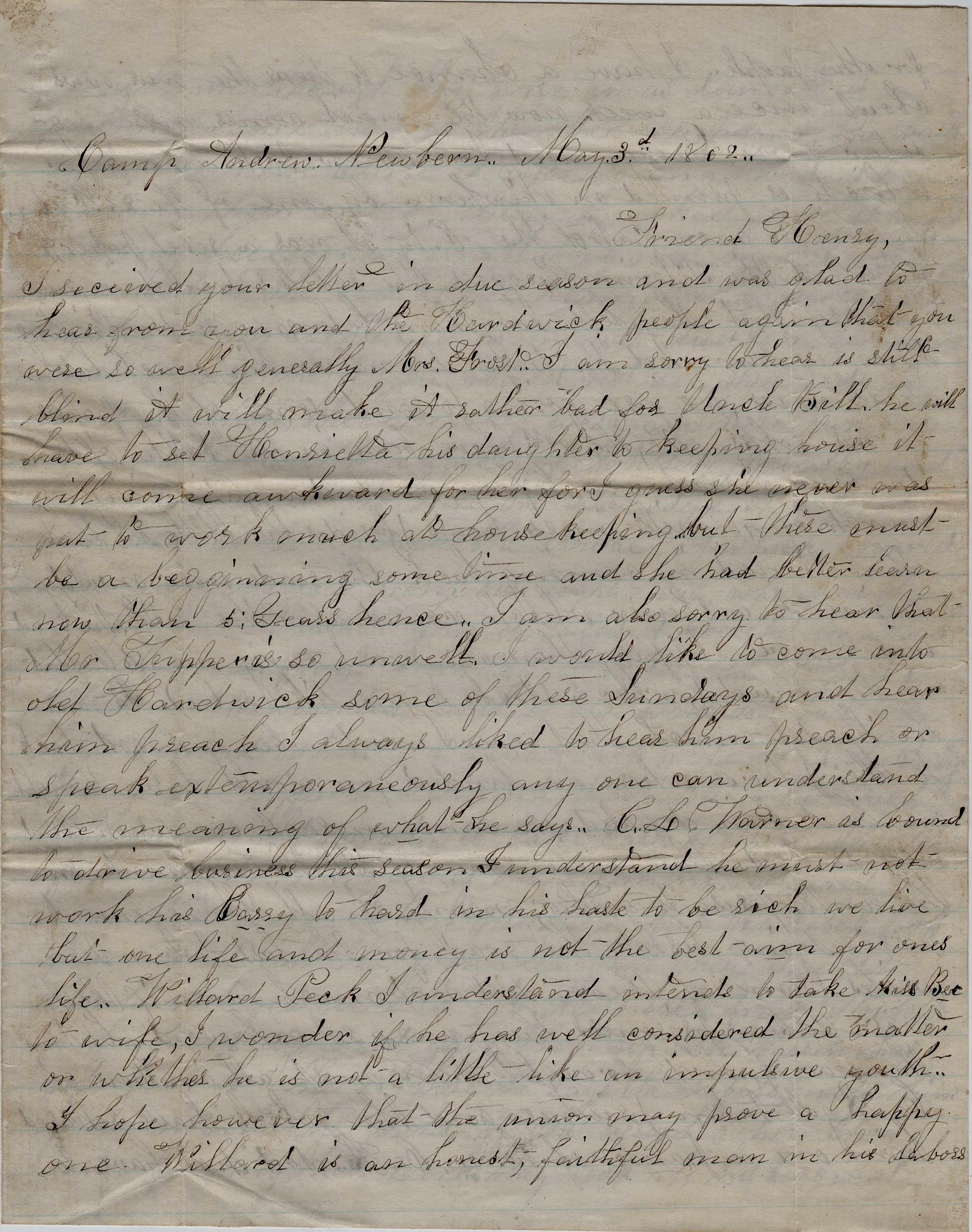

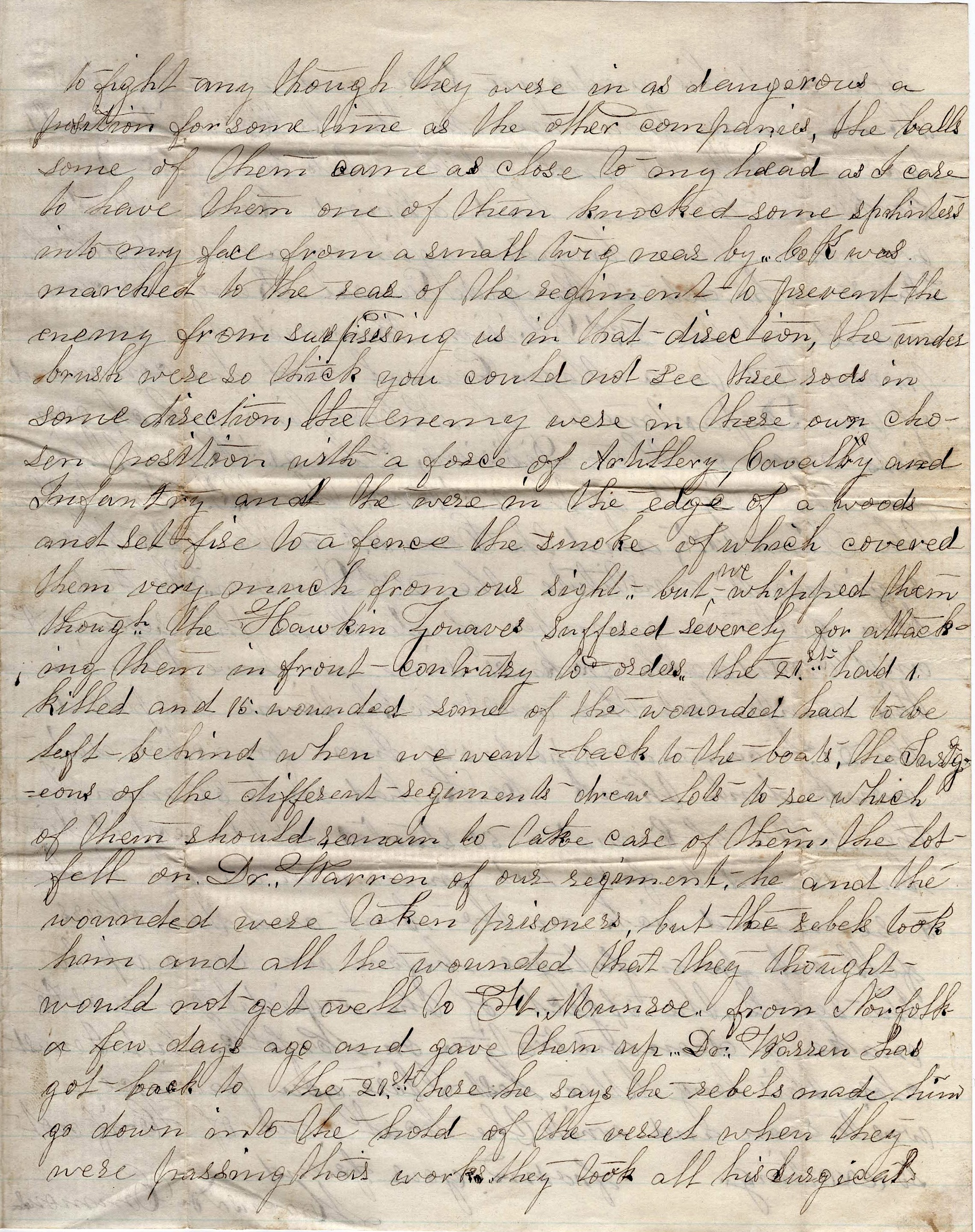
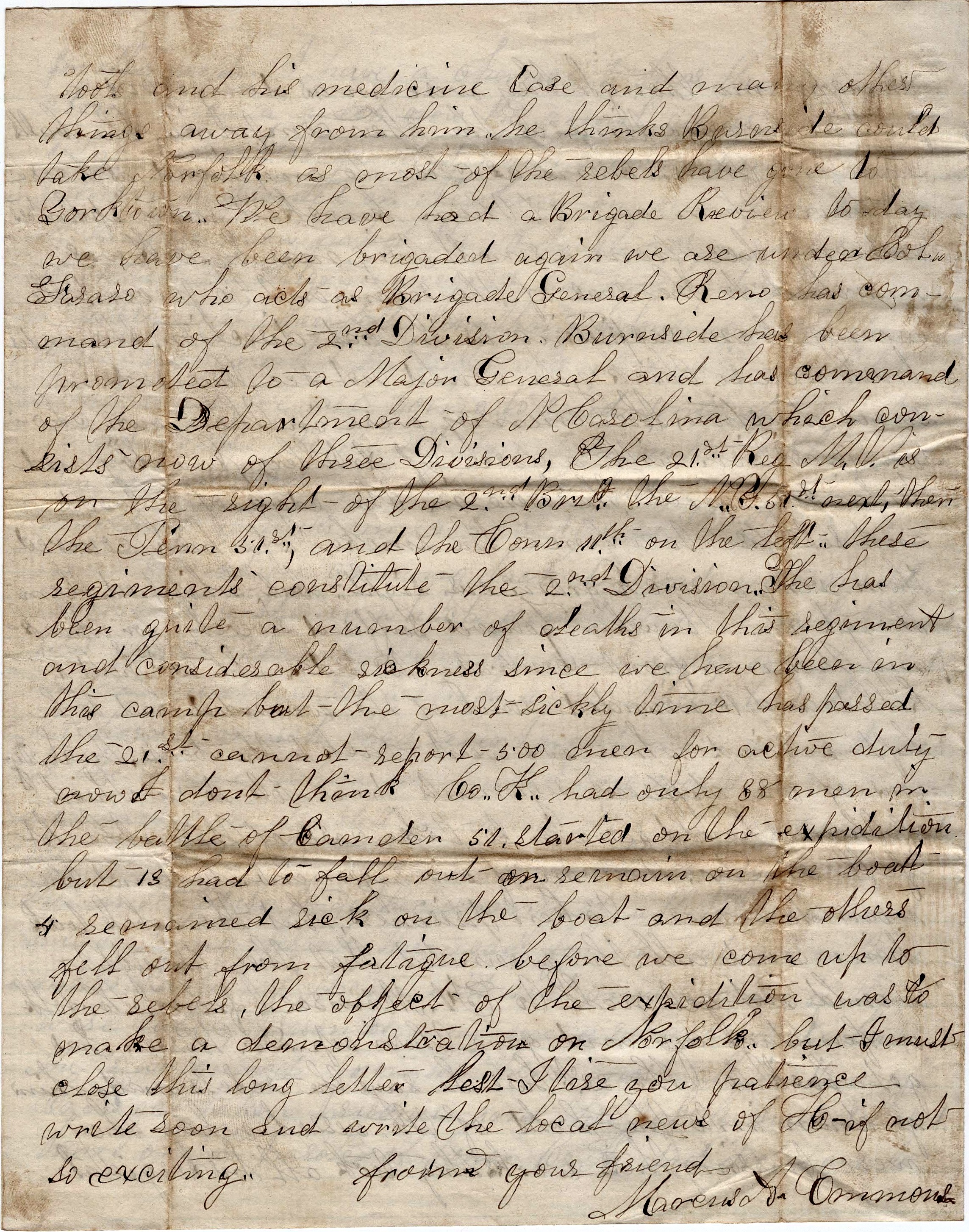

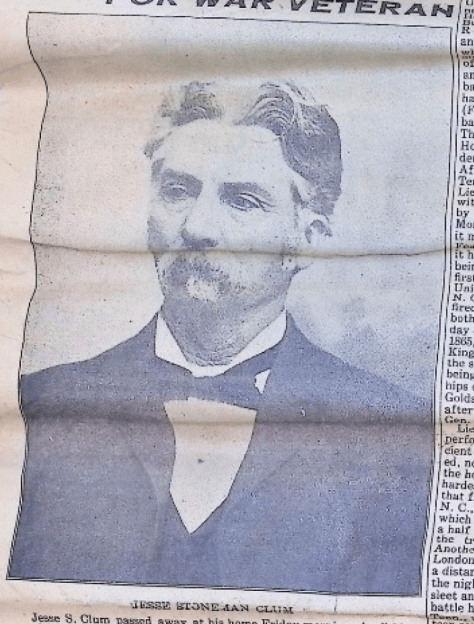
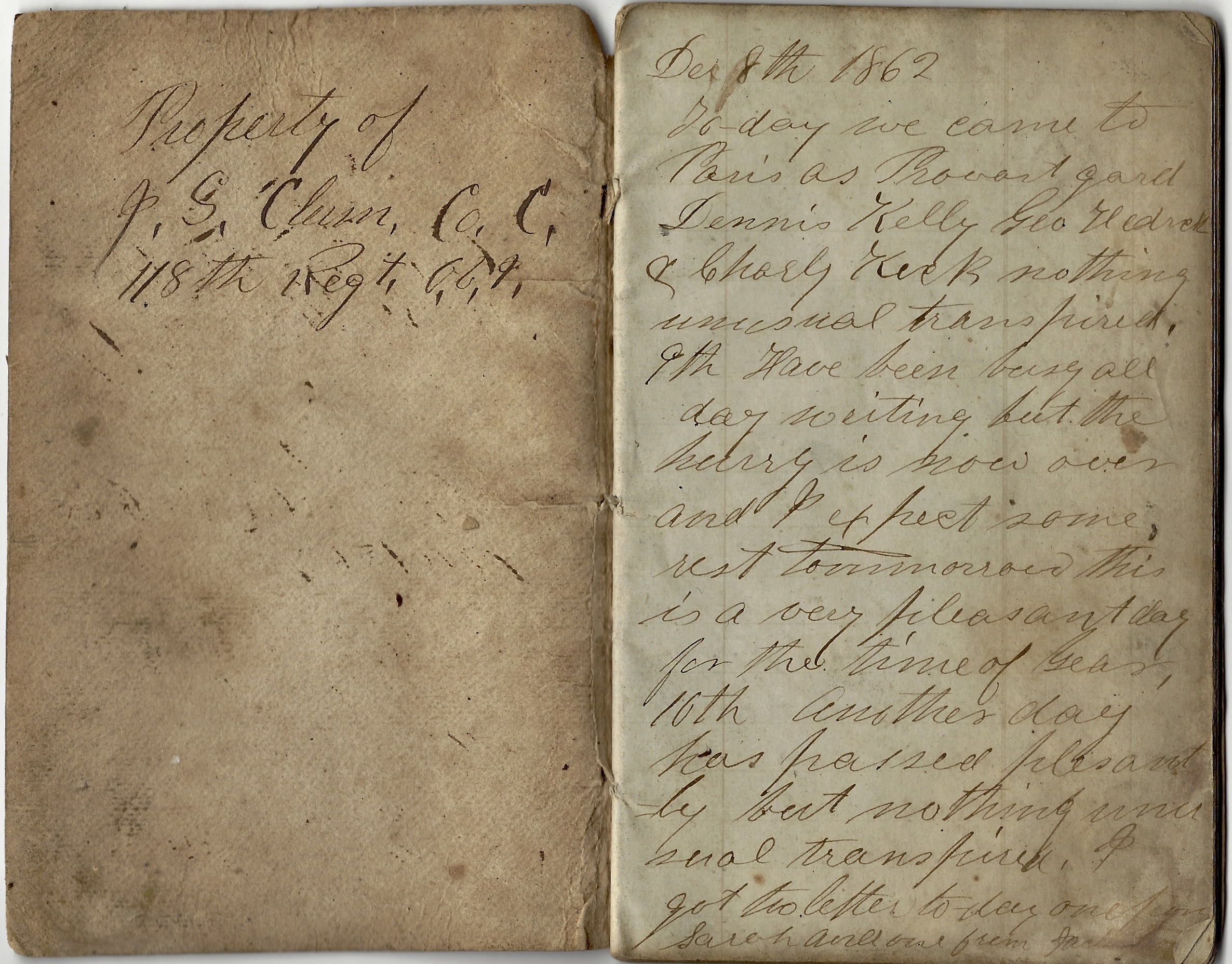
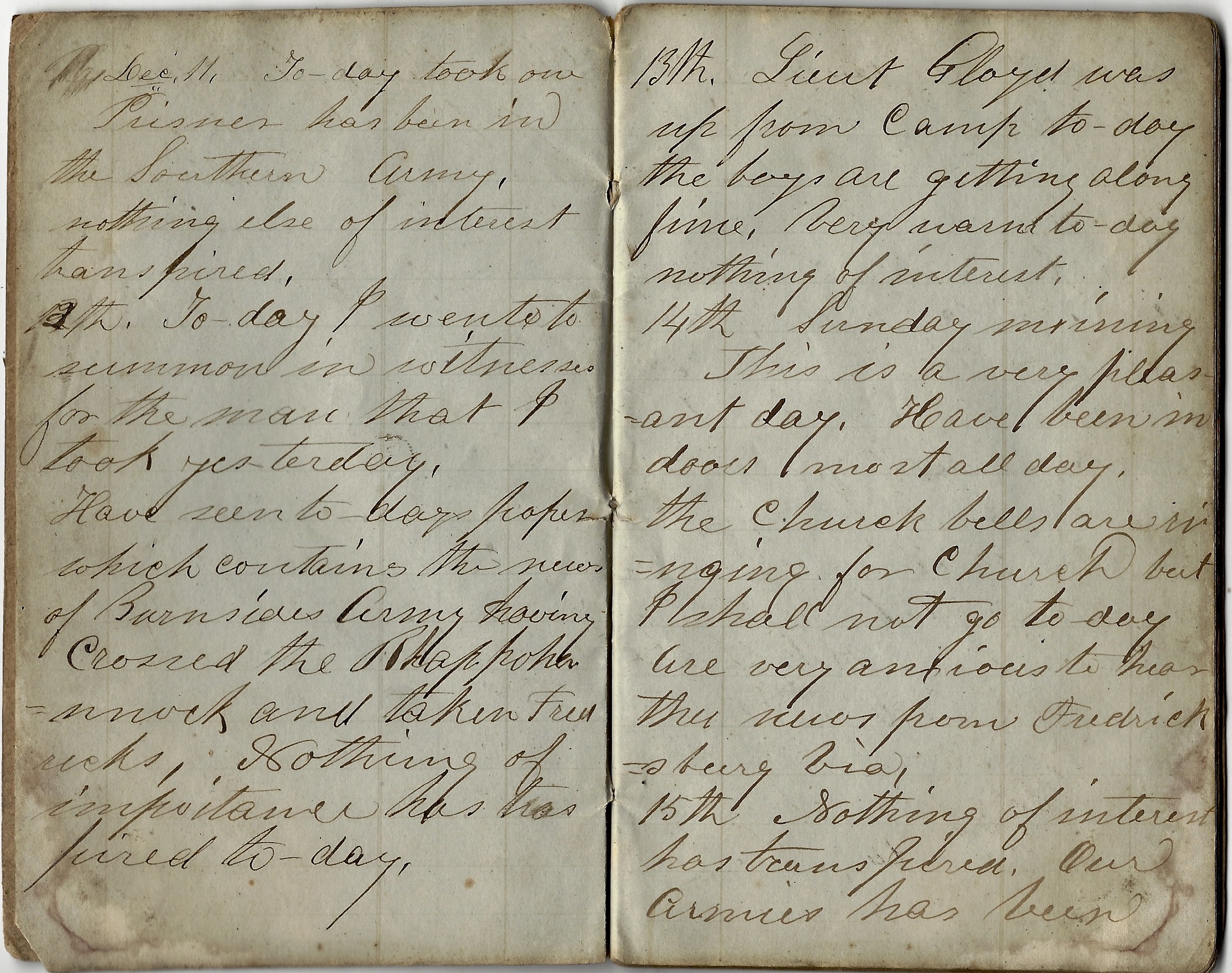
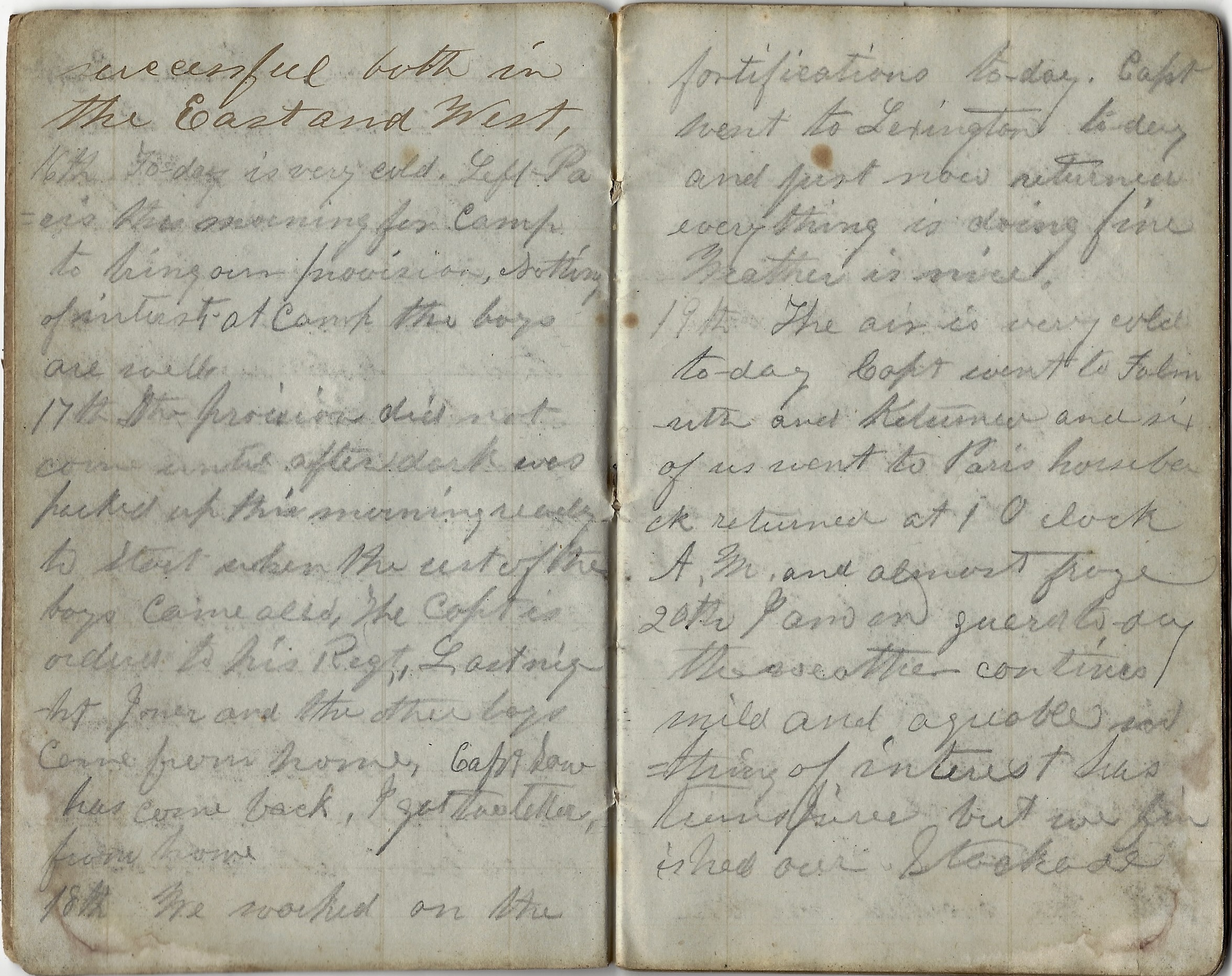
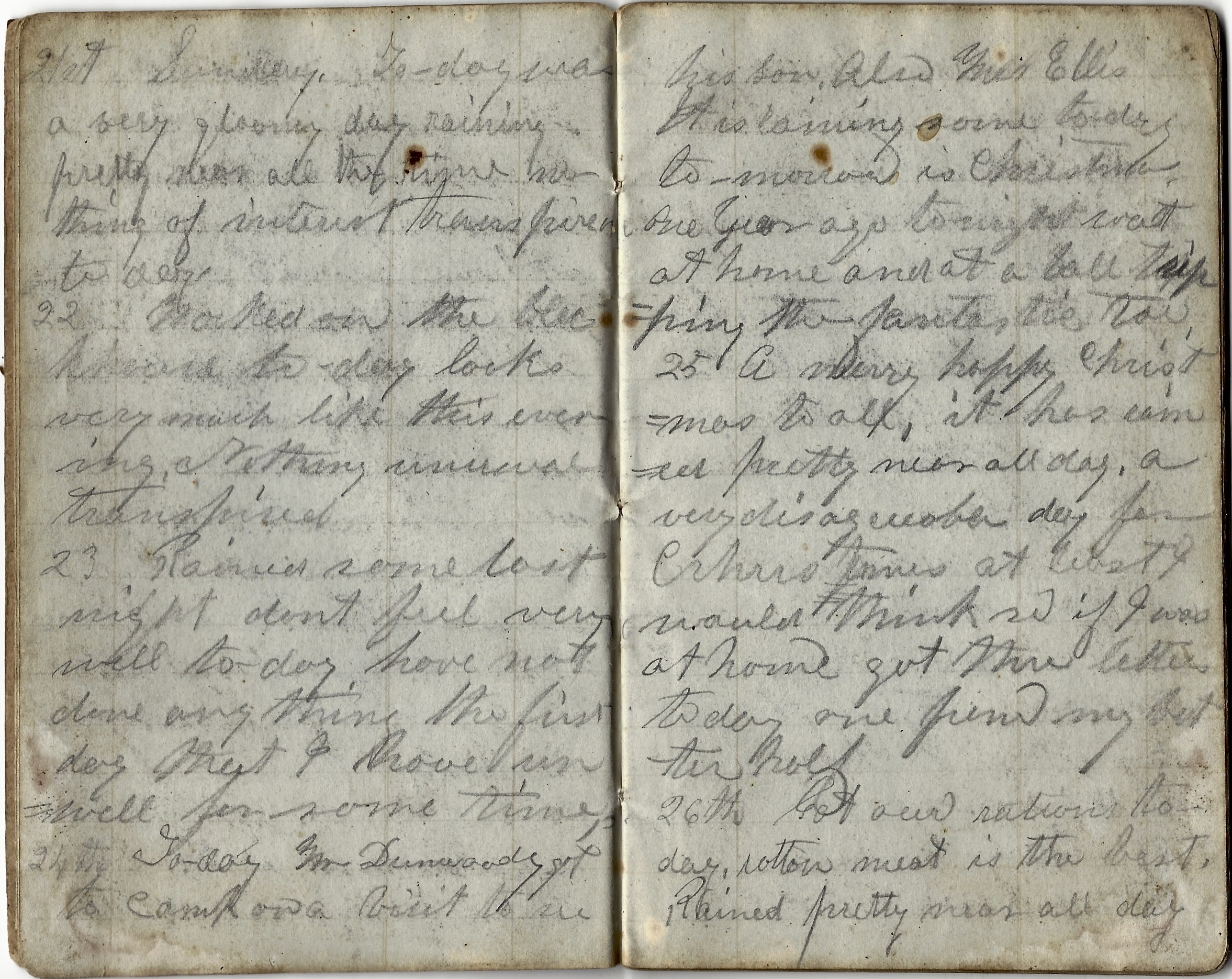
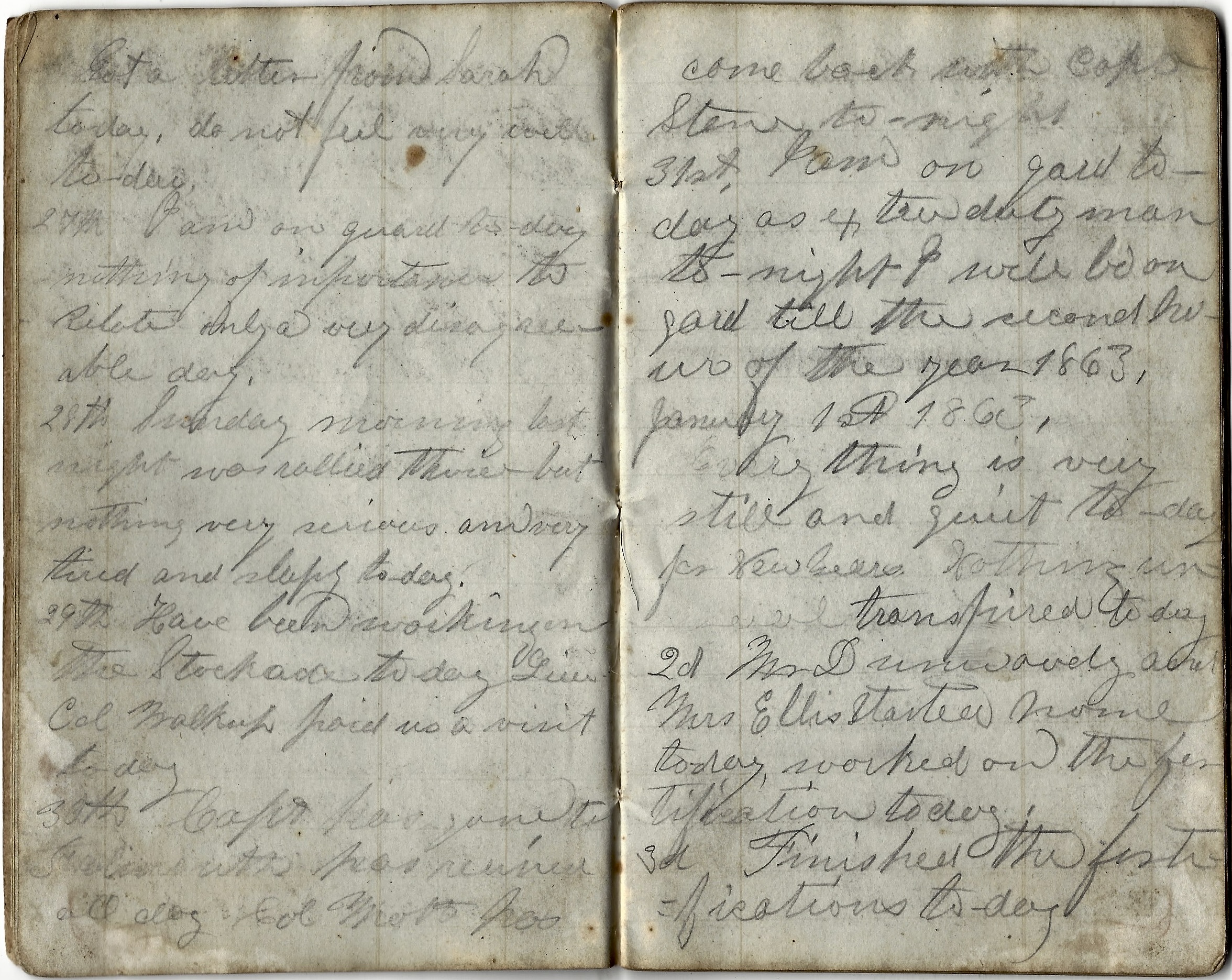
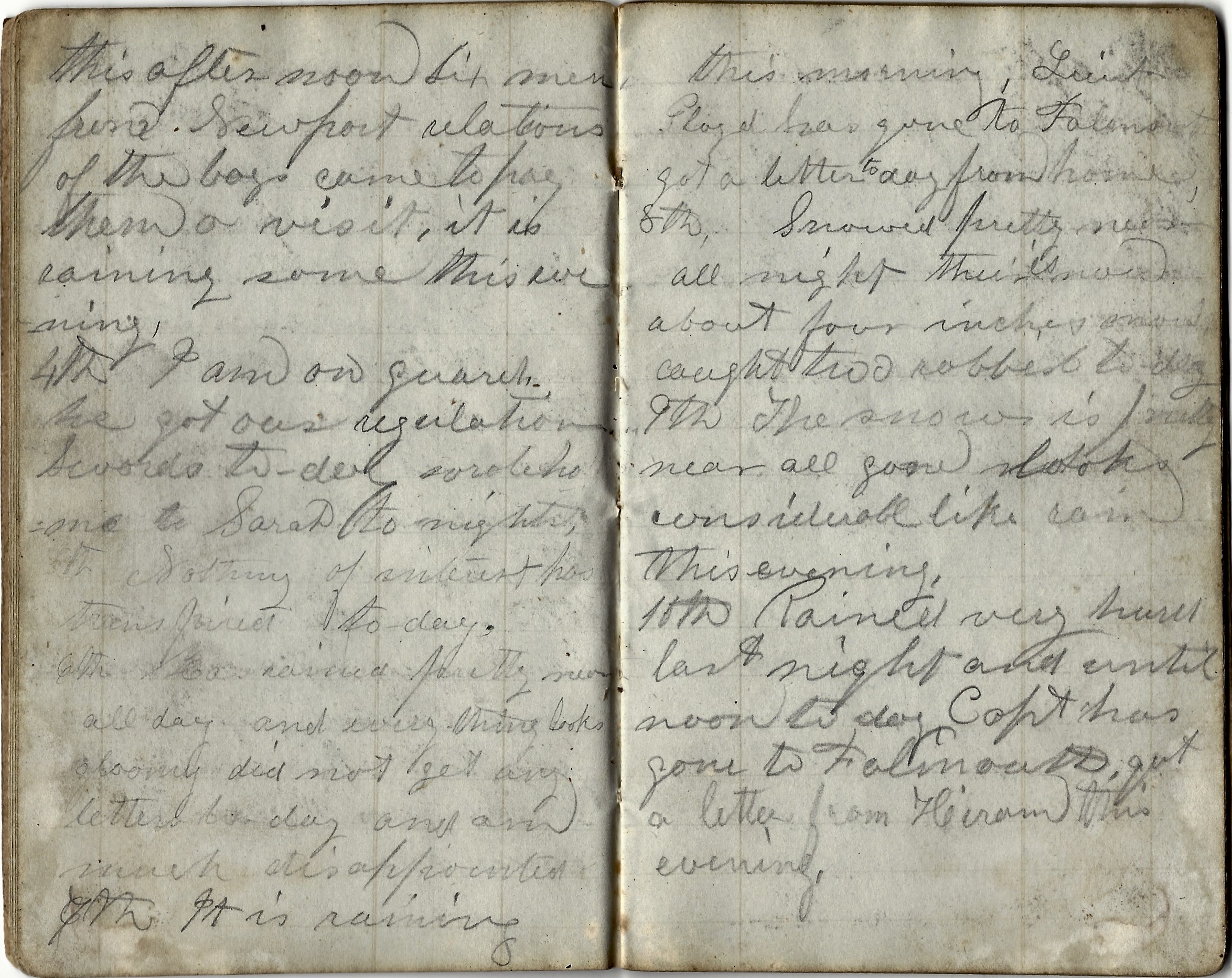
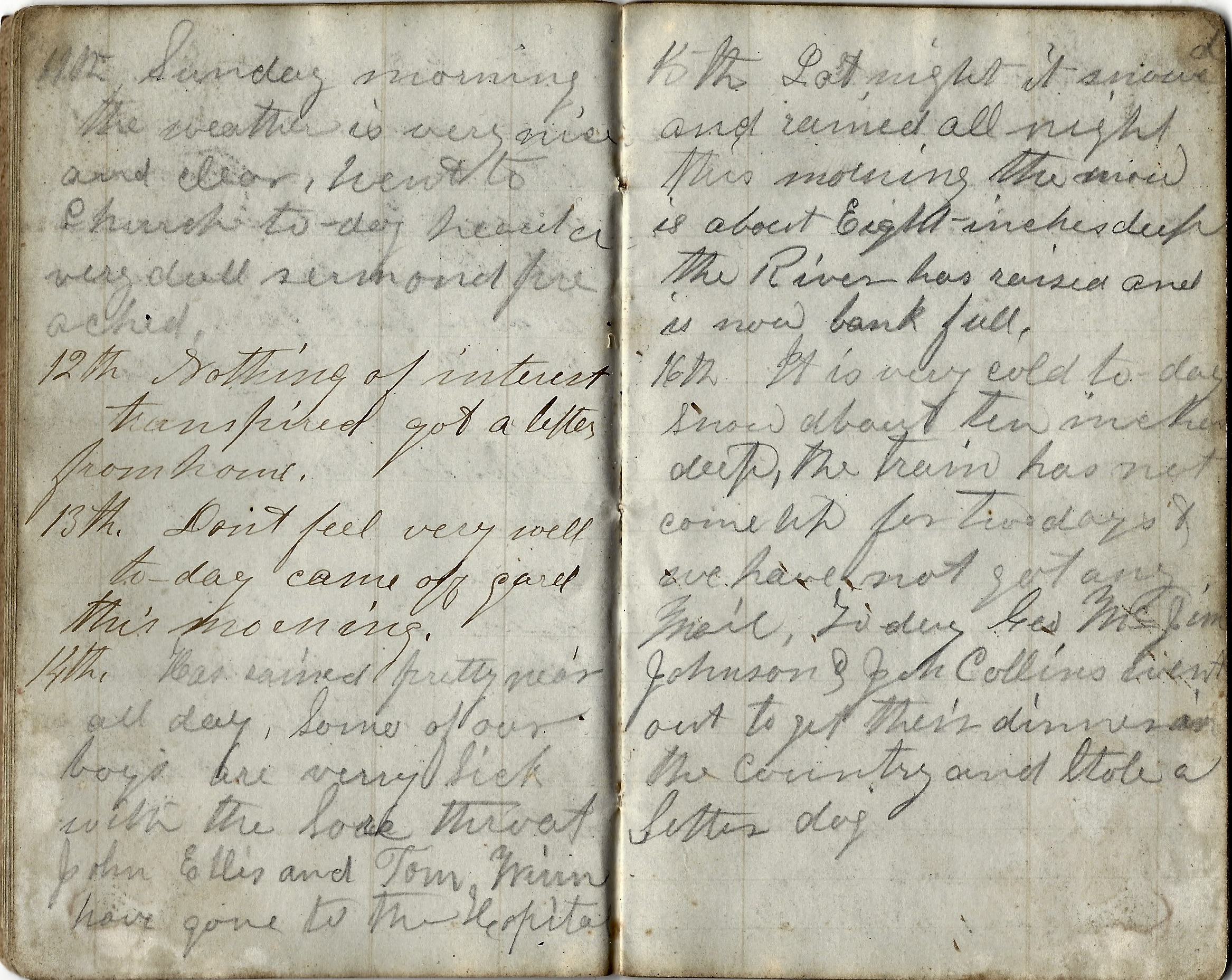
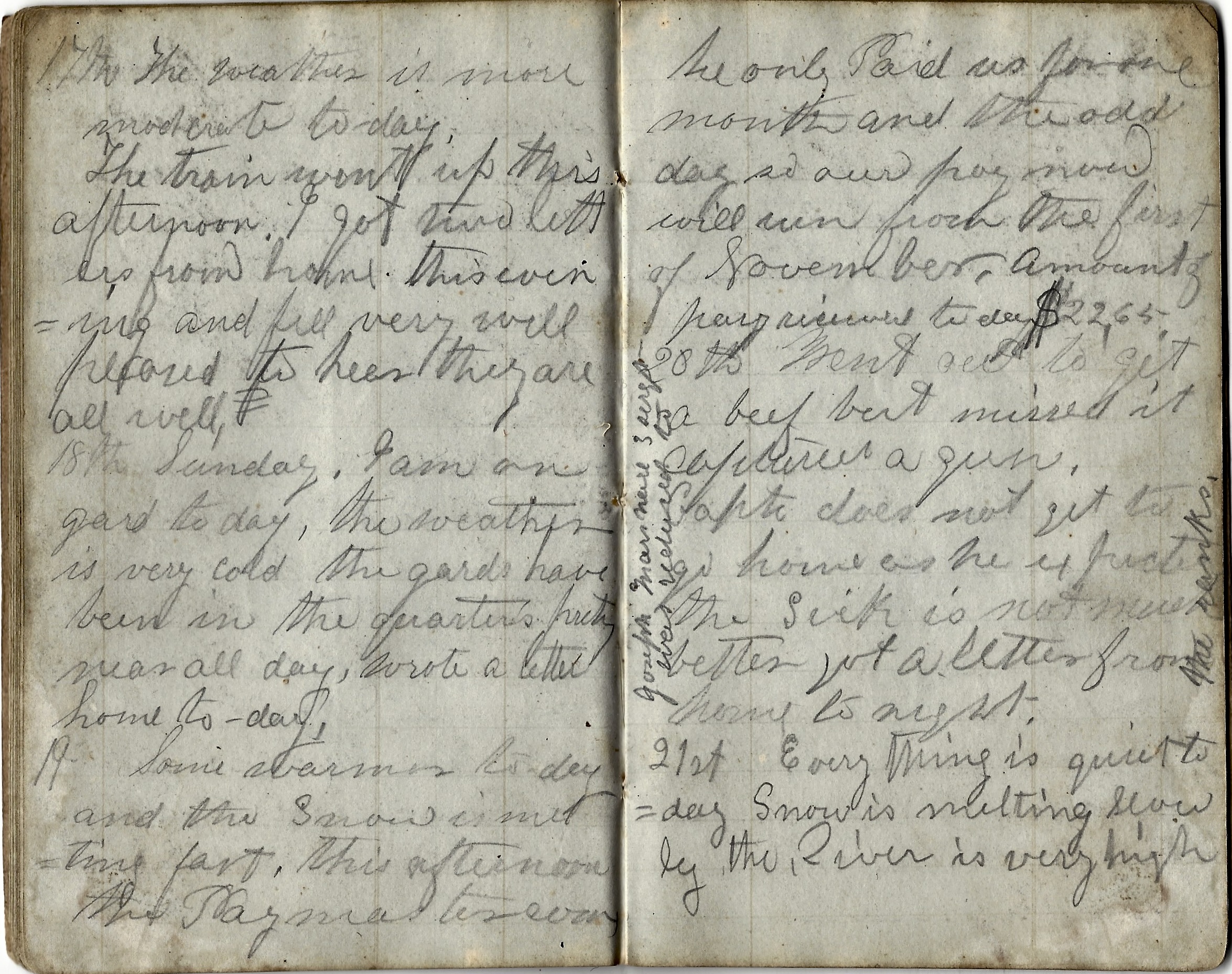
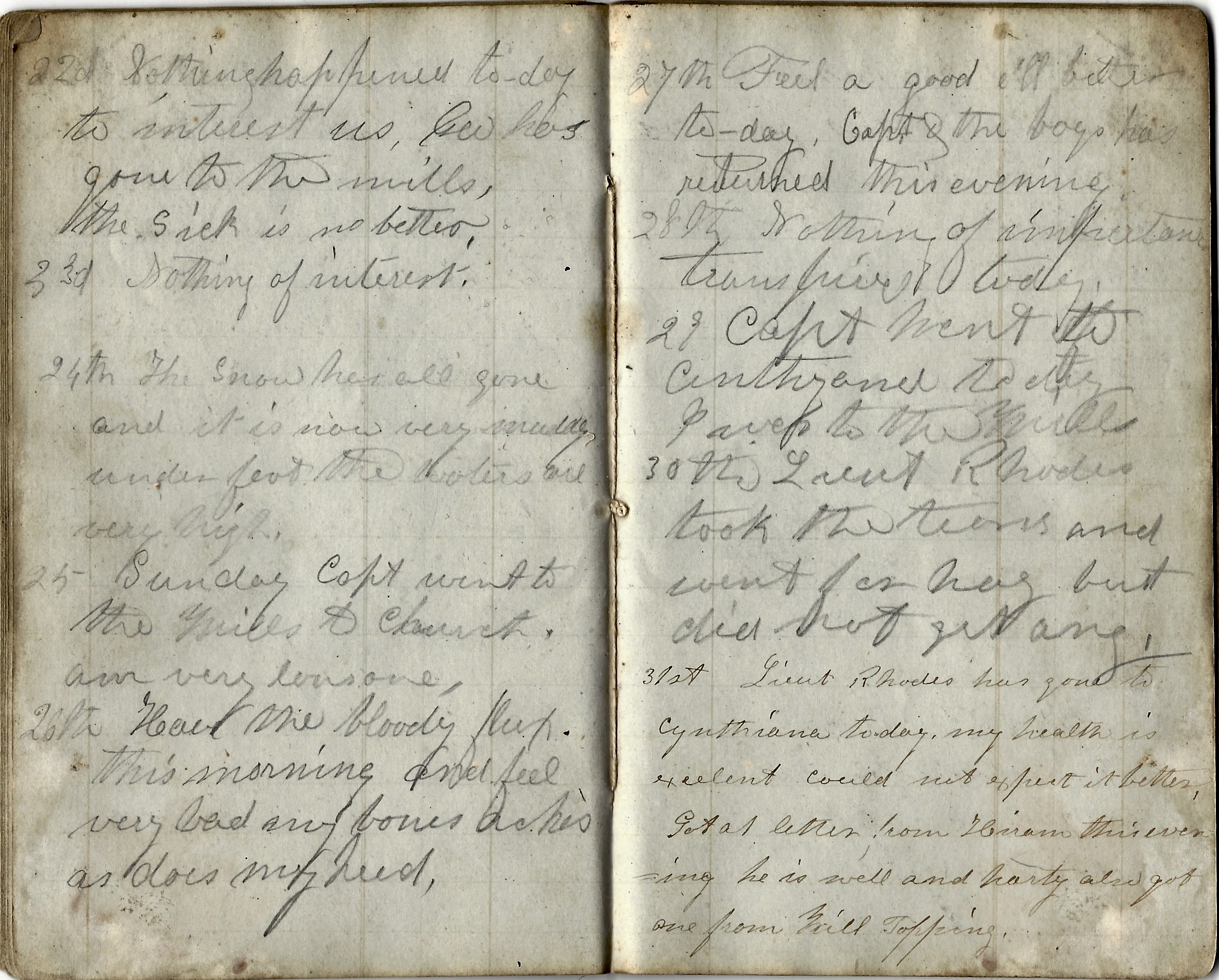
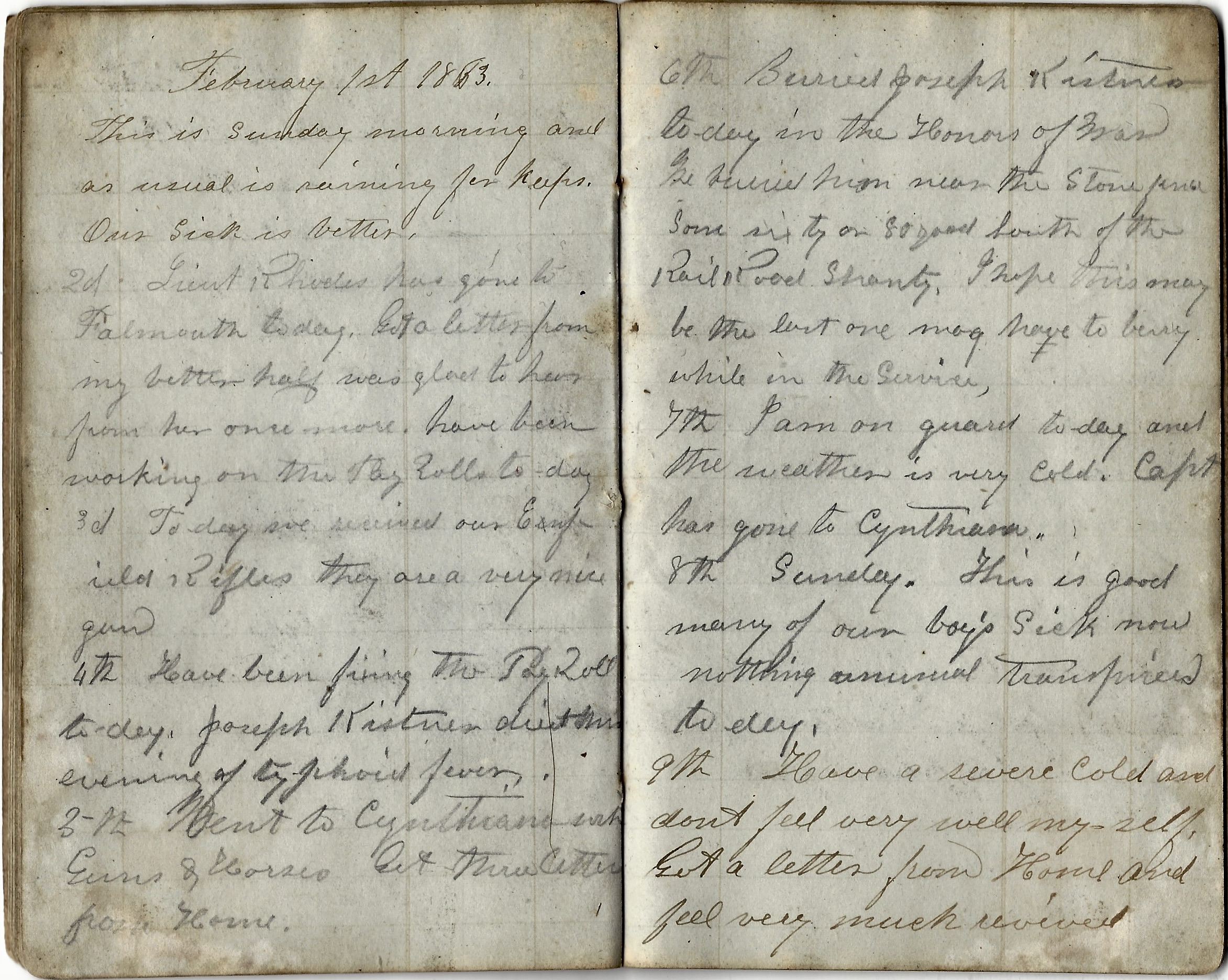
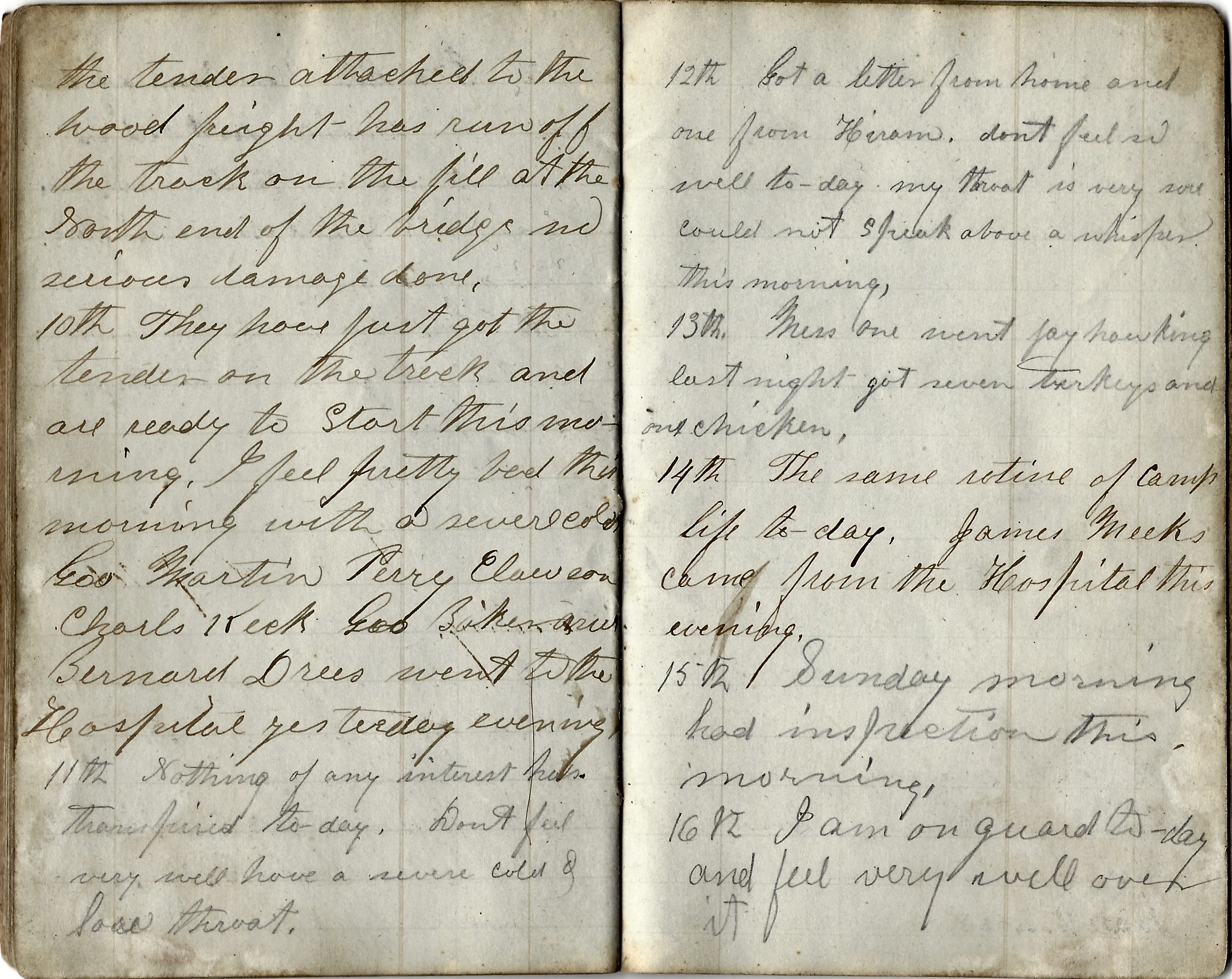
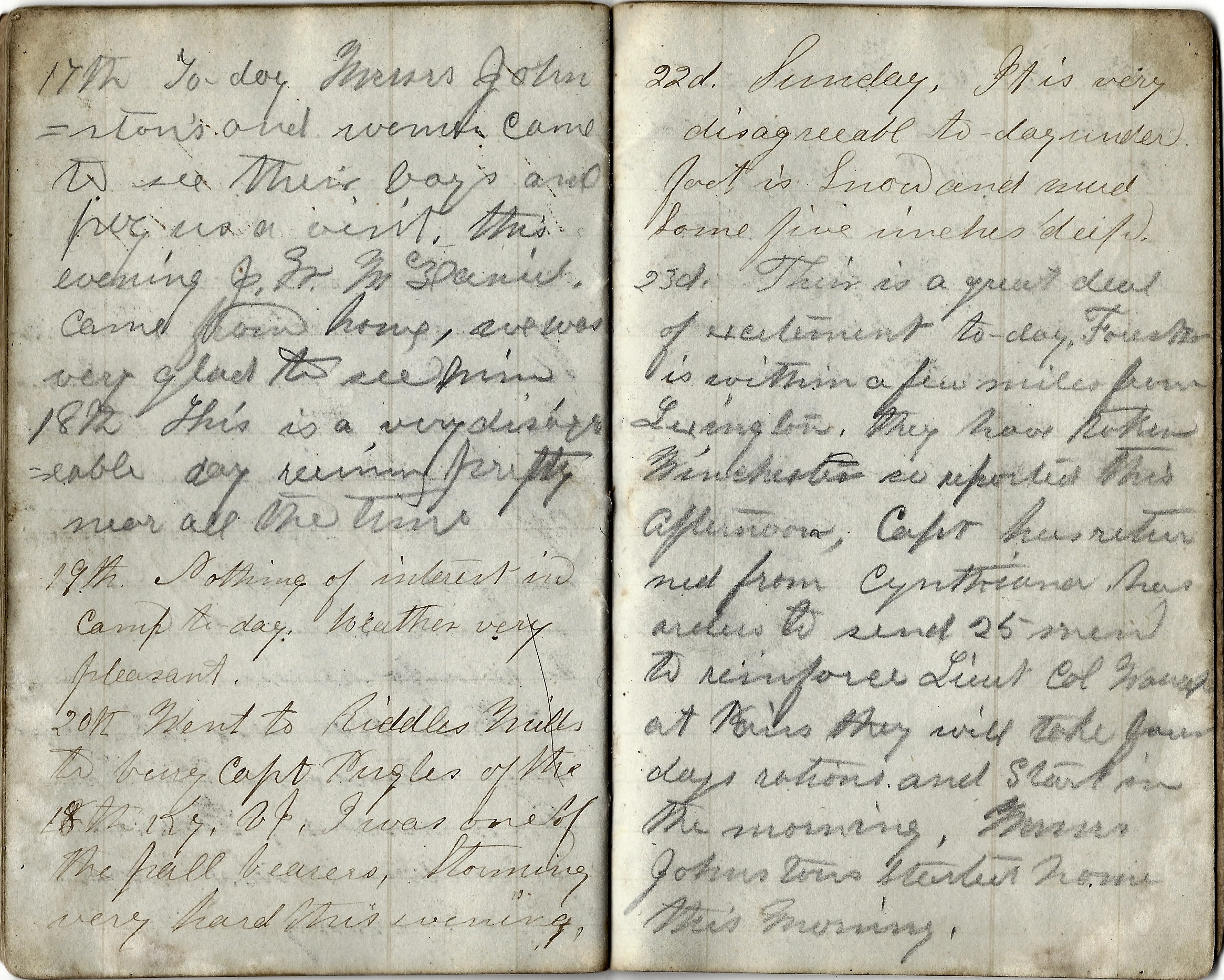
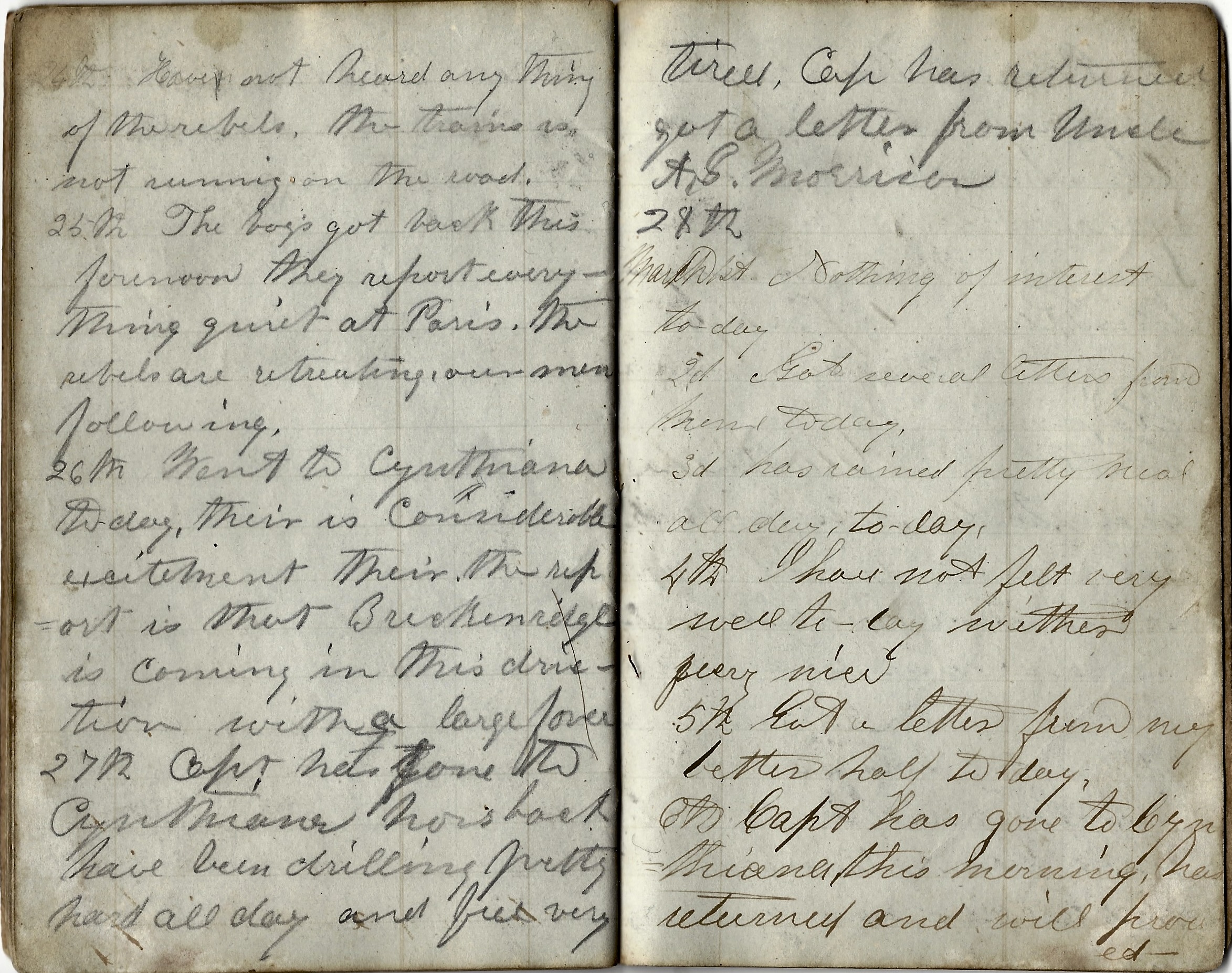
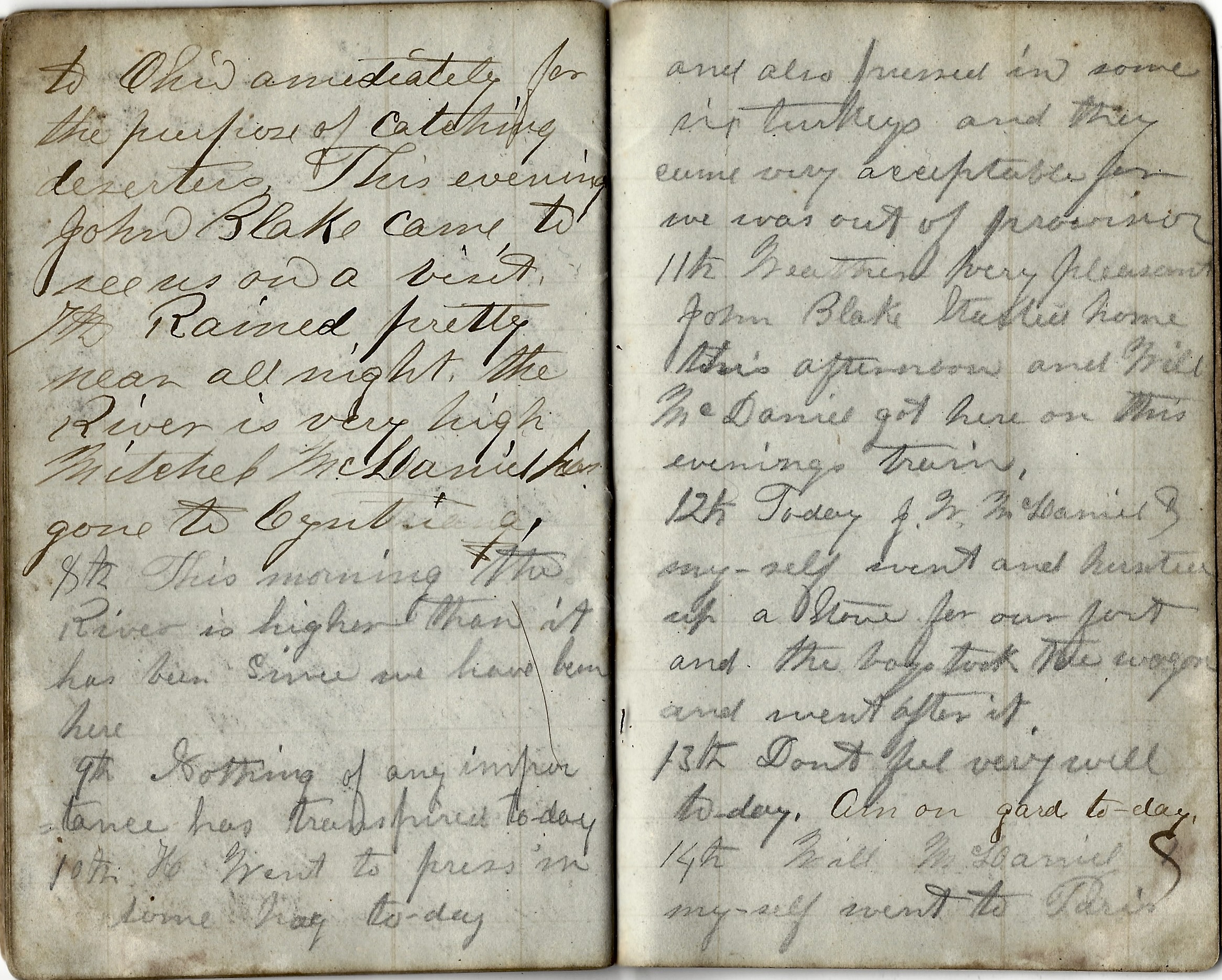
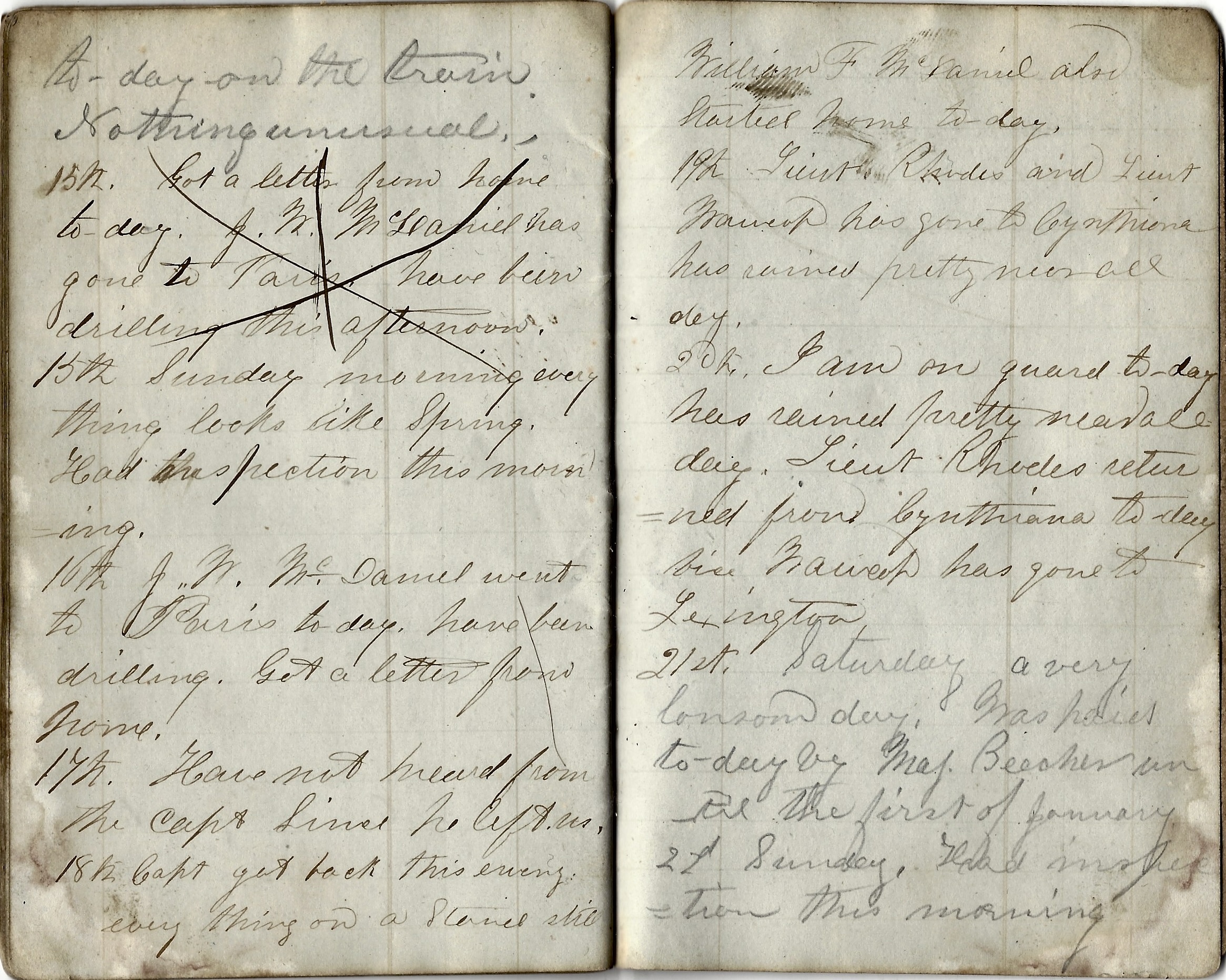
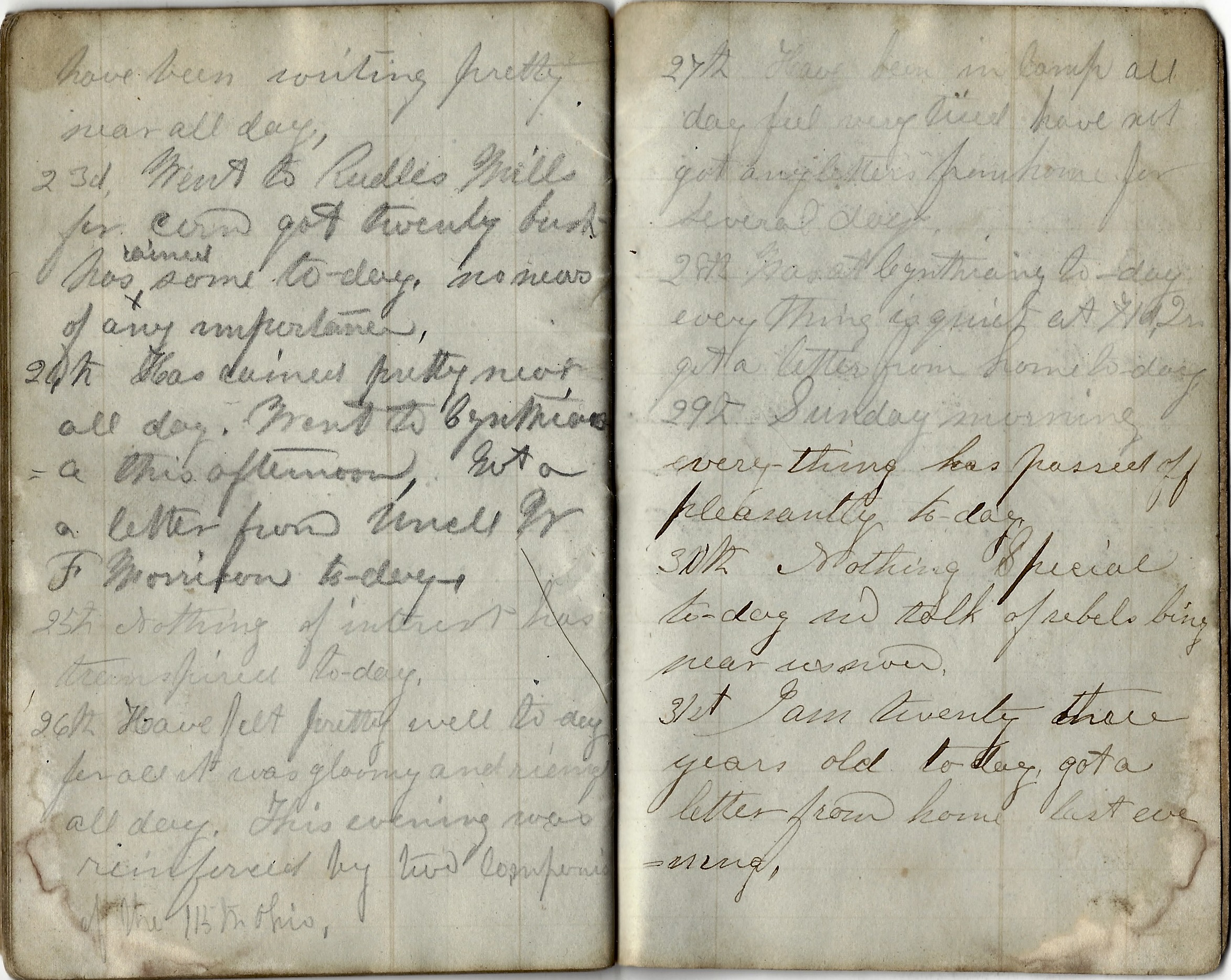
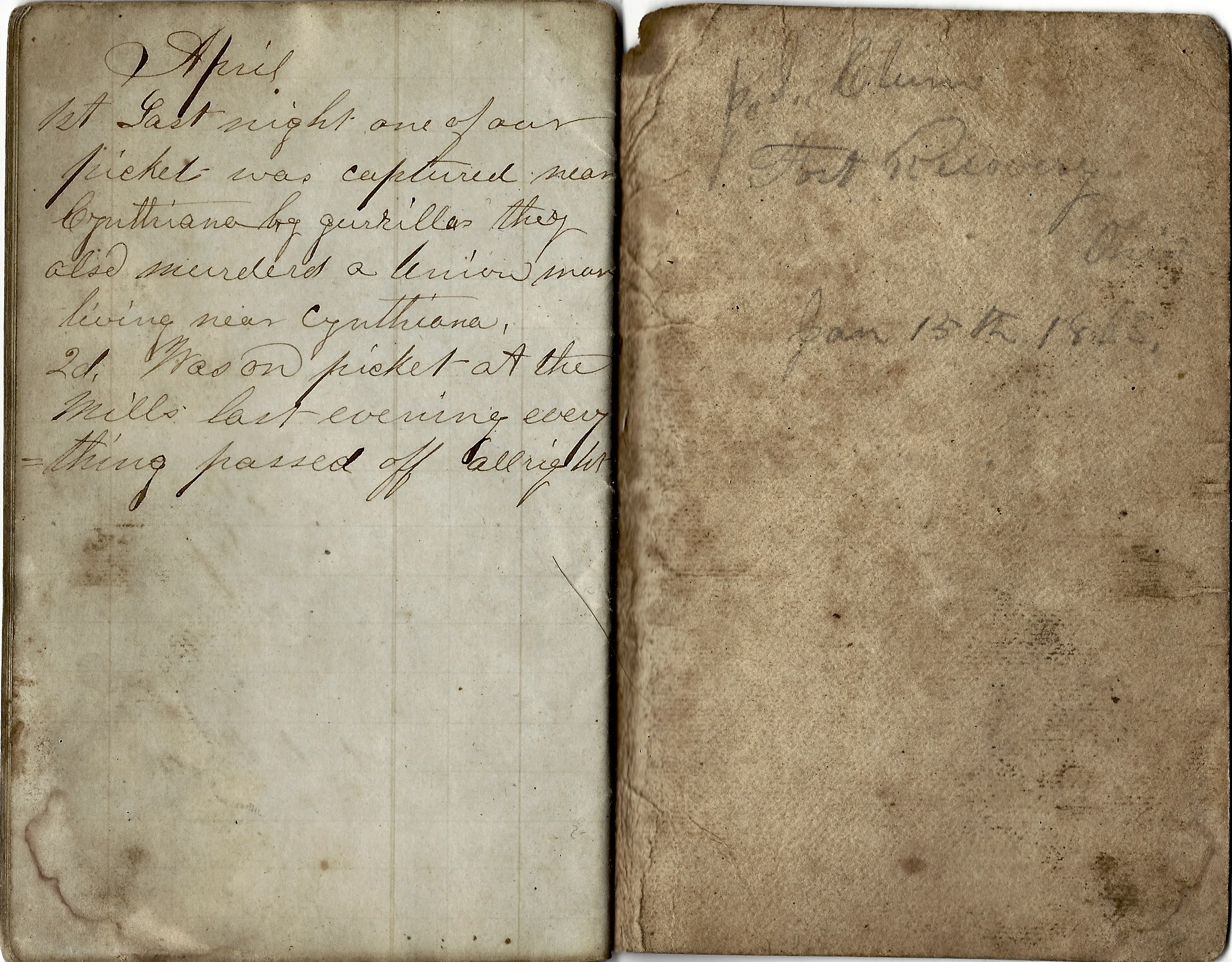
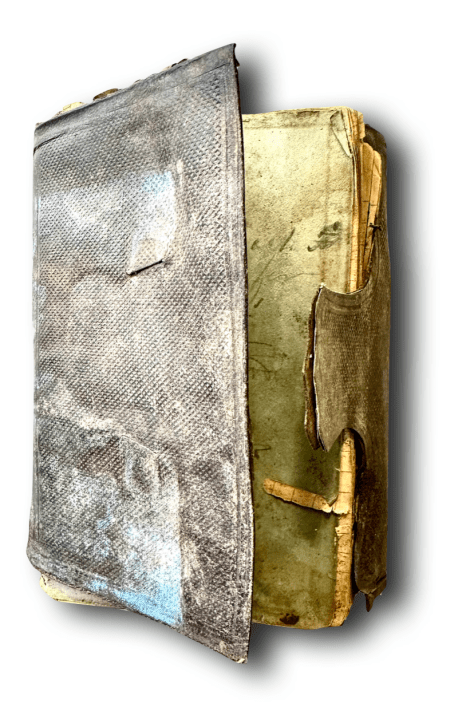
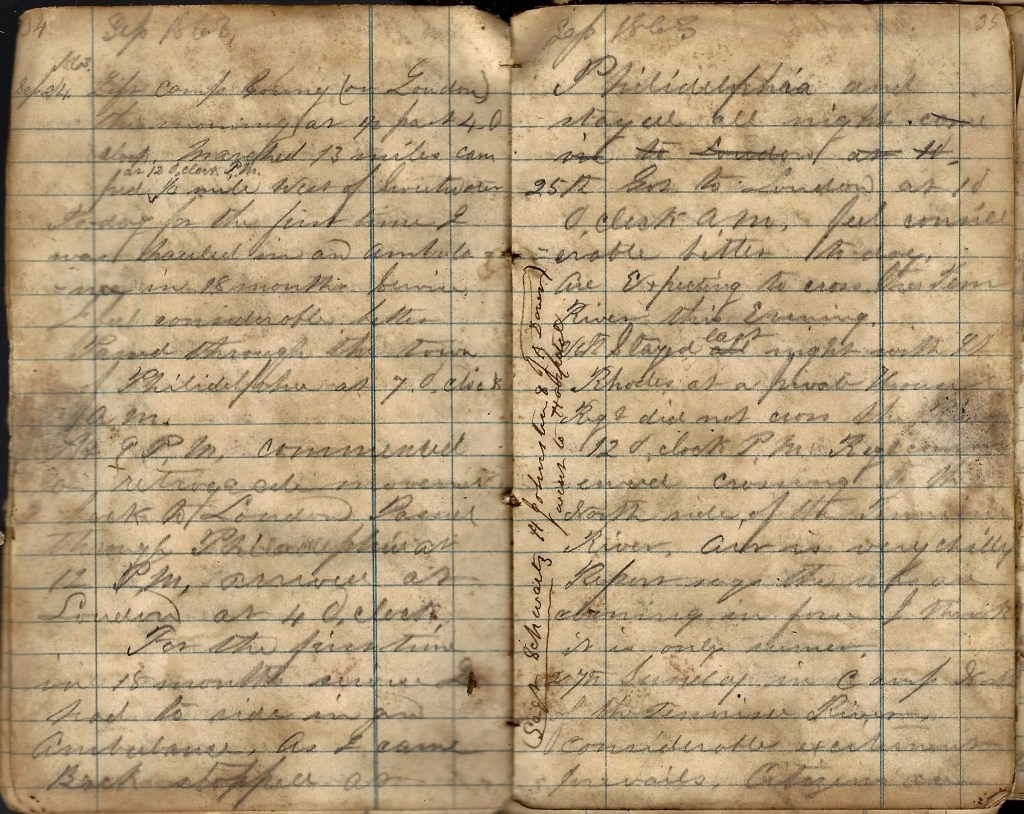
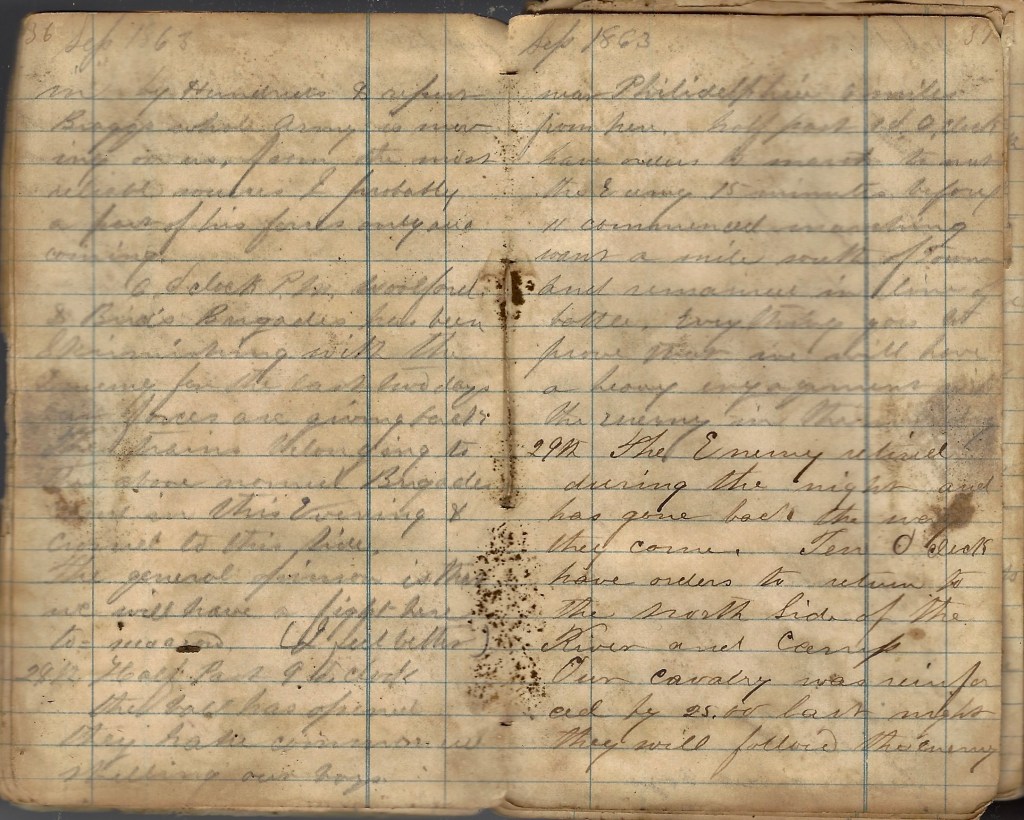
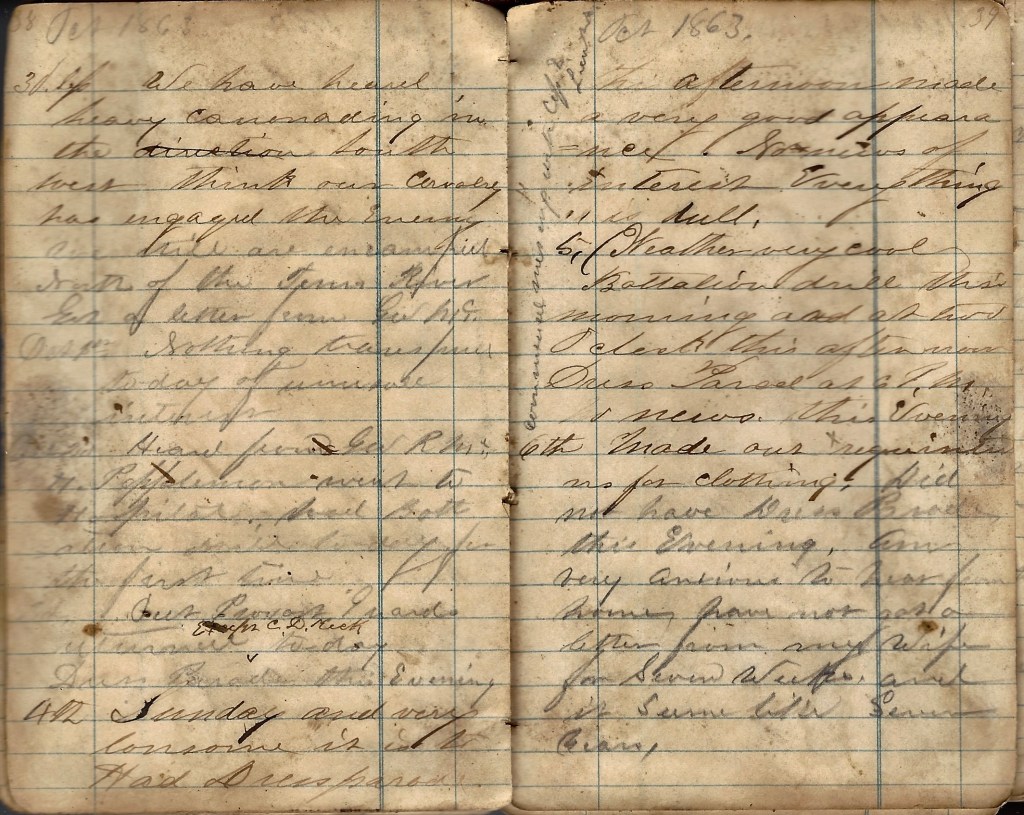
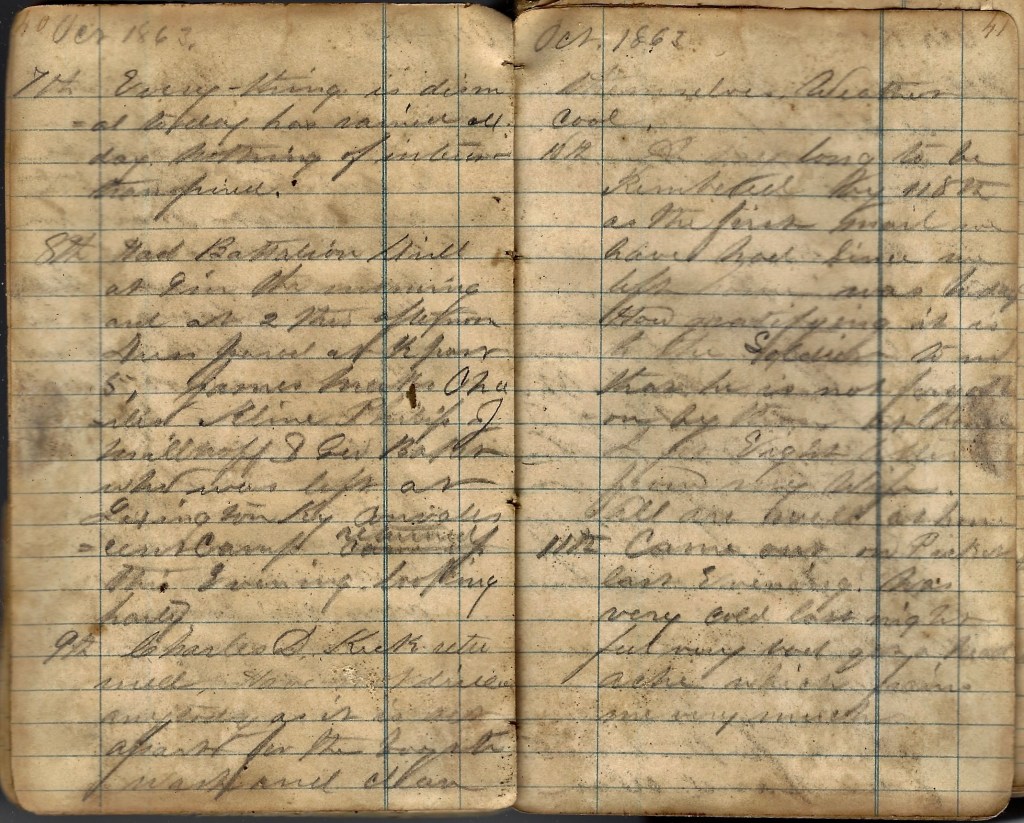
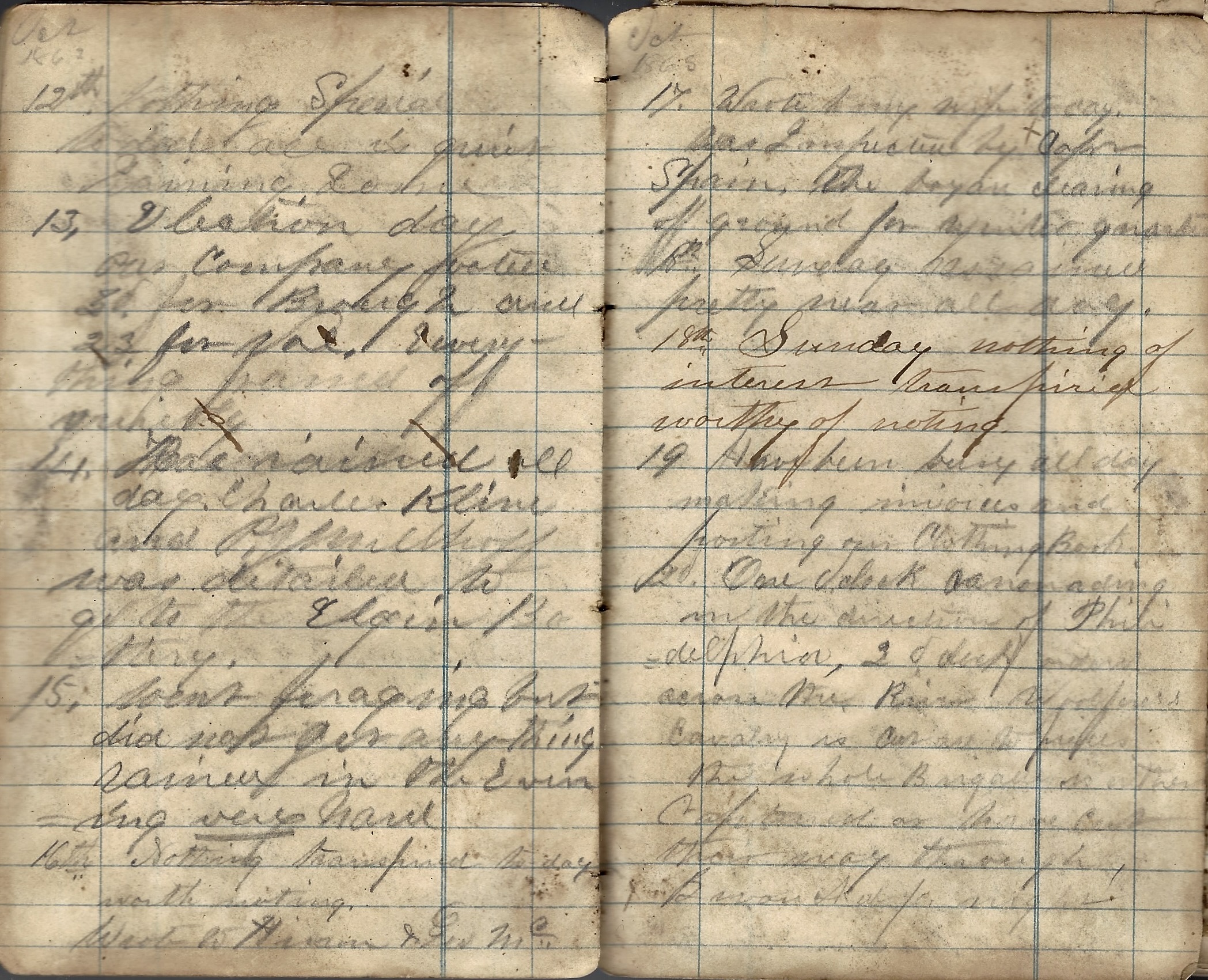
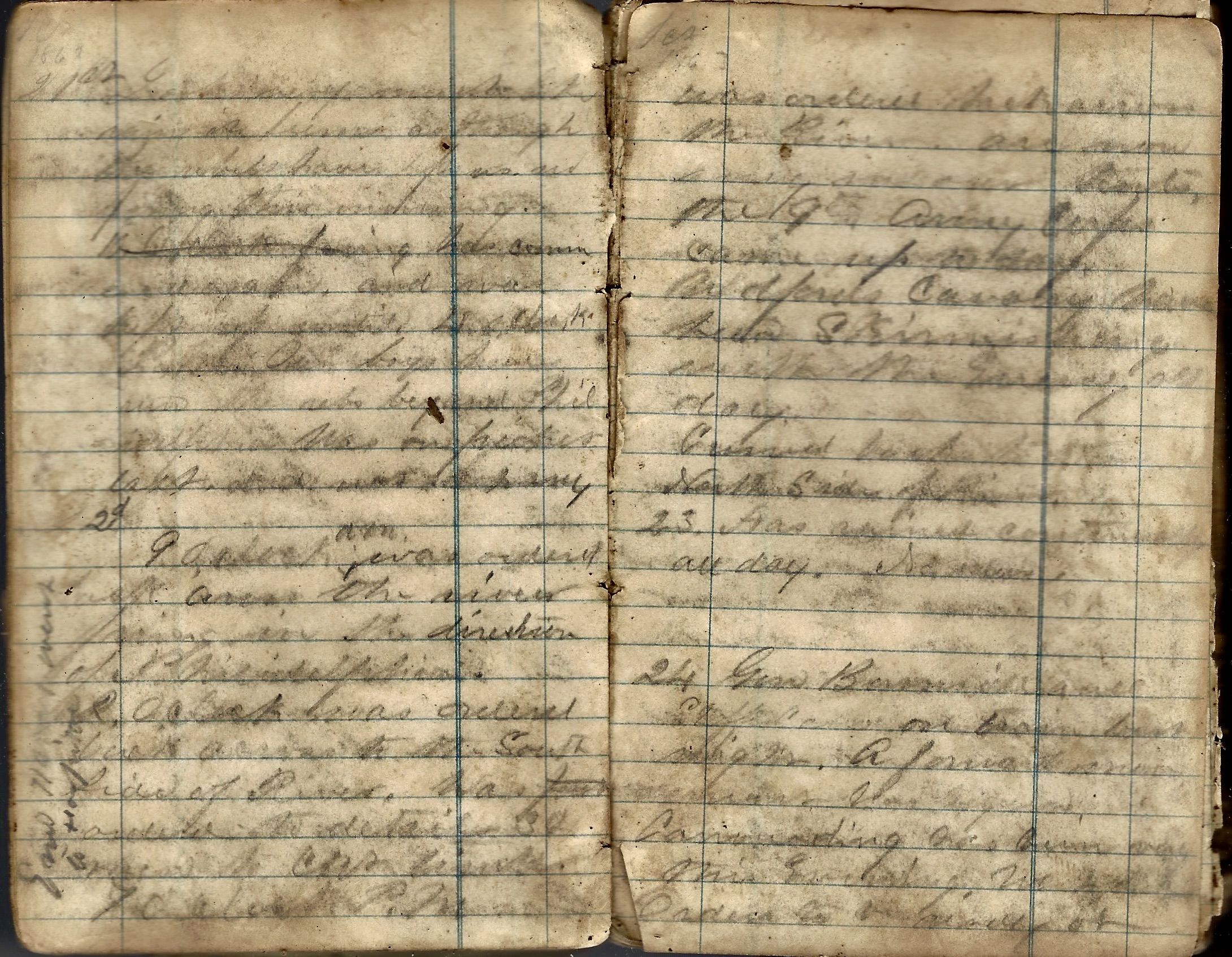
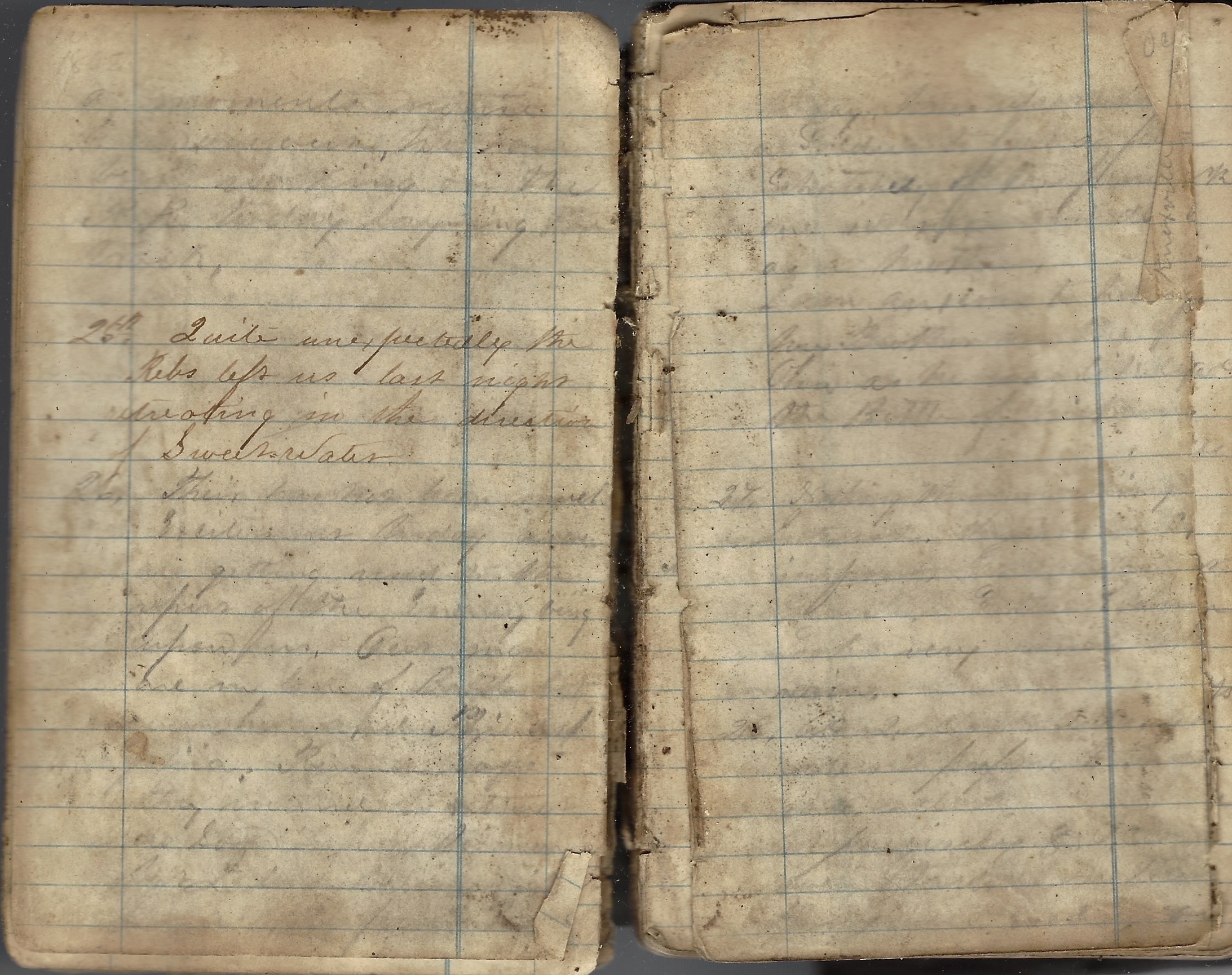
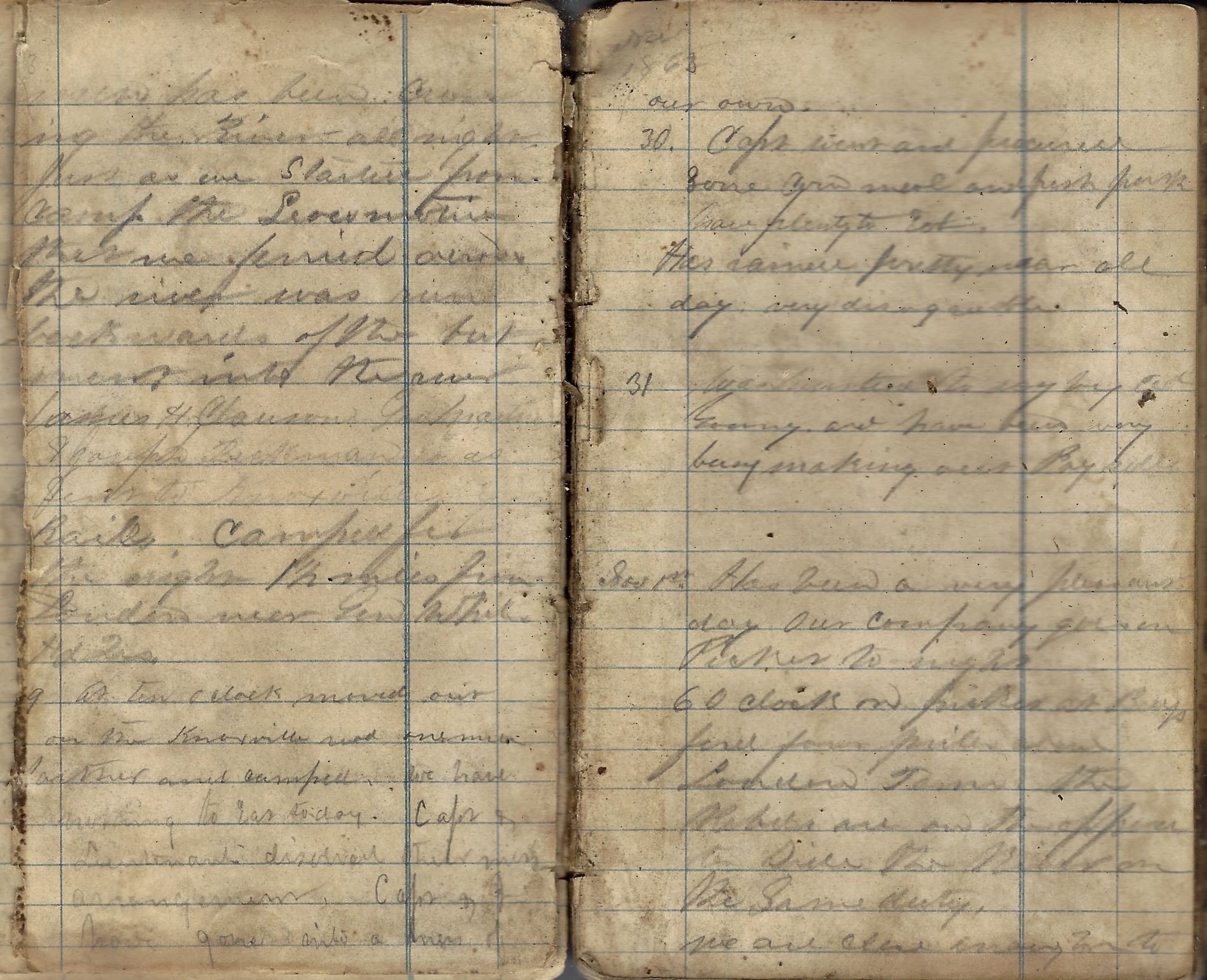
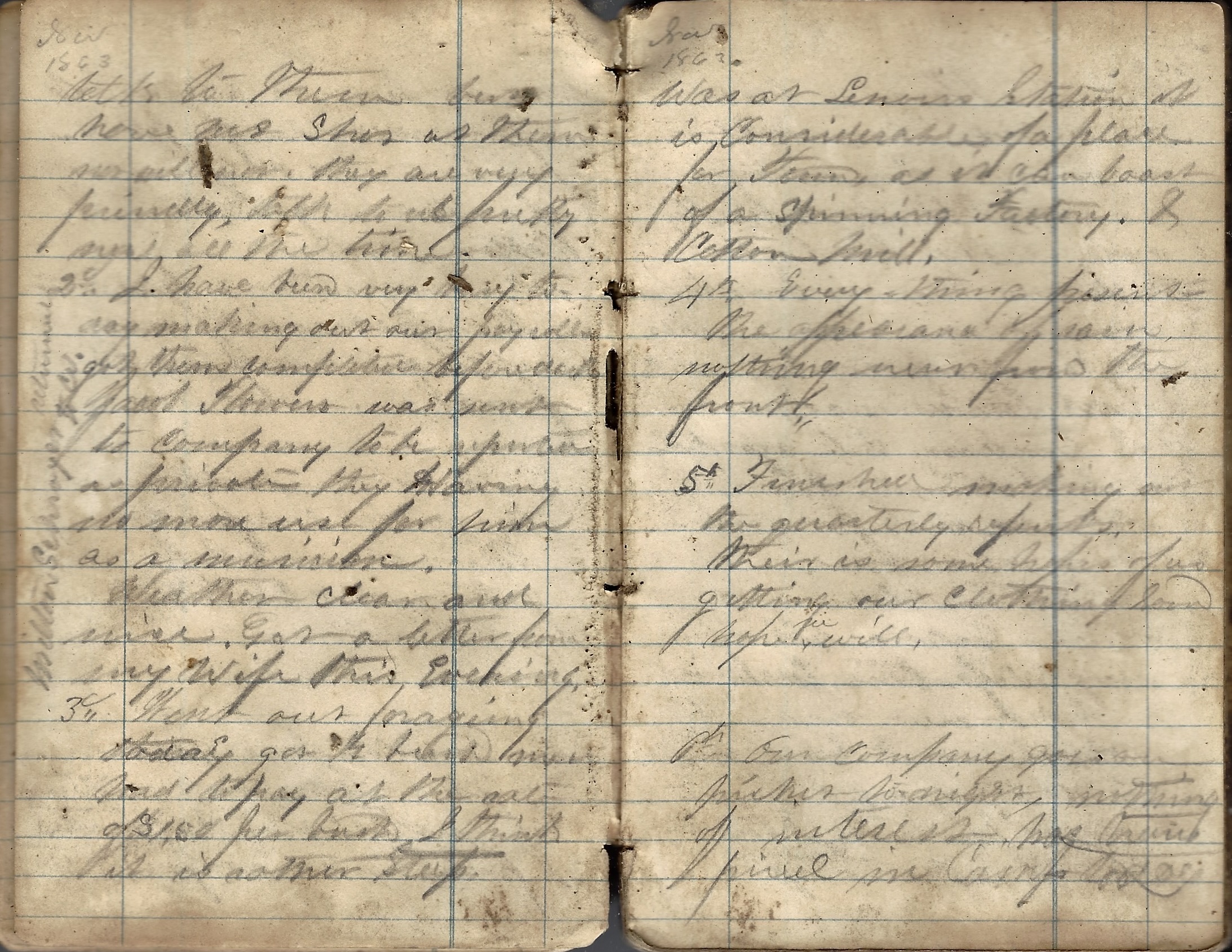
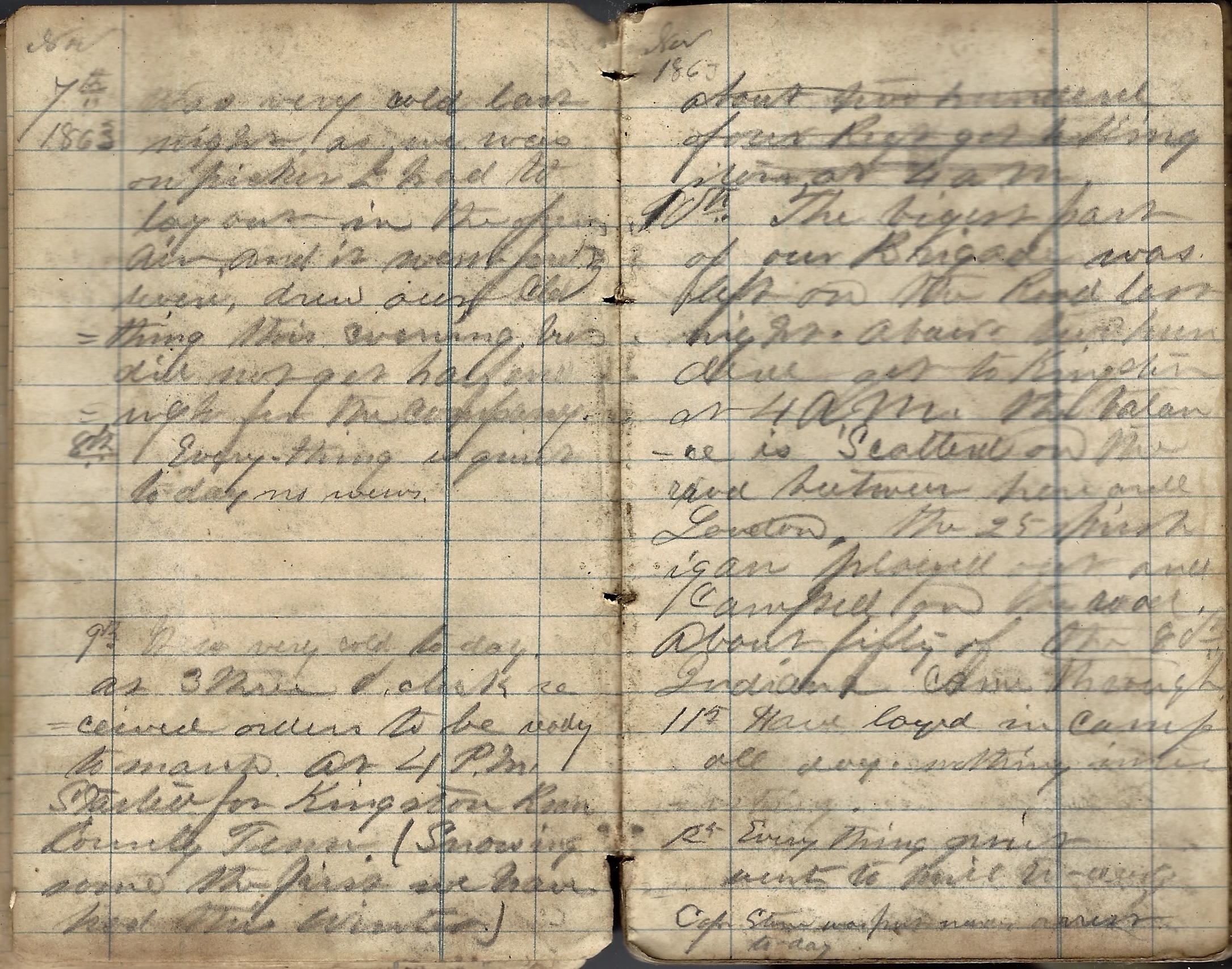
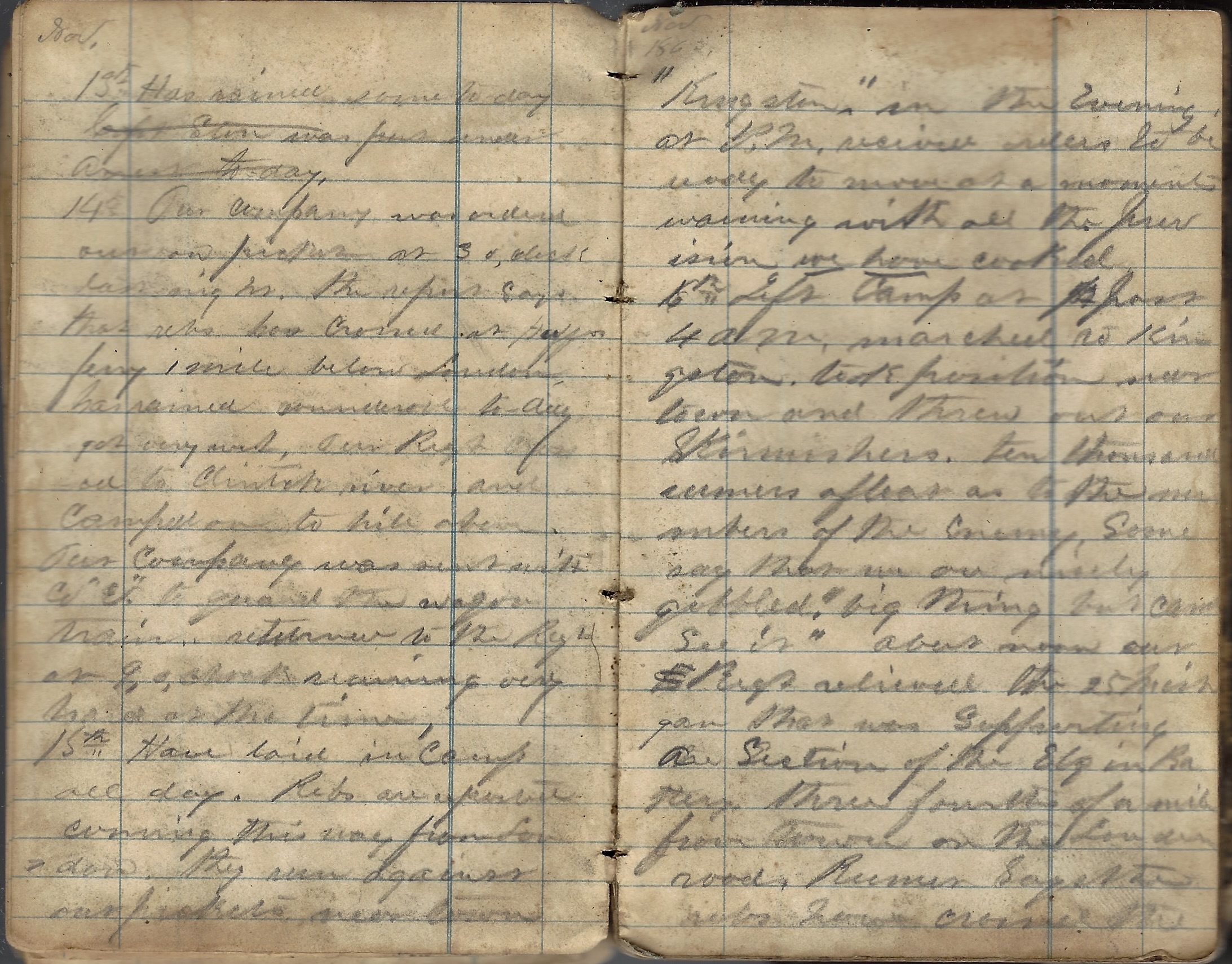
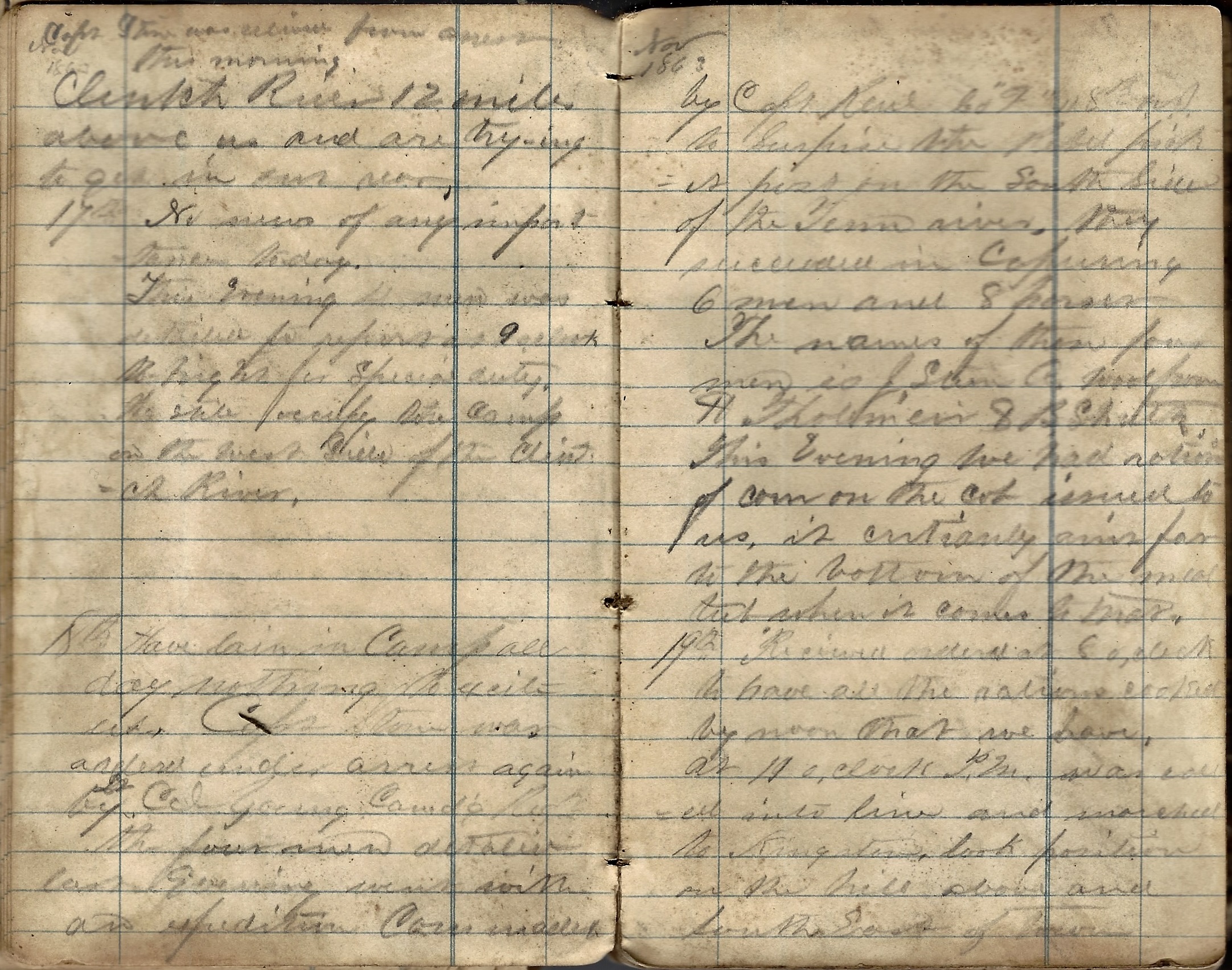
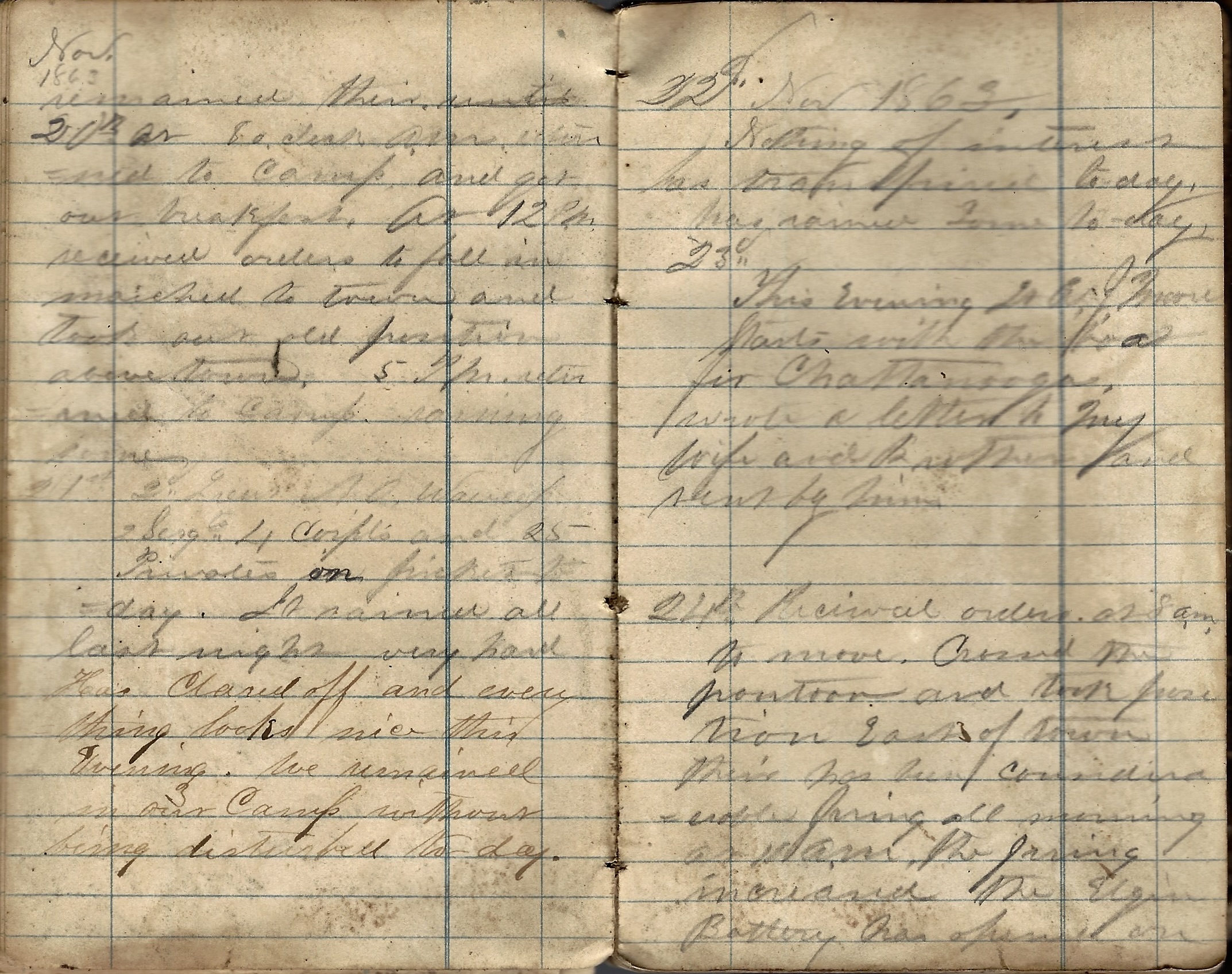
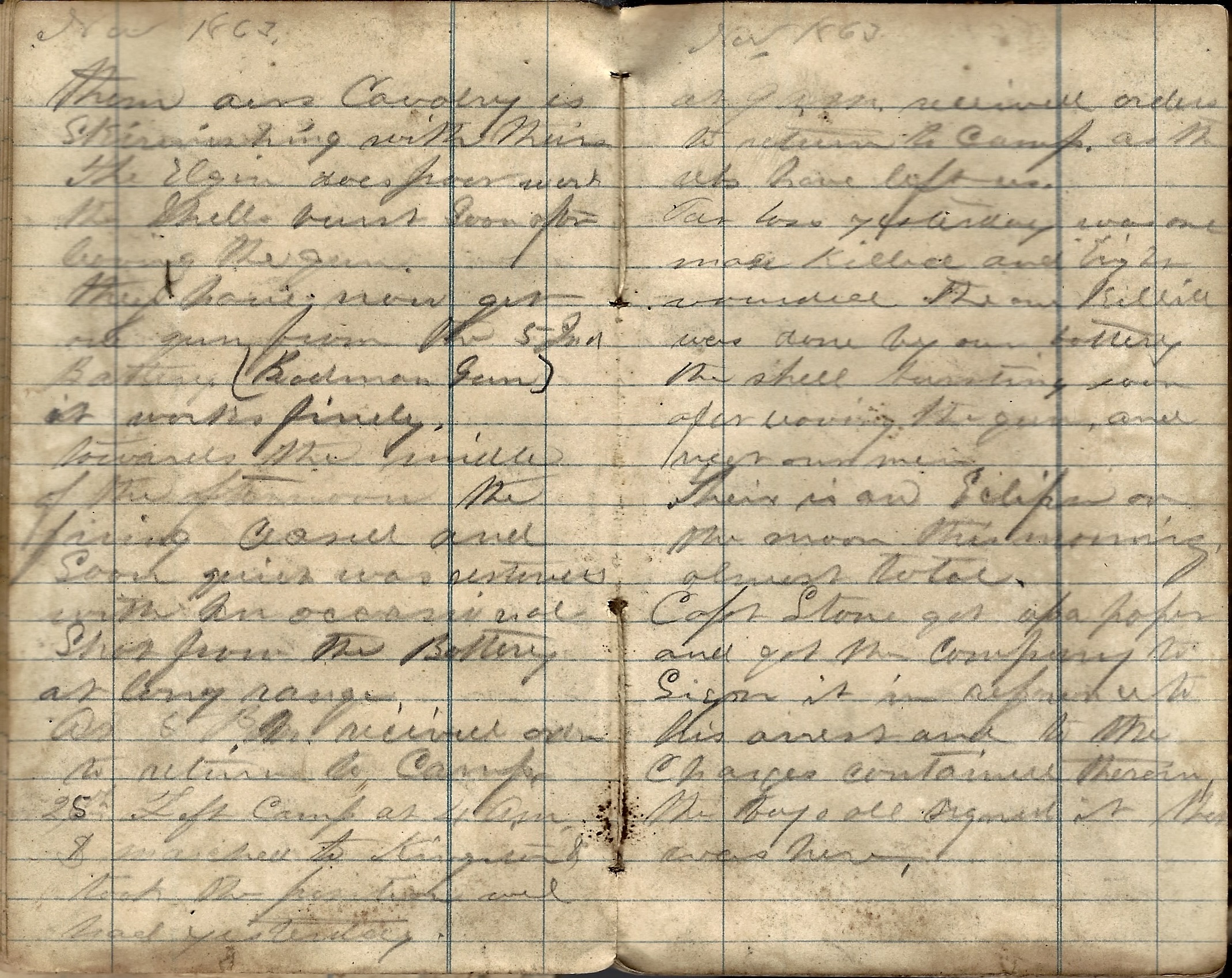
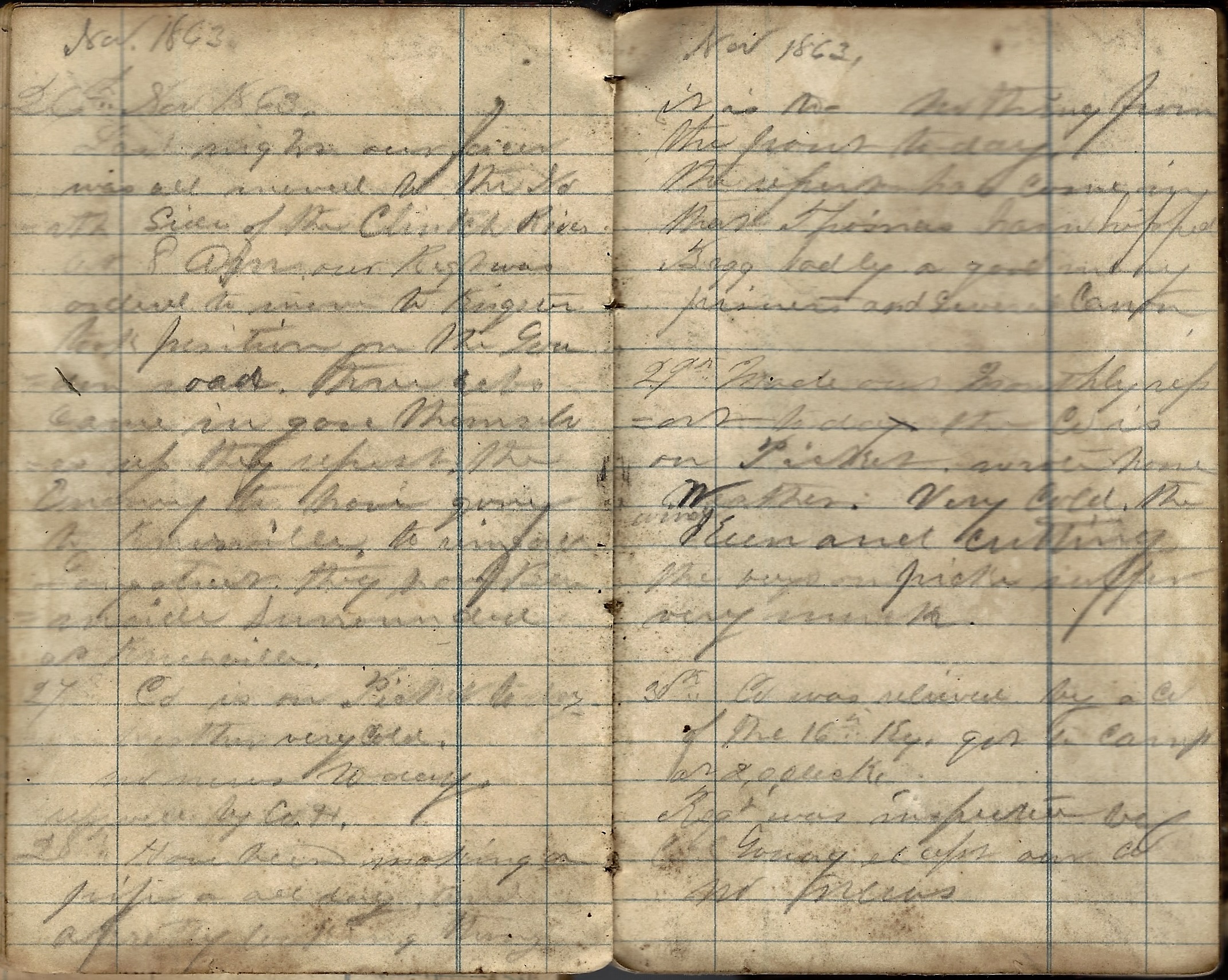
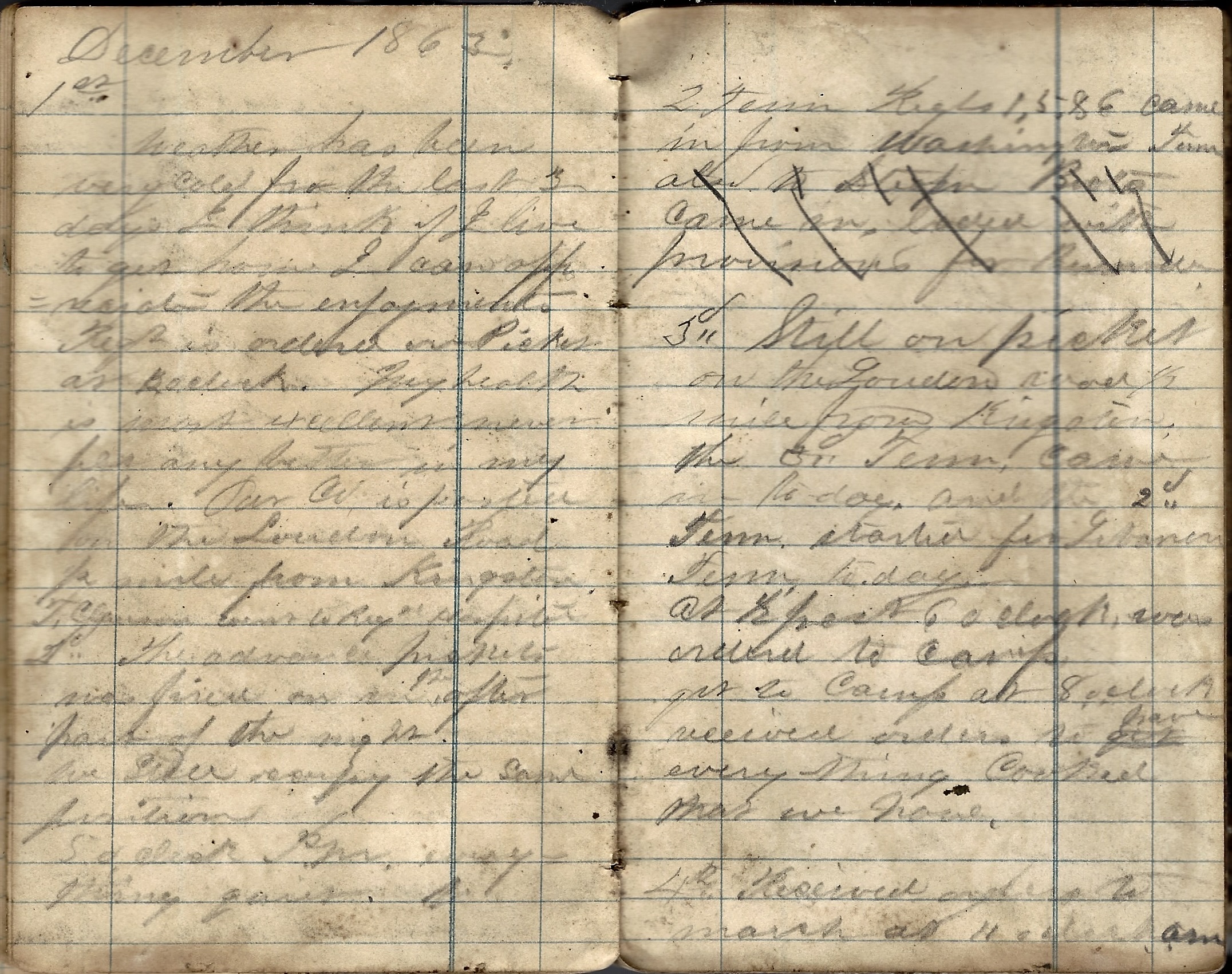
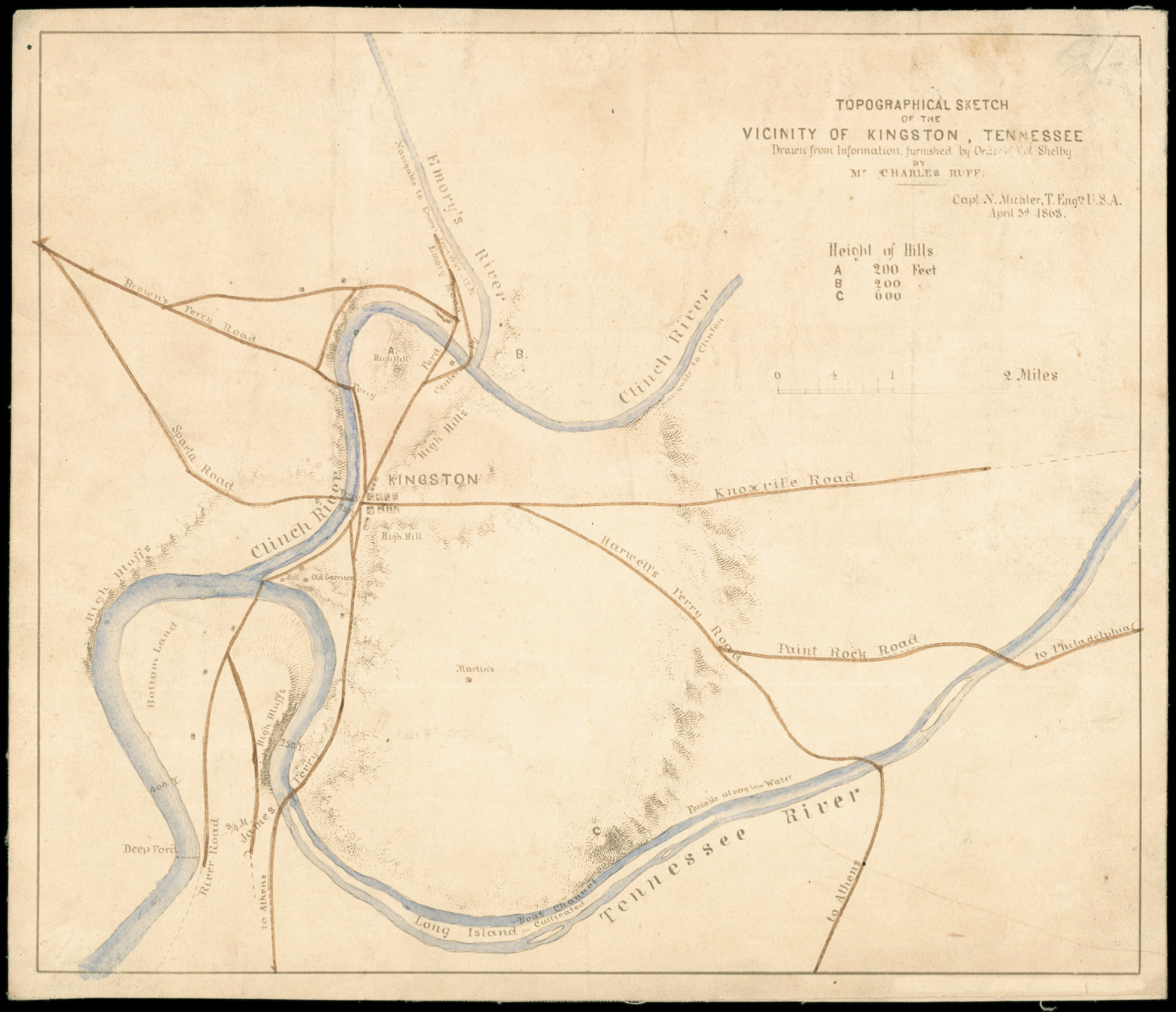
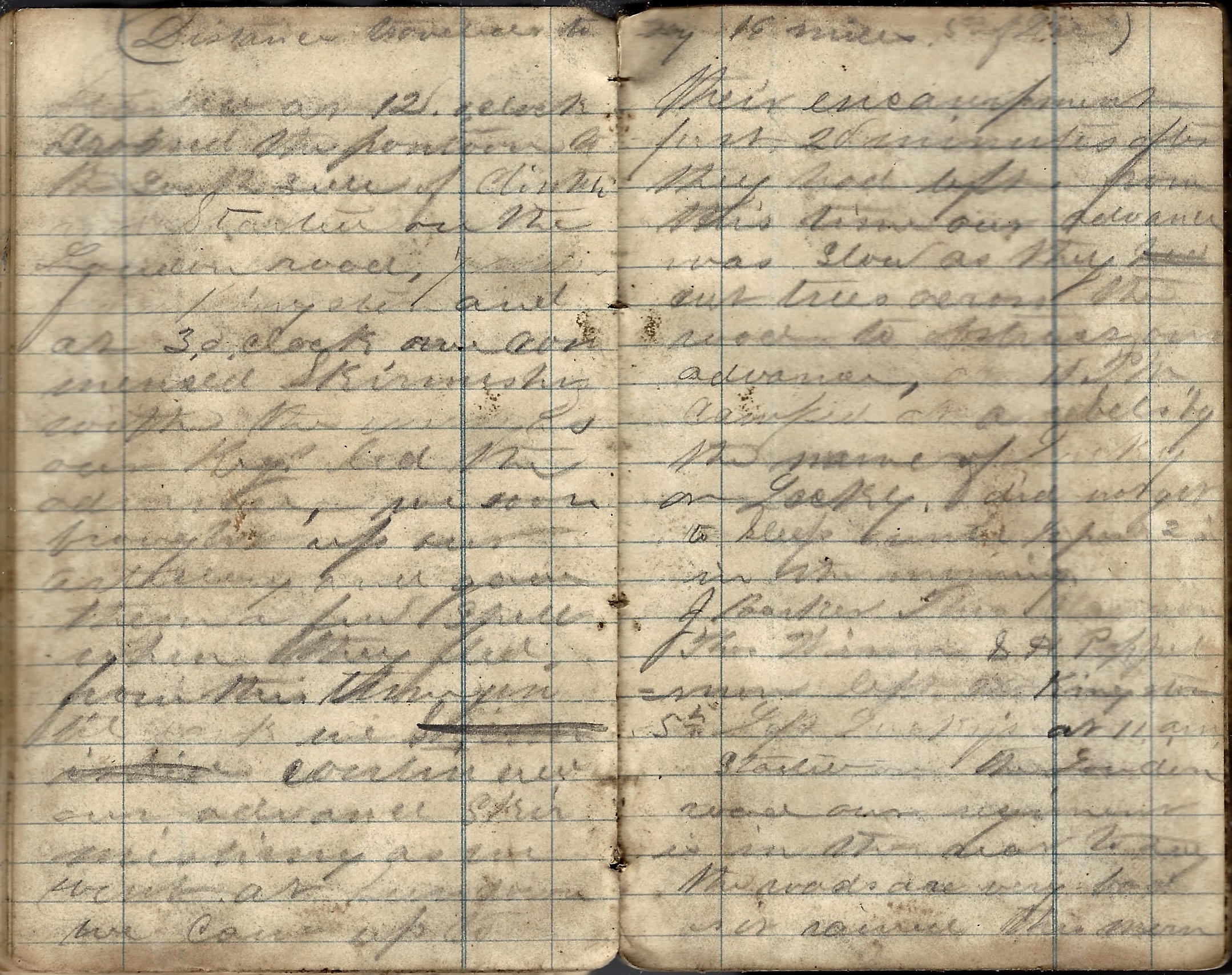
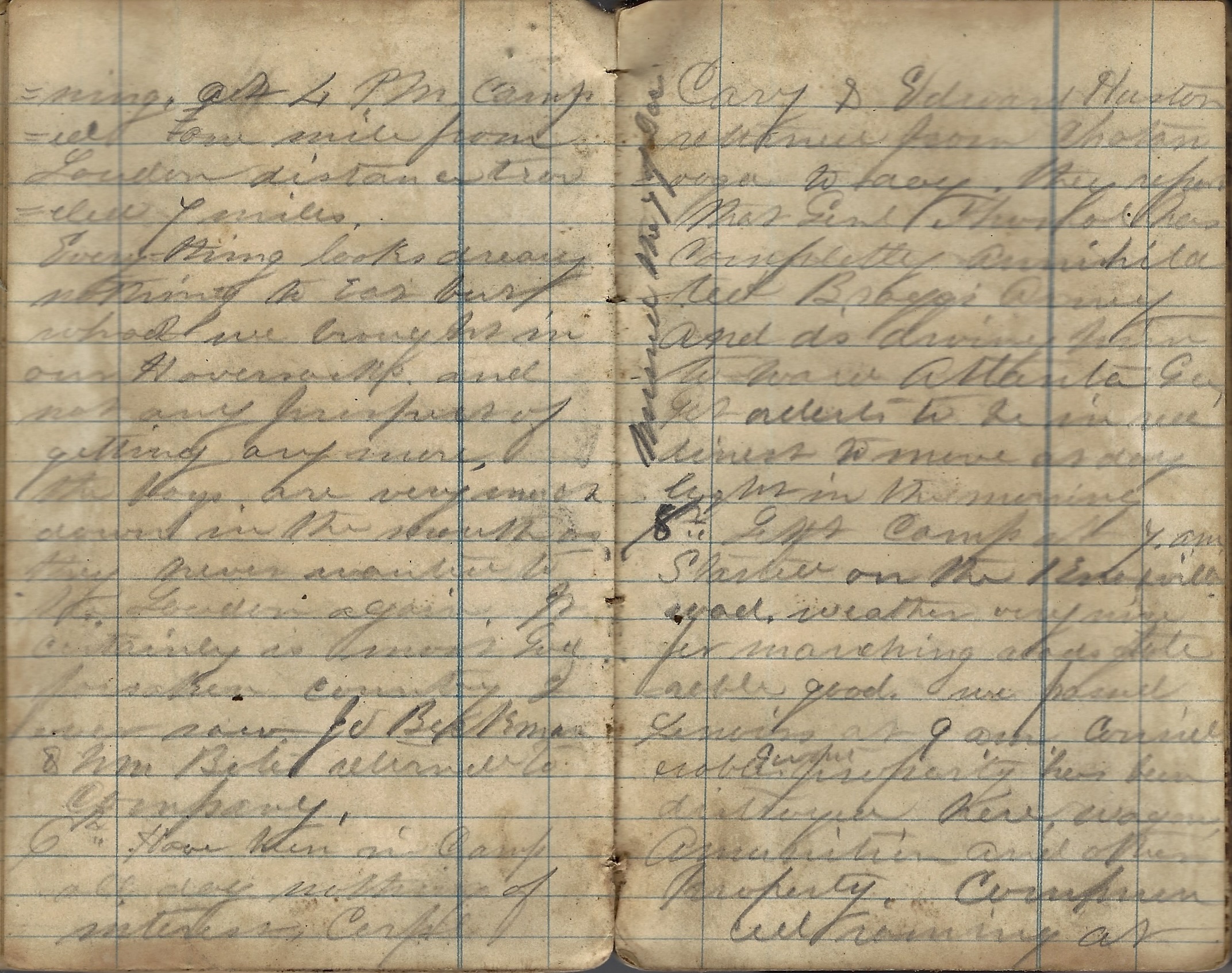
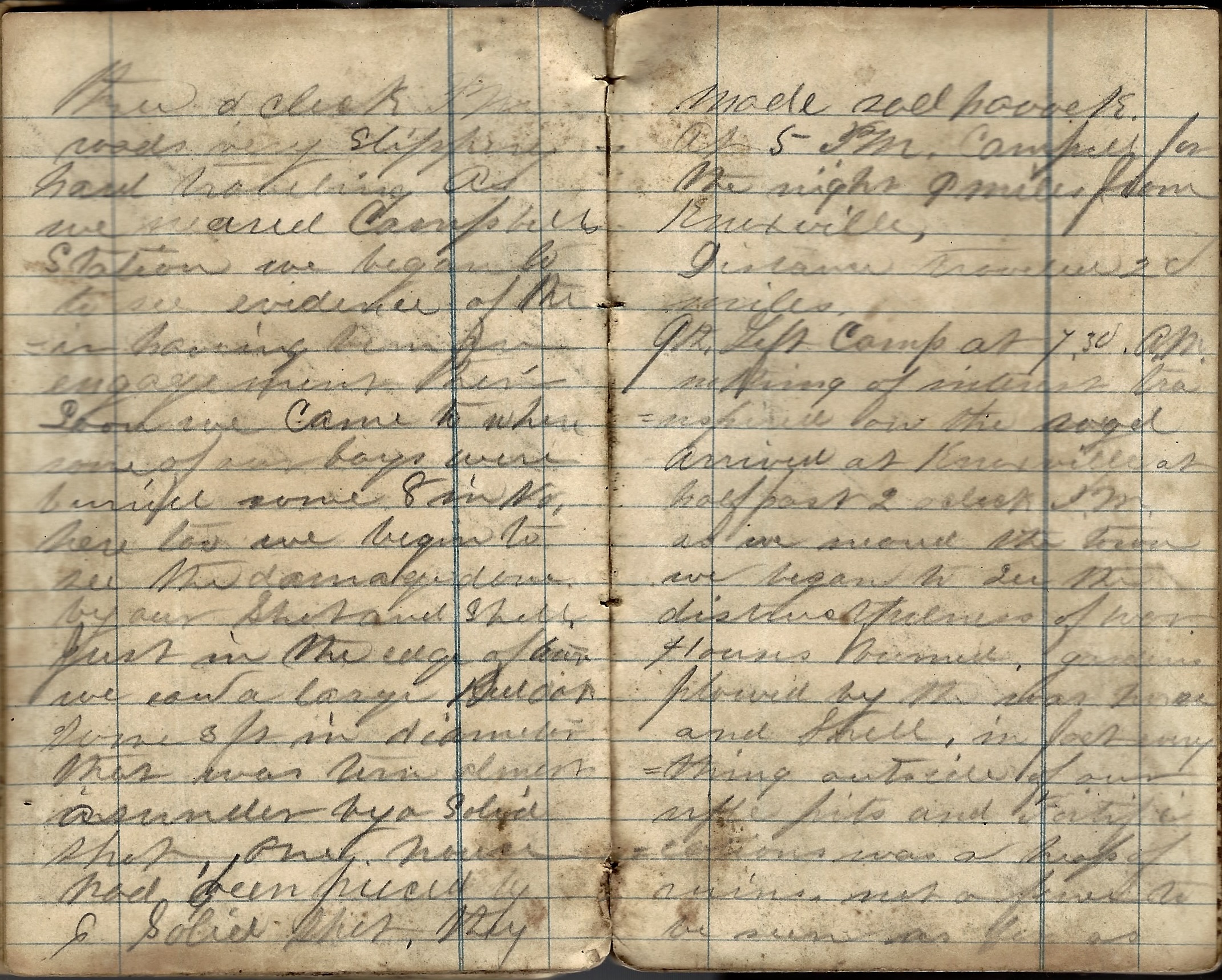
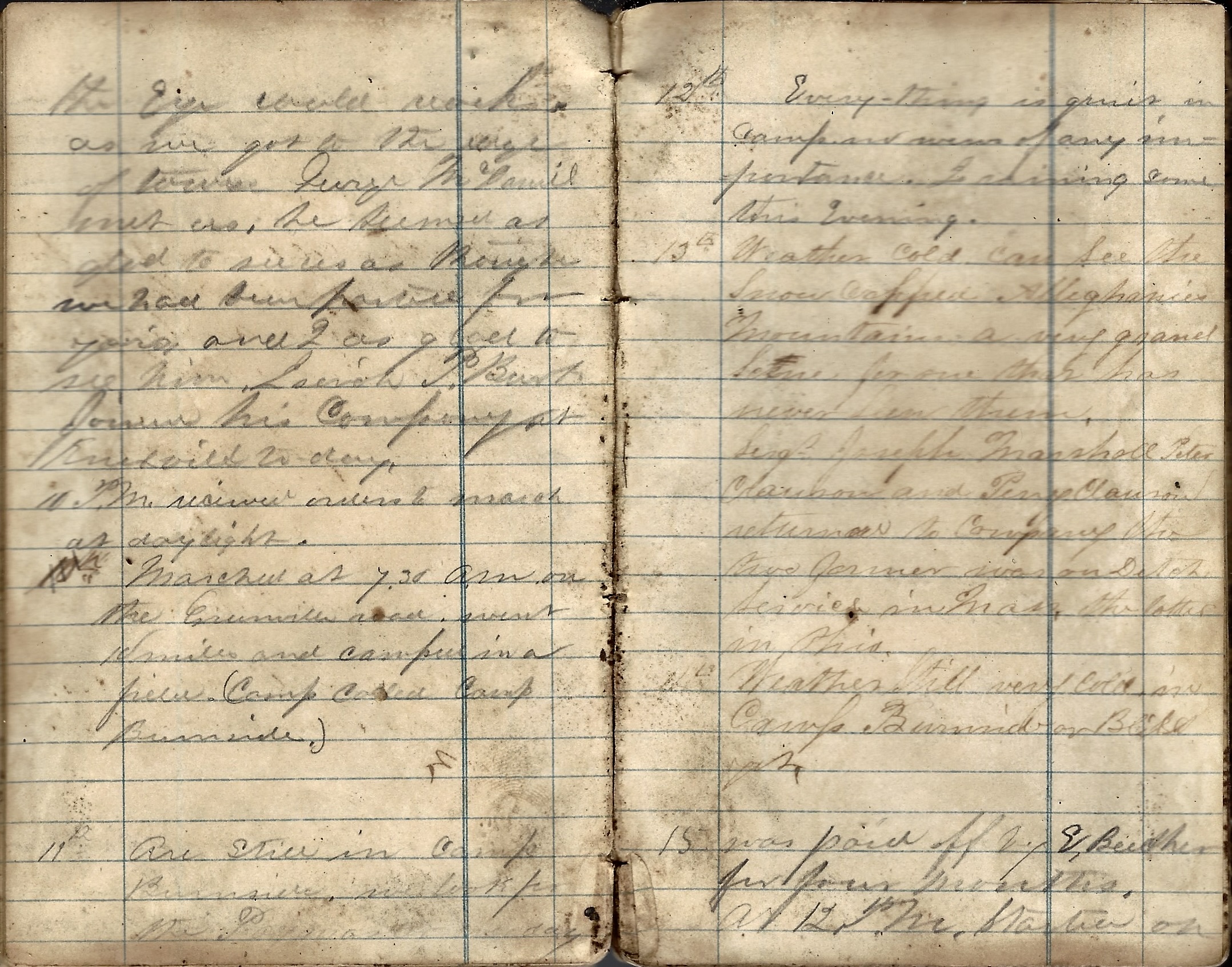
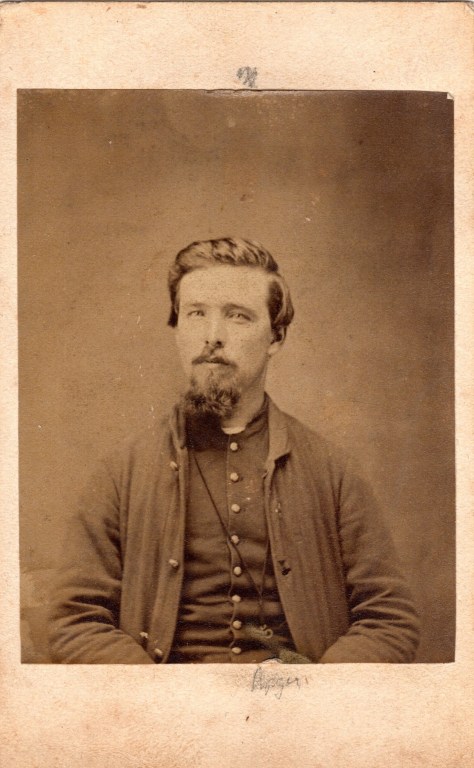
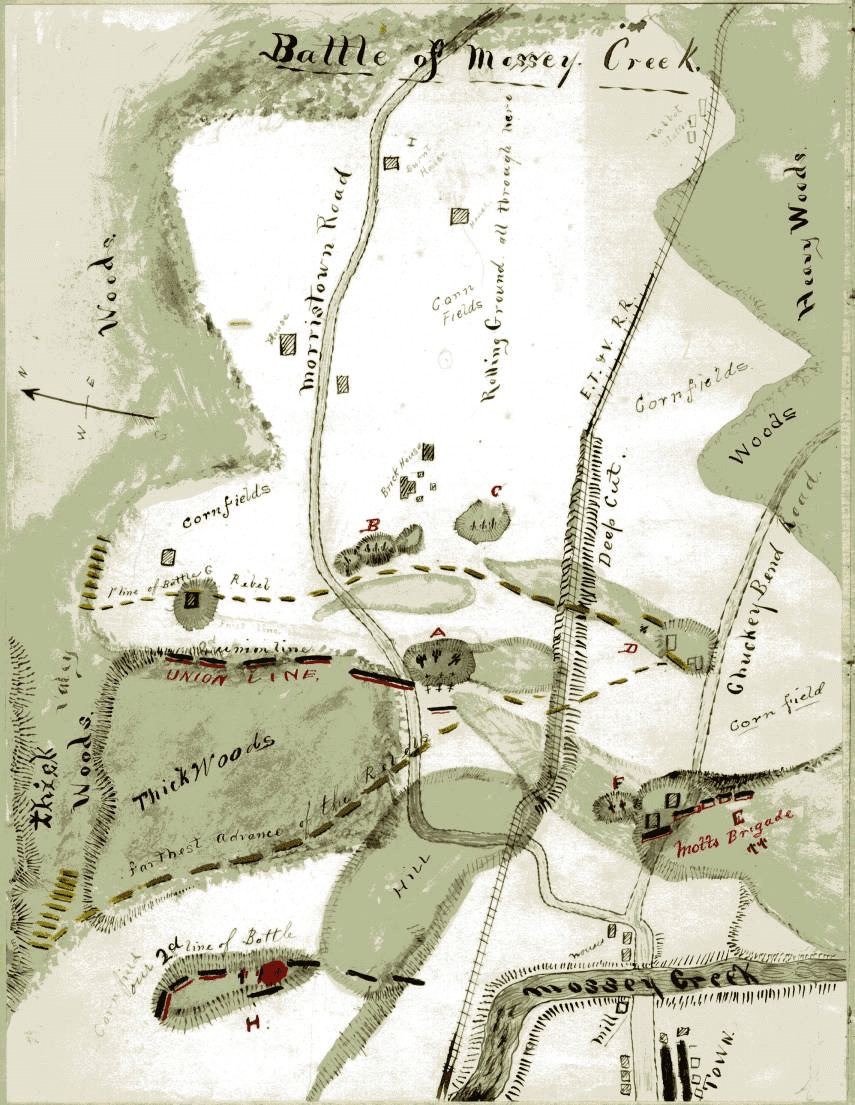
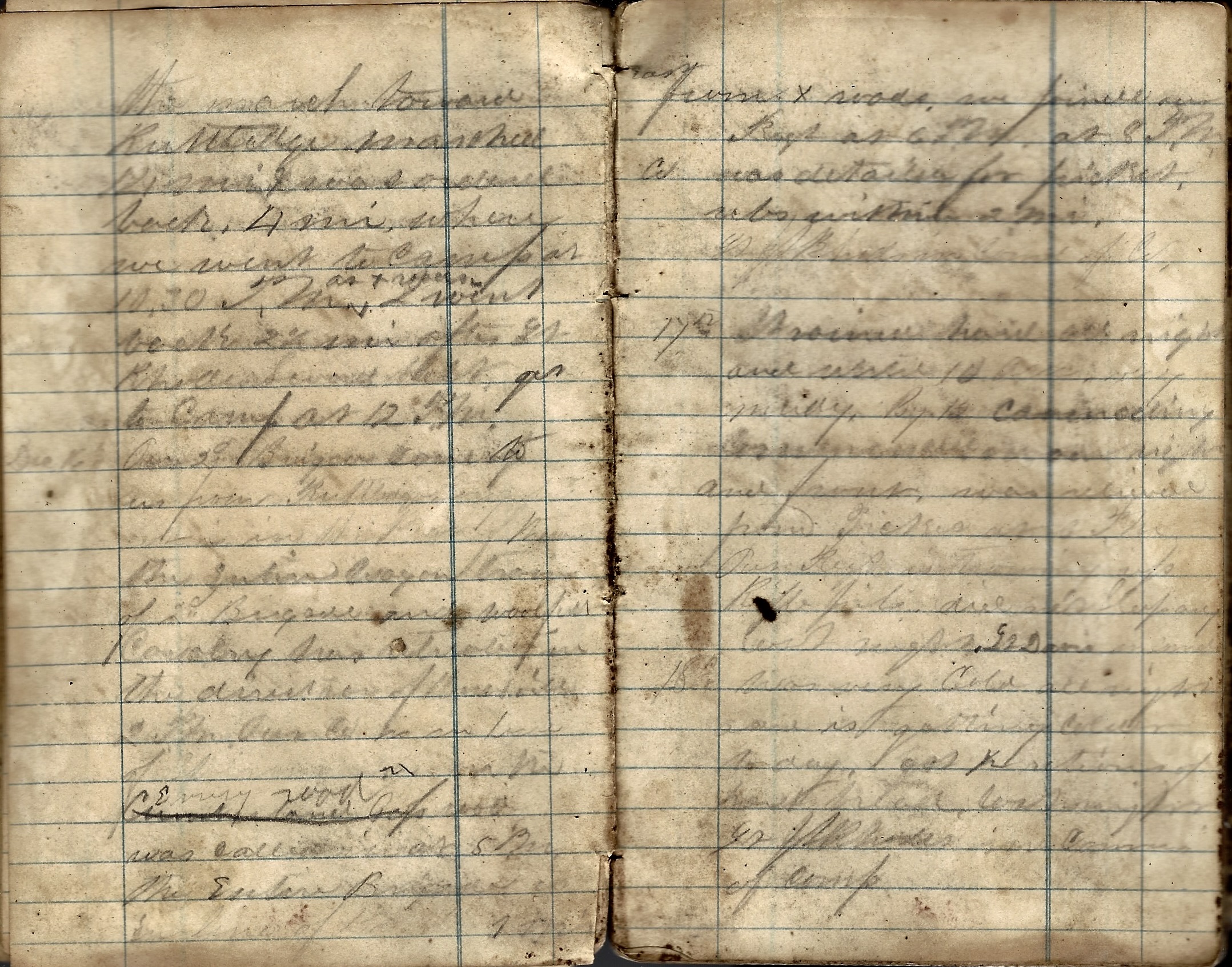
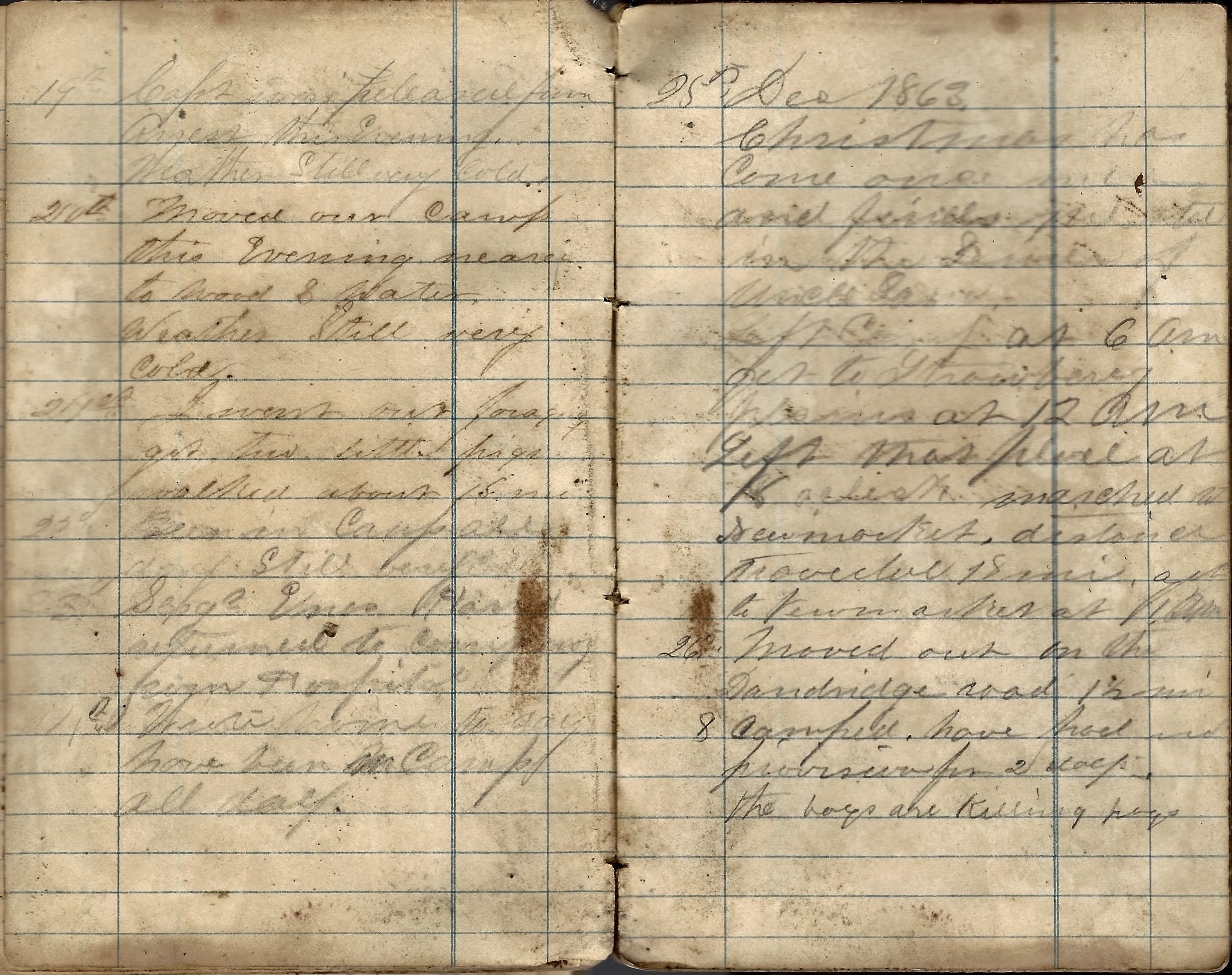
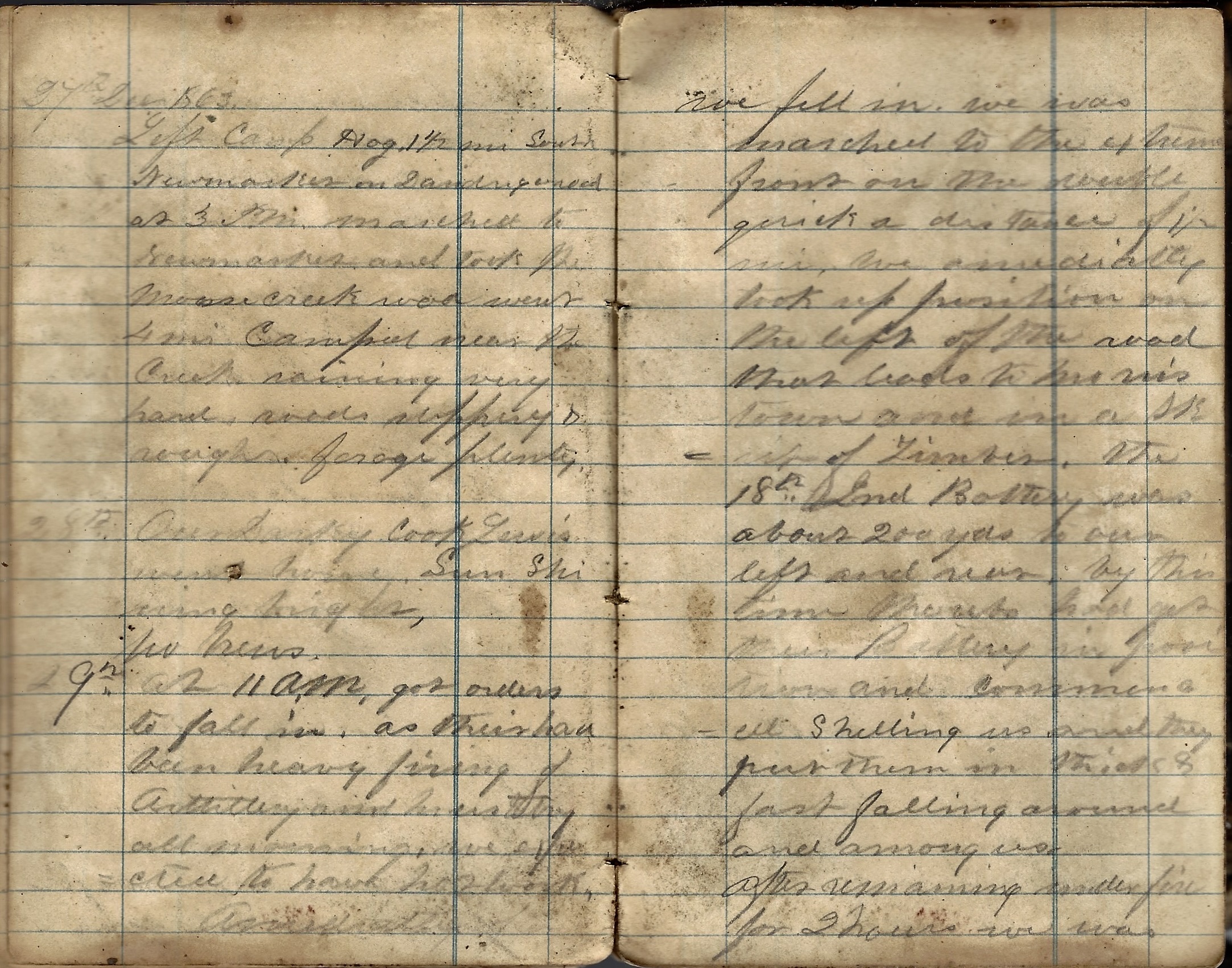
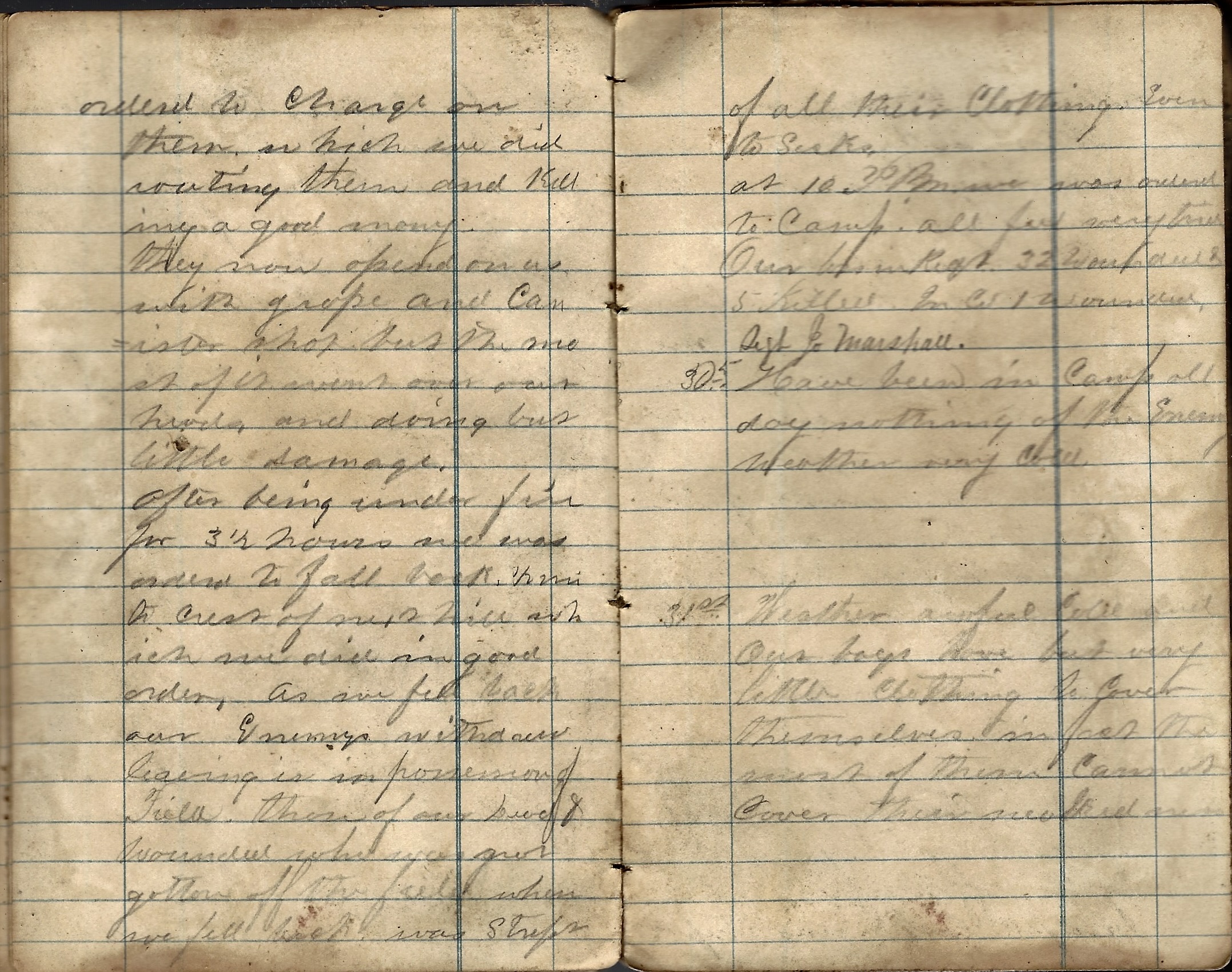
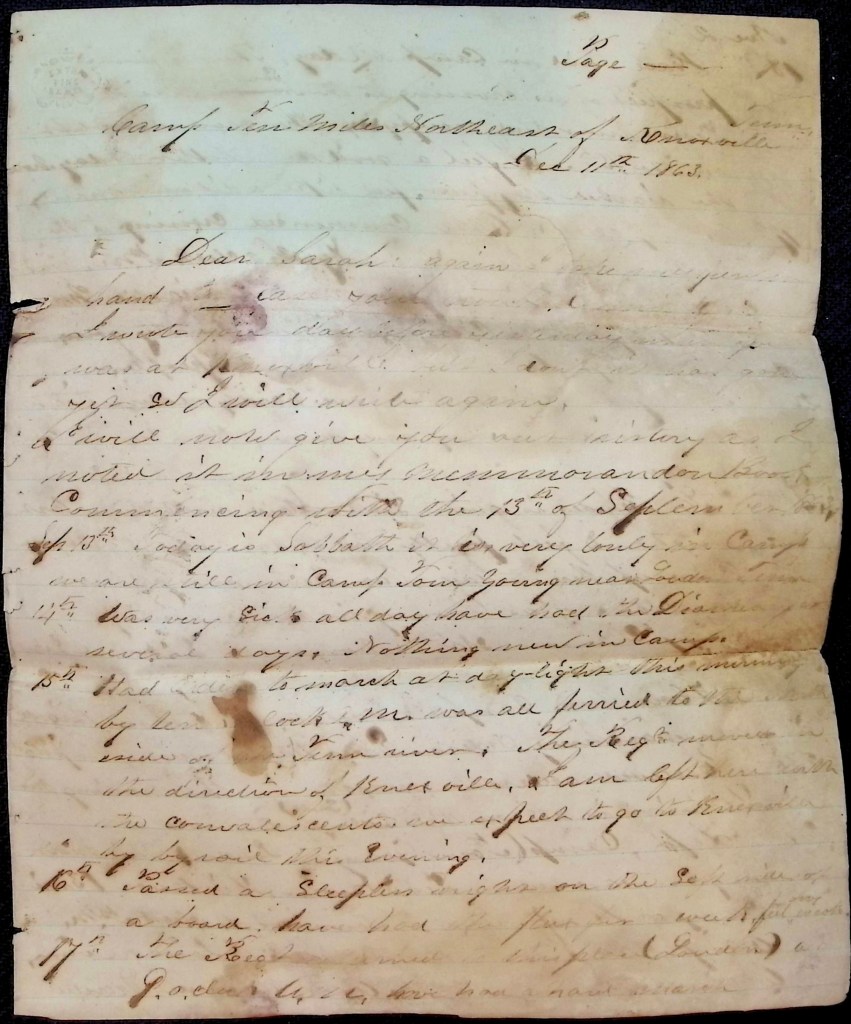
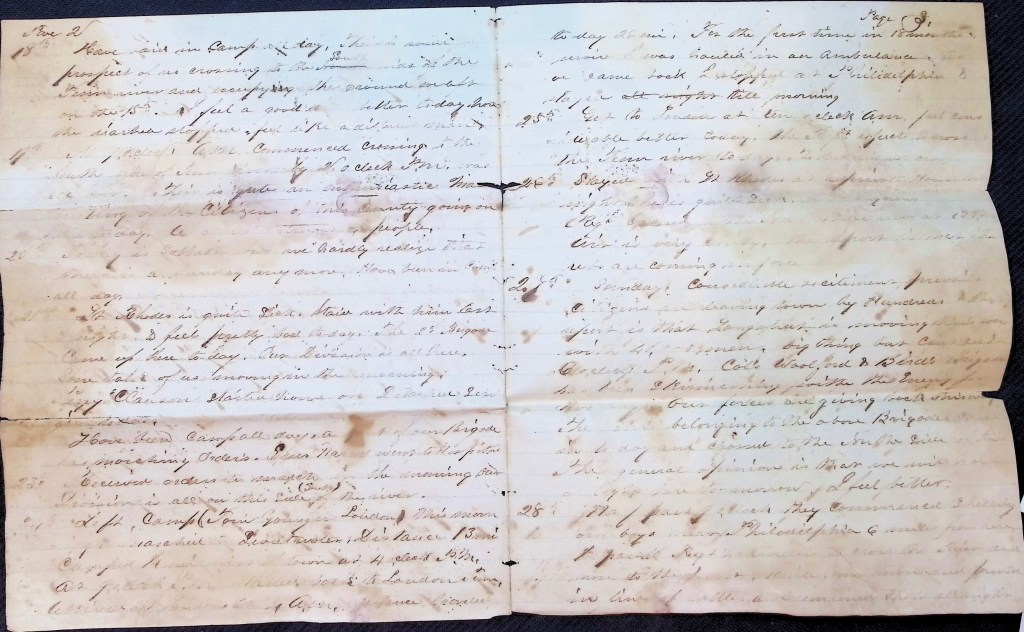
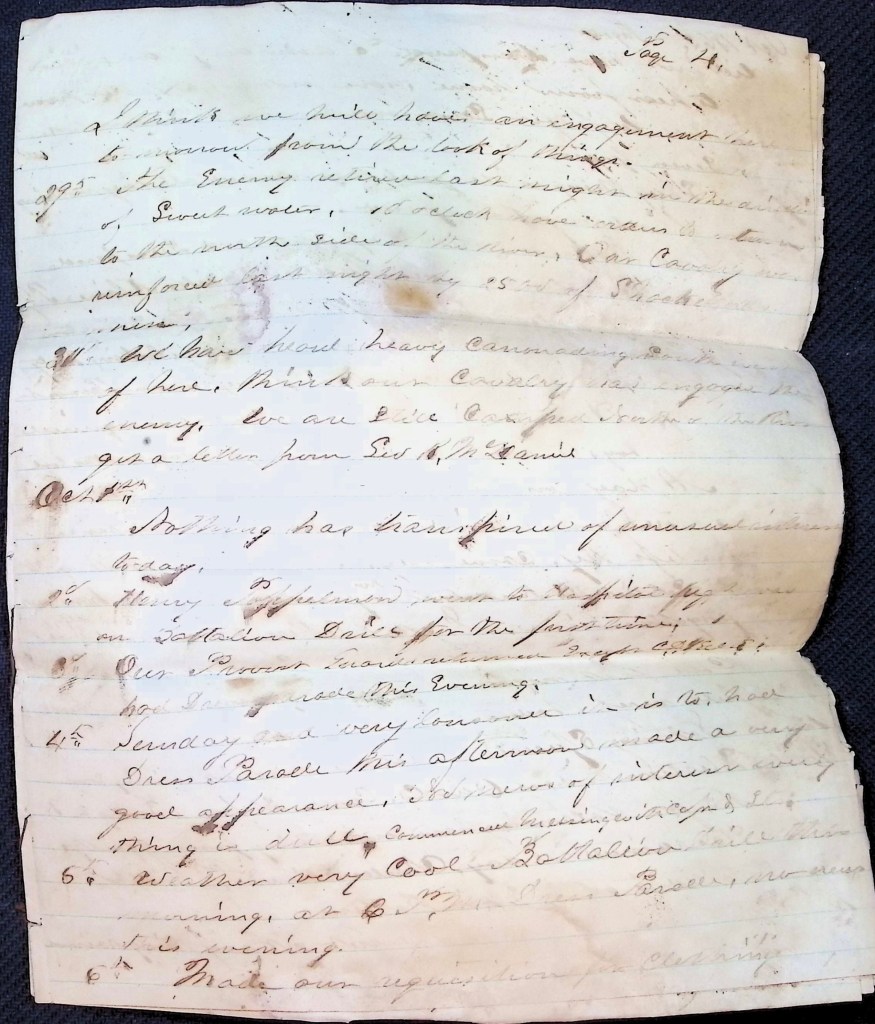
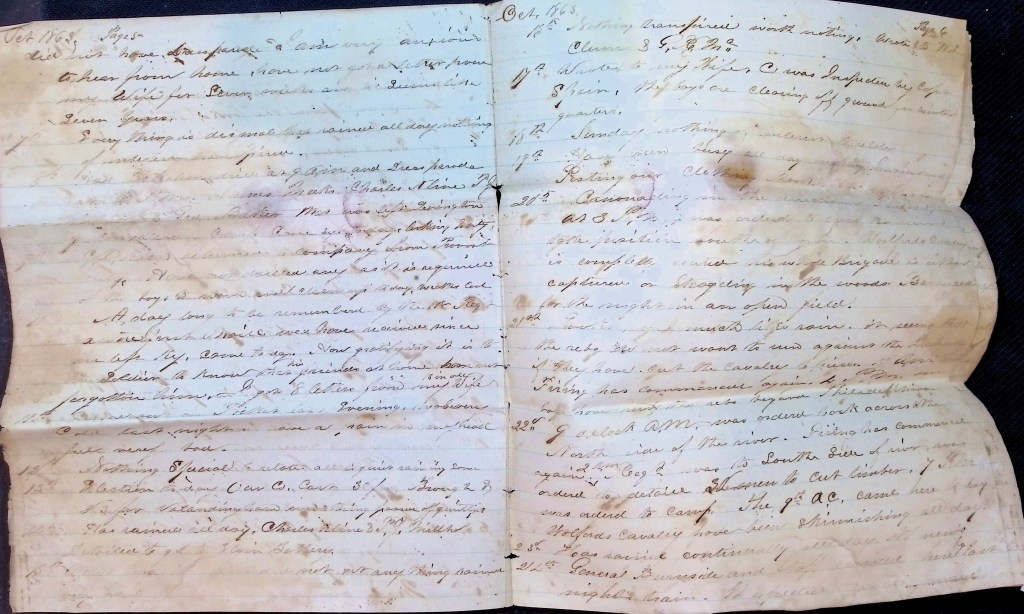
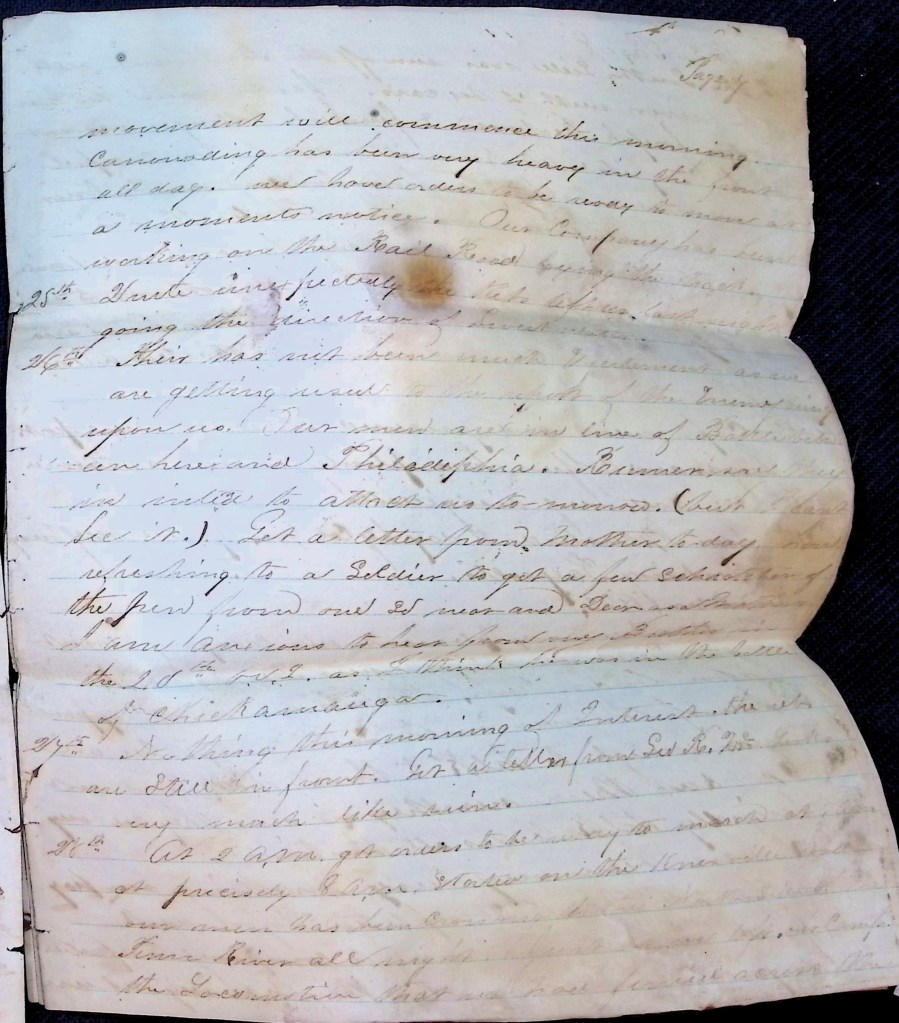
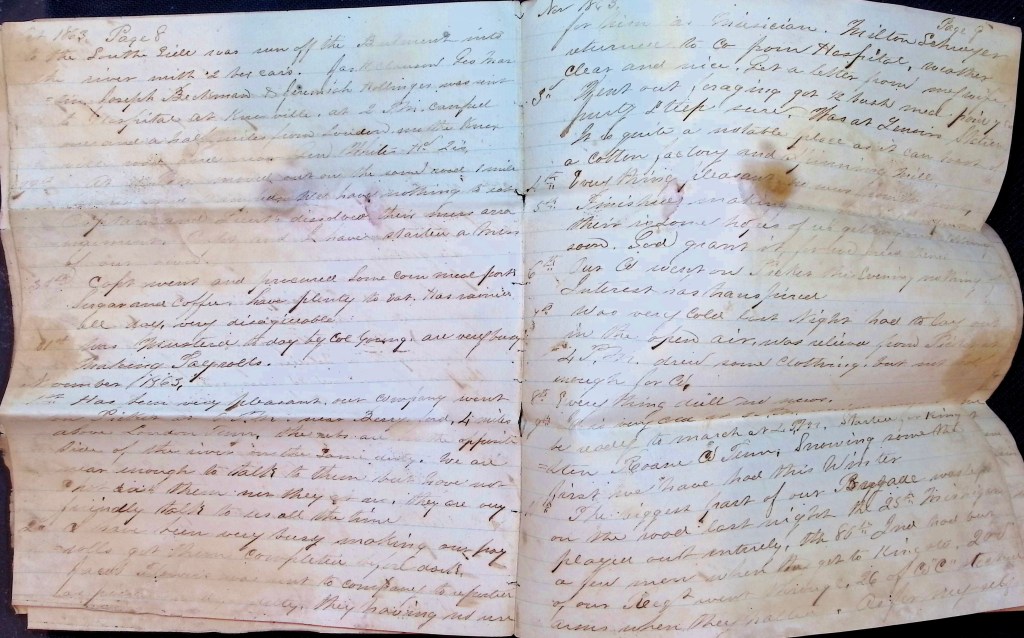
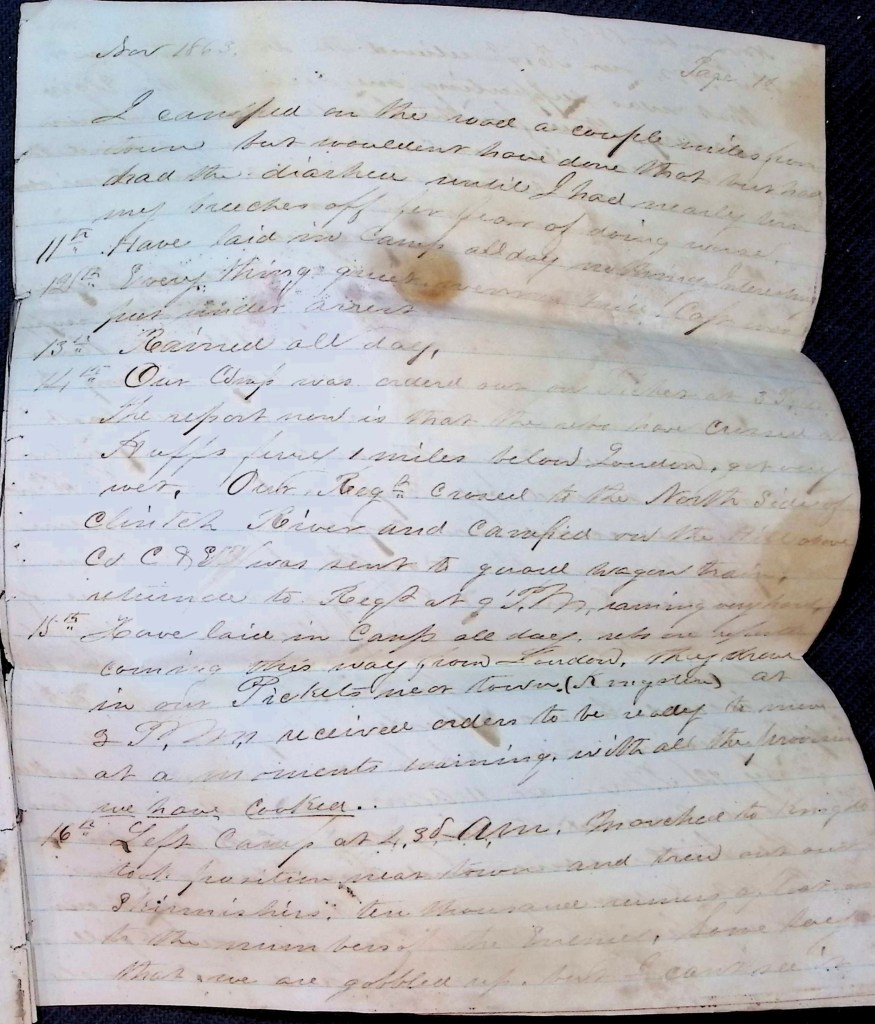
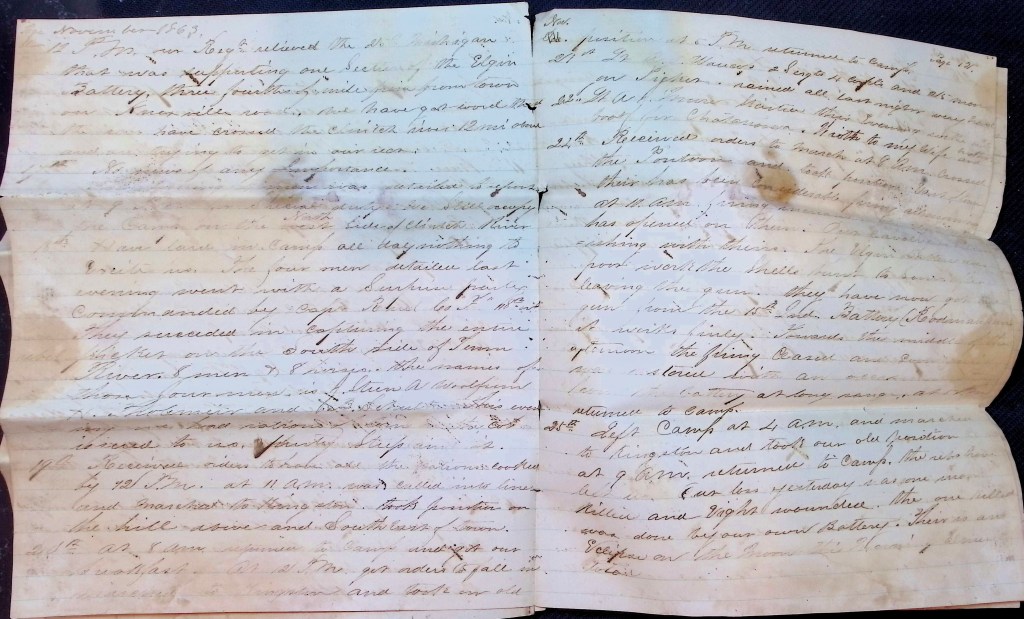
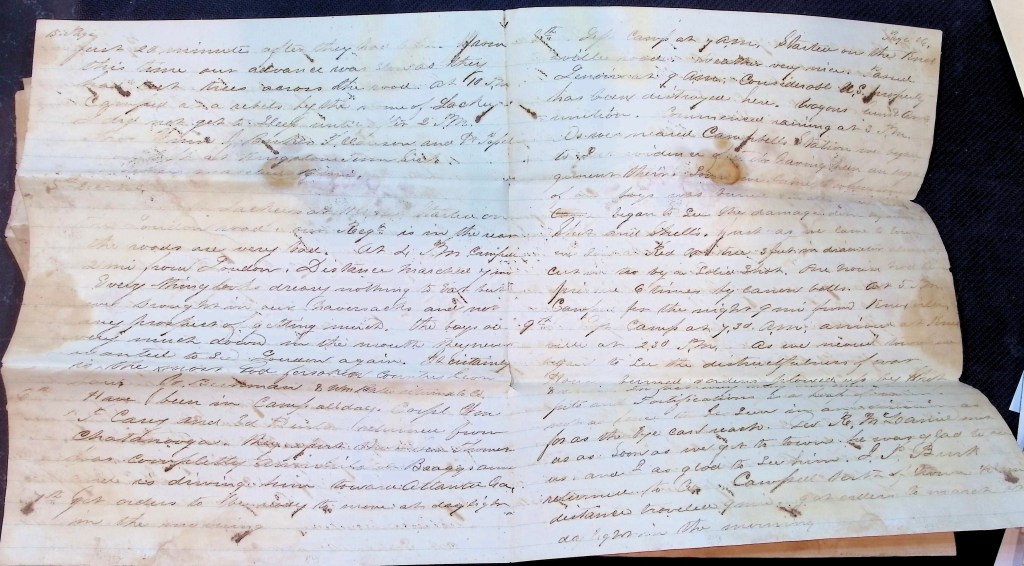
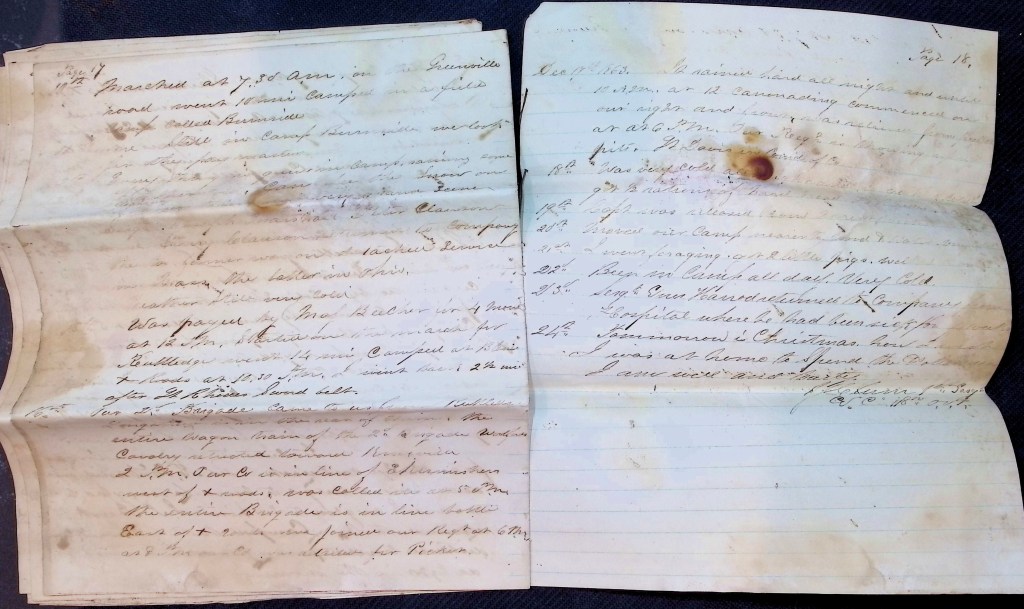
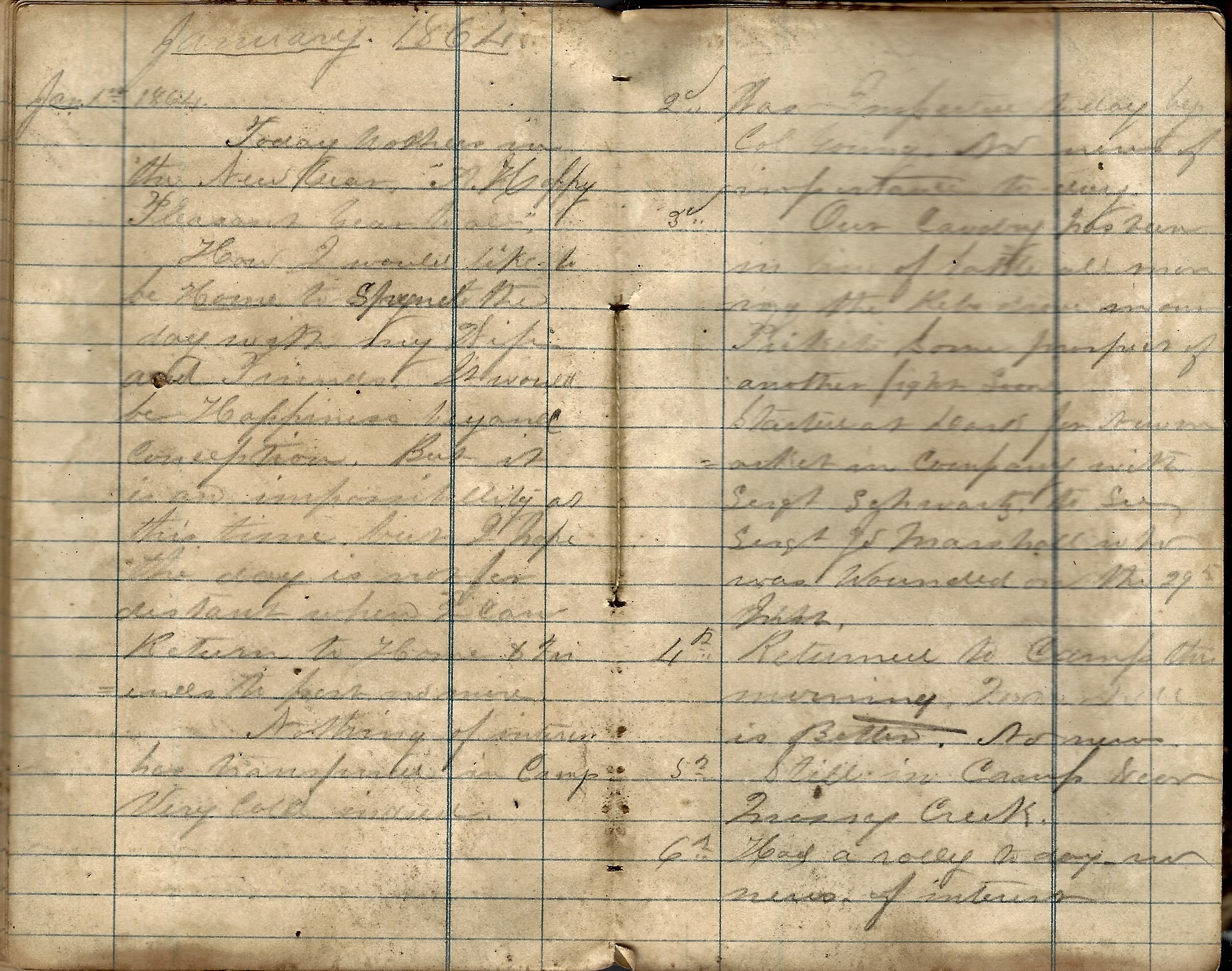
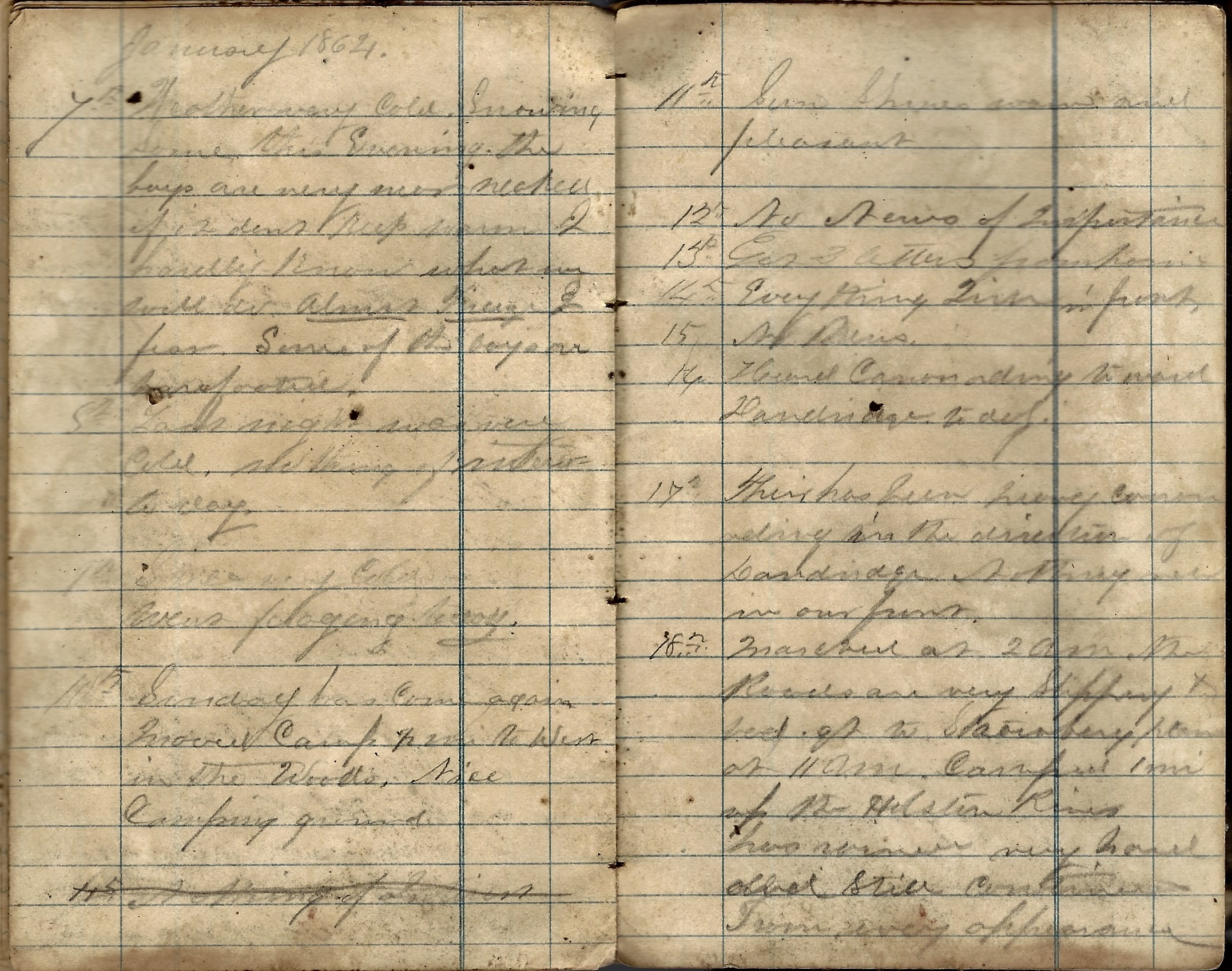
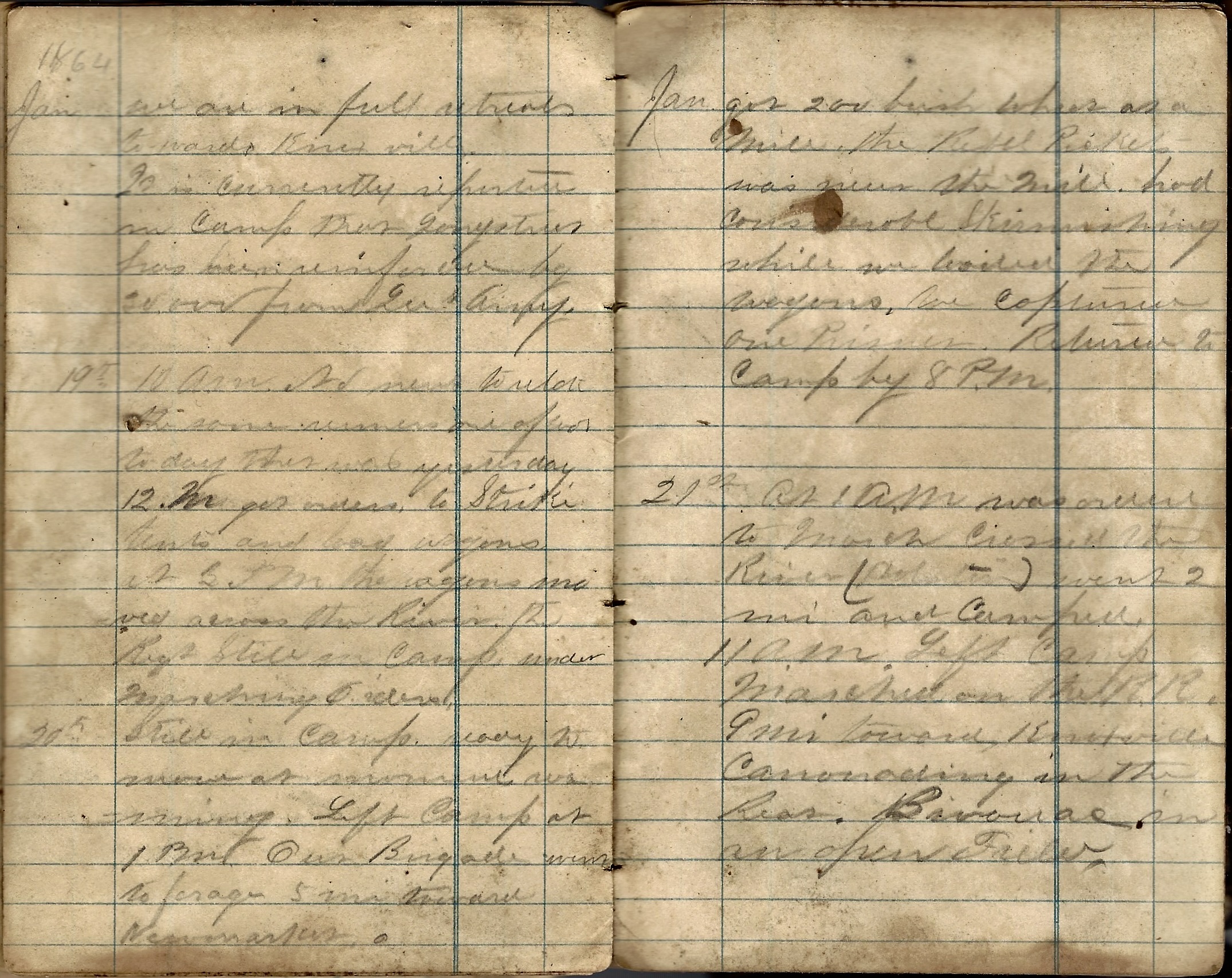
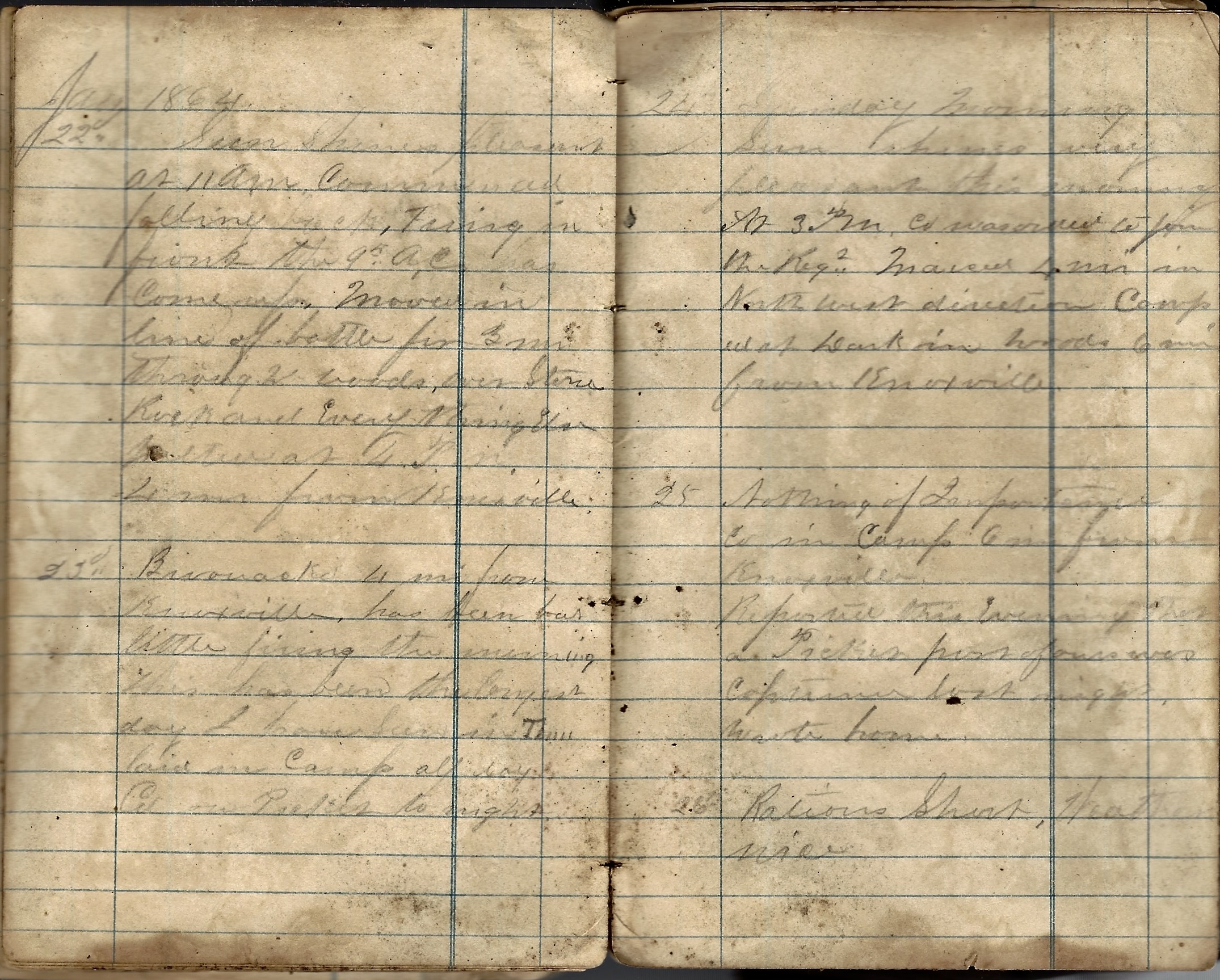
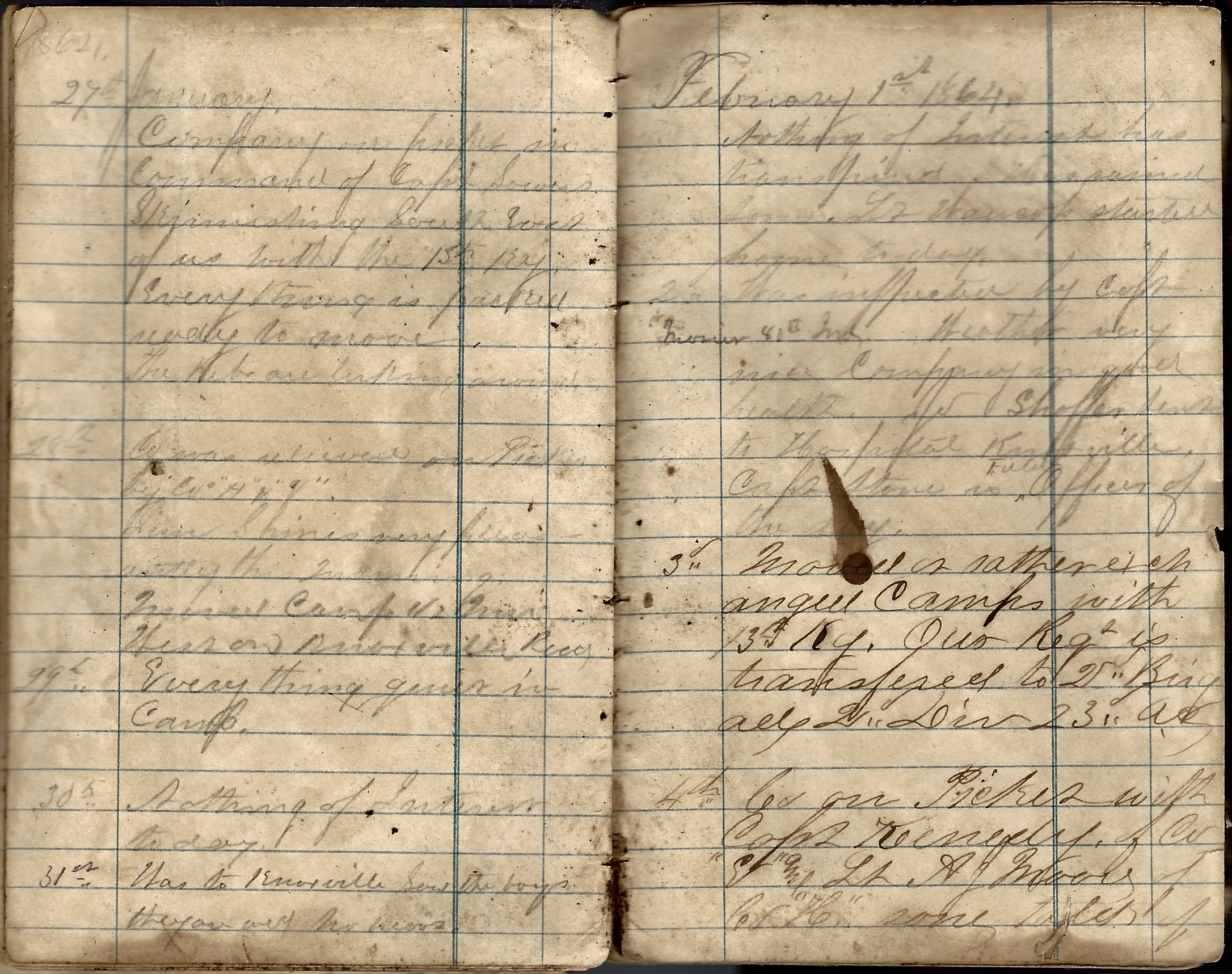
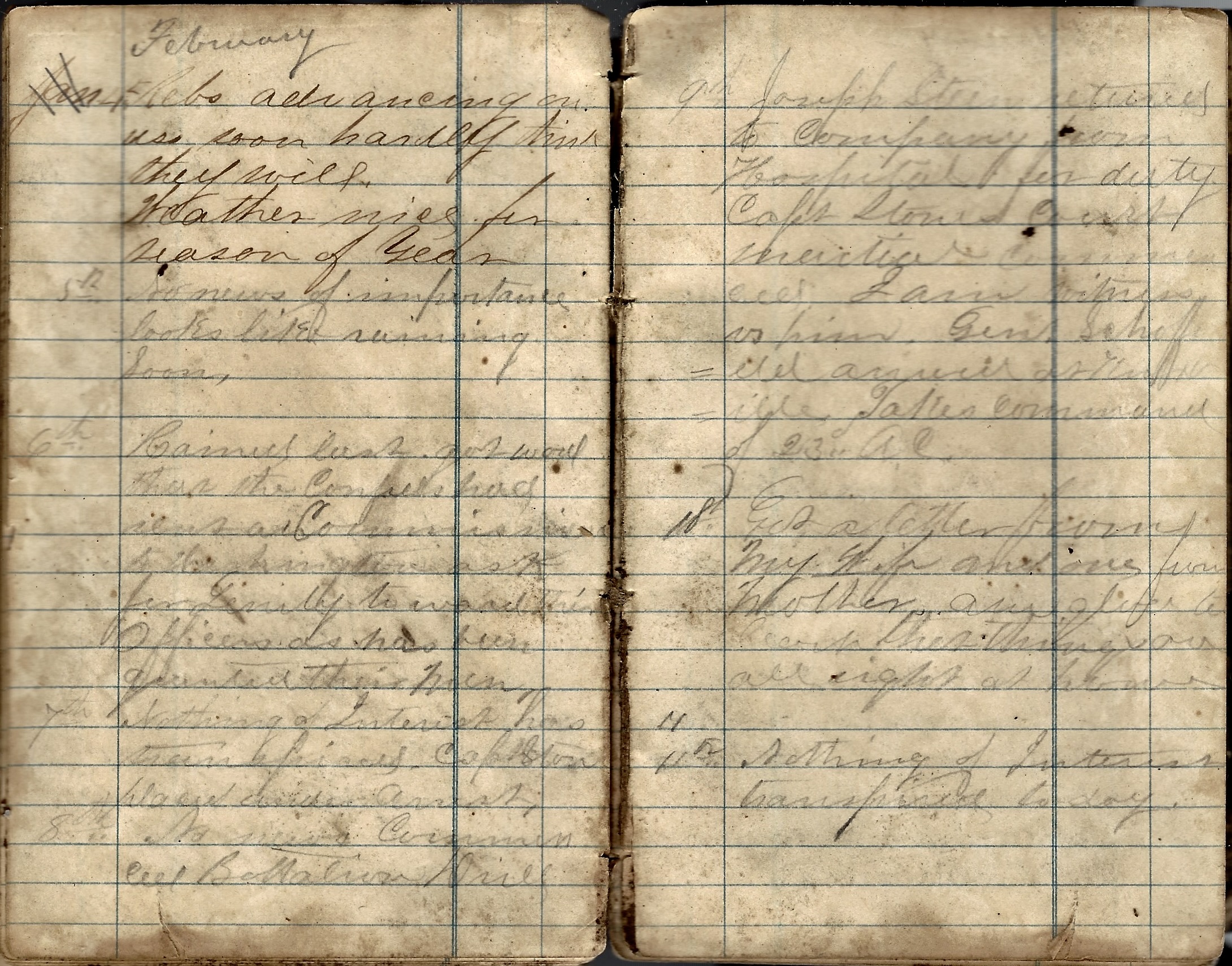
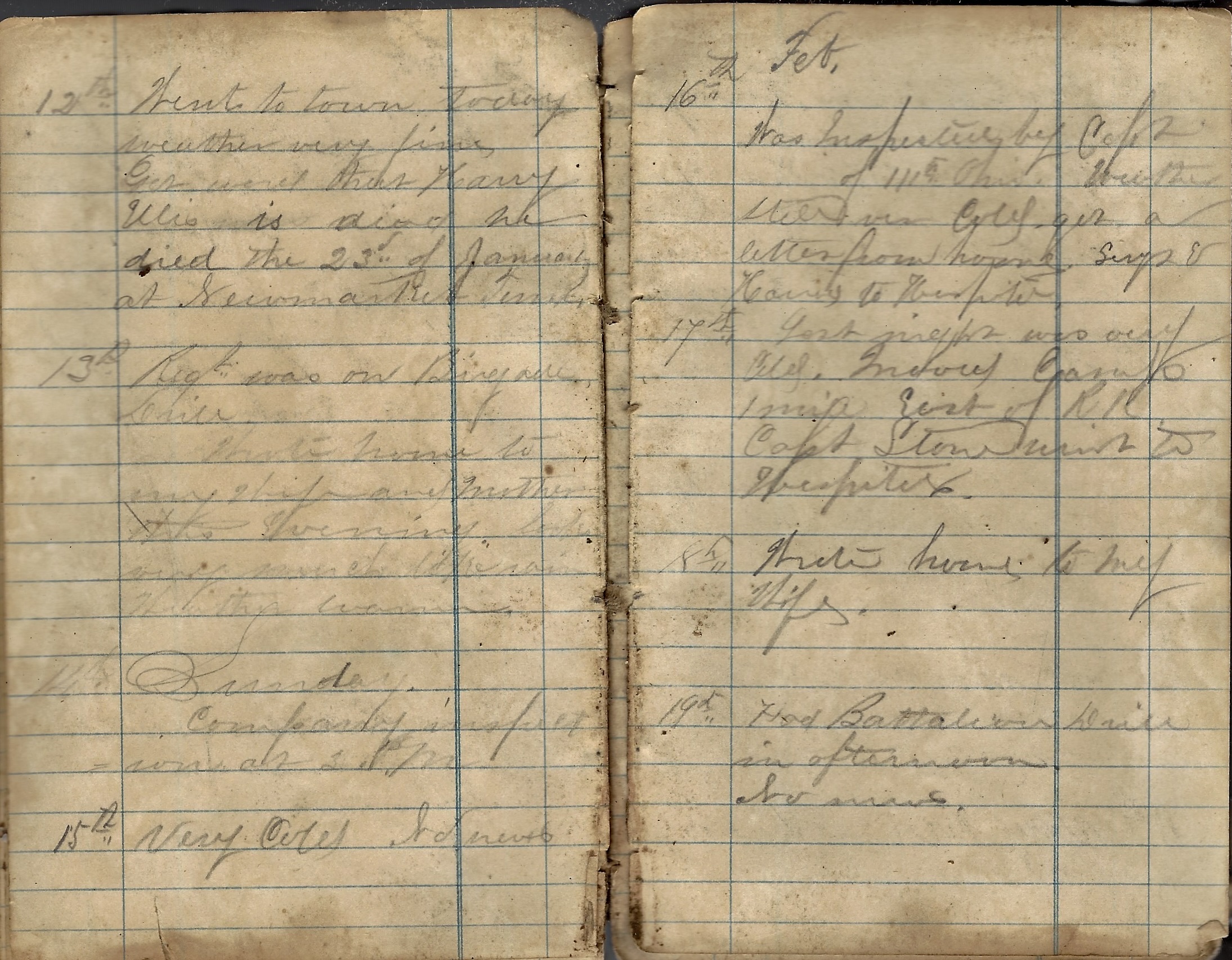
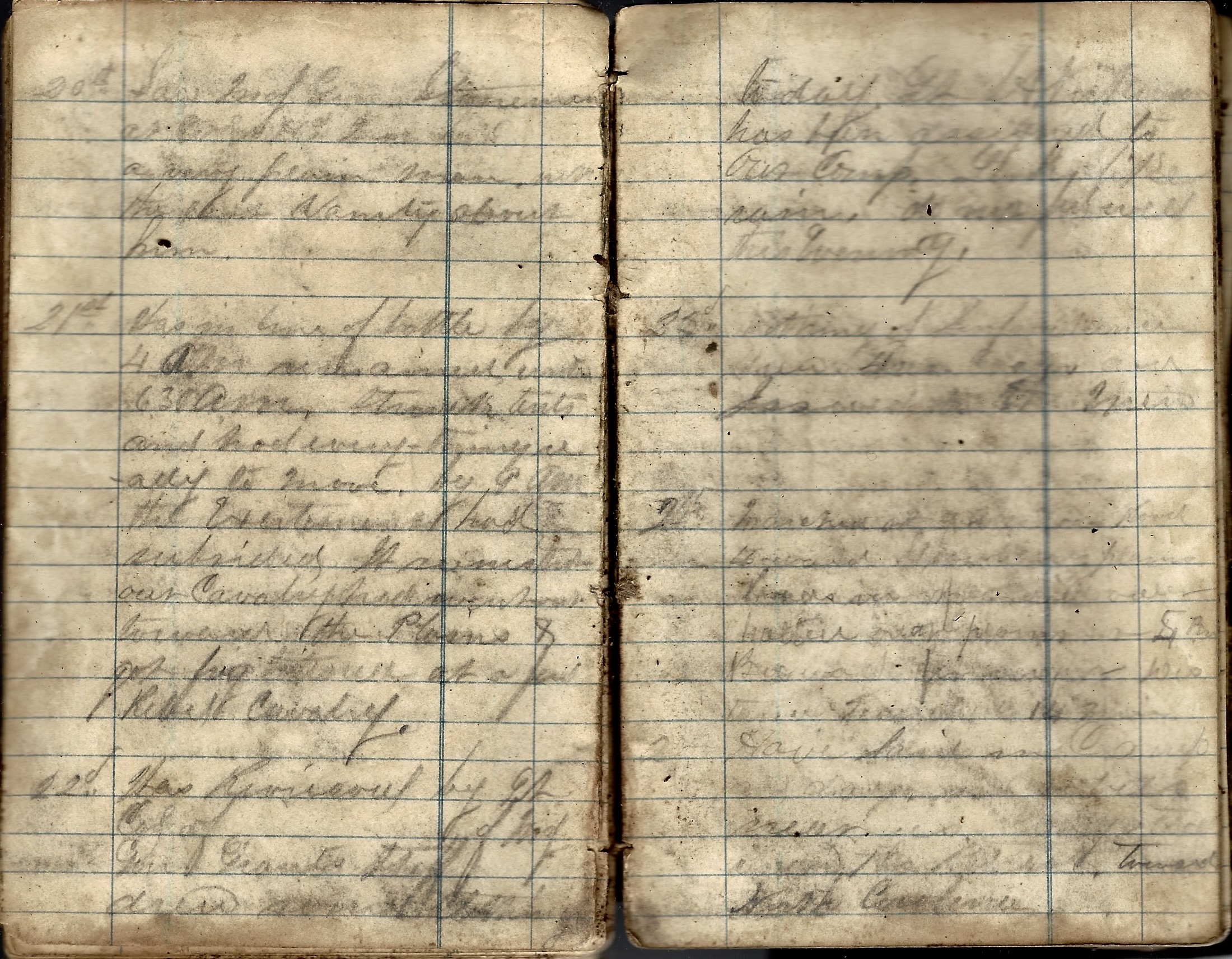
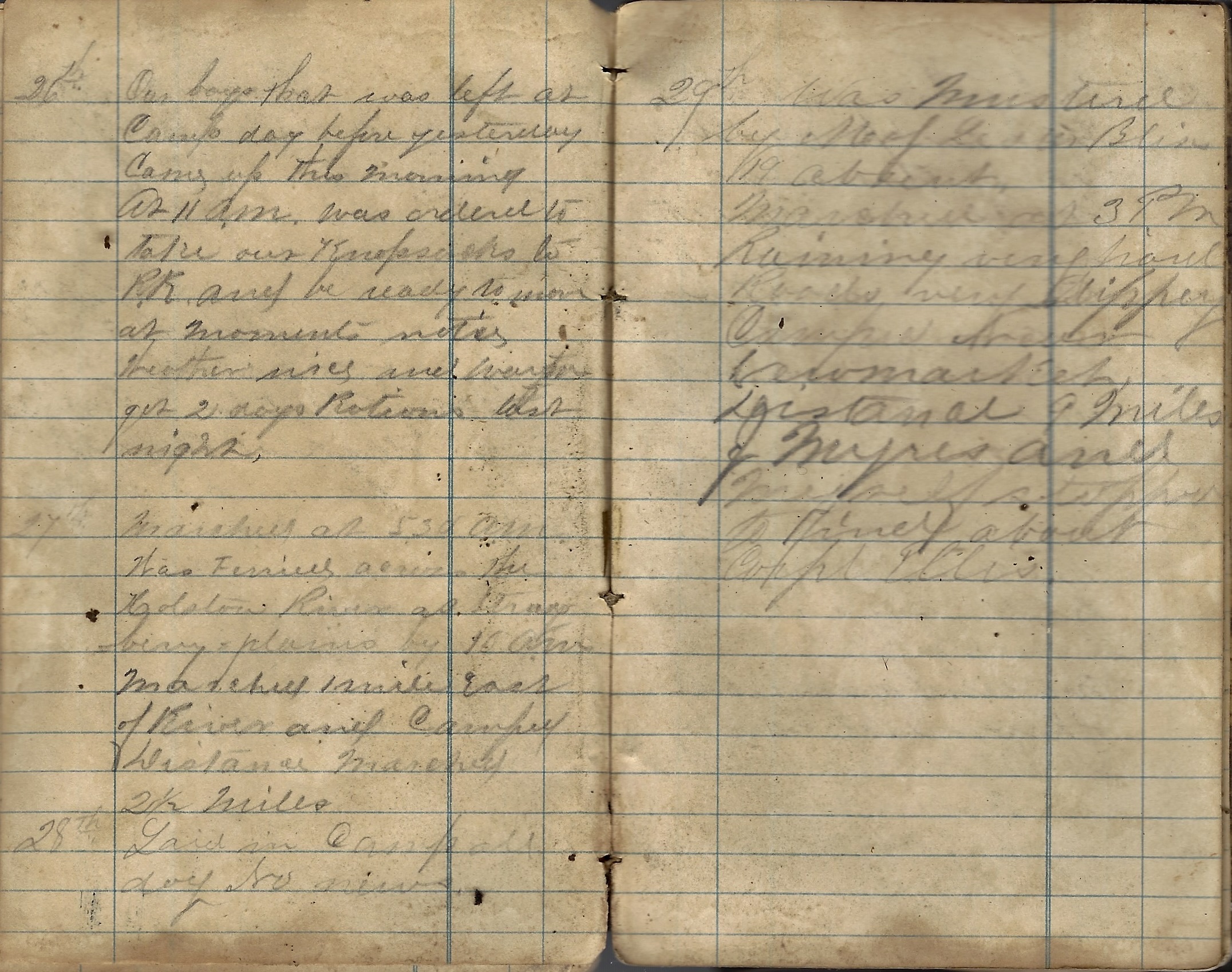
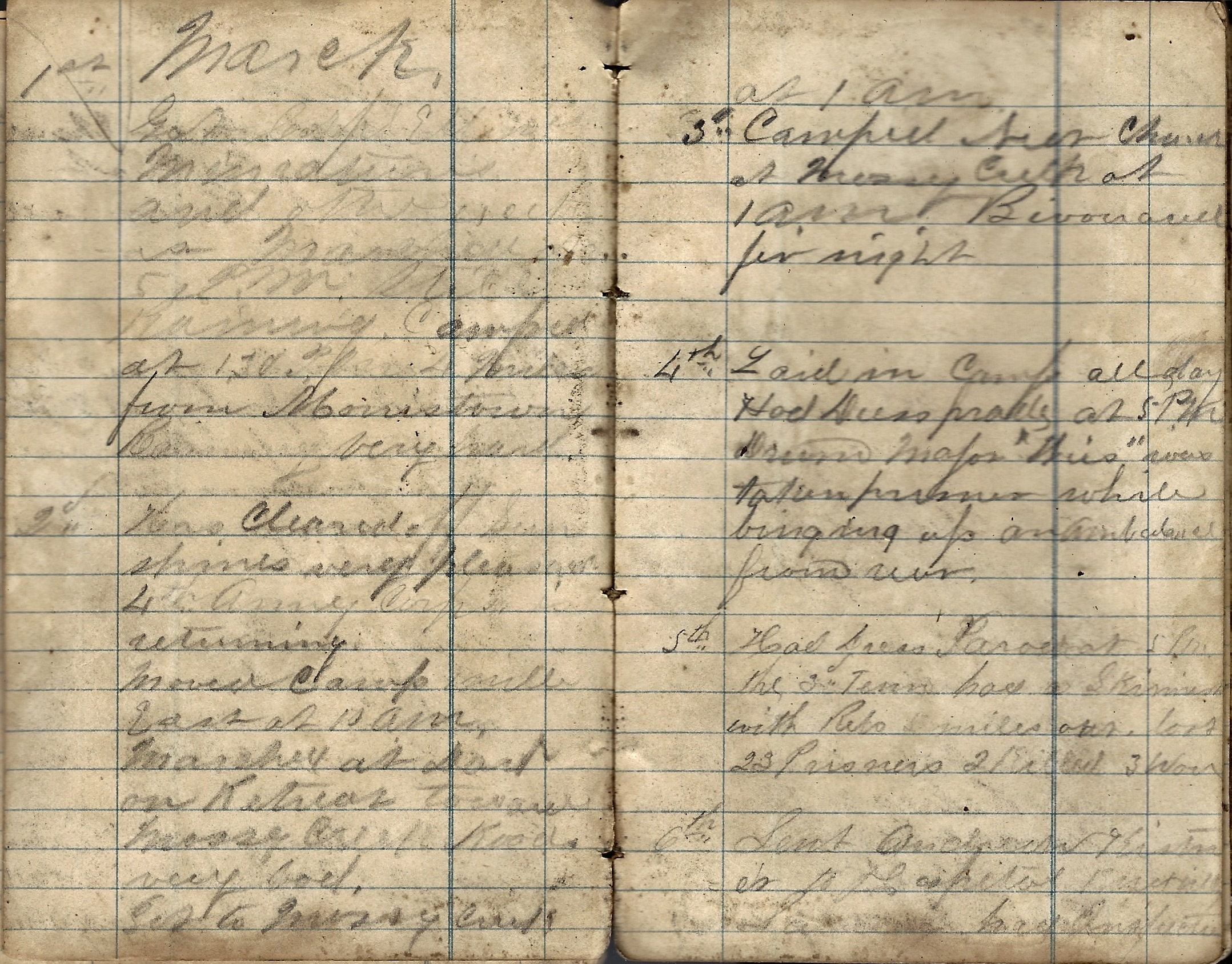
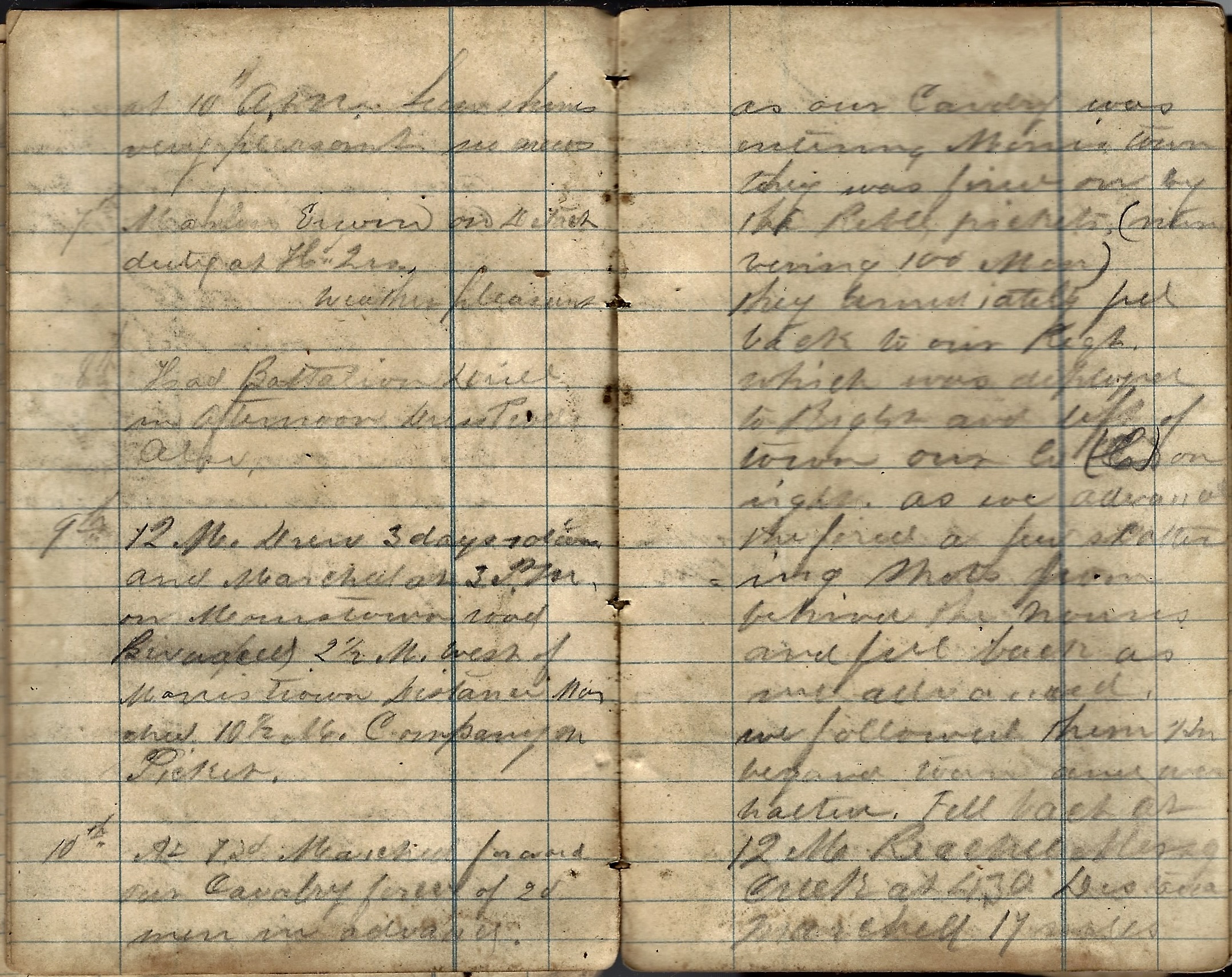
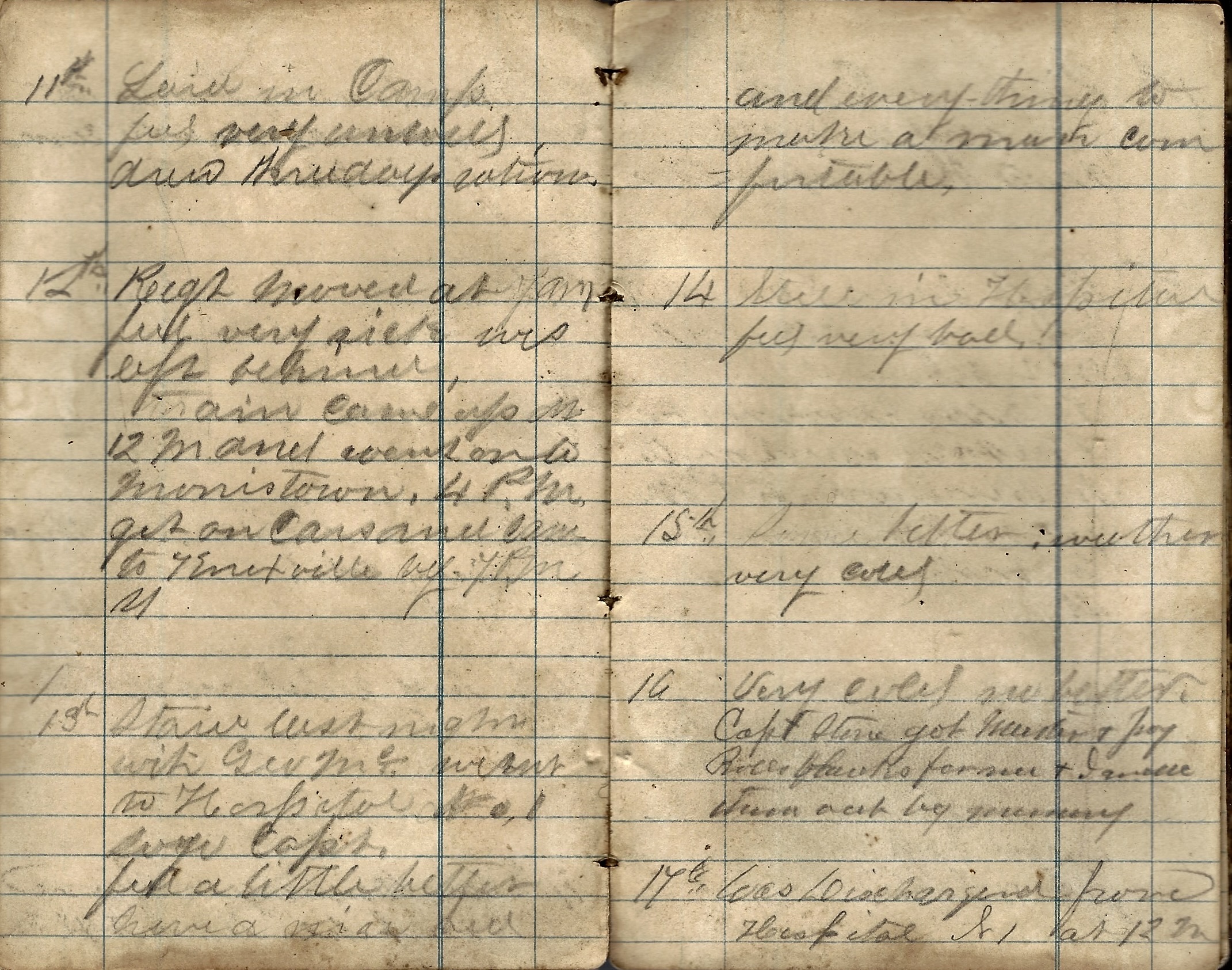
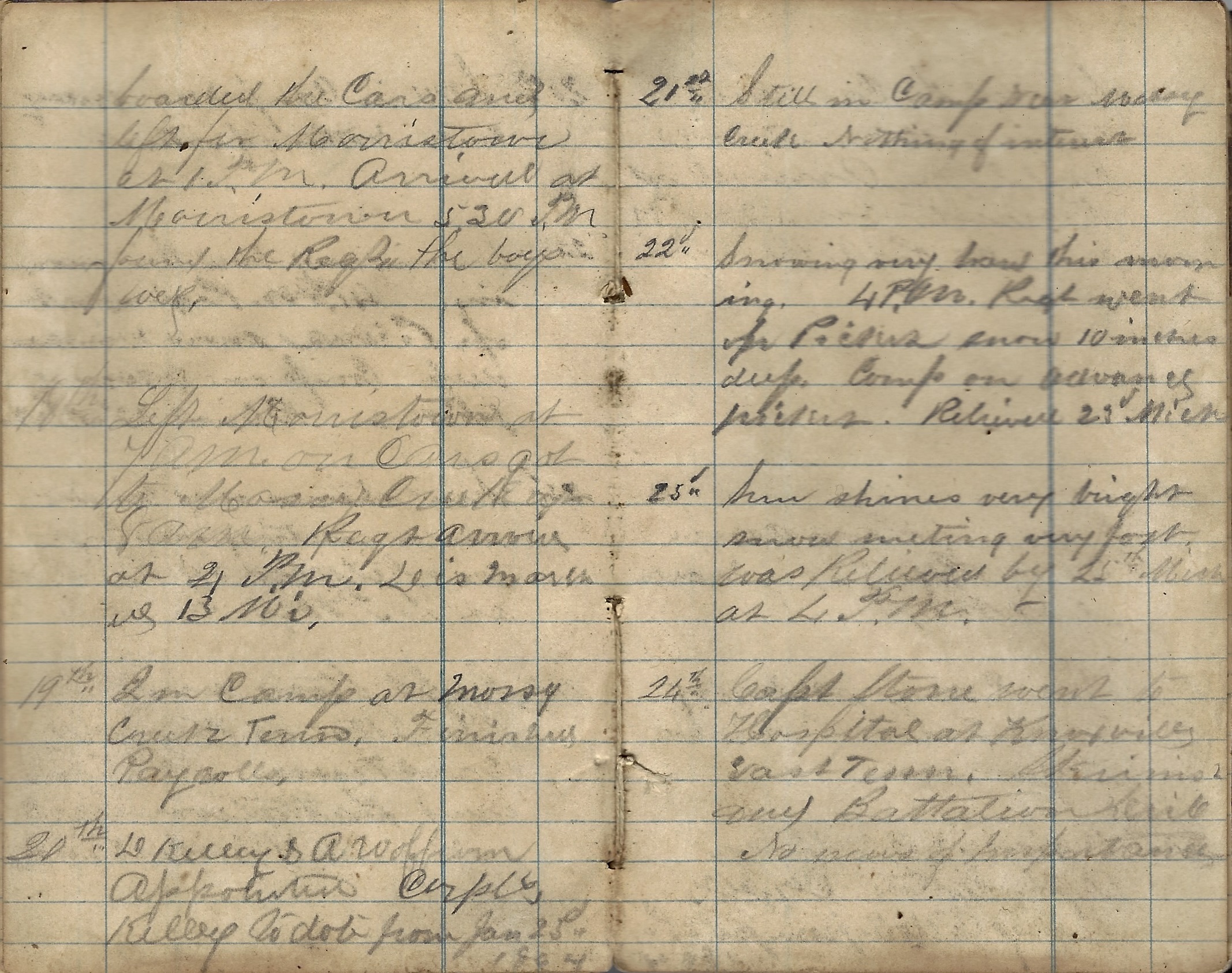
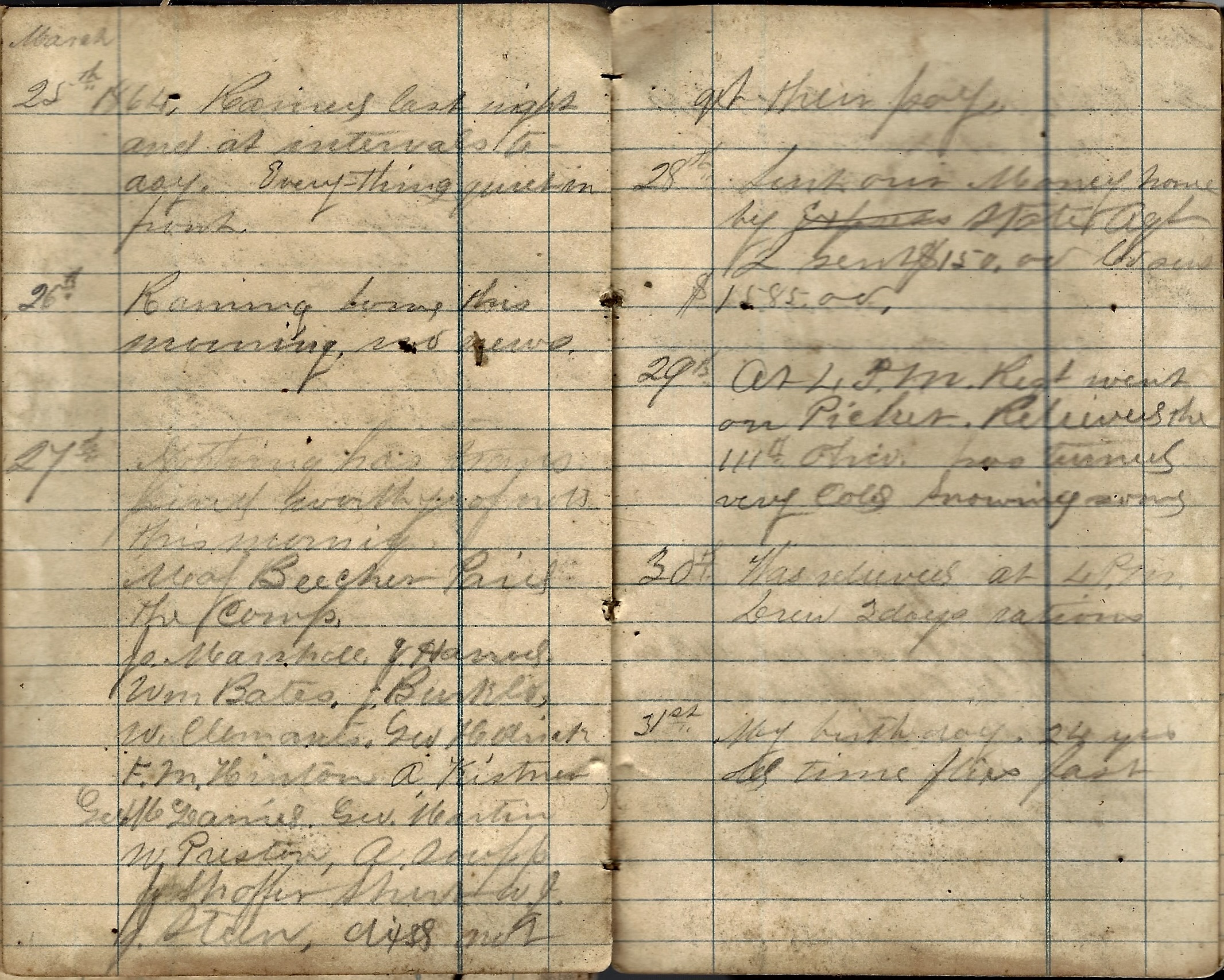
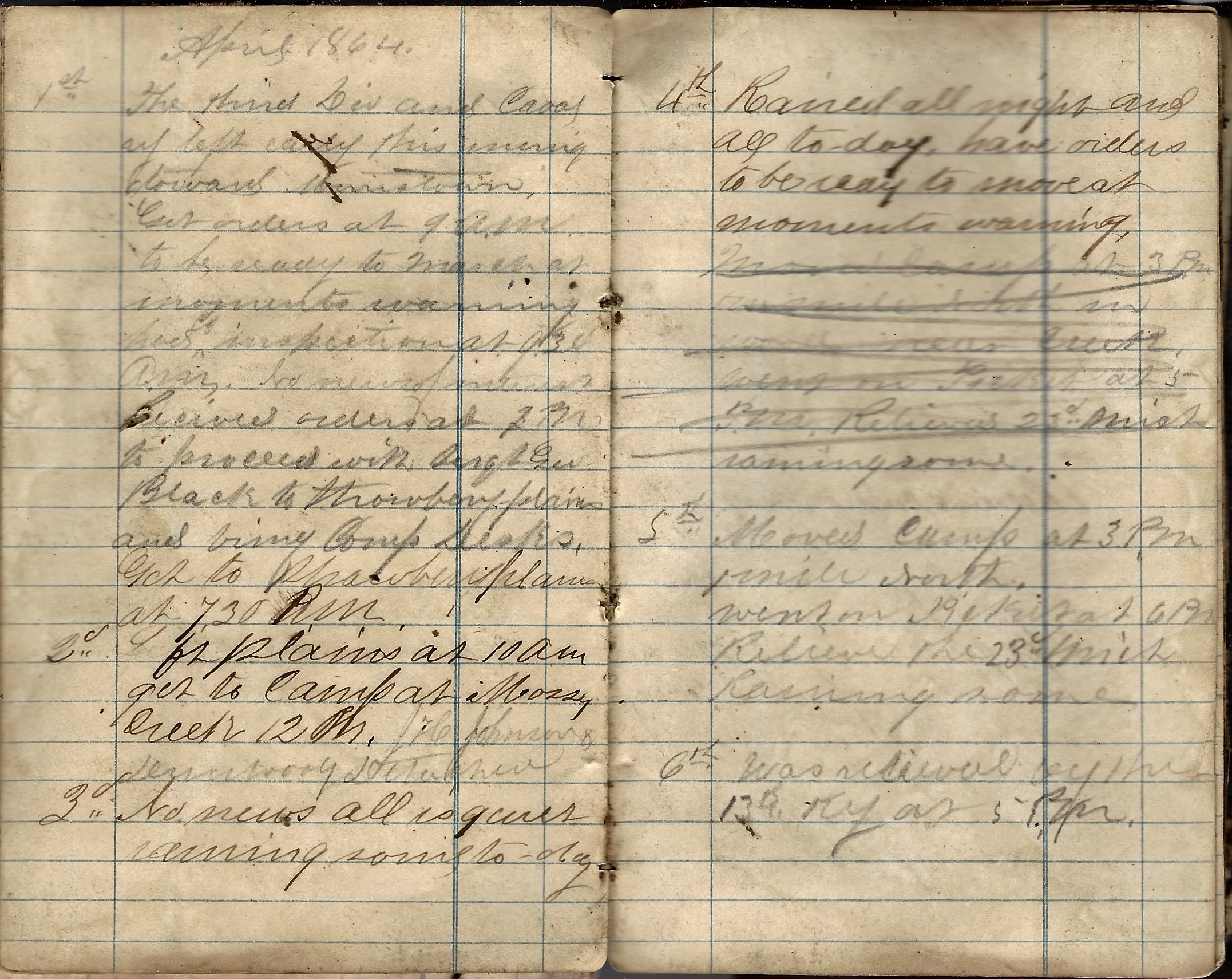
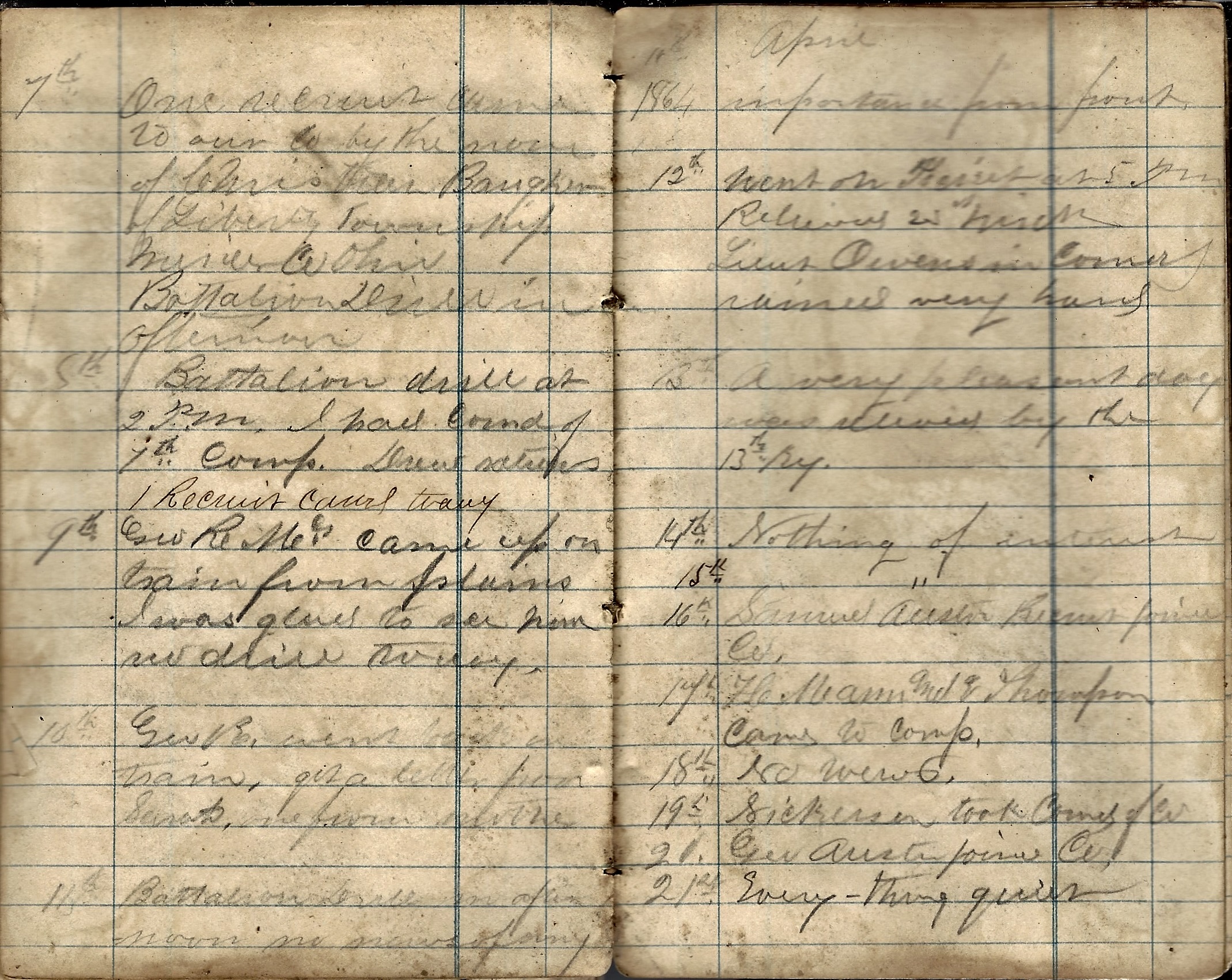
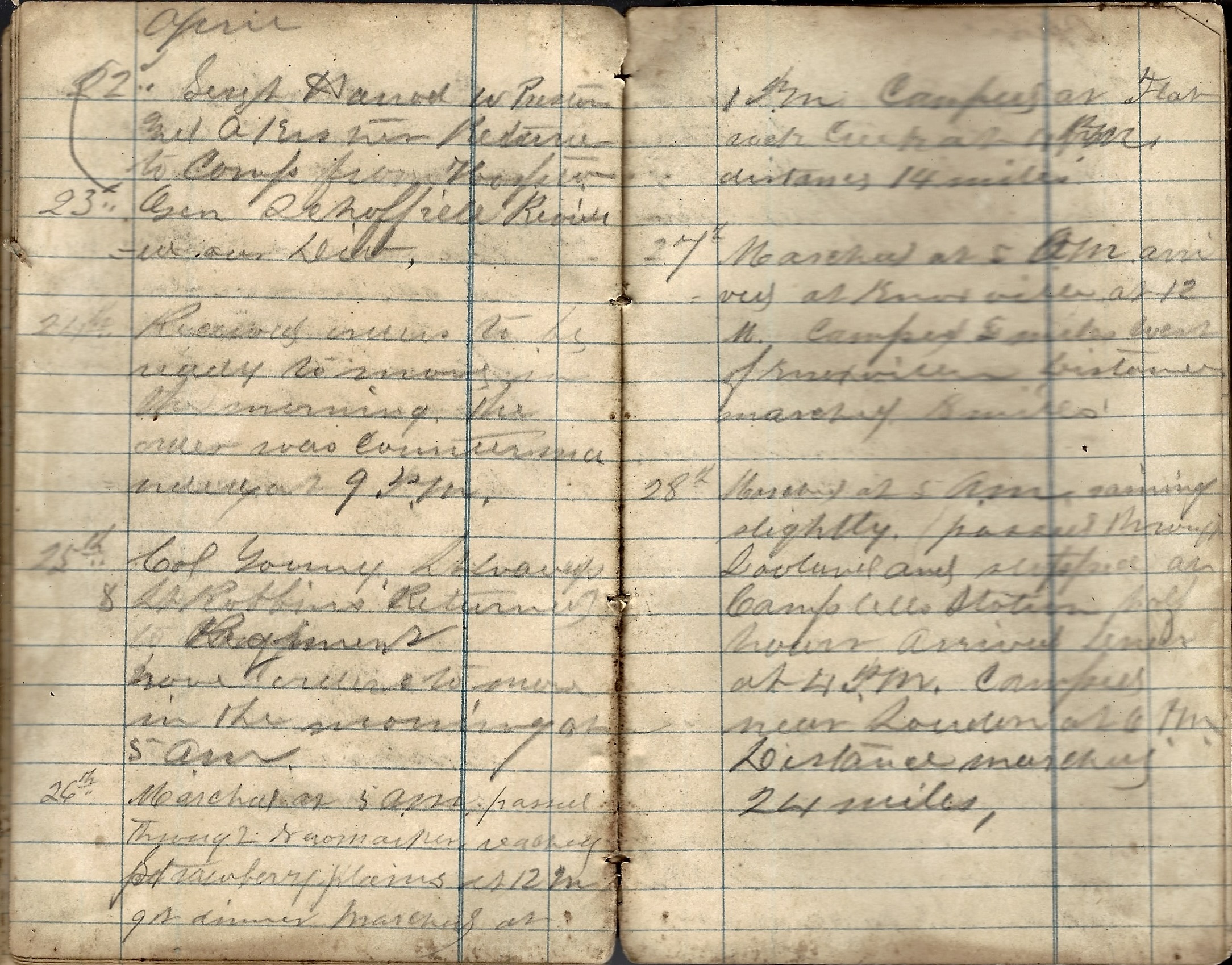
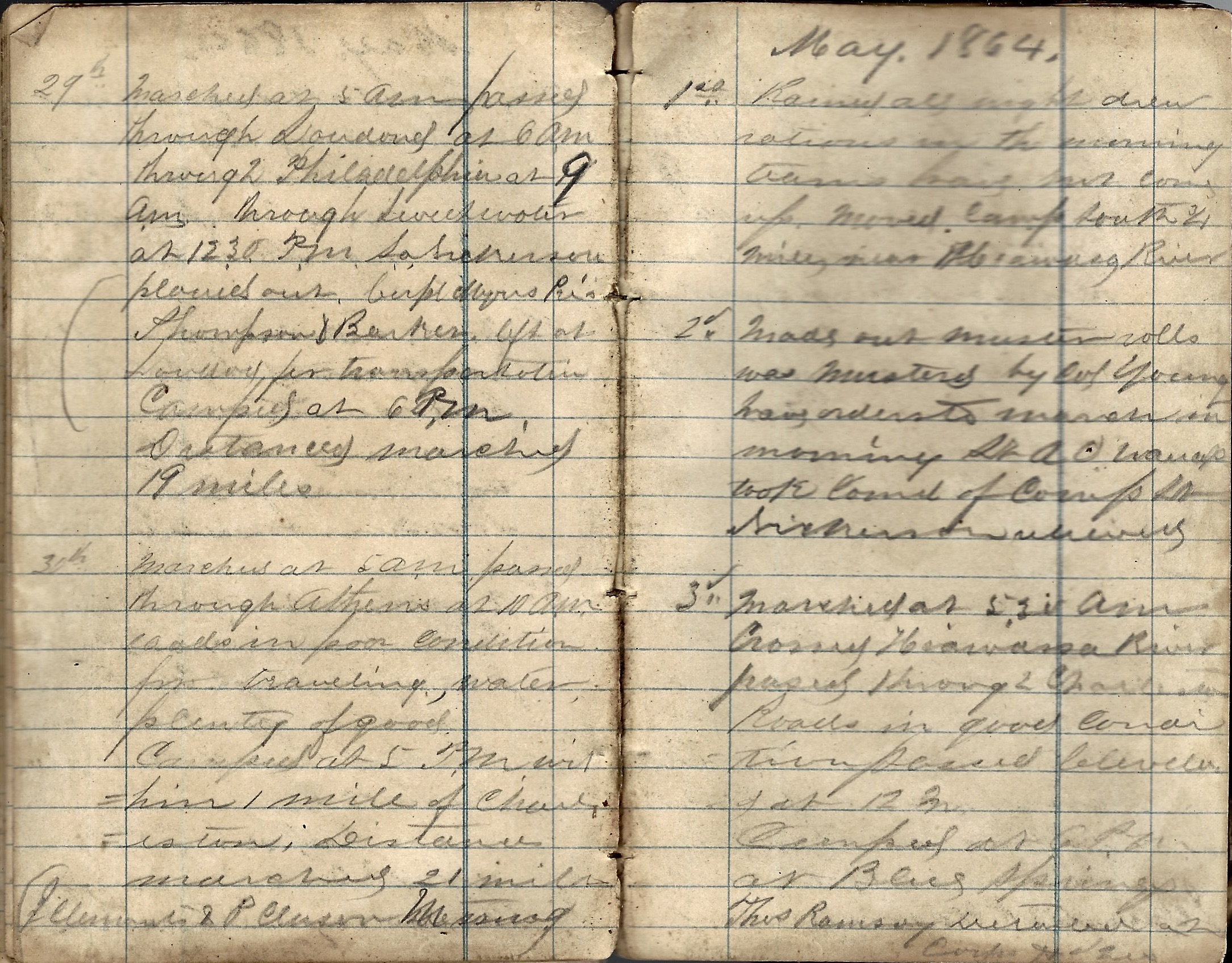
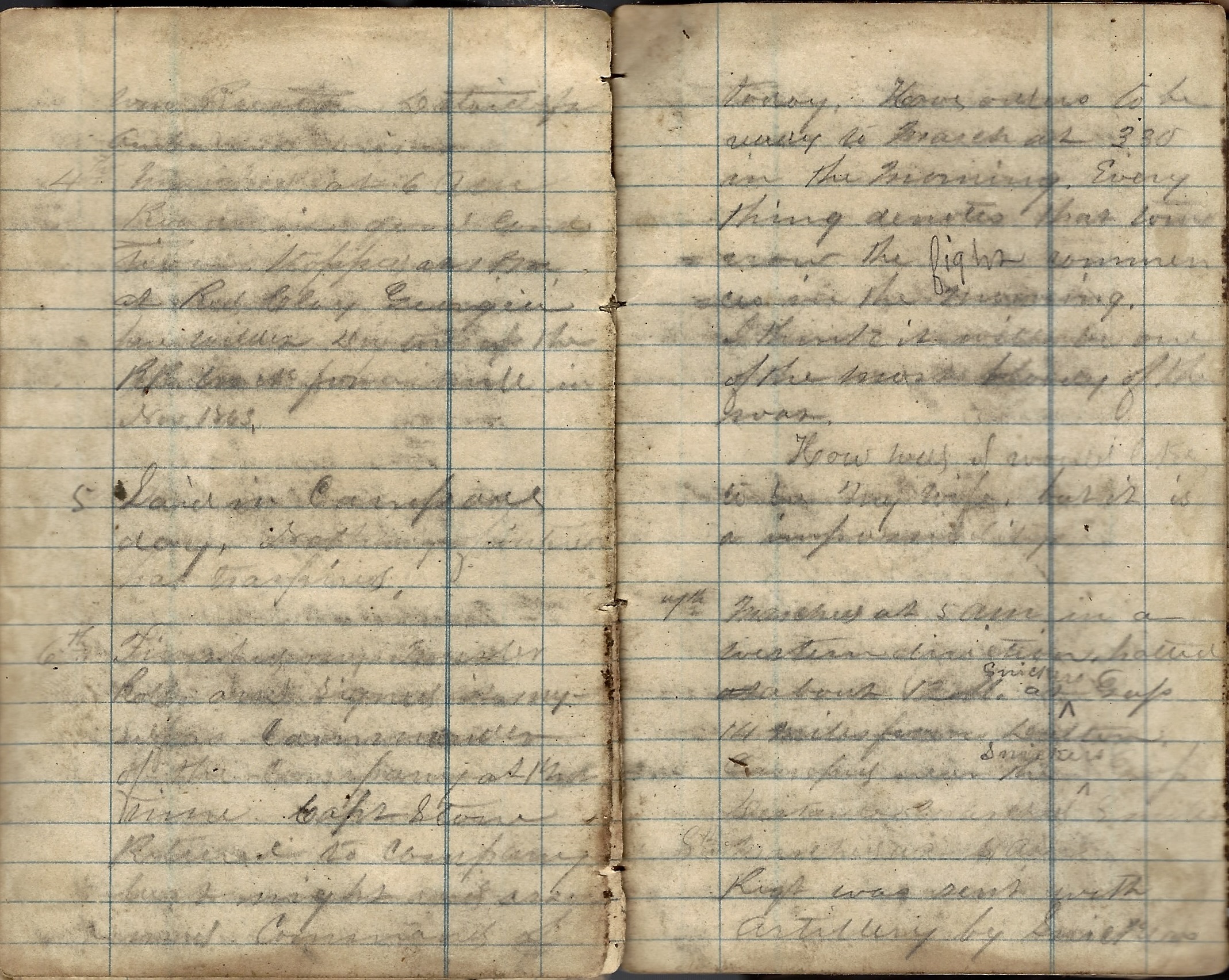
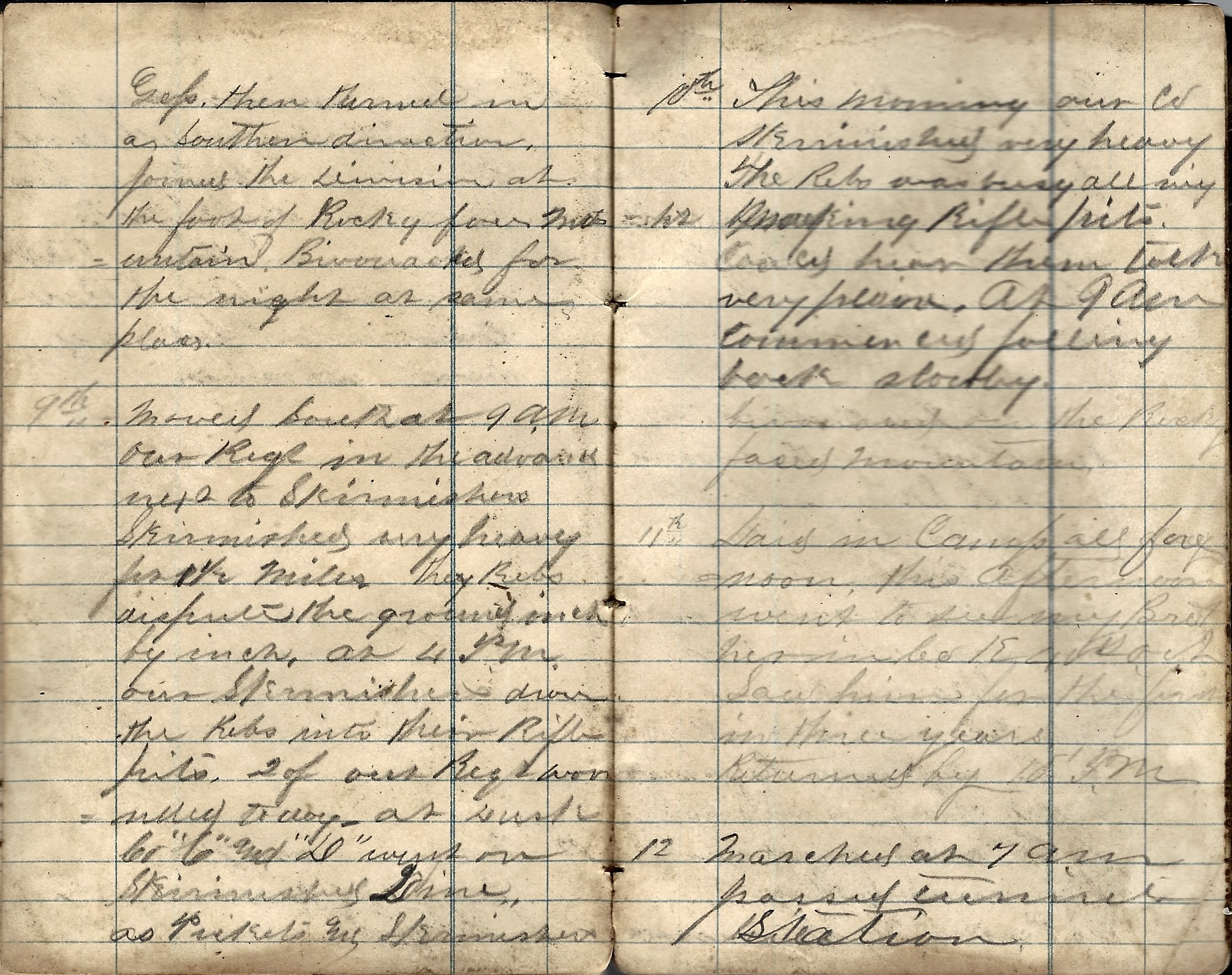
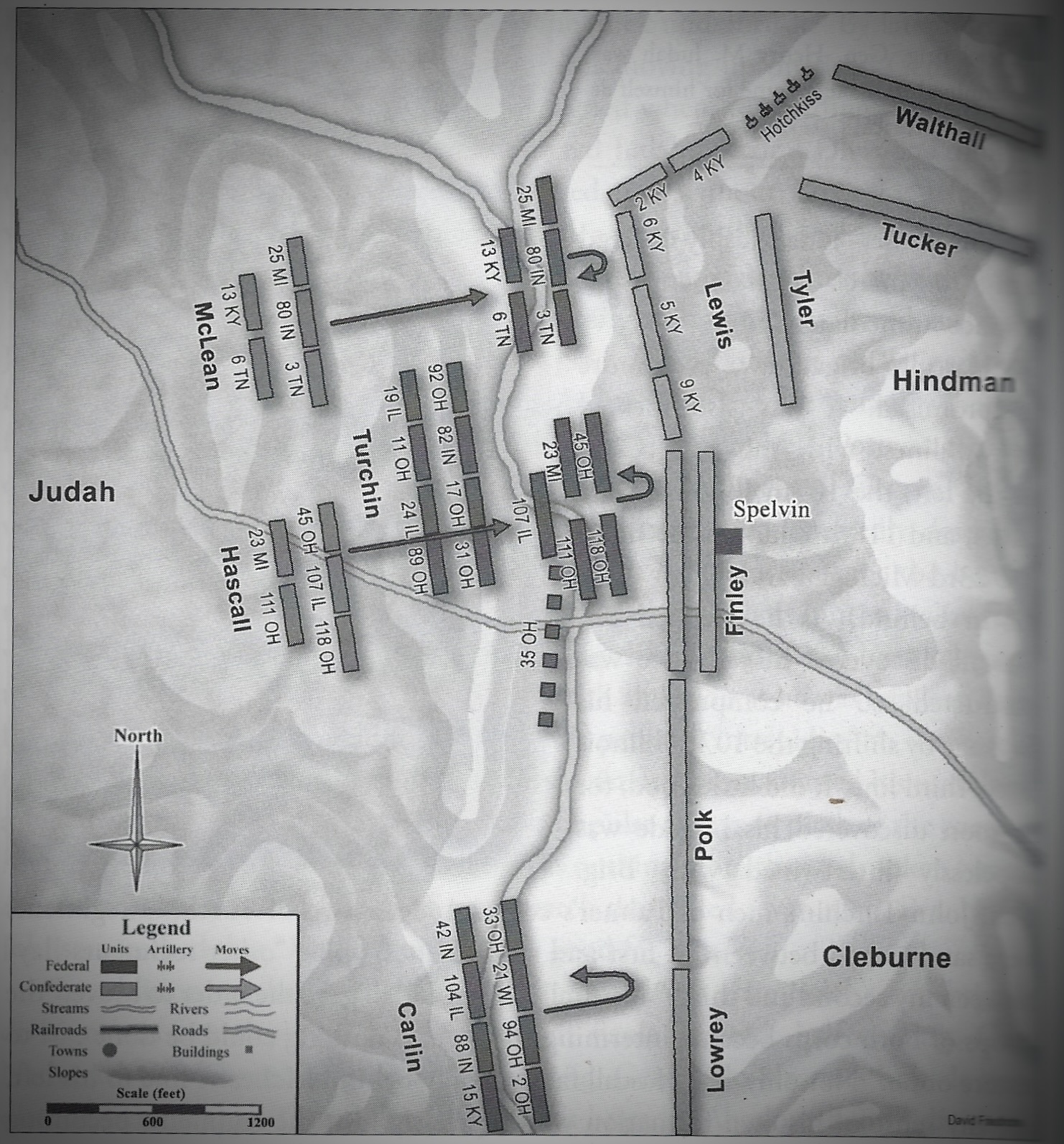
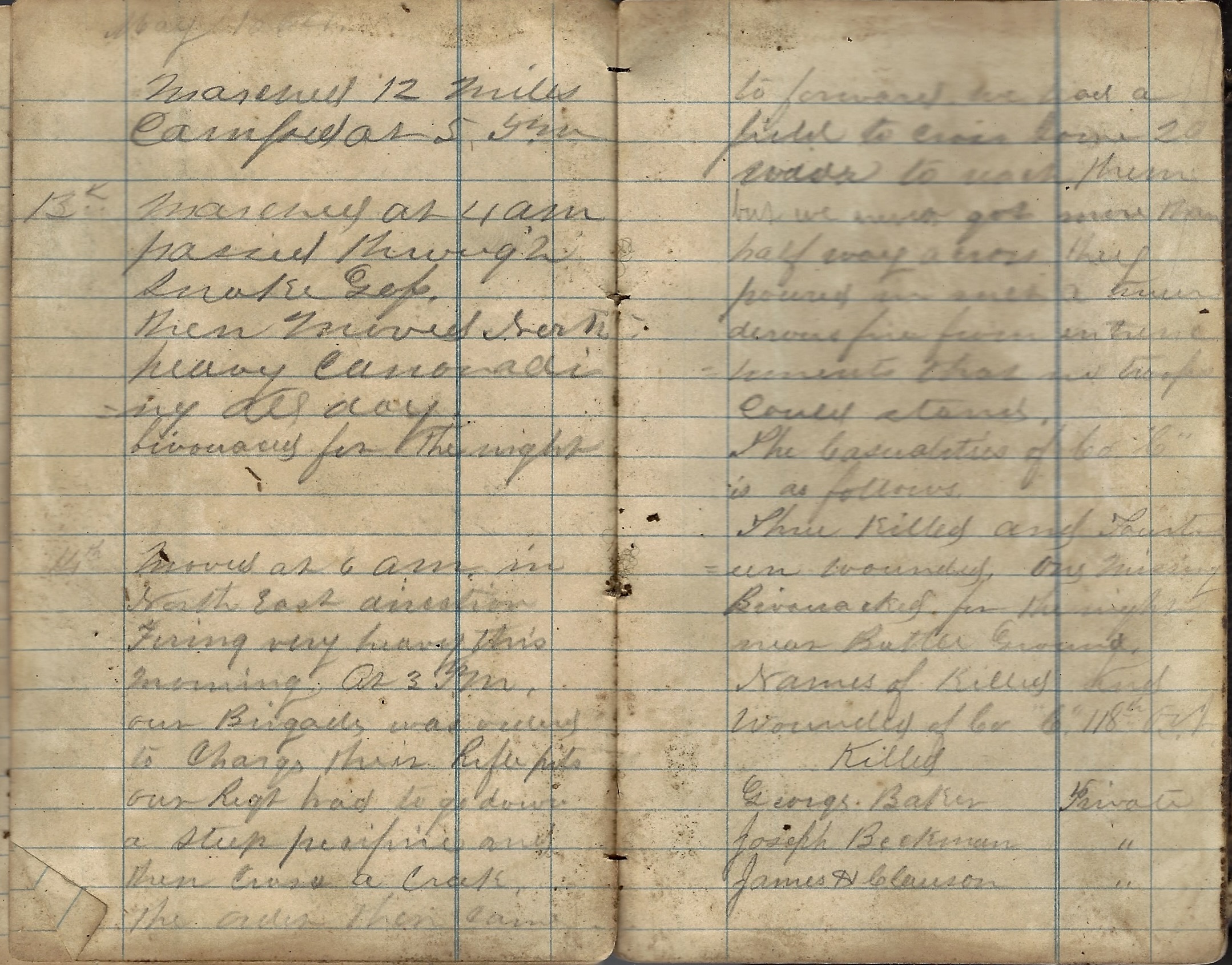
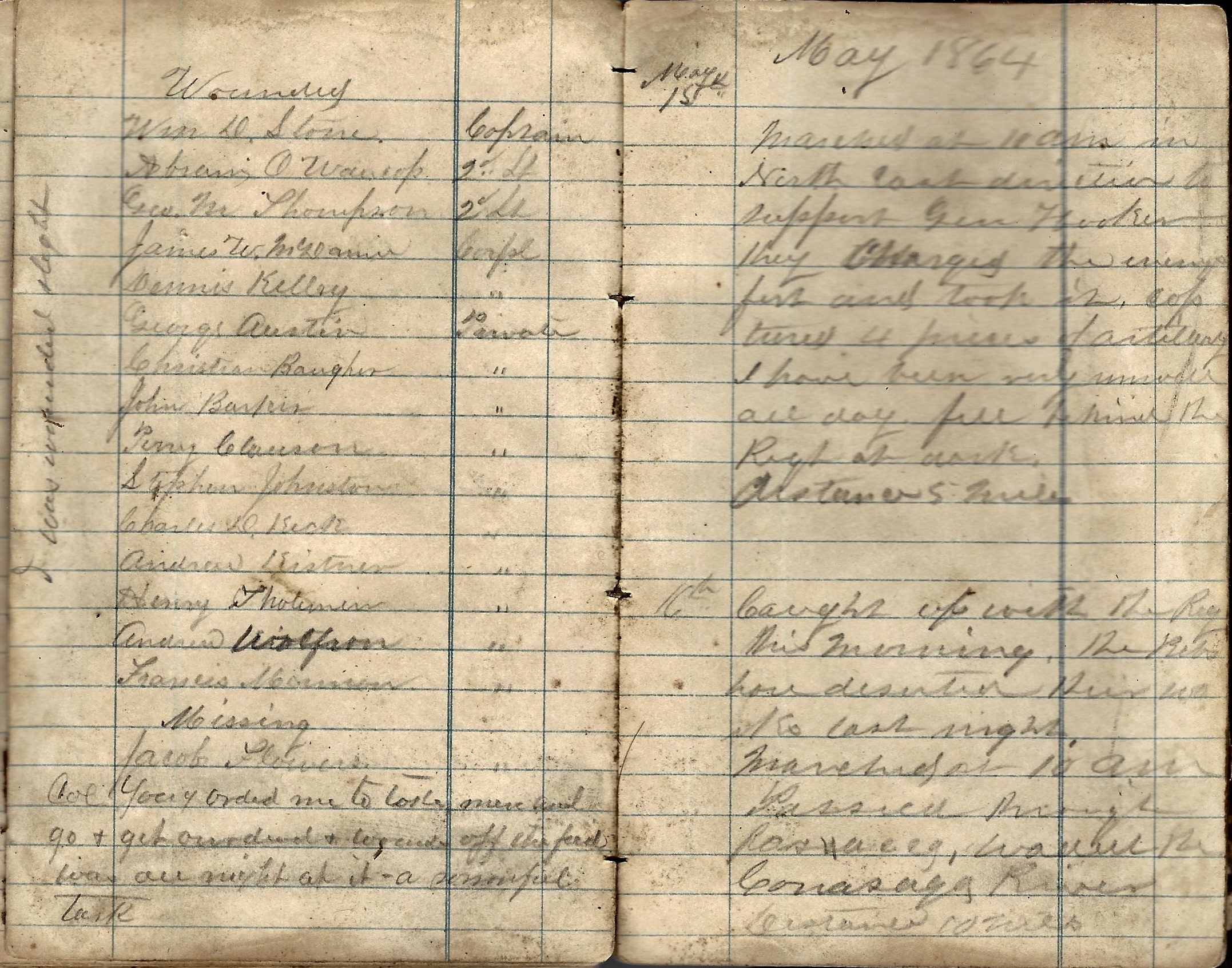
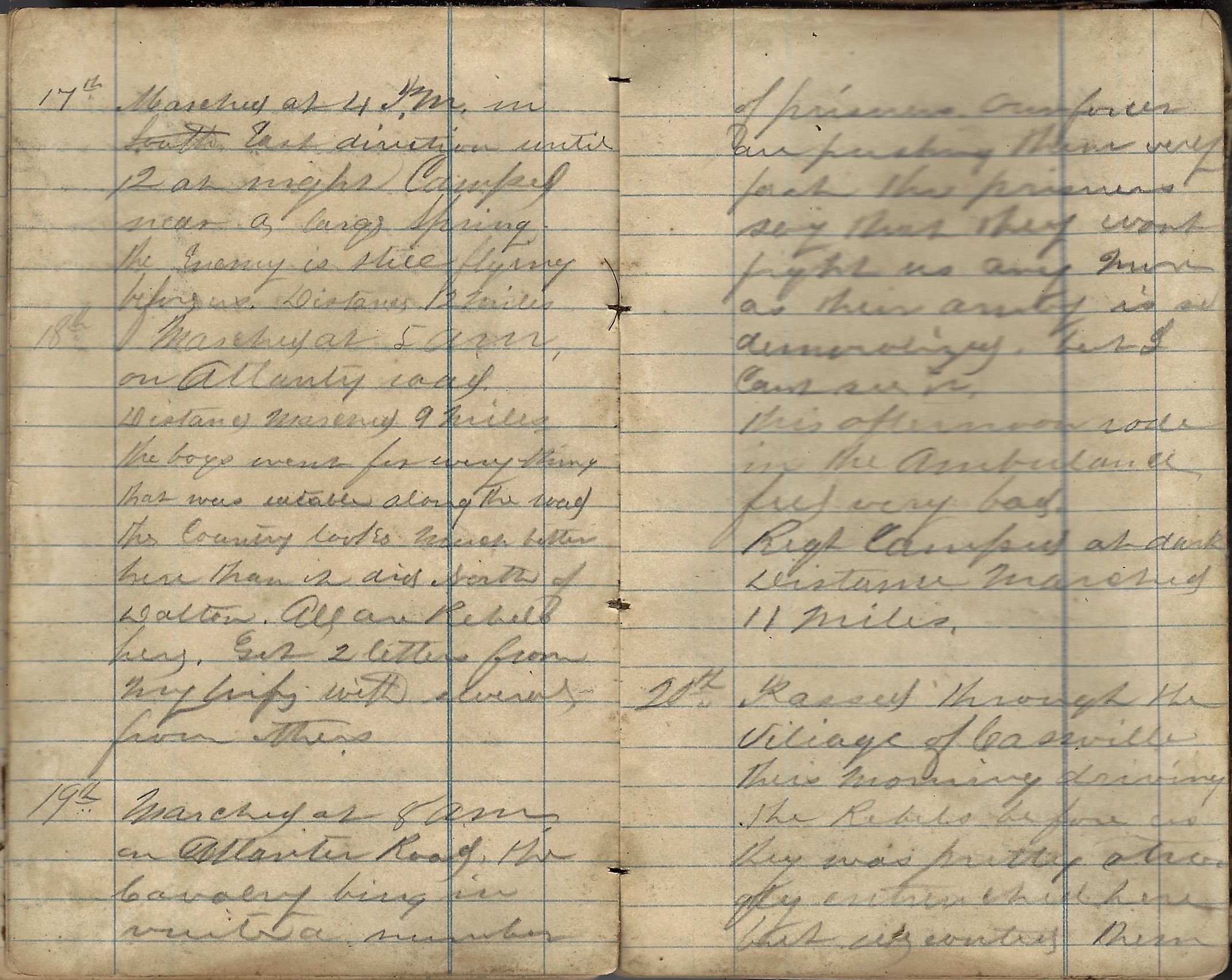
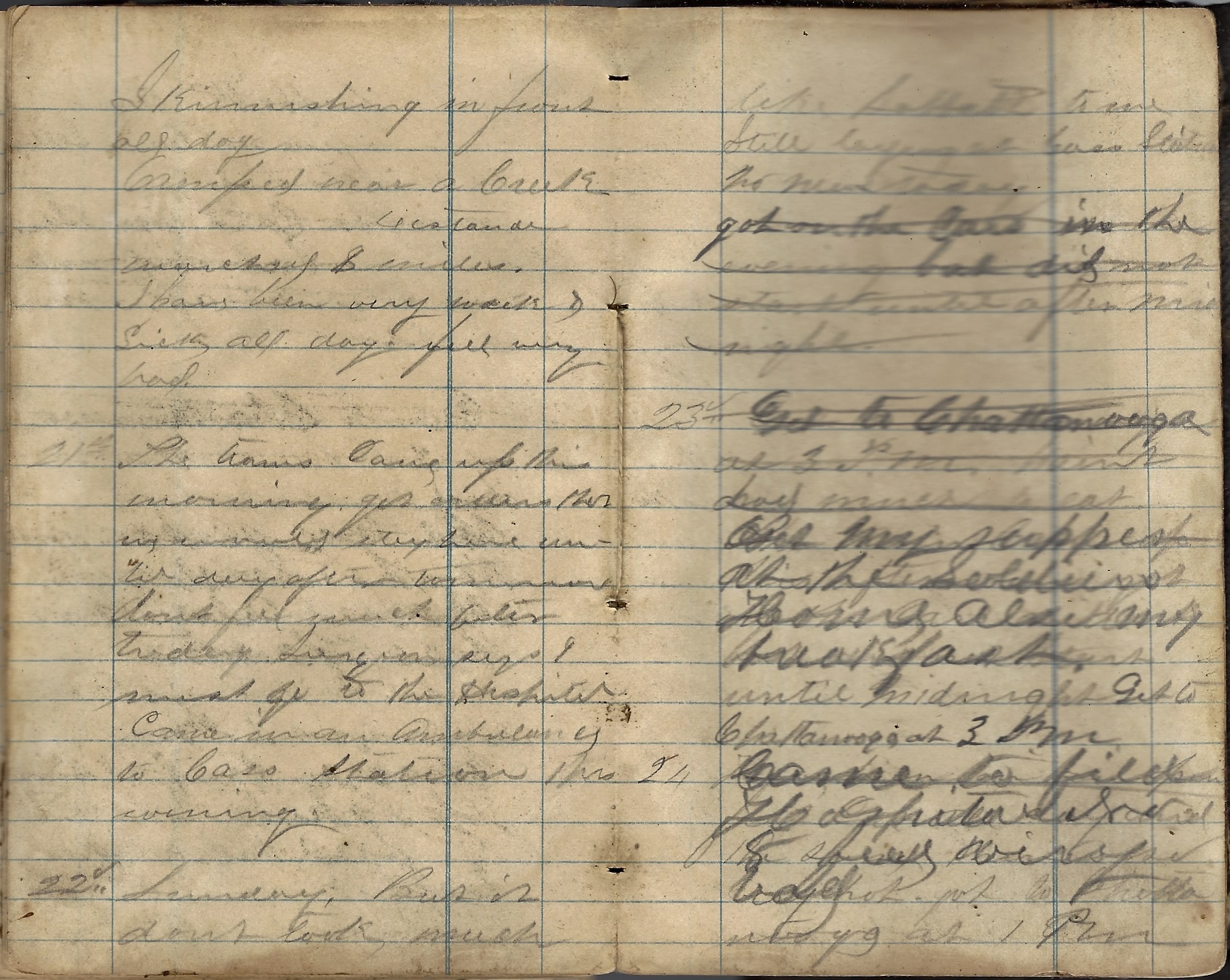
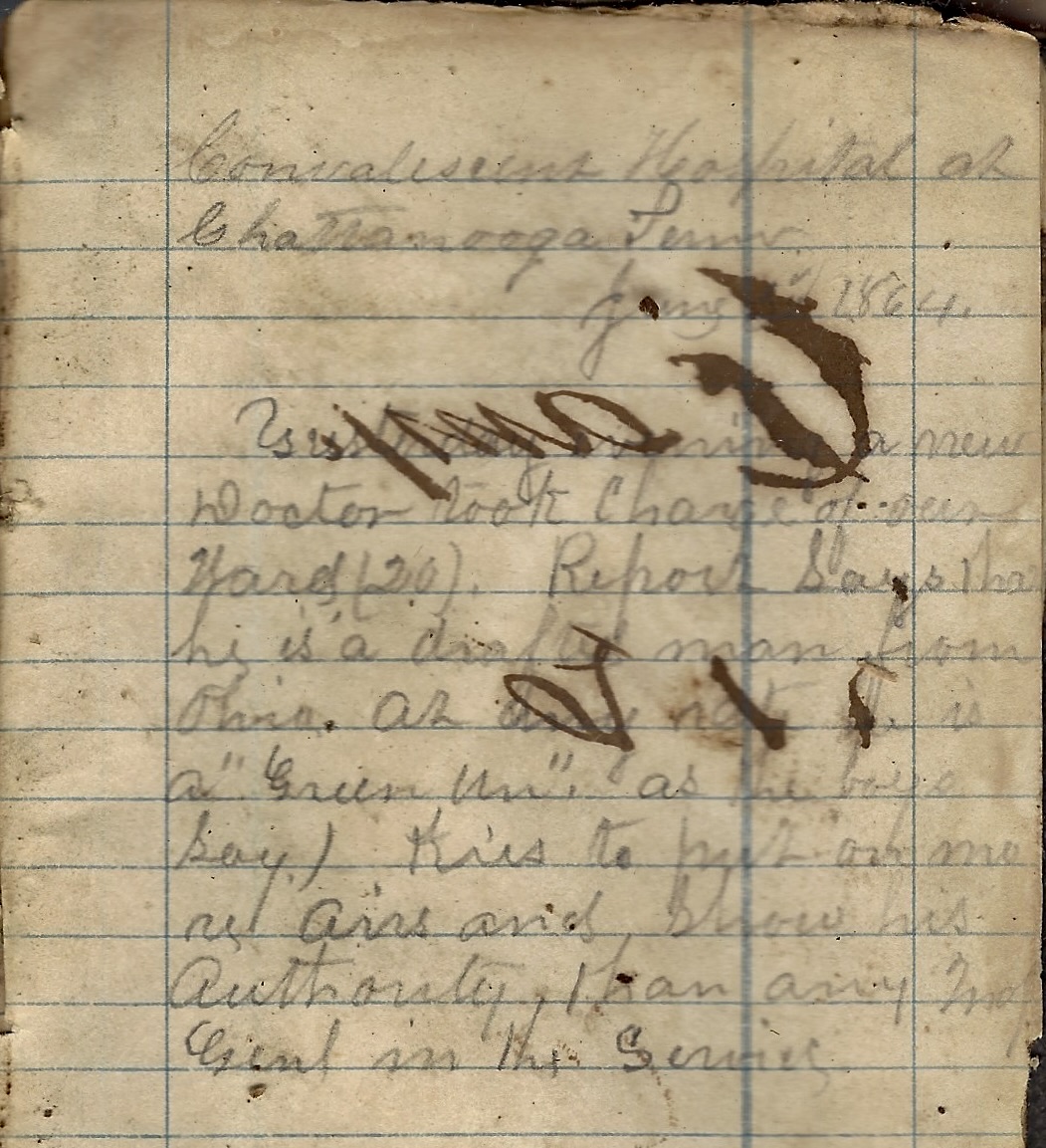
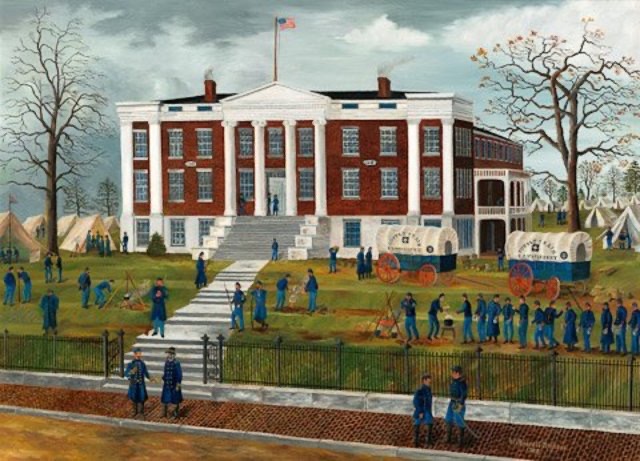
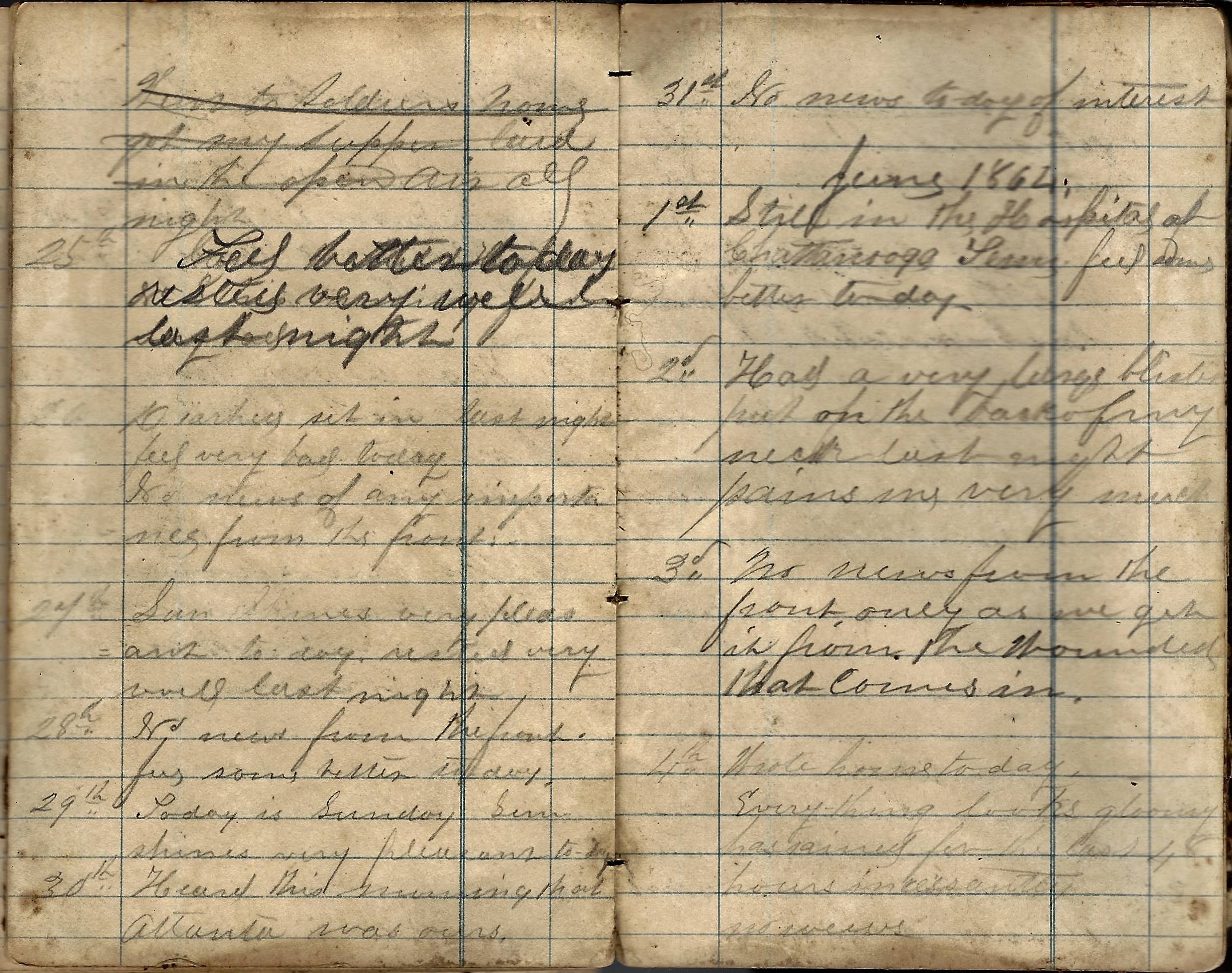
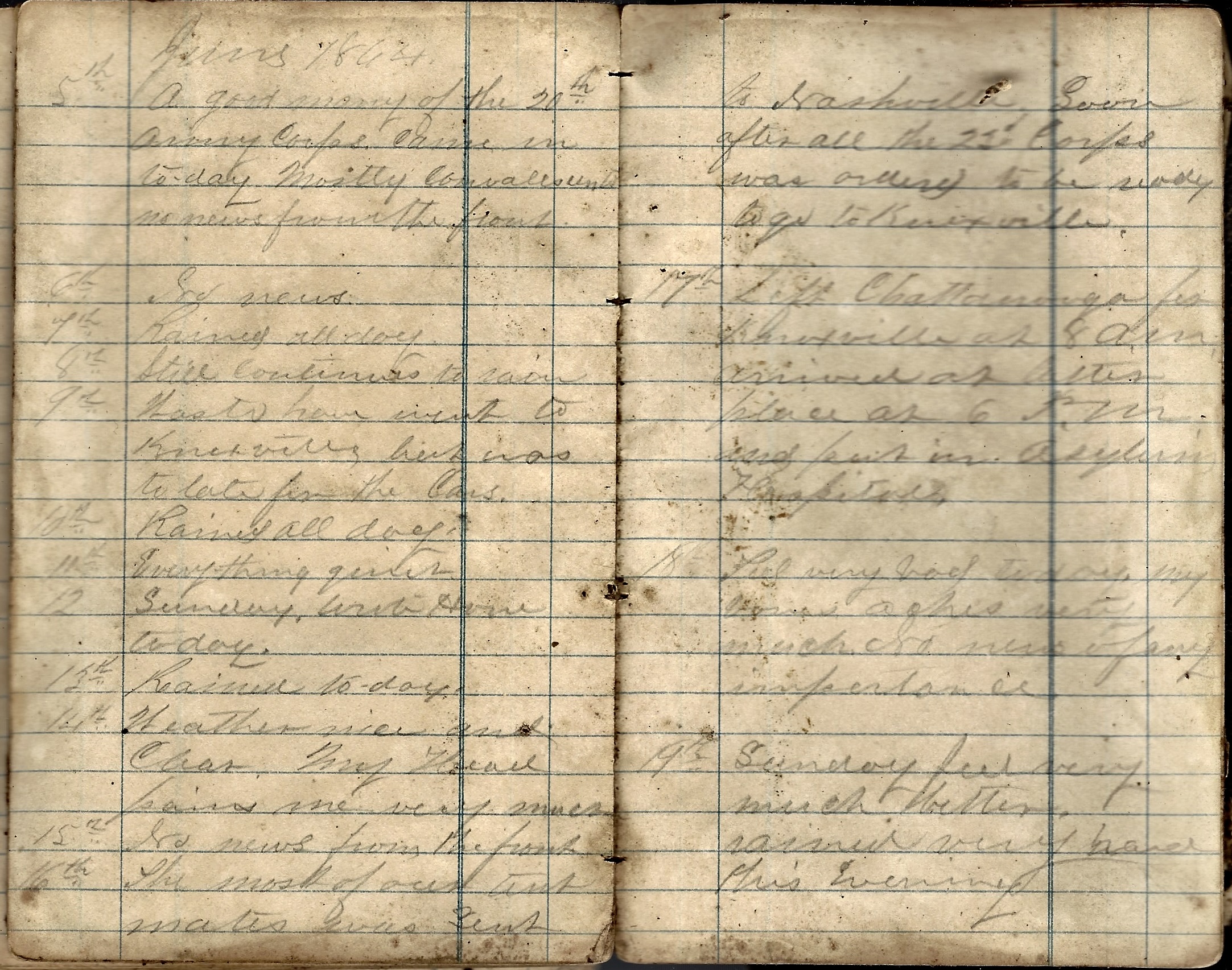
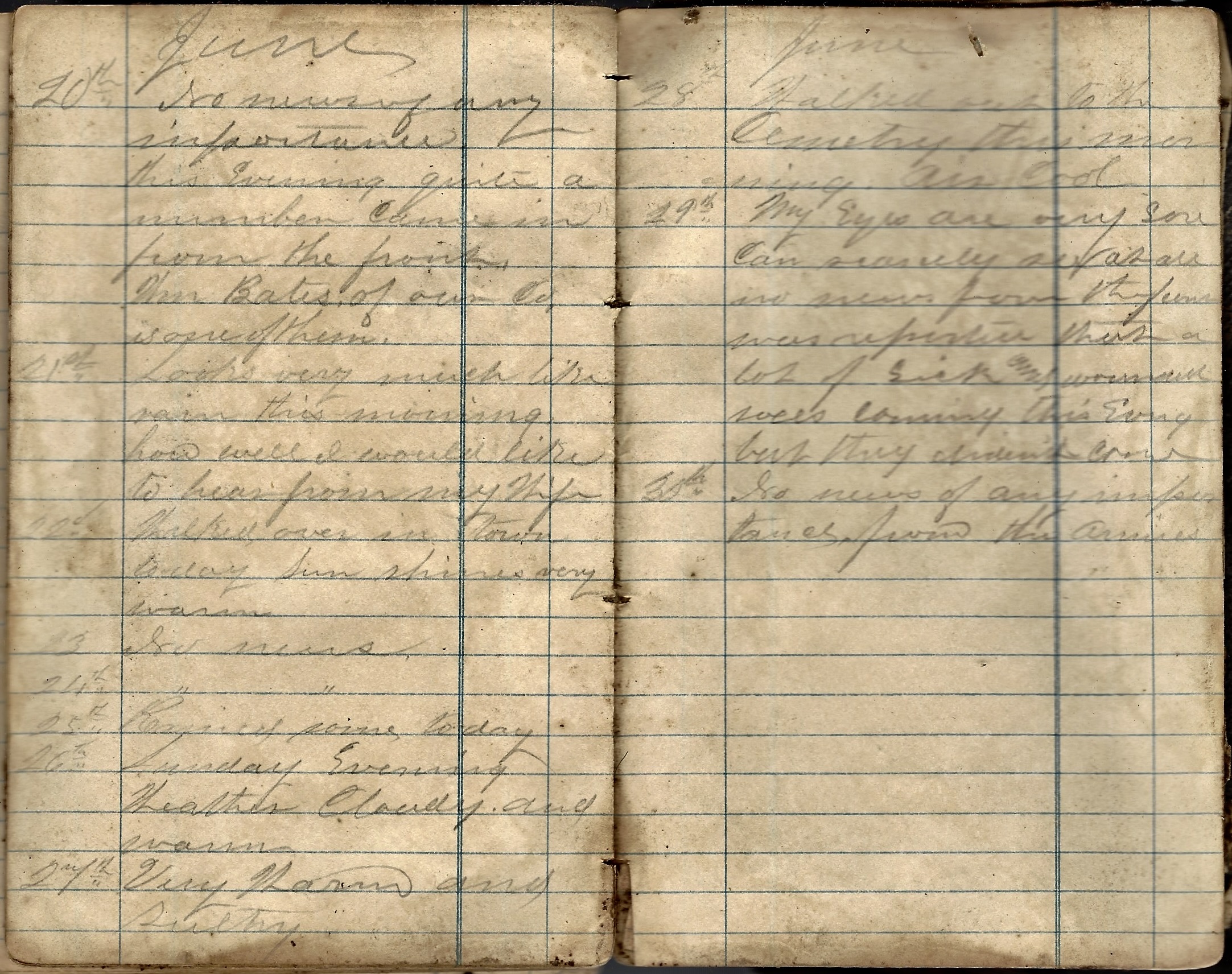
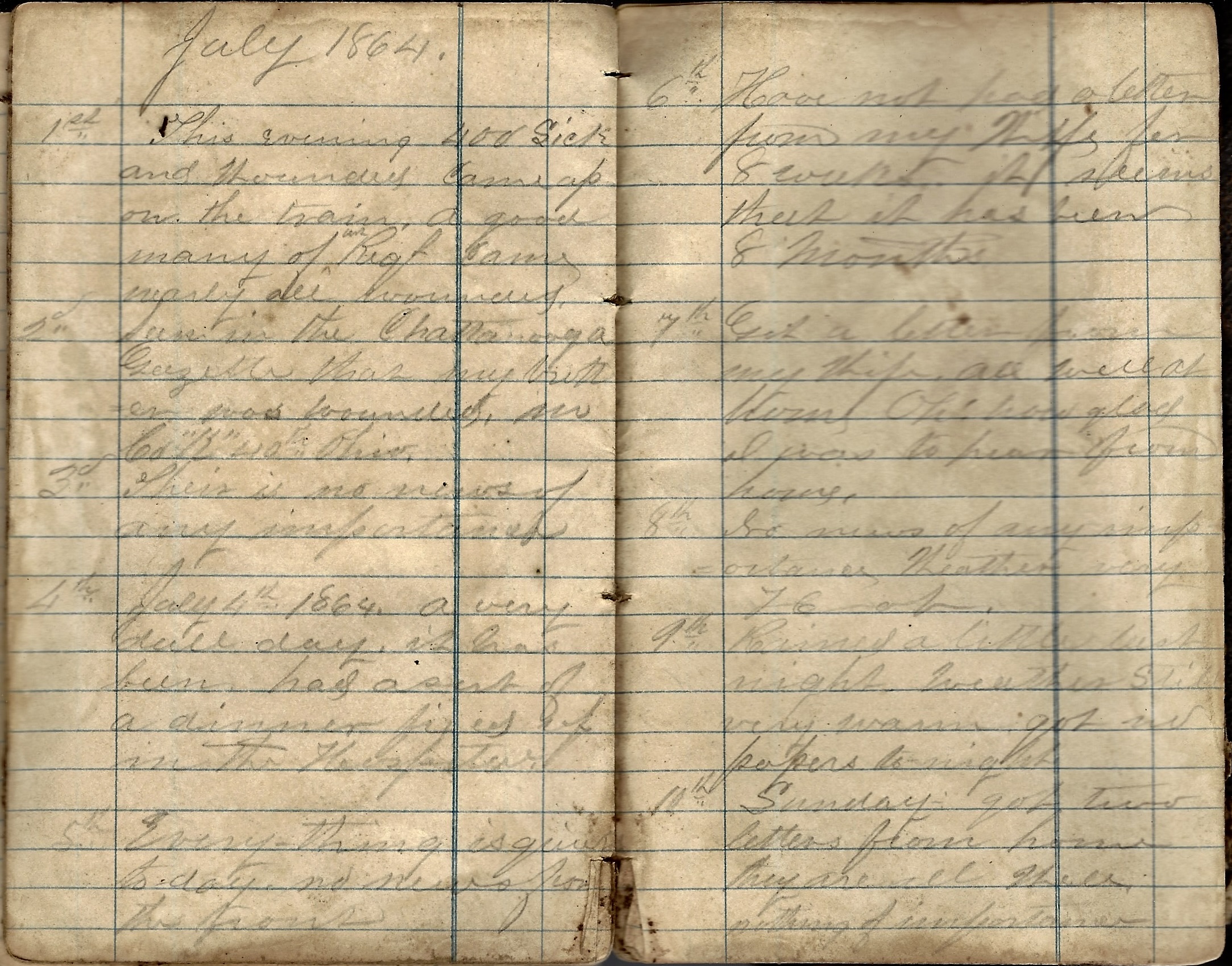
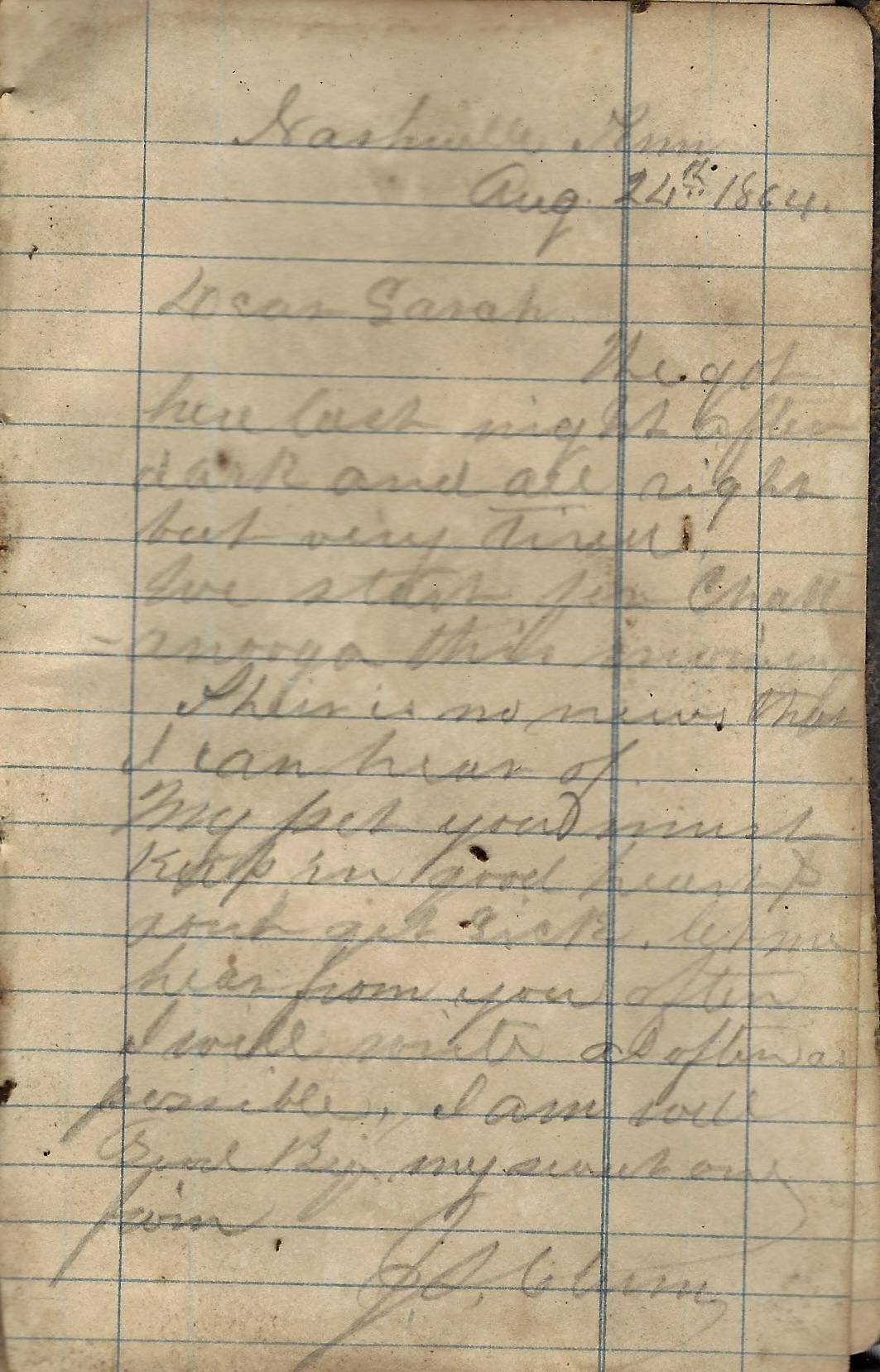
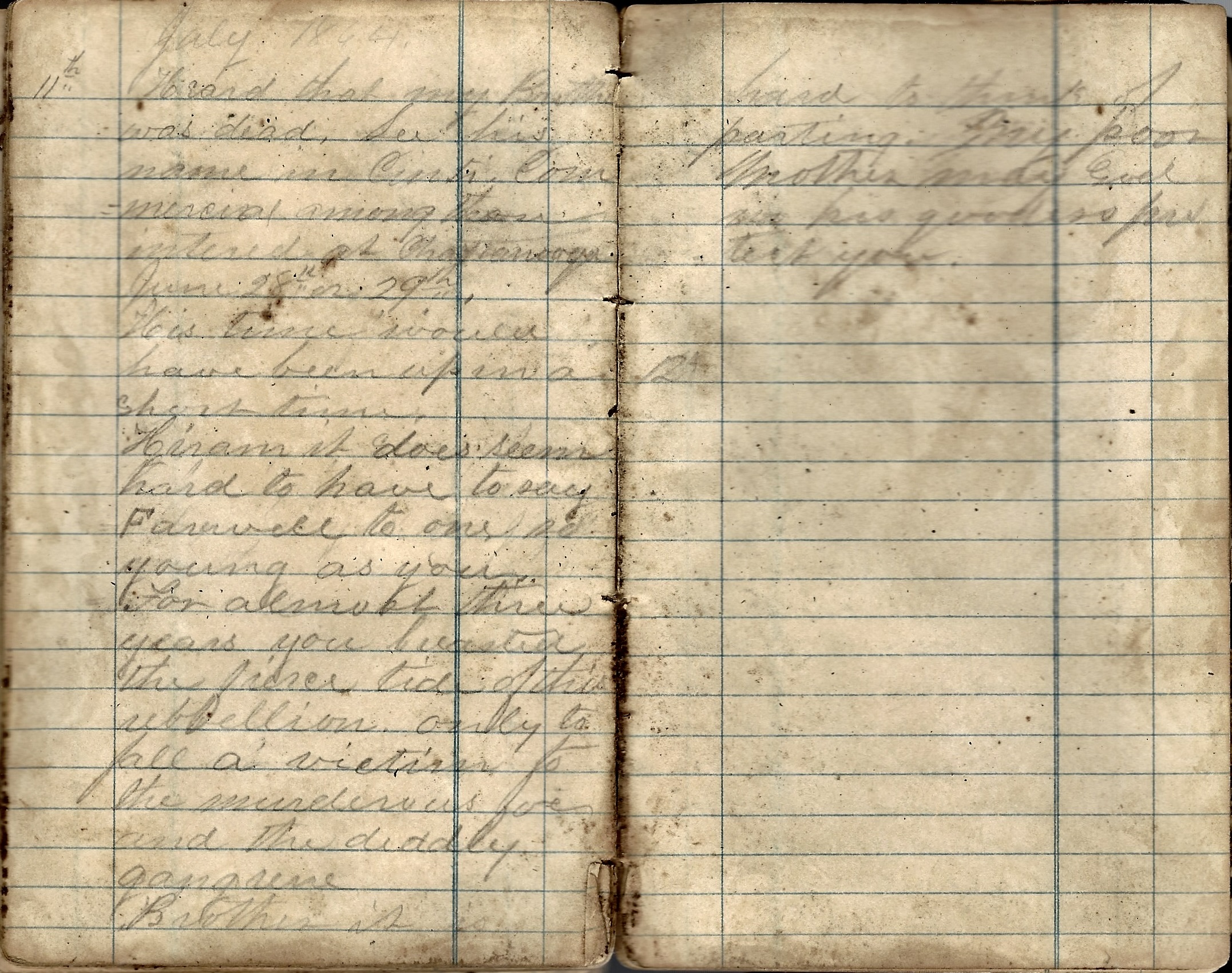
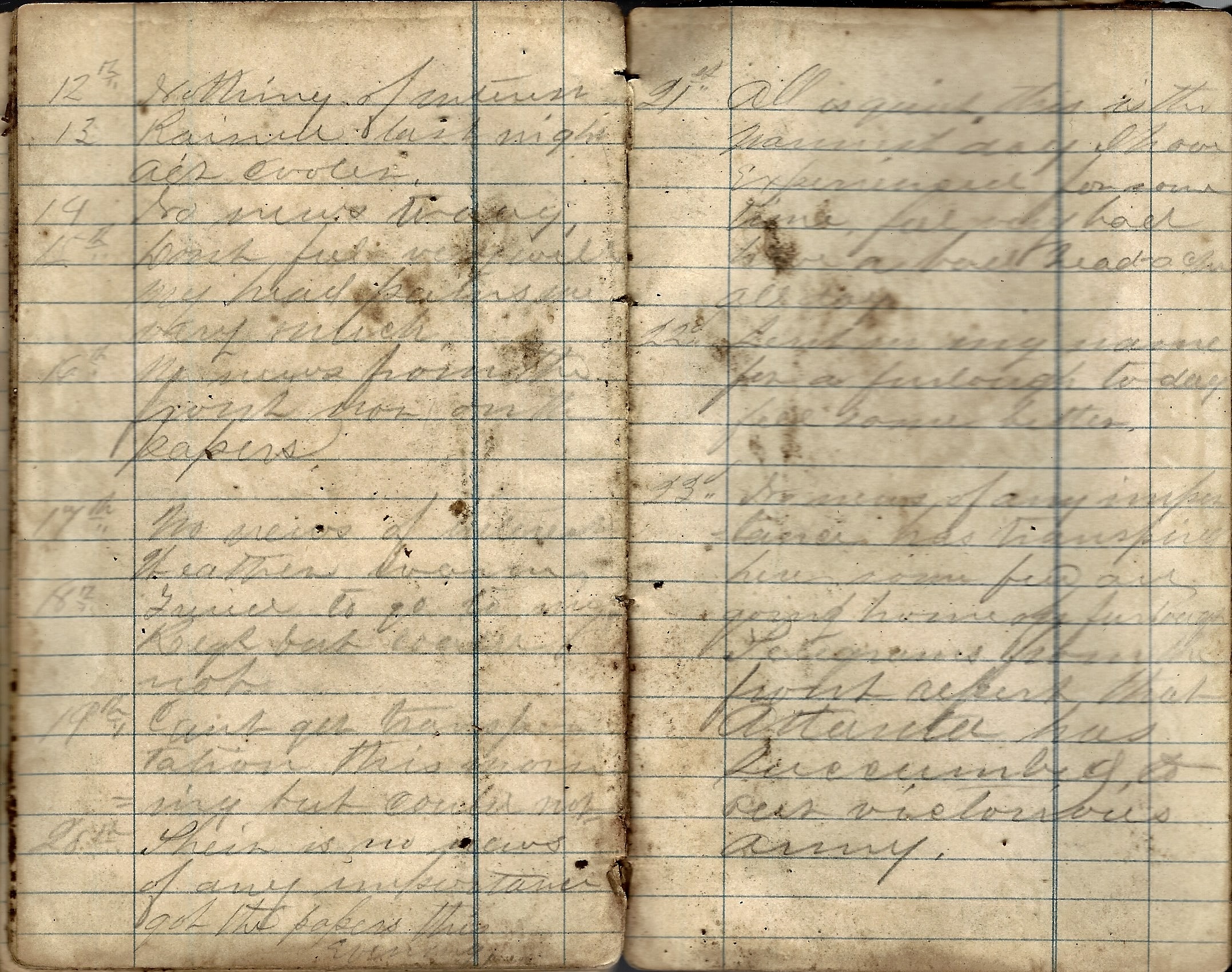
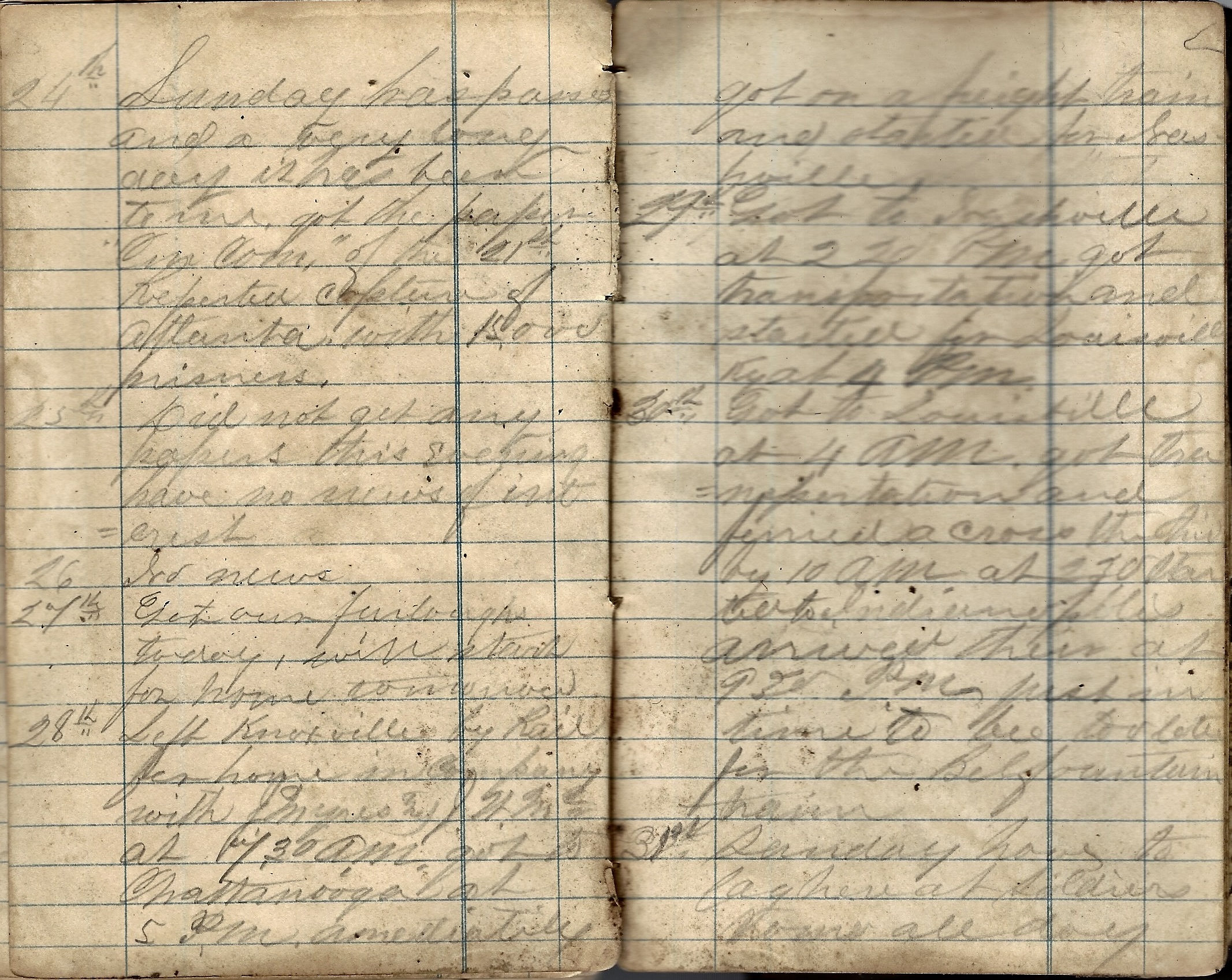
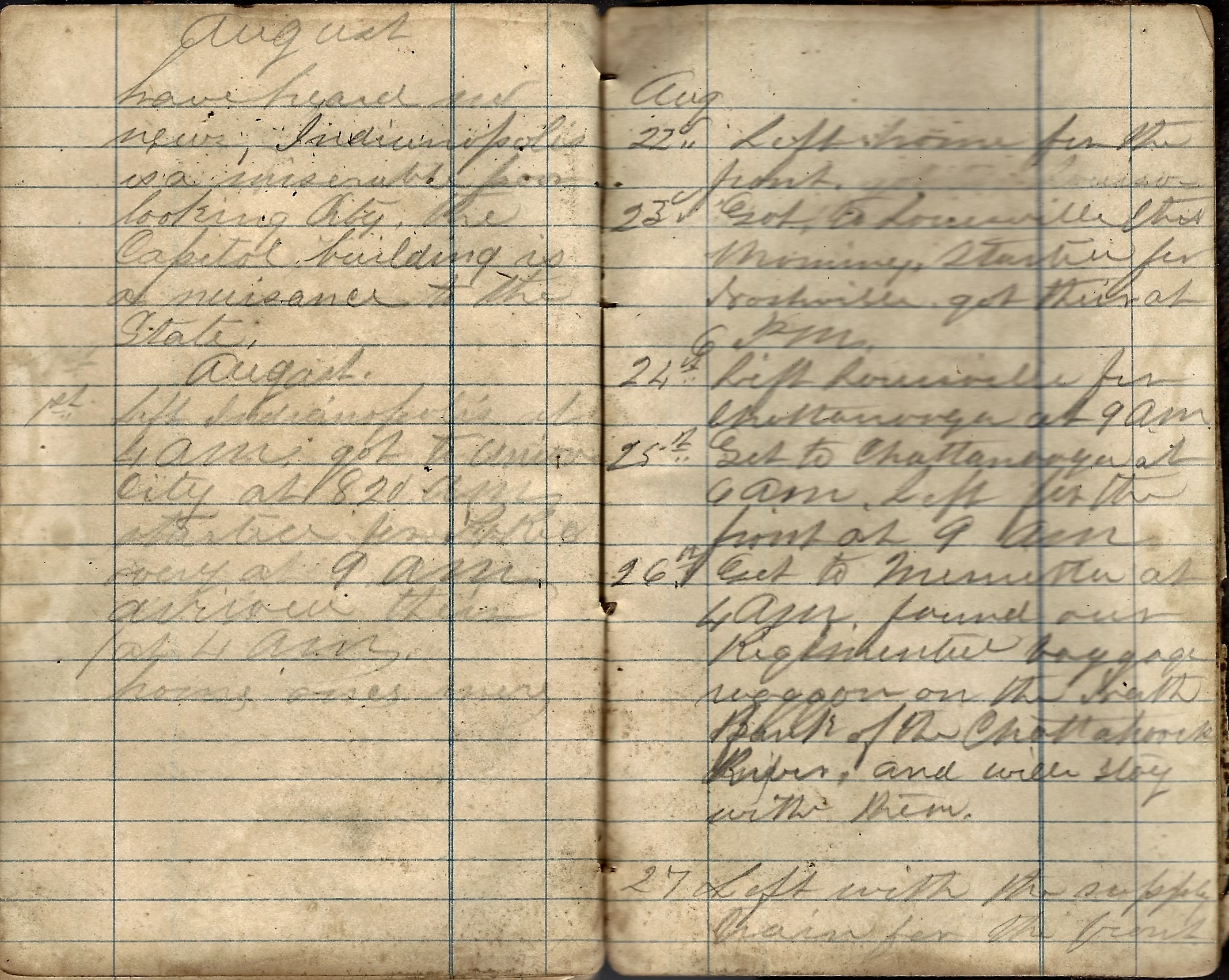
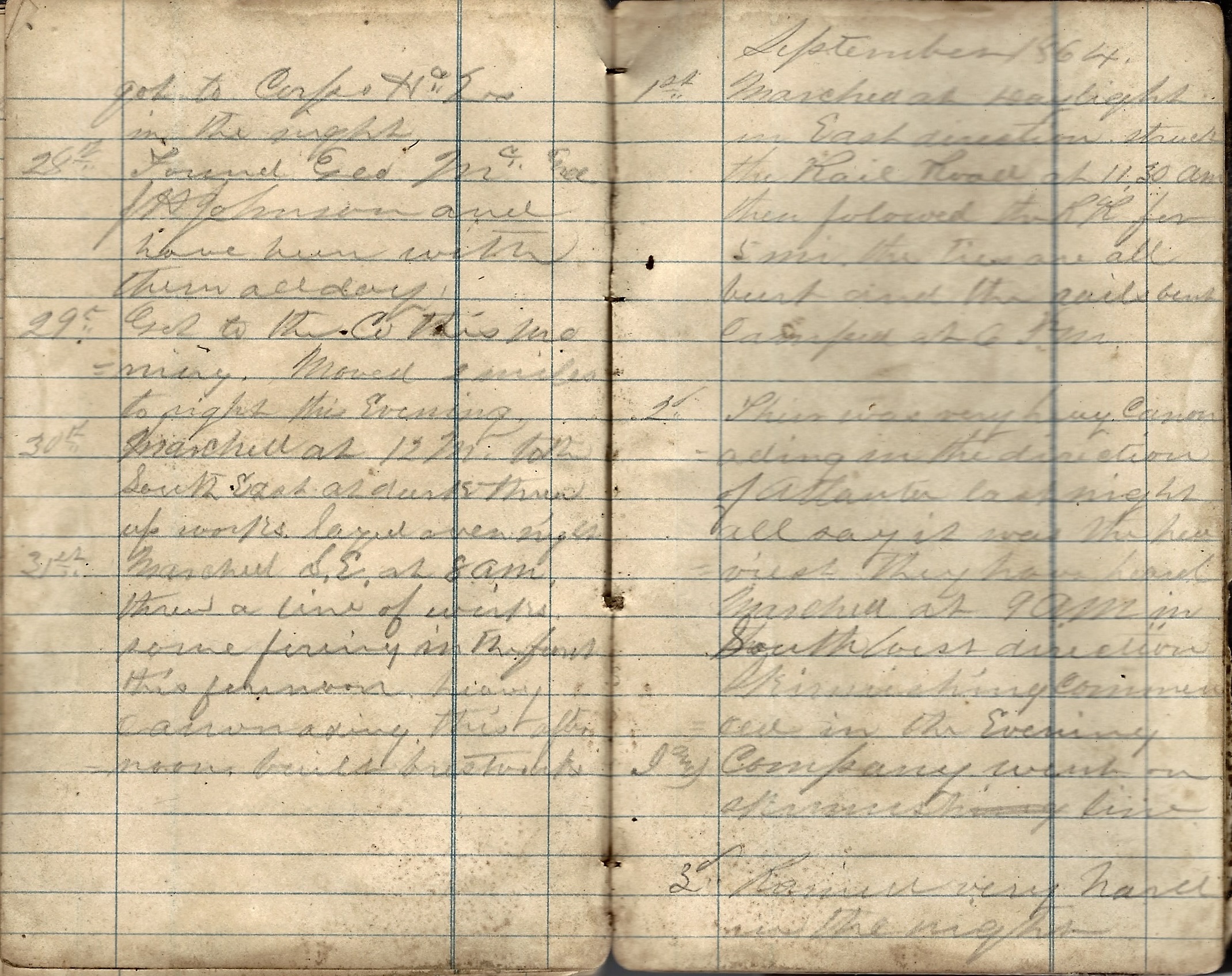
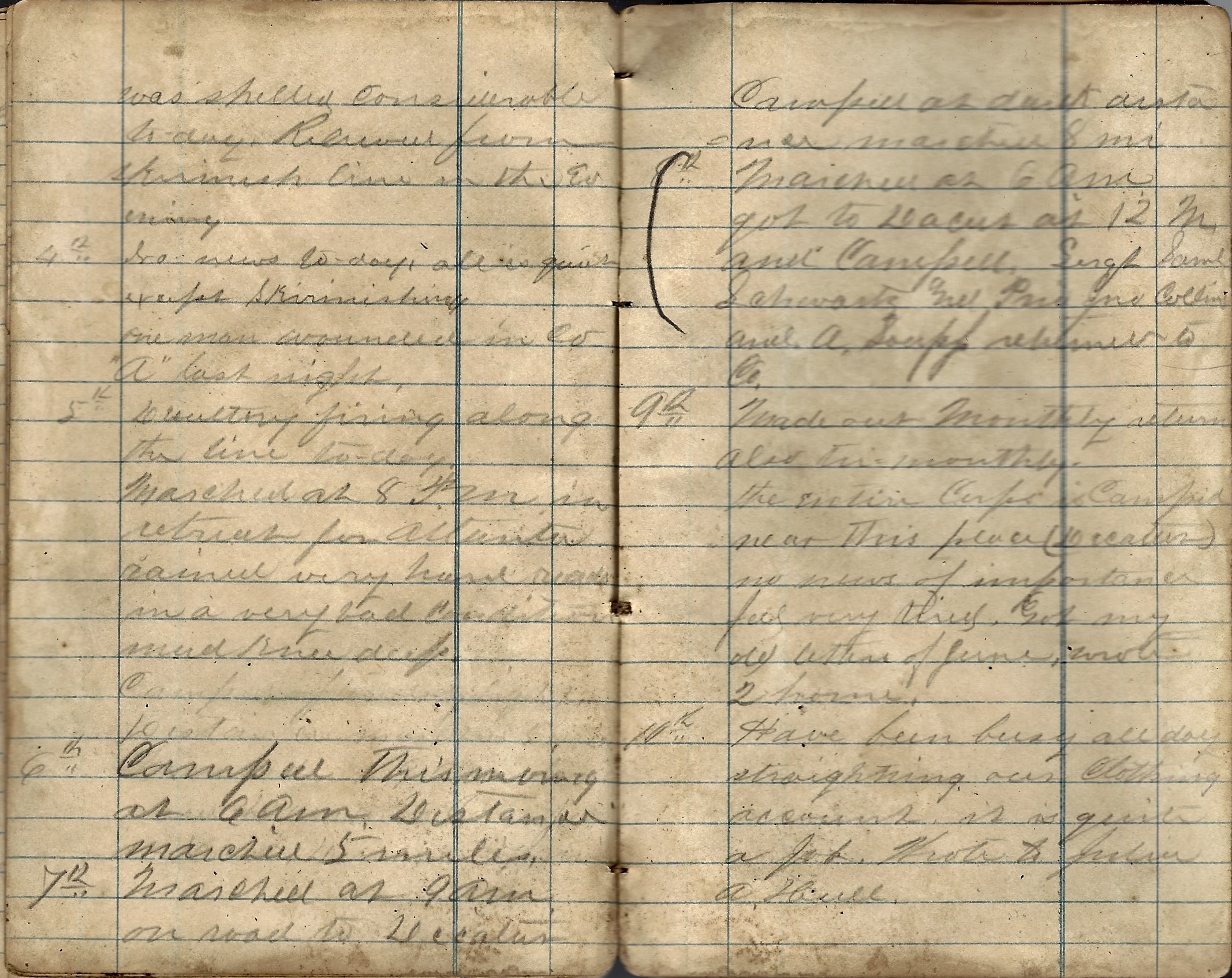
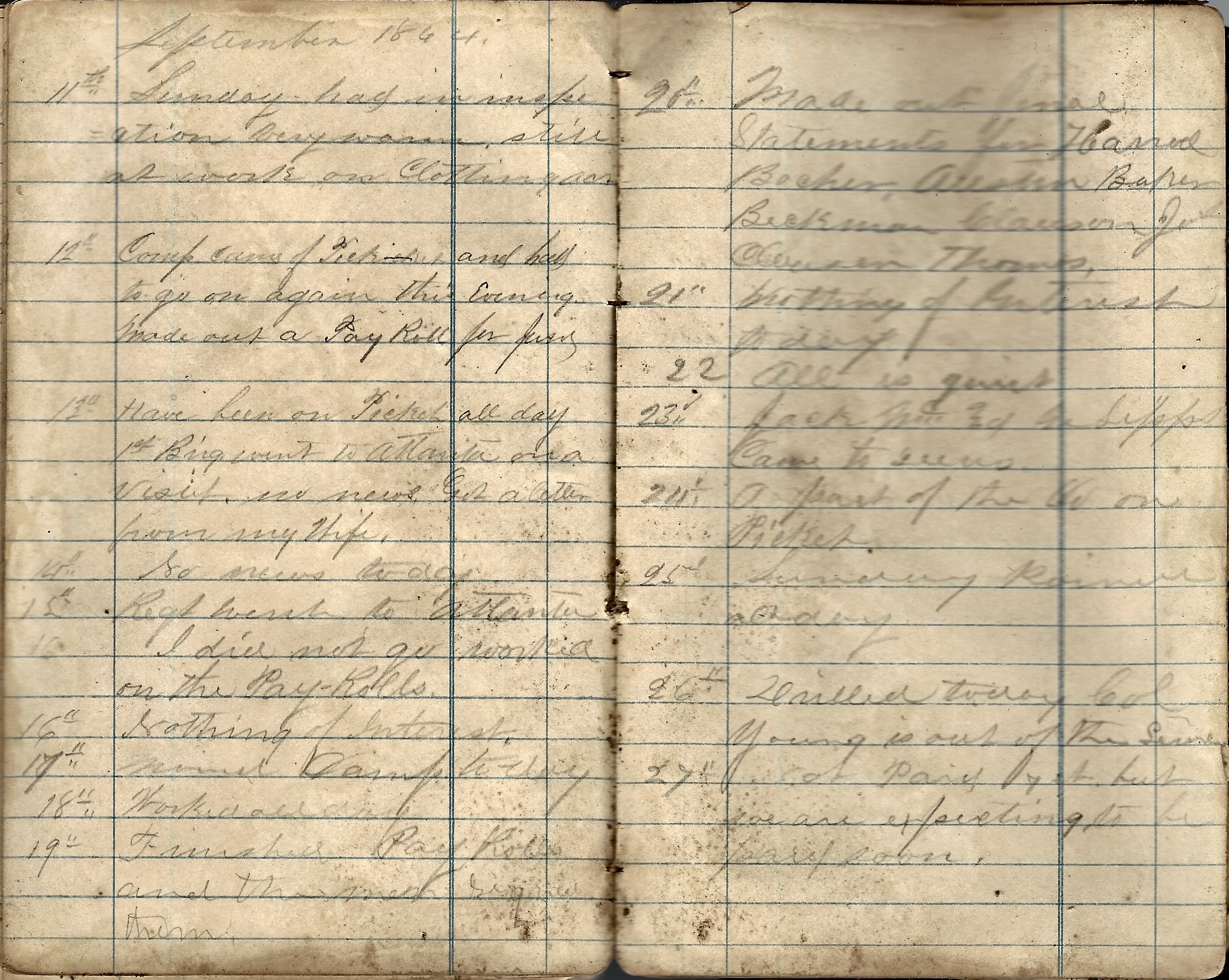
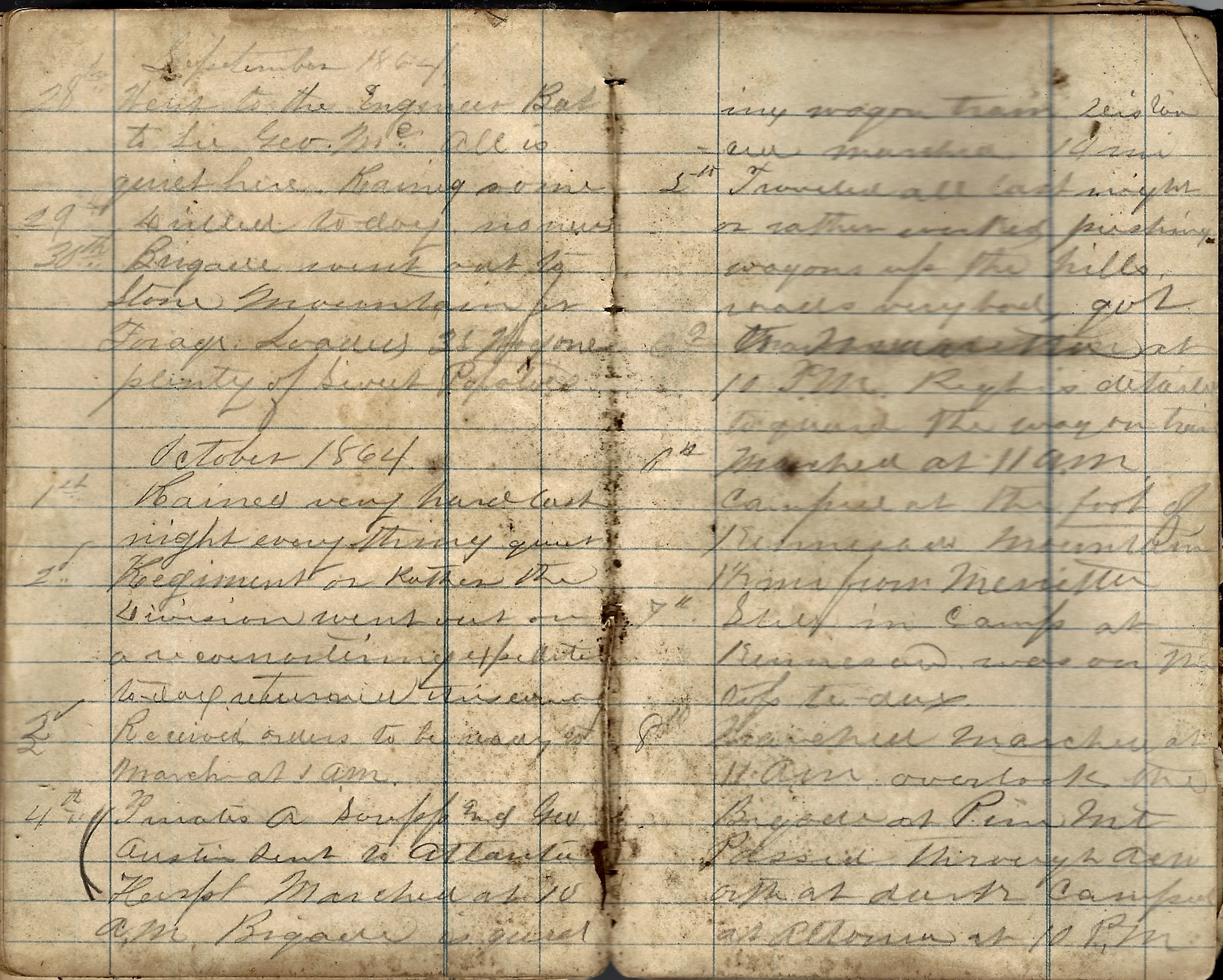
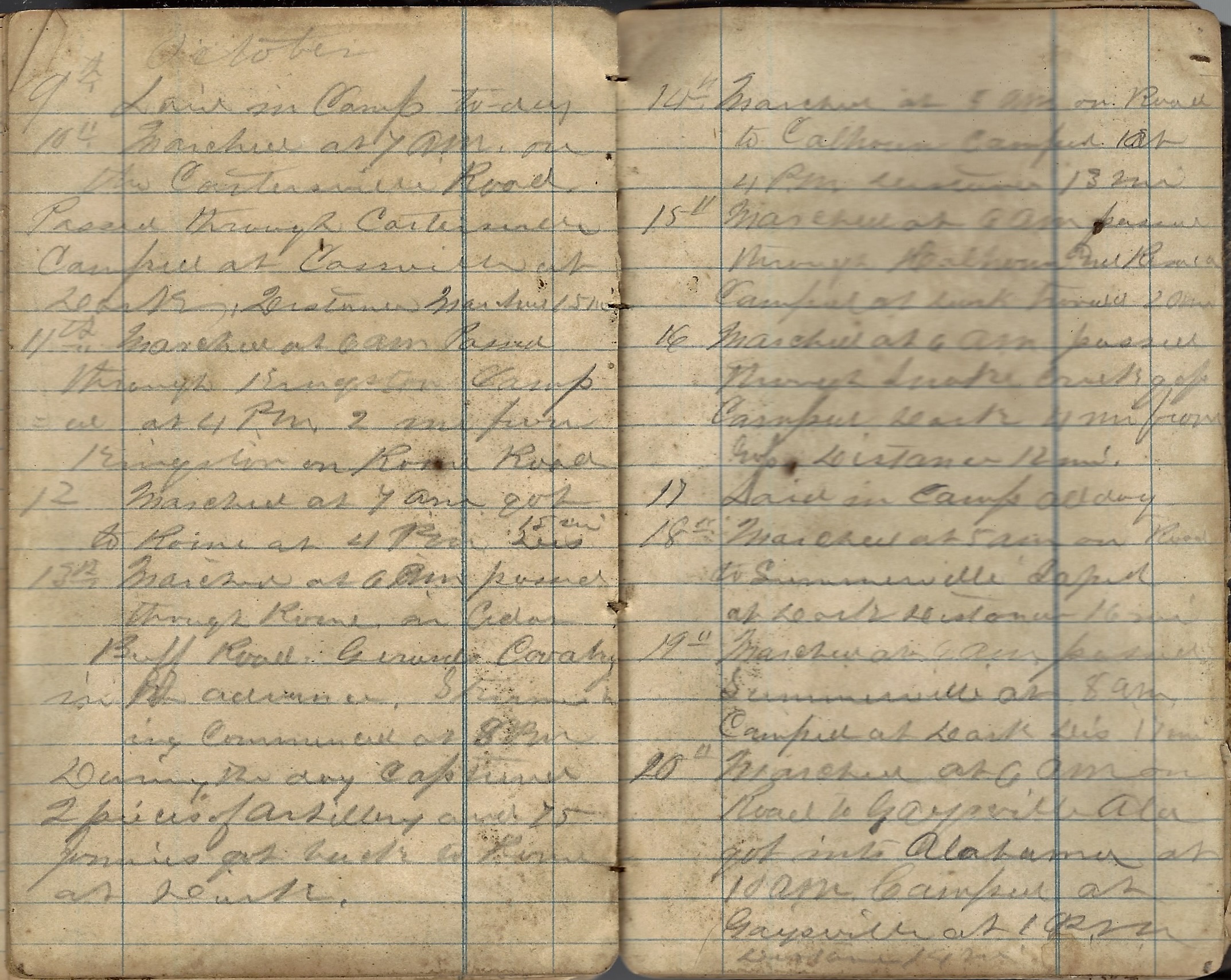
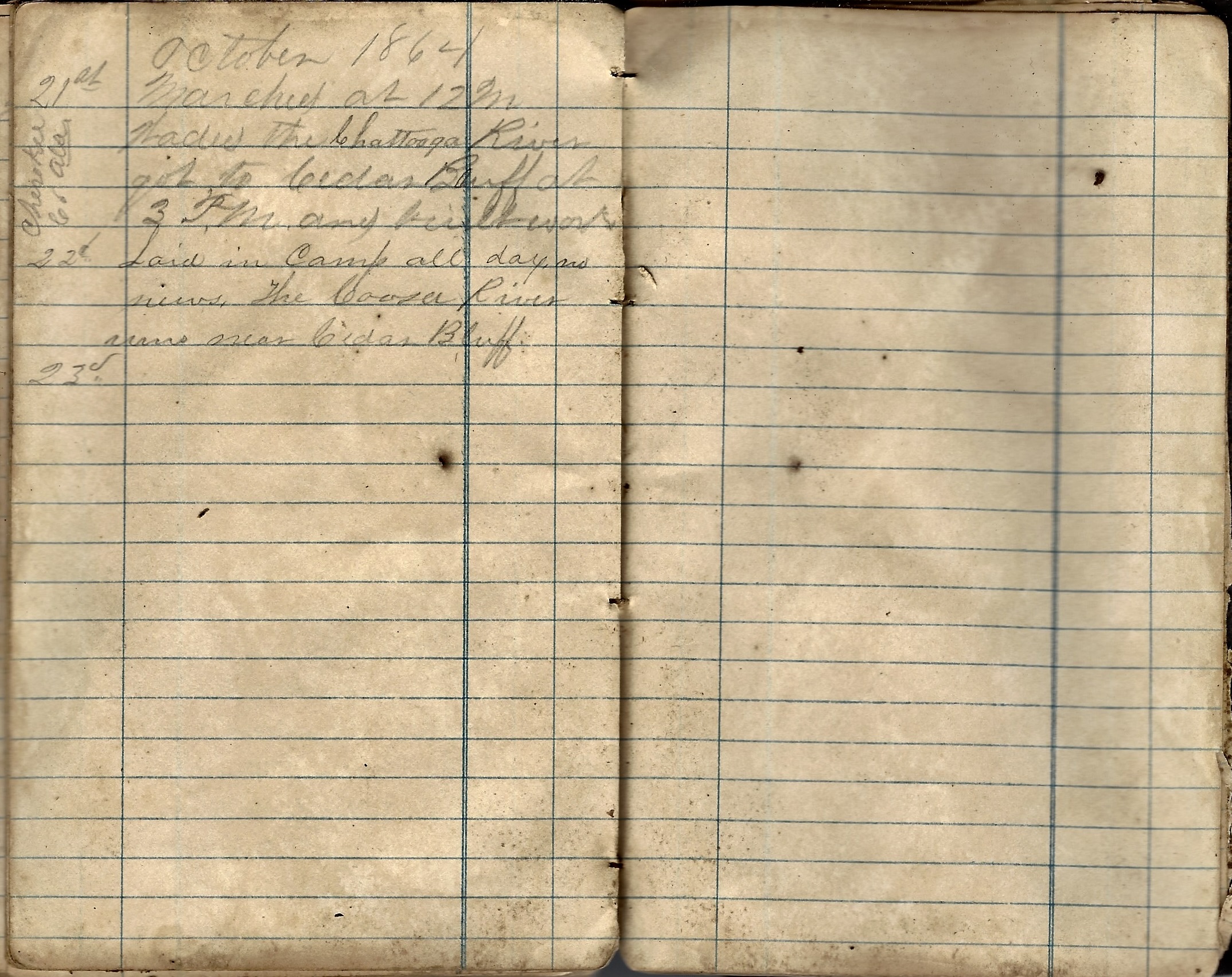
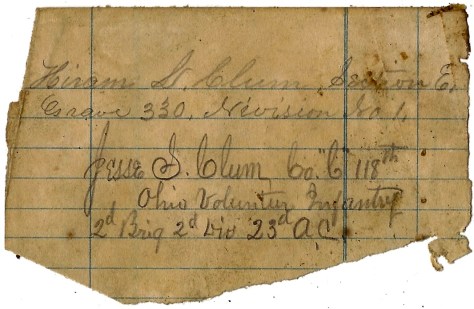
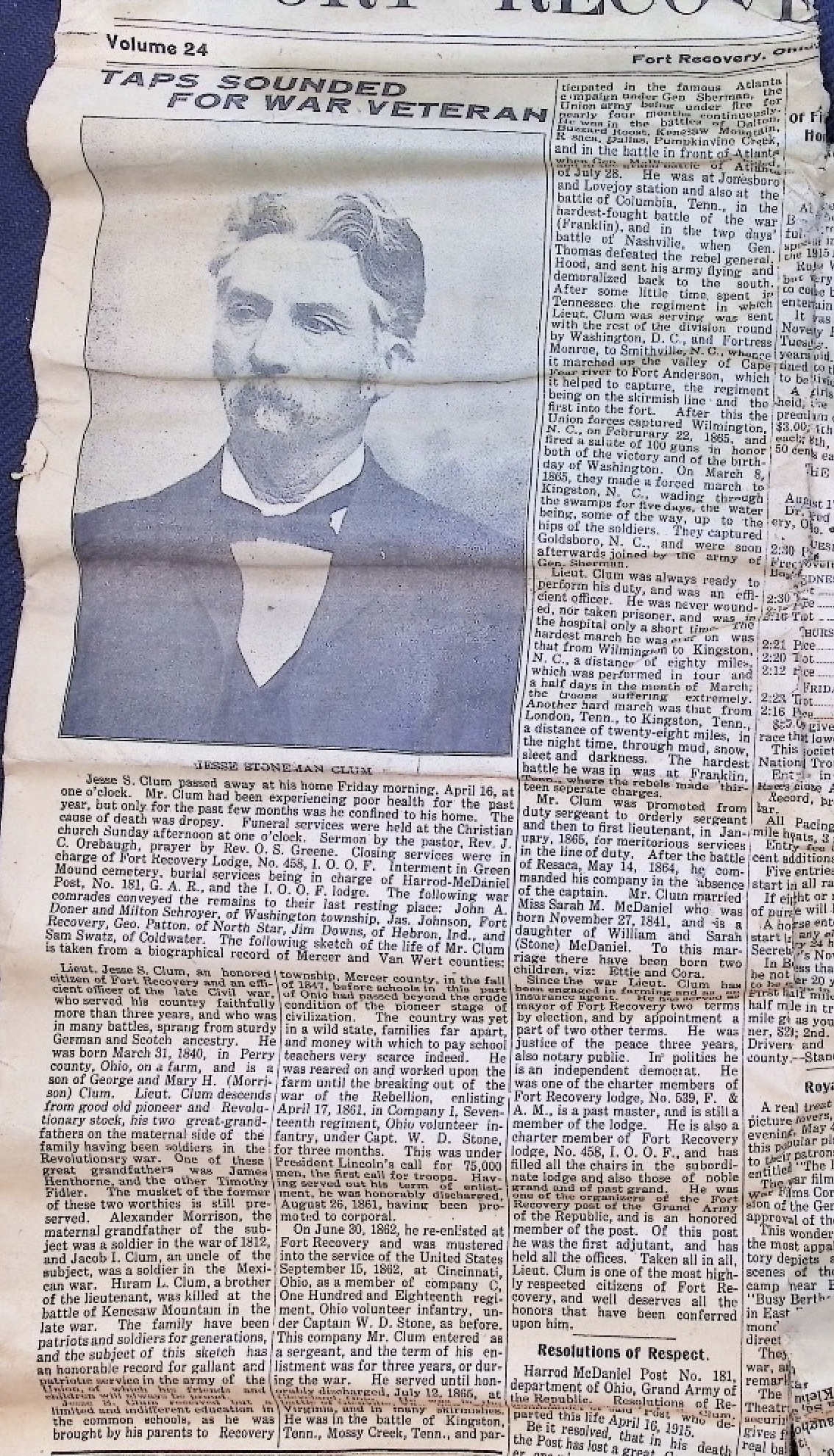


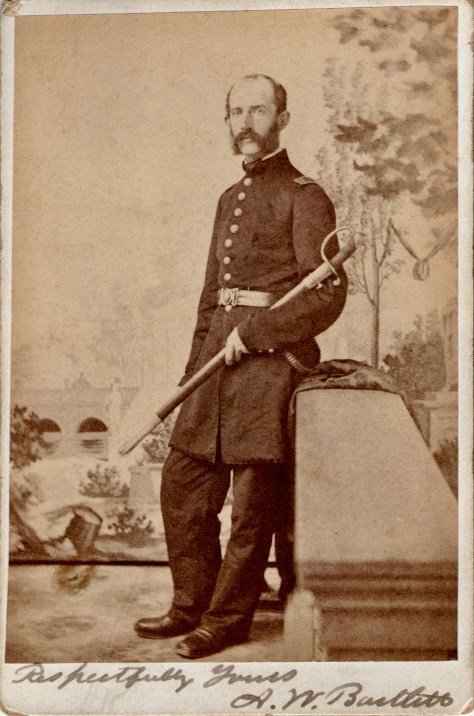
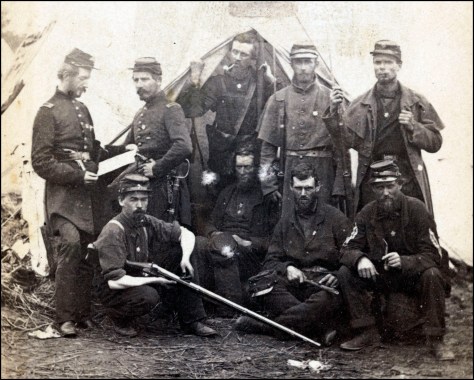


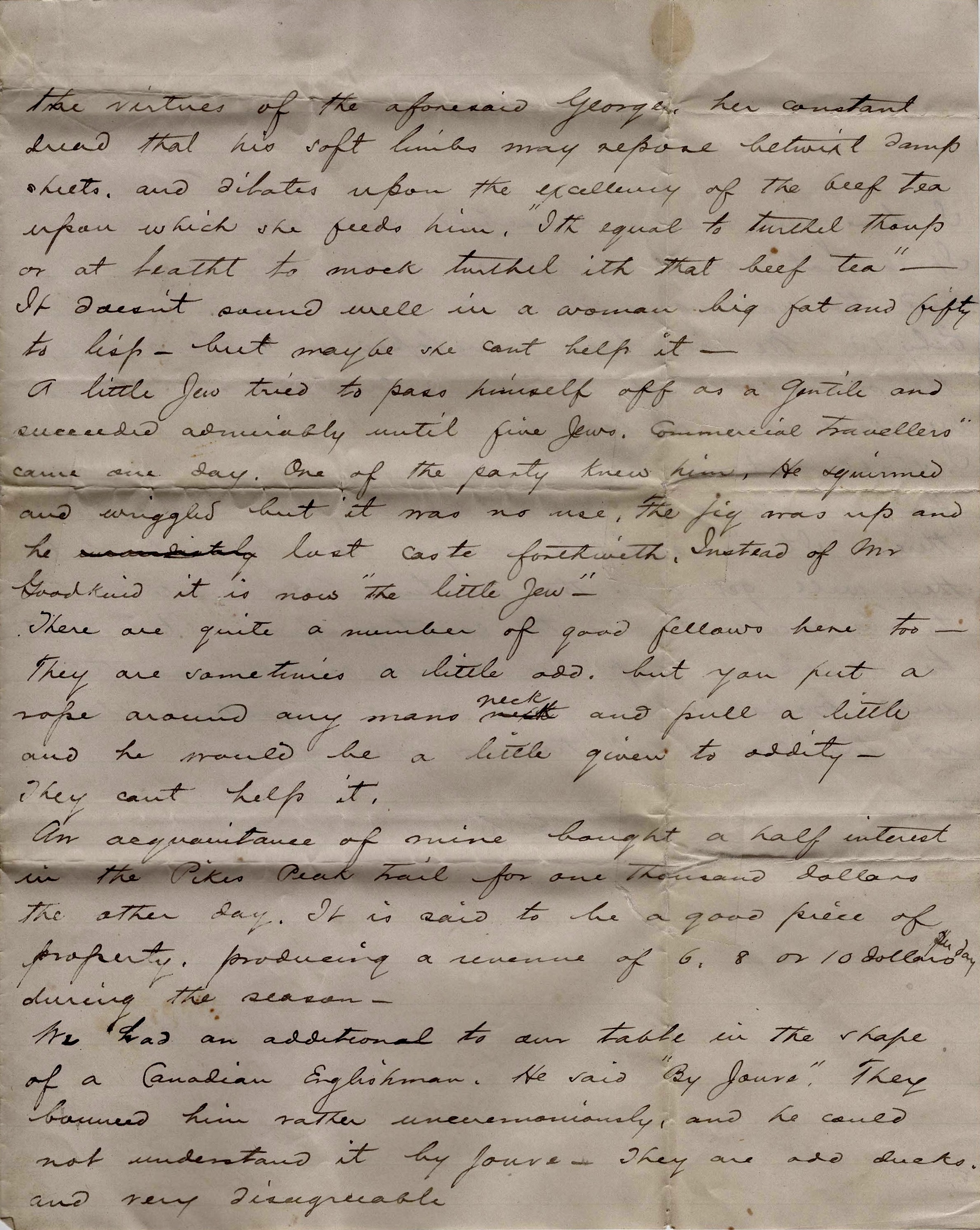
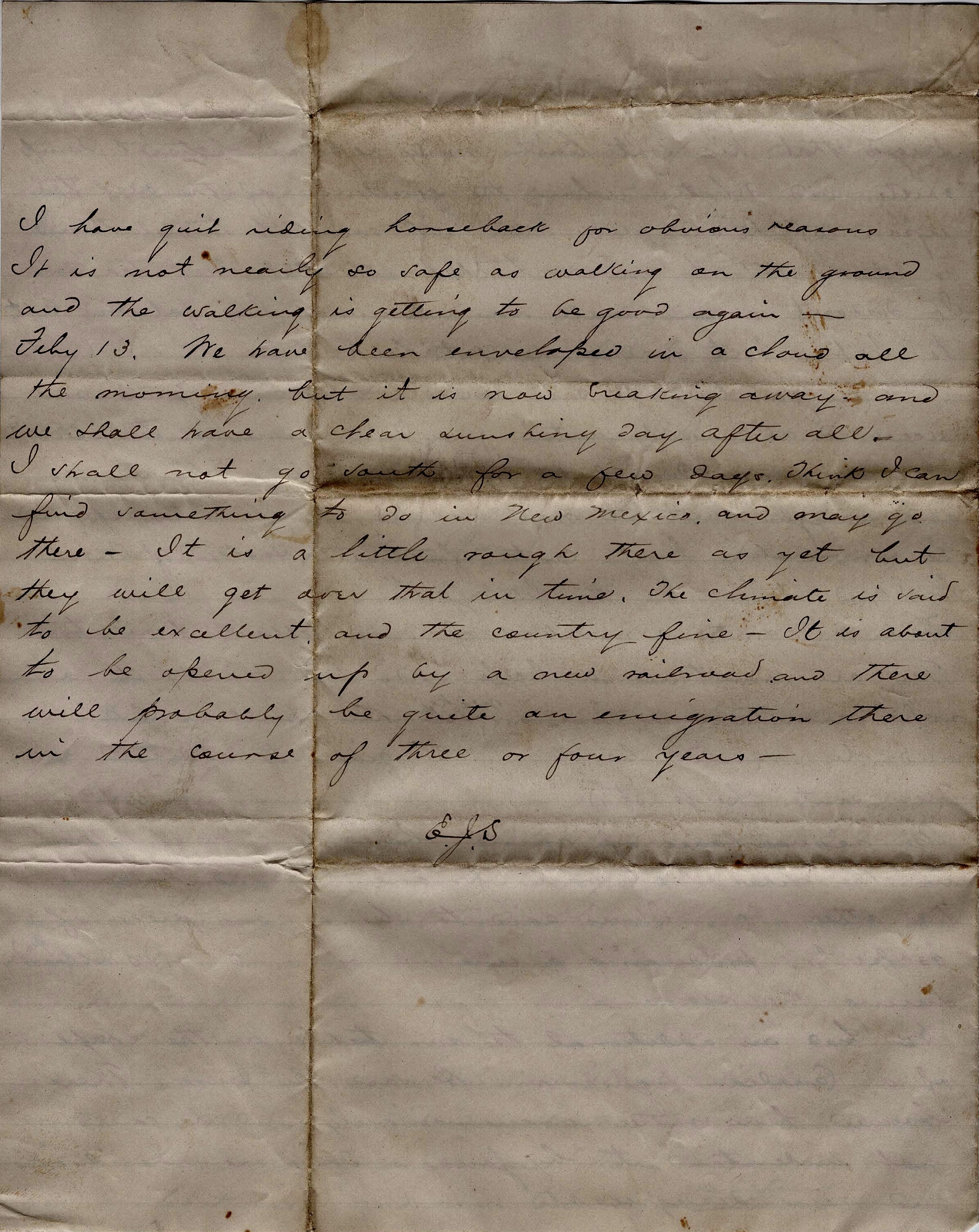
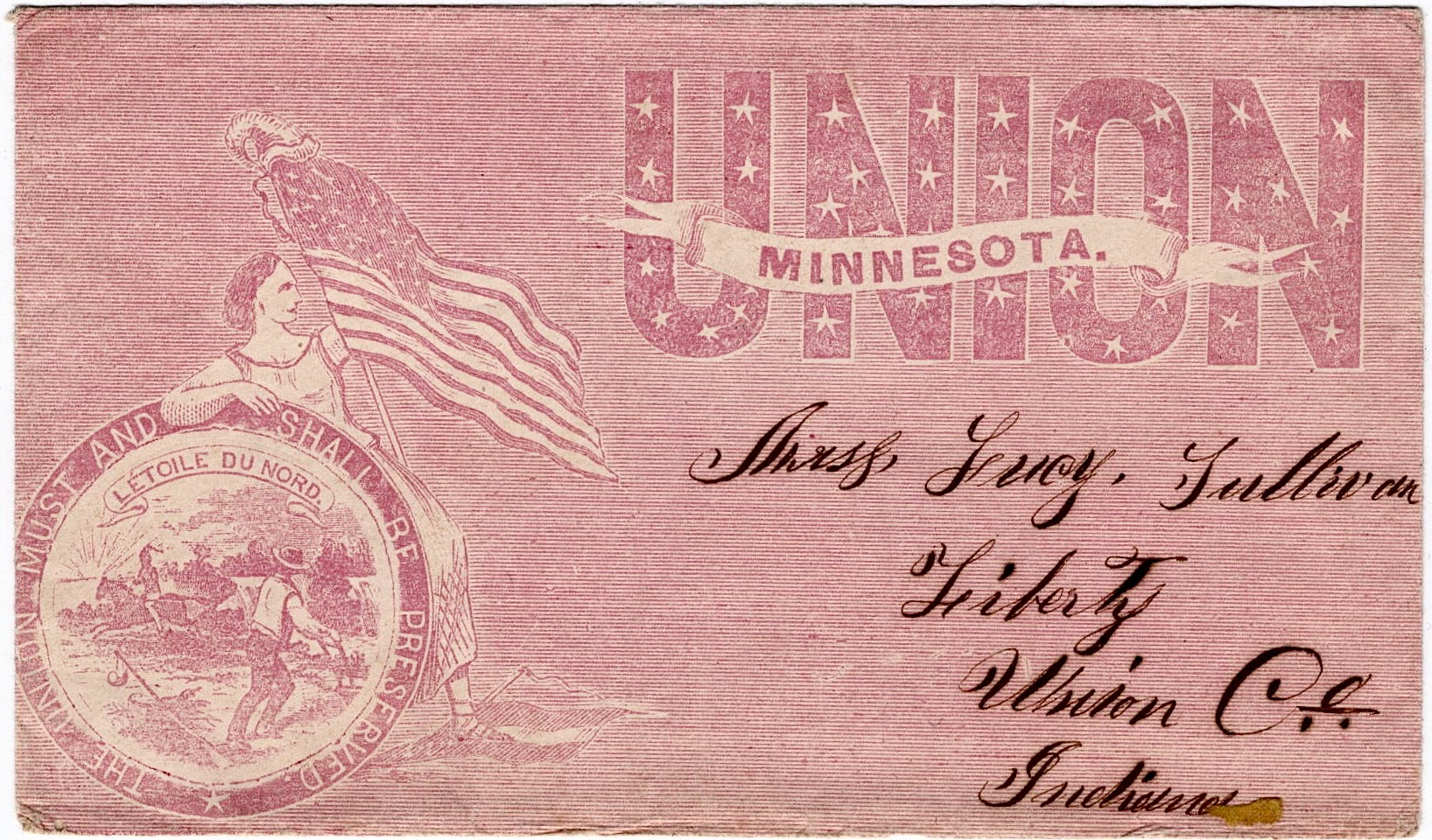


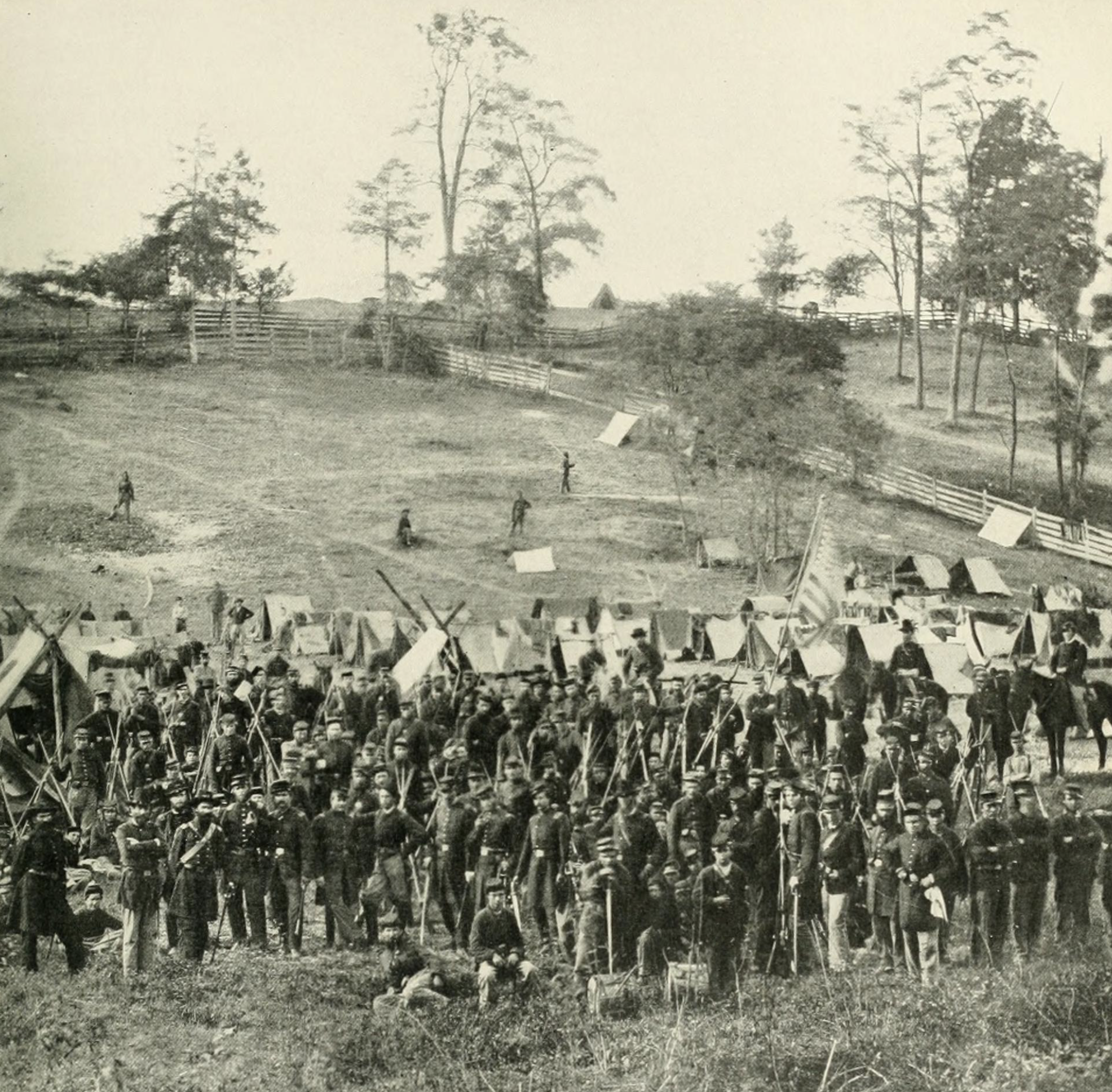


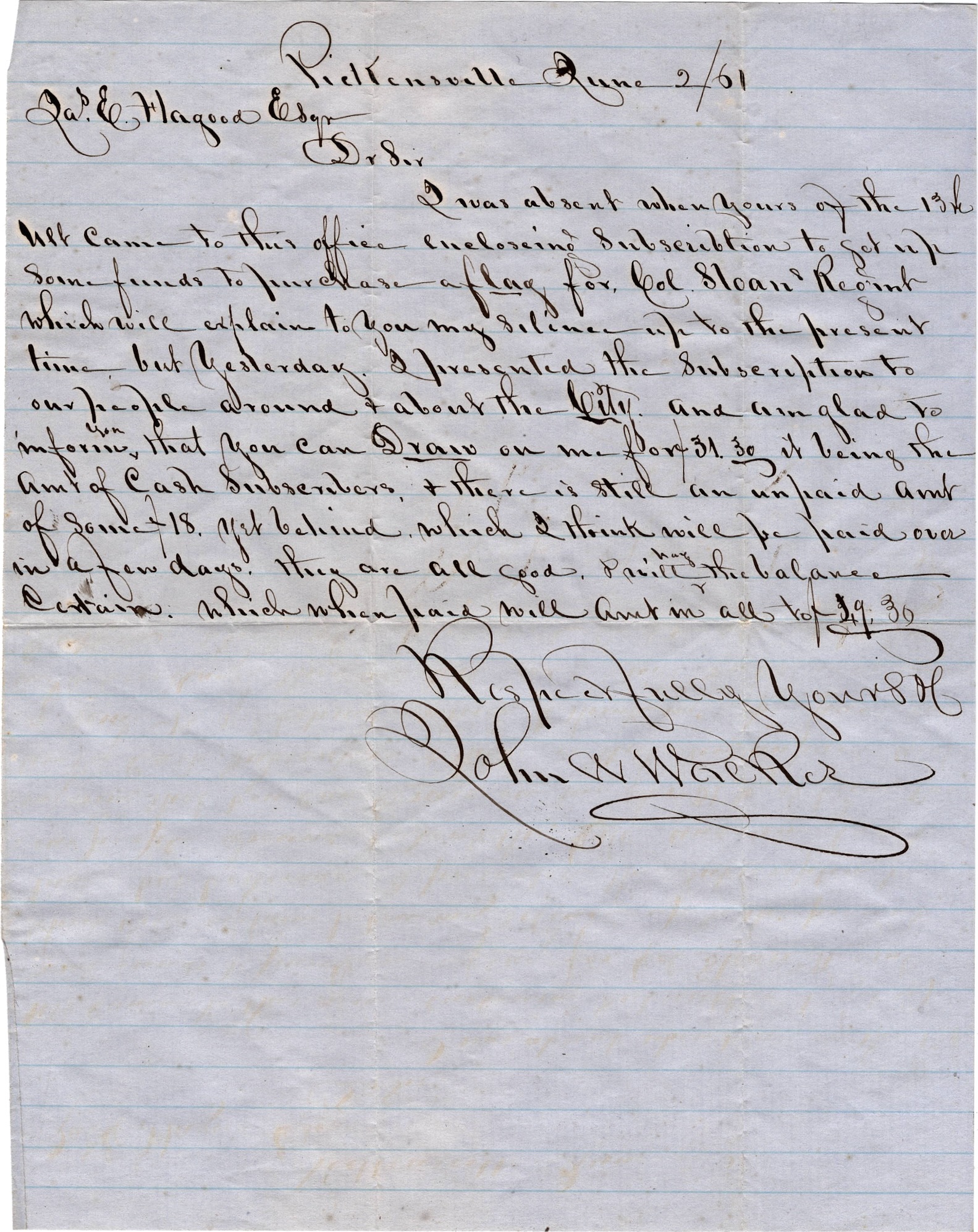



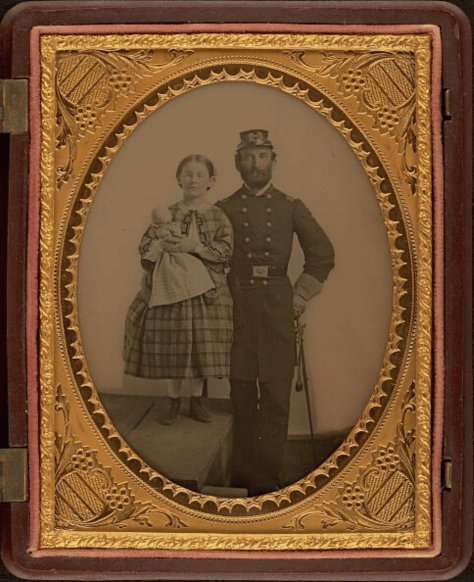


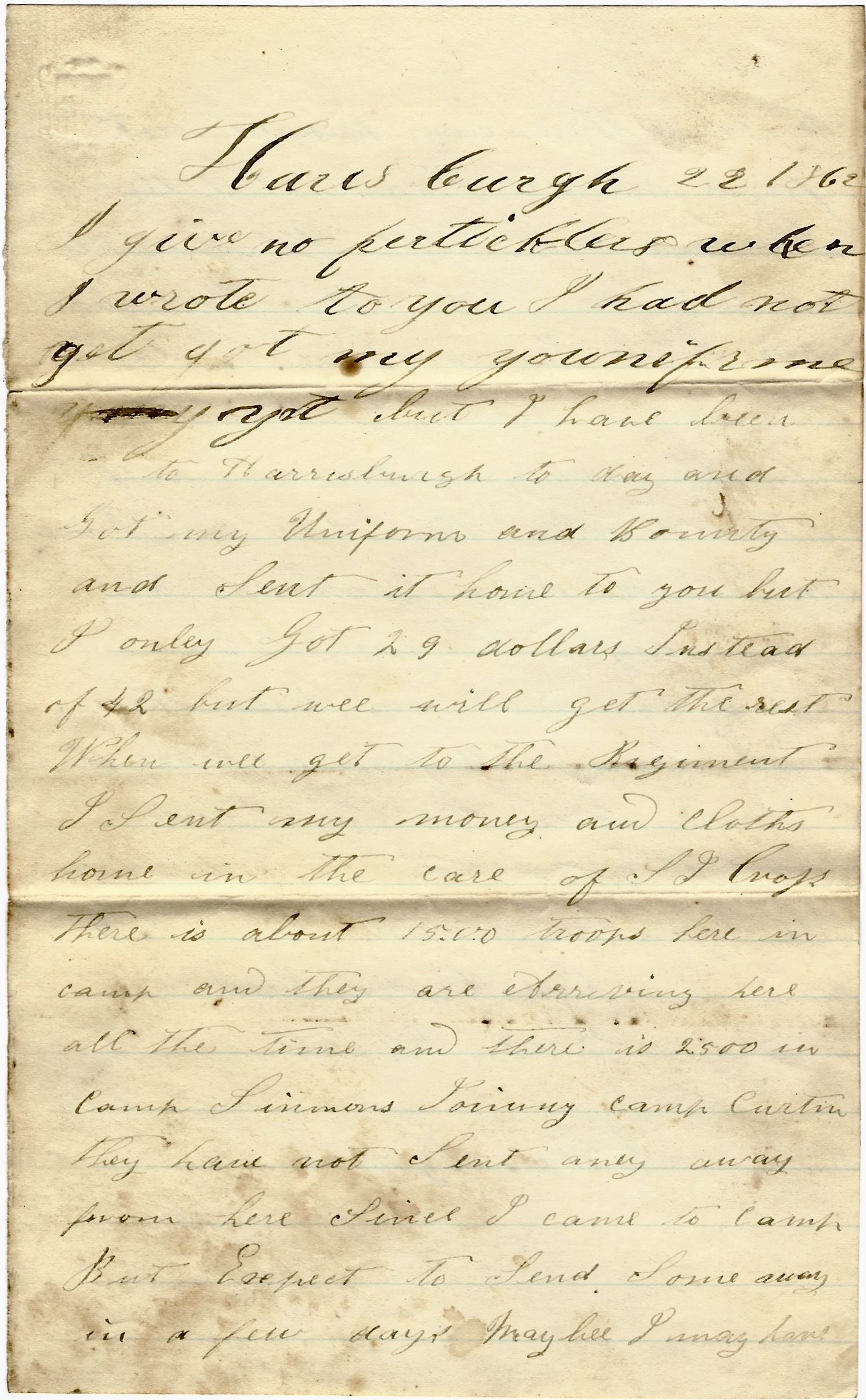


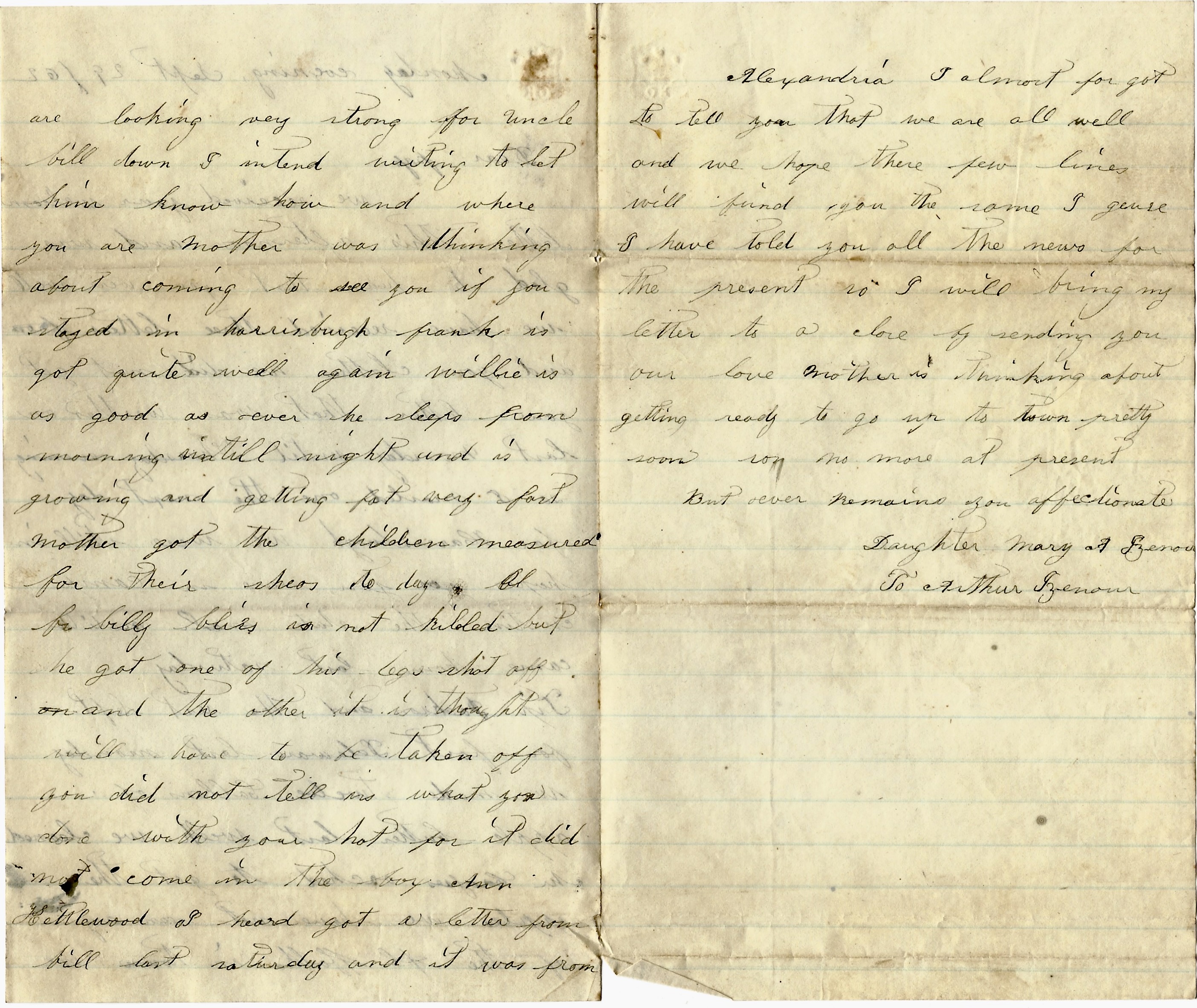

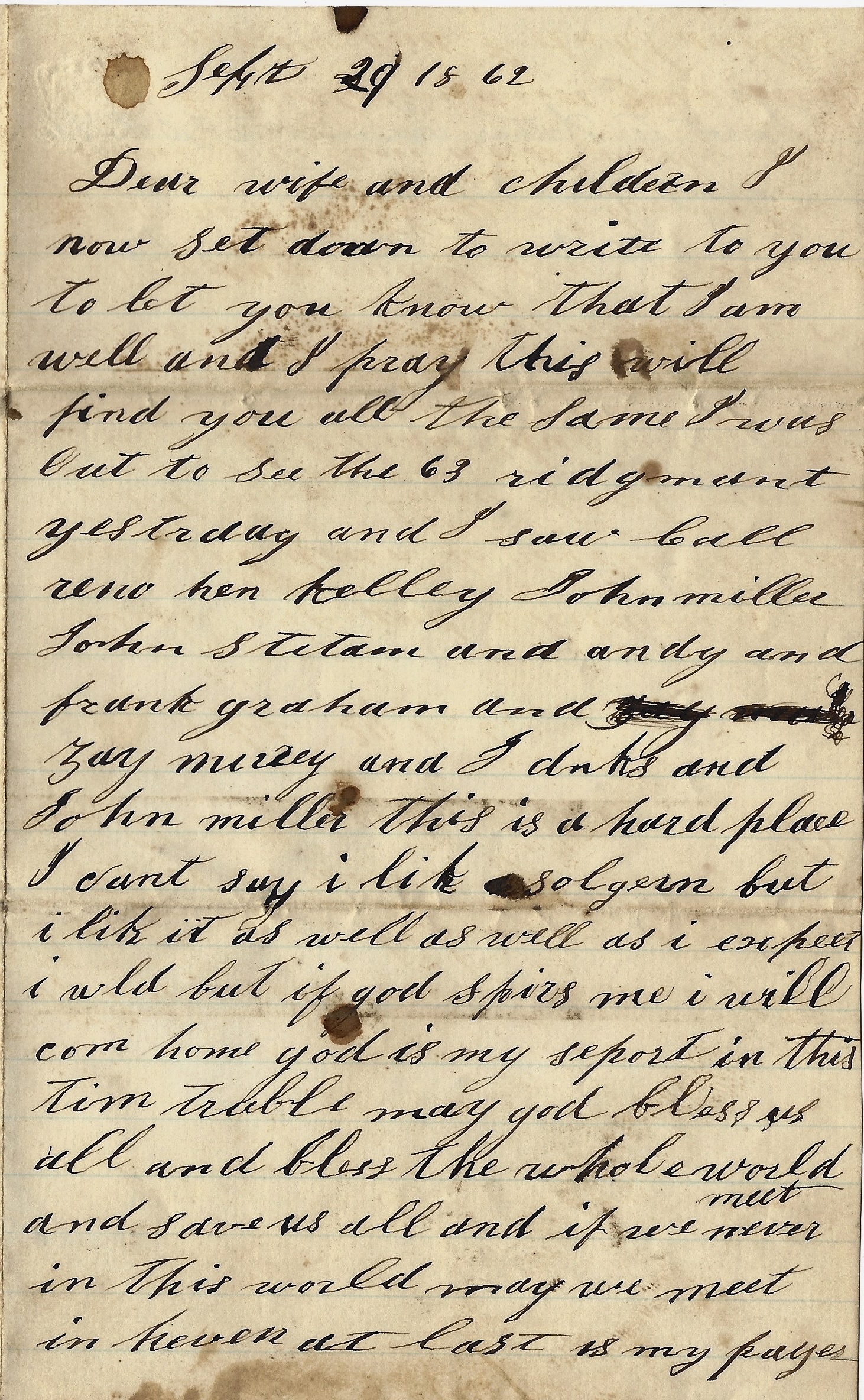
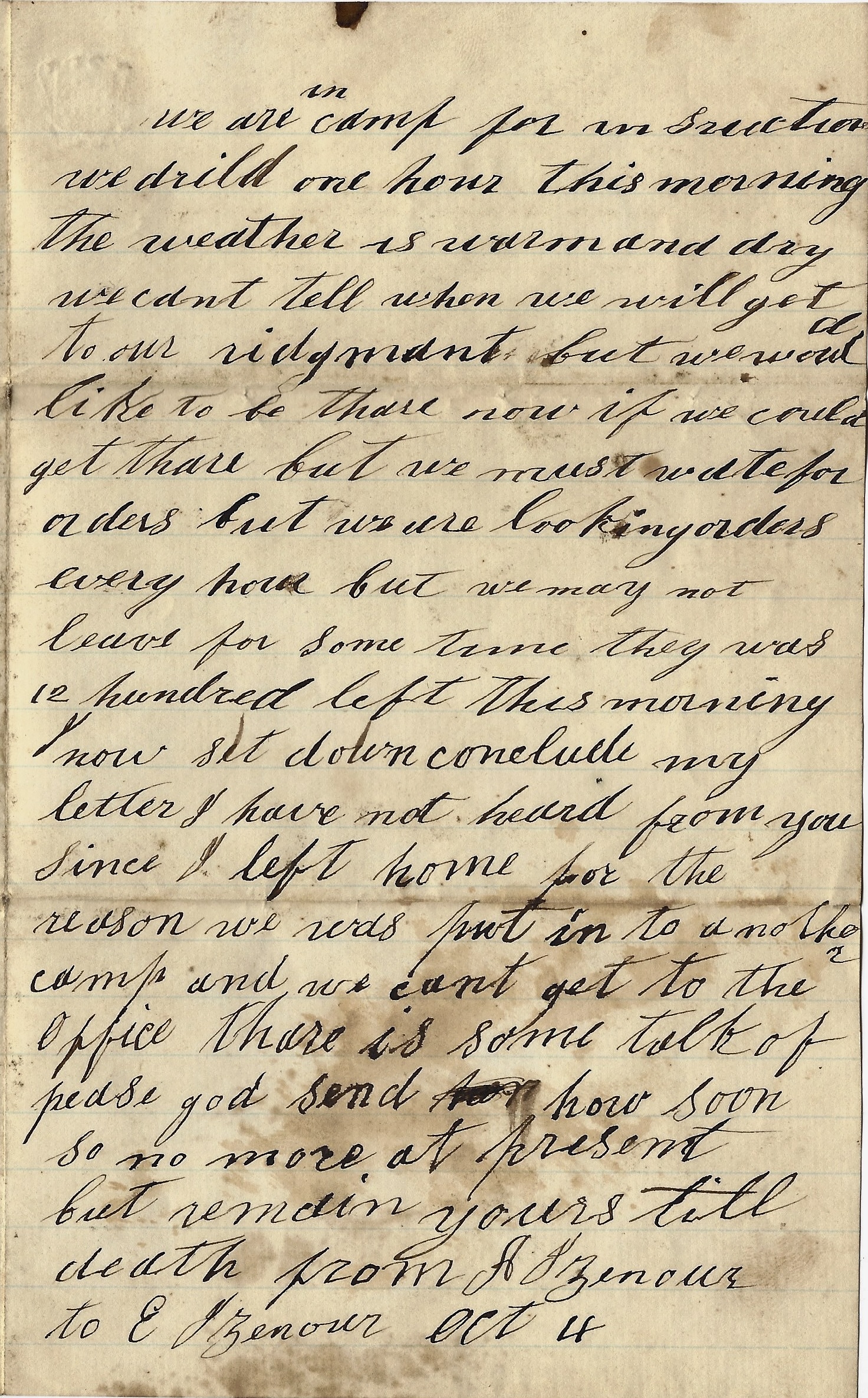
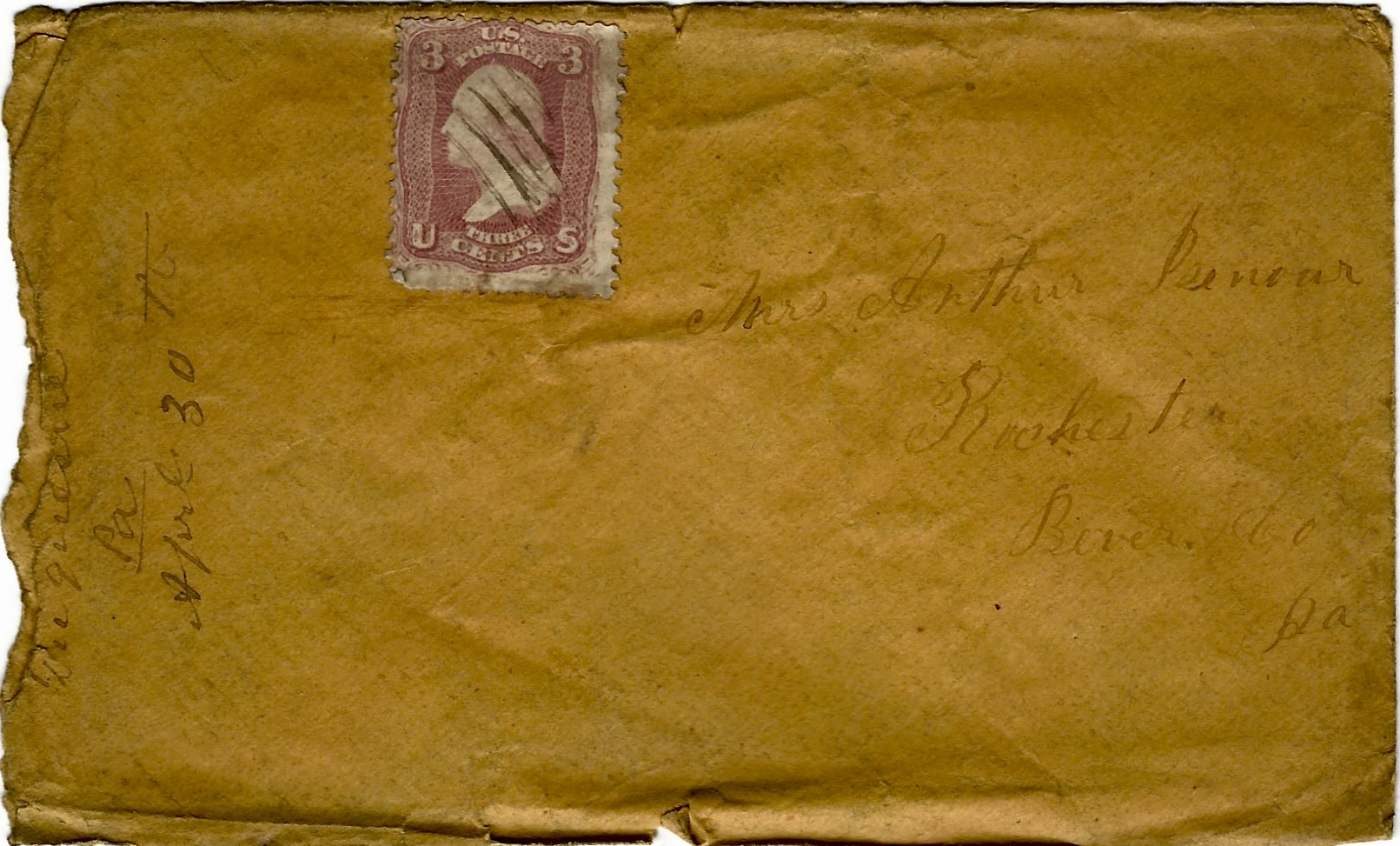
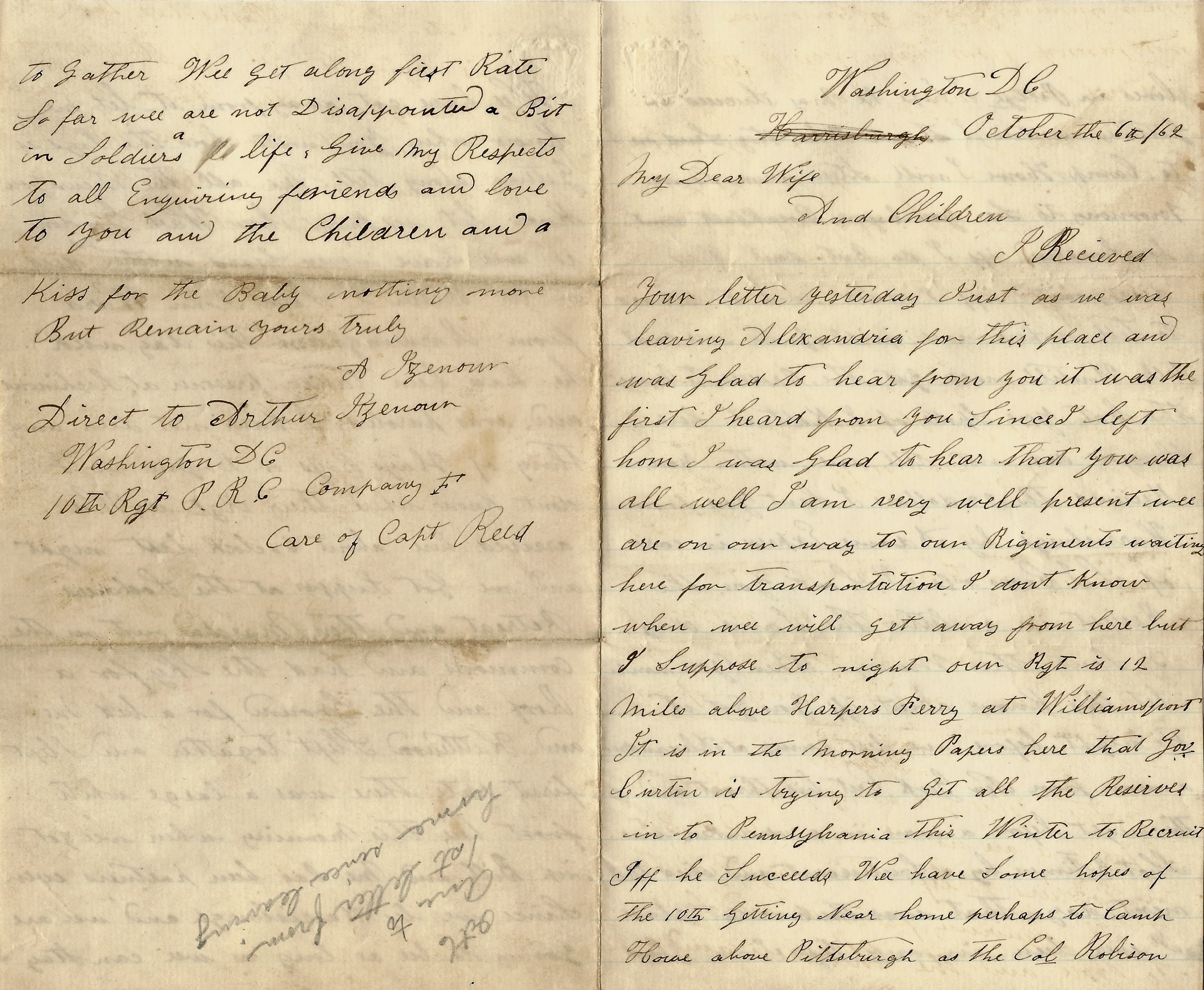


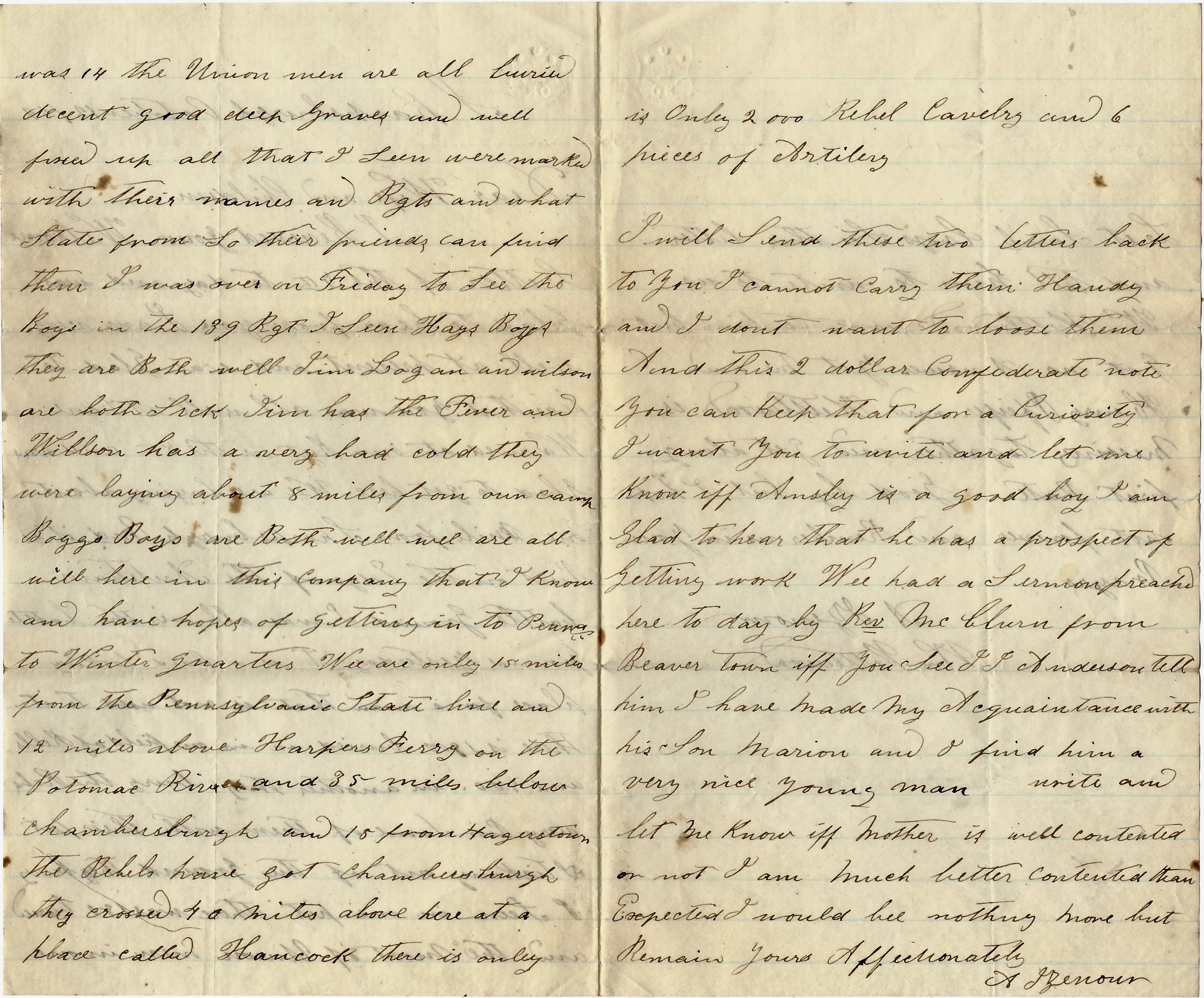
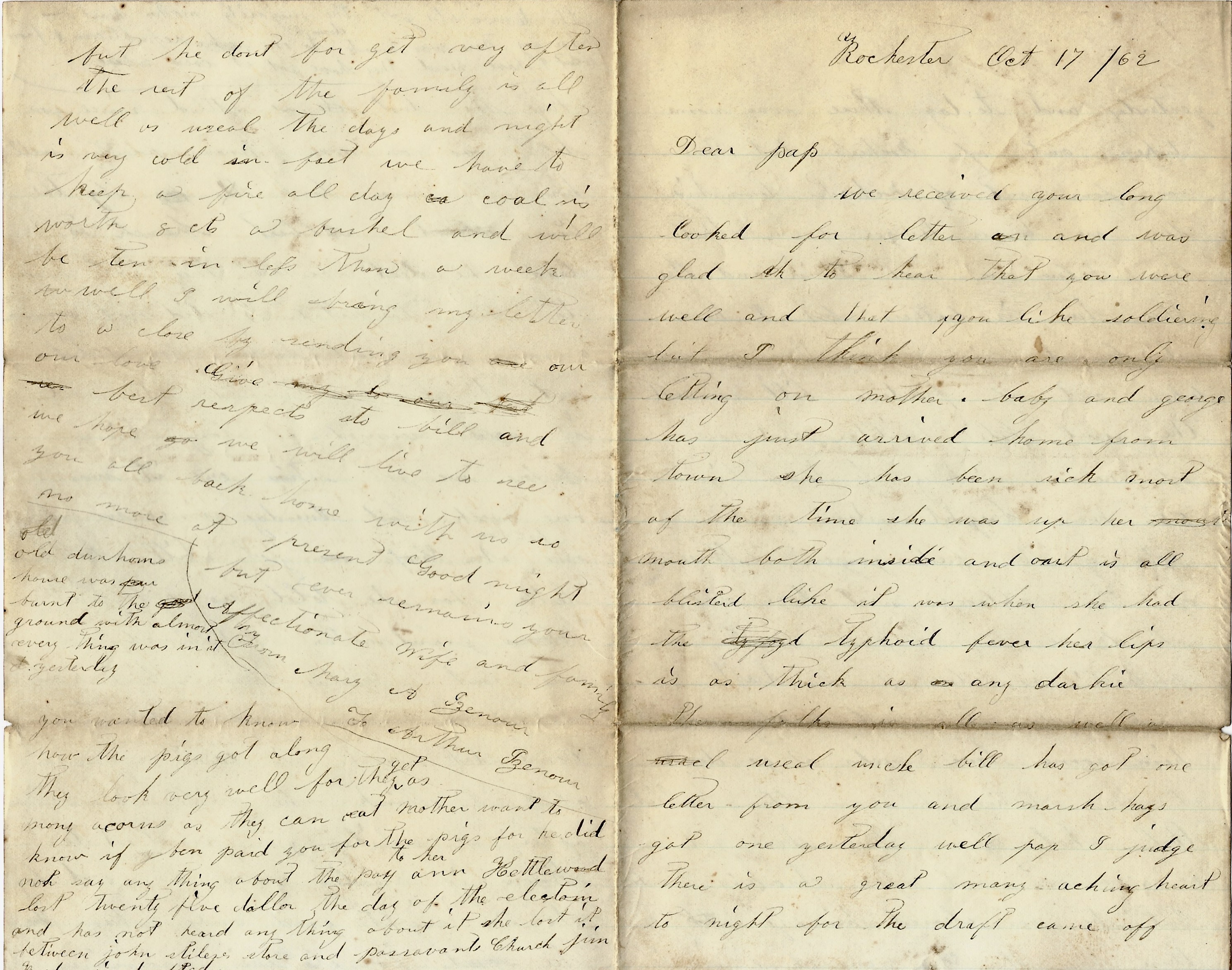




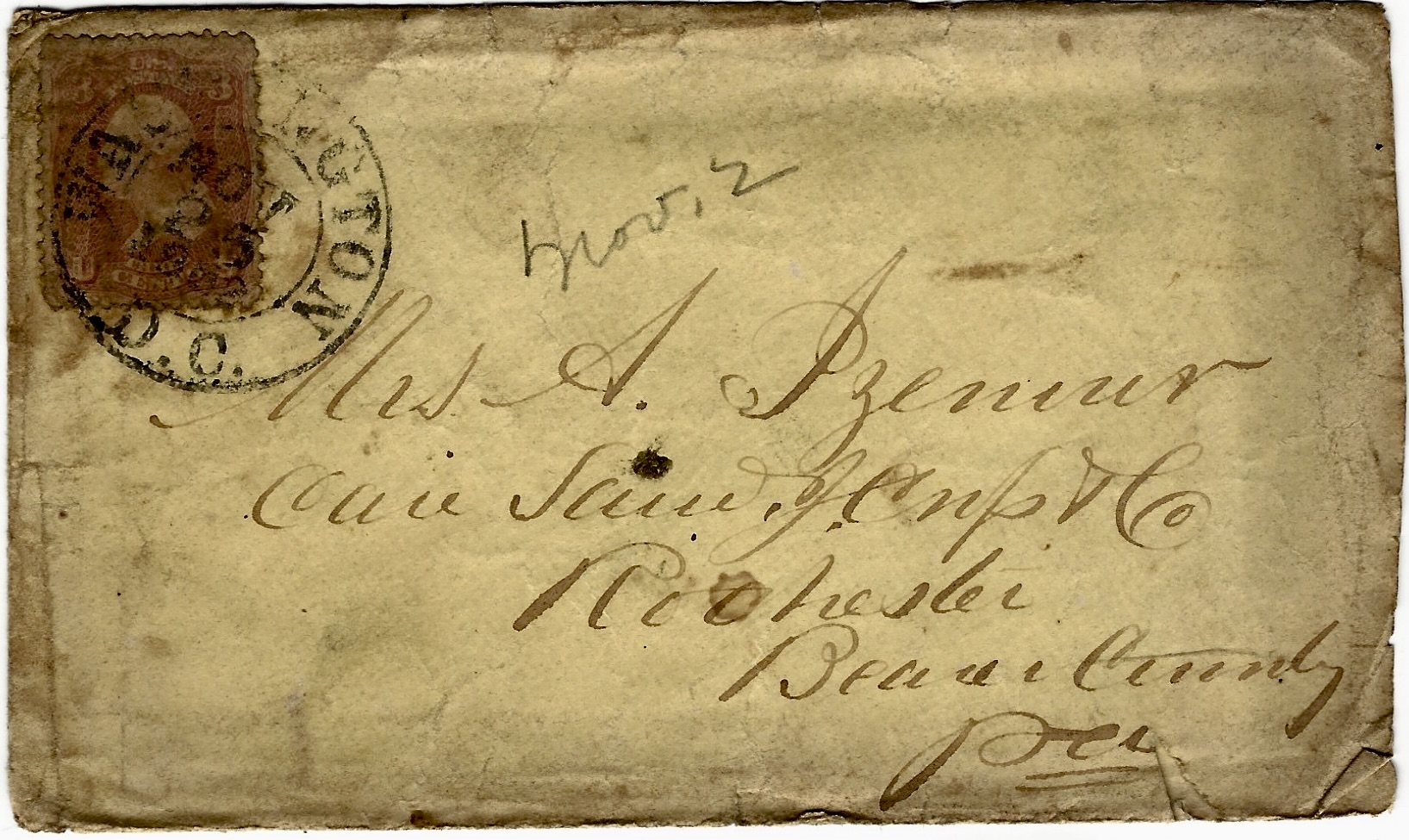

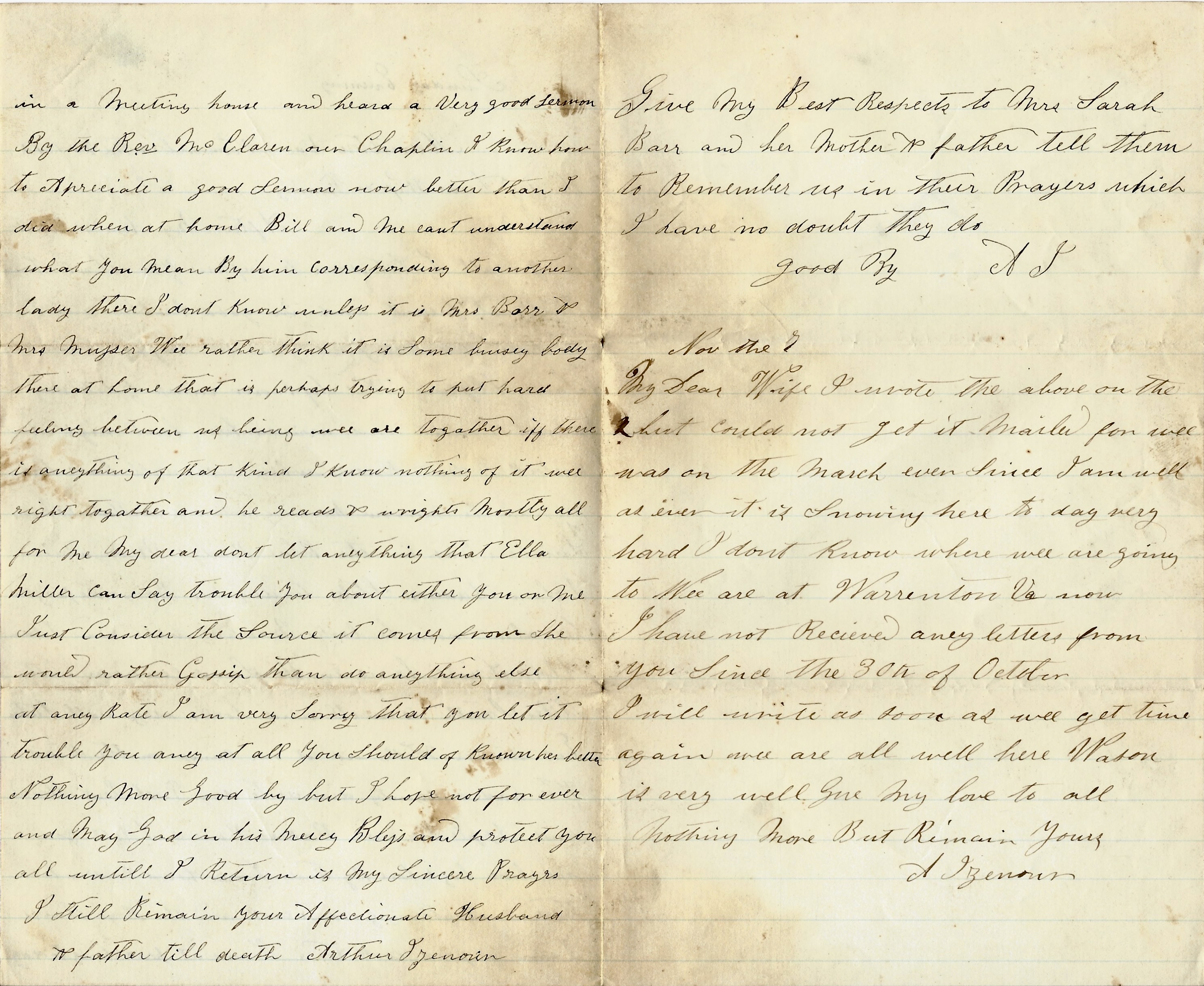


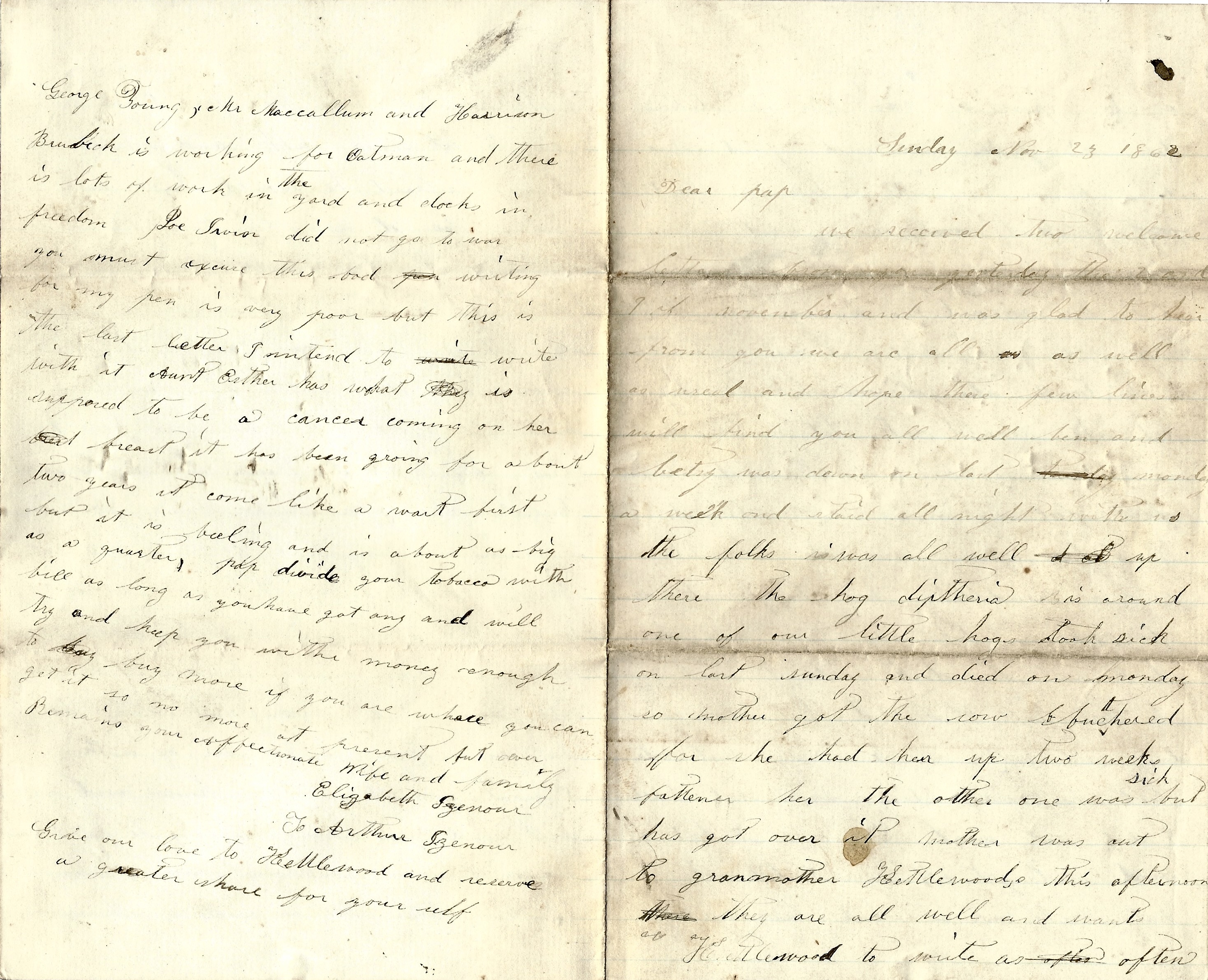


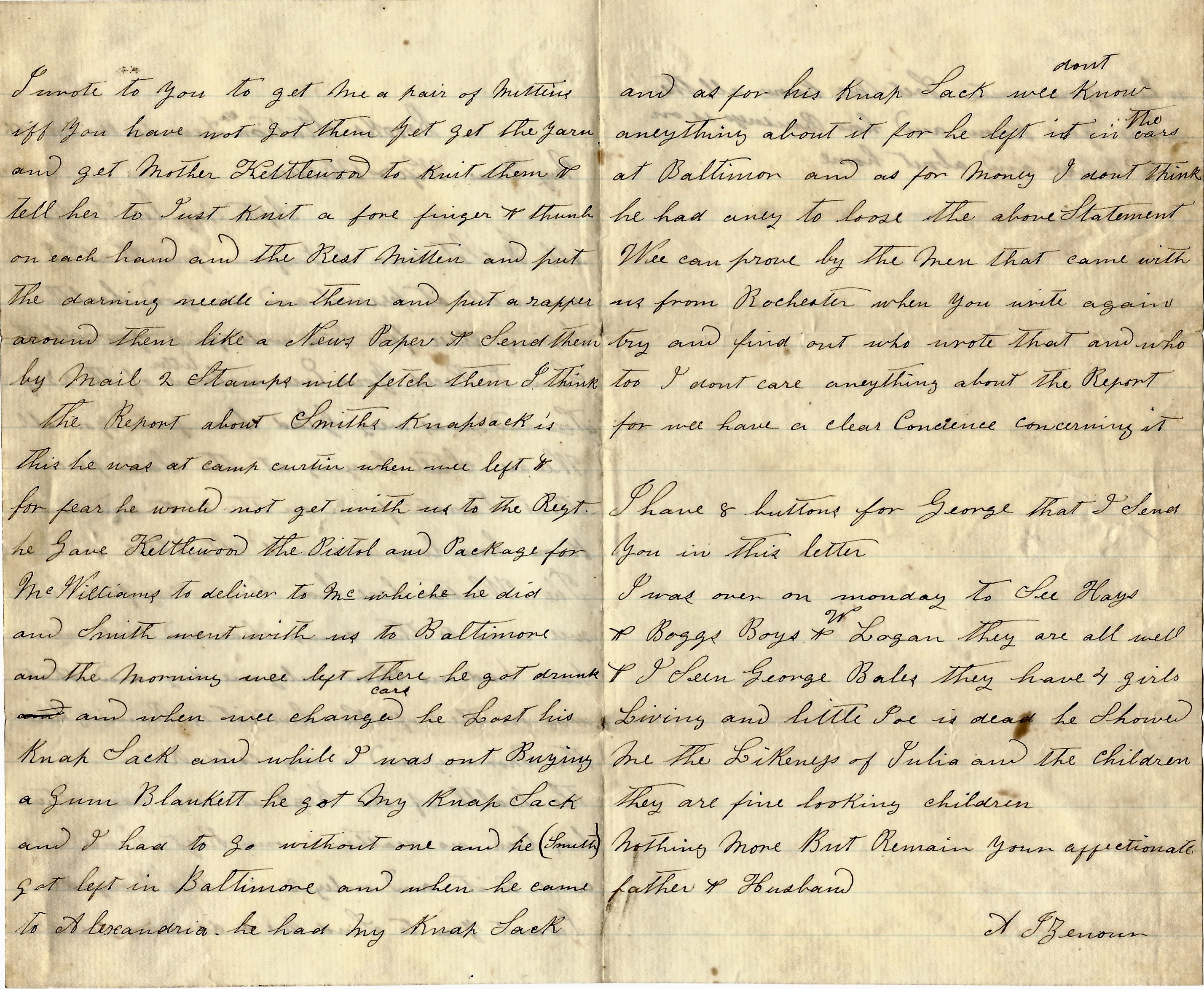


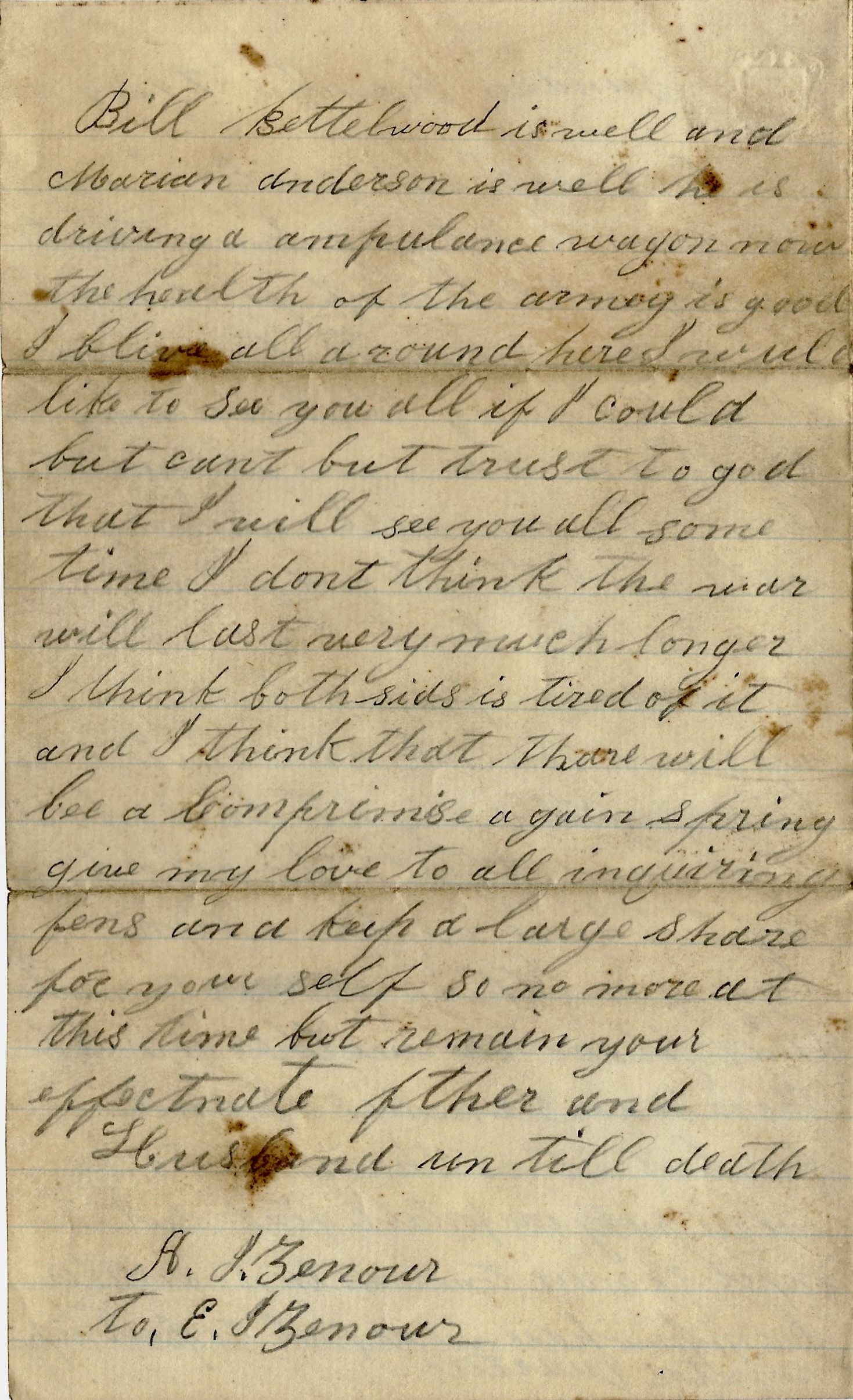


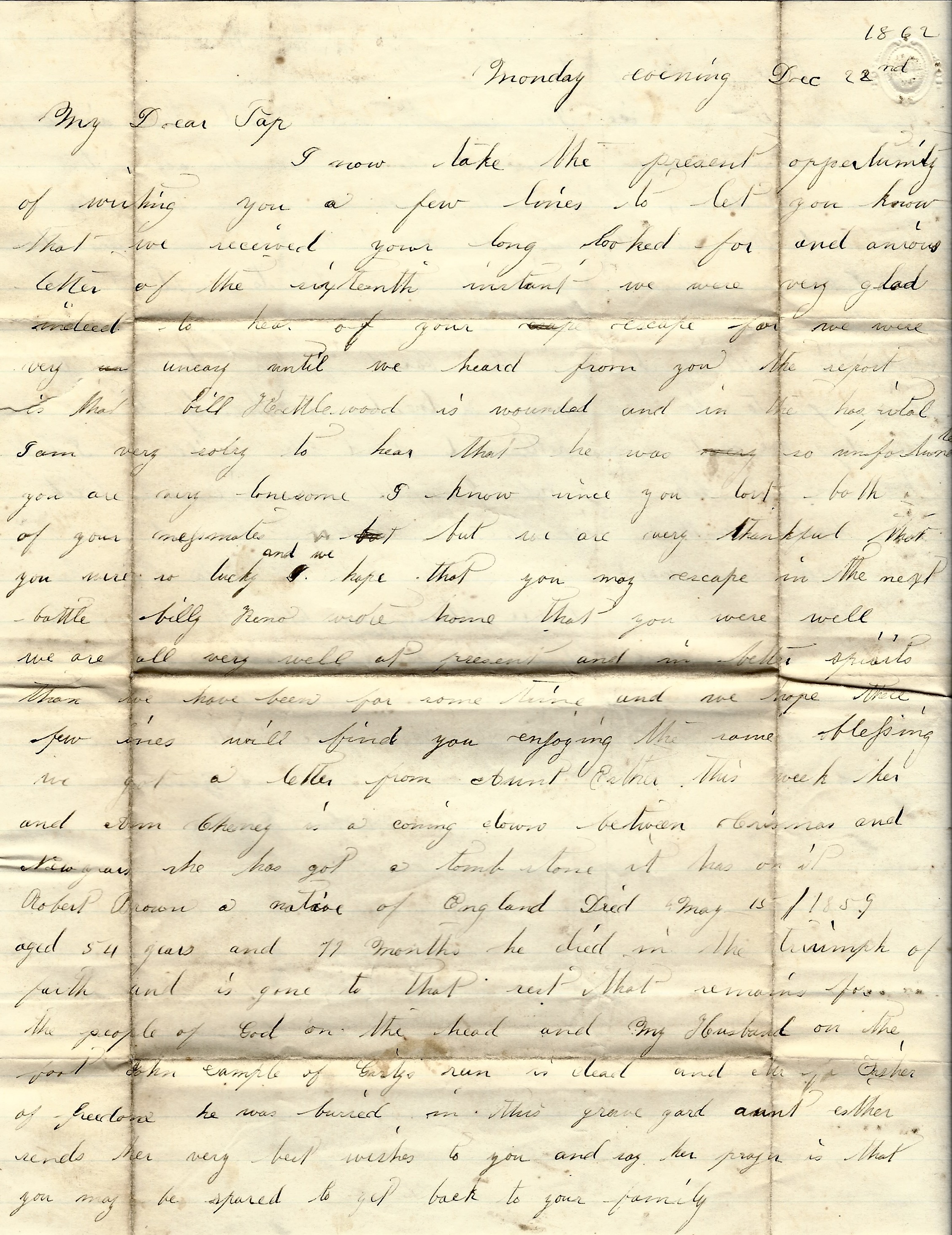


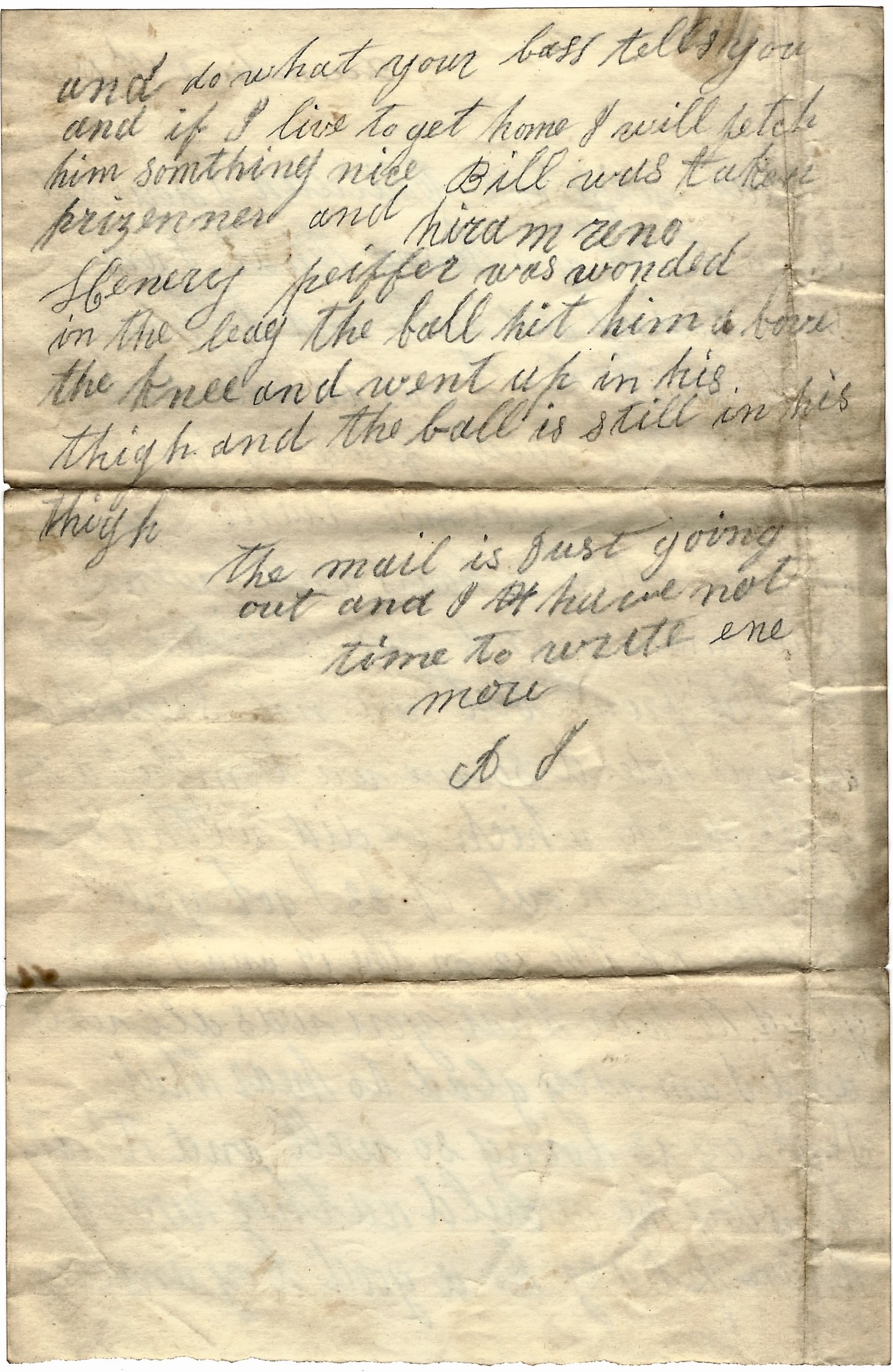




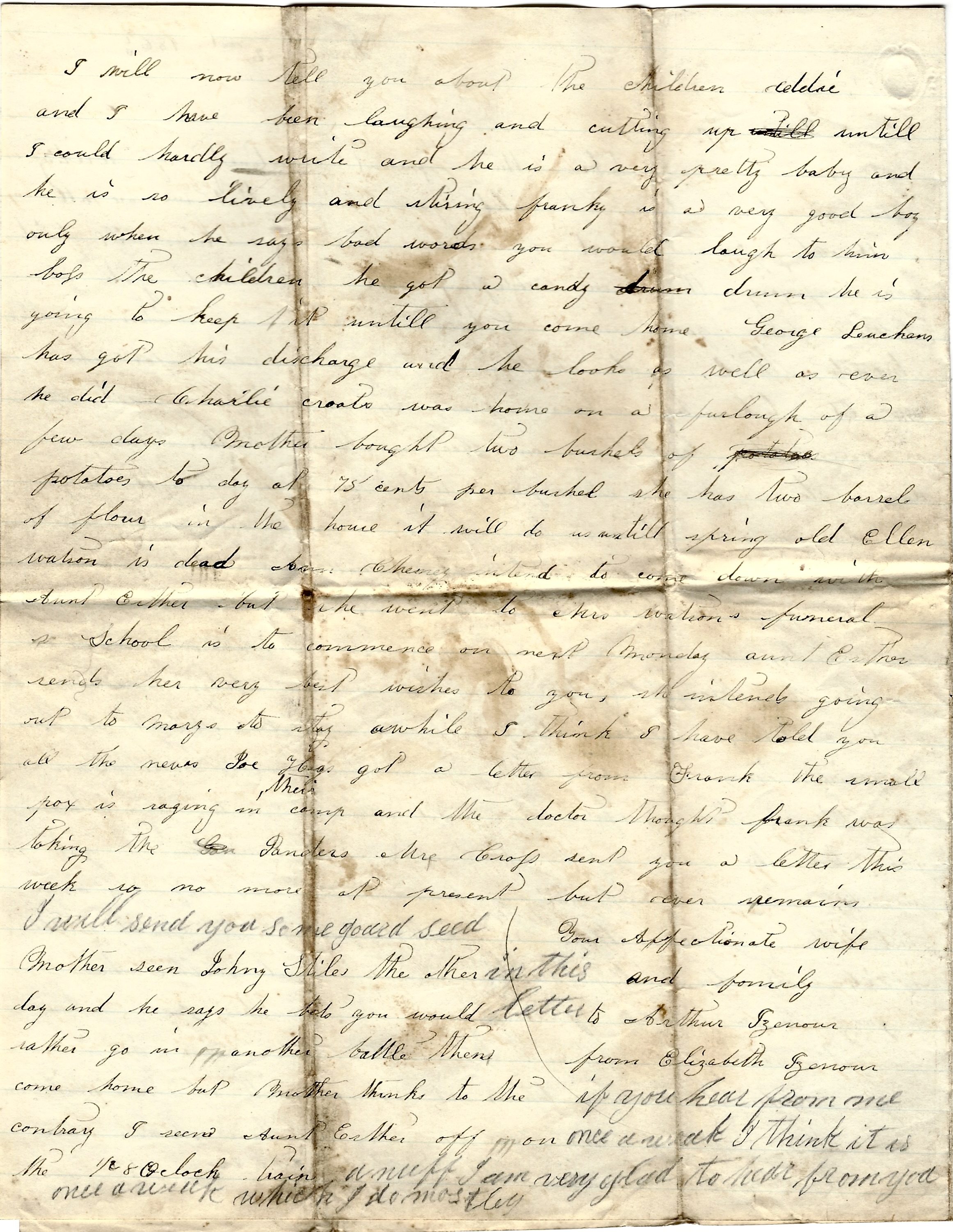


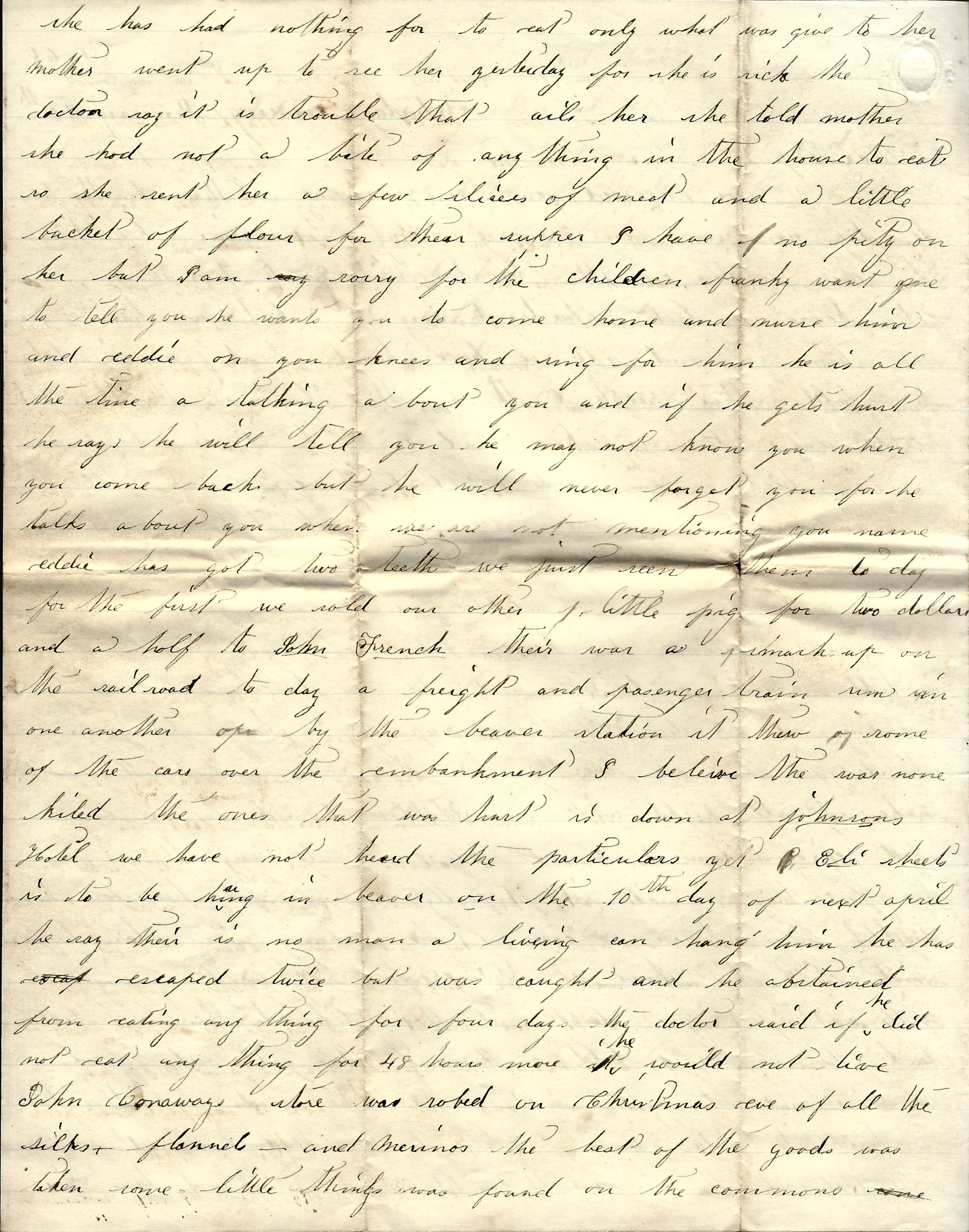


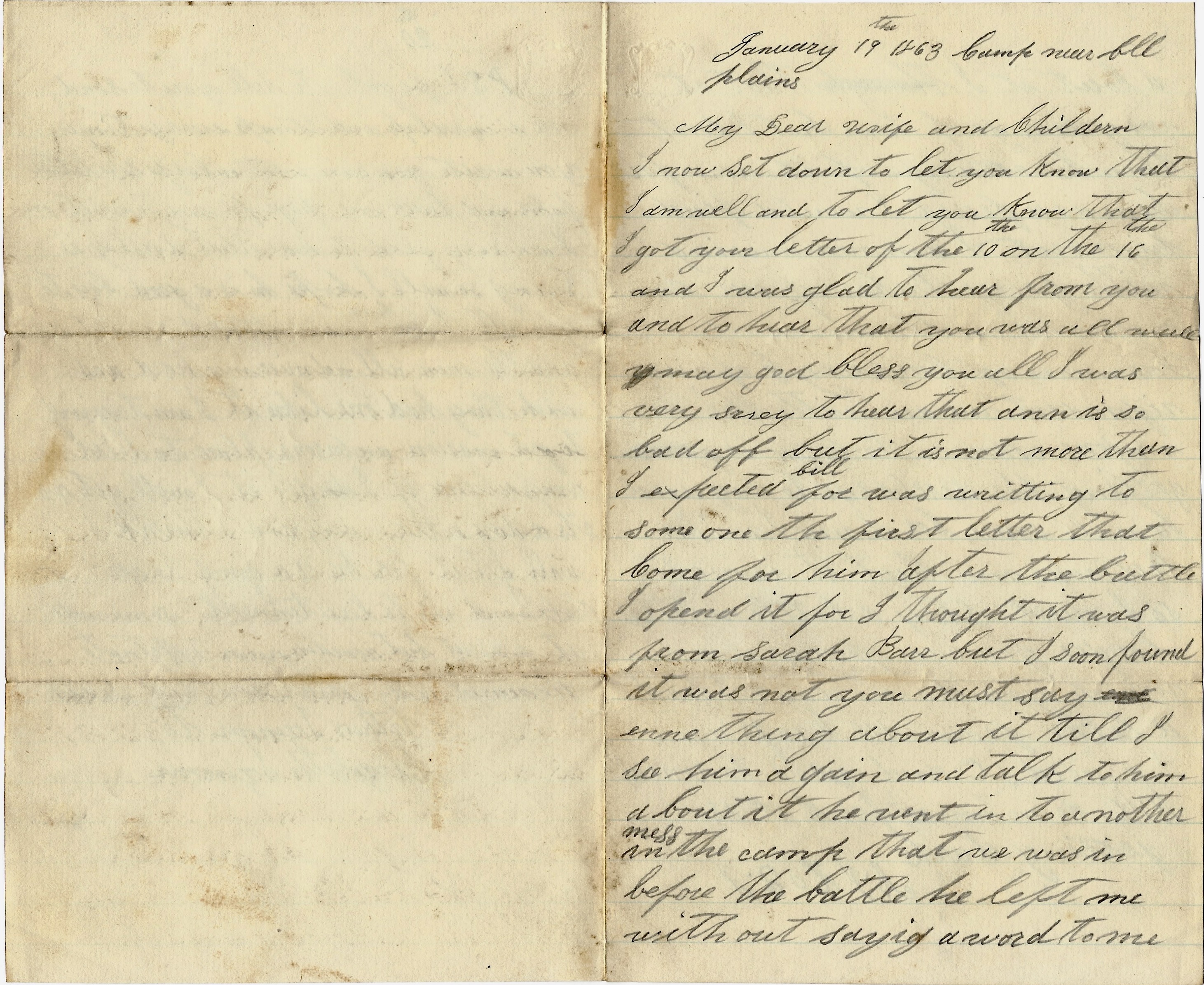














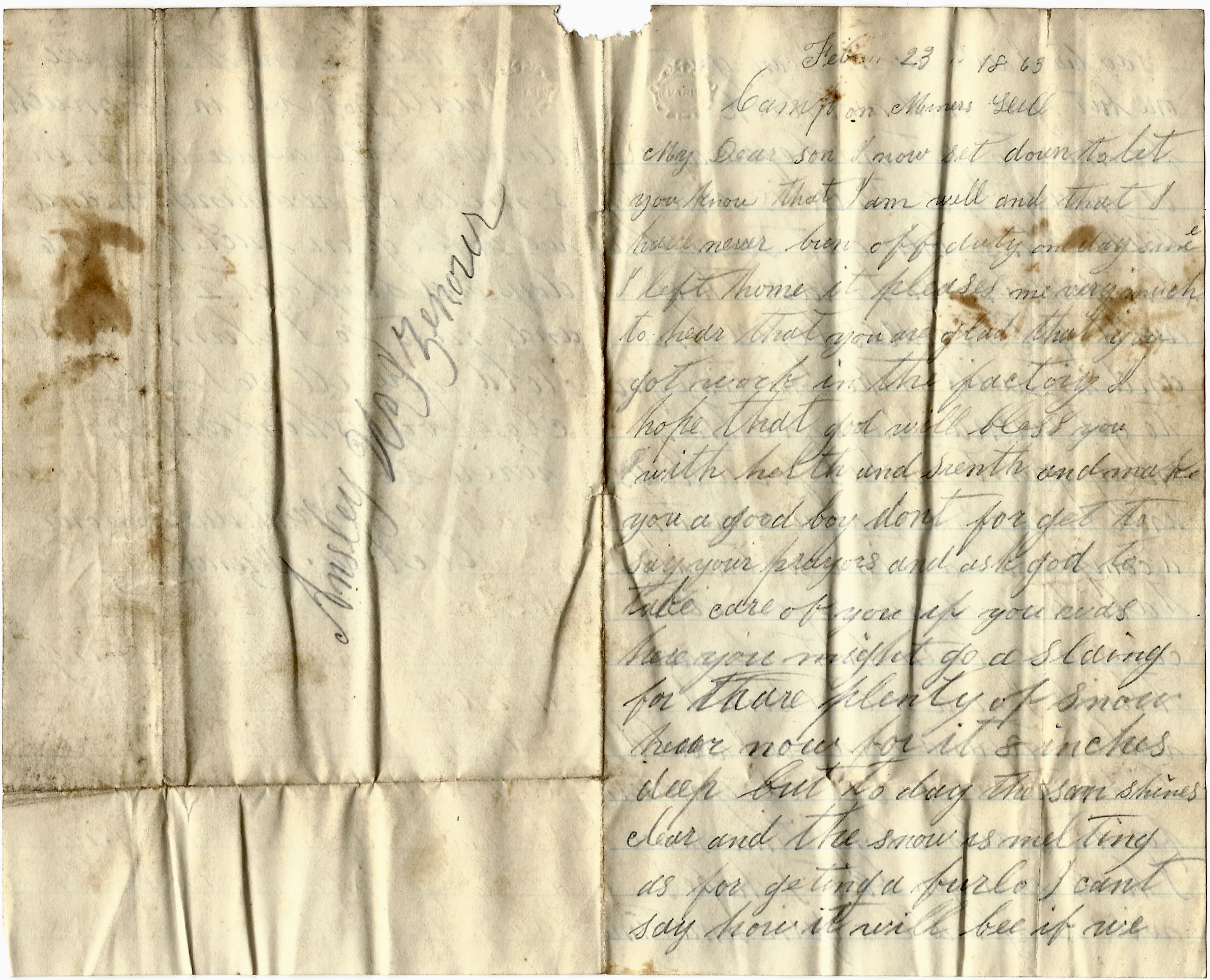
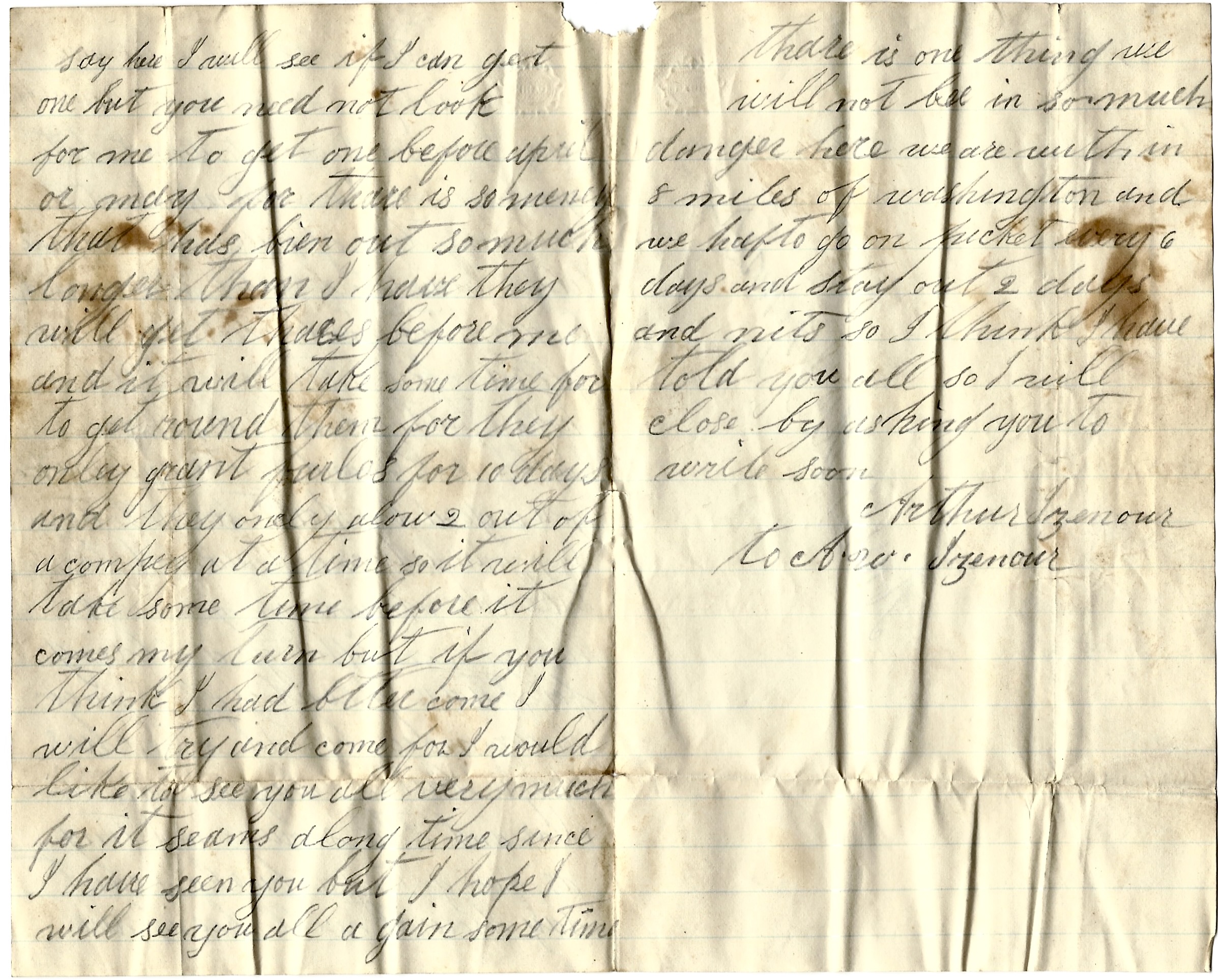

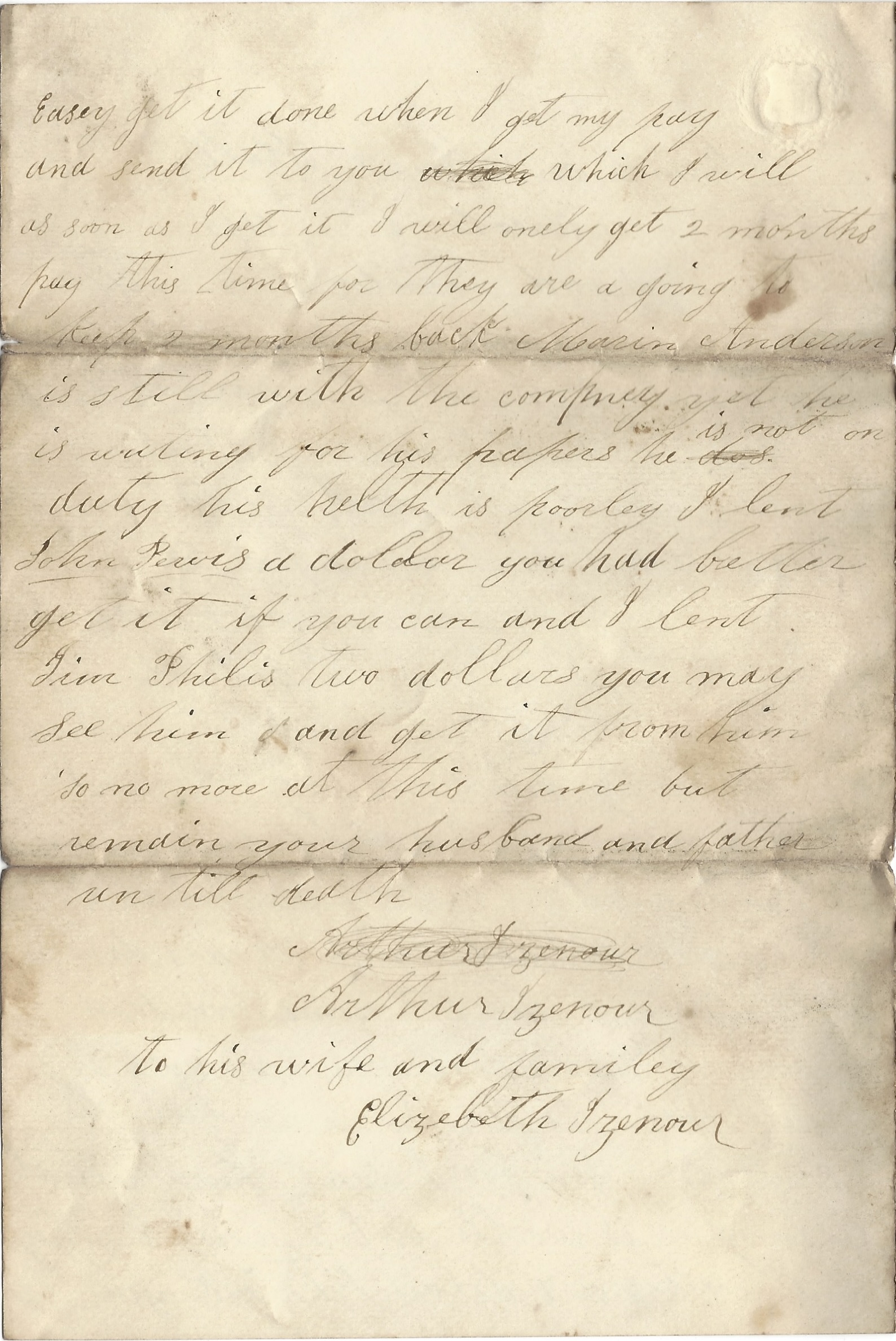


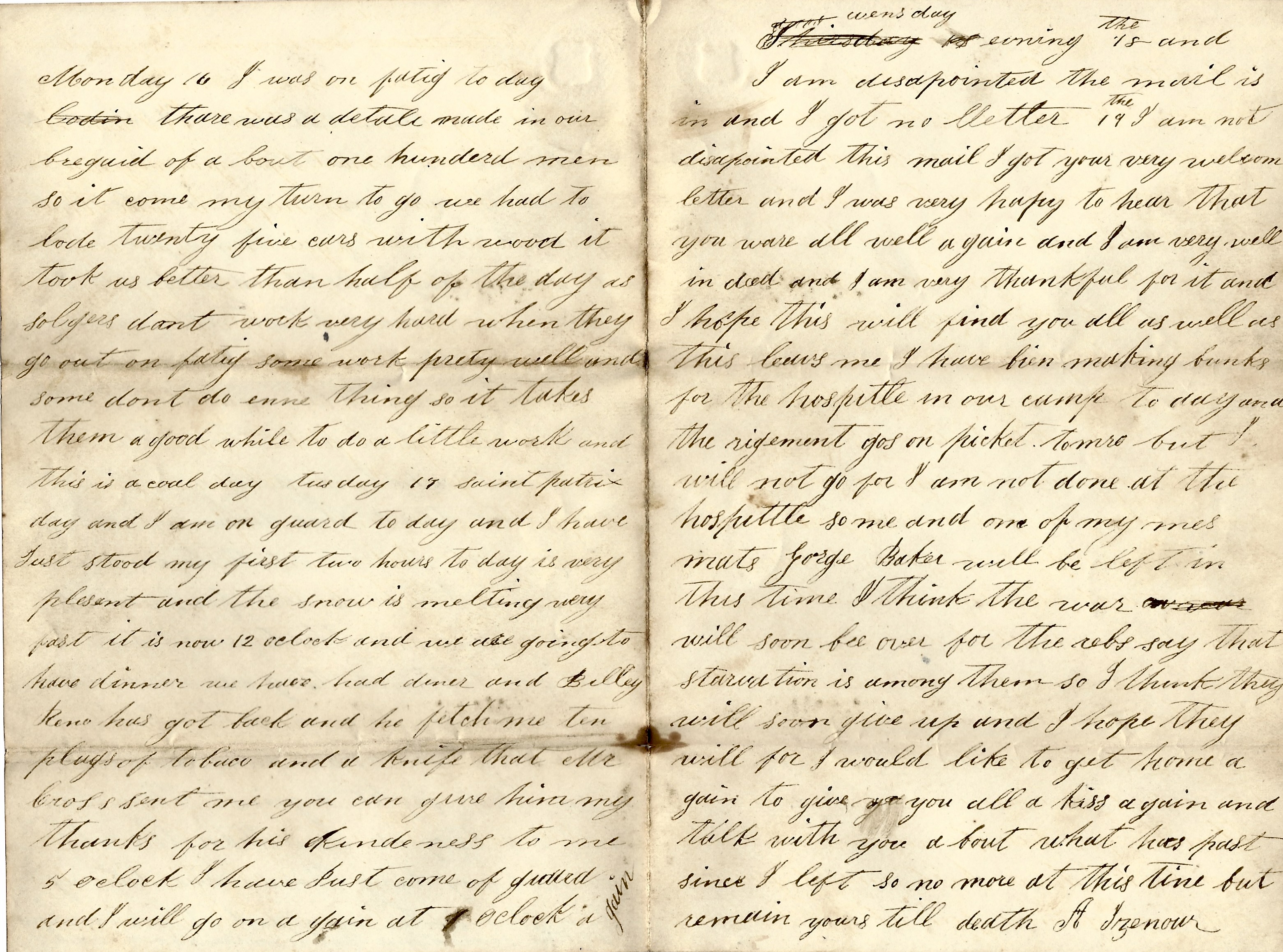


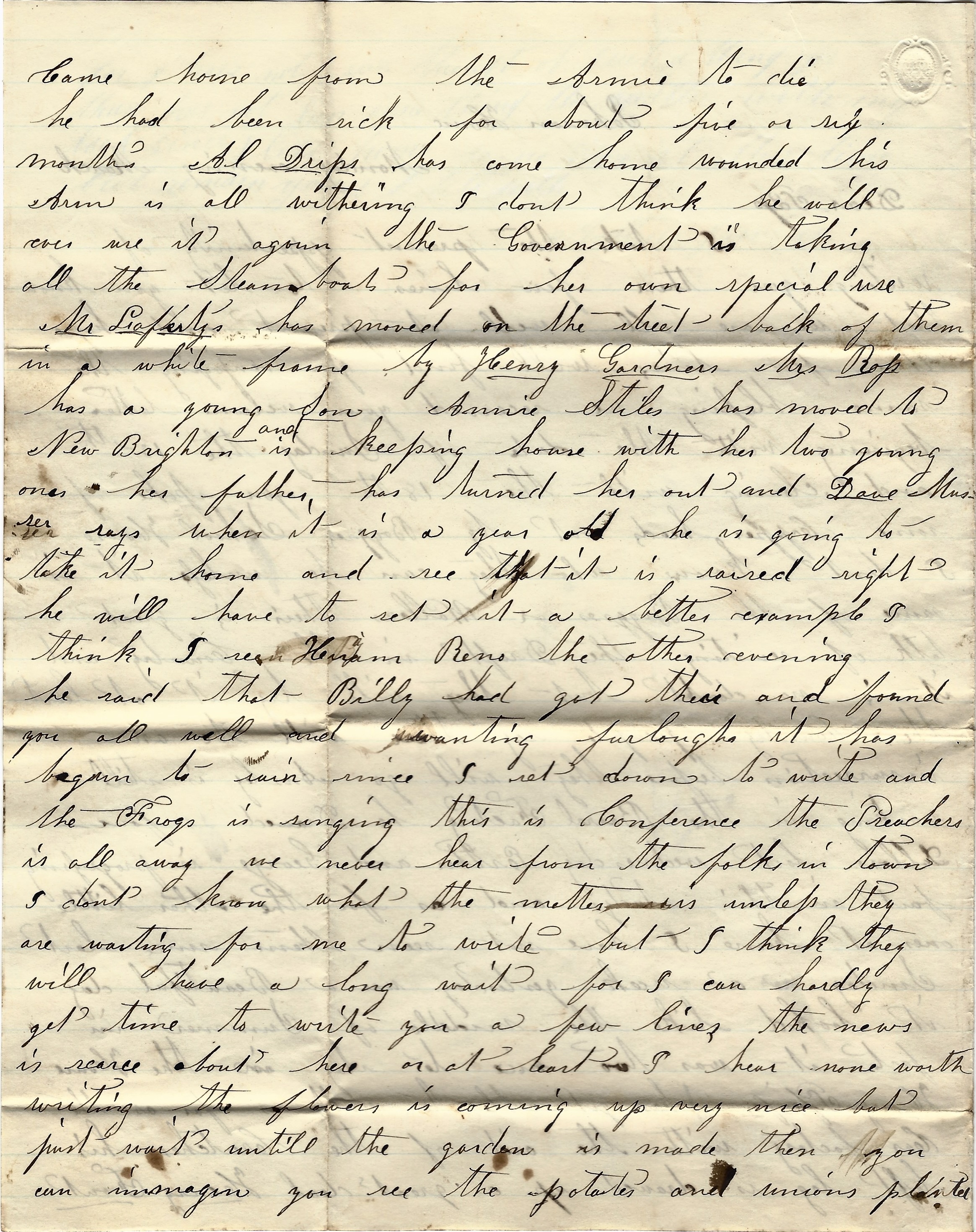
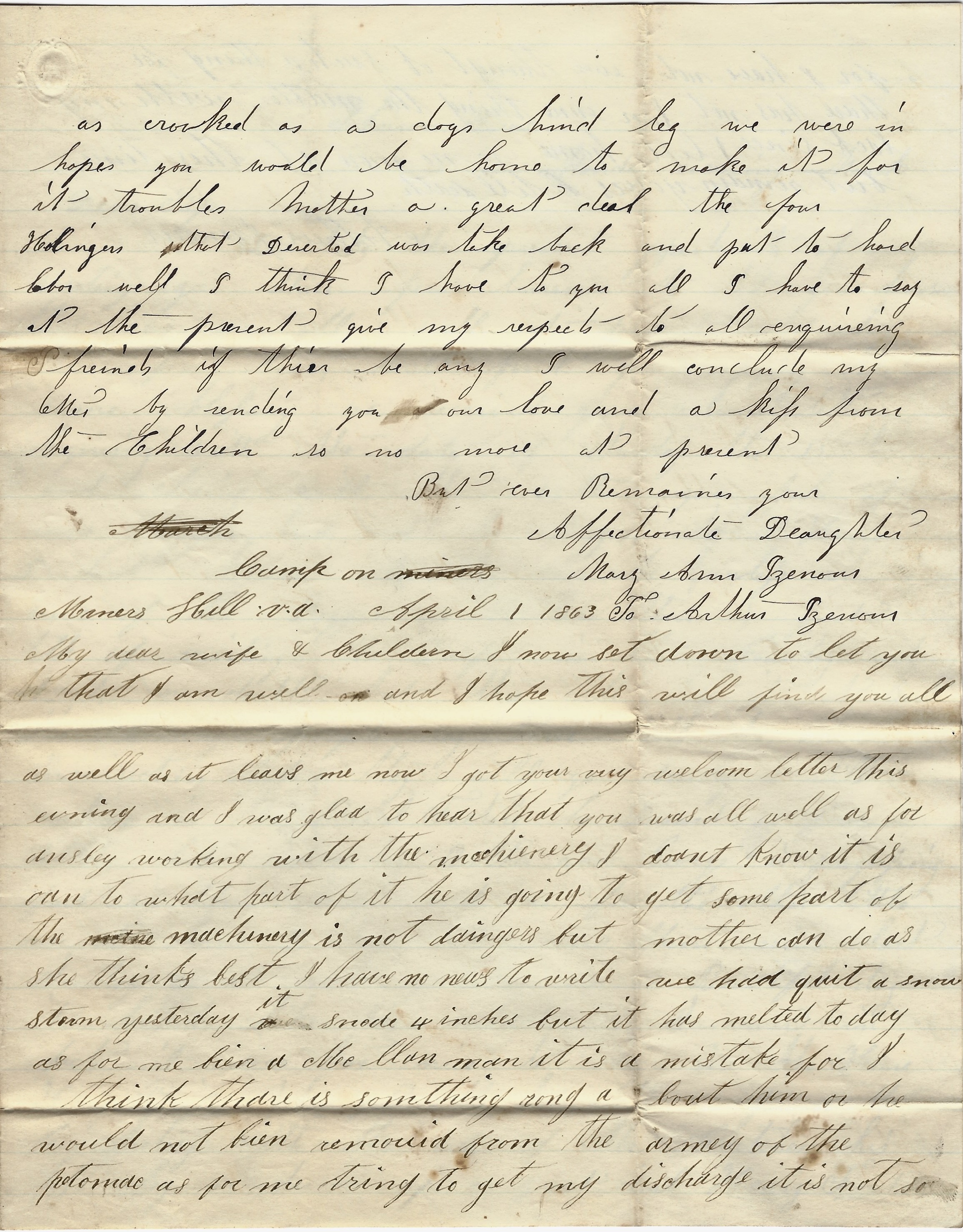



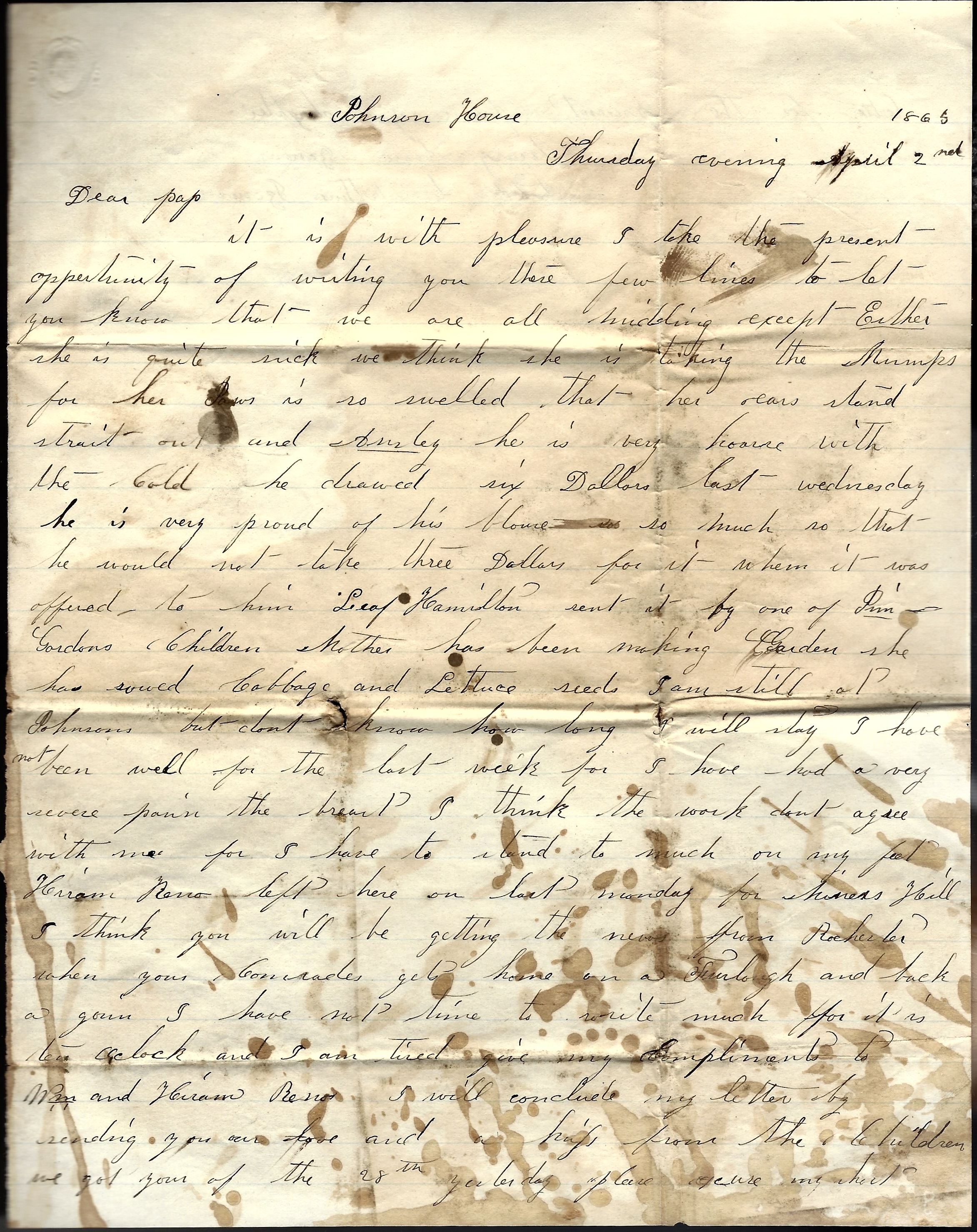

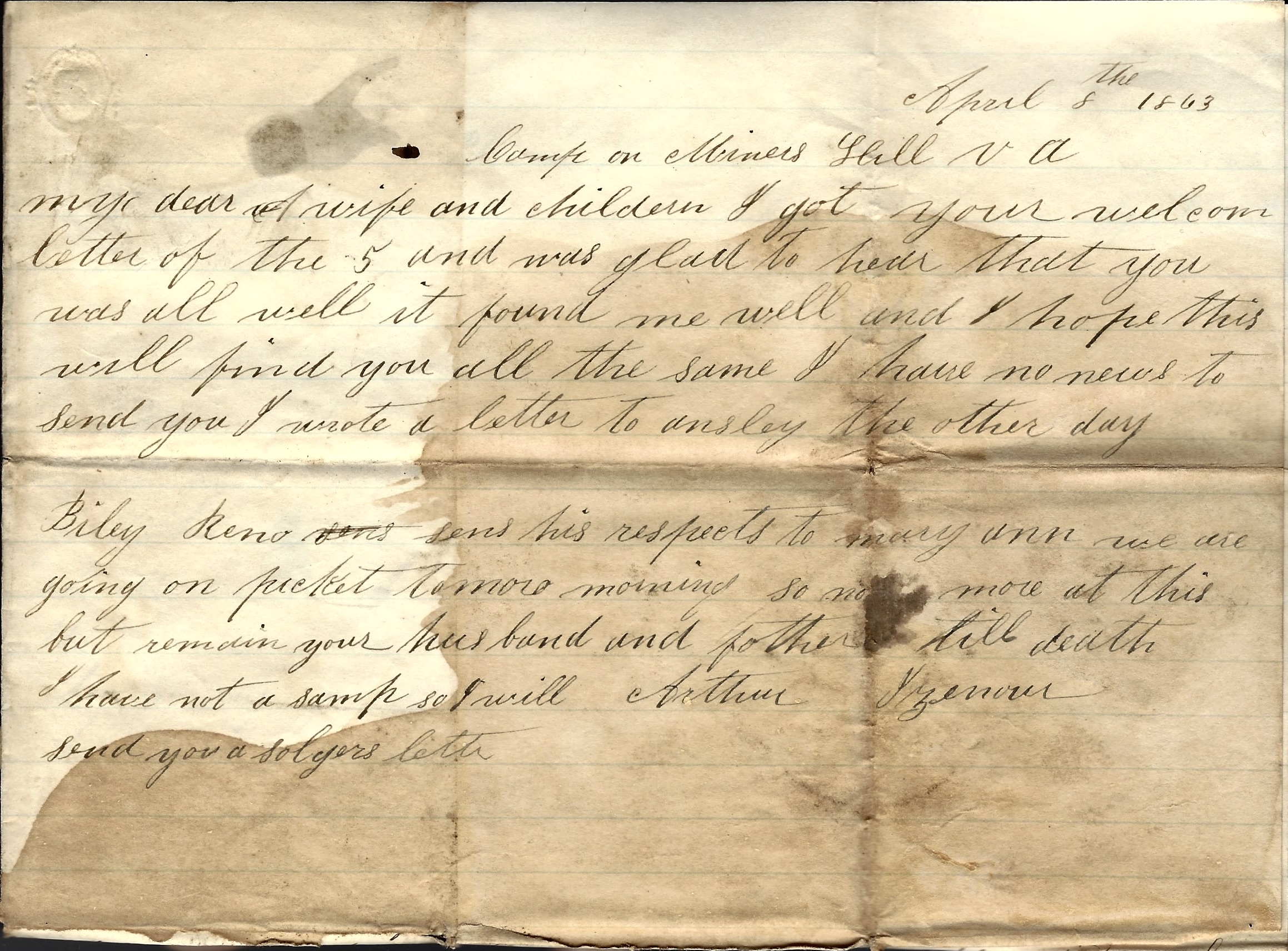

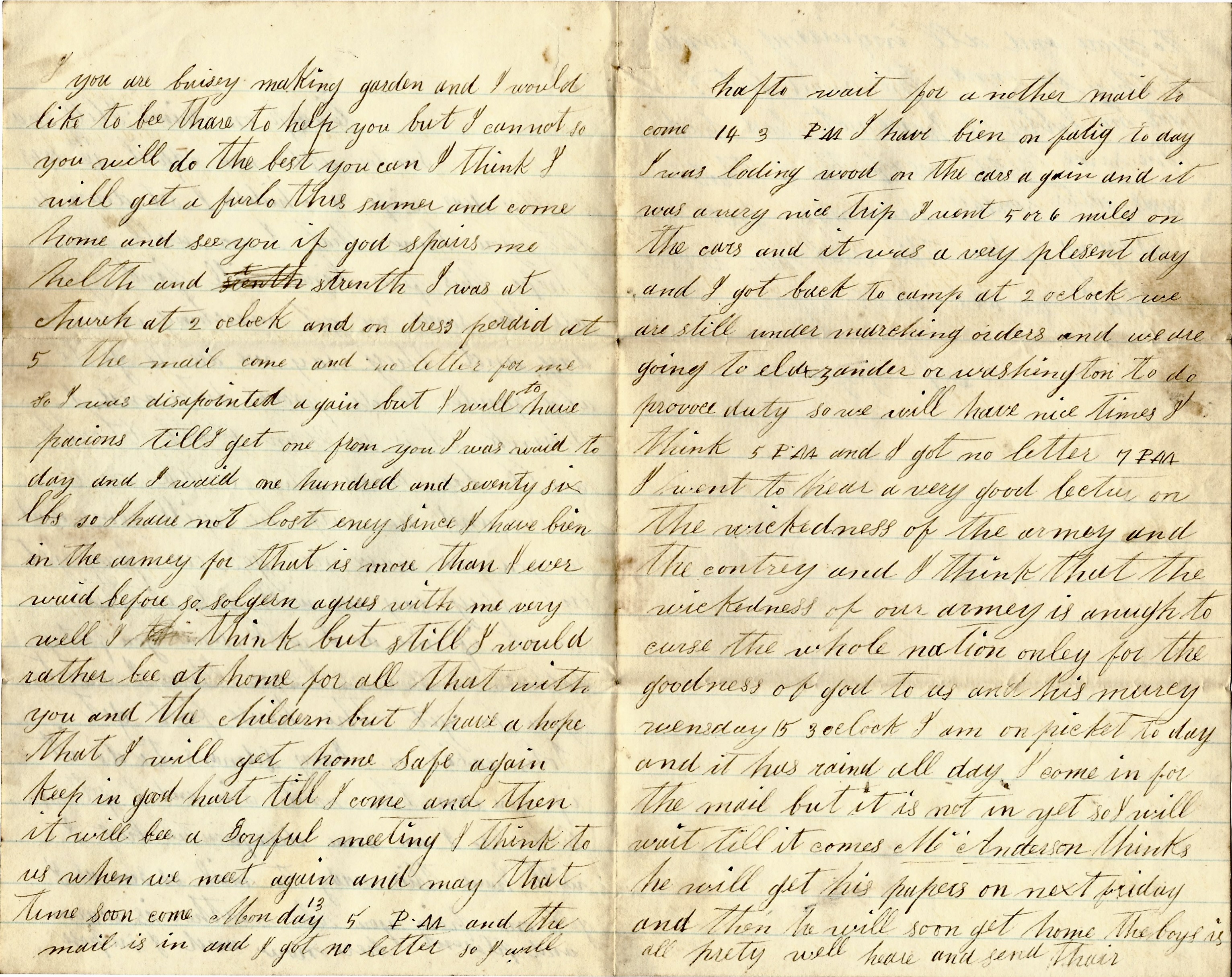



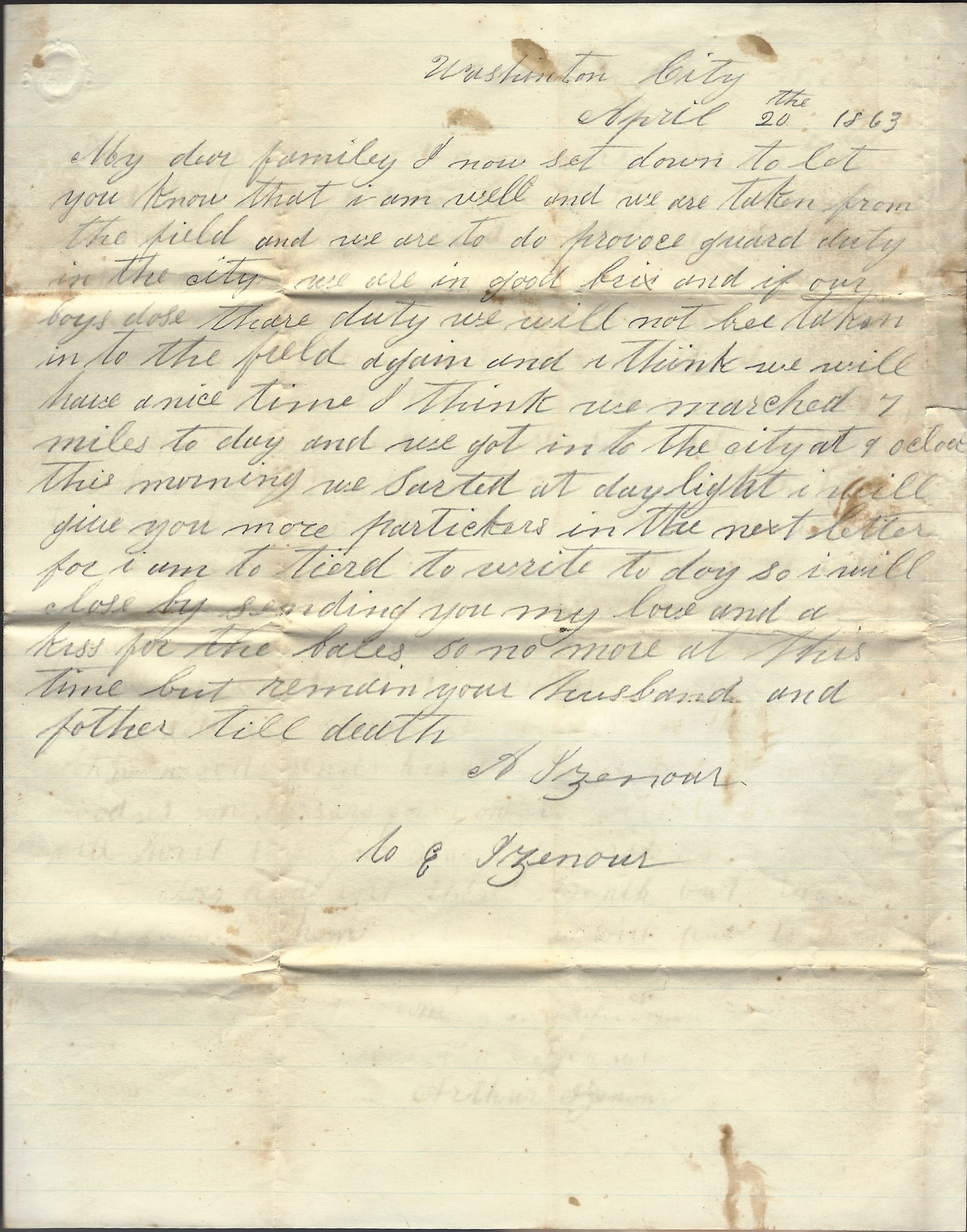









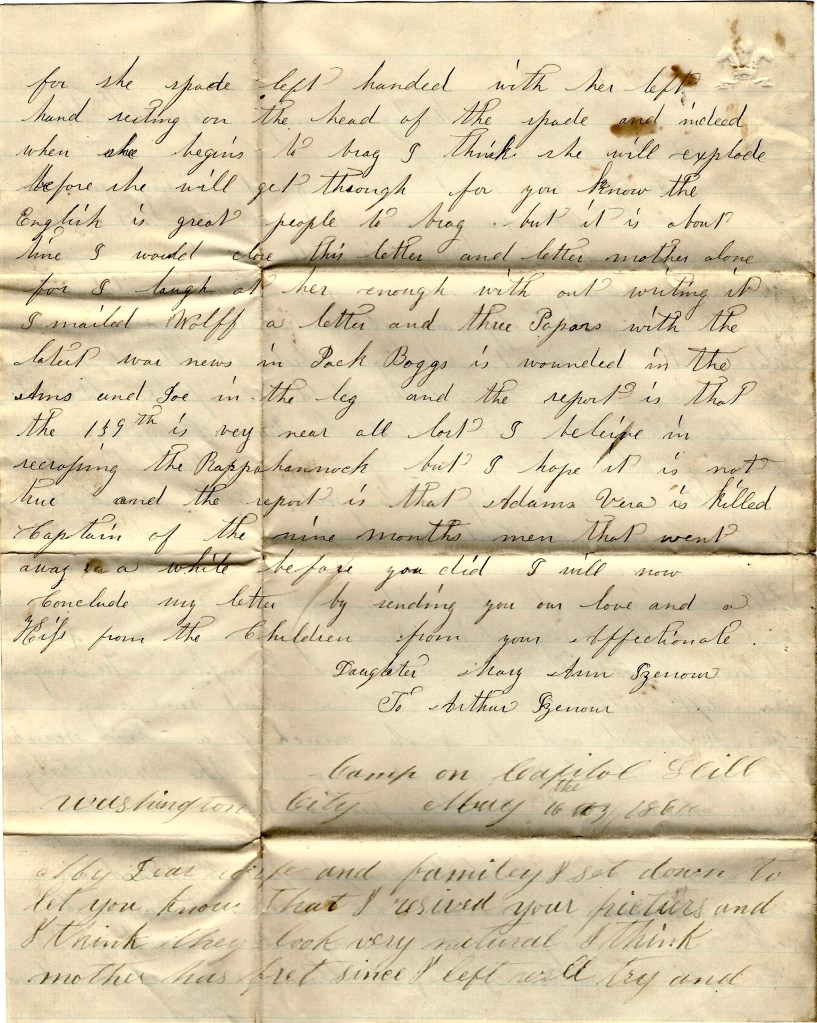
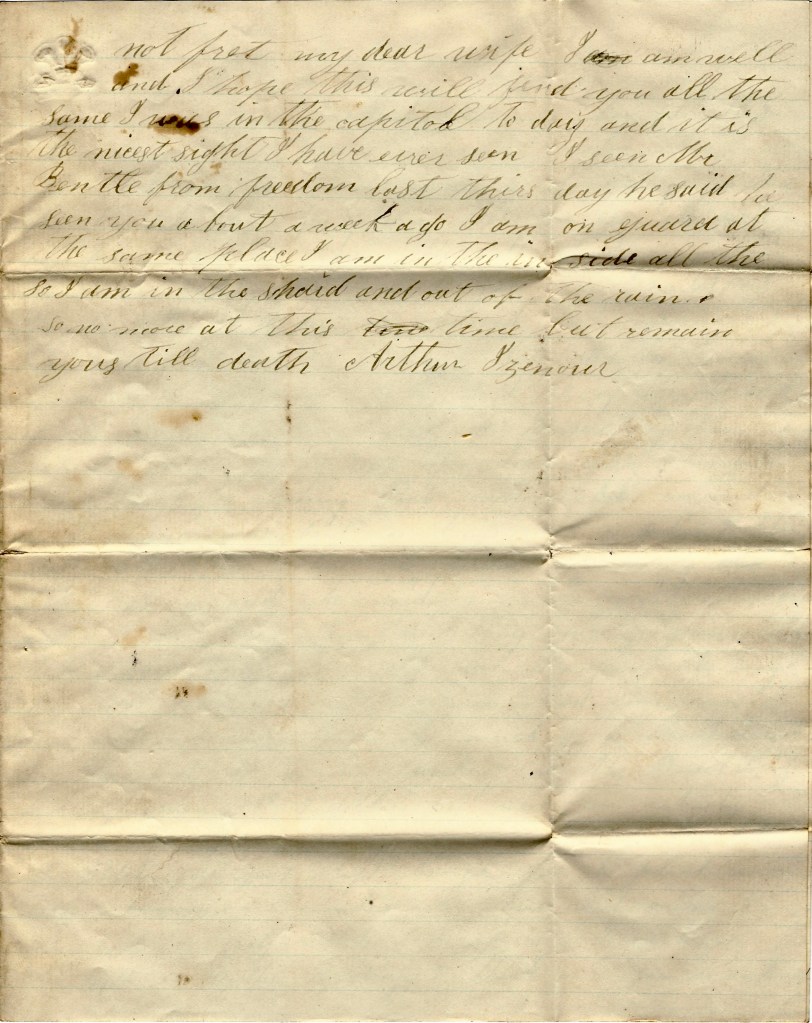


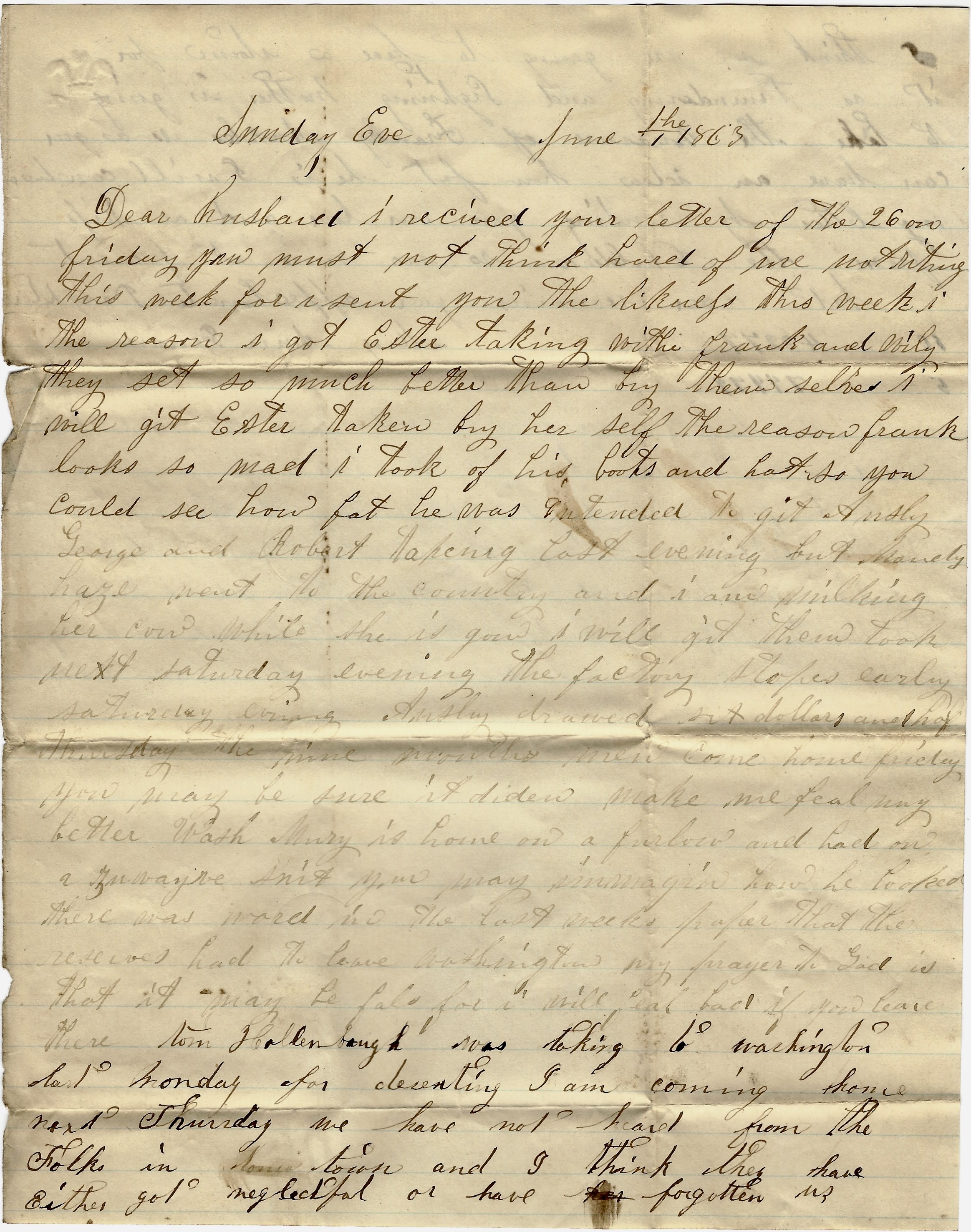

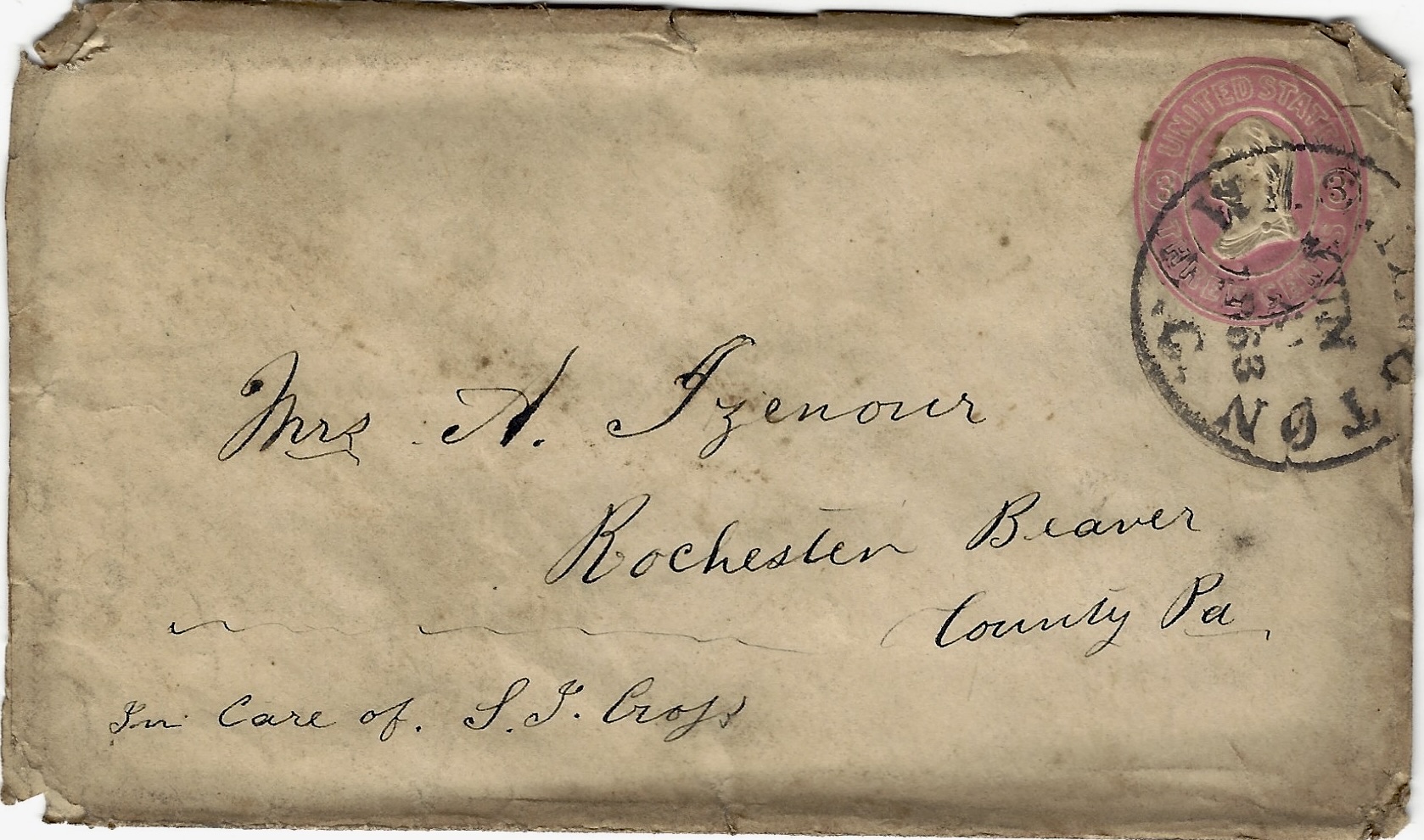

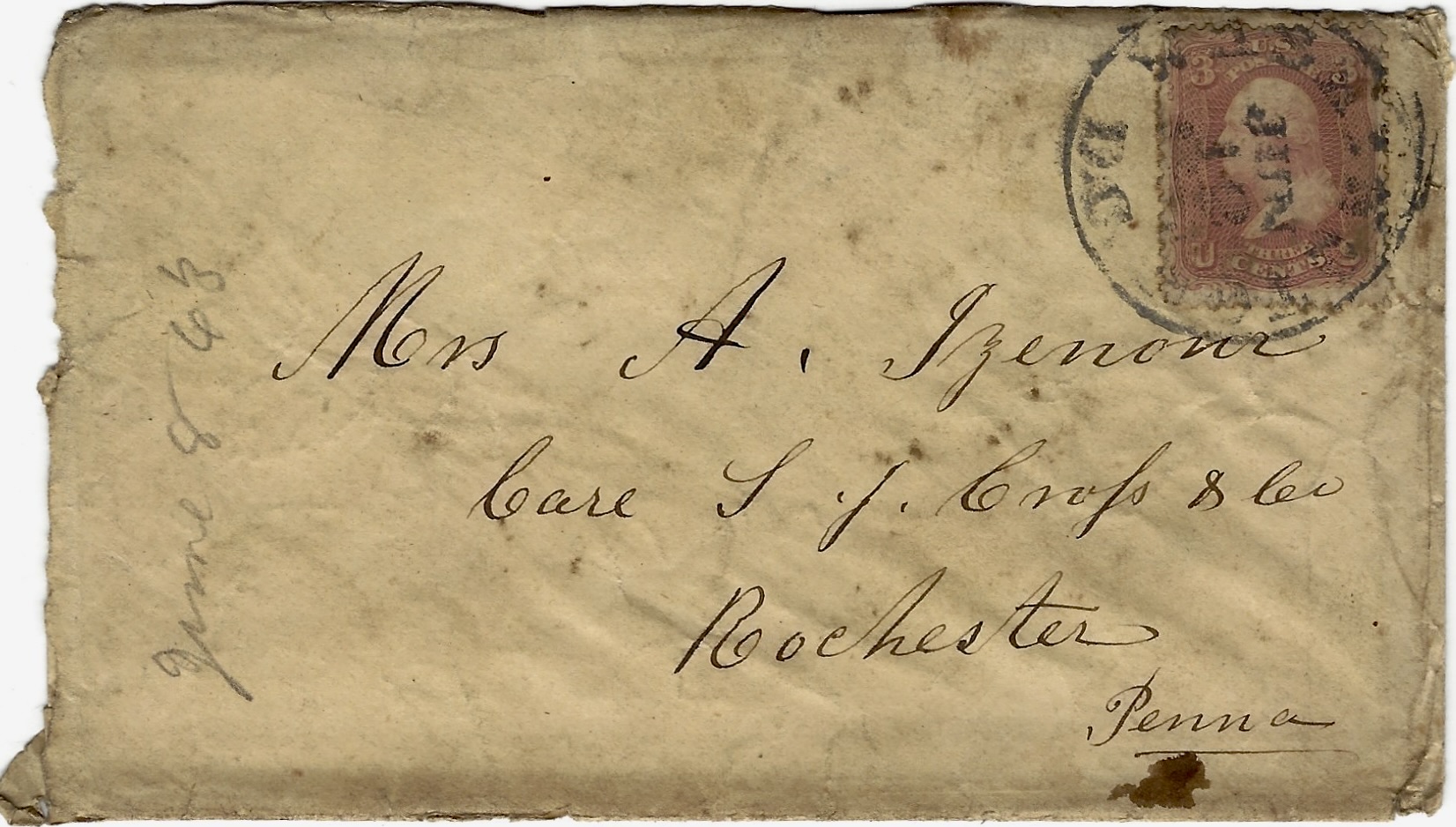
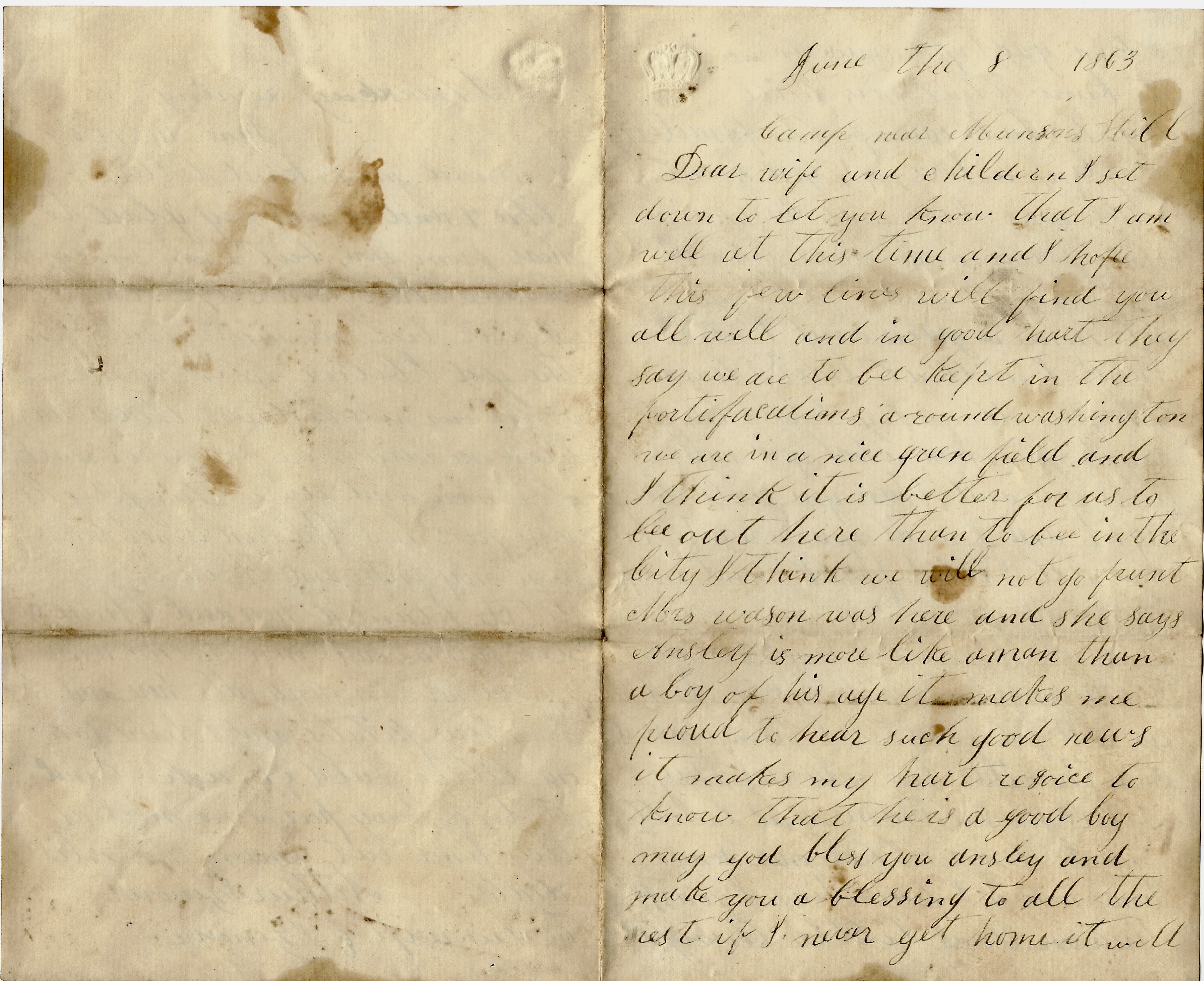









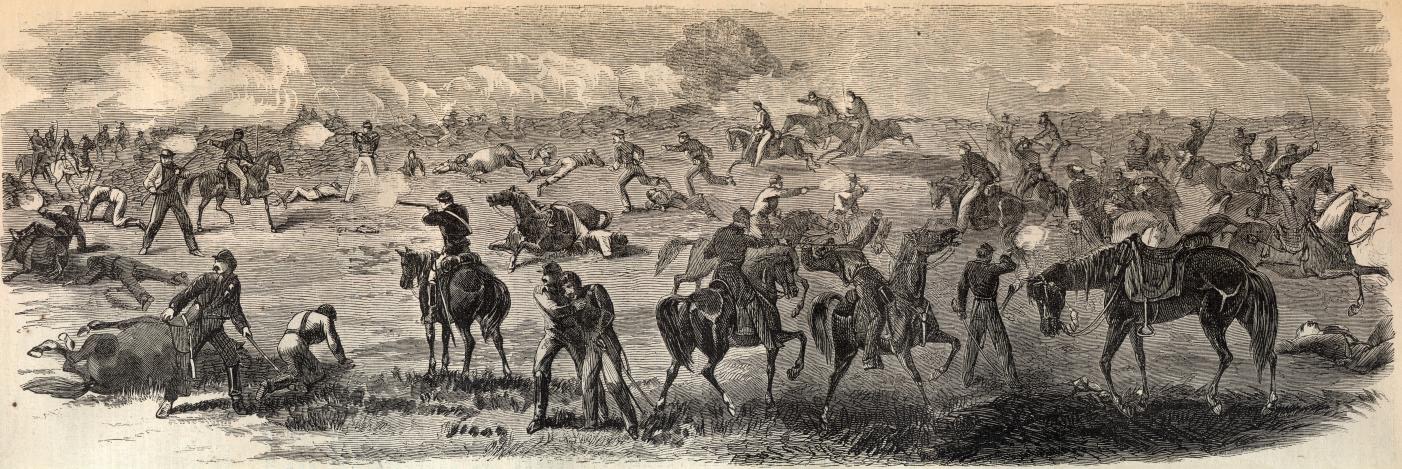





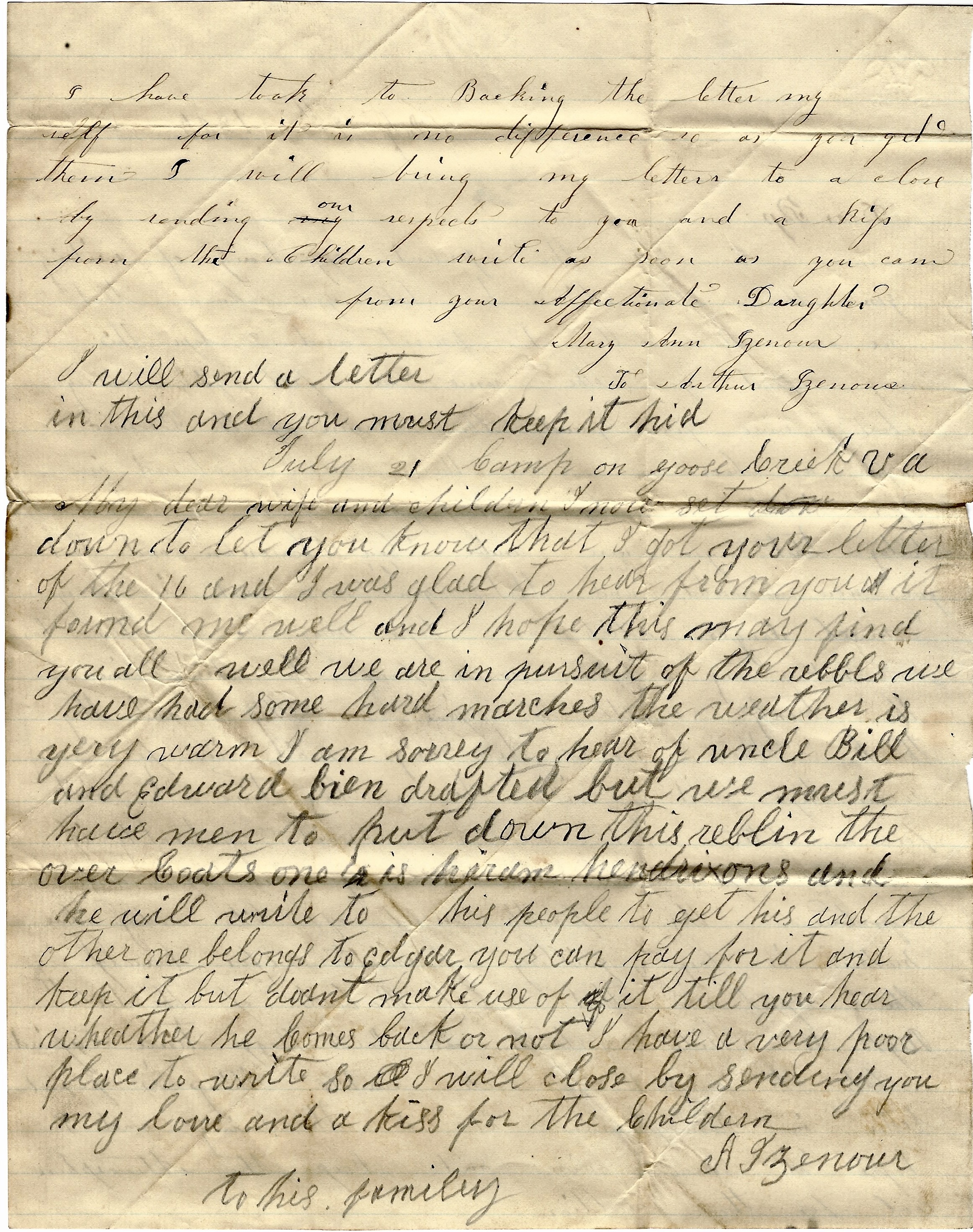

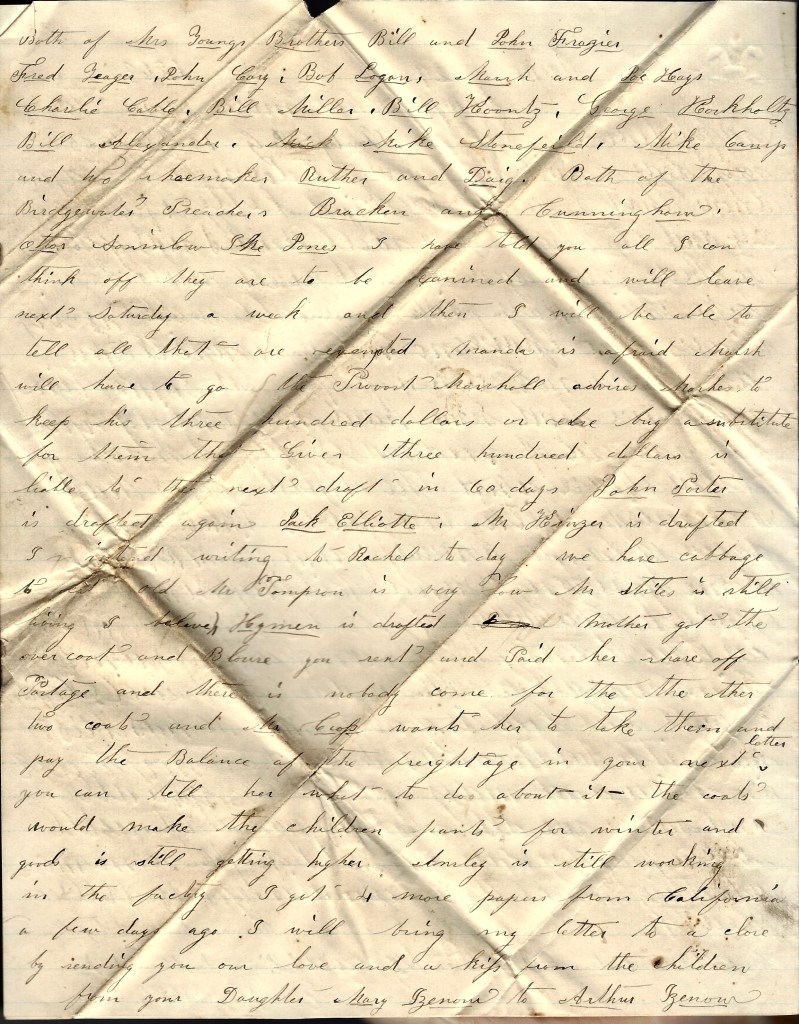






























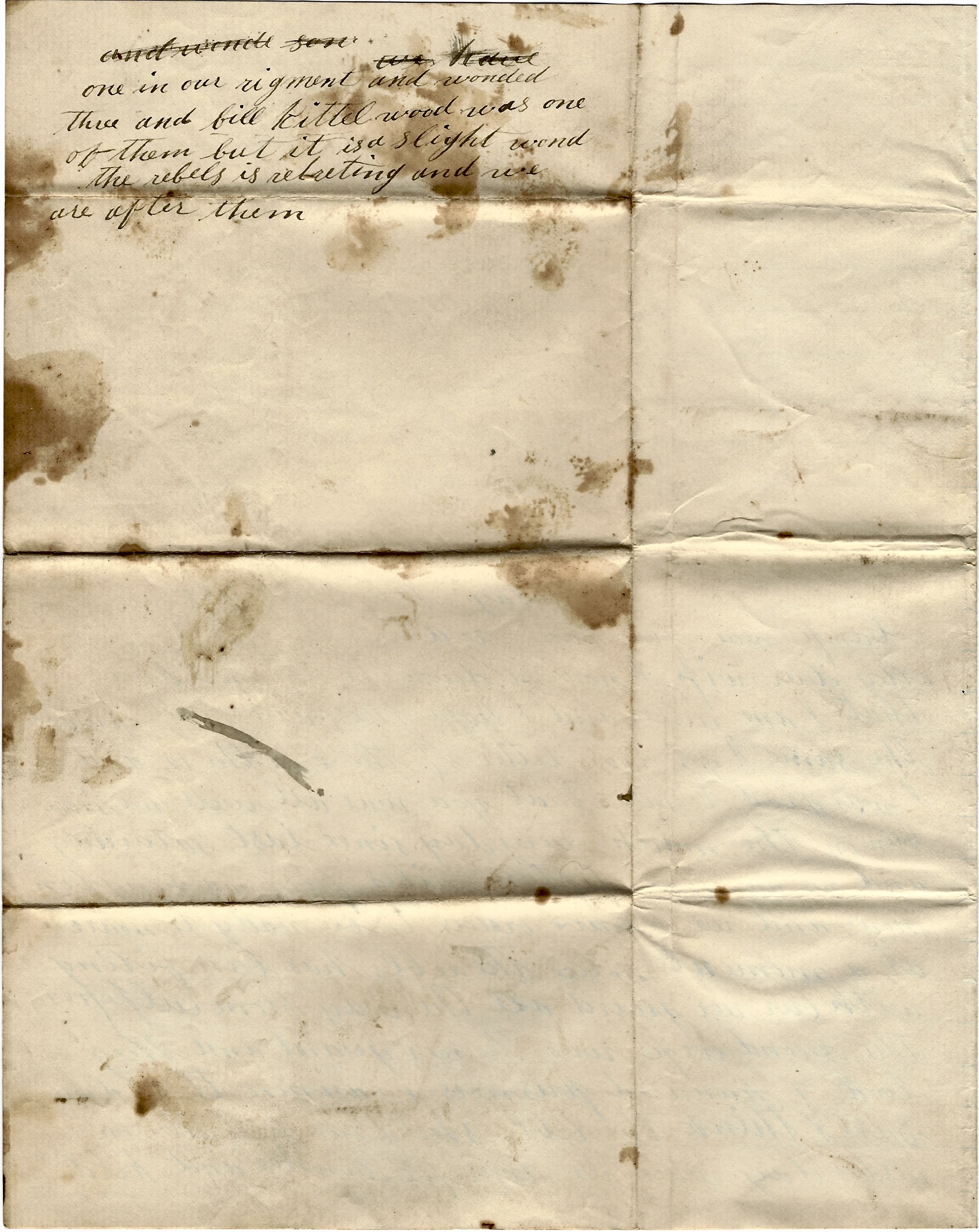
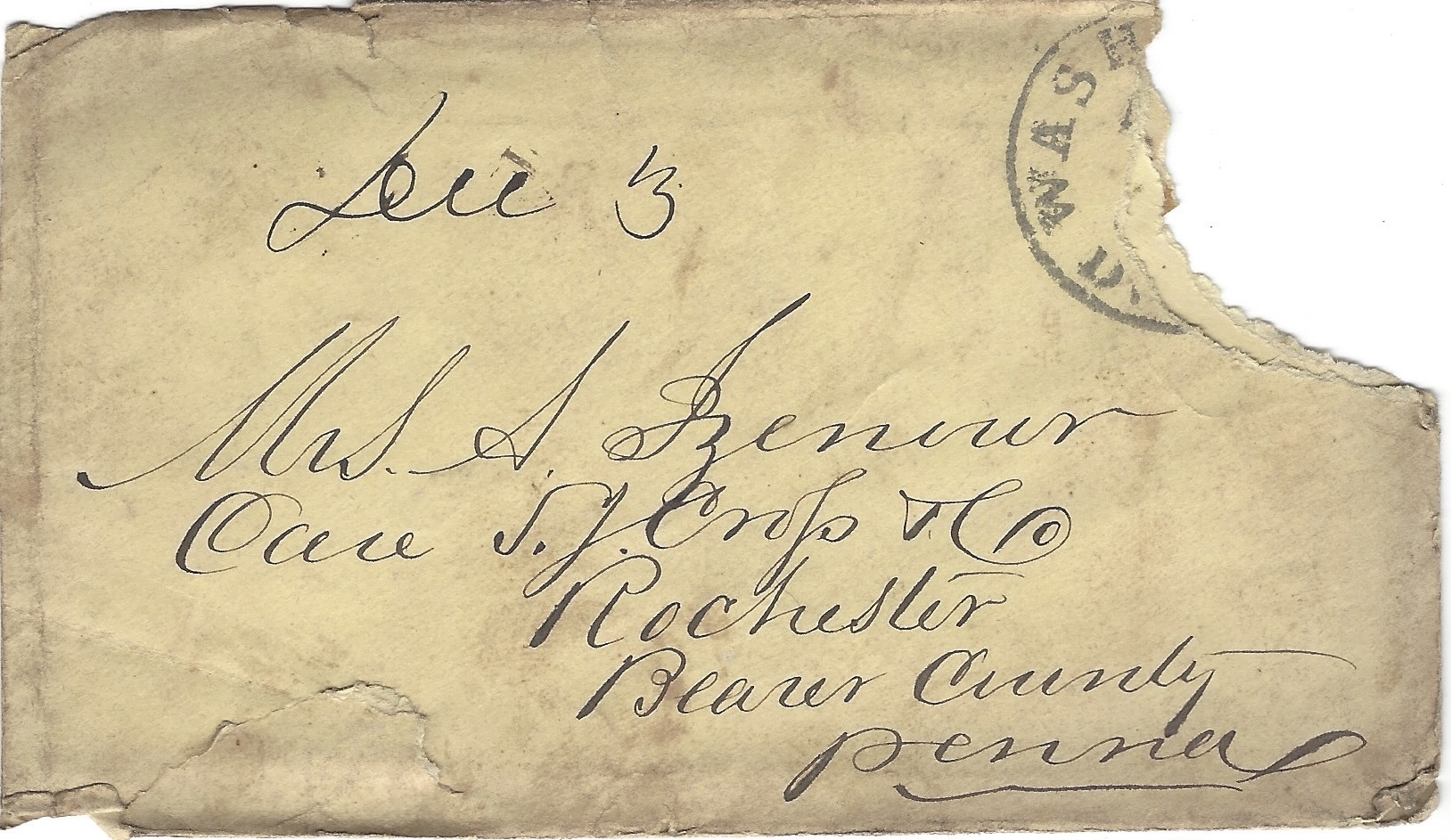
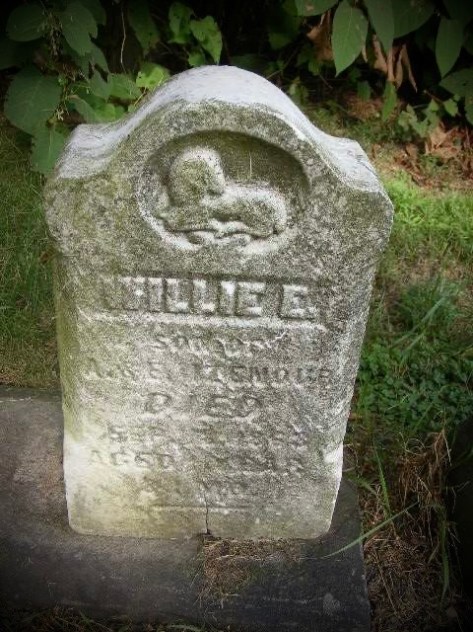


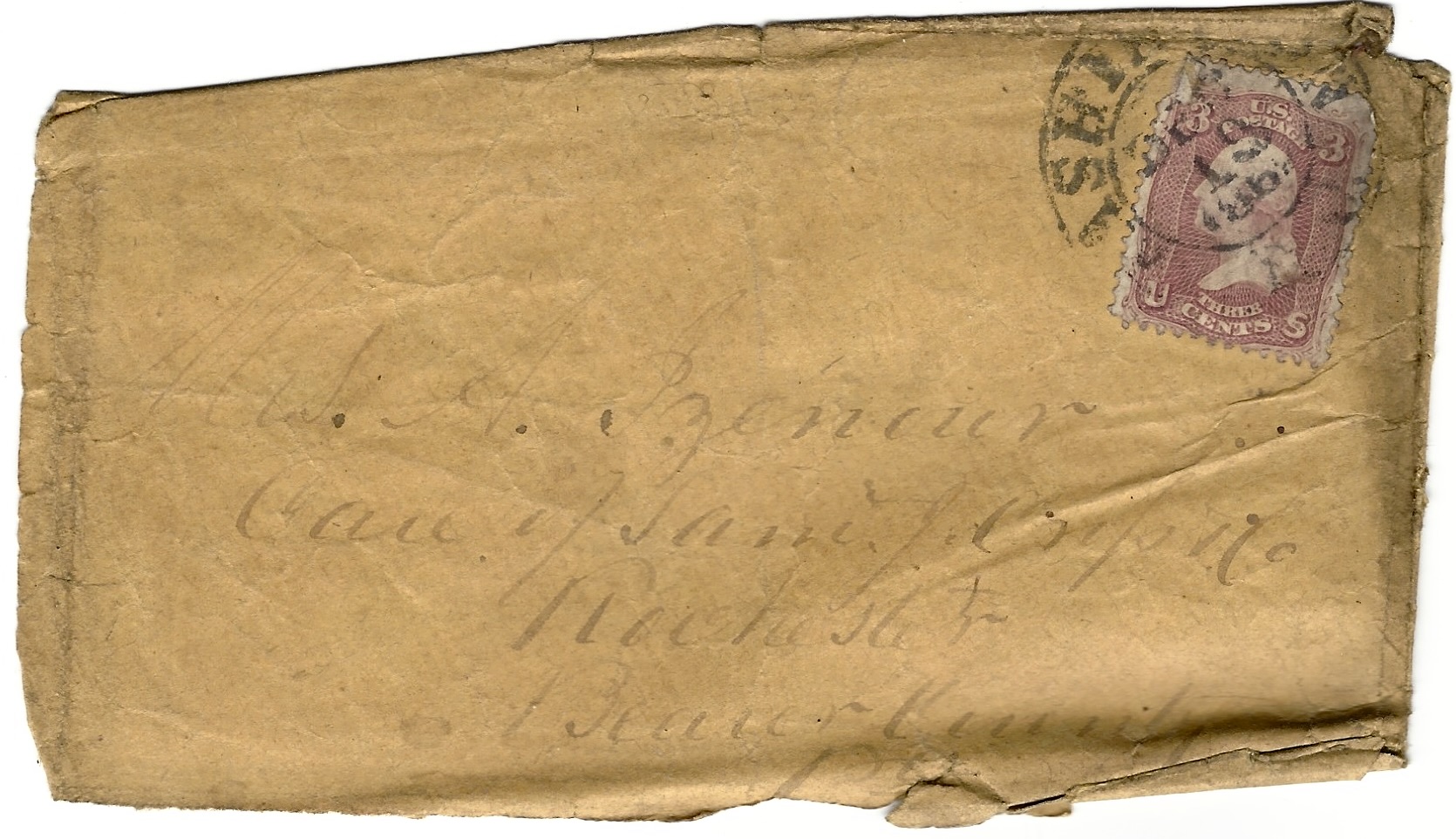
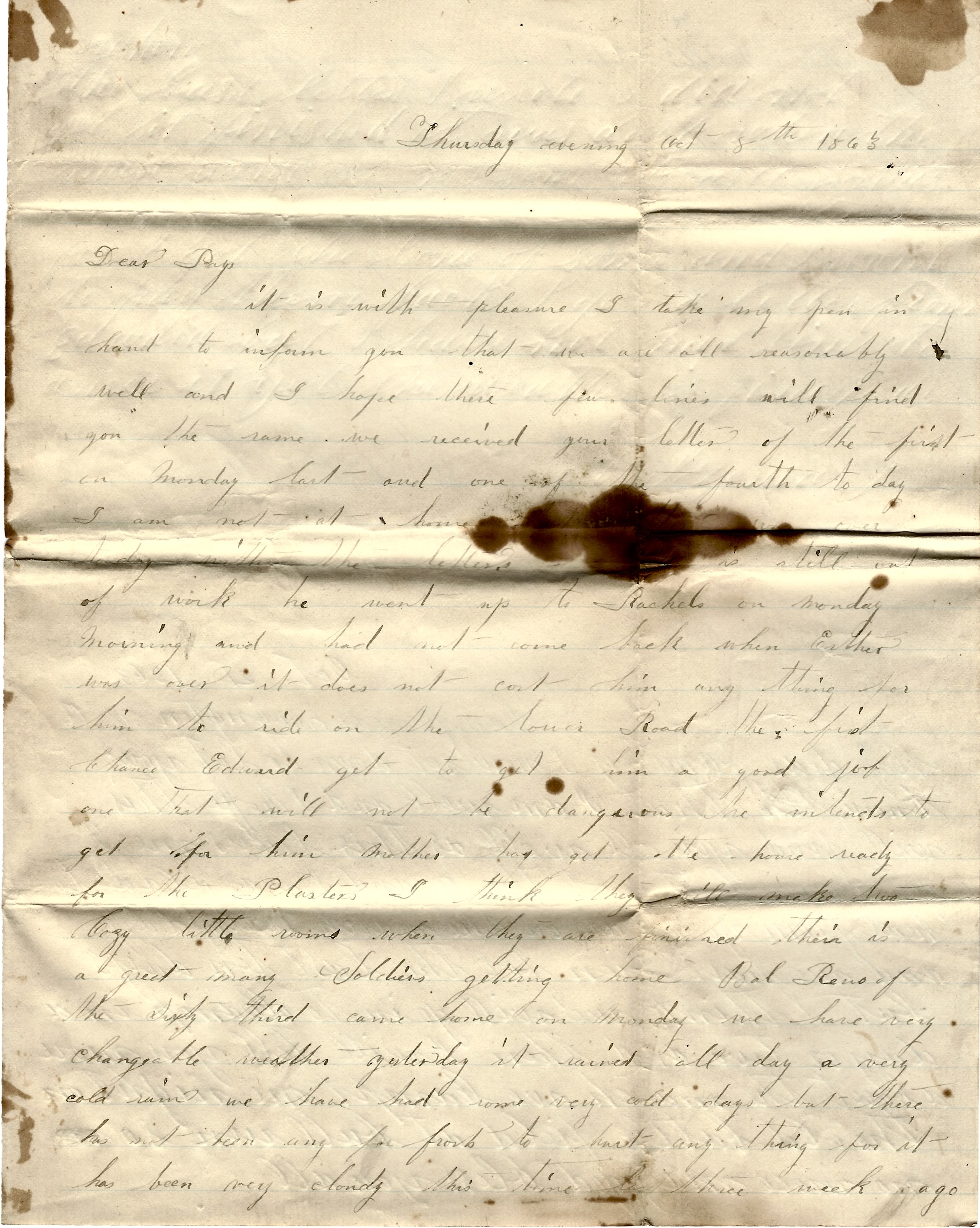
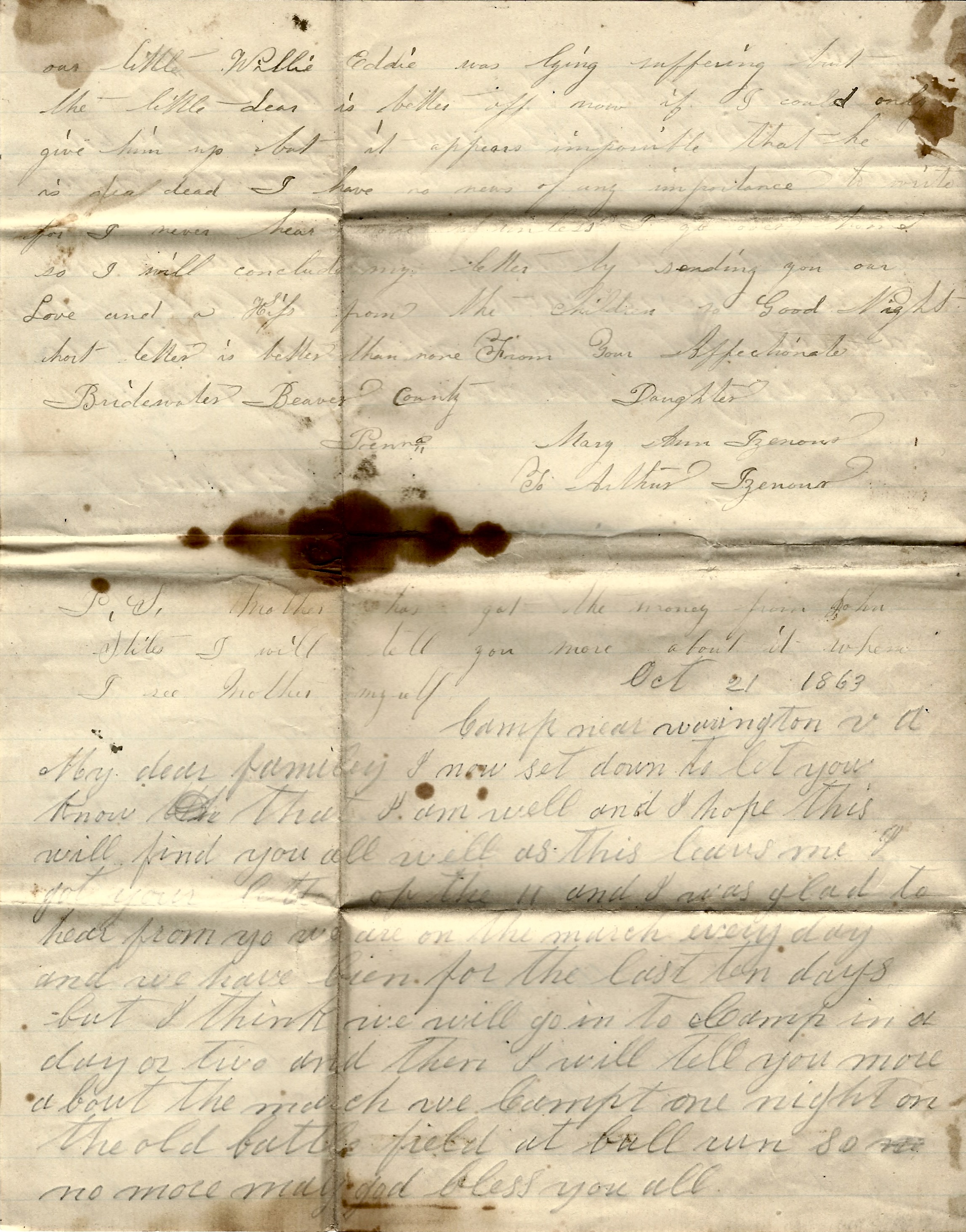
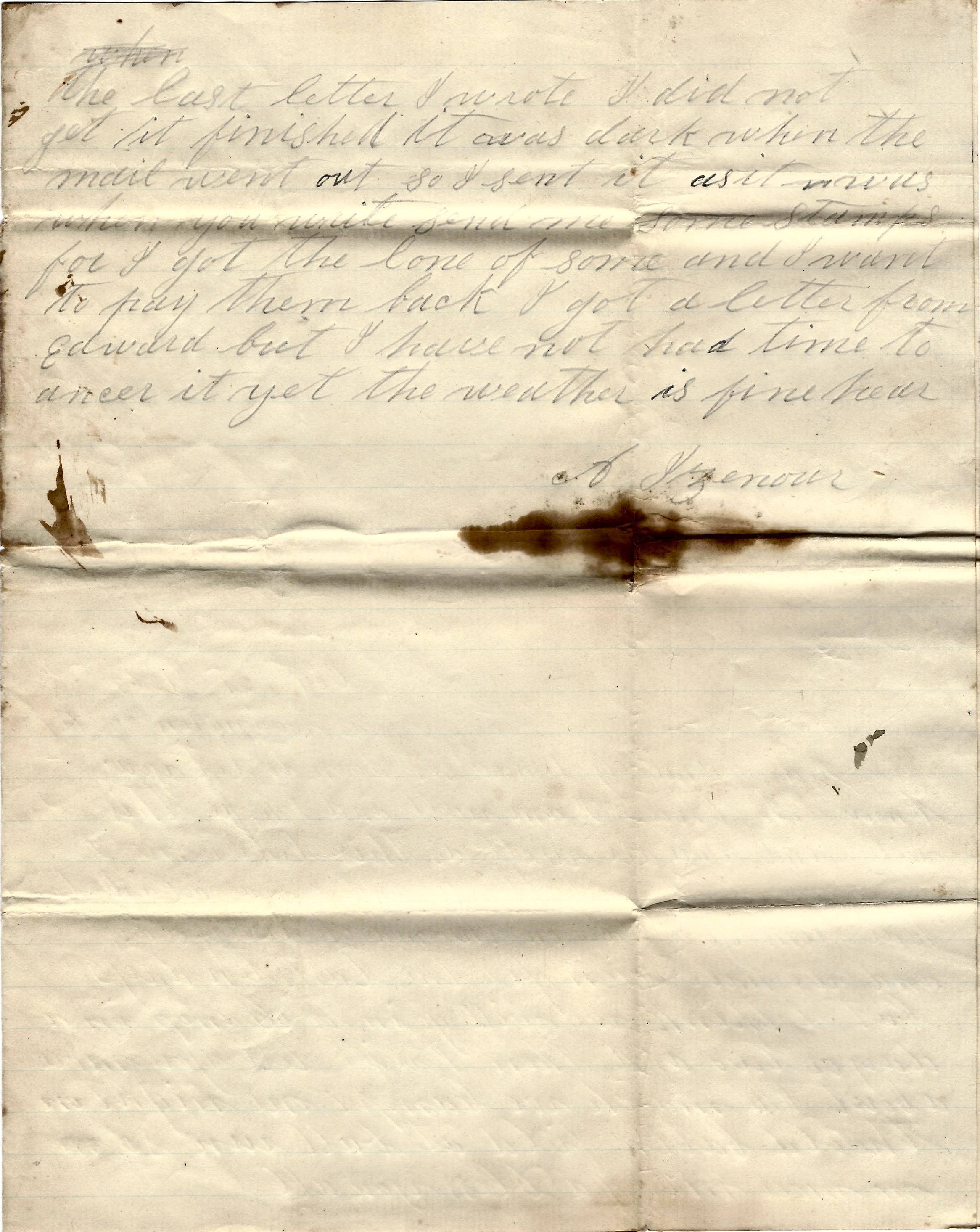
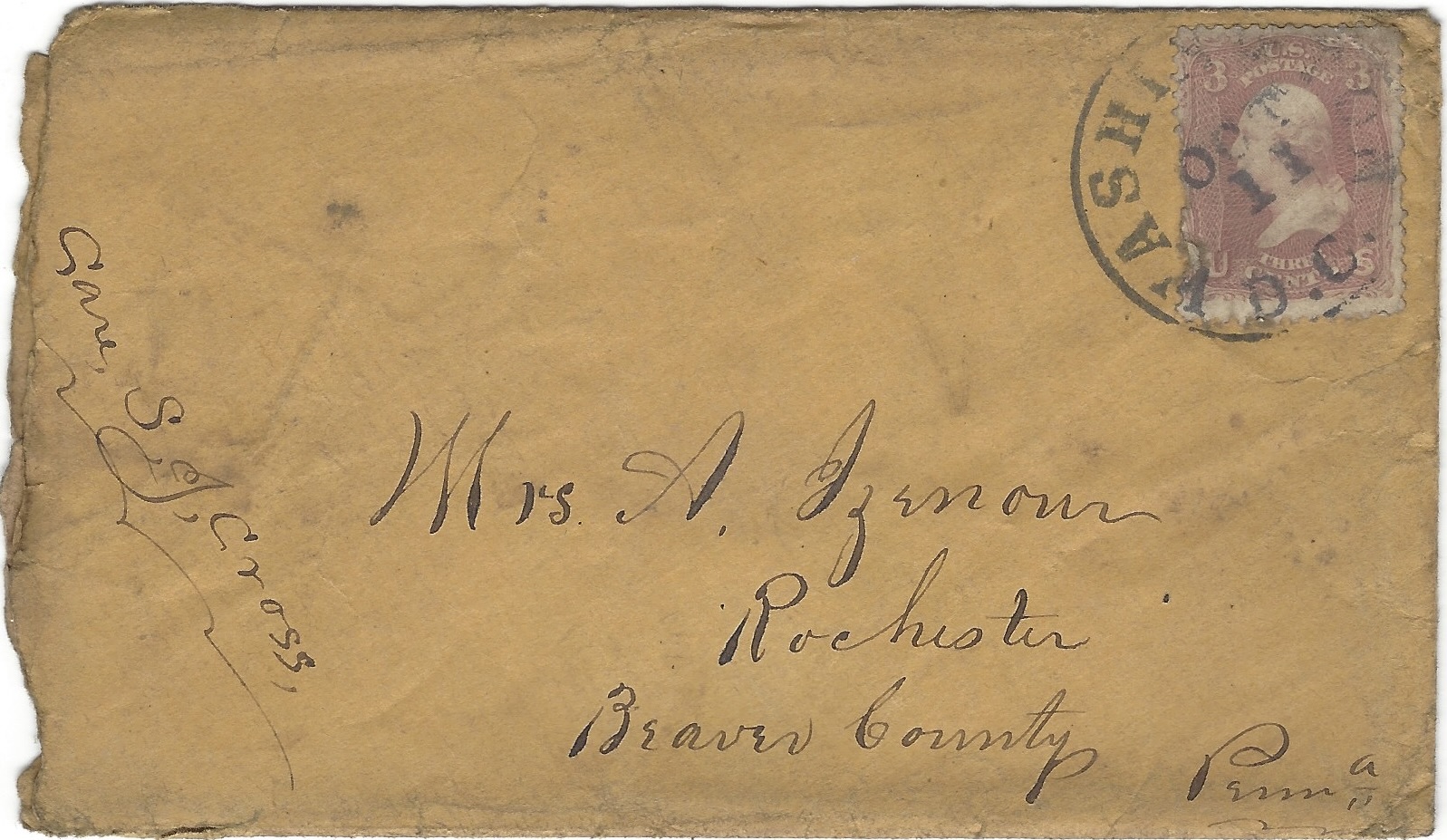


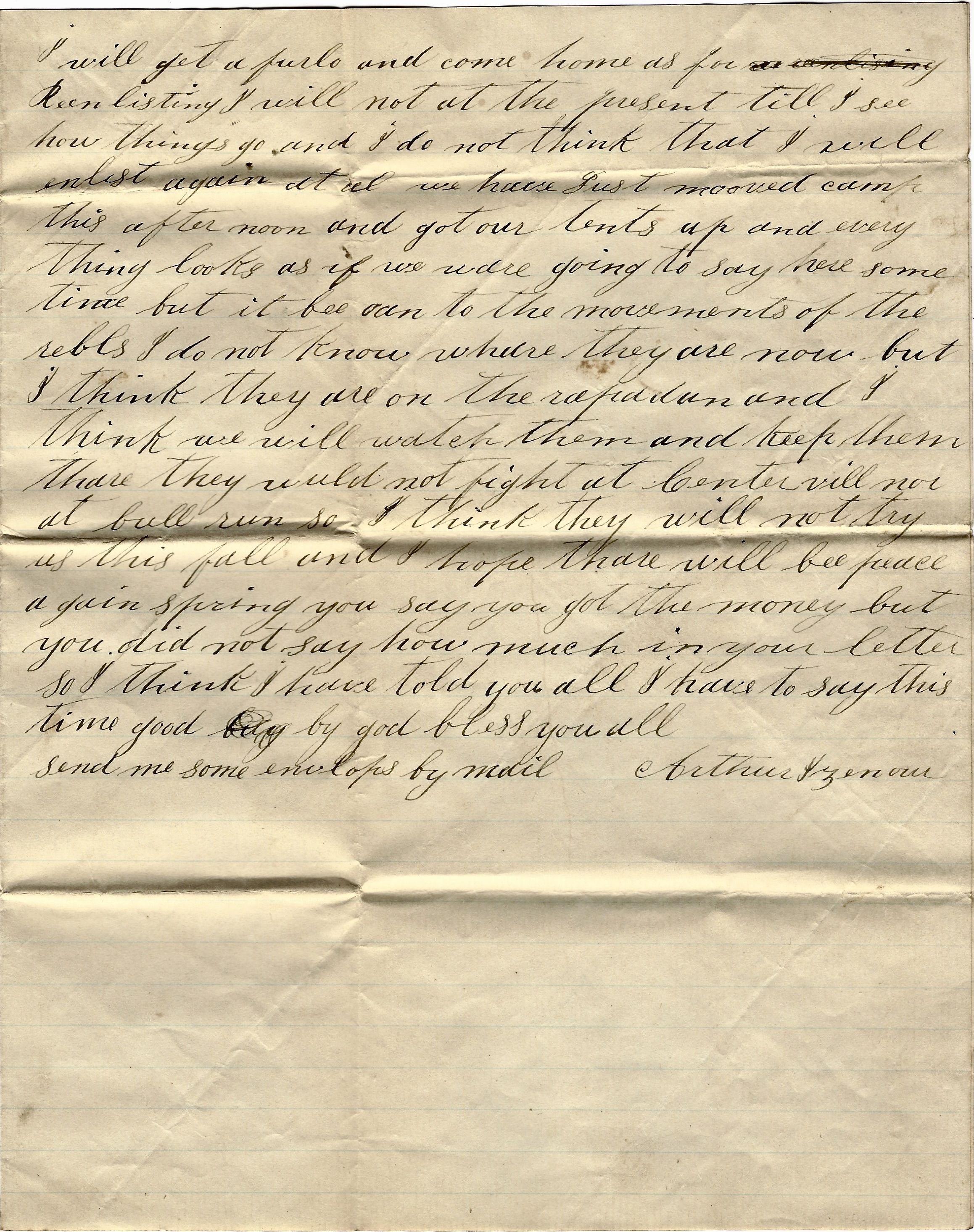


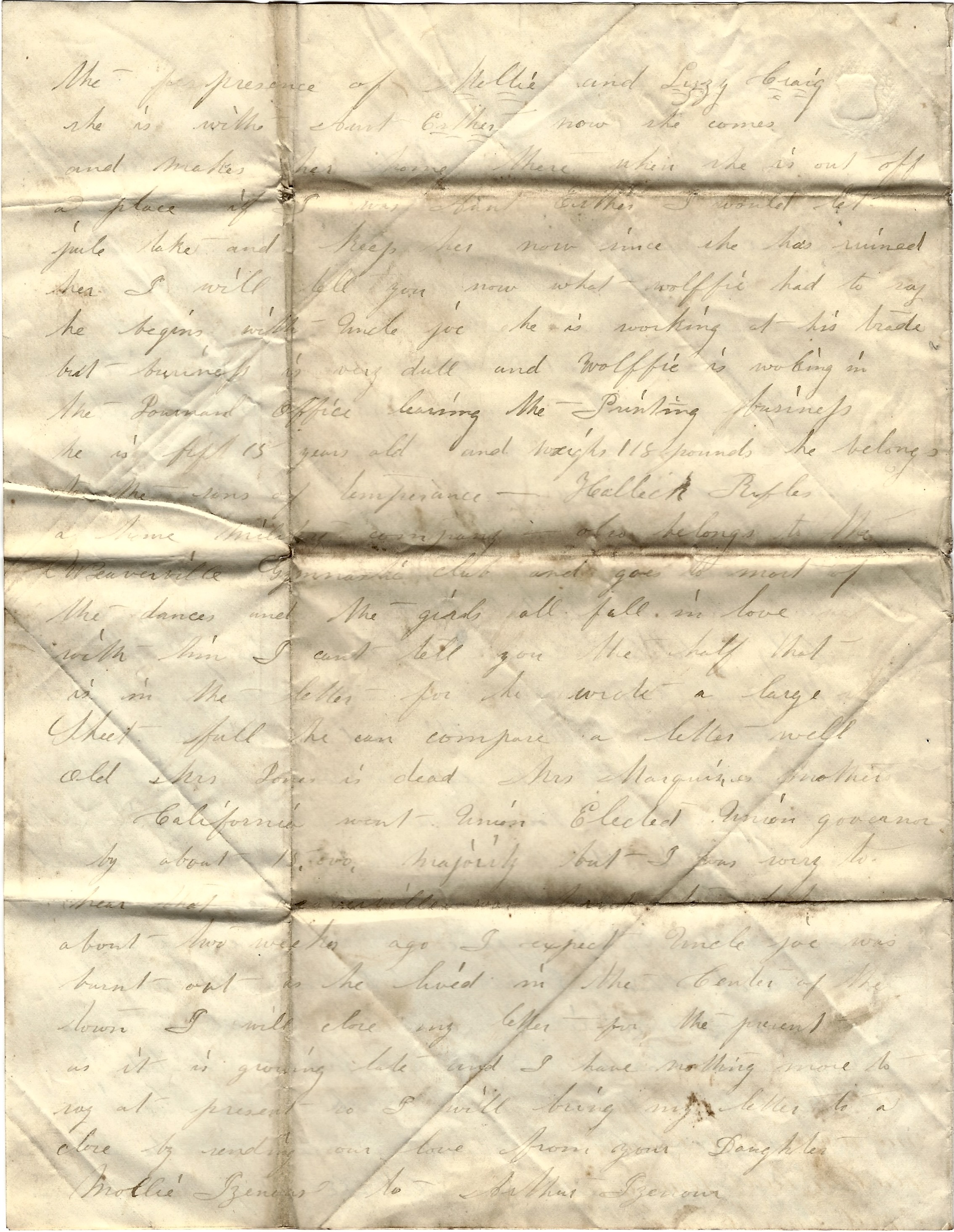
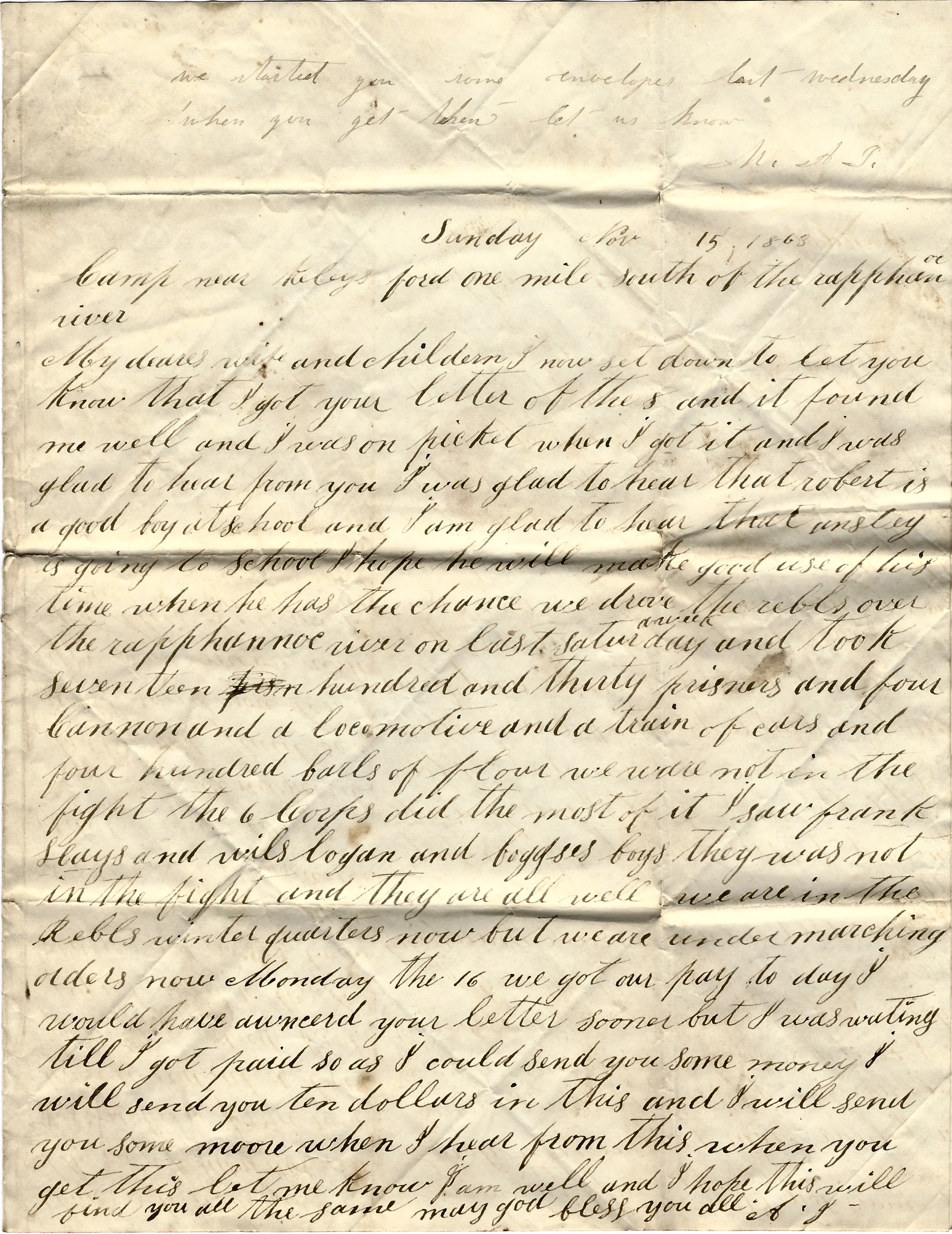


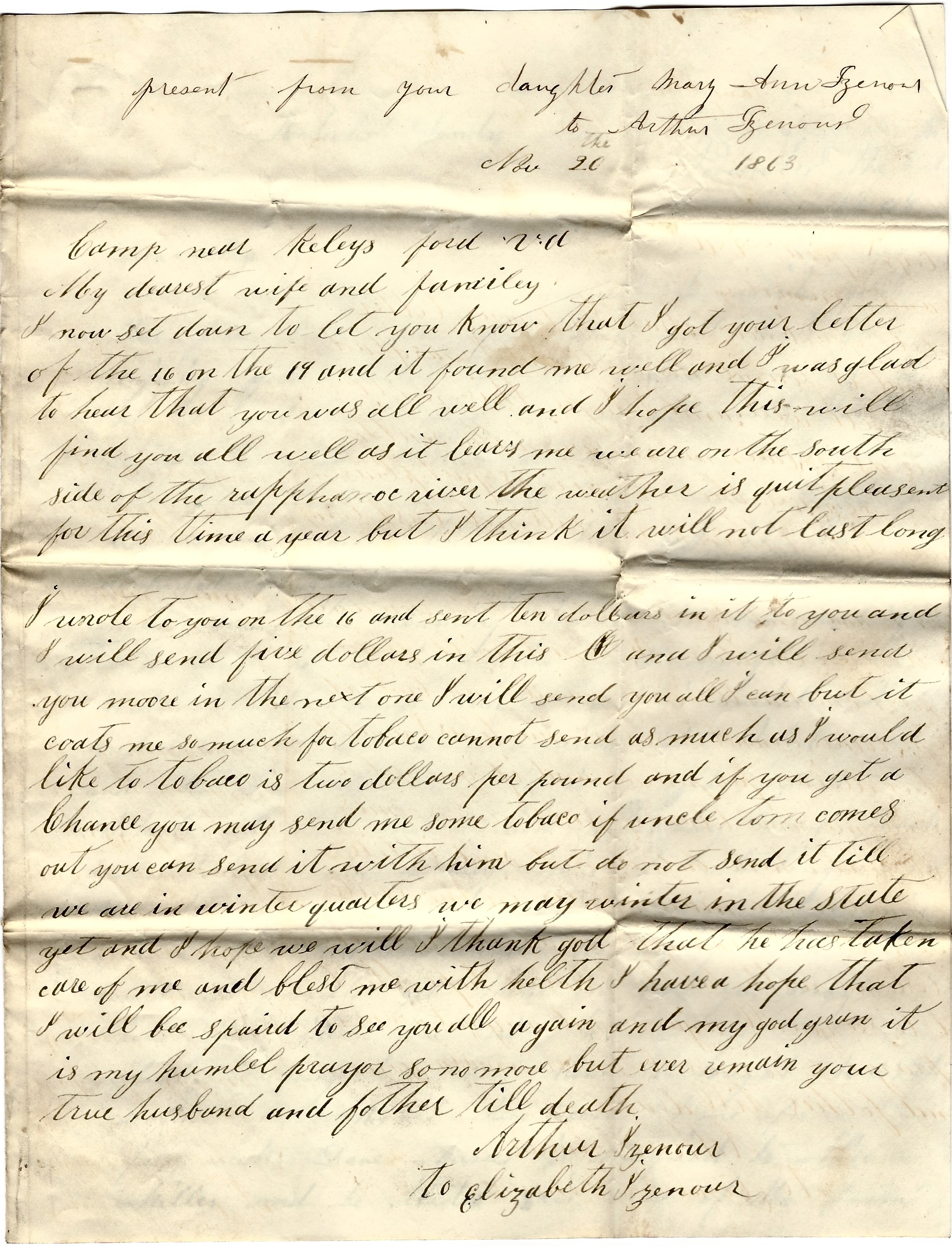
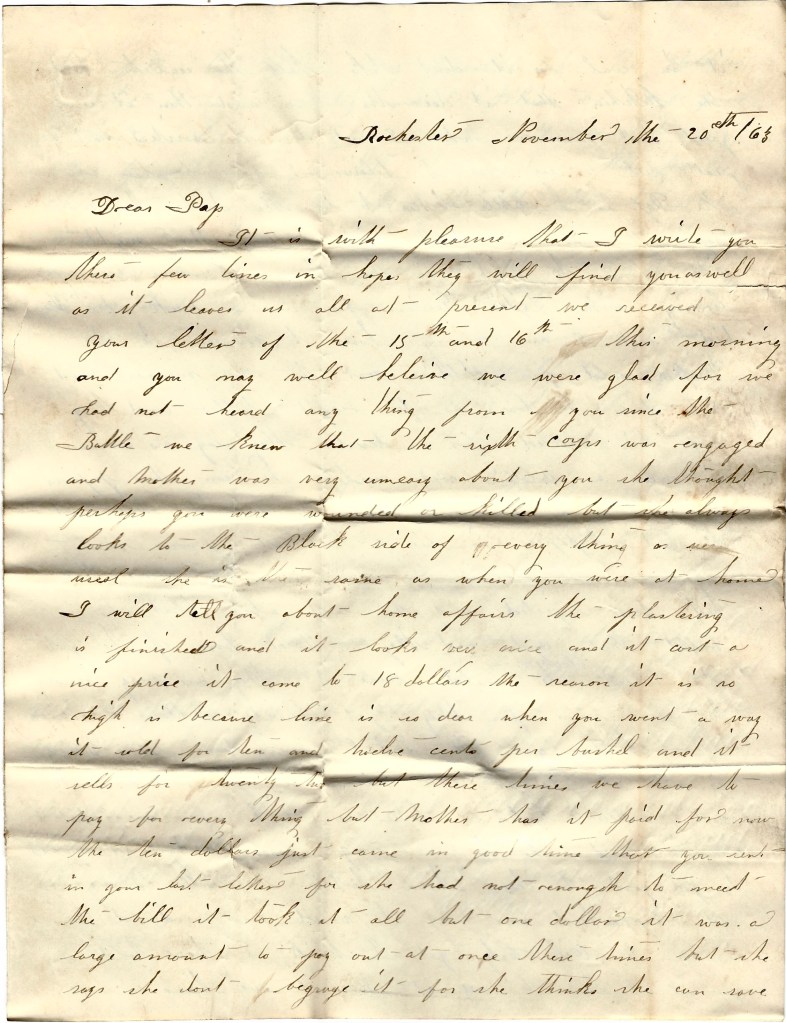

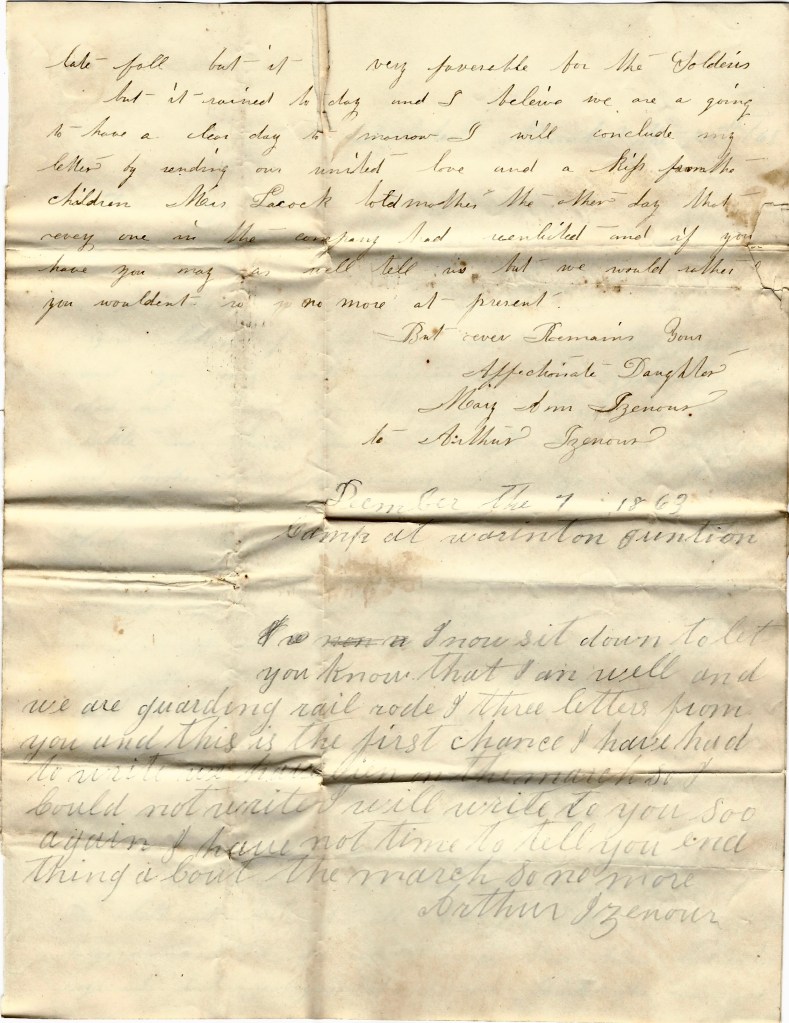


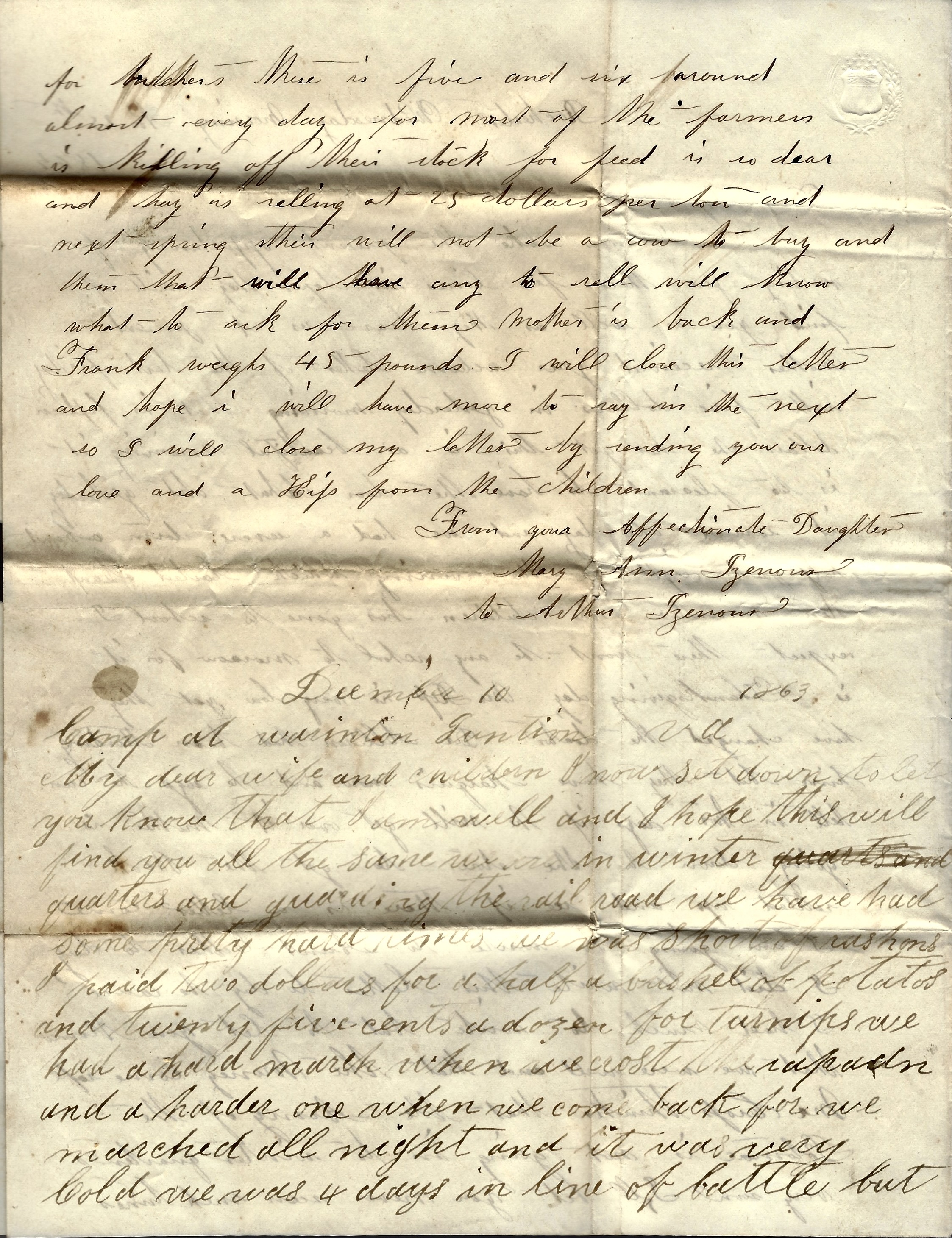
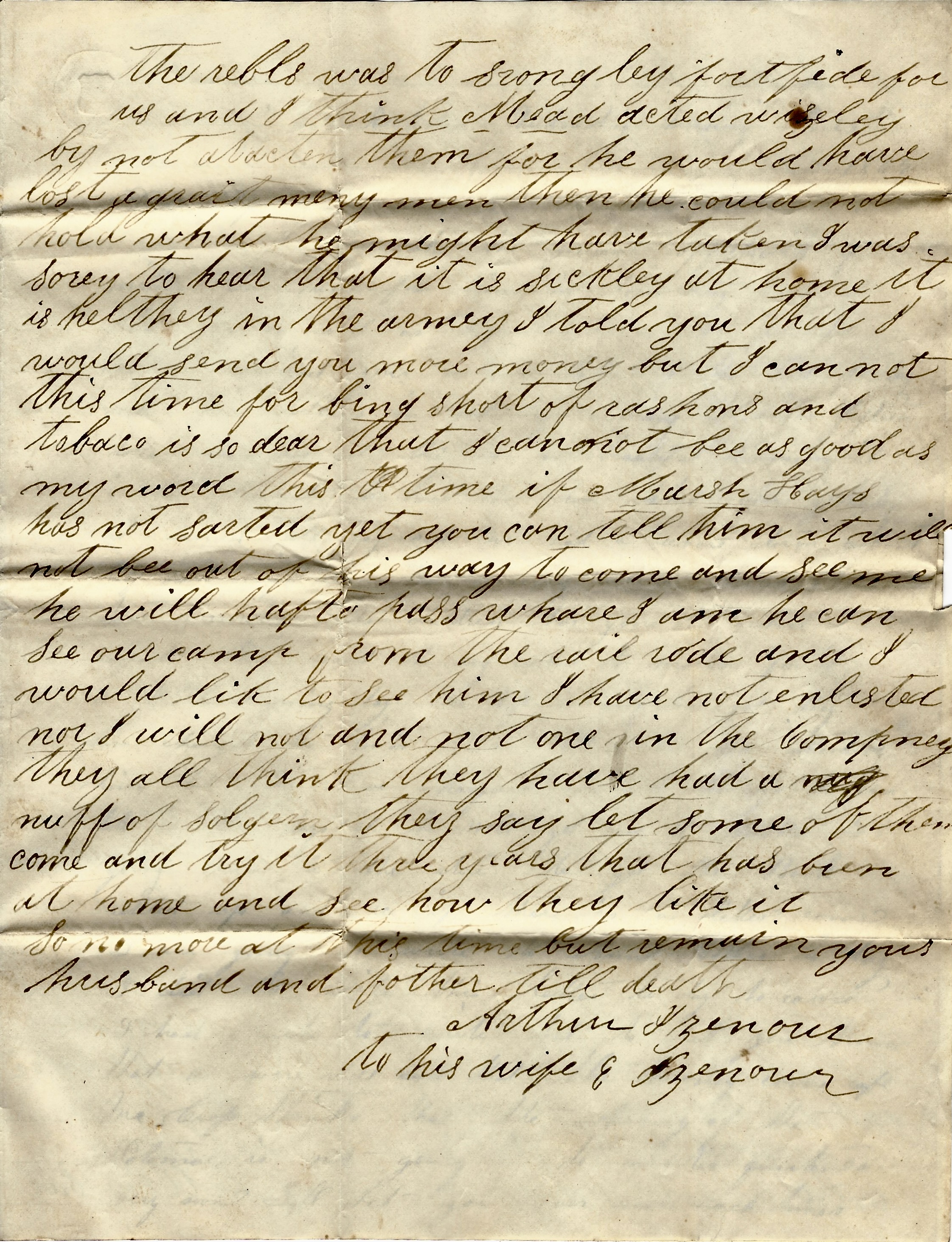

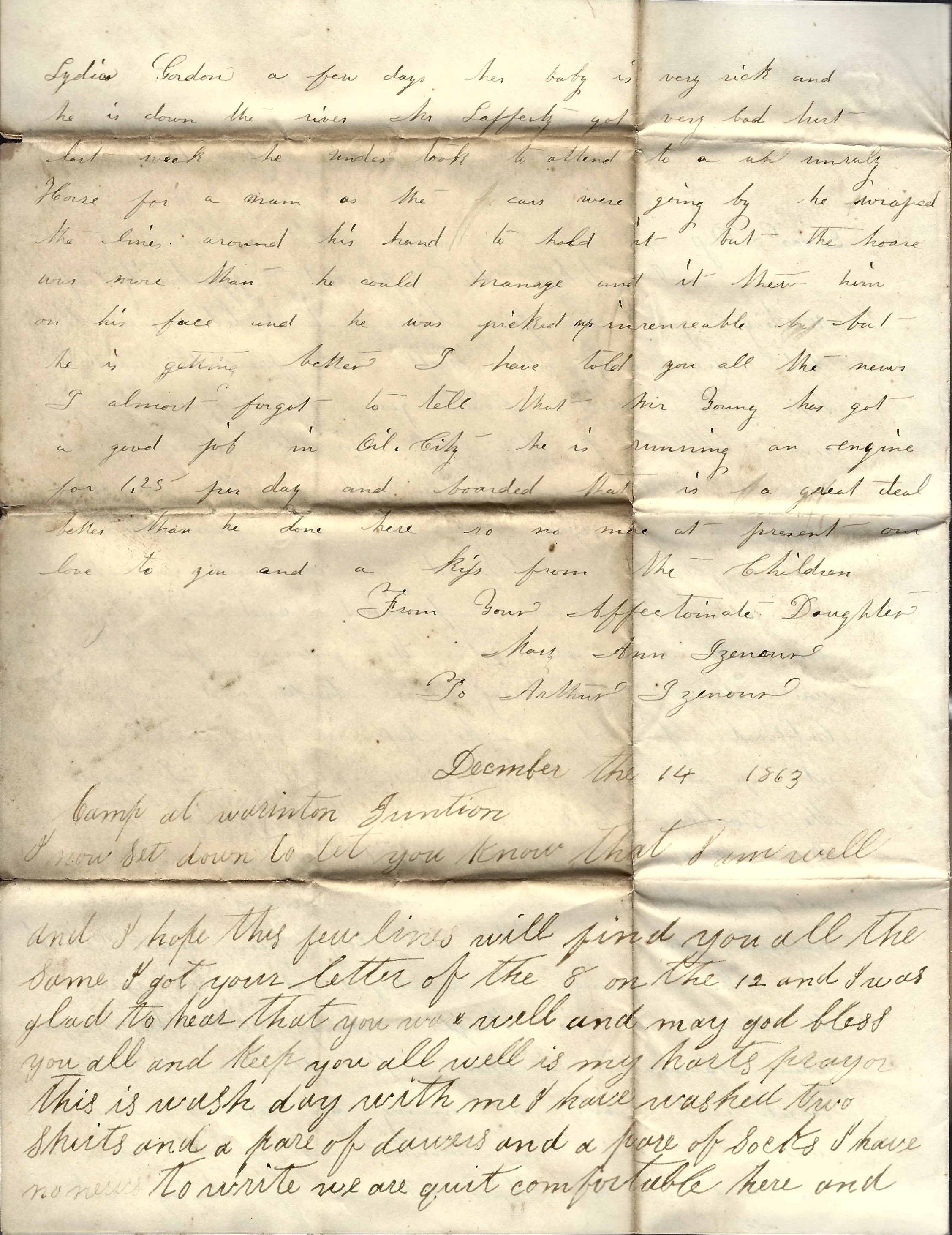





 Spared & Shared 23