

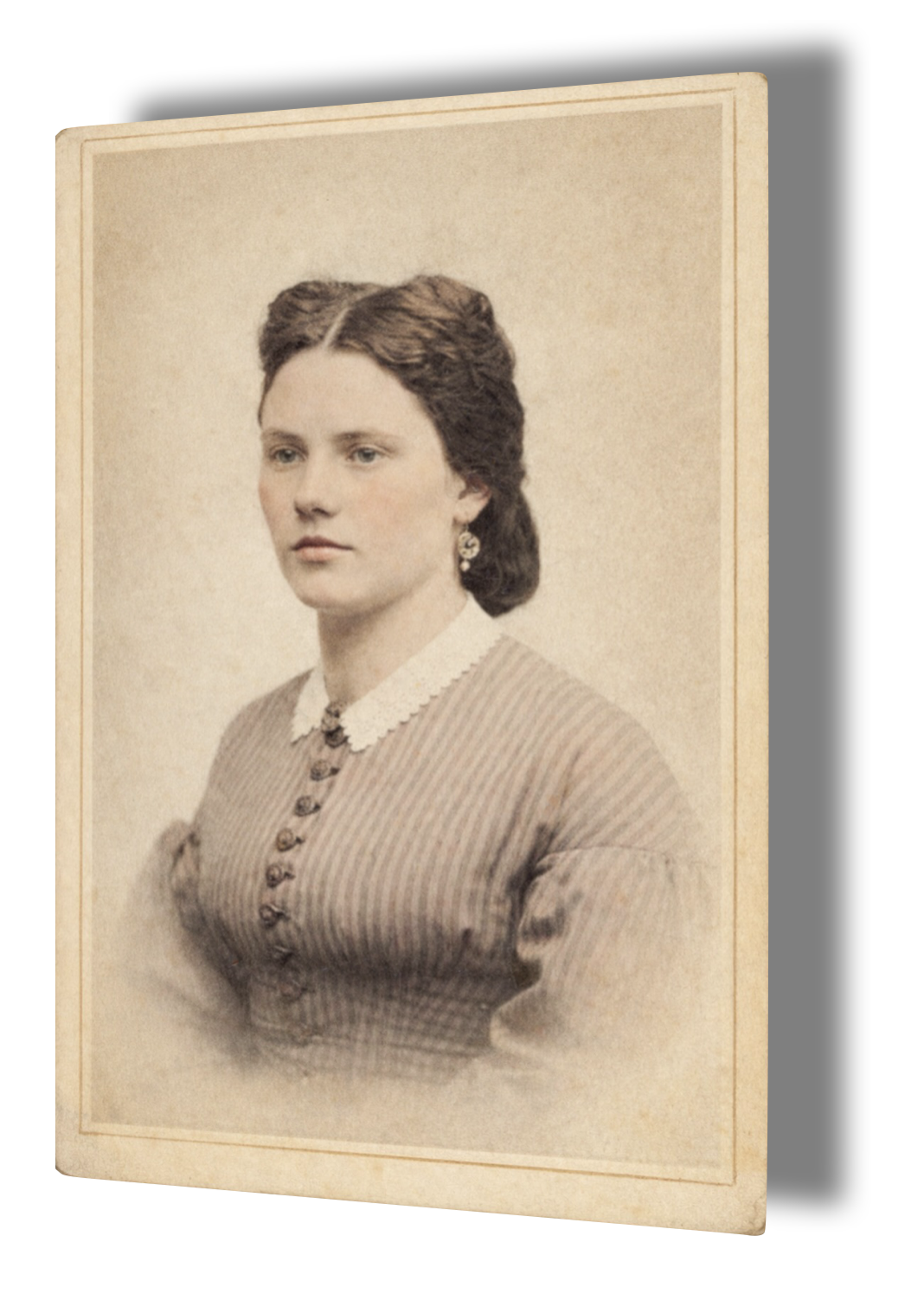
The following letter was written by Jean (“Jennie”) S. Graham (1843-1921), the wife of George Byron Stevens (1839-1926). Jennie was the daughter of William Graham (1812-1866) and Ann Creighton (1812-1856), emigrants from Perth, Scotland. Her brother was Capt. Charles Creighton Graham of Co. E, 29th Maine Infantry.
Jennie wrote the letter to her husband who served as a 1st Lieutenant in Co. E, 25th Maine Infantry but then reenlisted again as a private in February 1865 in Co. H, 30th Maine Infantry. Much of the beginning of the letter is doting on their young child, Jean Mae (“May”) Stevens, which is understandable given that their first two children, both boys, died as infants in 1862 and 1864. Jennie’s husband, George, was a teacher in Stevens Plains when he enlisted in Co. E of the 25th Maine Infantry on September 29, 1862 and was soon promoted to 1st Lieutenant. He and Jennie were married on Dec. 1, 1861.
There is a lengthy description of Gen. Grant’s visit to Portland, Maine, with his wife Julia in August 1865.
T R A N S C R I P T I O N
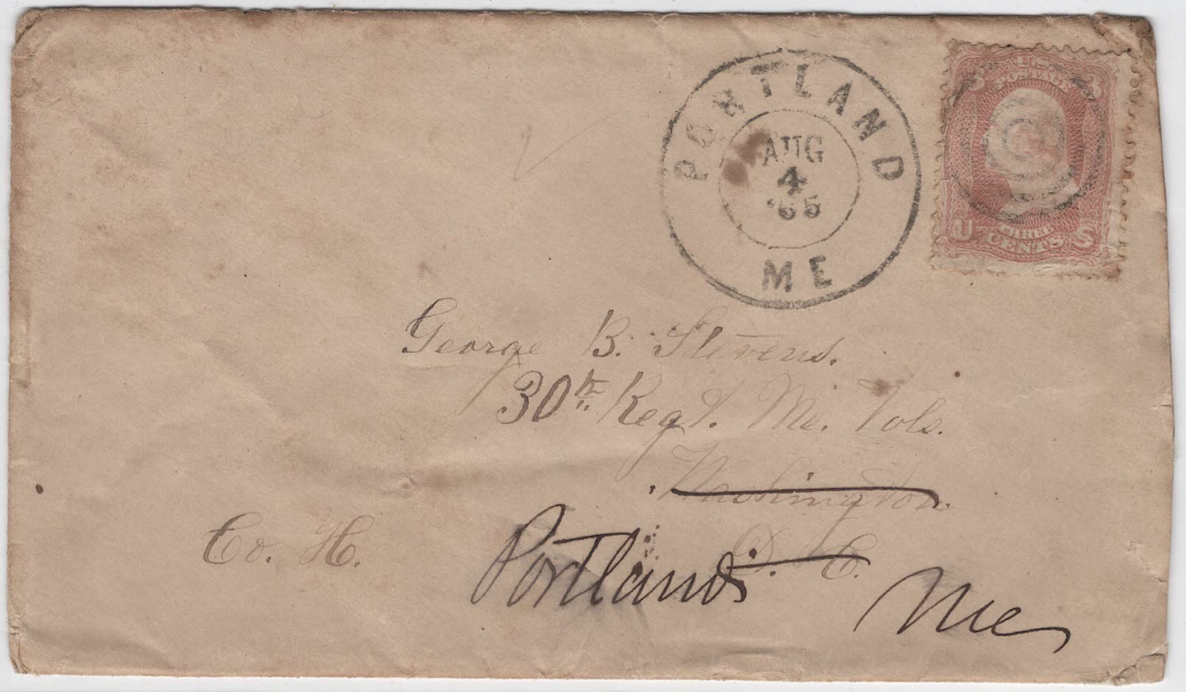
Stevens Plains [Maine]
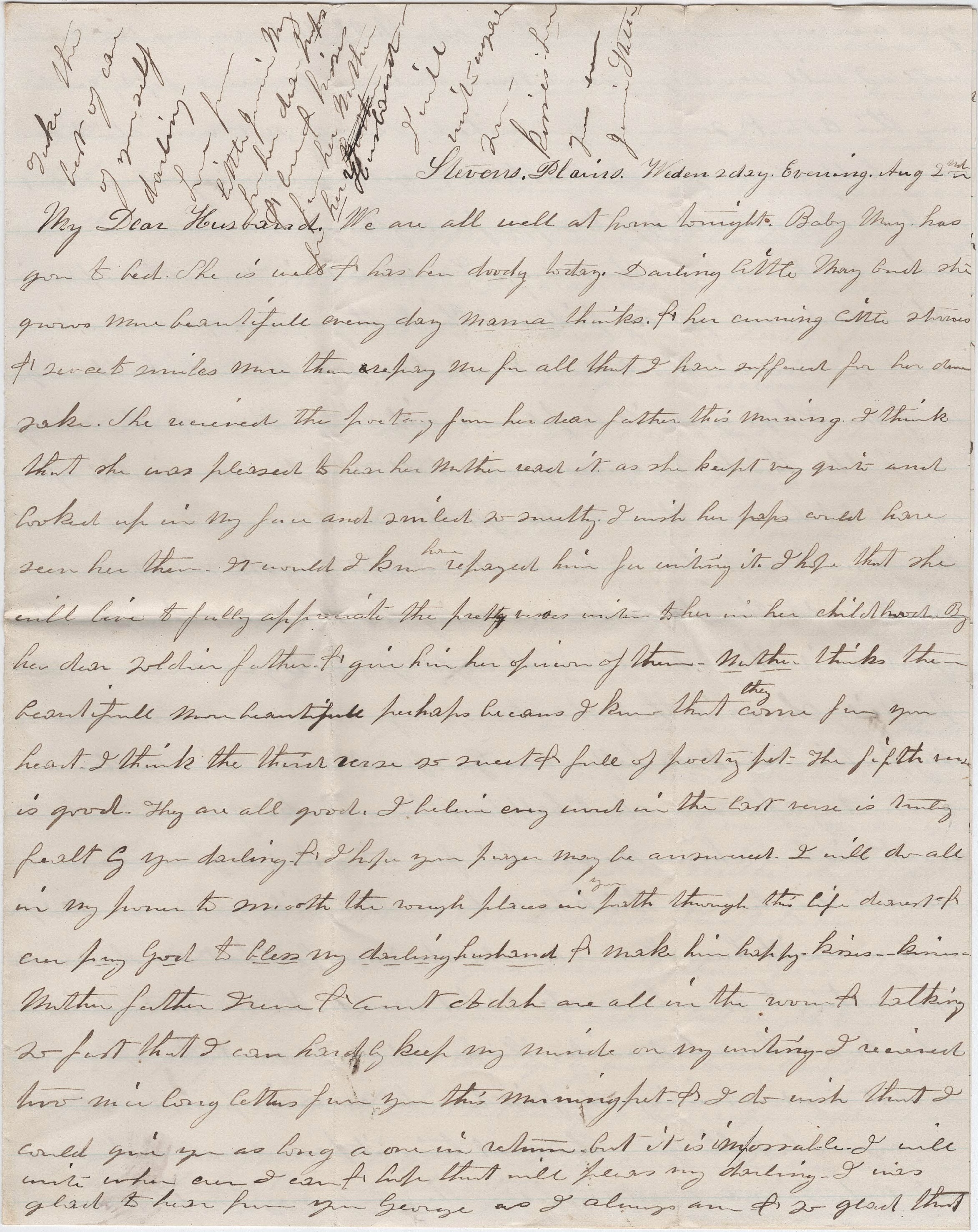
Wednesday evening, August 2nd, 1865
My dear husband,
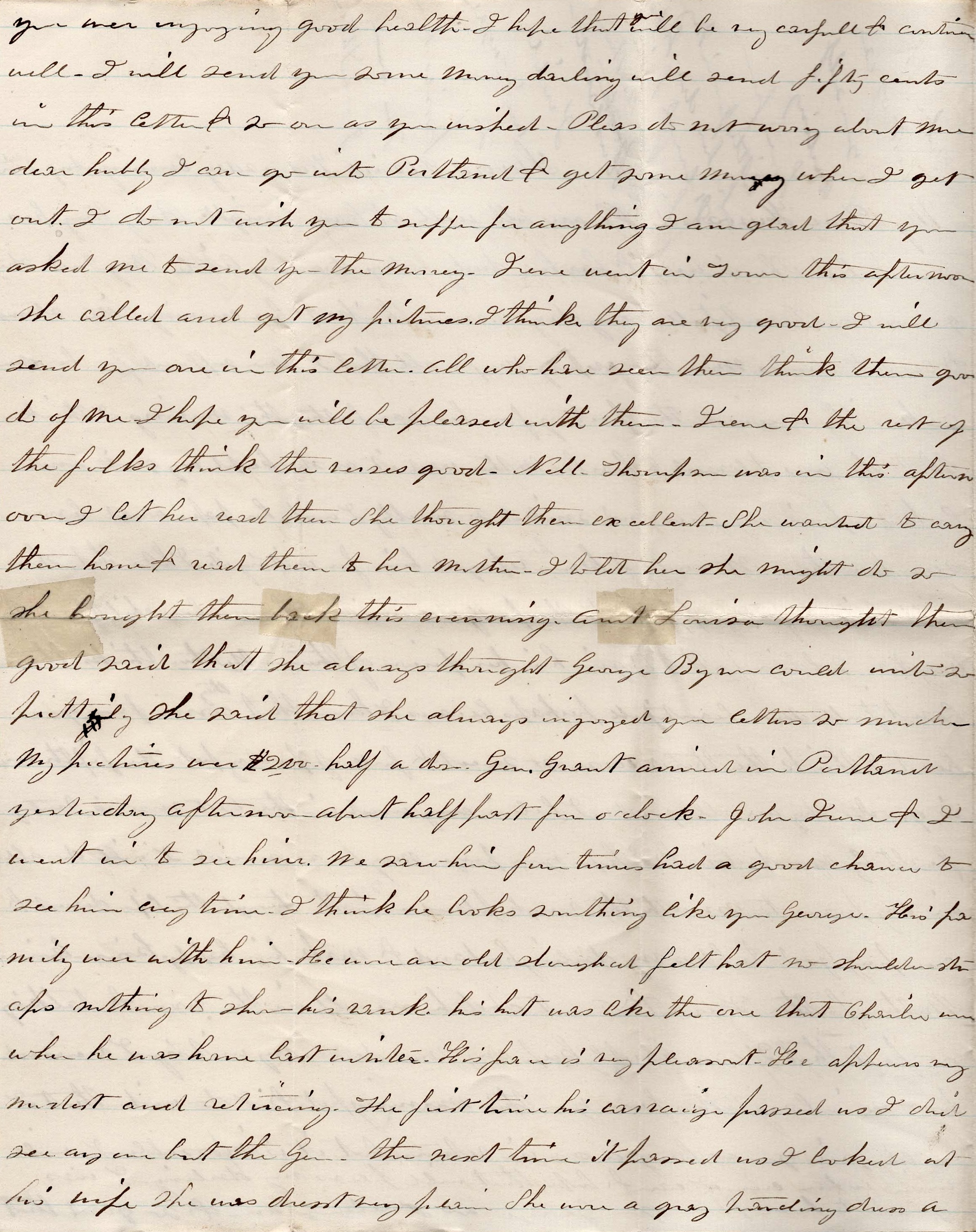
We are all well at home tonight. Baby May has gone to bed. She is well & has her doody today. Darling little May and she grows more beautiful every day, Mama thinks. Her cunning little [ ] and sweet smiles more than repay me for all that I have suffered for her dear sake. She received the poetry from her dear father this morning. I think that she was pleased to hear her Mother read it as she kept very quiet and looked up in my face and smiled so sweetly. I wish her papa could haveseen her then. It would I know have repaid him for writing it. I hope that she will live to fully appreciate the pretty lines written to her childhood by her dear soldier father & give him her opinion of them. Mother thinks them beautiful—more beautiful perhaps because I know that they come from your heart. I think the third verse so sweet & full of poetry pet. The fifth verse is good. They are all good. I believe every word in the last verse is truly heartfelt by you, darling, & I hope your prayer may be answered. I will do all in my power to smooth the rouygh places in your path through life, dearest, and ever pray God to bless my darling husband & make him happy…
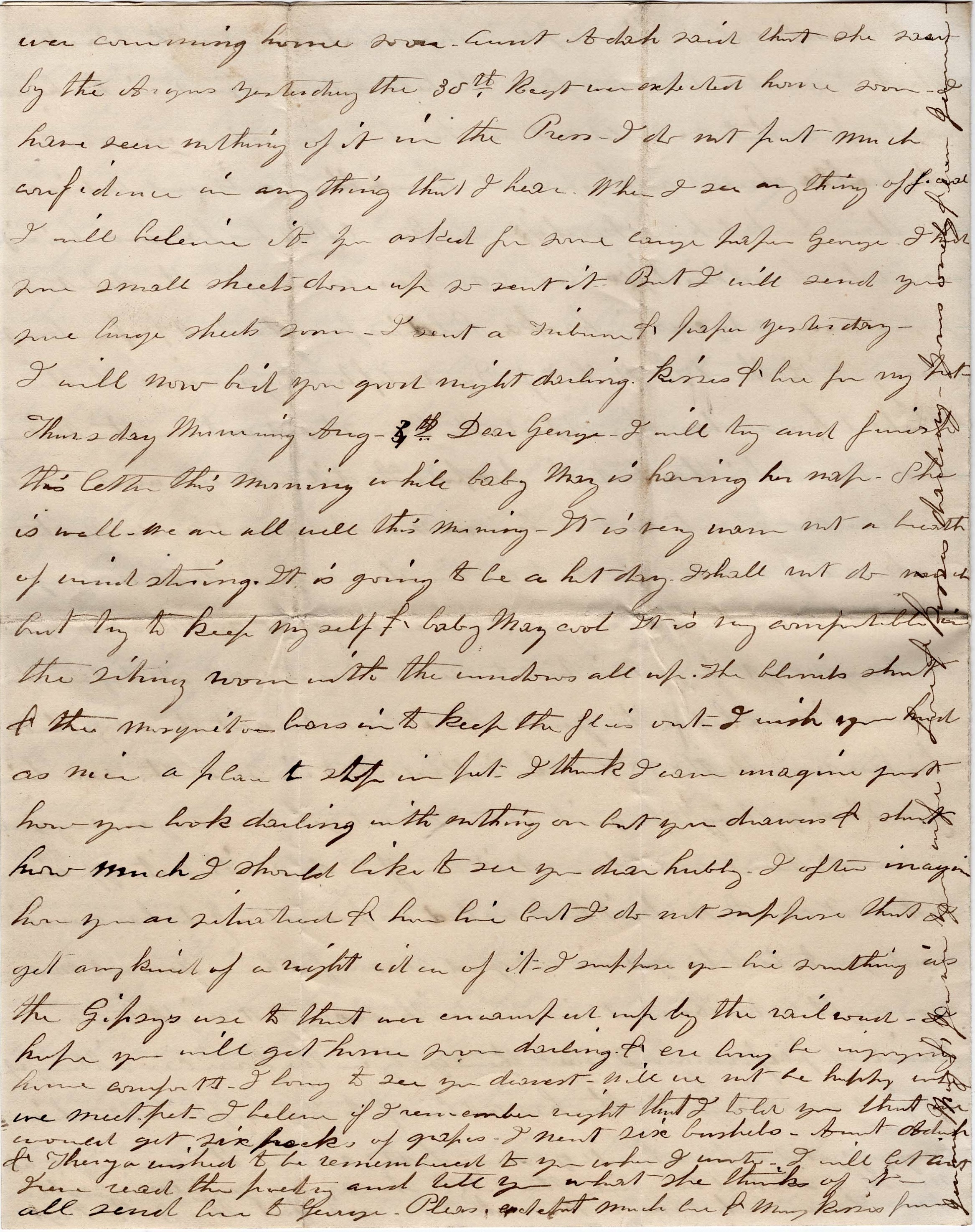
Aunt Ada said that she saw by the Argus yesterday the 30th [Maine] Regiment were expected home soon. I have seen nothing of it in the press. I do not put much confidence in anything that I hear. When I see anything official, I will believe it….
Thursday morning, August 3rd. Dear George, I will try and finish this letter this morning…Itis very warm. Not a breath of wind stirring. It is going to be a hot day. I shall not do much but try to keep myself and baby May cool. It is very comfortable in the sitting room with the windows all up, the blinds shut & the mosquito bars in to keep the flies out. I wish you had a mind to stop in but I thinnk I can imagine just how you look, darling, with nothing on but your drawers & shirt. How much I would like to see you dear hubby. I often imagine how you are situated and how live, but I do not suppose that I get any kind of a right idea of it. I suppose you live something as the gypsies use to that were encamped up by the railroad. I hope you will get home soon darling…
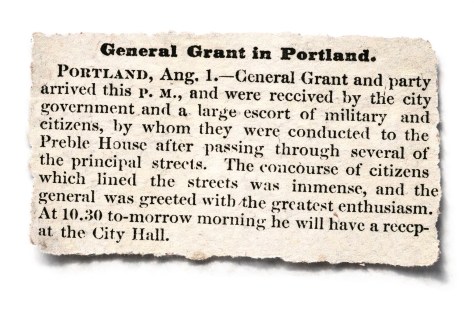
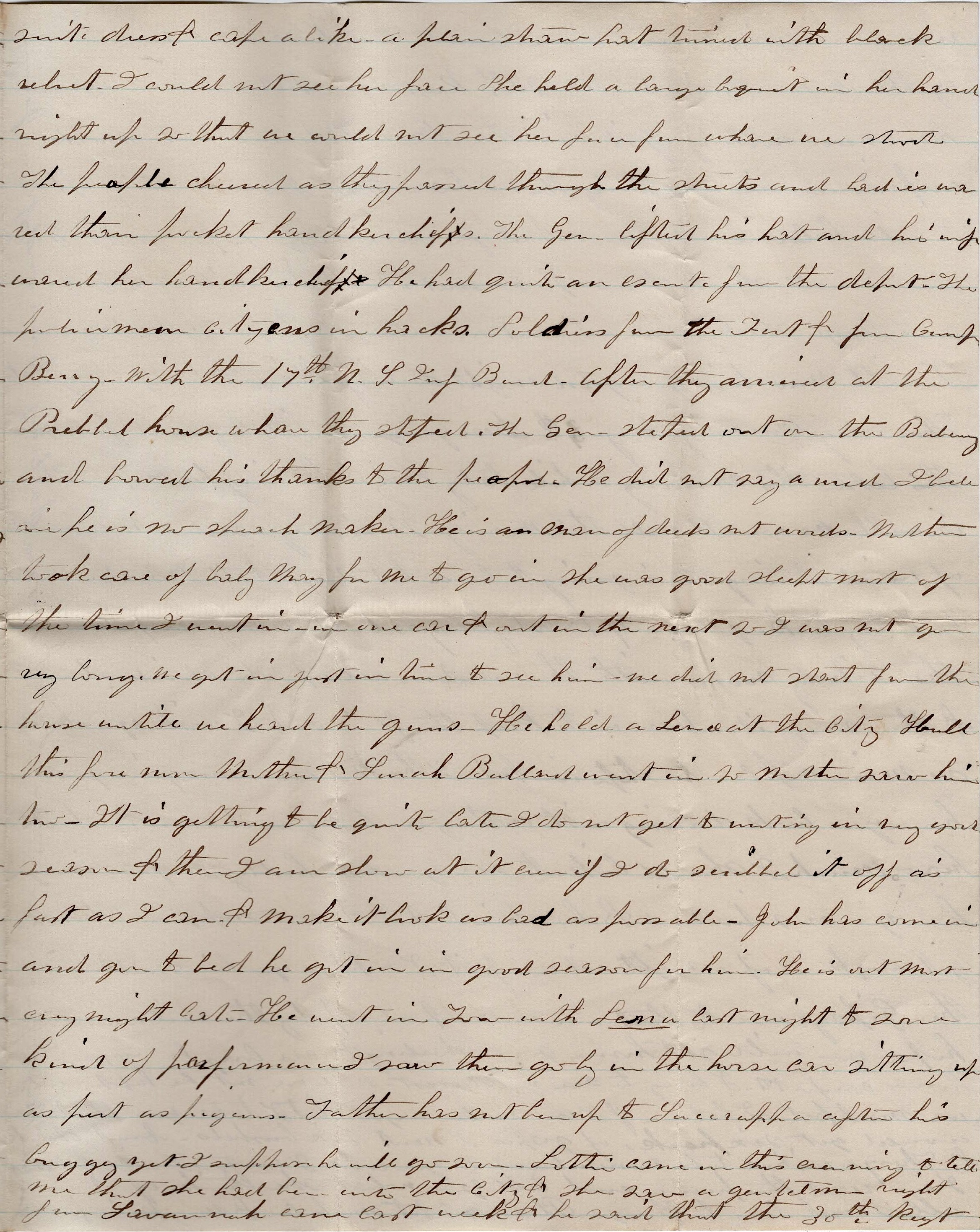
Gen. Grant arrived in Portland yesterday afternoon at half past four o’clock. John, Irene, & I went in to see him. We saw him four times. had a good chance to see him every time. I think he looks something like you George. His family were with him. He wore an old slouched felt hat, no shoulder straps—nothing to show his rank. His hat was like the one that [brother] Charlie wore when he was home last winter. His face is very pleasant. He appears very modest and retiring. The first time his carriage passed us I didn’t see anyone but the General. The next time it passed us I looked at his wife. She was dressed very plain. She wore a gray traveling dress suit, dress & cape alike, a plain straw hat trimmed with black velvet. I could not see her face. She held a large bouquet in her hand right up so that we could not see her face from where we stood.
The people cheered as they passed through the streets and ladies waved their pocket handkerchiefs. The General lifted his hat and his wife waved her handkerchief. He had quite an escort from the depot. The policemen, citizens in hacks, soldiers from the fort & from Camp Berry with the 17th U. S. Infantry Band.
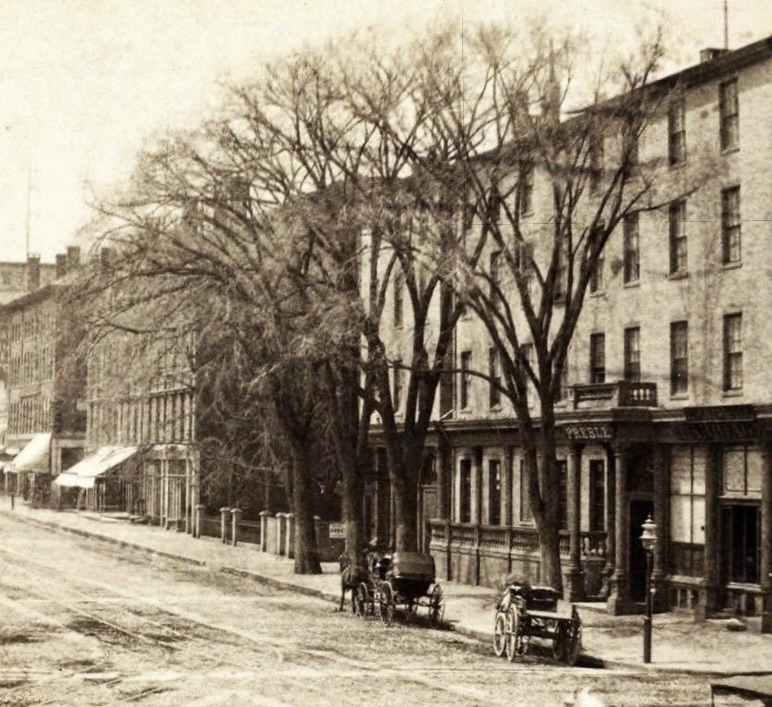
After they arrived at the Preble House where they stopped, the General stepped out on the balcony and showed his thanks to the people. He did not say much. I believe he is no speech maker. He is a man of deeds, not words. Mother took care of baby May for me to go in. She was good—slept most of the time I went in… I was not gone very long. We got in just in time to see him. We did not start for the house until we heard the guns. He held a reception at the City Hall. This forenoon, Mother & Sarah Ballard went in to so Mother saw him too. It is getting to be quite late. I do not get to writing in very good season & then I am slow at it even if I do scribble it off as fast as I can & make it look as bad as possible… Yours only, from Jennie
 Spared & Shared 23