
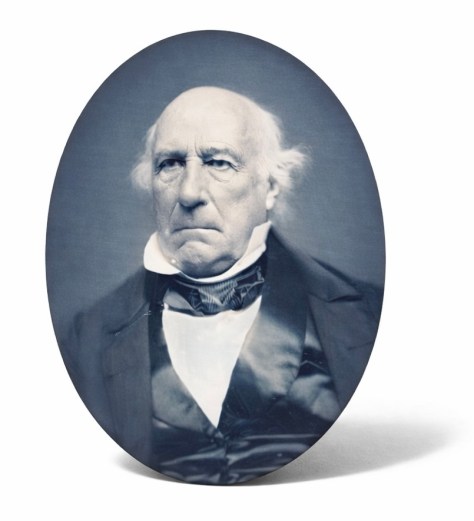
Bishop Perkins was a Representative from New York; born in Becket, Berkshire County, Mass., September 5, 1787; attended private school at East Granville, Mass., and was graduated from Williams College, Williamstown, Mass., in 1807; studied law; was admitted to the bar in 1812 and commenced practice in Lisbon, N.Y.; subsequently moved to Ogdensburg, St. Lawrence County, N.Y., and continued the practice of law; clerk of the board of supervisors of St. Lawrence County 1820-1852; appointed district attorney of St. Lawrence County February 24, 1821, and served until May 21, 1840; member of the State constitutional convention in 1846; member of the State assembly in 1846, 1847, and again in 1849; elected as a Democrat to the Thirty-third Congress (March 4, 1853-March 3, 1855); was not a candidate for renomination in 1854; returned to Ogdensburg, N.Y., and continued the practice of his profession until his death there November 20, 1866; interment in Ogdensburg Cemetery.
Perkins wrote the letter to Charles Anthony, born in 1816 somewhere in Jefferson County, New York. Later he settled in Gouverneur, Saint Lawrence County, New York, where he pursued a career as an attorney. He also had business interests in banking, saw mills, and railroads, and was active in the civic and political affairs of Gouverneur, serving as town supervisor from 1850 to 1852, and as postmaster from 1853 to 1855.
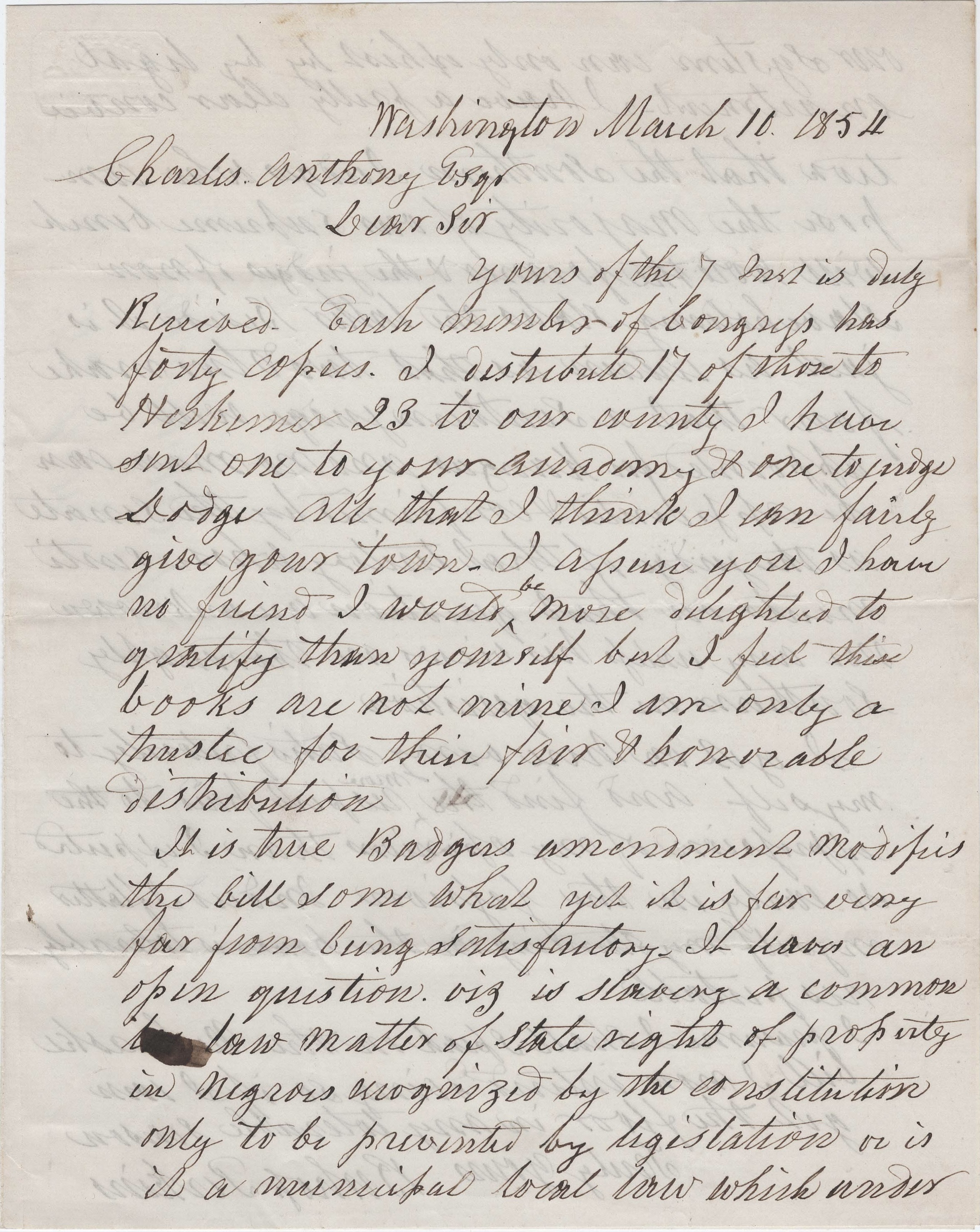
In his letter, in which he conveys copies of the Nebraska Bill—recently passed by the US Senate—to his constituents back home, Perkins references the last-minute amendment put forth by North Carolina Senator George E. Badger (the “Badger Proviso”). This amendment altered the bill to ensure that it would not reinstate any pre-existing laws concerning slavery in the newly established territories. Although he articulated a desire to address the House regarding the Bill, it remains uncertain whether Perkins had the opportunity to do so. Prior to its enactment, Congress revisited the legislation to establish two separate territories—Kansas and Nebraska—and to formally repeal the Missouri Compromise.
T R A N S C R I P T I O N
Washington [D. C.]
March 10, 1854
Charles Anthony, Esqr.
Dear Sir, yours of the 7th inst. is duly received. Each member of Congress has forty copies, I distribute 17 of those to Herkimer [county], 23 to our county [St. Lawrence]. I have sent one to your [Ogdensburg] Academy & one to Judge [Edwin] Dodge—all that I think I can fairly give your town. I assure you I have no friend I would be more delighted to gratify than yourself but I feel these books are not mine. I am only a trustee for their fair & honorable distribution.
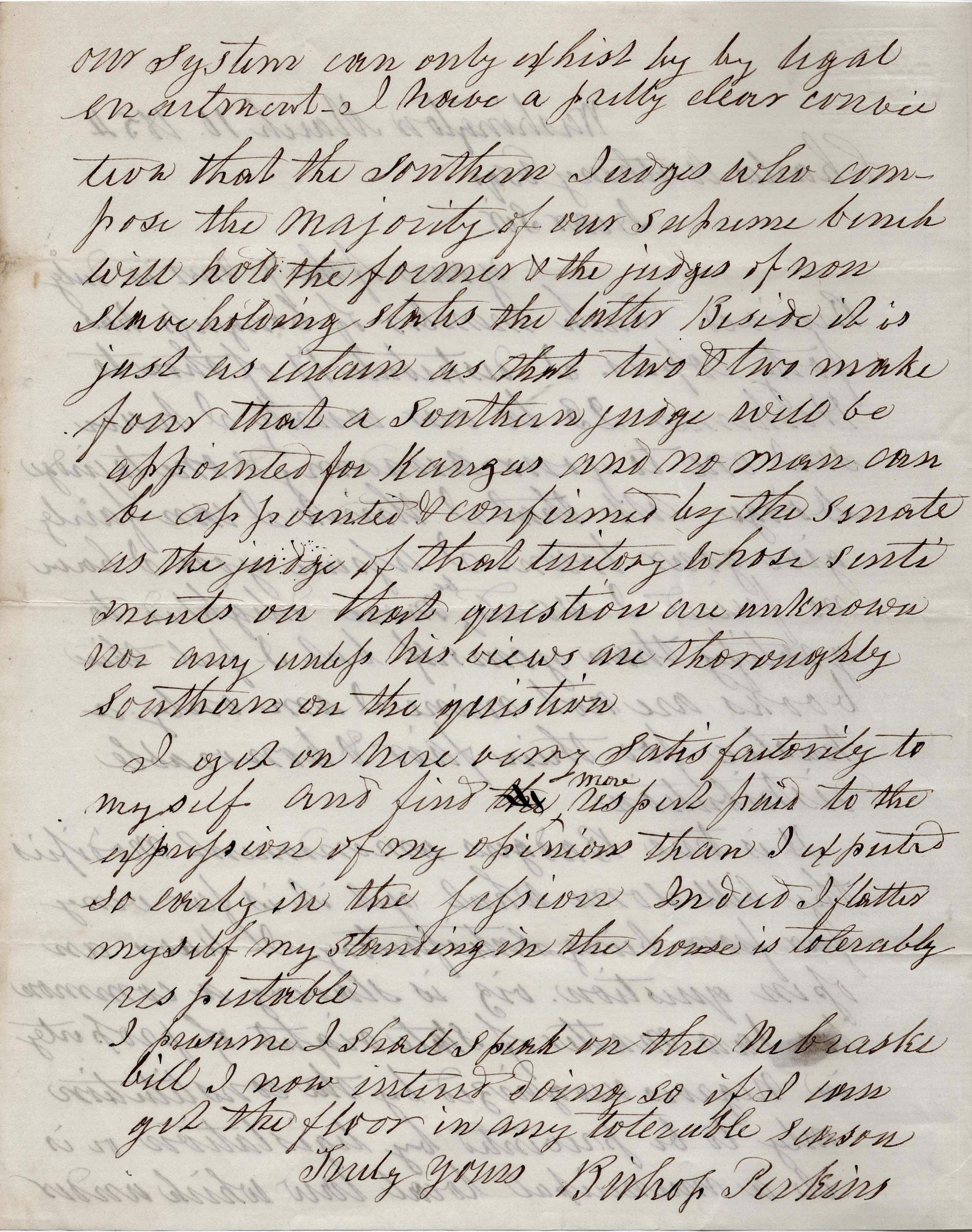
It is true [George Edmund] Badger’s amendment modified the bill somewhat, yet it is far—very far—from being satisfactory. It leaves an open question—viz: Is slavery a common law matter of State rights of property in negroes recognized by the Constitution only to be prevented by legislation, or is it a municipal local law which under our system can only exist by legal enactment. I have a pretty clear conviction that the Southern judges who compose the majority of our Supreme bench will hold the former & the judges of non slaveholding states the latter. Beside, it is just as certain as that two & two make four that a Southern judge will be appointed for Kanzas and no man can be appointed & confirmed by the Senate as the judge of that territory whose sentiments on that question are unknown, nor any unless his views are thoroughly Southern on the question.
I get on here very satisfactorily to myself and find more respect paid to the expression of my opinions than I expected so early in the session. Indeed, I flatter myself my standing in the House is tolerably respectable.
I presume I shall speak on the Nebraska Bill. I now intend doing so if I can get the floor in any tolerable season.
Truly yours, — Bishop Perkins
 Spared & Shared 23