
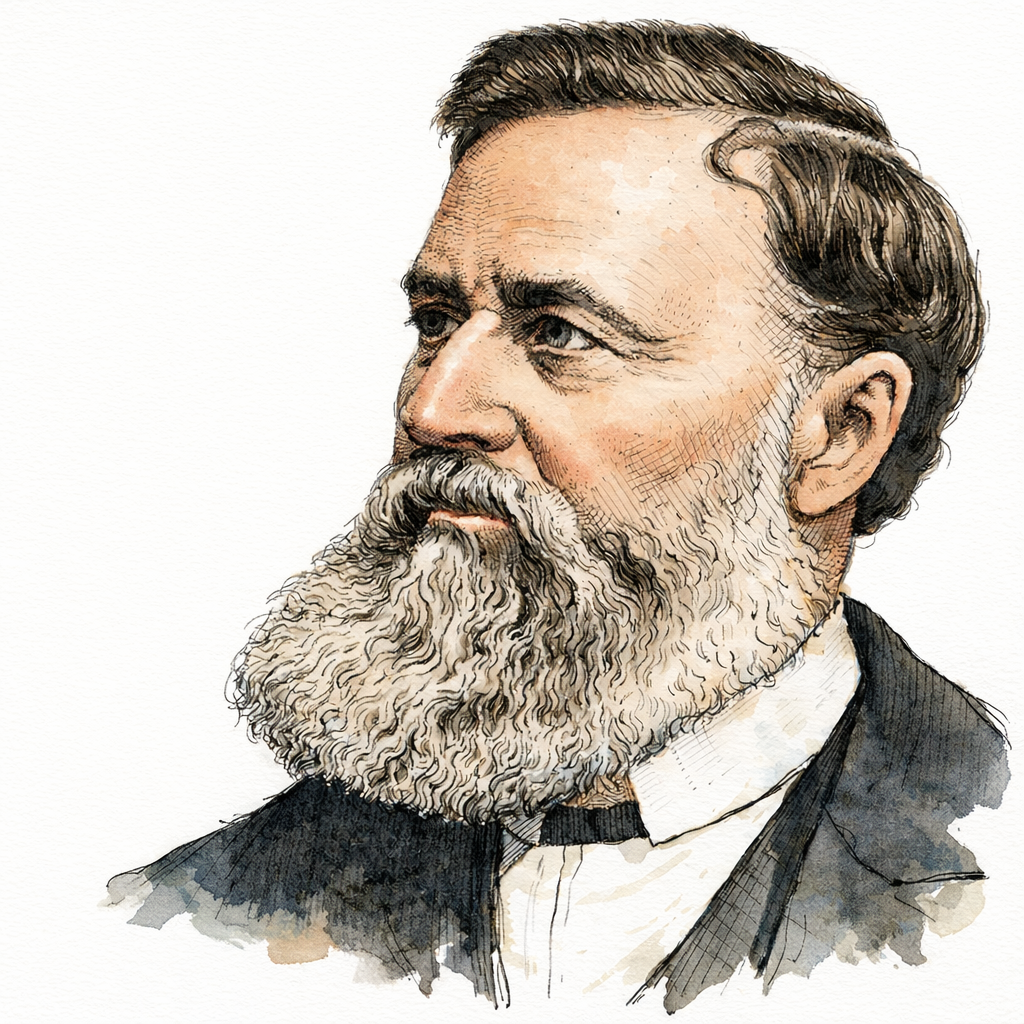
This letter was written by Henry E. Milford (1817-1882), an agent of the Singer Sewing Company. He was located in Rio de Janeiro, Brazil, at the time he wrote this letter in July 1863. Henry’s parents were Edward Milford (1794-1845) and Elizabeth Hipwood (1800-1852), natives of Wales and Scotland respectively. Henry was born in New York City and labored as a bookkeeper and an accountant in the metropolis until taking the position as a salesman for Isaac Merritt Singer who machines revolutionized the sewing industry and first introduced installment purchasing.
T R A N S C R I P T I O N
Rio de Janeiro
July 8, 1863
Messer. I. M. Singer & Co.
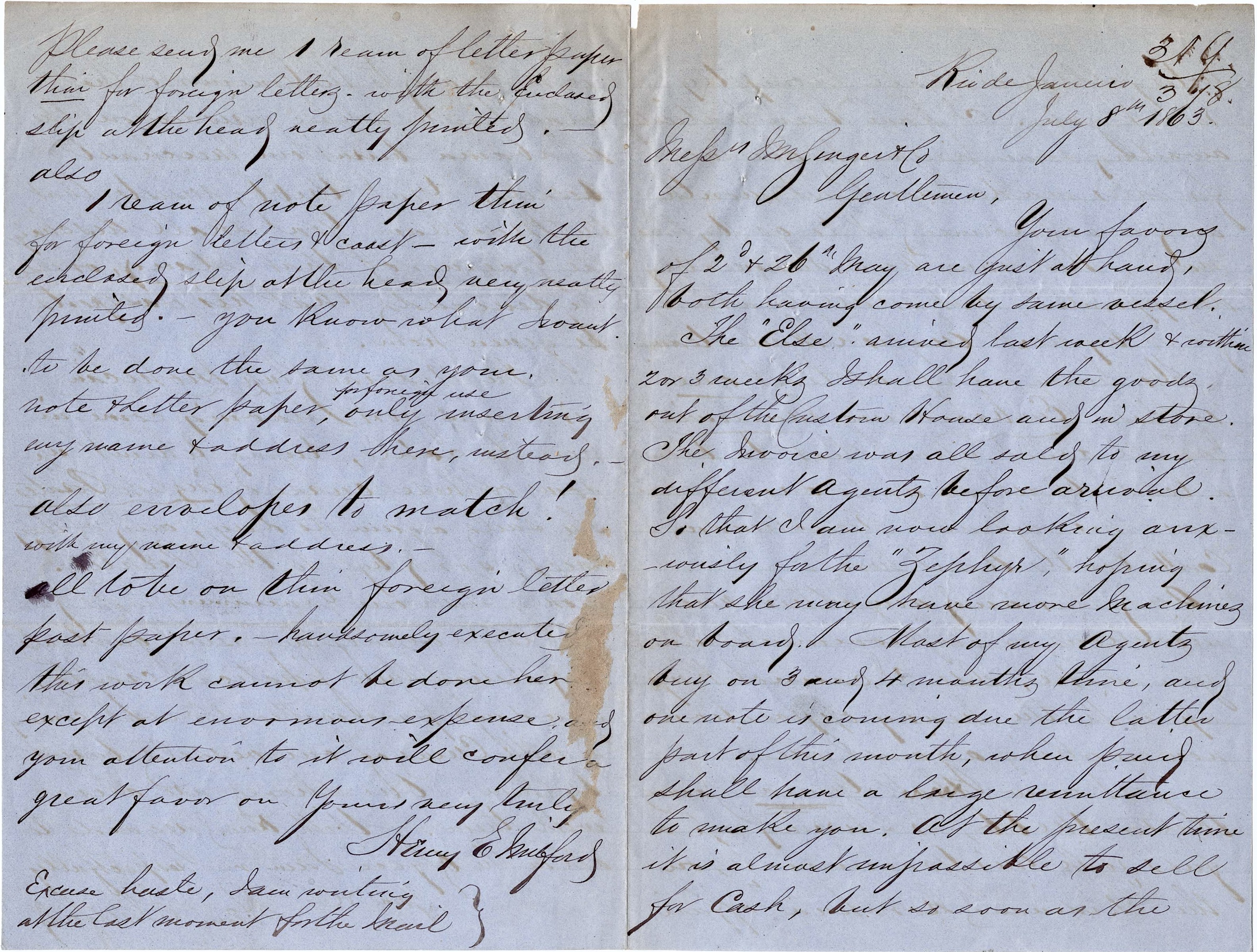
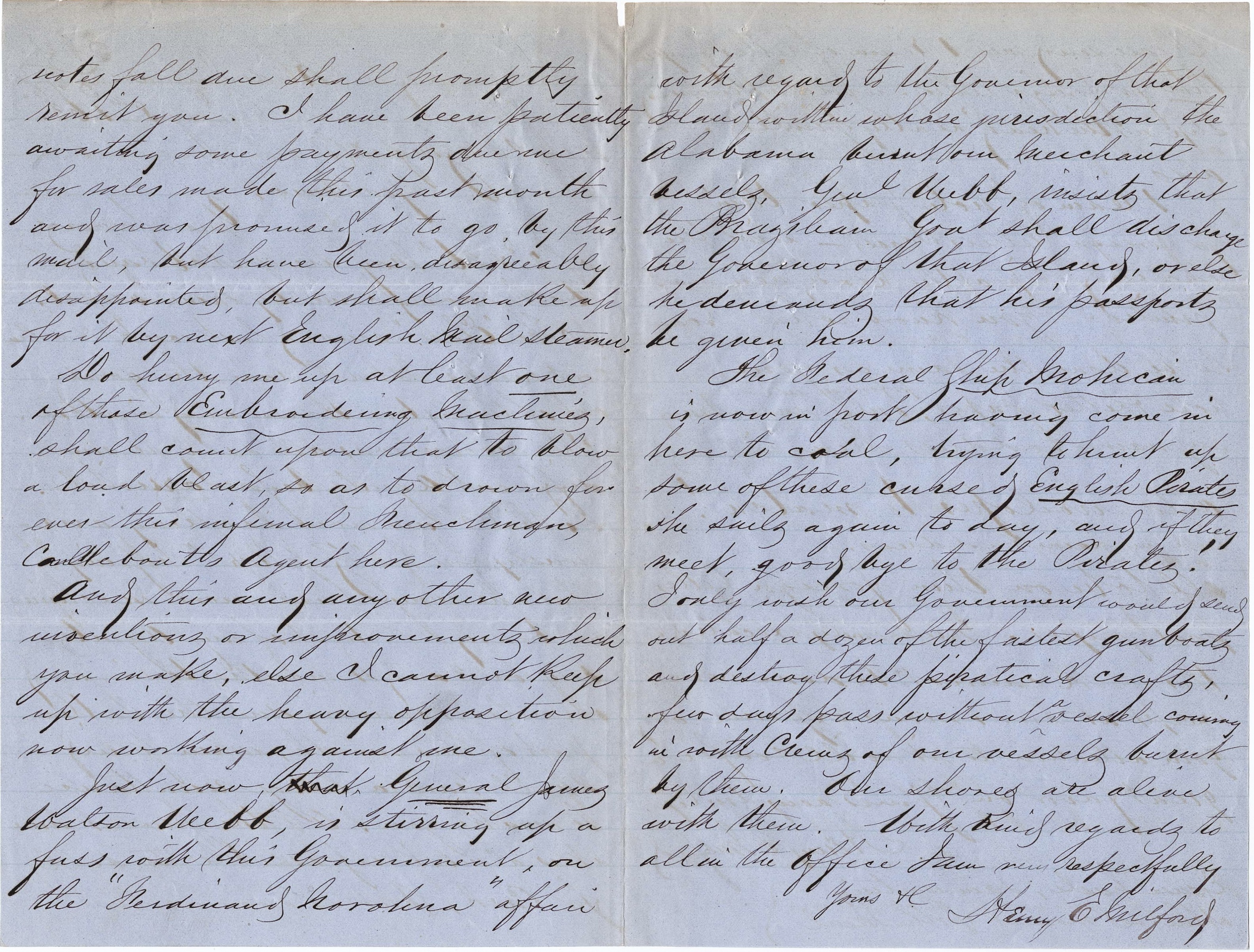
Gentlemen, your favors pf the 2nd and 26th May are just at hand, both having come by same vessel. The “Else” arrived last week & within 2 or 3 weeks I shall have the goods out of the Custom House and in store. The invoice was all sold to my different agents before arrival, so that I am now looking anxiously for the “Zephyr,” hoping that she may have more machines on boards. Most of the agents buy on 3 and 4 months time, and one note is coming due the latter part of this month, when paid shall have a large remittance to make you. At the present time it is almost impossible to sell for cash, but so soon as the notes fall due, shall promptly remit you.
I have been patiently awaiting som payments due me for sales made this past month and was promised it to go by this mail, but have been disagreeably disappointed, but shall make up for it by next English Mail steamer. Do hurry me up at least one of those Embroidering Machines. Shall count upon that to blow a loud blast, so as to drown forever this infernal Frenchman, C______ [?] agent here. And this and any other new inventions or improvements which you make, else I cannot keep up with the heavy opposition now working against me.
Just now, General James Watson Webb 1 is stirring up a fuss with this government on the ” “Ferdinand [Fernand] Noronha” affair with regard to the Governor of that Island within whose jurisdiction the Alabama burnt our merchant vessels. 2 General Webb insists that the Brazilian government shall discharge the Governor of that Island or else he demands that his passports be given him.
The Federal Ship Mohican is now in port having come in here to coal, trying to hunt up some of these cursed English Pirates. She sails again today and if they meet, goodbye to the Pirates! I only wish our government would send out half a dozen of the fastest gunboats and destroy these piratical crafts. Few days pass without a vessel coming in with crews of our vessels burnt by them. Our shores are alive with them. With kind regards to all in the office, I am respectfully yours, &c. — Henry E. Milford
Please send me a ream of letter paper thin for foreign letters with the enclosed slip at the head neatly printed.
Also, one ream of note paper thin for foreign letters and coast, with the enclosed slip at the head neatly printed. You know what I want to be done the same as your note & letter, for foreign use only inserting my name & address here instead. Also envelopes to match! with my name & address. All to be on thin letter post paper, handsomely executed. This work cannot be done here except at enormous expense and your attention to it will confer a great favor on yours very truly, — Henry E. Milford
Excuse haste, I am writing at the last moment for the mail.
1 James Watson Webb (1802-1884) was the American Minister to Brazil during the Lincoln Administration. He was accused of extorting a large sum of money from the Brazilian government for favors, Carl Sandburg wrote that Webb “believed that Lincoln should have appointed him major general, rating himself a grand strategist, having fought white men in duels and red men in frontier war.” [Wikipedia]
2 In the spring of 1863, the Confederate Commerce raider, CSS Alabama, commanded by Captain Rafael Semmes, conducted a series of captures of American vessels near Brazil. Semmes used the port on the island as his base for several months while carrying out these raids. The US later sought compensation from Britain for the damages caused these vessels because these raiding vessels were typically British-built and hid themselves in British ports.
 Spared & Shared 23