
The following letter was written by Sarah (Walters) Alsbach (1812-1896), the wife of Rev. Michael Alsbach (1812-1886) of Benton, Elkhart county, Indiana. Sarah’s husband was licensed to preach in the Methodist Episcopal church by the Ohio Conference in 1855. He was ordained a deacon in 1857 and an elder in 1859. He transferred to the Indiana Conference in 1856 and was assigned to the Elkhart Circuit near Benton, Indiana. He lived on a farm seven miles southeast of Goshen and from this point, rode a circuit in Indiana and lower Michigan. At one time his circuit was 300 miles in length. During the Civil War, Sarah’s oldest son Henry served in the 74th Indiana Infantry and her family had to contend with Copperheads—southern sympathizers—on the home front that sometimes led to attacks on her husband. In 1863, her husband was reassigned to the Cicero Circuit and he was transferred to the new Michigan Conference. The family later moved to Illinois, Missouri, and Kansas.
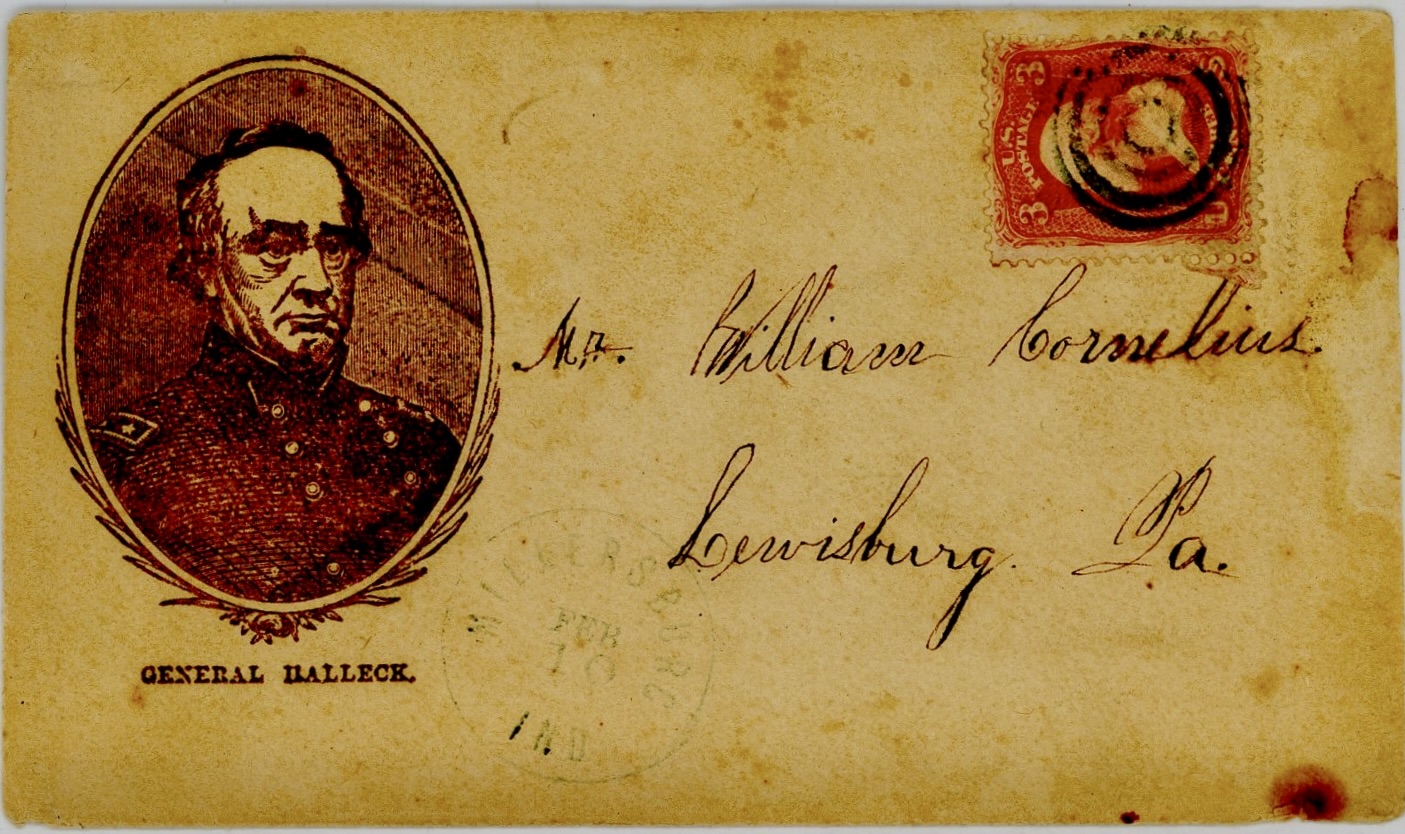
Sarah wrote the letter to her sister Elizabeth (Walters) Cornelius (1820-18xx), the wife of William Cornelius (1816-1905), a farmer of Lewisburg, Union county, Pennsylvania. In her letter, Sarah devotes the greatest portion to her niece Mary Cornelius whom she addresses rather curtly on her discourteous letter writing. She ends her letter by writing, “We got your letter but I cannot say that I was glad to see it.”
T R A N S C R I P T I O N
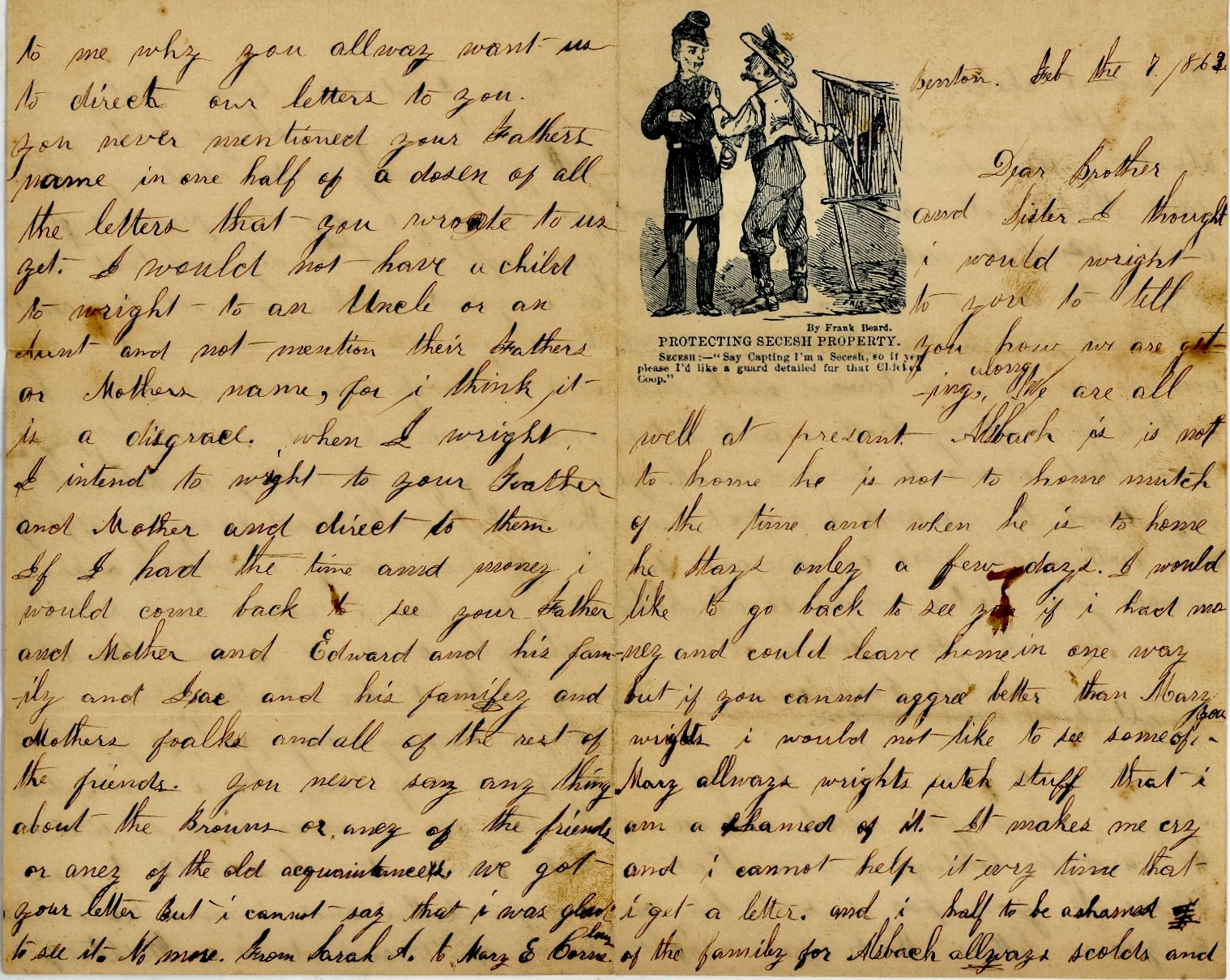
Benton [Indiana]
February 7, 1863
Dear Brother and Sister,
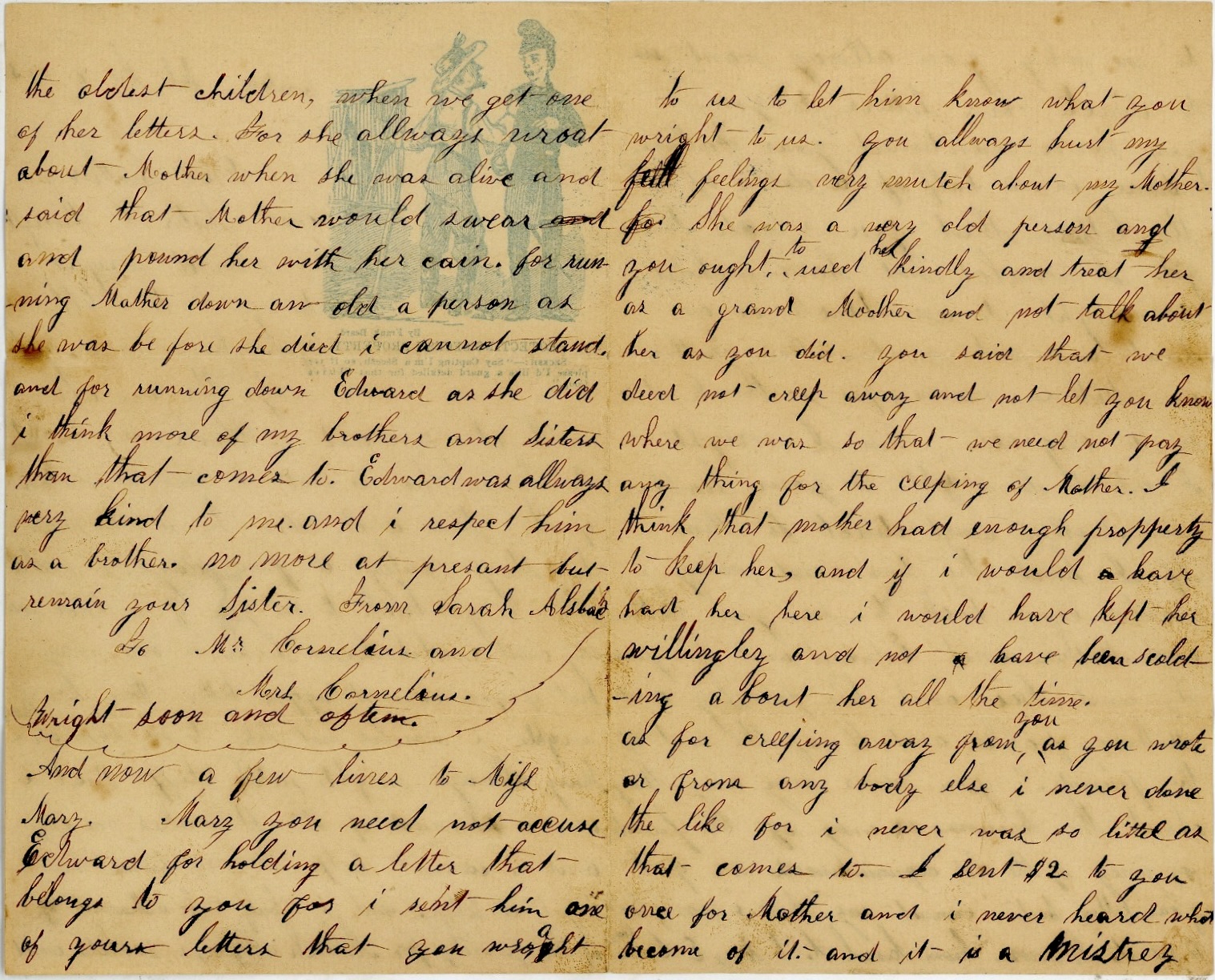
I thought I would write to you to tell you how we are getting along. We are all well at present. Alsbach is not to home. He is not to home much of the time and when he is to home, he stays only a few days. I would like to go back to see you if I had money and could leave home in one way, but if you cannot agree better than Mary writes, I would not like to see some of you. Mary always writes such stuff that I am ashamed of it. It makes me cry and I cannot help it every time that I get a letter and I have to be ashamed of the family for Alsbach always scolds and the oldest children when we get one of her letters. For she always wrote about Mother when she was alive and said that Mother would swear and pound her with her cane for running Mother down, an old person as she was before she died. I cannot stand [it]. And [also] for running down Edward as she did. I think more of my brothers and sisters than that comes to. Edward was always very kind to me and I respect him as a brother. No more at present but remain your sister. From Sarah Alsbach
To Mr. Cornelius and Mrs. Cornelius
Write soon and often.
And now a few lines to Miss Mary,
Mary you need not accuse Edward for holding a letter that belongs to you for I sent him one of your letters that you wrote to us to let him know what you write to us. You always hurt my feelings very much about my Mother. She was a very old person and you ought to used her kindly and treated her as a grandmother and not talk about her as you did. You said that we did not creep away and not let you know where we was so that you need not pay anything for the keeping of Mother. I think that Mother had enough property to keep her and if I would have had her here, I would have kept her willingly and not have been scolding about her all the time.
As for creeping away from you as you write, or from anybody else, I never done the like for I never was so little as that comes to. I sent $2 to you once for Mother and I never heard what become of it and it is a mystery to me why you always want us to direct our letters to you. You never mentioned your Father’s name in one half of a dozen of all the letters that you wrote to us yet. I would not have a child to write to an Uncle or an Aunt and not mention their Father’s or Mother’s name for I think it is disgrace. When I write, I intend to write to your Father and Mother and direct to them.
If I had the time and money, I would come back and see your Father and Mother and Edward and his family and Isaac and his family, and Mother’s folks and all of the rest of the friends. You never say anything about the Browns or any of the friends or any of the old acquaintances. We got your letter but I cannot say that I was glad to see it. No more.
From Sarah A.
to Mary E. Cornelius
 Spared & Shared 23