
The following letter was written by William Harris of Camden, New Jersey, who was among the first wave of settlers belonging to the “Western Farm & Village Association,” organized in NYC in 1852 for the settlement of farm land in the West. The leaders of this association settled on Minnesota Territory and let a party of farmers and mechanics with their families by rail and steamboat via Lake Erie, across Ohio from Cleveland to Cincinnati, then down the Ohio and up the Mississippi rivers to a place called Wahbasha’s Prairie, a landing on the upper Mississippi, 150 miles below St. Paul.
William’s letter informs us that the organizers of the caravan of settlers led them to a site six miles overland to “a most beautiful opening of comparatively high table-land covered with oak” near a stream named Rolling Stone Creek, an Indian trail, and a couple of abandoned squatters cabins where they decided to establish their village plot. The association promised the settlers mutual assistance and protection in their efforts to find homes in the West where land could be purchased at government prices.
T R A N S C R I P T I O N
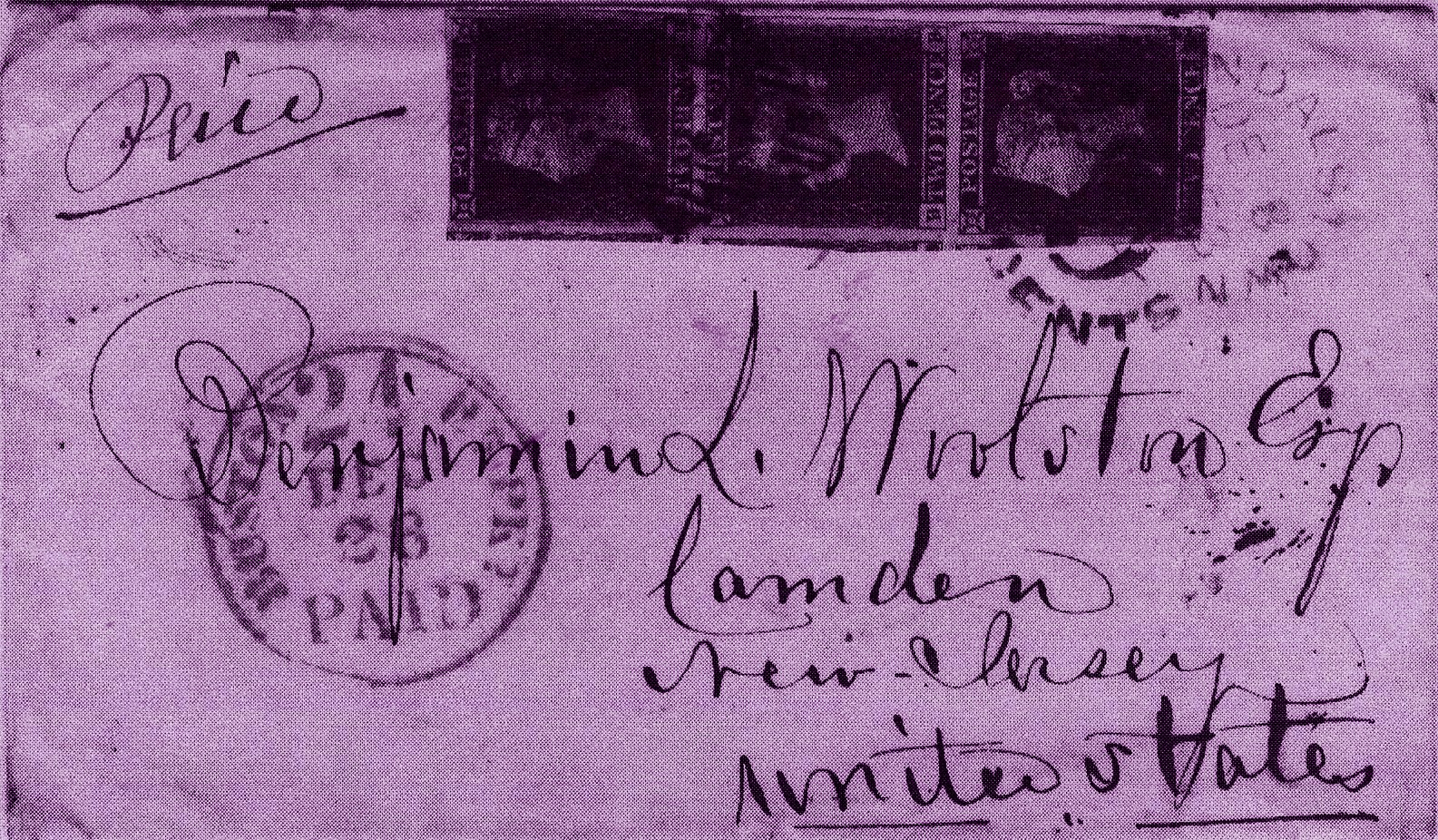
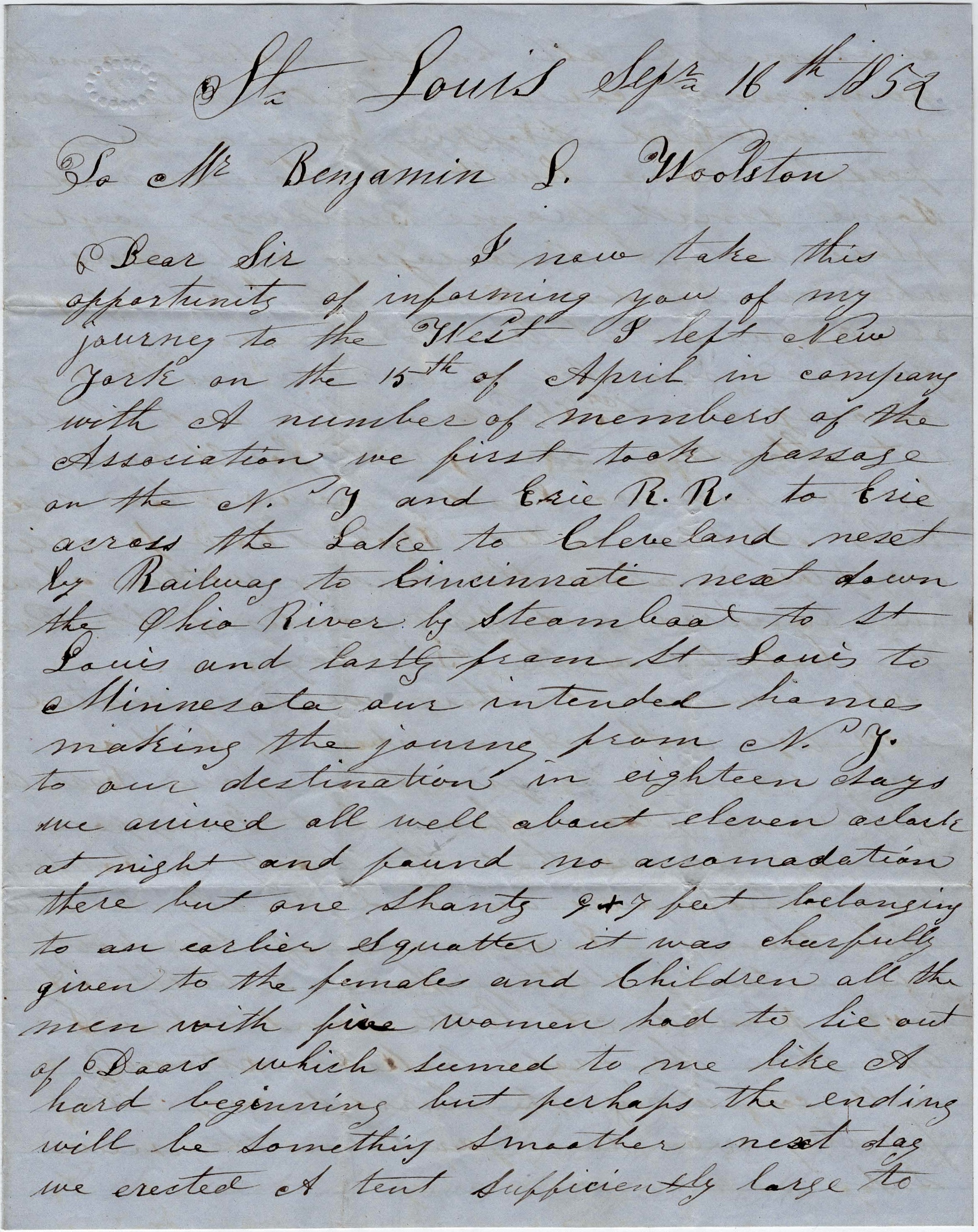
St. Louis [Missouri]
September 16, 1852
To Mr. Benjamin L. Woolston
Dear Sir—I now take this opportunity of informing you of my journey to the West. I left New York on the 15th of April in company with a number of members of the Association. we first took passage on the New York and Erie Railroad to Erie, across the Lake to Cleveland. Next by railway to Cincinnati, next down the Ohio river by steamboat to St. Louis, and lastly from St. Louis to Minnesota—our intended homes—making the journey from New York to our destination in eighteen days. We arrived all well about 11 o’clock at night and found no accommodation there but one shanty 9 x 7 feet belonging to an earlier squatter. It was cheerfully given to the females and children. All the men with five women had to lie out of doors which seemed to me like a hard beginning but perhaps the ending will be something smoother.
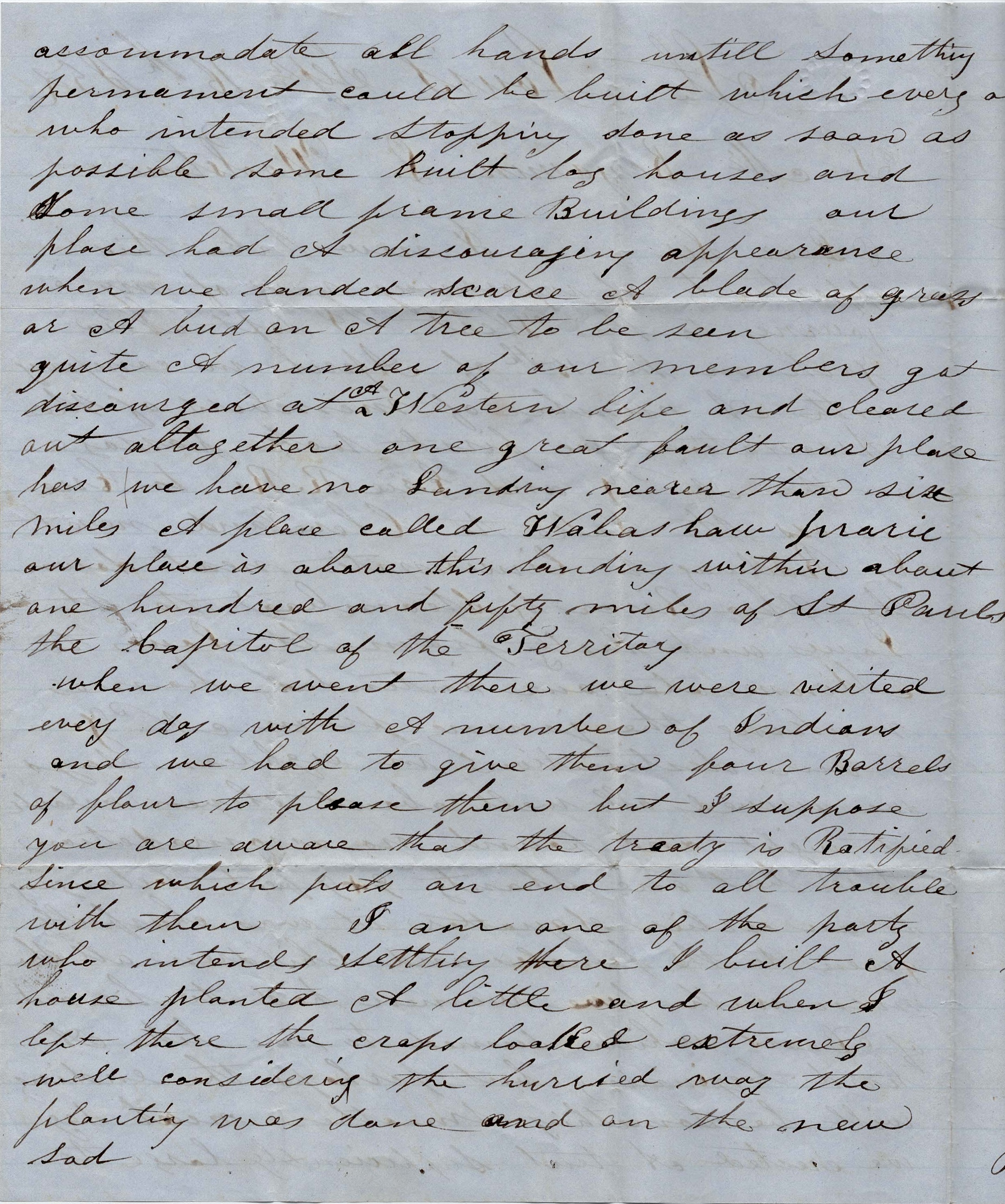
Next day we erected a tent sufficiently large to accommodate all hands until something permanent could be built which everyone who intended stopping done as soon as possible. Some built log houses and some small frame buildings. Our place had a discouraging appearance when we landed—scarce of blade of grass or a bud on a tree to be seen. Quite a number of our members got discouraged at a western life and cleared out altogether. One great fault—our place has no landing nearer than six miles—a place called Wahbasha’s Prairie [now Winona county, Minn.]. Our place is above this landing within about one hundred and fifty miles of St. Paul—the Capitol of the Territory.
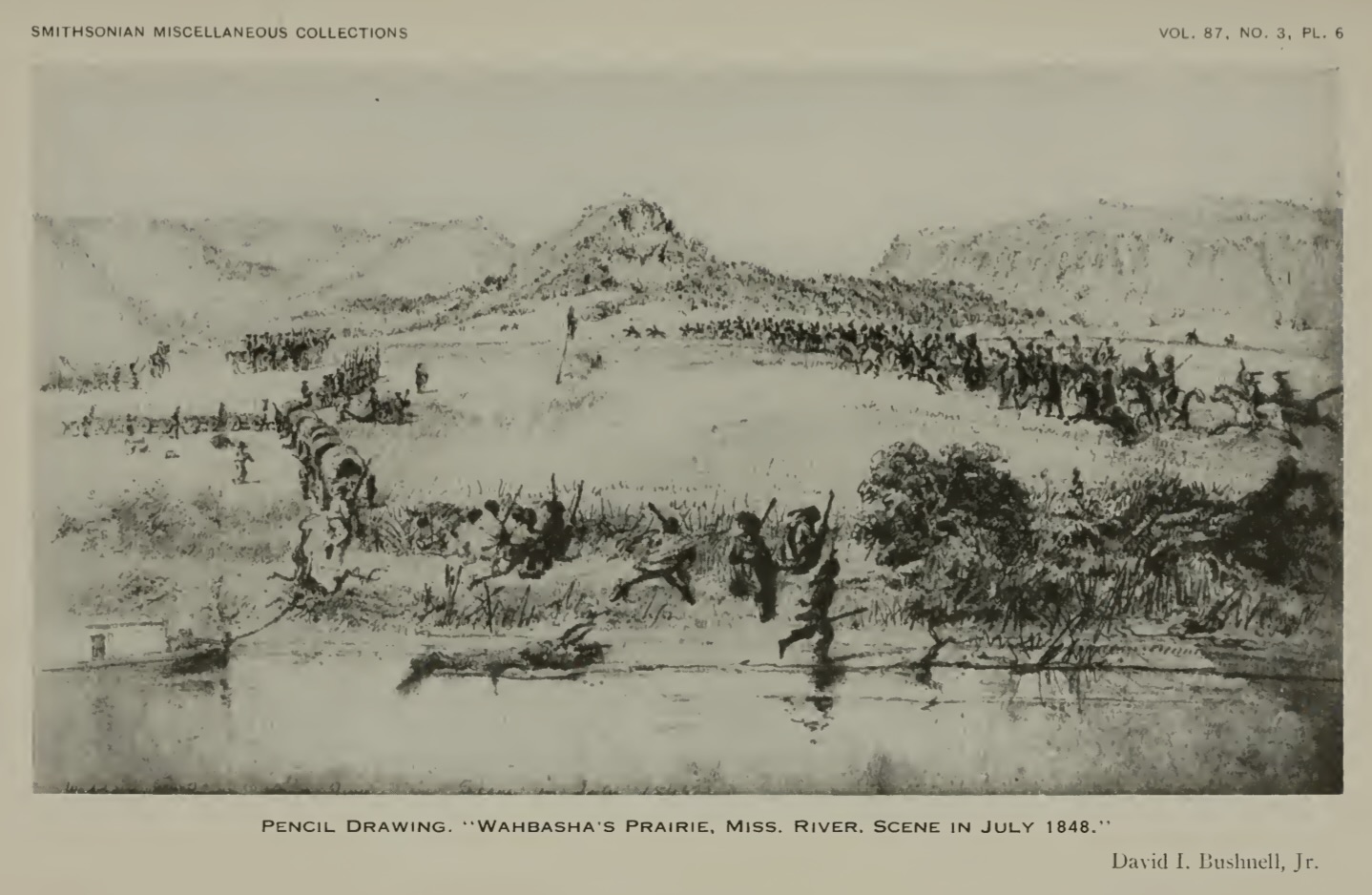
When we went there, we were visited every day with a number of Indians and we had to give them four barrels of flour to please them but I suppose you are aware that the treaty is ratified since which puts an end to all trouble with them. I am one of the party who intends settling there. I built a house, planted a little, and when I left there, the crops looked extremely well considering the hurried way the planting was done and on the new sod.
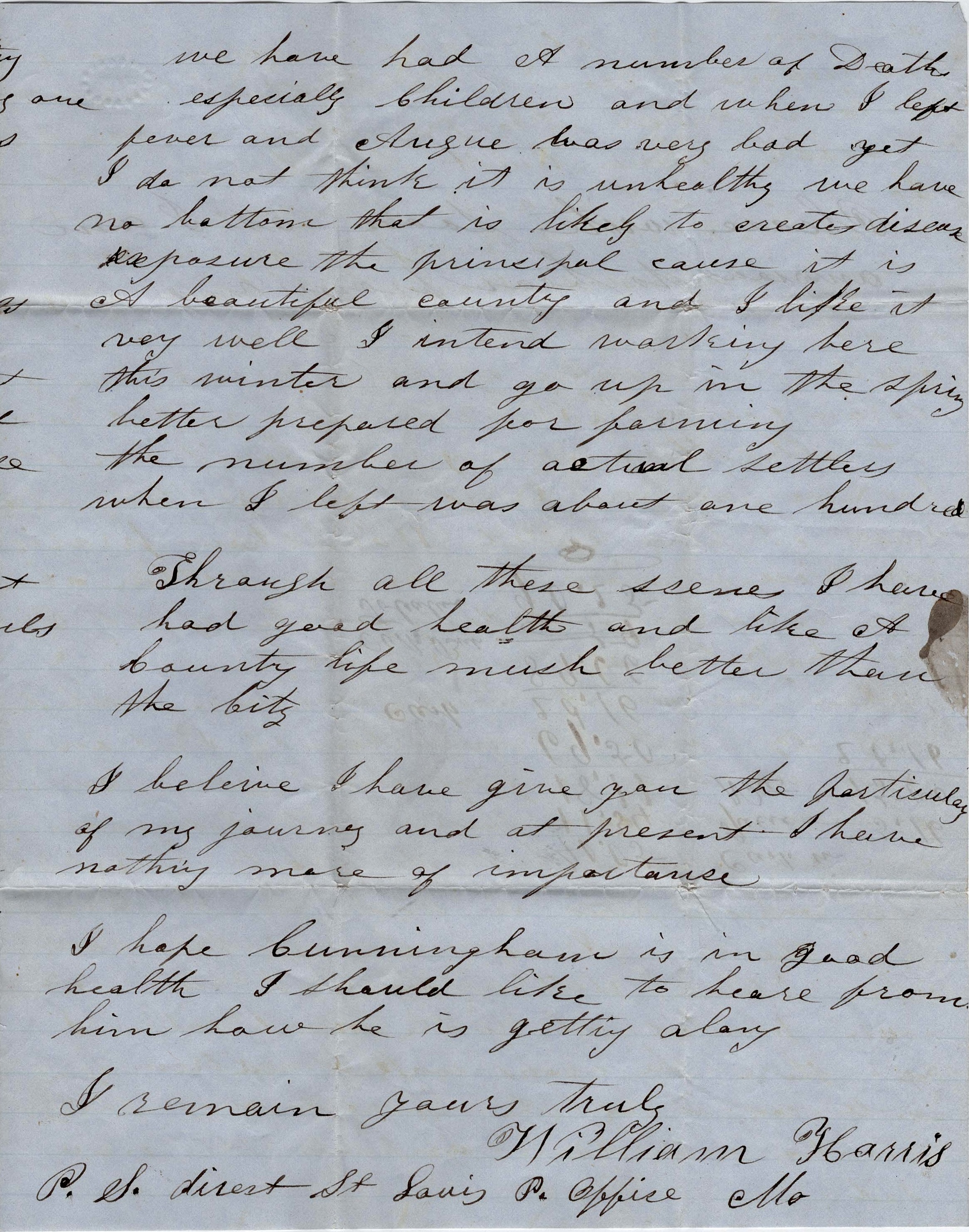
We have had a number of deaths—especially children, and when I left fever and ague was very bad yet. I do not think it is unhealthy. We have no bottom that is likely to create disease. Exposure [is] the principal cause. It is a beautiful country and I like it very well. I intend working here this winter and go up in the spring better prepared for farming. The number of actual settlers when I left was about one hundred.
Through all these scenes, I have had good health and like a country life much better than the city. I believe I have given you the particulars of my journey and at present I have nothing more of importance. I hope Cunningham is in good health. I should like to hear from him. How is he getting along? I remain yours truly, — William Harris
P. S. Direct to St. Louis Post Office, Missouri
 Spared & Shared 23