My passion is studying American history leading up to & including the Civil War. I particularly enjoy reading, transcribing & researching primary sources such as letters and diaries.
This letter was written in mid-March 1840 by Henry Owen from New Orleans, Louisiana, who we learn has just lost his inventory in a fire that took place at No. 24 Chartres Street where he had it stored. A newspaper advertisement placed by Henry Owen appearing in The Daily Picayune of Thursday, March 5, 1840—just 8 days before the fire started—indicates that he was an agent selling Joseph Gillott’s Patent Steel Pens. The advertisement states that he had “a large assortment of the well known pens for sale wholesale…at 24 Chartres street, upstairs.”
According to a newspaper article appearing in the New York Daily Express on Monday, 30 March 1840, the fire that “broke out on the night of the 13th inst., [was in] the bookstore and stationery warehouse of D. Felt & Co., No. 24 Chartres street. The flames rapidly extended to other houses on either sides; viz., to Armistead & Spring’s foreign & domestic dry goods store, No. 22, and to L. Chittenden’s importing silk and fancy store, No. 26. Notwithstanding the indefatigable exertions of the firemen, the flames took a northerly direction and rapidly consumed the clothing store of Paul Tulane & Co., No. 23, and the saddlery and harness warehouse of Smith, Cantzon, & Co., No. 30, corner of Chartres and Custom House streets.
It does not appear that Henry operated as an agent selling Gillott’s Patent Steel Pens for more than just a few months in the winter of 1839-40. From newspaper advertisements we learn that he was selling Gillott pens in New York City at 109 Beekman Street in the summer of 1837 and in 1838. He apparently returned to New York City following his loss (albeit insured) at New Orleans. There is a notice of his selling these same pens as the “sole agent” at 91 John Street in New York City in 1847 and even as late as 1864.
Henry wrote the letter to Henry Jessop (1808-1849), the son of William Jessop (1772-1835) and Rebecca Taylor (1770-1859). Henry took over his father’s firm William Jessop & Sons after his father’s death in 1835. The firm produced high quality steel in its Sheffield, England, factory, but shipped to agents in America.
Henry’s connection to the Jessop’s of Sheffield, England, convinces me he was the same Henry Owen who was born in Sheffield, England, on 10 May 1811 who was described as being 5’10” inches tall, with blue eyes and light brown hair, and 53 years old when he applied for a passport in 1864 giving 26 West 25th Street on NYC as his address.
Transcription
Stampless cover addressed to Messers. William Jessop & Sons, New York
New Orleans [ Louisiana] 3 a.m., March 14, 1840
Mr. Hy. Jessop My dear sir,
Late as it is, I must write you, as were I to trust to writing early in the morning, I should probably fail. The fact is, I am burnt out, not as a rap saved, but fully insured, my book is burnt, for fortunately, I yesterday added up the sales, and can most unequivocally swear to the amount within a trifle.
Now for particulars. I was engaged in conversation with a stationer, when the cry of “Fire” arose. We ran out of the verandah & learnt the fire was at No. 24 Chartres Street. I hurried to the spot and running into the lower store for the key, asked some gentleman to lend a hand. On opening the side door leading upstairs, I found the top of the stairs on fire. Of course I could not go through them. I got to the street and that moment every iron window shutter was burst open by the force of the flames. The fire burnt the store on the South and Four on fire on the North to Custom House St. Luckily for the neighboring [buildings], the walls fell almost as the fire reaching them. But for this, I should probably have been burned out of house as well, to make sure I did not pack up. Whiting & Stark, narrowly escaped. All I regret the loss of is the prices you sent & the power of attorney of he firm.
My friend, Mr. Montgomery of the House of Slocomb, Richards & Co., says the company I insured in are good. If their losses are heavy, we may have to wait a short while—still it is good. They will render me all the advice and assistance I require. I have Mr. Stark too, if needed. Be not afraid but I will secure the amount.
How the fire originated, I cannot learn. All I know is I left at 5 o’clock to see Crookes off to sea. There was not the semblance of a fire then. Mr. Stetson who conducts [David] Felt’s [stationery] business tells me his bookbinder was at work at 9 o’clock in the 4th story. He heard a kind of explosion [and] on looking, he found the story below all on fire. He had to escape by the spout. Therefore the fire did not originate in the story I was in—thanks be praised for that.
I proposed leaving on Sunday [but] this will keep me longer. And as all my goods are gone, show bills too, when I settle with the insurance, I do not know but I shall return by sea.
While the fire was going, I could not help wishing Phill Meaks’ [Weak’s?] goods had been there. I keep this open till breakfast time. I may, if not burnt up in the meantime, have something more to say. Very tired and sleepy, I am yours. Very respectfully, — Henry Owen
8 o’clock. No further damages. I find my [ ] of stock is lost. Expect to hear again from me soon. If you write. Address Care of Messer Slocomb, Richards, & Co. I may to be sure get this and leave before I can hear from you.
Three decades later, Jeff Davis is depicted with an “Arkansas Toothpick” under his garments as he flees capture at war’s end.
This letter was written by 22 year-old Edward Rice (1814-1850), the son of Levi Rice (1775-1853) and Annie Hayes (1777-1845) of Granby, Hartford county, Connecticut. He wrote the letter some weeks (possibly months) after his arrival in Helena, Phillips county, Arkansas—some six months after it had become the 25th state to join the Union. According to the 1850 Mortality Schedules, Edward Rice died in Helena from “congestion of the lungs” in May 1850. I have not been able to ascertain whether Edward remained in the dry goods business at Helena for the entire thirteen years period he remained in Helena until his death.
Edward wrote the letter to his boyhood friend, Stillman Allen Clemens (1816-1875), the son of Allen Clemons (1793-1868) and Catherine Helen Stillman (1796-1856) of North Granby, Hartford county, Connecticut. At the time this letter was written, Stillman was attending Yale University. After graduation, he was employed as a teacher.
Not only is the letter a good “travel” letter but Edward shares his impressions of Helena, Arkansas, and its inhabitants—an early statehood glimpse of the Mississippi river port town.
I note that the Clemens name is sometimes spelled Clemons and it appears to have been written that way by Edward.
Transcription
Addressed to Stillman Clemons, Esq., New Haven, Connecticut
Helena, Arkansas January 31, 1837
Friend Stillman,
It was a day or two since that after a visit to the P. O. as usual unsuccessful, I sat thinking of my friends in Connecticut, blaming them one moment for neglect and the next denouncing the whole Post Office Department from the backwoodsman who officiated as postmaster at Crowtown up to old Amos [Kendall] himself, that I called to mind the old adage, “reformation should begin at home” and amongst the balance of broken promises recollected one of writing to you. And having an opportunity to send to the North in a few days by Mr. Cossitt, I conclude—although at the eleventh hour—to redeem my pledge and send you a short epistle hoping that you will receive it sooner than we get letters from Connecticut, which is commonly something less than six months from the time of their being mailed.
I had as pleasant a journey to this place from home as I could have expected in my feeble state of health. The route from New York to Philadelphia and thence by railroad and canal to Pittsburgh, crossing the Allegheny Mountains, was very pleasant affording a fine view of scenery, beautiful and sublime.
I spent one day in Philadelphia very pleasantly, being detained by business, and in company with an acquaintance about the city and its environs until I was heartily tired and yet was not satisfied with seeing. It is a splendid city. I have never seen its equal. We spent a morning in the Navy Yard where the far famed ship Pennsylvania is being built. She is a splendid specimen of naval architecture and well-calculated to make an American feel proud of his country.
The USS Pennsylvania warship (large ship left center) was launched in the summer of 1837
The voyage from Pittsburgh to Louisville and then to this place was very lengthy owing to the low state of the river. I was nearly two weeks from Pittsburgh to Helena. It was nevertheless a pleasant trip—very much so—and I enjoyed it much. The Ohio is a beautiful river and runs through strikingly beautiful and fertile country.
A person meets with a great variety of character on board the steamers in the Western waters. Gambling in abundance, backwoodsmen & hunters, the rich planter of the South, and the Yankee of wooden nutmeg and horn gunflint notoriety, with various others too numerous to mention.
I have been in tolerable health since leaving home and have been able to attend to business without loss of time. I obtained a situation as clerk in a dry goods store immediately on my arrival.
Helena is improving very fast at this time. There are now ten stores in the place and several more will be started in the spring. Society here is not like that of New England, you may suppose. It is yet a new country and I was surprised to find the morals of the place so low. Almost every man here carries his Bowie knife, pistols, Arkansas Toothpick, one and all. 1 And there are men daily walking the streets—men of respectability too—who have buried the knife more than once in the heart of a fellow being. Gambling & drunkenness &c. are so common that they are almost unnoticed and will you believe it, I have not been in church since I left home—because there is none here!
But a change is taking place in Arkansas for the better and good and wholesome laws will soon be adopted and these frontier scenes will soon pass away before the march of civilization and improvement. I have scribbled over most of my paper and must close though I have not written half as much as I wish, but enough to try your patience I suspect.
I have not heard a word from home since I left and my patience is almost exhausted. I wish you to write immediately on getting this and give me a sketch of college life in the City of Gardens.
Your sincere friend, — Edward Rice
[to] S. Clemons.
1 There is some debate over whether or not an Arkansas toothpick is technically a Bowie knife. The Arkansas toothpick is a type of large dagger with a straight blade that is used for thrusting. It is named after the American frontier state of Arkansas where it was supposedly created. Bowie knives, on the other hand, are typically larger knives with a curved blade that is good for both slicing and thrusting. Some people argue that the Arkansas toothpick is simply a smaller version of a Bowie knife and thus can be classified as such. Others maintain that the two knife types are distinct enough to warrant their own separate classification. Since Edward mentions both types of knives in this letter, they must have had a different meaning at the time. As near as I can tell, the term “Arkansas Toothpick” came into popular usage about 1835.
These letters were written by Norton William Campbell (1835-1868), a carpenter from Duquoin, Perry county, Illinois, who entered the service as a sergeant on 20 April 1861 at DuQuoin, Illinois, to serve three month in Co. G, 12th Illinois Infantry. After this brief stint, he reenlisted on 1 August 1861 to serve three years in the same company and regiment (the “1st Scotch Regiment”). At the time of his enlistment, he was described as 26 years old, standing 5 feet 7 inches tall, with brown hair, blue eyes, and a dark complexion—a native of New York State. In the 1850 US Census, 16 year-old Norton was enumerated in the farm household of William Campbell (1806-1874) and Catharine Wilson (1808-1886) of Pinckney, Lewis county, New York. I can’t find a biographical sketch or obituary for Norton to confirm if these were his parents or not; his war letters mention only his mother and state that she was living in Sauk county, Wisconsin, in 1861. By the time of the 1860 US Census, Norton had relocated to Perry county, Illinois, where he was enumerated in a boarding house and working as a carpenter.
Of Norton’s service in the 12th Illinois, I have been unable to find very little information save what we learn from the letters themselves. The Chicago Daily Tribune of 17 April 1862 lists Sergt. Norton Campbell as one of fifteen members of Co. G being wounded in the Battle of Shiloh. In that same newspaper article, Joel Grant (1816-1873), the chaplain of the 12th Illinois reported that, “Most of the losses [to the regiment] occurred the first day. The first attack upon us was made by a large force of rebels, whom, as we viewed them through the timber, we thought might be our own troops. While we were endeavoring to satisfy ourselves on this point, they poured a deadly volley upon us, that dispelled our delusion, and brought us at once into the realities of war.”
Indeed, Norton’s Letter 16 informs us that he was wounded wounded at Shiloh but it must have been a mere flesh wound: “The wound I got at Pittsburg has got well but it leaves a nice scar.” He also informs us in that same letters that following the Battle of Shiloh, he was in command of his company because all of the commissioned officers were either wounded or sick.
Norton wrote the letters to his friend, Sarah Ann Rinehart (1843-1879), the daughter of Samuel Rinehart (1820-1899) and Harriet Eunice Reed (1823-1849) of Louisville, Clay county, Illinois. We learn from Norton’s letters that four years previous to the war, he and Sarah—who would have only been about 14 at the time—had a relationship but that it grew distant when he moved away. Clearly he was attempting to rekindle that relationship when he began to write her while in the service. We don’t have any of Sarah’s letter to Norton so we can only surmise from the content of Norton’s letters that she doubted his sincerity from the beginning of their war-time correspondence and only grew more and more convinced that he was either not the love of her life, or that she was unwilling to wait longer for the war to end before taking a husband. Though subsequent letters were probably exchanged between them, Sarah Ann chose to marry John Wesley Young (1845-1879) in Clay county, Illinois, on 22 February 1863. The Youngs lived in Clay County, Illinois, where John labored as a farmer until 1870 when they moved to Independence county, Arkansas. They had several children all of whom (at least five) died as infants. Sarah died on 16 February 1879 giving birth to her sixth child, Thomas Jefferson Young (1879-1946). Two days later, Sarah’s husband died and the orphaned child was raised by his uncle Joseph Henry Young. I could not find an account of Thomas’s death but the timing suggests he died of a broken heart or suicide.
This CDV was found in the Library of Congress (what a stroke of luck!). It shows Norton wearing the Tam o’Shanter style cap of the 12th Illinois Infantry. He has signed the verso indicating his rank as Captain in the 110th USCT. He was discharged from the 12th Illinois to accept a commission as Captain of Co. F, 110th USCT (formerly the 2nd Alabama Colored Infantry) late in 1863.
Addressed to Miss Sarah Reinhart, Indianapolis, Indiana
Camp Defiance, Cairo, Illinois June 20, 1861
My Dear Friend Sarah,
I received your welcome letter. I was glad to hear from you yet i did not know whether you would write to me or not as I had neglected writing to you for so long. But Sarah I am well and hope this will find you the same. I am one of Uncle Sam’s boys now and we see some rough times in camp life and some pleasant times but the time will be soon when we will be called into battle and we are all ready and anxious to get at the traitors that have dishonored our country and caused all this trouble and many of us no doubt will die on the battlefield. But if it should be my lot, I know it will be in a good cause. I love the stars and stripes and I will help to protect it. I love Liberty and Union and I want it just as our forefathers handed it down to us and we will have it so. And Sarah, if this war last three years or 10 years, I will be in it all the time if I am alive and able for I love my country.
But Sarah, I should love to see you but I cannot get away now. If I could see you but one hour, it would be some satisfaction to me. I could explain all the reasons that I have not seen you for nearly four years. It was not because I did not want to see you nor because I had forgotten you but I have not. No, Sarah, if I am not with you my heart is, and I shall live in hopes of seeing you yet once more. We was happy in each others company, for we loved each other. It is so still. I can say my heart in not changed. The beautiful face I love so stand up on it and will ever be my guiding start in the hours of peril and danger.
And Sarah, if I should never be permitted to see you again, may God bless you is my prayer. But I know you have plenty of friends to keep you like a lady as you are and had I thought that I could [have] taken care of you as I ought, I should’ve been with you long ago. But I have done well in the last two years and may yet live to see peace and enjoy it once more.
We are under marching orders now but we don’t know where we will go to and we will probably stay here six or seven days yet. We think we will be sent to Missouri near St. Louis. When I wrote to you, I was in Camp Bissell, Caseyville, Illinois, but we left the next day. After I wrote you, we went down to the Missouri River on the steamer Louisiana to Cairo where we are now. Cairo is well fortified & the whole southern Confederacy could not hardly take it. But I must close.
I will get my likeness taken and I will send it to you soon. I will write often and hope to hear from you often and let me be where I may, I shall always remember you with kindness. I remember all the past. They are as yesterday to me. God bless you. My respects to your friends. Write soon. From your long absent lover or friend, — Norton W. Cambell
Camp Defiance, Cairo, Illinois, 12th Regiment, Company G, In care of Capt. Brookings
Letter 2
Camp Defiance Cairo, Illinois June 28, 1861
Dear Sarah,
I am pleased to hear from you and that you was well. I am well and hope this will find you the same. I was of a company of three hundred that was out on a pleasure excursion yesterday up the Mississippi River and at Birds Point. There are two thousand of our troops at Birds Point in Missouri opposite of Cairo. We had a pleasant trip and enjoyed our ride very much.
Col. John McArthur, 12th Illinois Infantry—“as fine a man as lives.”
We expect an attack on Cairo soon now from the traitors. I am in the 12th Regiment under Colonel John McArthur—as fine a man as lives. This regiment will son be sworn in for the war or three years and then we will get a furlough home for a week or ten days and I shall try and come to Indianapolis if possible and go to Clinton too if possible. I shall be in Cairo till after the Fourth of July. There will be a Grand Ball here on the Fourth and we expect to have a good time in general on that day.
Sarah, I will send you my likeness in this letter and you will please keep it in remembrance of me for if I do not see you in the next three weeks to come, I may never see you. My likeness looks black but it is because I am sunburnt and tanned very bad but it is part of a soldier’s life. You must excuse this letter for I have to sit down on the ground and any way to get down to write and it is blotted up so that I am ashamed of it but you can read it maybe. If you can’t—if I ever see you down here—I will read it for you.
Sarah, you appear to think that since we parted in Clinton, I have found someone that I loved and had forgotten you. You say you have a god chance to marry. Now I say, if you love anyone and want to marry them, do so. I could not blame you and I would love to know that you was happy with someone. There is no knowing where I will be when this war is over but God bless you. My best wishes are with you. I hope to hear from you often. We will not have much fighting to do till after Congress on the Fourth of July.
I will close. Hoping to hear from you soon and Sarah, let me go where I may, I shall always remember you with pleasure and I hope I can see you before we start South. But no more. Give my respects to your friends and please write soon.
This from your long absent, — Nort
— Norton W. Campbell, Camp Defiance, Cairo, Illinois, 12th Regiment, Company G in care of Capt. C. H. Brookings.
Goodbye
Letter 3
Camp Defiance Cairo, Illinois July 6, 1861
My Dear Sarah,
I received your ever welcome letter and was glad to hear from you. I am well and hope you are enjoying the same blessing. The 12th Regiment has not been sworn in for three years yet but I think we will be tomorrow. The Fourth passed off very pleasantly here and general good order through the whole camp and the celebration of the Fourth will long be remembered in Cairo. In the morning at sunrise they fired a salute of 36 guns from the six different batteries and noon and at sunset the same. In the afternoon, there was a brigade review of all the troops.
We marched through the main streets of the city and then took to the parade ground in the evening. They had some splendid fireworks and speeches and everything went off quiet and nice. And if we had of been in Virginia and had the chance, we could of done some of the best fighting on that day that was ever done. The troops here are anxious to get a chance at the traitors and if we ever do get at them, we will conquer or die. And Sarah, every time I put a cartridge in my gun, I will think of you for if you are making cartridges, make them of good powder and lead and we will make good use of them if we ever get the chance—and I hope we wll.
I read the President’s Message this morning and I suppose you have saw it before this and it suits me to a hair and I think he will soon put us where we will have some work to do. But I think Jeff Davis is trembling in his boots now and would give all he ever had if he never had spoke of secession. But that do us. We want to torture him to death before we quit. we want to show them that breaking up this government is not as easy as they imagined it would be. The stars and stripes shall be my banner as long as I live and I will help to maintain it.
And Sarah, God bless you. You are a lady and cannot fight but I am glad to hear that you love the Union enough to make cartridges for the soldiers and while you are doing so, remember that there is none in the army that loves you whose heart is with you and his country, and I would love to see you now but whether I shall ever have that pleasure or not, I cannot say now. But if I live to see this war settled, and peace once more, then I will see you. I can only say God bless you wherever you are and if I ever done wrong by you, I hope to live to make all right with you again.
My mother lives in Wisconsin, Sauk county, in White Mound. She was well the last I heard from her. She seemed proud to know she had a son that loved his country and was not afraid to fight for his rights. She bid me go and do my duty like a man. God bless my mother. I will fight for my liberty and hers and do my duty.
Sarah, I am sitting in the woods in a beautiful shade and writing this letter on a log. I got out of the camp so that I could be all alone for awhile to write to you and while I am sitting here, the past hours that I have passed with you years ago are fresh in my mind. Not a word has been forgotten by me and if I have not wrote to you as often as I should nor have not come to see you as I said I would, still I have not forgotten you. I have always thought of you and remembered you. You have been near my heart and I have always been in hopes that [I could someday] take care of one so worthy as you are of a good and kind husband. I have tried hard to lay up something to take care of you with so that I might be worthy of you but I have had a good deal of bad luck in the last four years. But still I am now pretty well to do in this work. I have laid up about two thousand dollars and when I volunteered, I had me a nice house about half finished and everything comfortable and was in hopes that I should see better days. But I shall have no pleasure till we have peace once more. Only in serving my country to put down this rebellion and that I will do with pleasure. And I will take pleasure in writing to you often as I can and hope that I shall still live to see you again.
If you think I care nothing for you, I can’t help it now. I can only speak for myself and you can judge for yourself. If I should fall on the battlefield, you shall know it. If I live, you shall see me. I am prepared for whatever my fate may be. God will protect the right. The star spangled banner—long may it wave o’er the land of the free and the home of the brave.
But I must close and hope you will excuse this pencil writing. It is better than none. You say you got my likeness. Keep it in remembrance of me. I have yours yet but it is at home locked up in my trunk. You will please give my best wishes to Mr. and Mrs. Hebble 1 and I hope to hear from you soon.
The health of the men here is generally good. There has been but very little sickness in the camp yet the weather is very warm here. But no more. May God bless you is all that I can say. Whether I can come and see you when I get a furlough home or not, I cannot promise now but if possible, I will. So goodbye. I remain yours truly, — Norton Wm. Campbell
Camp Defiance, Cairo, Illinois. 12th Regiment, Company G
1 In the 1860 US Census, 16 year-old Sarah Ann Reinhart (1843-1879) was enumerated as a servant in the household of John W. Hebble (1823-1871) and Hannah Hagan (1829-1911) who were innkeepers in Indianapolis. The Hebbles were married in 1846 and came to Indianapolis from Pennsylvania in 1855 and engaged in the hotel business near the Union Station Depot. They later were the proprietors of the Germania Hotel (still standing today and called the Slippery Noodle Inn) at South and Meridian Streets. The Hebble’s had two boys, Benjamin Mursa Hebble (1854-1902) and George M. Hebble (1860-1932)—the latter known as the “blind musician.”
The Germania Hotel (later called the Tremont House), and now called the Slippery Noodle Inn in Indianapolis. The Hebbles were once proprietors of the Germania Hotel.
Letter 4
Camp Defiance Cairo, Illinois July 29, 1861
Dear Sarah R.,
I arrived in camp the 26th and everything was exciting for they look every day for an attack on Cairo and Birds Point. There is fifteen thousand secessionists within 15 miles of Birds Point and there is only five thousand troops in Cairo at this time but we are ready and willing to try them. They may not make the attack just now but we have good reason to believe they will soon. There will be more troops here in a few days.
We had quite an accident on the Illinois Central Railroad the day I came to Cairo. Two passenger trains run off the track. One tipped over and was torn all to pieces. The other was not broke up so bad. There was about 60 of our men in the one that was broke up the worst. I had just stepped out of the car on the platform of the other car not more than a minute before the car upset but there was no one killed but some badly bruised. It was the greatest wonder in the world that half of them was not killed. It was about 60 miles from Cairo.
Sarah, I received your letter and your likeness and I thank you a thousand times for it. I have it on my bosom and will wear it there for your sake. Whether we shall ever see each other again or not, I cannot tell. When I was there with you, I could not think of half I wanted to say to you and I was sorry that I could not stay longer with you but I was happy while I was there but I can’t say that I am now. But I will try and enjoy myself the nest I can and if I am spared till this war is over, I will see you again and make a longer visit.
Please give my respects to Mr. & Mrs. Hebble and those other folks—I forget their names, and try to enjoy yourself the best you can. You have got such a good place to stay at that you can’t help but be contented. I think Mrs. Hebble is such a good, pleasant woman. It seemed like home to me. You must be good to her for I know she is good to you.
But I must close for this time. I can’t hardly write here, the boys make so much fuss in the camp. But I will write soon again and hope to hear from you soon. So God bless you. No more this time. From your own, — Norti W. Campbell
Camp Defiance, Cairo, Ill., 12th Regt., Company G, in care of Capt, C. H. Brookings
Letter 5
Camp McArthur Cairo, Illinois August 11th 1861
Dear Sarah R.,
I received your letter this morning and was very sorry to hear that you was sick but I hope by the time this reaches you, by the help of the kind hand of Providence, that you will be restored to health again. I would be glad to be with you and comfort you in your hours of trouble and afflictions but if I cannot be with you, my whole heart is and my best wishes are for your good and God bless you, Sarah. I wish I could say that I was well but I cannot. I have been sick with the typhoid fever for two days and it is all that I can do to sit up to write to you. I thought I would not tell you that I was sick, I could not help but write to you, The doctor thinks I am better today and I hope I shall soon be up again and in fighting order.
A few days ago we were ordered to go to Cape Girardeau in Missouri as soon as possible. We heard that the town was attacked and was in danger and we started with one thousand men and got there that evening at 4 o’clock and was all disappointed for everything was quiet, There is three thousand of our troops stationed at that place now and it is considered safe. We stayed till the next day at 11 o’clock when we got on the boat and returned to Cairo again. We all enjoyed our trip very much and would of felt better if we had of had chance of a fight, but I think we will have one before long and I hope I shall be able to be with them.
Cairo is safe now and we have no fears of an attack now. With the fortifications and breastworks that we have now, we can hold the place against forty thousand rebels.
But I must close. Give my respects to all of the friends. I know Mrs. Hebble will take good care of you while you are sick. Please write soon ad may God bless you, Sarah, and protect you and restore you to health. No more. Write soon. This from your ever affectionate, — Nort
Norton W. Campbell, Camp McArthur, Cairo, Ill 12th Regiment, Company G. in care of Capt. Guy C. Ward
Letter 6
When Grant took occupancy of Paducah, Kentucky in September, he placed the 12th Illinois in garrison of the Marine Hospital (depicted above) and commenced the construction of earthen fortifications around it.
[Note: This letter was written by Pvt. William J. Dingle of Sullivan, Moultrie county, Illinois, who enlisted at the age of 28 at Decatur on 6 August 1861 to serve three years in Co. B, 41st Illinois Infantry. He was described as a a 5′ 8″ tall, dark haired, blue-eyed carpenter.]
Paducah, Kentucky September 30, 1861
Miss Reinhart,
Yours of a recent date is received. Norton W. Campbell is stationed at Smithland in this state. I saw him some eight days since in this place. He was quite well.
Yours respectfully, — W[illiam] J. Dingle
Letter 7
Addressed to Miss Sarah Reinhart, Indianapolis, Indiana; forwarded to Martinsville
Camp Smith 1 Smithland, Kentucky October 27, 1861
Dear Sarah R.,
I received your letter of the 14th and was glad to hear from you and I answer it with pleasure. I am well and hope this will find you enjoying the same good blessing and hope you will excuse this pencil writing for I had no pen handy.
Sarah, the last time I wrote to you I was sick at Birds Point. I was pretty sick for a short time and I got a furlough to go home. I went home and stayed till I got well and then returned to Birds Point. Since that time I have been moved around considerably though I have never been in any battle yet. I am now in Smithland, Kentucky. We have a beautiful camp, are getting the place well fortified, and we are in hopes that we may yet have a chance at the rebels.
We are getting tired of this kind of soldiering. There was a small fight 25 miles above here on the Cumberland River at a place called Eddyville day before yesterday. The gunboat Conestoga and three company of infantry went up from Paducah and surrounded the rebels, killed 15, and took about 50 prisoners and captured many horses and mules and quite a number of guns and routed them without the loss of one man. [See Federal Expedition to Eddyville and skirmish at Saratoga, Kentucky]
But Sarah, it will come our turn to have a battle some of these days and then you shall hear from us. But Sarah, I have no reason for not writing to you—only my own carelessness and shiftlessness. I have not wrote to anyone for a long time and I am ashamed of it for it was not because I did not want to hear from you or because I do not love you for Sarah, you are the idol of my heart. I wear your likeness on my bosom everyday and wherever I go, it shall go. And if I fall on the battlefield, your likeness shall be with me to the last moment.
Mr. J. B. Clintner was here yesterday from Clinton. His folks were well. He saw your likeness on my breast and said you looked as natural as life and I would like to see you this day to tell you all, but I have to wait and hoe for the best. We are all pretty hearty here now and I feel better than I have for several years. We have plenty to eat and plenty to wear and plenty of money and when mine gives out, I have got more to home and hope to live through this war and be permitted to see you again.
Sarah, please give my love to all the Hebble family. I often think of them. If I ever come across any of your Indiana friends, I shall be glad to make their acquaintance. I hope to hear from you son. May God bless you, Sarah, and watch over you for my sake. Mr. [William J.] Dingle is here in Smithland in the 41st Regt. Illinois. He is well and sends his love to you. No more. Please write soon. This from your affectionate, — Nort
Norton W. Campbell
Direct to Camp Smith, Smithland, Kentucky, 12th Regt. of Illinois Volunteers, Company G, in care of Capt. Guy C. Ward
1 Camp Smith was located at Smithland, twelve miles above Paducah at the junction of the Cumberland and Ohio Rivers.
Letter 8
Addressed to Miss Sarah Reinhart, Martinsville, Morgan county, IndianaPostmarked Dead Letter Office, Postage Not Paid
Camp Smith 1 Smithland, Kentucky November 19, 1861
Dear Sarah,
I have just received your welcome letter and I hasten to answer it and I am glad to hear that you are well and I am glad that I can say that I am enjoying good health and we have everything to make us comfortable for this time of the year. We have got a beautiful place for a camp and the best fortifications in the West. The troops here are very healthy and look as well as any that I have ever seen.
We have never been in a battle yet but don’t know how soon we will have to try our courage for there is fifteen hundred rebels only fifteen miles from here and we look for an attack now every hour. We have only seven hundred troops here but we can whip ten times our number with the fortifications we have got here and I would be glad to see them come for we have got some Yankee pills here that don’t set will on a secessionist’s stomach and we will give them such a dose that they will be sorry they ever rebelled.
But Sarah, though I am in the army where everything is exciting and hundreds of friends around me, yet I have never forgot you nor the happy hours and months that we passed so sweet and lovingly together. I often think how happy I should be if I could be with you and our country in peace once more but as long as there is rebellion, I must be separated from you though I love you and your very name is sweet to me.
But I also love my country and can you blame me for if we can’t have peace, how can we be happy? But things will not always be so. I look forward for better and happier days. God bless you Sarah. I would love to see you but it is impossible to get a furlough now. If I could, I would come and see you if I could not stay more than one hour. If I can, I will come and see you at Christmas but I will not make any promises for I don’t know where we may be by that time. But let me be where I may, I will always love you and I believe I shall be spared through this war to return to my friends and see many happy days with those I love.
Please give my respects to Mrs. Hebble and all of the family and I will be glad to hear from you often. And may God’s best blessing and kind hand watch over you and protect and comfort you in all your hours of trouble through life and may He yet make you happy with the one you love. So God bless you. No more. Write soon. This from your affectionate — Nort
Norton W. Campbell
To Miss Sarah Reinhart
1 Camp Smith was named after Union General Charles F. Smith under whom the earthworks were built at Paducah.
Letter 9
Addressed to Miss Sarah Reinhart, Martinsville, Morgan county, Indiana
Camp Chetlain 1 Paducah, Kentucky December 6, 1861
Dear Sarah R.,
I am well at present and hope you are enjoying the same God’s blessing. I am in Paducah now where I shall probably stay till the fleet is ready to go down the Mississippi River. Then I hope I shall be able to go with them and make them such a visit as they deserve in Dixie land and let them know that the stars and stripes cannot be trampled upon as easy as they imagine nor this government broken up as easily as they thought for our boys here are in good health, and when they get among the secessiers they will make them think that so many tigers have been let loose among them to do the will of God and slaughter and rid the world of those black-hearted rebels that have and are still trying to break up the best government that the world ever knew.
Uncle Sam has got the boys to do the work and before they quit, the stars and stripes will wave over all these United States as they have in days gone by and no man will dare to pull it down or molest it. But Sarah, I may not live to see this war ended, nor live to see you again. But I can trust in God and hope for the best and if I fall on the field of battle, it will be an honorable death and you can say that Nort lost his life like a soldier in defense of American liberties and rights.
I would love to come and see you now but I cannot. The commander of the Western Division has given orders that no more furloughs nor leave of absence be given to neither soldiers nor officers so you see that it is impossible for me to get away but if I cannot see you, I can write to you and hear from you and let me be where I may, I will always remember you as one that I love and respect and as one that I have passed many happy days with and hope to be happy with you again. But if we never meet again on earth, I hope we may meet in heaven where parting is no more. I would love to be with you at Christmas. You say you are going to have a party. If I could be there to dance with you, I know we would enjoy ourselves. But as I can’t be, I hope you will enjoy yourself and whilst you are dancing, think how many hours we have enjoyed ourselves in the same way and with such company as Mrs. Hebble, you can’t help but be happy for she is such a good woman. And please give my respects to Mr. and Mrs. Hebble and all of the family. I hope to hear from you soon.
I have not seen your friend in the Indiana 11th yet but will go and see him in a few days. Everything is quiet around here at present. But i must close. The weather is rather cold here just now but we are pretty well prepared for it. Please write soon.
— Norton W. Campbell
To Miss Sarah Reinhart
Direct to Paducah, Kentucky. Camp Chetlain, Co. G, in care of Capt. G. C. Ward
1 Camp Chetlain was named after Augustus L. Chetlain, the Lt. Colonel of the 12th Illinois.
Letter 10
Camp Payne Paducah, Kentucky December 15, 1861
Dear Sarah,
I received your letter and was truly glad to hear from you and that you was well. I am well at present and hope this will find you the same. You said you had not heard from me yet. I am rather surprised at that for I have written you two letters before this and you say you have not received none from me yet. I am sorry for that this has been so, but I hope you will get this. You need not think that I do not write for I will write as often as I can. I love to write to you and I love to hear from you and I would love to see you but I am deprived of that pleasure and probably shall be for a long tome yet.
You said if we was here next spring, you would come down and see me. Sarah, I would be glad to see you at any time and you shall find me a gentleman wherever you meet me. I will not write much this time for I don’t know whether you will get this or not, but if you do, I will write more next time.
Please gibe my respects to Mr. and Mrs. Hebble and all of the family.
We expect a fight here within 48 hours. Our pickets were run in last night but we are ready and will give them the best we have got in the shop. I will send you the Union Picket Guard every week with pleasure and hope you will get this. So, hoping that I shall live to see you again, I will close. Please write soon. No more. This from your own, — Nort
Norton W. Campbell
to Miss Sarah Reinhart
Camp Payne, Paducah, Kentucky Co. G, 12th Illinois Vols. in care of Capt. Guy C. Ward
Letter 11
Camp Payne Paducah, Kentucky December 23, 1861
Dear Sarah,
I received your letter and was glad to hear from you and that you was well. I am well and hope this will find you enjoying the same good blessing.
The troops here are all pretty healthy and feel pretty well and are all anxious to move on Columbus [Kentucky]. We all feel confident that we can give them a good thrashing. When I wrote last, I thought we would soon have a fight but the rebels got word and left their camp where they were resting so quietly and it was well for them they did. But everything is quiet here now. Our troops were reviewed here last week and made a fine appearance. They are pretty well drilled and will fight like tigers if they ever get a chance.
Sarah, I should love to spend New Years with you for I know I should enjoy myself, but as I can’t be with you, I hope you will enjoy yourself. I shall not have much of a New Years here. I don’t think there will be anything doing here more than any other day but I live in hopes of seeing better days after the war is over. But till then, I shall be obliged to put up with whatever may happen me and do my duty as a soldier,
There is nothing new to write. Please give my respects to Mr. and Mrs. Hebble and to your friend Miss Ellen. As it is late, I will close hoping to hear from you soon. And may God bless you and protect you for my sake. This from your soldier boy, — Norton W. Campbell
Letter 12
Paducah, Kentucky January 9, 1862
Dear Sarah,
We have just received orders to march at three o’clock this day and I think we are going to Columbus [Kentucky] but I don’t know for certain. I received your letters from Indianapolis and Germantown. I am well and ready for the fight. How it will turn out, we can’t say but hoping all for the best, I will close for I am in a hurry.
My love to all. I will write as soon as I can again. So God bless you. No more from — Nort
Letter 13
Addressed to Miss Sarah Reinhart, Martinsville, Morgan county, Indiana
Camp Payne Paducah, Kentucky February 3, 1862
Dear Sarah,
The last time I wrote to you I told you we was expecting to fight. We started from Paducah on the 15th of last month—six regiments of infantry and two batteries of light artillery, and nearly one thousand cavalry. The whole force was about eight thousand commanded by General Smith. Our expedition, I think, was to keep reinforcements from Columbus [Kentucky] going to help Zollicoffer at Mill Springs.
We marched 30 miles to Mayfield and then nearly last through Murray and Farmington and to the Tennessee River, 14 miles from Fort McHenry where the rebels have an army of about twelve thousand and well fortified and we all thought that we was a going to attack that fort, but we was disappointed. Nearly every house that we passed was deserted for they were all secesh through that part of the country and as soon as they heard we was coming, they left as fast as possible.
We was seven days in marching to the Tennessee River and on the 8th day we started back towards Paducah and when we found we was not a going to get a fight, you could of heard the boys curse and swear for two miles. But we could not help it and we came back. We marched 125 miles and worse roads and a muddier time, I never saw. We had to march in mud ankle deep for two days and waded a great many places in mud and water up to our waist, In fact, it was as hard a march as has been made in this war. We was gone just eleven days and we rested two days of the time. We had to burn some wagons and a good many tents. The roads was so bad they could haul them and had some horses and mules drowned.
I stood the march well till the last two days when I got so lame that I could not walk. I sprained my ankles and then by marching, they swelled and pained me very bad. They are not hardly well yet, I am well excepting that we have to start on another expedition tomorrow and there will be a large force start this time. There has nine regiments came here today and there is still more coming. There is 8 gunboats here going with the expedition and this time we will get a fight.
Look out for good news soon. We will start tomorrow morning, I think certain. The river has been very high here and our camp has been nearly under water for a week which makes it very disagreeable. The water is falling now.
But I must close for this time. I can only say God bless you, Sarah, till I see you and I hope to live to see you again. Please give my love to Mr. and Mrs. Hebble and all of the family and write soon, Send to Paducah.
I got a letter from Mother. She is well and sends her love to you. I would of wrote sooner but we have been so busy that I could not. But no more. I will write again as soon as I can. Do God bless you, Sarah. No more this time. Write soon. Pleasant dreams to you from N. W. Campbell
To Susan Reinhart
Letter 14
Nashville, Tennessee February 28, 1862
My dear friend Sarah,
I received your letter yesterday and was pleased o hear from you. I am well and still amongst the living. Our regiment has been kept moving for the last two weeks. We left Paducah on the 5th of this month and took Fort Henry and Fort Heiman on the 6th, and on the 12th day we started for Fort Donelson where we arrived at 12 o’clock that night.
On the morning of the 13th, the battle commenced and lasted till the morning of the 16th when the rebels surrendered unconditionally and we marched into the fort at 10 o’clock a.m. I need not write all the particulars of the fight for you no doubt have had it through the papers before now. Our regiment was in the hottest of the battle on Saturday, the 15th, and 31 of our brave men of the 12th Regiment were killed and one hundred wounded. I did not get hurt at all but my comrades were shot by my side. But God bless them—they fought like men though they were nearly worn our for sleep and food.
“February 15th. This is the day I long shall remember. This morning at day break, a high discharge of musketry was heard. For a moment it ceased. When it again was heard, it was heavier and still heavier it growed as we formed in line. It was a steady crackling when we marched as reserve back of the Illinois 9th and 41st. As the 41st gave way, we—or a part of our regiment—had to take their places. Companies A and B were thrown out as skirmishers to the extreme right to receive the fire and to test the strength of the enemy. We soon found the enemy as thick as Juniper berries concealed in the bushes, and in the act to growl upon us. We then opened the fire on them but soon their fire proved to be too heavy for us (for as we now hear, there were two regiments concealed there) and a retreat was ordered by Capt. Fisher of Co. A. A little before, our captain [Hale] said, “Boys, let us show the cowards that we are 9 months in service.” A few seconds after, he fell motionless to the ground. Seven more of Co. B followed him, I could hear Capt. Fisher’s command and consequently retreated with them. The next on my left was shot in the leg (since amputated), the second was shot in the arm, the third was killed. The three next to my right escaped as I—unhurt.” From the Diary of Frederick Hammerly, Co. B, 12th Illinois Infantry
We were four nights without sleep or tents, and two days and nights without anything to eat and part of the time the ground was covered with snow and it was very cold and we were not allowed to have a bit of fire so you may know that we suffered some but we would of stood it for weeks, or whipped them out of Donelson.
We took 17 thousand prisoners and their arms, and two generals—Buckner and Johnson. Pillows and Floyd was there but they got away and took away several regiments of rebels. They went through Clarksville running for life and telling the people to burn their houses and property and run for the damn Yankees were coming and they run in every direction. But we will give them a bigger scare than that before long.
On the 20th and 21st, there was a great many people at Donelson to see the battleground. Governor [Oliver P.] Morton was there and Governor Yates of Illinois was there. On the 22nd, we went to Clarksville, the town nearly deserted. The rebels had built a nice fort there but it done them no good. Clarksville is a beautiful place. On the 27th we started for Nashville and got here at 12 o’clock at night and we are still on the boat. I don’t know whether we will get off today here or not. The rebels are about thirty-five miles from here fortifying and they are said to have one hundred thousand troops and more coming from Columbus [Kentucky]. They have evacuated Columbus.
I got off from the boat today and went round and took a look at the city of Nashville and it is a beautiful place. I was at the State House—it is a beautiful building—and I was at President James Polk’s house—or his widow’s house. I was at his grave—it is a beautiful place—but still Nashville [is] dead. Every building nearly is shut up and it seems like Sunday. The railroad bridge and the suspension bridge are both burnt and destroyed by the rebels. Coffee is worth one dollar and fifty cents a pound here, and flour twelve dollars a barrel, and boots 18 to 20 dollars a pair, and everything else according. So you can judge whether the southern people have long faces or not. But I tell them they are the ones that caused it and they must stand it and I wish they would all starve and if they don’t, we’ll run them into some corner and shove them into the Gulf. And they begin to wish too that they had not got up this row. The people around here think that the war will be over in less than eight weeks and I think a few more Fort Donelson battles and it will soon be over too.
“Just tell that gal that don’t want to wait for a soldier that she should not be in a hurry—that soldiers will be in good demand after this war [even] if they are crippled.”
Sgt. Norton W. Campbell, Co. G, 12th Illinois Infantry, 28 February 1862
You said you drank a glass of beer and made a speech for me when you heard we had taken Fort Henry and I think Donelson is worth two glasses. And if I could be with you, I would make you a speech but I still think I shall live till this mess is over and then I will have a good time. And you just tell that gal that don’t want to wait for a soldier that she should not be in a hurry—that soldiers will be in good demand after this war [even] if they are crippled. But that is all right, Sarah. I hope you will excuse me for not writing sooner for we have been moving so I could not write. I shall be glad to hear from you soon and often.
“I have wore your likeness on my breast all the time and shall wear it till this war is over, if I live…”
Please give my love to Mr. and Mrs. Hebble and to all. You said you let the printer have my letter to publish but I don’t know what I wrote that he wanted to print. I got no relics that I can send you but a sprig of cedar that I got on the spot where our company fought. I sent a piece of it home and a piece o my brother. I got a nice sword from a secesh captain and I shall keep it to recollect Fort Donelson.
You spoke of a ring you wanted to send me to wear in honor of Fort Henry. I have wore your likeness on my breast all the time and shall wear it till this war is over, if I live, but if you wish to send a ring in a letter, it will be safe. And if I live, I will bring it to you again. But I must close. We have just received orders to start back down the river again. Please write soon. Direct to Paducah. I will write again as soon as I can. So no more. God bless you. Write soon. Yours now and forever. From your soldier boy, — Nort W. Campbell
Letter 15
Addressed to Miss Sarah Reinhart, Martinsville, Morgan county, Indiana Postmarked Cairo, Illinois on 5 April 1862
Pittsburg [Landing], Tennessee March 30th 186
My dear Sarah R.,
I am well and hope this may find you the same. Sarah, I wrote you a short time ago that we would leave here in two days and that I would not get a chance to write to you for some time again but for some reason unknown to me, we are here yet and I understand that we will not leave here for some 8 or 10 days and I hope to hear from you before I leave here. 1
The weather is very pleasant and warm here and the troops begin to feel like going into another battle and I think our next battle will be at Corinth, Mississippi—only twenty-five miles from here. I hear that the rebels has over eighty thousand troops at Corinth now but such little squads as that had better leave before we get there and I think they will for they are about played out in this country and our troops have got Island No. 10 on the Mississippi River and I think that the war is nearly on its last legs and we will soon be home.
Everything is quiet around here and Sarah, I would love to be with you now. It seems like an age since I saw you. But whilst I have been away from you, I have been doing my country service. But often have I thought of you and I often think of the happy hours we passed in Clinton. Nothing has clipped my memory from the first hour that I saw you till now, but circumstances known only to myself has kept us from being happily connected together. But hoping there will yet be time to make amends for the past, I will still live in hopes and hope our last days may be our happiest and that we may forget the past and look only to the future.
So God bless you, Sarah. I hope to hear from you soon. Please give my move to Mr. and Mrs. Hebble and all the family. I will close by saying God protect you. Please write soon. Direct to Paducah. No more. Yours with respect. Your soldier boy, — Nort Wm. Campbell
to Miss Sarah Reinhart
1 According to Lt. Col. Augustus L. Chetlain, “During the three weeks we were in camp [at Pittsburgh Landing prior to the Battle of Shiloh], our men suffered from diarrhea and dysentery, caused by having to use surface water taken from shallow wells.” Chetlain himself was taken with dysentery and sent to Paducah on 5 April 1862—the day before the battle—leaving senior Captain J. R. Hugunin in command of the 12th Illinois (Major Ducat already sick in Paducah). Upon hearing of the battle, Lt. Col. Chetlain attempted to return to the battlefield only to have his horse shot out from under him and then left on foot to lead the regiment for four hours. See “The Recollections of Seventy Years.”
Letter 16
Monterey, Tennessee May 7, 1862
[Dear Sarah,]
I just received your letter of the 22nd and was glad to hear from you and your friend, Mrs. Hebble.
We are 8 miles from Corinth now. The whole army here is moving on to Corinth and Beauregard has a large force there and making preparations to receive us but it will be a death stroke to the rebels. We go to conquer certain. We move slow but sure. General Halleck is here in command and the troops have confidence in him. And Sarah, before this reaches you, we will probably have another hard and bloody battle and be in possession of Corinth.
We have had several skirmishes with the rebels since we started but we drive them wherever we find them. Part of our force is within five miles of Corinth now.
The late Battle of Pittsburg [Landing] was a hard battle and such sights as I saw on the field I never want to see again. But I take things as they come in this war. I run a narrow escape myself for my life but it is alright. I shall be in this fight at Corinth though I am not well nor have not been since the first of April. I am pretty weak but I am better than I was and hope I shall feel well when the battle comes off.
Our company has not got a commissioned officer with it. They are wounded and sick and I shall have to lead the company in the fight. Whether I shall fall or not, I do not know but think I shall come out safe. This will not be as hard a fight as the Pittsburg [Landing] fight for the infantry. It will be more of an artillery fight. The woods and roads are completely strewn with rebel knapsacks and tents and clothing and a great many other things that the rebels threw away on their retreat from Pittsburg showing that they were in a hurry and we will soon give them another big scare.
Fear not for me, Sarah. God will protect me in the fight. The wound I got at Pittsburg has got well but it leaves a nice scar. But that is alright. I would love to see you and talk to you now. God bless you. It seems an age since I saw you. But Sarah, I often think of you and in the hour of battle, you are not forgotten, but were consolation to me. I think that Yorktown and Corinth will soon be in our hands and then I think the war will soon close and then I will come and see you and till then, God bless you and your friends.
My love and best regards to Mr. and Mrs. Hebble and all of the family. I will write as soon after the battle as possible. It is almost impossible to get a letter here for some reason. This is the first letter from you since the battle. But I must close and Sarah, if I never meet you on earth, I hope to meet you in heaven. God bless you. Fear not for me. Write soon. I suppose you will soon be in Indianapolis. That is a beautiful place. No more from your soldier boy, — Norton W. Campbell
Letter 17
Camp near Corinth, Mississippi June 21, 1862
Dear Friend Sarah R.,
I received your letter and was glad to hear from you. Well, I will say that Corinth was evacuated on the 29th of May and we followed the rebels till we could see nor hear nothing more of them. We returned to Corinth where we are now and from all appearances we will stay here for two or three months.
We had a hard march through Mississippi and suffered considerable for water. The roads were awful dusty and the weather very warm but our men kept up good spirits and done well. we will probably not have any more trouble in this part of the country with the rebels.
We have a very pretty place for our camp and the troops are in good health and glad to have a chance to have a little rest.
You say I do not write often. Well I wrote to you the 27th of May and again after the evacuation of Corinth but I suppose you did not get them. Sometimes I don’t get your letters till they are nearly a month on the way. But I suppose it was because we was moving around so much. You don’t think the war will be over soon but I guess you are getting downhearted. You must cheer up; hope for the best. I don’t think it will last much longer and God knows I wish it would not. But if the war lasts two years longer, I shall stay if I am alive and needed. I love to fight these butternuts. I want revenge. They have killed some of my best friends and came near getting me. And whenever I get a chance to fight them, here’s at them as long as I live if needed.
But still I would love to see you and many others. I would love to be with you the Fourth of July but it is not so that I can. But my heart is with you if I am not and God bless. Keep up good spirits and if McClellan does a good job at Richmond, I think the war is about done. Give my love and best respects to Mrs. Hebble and all the family and please write soon. God bless you all. No more.
From your friend, — Norton W. Campbell, command of Co. G
These letters were written by Hugh Sleight Walsh (1810-1877), a native of New Windsor, New York, who “spent his entire childhood and much of his early adulthood in New York, but also lived for a time in Alabama before coming to Kansas Territory in 1857. In Kansas, Walsh worked as a private secretary, first to Frederick P. Stanton and later to James W. Denver, with whom he appears to have cultivated a close political relationship. On May 12, 1858, Walsh became the territorial secretary, replacing Denver, who had vacated the position to become territorial governor. As territorial secretary, Walsh had the job of serving as acting governor when necessary. This occurred four times total.
Kansas Territorial Secretary Hugh Sleight Walsh
Walsh’s first stint as acting governor lasted from July 3 to July 30 in 1858 during the temporary absence of Governor Denver. Little of note occurred during this time.
He next became acting governor on October 10, 1858, upon the resignation of Governor Denver. Walsh remained in close contact with Denver, however. He confided to the outgoing governor that he entertained some hopes of securing an appointment to the office himself, although he was also amenable to the idea of having a Kentucky man as the next territorial governor. When word came that Samuel Medary was the president’s selection, Walsh was disappointed, but admitted to Denver that he respected the future governor’s tact. Meanwhile, Walsh occupied the rest of his time as acting governor petitioning for federal money to offer as a reward for the capture of John Brown and dispatching Missouri guerrilla fighters to stamp out an opposing abolitionist band under James Montgomery known as the Jayhawkers.”
Tensions and distrust grew between Walsh and Medary “until the governor asked to have Walsh removed from office claiming ‘incompatibility of temper’ as a pretext. Walsh resigned in June 1860 and took up a more congenial life of farming near Grantville in Jefferson county, Kansas.” [See Homestead on the Range]
Most free-staters held a relatively low opinion of Walsh, believing him to hold “the interests of liberty and freedom in Kansas” as only a “secondary concern” and was preoccupied with keeping Montgomery and Brown’s “Jayhawkers” in check. To be fair, however, Montgomery & Brown did foment continued violence on the border and performed unlawful acts.
Abolitionist Kansas Jayhawkers returning from a raid on slaveowner’s camp in 1858. (Kansas Historical Society)
Letter 1
Lecompton, Kansas Territory July 6, 1858
Dear General,
In looking for a paper in the safe yesterday I found the missing cash which so much bothered me previous to your departure. It was in silver in the drawer next the gold, and where I also found your gold pencil. What could make me so stupid? I wonder that it did not occur to me when I examined the paper showing the balance I made up while you were at Fort Scott. That stupidity cost me two hard days labor and kept me in a fright from the time I discovered by the accounts that it would come short.
I divided the western district for the distribution of the Poll Book this morning giving Mr. Davis appointee only a part of it. I shall send word to Lowman & Reynolds tomorrow morning and give the appointment either to the young man they recommended or to one of Babcock’s friends; the first if he will have it.
I send you with this a complete copy of the papers sent out with the English bill enclosing to the judges of the election in the different precincts; also a copy of Judge Williams’ letter with the hand bill of Sheriff Roberts upon which you can draw up a report to the department at Washington should you desire it.
Sheriff [Samuel] Walker 1 was here yesterday and from his talk I am satisfied that he knew that this expedition—or something similar to it—was set on foot. 2 I will be on the lookout for a successor for his office so that on your return you may decapitate him if it is possible to find a man to put in his place. I would not hesitate to do it myself if the man to fill his office could be found, but it would seem like casting a reflection on you, and these scoundrels you know will say anything. I will therefore wait until your return although I thereby deprive myself of the luxury of their cursings.
Everything seems quiet, the weather being too warm for exertion by those who are not energetic, and [James] Lane keeps himself to himself; as the part of prudence, I presume. 3
I send today to each of the sheriffs of Johnson, Lykins [now Miami], Linn, Douglas, Franklin, and Anderson a slip from the paper, being a copy of the handbill sent you, as also to Captain Weaver to be on the look for the parties advertised by Sheriff Roberts. I will send one to the sheriff of Doniphan also.
I will await further dispatches for Judge Williams before answering his letter. The judge might be nervous if he thought the Big Indian [Gov. Denver] was out of the Territory and get fidgety in consequence of your absence.
[Judge] Cato has resigned his office and states so publicly. He returned from Kansas City the day after you left and said he would have liked to have seen you before you went to Washington.
Is there not some law of Congress which authorizes the transfer of the surplus of funds from one appropriation to provide for delinquencies in a similar one? For instance, what can be saved from the Election fund might be transferred to the contingent fund of this Territory—all being for Territorial purposes. By using that money for rewards, &c. for such men as Preacher Horse thief Stewart and Charley Lenhart and others, their operations might be put a stop to in the Territory. As it now is, the Territorial Taxes are not collectible until December next and there is no money to pay for anything.
I have not the least doubt but a little money could be used to great advantage & men easily be found who would apprehend them and deliver them over to the civil authorities for a reward or run them out of the country.
Since writing the above, Dr. C[harles] Robinson called at the office and appeared much pleased with the appearance of matters about Fort Scott and said that Stewart and Lenhart—being Lane’s own peculiar strikers, he had no doubt that Lane had a hand in these matters.
Very truly your friend & obedient servant, — Hugh S. Walsh
To James W. Denver, Governor, Kansas Territory
The 12 gauge muzzle loading shotgun carried to Kansas Territory by Samuel Walker (Kansas Historical Society)
1 Samuel Walker (1822-1893) came to Kansas Territory in 1855 and organized the free-state local militia known as the Bloomington guards. He became the Sheriff of Douglas County, Kansas in October, 1857 and served in this capacity until January, 1862.
2 My assumption is that Walsh is referring to the raid of Fort Scott conducted on 5 June 1858 by free-stater James Montgomery and his followers in which they attempted to burn down the (pro-slavery) Western Hotel. Several shots were fired but no one killed and the hotel was saved from destruction. The raid on the Hotel was in retaliation for the murder of 11 free-staters in the Marais des Cygnes Massacre the previous month. Of course this massacre was in retaliation for free-staters driving pro-slavery families out of Linn county the month before that. In an attempt to break the cycle of violence, Governor Denver traveled to Fort Scott in mid-June 1858 to hold a meeting at the Western Hotel to try to settle the political unrest. It worked—for at least five more months.
3 This mention of “everything being quiet” and “Lane keeping to himself” is probably a reference to the free-state and pro-slavery hostilities as well as the recent (3 June 1858) killing of Gaius Jenkins by Jim Lane over a land dispute in Douglas county. Lane had yet to be brought to trial for the murder.[See—Man of Douglas, Man of Lincoln: The Political Odyssey of James Henry Lane, by Ian Michael Spurgeon, p. 154]
Letter 2
Addressed to HIs Excellency, J. W. Denver, Governor Kansas Territory, Washington D. C.
Executive Office, K. T. Lecompton July 11, 1858
Dear Governor,
At the close of my last communication, Major Sherman arrived and wanted some expression of opinion from me to govern his action respecting the troops at Fort Scott. I informed him that I would do nothing to interfere with your arrangement and if he wanted information from me, to address me a communication to which I would reply. He remarked that it was not worth while as he could very easily anticipate what the reply would be. We had a good deal of conversation, pro and con, and I remarked that everything appeared going on finely, that I understood they were organizing their townships and that more definite information would be received from Judge Williams who would be here on the 12th to attend the Supreme Court. He said that he would take no steps without giving me information. Since then I have heard nothing from him.
Captain Weaver made a report which was received yesterday. It is informal and Mr. Jones will go to the Fort tomorrow for blanks, forms, &c. to be forwarded to him. He made a request for tents which also Mr. Jones will attend to. I have no idea that he can get them although it would be desirable for the company to have them and still more desirable to shew a disposition to put them in a state for efficient action.
The Territory appears quiet and your resignation is deprecated by all parties. [John] Calhoun 1 still withholds the certificates of election and it is now too late for their issuance to do any good. The Free State men cannot be made to believe in his integrity and his authorizing the Wyandotte paper to publish his intention of so doing has only added another shade to the infamy which already attaches to his character. No explanation can be made and I cannot endorse a scoundrel who needlessly betrays his friends into a false position and where every act belies every apology that can be made for him. I hope—but I won’t say what I hope; there must be some state necessity for keeping such a man in position that is unknown to me and I am willing to wait the course of events as even here we cannot do always as we wish and have to wait proper time for action.
R. S. Stephens is at home. I have him now looking out for a successor for [Samuel] Walker, the sheriff, and hope to have all things ready on your return for your decision.
I am maturing a plan to lay before you on your return which, if it can be effected, and which in any other country would be feasible, for a complete police organization throughout the Territory. If this can be accomplished, Kansas Territory can be governed without a soldier or any military expense to the general government. To effect it, however, money will be required for traveling expenses to the different sections of the Territory. Without means, it will be a tedious operation and the whole plan be disconcerted by delay.
[U. S.] Marshall [William P.] Fain’s bond was issued a day or two since with directions to forward it to him. The commission was sent to Judge LeCompte and I have written to him to know if he can give me information of his location so that I may inform him his presence is needed. I hope he will not come at all as from the best information I can obtain, there is not an officer of any efficiency who will serve under him. They will not risk their reputation in so doing. Sheriff Walker is the only one whom I have heard speak or of speaking a word in his favor and that is the best evidence of his unfitness. I presume Walker thinks he can use him as his tool. Ashton of Leavenworth, Berry of Kickapoo, Forsyth of Wyandotte—all announce that they will not serve under him, having an utter want of confidence in his efficiency & capacity. They all know him and have all been efficient deputies.
[Alson C.] Davis 2 is here—the district attorney, and he appears to apprehend that he will not be aided to any extent by Fain, and the moral effect upon the opposite party would be extremely bad if a crime should be committed by one of our own party and Fain should make a faux pas in the arrest. Davis has already arrested two men in Wyandotte—or rather prosecuted them since their arrest, before the magistrate, one of who’s bound over and the other committed to close custody. Both are killings or attempts to kill and both are free-state men.
[Thomas W.] Maires, 3 the Sheriff of Shawnee you appointed was here yesterday. He has the mail contract for Topeka to Fort Riley and requested me to ask you to get him the privilege of a mail station or stage stand on the Potawatomies’ reserve. He says he has to travel too far the first day without stopping. I referred him to agent Murphy but he insisted that I should write you and ask you to have Murphy instructed to that effect.
[Ex-Governor Frederick Perry] Stanton is setting up his man of straw and knocking him down regularly every day or two for the amusement of the Black Republicans with whom he appears to be in close affiliation. He pitches into the administration right and left and hob nobs with them (the Black Republicans) when the game is over. In two months from today, he will be a dead cock in the pit and political vitality will have left him.
Perhaps like Uncle Toby 4 in his old age, he will be the hero of his own exploits to his grandchildren, shouldering his crutch and fighting his battles over again.
Truly yours friend & obedient servant, — Hugh S. Walsh
to J. W. Denver, Governor K. T., Washington City
1 John Calhoun (b. 1806) was a pro-slavery Democrat who used the influence of his friend Stephen A. Douglas to help him secure the appointment as surveyor general of Kansas and Nebraska Territory in 1854. “During frequent absences of the territorial governor, the surveyor general exercised gubernatorial powers, and also served as a liaison between federal and territorial officials. As Kansas’s most prominent Democrat, Calhoun sought to secure a majority for his party in the territory and promoted the popular sovereignty solution to the slavery issue. In 1857 he attended the Lecompton Constitutional Convention as a delegate and was made president of that organized body. The radical proslavery delegates attending the convention were determined to adopt a proslavery constitution and send it directly to the U.S. Congress without a popular vote. Calhoun and the moderate delegates urged submission of the constitution to the populace of the territory to win ratification and then submittal to the U.S. Congress for final adoption. A struggle ensued between the two rival factions of the convention, and in the end a compromise solution was reached whereby article seven legalizing slavery in the constitution would be submitted to a popular vote, thus assuring the survival of the remainder of the constitution, regardless of outcome of the referendum. The vote of December 21, 1857, became an election centering on inclusion or exclusion of the slavery article in the constitution. The free-state majority in the territory refused to vote, and the “constitution with slavery” won by a large margin. The Lecompton Constitution was rejected in a second vote on January 4, 1858, in which free-staters participated. Final rejection by the voters of this constitution came on August 2,1858. By 1858 control of the Kansas territorial legislature had passed firmly into free-state hands. The legislature initiated an investigation into the alleged fraudulent practices of the December 1857 election. This action prompted Calhoun to leave Kansas for the safety of Missouri. His unpopularity within Kansas eventually led President James Buchanan to relocate the surveyor general’s office from Lecompton to Nebraska City. On October 13, 1859, Calhoun’s career and personal involvement in the politics of Kansas came to an abrupt ended with his unexpected death at St. Joseph, Missouri.” [Kansapedia]
2 Alson C. Davis served as the third Attorney General of Kansas Territory from 5 June 1858 to 9 February 1861.
3 Thomas W. Maires was from Tecumseh, Kansas Territory, which was a few miles east of Topeka. He was appointed to the post of Shawnee County Sheriff by Gov. James Denver in March 1858 after his predecessor resigned. He drew criticism from the residents of the county when he in turn appointed three deputies to assist him—a Republican, a Democrat, and a Conservative. Too many deputies, they argued, adding that he only picked them to increase his chances to get elected in the next election.
4 This is a reference to the “Uncle Toby” who was a character in The Life and Opinions of Tristam Shandy by Laurence Sterne. It was a popular novel in mid-19th Century.He was a harmless old fool who was obsessed with war games.
Letter 3
[Note: This letter is from the private collection of Rob Morgan and is published on Spared & Shared by express consent.]
Lawrence, Kansas Territory January 11, 1859
Dear Governor,
Governor [Samuel] Medary last night received the instructions of Secretary Thompson with regard to offering a reward for Brown and Montgomery and also the orders to Capt. Walker, U. S. A. , to return to his post from his march to Linn County. The Governor immediately dispatched the document to Capt. Walker and also the instructions to Marshall [William P.] Fain who with Samuel Walker, his deputy, was with Capt. Walker. The troops had got no further than Ottawa [John Tecumseh] Jones’ [house near Ottawa, KT] and are now on their return.
Since Governor Medary’s coming into the territory, these things have been growing worse and worse and what at the time of my communications to the State Department in November was only a band of some 28 to 40 men, from the want of means and energy at the first outbreak in those counties, has swelled to some 200 men, and with the expressed determination of resisting all civil authority.
Having disarmed the peaceable citizens, they have held meetings and attempted to dictate terms to the authorities and unless an absolute pardon was granted to Montgomery and all his men for all past and present offenses, have asserted the determination to fight to the last. Deputations of citizens from both Bourbon and Linn counties waited upon the Governor and assured him that the civil power was entirely overthrown and nothing short of military assistance—and that immediate—would save the lifes of many of the citizens.
A change in the tone of public sentiment has taken place, and a disposition to have Montgomery punished by any adequate power, is now in the ascendant and the troops even necessary, or considered so by the most intelligent citizens in order to safely organize the posse and arm it for the protection of the people. What effect these orders will have upon these counties who were looking to the Governor for aid cannot now be told but must be disastrous.
I am sorry but what use is sorrow in such a case as this. In haste. Yours truly, — Hugh S. Walsh
Letter 4
Addressed to Honorable James W. Denver, Commissioner of Indian Affairs, Washington City, D C.
Lawrence, Kansas Territory February 2, 1859
Dear General,
I have been putting off writing from time to time from various causes but mostly from the snarl things got into just upon the arrival of the Governor. What between the fuss in Linn & Bourbon [counties] and giving Governor [Samuel] Medary information and the preparation for holding the session of the Legislature and then fight with me respecting printing and exenses, I have been kept fully busy until within a day or two.
The Democrats in Doniphan & Leavenworth counties never appeared to claim their seats although I kept everything open until the last minute and all my plans went for nothing for the want of cooperation—never being able to bring the contestants or our friends to the scratch. And as they did not appear at all, it was not worth while to make myself ridiculous by attempting an impossibility.
The moving to this place might have been prevented possibly or the session might have been closed there for the effect of their joint resolution was an adjournment sine die. But the Governor required the cooperation of the Legislature if possible in the situation of the Territory and by the Journals which I send you, you will be able to see that he has effected something and he has been able to check their most ultra measures so far by working on their private interests—the only touchstone known to the set who now have the control of the Legislature.
In making the contract with Joel R. Gordon for the printing, I subserved two ends—I kept it out of their hands first, and second the profits will be used to furnish the material for another democratic press at Centropolis this summer. [S. W.] Driggs could not have done the printing if it had remained at Lecompton. As it is, he has made arrangements with Brown to print the Governor’s Message at this stage of the session when it was ordered the 1st day. He is inattentive as ever and his habits are not good.
Dr. Samuel Kress Huson (1828-1875)was appointed a US Postmaster in Lawrence on 1 March 1859
With regard to the Post Office here, I have somewhat changed my views. I have now been three weeks occupying the old room at the Johnson House where we were quartered last winter. [Samuel Kress] Huson keeps the house and his interests are entirely diverse from Eldridge and there can be no community of interest between them. He is decidedly the man of the two and is a capital worker and has much more influence than a half dozen of H [E]. They are both good democrats, both good businessmen, but if particular interest is to be subserved, Huson is the man and we ought to make every edge cut to build up the party in the Territory.
I wish Currier would come home immediately and make a tour through the Territory and have someone with him to help organize the party in the different counties. Can not he obtain some funds from the National Committee for the purpose of bearing his expenses for that purpose? I have written him respecting it.
They have organized the Republican party and it is necessary for us to be at work. We held a caucus a few evenings since to endeavor to unite on some plan of operations for conducting the campaign. The Bill for the convention will pass over the Governor’s veto. if at all. I will get it for you & forward it by mail.
I have had a pretty hot time with this legislative assembly which has served to drain off their attention from the Governor and have beat them at their own game so far as I am concerned.
Since matters have got settled, I am becoming quite popular and the fawning, cringing, sycophants attempt by flattery what they could not obtain by force. So I let them lay it on thick. I with the help of a basket of champaign ha the most radical of the party under the table and on the floor and in any and every position that I wished.
This letter appears to have written by a “F. F. Mayo” of Bonsacks Depot, Roanoke county, Virginia, but I have not been able to find anyone by that name. The letter was addressed to Col. Joel McPherson (1807-1888) of Lewisburg, Greenbrier County, Virginia. In 1835, Joel received a commission from Governor Tazewell as Colonel of the State militia.
The letter pertains to the sale or use of two Negroes, man and wife, who were the property of Mr. Cabell. The author of the letter appears to be making the arrangements for a Capt. Beard, possibly in the Confederate service.
Transcription
Addressed to Col. Joel McPherson, Lewisburg, Greenbrier County, Va.
Bonsacks Depot [Roanoke county, Virginia] January 24th 1863
Col. Joel McPherson, Lewisburg, Virginia My dear valued friend,
As you seem the only real friend that I can ever get any satisfaction from in your country is my apology for troubling you again with a letter concerning my business.
In the first place I wrote to you, in that letter is contained an order from Mr. Cabell for his Black man Archy & his woman Any. It is important that I should have had an answer & it is now so as I am compelled to have an answer without any delay. If Mr. Beard intends to take them & deliver my little John over to some one that will bring him to me, he must do so without any further delay. He must say yes or no. My business matters are come now quickly. The man and his wife are valuable hands & will do Capt. Beard more service than a dozen little fellows like little John. The man is a fair cooper, good enough carpenter, can make ploughs and other farming instruments, besides he has worked at the Blacksmith trade. In fact, he is one of the most useful hands on a farm that can be had. The woman—a large strong woman, good cook, or field hand, either. But if he does not intend to let the boy after all these offers which is doubtless to his interest, as to value, it is my wish then forthwith of not sooner to get the two—Archy and his wife—brought over here as I must send a hand for them immediately.
You may think that I have gone into negro trading. Far from it. This is something that I never should engage in. These two negroes, I thought would be so much value & render so much service to Mr. Beard is the only reason why that I obtained an order for them, although they please and answer Mr. Beard’s purpose so well. In order to get my little John on friendly terms will cost me 5 times more than Mr. Beard should ever have the conscience to have exacted from me under the circumstances.
I wrote to my friend Charles W. Browning calling upon him to get these two negroes of Mr. Cabell’s sent to me about a month ago and just today at last he did conclude to answer, after writing a second letter. It would have always been my pride and pleasure to lend a hand & attend to his interest at all times, but when I call on a friend in the hour of need & as urgent as I did on him, & he knowing my liberality of soul where money is concerned, and then receive an answer after a month’s delay, and then get an answer from him, using his own words, “If I can make it a consideration to him, he would bring them himself.” What he means by a consideration to him, I do not understand. It might be the value of the two negroes, or more. If the two negroes are brought in to Lewisburg & there is any expenses, I will forward the amount, or my fried Jesper Bright will advance for me.
Now if my friend, Charles Browning had have drawn upon me for 100 or $500 even with giving me notice, I should have honored his draft, but on the other hand, I call upon him for a favor that would not cost him probably 20 dollars outlay and probably not one fourth of that. He answers when I told him it was important to me to know quickly, “If I can make it a consideration to him, &c.” You will please show him this letter. I also in my letter to him told him to call upon Mr. Jno. W. Dunn and in his answer he says nothing about it. I have always been very friendly with Mr. Browning & shall still remain so. I wish him well yet, but did not expect so severe and unkind a cut. You will please see him and ask of him what is Mr. Dunn’s determination about Jordan and write to me & if the two negroes can be bought by anyone, I will pay a fair price. Your friend, — F. F. Mayo
If Beard is to retain the two negroes Archy & his wife, & Let John come, he can come with Jordan. I will trust to Jordan bringing him safe & if money is needed, inform me & I will remit to you forthwith.
Lucien M. Royce (at left) enlisted in the 25th Connecticut in August 1862. In November 1863, he joined the US Navy serving as ships steward on the USS Acacia. (Buck Zaidel Collection)
This letter was penned by Sarah Elizabeth (Atwater) Royce (1807-1887), the wife of shoemaker Enos Royce (1803-1874) of Bristol, Hartford county, Connecticut. She wrote the letter to her son Lucien Merriam Royce (1838-1907).
In her letter, Sarah despairs that her son Hubert Dana Royce (1842-1914) has stated his intention of enlisting in the army despite her repeated attempts to talk him out of it, feeling that war is against the teachings of her religion. She even goes so far as to warn him that if he carries through with his determination to enlist, it will most certainly send her to a lunatic asylum or the grave. Sarah mentions a neighbor family named Yale who had a son named Frank already in the service. This would have been Orlando Franklin (“Frank”) Yale who enlisted in the 9th Connecticut Infantry. Frank’s father William Yale was a machinist and his older brother Henry was a carpenter. The Yale family lived immediately next door to the Royce family.
Sarah’s letter was datelined on 1 December 1861 from “Brookside” which I suspect is the name given the family homestead rather than a city or town. According to state military records, Hubert did indeed enlist, as he threatened, on 3 December 1861 in the 12th Connecticut Infantry. Fortunately he survived the war (as did his mother), mustering out of the service on a disability on 24 August 1863. Hubert’s older brother Lucien also enlisted, joining the 25th Connecticut Infantry in August 1862.
It should be noted when Hubert enlisted, he did so under the alias name of Hubert D. Rice, not Royce.
[This letter is from the private collection of Richard Weiner and is published on Spared & Shared by express consent.]
Transcription
Brookside December 1st 1861
Dear Lucien,
As Hubert proposes to visit you tomorrow, I devote a few moments to writing to you. Your Uncle and Aunt left us yesterday afternoon and we already begin to feel the loneliness which must shortly be more complete if Hubert carries into effect his determination. Ella 1 weeps incessantly and will not eat and we are a sad house. My own feelings I will not attempt to describe further than to say that as memory goes back over the darker passages of a life where such passages have not been “few or far between,” I find nothing to compare with the present.
Your Father saw Henry Yale [Gale?] yesterday. He is better but unable to work. He told your Father that Frank said he had no idea of the hardships of the “Service” that no one could from any adequate idea of them till experienced and that although long enlisted, he meant to carry it through, yet if he were well out, he would not do it again. He is so stout and strong and hardly yet feels the galling of the chain of the war demon, and longs un vain for freedom. And how shall your young brother endure? “Oh that my head were waters and mine eyes a fountain of tears that I might weep day and night” for the miseries of my countrymen, “for the slain of the daughter of my people,” for the young lives that are daily offered upon the altar of this Moloch.
If I am bereaved of my children, I am bereaved, but Oh! in such a way. Can I bear it? I think not. I tell Hubert if he persists in going, he may expect to hear from me either as occupying a Lunatic Asylum or the grave. And your sisters; it will fall with terrible force upon them. John, I learn from William’s letter is not well nor will she if she hears that two of her brothers instead of one has gone. True, we have yourself left, but
“A doting parent lives in many lives Though many a nerve she feels From child to child the quick affections spread, Forever wondering yet forever fixed, Nor does division weaken, nor the force Of constant operation e’er exhaust Parental love. All other passions change With changing circumstances: rise or fall, Dependant on their object; claim returns; Live on reciprocation and expire Unfed by hope. A Mother’s fondness reigns What a rival and without an end.” [Lines from the Drama of Moses in the Bullrushes]
Another image of Lucien M. Royce of the 25th Connecticut Infantry, taken in September 1862. (Connecticut Historical Society)
But I will yet hope as long as I may. I will not believe that this terrible affliction will be permitted to overtake us and yet, “what am I or what is my house” that I should escape. Could I take the popular view of this subject, I might endure, but the nearer it comes to me personally, the more false appears this view. Rest assured “the things which are highly esteemed among men are abomination in the sight of God.” He the fountain of goodness and of blessing wills the happiness of his creatures commanding, entreating, exhorting us in His holy word to love one another and live in peace and by the thousand voices of Nature, beseeches us saying, “Oh, do not this abominable thing which I hate.” Yes men presumes to set aside this divine, this heavenly and beautiful teaching and with savage ferocity hastens to imbue his hands in his brother’s blood. Was not a mark set upon Cain, the first murderer? And now were a black mark set upon each individual who carries murder in his heart, what a spectacle would this “free and enlightened nation” present.
I judge not those who deem it their duty thus to mix slaughter and bloodshed with the religion of Him who came with song of angels. “Peace on earth, good will to men,” but I cannot reconcile Him.
Yours truly, — Mother
1 I assumed Ella was short for Ellen when I initially searched for this family but it turns out her name was Elmira Elizabeth Royce (1844-1927) and they called her “Ella” for short.
This letter was written by Samuel (“Sam”) Vance Fulkerson (1822-1862), the son of Abram Fulkerson, Sr. (1789-1859) and Margaret Laughlin Vance (1794-1864) of Abingdon, Washington county, Virginia. He wrote the December 1861 letter to his 29 year-old sister, Catherine (“Kate”) Elizabeth Fulkerson (1832-1903).
Col. Samuel Vance Fulkerson, 37th Virginia
Samuel was born on his father’s farm in the southern part of Washington County, Virginia, but he was principally raised in Grainger county, Tennessee. He enlisted as a private in Colonel McClelland’s regiment during the Mexican war, and served throughout the war. He studied law and began a law practice in Estillville (Gate City) and Jonesville in the southwestern Virginia counties of Scott and Lee. In 1846, Samuel was elected to the Constitutional Convention of 1850, and then elected judge in 1856. He served as judge until the spring of 1861, when he was elected and commissioned colonel of the 37th Virginia Regiment of Infantry, and commanded that regiment until June 27, 1862, when he was mortally wounded while leading the 3rd Brigade in a charge against a strong Northern position on the Chickahominy. He died the following day, and was interred in the Sinking Spring Cemetery, Abingdon, Virginia.
This early-war letter is significant for revealing the emerging conflict between Major General “Stonewall” Jackson, commanding the newly created Valley District headquartered in Winchester, and General William (“Old Billy’) Loring, in charge of a Division under Jackson’s command. The quarrel was initiated when Jackson accused Loring of not moving his troops quickly enough to Winchester in order to launch an expedition to wrestle Romney away from Union troops garrisoned there. Jackson was not tolerant of Loring’s excuses for the delays in moving his troops despite the winter weather. The quarrel intensified after Romney was captured and occupied, with Loring complaining that Jackson had abused his men and was continuing to do so. The fact that Loring’s men were forced to weather the cold and wet conditions at Romney while Jackson’s men quartered in better conditions in Winchester almost resulted in a mutiny. [See Loring-Jackson Incident]
Taking the lead among Loring’s command to complain of his men’s treatment under Jackson was Col. Fulkerson of the 37th Virginia who wrote letters to former political associates of his, including Confederate Congressmen. Perhaps Fulkerson felt emboldened to criticize Jackson due to the previous encounter in December at Monterey that is mentioned in the third paragraph of the following letter. Of course Sam Fulkerson and Stonewall Jackson barely knew each other at this stage of the war. Most likely as the war progressed and the fighting qualities of each man became better known to each other, a mutual respect evolved. Once Colonel Fulkerson gained recognition for his bravery in leading his regiment and the 23rd Virginia in a desperate, but costly, attack on the Pritchard’s Hill at Kernstown in March 1862, and again in the Battle of Gaines’s Mill where he was killed, Stonewall Jackson wrote of him: “Col. S. V. Fulkerson was an officer of distinguished worth. I deeply felt his death. He rendered valuable service to his country, and had he lived, would probably have been recommended by me before this time for a brigadier generalcy. So far as my knowledge extends, he enjoyed the confidence of his regiment and all who knew him. I am, Sir, your obdt. servt, T. J. Jackson”
John Paul Strain’s depiction of Stonewall Jackson leading his men on the January 1862 Expedition through the West Virginia high country to capture Romney. The expedition is romanticized today but proved a hard lesson to Jackson in command. This letter was written in the days just before the expedition against Romney was launched.
Transcription
Addressed to Miss Kate E. Fulkerson, Abingdon, Virginia
Winchester, [Virginia] 9 December 1861
Dear Kate,
I arrived at this place night before last having left Staunton three days before. I come down on my horse and had a pleasant ride of it, the weather being dry and fine.
The Valley is one of the best and most beautiful portions of Virginia. The road is macadamized and dotted all along with pretty towns and villages. I enjoyed the leisure of the trip very much though I did not find the public houses very well kept. I could not get to houses in the country where I would have preferred stopping, but had to stop in the towns.
I was kept at Monterey about a week when General [William Wing] Loring ordered me to go to Staunton and to report to him there personally. He kept me there about a week. He and General [Thomas J. (Stonewall)] Jackson did not agree about my case. General Loring taking my side and General Jackson the other. General Loring referred the matter to the authorities at Richmond and kept me waiting for a decision. After a week’s delay and hearing nothing from Richmond, General Loring released me from arrest and ordered me to join my regiment. Whether anything further will be done with the case, I do not know but I am of the opinion that it will not be noticed again.
I found the regiment in very good health and sprits having suffered less from the march than I expected. For several days they had snow and rain and very cold, but the balance of the time the weather was good. They marched some one hundred and fifty miles and being on a stone road a part of the way, their feet became very sore. My regiment has the name of the “Foot Cavalry.” We have marched over six hundred miles, having crossed the Alleghany Mountains six times, the distance across being eighteen miles. Besides all this we have made divers little marches of from ten to twenty miles.
We are in camp about two miles from Winchester on the Romney Road. Col. [Arthur C.] Cummings [of the 33rd Virginia] is also near Winchester. His wife is in town but I have not seen her. She was in camp a time or two before I got here. I do not know how long we will remain here, nor what will be our destination when we leave. The weather is not near so cold here as it was in the mountains. Capt. Vance is very well and also Will [H.] Ropp.
I sent a check to Col. Gibson for some money to be placed to my credit in Bank and also for $100 to be placed to your credit. Ask him if he got the check and write to me about it. I hope that you will be able to get supplies. When you write, tell me what you have procured and what prospect there is of getting all you will need. You must try and get at least one hundred and fifty bushels of corn and hope that you can get 1500 or 2000 pounds of pork, and also beef enough to do.
When Lee is not otherwise employed, I want him to cut wood. Tell him to see to it that the young apple trees in the orchard are not destroyed by the cattle.
I had a letter from Mary the other day. Where are Abe and Ike? I am interrupted so often that I can’t write more now.
Write immediately and tell Mother to write. Your brother, — Samuel V. Fulkerson
This interesting letter was written by Samuel (“Sam”) Vance Fulkerson (1822-1862), the son of Abram Fulkerson, Sr. (1789-1859) and Margaret Laughlin Vance (1794-1864) of Abingdon, Washington county, Virginia. He wrote the December 1855 letter to his 23 year-old sister, Catherine (“Kate”) Elizabeth Fulkerson (1832-1903) teaching a select school in Tazewell. Claiborne county, Tennessee.
Samuel was born on his father’s farm in the southern part of Washington County, Virginia, but he was principally raised in Grainger county, Tennessee. He enlisted as a private in Colonel McClelland’s regiment during the Mexican war, and served throughout the war. He studied law and began a law practice in Estillville (Gate City) and Jonesville in the southwestern Virginia counties of Scott and Lee. In 1846, Samuel was elected to the Constitutional Convention of 1850, and then elected judge in 1856. He served as judge until the spring of 1861, when he was elected and commissioned colonel of the 37th Virginia Regiment of Infantry, and commanded that regiment until June 27, 1862, when he was mortally wounded while leading the 3rd Brigade in a charge against a strong Northern position on the Chickahominy. He died the following day, and was interred in the Sinking Spring Cemetery, Abingdon, Virginia. Of his death, Stonewall Jackson wrote, “Col. S. V. Fulkerson was an officer of distinguished worth. I deeply felt his death. He rendered valuable service to his country, and had he lived, would probably have been recommended by me before this time for a brigadier generalcy. So far as my knowledge extends, he enjoyed the confidence of his regiment and all who knew him. I am, Sir, your obdt. servt, T. J. Jackson”
This letter was written in 1855 after Samuel returned to his native Washington county with a view of making it his permanent home. He purchased a handsome property near Abingdon, known as “Retirement,” which is located at what is now known as the Muster Grounds. In the letter, Sam mentions visiting his younger brother, Abram (“Abe”) Fulkerson, Jr. (1834-1902) while he was attending the Virginia Military Institute at Lexington in 1857, where he was a student of Prof. Thomas Jonathan (“Stonewall”) Jackson. According to his records at VMI, he had a reputation for being a prankster and wore an “outlandish collar” on his cadet uniform: the collar being the only part of the uniform not covered under regulations. After graduation, he taught school in Palmyra, Virginia, and Rogersville, Tennessee, until the beginning of the American Civil War when he entered Confederate military service in June 1861 as a Captain of Co. K, 19th Tennessee Infantry Regiment at Knoxville. His was the first company of volunteers organized in East Tennessee. He was elected as Major of the 19th Tennessee Infantry Regiment. He was wounded in the thigh and his horse was shot from under him at the Battle of Shiloh and was reassigned in the resulting reorganization to the 63rd Tennessee Infantry after recovering from his injury. He was elected as Lieutenant Colonel of the 63rd, and was later promoted to full colonel by President Jefferson Davis on February 12, 1864.
I have previously transcribed two letters from the Fulkerson family of Abington, Virginia. The first was an 1852 letter by Kate Fulkerson to her younger brother Abram and the second an 1860 letter from John Fulkerson Tyler to Samuel Vance Fulkerson, who was later to distinguish himself as the commander of the 37th Virginia. Many of Samuel Vance Fulkerson’s letters can be found at the Fulkerson Family Papers in at the Virginia Military Institute.
Aside from family chit-chat and a description of Richmond Society, there isn’t anything particularly newsworthy in this letter although I found the holiday tradition of passing a jug of whiskey between the school master and his or her students which Samuel called a “time-honored treat” somewhat fascinating. Whether this tradition was unique to Tennessee or more widely “honored” is not stated in the letter and I suspect it was not the kind of thing normally documented in writing.
[Note: This letter is from the personal collection of Richard Weiner and is published on Spared & Shared by express consent.]
Transcription
Addressed to Miss Kate E. Fulkerson, Tazewell, Claiborne county, Tennessee
Abington, Virginia 18 December 1855
Dear Kate,
I wrote to you since you have to me, but as I am not particular about these little matters of etiquette, I will just write again though I now so seldom write more friendly letters that I am almost out of practice in that line.
By the time this reaches you, I suppose you will have turned out, or been turned out for Christmas, and of course will have given the old time-honored treat of a half gallon of whiskey and two bushels of apples. This was the old custom, and if the “master” would not submit to stand the treat, a ducking in the nearest pond, soon cooled down is obstinacy and brought him to a sense of his duties and obligations. Of course on such occasions, everyone felt himself or herself privileged to get tight and kick up a row on his or her own hook, and every row was conducted on the principle of a free fight. Of if the fight was a single handed one and was particularly interesting, the thing was conducted on the plan of “fair fight; no man touch” which was generally religiously observed by the boys and girls present; the least show of “foul play” being instantly resented by all hands present. As a matter of justice, the “master” must be neutral on all such occasions, and take no note in his official capacity of anything which is then and there done. So if the time is not already past with you, you will know how to act as becomes you when the time for action comes. As a matter of courtesy and respect, the “master” is always permitted and requested to “knock the bead 1 off the jug” by taking the first horn before it is passed around to the juveniles. After that there is no priority, but the jug goes round much after the fashion observed in a free fight.
You must write to me how you spend your Christmas, who you see, what they are doing and everything of a particular and special nature.
A few days [ago] I returned from Richmond where I had been gone ten or twelve days. As everybody did not know what I was going for, why “in course” I went a courting, or rather I went for the purpose of seeing Miss Ernest home, who lives below Richmond and was going home at the same time. But like all of my other reported courtships, nothing come of it.
I come back by Lexington and staid a day with Abe [at the Virginia Military Institute]. He and Jno. [Fulkerson] Tyler are well and doing well. John is now very well satisfied and has improved very much in his appearance, and is getting on well with his studies. They were very much pleased with their visits to the fairs at Petersburg & Richmond to which places the whole corps was marched. Abe seems to be doing well and stands high on some of his studies, particularly mathematics. He is standard bearer for the corps which relieves him from a good deal of military duty.
I was at home the other. Mother and Balf are well. Father was not there, having gone to Dees Davis. I have not yet been to Dee’s. Indeed, I have not visited any since I have been here, except to see Eliza G. a few times. She is well and has great fears of becoming fleshy. I saw her at church the other night where she had a fainting fit, and was taken home. But I think there was not much the matter with her. I am almost ashamed to say that I have not yet called on Mary & Ann Preston. I started once but found that they were not at home. There is nothing said now about Mary & Joe C. getting married. In fact there is no prospect of anybody marrying about here unless it is Jno. Kreger and Sally McCulloch, and that may be nothing but talk. [Elizabeth] “Lizzie” [B.] Hill is to be married shortly after Christmas but I can’t get her. She is going to marry Dr. [Charles Clement Johnson] Aston [1832-1905]—a very clever young man lately of Russell county but now of Jonesville. I expect I will have to call on Cousin Sally for help yet as it is doubtful about my getting a wife without help from somebody. Tell her to hold herself in readiness to help the distressed.
Mr. Parrott’s folks have [come] down on Smith’s Creek but Tom McConnell has not moved out yet & will not this winter. Jno. Bradley has not yet got into his new home.
The prospect now is that there will be a very dull Christmas here. Save a few egg-nog and hunting parties, I know of nothing unusual to take place. Balf says that the Miss Rhea’s are to be up and that I must come down and we will spend the holiday with them. It’s doubtful with me. I believe there is to be a big frolic of some sort at Estillville. I reckon it will be a buster. You know how things are carried on there. McIver has gone to the legislature and Mrs. McIver & Em are attending to the house.
While in Richmond I visited some of my acquaintances and was invited to a good many places and to a large party at Mr. Lyons, but left the morning before it come off. Richmond is a very pleasant place to anyone having acquaintances there. The people of all eastern Virginia are the most social people in the world, and enjoy life better. I wish the manners and customs here were more like they are there. They are so free and easy in their manners and so full of life.
I will not read over this letter so you must correct mistakes. Give my love to Frank & Lizzie, cousin & Jane, Miss Mary & all.
The Court of Appeals is in session here. Write soon.
Your brother, — Samuel V. Fulkerson
1 If you shake a bottle of whiskey, the bubbles that form on top, known as the “bead,” are an indication of the amount of alcohol in the whiskey. It was a common practice to shake a bottle of whiskey to detect whether one was being sold cheap whiskey—in mass production before and during the Civil War.The consumption of whiskey was far more prevalent among the youth of the 19th Century than most people probably realize. Lincoln once said that “intoxicating drinks were commonly the first draught of the infant and the last draught of the dying man.”
These letters were written by William Colley Crumley (1840-1862), the son of Charles H. Crumley and Susannah Wheeler of Hamersham county, Georgia. William was married to Nancy Lavina Ivester (1845-1898) in Habersham county, Georgia, on 7 April 1860. The couple had one child who was born just before William’s enlistment; her name was Melinda (“Linny”) Crumley (1861-1934).
I could not find an image of William but here is Pvt. Eli Pinson Landers of the 16th Georgia Infantry. He died of disease in October 1863. (Tim Talbott Collection, Civil War Faces)
The following biographical sketch comes from Find-A-Grave:
William Crumley enlisted as a private in Company E 16th Georgia Volunteer Infantry. The 16th GA Infantry Regiment (also called Sallie Twiggs Regiment) was originally organized during the summer of 1861. The ten companies were raised in the counties of Columbia, Elbert, Gwinnett, Habersham, Hart, Jackson, Madison, and Walton (although there were members from other counties). Company E was organized at Habersham County, Ga. by Captain Benjamin Edward Stiles (Find A Grave Memorial# 6607225. Stiles became a Lieutenant Colonel and was killed at Front Royal/Deep Bottom, Va Aug 16, 1864.) Sent to Virginia, the 16th Regiment was assigned to General Howell Cobb’s Brigade. They were encamped at Richmond from July 19, 1861 until October 20, 1861, when they were ordered to Yorktown. The Regiment fought with Magruder at Yorktown, Lee’s Mill (Dam No. 1), and Williamsburg.
William Colley Crumley enlisted December 23, 1861 at “Camp Lamar” which was the nickname for one of the encampment areas of Cobb’s Brigade near Yorktown. Camp Lamar was named after Howell Cobb’s brother in law, John B. Lamar. The Brigade remained in the area throughout the winter of 1861-62 before returning to Richmond.
William Colley Crumley was admitted to General Hospital Camp Winder Richmond, Va on May 13, 1862 with chronic diarrhea and died May 22, 1862. According to family statements, he was buried in Hollywood Cemetery on May 23, 1862.
[Note: These letters are from the private collection of Chase Milner and are published on Spared & Shared by express consent.]
Letter 1
Camp Cobb 1 January 3, 1862
Dear Wife,
It’s with pleasure that I write you this letter. I [am] well at this time and I hope these lines will find you the same. I think I will like camp life the best sort. I don’t think [we] will have to fight any at this place for the Yankees is afraid of us. We have got our winter quarters done and they are quite [ ]. We will stay here all the winter.
I want you to take good care of yourself. I think we will come home next spring for there is a strong talk of peace here. The health of the regiment is very good at this time. I like the boys that is in my mess very well. We have plenty to eat so far.
I have been mustered in to the service and the time is going on. We had a fine time coming on. I saw a great many things that I would never of seen at home. Take good care of the little one till I come home. I will write to you often as I can and let you know how I am getting on and the news here. I want you to tell Father’s people to write to me. So I will close for this time. Goodbye.
— W. C. Crumley
When you write, direct your letter to me in care of Capt. B[enjamin] E. Stiles, 16th Georgia Regiment Volunteers, Yorktown, Va.
1 Crowley’s handwriting is somewhat difficult to decipher at time but I think he means Camp Cobb, named after General Howell Cobb. The regiment had been organized during the summer of 1861 and sent to Richmond, Virginia, where they remained until mid-October when they were sent on to Yorktown which was being fortified at the time of William’s arrival. The regiment wintered there and were manning Magruder’s defenses at Dam No. 1 when the Union army approached up the Pensinsula in the spring of 1862.
Letter 2
Headquarters 16th Independent Georgia Volunteers Camp Lamar near Yorktown, Va. February 17, 1862
Dear Wife,
I seat myself to let you know that I am well at this time hoping these few lines will come safe to hand and will find you all well and doing well. I received your letter which gave me great joy to hear from you all that you was well. I was sorry to hear of [ ] losing his child.
I hant much to write to you but all your cousins are well. Young [John W.] Fry 1 is getting tolerable stout. John [N.] Ivester is here with us and he is well. I received your things that you sent to me. I thank you for them. I wish I was there with you. I had rather see you than any other thing on earth. I hope I will live to see you one more time but it is a narrow chance looking to be called off every moment to fight the Yankees. If we should happen to get in a battle, I want to be prepared to die. If I should happen to be killed, I want you to meet me in heaven if we should never meet no more on earth.
Kiss little Linny for me and I will kiss you if I do get home which I think I will, if God’s willing for it to be so. Write when you get this letter.
[to] N. Crumley
Dear friend, I this day embrace the opportunity of dropping you a few lines to let you know that we are all well and doing well. The boys says tell you howdy. Boo says that he would like to see you [paper creased] but all for the better. I hant nothing to write worth your attention. We hant drawed no money yet nor we don’t know when we will. I don’t know whether I will get the money that is paid out coming out here or not. Some says I will and some says it is doubtful. Tell all my friend to write to me. Tell Mat Marting to write to me. Tell that I wish I could be with him at meeting. Tell Pap’s and Morse’s folks that I hant forgot them and I would like to see them tell all of [ ] Ruth’s folks howdy for me and tell them to write to me. So I will close by saying write to me. I still remain your friend, — W. C. Crumley to John Ivester
1 John W. Fry of Co. E, 16th Georgia Infantry, died on 10 August 1862. His father was David Fry of Clarkesville, Georgia.
Letter 3
Suffolk Town, Virginia March 18, 1862
Dear Wife,
I seat myself to let you know that I am well at present hoping these few lines will find you all well and doing well. I received your letter dated the third of March which gave me great satisfaction to hear that you were all well. I haven’t much to write to you but we have moved our camps and I think that it is a better place than our other camps. There has been one death in our company since we came here. [Richard] “Dick” Tinch [Tench] died last week and William Wester [?] and John Dockins is very low. They are in the hospital.
We have very good times here but I would give anything to be at home to make a crop of corn. I had rather see you and Linny than any other thing I ever saw. Kiss Linny for me.
You said you wanted me to send my likeness to you. I will get it taken and send it to you as son as I can.
I have saw the boys and they are well and doing well and I think I will go to their regiment if I can get the chance. They are [within] two miles of us. We are all in the same brigade. I want you to write to me as soon as you get this letter. Tell brother’s folks to write to me and Mose. Give my respects to all and tell them howdy for me.
When you write to me, direct your letters to Suffolk Town, Va. in the care of Captain Stiles, Commanding Georgia Brigade, 16th Georgia Regiment. So I must close by saying take good care of yourself. No more at present. So goodbye my dear wife.
— W. C. Crumley
Letter 4
Goldsboro April 24, 1862
Dear Wife,
It is with pleasure that I embrace the opportunity of dropping you a few lines to let you know that I am well but I have been very low. I have been in the hospital about a week but I am well now [and] I think that I will be able to go to the regiment in two or three days.
I received your letter today which gave me great joy to hear from you and to hear that you were well and doing well.
Our regiment has been in a battle. 1 They made the Yankees go back. The last time that I heard, they were in the line of battle [and] they were throwing bob shells at one another everyday at Yorktown. Our regiment is at Yorktown. you may direct your letters to Yorktown.
I wish I could see you. I had rather see you than anybody I ever saw in my life. I will send my likeness to you as soon as I can get it taken. It is a bad chance about getting our likeness taken here.
I will come to a close but if I ever see you on this earth, I intend to meet you in heaven. I want you to write to me as soon as you get this letter. So I will close. I remain your husband, — W. C. Crowley
to Nancy Crowley
1 This is probably a reference to the fight at Dam No. 1 in which McClellan’s forces tried to break the Confederate line at the Warwick River near Yorktown.
Letter 5
[Not datelined]
Dear Wife,
It is with pleasure that I embrace the opportunity of drafting you a few lines to let you know that I am in tolerable good health, hoping these few lines will come safe to hand and find you well and doing well. I had rather see you than anybody I ever saw. I dreamed of seeing you and being with you last night. I wish I had been.
So I will send you two dollars in this letter. Tell the boys howdy for me and mother and father and all my friends. You must excuse my bad writing and excuse me for not writing no more for I have been sick and I am so week that I can’t write no more. So I will close by saying I remain your husband. — W. C. Crumley
Dear Brother,
I take the pleasure of dropping you a few lines to let you know that I am well and I received your letter and was glad to hear from you but I had rather see you. If I was at home, I would stay there but I ain’t there nor I don’t know when I will be there. When my three years is out if I live so long, but if I die in the army I intend to try to be prepared to die by the Grace of God. So I must close by saying write soon. — W. C. Crumley
I could not find an image of Clarence but here is Lt. Walter C. Hull who was also from Ellicottville and served in Co. I, 37th New York Infantry. He later reenlisted in the 2nd New York Cavalry and was KIA at Cedar Creek in November 1864. (Kyle M. Stetz Collection)
These five letters were written by Clarence Gillette Harmon (1838-1901), the son of Eleazer Harmon (1807-1882) and Harriet Goodspeed (1810-1839) of Ellicottville, Cattaraugus county, New York. Clarence was employed as a bookkeeper when he enlisted in November 1861 at the age of 23 to serve two years and was mustered in as the 1st Lieutenant of Co. H, 37th New York Infantry. His older brother, Luke Goodspeed Harmon (1836-1908) was already a Captain in the same regiment. Some three weeks after the last letter in this collection was penned by Clarence, his brother Luke sent a letter home stating that Clarence was dangerously ill with typhoid fever at Fortress Monroe, so much so that Clarence resigned his commission and was officially discharged from the service on 19 June 1862.
The 37th New York Infantry, or “Irish Rifles,” was recruited during the months of April and May, 1861. As its name indicates, it was principally composed of Irish American citizens, with the exception of two companies (H and I) from Cattaraugus county, a majority of whom were American born. When the books of the regiment were opened, says Surgeon O’Meagher, “more than two thousand members were enrolled, but could not be retained, in consequence, as well of the prescribed limits affixed to the military organizations, as of the difficulties experienced by the recruiting officers in obtaining the requisite authority from the State officials. Nine-tenths of the men and officers might be classed as clerks, mechanics, laborers and farmers’ sons. The remainder—two companies—were mostly American born, from Cattaraugus County, with a slight sprinkling of Irish and German citizens. They were all American citizens and harmonized very well.”
Clarence wrote these letters to his friend “Nellie” who surely lived in Cattaraugus county but does not appear to be the woman he eventually married named Mary Patterson (1844-1905). Clarence asked her to give his regards to Mr. and Mrs. Blakeslee in one of his letters so she might very well have been their daughter, Ella Delia Blakeslee (1852-1946) even though she would have only been ten years old at the time. Ella married Frank Blackmon in 1881.
Four of Clarence’s five letters were written from Fort Washington overlooking the Potomac River
Letter 1
Headquarters Company H, 37th Regiment New York Volunteers Fort Washington, Md. January 19, 1862
My dear friend,
You cannot imagine my delight last evening upon receiving and perusing your very welcome letter of the 12th instant and to show you how highly I prize them, I am going to be very prompt in answering. I cannot expect that my scrawls will more than half repay you for the time and trouble expended and shall have to request that you charge the difference to the “the Union.” I fear I should be discouraged and tempted to give up the “old ship” and return to civil life if it were not that then I should be deprived of your letters.
This fort reminds me of the buildings erected in every county seat for the accomodation of men that insist upon breaking the laws of the land. We are entirely shut up away from everybody and everything except these two companies and their officers, the Commanding officer and family, the Post Surgeon, and assistant acting Quarter Master. I have not been twenty rods from the fort in over a month and am getting heartily sick of such close confinement. It is perfect machinery—the same thing over and over and over again.
For the last ten days we have had very disagreeable weather—snowing at night and raining all day, making the mud ankle deep. This evening there is a beautiful rainbow and I hope we may have a few days pleasant weather.
Lieutenant [George W.] Baillet’s wife arrived here last Thursday evening and I fancy we shall soon see a decided change in the management of our culinary department as she has consented to take charge of it. We have a Negress (slave) that we pay her master three dollars a week for her services including a young nigger brat about two months old which of course is very agreeable nights. We also have an Irish girl which we pay two dollars and a half to wait upon the Niggers which occupies so much time that our food is brought upon the table more than half dirt and the other half about one quarter cooked. With your knowledge of housekeeping, you can readily imagine the condition of our kitchen with such help and no one to oversee them. The other night I went to the kitchen and they were having a gay time, I assure you. Catharine (the Irish girl) was playing on an old greasy banjo and three or four young Niggers dancing while the old Negress was sitting the table and making molasses candy. The result is that it costs us from thirty-five to forty-five dollars each per month for board and nothing fit to eat at that price. Hence you see the importance of young ladies knowing how work should be done that they could tell if it were not thoroughly executed.
In answer to your interrogatory, “Have you enlisted for three years?” I take great pleasure in answering, “If the Court know herself and she believe darned will she do,” I have not and do not think I shall remain in the army longer than May or June. I received a letter from Mr. Stowell in which he gave some encouragement that he should want me in the spring. I seriously hope he will for I never saw a better man to labor with and then I think a fine place to live in. I don’t like soldiering here. It is too lazy work. You know I told you I should not remain longer than until I could obtain some kind of business at home and that I only came here because I had nothing else to do and did not want to loaf around home doing nothing. I must say that I do not fancy “Brass coats and blue buttons.” here we see too much of them & they are too expensive. It costs a person five dollars to look at anything in Washington and when you talk of purchasing, they act as though you were the last person they ever expected to see and they must improve the opportunity and make a fortune from one a small purchase.
I fear I have already written more than you will care to read and will not annoy you with much more. I believe I have not answered your question, “Do you know how to skate?” I did know how to skate a little several years ago but think I should make awkward work of it now as I have not had a pair upon my feet in over five years. You must have had a grand time the week you were at home.
I thought I told you I had received a letter from Mary Clarke. I received one about one week before New Years. I think it was Christmas morning. I have answered it but as yet have received no reply. She said she was having a gay time and the evening she wrote was going to the theatre and the next day to Central Park skating. She said her people were not going to remain long in Olean but did not say where they were going. I think she is a good [girl] and agree with you that she improves upon acquaintance. Gillmore is undoubtedly a rascal but I think that his father-in-law is more to blame that he for I do not believe Gillmore knows enough to defraud many without some help and I think Clarke has done it.
Excuse me for writing so long a letter. I won’t do so no more, but you may. Please remember me to Mr. & Mrs. Blakeslee. Are you going to remain at Olean another term? Hoping to hear from you very soon, I remain truly your friend, — Clarence
Letter 2
Headquarters Company H, 37th Regt. New York Volunteers Fort Washington, Maryland Washington’s Birthday [Feb. 22, 1862]
Dear Friend,
Your very welcome epistle was received one week ago today and eagerly perused. I should have answered it immediately but a few days before it arrived we applied to Major General McClellan to be relieved from duty at this post and returned to our regiment and were expecting orders every day and I did not know where to have my letters addressed. You will appreciate the delay for had it not occurred, you would have been annoyed with this letter several days sooner.
Since I wrote you, I have visited Edwin Goodrich1 and Henry Davis. They are in the 9th New York Volunteer Cavalry and are camped about two miles from Washington upon a hillside in a cedar grove—the best location for a camp that I ever saw. There was eight of them, I believe, camped in one Sibley tent and all appeared happy. It was just retreat when I arrived in camp and when I found the boys they were eating their supper which consisted of coffee, bread & rice with molasses. Every man is furnished with a tin plate, cup, knife and fork which they keep in their tent. At meals they all march up to the cook’s tent and get their rations. It is not sulable [?] to wash their dishes more than once a month but I think Henry & Edwin must have violated the rule for their plates & cups were clean.
This has been a great day for Ameriky here. We fired two salutes at this garrison in honor of Washington’s Birthday. [There were] thirty-four guns at noon and thirty-four at retreat (sundown), breaking out about twenty lights of glass and throwing one window entirely out of the building. We burned three barrels of powder.
I cannot tell when we shall hear from our application but think we must hear next week. I sincerely hope it will be approved for I am heartily tired of being shut up in this jail. I cannot say that I have any desire to be shot and sent to the arms of my Heavenly Parent, but I do think I should prefer the field and stand my chances.
I cannot think you honestly believe I wish to flatter you. If I did not prize your letters very much, be assured I would not answer them as promptly as I have done. Indeed, Nellie, you cannot imagine how very acceptable they are, and I think I duly appreciate them. I should expect to hear from you soon—very soon. Please do not disappoint me. Truly your friend, — Clarence
Address Fort Washington
1 Edwin Goodrich (1843-1910) was awarded the Medal of Honor as a First Lieutenant in Company D, 9th New York Cavalry for action in November 1864 near Cedar Creek, Virgina. His citation reads “While the command was falling back, he returned and in the face of the enemy rescued a sergeant from under his fallen horse.”
Letter 3
Headquarters Company H, 37th New York Volunteers Fort Washington, Maryland March 23, 1862
Dear Friend,
Rev. George Ward Dunbar (1833-1911)
Your very interesting letter of the 19th instant was received Saturday evening and you perceive I am going to be punctual in answering it. I cannot with a clear conscience say I have attended church although I heard our Army Chaplain read service and a sermon. I cannot but think it a greater sin to go here than remain in my quarters for I cannot have any respect for a minister of the Gospel that can and will get drunker than I ever was. The other Sunday he was so drunk that it was with difficulty that he conducted the services, and furthermore, he is I believe at heart “a right smart” (Maryland expression) secesher, though he does not commit himself. I would like to be in Olean and hear Mr. [George Ward] Dunbar and if it wasn’t wicked, I would say see the girls. Do you like Mr. Dunbar as well as when I was there? Everyone spoke very highly of him & I liked him very much.
“My opinion of slavery is that it is a blessing to the Nigger and a curse to the master.”
— Lt. Clarence G. Harmon, 37th New York Infantry, 23 March 1862
This is a beautiful day and quite warm. I wish we could have such weather in Cattaraugus. I went out into the country a few days ago and every thing looks forsaken. I called upon several planters that have been at the Fort and was astonished at the method of farming. Everything looks forsaken, prices down, and the ground in horrible condition. Now and then I could see three or four Niggers playing work but would not accomplish as much in three days as one white man North would do in one. Their houses were intended to have been genteelly furnished, but oh Lord, such a mixture. I should judge everything was very expensive but were so arranged [that] it looked very much as if a nigger had unloaded it in the middle of the room and they had not time to arrange it. I dare say, any Irish woman could take the money and display better taste. I took dinner with Mr. Hatton. 1 They thought it was very nice. I think it would have been had it been properly cooked. My opinion of slavery is that it is a blessing to the Nigger and a curse to the master.
Last Tuesday there was one Division passed here going down the river into Dixie and yesterday two more. It was the grandest spectacle I ever witnessed. There were twenty steamers Tuesday and with a Marine Glass I could readily distinguish our regiment (the 37th N. Y. Volunteers) as they passed. We expected ourselves to get ordered with them but failed. Yesterday there was two large steamers and as they approached, it looked like one line of soldiers. Every space large enough to hold a man was occupied and the boats resembled a swarm of bees upon the deck. In all there was about forty thousand troops and you can judge what a magnificent sight it must have been. 2
Today boats have been passing to and fro and just dark one boat went down loaded with soldiers since which they have passed one every half hour and now I can see thirteen anchored about a mile below the point and they look splendid. We can see men (with a Marine Glass) well enough to distinguish non-commissioned officers and officers from the men. They look magnificent all lighted up. They will undoubtedly remain there until morning as the channel of the river is quite narrow and the boats very large. The men are only allowed to take what clothing they can carry in their knapsacks and their portable tents which is nothing more or less than two Indian rubber blankets for four men at night. They drive two sticks in the ground, lay another upon them about two or three feet from the ground, hang the blankets over, and the men crawl under, resembling chicken coop upon an enlarge scale.
Tomorrow is my birthday and I have ready a great many good resolutions & one is to stop smoking. One year ago (when I was twenty-three), I stopped chewing and have not used any in that way since and now I do not wish for any. I have not resolved to stop for any length of time but if it is not to hard, shall stop entirely.
Sarah writes me that she had a very gay time in New York. I was much disappointed that they could not come here. We have had fine sport here for the past week fishing. The two companies purchased a seine )twelve hundred feet long) and have caught fish enough to supply the garrison. Yesterday at one haul we caught seven turtles & six eels. And today we had a splendid dinner—turtle soup and roast turkey, &c. &c. Did you ever eat any eels? I think they are next the brook trout but at first I would not taste of them. They look like a large snake and I kept thinking snake. Won’t you drop in and take dinner with us any day this week? Just send Bub over in the morning and we will give you nice turtle soup, turkey, &c.—the best market affords. You will find Mrs. Buillet a very interesting lady and we will do all in our power to make it pleasant for you.
I have not seen Abe since I wrote you. I expected he would come down and bring Mary but she wrote me saying that they felt so down in the mouth since their boy died one day that they did not care to gab. 3
Nellie, if I have not tried your patience too much with this long letter, please answer soon and I will not trespass upon your very precious time in so rude a manner again, but will do all in my power to promote your happiness, knowing that I cannot repay you for your very entertaining letters. I was much surprised to hear of Mr. Palmer’s being discharged. When I left, they thought him perfect almost—the young ladies particularly.
Wishing you pleasant dreams, I will say bye bye. Truly your friend, — Clarence
1 This was probably the residence of Henry Davison Hatton (1817-1864), a slaveowner who lived near Fort Washington by Swann and Piscataway Creeks. Hatton’s father was listed in the 1833 Tax Assessment for Prince George’s County with 72 slaves valued at $15,145 total. Henry was bequeathed 11 slaves in his father’s will dated 15 November 1824. The 1850 US Census shows him holding 24 slaves, 13 females and 11 males. In 1860, the Hattons were still in the 5th District and had 25 slaves.
2 The 37th New York Infantry spent the winter of 1861-2 at “Camp Michigan.” On the 17th of March it embarked with its division, (Hamilton’s), for Fortress Monroe, where it remained for several days under the orders of General Wool. On the 3d of April it moved up the Peninsula, by the New Bridge road, and encamped on Howard’s creek; and on the 5th advanced, (the division following Gen. Porter’s), to Yorktown, where on the 10th, Heintzelman’s corps was posted in the front. Porter’s, Hooker’s and Hamilton’s divisions extending from Wormley’s Creek to Winnie’s Mills. Throughout the siege the regiment was constantly under fire in the trenches and in the camp, and performed the most arduous and harassing labor up to the moment of the evacuation.
3 Abraham and Mary Lincoln’s son, William Wallace Lincoln, died on 20 February 1862.
Letter 4
Headquarters Company H, 37th New York Volunteers Fort Washington, Maryland April 8, 1862
Dear Friend,
Your very welcome and interesting letter of the 2nd inst. I had the pleasure of receiving and perusing last evening. There has nothing of special interest transpired at this post since i wrote you. Nearly every day steamers have passed loaded with troops bound for the land of cotton. I understand that more than one hundred thousand soldiers have passed this garrison within the last two weeks. Where they come from I cannot conceive for Alexandria, Va., and Washington are as crowded as ever. We have been held in suspense here for the past week every day expecting orders to join our regiment now in “Dixie.”
Last Wednesday, 2nd Lieut. William C. Green of Company H, 37th Regt. N. Y. Vols. was at Alexandria, Va., and there saw Major General [Isreal Bush] Richardson commanding the Division to which our regiment was attached. Immediately after passing the compliments of the day, the General said, “Your two companies at Fort Washington, Md., are ordered to join they regiment now at Fortress Monroe.” Of course this coming from him and voluntary was relied upon as being correct and we immediately commenced packing and making arrangements and held ourselves in readiness to embark at a few hours notice. We remained thus until Saturday. Captain Clarke went to Washington and there ascertained that they had not received any such orders. We have just got settled again and I trust we may not again be annoyed by false alarms.
I received a letter from Sarah in which she expresses great disappointment that she was unable to visit you the last evening you were in Olean. She says, “The girl is going away today and where there are about forty young ones there has to be about forty to stay at home and take care of them.”
You cannot see the fun in fishing with a seine? It is this—“eating the fish.” And it is not disagreeable to lay upon the banks of river these nice warm spring days and see the men haul the seine. But rest assured I shall not blister my hands hauling it.
My education being limited, I was not permitted to attend guessing school but if I had been, I should guess that you were to be bridesmaid for Miss Emma White. 1 May I ask who is the happy man that you have allowed to entertain hopes that he should be groomsman? I suppose the expected bride is some lady of my acquaintance or you would not have challenged me to guess who it was. And she is the only one that I know contemplates matrimony and I believe I am indebted to you for that information.
This is a genuine Cattaraugus day. Last night it snowed about two hours and this morning at reveille the snow was about two inches deep and it was raining and now there is a heavy fog so dense that I cannot see across the parade ground. I think I never witnessed a more dismal and gloomy day. Do you not find it very refreshing in the country after being accustomed to gay & giddy city life in so large a place as Olean? I must confess that I like living in Olean very much and think after the war, if it is not my luck to be called upstairs to my Heavenly Parent, I shall settle in Olean if I can obtain any paying employment.
I am sorry Miss Clarke is going away for I think she is a nice girl and one that improves upon acquaintance. I certainly think she is well worthy her “Suvyer” Mr. B. Pardon me if I have wounded your feelings by insinuating they were strongly attached to each other. There must be strong hopes of better times this spring to induce your Father to bring on new goods. You can amuse yourself waiting upon customers and I trust you may not often be annoyed with lookers that do not wish to purchase. Do you and Miss Hawleys enjoy fishing in the canal as much this season as you did last? I shall expect to receive another of your very entertaining letters soon—very soon. Please do not disappoint me.
Truly your friend, — Clarence
1 Emma White (1842-1872) married Rev. George Ward Dunbar (1833-1911) on 26 June 1862 in Olean, Cattaraugus county, New York.
Letter 5
Camp Winfield Scott Near Yorktown, Virginia April 22, 1862
My Dear Friend,
You will perceive that we have transferred from garrison duty and are now doing duty in the field. We received orders last Sunday evening (April 13th) to hold ourselves in readiness to embark for Alexandria, Va., and thence proceed to Fortress Monroe to join our regiment. Tuesday evening about eight o’clock we were relieved from duty at the Fort and immediately thereafter we embarked on board the Government Transport Aeriel and went to Alexandria. We were kept in board the boat that night and slept on deck which I assure you was pretty tough, it being my first encampment without any shelter. There was a cold north wind all night and at two o’clock I was compelled to walk the deck or suffer with cold. I was not long making up my mind which to do.
Wednesday we layed at anchor in the river till four p.m. and was then transferred to another steamer with orders to leave at seven but the Captain of the boat simply run into the river and anchored and we remained there until 11 a.m. Thursday. We then weighed anchor. Nothing of special interest transpired upon the trip and at 9 a.m. Friday we landed at Ship Point about seven miles from camp.
After dinner we marched to camp, arriving here about sunset and pitched our tents. The next morning we were turned out under arms. Remaining one hour, after breaking ranks and breakfast, we were marched two miles from camp to join the regiment that were at the time upon picket duty. Shells were exchanged between our troops and the Rebels every few moments all day. They wounded a lieutenant in charge of our batteries slightly but did not injure anyone else. Our troops dismounted three of their heavy guns.
Sunday part of our regiment went out to throw up entrenchments. Monday they were making roads to transport our heavy siege guns upon and today they performed the same duties.
The tactical manuals owned by Capt. Luke Harmon (and undoubtedly his brother Clarence) while serving on the 27th New York Infantry (Kyle M. Stetz Collection)
I have not received any reply to my last letter but think you must certainly have answered & that it is delayed some where a necessary consequence when troops are transferred from one station to another. The officers are not allowed any more baggage than they can carry theirselves, hence the absolute necessity of suffering with cold. For one woolen blanket, one rubber one, an overcoat and satchel are all that I wish to carry upon a long march. I visited Edwin Goodrich & Henry Davis [9th N. Y. Cavalry] this afternoon. They are in camp about two miles from us and are well and look rugged & tough. In case I might fall, I will now say to you truly that in you I have found a friend that can be relied upon. “A friend in need is a friend indeed” is a very true saying & I sincerely believe that you would prove such a friend. I will again tender many, many thanks for your kind letters and all other kind favors you have bestowed upon me.
In case Providence should spare my life and conduct me safely through this war, I sincerely trust that it will be your pleasure to continue the friendship. I was compelled to burn your letters when I left the Fort knowing that if I did not, they might fall into others hands who were not intended to peruse their contents. This I trust will meet your approval. I shall write you every opportunity I have without regard to replies and hope you will favor me with your very welcome letters often. May Heaven bless and protect you, my dear friend, is my constant prayer.
Address Lt. C. G. Harmon, Co. H, 37th N. Y. Vols., Washington D. C. & your letters will be forwarded without delay. Write soon. Do please.



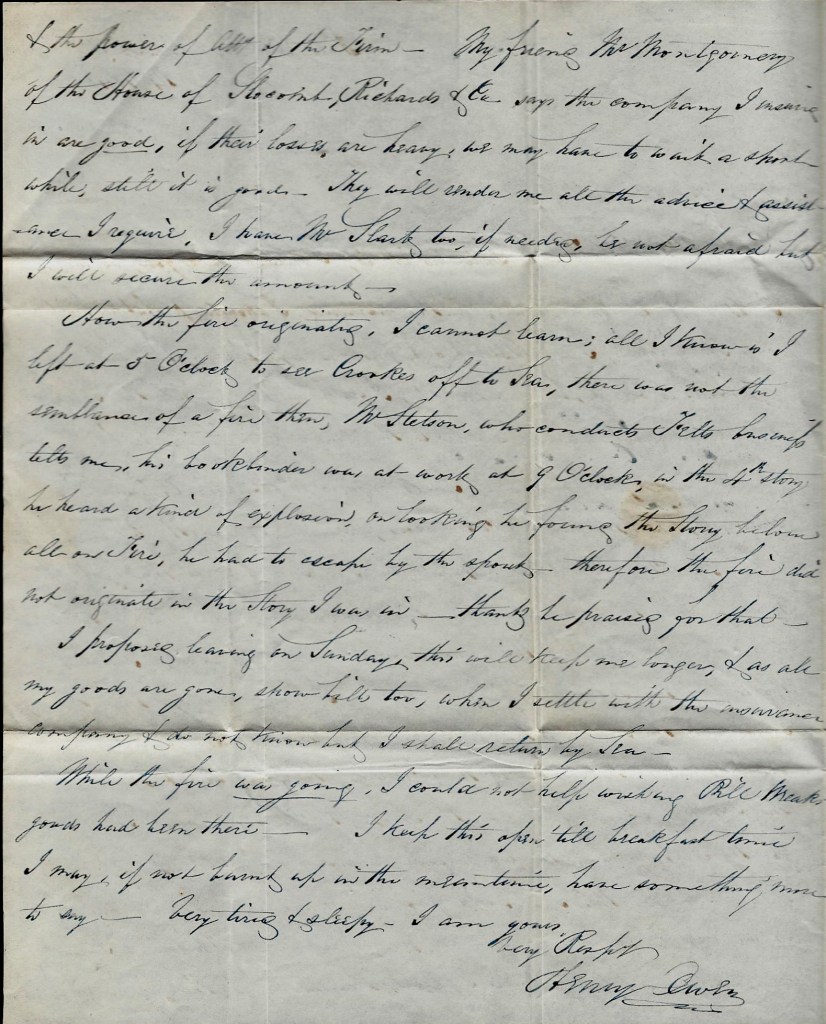
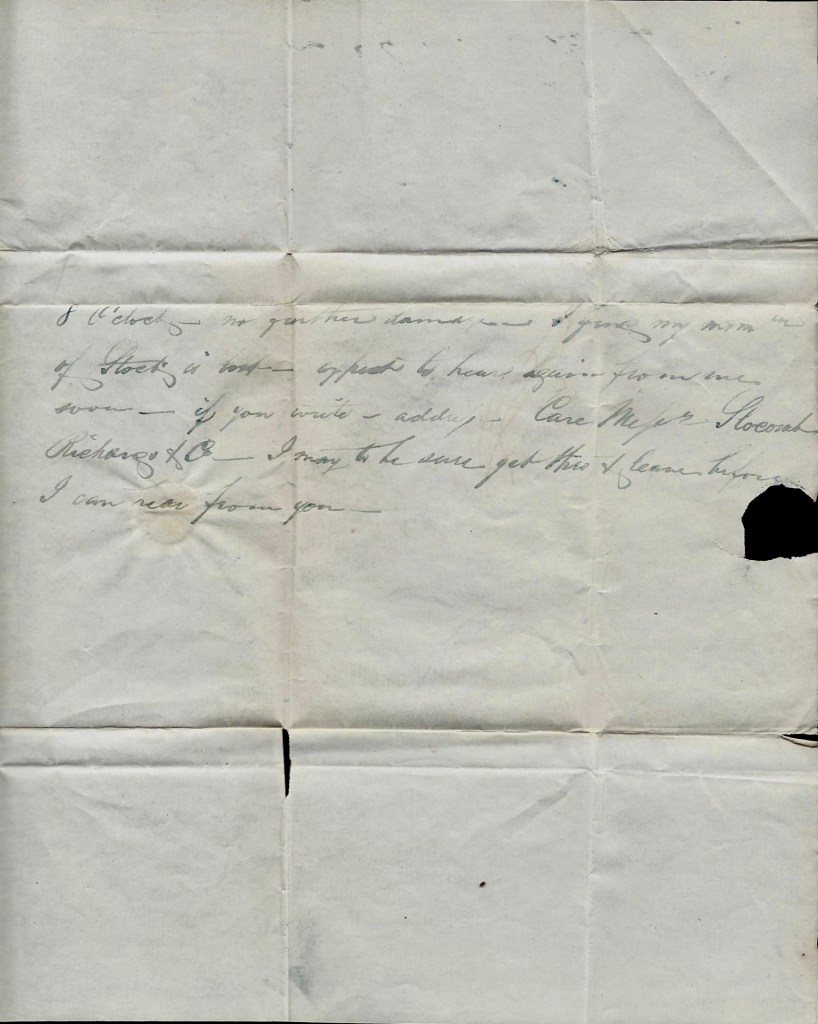
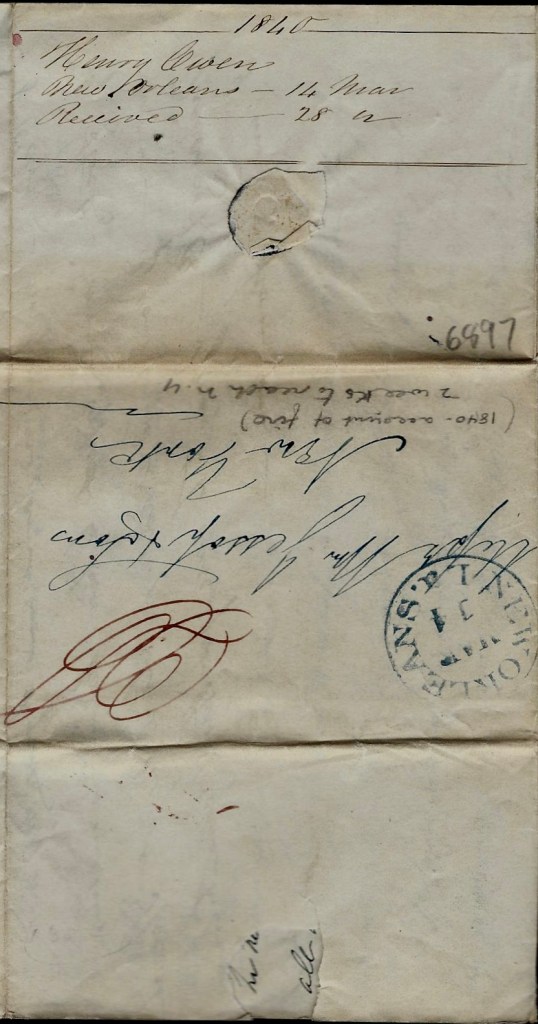
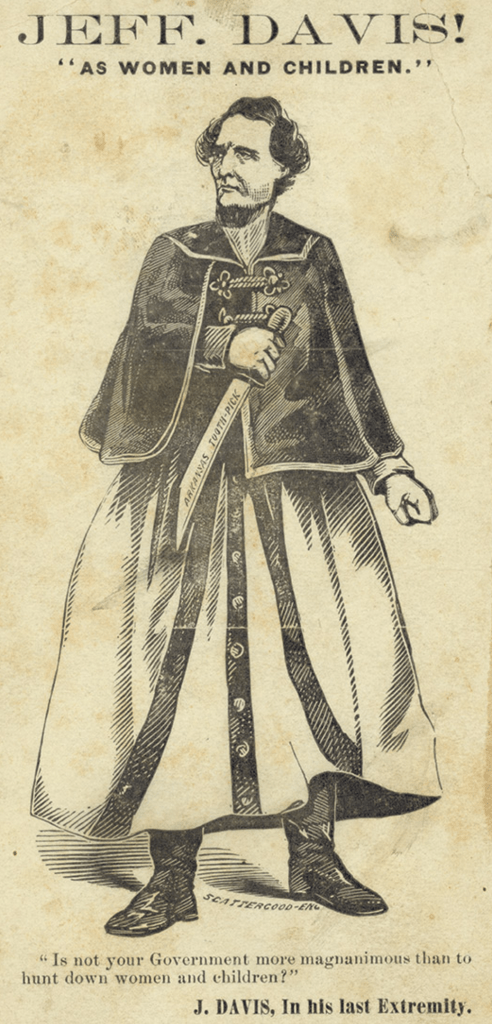


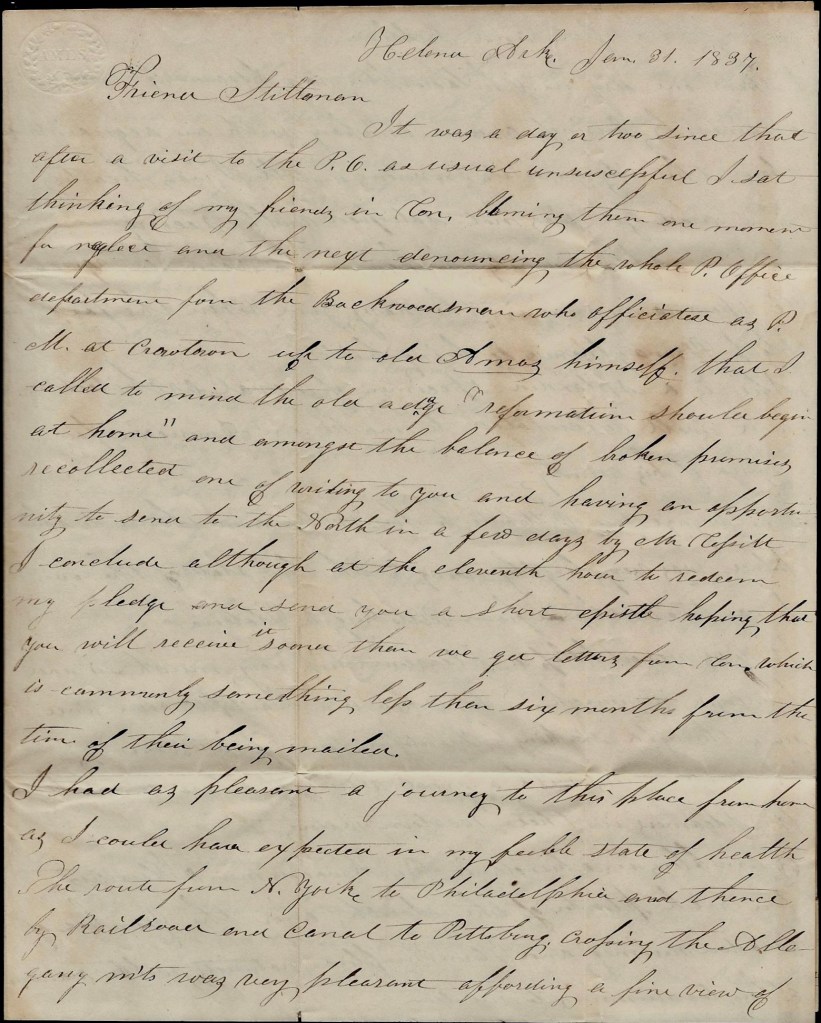

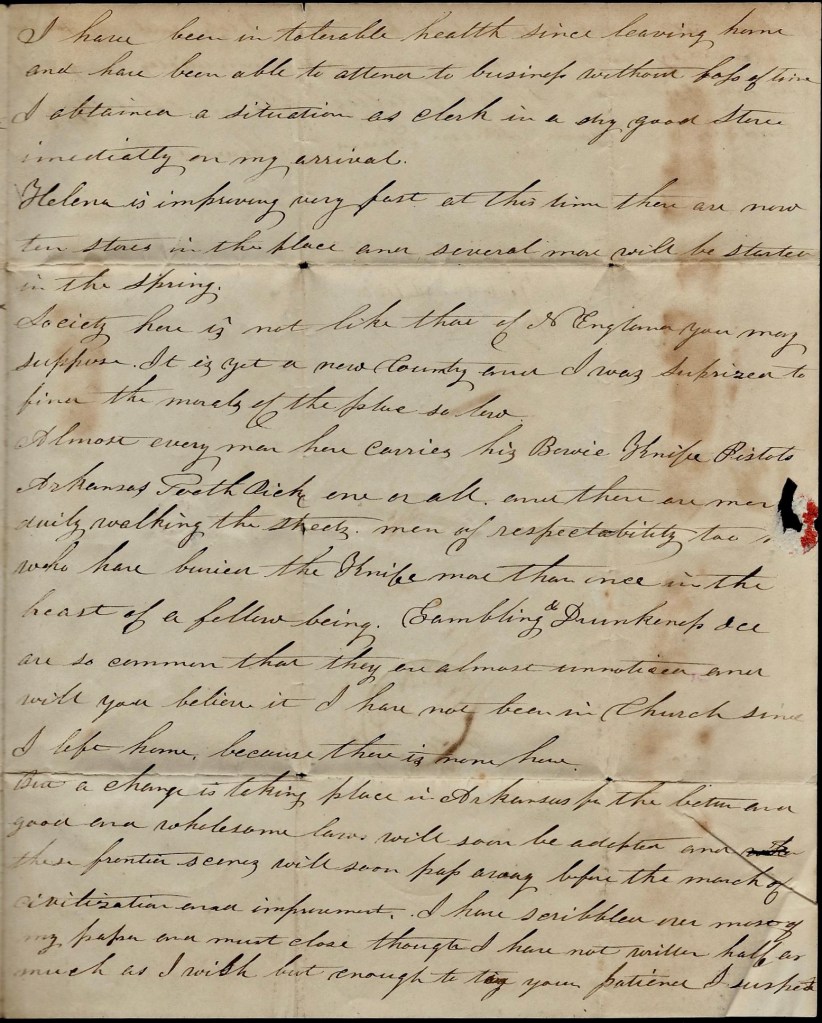


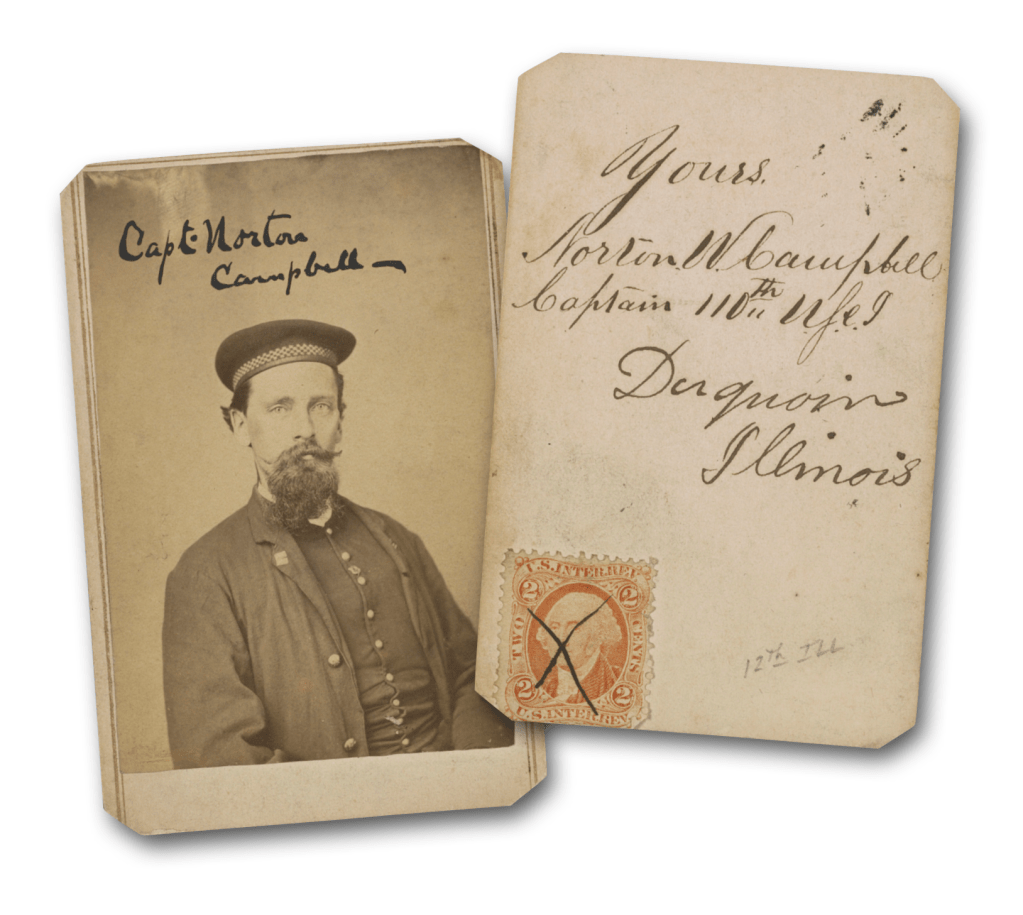

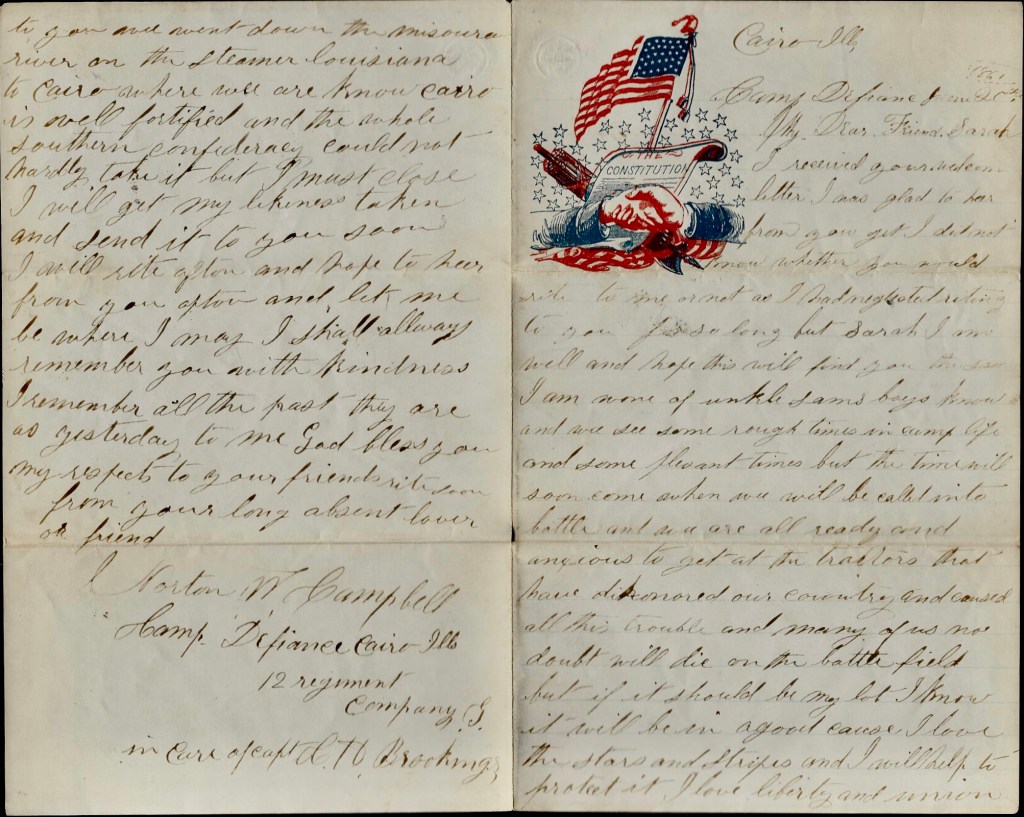
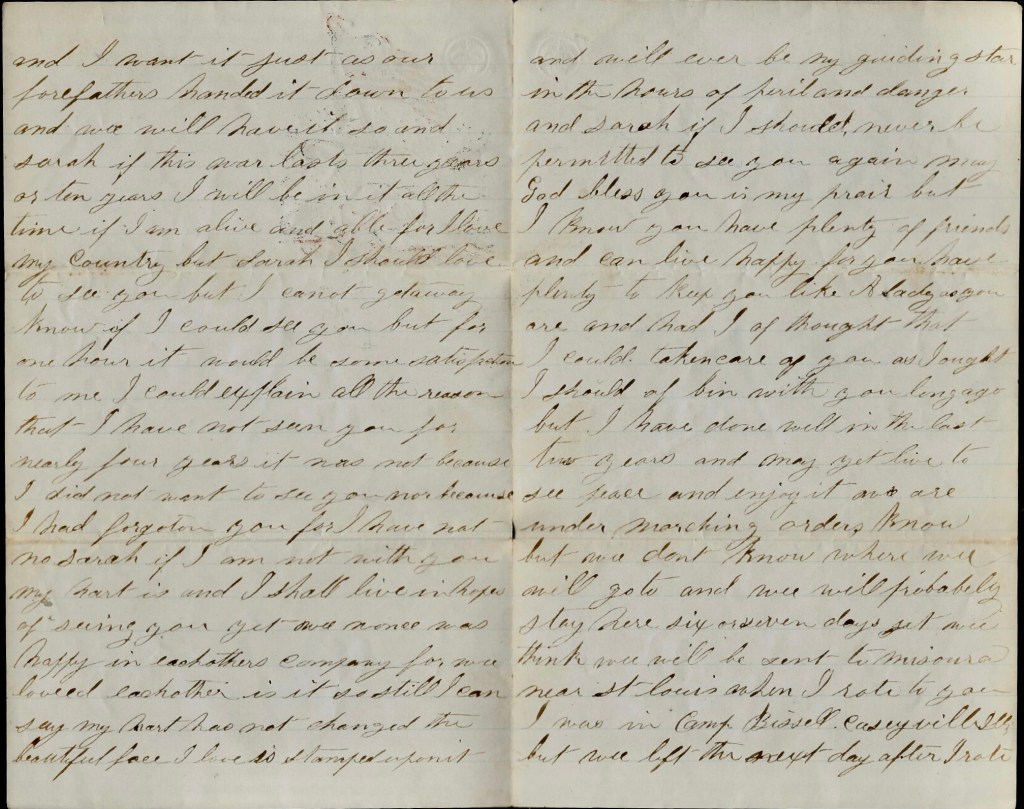
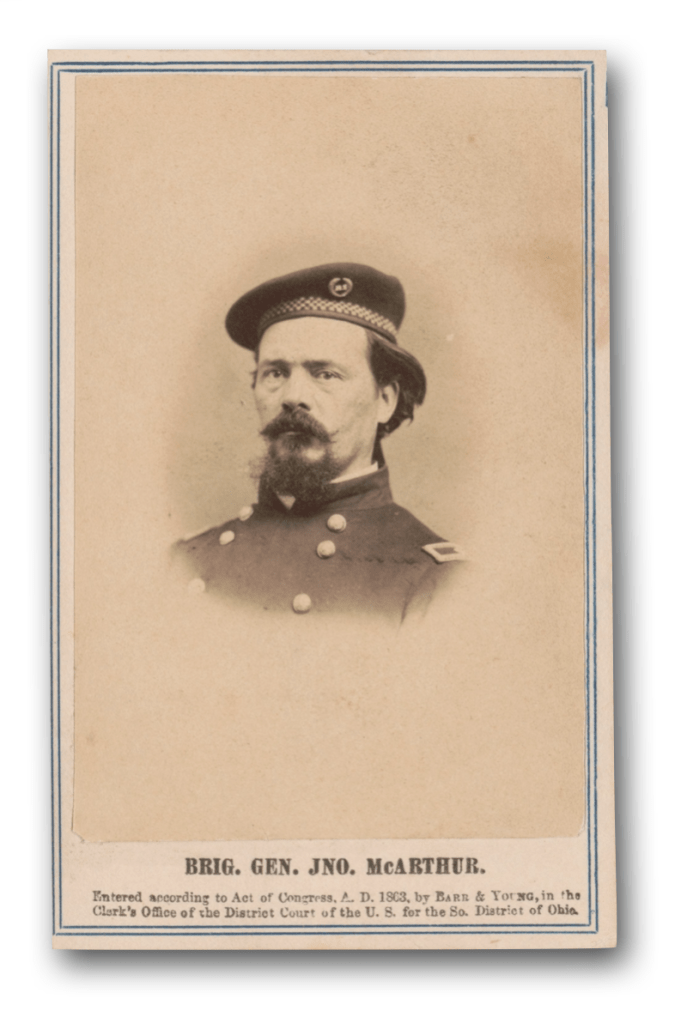
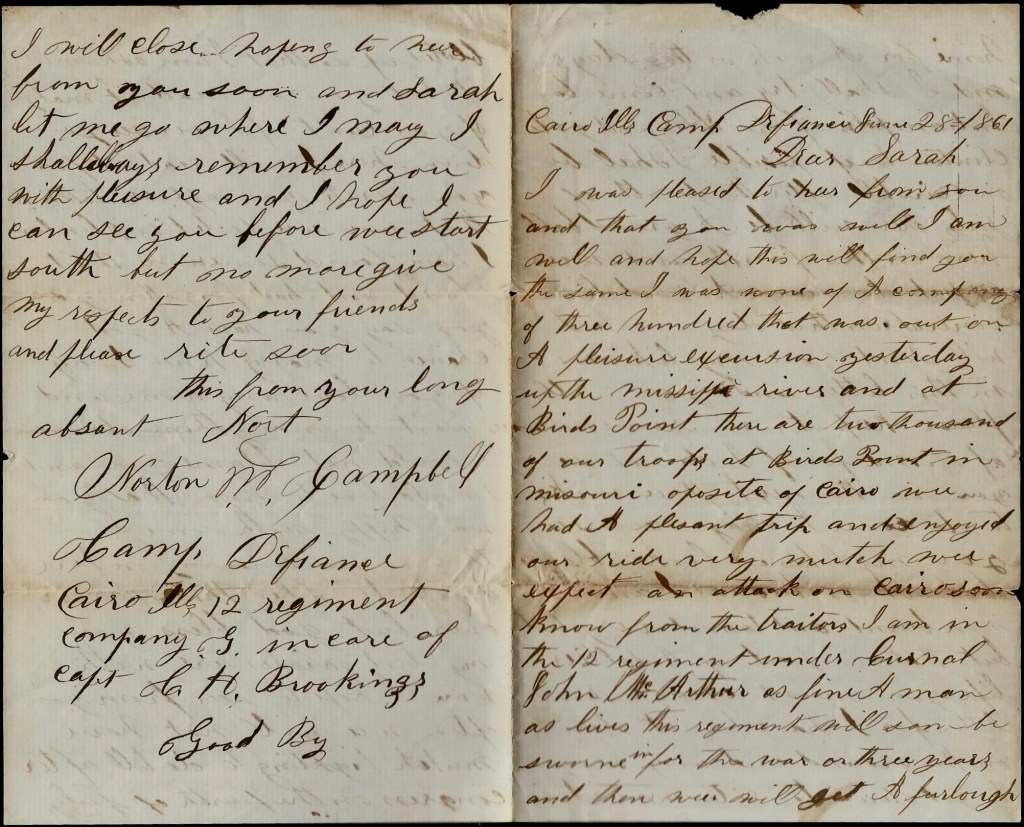
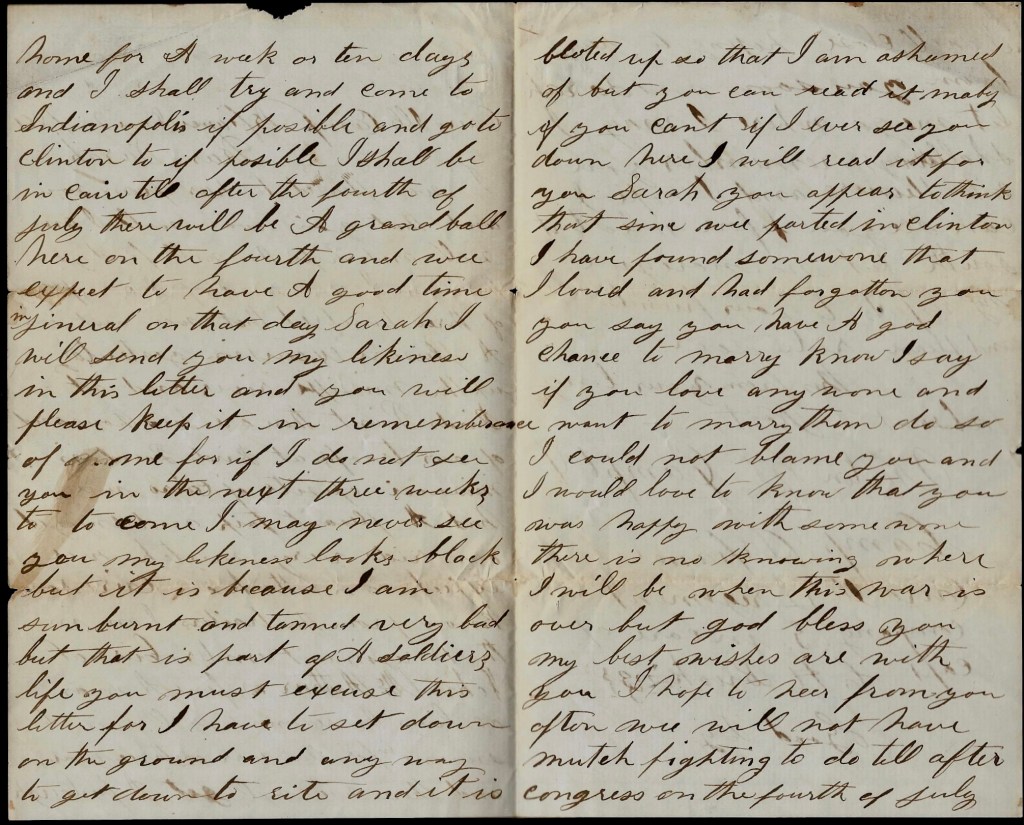

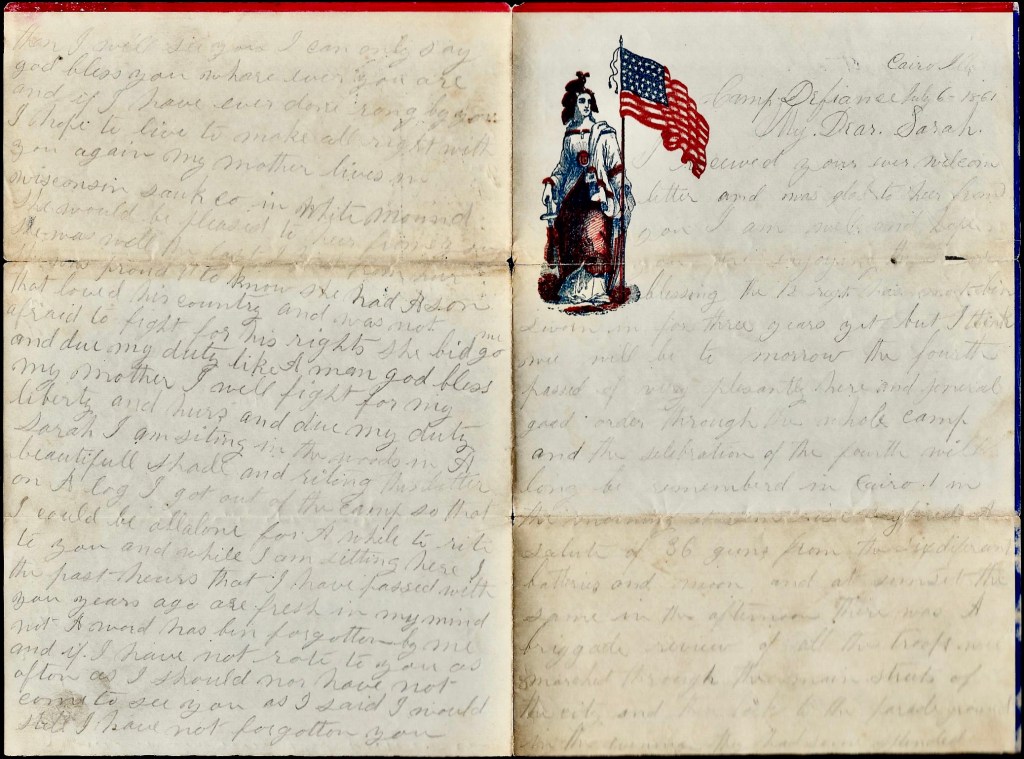


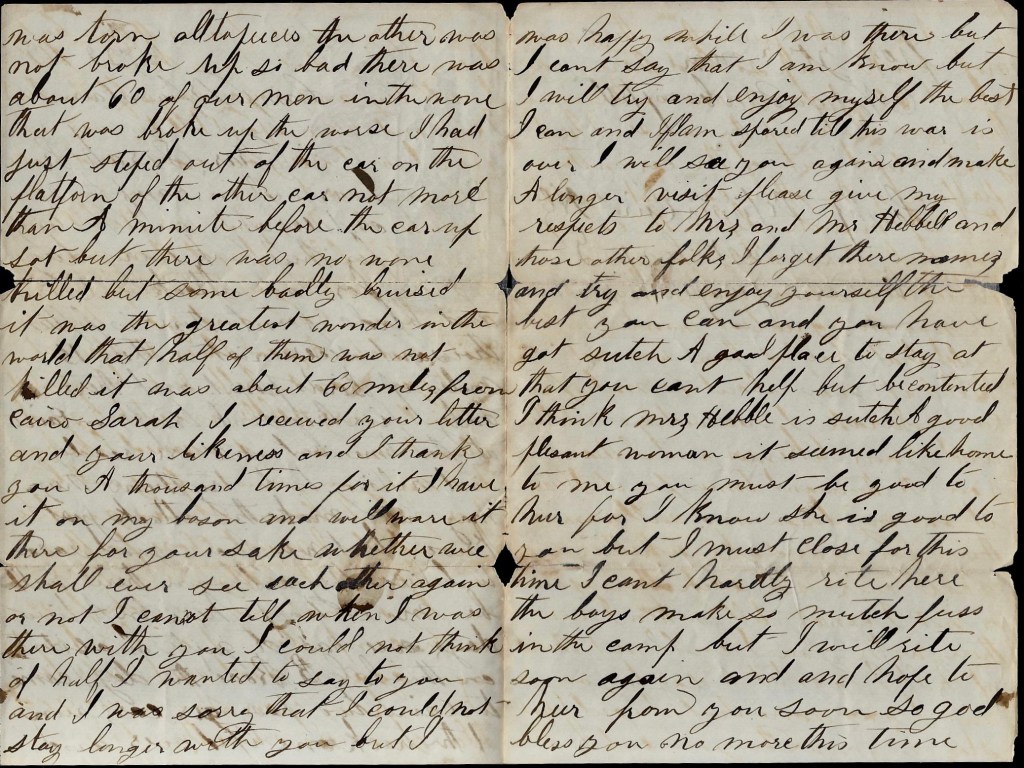

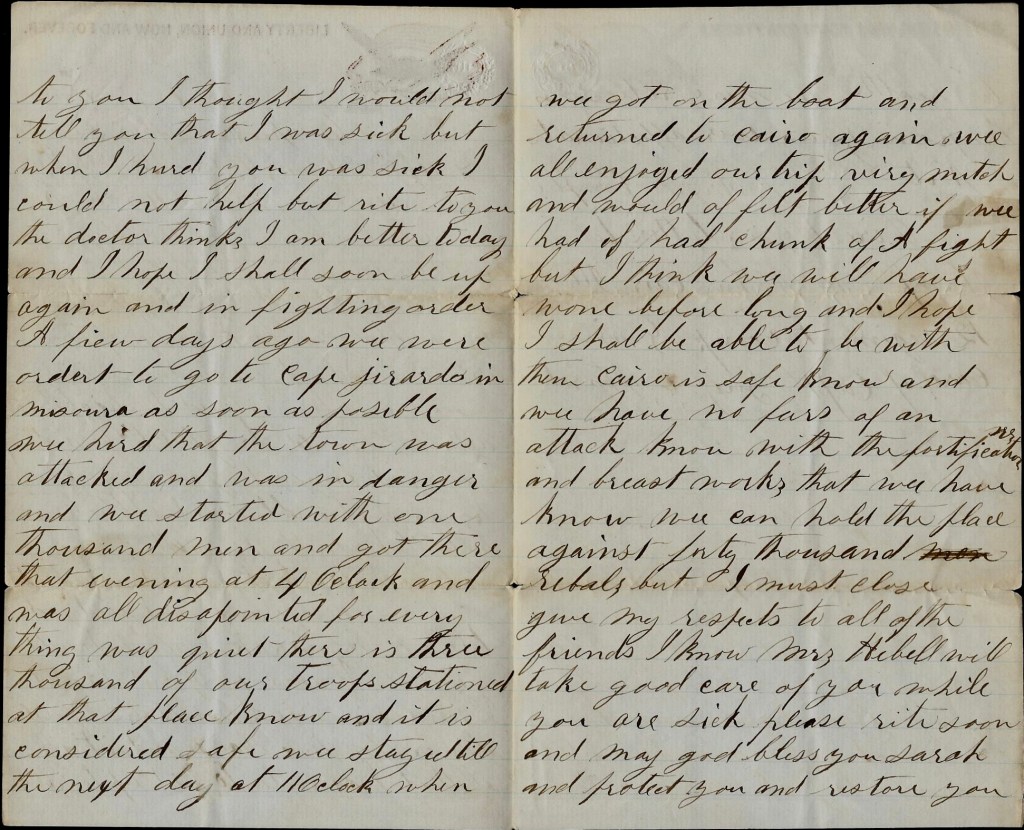
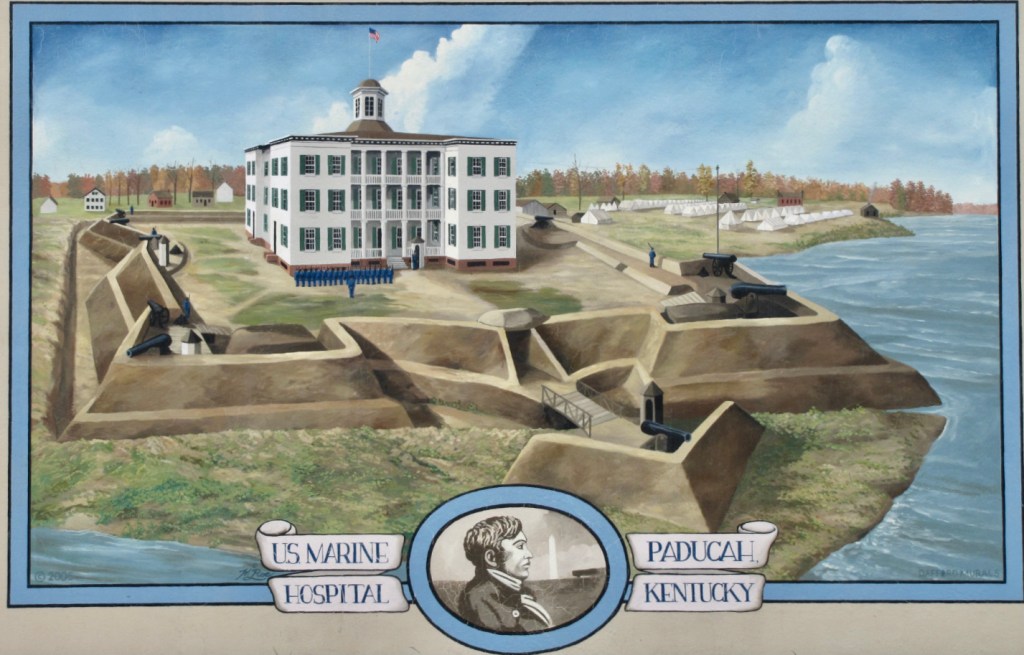
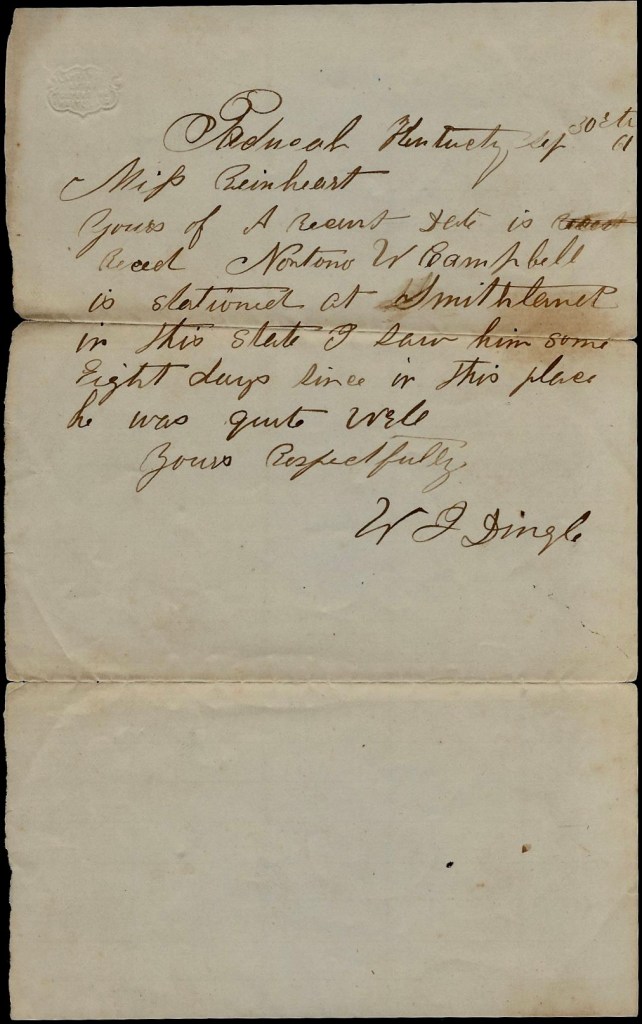
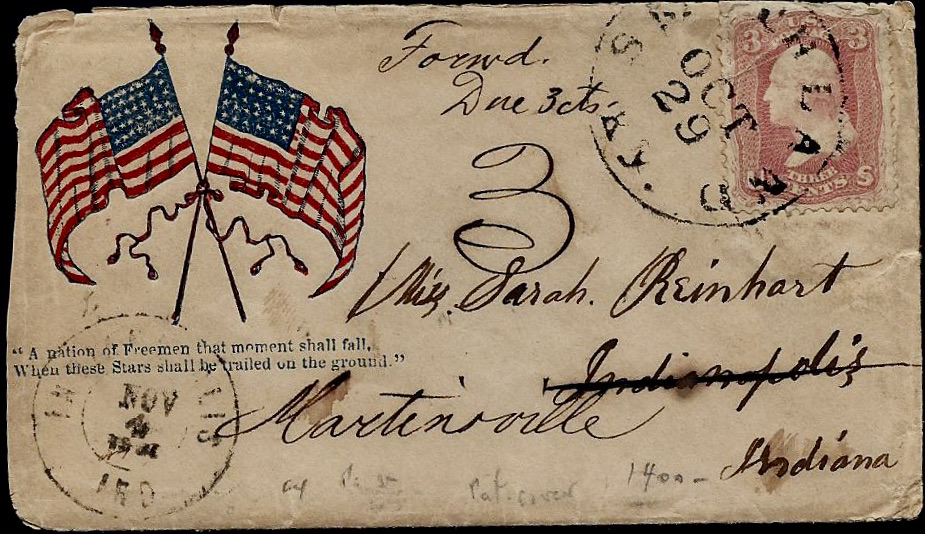


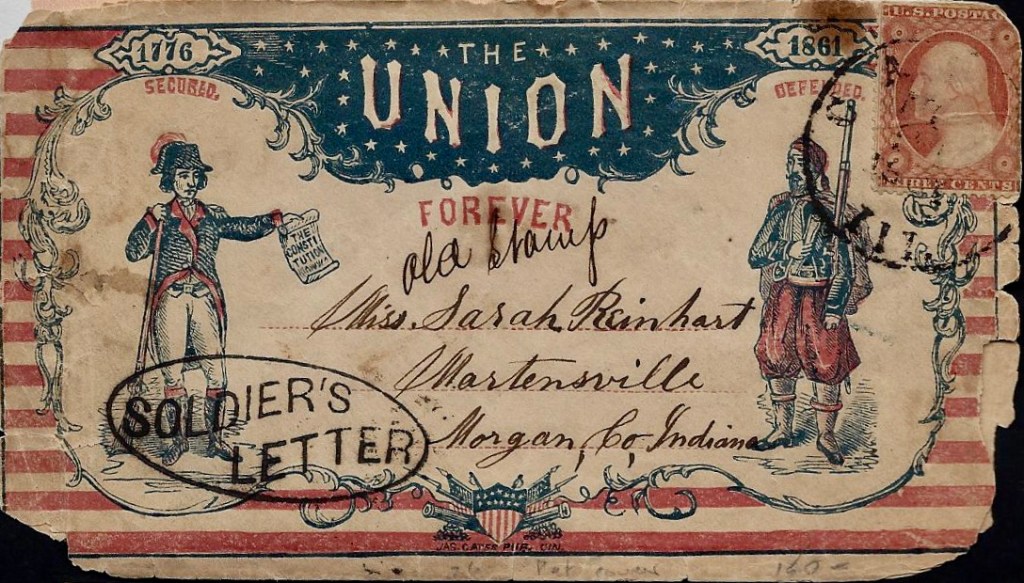
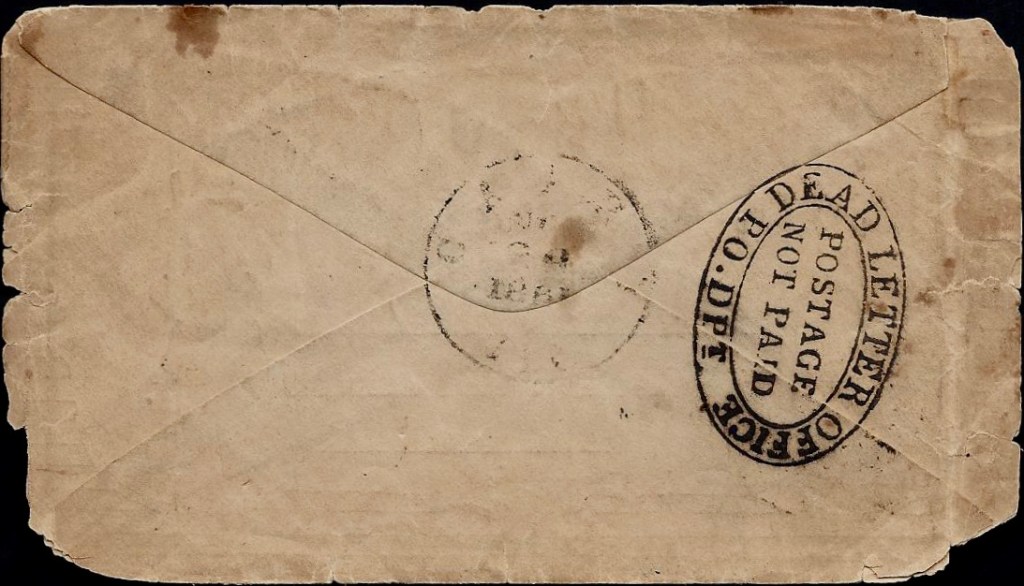


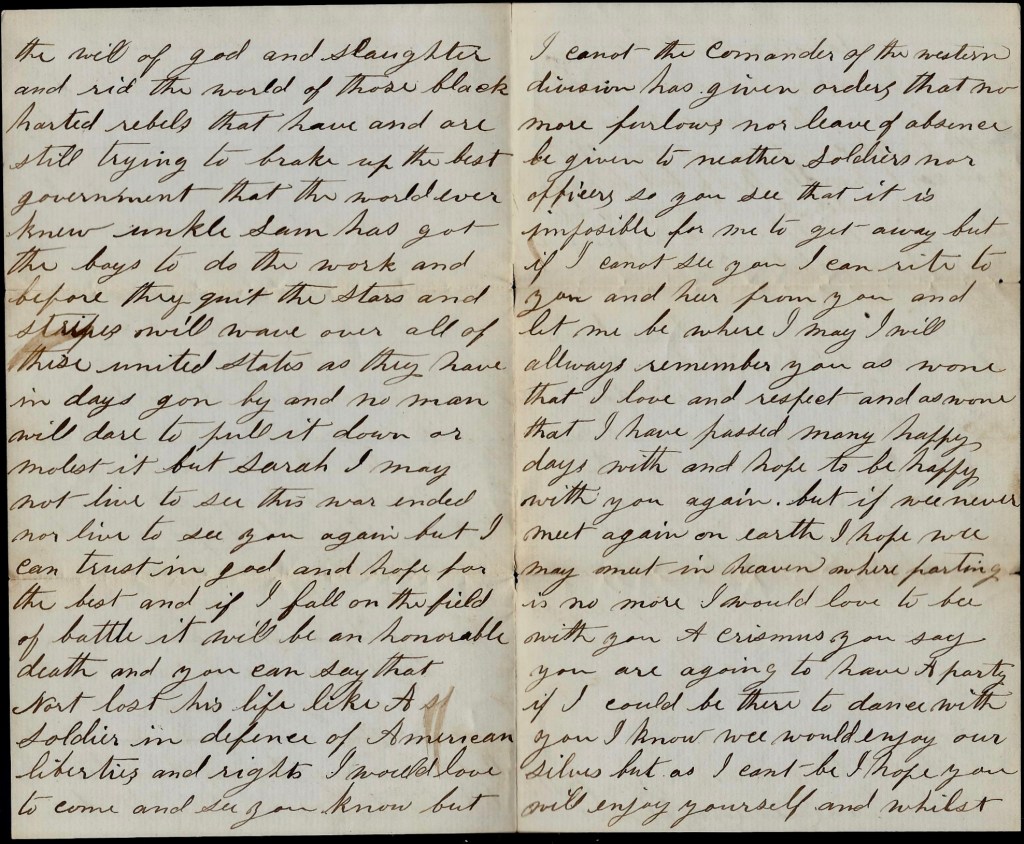
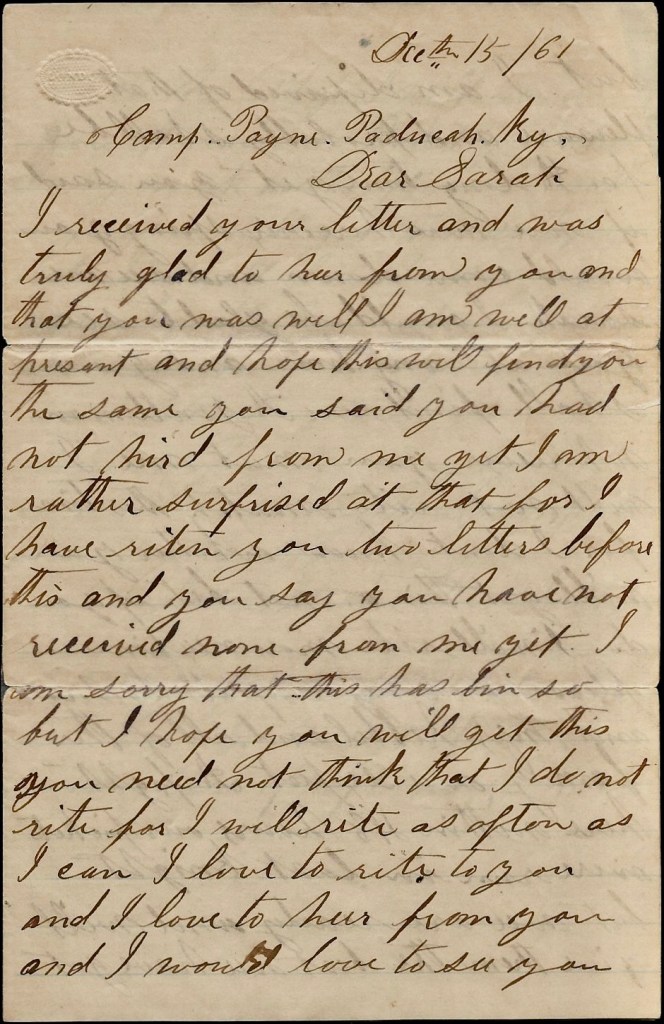
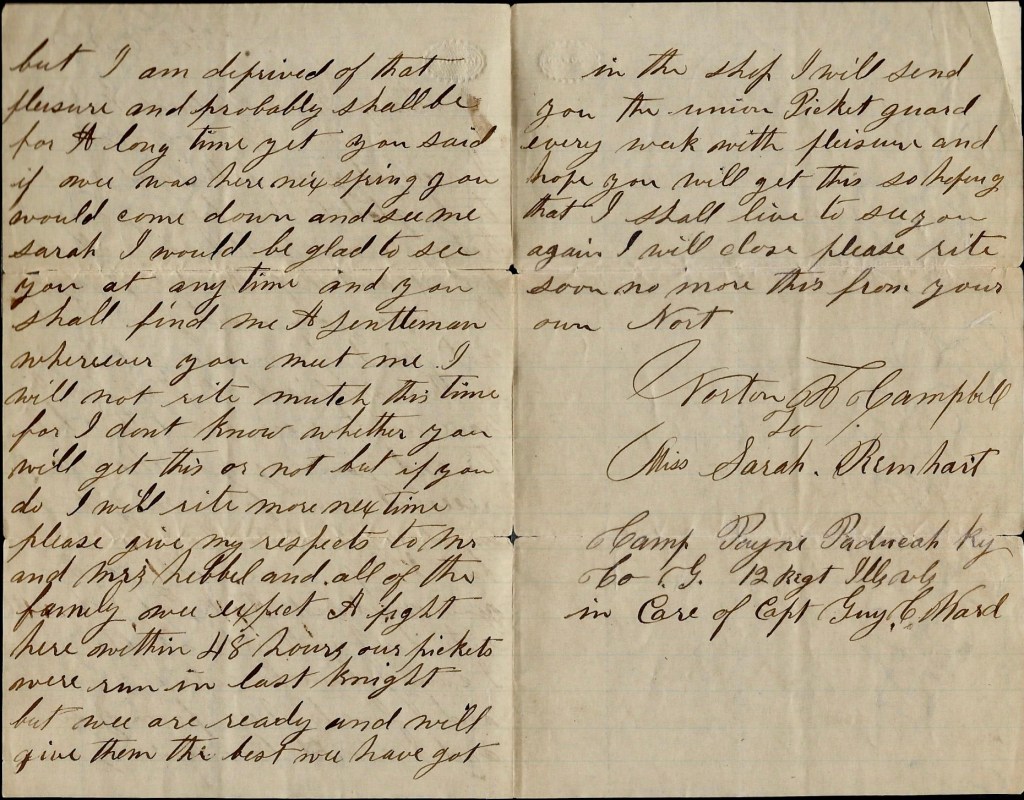

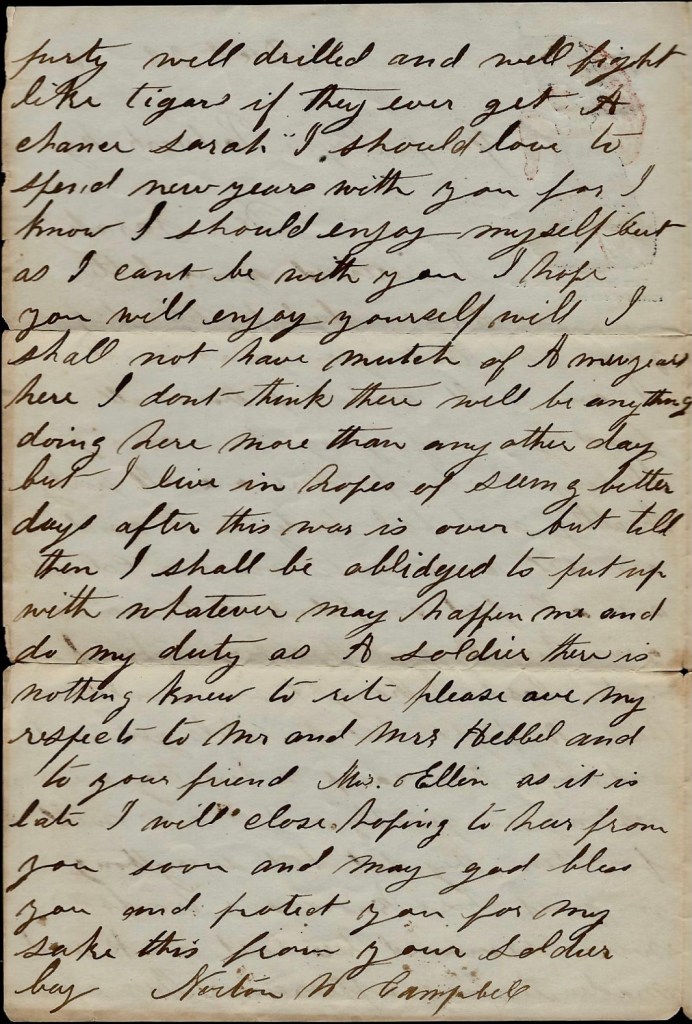


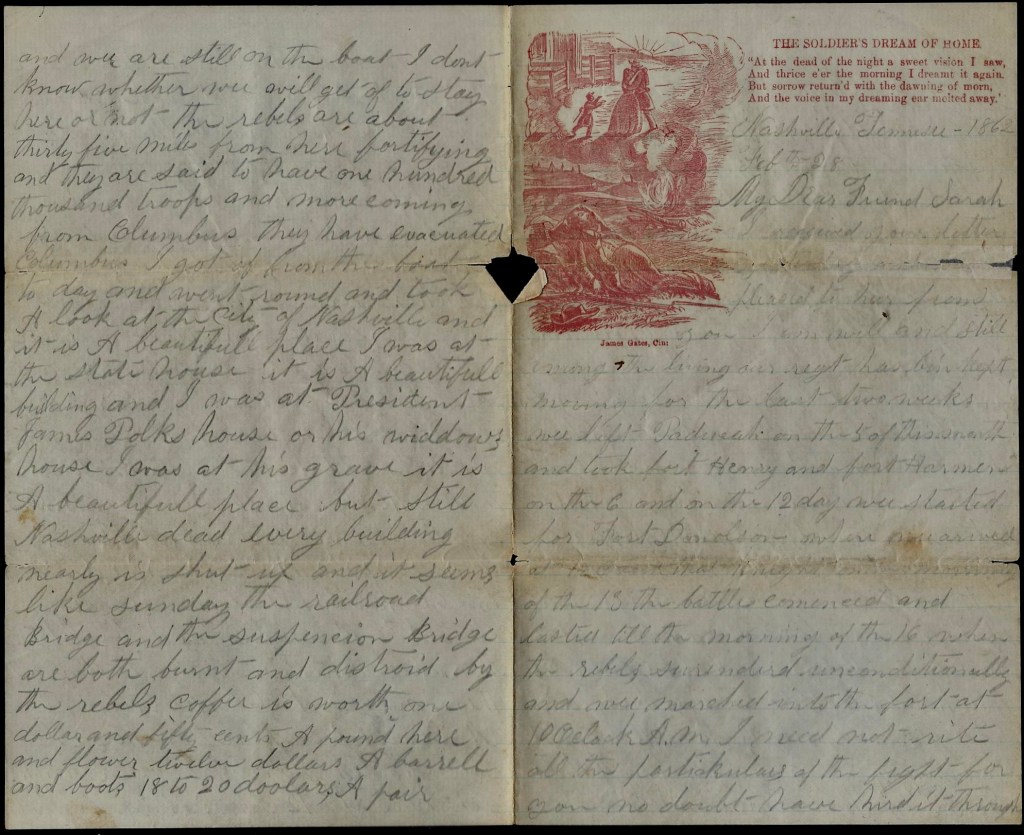
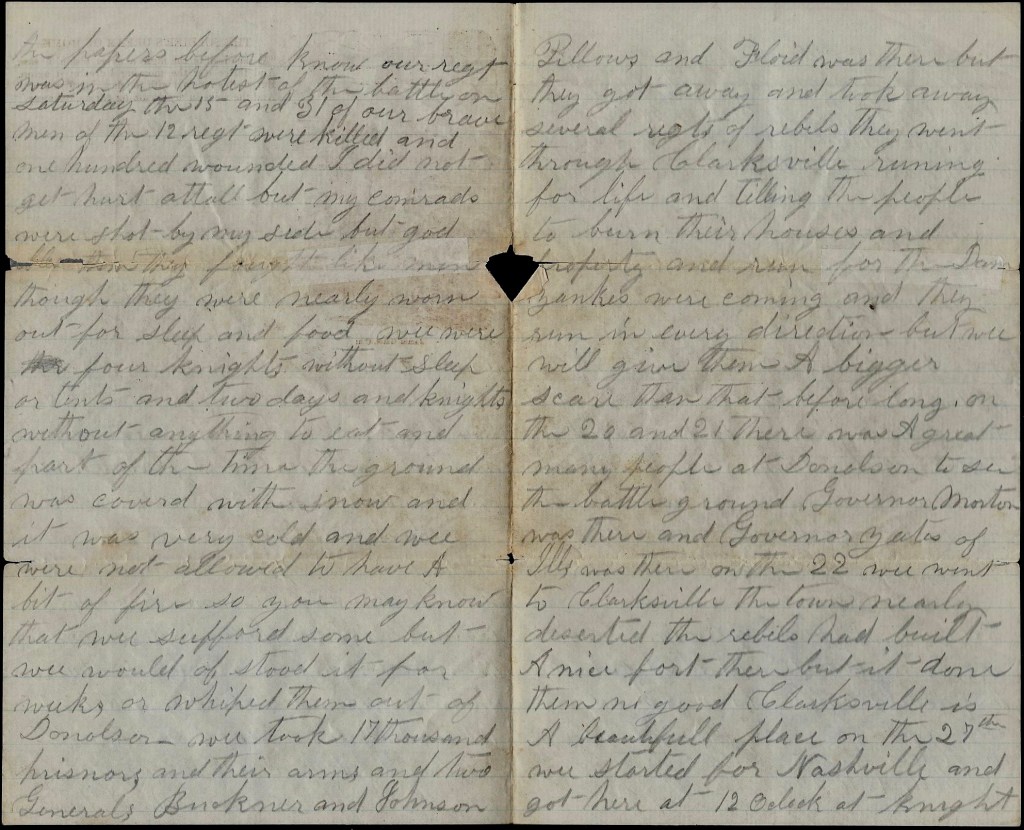

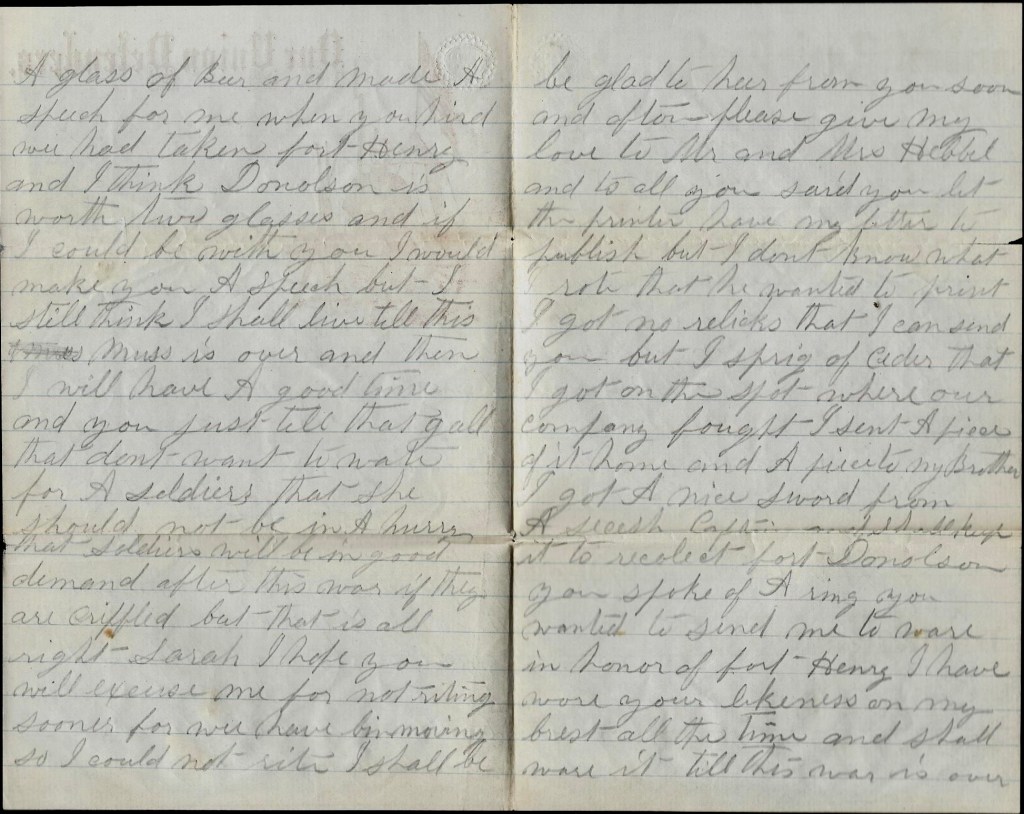

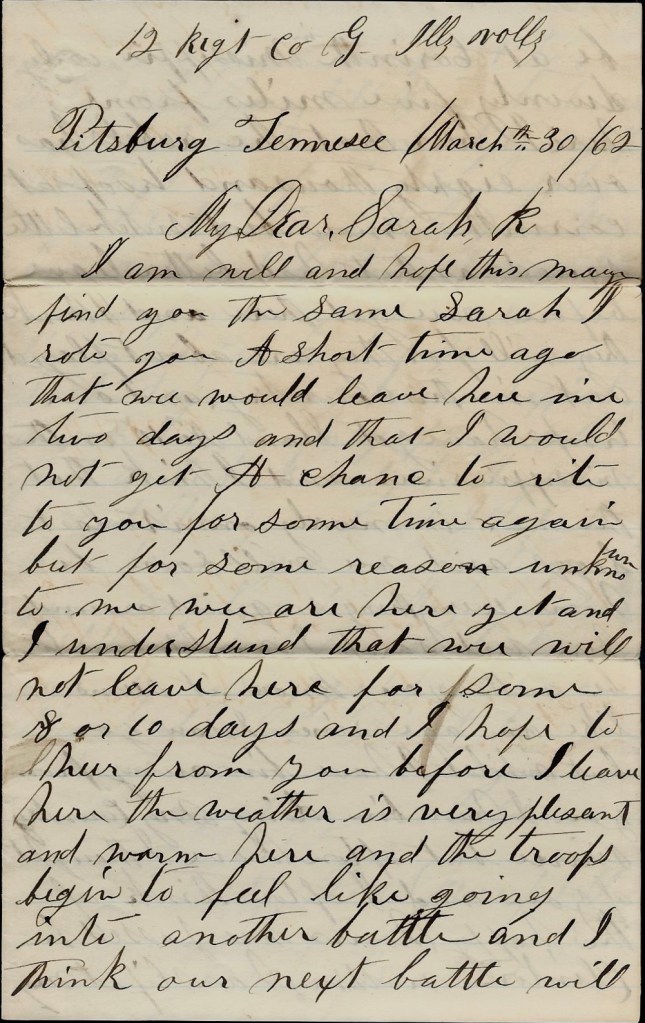


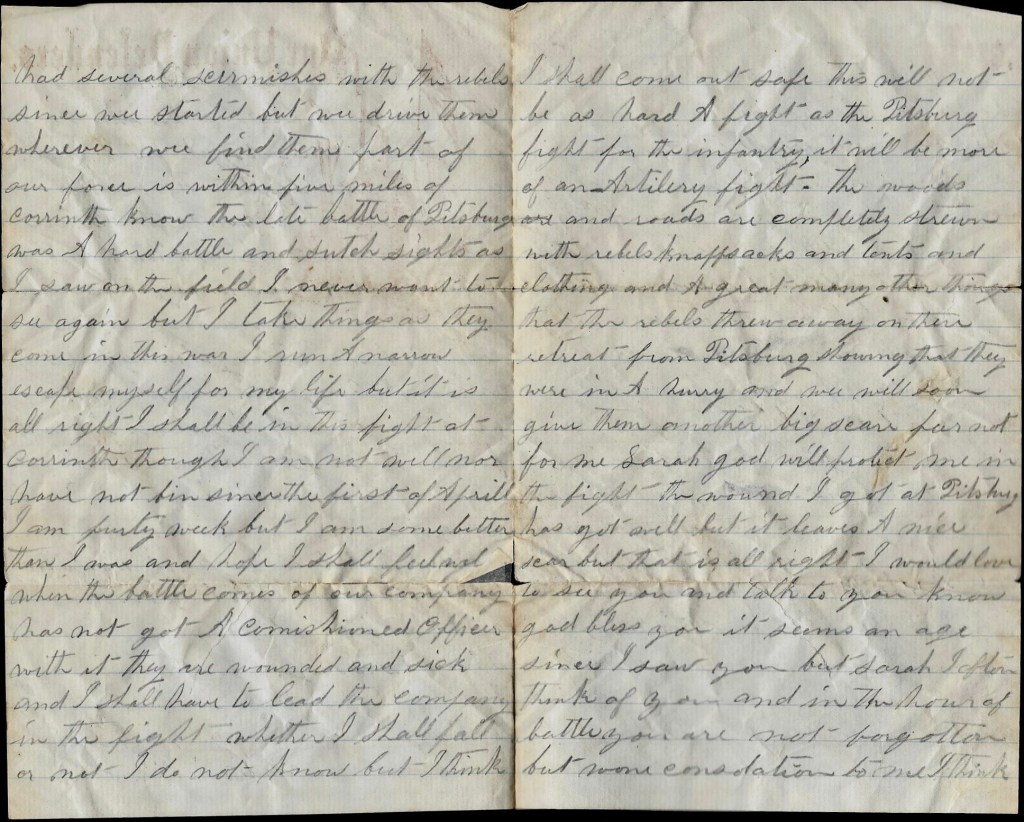
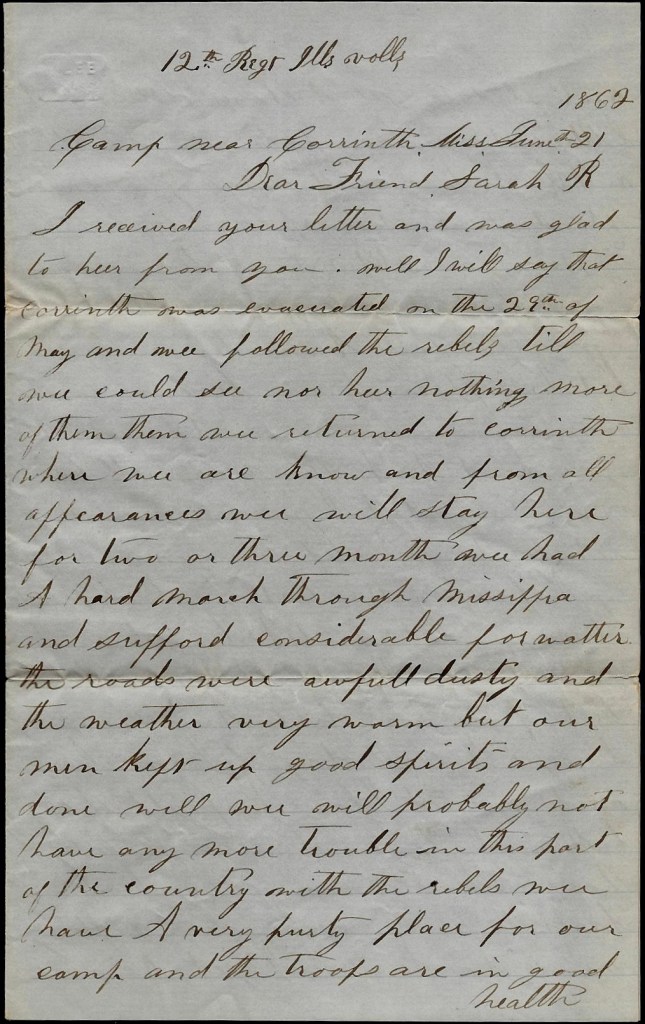
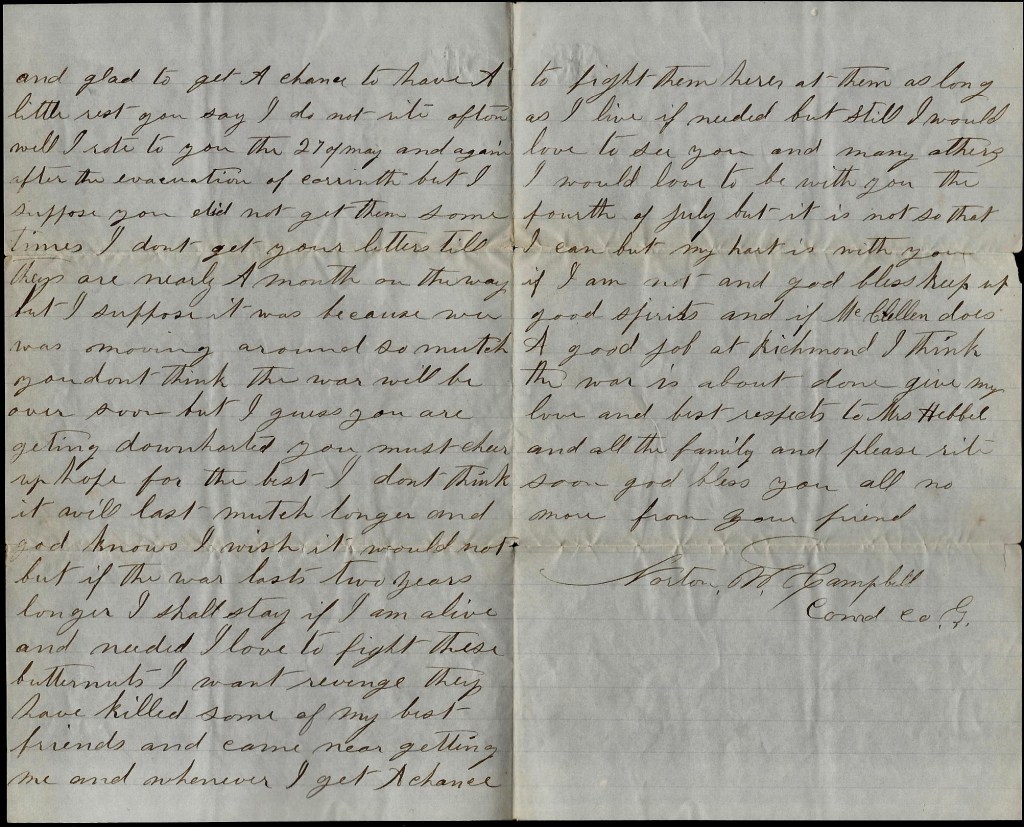
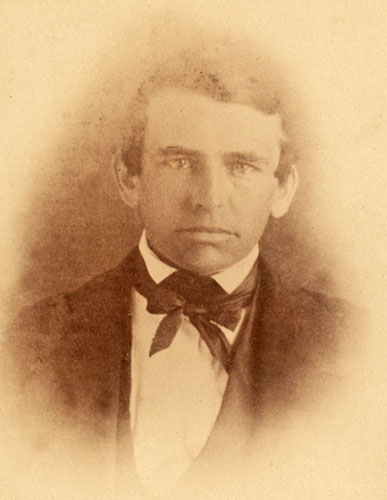

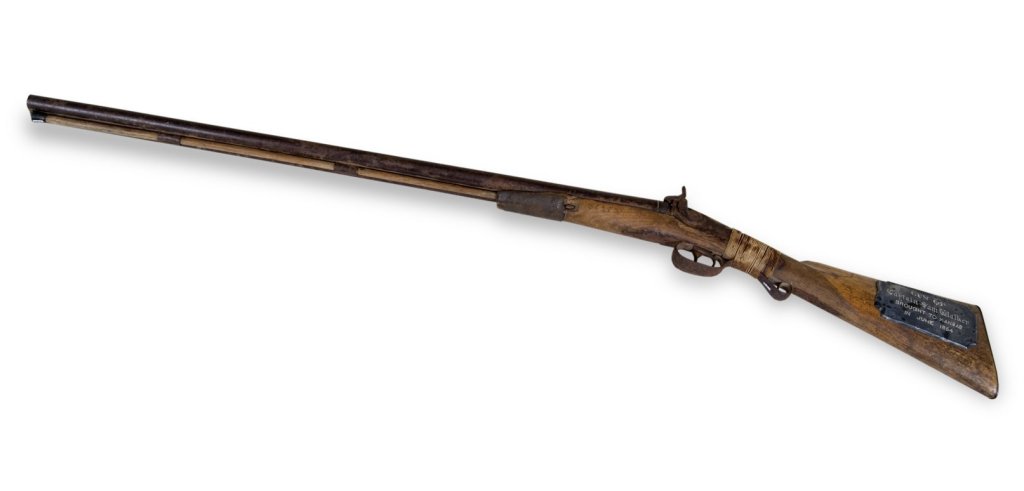
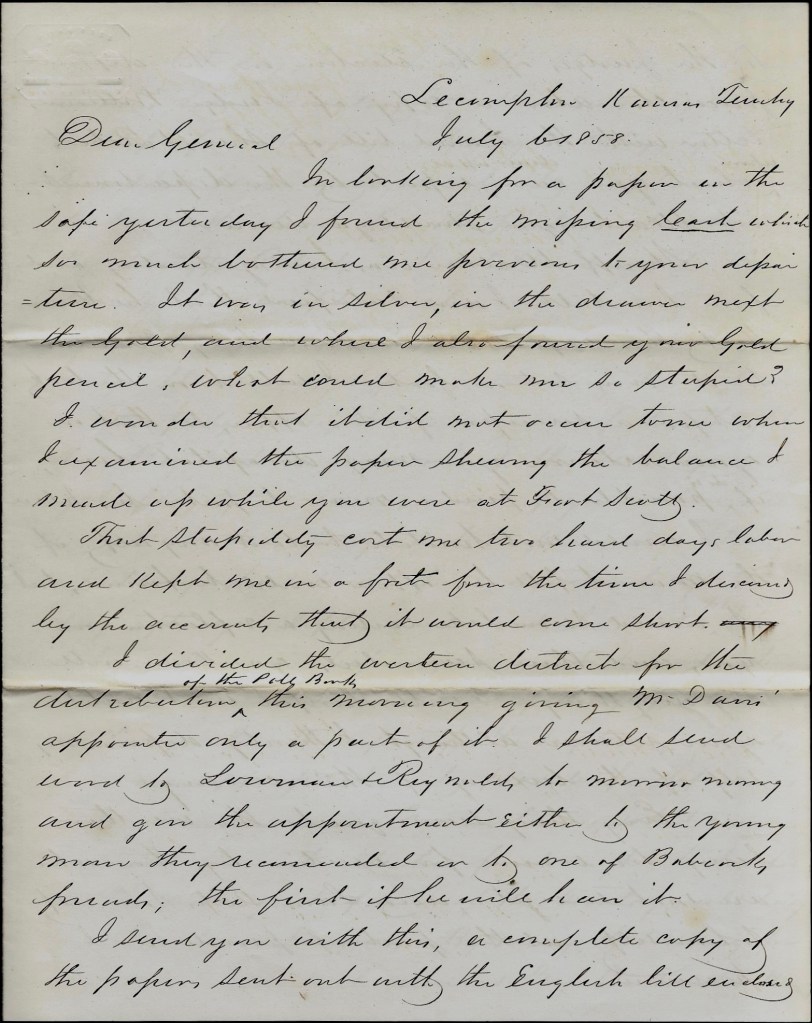
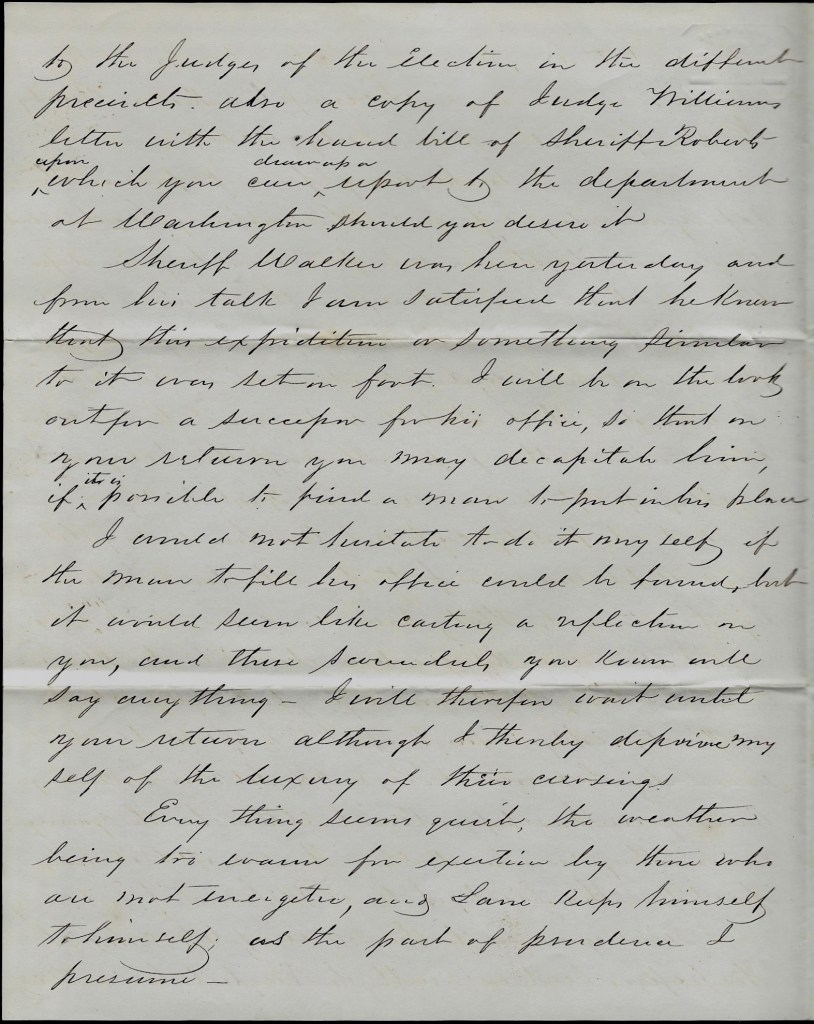


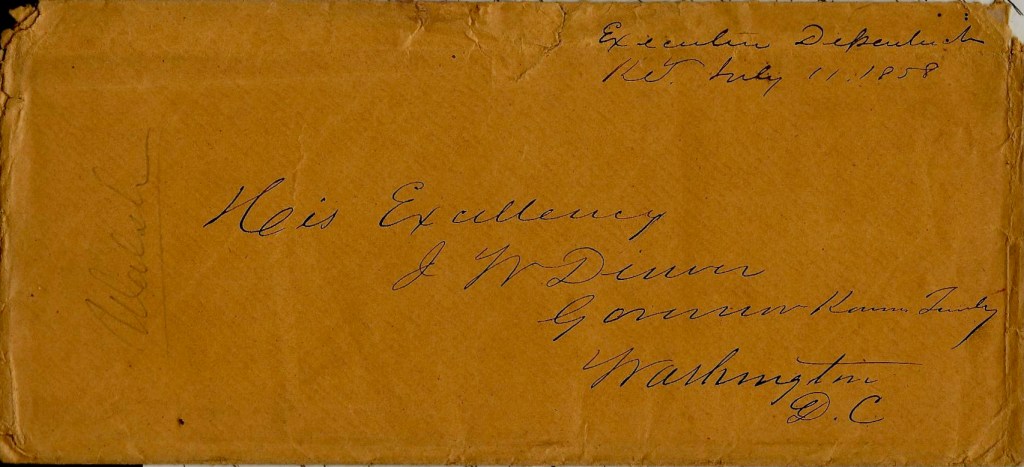
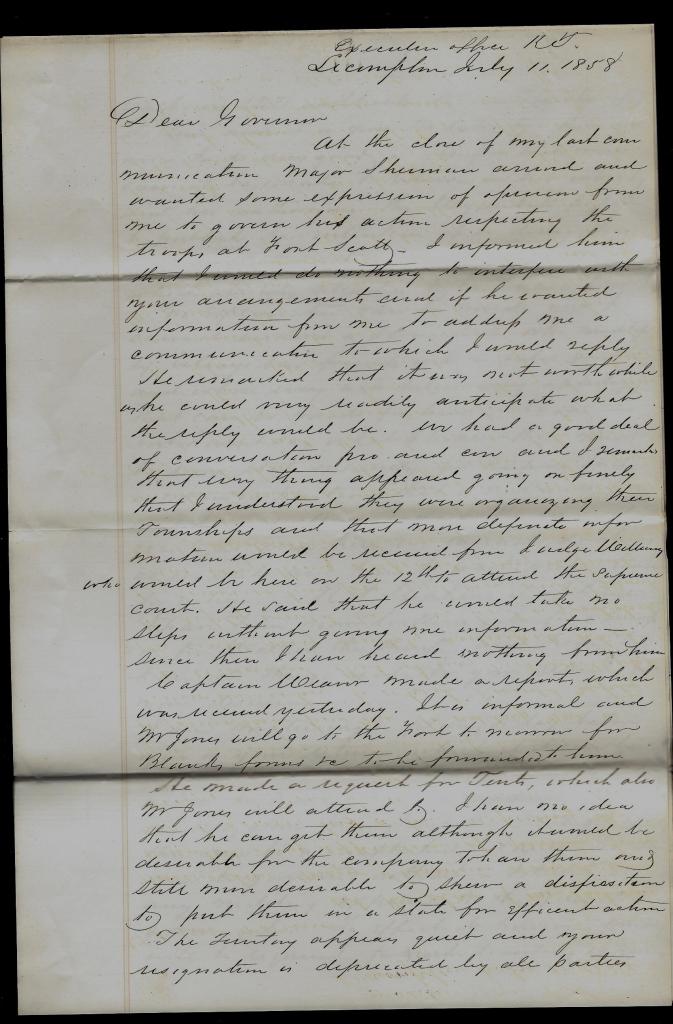
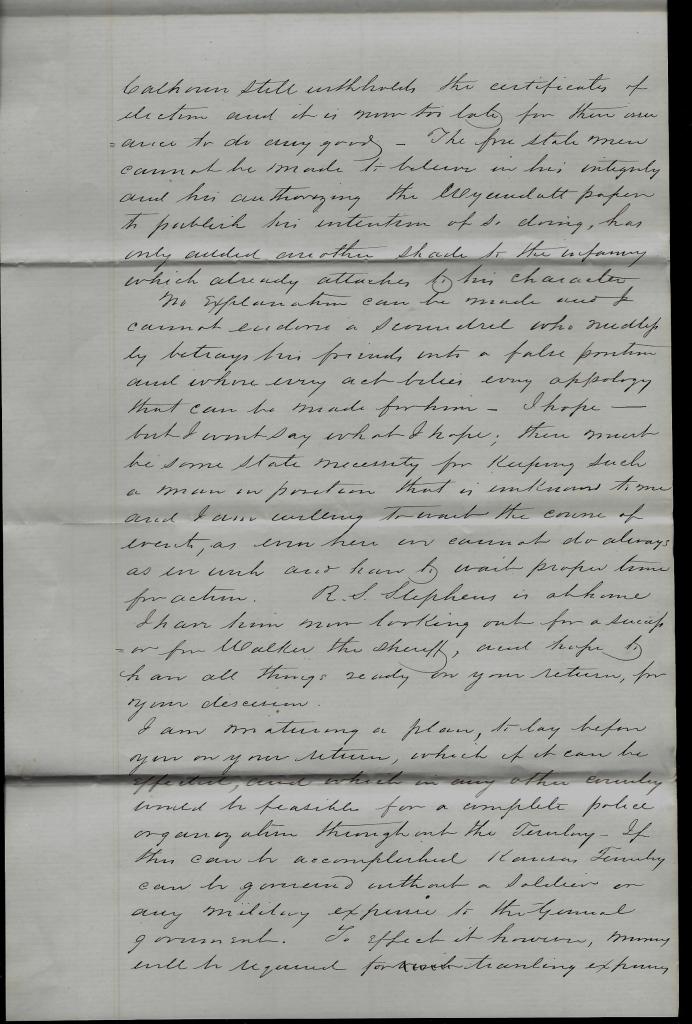

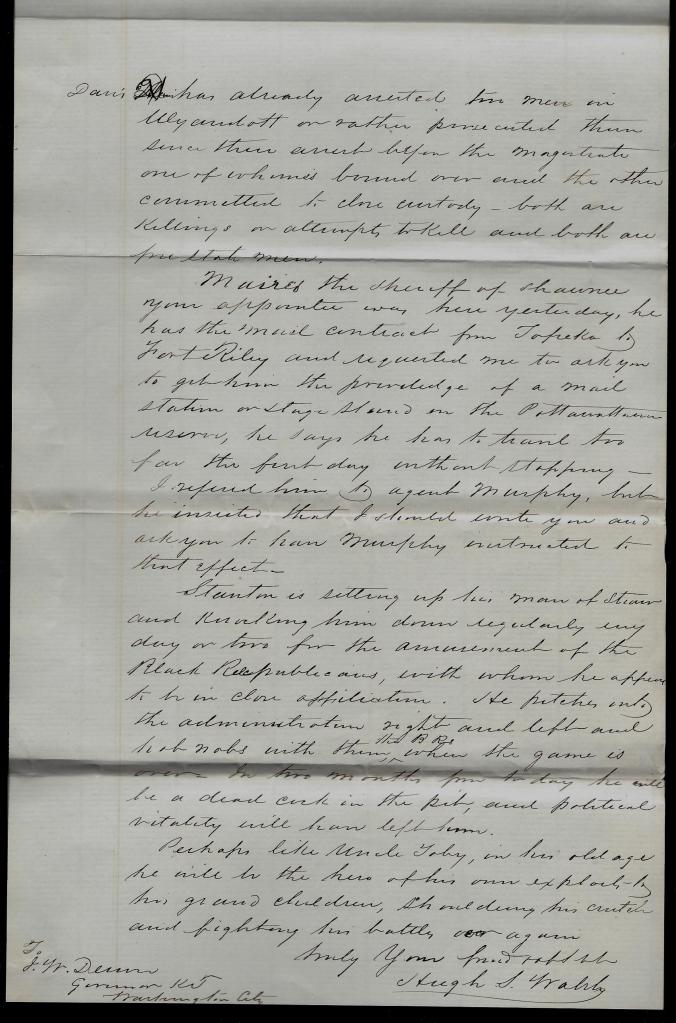
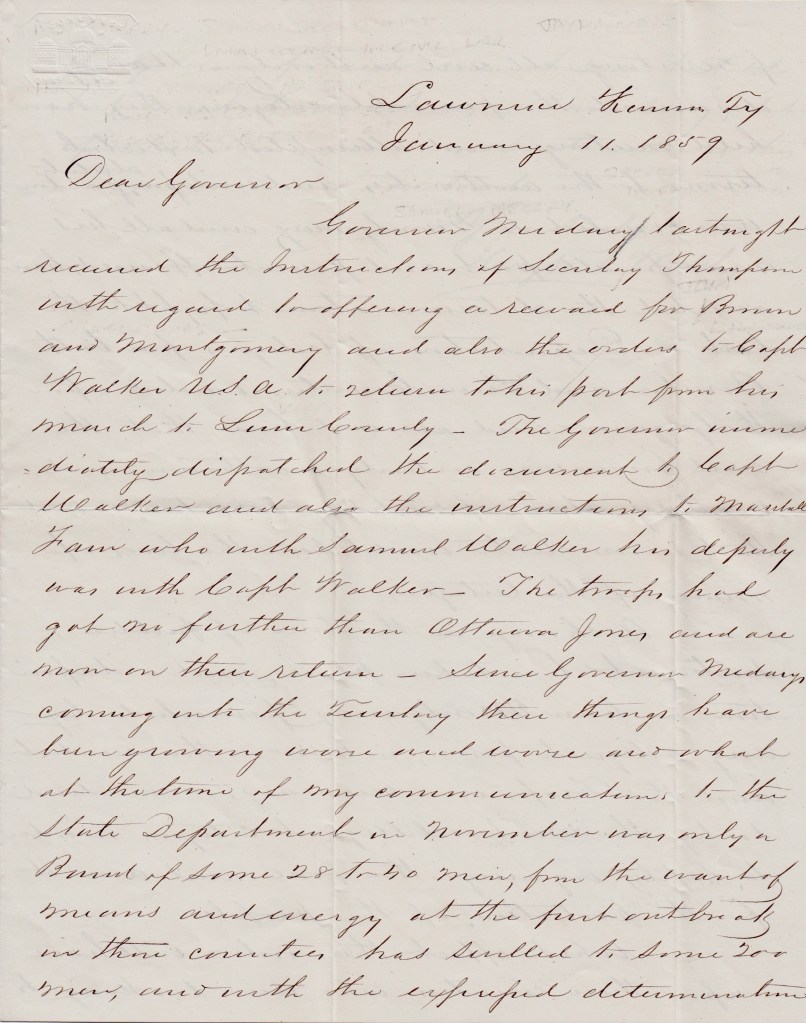
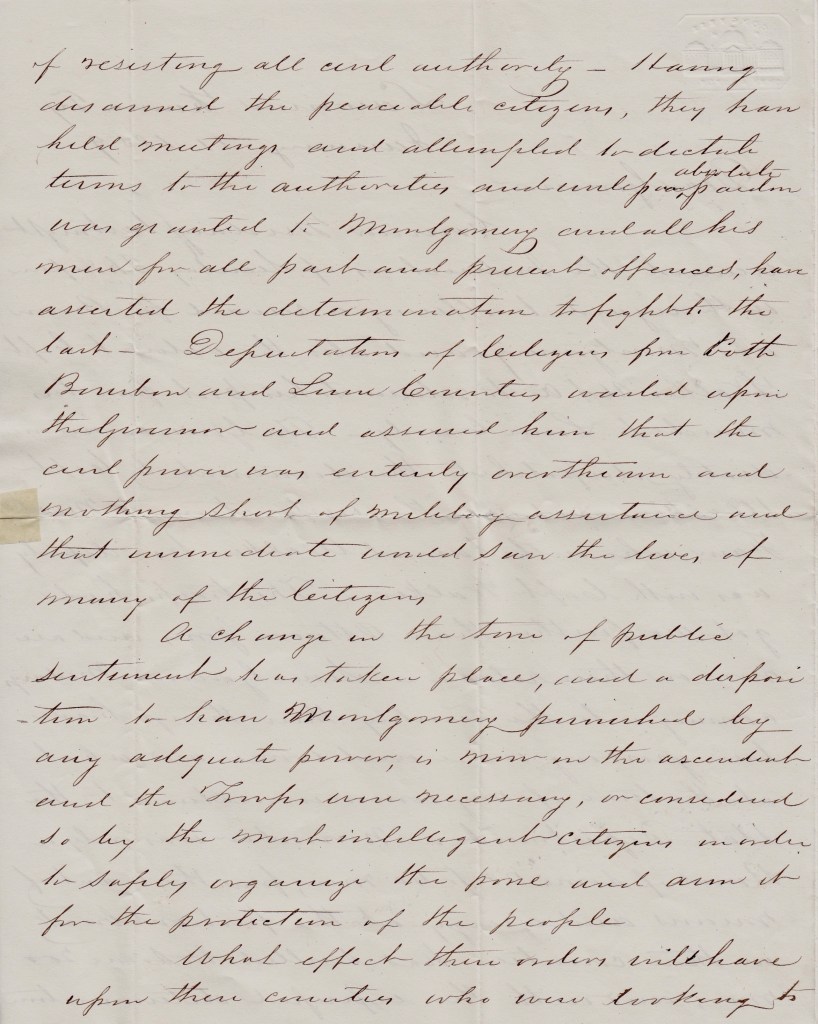
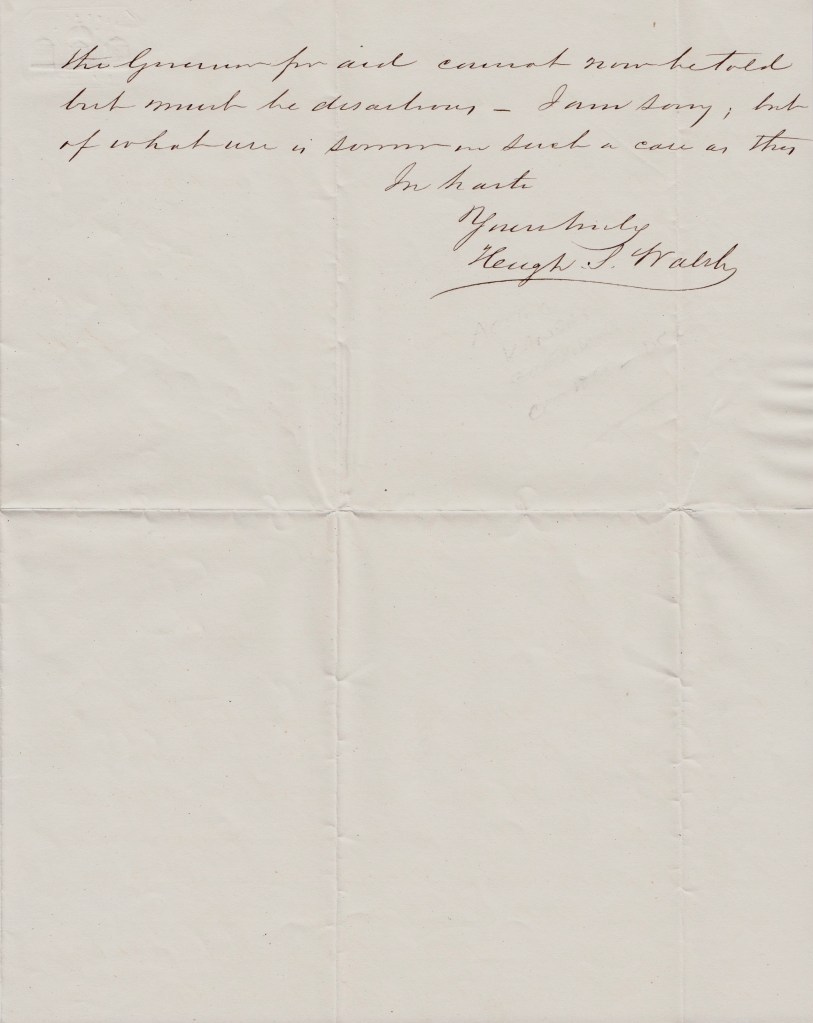
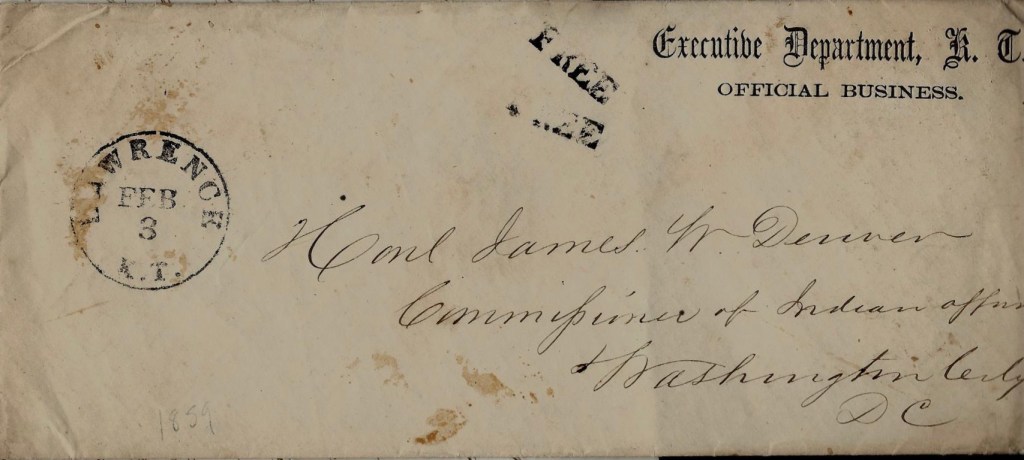


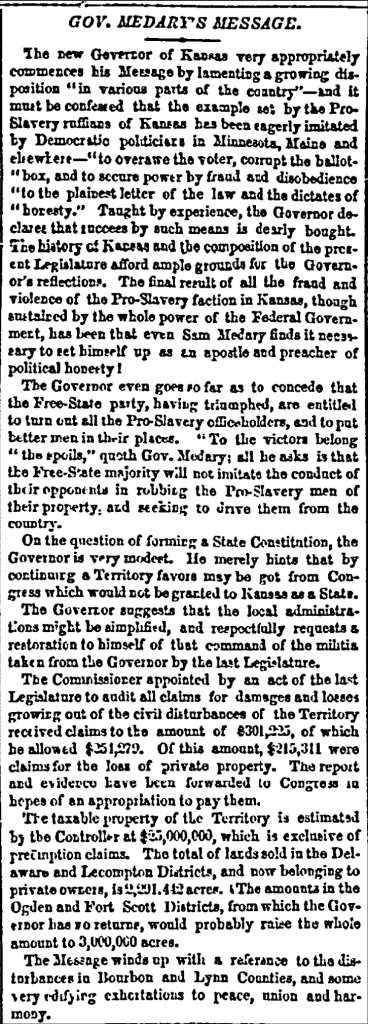

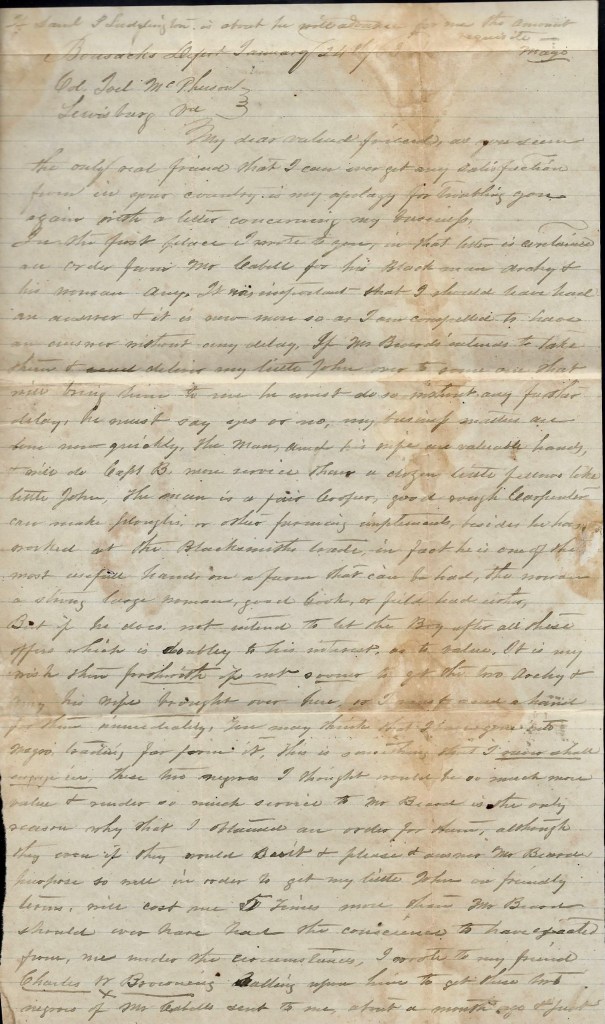
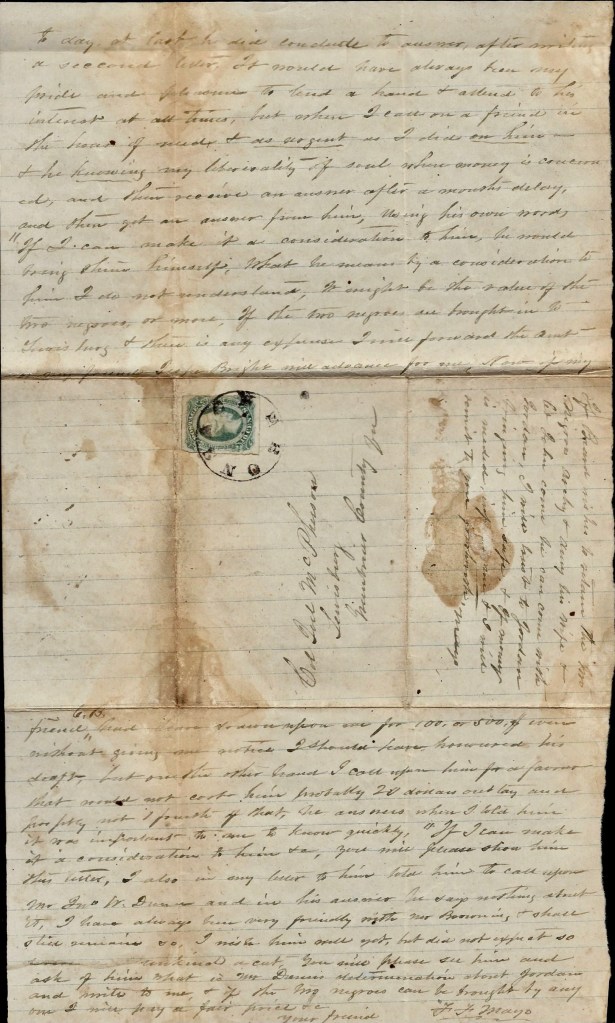

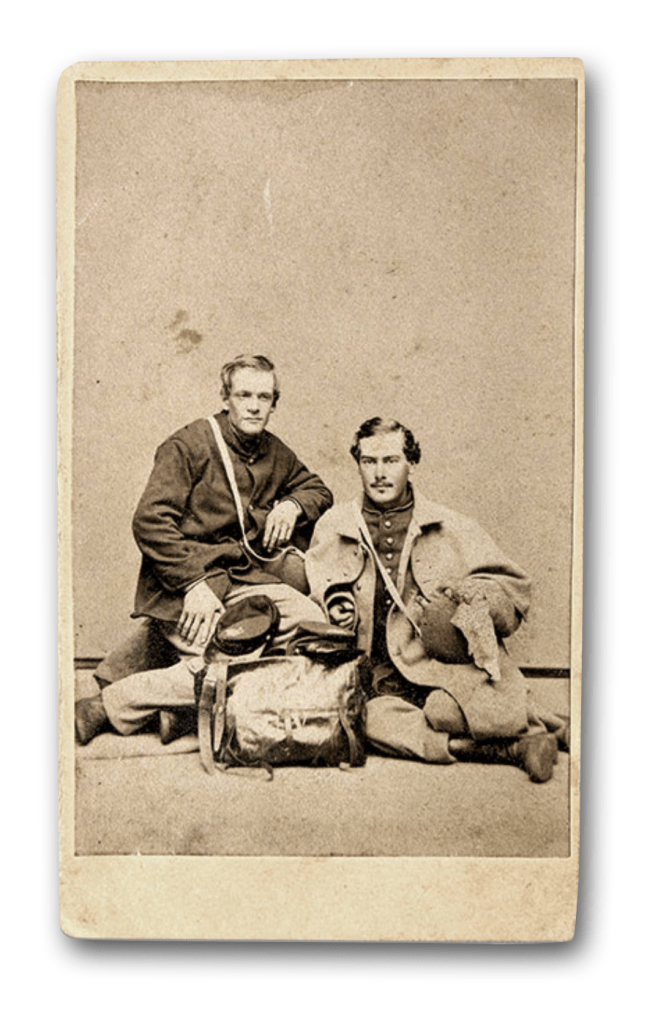

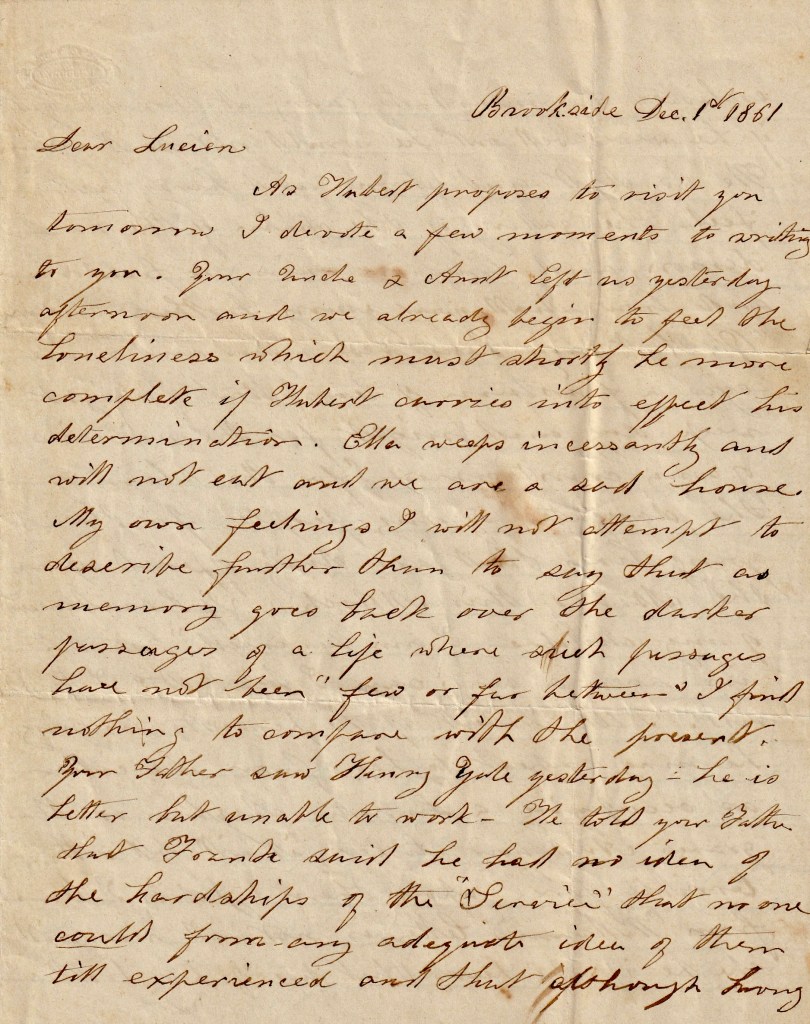


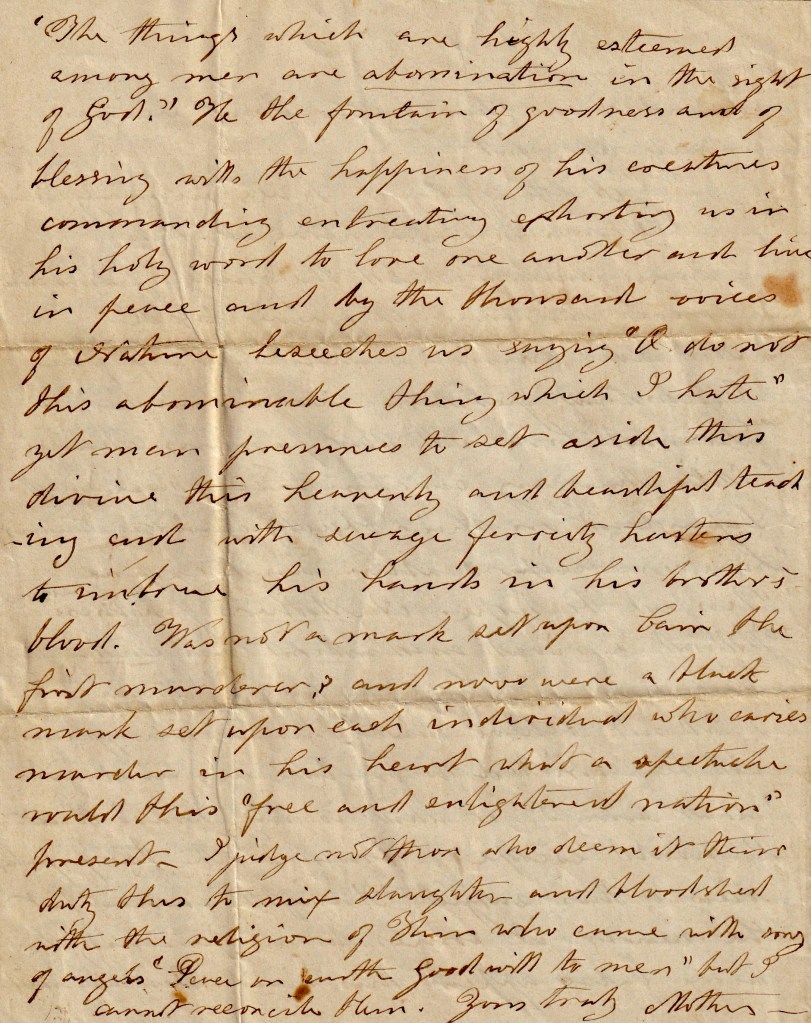
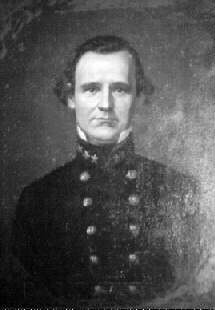

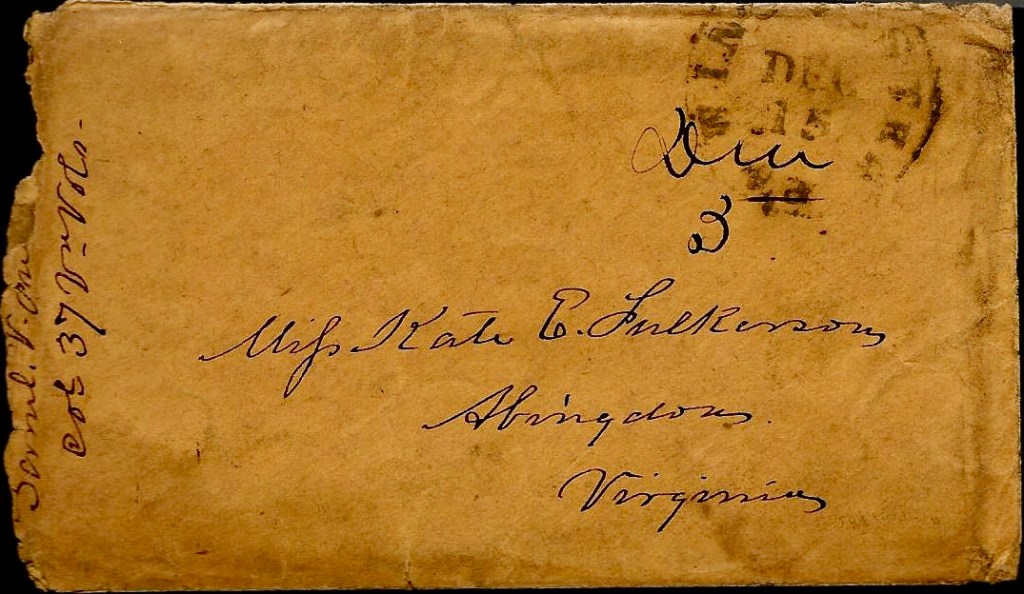
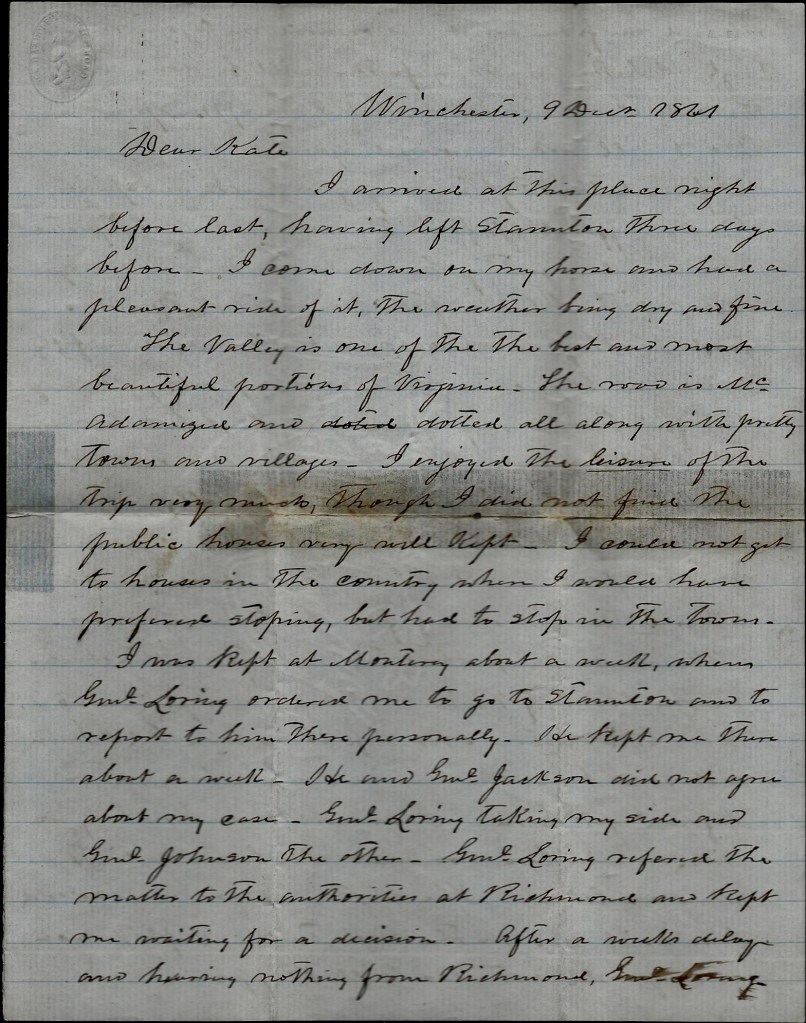


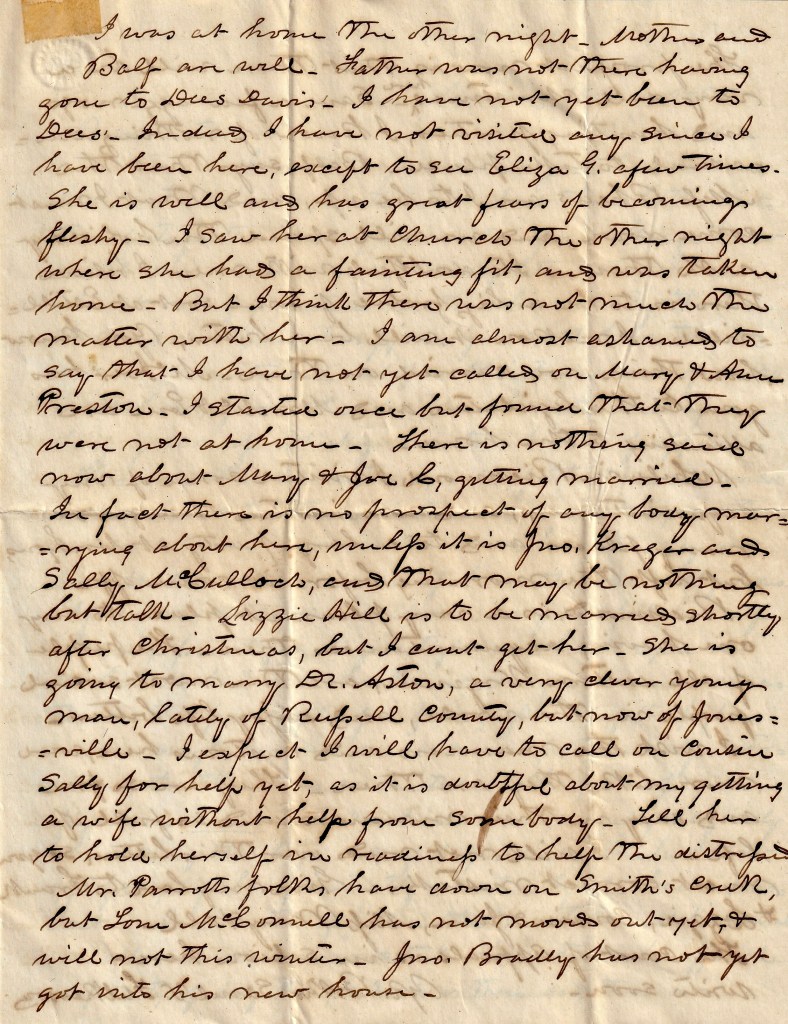

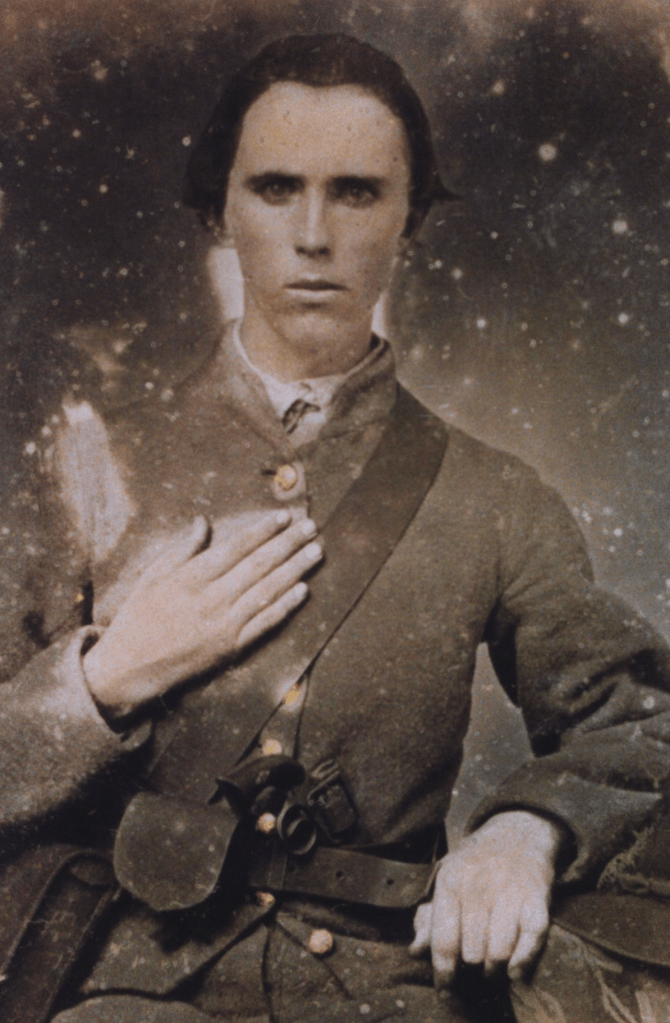
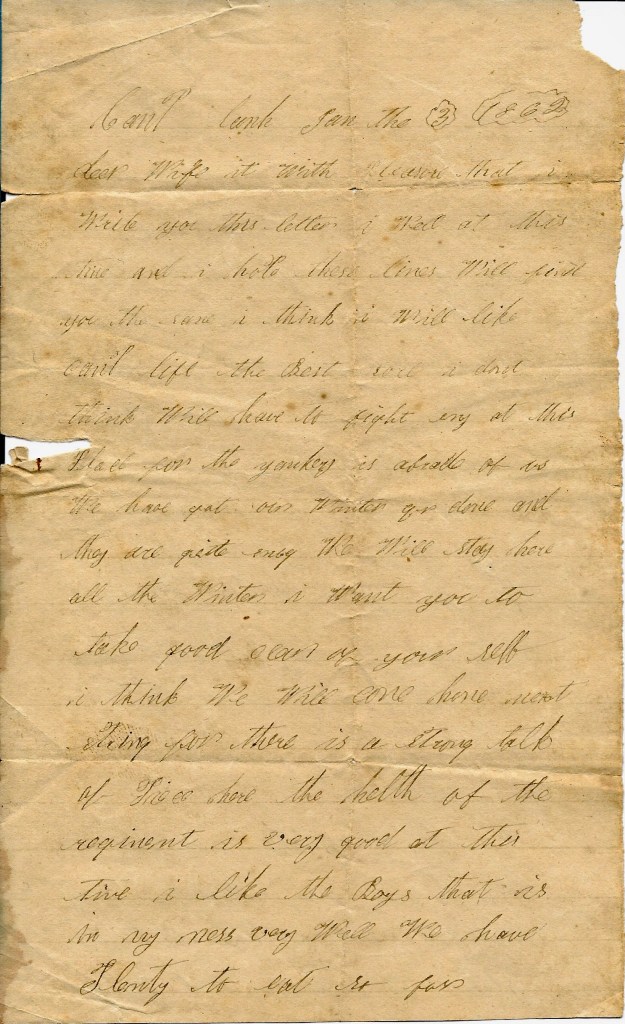
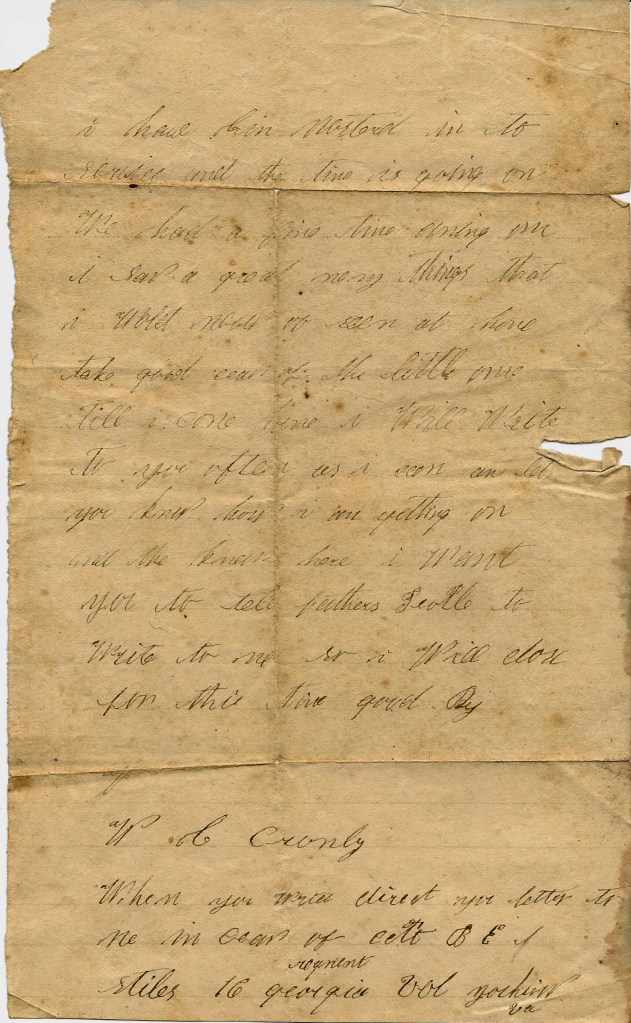


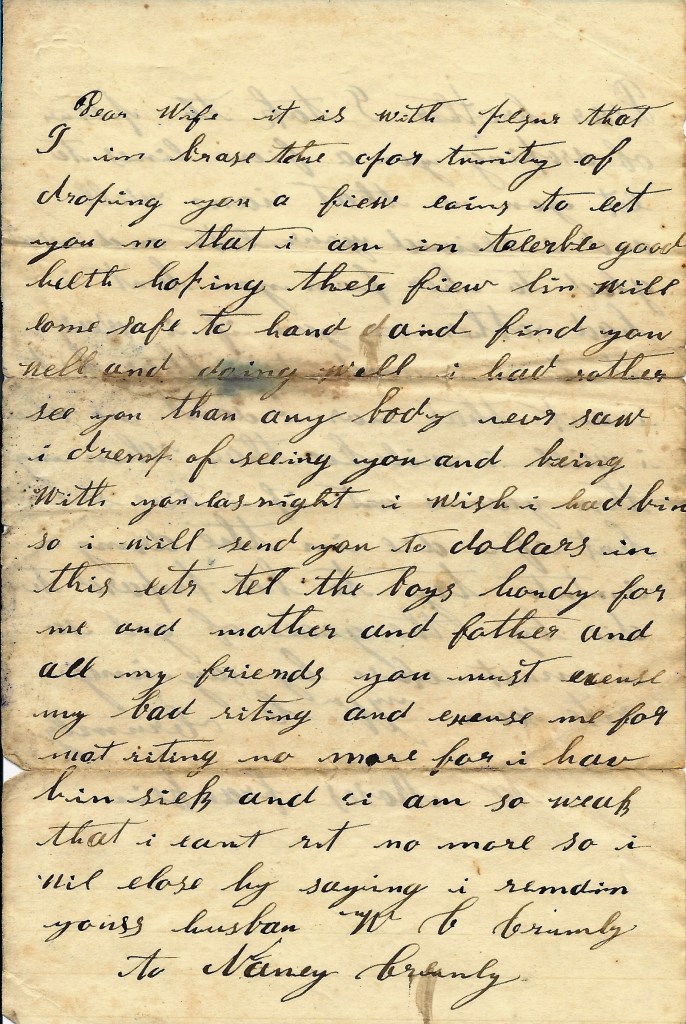
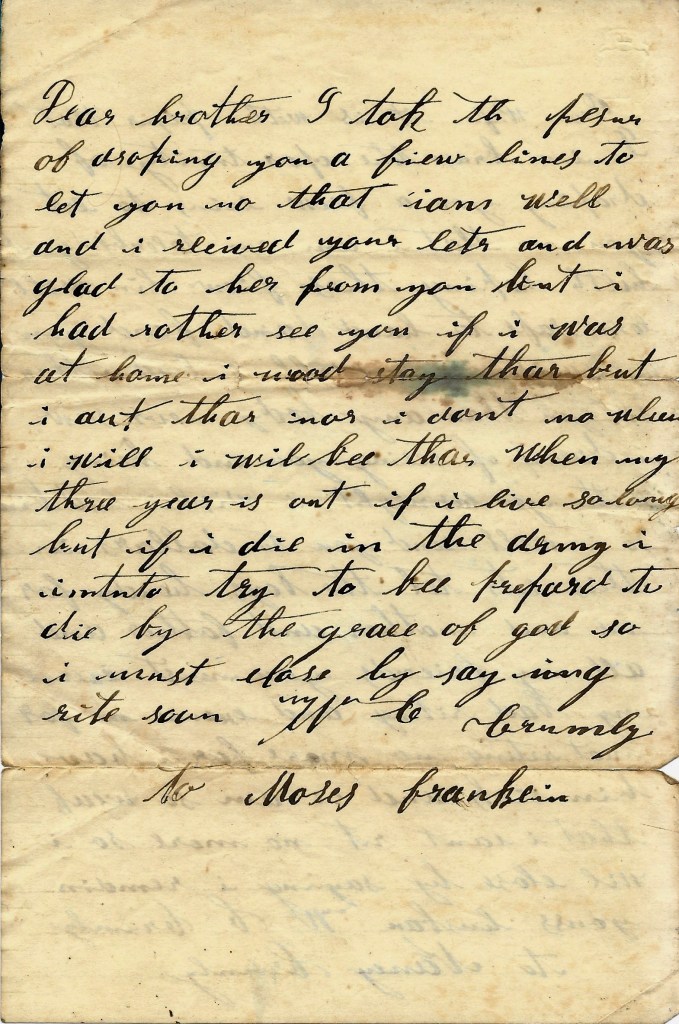
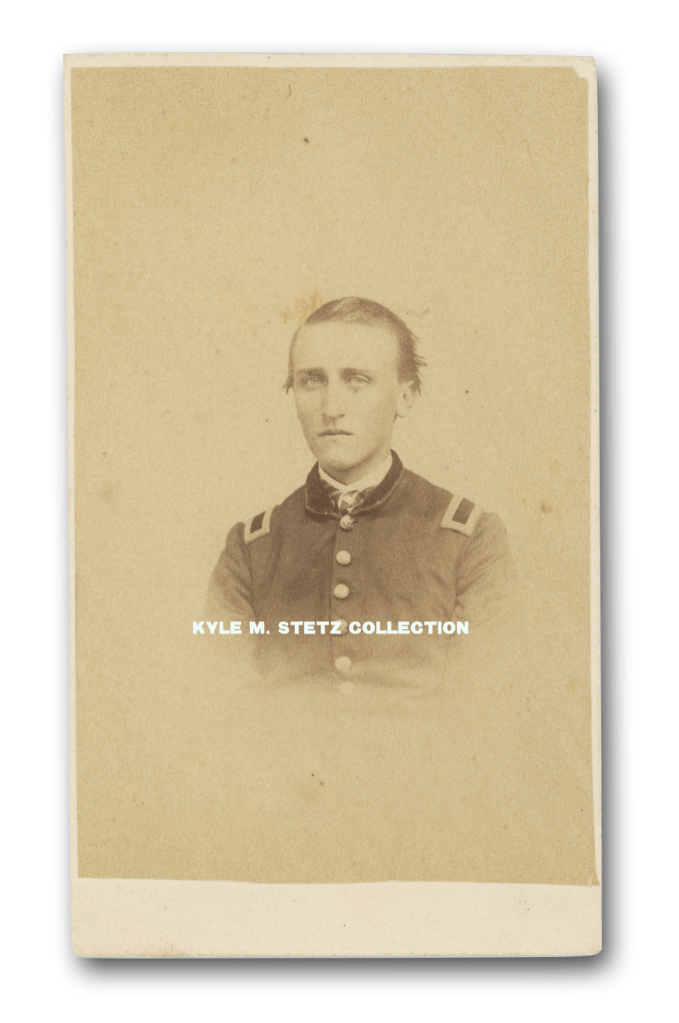


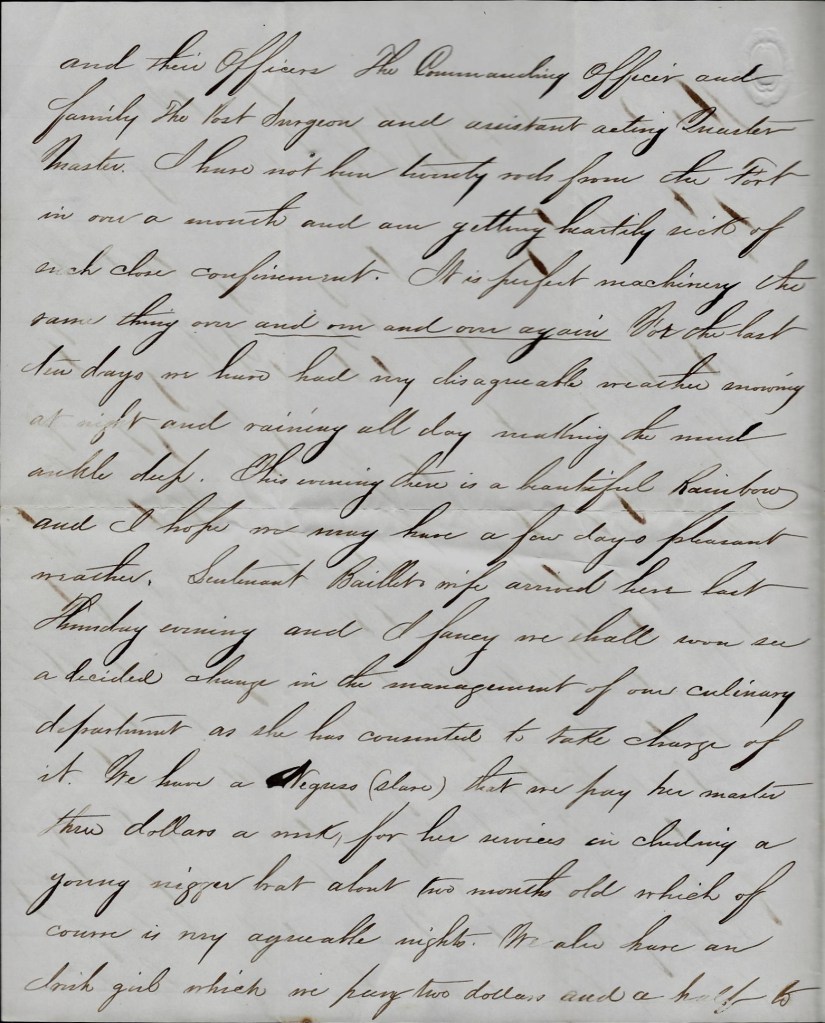








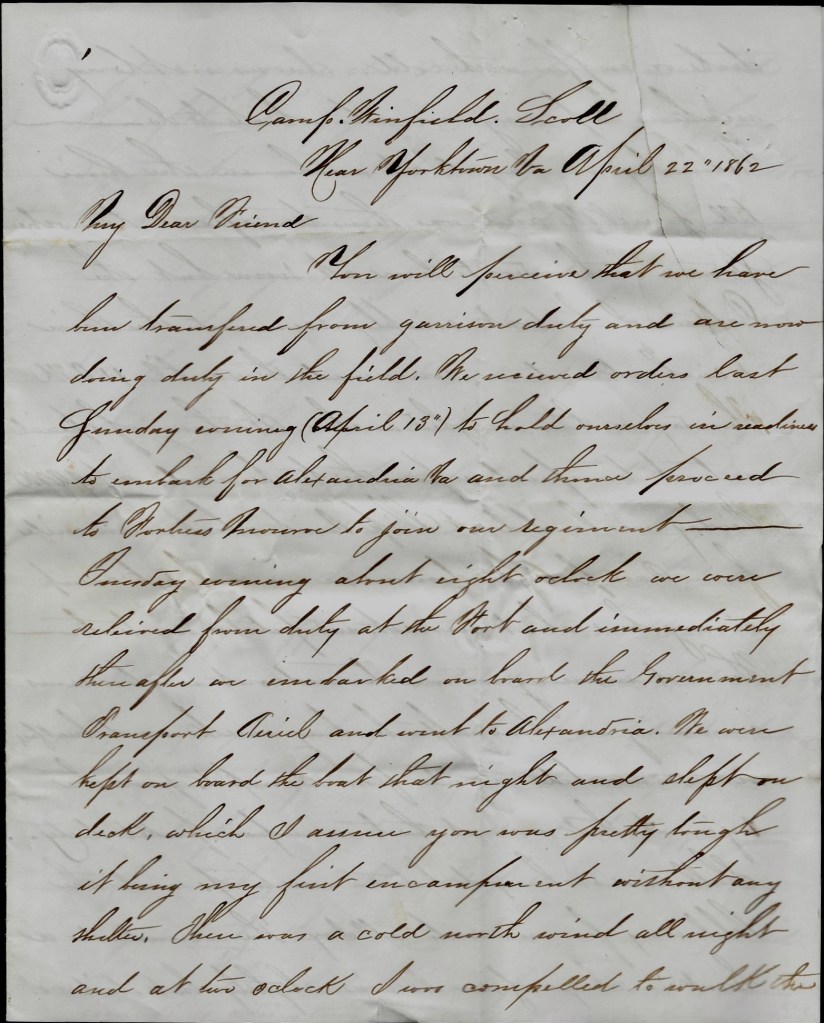
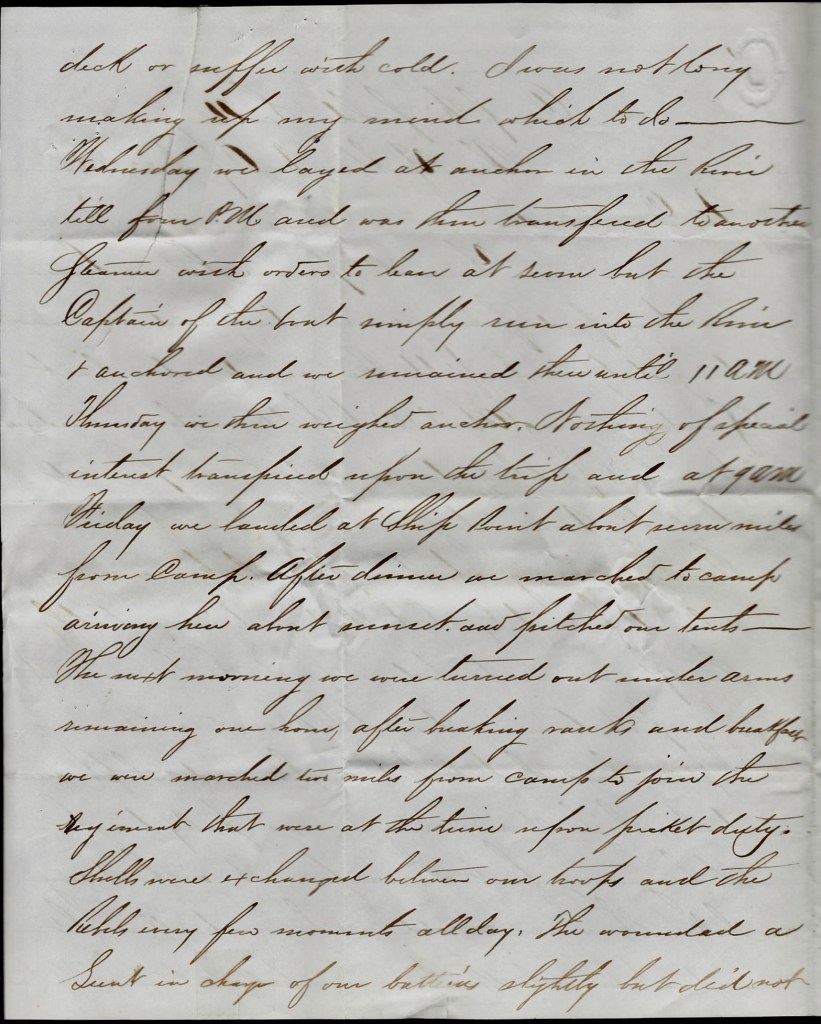
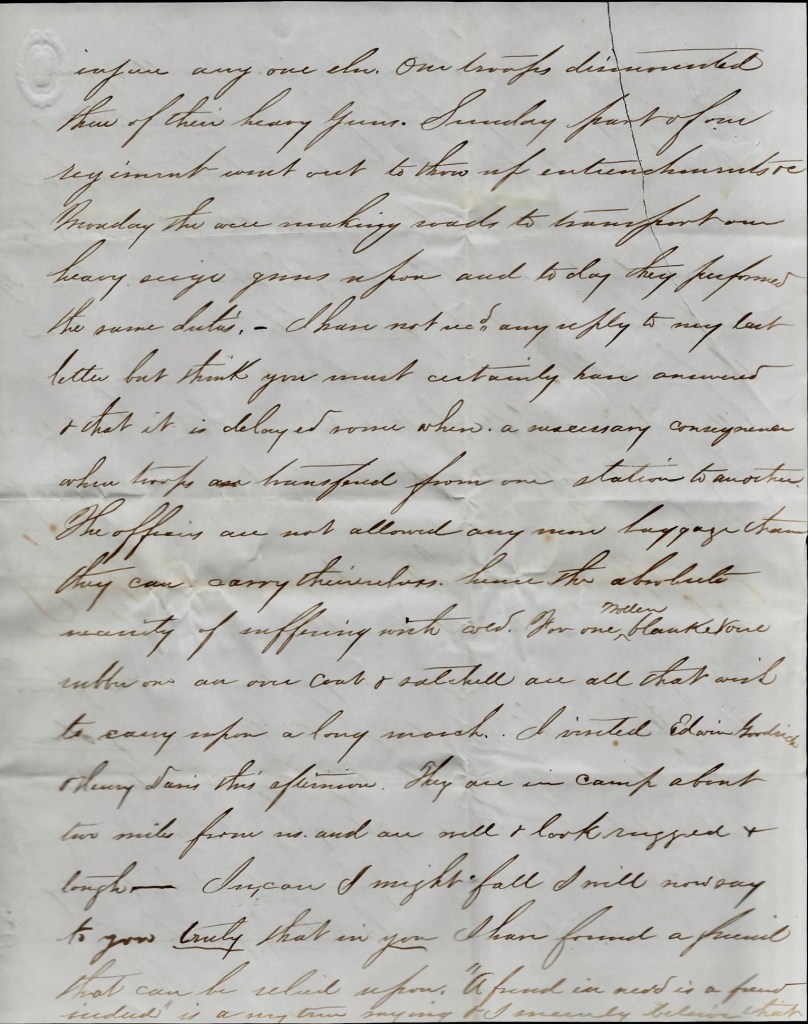
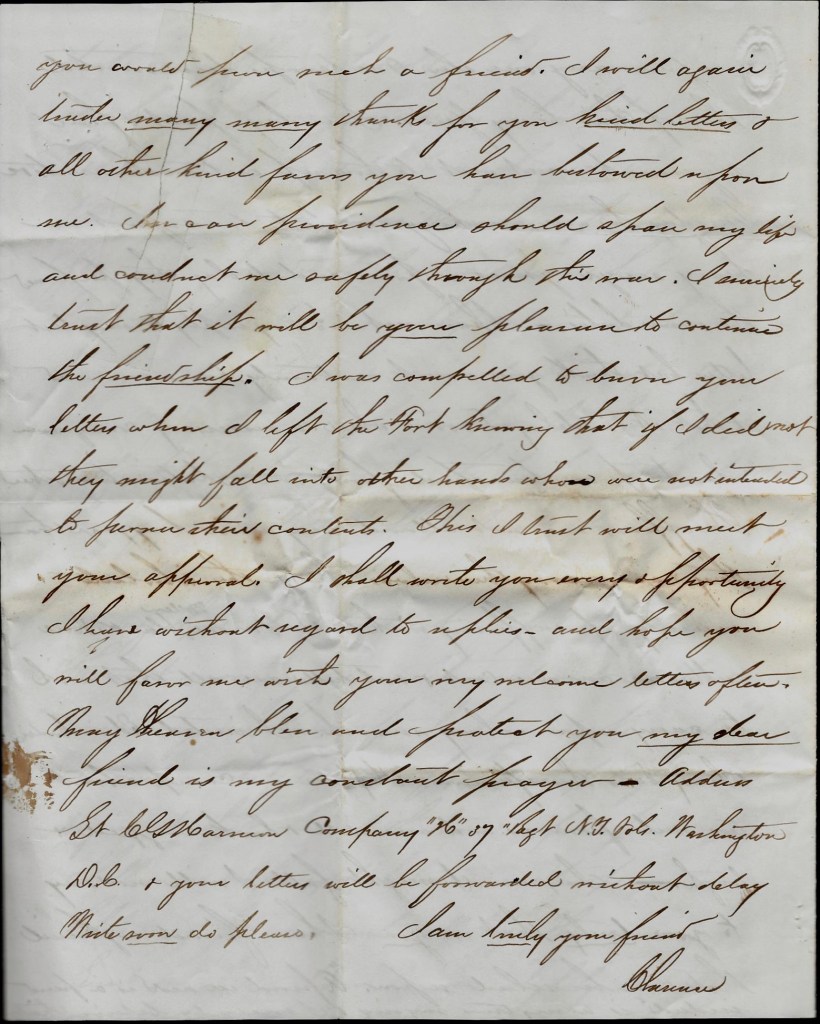
 Spared & Shared 23