Category Archives: 100th Illinois Infantry

1862-63: Jacob H. Fellows to Margaret Fellows

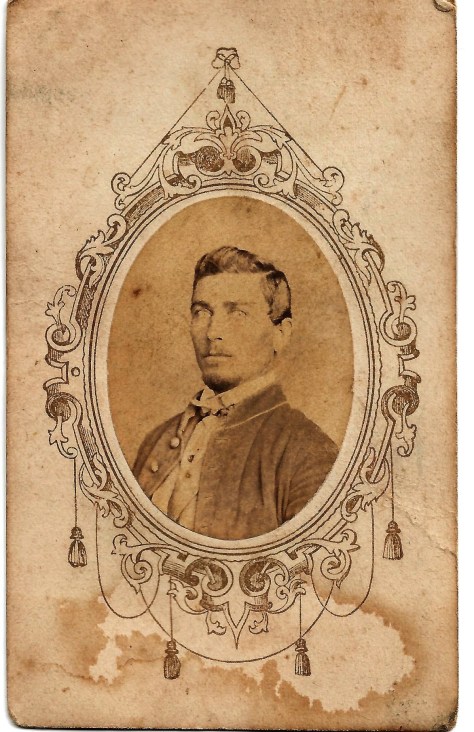
I could not find a war-time image of Jacob Fellows but here is one of William Stonerock of the 100th Illinois Infantry (Bobby Green Collection)

The following letters were written by Jacob H. Fellows (1834-1863) of Co. D, 100th Illinois Infantry. He enlisted in the regiment on 30 August 1862 and died of disease (small pox) at Louisville, Kentucky on 13 December 1863. His brother John Fellows (1838-1906) also served in the same company and was wounded in the Battle of Stones River and later discharged for disability. The letter was written to Jacob’s sister, Margaret Elizabeth Fellows (1840-1905) of Plainfield, Will county, Illinois.

Jacob Fellows was described in the muster rolls as a 27 year-old farmer with light hair and blue eyes when he enlisted in 1862. He was married just one week prior to his enlistment to Esther Phillips.

[Note: These letters are from the personal collection of Ryan Martin and were made available for transcription ad publication on Spared & Shared by express consent.]

Letter 1

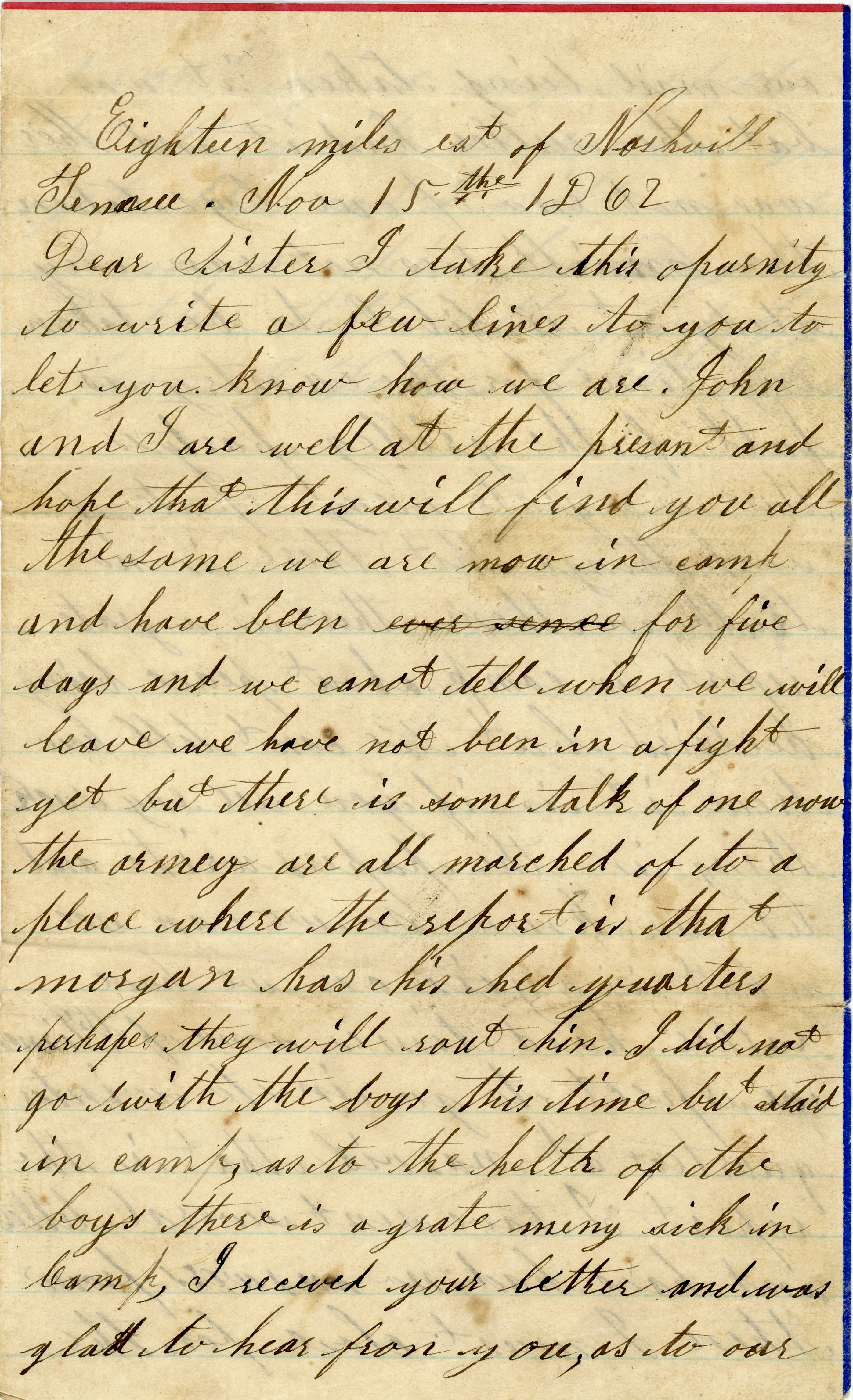
18 miles east of Nashville, Tennessee
November 15, 1862

Dear Sister,

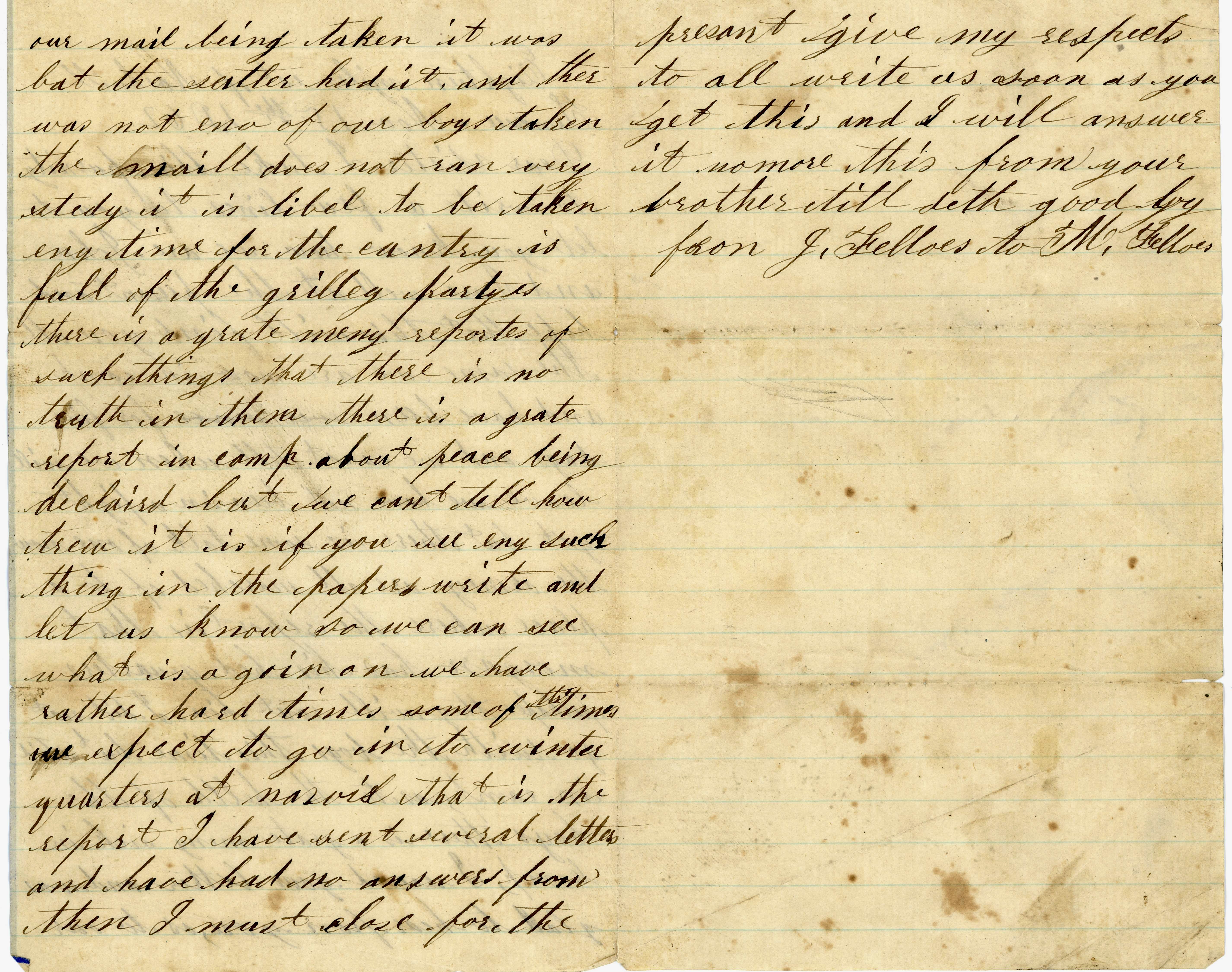
I take this opportunity to write a few lines to you to let you know how we are. [Brother] John and I are well at the present and hope that this will find you all the same. We are now in camp and have been for five days and we cannot tell when we will leave. We have not been in a fight yet but there is some talk of one now. The army are all marched off to a place where the report is that Morgan has his headquarters. Perhaps they will rout him. I did not go with the boys this time but stayed inn camp.

As to the health of the boys, there is a great many sick in camp. I received your letter and was glad to hear from you. As to our mail being taken, it was, but the sutler had it and there was not one of our boys taken. The mail does not run very steady. It is liable to be taken anytime for the country is full of the guerrilla parties. There is a great many reports of such things that there is no truth in them.

There is a great report in camp about peace being declared but we can’t tell how true it is. If you see any such thing in the papers, write and let us know so we can see what is a going on. We have rather hard times some of the time. We expect to go into winter quarters at Nashville. That is the report.

I have sent several letters and have had no answers from them. I must close for the present. Give my respects to all. Write as soon as you get this and I will answer it. No more. This from your brother till death. Goodbye from J. Fellows

to M. Fellows

Letter 2

Hospital Number 8, Ward No. 4
Nashville, Tennessee
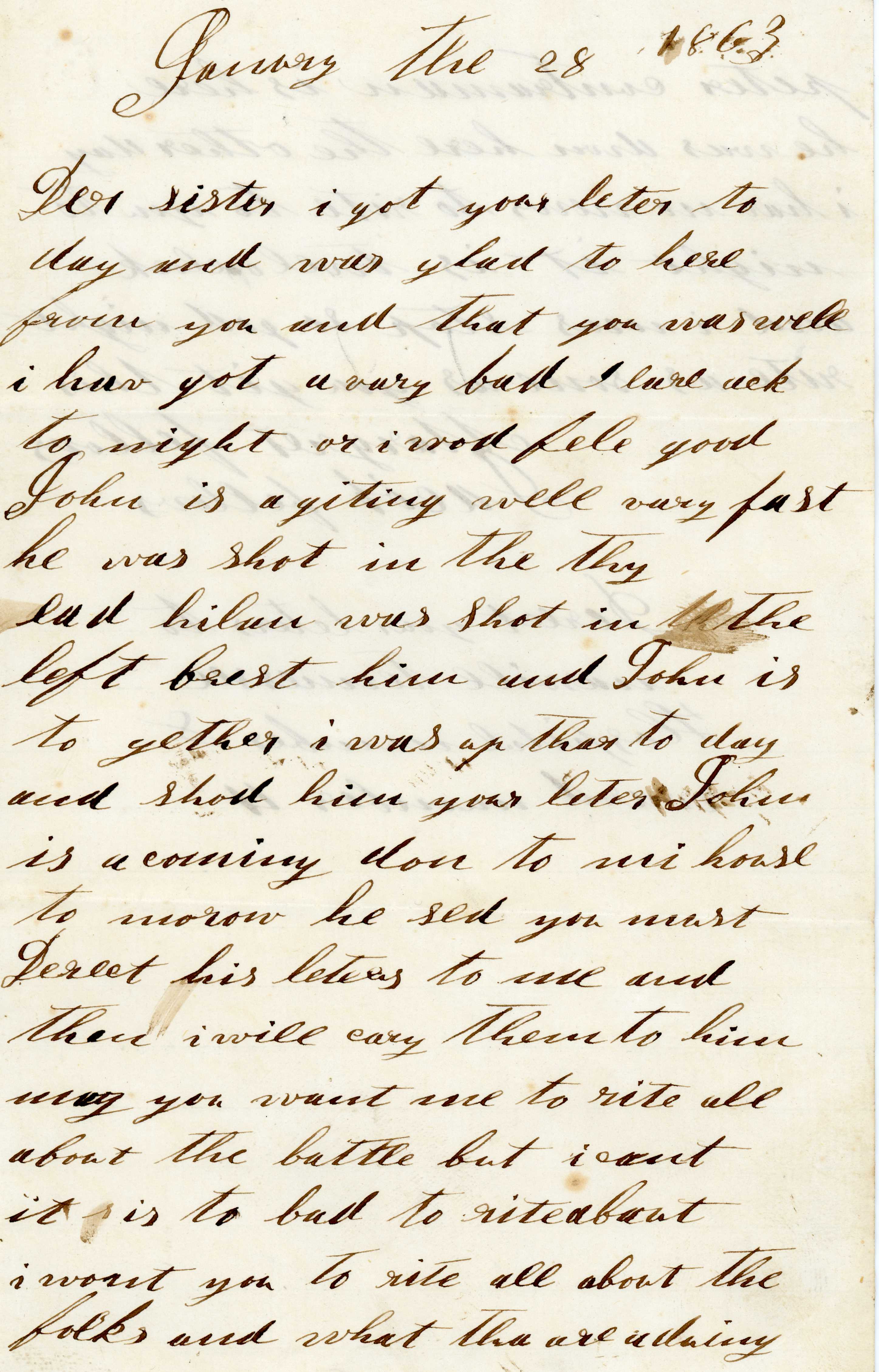
January 28, 1863

Dear sister,

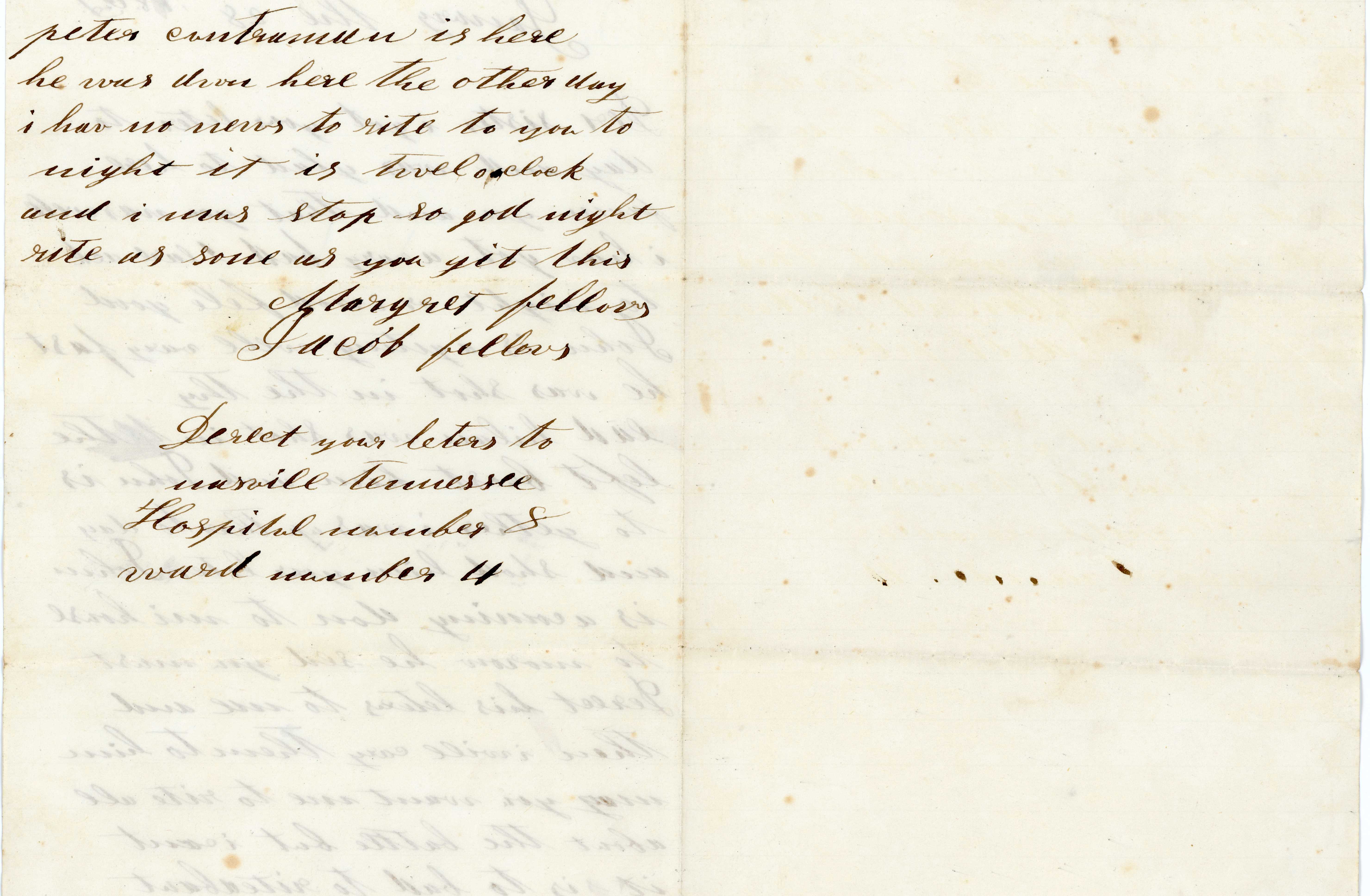
I got your letter today and was glad to hear from you and that you was well. I have got a very bad earache tonight or I would feel good. [Brother] John is a getting well very fast. He was shot in the thigh. Ed F. Hyland was shot in the left breast. Him and John is together. I was up there today and showed him your letter. John is a coming down to my house tomorrow. He said you must direct his letter to me and then I will carry them to him.

Maybe you want me to write all about the Battle [of Stones river] but I can’t. It is too bad to write about. I want you to write all about the folks and what they are a doing.

Peter Countryman is here. He was down here the other day. I have no news to write to you tonight. It is twelve o’clock and I must stop. So good night. Write as soon as you get this. — Jacob Fellows

To Margaret Fellows

Direct your letters to Nashville, Hospital Number 8, Ward Number 4.
1863: Charles Morrill Hammond to I. G. Edward

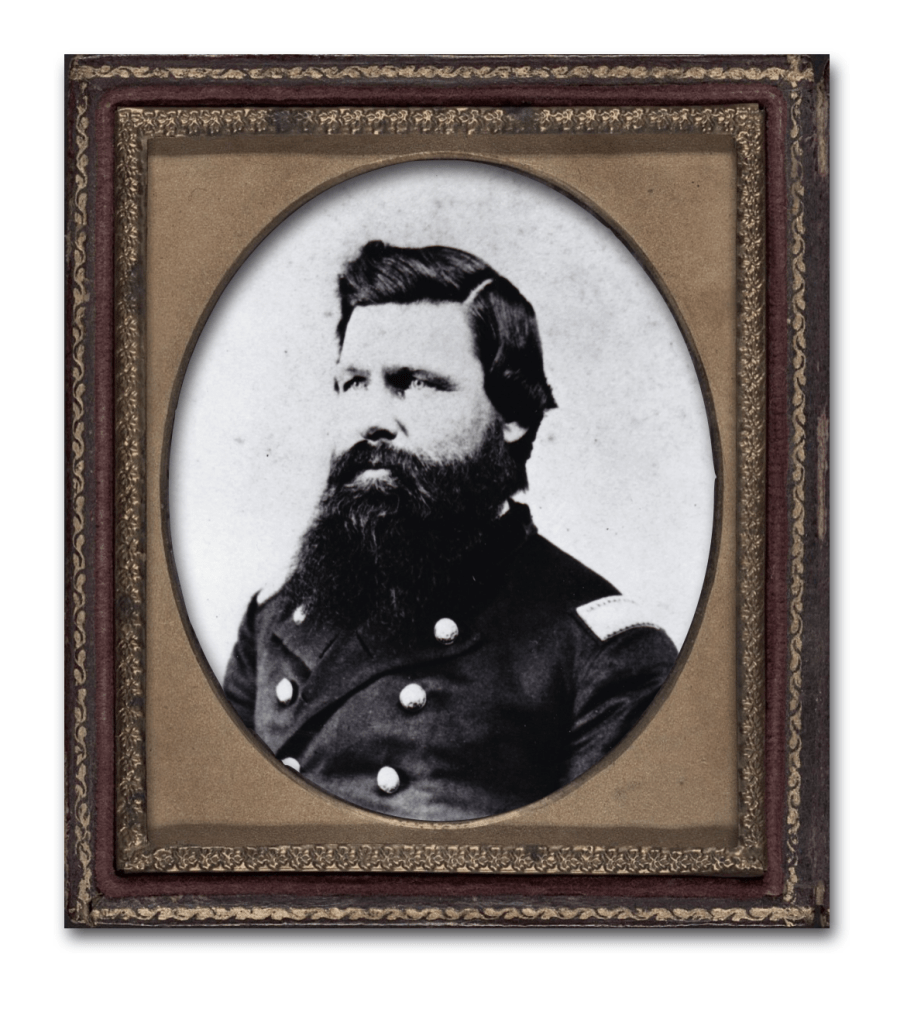
Charles Morrill Hammond (Illinois State Historical Library)

This after action report of the Battle of Chickamauga was written by Charles M. Hammond (1824-Aft1900), the Lt. Colonel of the 100th Illinois Infantry. This was probably a first draft of the report or a hand-written copy that Hammongd kept for his personal files.

Hammond was born in Swansey, New Hampshire, the son of Benjamin Hammond (1792-1858) and Charlotte Richardson (1804-1842). He was married to Lydia Ann Fancher in 1847 and had at least three children by the time of his enlistment in the service. Prior to the war. he ran a livery in Wilmington, Will County, Illinois. After the war, he took up residence in Joliet and was employed as a collector for the Internal Revenue Service. By 1900 he had relocated to Salt Lake City where he worked as a lawyer.

This letter is from the personal collection of Jim Doncaster and is published by express consent.

Transcription

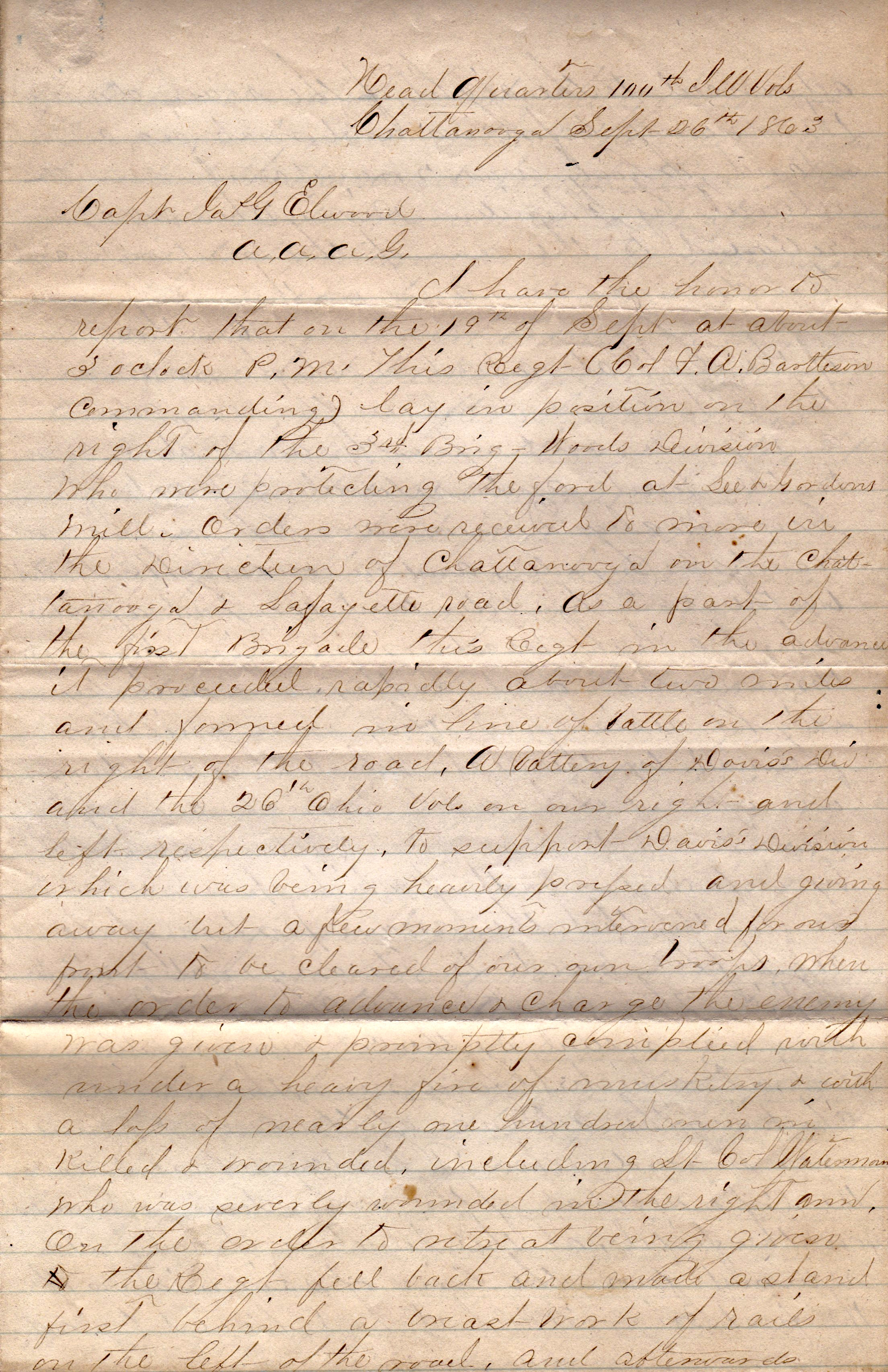
The following is the personal handwritten copy of the after action report filed by Charles M. Hammond of the 100th Illinois Infantry following the Battle of Chickamauga. The official report may be found on-line at: The Chickamauga Campaign.

Headquarters 100th Illinois Vols.
Chattanooga, Tennessee
September 26, 1863

Capt. I. G. Edward, A. A. A. G.

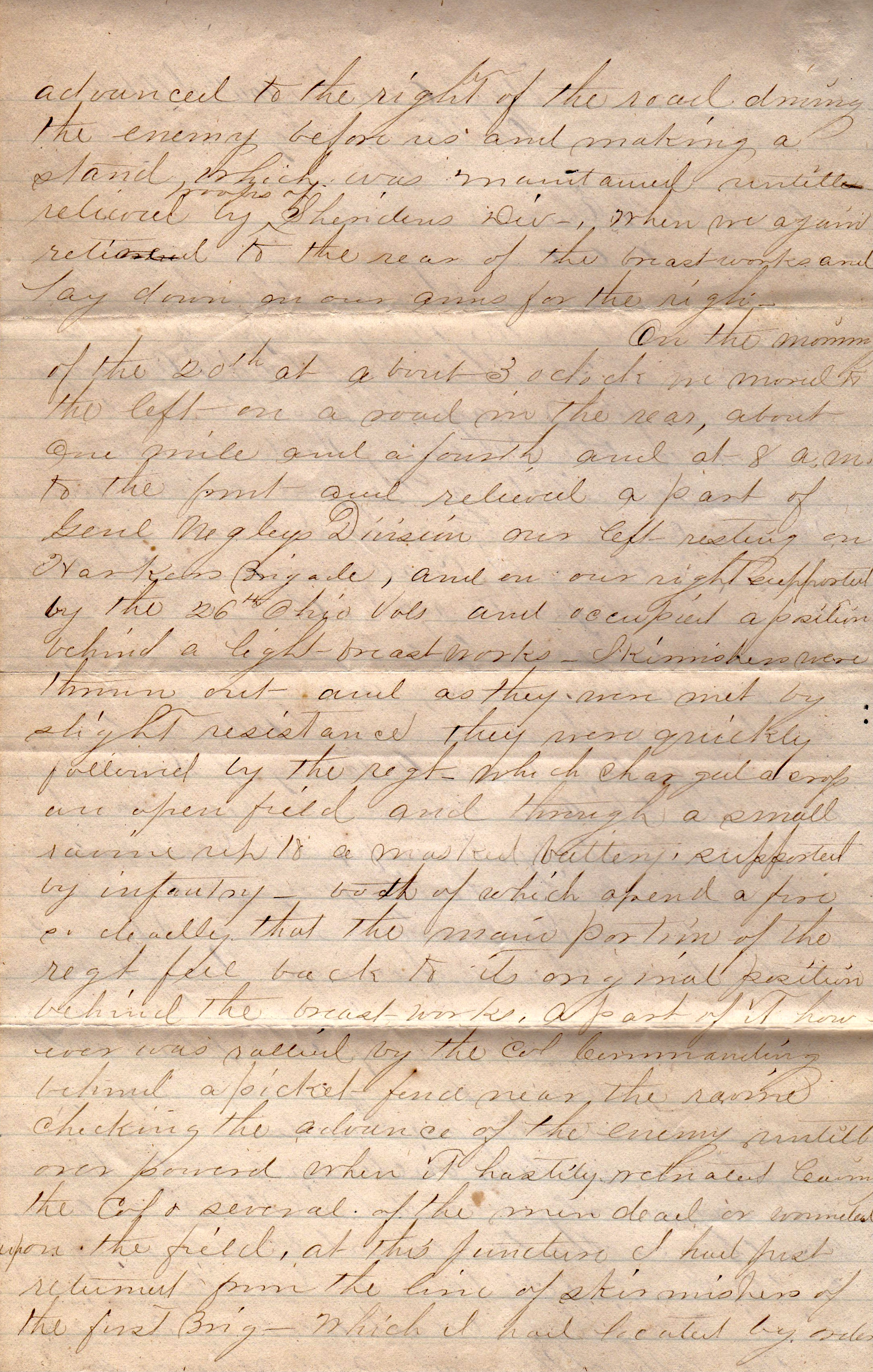
I have the honor to report that on the 19th of September at about 3 o’clock p.m., this regiment (Col. Frederick A. Bartleson commanding) lay in position on the right of the 3rd Brigade, Wood’s Division, who were protecting the ford at Lee & Gordon’s Mill. Orders were received to move in the direction of of Chattanooga on the Chattanooga & Lafayette Road. As a part of the 1st Brigade, this regiment in the advance proceeded rapidly about two miles and formed in line of battle on the right of the road. A battery of Davis’s Division and the 26th Ohio Vols. on our right and left respectively, to support Davis’s Division which was being heavily pressed and giving away, but a few moments intervened for our point to be cleared of our own troops, when the order to advance and charge the enemy was given and promptly complied with under a heavy fire of musketry and with a loss of nearly one hundred men in killed and wounded including Lt. Col. [Arba N.] Waterman who was severely wounded in the right arm. On the order to retreat being given, the regiment fell back and made a stand first behind a breastwork of rails on the left of the road, and afterwards advanced to the right of the road driving the enemy before us and making a stand which was monumental until relieved by troops of Sheridan’s Division when we again retired to the rear of the breastworks and lay down on our arms for the night.

On the morning of the 20th at about 3 o’clock, we moved to the left on a road in the rear, about one mile and a fourth, at at 8 a.m. to the front and relieved a part of Gen. Negley’s Division, our left resting on Harker’s Brigade and on our right supported by the 26th Ohio Vols. and occupied a position behind a light breastworks. Skirmishers were thrown out and as they were met by slight resistance, they were quickly followed by the regiment, which charged across an open field and through a small ravine. Masked batteries supported by infantry both of which opened a fire so deadly that the main portion of the regiment fell back to its original position behind the breastworks. A part of it, however, was rallied by the Colonel commanding behind a picket fence near the ravine checking the advance of the enemy until overpowered when it hastily retreated, leaving the Colonel and several of the men dead or wounded upon the field.

At this juncture I had just returned from the line of skirmishers of the 1st Brigade, which I had located by order of Col. Buell, and found the regiment in a disorganized state without their commanders. I rallied them and formed them behind the crude rail breastworks, and after remaining in that position for 5 or 10 minutes, I called for volunteers to go and recover Col. Bartleson whereupon Adjutant Rouse, Lieut. Weeks, and 4 men volunteered and went soon after. I was ordered by Col. Buell to move the regiment by the left flank and follow the 58th Indiana Vols. and move across an open piece of ground to the top of a hill under a heavy fire. I then lost sight of the 58th Indiana, but discovered a long line of the enemy moving around on our right which I held in check for a short time, but were forced by superior numbers to fall back.

Here portions of other regiments of the 1st Brigade became intermingled with my own. Of these, I took command and attached them to a portion of Gen. Negley’s Division who were drawn up in line of battle, but which eventually fell back with them and a portion of Gen. Reynold’s Division to a point near Cossville which I found Lt. Col. Young of the 26th Ohio Vos. and where I turned over command of the 1st Brigade that I had succeeded in gathering up. I was then ordered into camp by Col. Young with my regiment being 98 officers and men. Respectfully submitted.

Your most obedient servant, — C. M. Hammond