Category Archives: 10th Maine Infantry

1862: Andrew J. Walton to Mary Walton

The following letters were written by Andrew J. Walton (1834-1862) of Co. E (the “Portland Rifle Guard”), 10th Maine Infantry. He wrote the first letter on 13 March 1862 while on duty as a guard on the Baltimore & Ohio Railroad. Each company of the regiment was stationed at different guard posts along the railroad; Co. E was reported to be at Halltown during the month of March. Andrew datelined his letter from Tunnel No. 1 which was on the north bank of the Potomac river opposite Harper’s Ferry in Maryland.

Andrew did not survive the war. He entered the service on 28 September and was mortally wounded on 25 May 1862 by “a shot from rebel cavalry on the retreat of the regiment from Winchester and died same day of said wound.” This information was provided by 56 year-old Sabina Walton (1813-1882) of East Livermore, Androscoggin county, Maine, who filed a “Claim for Mother’s Pension” on 5 August 1869. Andrew’s father, William Walton died in 1873. His siblings were Mary (b. 1837), Joseph A. C. (b. 1847) and William A. (b. 1840). It was to his sister Mary that Andrew addressed his letters. I believe his mother was unable to read and write.

Lt. Henry Martin Binney of the 10th Maine Infantry, Co. D, sketched this scene of a sentry on duty at Bolivar Heights. (Courtesy of Nick Picerno)

Letter 1

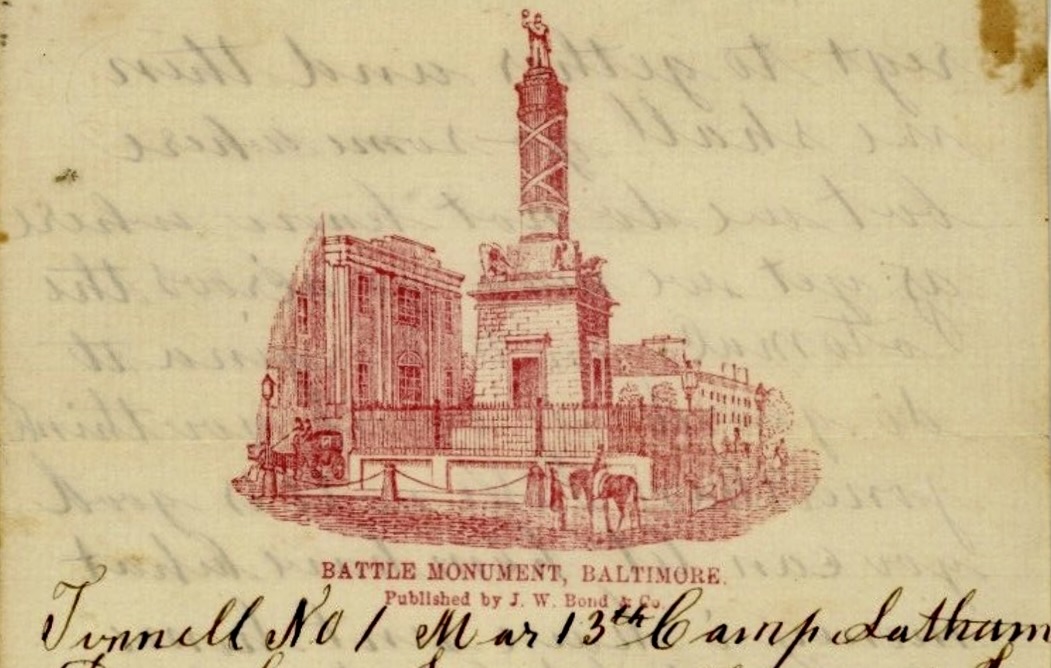
Patriotic letterhead with lithograph of the Battle Monument in Baltimore, Md.

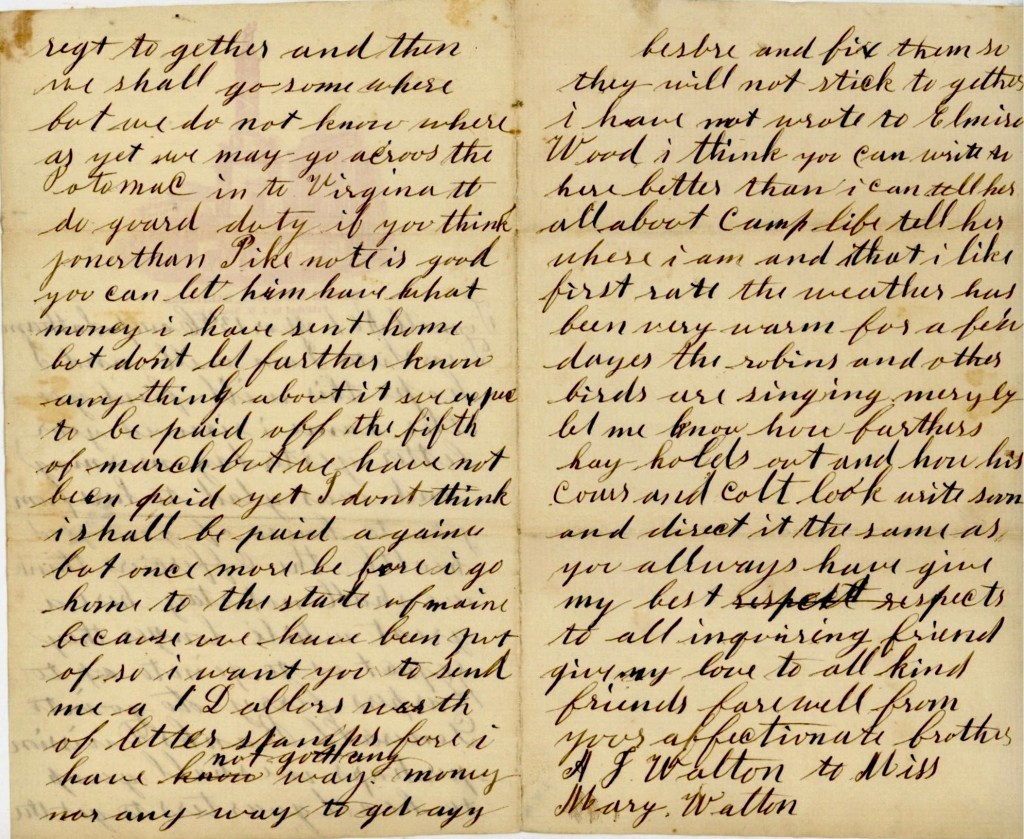
Tunnel No. 1
March 13th [1862]
Camp Latham

Dear Sister,

I am well and I hope this will find you the same. I received your letter yesterday morning and was glad to hear from you to know of your good health. The officers think we shall not stay here a great while longer. They expect us to go up to Harper’s Ferry to go into General Banks’ Division. Perhaps we shall go up to headquarters to get the regiment together and then we shall go somewhere but we do not know where as yet. We may go across the Potomac into Virginia to do guard duty.

If you think Jonathan Pike’s note is good, you can let him have what money I have sent home but don’t let Father know anything about it. We expect to be paid off the 5th of March but we have not been paid yet. I don’t think I shall be paid again but once more before I go home to the State of Maine because we have been put off so. I want you to send me a 1 dollar’s worth of letter stamps for I have not got any money nor any way to get any. Be sure and fix them so they will not stick together.

I have not wrote to Elmira Wood. I think you can write to her better than I can. Tell her all about camp life. Tell her where I am and that I like [it] first rate.

The weather has been very warm for a few days. The robins and other birds are singing merrily. Let me know how Father’s hay holds out and how his cows and colt look. Write soon and direct it the same as you always have. My best respects to all inquiring friends. Give my love to all kind friends. Farewell from your affectionate brother, — A. J. Walton

To Miss Mary Walton


Letter 2
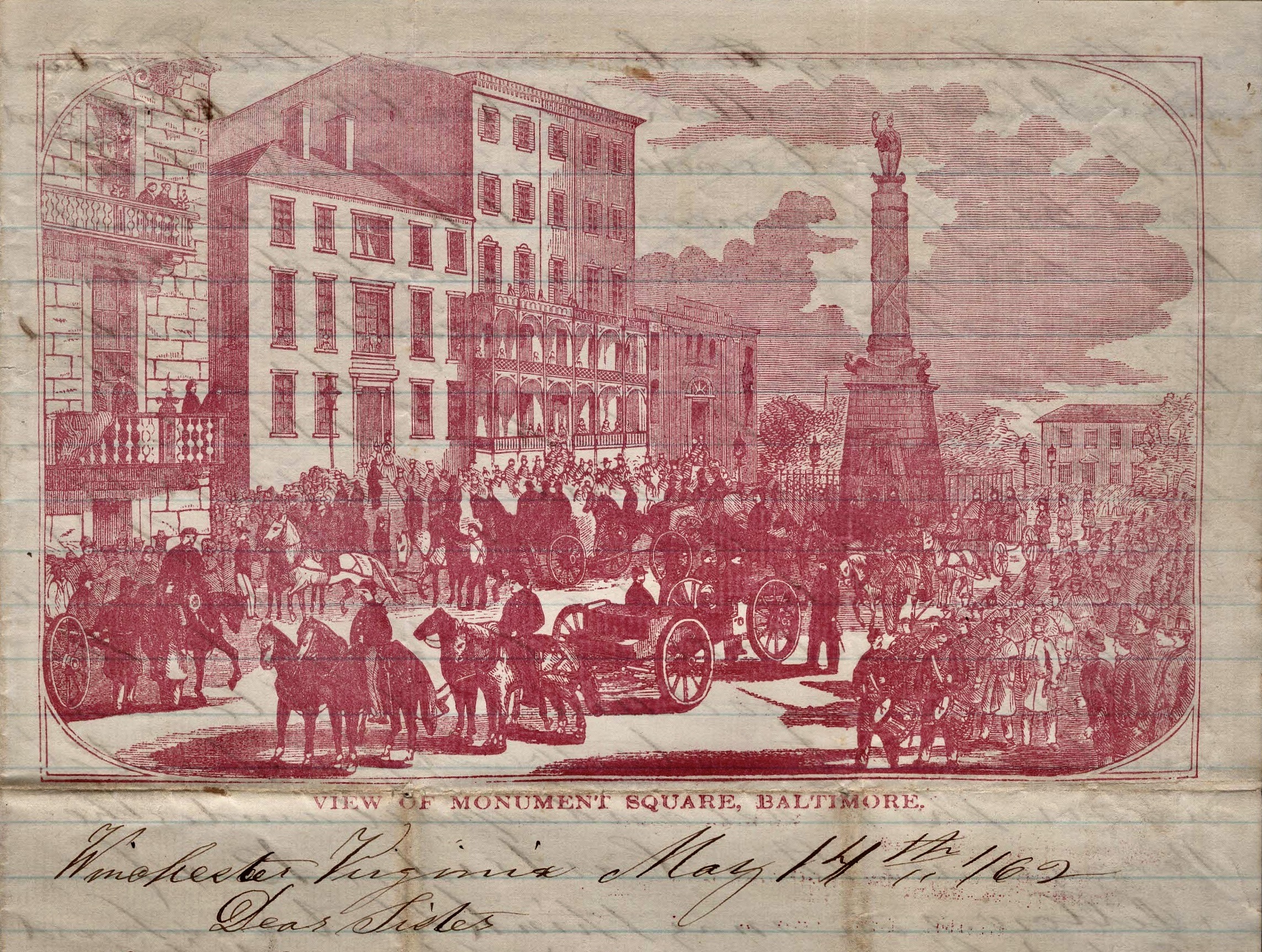
Lithographic Image of Monument Square in Baltimore on header of letter

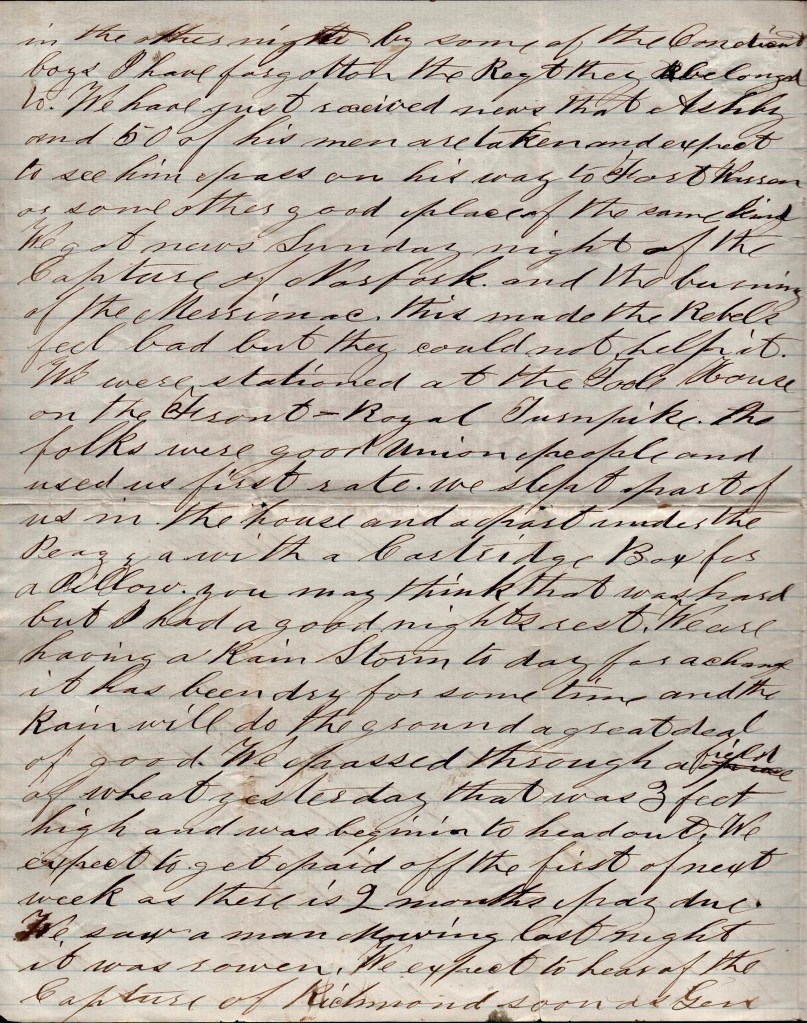
Winchester, Virginia
May 14, 1862

Dear Sister,

Your letter came to hand day before yesterday but as I was on Picket Guard, I could not answer it until now. We are all well and enjoying ourselves first rate. We are still in the Meeting House although the people want us to move into the Negro Church so as to keep theirs nice. But the Capt. told them that he did not come out here to fight Negroes and should stay where we was and the less they said about it, the better.

We had the fun of seeing 17 prisoners brought in the other night by some of the Connecticut boys. I have forgotten the regiment they belonged to. We have just received news that Ashby and 50 of his men are taken and expect to see him pass on his way to Fort Warren or some other good place of the same kind. We got news Sunday night of the capture of Norfolk and the burning of the Merrimac. This made the Rebels feel bad but they could not help it.

We were stationed at the Toole House on the Front Royal Turnpike. The folks were good Union people and used us first rate. We slept—part of us—in the house and a part under the piazza with a cartridge box for a pillow. You may think that was hard but I had a good night’s rest.

We are having a rain storm today for a change. It has been dry for some time and the rain will do the ground a great deal of good. We passed through a field of wheat yesterday that was 3 feet high and was beginning to head out.

We expect to get paid off the first of next week as there is 2 months pay due. We saw a man mowing last night it was rowen [?].

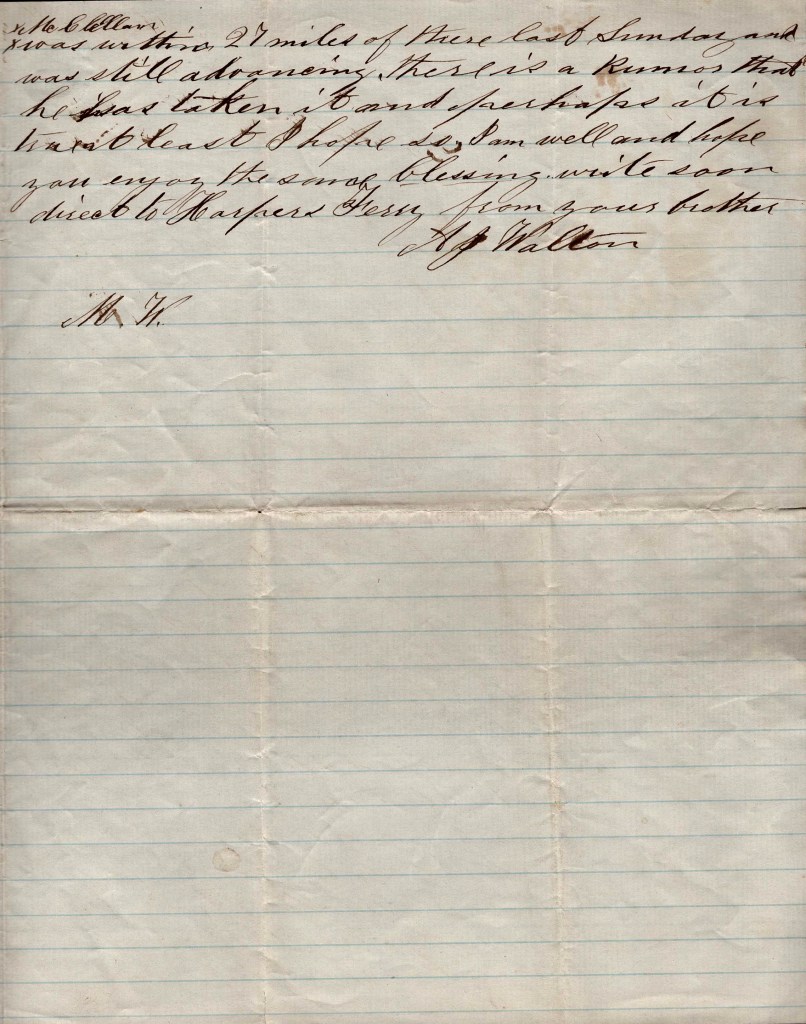
We expect to hear of the capture of Richmond soon as Gen. McClellan was within 27 miles of there last Sunday and was still advancing. There is a rumor that he has taken it and perhaps it is true—at least I hope so. I am well and hope you enjoy the same blessing. Write soon. Direct to Harpers Ferry. From your brother, — A. J. Walton

[to] M. W[alton]
1862: Charles Henry Colley to his cousin Rebecca

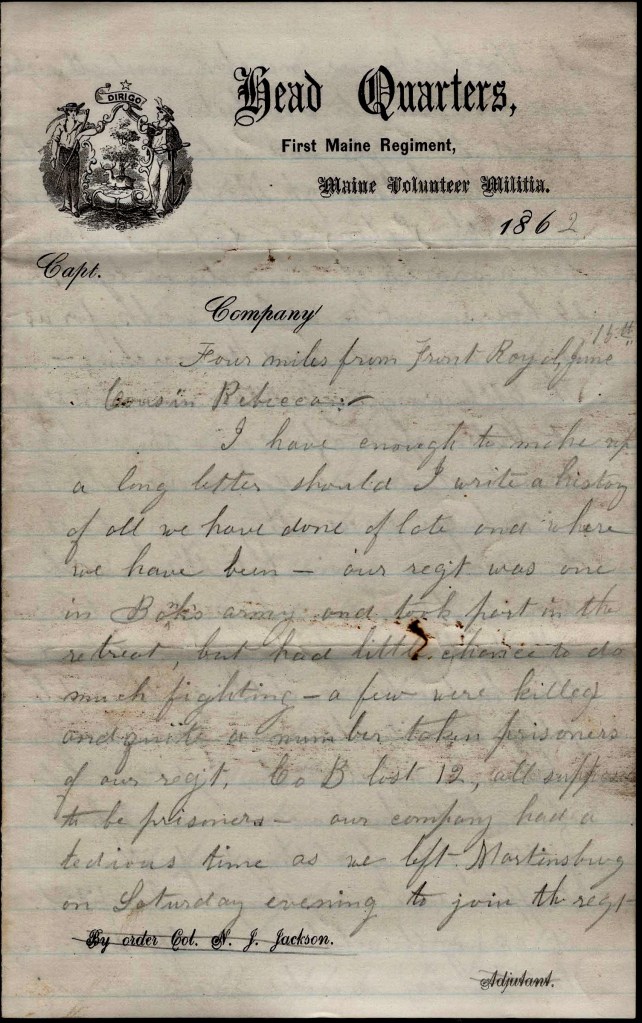
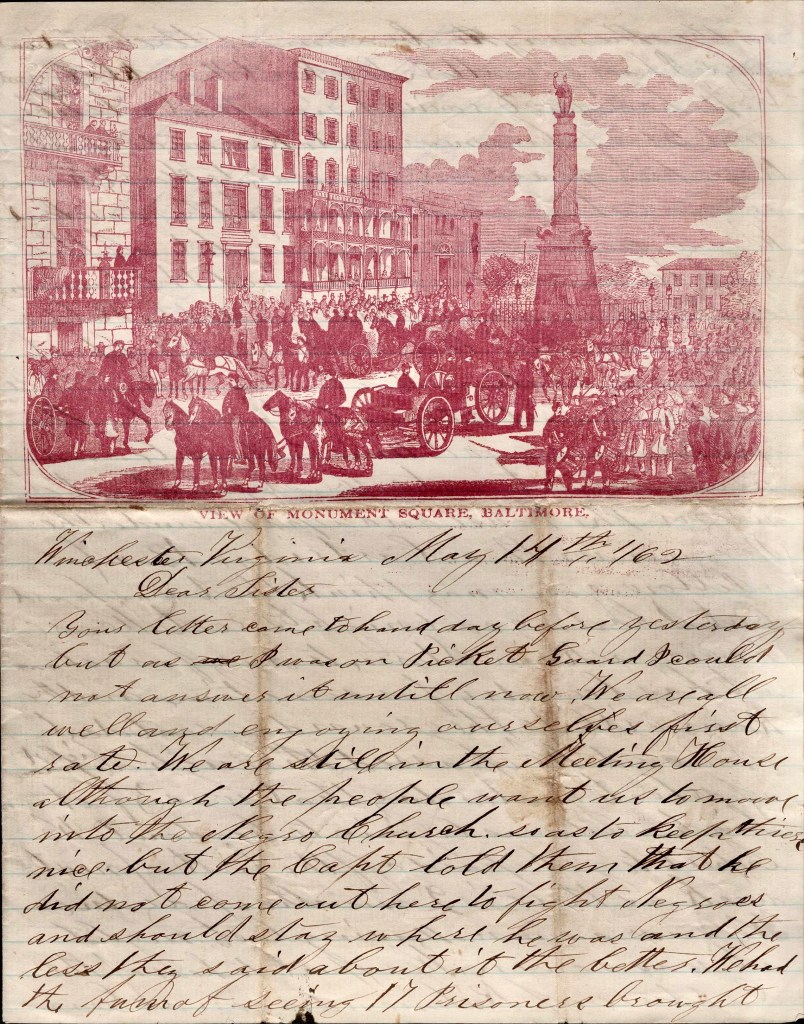
Unfortunately there is too little information within this letter for me to conclude without question the identity of the soldier who wrote this letter that was simply signed, “your cousin, Charles” and addressed to Rebecca. Based upon content and troop movement, however, I feel certain that the soldier served in Co. B, 10th Maine Infantry, and my review of the roster pared the possibilities of only two or three young men. My hunch is that it was written by Charles H. Colley, the son of Amos and Sarah Nash Colley—a farm family from Gray, Maine. Charles enlisted as a sergeant but was promoted to 1st Sergeant and later to Lieutenant before he was mortally wounded in the Battle of Cedar Mountain on 9 August 1862.

There is an interesting story called “Gray Maine’s Stranger” that describes the burial of a Confederate soldier in their graveyard. The body was supposed to have been that of Lt. Charles H. Colley, Co. B., 10th Maine Vol. The story explains, “In those days, the family had to pay the government for embalming and transportation. The Colley family had done this. When his body arrived they opened the casket in farewell. Instead of their son, they found a fully uniformed Confederate soldier. They were grief stricken but finally decided to bury the lad in Gray Cemetery. That no ill will was borne the soldier was evidenced by the erection of a tombstone over his grave shortly after. Inscribed on the slab was, “Stranger—a soldier of the late war. Erected by the Ladies of Gray.” The group was made up of mothers whose own sons had been killed, wounded or were missing. In their sympathetic hearts, they knew the agony of war. No one knows for sure how the mistake was made. Lt. Colley’s body arrived shortly after. He is buried about 100 feet southwest. Local historians guess that both Lt. Colley and the Confederate might have been wounded in the same battle, hospitalized together and both must have died about the same time.” [See Gray Maine’s Stranger]

This Timothy O’Sullivan photograph shows officers of the 10th Maine at Cedar Mountain. Note the dead horses. The men pictured here are Lt. Littlefield, Lt. Whitney,  Lt. Col. Fillebrown, Capt. Knowlton, and 1st Sgt. Jordan (Library of Congress).

Transcription

Four miles from Front Royal
June 15th 1862

Cousin Rebecca,

I have enough to make up a long letter should I write a history of all we have done of late and is where we have been. Our regiment was one in Bank’s army and took part in the retreat, but had little chance to do much fighting—a few were killed and quite a number taken prisoners of our regiment. Co. B lost I2—all supposed to be prisoners.

Our company had a tedious time as we left Martinsburg on Saturday evening to join the regiment at Winchester. We marched most all night and got near to Winchester where we found the regiment, and retreating with them back through Martinsburg, then on to the Potomac, so our company had a march of 56 miles in less than 24 hours—rather a long walk for us as we were not used to marching.

The little army crossed the river and staid at Williamsport a few days. The rebels had to retread soon and now we follow on with larger forces. They may get a chance to drive us again, but there will be some fighting and a large force to drive.

Most all of the foot soldiers lost all their knapsacks and clothing. The rebels followed quite close and gave us a few shells which fell to the right and left of us but hurt no one. I had quite a pile of clothing &c. for them and I suppose some are getting the benefit of it among the rebels. We left Martinsburg last Monday, marched 3 days, and are now expecting to cross the Shenandoah to Front Royal at any time. We don’t know where we are to go—only know where we are at present.

Our tents were burned in the retreat so we get shelter in any building we can. The farmers about here seem all to be secesh. They won’t sell anything to our men but they will miss some of their pigs and sheep as we have been short of meat, so the boys go in for taking it wherever they can. The large wheat fields look finely—the wheat very tall. But if the war holds on, it will not all get harvested. Cherries will soon get ripe, then peaches. It is a rich country here in this valley. The yankees ought to have it. Then it would shine. It is not thickly settled so each one owns too much land and keeps darkies to do the work. Many slaves are leaving their owners at these times.

Must close. Write and direct to Winchester, Virginia. Bank’s Division. From your cousin, Charles.