Category Archives: 10th Rhode Island Infantry

1862: William Frederick Atwood to his Aunt Sarah

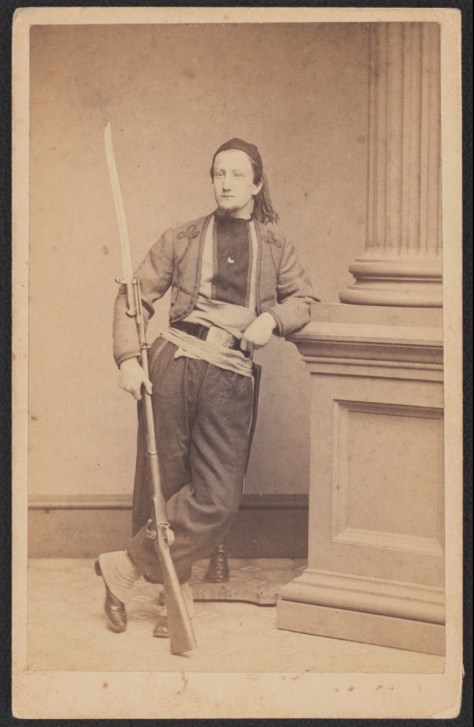
Edward Williams of Co. H wearing the Zouave uniform of the 10th Rhode Island Infantry (LOC).

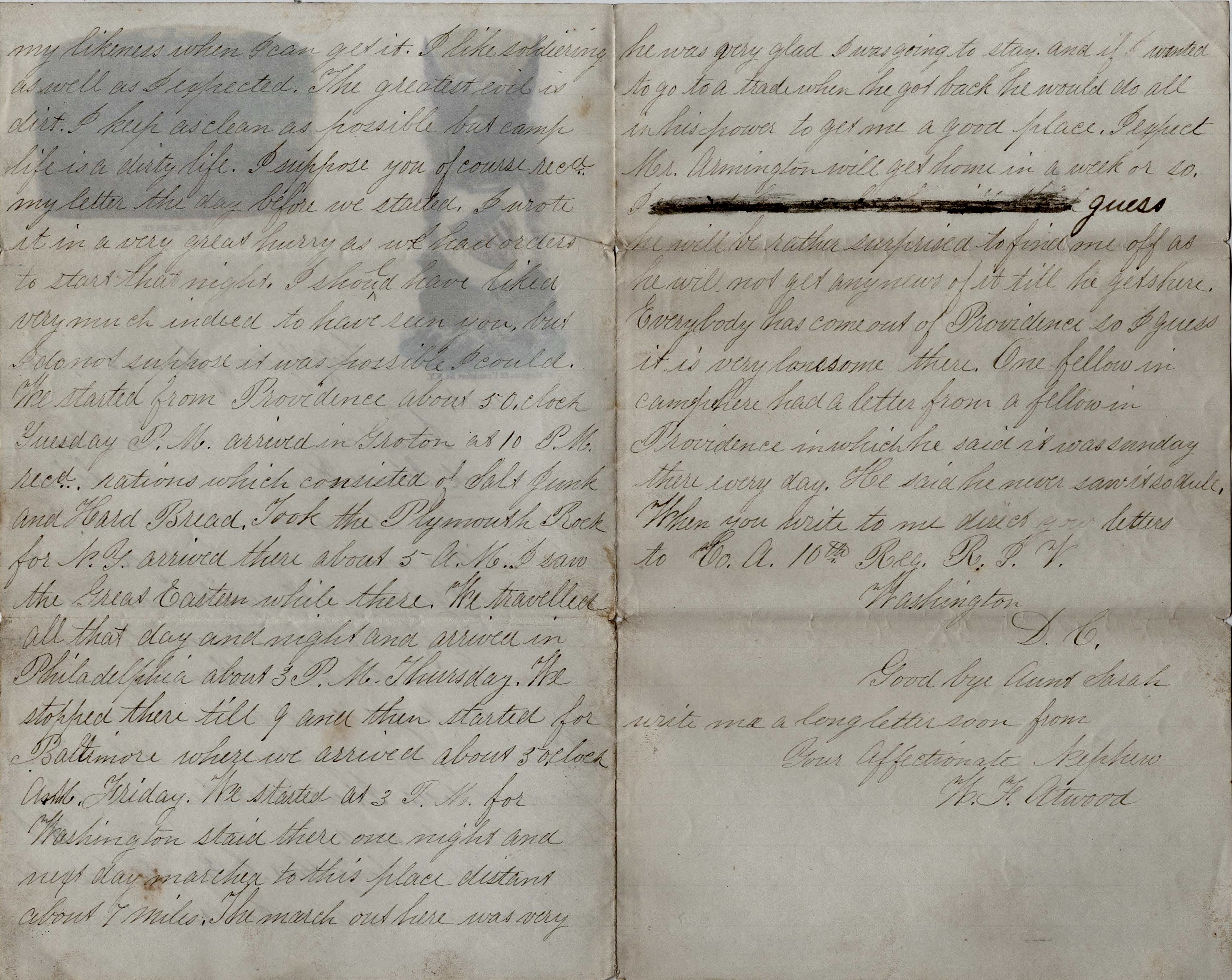
This letter was written by William Frederick (“Fred”) Atwood (1845-1862), a corporal serving in his company. Fred was the 17 year-old son of William and Emeline Atwood, a recent graduate of the Providence high school. Fred was described by his comrades as having a “genial temperament and generous disposition, which drew around him a circle of personal friends” who mourned his loss when he died on 29 June 1862 at the Soldier Retreat in Washington D. C.

The 10th Rhode Island regiment was mustered into Federal service for three months in the summer of 1862. It was sworn in at Providence on May 26, 1862 and then moved to Washington, D. C. from May 27 to 29 where it was attached to Sturgis’ Command as part of the Military District of Washington. It saw duty at Camp Frieze, Tennallytown until June 26. With Sturgis, the regiment marched across the Potomac into Virginia, but returned to Washington when Jackson’s threat to the city subsided.

After a few days, on Monday morning, June 30, the 10th was detached from Sturgis’ troops and ordered to relieve the 59th New York in the seven forts and three batteries it had been occupying. These defenses of Washington were north and west of the city.

Company A was sent to Fort Franklin. This position guarded the Baltimore and Ohio Canal, the Baltimore & Ohio Railroad, and the Washington Aqueduct—the new water supply for the city. the U. S. Army Engineers had designed Fort Franklin to protect the city’s receiving reservoir (as conveyed by the Aqueduct) as well as the Potomac river shoreline. 

Fred’s death and burial was described by Lt. Joseph L. Bennett in a letter he wrote to Fred’s father on 2 July 1862. See—1862: Joseph Langford Bennett to William Atwood.

T R A N S C R I P T I O N

Tenleytown
June 15th 1862

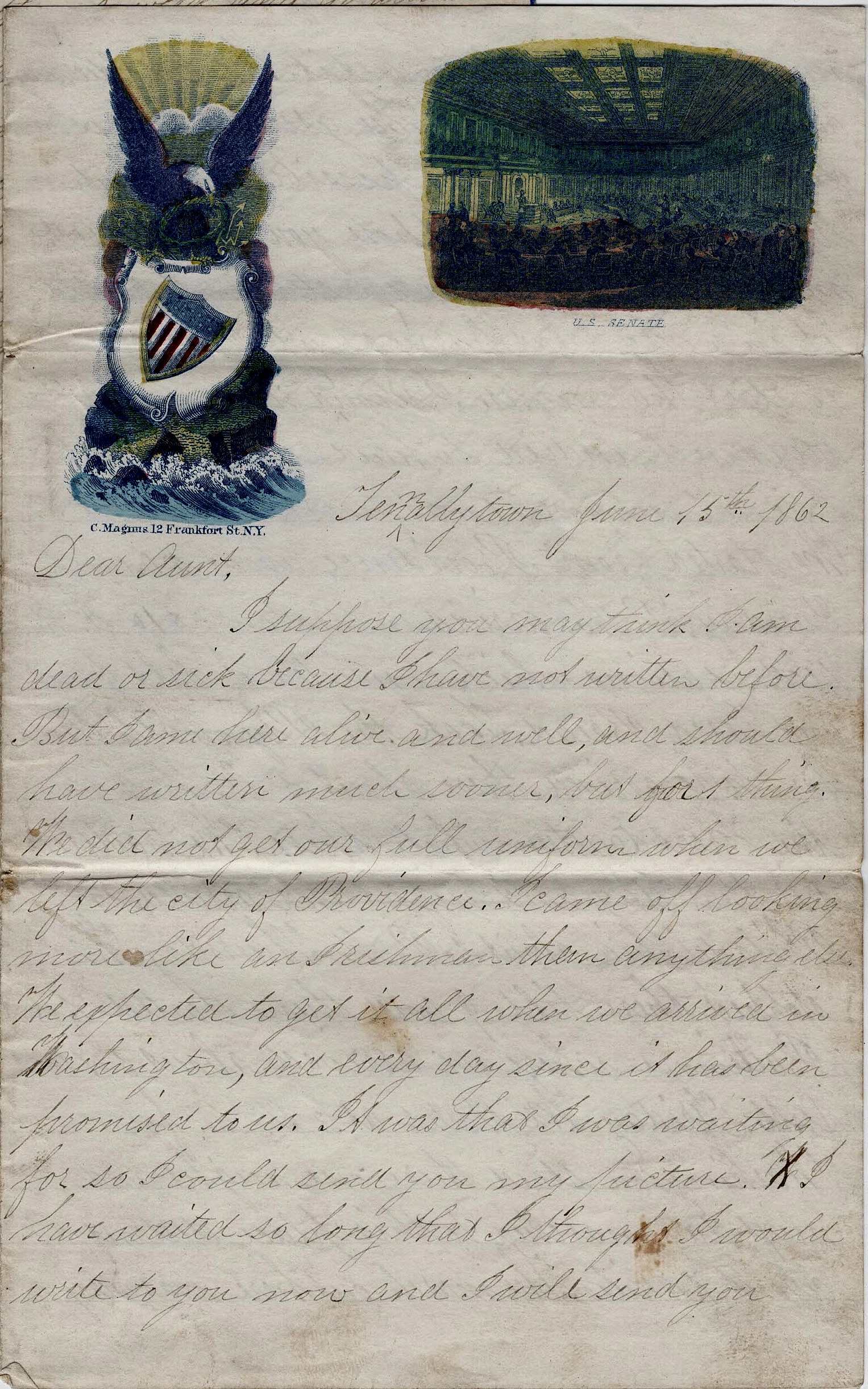
I suppose you may think I am dead or sick because I have not written before but I am here alive and well, and should have written much sooner but for 1 thing. We did not get our full uniform when we left the City of Providence. I came off looking more like an Irishman than anything else. We expected to get it all when we arrived in Washington, and every day since it has been promised to us. It was that I was waiting for so I send you my picture. I have waited so long that I thought I would write to you and I will send you my likeness when I can get it.

I like soldiering as well as I expected. The greatest evil is dirt. I keep as clean as possible but camp life is a dirty life. I suppose you of course received my letter the day before we started. I wrote it in a very great hurry as we had orders to start that night. I should have liked very much indeed to have seen you but I do not suppose it was possible I could.

We started from Providence about 5 o’clock Tuesday p.m., arrived in Groton t 10 p.m., received rations which consisted of salt junk [salted beef] and hard bread. Took the Plymouth Rock for New York, arrived there about 5 a.m. I saw the Great Eastern [steamship] while there. We travelled all that day and night and arrived in Philadelphia about 3 p.m. Thursday. We stopped there till 9 and then started for Baltimore where we arrived about 5 o’clock a.m. Friday. We started at 3 p.m. for Washington, stayed there one night, and next day marched to this place, distant about 7 miles. The march out here was very warm. The dust was so heavy it was difficult to breathe. Two hours rain made mud ankle deep.

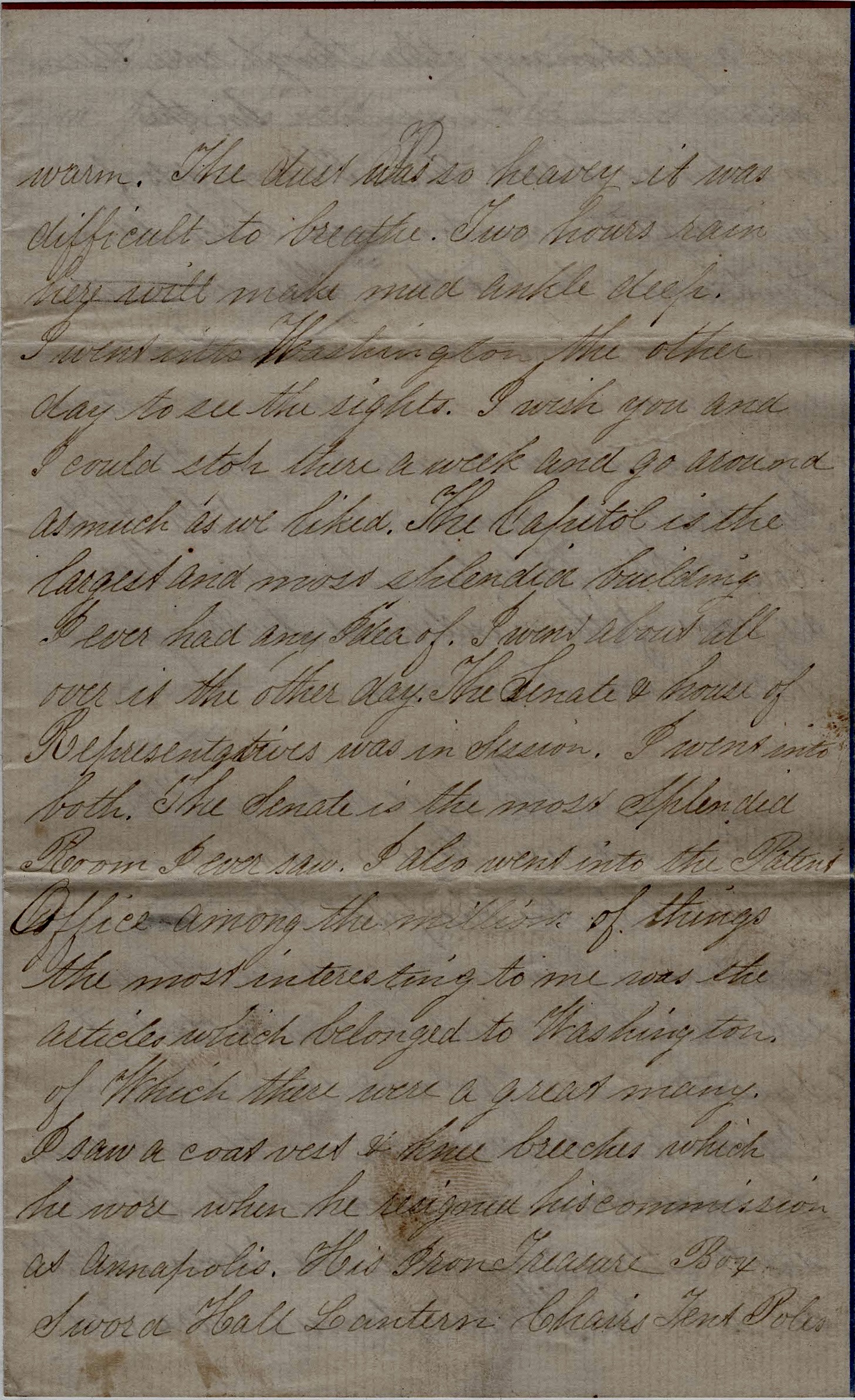
I went into Washington the other day to see the sights. I wish you and I could stop there a week and go around as much as we liked. The Capitol is the largest and most splendid building I ever had any idea of. I went about all over it the other day. The Senate and House of Representatives was is session. I went into both [chambers]. The Senate is the most splendid room I ever saw. I also went into the Patent Office, Among the millions of things, the most interesting to me was the articles which belonged to [General] Washington of which there were a great many. I saw a coat vest and knee breeches which he wore when he resigned his commission at Annapolis. His iron Treasure box, sword, hall lantern, chairs, tent poles, and a great many other things were there. I was very much disappointed in the machines I saw there. The models of some (a great many too) I should not think would be put there—they were made so cheap and common. But there was enough of interest in te room to interest me a month if I could only get there. I went into the reception room of the White House. It is furnished splendidly. There are some of the handsomest buildings in Washington I ever saw.
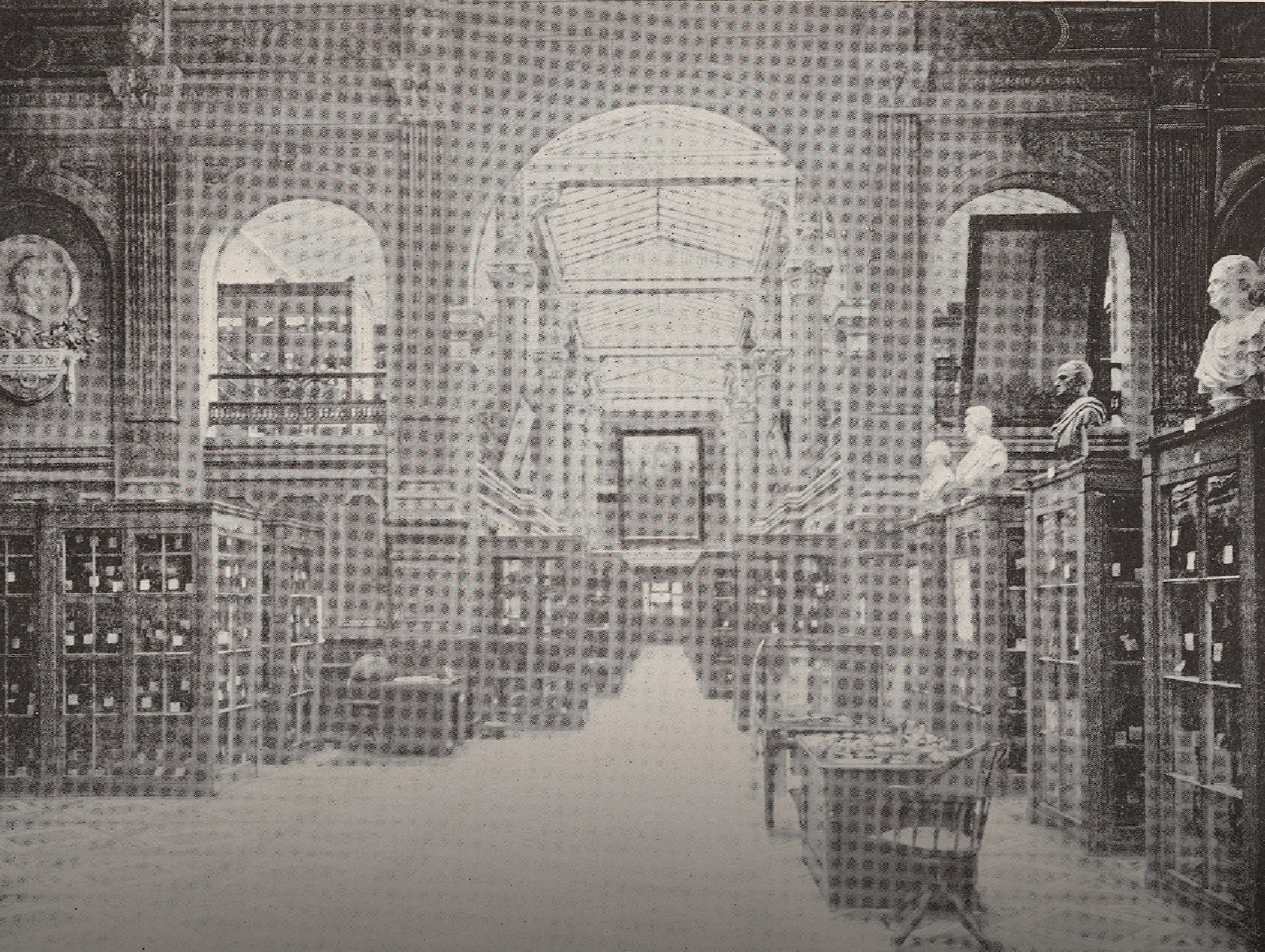
Many other collections soon found their way to the Model Hall in the Patent Office. The somewhat random assortment of objects included “Historical Relics,” such as the original Declaration of Independence, Benjamin Franklin’s printing press, and George Washington’s uniform. The display was simultaneously insular and expansionist, dedicated to national history while expressing global aspirations.

We have but very little sickness out here. There is but one man at present in the hospital from my company. I am in as good heath as I ever was. I have had but one attack of dysentery but I got over it in a day. I guess about every man in the company has been touched with it. The water they say brings it on. While we were in Washington, we were fed on bread, coffee strong without milk, and junk so salty you could hardly keep it in your mouth. The junk made me dry and I drank considerable of the spring water there. It went through me like Croton oil but I was not troubled but once.

We were sworn into service last Monday for three months from the 26th of May (three weeks tomorrow). How are things with you in Taunton and Berkley. I want you to write me a good long letter when you get this and let me know all the news, &c. We will have to give up the good times we were going to have for the present, but if I get back at the end of the three months, we will make up for the lost time. I asked Mr. Eddy if there would be any doubt about my getting my place again. He told me not to be uneasy about that for he would not lose me for anything. He had a letter from Mr. Armington a day or two before I came away in which Mr. A. said he was very glad I was going to stay and if I wanted to go to a trade when he got back, he would do all in his power to get me a good place. I expect Mr. Armington will get home in a week or so, I guess he will be rather surprised to find me off as he will not get any news of it till hr gets here. Everybody has come out of Providence so I guess it is very lonesome there. One fellow in camp here had a letter from a fellow in Providence in which he said it was Sunday there every day. He said he never saw it so dull.

When you write to me, direct your letters to Co. A, 10th Regiment R. I. Vols., Washington D. C.,

Goodbye Aunt Sarah. Write me a long letter soon. Your affectionate nephew, — W. F. Atwood
1862: Joseph Langford Bennett to William Atwood

I could not find an image of Fred but here is one of Edward Williams of Co. H, 10th Rhode Island Infantry (LOC)

1st Lt. Joseph Langford Bennett (1838-1898) of Co. A, 10th Rhode Island Infantry wrote this letter following the death of William Frederick (“Fred”) Atwood (1845-1862), a corporal serving in his company. Fred was the 17 year-old son of William and Emeline Atwood, a recent graduate of the Providence high school. Fred was described by his comrades as having a “genial temperament and generous disposition, which drew around him a circle of personal friends.” Though the lieutenant pledged to “deposit your son’s remains in Rhode Island soil with our own hands,” it does not appear that ever occurred. According to the regimental history, his body remained buried “in a retired and beautiful spot near the Soldiers’ Home, overlooking the Capitol which his youthful footsteps had hastened to defend.” Strangely, Fred’s father enlisted a few months later in the 11th Rhode Island Infantry and he too sickened and died—buried in Arlington Cemetery across the Potomac river from his son.

The 10th Rhode Island regiment was mustered into Federal service for three months in the summer of 1862. It was sworn in at Providence on May 26, 1862 and then moved to Washington, D. C. from May 27 to 29 where it was attached to Sturgis’ Command as part of the Military District of Washington. It saw duty at Camp Frieze, Tennallytown until June 26. With Sturgis, the regiment marched across the Potomac into Virginia, but returned to Washington when Jackson’s threat to the city subsided.

After a few days, on Monday morning, June 30, the 10th was detached from Sturgis’ troops and ordered to relieve the 59th New York in the seven forts and three batteries it had been occupying. These defenses of Washington were north and west of the city.

Company A was sent to Fort Franklin. This position guarded the Baltimore and Ohio Canal, the Baltimore & Ohio Railroad, and the Washington Aqueduct—the new water supply for the city. the U. S. Army Engineers had designed Fort Franklin to protect the city’s receiving reservoir (as conveyed by the Aqueduct) as well as the Potomac river shoreline. 

T RA N S C R I P T I O N

Fort Franklin
Headquarters Co. A, 10th Regt. Rhode Island Vol.
July 2nd 1862

Dear Sir,

Capt. Taber telegraphed you on Sunday, June 29th, that your son Wm. F. Atwood, (a member of our company) died on the said 29th of June and that his body would be sent home to you. Unfortunately circumstances occured which forbade us the melancholy pleasure of fulfilling our designs. Your son was buried on Monday, June 30th at 4 p.m. in the Soldier Retreat. Capt. Taber knows the precise spot in which he lies and we shall at the earliest opportunity bring his body to Providence.

In regard to your son’s death, he would say that it was one of perfect peace. He did not suffer at all, but on the contrary was perfectly free from pain. The Surgeon states that he died from inflammation of the bowels. During his stay in the General [Seminary] Hospital at Georgetown, he received the best of care. One of the most experienced nurses remained with [him] during the night previous to his death. His last request was that he might be buried at home. We did all that we could at the time but we could not get his body home short of five days and the government allows but seven dollars for the whole expense while the actual expense is over one hundred dollars. And unfortunately, while engaged in contriving some way to transport the body, Capt. Taber was ordered back to camp to move his company to this fort. He consequently had no alternative but to comply with said orders.

As a company, we shall see that the body is removed to Providence and interred with all the honors of a soldier and patriot. It may be pleasing to you to know that as a man and soldier, he had no superior. He was regarded by all of his company as an amiable and desirable companion. None mourn his loss more than me. Our company is thrown into the most profound gloom by the loss of our beloved companion. As officers, we feel that one of the ornaments of our company has been removed by the hand of divine Providence and although we mourn his loss, we know that God doeth all things well.

We should have notified you sooner but it was entirely beyond our power. Any questions you may ask, or any information you may desire, we will do out best to satisfy. Please direct to the Capt. at Washington, D. C. By order of Capt. Wm. E. Tabor, Jr., I remain, with much respect, yours to command, – Lieut. Bennett

P. S. If you will send a written order to Capt. Taber authorizing him to take charge of the effects of your son, he can and will do so, until such a time as he can forward them to you.

Our company have all desired to be remembered to you in this the time of bereavement. Rest assured we will do all in our power an we expect to deposit your son’s remains in Rhode Island soil with our own hands. Truly yours, — Bennett, 1st Lt. Co. A, 10th Regt. R. I. V.

1862: Samuel Aborn Wightman Arnold to Phebe (Wightman) Arnold

The following letter was written by Samuel Aborn Wightman Arnold (1842-1902), the son of John William Arnold (1817-1885) and Phebe Holdridge Wightman (1818-1882) of Warwick, Kent county, Rhode Island.

Some sources state that the 10th Rhode Island wore Zouave uniforms but I don’t believe all of the companies did. This is Sergt. John R. Allen of Co. I, 10th R. I.

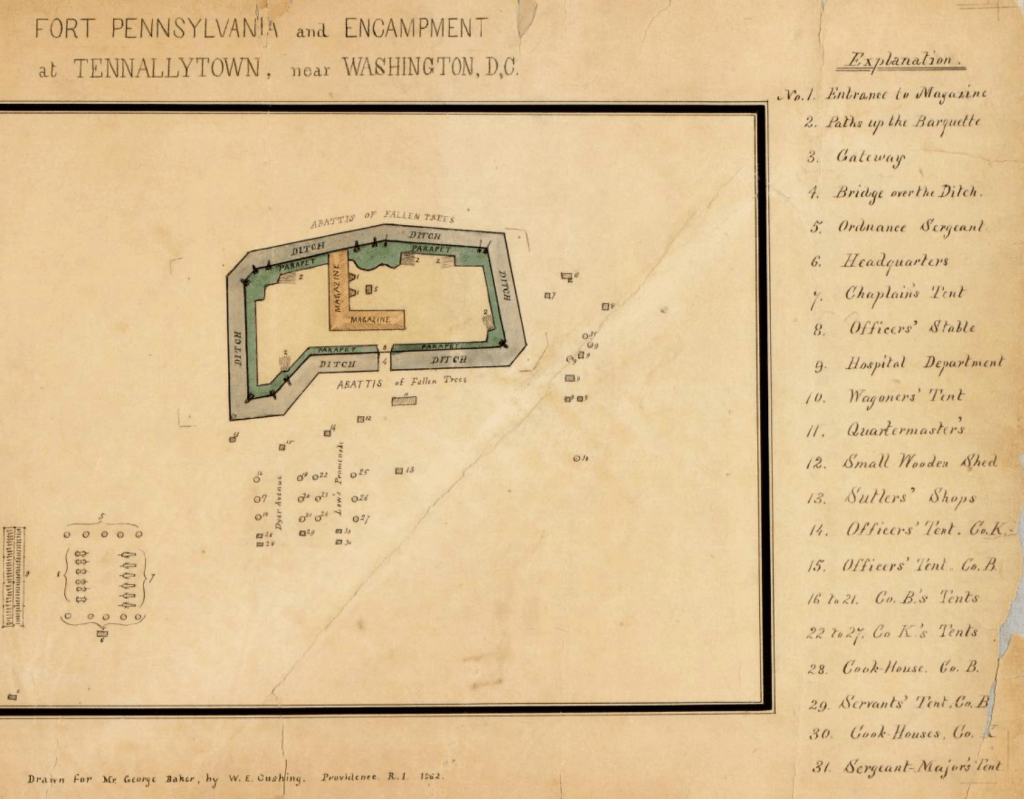
Samuel enlisted in Co. B, 10th Rhode Island Infantry in late May 1862 and mustered out of the service some 90 days later on 1 September 1862. The regiment was detailed to garrison duty in the forts about Washington D. C. Company B included about 125 students from Brown University and Providence High School. Its captain for three months was Elisha Dyer, the former governor of Rhode Island. Legend has it that Brown’s President Sears consented to allow his students to enlist only on the condition that Gov. Dyer accompany them. They were posted at Fort Pennsylvania along with Co. K for the duration of their term of service. The fort stood near Tennallytown at the top of the hill that marks the highest point in Washington, D. C. It was built in the winter of 1861 by the 119th Pennsylvania Regiment, and was named Fort Pennsylvania until 1863 when the name was changed to honor Major General Jesse Lee Reno, who died at the Battle of South Mountain in 1862. 

Samuel married Mary Jane Fuller in 1867 and worked as a painter after the war.

Fort Pennsylvania & Encampment of the 10th Rhode Island just outside the fort. Co. B’s tents are 16-21 and Co. K’s tents are 22-27. Drawn in 1862 by W. E. Cushing (LOC)

Transcription

Fort Pennsylvania
August 3rd 1862

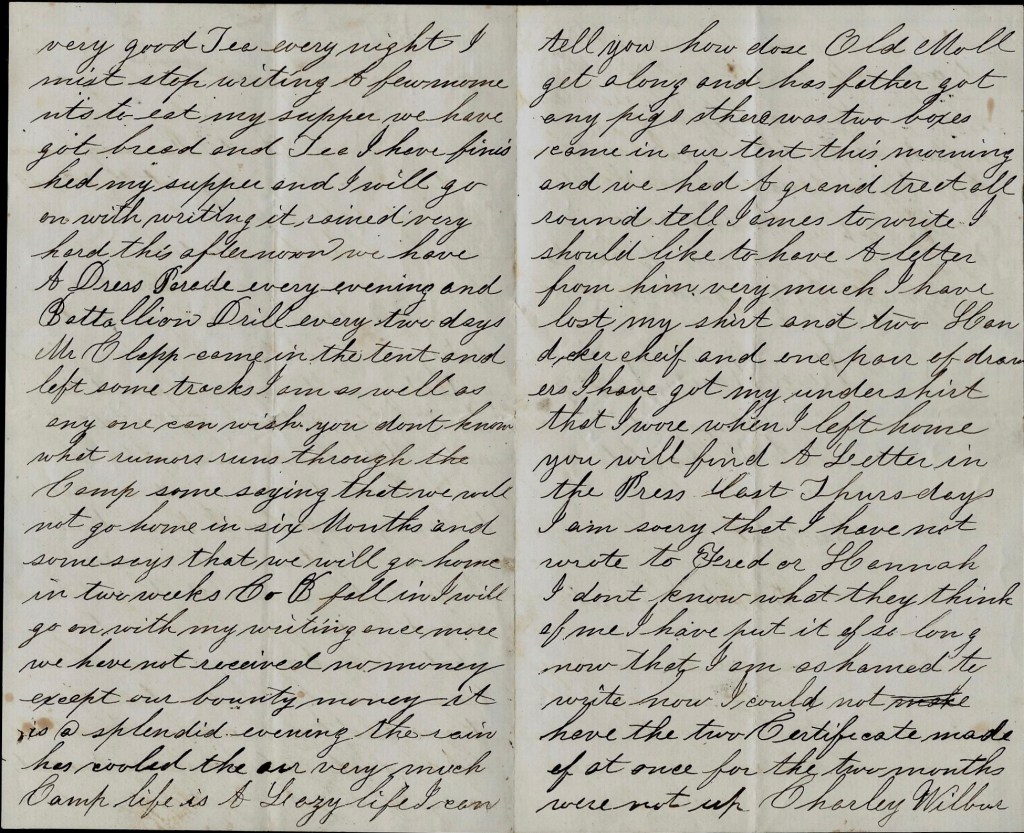
I now take these few moments to write you a few lines. I was on guard yesterday and came off guard this morning at 8 o’clock. We had a meeting this forenoon. We have our guns loaded every night. We have to be careful with them. It is very warm here. This is the warmest month of the year.

What do you think we had for dinner? Well, I will tell you what we had. We had some green corn, roast beef. I can tell you it was good. I have some fruit cake left yet. I have not used any of my tea yet for we have very good tea every night.

I must stop writing a few moments to eat my supper. We have got bread and tea. I have finished my supper and I will go on with writing. It rained very hard this afternoon. We have a Dress Parade every evening and Battalion Drill every two days. Mr. Clapp came in the tent and left some tracts. I am as well as anyone can wish. You don’t know what rumors runs through the camp—some saying that we will go home in six months and some says that we will go home in two weeks.

Co. B. fall in. I will go on with my writing once more. We have not received no money except our bounty money. It is a splendid evening. The rain has cooled the air very much. Camp life is a lazy life, I can tell you.

How does Old Moll get along? And has Father got any pigs? There was two boxes came in our tent this morning and we had a grand treat all round. Tell James to write. Should like to have a letter from him very much. I have lost my shirt and two handkerchiefs and one pair of drawers. I have got my undershirt that I wore when I left home. You will find a letter in the Press last Thursday.

I am sorry that I have not wrote to Fred or Hannah. I don’t know what they think of me. I have put it off so long now that I am ashamed to write now. I could not have the two certificates made out at once for the two months were not up. Charley Wilbur had his two months drawn into one.

It is a pretty sight [to] see signal lights displayed from one fort to fort. I think myself lucky that I have not been sick. There is seven of the Co. K sick with the fever. I don’t know any more to write so I must bid you goodbye. From your son, — S. A. W. Arnold

Pawtucket, Rhode Island