The following letters were written by James Chauncy Lopus (1841-1897) who enlisted at the age of 21 to serve three years as a private in Co. F, 112th new York Infantry on 30 August 1862. He was discharged for disability on 28 October 1864 at Buffalo, New York.
Chauncy was the son of Francis Chauncey Lopus (1814-18xx) andRosanna P. Linnet (1810-1880) of Busti, Chautauqua county, New York. Chauncy was described at a 5′ 8″ farmer with blue eyes and dark hair when he enlisted in 1862.
Letter 1
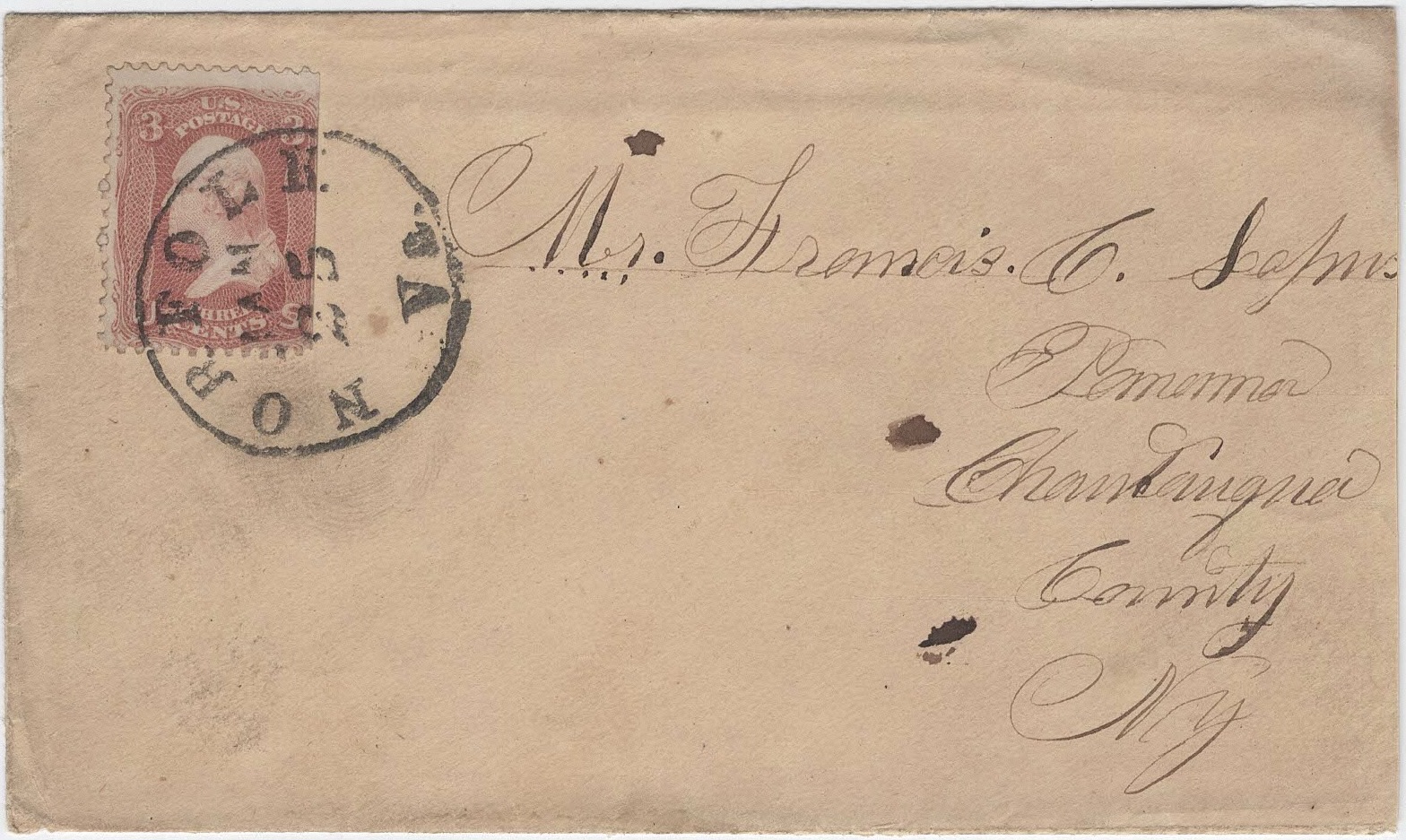
Addressed to Mr. Francis C. Lopus, Chautauqua county, New York
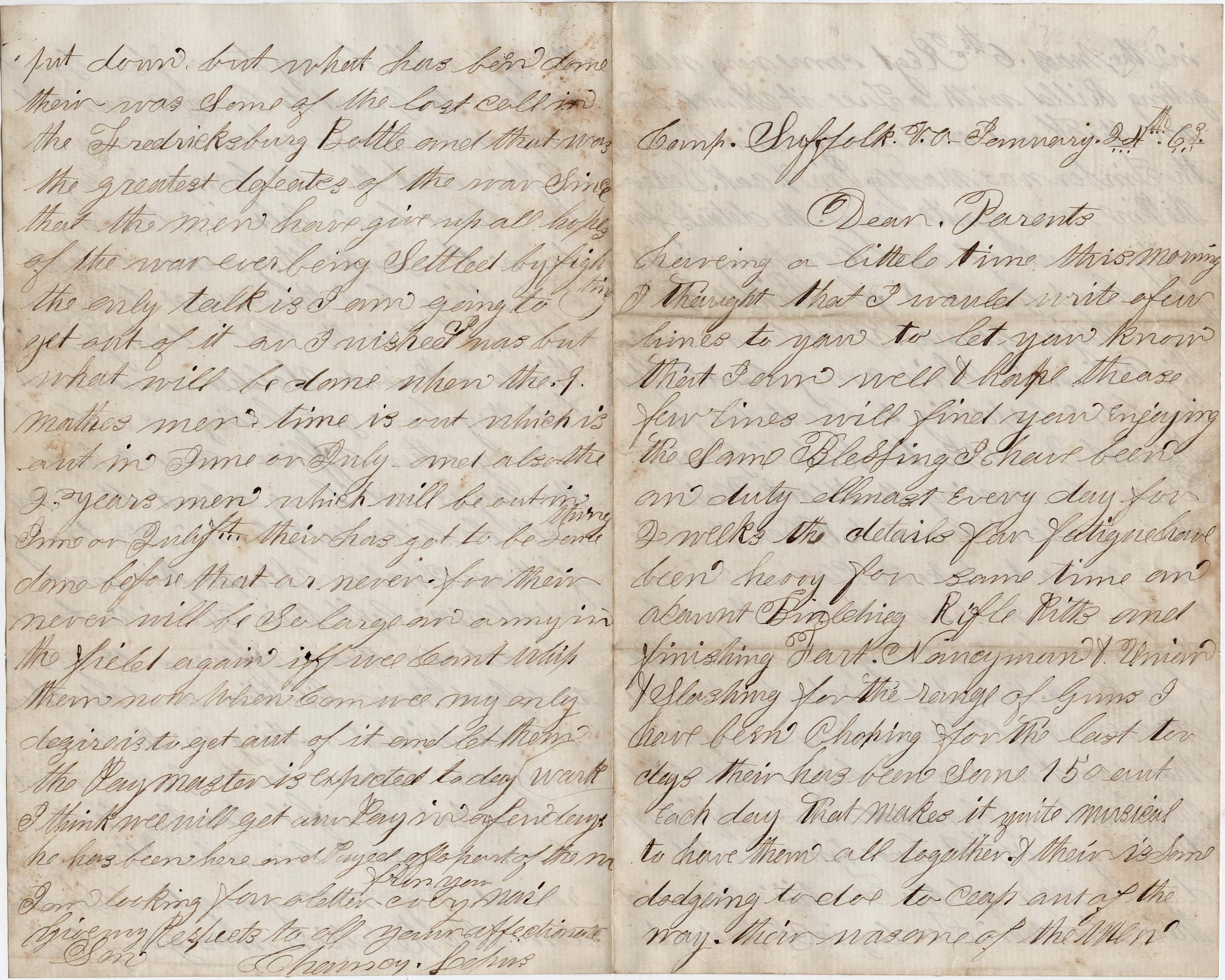
Camp Suffolk, Va. January 24, 1863
Dear Parents,
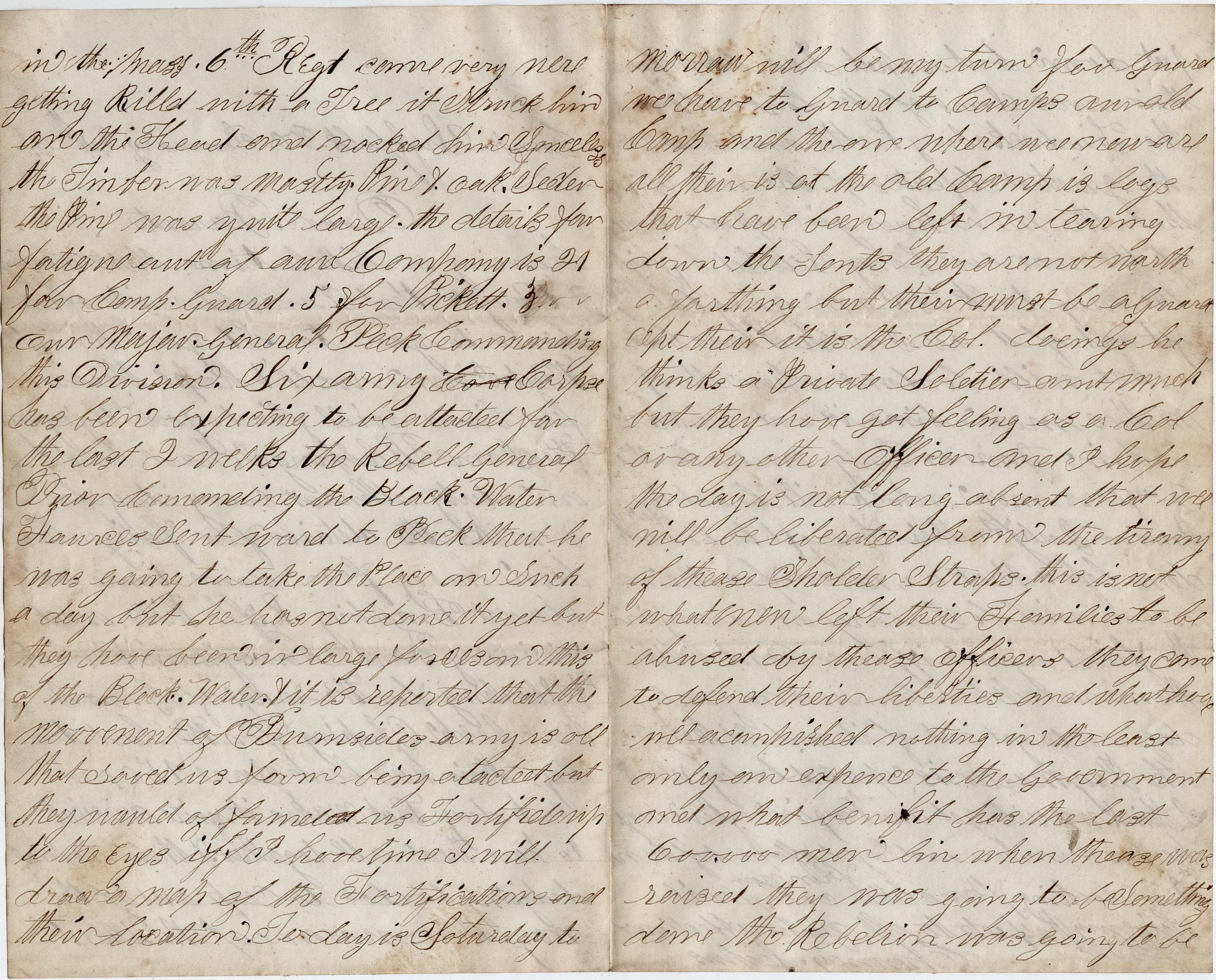
Having a little time this morning, I thought that I would write a few lines to you to let you know that I am well & hope these few lines will find you enjoying the same blessings. I have been on duty almost every day for two weeks. The details for fatigue have been heavy for some time on account of building rifle pits and finishing Fort Nancyman [Nansemond] & Union & slashing for the range of guns. I have been chopping for the last two days. There has bee some 150 out each day. That makes it quite musical to have them all together & there is some dodging to do to keep out of the way. There was one of the men in the Massachusetts 6th Regiment come very near getting killed with a tree. It struck him on the head and knocked him senseless. The timber was mostly pine and oak cedar. The pine was quite large.
The details for fatigue out of our company is 21 for camp guard, five for picket. Our Major General Peck [is] commanding the Division. The Sixth ARmy Corps has been expecting to be attacked for the last two weeks. The Rebel General Prior commanding the Black Water forces sent word to Peck that he was going to take the place on such a day but he has not done it yet. But they have been in large forces on the Black Water & it is reported that the movement of Burnsides Army is all that saved us from being attacked. But they would of found us fortified to the eyes. If I have time, I will draw a map of the fortifications and their location.
Today is Saturday. Tomorrow will be my turn for guard. We have to guard two camps—our old camp and the one where we now are. All there is at the old camp is logs that have been left in tearing down the tents. They are not worth a farthing but there must be a guard kept there. It is the Colonel’s doings. He thinks a private soldier ain’t much, but they have got feelings as a Colonel or any other officer and I hope the day is not long absent that we will be liberated from the tyranny of these shoulder straps.
This is not what men left their families—to be abused by these officers, They came to defend their liberties and what have we accomplished? Nothing in the least. Only an expense to the government and what benefit has the last 600,000 men been? When these was raised, they was going to be something done. The Rebellion was going to be put down. But what has been done? There was some of the last call in the Fredericksburg Battle and that was the greatest defeat of the war. Since that, the men have give up all hopes of the war ever being settled by fighting. The only talk is I am going to get out of it and I wished I was. But what will be done when the 9-months men’s time is out which is out in June or July, and also the 2-year’s men which will be out in June or July. There has got to be something done before that or never for there never will be so large an army in the field again. If we can’t whip them now, when can we? My only desire is to get out of it and let them [go].
The paymaster is expected today. I think we will get our pay in a few days. He has been here and paid off a part of them. I am looking for a letter every mail. Give my respects to all. Your affectionate son, — Chauncy Lopus
Letter 2
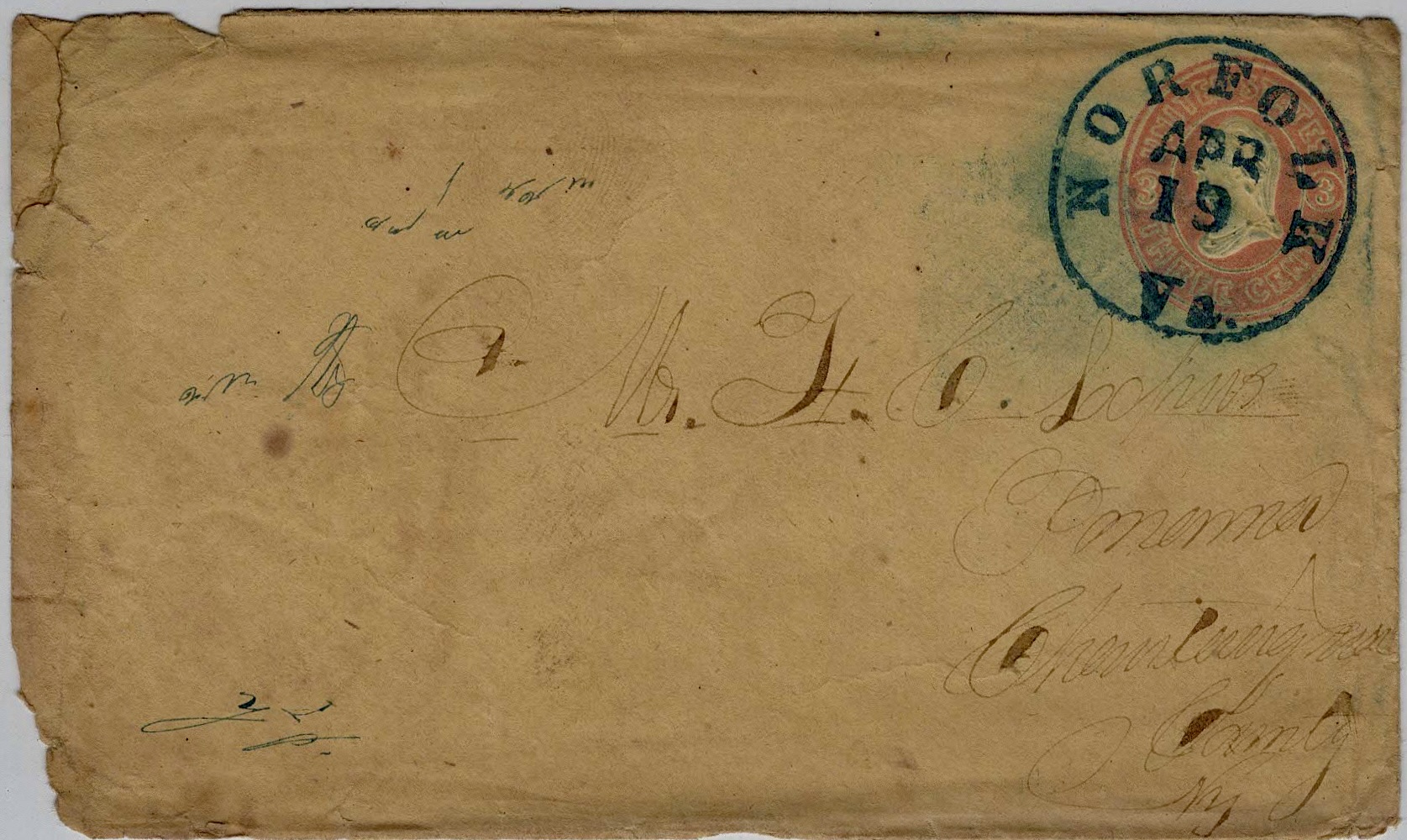
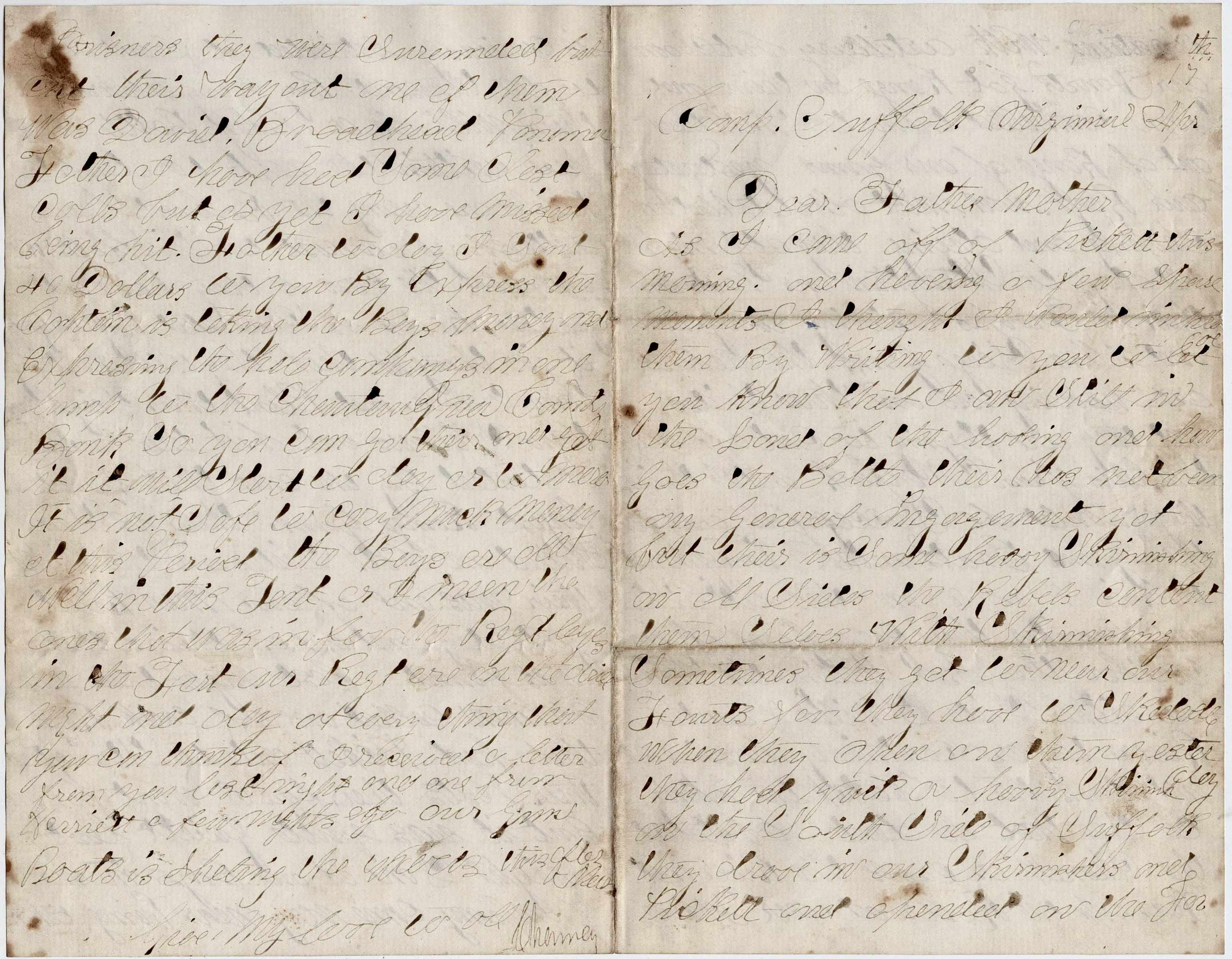
Camp Suffolk, Virginia April 17th [1863]
Dear Father & Mother,
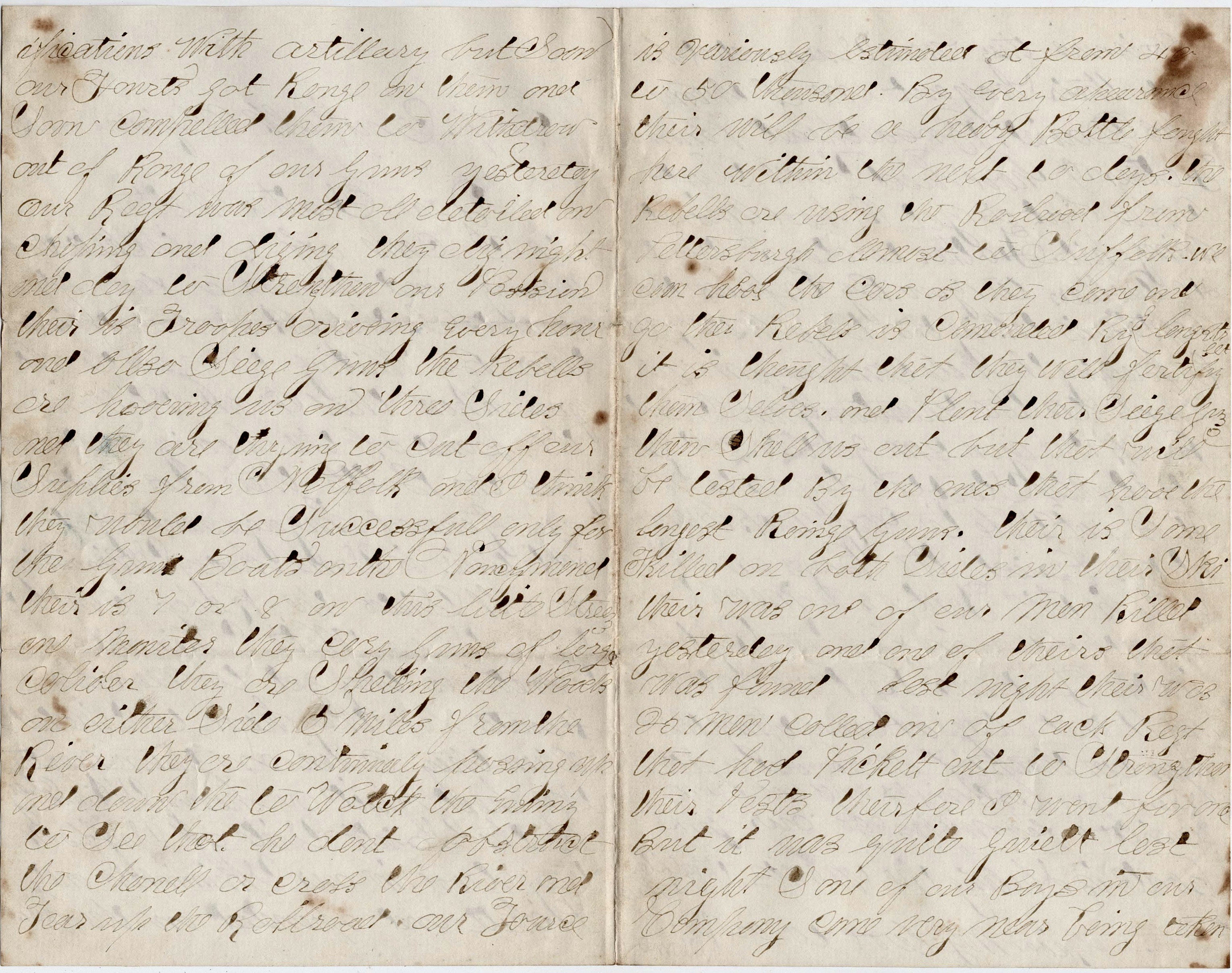
As I came off of picket this morning and having a few spare moments, I thought I would improve them by writing to you to let you know that I am still in the land of the living and how goes the battle. There has not been any general engagement yet but there is some heavy skirmishing on all sides. The Rebels content themselves with skirmishing. Sometimes they get too near our forts for they have to skedaddle when they open on them. Yesterday they had quite a heavy skirmish on the south side of Suffolk. They drove in our skirmishers and picket and opened on our fortifications with artillery but soon our forts got range on them and soon compelled them to withdraw out of range of our guns.
Yesterday our regiment was most all detailed on chopping and digging. They dig night and day to strengthen our position. There is troops arriving every hour and also siege guns. The Rebels are hovering [over] us on three sides adn they are trying to cut off our supplies from Norfolk and I think they would be successful only for the gunboats on the Nansemond [river]. There is 7 or 8 on this little stream—one monitor. They carry guns of large calibre. They are shelling the woods on either side, five miles from the river. They are continually passing up and down the [river] to watch the enemy to see that he don’t obstruct the channel or cross the river and tear up the railroad.
Our force is estimated at from 40 to 50 thousand. By every appearance, there will be a heavy battle fought here within the next two days. The Rebels are using the railroad from Petersburg almost to Suffolk. We can hear the cars as they come and go. The Rebels is commanded by Gen. Longstreet. It is thought that they will fortify themselves and plant their siege guns, then shell us out, but that will be tested by the ones that have the longest range guns. There is some killed on both sides. There was one of our men killed yesterday and one of their that was found. Last night there was 20 men called out to strengthen their posts. Therefore I went for one, but it was quiet last night. Some of our Boys in our company come very near being taken prisoners. They was surrounded but cut their way out. One of them was David Broadhead, Vonomer’s [?] father.
I have had some close calls but as yet I have missed being hit. Father, today I sent $40 to you by Express. The captain is taking the Boys’ money and expressing the whole company’s money to the [ ] Bank so you can go there and get it. It will start today or tomorrow. It is not safe to carry much money at this period. The Boys are all well in this tent…
Our gunboats is shelling the woods this afternoon. Give my love to all. — Chauncey
The following letters were written by Algernon D. Hazard who served as a corporal in Company F of the 112th New York Infantry Regiment during the Civil War. He enlisted on August 30, 1862, for a three-year term. The 112th New York, known as the “Chautauqua Regiment,” was organized in Jamestown, NY, and fought in Virginia and South Carolina.
Algernon was the son of Caleb Hazard (1808-1895) and Mary (Hannah) Newberry (1819-1885) of Ellery, Chautauqua county, New York. Only five of Algernon’s letters are presented here. There are three other letters, two by Capt Joseph S. Mathews, and one by Chaplain William Lyman Hyde, both of the 112th New York Regiment.
We learn from the regimental history that Algernon was “seriously wounded” in the fighting at Cold Harbor on June 1, 1864. A diary that I transcribed in 2024 by James Stafford of Co. C, 112th, included the following entry for that day: “Wednesday, June 1, 1864—We marched nearly all day and were tired out but were ordered right into the fight and we charged with knapsacks on. Many of our noble boys fell dead and dying…” The letter by Capt. Mathews, however, remembers the date of Algernon’s wounding as June 2nd. Stafford’s diary reveals that there was heavy fighting on that day as well: “Thursday, June 2, 1864. This morning we were ordered out to the front and many were killed and wounded…”
At a field hospital near the front, Algernon’s right leg was amputated—his wound being just above the right knee. A few days later he was transported several miles to the 18th Corps hospital at White House Landing where he died shortly after his arrival. Perhaps the jostling of the ambulance wagon resulted in uncontrolled bleeding around the sutures.
Letter 1
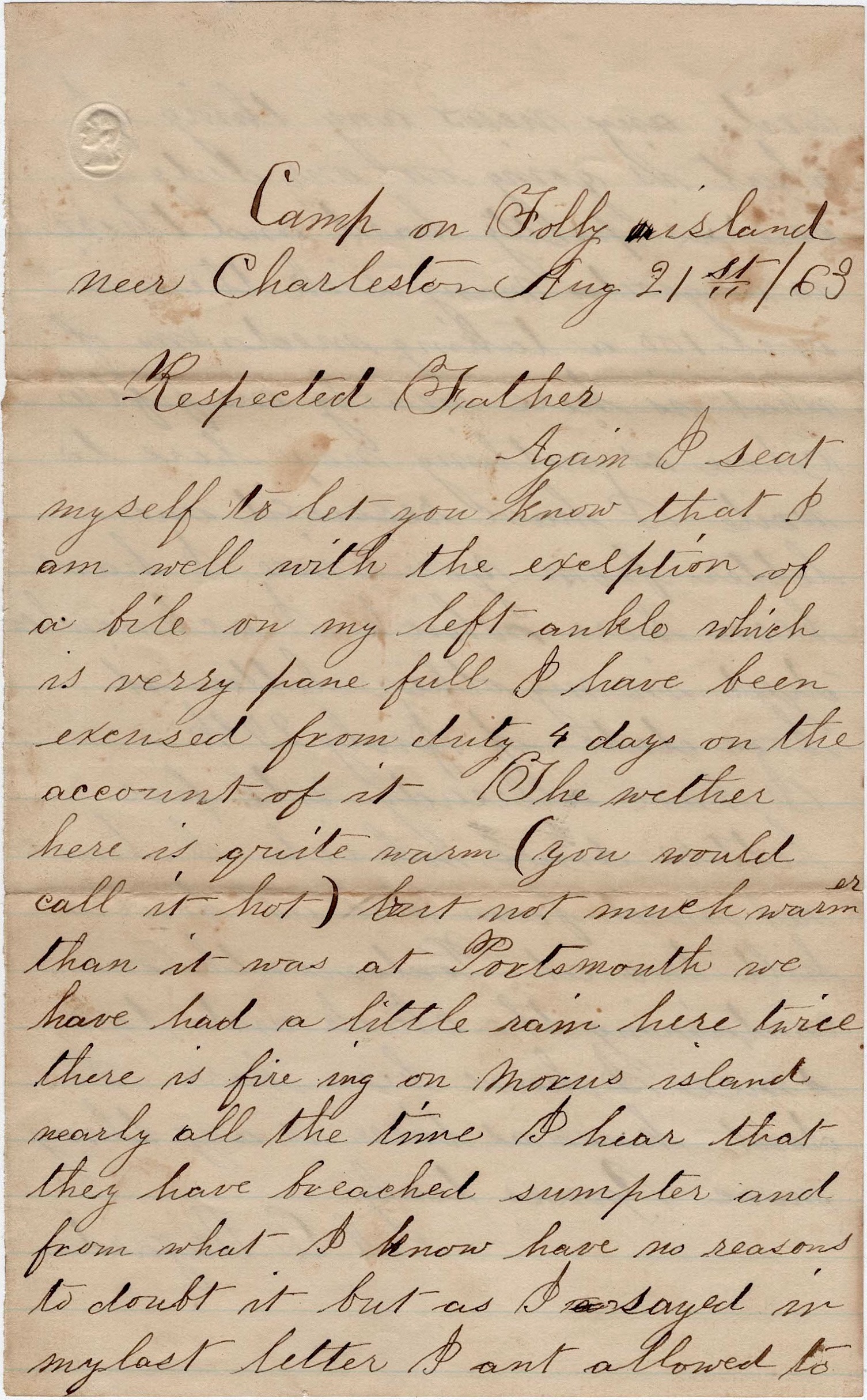
Camp on Folly Island near Charleston, [S.C.] August 21st 1863
Respected Father,
Again I seat myself to let you know that I am well with the exception of a bile [boil] on my left ankle which is very painful. I have been excused from duty 4 days on the account of it. The weather here is quite warm (you would call it hot) but not much warmer than it was at Portsmouth. We had a little rain here twice.
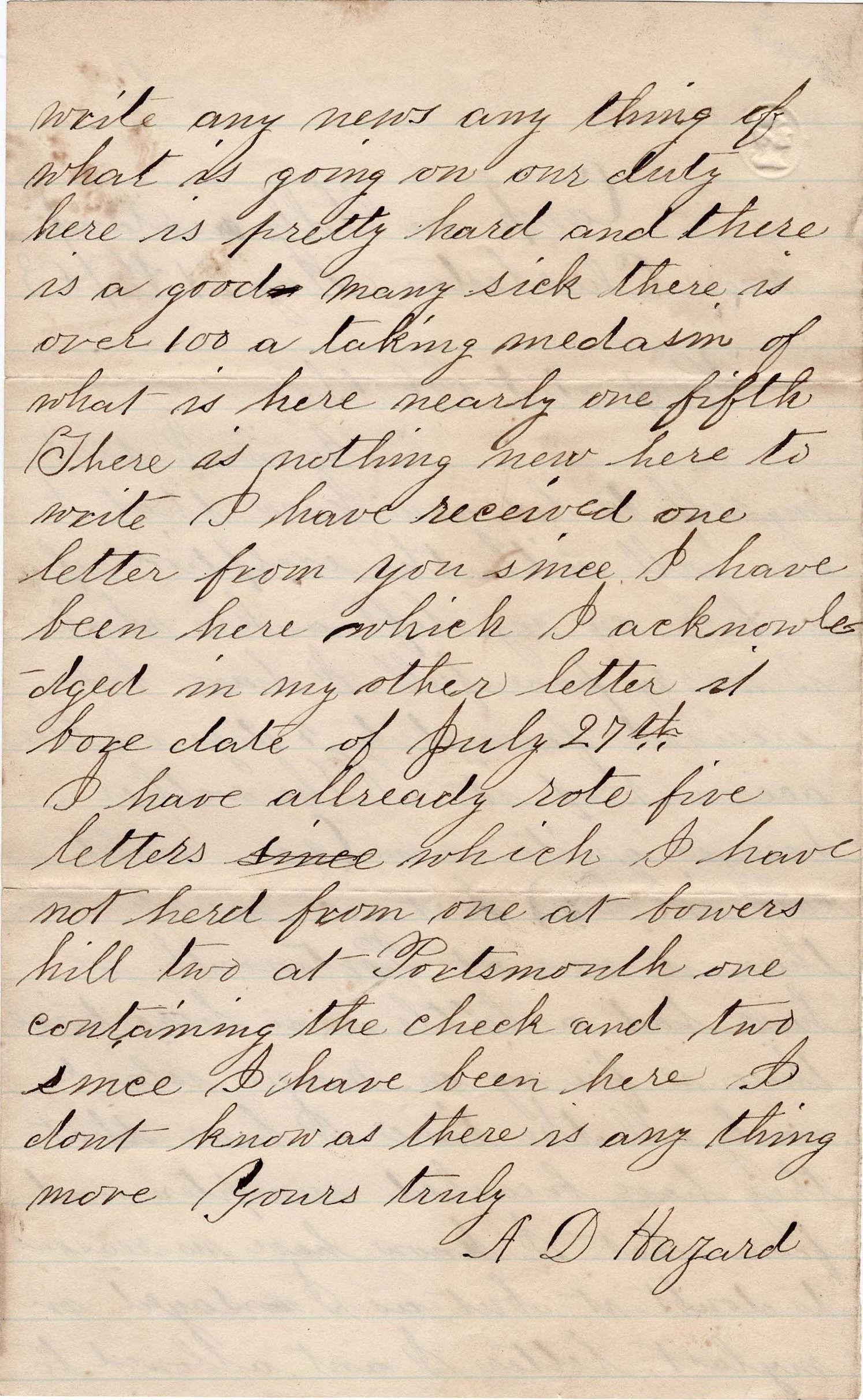
There is firing on Morris Island nearly all the time. I hear that they have breached [Fort] Sumter and from what I know have no reasons to doubt it but as I said in my last letter, I ain’t allowed to write any news anything of what is going on.
Our duty here is pretty hard and there is a good many sick. There is over 100 a taking medicine of what is here—nearly one-fifth. There is nothing new here to write. I have received one letter from you since I have been here which I acknowledged in my other letter. It bore the daye of July 27th.
I have already wrote five letters which I have not heard from. One at Bower’s Hill, two at Portsmouth (one containing the check), and two since I have been here. I don’t know as there is anything more. Yours truly, — A. D. Hazard
Letter 2
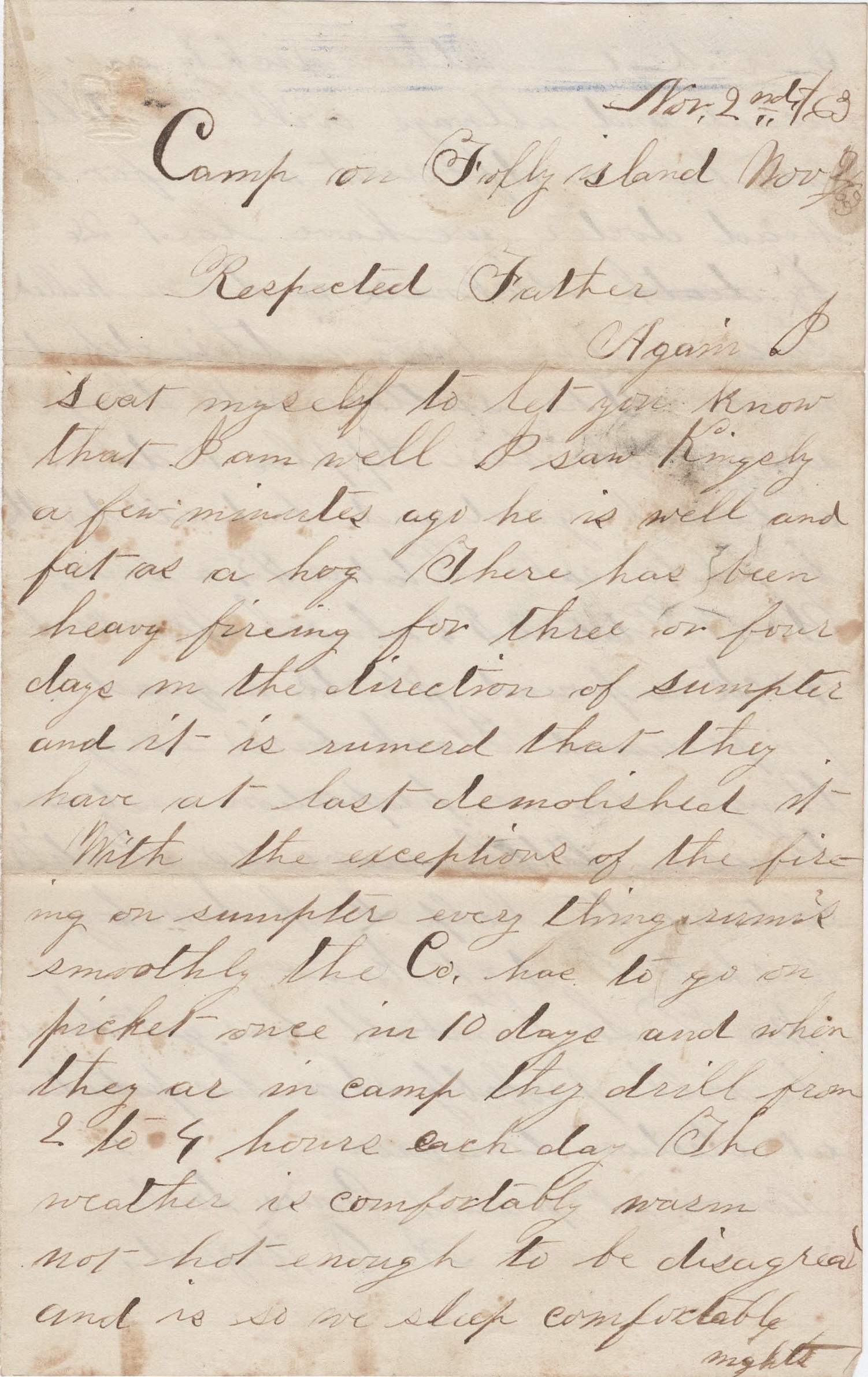
Camp on Folly Island November 2nd 1863
Respected Father,
Again I seat myself to let you know that I am well. I saw Kingsley a few minutes ago. He is well and fat as a hog. There has been heavy firing for three or four days in the direction of [Fort] Sumter and it is rumored that they haveat last demolished it. With the exception of the firing on Sumter, everything runs smoothly. The company has to go on picket once in ten days and when they are in camp, they drill from 2 to 4 hours each day.
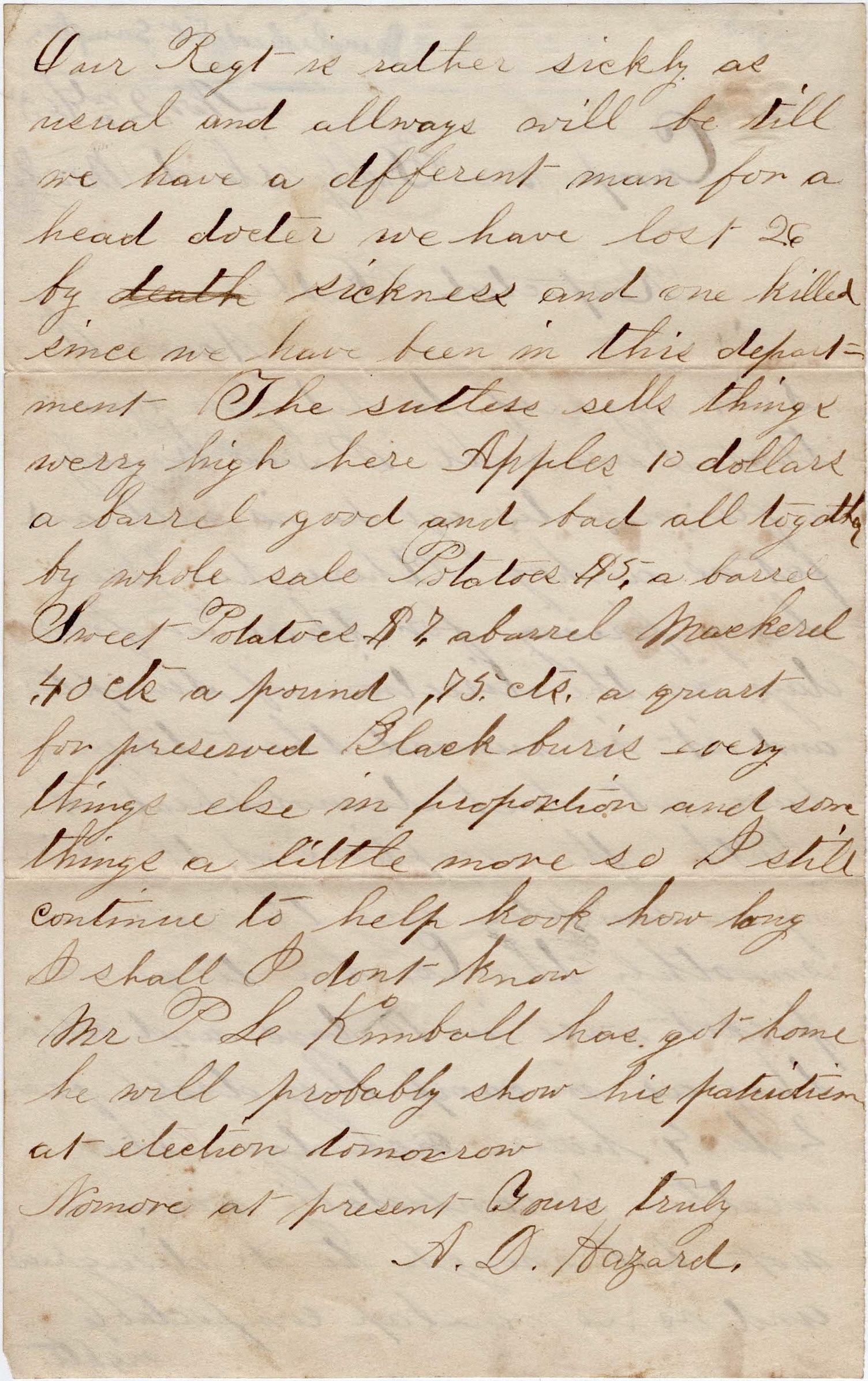
The weather is comfortably warm—not hot enough to be disagreeable—and is so we can sleep comfortably nights. Our regiment is rather sickly as usual and always will be till we have a different man for a head doctor. We have lost 26 by sickness and one killed since we have been here in this department.
The sutler sells things very high here. Apples 10 dollars a barrel—good and bad altogether by whole sale. Potatoes are $5 a barrel. Sweet potatoes $7 a barrel. Mackerel 40 cents a pound, 75 cents a quart for preserved blackberries. Everything else in proportion and some things a little more so. I still continue to help cook. How long I shall, I don’t know.
Mr. P. S. Kimball has got home. He will probably show his patriotism at election tomorrow. No more at present. Yours truly, — A. D. Hazard
Letter 3
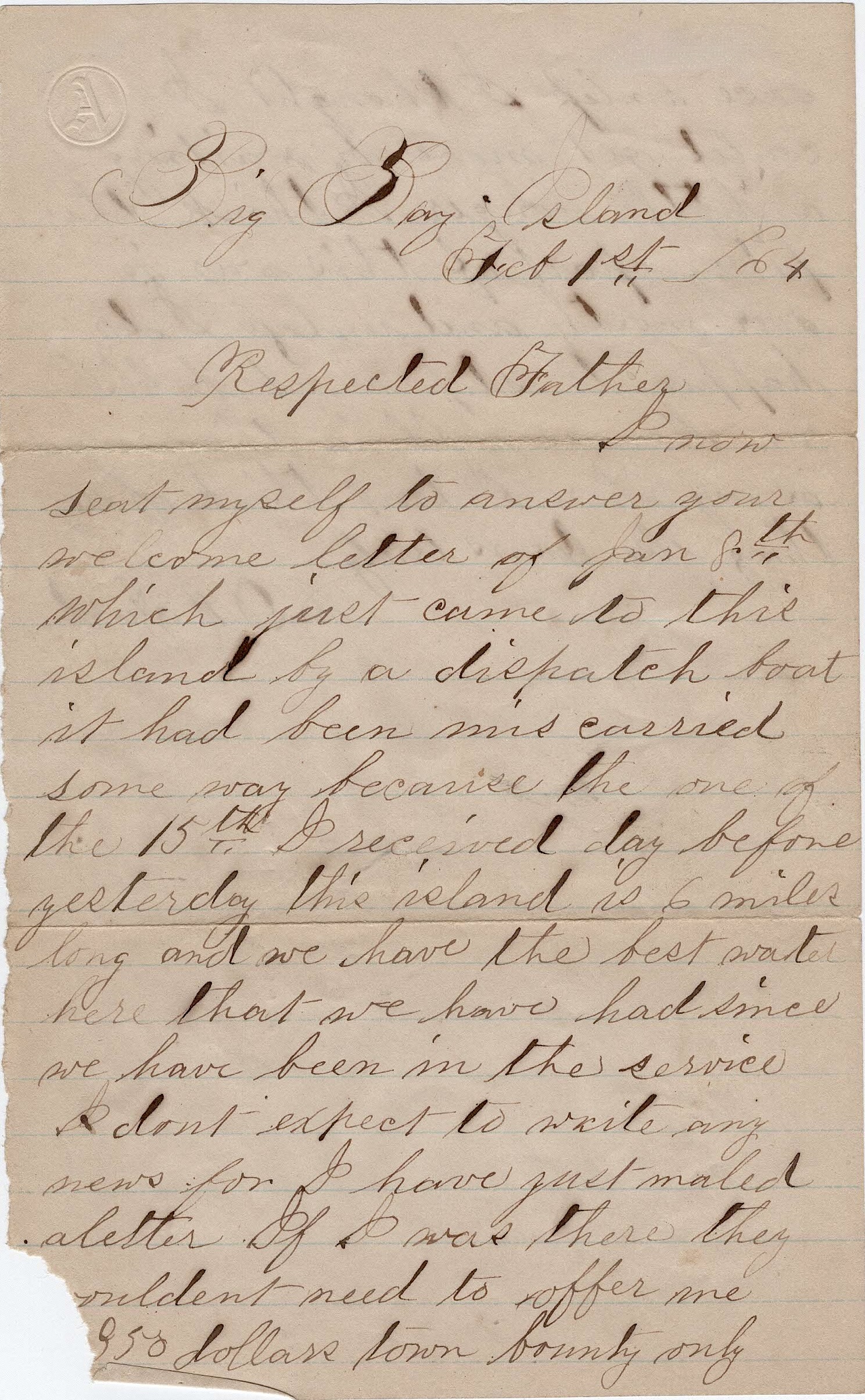
Big Bay Island February 1st 1864
Respected Father,
I now seat myself to answer your welcome letter of January 8th which just came to this island by a dispatch boat. It had been miscarried some way because the one of the 15th I received day before yesterday.
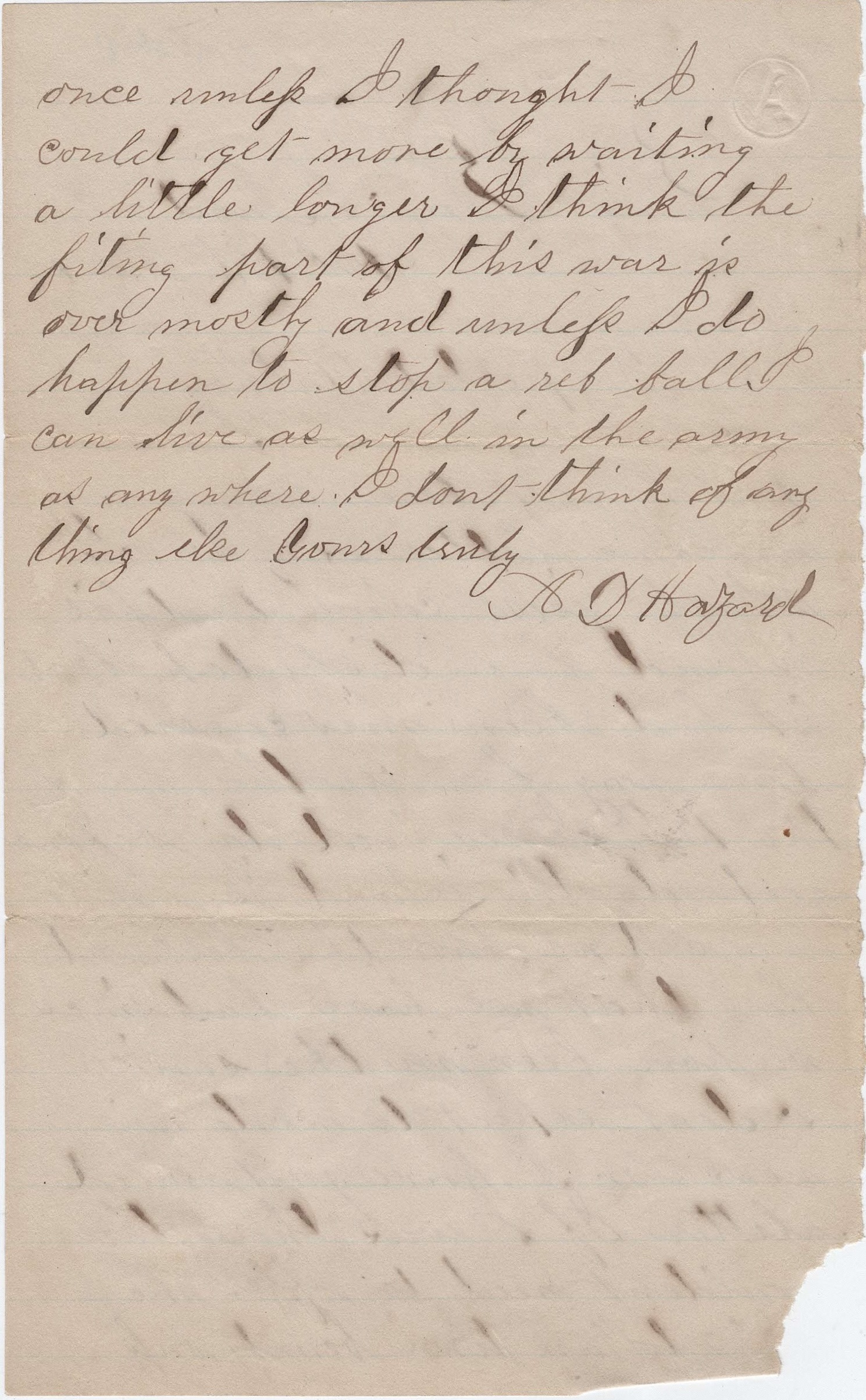
This island is 6 miles long and we have the best water here that we have had since we have been in the service. I don’t expect to write any news for I have just mailed a letter. If I was there, they wouldn’t need to offer me 350 dollars town bounty only once unless I thought I could get more by waiting a little longer. I think the fighting part of this war is over mostly and unless I do happen to stop a reb ball, I can live as well in the army as anywhere.
I don’t think of anything else. Yours truly, — A. D. Hazard
Letter 4
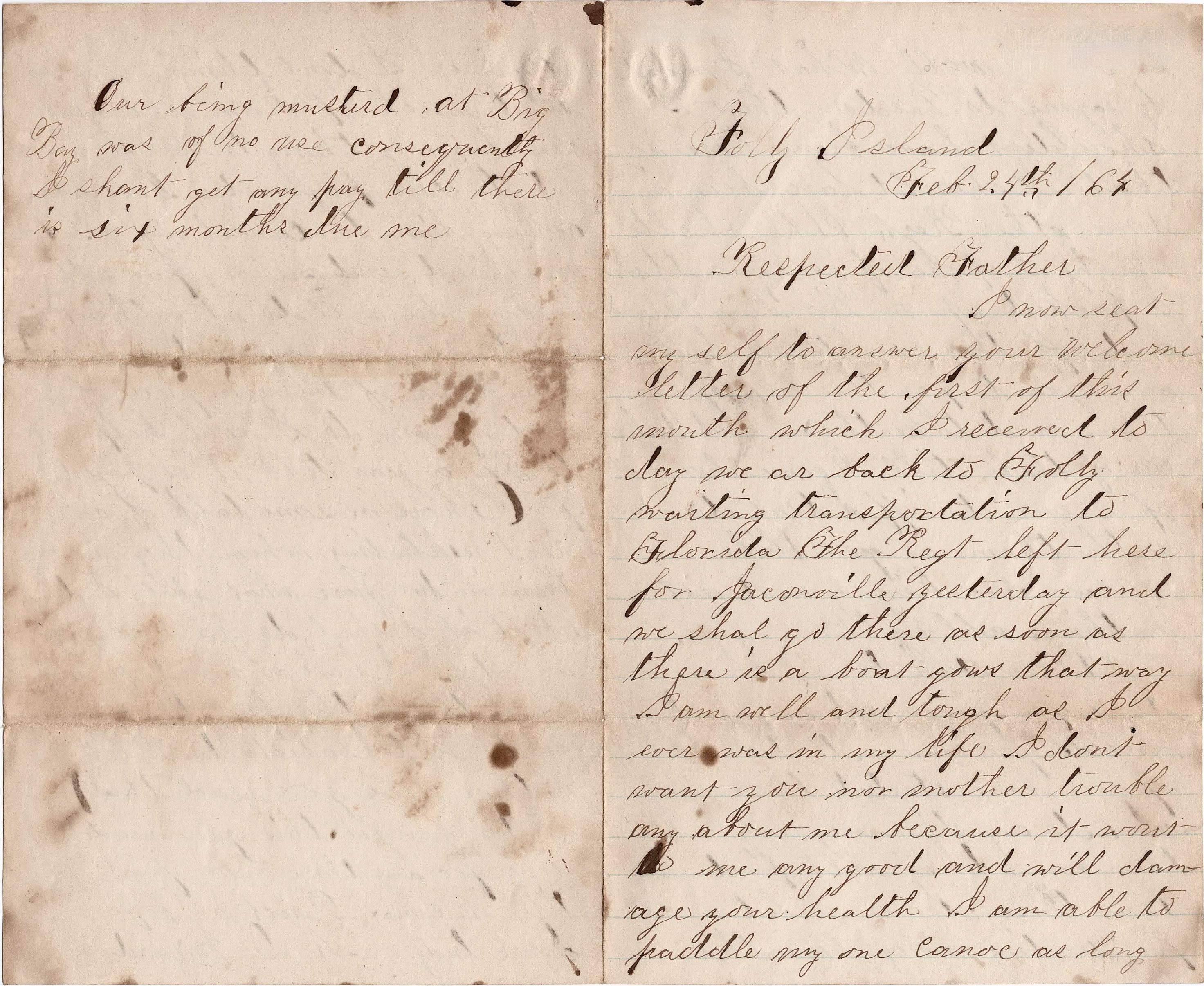
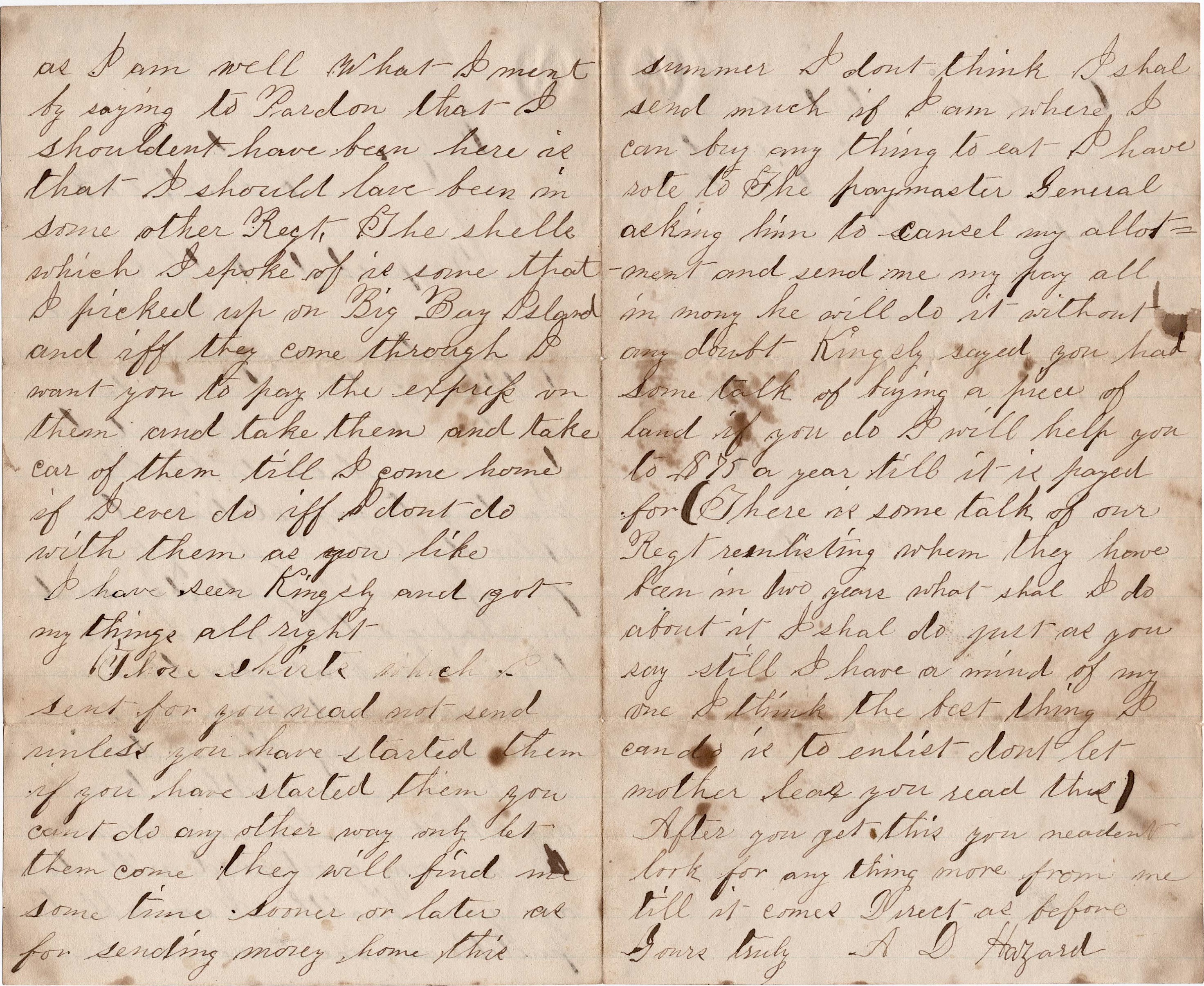
Folly Island February 24th 1864
Respected Father,
I now seat myself to answer your letter of the 1st of this month which I received today. We are back to Folly waiting transportation to Florida. The regiment left here for Jacksonville yesterday and we shall go there as soon as there is a boat goes that way. I am well and tough as I ever was in my life. I don’t want you nor mother to trouble any about me because it won’t do me any good and will damage your health. I am able to paddle my own canoe as long as I am well. What I meant by saying to pardon that I shouldn’t have been here is that I should have been in some other regiment.
The shells which I spoke of is some that I picked up on Big Bay Island and if they come through, I want you to pay the Express on them and take them and take care of them till I come home—if ever I do. If I don’t, do with them as you like. I have seen Kingsley and got my things all right.
The shirts that I sent for you need not send unless you have started them. If you have started them, you can’t do any other way—only let htem come. They will find me some time sooner or later. As for sending money home this summer, I don’t think I shall send much if I am where I can buy my things to eat. I have wrote to the Paymaster General asking him to cancel my allotment and send me my pay all in money. He will do it without any doubt. Kingsley said you had some talk of buying a piece of land. If you do, I will help you to $75 a year till it is paid for.
(There is some talk of our regiment reenlisting when they have been in two years. What shall I do about it? I shall do just as you say. Still, I have a mind of my own. I think the best thing I can do is to enlist. Don’t let mother [ ] you read this.)
After you get this, you needn’t look for anything more from me till it comes. Direct as before. Yours truly, — A. D. Hazard
Our being mustered at Big Bay was of no use. Consequently I shan’t get any pay till there is six months due me.
Letter 5
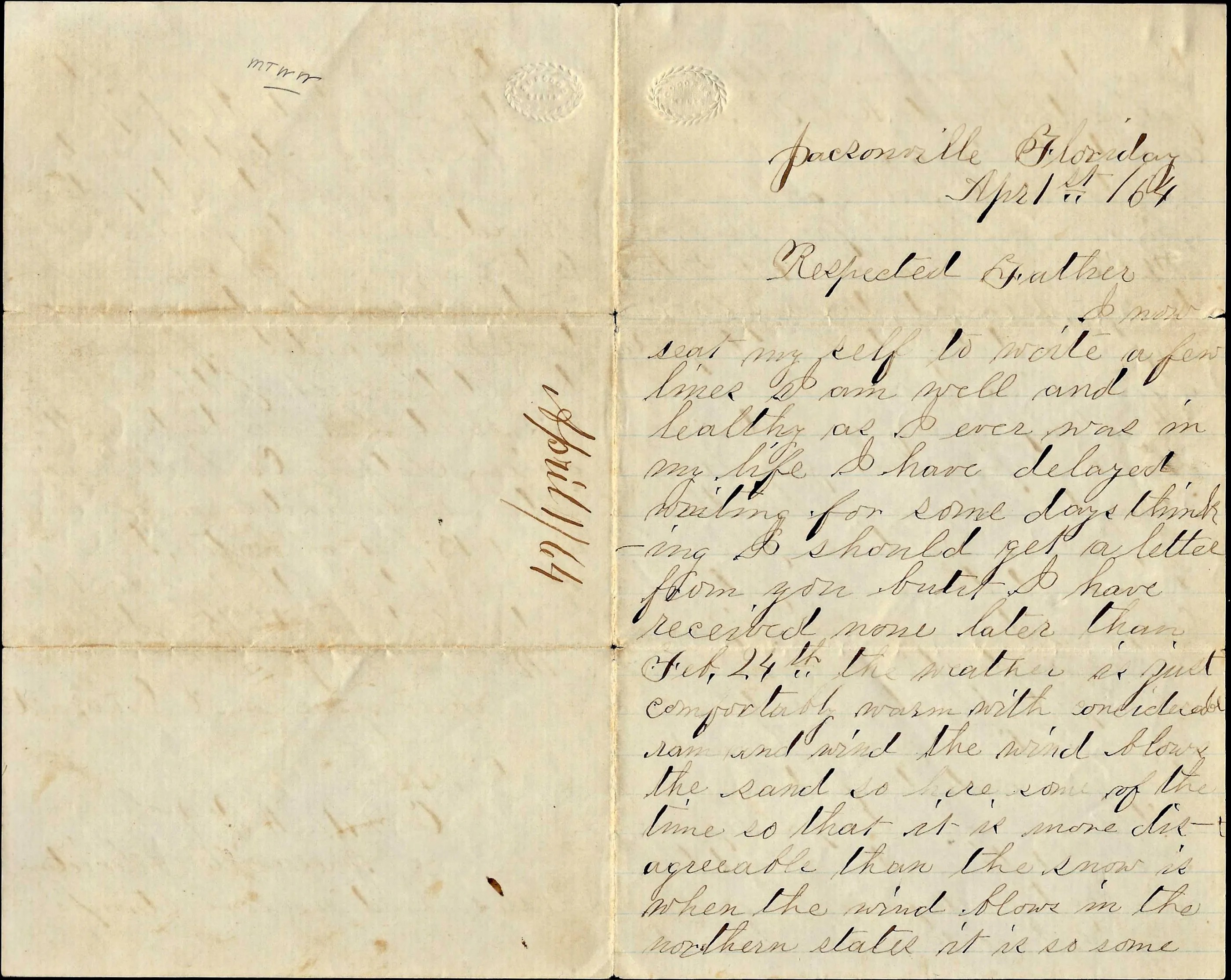
Jacksonville, Florida April 1st, 1864
Respected Father,
I now seat myself to write a few lines. I am well and healthy as I ever was in my life. I have delayed writing for some days thinking I should get a letter from you but I have received none later than February 24th.
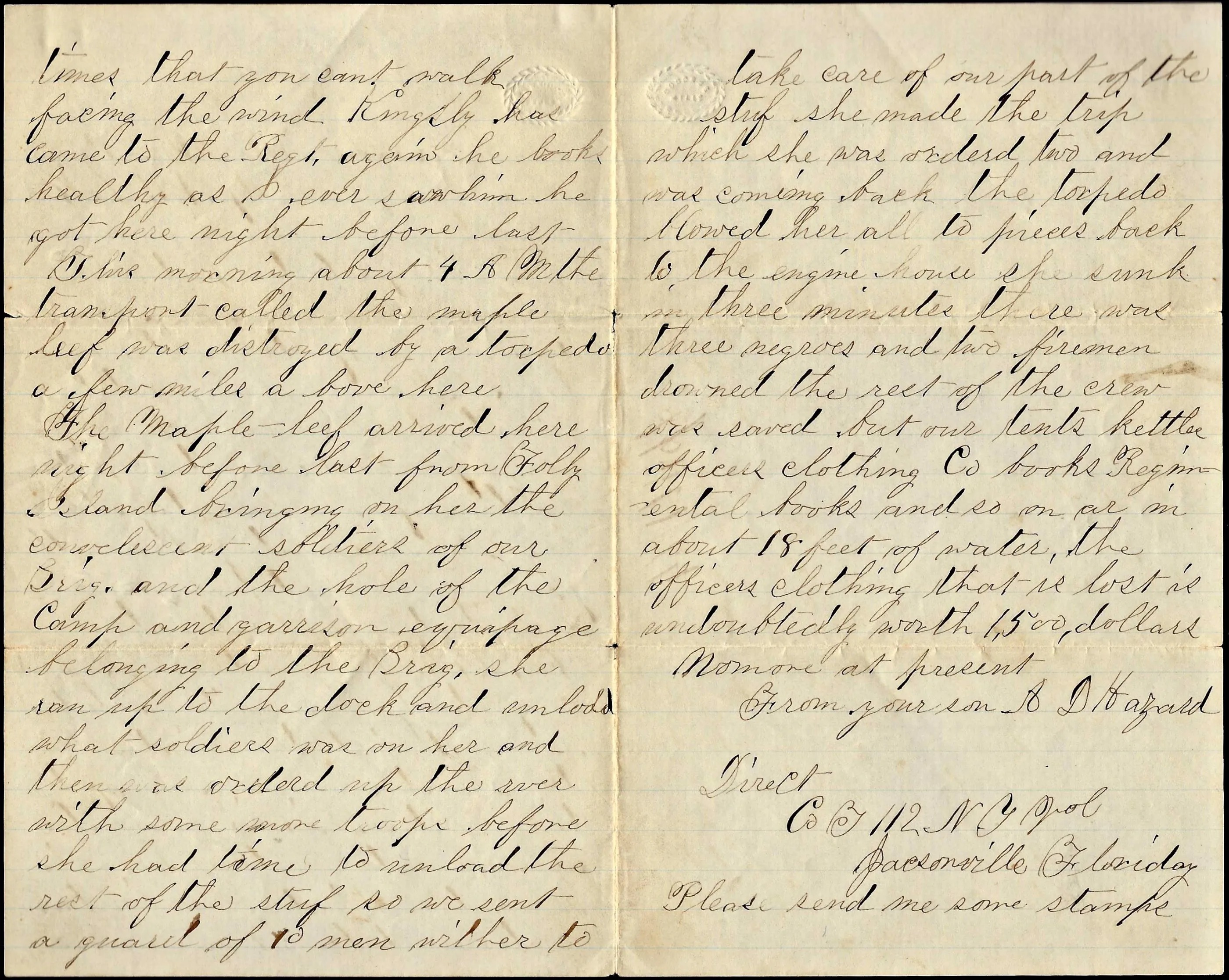
The weather is just comfortably warm with considerable rain and wind. The wind blows the sand so here some of the time so that it is more disagreeable than the snow is when the wind blows in the northern states. It is so sometimes that you can’t walk facing the wind.
Kingsley [John A. Kinsman?] has come to the regiment again. He looks healthy as I ever saw him. He got here night before last.
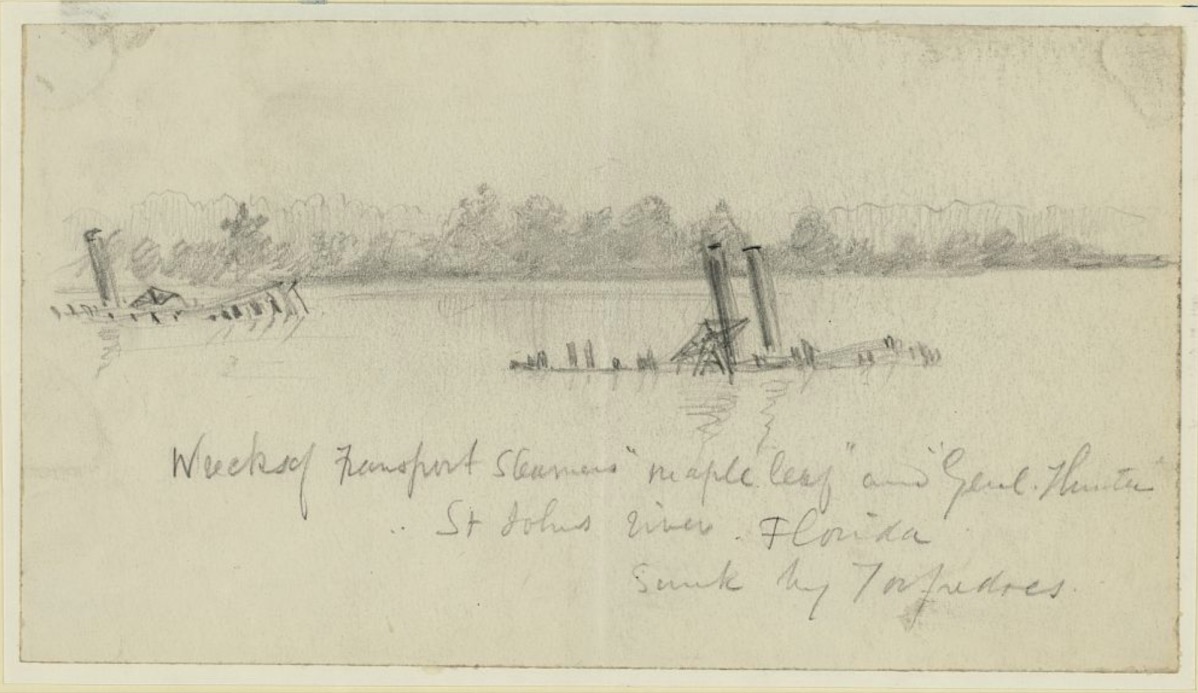
This morning about 4 A.M. the transport called the Maple Leaf was destroyed by a torpedo a few miles above here. The Maple Leaf arrived here night before last [31 March 1864] from Folly Island bringing on here the convalescent soldiers of our brigade and the whole of the camp and garrison equipage belonging to the brigade. She ran up to the dock and unloaded what soldiers was on her and then was ordered up the river with some more troops before she had time to unload the rest of the stuff, so we sent a guard of 10 men with her to take care of our part of the stuff. She made the trip [to Palatka] which she was ordered to and was coming back [when] the torpedo blowed her all to pieces back to the engine house. She sunk in three minutes. There was three negroes and two firemen drowned. The rest of the crew was saved but our tents, kettles, officer’s clothing, company books, regimental books, and so on are in about 18 feet of water. The officer’s clothing that is lost is undoubtedly worth 1,500 dollars.
Wreck of the Transport Steamers “Maple Leaf” and “Gen’l Hunter” on St. Johns River, Florida — Sunk by torpedoes
No more at present. From your son, — A. D. Hazard
Direct [to] Co. F, 112th New York Volunteers, Jacksonville, Florida
Please send me some stamps.
Letter 6
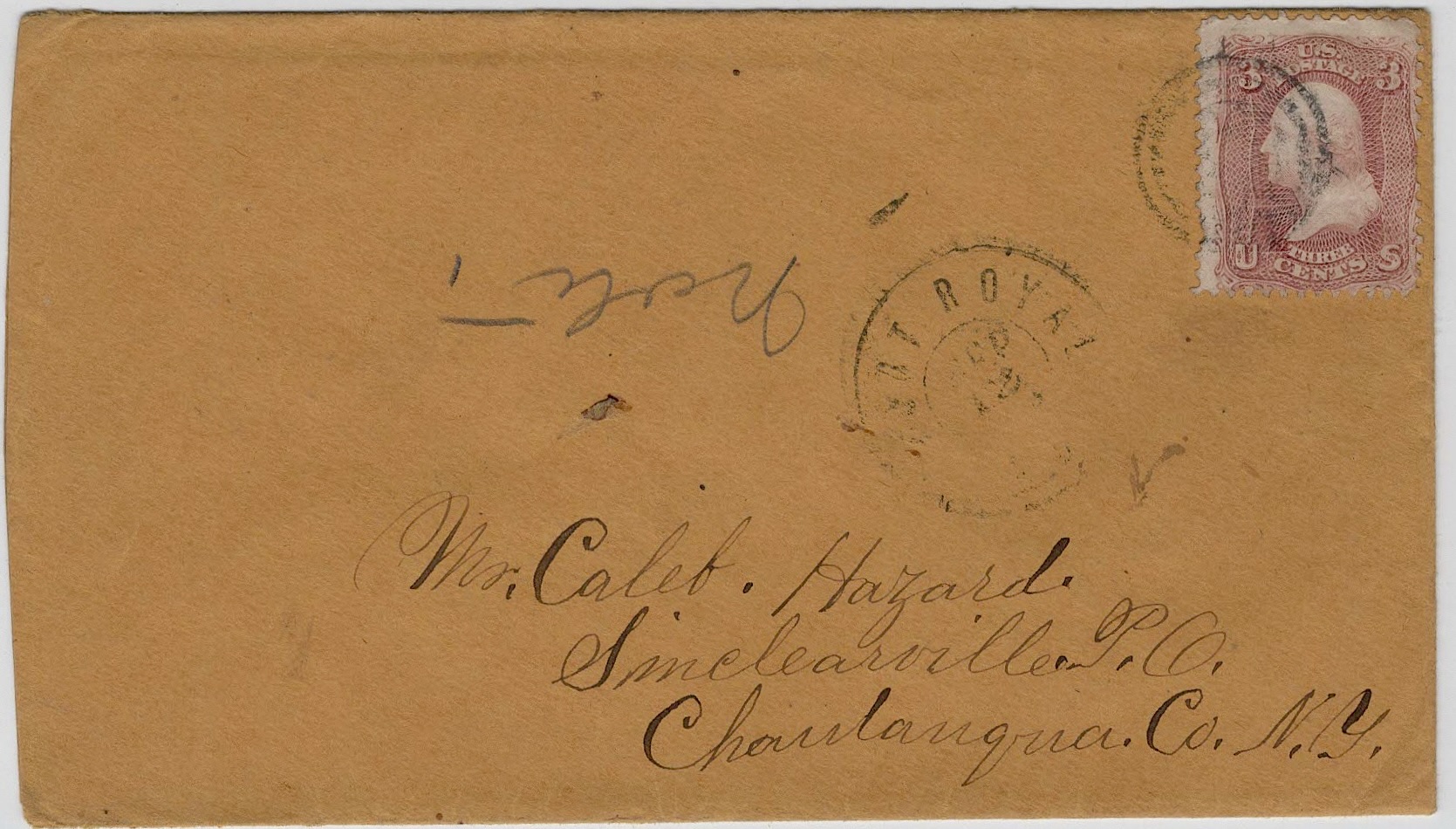
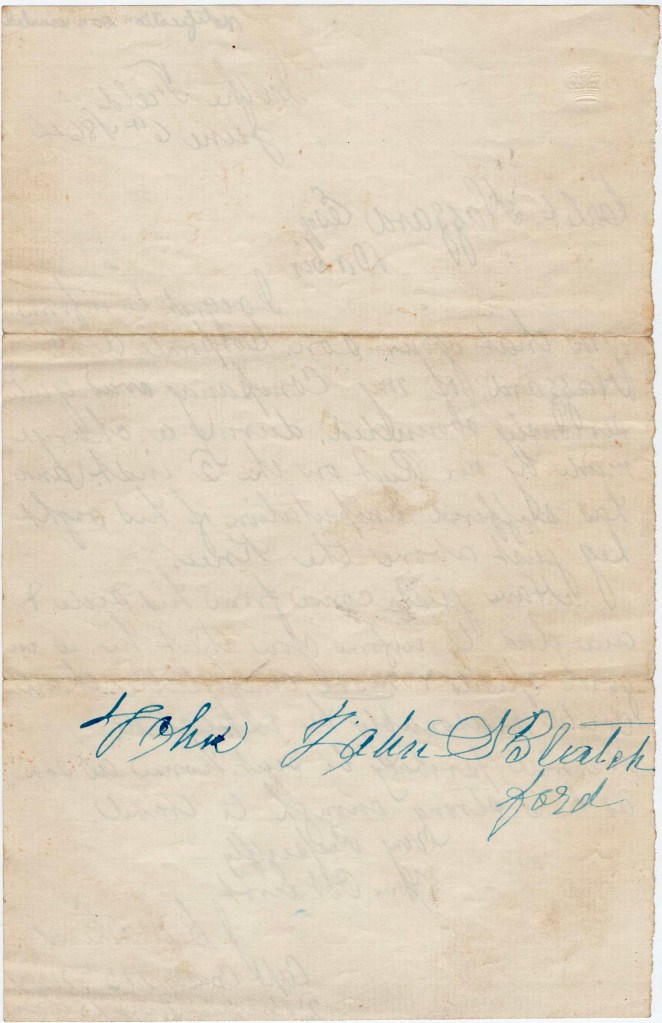
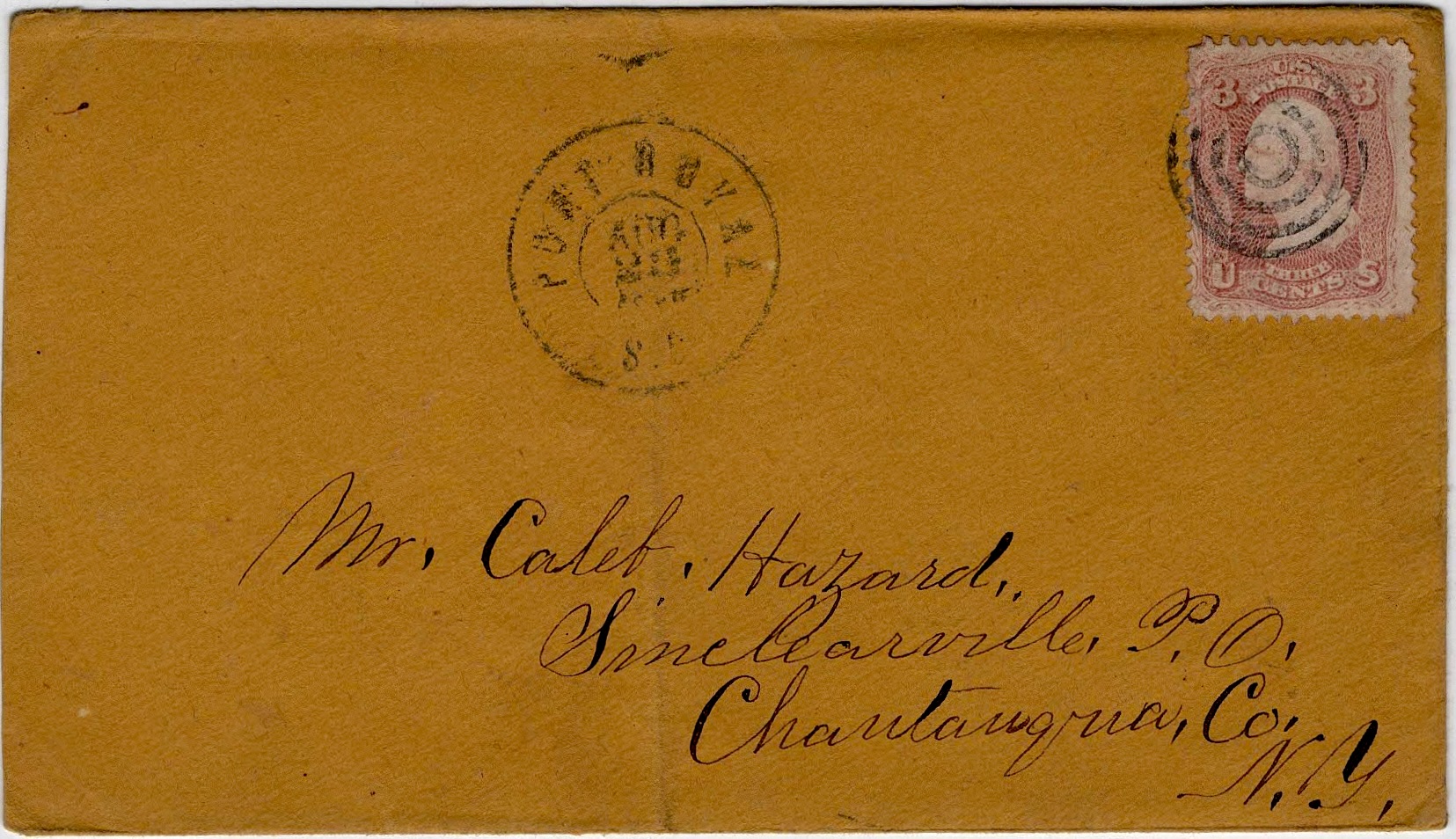
Addressed to Mr. Caleb Hazard, Sinclairsville P. O., Chautauqua county, New York
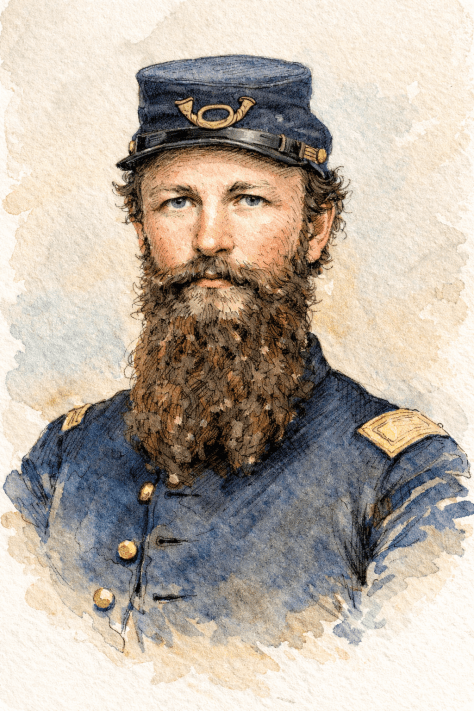
An AI sketch of Capt. Joseph S. Mathews (1832-1872) made from a grainy photograph on Ancestry.com
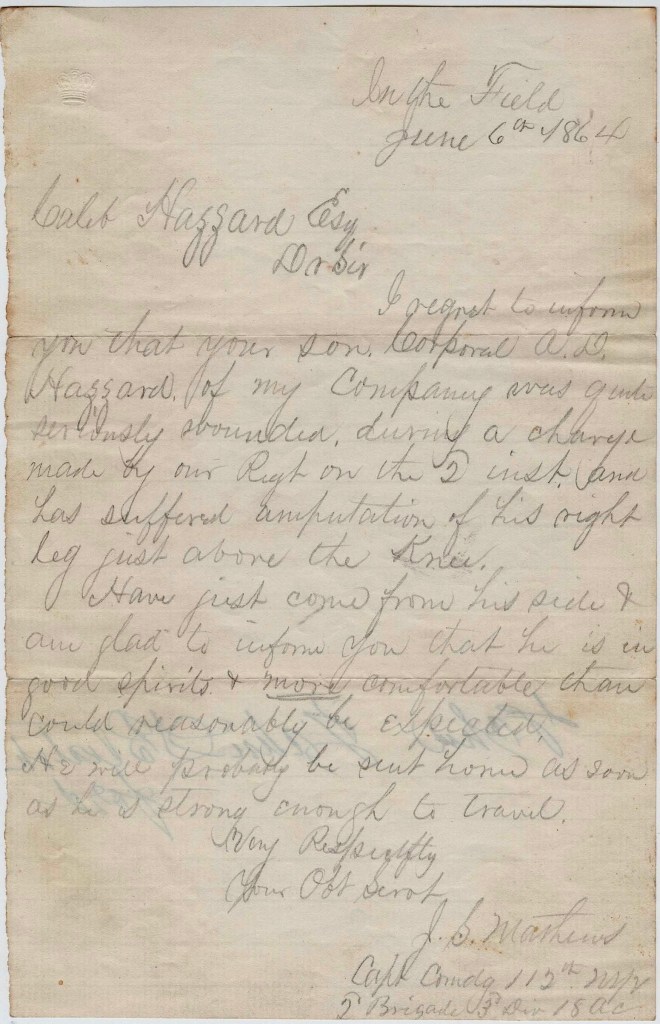
In the Field June 6, 1864
Caleb Hazard, Esq.
Dear sir, I regret to inform you that your son, Corporal A. D. Hazard of my company, was quite seriously wounded during a charge made by our regiment on the 2nd inst. and has suffered amputation of his right leg just above the knee.
Have just come from his side & a glad to inform you that he is in good spirits & more comfortable than could reasonably be expected. He will probably be sent home as soon as he is strong enough to travel. Very respectfully your obedient servant, — J[oseph] S. Mathews, Capt. Commanding 112th New York, 2nd Brigade, 3rd Division, 18th Army Corps
Letter 7
An AI sketch of Capt. Joseph S. Mathews (1832-1872) made from a grainy photograph on Ancestry.com
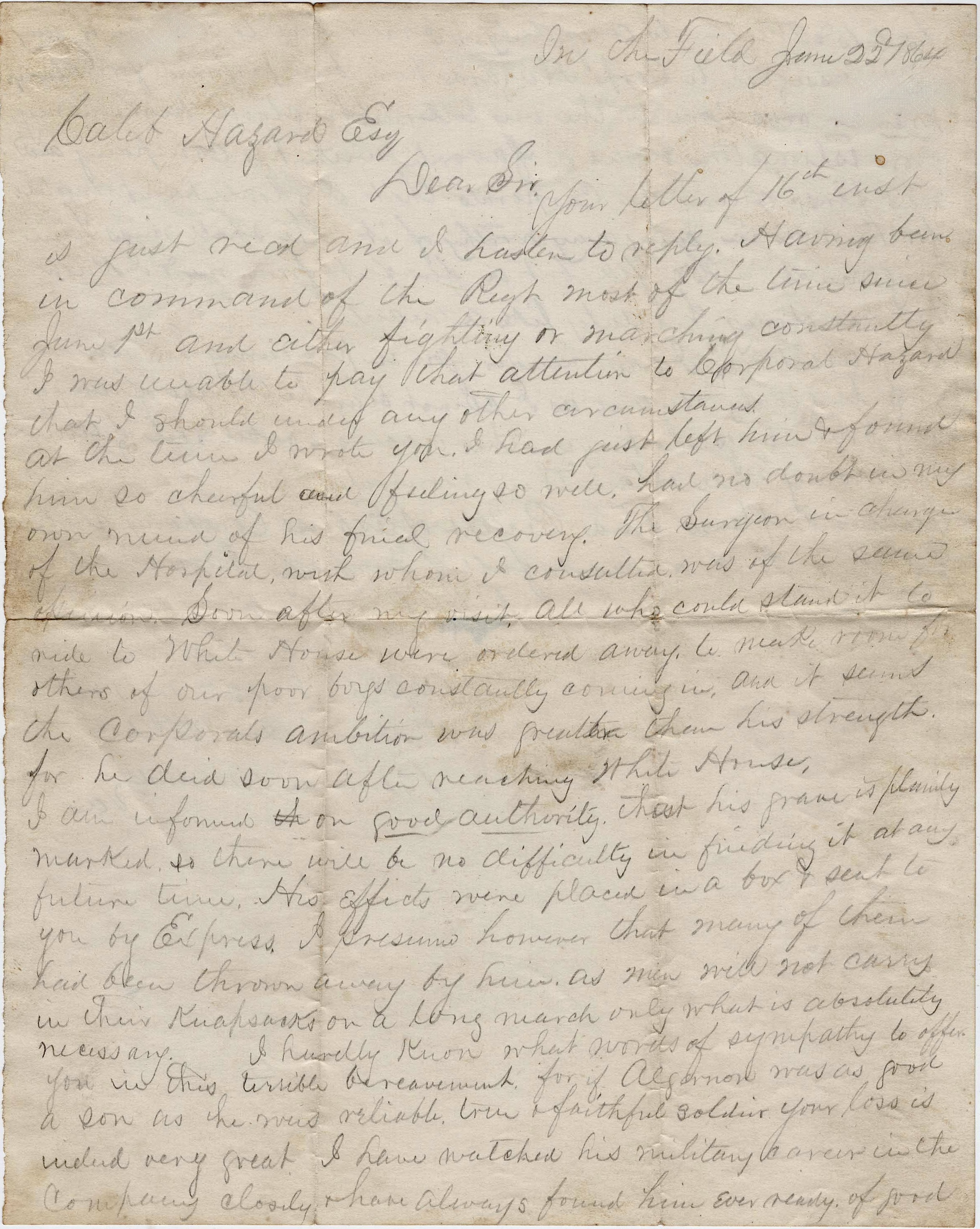
In the Field June 22, 1864
Caleb Hazard,
Dear sir, your letter of 16th inst. is just read and I hasten to reply. Having been in command of the regiment most of the time since June 1st and either fighting or marching constantly, I was unable to pay that attention to Corporal Hazard that I should under any other circumstances.
At the time I wrote you, I had just left him & found him so cheerful and feeling so well. I had no doubts in my own mind of his final recovery. The surgeon-in-charge of the hospital with whom I consulted was of the same opinion. Soon after my visit, all who could stand it to ride to White House were ordered away to make room for others of our poor boys constantly coming in and it seems the corporal’s ambition was greater than his strength for he died soon after reaching White House.
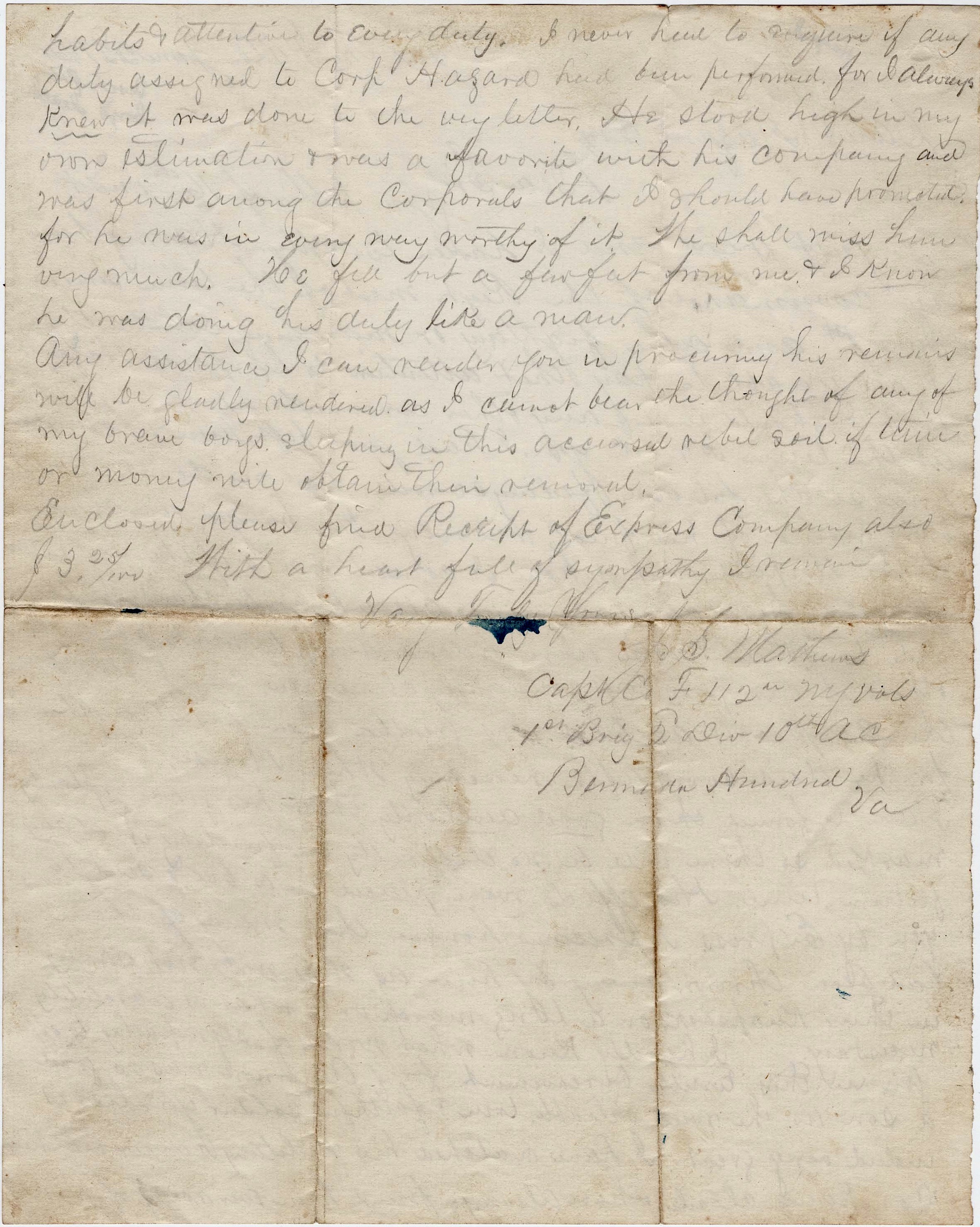
I am informed on good authority that his grave is plainly marked so there will be no difficulty in finding it at any future time. His effects were placed in a box & sent to you by Express. I presume, however, that many of them had been thrown away by him as men will not carry in their knapsacks on a long march only what is absolutely necessary. I hardly know what words of sympathy to offer you in this terrible bereavement for if Algernon was as good a son as he was reliable, true & faithful soldier, your loss is indeed very great.
I have watched his military career in the company closely & have always found him ever ready, of good habits, and attention to every duty. I never had to enquirer if any duty assigned to Corp. Hazard had been performed for I always knew it was done to the very letter. He stood high in my own estimation & was a favorite with his company and was first among the corporals that I should have promoted for he was in every way worthy of it. We shall miss him very much.
He fell but a few feet from me & I know he was doing his duty like a man.
Any assistance I can render you in procuring his remains will be gladly rendered as I cannot bear the thought of any of my brave boys sleeping in this accursed rebel soil if time or money will obtain their removal. Enclosed please find receipt of Express company. Also $3.25. With a heart full of sympathy, I remain very truly yours, — J[oseph] S. Mathews
Capt. Co. F, 112th NY Vols., 1st Brigade, 2nd Division, 10th Army Corps, Bermuda Hundred, Va.
Letter 8
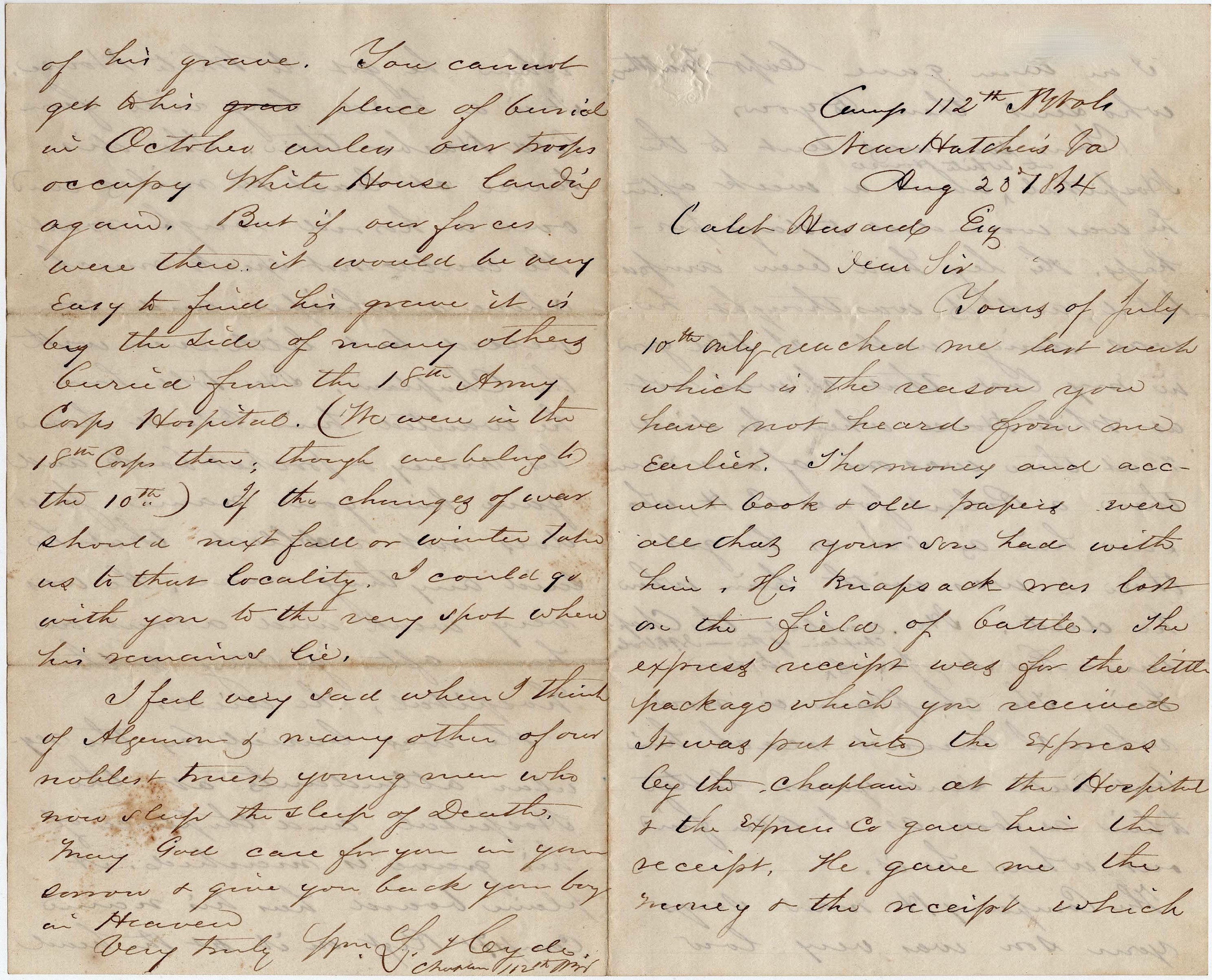
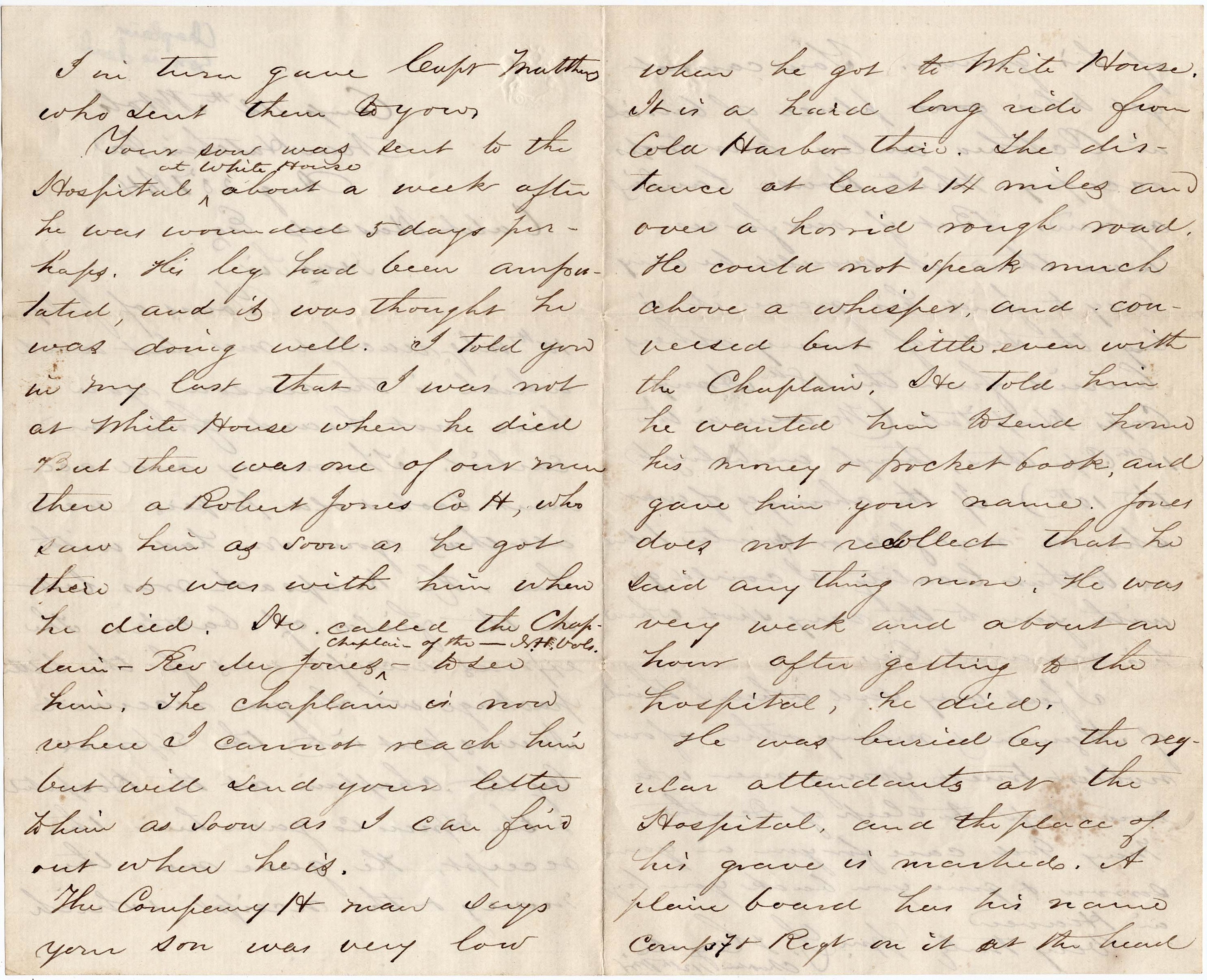
Camp 112th New York Vols. Near Hatcher’s Run, Virginia August 20, 1864
Caleb Hazard, Esq.,
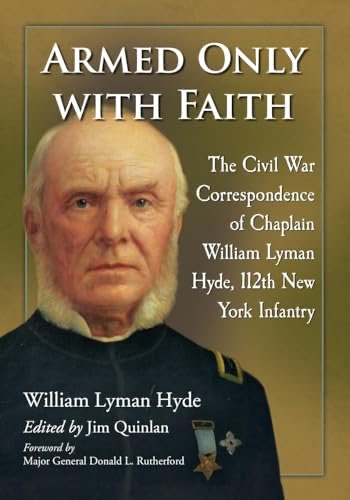
This letter was written by William Lyman Hyde, doubtless one of many that the chaplain of the 112th NY Infantry wrote to the families of wounded or killed members of the regiment.A book of the chaplains war time correspondence entitled, “Armed Only With Faith” edited by Donald Rutherford was published in 2015.Hyde also authored the regimental history.
Dear sir, yours of July 10th only reached me last week which is the reason you have not heard from me earlier. The money and account book and old papers were all that your son had with him. His knapsack was lost on the field of battle. The express receipt was for the little package which you received. It was put into the express by the chaplain at the hospital & the express company gave him the receipt. He gave me the money and the receipt which I in turn gave Capt. Mathews who sent them to you.
Your son was sent to the hospital at White House about a week after he was wounded—five days perhaps. His leg had been amputated and it was thought he was doing well. I told you in my last that I was not at White House when he died, but there was one of our men there—a Robert Jones of Co. H—who saw him as soon as he got there & was with him when he died. He called the Chaplain, Rev. Mr. Jones, chaplain of the I. H. Vols., to see him. The chaplain is now where I cannot reach him but will send your letter to him as soon as I can find out where he is.
The Co. H man says your son was very low when he got to White House. It is a hard, long ride from Cold Harbor there—the distance at least 14 miles and over a horrid rough road. He could not speak much above a whisper, and conversed but little, even with the chaplain. He told him he wanted him to send home his money & pocket book and gave him your name. Jones does not recollect that he said anything more. He was very weak and about an hour after getting to the hospital, he died.
He was buried by the regular attendants at the hospital and the place of his grave is marked. A plain board has his name, Company & Regiment on it at the head of his grave. You cannot get to this place of burial in October unless our troops occupy White House Landing again. But if our forces were there, it would be very easy to find his grave. It is by the side of many others buried from the 18th Army Corps Hospital. (We were in the 18th Corps then though we belong to the 10th.)
If the changes of war should next fall or winter take us to that locality, I could go with you to the very spot where his remains lie. I feel very sad when I think of Algernon and many others of our noblest, truest, young men who now sleep the sleep of Death. May God care for you in your sorrow and give you back your boy in Heaven. Very truly yours, — [William] L[yman] Hyde, Chaplain 112th N. Y.
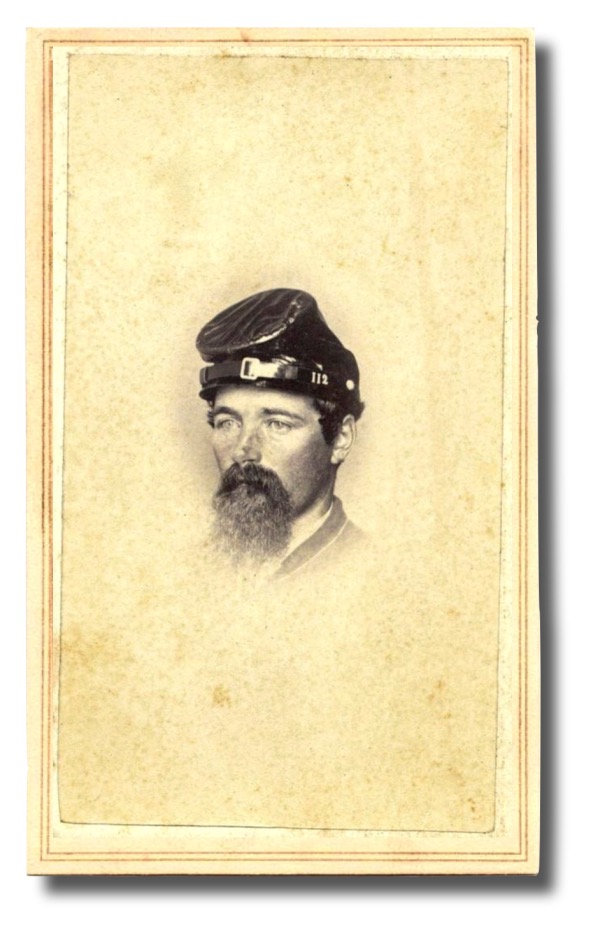
An unidentified private in the 112th New York Infantry
This diary was kept by James Stafford (1841-1864), the son of Orrin Stafford (1812-1879) and Lydia Slawson (1814-1891) of Hanover, Chautauqua county, New York. James enlisted on 10 September 1862 as a private in Co. C, 112th New York Infantry and was with his regiment until he was wounded in the fight at Darbytown Road on 27 October 1864 and died on 25 November 1864 at the Hospital in Hampton, Virginia, near Fortress Monroe.
This regiment, known as the Chautauqua regiment, was raised in Chautauqua county—the 32nd senatorial district. The companies rendezvoused at Jamestown, and were mustered into the U. S. service on Sept. 11, 1862, for three years. Col. Drake at the time of his appointment was a captain in the 49th N. Y. infantry, and was a graduate of Rochester university. He had left the pastorate of a Baptist church in West-field, N. Y., to respond to the first call for troops. The regiment left the state Sept. 12, embarking for Fortress Monroe, whence it proceeded to Suffolk, Va. It was engaged at Franklin, Zuni, and Deserted House, having 1 killed, and 1 wounded in the last named action. It shared with credit in the siege of Suffolk in the spring of 1863, where much sickness prevailed and it lost severely by disease. In June, 1863, with Foster’s brigade, 7th corps, it participated in the campaign up the Peninsula,—a campaign, trying by reason of the heat and the rapid forced marches.
The regiment was ordered to Folly island, N. C, in Aug., 1863; shared in the operations about Charleston harbor, including the siege of Fort Wagner and the bombardments of Fort Sumter. In the latter part of Feb., 1864, it sailed for Florida, encamping at Jacksonville until April 21, when it embarked with its division for Yorktown, Va. Here it was placed in Gen. Butler’s Army of the James, and assigned to Drake’s (2nd) brigade, Ames’ (3d) division, 10th corps, with which it took part in the campaign in May against Richmond, via the James river. On May 6, it disembarked at Bermuda Hundred and was engaged during the month at Port Walthall Junction, and Chester Station, Swift creek, Proctor’s creek, Drewry’s bluff, and Bermuda Hundred, losing 35 in killed, wounded and missing, the gallant and popular Lieut.-Col. Carpenter being mortally wounded in the engagement at Drewry’s bluff on May 16. In the first assault at Cold Harbor it suffered severely, losing 28 killed, 140 wounded and 12 missing. It suffered some loss during the first assaults on Petersburg, and at the mine explosion. At the battle of Fort Harrison it lost 6 killed, 38 wounded and 16 missing, and at the Darbytown road, 7 killed, 28 wounded. In Dec., 1864 it sailed with Ames’ division to Fort Fisher, N. C., where in the final assault on the works it lost II killed and 36 wounded, Col. Smith being killed while bravely leading the regiment. Its subsequent active service was at the Cape Fear intrenchments, Fort Anderson, Wilmington, and the final campaign of the Carolinas, in which it was engaged at Cox’s bridge, Faisson’s and Bennett’s house. It was mustered out under Col. Ludwick, June 13, 1865, at Raleigh, N. C.
James Stafford’s 1864 Diary
[Note: This diary is from the personal collection of Greg Herr and was transcribed and published on Spared & Shared by express consent.]
Transcription
Wednesday, May 25, 1864—Company C was sent out on picket and we remained there two nights and one day. We fired some shots the first night.
Thursday, May 26, 1864—Co. C was all day in the rifle pits. Could not hardly look up without being shot by the sharp shooters. It rained some during the day. Charlie was taken sick in the evening and went to camp.
Friday, May 27, 1864—We returned to camp from picket and got ready for to march. We went about 10 [miles?] and stopped for some breakfast. We started again and went about 4 miles.
Saturday, May 28, 1864—We marched to the landing and got on board of the boat and stayed all night in the James River. We did not have a very pleasant time and the boys found some fault.
Sunday, May 29, 1864—We started quite early for Yorktown and arrived there about 5 p.m. I did not sleep. Received orders to go to [White House Landing?].
Monday, May 30, 1864—Arrived at the White House at 5 p.m. and landed and got some [ ] and made coffee and fixed our tents for the night. it is quite a pleasant place and plenty of good water.
Tuesday, May 31, 1864—At the White House Landing this morning. We drew rations about 3 p.m. and about 4 we were on the march. We marched until about 3 a.m. the next morning. Pretty hard march.
Wednesday, June 1, 1864—We marched nearly all day and were tired out but we were ordered right into the fight [at Cold Harbor] and we charged with knapsacks on. Many of our noble [boys] fell dead and dying. Capt. Allen was killed, David S. Crowell killed, Corp. [James M.] Potter wounded and died. Col. J[eremiah] C. Drake.
Thursday, June 2, 1864—This morning we were ordered out to the front and many were killed and wounded. I was quite unwell but had to lay in the sun and the bullets came all around me but I got along and lie tonight on the ground in the rain. I have got three rails for my bed.
Friday, June 3, 1864—This morning we were ordered behind the breastwork. We remained there about one hour and then marched around. We are now resting a little. There has been some hard fighting today and in the evening the rebels charged on our works and were repulsed twice. Our regiment worked part of the night throwing up breast works. We made some good ones.
Saturday, June 4, 1864—It is quiet this morning. Not a great deal of fighting. Some picket firing and some wounded have been brought in. In the evening there was considerable firing and one of Co. H was wounded but not very bad. We were all ready for an attack but they did not come.
Sunday, June 5, 1864—Quiet early this morning. We were ordered to march and started. We went about 100 rods & stopped. We had to go on fatigue & work all night. We were sleepy enough the next morning.
Monday, June 6, 1864—We came off from fatigue this morning and went to sleep and at night we were ordered out on picket. There was not much firing in the evening.
Tuesday, June 7, 1864—There has been a great deal picket firing today and the rebels have been shelling us this afternoon. I received two letters from home. One man was hit with a shell. Broke both legs, smashed bones. I think he will not live. He began to cry, “My wife and my children.” Poor fellow.
Wednesday, June 8, 1864—We lay here in camp. Did not have duty to perform. At night we had roll call and lay down by our guns & went to sleep. I did not feel very well from a cold I had.
Thursday, June 9, 1864—We had inspection at 8 o’clock this morning and expected to march but did not. We remained in camp all day. At night we were ordered to get ready for picket but we got on the reserve and it was a pretty good place.
Friday, June 10, 1864—We were in the rifle pits all day but it was a good place to stay and at night we were relieved and came to camp and had a very good rest. The pickets did not fire much either night.
Saturday, June 11, 1864—This morning they inspected our guns and cartridges and we did expect some to march but did not. We remained in camp all day. I saw some of the 49th boys. The rebels threw some shells but did not harm.
Sunday, June 12, 1864—We had inspection again this morning and we are to start at 10:30 o’clock a.m. to march. The rebs are shelling us here. We will be glad to get away from here but we may find as bad a place. I cannot tell where we will go.
Monday, June 13, 1864—We are on board of the transport going up the James River, I think, to Bermuda Hundred or near there. I got off from the boat to get some cheese and the boat left me and I came on another boat. I was not far from my brother but cannot get to see him.
Tuesday, June 14, 1864—We got to Bermuda Hundred about 9 a.m. and I went ashore and got something to eat. I was not very well that day. We marched from the landing and stopped for the night but did not sleep.
Wednesday, June 15, 1864—We marched here to the front this morning. We are near to the City of Petersburg. We can see it from here. I think we [ ] lying in the woods, We don’t know what they will do with us.
Thursday, June 16, 1864—We advanced on the rebels and drove them, taking three forts & one or two lines of breast works. We have a splendid view of the City. At night we were ordered to the front and we thought we would have to charge but did not.
Friday, June 17, 1864—We lay upon the hill until nearly night when we were ordered to get ready to march and we started and marched most all night. Got here this morning. We are going to Butler’s front.
Saturday, June 18, 1864—We got to this camp last night. We may remain here two or three days. The 13th Indiana will go home tomorrow, their time being out. They feel pretty god to think that they will be done with war for a short time at least.
Sunday, June 19, 1864—This morning the 13th [Indiana] started for home and before they went, we listened to a few remarks from Chaplain Hyde on the death of our Colonel J. C. Drake and then we were ordered to march and we cheered the boys as they passed our camp.
“Yesterday we moved from the rear to this place. Just before we started a part of the 13th Indiana Regiment ¹ whose time is now expired were formed in line with their officers and marched past the other regiments of the brigade and received three cheers from their comrades in arms. Our regiment has been brigaded with them ever since we were at Suffolk and had formed quite an attachment for them. It is pleasing to know that although the duties of the army are now great, yet the government can afford to discharge men when their term of service expires & it is to be hoped that when about a year and three months hence our regiment will have served out its three years, there will be less need of such mighty hosts marshaled in battle array as there is now.” — Samuel Bush, Co. K, 112th New York, 20 June 1864.
Monday, June 20, 1864—We are now encamped near where we were before. We will not stay here long for we have got a very place. The water is good.
Tuesday, June 21, 1864—We are here yet in camp. The days seem pretty long for I have been sick for two or three days. I have wished many times I was where I could get something that I could eat & drink at night. We had to march over to the left of where we first camped.
Wednesday, June 22, 1864—We came to this camp last night. Our company was sent out on picket. There is no picket firing now all along the line and we can see & talk with the rebels and when they want to open their artillery, they will tell our men to get down for they are going to shoot.
Thursday, June 23, 1864—This is a very beautiful morning. I am sentinel on a cartridge box in a bomb proof and there are more flies here than there are rebs in the southern army. Our regiment has orders to march right away. I cannot keep up.
Friday, June 24, 1864—This morning I am about 1 mile from where we were last night. We don’t know where the regiment went to, We can go no further. We have just heard that our regiment had taken some prisoners. I think they said two hundred.
Saturday, June 25, 1864—We stayed in the grove until nearly night and then went back to the camp that we had left. We stayed all night and then moved up where Capt. [Ephraim A.] Ludwick [of Co. K] was.
Sunday, June 26, 1864—This morning we are to move up to where Capt. Ludwick is. This is a beautiful Sabbath day. I wish I could be at home to attend church. It would be a great privilege.
Monday, June 27, 1864—We came up where the Captain was last night. It is quite pleasant here. We are ordered out on picket. I am feeling some better. We have drawn four days rations today. We must get ready for picket.
Tuesday, June 28, 1864—We are out on picket. It is all still out here. No firing night or day and the boys exchanged hard bread for corn cake. I must get ready for we are to march to the regiment. We got started about three o’clock p.m.
Wednesday, June 29, 1864—We got here about dark and our regiment was in the trenches, and we were ordered back a short way and stayed all night and all day. At night we went at the front and then we were relieved and came to the right. The shells are plenty.
Thursday, June 30, 1864—We remained in the trenches till nearly night when we were ordered to leave our knapsacks and get ready to move at a moments notice. We thought that we had got to charge but we did not. We had shovels and picks and we will act as reserve while another Brigade made the charge.
Friday, July 1, 1864—We came again to the front. Co. C & H were ordered out on picket and i and some others had to go out as videttes between our pickets & the rebels while our men threw up earthworks. We were not fired on.
Saturday, July 2, 1864—We were relieved from picket and remained in the trenches all day. Our cook was shot in the arm at noon while bringing coffee.
Sunday, July 3, 1864—We remained in the trenches all day [illegible] killed and one was wounded in the leg—flesh wound. We was relieved. We went to the creek and washed our clothes.
Monday, July 4, 1864—We did expect to hear more noise on the Fourth [of July] but it was quiet. Still more than on some other day before. We had a privilege of washing our shorts and socks.
Tuesday, July 5, 1864—We remained on the reserve all day. At night we went into the trenches and we sent out some pickets. I did not have to go out this time. There was no picket firing during the night.
Wednesday, July 6, 1864—We are still in the trenches. Have not had any wounded but one of Co. A [Lauren Arnold] was killed by a sharp shooter shot in the heart and died in a few minutes. We were relieved at night and came to the rear.
Thursday, July 7, 1864—We were at the rear all day. We expected to go into the trenches but will not have to go. The shells came and did some harm. One man was badly shot. He lost one leg and may not live.
Friday, July 8, 1864—We are still back here but will have to take the trenches tonight. I have not been well today, About 5 p.m. the rebels made a scare and we were called out. We then came to the front.
Saturday, July 9, 1864—We are in the front works this morning. Our company was out on picket but I did not go. Was not well. The [rebs] have thrown some shells but have not hurt any of our men. The sharp shooters improve the time and they shoot close.
Sunday, July 10, 1864—We are still in the trenches. Our company have been relieved from picket. This is a bad place to lay all day in the pit. Not much air. I hope that we may be relieved tonight and i think that we will.
Monday, July 11, 1864—We were relieved last night and came to the rear short distance. We can now get some rest. We are glad that we did not have a man hurt. Other regiments lose some every day but we are quite fortunate.
Tuesday, July 12, 1864—We lay here today back from the front a short distance. We will have to go to the front tonight and remain there 48 hours. I dread going since I don’t feel very well but all must go and there is no other way.
Wednesday, July 13, 1864—We came to the front last night. We are to move out today from the shell drop where we are now. We went back about 100 rods. We are to go into the pits tonight. The rebels don’t fore so much at night.
Thursday, July 14, 1864—We remained in the trenches all day and at night we were relieved and came back about 50 rods from the front. The shells come over our heads but none of our regiment was hurt.
Friday, July 15, 1864—Today we are in the second pit. We have not had any mail for two days. We go further to the rear tonight. We hope to leave this place soon. We are tired of these pits.
Saturday, July 16, 1864—Lay all day in this second line of works but came to the front last night. We will be relieved tomorrow night.
Sunday, July 17, 1864—We came to the front here last night. The rebels have fired but very little today and it has been very quiet along the lines. We will have to stay until tomorrow. Then we will be relieved.
Monday, July 18, 1864—We were out to the front all day but at night we were relieved and came down to the creek a short distance where we can stay 48 hours and then we will have to go to the front again.
Tuesday, July 19, 1864—We are having some rain today. It has rained quite hard most all day. I have got pretty wet and wish it would stop for a while. this will be a bad night for me to sleep with my clothes wet.
Wednesday, July 20, 1864—This has been a good day and now the sun is shining bright and we will not have to take the front tonight and stay 48 hours.
Thursday, July 21, 1864—We are at the front today. Came in here last night. There is not much firing today and it is quite cool after the rain. Our men have to keep awake half of the company half of the night, and they often do.
Friday, July 22, 1864—Still at the front. I received two letters from home. Tea and $2 in money. I was glad to get the same and can now get some things that will do me good.
Saturday, July 23, 1864—We were relieved from the front last night and came to the rear, We expect to go to the front Sabbath evening again to stay 48 hours more.
Sunday, July 24, 1864—We were ordered up on the hill from where we were and will fix our camp. We will not have to go to the front as soon as we expected and I am glad of it.
Monday, July 25, 1864—We put up our tents last night and it rained quite hard. The shelter tents did not keep us dry. We got some wet and quite cold before morning.
Tuesday, July 26, 1864—Today we had inspection. We go to the front tonight and stay there 48 hours and then we come off and stay four days. Some better than it was.
Wednesday, July 27, 1864—We went to the front after supper. We got shelled pretty hard the first night but no one hurt while in the pits. One hit while coming to the front.
Thursday, July 28, 1864—We are still in the pits. We will be relieved this night and hope to have a good rest. We are to have four days off after this fun.
Friday, July 29, 1864—We came from the front last night and now we can rest some time. The order has come for to be ready to move wen wanted and we have got to go.
Saturday, July 30, 1864—We marched last night to the left of our lines. The object is the fight after the fort is blown up—the one that undermined. I have just felt the ground tremble and I saw the dirt fill the air.
Sunday, July 31, 1864—We marched back from the left near where we was and went to the front Saturday night.
Monday, August 1, 1864—This morning we cleared off the ground for our tents, put them up. We may stay here a few days. & we don’t know how long.
Tuesday, August 2, 1864—We moved our tents back a little from where they were and cleared off our main ground where we were and we are glad to get back where we are now.
Wednesday, August 3, 1864—Today I am on picket. Can see the Johnnys quite plain and could count the buttons on their coats of those who have yet got them, but some have neither coat or buttons.
Thursday, August 4, 1864—This morning I am in camp. Came off from picket last night, Had a good time while out. No shooting on either side, night or day.
Friday, August 5, 1864—Today I am on fatigue burning logs and brush. We think that it is hot enough to work in the sun without working in the fire. I have got to go on picket tonight.
Saturday, August 6, 1864—I am on picket. Did not sleep much last night and am some sleepy now but cannot sleep in the day time worth one cent.
Sunday, August 7, 1864—We had inspection this morning and after that we had services. Chaplain [William L.] Hyde preached to us a short sermon.
Monday, August 8, 1864—Today I am in camp and am busy doing something all of the time. We are cleaning our camp and it is a great deal of work.
Tuesday, August 9, 1864—I am still in camp but will go on picket tonight. I have to go every time they are called from the company, but picket is not so bad here as at Petersburg.
Wednesday, August 10, 1864—Today I am on picket. We are [ ].
Thursday, August 11, 1864—Today I am on guard. We have camp guard yet nut not as many as we used to have. Ten on a relief now.
Friday, August 12, 1864—I came off from guard this morning and have been walking around all day and I am tired enough. I did not get much sleep.
Saturday, August 13, 1864—We have marching orders. We are to be ready with three days rations. We don’t know where we will go.
Sunday, August 14, 1864—We are on picket on the extreme left. The rebels are quite tame. We get water from the same spring and they exchange papers with our boys. We expect to be relieved tonight.
Monday, August 15, 1864—We are at the breastworks this morning. We came here last night at 12 o’clock after troop went away from here before we came. We were near where we were encamped when we first came to this place.
Tuesday. August 16, 1864—Today we on picket. We came out last night. I am near where I was the night of the 25th and 26th [May] when we left this place for Cold Harbor.
Wednesday, August 17, 1864—We are in from picket & will go out again soon for there are not many men left here and one Brigade will have to do the most of the duty.
Thursday, August 18, 1864—We are out on picket again today right in front. We will remain here 24 hours and then will be relieved by our men & detail from the regiment.
Friday, August 19, 1864—We will go to camp tonight. It was raining and we was wet, blankets [illegible].
Saturday, August 20, 1864—We had inspection this morning in the rain. We will be mustered for six months pay the last of this month and then I hope we will get our pay we want very much.
Sunday, August 21, 1864—I was on guard in the day time but was relieved to go make charge on the rebels works. We went but did not charge and the boys felt pretty well about it. We did not want to charge.
Monday, August 22, 1864—I was on guard and because we did not stand last night, I shall not have to go out on picket in two days.
Tuesday, August 23, 1864—I had to stand on post [ ] and then I was relieved for to get my breakfast and was dismissed when the new guard came.
Wednesday, August 24, 1864—I came out on duty today…I am so tired as though I had a worked. We have to get up at 3 o’clock in the morning and go one mile to the breastworks.
Thursday, August 25, 1864—This morning our picket was attacked, Some of them captured. Lieut. [George F.] Mount [of Co. K] was mortally wounded and died. I am for picket tonight.
Friday, August 26, 1864—We came from picket at dusk. We had a very good time out on picket. The rebs exchanged papers with our men and all passed off still and pleasantly.
Saturday, August 27, 1864—We started for Petersburg and got near there about noon and stopped and got some dinner and stayed until sunset. We are to go on the right. We had 4 men taken by the rebels on the 25th. 15 of our regiment.
Sunday, August 28, 1864—We are in the trenches today. We came here last evening. We have a better place than when we were here before. I hope that we may remain here for some time.
Monday, August 29, 1864—We are still in the pits. We will stay three days and then go to the rear and rest a little.
Tuesday, August 30, 1864—We will be relieved tonight. We have witnessed some hard shelling this evening. The relief has not come. I hope they won’t keep us waiting much longer than usual.
Wednesday, August 31, 1864—We are at the rear today and will be mustered for 6 months pay. I hope that we may get it soon for we are out of money.
Thursday, September 1, 1864—The first time is passing fast away and soon winter will be with us. I hope that it won’t be as cold as sometimes is. We will have more cold weather than last winter, I think.
[next entry]
Wednesday, September 28, 1864—We arrived at Deep Bottom before daylight and marched to the front. The first charge was made by the Colored men. They lost heavy. We then went on and our regiment went into two charges and lost some men.
[next entry]
Monday, October 17, 1864—This forenoon we had to drill. We drill this afternoon. I will write home and send some money ($25.00).
[next entry]
Friday, October 21, 1864—I am out on picket and hope to be relieved soon. Last night was a cold night. We had no fire. We received some good news by telegraph of Sherman’s success.
[next entry]
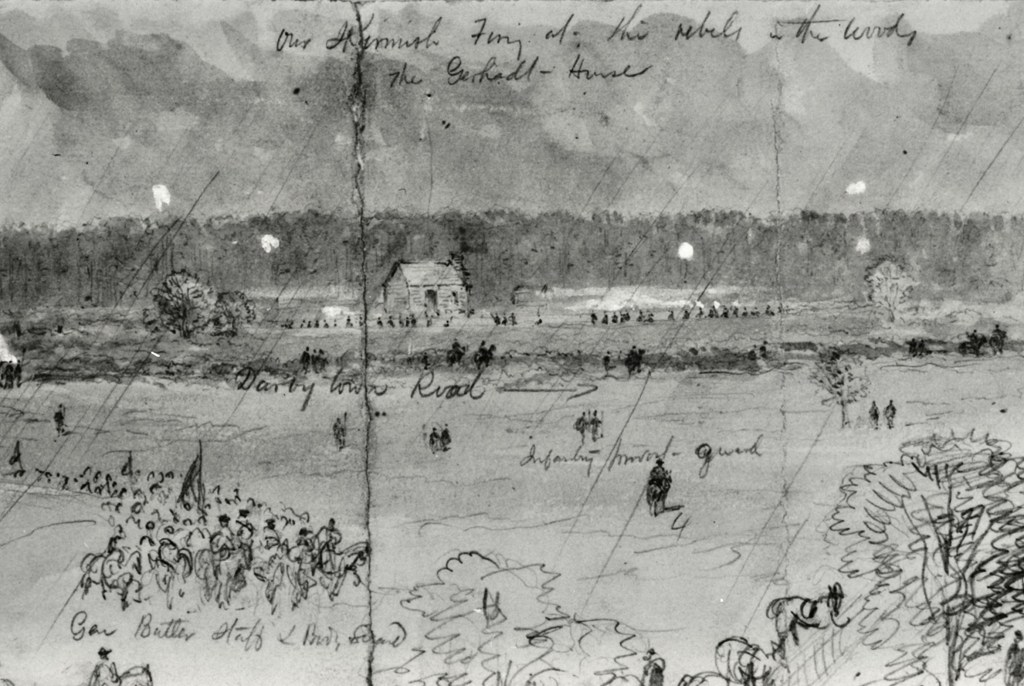
Waud’s sketch of the fighting on Darbytown Road 27 October 1864 where Stafford informs us he was wounded “before I had fired once.”
Thursday, October 27, 1864—We were ordered into a charge about five o’clock and I was wounded before I had fired once. I walked about one mile and got to the ambulance and lay on the ground all night.
Friday, October 28, 1864—My wound was not dressed until about three o’clock and soon after I was moved to another ward and stayed there all night and then come to the Base Hospital.
Saturday, October 29, 1864—I have had a very good place here. I shall go to Fortress Monroe today.
[No more entries]
[Editor’s Note: The following was written in the “Memoranda” Section in the bank of the diary.]
Col. J[eremiah] C. Drake was mortally wounded [at Cold Harbor]. I helped to carry him from the battlefield. Sergeant [Loren] White, Co. K, was killed and many of that company and many of each company of our regiment. Charles O. Warner [of] Co. C [was] wounded in the leg—flesh wound. Almon Sloan [of Co. C was] wounded mouth and arm. Newell B. Richardson [had] one finger shot off. Lewis Scofield was wounded in the leg [and later died]. Warren Kingsland [of Co. c] was wounded in the breast bad. John G. Paschke [of Co. C was] wounded in the arm. Corporals [Simeon L.] Allen and [Pattie?] killed. David S. Crowell [of Co. C was] killed. Joseph Barna [was] missing. O[liver] C. Myers [of Co. C was] missing. Frederick D. Phillips Missing.



 Spared & Shared 23