
The following letter was written by William Fletcher Lehew (1821-1892), son of Thomas Lehew and Catherine Fletcher of Zanesville, Ohio. On 28 October 1841, William and Mary Roberts were married in Muskingum County, Ohio. In 1850, census records show William and wife Mary living in Union Town, Newton Township, Muskingum County, Ohio. By 1857, William and Mary had moved with their four children from Ohio to Henry County, Iowa.
In the fall of 1861, at the age of 41, William F. Lehew and his son Thomas left Henry County and traveled to Davenport, Iowa. On September 18, 1861, William enrolled into the 11th Iowa Volunteer Infantry and was then mustered into Co. G on 15 October 1861. During this time, William was elected to the rank of Lieutenant. From September 15 through November 15, 1861, the 11th Iowa was equipped and drilled at Camp McClellan, Davenport, Iowa. On November 16, 1861, Co. G left Davenport on the Steamer “Jennie Whipple” and proceeded to St. Louis, Missouri.
Lt. Lehew and his company were quartered at the Benton Barracks from November 19, 1861 to December 9, 1861, when the regiment left St, Louis and marched to Jefferson City, Missouri. Lt. Lehew was present with his company during its campaign in Missouri during late 1861 and early 1862. In the spring of 1861, Lt. Lehew, along with Co. G participated in the Battle of Shiloh, Tennessee. After the battle, Lt. Lehew was sent to the hospital with intermittent fever followed by camp diarrhea and piles. He was treated by the Regimental Surgeon William Watson, and on June 9, 1862, sent a letter of resignation to Major Abercombia, Commander of the 11th Iowa. On June 11, 1862, Lt. Lehew’s letter of resignation was signed by Major General U.S. Grant at the Headquarter of the Army of the Tennessee. He then returned to Iowa where he spent the rest of the war.
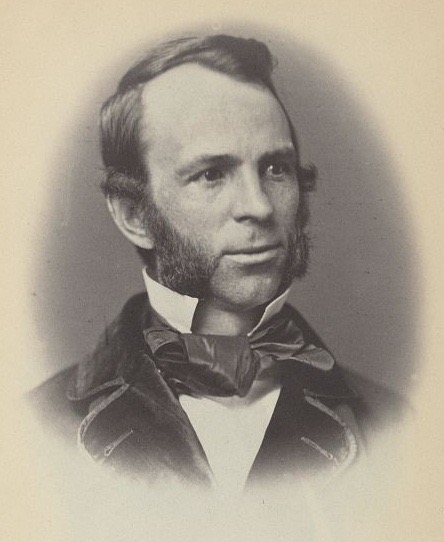
William wrote the letter to Samuel Sullivan Cox (1824-1889), a contemporary of William’s who also grew up in Zanesville, Ohio. Samuel attended Ohio University at Athens and then transferred to Brown University where he delivered speeches in support of temperance and Fourierism and in opposition to abolition of slavery. He graduated in 1846 but left the college with negative feeling about Yankees. He practiced law for a time in Ohio after college but in 1853 purchased a controlling interest in the Ohio Statesman (a Democratic paper in Columbus) and pursued journalism and politics. In 1856, Cox narrowly defeated the Republican candidate for a seat in the US House of Representatives as a Democrat and supported Stephen A. Douglas’s popular sovereignty principle. Reelected to Congress, Cox initially supported the Lincoln Administration but opposed the evolution of the war from one of merely preserving the Union to one of liberating the slaves. In 1864, he joined with the Copperheads to oppose Lincoln’s reelection.
T R A N S C R I P T I O N
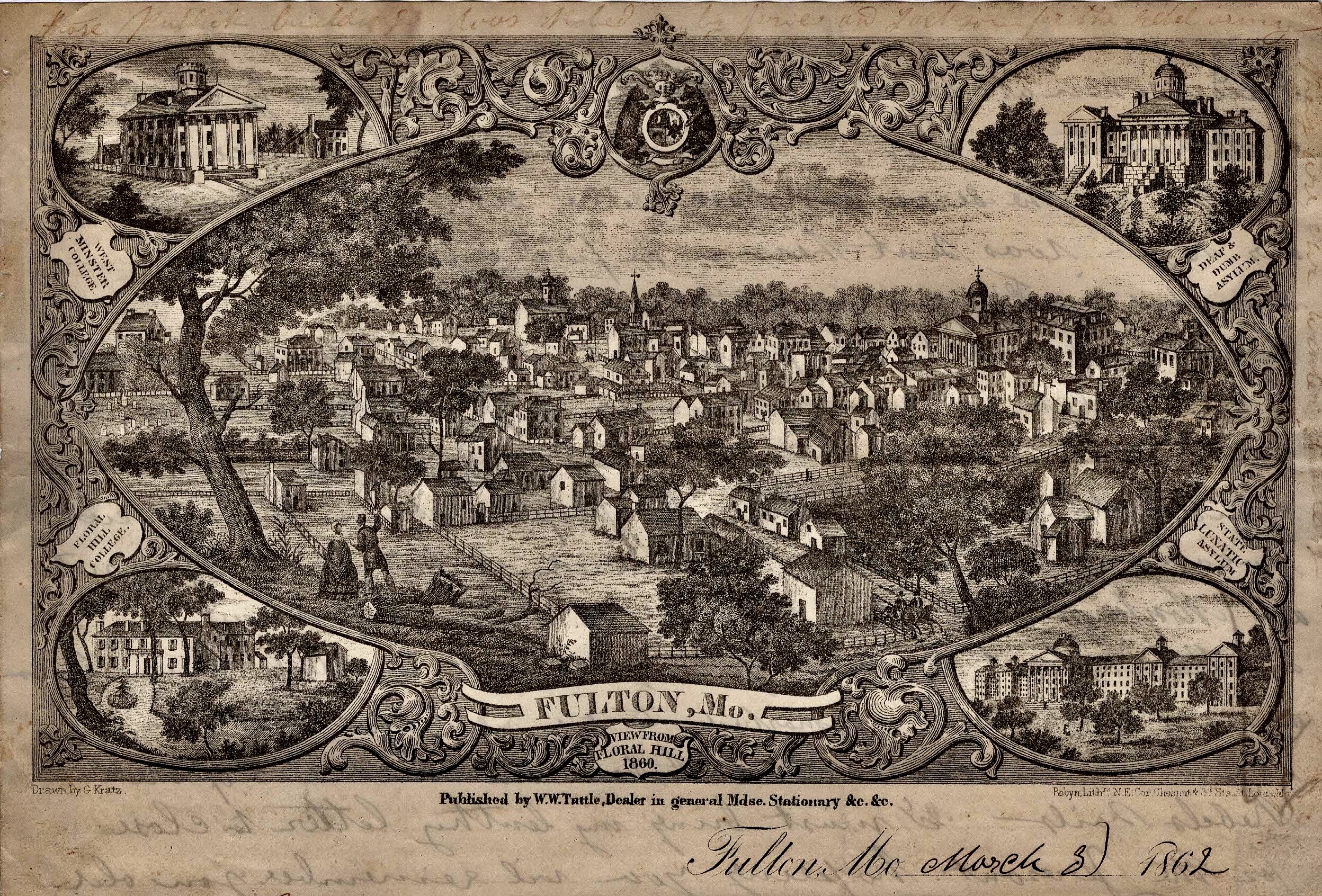
Fulton, Missouri
March 3, 1862
Mr. S. S. Cox, dear sir,
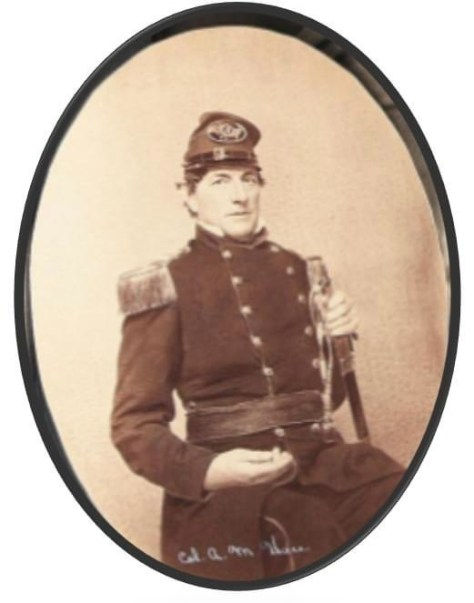
Having learned through the papers that you are still in Congress and that you are exerting yourself in defense of the administration, Gen. McClellan and the army, I would like to congratulate you on your success and I would say to you without flattery that your speech in reply to Mr. Gurley had a telling effect out here in the army on the old croakers. Our old Col. A[braham M.] Hare (by the by is a friend of yours). He thought it was just the thing we wanted and the facts is, the policy of the course you advocated is developing itself to the joy of people every day. I hope you will persevere in the ways of well doing until this wicked rebellion is crushed out and peace shall reign throughout all the land.
With reference to my whereabouts, I am here in the capacity of a soldier in the Eleventh Iowa Regiment of infantry, second in command of Co. G from Henry county, Iowa. I live when at home near Mt. Pleasant, Henry county, Iowa, a neighbor to the Hon. J[ames] Harlin. I have been over six months in the service and have seen service. Our regiment was sent here on the first of January and have succeeded in the purpose for which we was sent.
“Quite a change has come over the people within the last few weeks. One thing they have learned is that the North is not all Monkeys nor Nigger stealers or Rabid Abolitionists and that it is not the object of the government to steal their Negroes…”
1st Lt. Wm. F. Lewhew, Co. G, 11th Iowa Infantry
Secession has nearly all played out here which was one of the worst holes in Missouri. A number of prisoners that we have want to go into the service of the U. S. Government. Quite a change has come over the people within the last few weeks. One thing they have learned is that the North is not all Monkeys nor Nigger stealers or Rabid Abolitionists and that it is not the object of the government to steal their Negroes, as one of Price’s Majors remarked to us yesterday that Gen. Halleck’s last order had taken the wind out of the Rebel’s sails. 1
I must bring my lengthy letter to a close for the present hoping you will remember your old friend that is fighting for our once glorious country and please send me such communications and public documents as you think suitable here and any communication or information that I can do for you will be done cheerfully by your humble servant.
— 1st Lieutenant Wm. F. Lehew, 11th Regt. of Iowa Vol. , Co. G, Fulton, Calloway county, Mo.
1 Gen. Henry W. Halleck commanded the Department of the Missouri early in the war. On 20 November 1861, he issued General Order No. 3 which directed that no fugitive slaves be permitted to enter the lines of any Union camp or forces on the march. The order was met with opposition from Abolitionists and some members of Congress who felt it went against the Union cause.


 Spared & Shared 23