Category Archives: 11th Maine Infantry

1863: Abner Coburn to Nathan F. Blunt

The following letter was written by Abner Coburn (1803-1885), the 30th Maine Governor. He wrote the letter at the behest of a Vassalboro constituent, Rev. James Evelyn Mills—a Baptist preacher—who had a son serving in the the 11th Maine Infantry but hospitalized in Beaufort, North Carolina, in February 1863. The letter was addressed to Dr. Nathan F. Blunt who left his practice in Bingham, Maine, to volunteer as an Army surgeon. The sick soldier was Horace Stanton Mills (1843-1923), a sergeant in Co. G, 11th Maine Infantry. Horace survived his illness and was later taken prisoner at Fort Gregg, Virginia, in April 1865 but released soon after. Some of Horace’s Civil War artifacts are on display at the North Berwick Historical Society.

Also transcribed and posted with this letter is one written by Horace’s father directly to Surgeon Nathan F. Blunt. See Letter 2. We learn from that letter that Rev. Mills had another son die of disease in January 1863 which no doubt heightened his concern for Horace lest he suffer the same fate. A study of the Mills family tree reveals that the family had yet another son, not mentioned in the letter, named Albion B. Mills (1846-1863) who enlisted in Co. E, 16th Maine Infantry, in August 1862, and was mortally wounded at the Battle of Gettysburg.
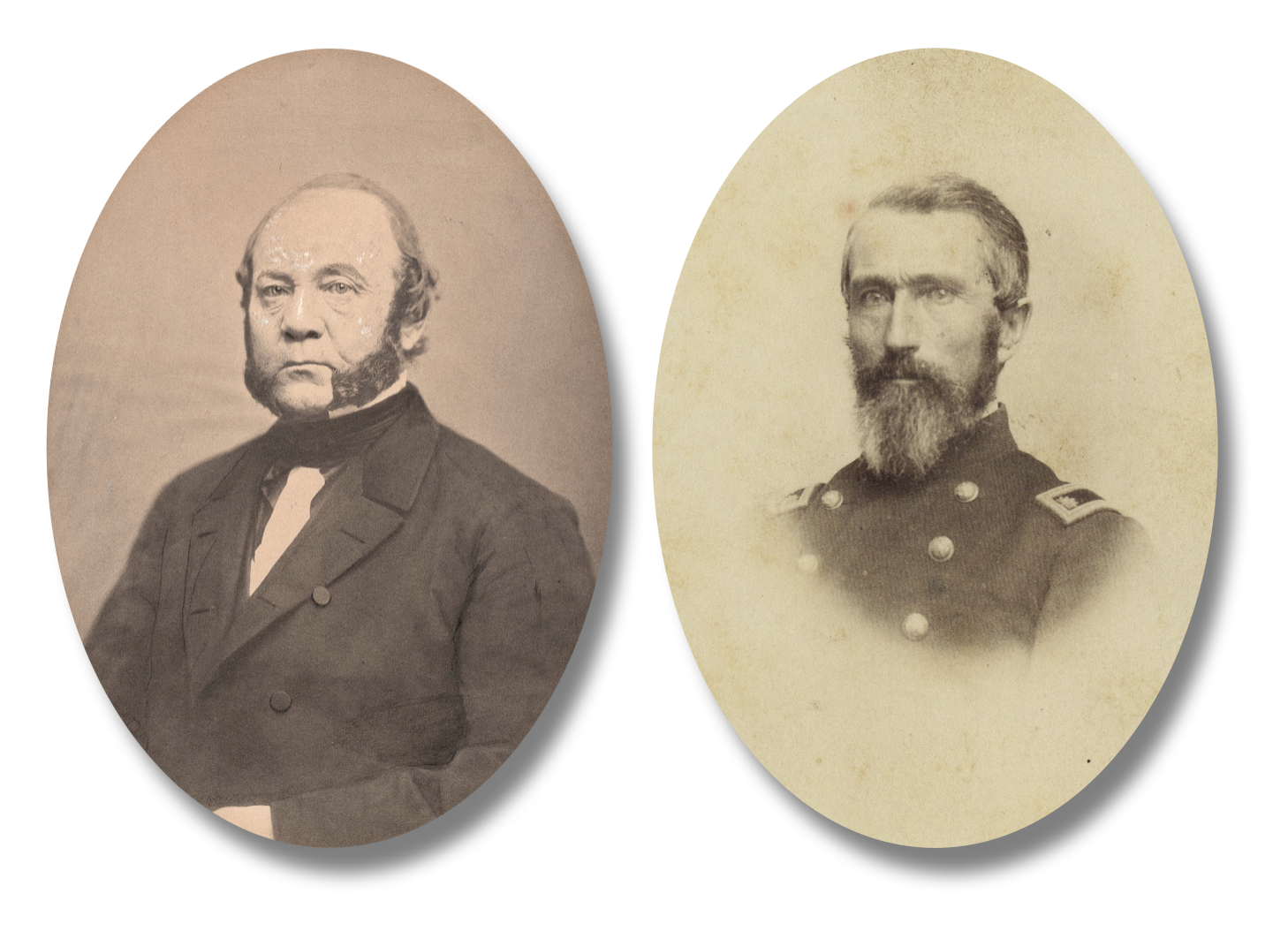
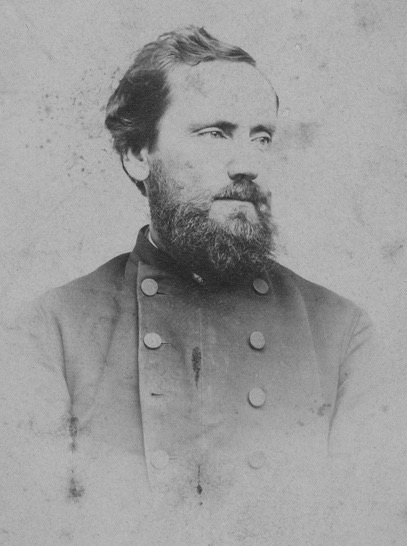
Left: Abner Coburn, 30th Governor of Maine.; Right: Nathan F. Blunt, Surgeon of the 11th Maine Volunteer Infantry [Maine State Archives]

Letter 1

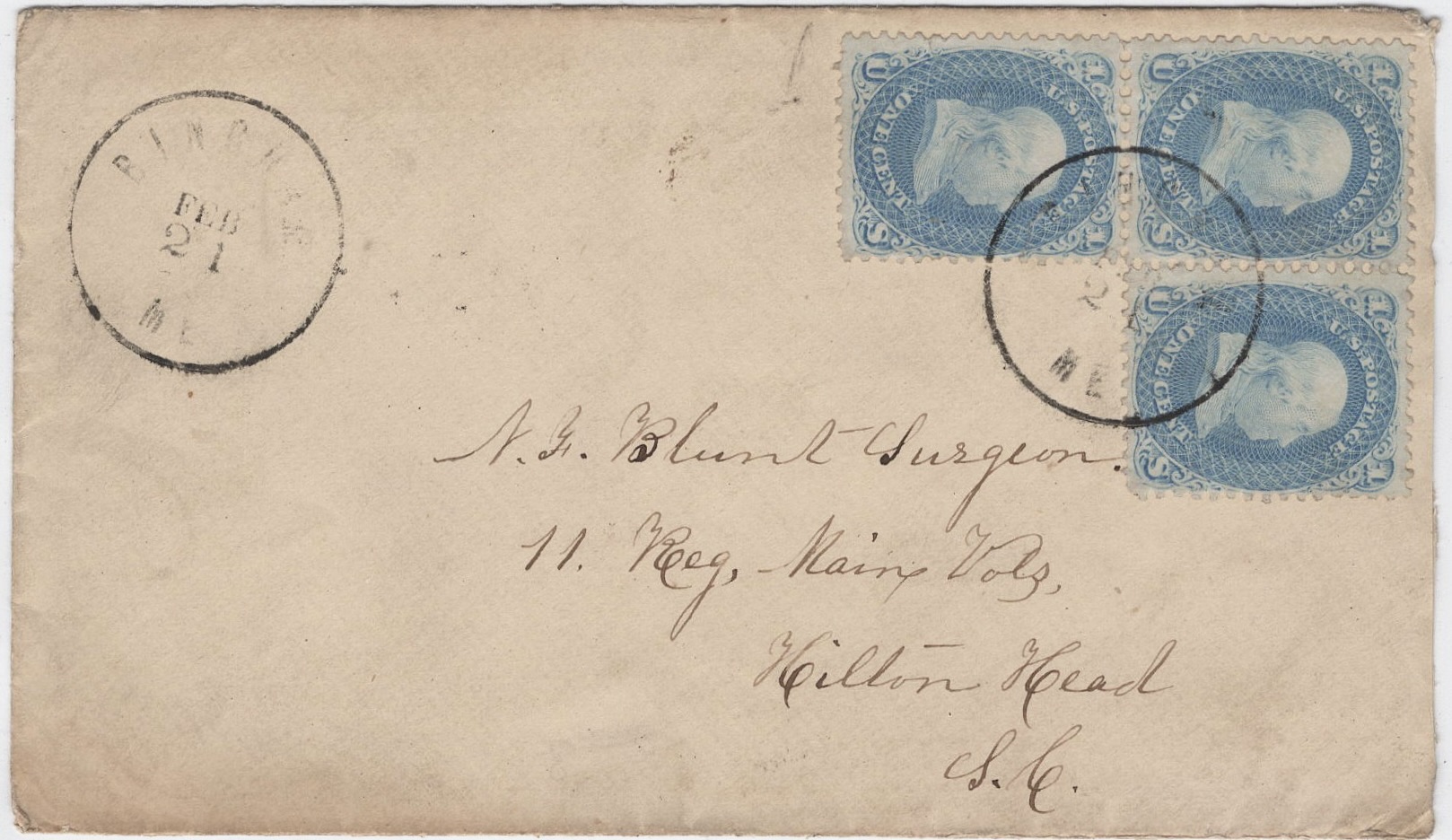
Addressed to N. F Blunt, Surgeon 11th Regt. Maine Vols., Hilton Head, S. C.

Augusta [Maine]
February 17, 1863

To the Surgeon of 11th Maine Vol.

Dear sir, I learn that the Reverend Mr. Mills of this state has a son in your regiment, Horace S. Mills, who is sick. His father is very anxious about him and is very desirous he should have a furlough for such time as he recovered from his illness, if ever.

Any assistance you can give him consistent with your duty would much oblige him and your obedient, — A. Coburn, Gov. of Maine


Letter 2

Vassalboro, Maine
February 19, [1863]

To the Surgeon of the 11th Me. Vols.

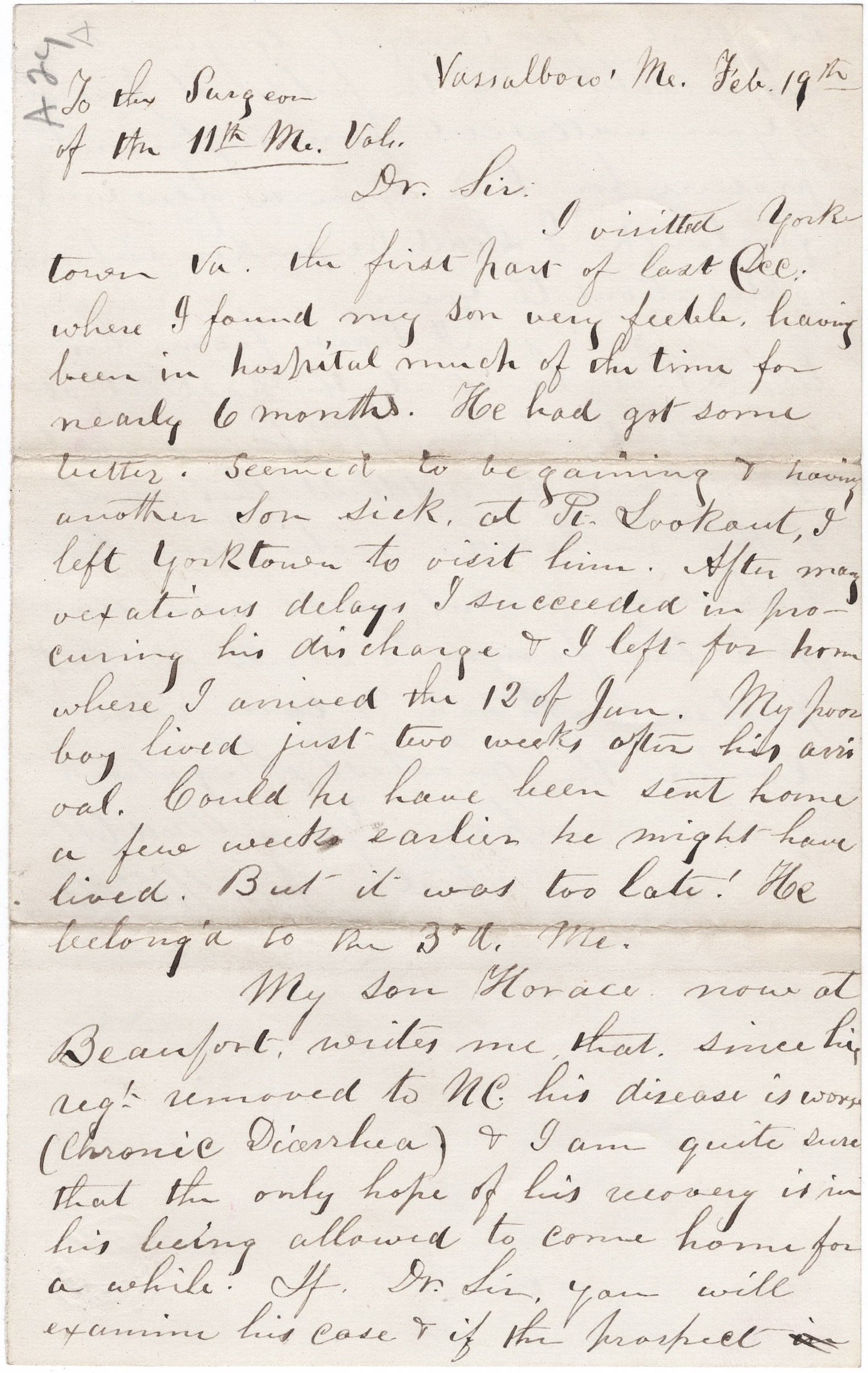
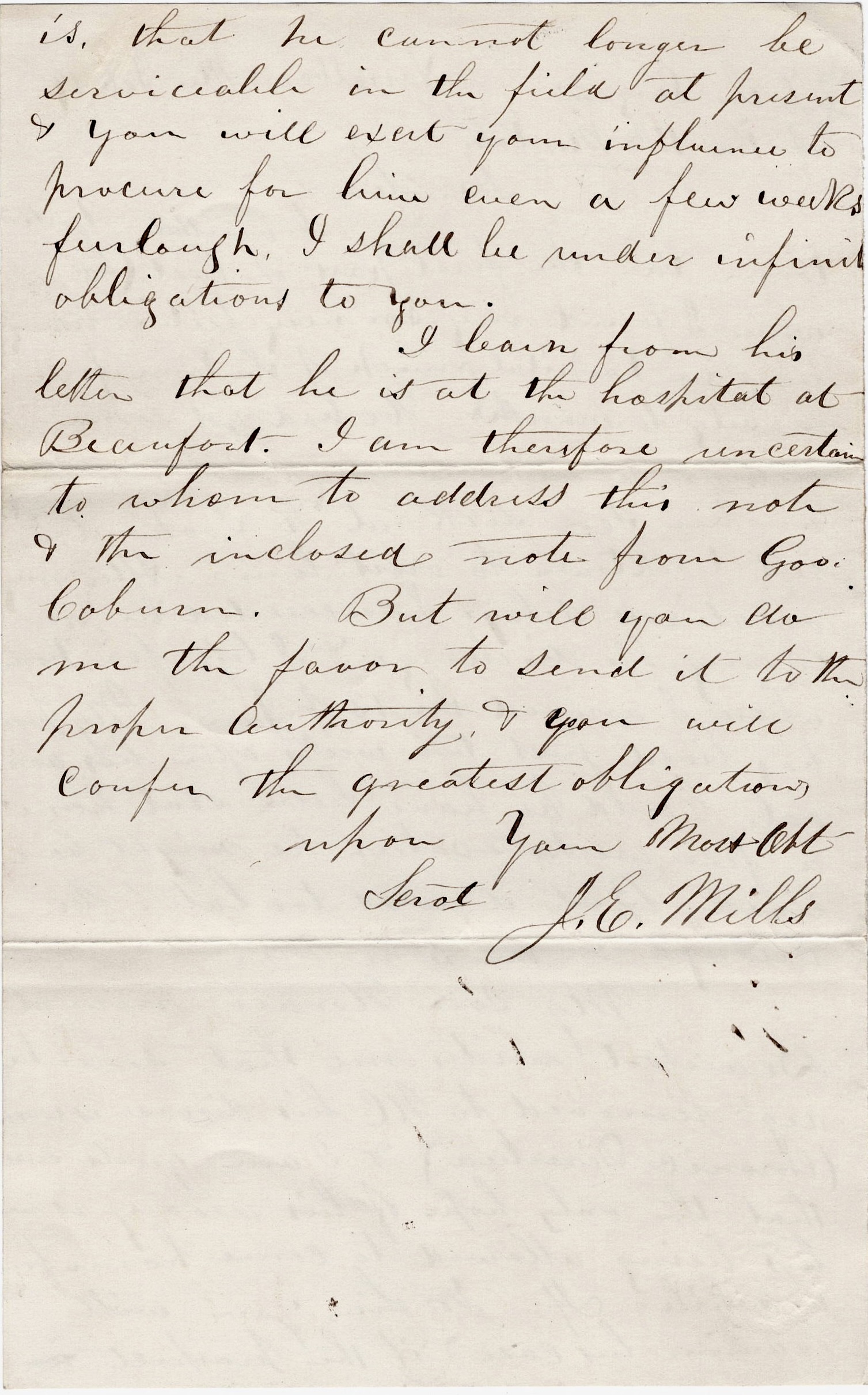
Dear sir, I visited Yorktown, Virginia, the first part of last December where I found my son very feeble, having been in hospital much of the time for nearly 6 months. He had got some better. Seemed to be gaining & having another son sick at Point Lookout, I left Yorktown to visit him. After many vexatious delays, I succeeded in procuring his discharge & left for home where I arrived the 12th of January. My poor boy lived just two weeks after his arrival. Could he have been sent home a few weeks earlier, he might have lived. But it was too late. He belonged to the 3rd Maine. 1

My son Horace, now at Beaufort, writes me that since his regiment removed to North Carolina, his disease is worse (chronic diarrhea) & I am quite sure that the only hope of his recovery is in his being allowed to come home for a while. If, dear sir, you will examine his case & if the prospect is that he cannot longer be serviceable in the field at present & you will exert your influence to procure for him even a few weeks furlough, I shall be under infinite obligations to you.

I learn from his letter that he is at the hospital at Beaufort. I am therefore uncertain to whom to address this note & the enclosed not from Gov. Coburn. But will you do me the favor to send it back to the proper authority & you will confer the greatest obligation upon your most obedient servant, — J. E. Mills

1 The son’s name was Allen Winslow Mills (1843-1863) who served in Co. B, 3rd Maine Infantry. He was discharged from the regiment on disability on 22 December 1862.
1862: Albert Greenleaf Mudgett to J. Knowlton

Capt. Albert G. Mudgett (Digital Maine Repository)

The following letters were written by Albert Greenleaf Mudgett (1826-1903) of the 11th Maine Infantry. Albert was mustered in as 2nd Lieutenant of Co. H, was promoted to 1st Lieutenant of Co. G, and afterwards promoted to Captain of Co. D. He was later commissioned as Colonel but did not get an opportunity to serve as such, having been captured by the Confederates at Macon, Georgia, and held in captivity for nearly a year.

Albert was the son of Levi Mudgett (1781-1842) and Martha Ricker (1789-1893). He was married in 1851 to Cordelia A. Perkins (1826-1900) of Newburgh, Maine. After the war he moved to Waterville, Kansas, in 1870 and then relocated to Greenleaf, Washington county, Kansas, in 1884.

Letter 1

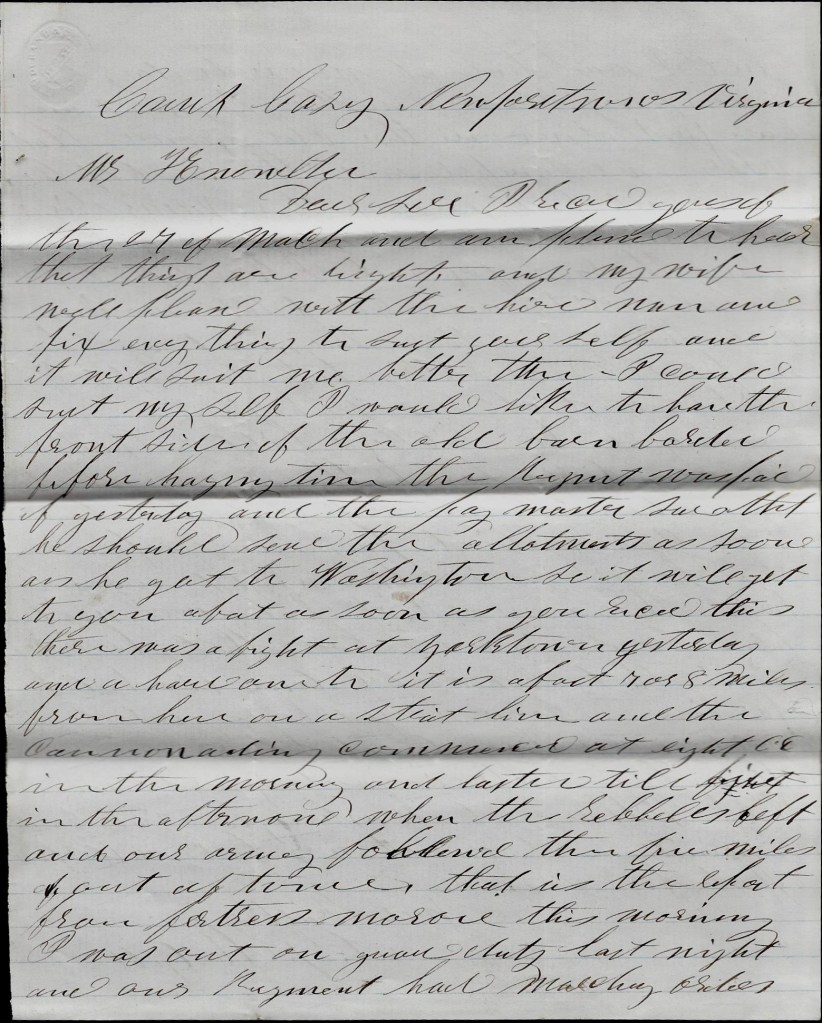
Camp Casey
Newport News, Virginia
[April 1862]

Mr. J. Knowlton, dear sir,

I received yours of the 27th of March and am pleased to hear that things are alright and my wife well pleased with the hired man. Fix everything to suit yourself and it will suit me better than I could suit myself. I would like to have the front side of the old barn boarded before haying time.

The regiment was paid off yesterday and the paymaster said that he should have the allotments as soon as he got to Washington so it will get to you about as soon as you receive this.

There was a fight at Yorktown yesterday and a hard one too. It is about 7 or 8 miles from here on a straight line and the cannonading commenced at eight o’clock in the morning and lasted till five in the afternoon when the rebel left and our army followed them five miles out of town. That is the report from Fortress Monroe this morning.

I was out on guard duty last night and our regiment had marching orders and I was relieved at noon today by a company from another regiment and have just arrived on the old ground where we camped and the rest of the regiment had gone up the James River ten miles and I have set the boy to getting the supper and I thought I would write and camp till morning and then join the regiment as I have no pilot. I had rather take daylight asa it is most all woods here.

In regard to Ricker’s bill, I think he has got his pay pretty well according to all accounts but if you think it best to pay the miserable devil, pay him. I suppose that he will go in the night and destroy twice the amount if I don’t. I wrote him as soon as I heard that he was gone that I would tan his hide for him as soon as I got home and I will if I live to get home.

The boys health is good generally. We left William at Washington sick with rheumatism but not very bad. we shall expect him soon. Yours truly, — A. G. Mudgett


Letter 2

[The following letter describes the regiments role in the Battle of Seven Pines. Contrast Mudgett’s account with that of Col. Plaisted’s described in The 11th Maine at Seven Pines: “Men were being shot on all sides of me” by Brian Swartz.]

Camp near Seven Pines, Virginia
June 25, 1862

Mr. Knowlton,

Dear sir. We have had a quiet time since the brush we had here the last of May but I think we may celebrate the Fourth in good shape. They have ben planting siege guns all round them and when the time comes it will be a big fight. Our regiment don’t amount to much anyway. There is not over 150 effective men in it. They worked the to death before we got here. Our regiment had to go ahead and take all the hard knocks and used the men up.

Col. Harris M. Plaisted (Maine State Archives)

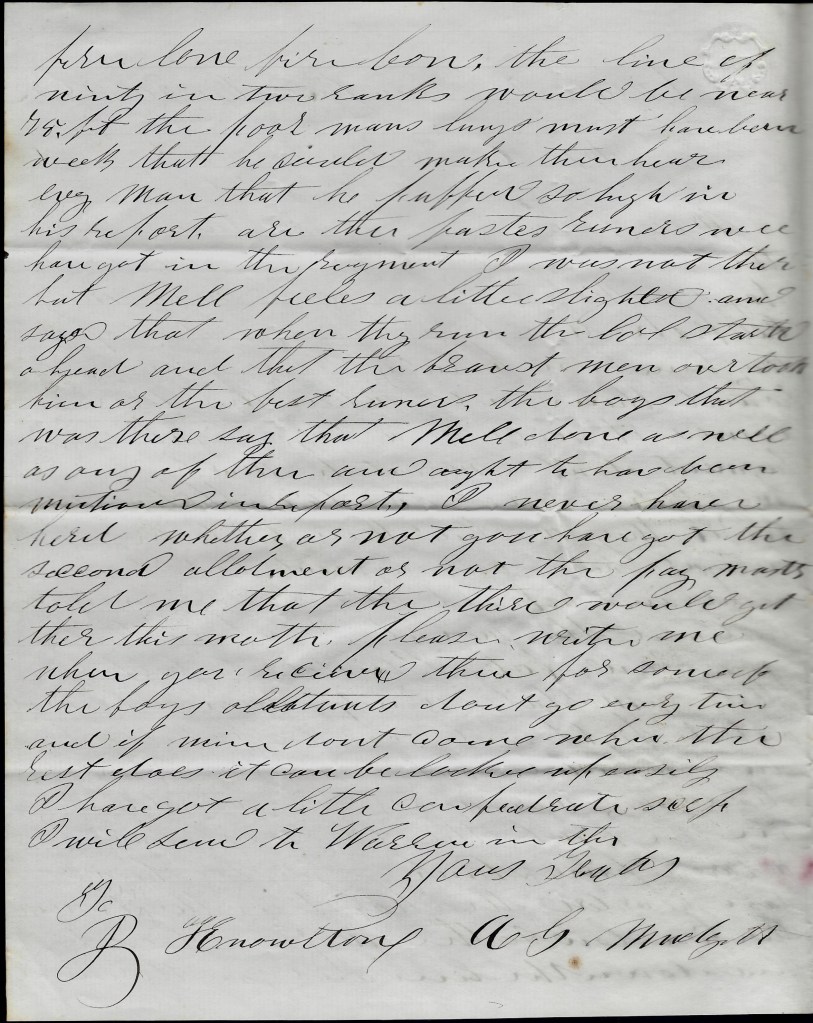
I suppose that you saw Col. [Harris M.] Plaisted’s report of that immortal ninety men who went out to fight and was half killed and wounded. But as near as I can learn they were nearly all wounded in the back. The Colonel was behind a large pine stump so you see he was safe. He ordered the Major [Robert F. Campbell] down the line to make them fire low so the Major walked up and down the line and gave the command, “Fire low! Fire low!” The line of ninety in two ranks would be near 75 feet. The poor man’s lungs must have been weak that he could make them hear. Every man that he puffed so high in his report are the fastest runners we have got in the regiment. I was not there but Mell feels a little slighted and says that when they run, the Colonel started ahead and that the bravest men overtook him—or the best runners. The boys that was there say that Mell done as well as any of them and ought to have been mentioned in the report.

I never have heard whether or not you have got the second allotment or not. The pay master told me that the third would get there this month. Please write me when you receive this for some of the boys allotments don’t go every time and if mine don’t come when the rest does, it can be looked up easily.

I have got a little Confederate sc__. I will write to Warren in this. Yours truly, — A. G. Mudgett

To J. Knowlton