
The following letter was written by Isaac Newton Montgomery (1843-1883), the son of James Montgomery (1800-1882) and Mary Crees (1815-1890) of St. Thomas township, Franklin county, Pennsylvania.
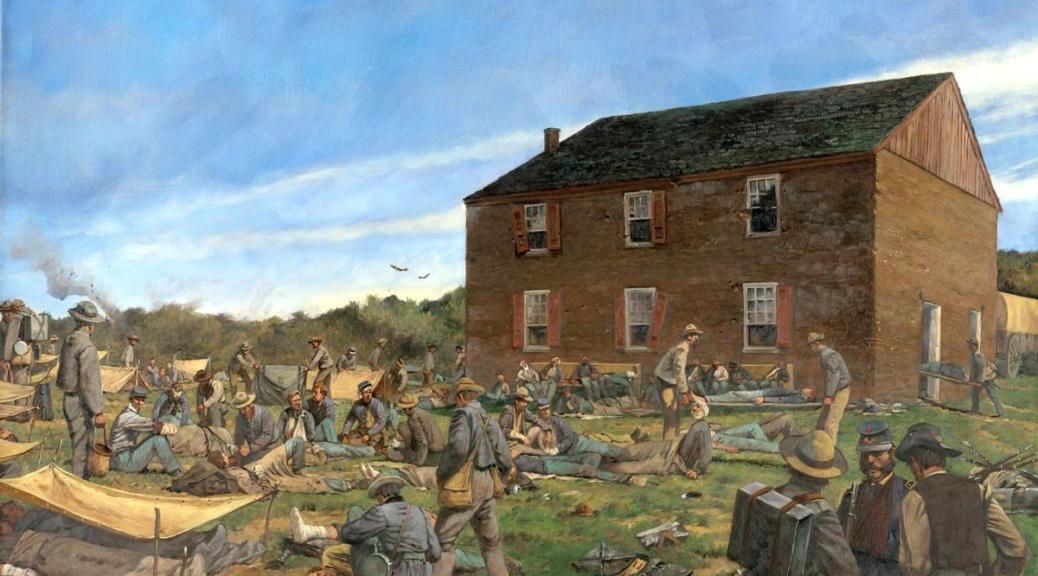
Isaac’s letter refers to the death of Nicholas M. Bowers (1841-1863) who was mortally wounded in the leg on 3 May 1863 at the Battle of Chancellorsville when his regiment, the 126th Pennsylvania Infantry, was assaulted by a superior force on the Union right, near Ely’s Pond. They held their position until the last of their ammunition was gone but were finally forced to yield ground and retire. Fifty-eight men in the regiment were killed or wounded, some of them left on the field to be taken captive. Nicholas’ leg wound was so severe, he could not leave the field and he was held by the Confederates for 12 days before he was exchanged, his wound untreated. He died the day following his release. Nicholas served in Co. H.
Isaac addressed the letter to his friend, David Hafer (1837-1921) who served as a private early in the war in Co. I, 79th Pennsylvania, but later in Co. D, 158th Pennsylvania. David was married in 1858 to Sarah Ann Bowers (1836-1904), the sister of Nicholas.
Transcription
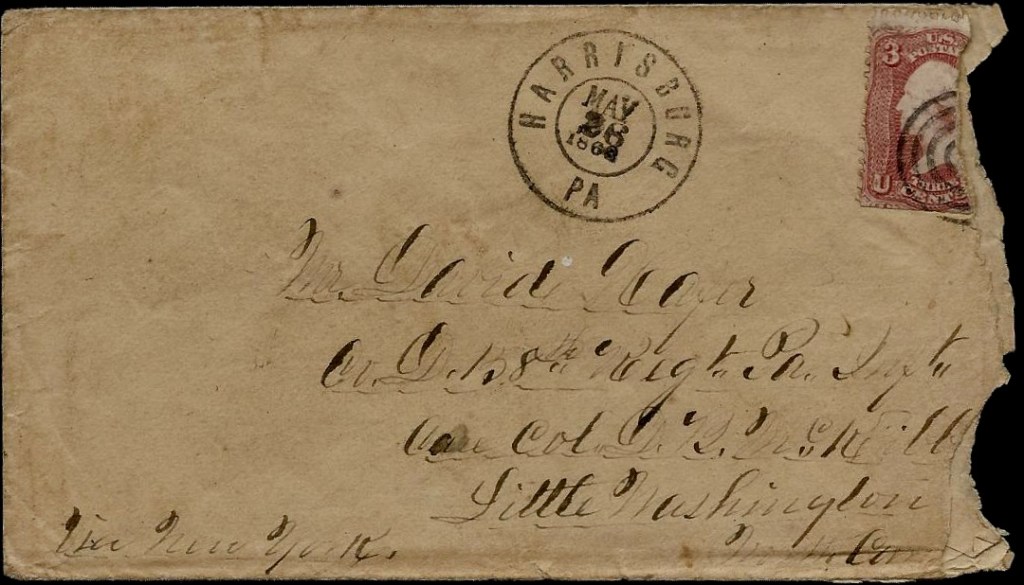
St. Thomas [township, Franklin county], Pennsylvania
May 24, 1863
Mr. David Hafer—my dear friend,
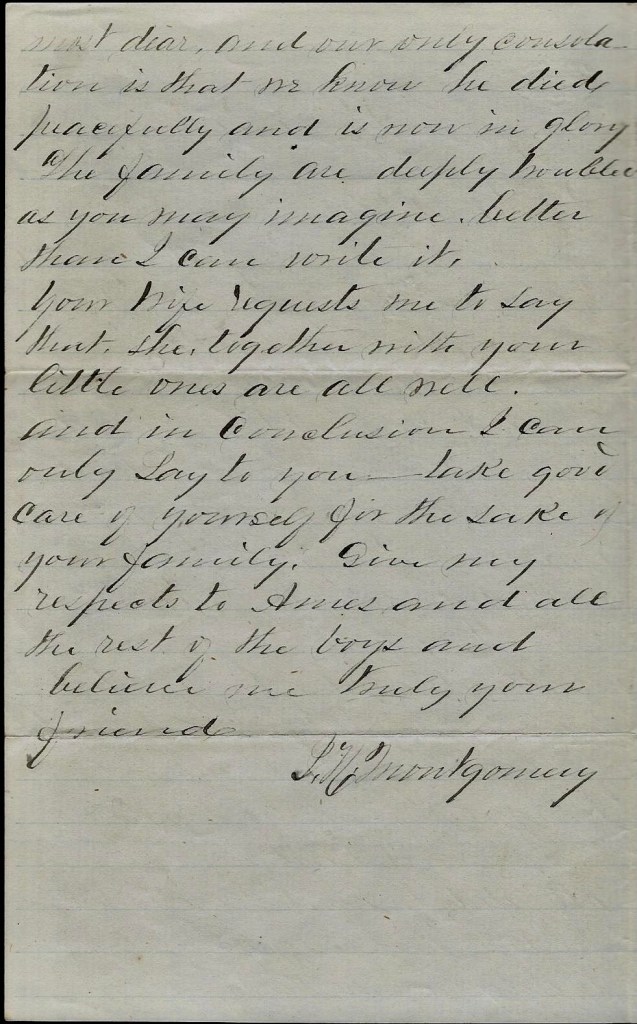
I am sorry to inform you that our friend and brother, Nickolas M. Bowers is no more. He was but a short time with his regiment when it was ordered into battle and at Chancellorsville, on Sunday May 3rd, he fell wounded in the leg below the knee. The leg was very much shattered and after repeated trials he was left in the hands of the enemy and was not brought over until the 15th. His wound had not been attended to and he died on the 16th. Thus my friend, we today mourn the loss of one most dear, and our only consolation is that we know he died peacefully and is now in glory.
The family are deeply troubled as you may imagine—better than I can describe it.
Your wife requests me to say that she, together with your little ones are all well. And in conclusion, I can only say to you, take good care of yourself for the sake of your family. Give my respects to Ames and all the rest of the boys and believe me truly your friend. — I. N. Montgomery

 Spared & Shared 23