Category Archives: 153rd New York Infantry

1863: Horace Burr Potter to Lucius F. Potter

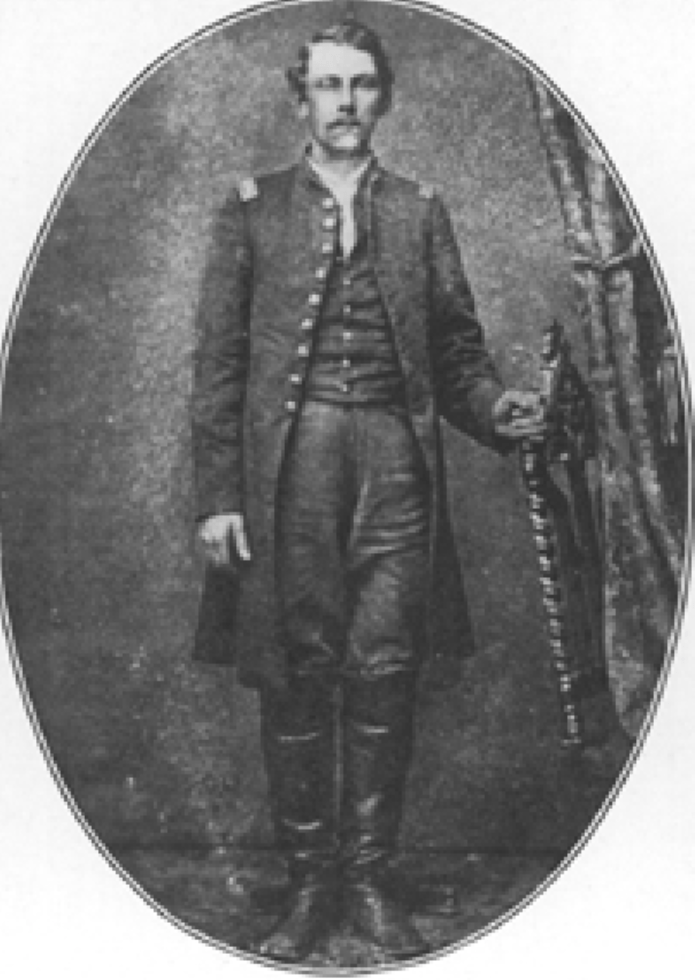
The following letter was written by Horace Burr Potter (1842-1864) who enlisted on 31 August 1861, claiming he was 2 years older than he really was, to serve three years in Co. A, 153rd New York Infantry. He was mustered in on 17 October 1862 and wrote the following letter a year later from Washington D. C. He died of consumption on 14 June 1864, at Charity hospital in New Orleans, La.

T R A N S C R I P T I O N

Addressed to Mr. Lucius F. Potter, Kingsboro’, Fulton county, New York

153rd Regiment New York Volunteers, Co. A
East Capitol Hill, Washington D. C.
October 24, 1863

Dear Father,

I now sit down to write you a letter in answer to yours of the 19th October received on the 21st and also yours of the 22nd received today in this a.m. mail. I was glad to hear that you were all well and hope this will find you all the same. I am as well as usual and enjoying good health. The weather has been fine along back but it is raining quite hard while I an now writing. It commenced yesterday afternoon and is quite muddy. Charlie Cheadell’s regiment arrived in this city yesterday afternoon and he came up and seen us and bunked with me last night. He feels good and is as rugged as ever, He is 4th Sergeant & gets $18 dollars per month. He says that he won’t be a soldier over 6 months. Well every one to their notions. There is several others in the regiment that live up around Kingsboro and Gloversville that have ben up to see some of our Boys that they were acquainted with. Their regiment has only 8 companies but they are full as they have 1100 men in it.

Old Mr. Gulich [Gulick] arrived here today from Gloversville to see his son William who is in our company and we sleep together in one bunk. Mr. Gulich gave all the news there was. He said he saw you before he came away day before yesterday 22nd October and that you was well. I also received the Observer & Standard you sent. Also all the stamps, paper, wrappers, &c. that you have sent all right and am much obliged for them as others don’t do as well as you do that write to me as I have to find my own stamps &c… As to those shirts you wrote about, send them if you send a box but don’t send any wrappers, drawers, &c. A pair or two of gloves won’t come amiss. The watch I can sell. The boots are mighty steep, I think, but am satisfied as I know that you have done the best you. could. But I think the old [ ] is a charging an old customer a big price. When I want any more boots or other things, I shall send for the money if I haven’t got it and buy them amongst people, not such ones that live in two of the cussedest places this side of hell for cheating and swindling soldiers who are defending them. But enough of this.

I disown Gloversville and Kingsboro both and never shall return to either till this war is entirely over. Then it will only be on a visit to you. If we serve our time out before it is over, I shall enlist over again here and shall now for the war in a new regiment the first opportunity that offers and get 6 hundred dollars bounty which veteran soldiers get that have been in the service before for 9 months. A soldier’s life agrees with me right well and I just as leave be in the army as anywhere else and I would be nothing else at present. But enough. I hope you won’t be offended at what I have written as they are my sentiments of the people that live there. I want you to look out for my interests and turn everything I have there into money. Keep track of it all as I shall never invest any of it up there and I shall call for it one of these days so shall want as large a pile of it as possible. And every cent that belongs to me I want kept track of. Tell Vanostine the next time you see him I shall make all such gents as him shell. out when I come up there. I want you to get all the interest on my money you can. I just as leave you should use as anyone, only I don’t want it at loose ends when I come home after it… I must close for the present as I am in a hurry. Excuse this scribbling as it was written in haste. Write often. Goodbye for the present. Much love. I remain your affectionate son, — Horace

1862: John Adams DeWandelaer to Gansevoort DeWandelaer

The following letter was written by John Adams DeWandelaer (1833-1891) who served in Co. B, 153rd New York Infantry. He was mustered in as a 1st Lieutenant on 1 September 1862 and was promoted to Captain on 1 May 1863. He was wounded in the shoulder at the Battle of Winchester, and since the ball was never extracted, it gave him difficulty the remainder of his life.

John was born in Fonda, the son of Gansevoort DeWandelaer and Delia Getman. He was married to Nancy Coppernoll.

Camp of the 153rd New York Infantry. Attributed to Mathew B. Brady (Metropolitan Museum of Art)

T R A N S C R I P T I O N

Mr. Gansevoort De Wandelaer, Palatine Bridge, Montgomery county, New York

Alexandria [Virginia]
November 1st 1862

Dear Father & Mother, Sister & Brother,

I suppose you have been looking for a line for some time but we was so busy first along that I had no time and then I was taken with a dreadful cold all through my bones and I have been quite sick all week and I went down to the City to sleep and they charged me 1 dollar a night for lodging alone so you see that the money goes very easy here. Butter is selling here now for from 32 cents to 38 cents per pound and cheese is selling from 16 to 20 cents per pound. So you see it costs a great deal to live here, I have got a very nice little tent about as large as two of them you saw in Fonda, only it has straight sides. They are called wall tents. The officers all have this kind. I have a floor in it and a little sheet iron cook stove and I board myself when I am well and then it does not cost so much but it goes kinder tough. We are lying just outside of Alexandria by the railroad that leads to Richmond. My tent is not 30 feet from the track.

The railroad belongs to the government and they take a load of darkeys up in the morning to work for the government and bring them back at night. You can get lots of darkeys to work for their board here but they look pretty tough and everything looks hard around here. You cannot see a sight of a fence no where and a great many buildings are either half or whole torn down and everything looks like destruction. You can see the terrors of war here in all its horrors. You hardly see anything but army wagons and we see hundreds of them every day. They (the wagons) are very heavy and strong and they have from 4 to 8 horses or mules before one wagon and then they fill it with bread or meat or beans and then go to their respective camps. You may judge how many there are when I tell you how the streets of Alexandria are all cut full of ruts right through the stone pavement.

They are very strict here now. No man can pass in or out of the City without a pass and that is looked at very close. The City is full of secesh but they dare not open their heads. We expect to help guard the City this winter but are not certain of it yet. The order may be changed any day. We would like to go to New Bern, North Carolina, if we can bring it about, but our Colonel is quite sick now with the pleurisy and that will set us back very much. Everyone in the regiment likes our Colonel but the Lieut. Colonel is not liked at all and that makes it very unpleasant just now. But it will all be right when our Colonel is well again.

Our men are all armed and equipped. They have the Austrian rifle. As near as I can find out, there is now at last 400,000 Union soldiers between the Potomac and Richmond and they are expecting the decisive battle every day. All the regiments are under marching orders but us that lay around us. We can see 14 camps and two forts from our camp and we have a full view of the Potomac. We see a sloop burn on it the other morning. The names of the forts are Lion & Fort Ellsworth. I have been all through the latter fort and everything is as neat and clean as a pin and they have guns there as large as a small saw logs and they say they will shoot five miles. We can see the dome of the [U. S.] Capitol from our camp and we are only seven miles from Washington.

1863: Abraham V. Davis to his Friends

I could not find an image of Abram but here is one of Reuben J. Stotz who also began his service in the 153rd NYV as a 2nd Lieutenant. (Photo Sleuth)

The following letter was written by 2nd Lt. Abraham V. Davis (1838-1891) who enlisted on 23 October 1862 at Johnstown, New York, in Co. D, 153rd New York Infantry. He was promoted to a 1st Lieutenant on 6 March 1863 and transferred to Co. B on 5 June 1863. He was then made the Adjutant of the regiment on 1 December 1863. He was promoted to Major of his regiment on 15 September 1865 but never mustered at that rank.

Abraham (or “Abram”) was born in Mayfield, Fulton county, New York. He married Catherine Veeder (1846-1931) in 1881 and died ten years later in Canajoharie, Montgomery county, New York.

Prior to the Civil War, at the time of the 1860 US Census, Abraham was enumerated as a farm laborer on the farm of J. C. Leonard in Johnstown, Fulton county, New York.

Transcription

Alexandria [Virginia]
April 3, 1863

My friends,

Your letter bearing date March 21st has just been received. I am so mad since I read it that I can hardly contain myself. It is the first time that I ever had the name of being lazy to my knowledge however much I might have deserved it. Well Capt. David H. Cuyler might have said so for a man that talks as much as he does must naturally say some things that are not true. I will tell you about how things are conducted in our company so that you can judge for yourself. The Captains do not go on picket duty. They perform the arduous duty of Officer of the Day. That is, they go to bed and sleep about as well as though they were not on duty at all. Our captain also goes after wood each day which takes about six or right hours. I have been on picket lately every other day, have to go the rounds every night at 12 o’clock and get little or no sleep and then when I get a night’s sleep in camp, I have to get up for roll call in the morning. I have not been excused a day from duty since I was sick.

Perhaps [Capt. David] Spaulding does not like it because the officers of his company are not promoted. I have been recommended for 1st Lt. in Co. B. I knew there was a vacancy in the company but did not intimate to anyone that I wished to be promoted. The first intimation that I had, it was from the Colonel [McMartin] himself. He told me his intention, giving me to understand at the same time that he did not do it as a personal favor but for the good of the regiment. He has sent my recommendation to the Governor. I expect to hear from it in a few days.

George came over the day before yesterday and returned to his regiment again last night. He is well but not as fleshy as he has been. I had almost given up hearing from you. I don’t see why your letter was so long on the road. I received a letter from Willard the other day that was full as long coming as yours. I would like to come home and help Mother put down the carpets—especially the new ones—but don’t think that it would be policy for me. I try and behave myself as well as I did at home but do not seem to get much credit for it there though I think I do here. I have nothing now to write you except that we were called out in line of battle the other night but it did not amount to anything serious.

I sent $300 dollars home with Doctor Peake the other day. You will undoubtedly receive it before this reaches you. I came off picket this morning and now have to take charge of the company on inspection so I can write no more at present. My love to all. Yours respectfully, — A. V. Davis

P. S. I will answer Willard’s letter as soon as I receive it.

1864: John Grandy to Mary L. Grandy

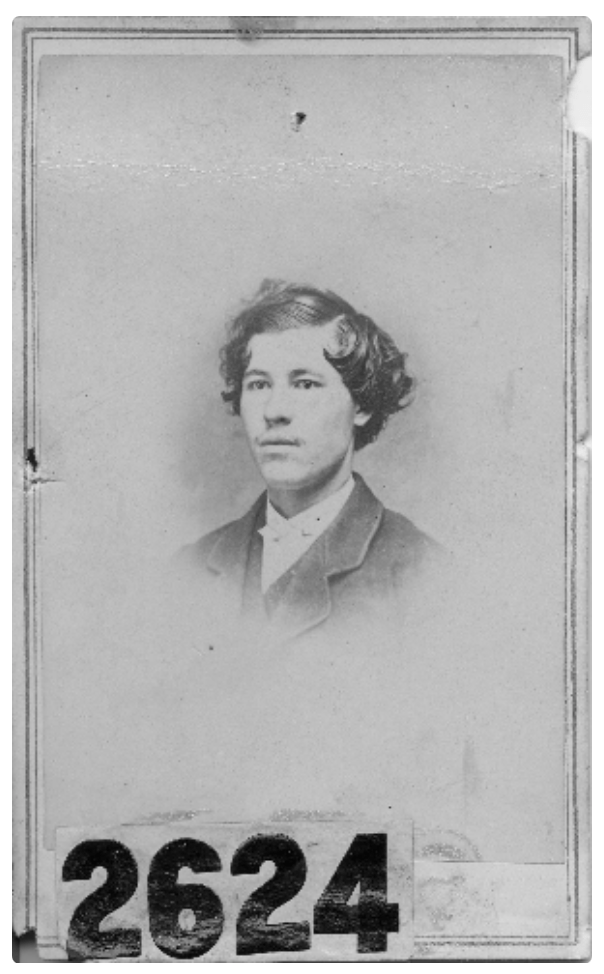
I could not find an image of John but here is a CDV of Lorenzo D. Lisdell who also served in Co. C, 153rd New York Infantry (Photo Sleuth)

The following letter was written by John Grandy (1843-1864), the son of Lyman Grandy (1804-1877) and Miranda Crandall (1817-1890) of Charleston, Montgomery county, New York. He wrote the letter to his younger sister, Mary L. Grandy (1847-1932).

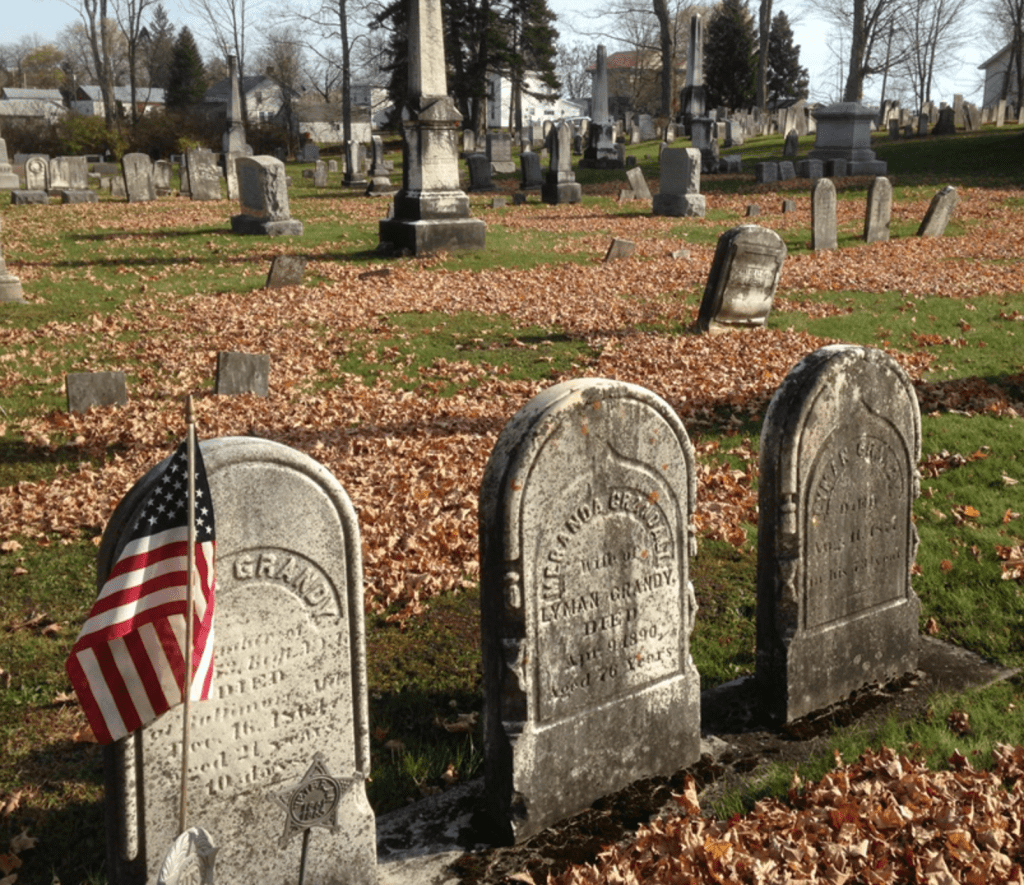
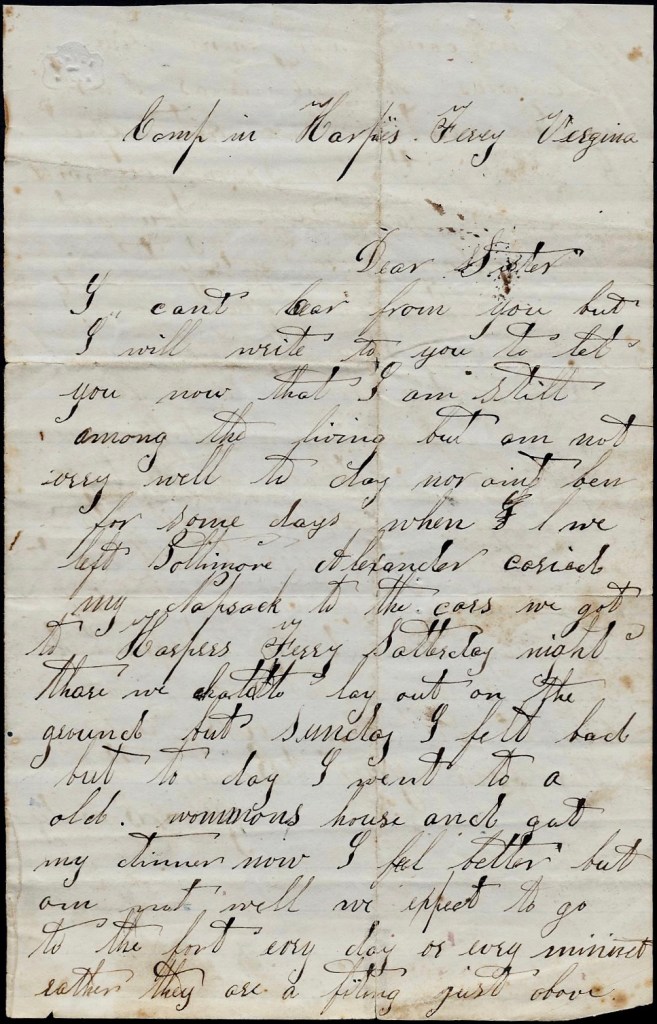
John was a 20 year-old carpenter when he was recruited into Co. C, 153rd New Infantry on 1 September 1864. In his enlistment records, he was described as standing just north of 5′ 9″ tall with light hair and blue eyes. In this letter, penned at Harper’s Ferry, he had just arrived from Baltimore and had not yet been sent forward to the regiment. The letter has a tenor of foreboding within it which is poignant as he was soon to be mortally wounded (gunshot in right thigh) on 19 October 1864 in the fighting at Cedar Creek. He died in a Baltimore hospital on 16 November 1864. He now lies buried next to his parents in the Christian Church Cemetery at Charleston Four Corners, New York.

For Lyman and Miranda Grandy, John was the second son they had lost during the Civil War. John’s older brother, Corp. George W. Grandy was killed at Gettysburg while serving in Co. D, 1st Minnesota Infantry. He was buried in a mass grave with other members of his regiment.

John Grandy lies buried in a grave next to his parents in the Christian Church Cemetery at Charleston Four Corners, New York

Transcription

Camp in Harper’s Ferry, Virginia
[September 1864?]

Dear Sister,

I can’t hear from you but I will write to you to let you know that I am still among the living but I am not very well today nor ain’t been for some days. When we left Baltimore, Alexander carried my knapsack to the cares [for me]. We got to Harper’s Ferry Saturday night. There we had to lay out on the ground but Sunday I felt bad but today I went to a old woman’s house and got my dinner. Now I feel better but am not well.

We expect to go to the front every day—or every minute rather. They are a fighting just above here [in the Valley]. We can hear them fire the cannons here. It is as close as I want to be but expect I will have to go soon. You will hear of the battle before you get this.

Mary, when you get this, learn these verses and when I come home, sing them for me. I would like to hear from home to hear how Father was getting along and all the rest of the folks. As soon as we get to our regiment, then I will write again. We ain’t doing anything but laying around on the ground. Tell Charley that he is taking comfort at home.

Yours truly. This from your brother, — John Grandy

Mr. Charles Grandy, Leatherville Road, Rural Grove, Montgomery [New York]