The following letter was written by William Leon Mowry (1841-1910) of Deansville, Oneida county, New York who enlisted on 8 August 1862 to serve three years as a private in Co. B, 157th New York Infantry. William mustered out with company on 10 July 1865, at Charleston, South Carolina. When he enlisted, William was described as a 5’6″ brown-haired dentist.
William was the son of Charles Mowry (1797-1883) and Matilda Dennison (1803-1876). After the war, William relocated to Syracuse, Onondaga county, New York, where he became a machinist.
Transcription
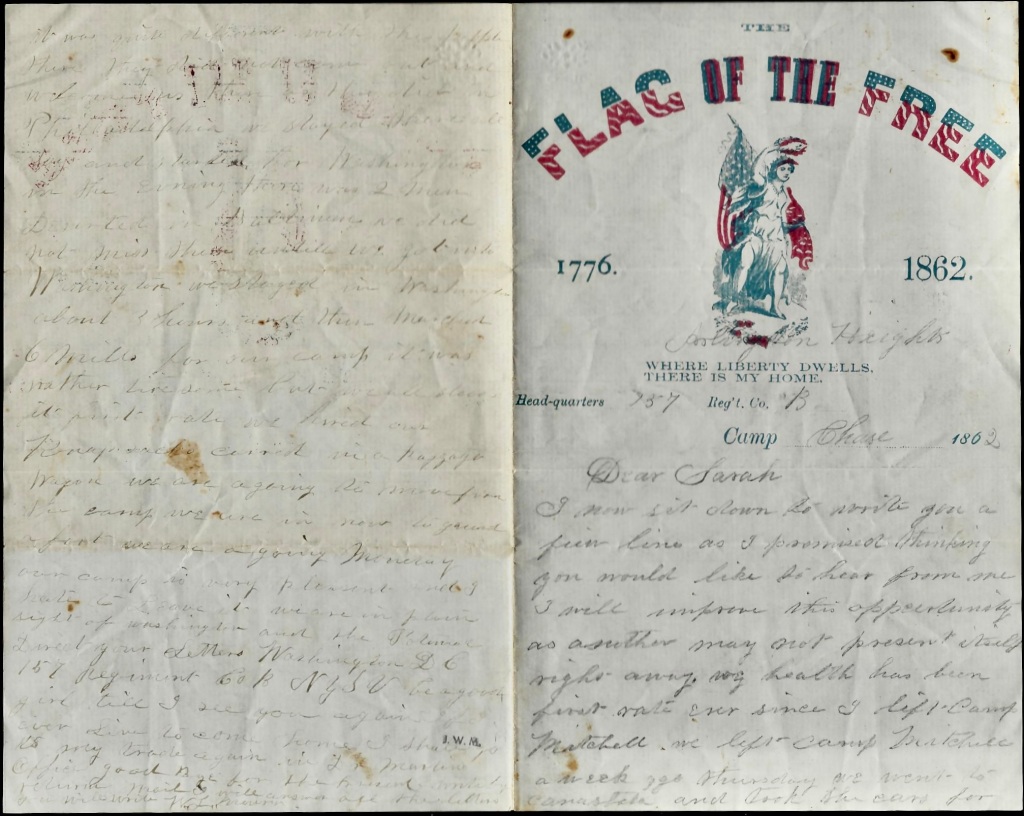
Arlington Heights, Camp Chase [Early October] 1862
Dear Sarah,
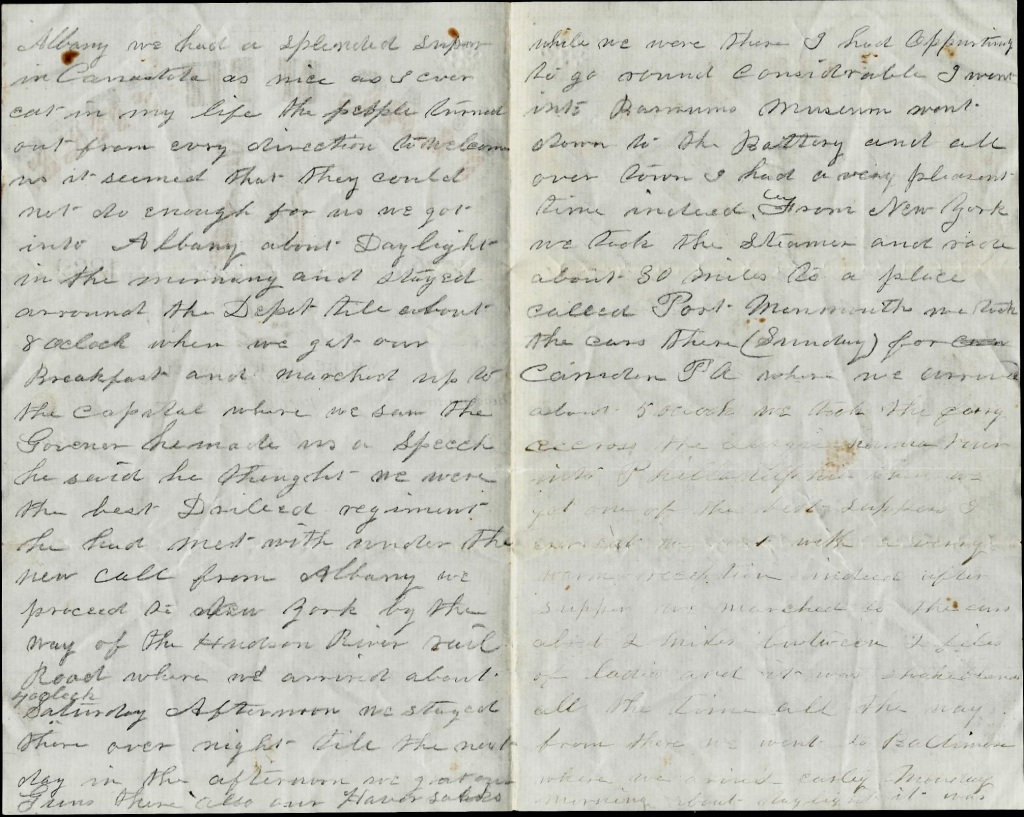
I now sit down to write you a few lines as I promised thinking you would like to hear from me. I will improve this opportunity as another may not present itself right away. My health has been first rate ever since I left Camp Mitchell. We left Camp Mitchell a week ago Thursday. we went to Canastota and took the cars for Albany. We had a splendid supper in Canastota—as nice as ever eat in my life. The people turned out from ever direction to welcome us. It seemed that they could not do enough for us. We got into Albany about daylight in the morning and stayed around the depot till about 8 o’clock when we got our breakfast and marched up to the Capitol where we saw the Governor. He made us a speech. He said he thought we were the best drilled regiment he had met with under the new call from Albany. We proceed[ed] to New York by way of the Hudson River Railroad where we arrived about 4 o’clock Saturday afternoon. We stayed there over night till the next day in the afternoon. We got our guns there. Also our haversacks.
While we were there, I had opportunity to go round considerable. I went into Barnum’s Museum, went down to the Battery and all over town. I had a very pleasant time indeed. From New York we took the steamer and rode about 30 miles to a place called Port Monmouth, We took the cars there (Sunday) for Camden, Pa., where we arrived about 5 o’clock. We took the ferry across the Susquehanna River into Philadelphia. There we got one of the best suppers I ever eat. We met with a very warm reception indeed. After supper, we marched to the cars about two miles between two files of ladies and it was shake hands all the time all the way.
From there we went to Baltimore where we arrived early Monday morning about daylight. It was quite different with these people there. They did not come out and welcome us there as they did in Philadelphia. We stayed there all day and started for Washington in the evening. There was two men deserted in Baltimore. We did not miss them until we got into Washington. We stayed in Washington about three hours and then marched six miles for our camp. It was rather tiresome but we all stood it first rate. We hired our knapsacks carried in a baggage wagon. We are a going to move from the camp. we are in now to guard a fort. We are a going Monday. our camp is very pleasant and I hate to leave it. We are in plain sight of Washington and the Potomac.
Direct your letters to Washington D. C., 157th Regiment, Co. B, NYSV. Be a good girl till I see you again. If I ever live to come home, I shall go into my trade again in Martin’s office. goodbye for the present. Write, write, write. — W. L. Mowry
This letter was written on 8 November 1864—Election Day—by 20 year-old Emeline C. Palmer (1844-1895) to one of her brothers. “Em” and her siblings were the orphaned children of William H. Palmer (1815-1863) and Lucinda M. Strong (1819-1861). In the 1860 US Census, the Palmer family (mother and father still living) were enumerated at the Wampsville P. O., town of Lenox, Madison county, New York. Em was married in 1858 to her cousin James Leonard Palmer (1822-1899). She mentions her infant son, Elton Lamont Palmer (1863-1948) in the letter.
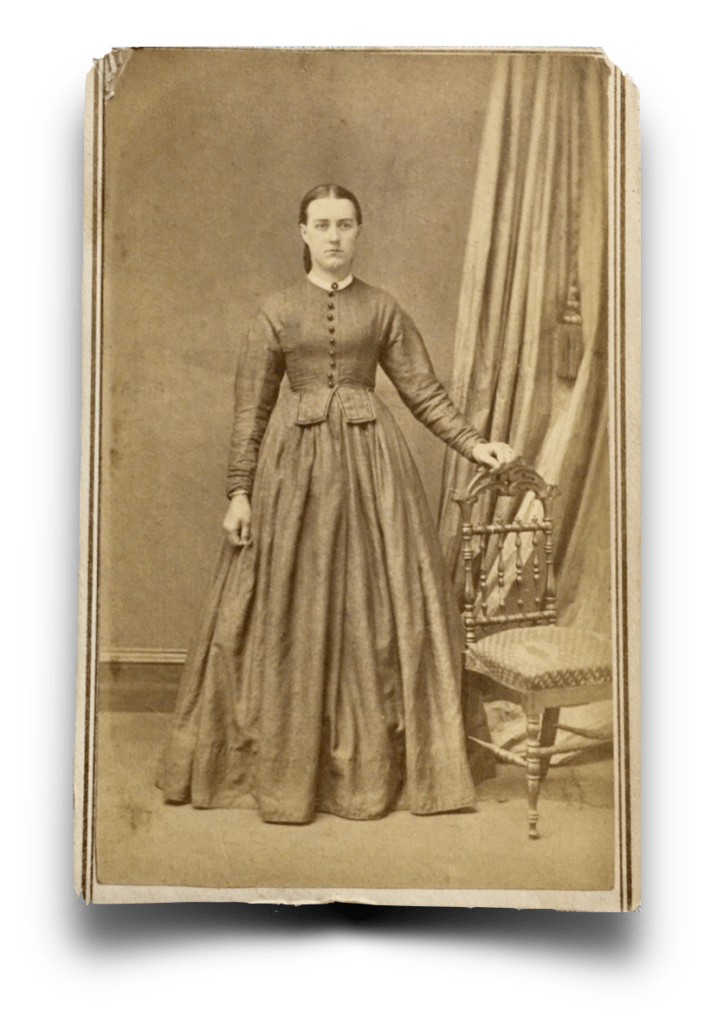
I couldn’t find an image of Em but here’s an 1864 CDV of a young woman about her age wearing a style of dress that was popular at the time.
Most likely “Em” wrote the letter to her brother, Orvin M. Palmer (1842-1909), who was serving in the Federal army at the time. Orvin entered the service in August 1862 as a private in Co. B, 157th New York Infantry and rose in rank to 1st Lieutenant of Co. K during the war. He was taken prisoner at Gettysburg in the first day’s fighting but released not long after.
Em’s letter describes a three week trip she took in company with her cousin, Lucretia B. Palmer (1820-1907) and Lucretia’s husband, Leonard (“Len”) Abel Palmer (1817-1899) of Monroe county, New York. They traveled to New York City to do some sightseeing and visit relatives, and then on to Alexandria, Virginia, to visit Lucretia’s sister, Wealthy (Palmer) Gallup and family. While Em and Lucretia remained with the Gallup’s in Alexandria and did some sightseeing, Len made the trip to Fortress Monroe where he made arrangements to have the body of a young soldier who died at the hospital there sent back to his home in Madison county, New York. Em signs off by letting her brother know that her Uncle Elisha Palmer (1786-1867)—Lucretia & Wealthy’s father—cast what would be his last vote for “Uncle Abe.”
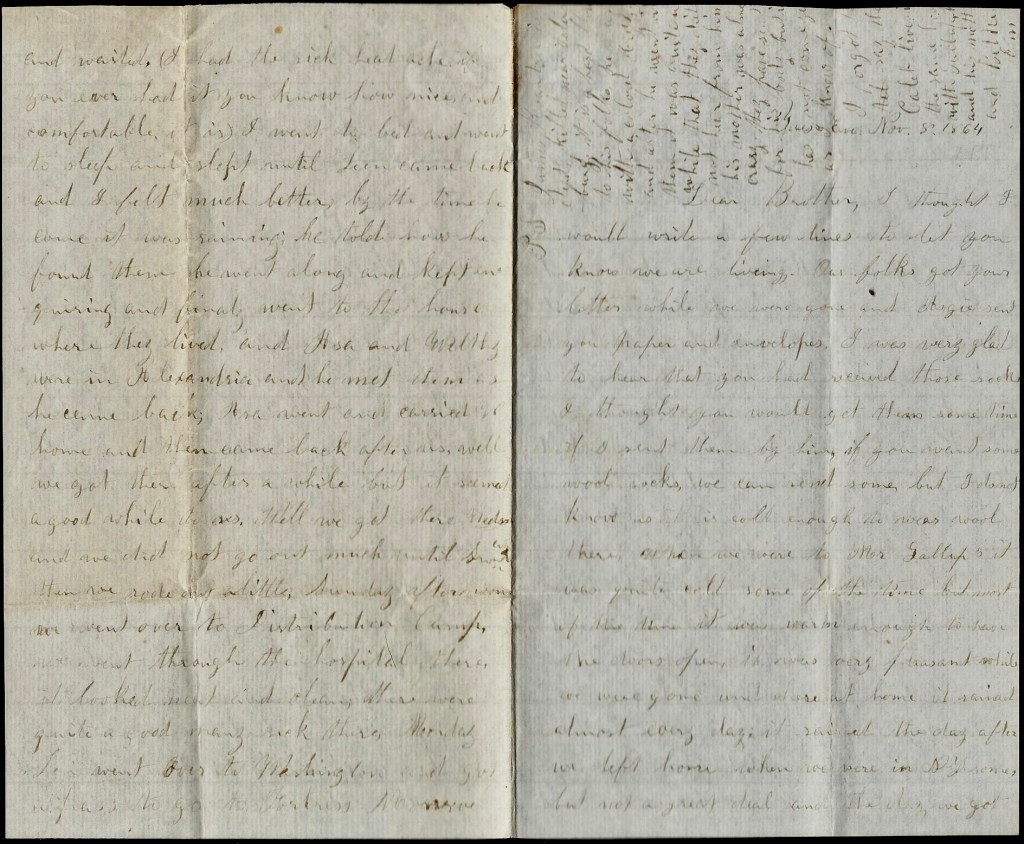
Transcription
[Wampsville, Lenox, Madison county, New York] Tuesday eve., November 8, 1864
Dear Brother,
I thought I would write a few lines to let you know we are living. Our folks got your letter while we were gone and Angie sent you paper and envelopes. I was very glad to hear that you had received those socks. I thought you would get them some time if I sent them by him. If you want some wool socks, we can send some but I do not know as it is cold enough to wear wool there.
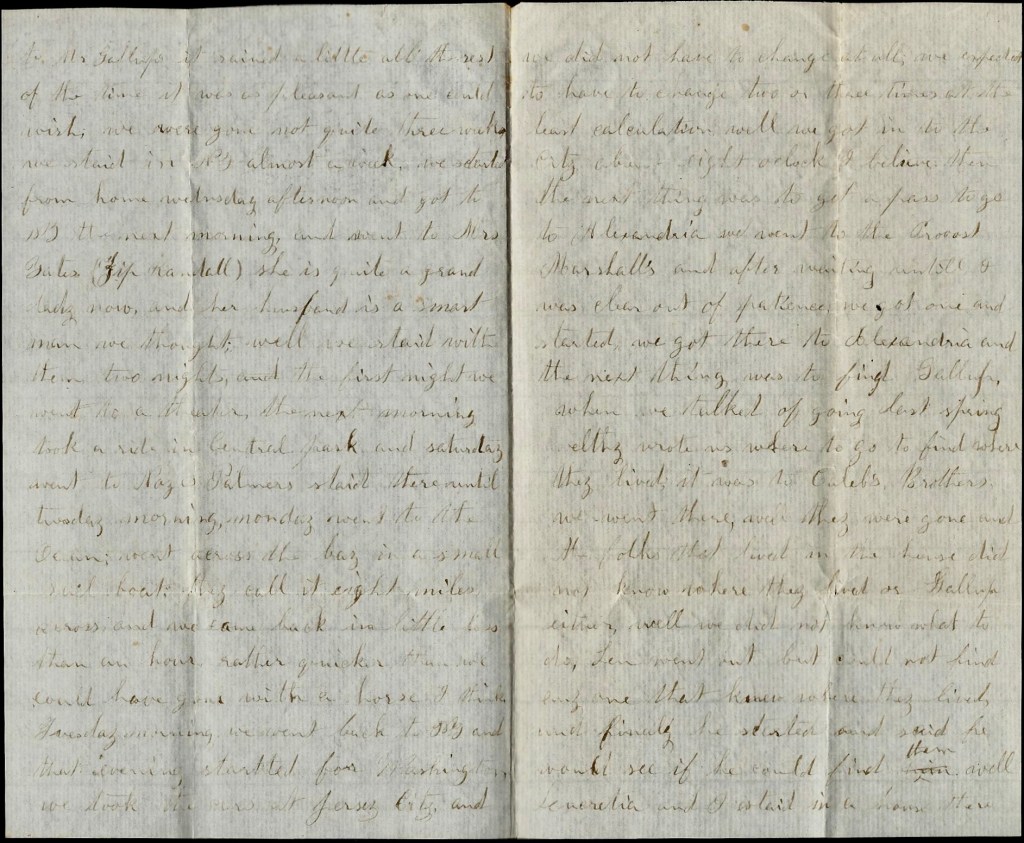
When we were to Mr. [Asa] Gallup’s, 1 it was quite cold some of the time but most of the time it was warm enough to have the doors open. It was very pleasant while we were gone and here at home it rained almost every day. It rained the day after we left home, when we were in New York some—but not a great deal, and the day we got to Mr. Gallup’s it rained a little. All the rest of the time it was as pleasant as one could wish. We were gone not quite three weeks. We stayed in New York almost a week. We started from home Wednesday afternoon and got to New York the next morning, and went to Mrs. Gates. (Tip Randall). She is quite a grand lady now and her husband is a smart man we thought. Well, we stayed with them two nights and the first night we went to a theatre. The next next morning took a ride in Central Park, and Saturday went to Noyes [G.] Palmer’s. 2 Stayed there until Tuesday morning. Monday went to the ocean; went across the bay in a small sailboat. They call it eight miles across and we came back in little less than an hour—rather quicker than we could have gone with a horse I think.
Wealthy (Palmer) Gallup, ca. 1864, Photographed by E. W. Beckwith, No. 220 King Street, Alexandria, Va.
Tuesday morning we went back to New York and that evening started for Washington [D. C.]. We took the cars at Jersey City and we did not have to change at all. We expected to have to change two or three times at the least calculation. Well we got into the city about eight o’clock, I believe. The thing was to get a pass to go to Alexandria, We went to the Provost Marshal’s and after waiting until I was clear out of patience, we got one and started. We got there to Alexandria and the next thing was to find Gallup. When we talked of going last spring, Wealthy wrote us where to go to find where they lived. It was to Caleb’s brother’s. We went there [and] well, they were gone and the folks that lived in the house did not know where they lived or Gallup either. Well we did not know what to do. Len went out but could not find anyone that knew where they lived and finally he started and said he would see if he could find them.
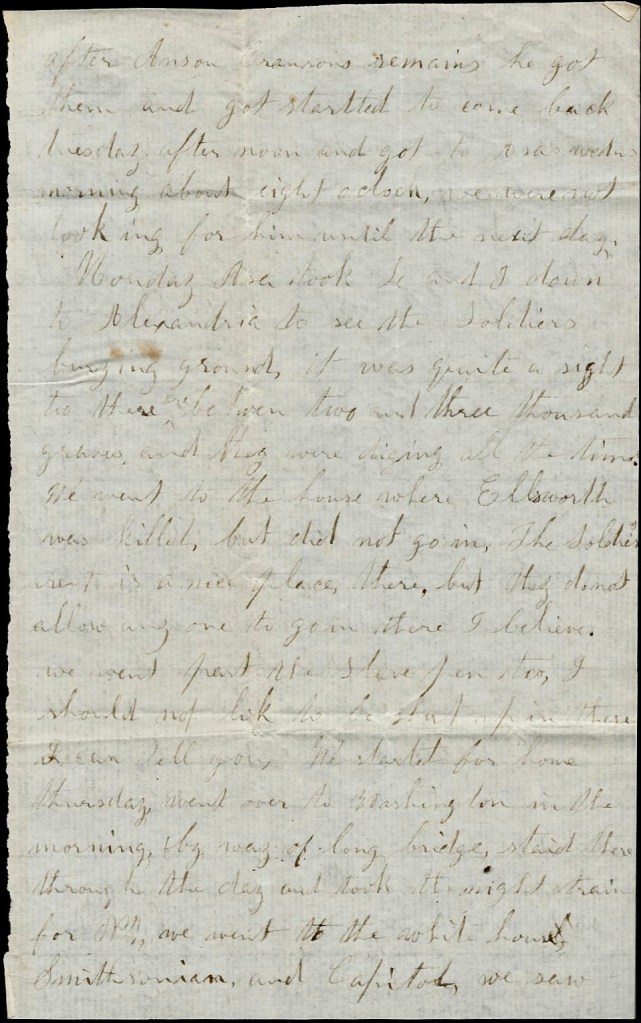
Well Lucretia and I stayed in a house there and waited. (I had the sick headache. If you ever had it, you know how nice and comfortable it is.) I went to bed and went to sleep and slept until Len came back and I felt much better. by the time he came, it was raining. He told how he found them. He went along and kept enquiring and finally went to the house where they lived, and Asa and W[ealthy] were in Alexandria and he met them as he came back. Asa went and carried W[ealthy] home and then came back after us. Well we got there Wednesday and we did not go out much until Sunday, Then we rode out a little. Sunday afternoon we went over to Distribution Camp. We went through the hospital there. It looked neat and clean. There were quite a good many sick there. Monday, Len went over to Washington and got a pass to go to Fortress Monroe after Anson Cranson’s remains. 3 He got them and got started to come back Tuesday afternoon and got to Asa’s Wednesday about eight o’clock. We were not looking for him until the next day.
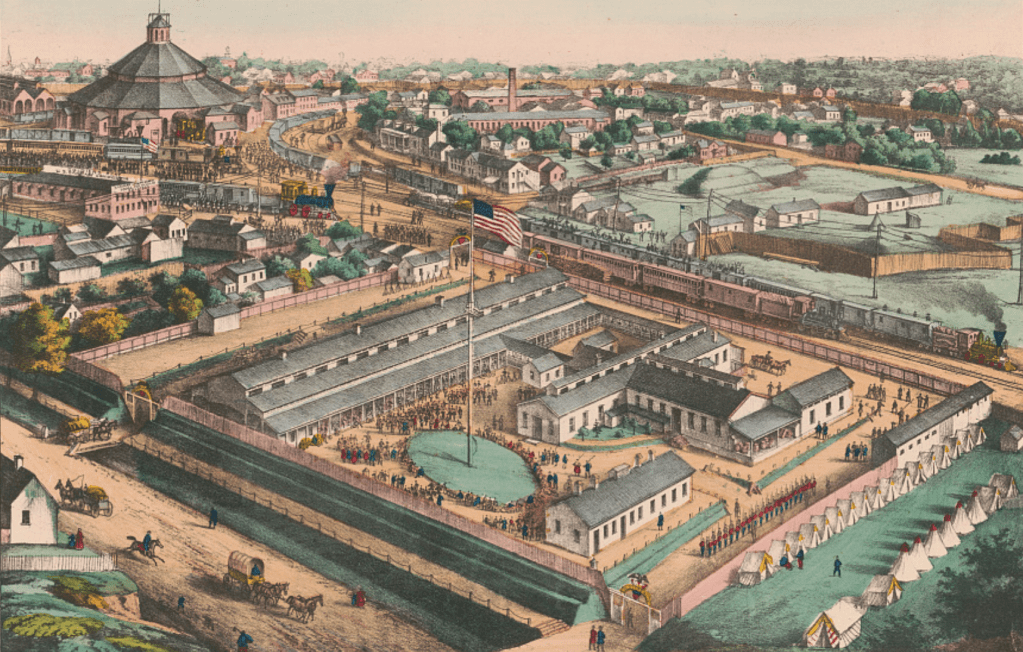
Soldier’s Rest in Alexandria, Virginia (ca. 1864). It was located near the Orange & Alexandria Railroad Depot. It was used as a hospital from 28 May to 4 October 1864.
Monday, Asa took Lucretia and I down to Alexandria to see the soldier’s burying ground [now the Alexandria National Cemetery]. It was quite a sight too. There are between two and three thousand graves and they were digging all the time. We went to the [Marshall] house where [Elmer] Ellsworth was killed but did not go in. The Soldier’s Rest is a nice place there but they do not allow anyone to go in there, I believe. We went past the slave pen too. I should not like to be shut up in there, I can tell you.
We started for home Thursday. Went over to Washington in the morning by way of the Long Bridge, stayed there through the day, and took the night train for New York. We went to the White House, Smithsonian and the Capitol. We saw more than I can remember but I suppose that you have seen them all and more.
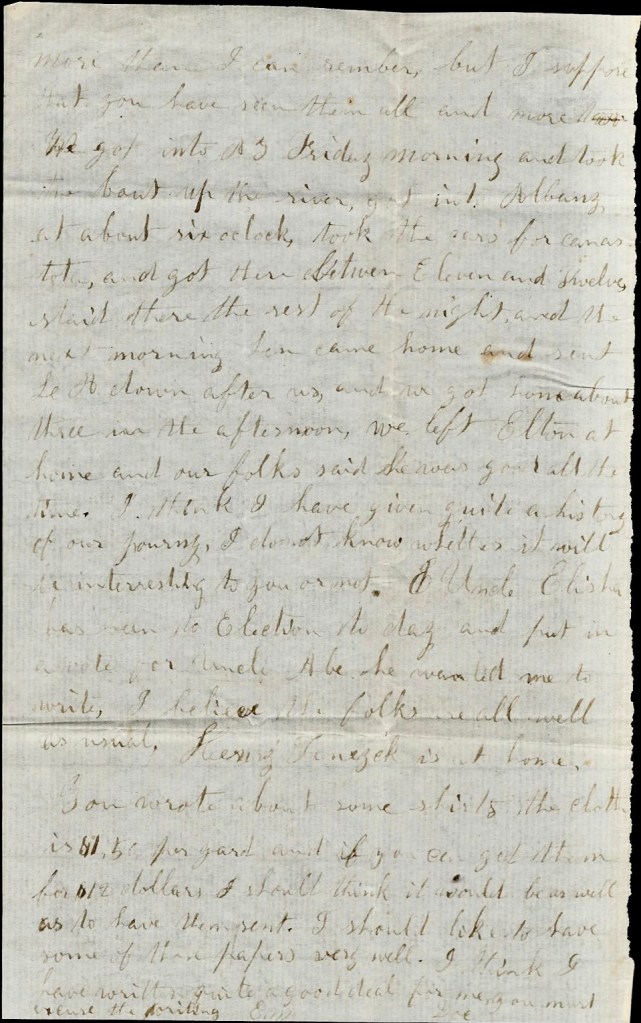
We got into New York Friday morning and took the boat up the river. Got into Albany at about six o’clock, took the cars for Canastota, and got there between eleven and twelve. Stayed there the rest of the night and the next morning Len came home and sent L. A. down after us and we got home about three in the afternoon. We left Elton at home and our folks said he was good all the time.
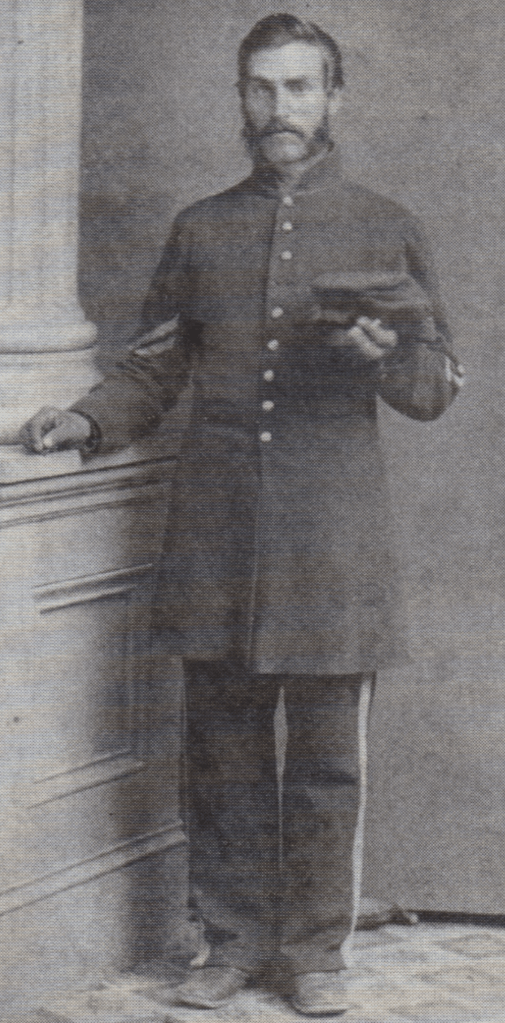
Corp. James Roantree, Co. B, 157th New York Infantry. Later a 2nd Lt. of 43rd USCT & KIA at Hatcher’s Run
I think I have given you quite a history of our journey. I do not know whether it will be interesting to you or not. Uncle Elisha has been to election today and put in a vote for Uncle Abe. He wanted me to write. I believe the folks are all well as usual. Henry Fenzek is at home.
You wrote about some shirts. The cloth is $1.50 per yard and if you can get them for $12 dollars, I should think it would be as well as to have them sent. I should like to have some of those papers very well. I think I have written quite a good deal for me. You must excuse the writing. — Em
P. S. James Roantree is dead—killed near Petersburg. 4 It is a hard blow to his folks. He was with a colored regiment and after he went with them, it was quite awhile that they did not hear from him. His mother was almost crazy. They have sent for his body but it has not come yet as I know of. I forgot to say that Caleb lives in the same house with Gallup and his mother and Bettie. — Em
1 Em is referring to Mr. Asa Oran Gallup (1819-1865) of Alexandria, Virginia. He was the husband of Wealthy Philena Palmer (1831-1914) who was raised in Lenox, Madison county, New York, the daughter of Elijah Palmer (1786-1867) and Lovicy Davis (1792-1857). Asa died the following year at the age of 46.I believe he was employed as a teacher.
2 Noyes Grant Palmer (1822-1892) was the son of Stephen W. Pamer (1793-1879) and Huldah Palmer (1797-1882) of Lenox, Madison county, New York. In 1860, Noyes had his residence in Newtown in Queens county on Long Island. In 1866 he moved to Kings county to become the superintendent of the Cypress hills Cemetery.His obituary claims he once devised a method for forcasting weather changes.
3 Anson Booth Cranson (1849-1864) was a private in Co. B, 169th New York Infantry. He was just two weeks beyond his 15th birthday when he died of chronic diarrhea on 13 September 1864 in the general hospital at Hampton, Virginia. (The regimental records have him as being 18 years old when he enlisted at Troy in February 1864. But they also have him as being in Co. A and dying of wounds on 13 September 1864, despite what hospital records show.)
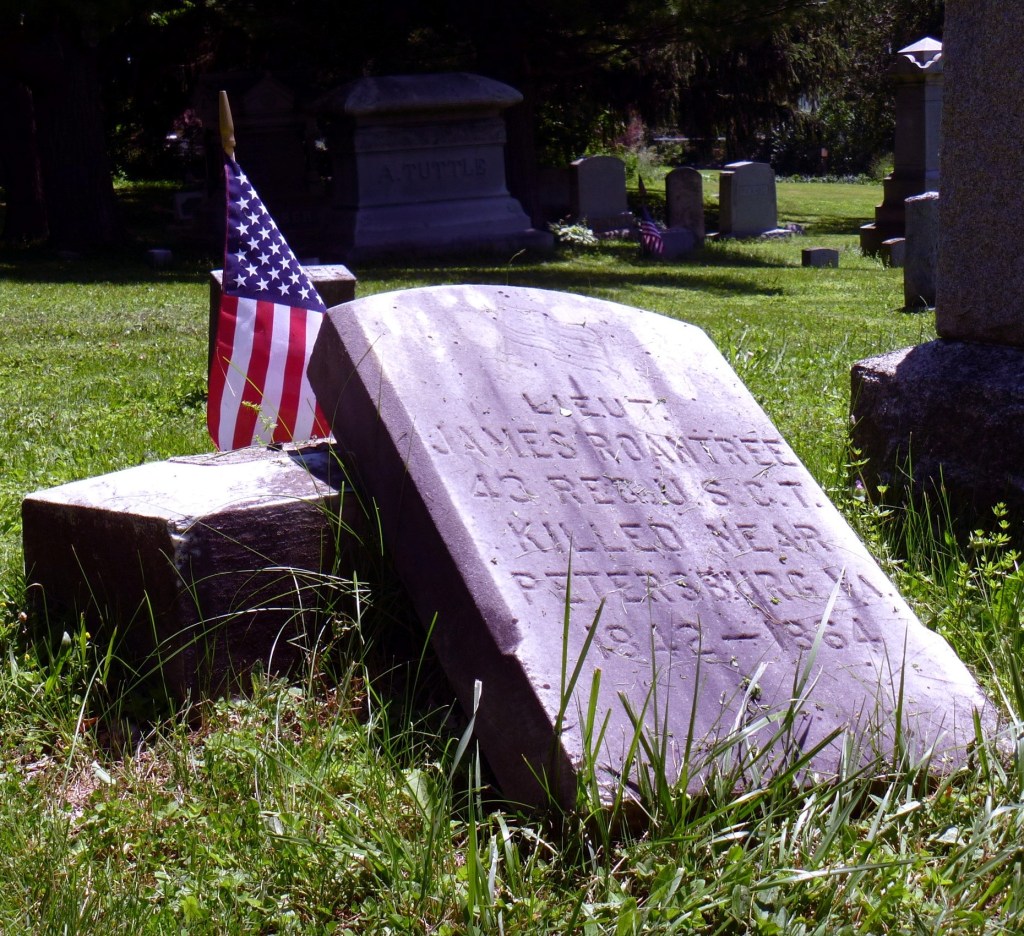
4 James Roantree, Jr. (1842-1864) served initially as a corporal in Co. B, 157th New York Infantry. He was wounded in action at Gettysburg and discharged on 8 September 1864 to accept a commission as a 2nd Lieutenant in Co. A, 43rd US Colored Troops (USCT). He was killed a few weeks later in the fighting at Hatcher’s Run on 27 October 1864. The following summarizes the movements of the 43rd USCT at Harcher’s Run: “With the corps, it marched for the Weldon Railroad, and in the action at that point, on the 19th and 20th of August, and at Poplar Grove Church, on the 29th and 30th of September, it was engaged, but fortunately suffered little loss. In the battle of Hatcher’s Run, on the 27th and 28th of October, it held the position of skirmishers in front of the Ninth Corps, and gallantly assisted in repulsing the repeated charges of the enemy. Two lines of breast-works which served an important purpose in the fight, were constructed in the face of a severe fire, by this regiment, for which it was highly commended. It was the last regiment to leave the field, covering the retiring movement. Its loss in the action was one officer, Lieutenant James Roantree, and seven men killed, four officers and eighteen men wounded, and one taken prisoner.” James has a (fallen) headstone in the Clockville Cemetery in Madison county, New York. Presumably his remains were sent home to his parents, James Roantree, Sr. *1813-1892) and Ann Ellis Pinckney (1816-1884).

 Spared & Shared 23