Category Archives: 15th Massachusetts Infantry

Amos Chatman Plaisted of the 15th Massachusetts Infantry Remembers Gettysburg

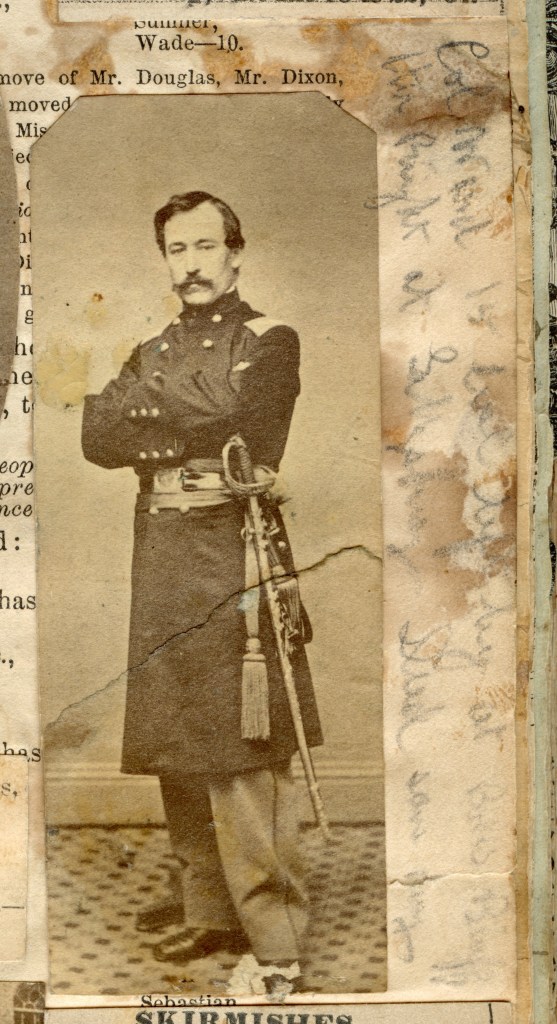
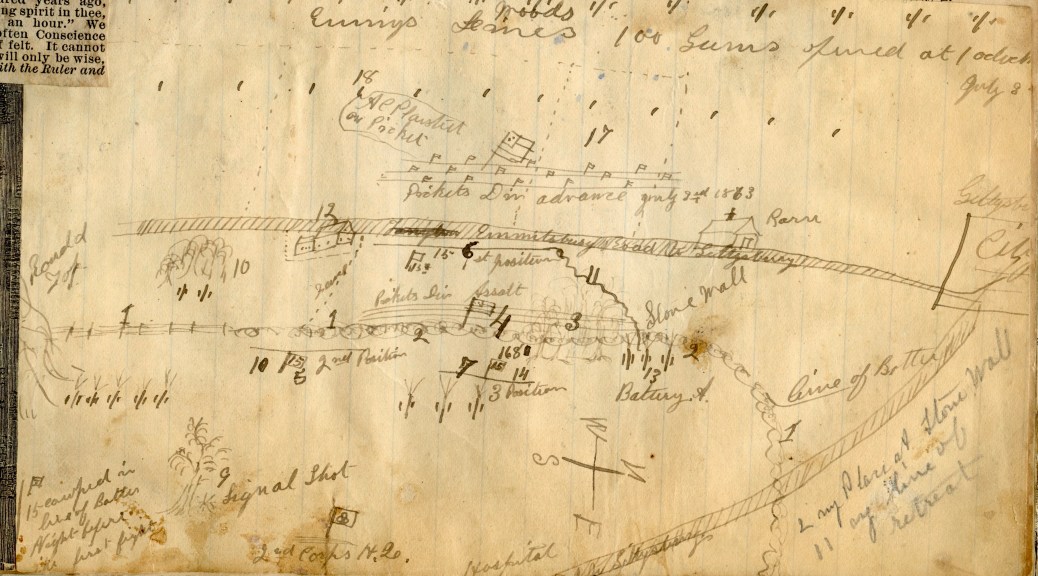
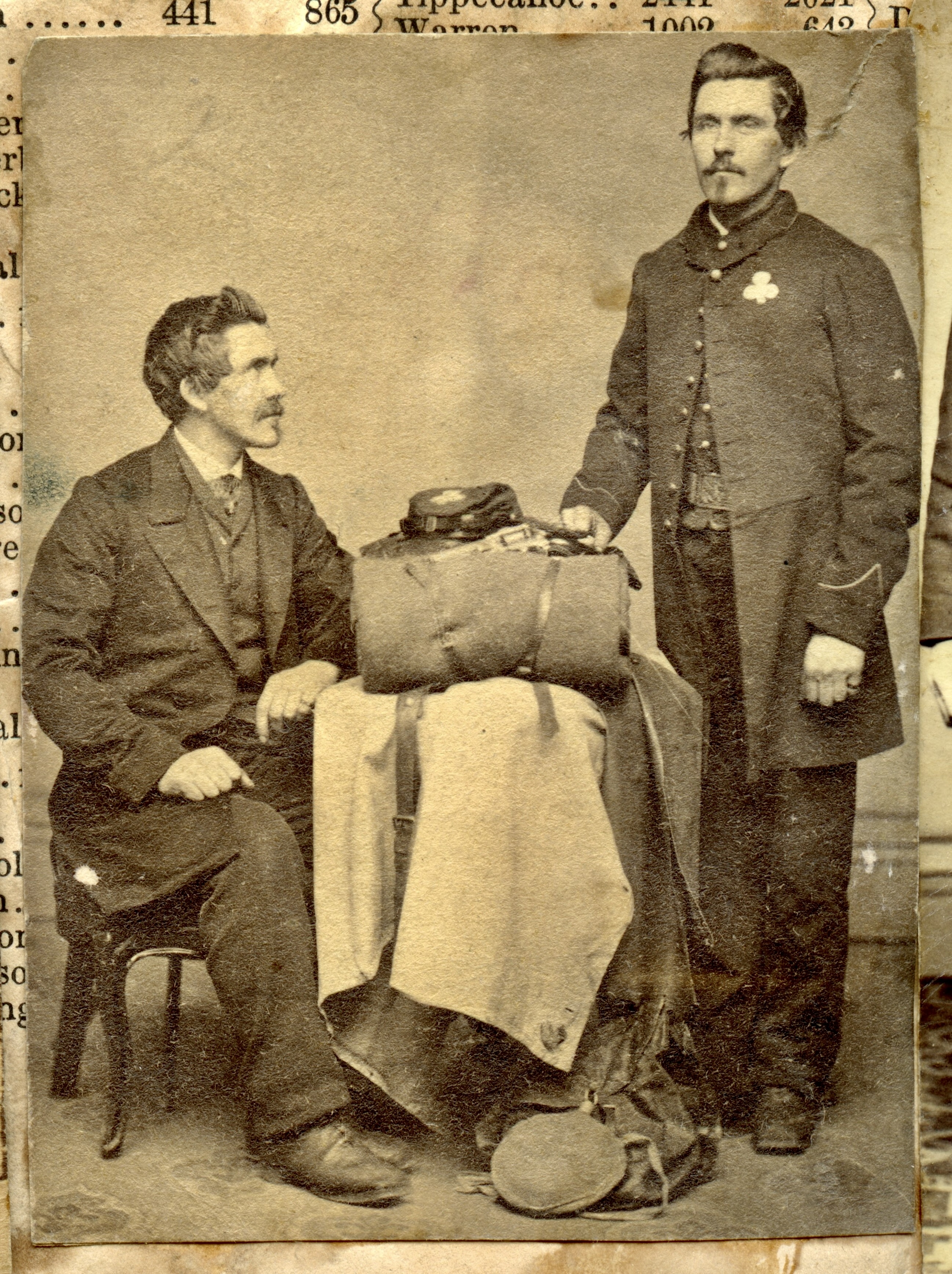
A double exposure image of Amos C. Plaisted wearing both military and civilian clothes. It was most likely taken just after he was discharged from the service, demonstrating his return to life as a civilian.

The following memorandum of the Battle of Gettysburg was written by Amos Chatman Plaisted (1844-1902) of Co. B, 15th Massachusetts Infantry. Amos was born in Dec 1844 at Haverhill, Grafton County, New Hampshire, son of Elisha Plaisted (1805-1873) and Hannah B. Huntley (1821-1847). At the time of his enlistment in July 1861, Amos gave his occupation as “machinist.” On his way to war, Amos wrote his parents, “We had a first rate time all the way from Worcester. We came through Connecticut, New Jersey, Pennsylvania, Delaware and Maryland — so I have seen many of the largest cities in the union, and now I want to fight and have the war settled! then I shall be contented to settle down in the shop again. But don’t worry about me, for all I want is strength to do my duty, and if I fall — so be it!”

It is my opinion that this memorandum was written some years after the war and for the benefit of his son, Edgell R. Plaisted (b. 1870). My guess would be that it was written about 1890. It was found in a scrapbook kept by Amos and acquired recently by Paul Russinoff who made it available for transcription and publication on Spared & Shared by express consent.

In the mid-1880s, the 15th Massachusetts infantry placed their monument on the battlefield at Gettysburg just south of the copse of trees where its members were fighting at the time that “Picket’s Charge” was ultimately repulsed. It was later determined by the Gettysburg Battlefield Memorial Association that regimental monuments should be placed on the battlefield where the regiments first lined up in battle formation, not where they ended up, so the 15th Massachusetts monument was relocated to a point some 200 yards further south on the Federal line. This ruling did not sit well with some of the veterans of these regiments who helped turn back the Confederate assault near the copse of trees and wished to see their monuments remain at the center of the action. Memoirs such as this by Plaisted may have been written in part to make certain historians did not forget their contribution in winning the day.
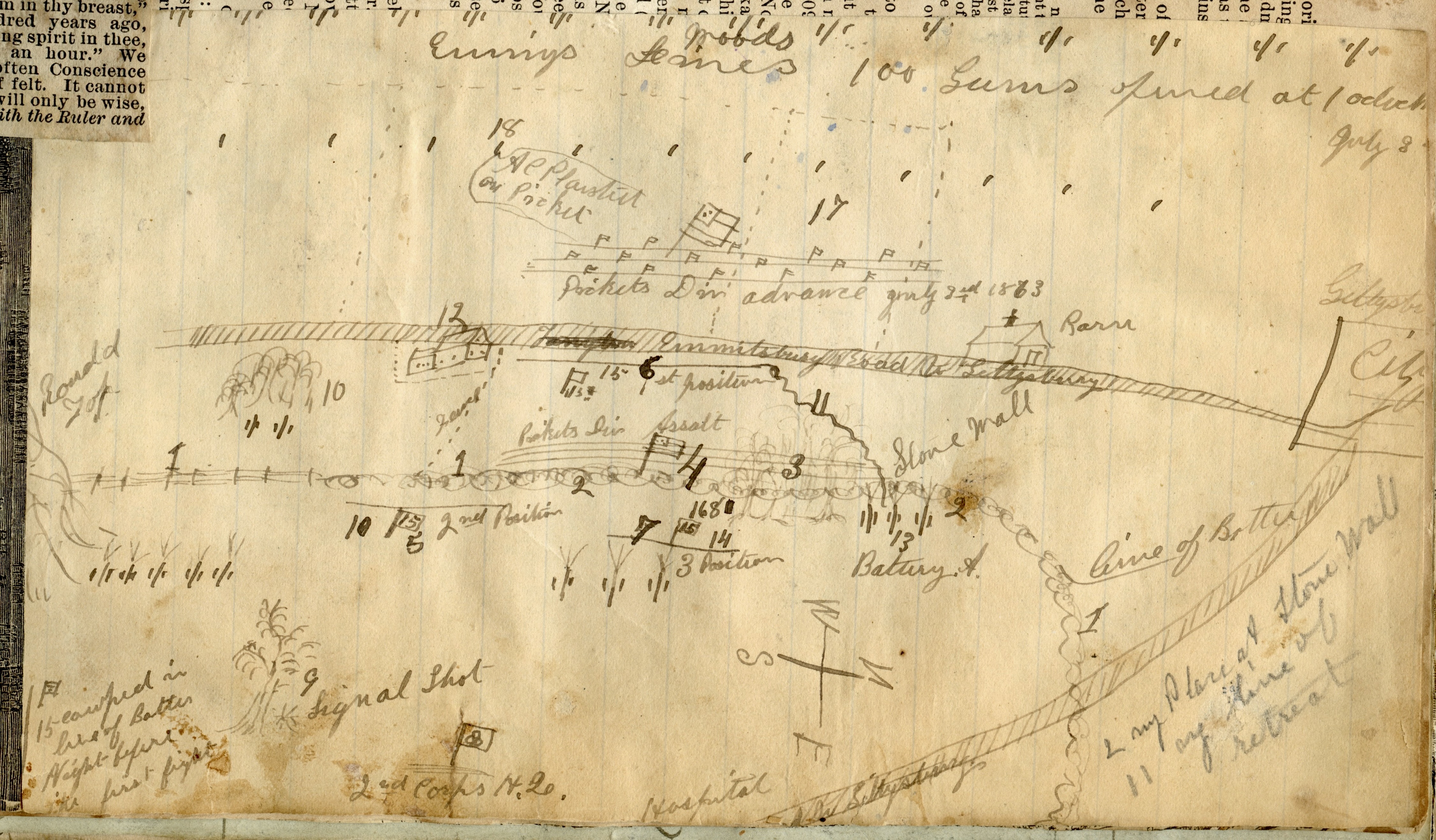
A sketch of the Gettysburg Battlefield showing the placement of the 15th Massachusetts, drawn by Amos C. Plaisted of Co. B. This sketch was pasted into his scrapbook.

T R A N S C R I P T I O N

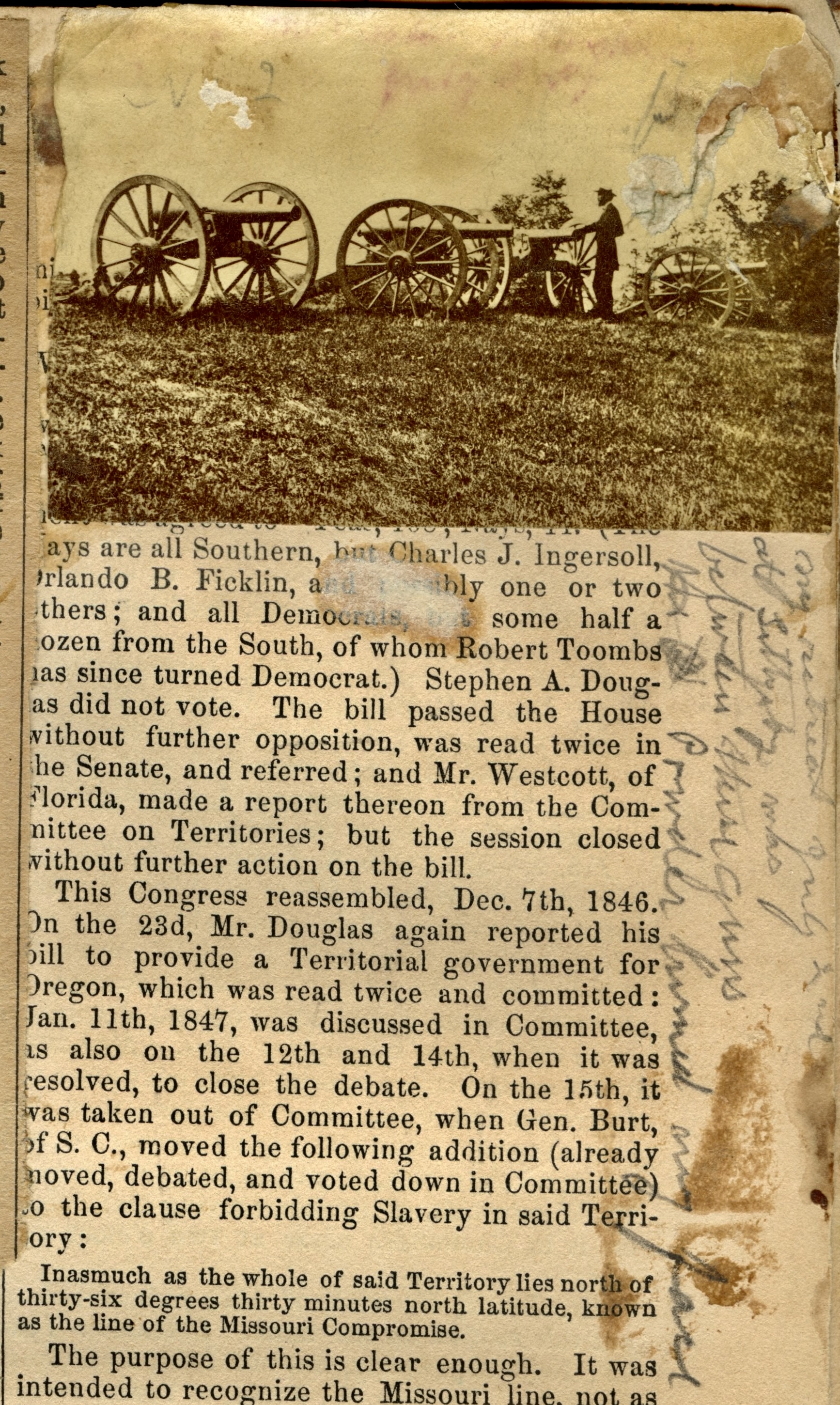
Gettysburg. After the fight we were four men for duty out of 22. Eleven were taken prisoner July 2nd when we fell back from the Brick [Codori] House through Battery A. My face was burned by powder and some of the regiment was killed by our own guns. They fired on many when we were all mixed up together.
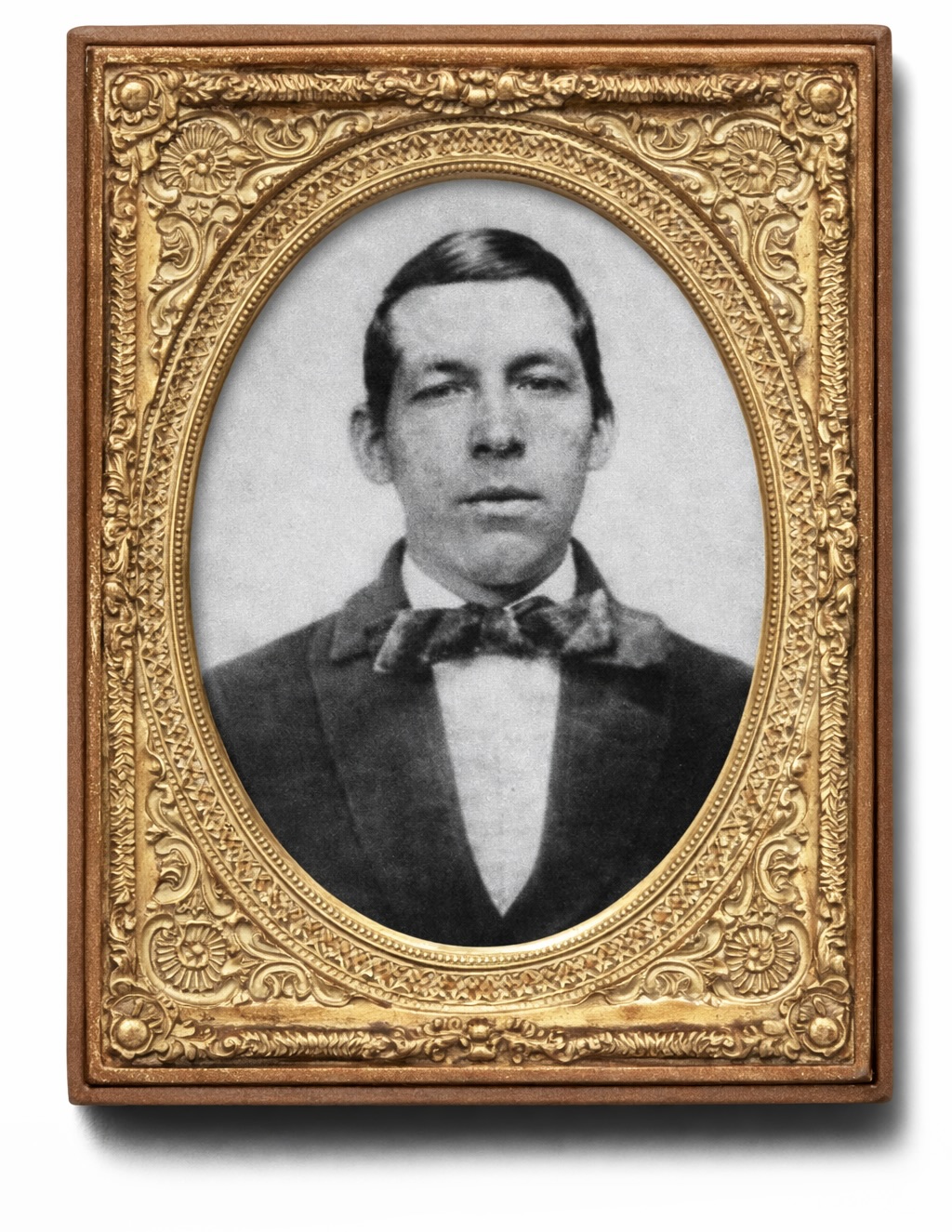
John Marsh, Co. B, 15th Mass. Infantry

July 3rd, four were killed, three wounded and [George] Cunningham and I were with Peckham and [Flavel] Leach only were unhurt. We found the body of [John] Marsh near copse of trees with a McClellan medal fastened on his coat that had worn ever since Little Mac left us. We sent it to his father at Bedford, Mass. I marked a board so we left his grave marked and is now known.

As Longstreet’s Division charged upon copse of trees, our line fell back and my Brigade was sent up double quick to close the gap and check further advance. We got into the gap in a huddled mass and as we stood there firing upon the enemy who were now secure behind the wall and cutting us down fast with their flag planted on the wall, Jim Tenny [of Co. B] said to Cunningham, let us charge on them; they cut us all down if we stand here. Then Cunningham called out, “For God’s sake, let us charge on boys!” and we acted on the suggestion at once and as we neared the wall, the rebs broke and run. I was by the side of [Sgt. William Henry] Savage of Co. A when he fell and saw no one else near but in the excitement and smoke it is probable that many were all around near us—at least it is not probable Savage and I were alone or ahead in the charge which was done by at least a very few hundred men.
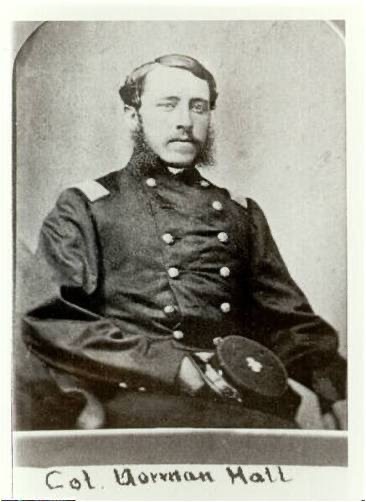
Col. Norman J. Hall commanded the 3rd Brigade, 2nd Division 1st Corps

Our Brigade was not over 1,000 and the 15th [Massachusetts] flag was the first to advance though Gen. [Norman J.] Hall called out as we started for the wall, “Forward, that there color!” I thought it was one of his regiments and history gives to credit [writing illegible] which is false …of my company and in fact [ ] that I was at the wall myself and that [ ] was with my regiment and brigade and that the 15th [Mass.] flag was first to advance is clear proof that we done that job through a flank fire on the enemy’s right. The continuous [weakening?] all round had much to do towards making our advance to have effect. Yet what must have been had we not charged is uncertain. Surely at that moment it looked very much as though the enemy would hold this ground gained and perhaps win the day.

Certain it is had Hall ‘s men first advanced, I could not possibly [have] got near the wall and the colors and men would not have been near the place where our dead were found after the battle. The fact that your father was at that wall at that time is ever be your pride. It is more valuable than any honor that could be bestowed through at the time I regarded it a mere circumstance in which I happened to be mixed up in.
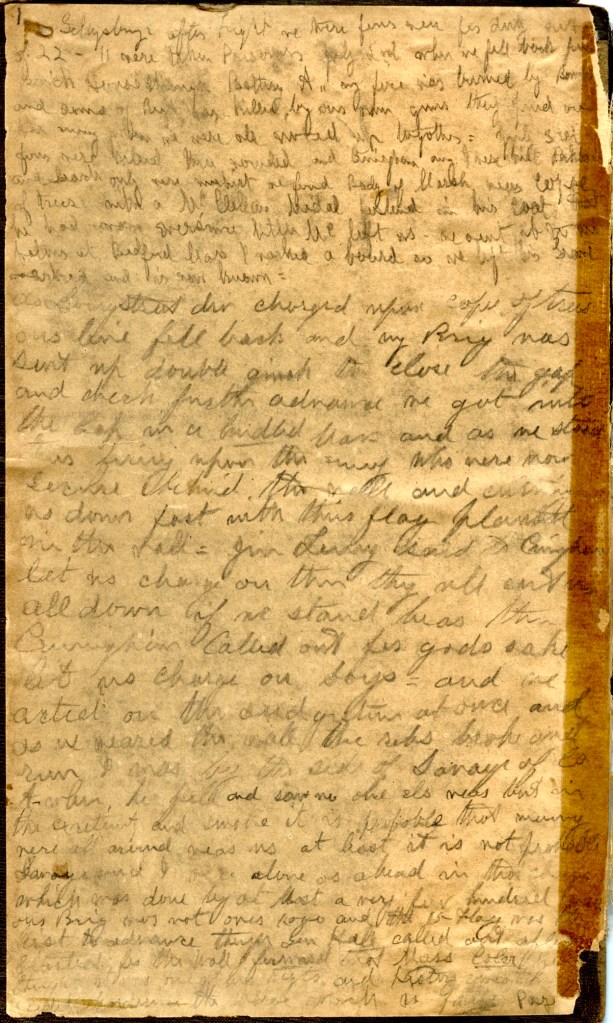
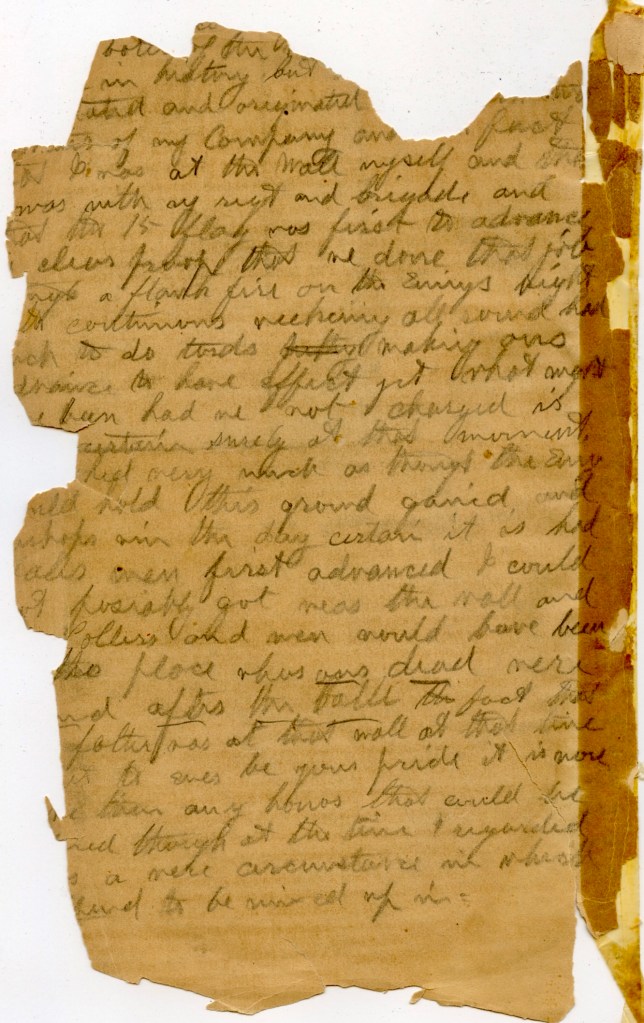
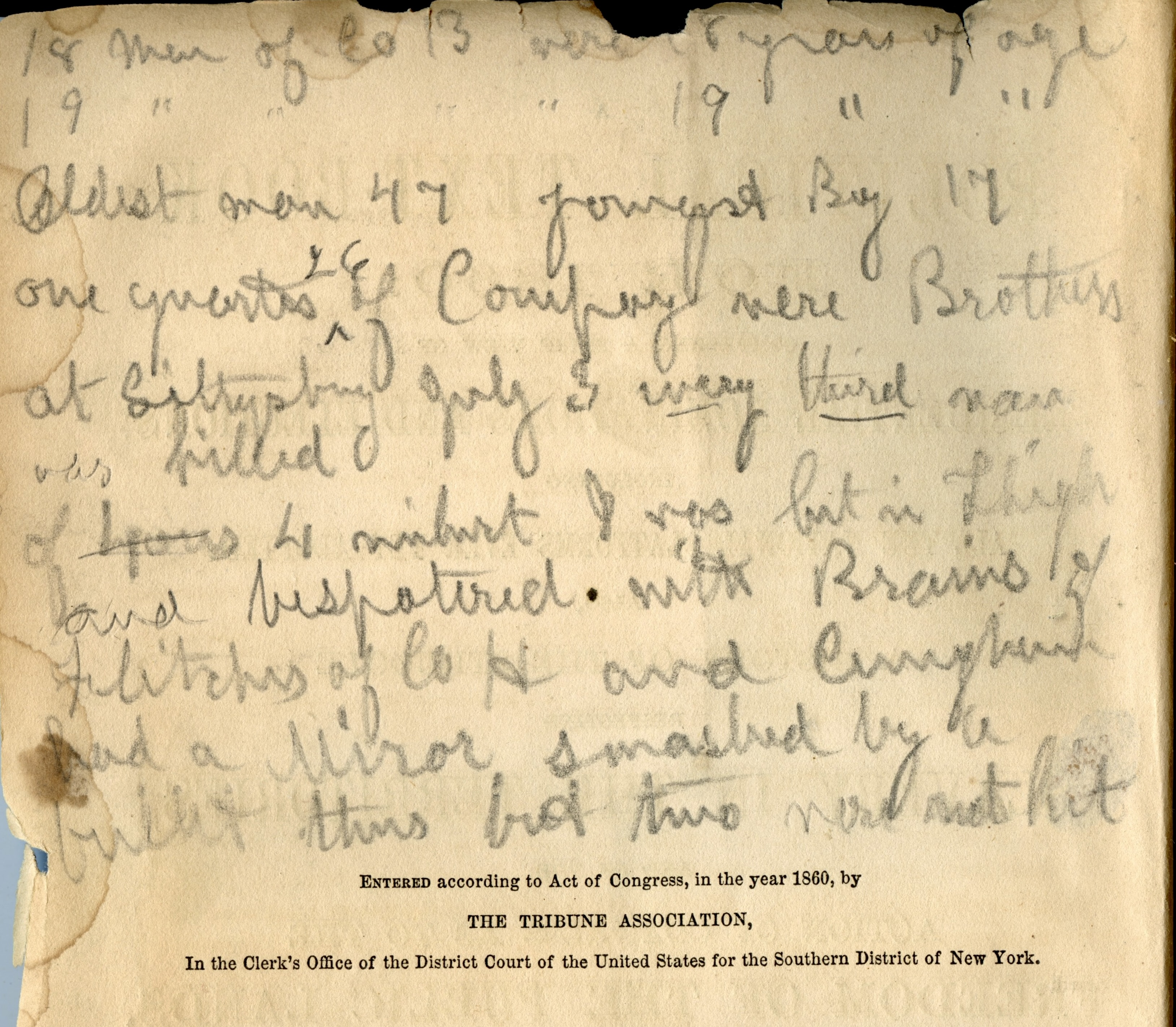
Additional notes by Amos C. Plaisted:

18 men of Co. B were 18 years of age
19 men of Co. B were 19 years of age.
Oldest man 47; youngest boy 17.
One quarter (26) of Co. B were brothers.
At Gettysburg, July 3rd, everything third man was killed.
Of four unhurt (at Gettysburg), I was hit in thigh and bespattered with brains of [George Fergo] Fletcher of Co. H 1 and Cunningham had a mirror smashed by a bullet; thus but two were not hit.

1 See also: “Civil War history lost…and found,” John Banks’ Civil War Blog.
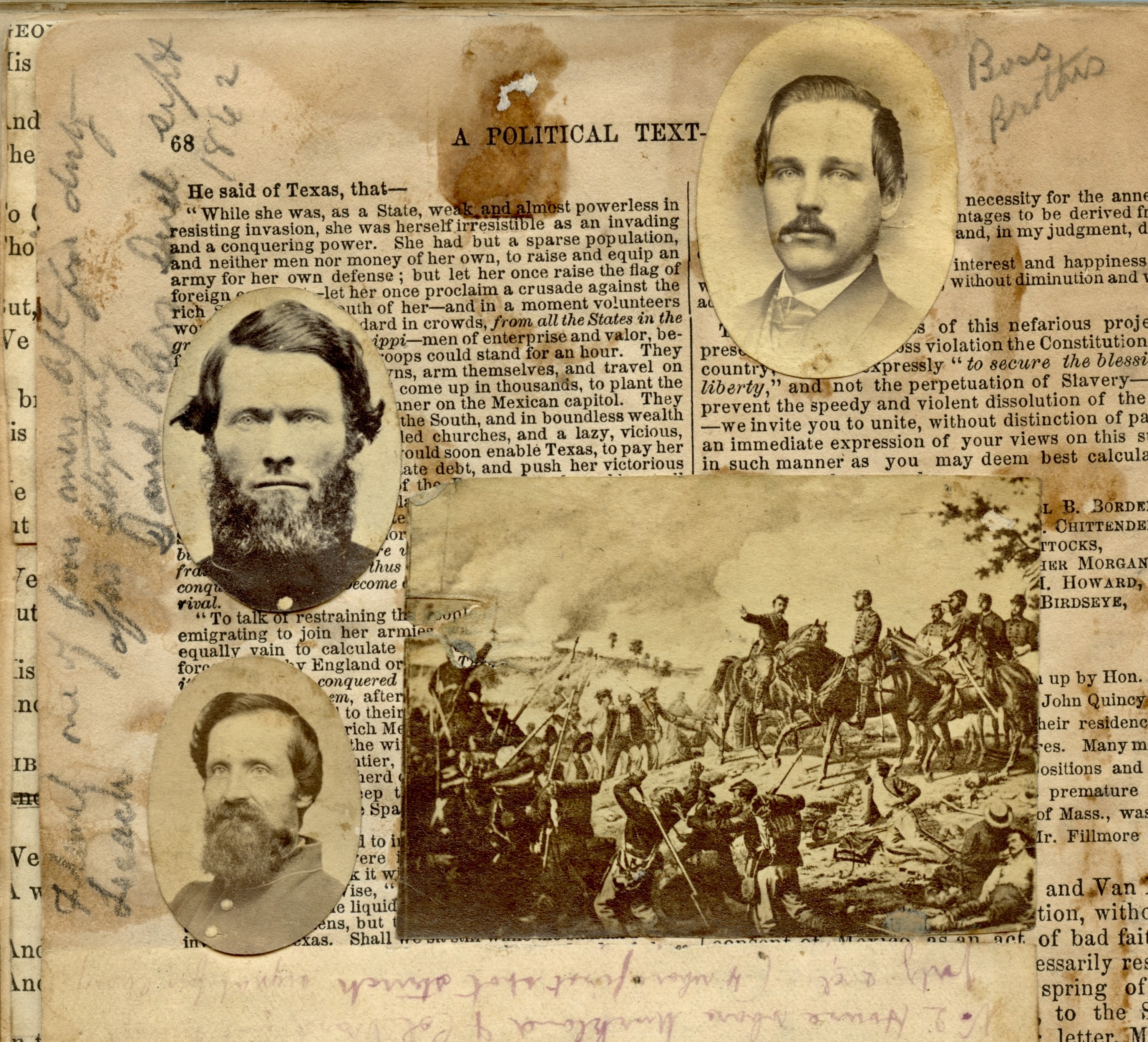
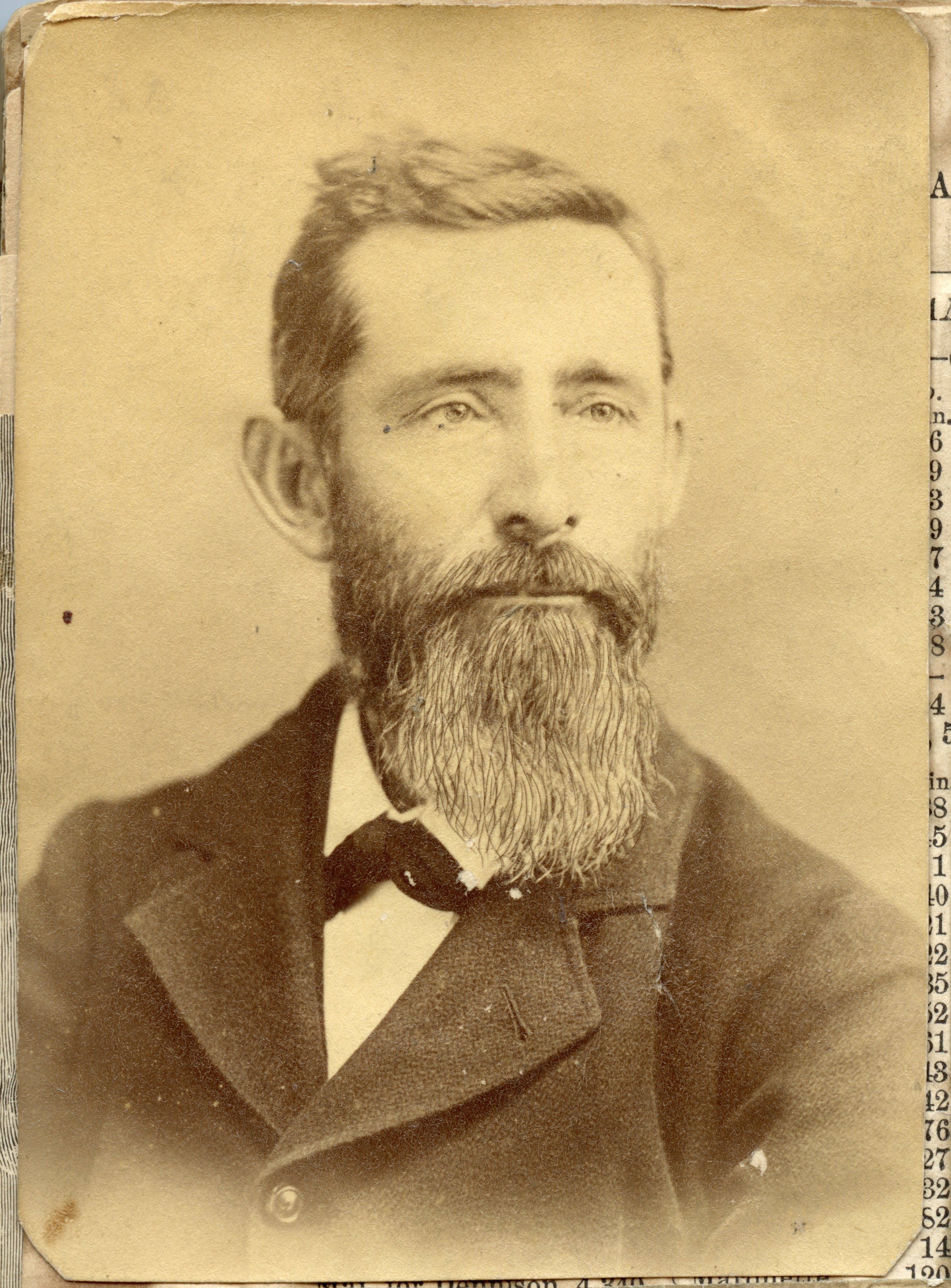
More photographs from Plaisted’s Scrapbook. These include (left to right) a post-war image of him; a photograph of the cannons with his caption, “my retreat July 2nd at Gettysburg was between these guns, powder burned my face;” and several images of his comrades including Flavel Leach (lower left), “one of the four men left for duty after Gettysburg.”
1862: Albert Everett to Leonard Fessenden Everett

The following letter was written by Albert Everett (1840-1937), the son of Leonard Fessenden and Freelove Darling of Worcester county, Massachusetts. When Albert was 14, his widowed father took Hannah Hopkins as his second wife, she being the widow of George Mann. When Albert was 21 years old, he gave up his shoe cobbler’s hammer for a rifle and stepped into the ranks of Co. H, 15th Massachusetts Infantry as a private. Joining him in the same company was his 19 year-old step-brother William Maxy Burlingame Mann (1842-1861) with a name longer than his time in service; he was killed on the field of the regiment’s first fight, the Battle of Ball’s Bluff, on 21 October 1861

Albert was promoted to Corporal in 1 May 1863 and barely had his stripes sewed on when he was wounded in action in the fight near the Codori Barn on the 2nd day of Gettysburg. He was not alone. During the 3-day battle, the 15th Massachusetts lost 22 killed, 93 wounded, and 28 missing or captured—a casualty rate of 60%. Albert survived his wounds, however, and finished out his term of service, mustering out on 15 July 1864. Afterwards he volunteered as a teacher in the Freedman’s Bureau in South Carolina. [Historical Digression by Patrick Browne]

This letter was written while the regiment remained a part of the Corps of Observation stationed at Poolesville, Maryland–about halfway along the Potomac between Washington and Harpers Ferry. While in this assignment, they were called upon to play a significant role in the disastrous Battle of Ball’s Bluff on October 21, 1861, and a large number of the regiment was taken prisoner during the rout. They then spent the winter of 1861-1862 in camp along the Potomac and were not transferred to the Army of the Potomac until late March, just in time for the Peninsular Campaign.

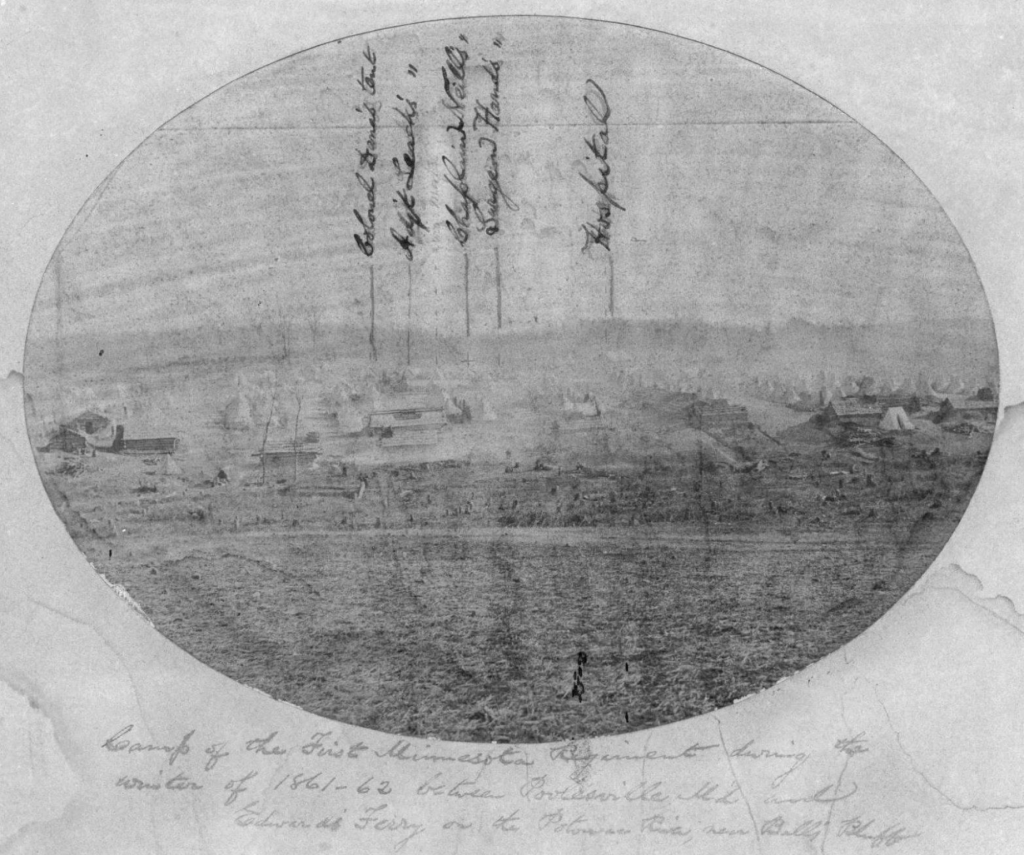
Camp of the 1st Minnesota near Poolesville, Maryland in the winter of 1861-62. The 1st Minnesota were in the same brigade as the 15th Massachusetts. If you look closely you can see that they were using large Sibley tents as well.

Transcription

Addressed to L. F. Everett, Esq., Whitinsville, Massachusetts

Camp Foster
Poolesville, Maryland
February 24, 1862

Dear Father & Mother,

I sit down to write you a few lines today that probably will be the last that I shall date from this camp as we expect to move in a day or two. Nothing certain is known by us as to our place of destination. Last night after the Captain had inspected the company, he read an order that we should pack all our things that we did not want to carry in our knapsacks into boxes and have them all ready marked so when we moved, we should have only to nail them up and leave them in the Commissary’s care. The story is going round that we are going to join General Gorman’s Brigade and go to Washington and then go to join General Burnside. Gorman’s Brigade consists of our 20th, the N. Y. 34th and Minnesota 1st, I believe, and will be accompanied by another brigade—whose, I don’t know. All the regimental teams and camp furniture will be left, but what we can take on our backs. These large Sibley tents that hold 20 men are to be left and we are to carry little rubber ones that will hold 4 men, can be taken into four pieces, and can be pitched with our guns.

Whew, what a wind. Since writing the above, there has been no little commotion in camp. I have just come in from a sight of a very lively scene. Half or more of the tents in camp are flat as can be. Every tent in the Grafton quarters but one is down. Two of our tents are down and another is halfway and beneath its heavy folds, fifteen or twenty boys are struggling to get out like so many rats fastened up in a meal bag. The Clinton boys on the other side of us are no better off and we see part of them swarming round the ruins of their houses and the others are holding on to theirs with all their might hoping to keep them up if possible. Most of those who are not in such predicaments are indulging in the most hearty laughter at the ill luck of the rest.

When the blow first broke upon us, the boys all swarmed out and each catching an axe or club of wood, soon tightened the pins so we have not been rendered shelterless yet, though if the wind continues to blow such a hurricane, we shall have to “keep warm by traveling” before long. Rufus Belding has just come in bareheaded. He was down at the guard tents and standing beside one when over it came, knocked him flat, and held him there a minute or two. When he managed to get out from beneath the canvas, he found his hat had disappeared—on the “double quick” probably. This field is like Lawson Taylor’s plains—only it is up higher and as much exposed as the land up on Sutton Hills. 1

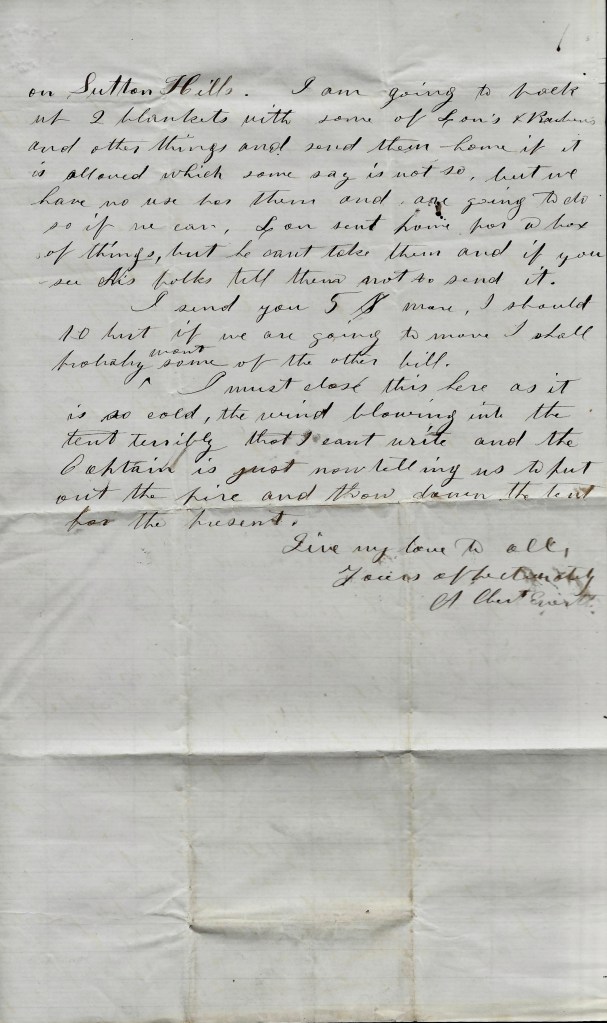
I am going to pack up 2 blankets with some of Lon’s & Reuben’s and other things and send them home if it is allowed, which some say is not so. But we have no use for them and are going to do so if we can. Lon sent home for a box of things, but he cant take them and if you see his folks, tell them not to send it.

I send you $5 more. I should 10 but if we are going to move, I shall probably want some of the other bill. I must close this here as it is so cold, the wind blowing into the tent terribly that I can’t write and the Captain is just now telling us to put out the fire and throw down the tent for the present. Give my love to all. Yours affectionately, — Albert Everett


1 This same wind storm was described by George W. Fernald of Co. C, 82nd New York Infantry who wrote to his cousin George on the same day from Camp Gorman (at Poolesville). “It is raining here now & the wind is a blowing a gale here. But I close now for our tent is blowing down.”