
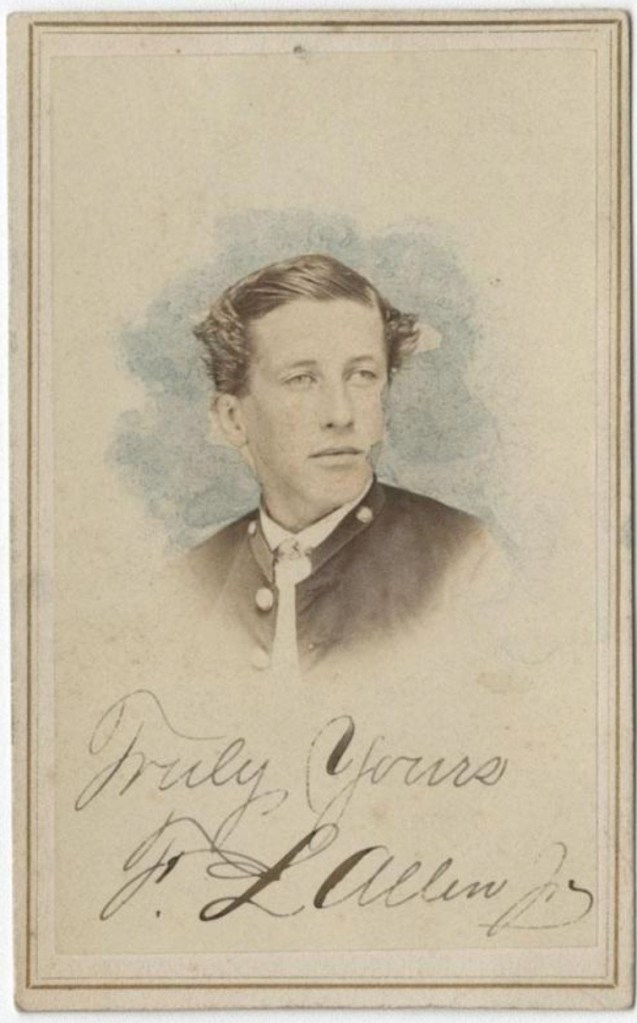
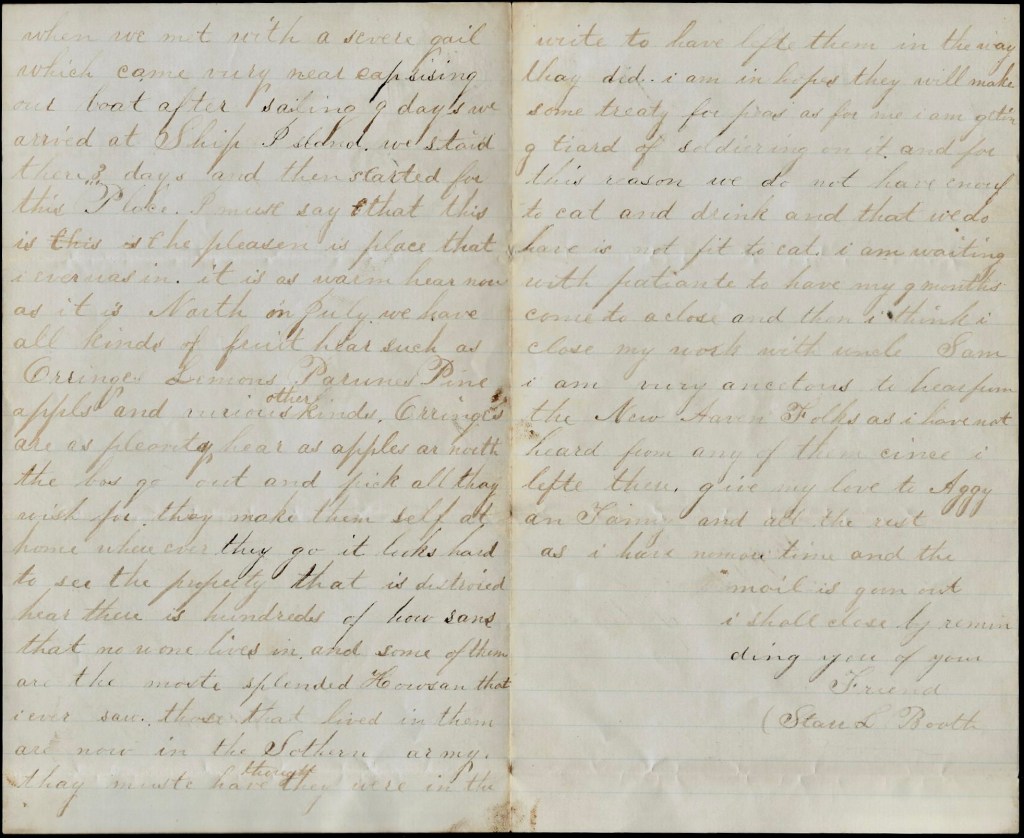
The following partial letter was written by a soldier in Co. C, 23rd Connecticut Infantry. There is no accompanying envelope nor second sheet with the author’s signature to help us further in his identification though he seems to refer to himself in the 3rd person at times as “Tom.” If his name was Thomas, there were only three in the regiment named Thomas—Thomas Gavon, Thomas Colopy, and Thomas Milnes. If I were to guess his age based on the content, I should think he was about twenty or less.
The letter provides us with a good description of the voyage to Louisiana from New York City aboard the Che Kiang steamer, and of the regiment’s occupation of Brashear City.
Transcription
Camp Brashear City
23rd Regiment, Co. C
January 31, 1863
Friends Cate, Sarah and Mary,
As I have not much to do this morning, I thought I would try and write a few lines to you to let you know that I am still in the land of the living. My health is very good and has been ever since you saw me. I have not lost a day. J__’s health has been good too. I should have written before but we have had a great deal of guard duty to do and drilling and we have moved so often that I could not get time to do my washing hardly. I have enjoyed myself better than I expected and I like soldiering far better than I thought I should but a soldier’s life is a hard life at last. But we are laboring for a good cause and we ought not to get tired of doing good although my help is but little. But I can shoot as many rebels as anybody if I get the chance. I have not had a chance yet but no doubt but I shall have as many shots as I shall want. I came down here to fight so I cannot find any fault if I do have a little to do.
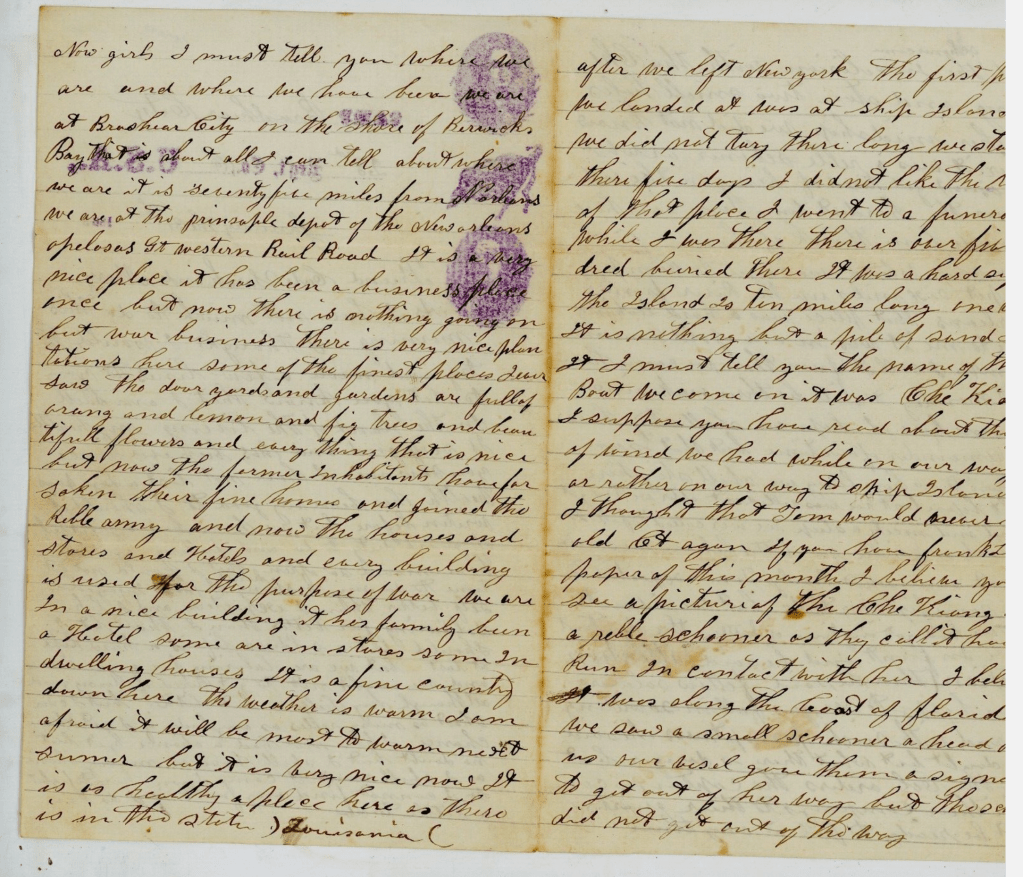
Now girls, I must tell you where we are and where we have been. We are at Brashear City on the shore of Berwick’s Bay. That is about all I can tell about where we are. It is seventy-five miles from New Orleans. We are at the principal depot of the New Orleans, Opelousas, Great Western Railroad. It is a very nice place. It has been a business place once but now there is nothing going on but war business. There is very nice plantations here—some of the finest places I ever saw. The door yards and gardens are full of orange and lemon and fig trees and beautiful flowers and everything that is nice. But now the farmer inhabitants have forsaken their fine homes and joined the rebel army and now the houses and stores and hotels and every building is used for the purpose of war. We are in a nice building. It has formerly been a hotel. Some are in stores, some in dwelling houses.
It is a fine country down here. The weather is warm. I am afraid it will be most too warm next summer but it is very nice now. It is as healthy a place here as there is in the state (Louisiana).
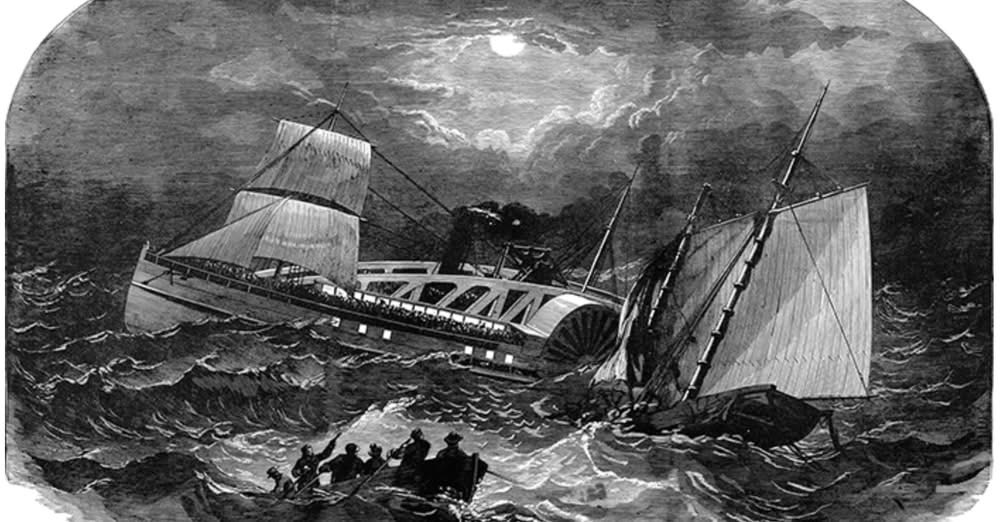
After we left New York, the first place we landed was at Ship Island. We did not tarry there long. We stayed there five days. I did not like the look of that place. I went to a funeral while I was there. There is over five hundred buried there. It was a hard sight. The island is ten miles long, one wide. It is nothing but a pile of sand. I must tell you the name of the boat we came on. It was the Che-Kiang. I suppose you have read about the gale of wind we had while on our way here, or rather on our way to Ship Island. I thought that Tom would never see old Connecticut again. If you have Frank Leslie’s paper of this month, I believe you will see a picture of the Che-Kiang after a rebel schooner, as they call it, had run in contact with her. I believe it was along the coast of Florida. We saw a small schooner ahead of us. Our vessel gave them a signal to get out of her way but the schooner did not get out of the way and the schooner came in collision with the Che-Kiang and stove two small hopes in her midship. We did not know whether it was a rebel schooner or what it was. I got tired of being on the water. It was the hardest time Tom ever had. It made him think of home.
From Ship Island we come to Camp Parapet six miles up the river from New Orleans. That place was a hard looking place to me. It was in one of the old Louisiana swamps, I call it. From there we came here. Next Monday it will be three weeks since we came here. I hope we shall stay here the remainder of our time but that is unknown to us how long we shall stay here. Night before last we was called out after we had got to bed and nicely asleep. We were called to fall in as quick as possible. You better believe we scrambled out somewhat lively. Tom expected to have some fighting to do but we did not. After we had got in line of battle, the Adjutant came in front and he said, “Attention Battalion.” Then he said, “Fellow soldiers. I am happy to see you fall in so willingly and with such promptness.” He said, “No doubt but what there is danger but by the Colonel’s orders the captains can take their companies to their quarters but be ready to fall in at any time.” [2nd sheet of letter is missing]


 Spared & Shared 23