
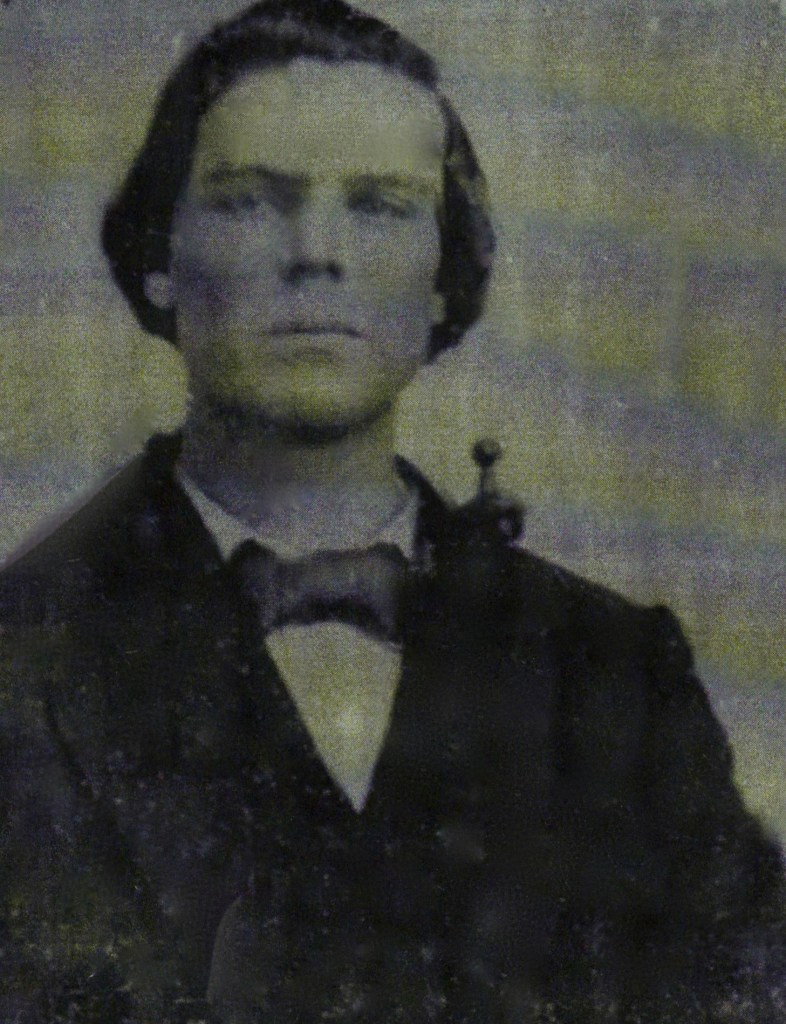
The following incredible letter was written by T. W. G. Inglet (1839-1910), the son of Mathew Wilkes Inglet (1806-1889) and Annie Baggett (1809-1873) of Bath, Richmond county, Georgia. Thomas was married to Martha Anna (“Mattie”) Palmer (1843-1916) in February 1856 when Mattie was only 16. By the time this letter was written in September 1863, 20 year-old Mattie had lost two young daughters who died within a week of each other in August 1862—probably due to some childhood illness—and her third child, Virginia (b. 18 May 1863) would die less than a year later on 28 March 1864. Thomas was a wheelwright, a trade he learned from his father.
During the Civil War, Thomas served the Confederacy by enlisting in Co. C, 28th Georgia Infantry. He was present for all of the major battle of the regiment including Williamsburg, Seven Pines, Mechanicsville, Malvern Hill, South Mountain, Boonesboro Gap, Sharpsburg, Fredericksburg, Chancellorsville and Gettysburg before this letter of 2 September 1863 when we learn that he volunteered with others of his regiment to defend Fort Sumter. It appears from his record that he was part of the Fort Sumter garrison from August through December 1863 before returning to the field and participating in the fighting in the Wilderness and defending Petersburg.
Thomas enlisted as a private on 10 September 1861. He was elected 2nd Corporal on 1 August 1863. His pension record shows he was wounded in the left hand and had two fingers amputated at Cold Harbor, Virginia, on 27 June 1862. He was wounded in the right foot at Darbytown Road, Virginia, on 7 October 1864. He was furloughed from Jackson Hospital in Richmond, Virginia, in 1864. At the close of the war he was in a hospital in Augusta, Georgia.
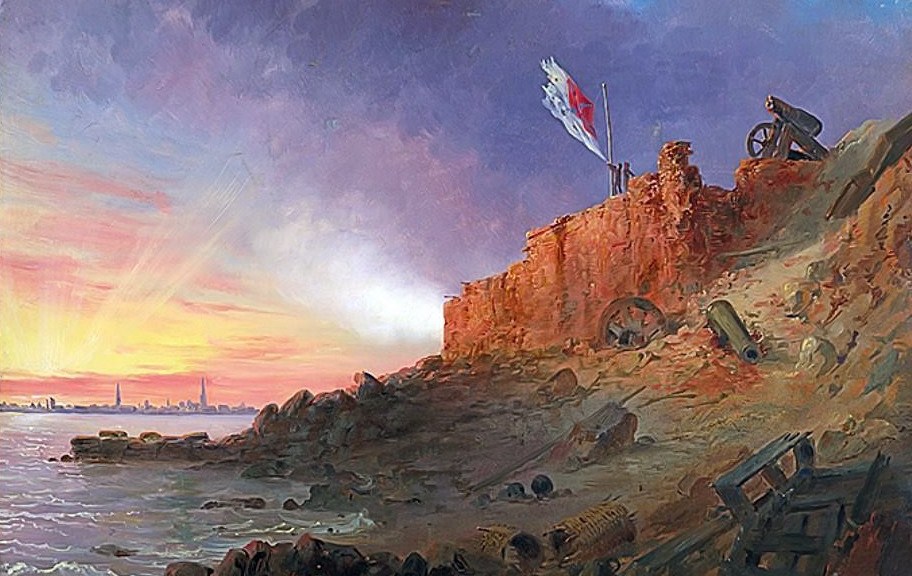
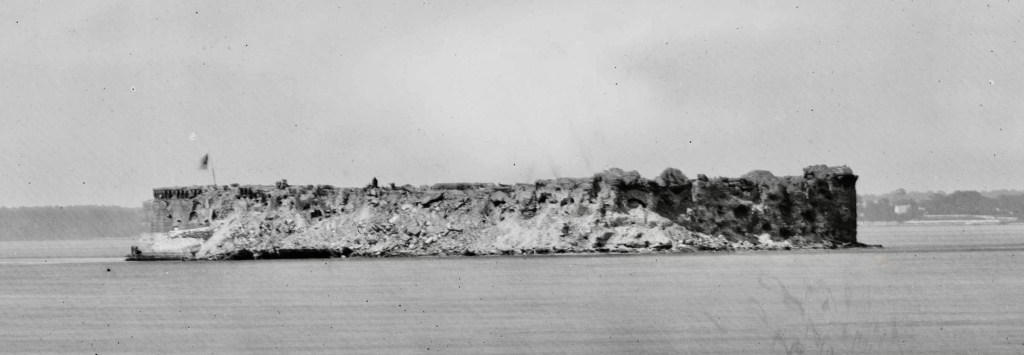
This letter was written from Fort Sumter in the days following Gillmore’s 7-day bombardment of the fort that had reduced it to a pile of rubble. Less than a week later, the fort withstood an amphibious assault planned for the night of September 8-9. The lack of cooperation between the Federal Army and Navy, however, resulting in poor coordination of the attack, and the “surprise” attack was foiled. The fighting lasted only twenty minutes and resulted in 124 Union casualties while the Confederate infantrymen defending the fort did not lose a single man.
See also—1862: Thomas Wilkes Glascock Inglet to Martha Ann (Palmer) Inglet published on Spared & Shared 17.
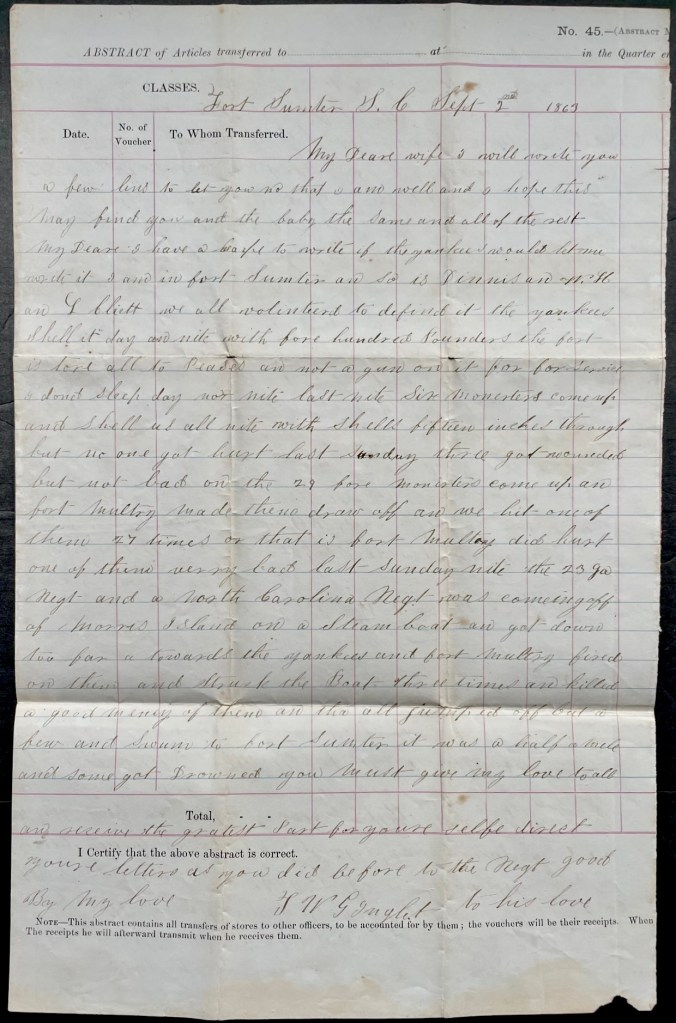
Transcription
Fort Sumter, S. C.
September 2, 1863
My dear wife,
I will write you a few lines to let you know that I am well and I hope this may find you and the baby the same and all of the rest. My dear, I have a hope to write if the Yankees would let me write it. I am in Fort Sumter and so is Dennis and W[illiam] H[enry] [Little] 1 and L. Cliett. We all volunteered to defend it. The Yankees shell it day and night with four hundred pounders. The fort is tore all to pieces and not a gun on it for service. I don’t sleep day nor night. 2 Last night, six monitors come up and shell us all night with shells fifteen inches through but no one got hurt.
Last Sunday three got wounded but not bad. On the 29th, four monitors come up and Fort Moultrie made them draw off and we hit one of them 27 times, or that is Fort Moultrie did. Hurt one of them very bad.
Last Sunday night [1 September 1863], the 23rd Georgia Regiment and a North Carolina Regiment was coming off of Morris Island on a steamboat and got down too far towards the Yankees and Fort Moultrie fired on them and struck the boat three times and killed a good many of them and they all jumped off but a few and swam to Fort Sumter. It was a half a mile and some got drowned. 3
You must give my love to all and receive the greatest part for yourself. Direct your letters as you did before to the regiment. Goodbye my love, — T. W. G. Inglet
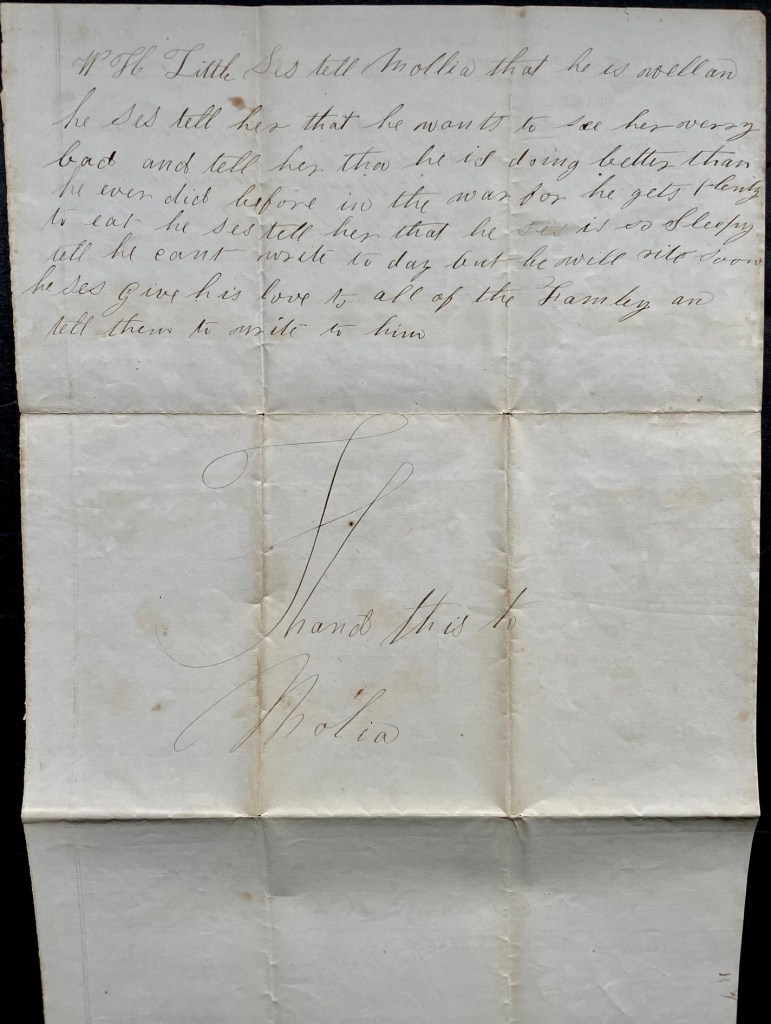
to his love.
W. H. Little says tell Mollie that he is well and he says tell her that he wants to see her very bad. And tell her that he is doing better than he ever did before in the war for he gets plenty to eat. He says tell her that he is so sleepy he can’t write today but he will write soon. He says give his love to all of the family and tell them to write to him. Hand this to Mollie.
1 William Henry Little (1840-1907) was the son of William McLaws Little and Dicey Jane Rhodes of Richmond county, Georgia. He married Mary Elizabeth Inglett on July 20, 1860 in Richmond county, Georgia and was the father of 13 known children. He became a convert to the LDS church, being baptized in 1888 in Richmond county, Georgia, and was taught the gospel by missionaries Albert Smith, David Bennion, John Browning, Moroni Dunford, William Spry, and Jed Ballentyne, among others. He immigrated to Ogden, Utah with his extended family consisting of about 57 converts in early 1889. He took a second wife, Dorothea Elizabeth Anderson, a Danish convert, marrying her on April 7, 1899. That marriage was solemnized in the Salt Lake Temple on April 11, 1899. In May, 1905, he went on a mission to the Southern States with his first wife and labored in Atlanta and Augusta, Georgia. He returned home in September, 1906. He was the proprietor of the old Lincoln Hotel on 23rd Street and the Central Hotel on 25th Street in Ogden, Utah. He died at the hotel on August 27, 1907.
2 In mid-July 1863, Gen. Gillmore gave up his plans to take Battery Wagner and turned his attention on Fort Sumter. Anticipating an attack, Confederates began rapidly strengthening the fort by bringing in gangs of Negroes to place sand against the gorge and adding a second dock, while shifting the remaining guns in the fort to better positions. The attack on Fort Sumter began on 17 August 1863 and on the first day alone, some 948 projectiles were thrown at the fort, 445 of them striking inside, 233 hitting the exterior, and 270 passing over the fort. There were only 19 casualties reported inside the fort. On the second day, 876 shots were fired at the fort. On the third day, 780 shots. On the 4th day, Union forces used a 300-pounder Parrott gun to throw shells at the fort and three slightly wounded casualties were reported. The firing continued until August 24th when General Gillmore wrote Gen. Halleck that, “I have the honor to report the practical demolition of Fort Sumter as a result of our seven days of bombardment…” Immediately after this bombardment, all but one artillery company was removed from Sumter to be replaced by 150 infantry. Presumably it was at this time that Inglett entered the fort. [See “Combat History of Fort Sumter, 1863-1865” by Hobart G. Cawed (1962).
3 This incident of friendly fire casualties sustained by the Confederacy is not well known. The incident took place during the night of 30 August 1863 when the steamer Sumter was transporting Confederate troops from Morris Island to Fort Johnson. Since the tide was too low that night to go the usual route, they went in the direction of Sullivan’s Island and were fired upon by gunners at Fort Moultrie. Capt. Mitchell of Co. C, 23rd Georgia, claimed that the troops were from his regiment as well as the 20th South Carolina. He claimed the third and fourth shots sunk the steamer


 Spared & Shared 23