

These letters were written by George S. Bishop (1834-1865), the son of Edmond B. and Sophronia Bishop who came to Oakfield Township, Kent county, Michigan from New York State prior to 1850. George enlisted as a Private on September 10, 1861 at the age of 25, and in Company F, 2nd Michigan Cavalry on October 02 1861. Family stories indicate George fell off a river boat on his way home after the war ended and he drowned.
Several of George’s transcribed letters have found their way onto the website of the Montcalm County, MIGenWeb (courtesy of the Flat River History Museum) under the title, George S. Bishop—Civil War Letters. One of these letters was also written at Benton Barracks just one week prior to the following letter in which George wrote, “We are armed with good sabers and the flashing steel is everywhere seen. We are soon to have a good revolving rifle. Sharps will be the one we will have, also a revolving Colt pistol that will fire 14 shots without loading. Tis not very likely that we will ever be in a battle, yet it is a good thing to have good arms if we ever come to it. We will soon lay the ground over with rebels. They can’t hurt us much for we will be in motion riding up and firing and then away across the plain.”
While researching George, I stumbled upon the following images of some of his comrades in Co. F. They were posted on Civil War Faces Facebook by Rae Swan who found them all in the photo album of Joel S. Beeman, a saddler in the 2nd Michigan Cavalry, Co. F.
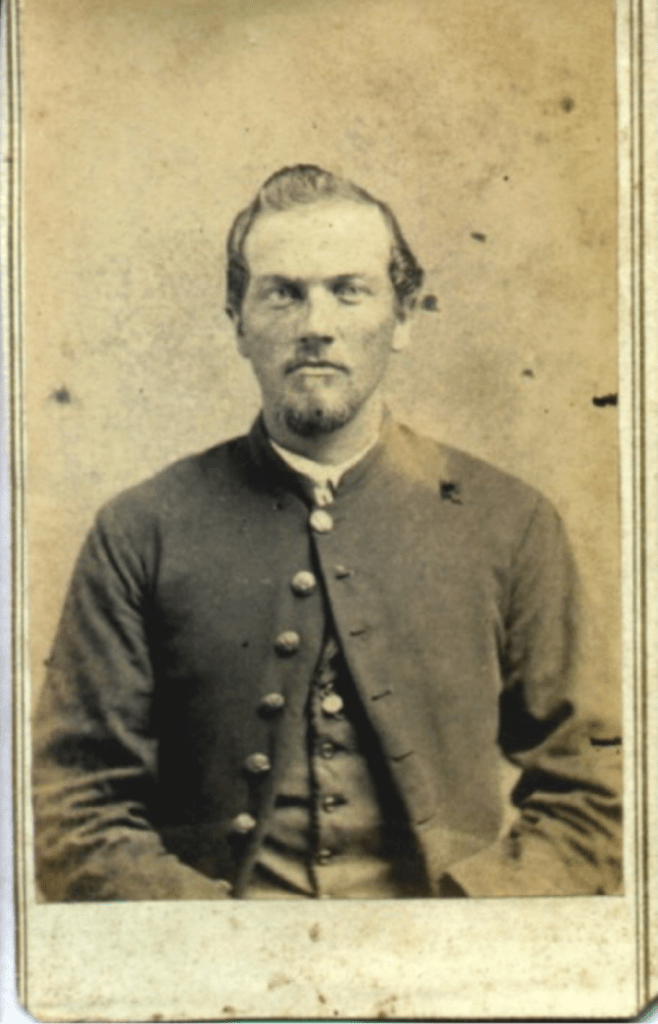


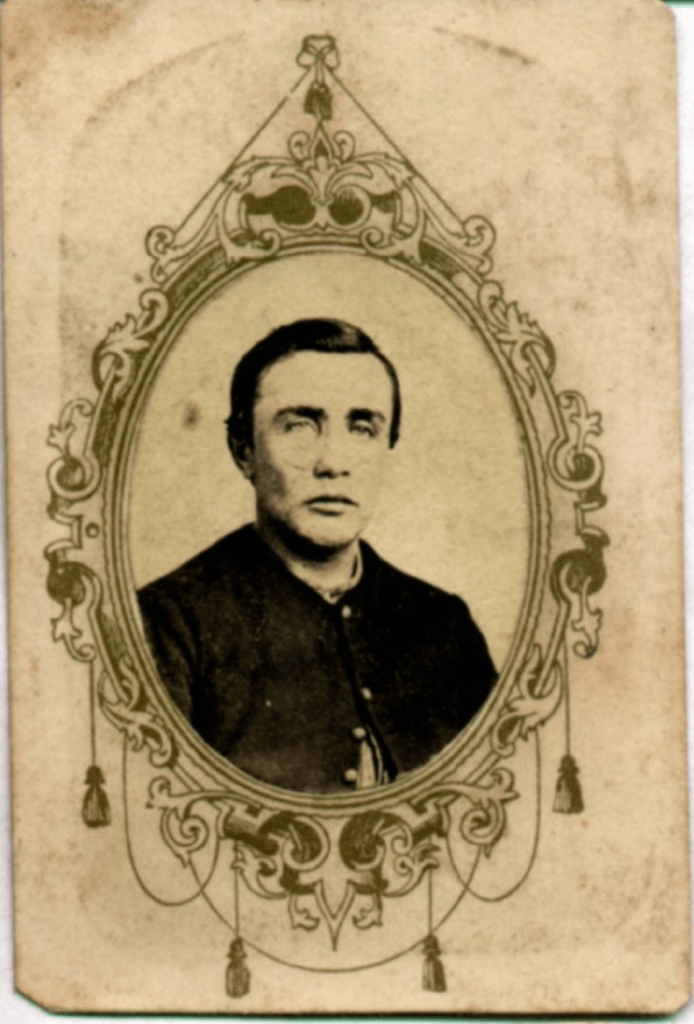

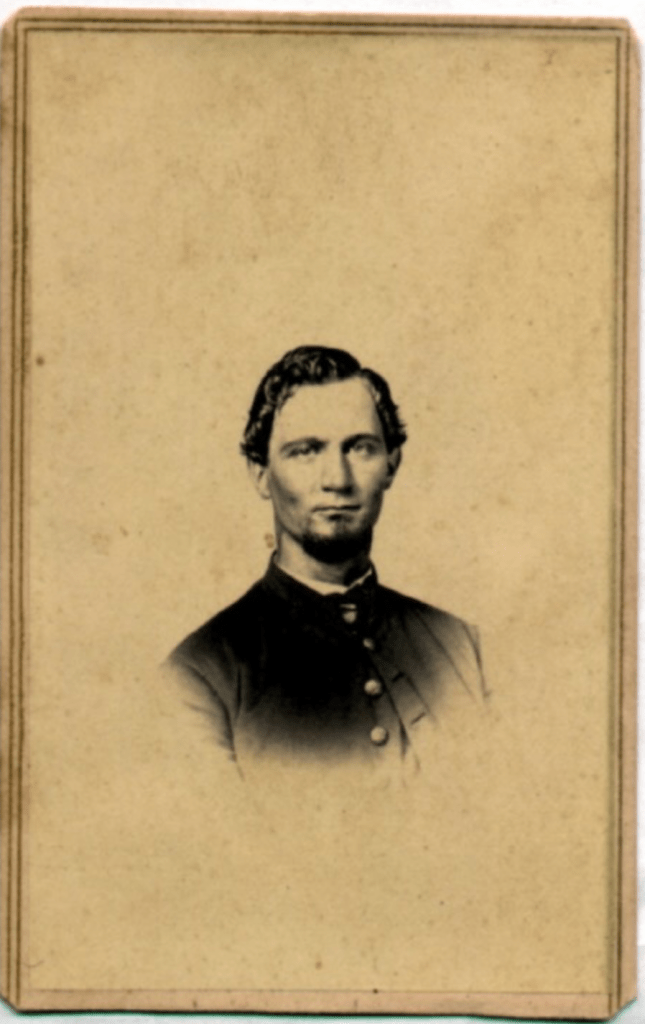
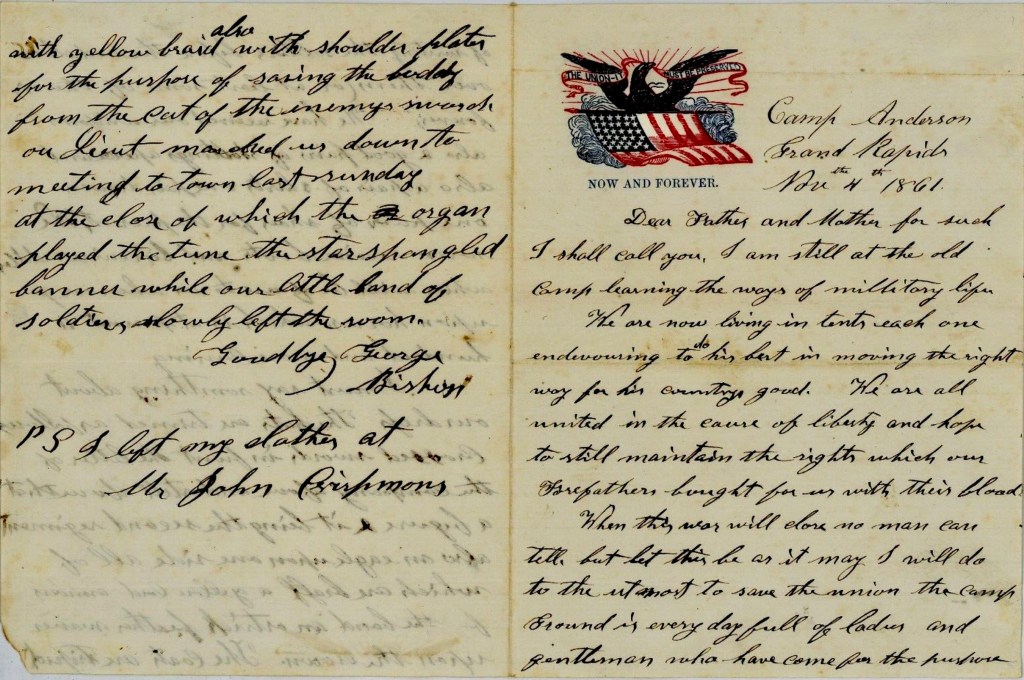
Letter 1
Camp Anderson
Grand Rapids
November 4th 1861
Dear Father and Mother, for such I shall call you.
I am still at the old camp learning the ways of military life. We are now living in tents, each one endeavoring to do his best in moving the right way for his country’s good. We are all united in the cause of liberty and hope to still maintain the rights which our forefathers bought for us with their blood.
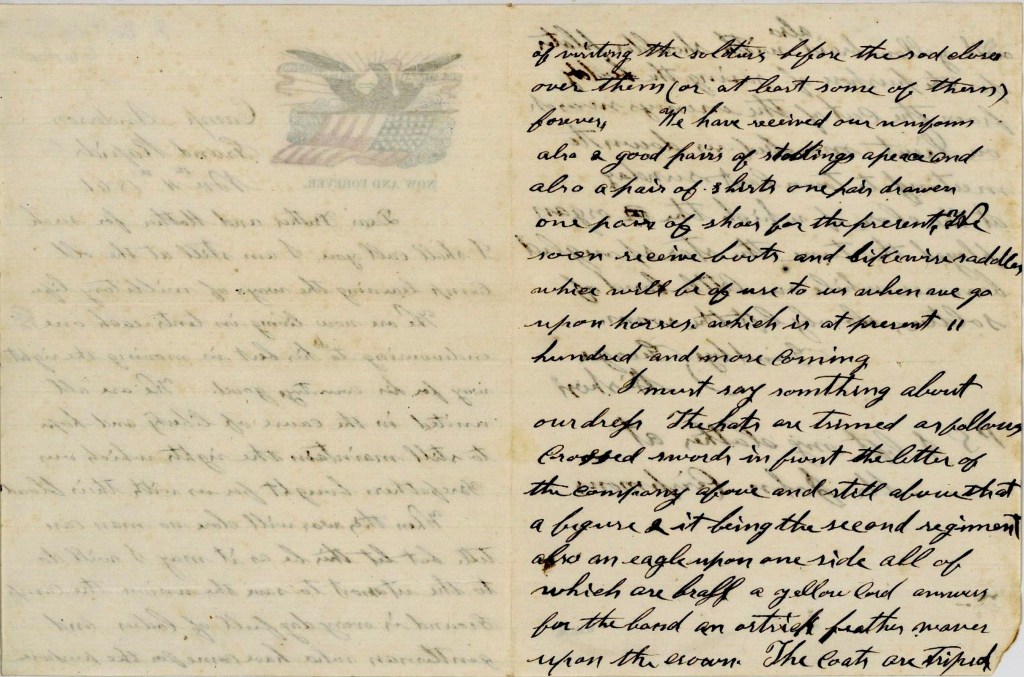
When this war will close, no man can tell but let this be as it may, I will do to the utmost to save the Union. The camp ground is everyday full of ladies and gentlemen who have come for the purpose of visiting the soldier before the sod closes over them (or at least some of them) forever.
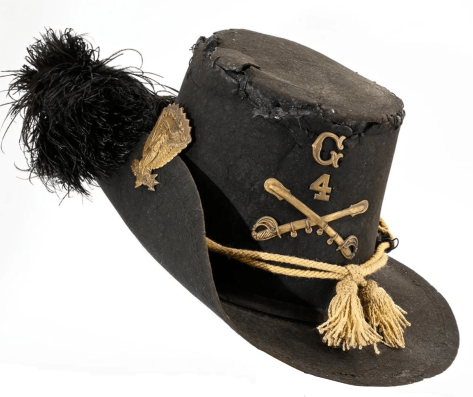
We have received our uniform. Also a good pair of stockings apiece and also a pair of shirts, one pair drawers, one pair of shoes for the present and soon receive boots, and likewise saddles which will be of use to us when we go upon horses which is at present 11 hundred and more coming.
I must say something about our dress. The hats are trimmed as follows—crossed swords in front, the letter of the company above, and still above that a figure 2, it being the second regiment. Also an eagle upon one side, all of which are brass. A yellow cord answers for the band. An ostrich feather waves upon the crown.
The coats 1 are striped with yellow braid, also with shoulder plates for the purpose of saving the body from the cut of the enemy’s sword.
Our lieutenant marched us down to meeting last Sunday at the close of which the organ played the tune, the Star Spangled Banner while our little band of soldiers slowly let the room. Goodbye, — George Bishop
P. S. I let my clothes at Mr. John Crisman’s.
1 The jackets of the 2nd Michigan Volunteer Cavalry were supplied by Sykes & Company.
Letter 2
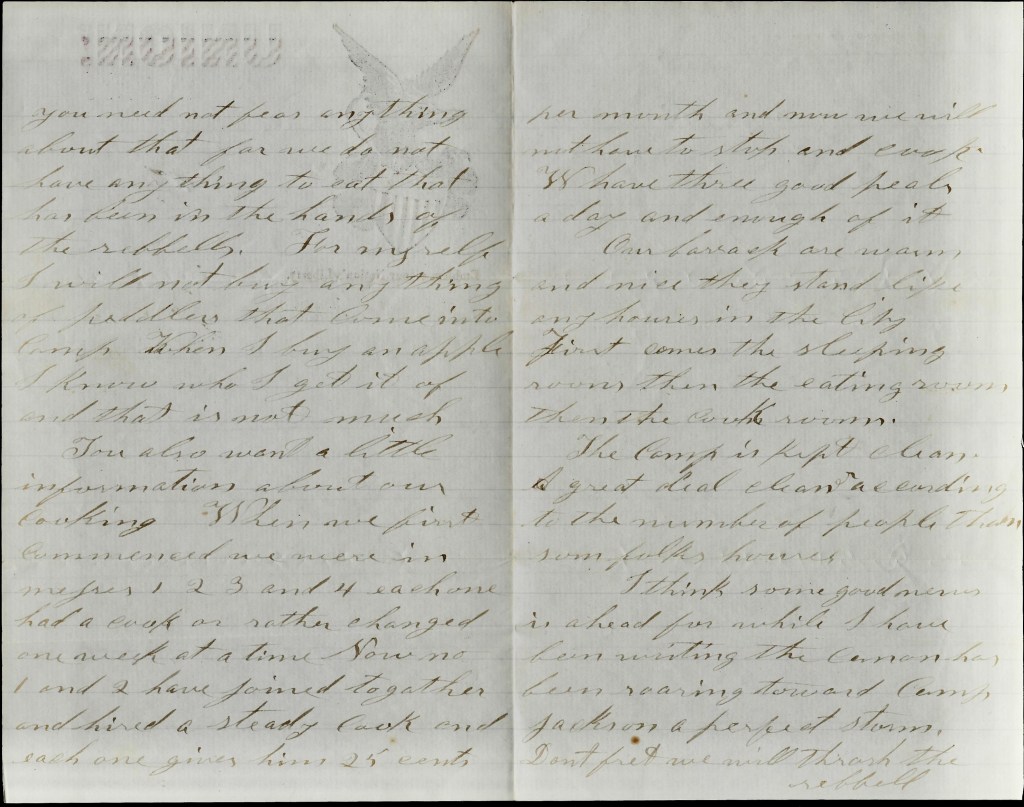
Benton Barracks 1
St. Louis, Missouri
January 8th 1862
Dear Mother,
I received your letter last night and was glad to hear from you and find that you were all well. I should have been very glad if you had sent some things for a New Year present but I consider it just as well for you showed your good will in thinking of it and doing the best you could.
You wanted to know if there had been any soldiers poisoned. There was a story something about poisoning but it was a good while ago. You need not fear anything about that for we do not have anything to eat that has been in the hands of the rebels. For myself, I will not buy anything of peddlers that come into camp. When I buy an apple, I know who I get it of and that is not much.
You also want a little information about our cooking. When we first commenced we were in messes 1, 2, 3, and 4. Each one had a cook or rather changed one week at a time. Now No. 1 & 2 have joined together and hired a steady cook and each one gives him 25 cents per month, and now we will not have to stop and cook. We have three good meals a day and enough of it.
Our barracks are warm and nice. They stand like any house in the City. First comes the sleeping room, then the eating room, then the cook room. The camp is kept clean—a great deal cleaner according to a number of people than some folks’ homes.
I think some good news is ahead for while I have been writing, the cannon has been roaring toward Camp Jackson a perfect storm. Don’t fret. We will thrash the rebels. I know it takes off some change to write and of course I can’t expect you to send me a letter every time I write to you, but I want you to write as often as you can and I will send you some money so that you will not lose anything by it. I am again well and hope you will keep the same. Give my love to Father and the children. Goodbye, — George S. Bishop

1 Jefferson Barracks was a training facility for the Union army that was located on the site of the present-day St. Louis Fairgrounds in North St. Louis. In January 1862, it consisted of five buildings that could accommodate up to 30,000 soldiers. The orginal buildings were 740 feet long and 40 feet wide.



 Spared & Shared 23