The following letters were written by John W. McClain (1834-1863), a barely literate private in Co. E, 2nd Ohio Cavalry. He was the son of Edward McClain (1792-1857) and Flora Fish (1812-1887) of Trumbull county, Ohio. According to Find-A-Grave, John died of “sunstroke” on 9 August 1863 at Fort Scott, Kansas. John had two other brothers who died in the Civil War, Robert T. McClain (1841-1864) and Richard H. McClain (1843-1864).
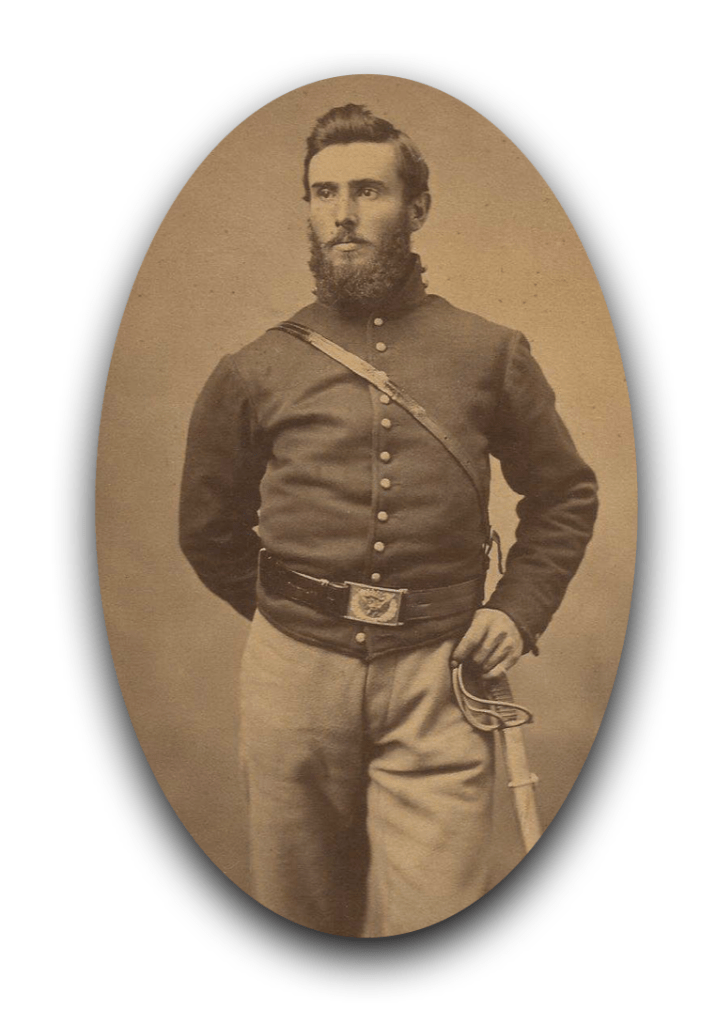
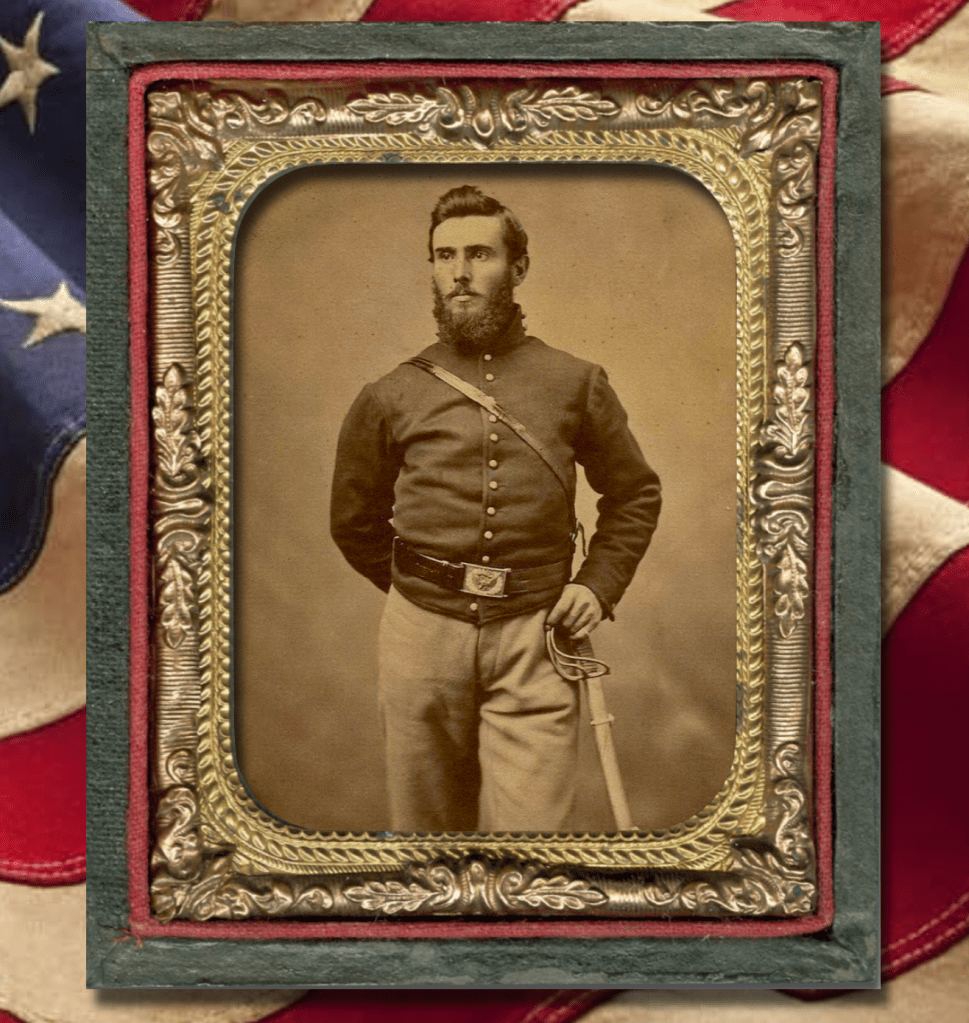
I could not find an image of John but here is one of Isaac L. Peirce of Co. B, 2nd Ohio Cavalry. (ancestry.com)
The soldiers of the 2nd Ohio Volunteer Cavalry Regiment came from Ashtabula, Columbiana, Cuyahoga, Geauga, Hamilton, Lake, Loraine, Mahoning, Medina, Portage, Richland (and neighboring counties), Summit, and Trumbull Counties. The 2nd O.V.C. was organized for three years’ service under Colonel Charles Doubleday, and afterwards commanded by Colonels Kautz, Nettleton, and Seward. Soldiers were mustered in from August to September of 1861 and trained at Camp Wade near Cleveland and Camp Dennison near Cincinnati. Nicknamed the “Wade and Hutchins Regiment” after Ohio Senators Ben Wade and John Hutchins who instigated the formation of the regiment, the 2nd O.V.C. moved to Missouri, scouting on the borders of Kansas, and in February 1862, drove the infamous bandit William Quantrill and his raiders from Independence, Missouri. In the summer, the 2nd O.V.C. served in Indian Territory, and in the fall joined General Blunt’s campaign in Arkansas and Missouri, fighting at Pea Ridge, Carthage, and other points. It moved to Kentucky, and four companies raided East Tennessee. It joined in the pursuit of Confederate General John Hunt Morgan and followed him twelve hundred miles until captured. In September, the Regiment again raided East Tennessee and operated on Longstreet’s flank at Knoxville, fighting continuously with severe loss. In April 1864, it was transferred to the Army of the Potomac with Ulysses S. Grant, and moved with Grant’s army towards Richmond, fighting with Sheridan’s Cavalry Corps around the flanks of the army. In August the Regiment moved to the Shenandoah Valley and engaged Early, fighting at Opequan, Front Royal, and Cedar Creek. In March 1865, it joined in the pursuit of Confederate General Robert E. Lee, and after the surrender was reviewed at Washington and mustered out September 11, 1865. The 2nd Ohio Volunteer Cavalry Regiment made one of the most brilliant records of any regiment in the service.
Letter 1
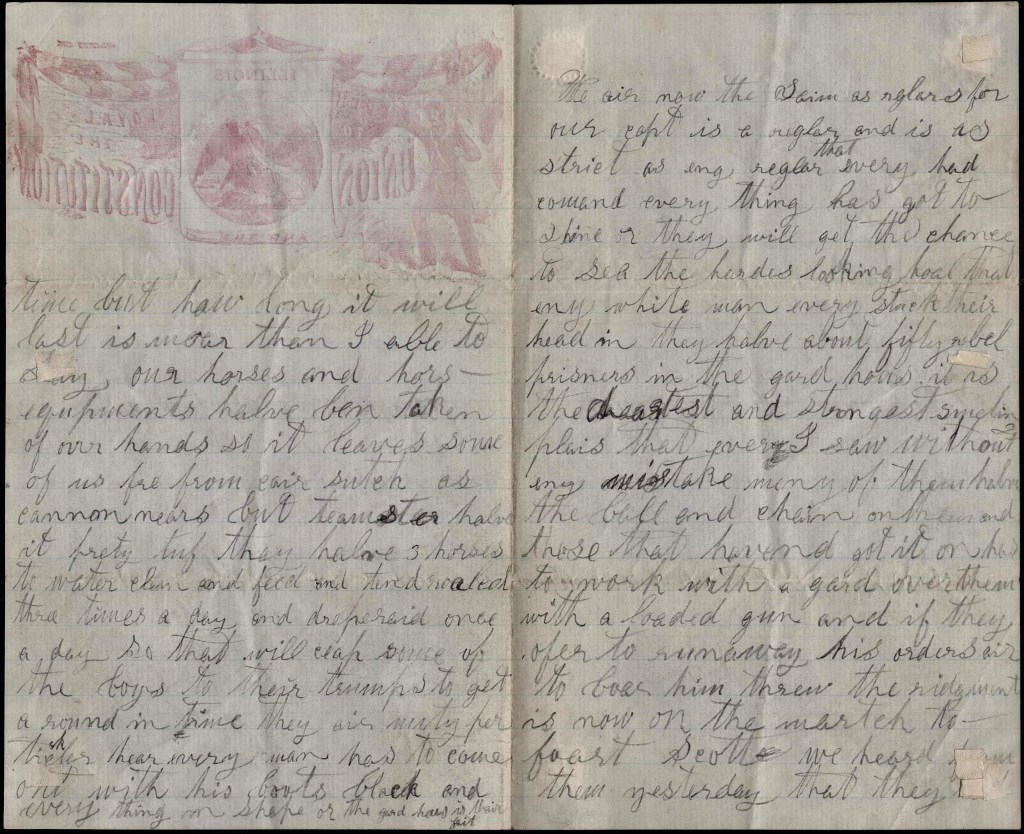
Patriotic stationery “Pillar of Glory”
Fort Leavenworth February 19, 1862
Dear brother,
I take this opportunity to inform you that I received your letter yesterday and was pleased to hear that you was all well and doing well for that is all that can be expected for that is my style every time. As I have wrote to you but a few days ago, I have but very little to write this time. All I have to write is that we are all well and doing well as we can. We arrived here last Saturday about three o’clock in the afternoon and found good quarters for our horses but none for ourselves until dark when we found a mess room where a company of Hunter’s bodyguards messed which was very comfortable for us. But perhaps it would not appear to be so to everyone as it would to us but we are now tented out in tents which are as handy as a pocket in a shirt. We have a stove in each tent which will keep them as warm as there is a need for. This is the coldest place ever I stuck my head in. The wind will cut a fellow’s throat if he should be compelled to face it.
We are waiting to get the orders to march but we know not where. We have been told by our officers that we was to move on to Fort Scott but we know not where we have to go but direct to this place and it will be all right. — J. W. McClain
Letter 2
Fort Leavenworth, [Kansas] March 2, 1862
Dear friends,
I take the opportunity to inform you that I am well and doing the best I can for the chance I have. I have changed my position since I last wrote to you. I suppose you have seen a detail made in the regiment to form a battery. There are twelve men taken from each company. We have the privilege to volunteer and if they couldn’t get volunteers in the Co., they should half to detail them. So rather than be detailed, I volunteered and we are quartered in nice barracks and are having a good time. But how long it will last is more than I [am] able to say. Our horses and horse equipments have been taken off our hands so it leaves some of us free from care, such as cannoneers, but teamsters have it pretty tough. They have three horses to water, clean and feed three times a day, attend roll three times a day, and dress parade once a day so that will keep some of the boys to their trumps to get around in time. They are mighty particular here. Every man has to come out with his boots black and everything in shape or the guard house is their fate.
The are now the same as regulars for our captain is a regular and is so strict as any regular that ever had command. Everything has got to shine or they will get the chance to see the hardest looking hole that any white man ever stuck their head in. They have about 50 rebel prisoners in the guard house. It is the dirtiest and strongest smellin’ place that ever I saw without any mistake. Many of them have the ball and chain on them and those that haven’t got it on has to work with a guard over them with a loaded gun and if they offer to runaway, his orders are to bore him through.
The regiment is now on the march to Fort Scott. We heard from them yesterday that they were in Kansas City last Thursday. This is all at present. I will send you a paper. Perhaps you would like to read one of the Kansas papers. When you write, direct to John W. McClain, Hollister Battery, Fort Leavenworth, Kansas
The following letters were written by Cornelius Shanafelt (1839-1906), the son of Peter Shanafelt (1800-1875) and Elizabeth Funk (1801-1863) of Greentown, Stark county, Ohio. Cornelius enlisted as a private in Co. L, 2nd Ohio Volunteer Cavalry in September 1861 and transferred to Co. F in February 1863. He later reenlisted as a veteran in the regiment and did not muster out until 11 September 1865 at St. Louis, Missouri.
After the war he married Talitha McMacklin (1840-1906) and moved to Jeffersonville, Wayne county, Illinois, where he farmed for a time before moving back to Ohio.
Cornelius’ letter from Cassville, Missouri, in July 1865 contains an interesting mention of the refugees (Whites & Negroes) drawing aid from the government’s Bureau of Refugees, Freedmen, and Abandoned Lands.
Letter 1
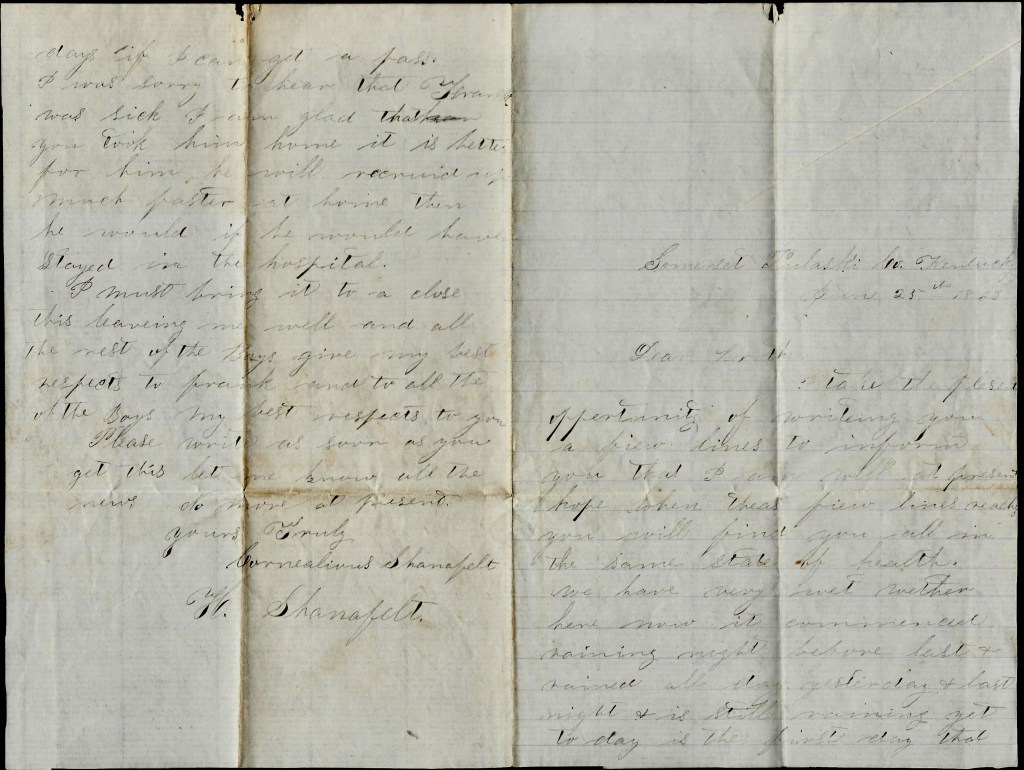
Somerset, Pulaski county, Kentucky June 25th 1863
Dear Brother,
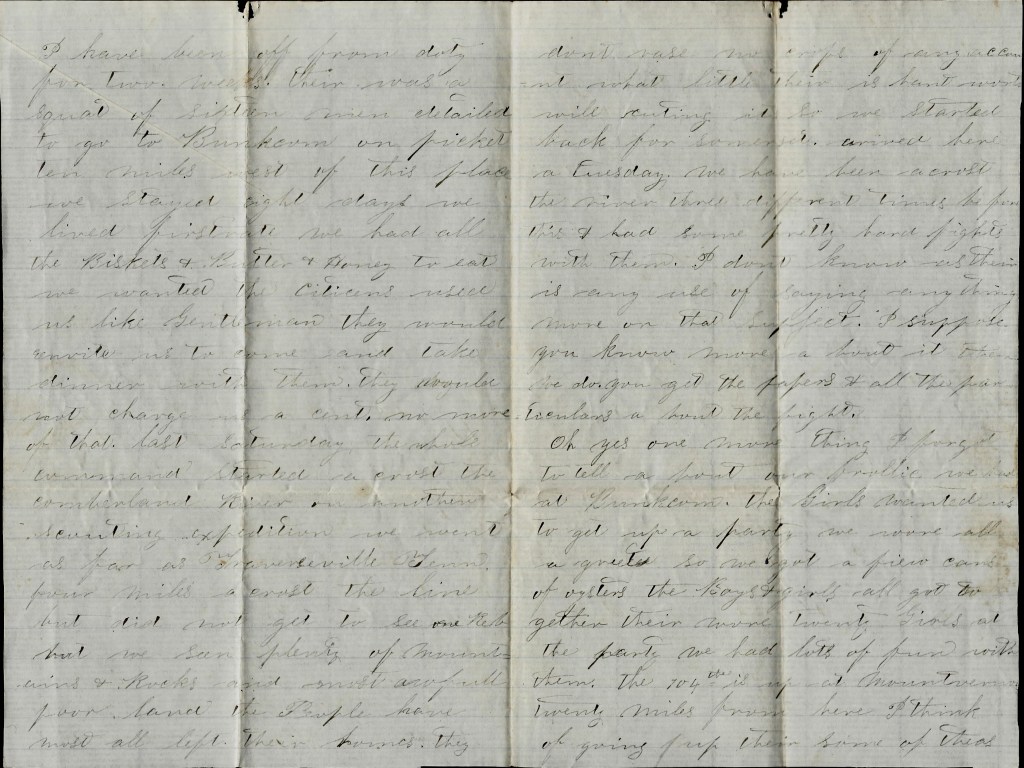
I take the present opportunity of writing you a few lines to inform you that I am well at present and hope when these few lines reach you, will find you all in the same state of health. We have very wet weather here now. It commenced raining night before last and rained all day yesterday and last night & is still raining yet. Today is the first day that I have been off from duty for two weeks. There was a squad of sixteen men detailed to go to Bunkcom on picket ten miles west of this place. We stayed eight days. We lived first rate. We had all the biscuits and butter and honey to eat we wanted. The citizens used us like gentlemen. They would invite us to come and take dinner with them. They would not charge us a cent. No more of that.
Last Saturday the whole command started across the Cumberland River on another scouting expedition. We went as far as Traverseville, Tennessee—four miles across the line, but did not get to see one Reb but we seen plenty of mountains & rocks and most awful poor land. The people have most all left their homes. They don’t raise no crops of any account. What little there is hain’t worthwhile cutting it. So we started back for Somerset [and] arrived here a Tuesday. We have been across the river three different times before this and had some pretty hard fights with them. I don’t know as there is any use of saying anything more on that subject. I suppose you know more about it than we do. You get the papers & all the particulars about the fights.
Oh yes, one more thing. I forgot to tell about our frolic we had at Bunkcom. The girls wanted us to get up a party. We were all agreed so we got a few cans of oysters [and] the boys & girls all got together. There were twenty girls at the party. We had lots of fun with them.
The 104th is up at Mount Vernon twenty miles from here. I think of going up there some of these days if I can get a pass. I was sorry to hear that Frank was sick. I am glad that you took him home. It is better for him. He will recruit up much faster at home than he would if he would have stayed in the hospital.
I must bring it to a close, this leaving me well and all the rest of the boys. Give my best respects to Frank and to all the boys. My best respects to you. Please write as soon as you get this. Let me know all the news. No more at present. Yours truly, — Cornelius Shanafelt
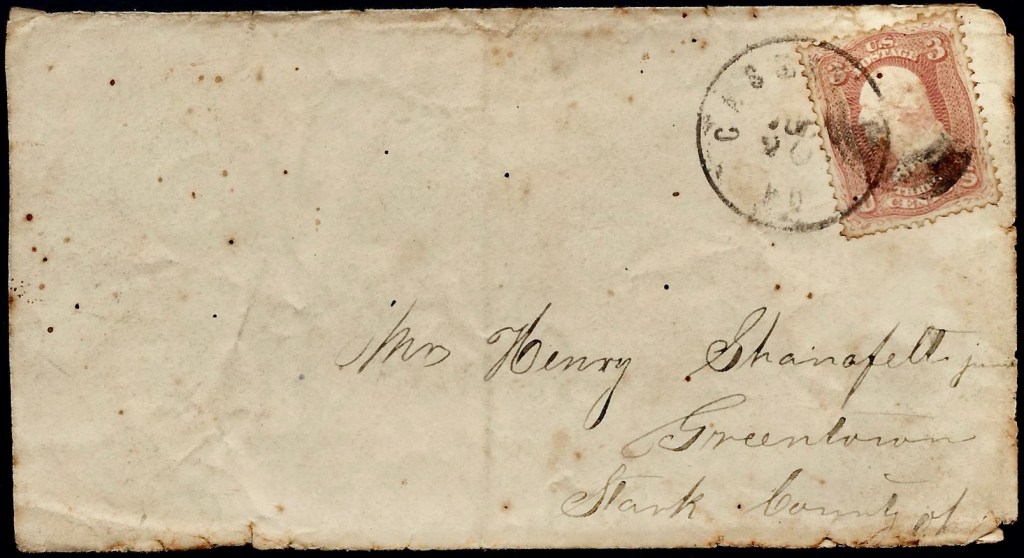
[to] H. Shanafelt
Letter 2
Camped at Cassville, Missouri July 19th 1865
Dear Brother,
I take my pen in hand to write you a few short lines to let you know that I am well and enjoy good health. Hope when this comes to hand, [it] will find you all enjoying the same good health. This is Thursday morning and a very warm one it is. Yesterday we had a heavy shower of rain. It rained nearly all day. The ground in which we are camped on was overflowen with water in their tents last night, but the majority of the Boys had bunks put up in the tents which keep them dry. So this morning the water has all drained off. The ground is perfectly dry again.
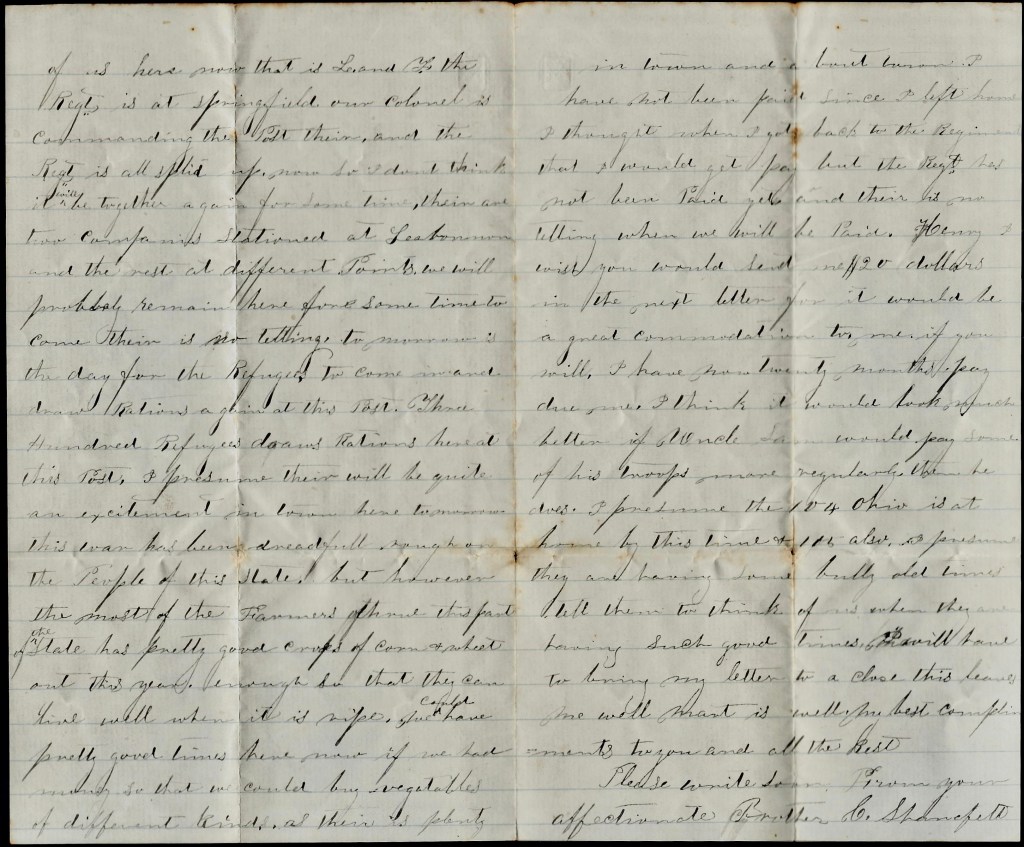
There is only but two companies of us here now—that is L and F. The regiment is at Springfield. Our Colonel is commanding the post there and the regiment is all split up now so I don’t think it will be together again for some time. There are two companies stationed at Lebanon and the rest at different points. We will probably remain here for some time to come. There is no telling.
Daily Missouri Democrat, 28 July 1865
Tomorrow is the day for the refugees to come in and draw rations again at this post. Three hundred refugees draws rations here at this post. I presume there will be quite an excitement in town here tomorrow. This war has been dreadful rough on the people of this state, but, however, the most of the farmers through this part of the state has pretty good crops of corn & wheat out this year—enough so that they can live well when it is ripe. We could have pretty good ties here now if we had money so that we could buy vegetables of different kinds as there is plenty in town and about town. I have not been paid since I left home.
I thought when I got back to the regiment that I would get pay but the regiment has not been paid yet and there is no telling when we will be paid. Henry, I wish you would lend me $20 in the next letter for it would be a great [ac]commodation to me if you will. I have now twenty months pay due me. I think it would look much better if Uncle Sam would pay some of his troops more regularly than he does. I presume the 104th Ohio is at home by this time & the 105th also. I presume they are having some bully old times. Tell them to think of us when they are having such good times. I will have to bring my letter to a close. This leaves me well. Mart is well. My best compliments to you and all the rest.
Please write soon. From your affectionate brother, — C. Shanafelt
Direct to C. Shanafelt, Co. F, 2nd O. V. V. C., Springfield, Mo.
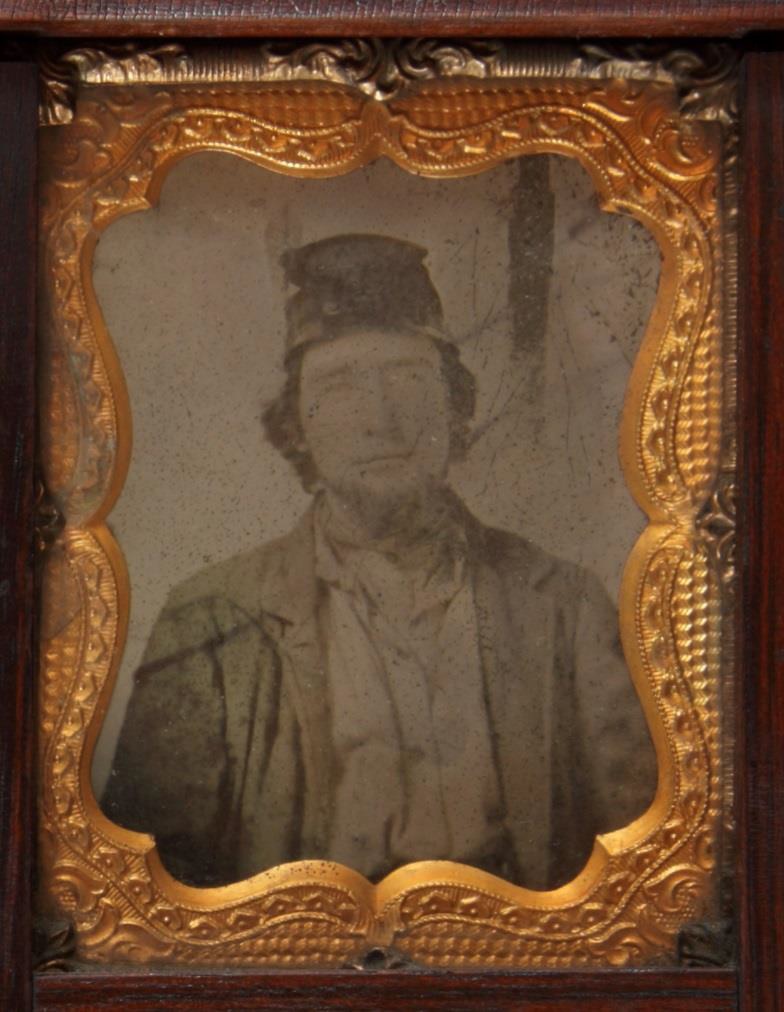
I could not find an image of Hiram but here is one of Isaac Lorenzo Peirce of Co. B, 2nd Ohio Cavalry. Isaac was mortally on 13 September 1864 while on picket duty near Berryville, Virginia.
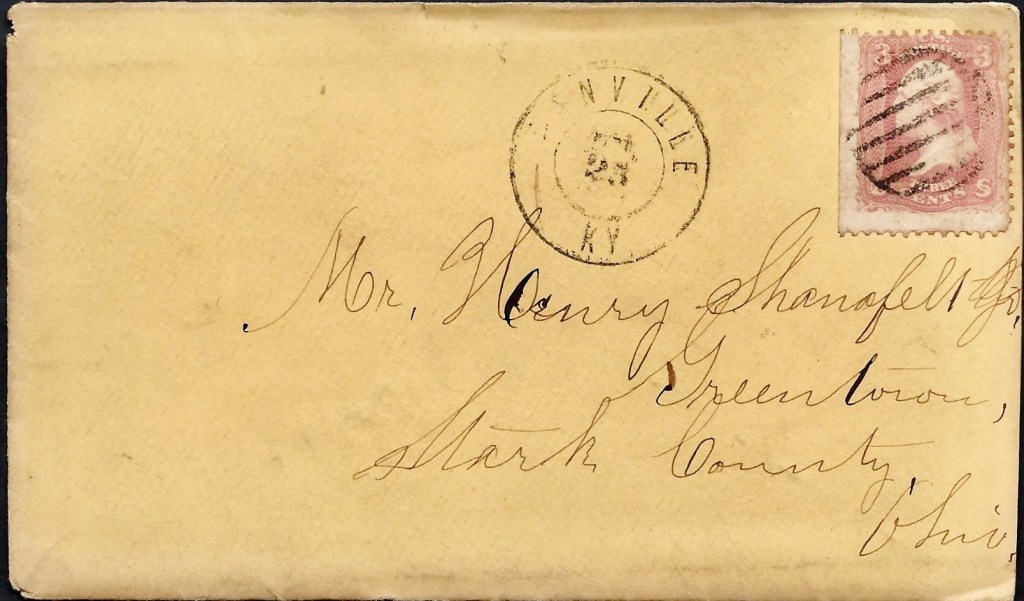
The following brief letter was written by Hiram Rober (1842-1863) of Stark county, Ohio. Hiram mustered into Co. A, 2nd Ohio Cavalry in mid-August 1861 to serve three years. According to the State Records of the 2nd Ohio Cavalry, Hiram was shot in the chest in a skirmish two miles from Lick Creek Bridge on the road to Blue Springs (now Mosheim) in Greene county, Tennessee in October 1863 just a few weeks after this letter was written in late July 1863. He was originally buried at Blue Springs but later reinterred in the Knoxville National Cemetery, grave no. 1686.
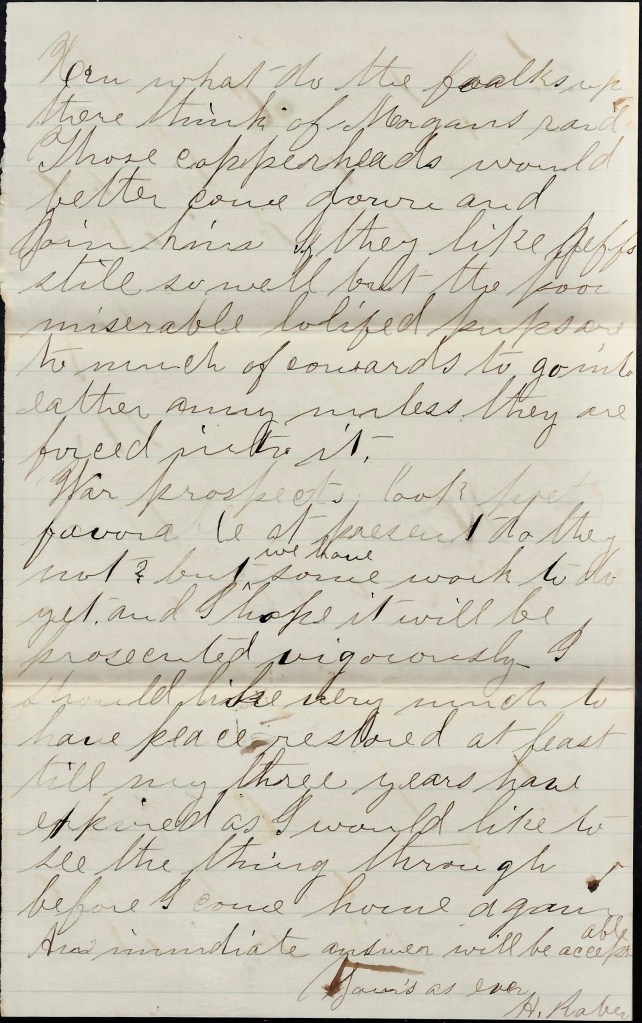
Hiram wrote the letter to Henry Shanafelt, Jr. of Greentown, Stark county, Ohio, asking his friend, “What do the folks up there think of Morgan’s raid?”
Transcription
Hen,
What do the folks up there think of Morgan’s raid? Those Copperheads would better come down and join him if they like Jeff’s style so well. But the poor miserable low life pups are too much of cowards to go into either army unless they are forced into it.
War prospects look pretty favorable at present, do they not? But we have some work to do yet and I hope it will be prosecuted vigorously. I should like very much to have peace restored at least till my three have expired as I would like to see the thing through before I come home again. An immediate answer will be be acceptable. Yours as ever, — H. Raber
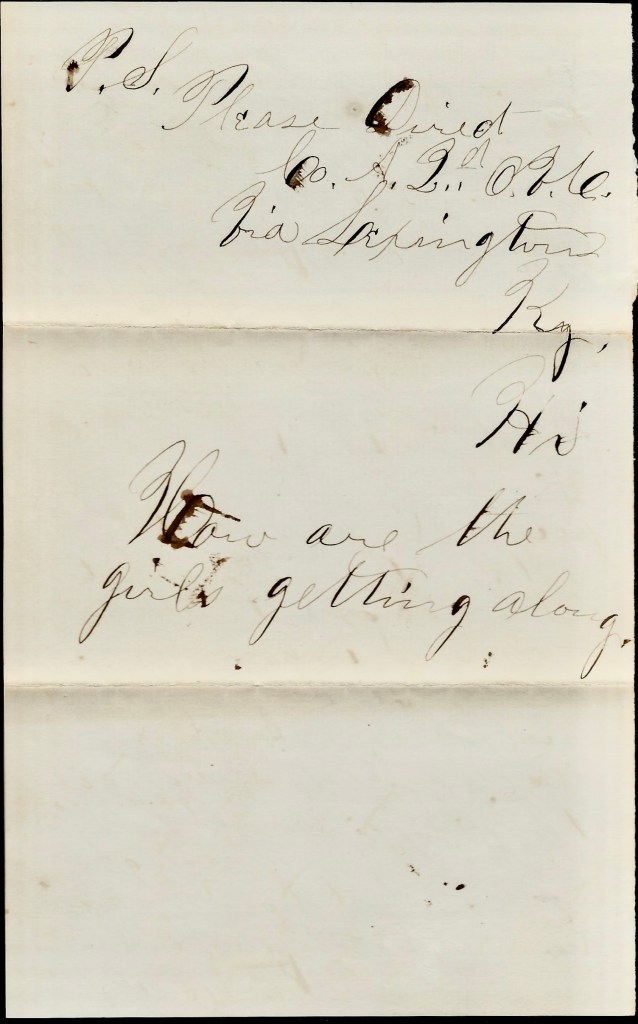
P. S. Please direct to Co. A. 2nd O. V. C., via Lexington, Kentucky
The following letter was written by Pvt. Okey H. McDowell (1843-1912) of Co. I, 2nd Ohio Cavalry. Okie was the son of John Thomas McDowell (1811-1869) and Hannah J. Murdagh (1815-1893) of Wayne county, Ohio. He enlisted in August 1861 and was eventually appointed Commissary Sergeant. He mustered out after 4 years and 1.5 months service.
Okey wrote this letter while on an expedition into Indian Territory which lasted from 25 May to 8 July 1862. In this expedition, the 2nd Ohio Cavalry joined a Union advance from Fort Scott into Indian Territory in early June. Upon reaching Spring River, the regiment, along with some artillery pieces, advanced against Confederate Stand Waite’s camp at Cowskin Prairie, driving the enemy soldiers from this site.
After the war Okey married Helen M. Blake (1845-1925) and went into partnership with his brother at Medina in the drug business.
Transcription
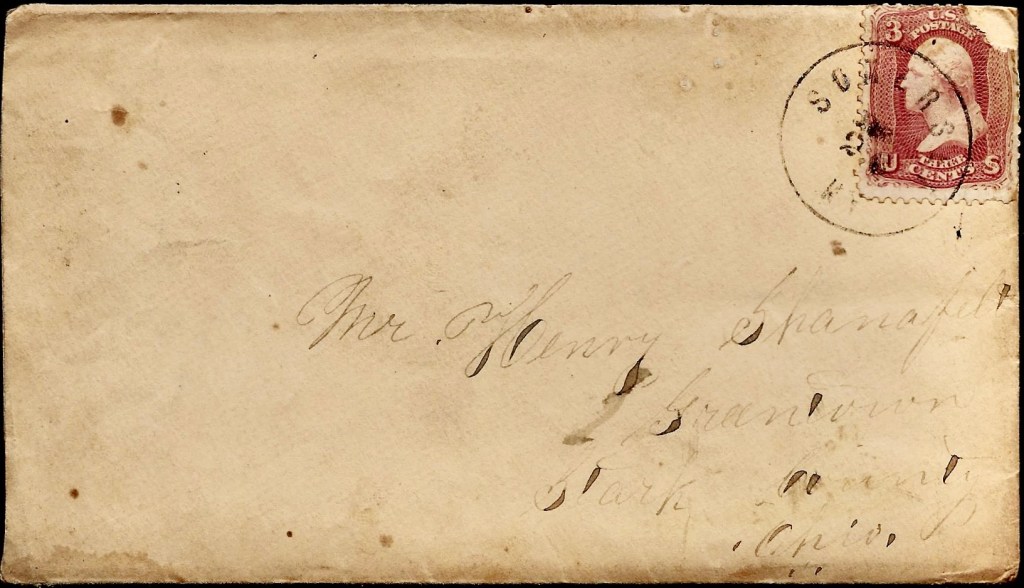
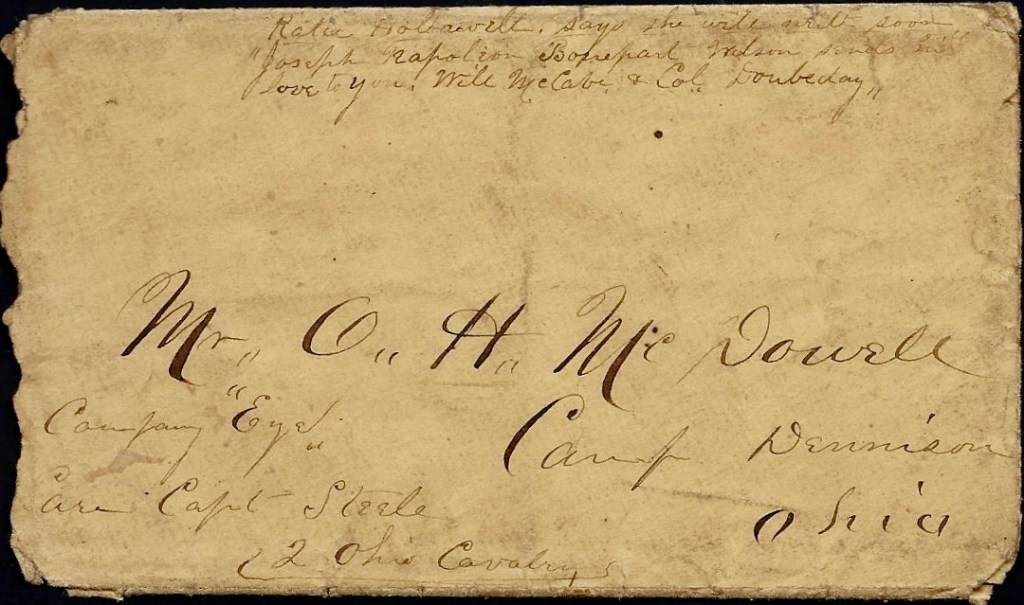
This envelope came with the letter but it was originally used to carry a letter to Okey, not from him.
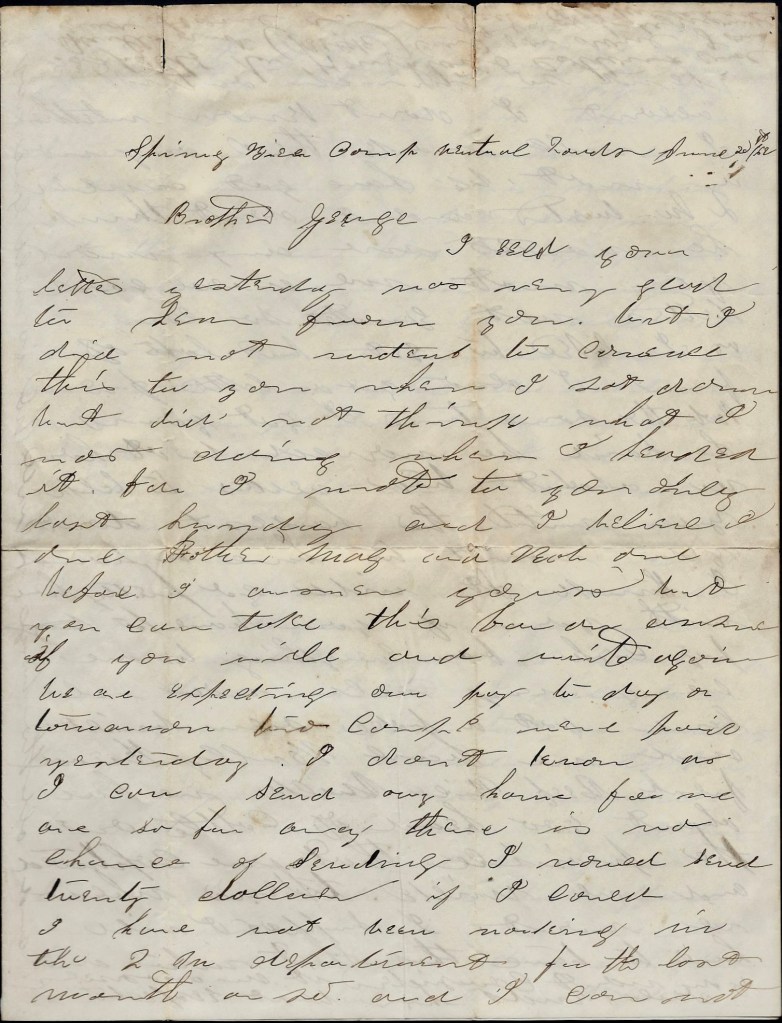
Spring River Camp, [Cherokee] Neutral Lands June 2, 1862
Brother George,
I received your letter yesterday. Was very good to hear from you but I did not intend to address this to you when I sat down but did not think what I was doing when I headed it for I wrote to you only last Sunday and I believe I owe both Mag and Rob one before I answer yours but you can take this [ ] and answer if you will and write again.
We are expecting our pay today or tomorrow. Two companies were paid yesterday. I don’t know as I can send any home for we are so far away there is no chance of sending. I would send twenty dollars if I could. I have not been working in the quartermaster department for the last month or so. I don’t know whether I will make that organization now or not. We have got a new quartermaster and I don’t think he wants me any more.
You wrote me a real good letter—not quite so long as I like to get but lots od fun. I also got a letter from Bob the same time I got yours. He said he would be at home in about two weeks to help you with the harvest. Don’t you want to hire a hand? I think it will get pretty hard with you if you have to pay cash for everything. We are living very well now out here. Got a bake oven built and we have bully bread, fresh beef, nice milk. We have about 500 head of cattle on the prairie that we captured and we milk them when we want. I suppose I will have to tear this sheet in two or you won’t consider it and answer.
[ ] sends his best respects and all the boys you know is well. My respects to Houghton, Cotton, and…
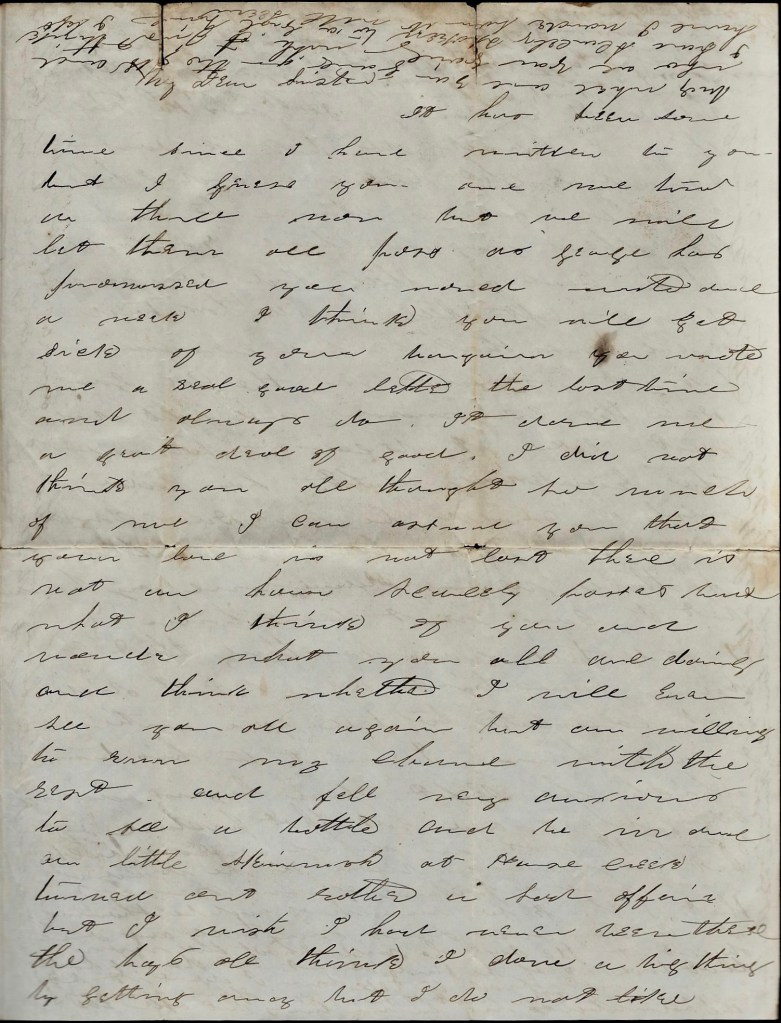
My dear sister,
It has been some time since I have written to you but I guess you owe me two or three now but we will let them all pass as George has promised you would write once a week. I think you will get sick of your bargain.
You wrote me a real good letter the last time and always do. It done me a great deal of good. I did not think you all thought too much of me. I can assure you that your love is not lost. There is not an hour scarcely passes but what I think of you and wonder what you all are doing and think whether I will ever see you again. But am willing to run my chance with the rent and feel very anxious to see a battle and be in one. Our little skirmish at Horse Creek 1 turned out rather a bad affair but I wish I had never been there. The boys all think I done a big thing by getting away but I do not like the idea of running. It was the only thing I could do but it don’t sound right to me and I do hope I will have a chance to run the other way sometime.
You asked which, Dave or [Allen P.] Steel had command. Capt. Steel, I see, has told several times that he had command but it is not so. The Colonel gave Dave the command and Capt. did not like it because he was the ranking captain. How I do wish I could be in Dave’s company. I do not like [Capt.] Steel or [Lt. William B.] Shattue. Shattue never showed me an harm but I cannot bear him. I will tell you something that I done some time ago but I did not calculate to tell you until I came home. I went to his trunk which he kept open laying about everywhere and got that picture of yours. It was an awful mean trick but as mean a man as he is cannot have a picture of my sister that I think so much of and he showing it to everyone. Don’t tell anyone about it. He says he will shoot the man that took it if he finds it out. But the big fool. I am not afraid to tell him I done it…I will show him that I am as good as he is—if not better. I will give it back to him if you say so.
1 Action at Horse Creek (Missouri) on 7 May 1862.The Western Reserve Chronicle of 28 May 1862 wrote: “The Ohio boys pursued a large body of guerrillas who had concentrated on Horse Creek, a long distance, but without getting a fight. A small party from Co. I, while out scouting, ran into a rebel ambuscade. The former fought bravely but were overpowered by numbers, and compelled to retreat with the loss of a corporal killed, two men wounded, and three taken prisoners.”
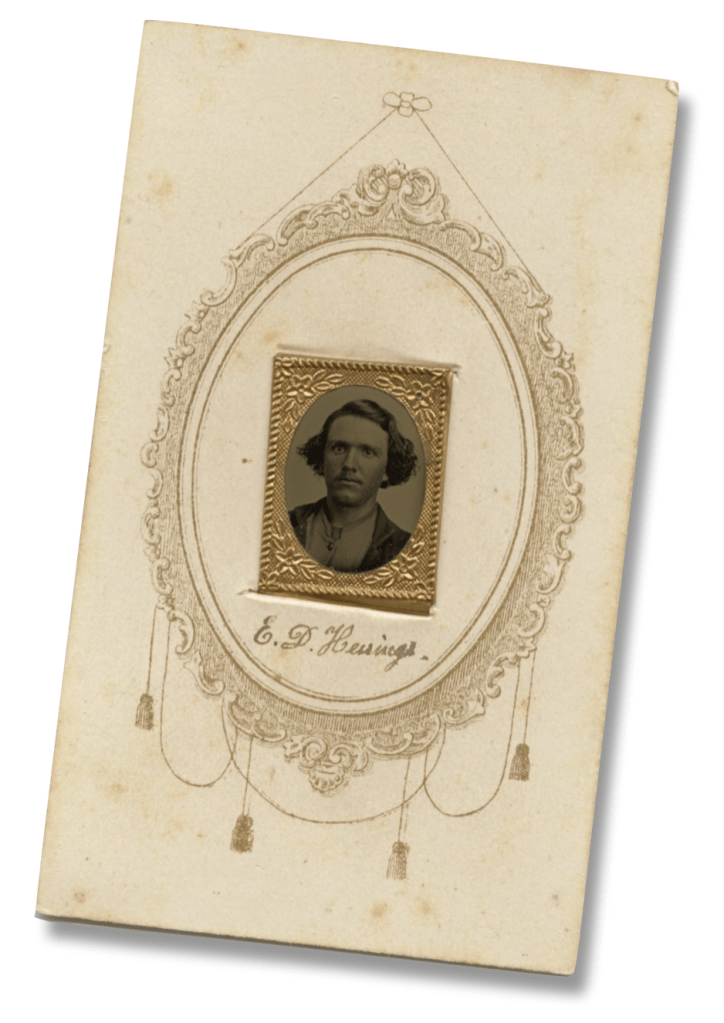
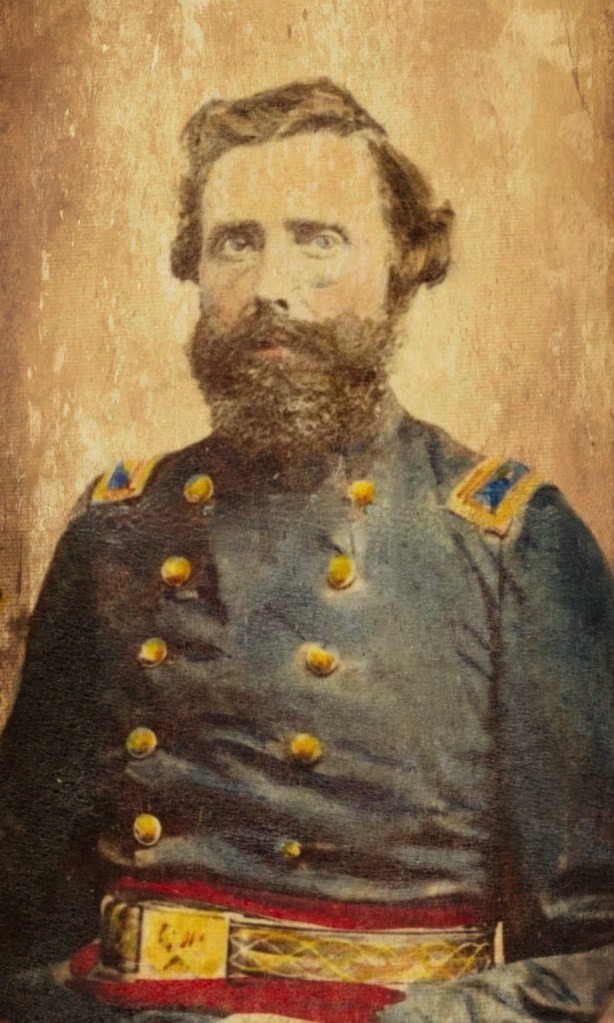
I could not find an image of Edward but here is a gemtype of Eber D. Herrings who began his service in the 10th Kansas Infantry(Kansas Historical Society)
The following letters were written by Sgt. Edward Williams of Co. E, 10th Kansas Infantry. Edward had enlisted in Co. E, 3rd Kansas Infantry under the command of the notorious jayhawker Col. James Montgomery, but when the regiment failed to raise the required number of men to form a regiment, they were combined with the 4th Kansas Infantry (also short recruits) and the consolidated unit was named the 10th Kansas Infantry and mustered in for three years service under Col. William F. Cloud.
These three letters describe in some detail the movements of the regiment as it saw its first action in company with the 2nd Ohio Cavalry on what has been called the Indian Expedition.
According to muster records, Edward enlisted on 23 July 1861 but he did not survive the war. He died of disease on 6 March 1864 at Alton, Illinois. At the time of his enlistment, he gave his residence as Mound City, Linn county, Kansas.
Companies A, B, C, D, E and F of the 3rd Kansas Infantry retained their original designation until the date of the consolidation. The members of the Third and Fourth Kansas Volunteers were accounted for in the new organizations to which they were transferred as though they had served with the last organization from the beginning of their original term of service, no reference being given to the fact that the first part of their service had been rendered as members of the Third and Fourth Kansas regiments, or that such regiments ever existed.
Edward wrote the letters to his sister Mary J. and her husband, Charles Payson or Paxson—I can’t be certain. More research would be required to identify this couple and their residence at the time. There are no accompanying envelopes.
[The following letters are from the private collection of Rob Morgan and were transcribed and published on Spared & Shared by express consent.]
Letter 1
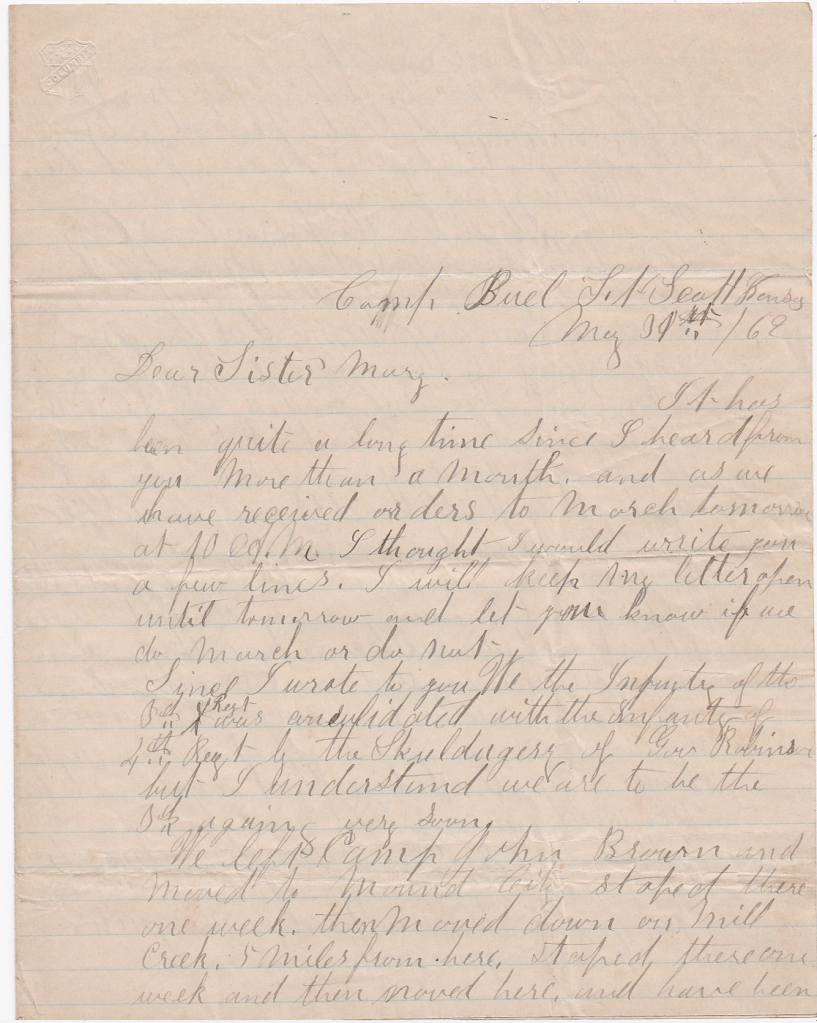
Camp Buel Ft. Scott, Kansas May 31st 1862
Dear sister Mary,
It has been quite a long time since I heard from you—more than a month, and as we have received orders to march tomorrow at 10 a.m., I thought I would write you a few lines. I will keep my letter open until tomorrow and let you know if we do march or do not.
Since I wrote to you, we, the infantry the 3rd Regiment, was consolidated with the infantry of 4th Regiment by the skullduggery of Gov. Robinson. But I understand we are to be the 3rd again very soon. 1
We left Camp John Brown and moved to Mound City. Stopped there one week, then moved down on Mill Creek, 5 miles from here. Stopped there one week, and then moved here, and have been here since—a little over 3 weeks.
James Montgomery was commissioned Colonel of the 3rd Kansas Infantry (New Hampshire Historical Society)
The boys are now hurrahing for Montgomery as they have heard that he had orders from the War Department to take his regiment wherever he can find them. I say three cheers for him.
You will address me for the present as Co. E, 10th Kansas Regiment via Mound City in care of Captain [John F.] Broadhead. If it’s sent in his care, there will be no danger of miscarrying if they change regiments every day.
Enclosed you will find a silver ring which I made. I send it to you not for the worth of the ring, but because I made it and I thought you would like it better on that account. I have worn it for more than a month on my right little finger and I have one on the left very near like it and we will compare them when you see me so that you may know me.
I had a letter from Mary Tucker a few days ago and in it was a note from Lizzie stating that she was to be married in about a week.
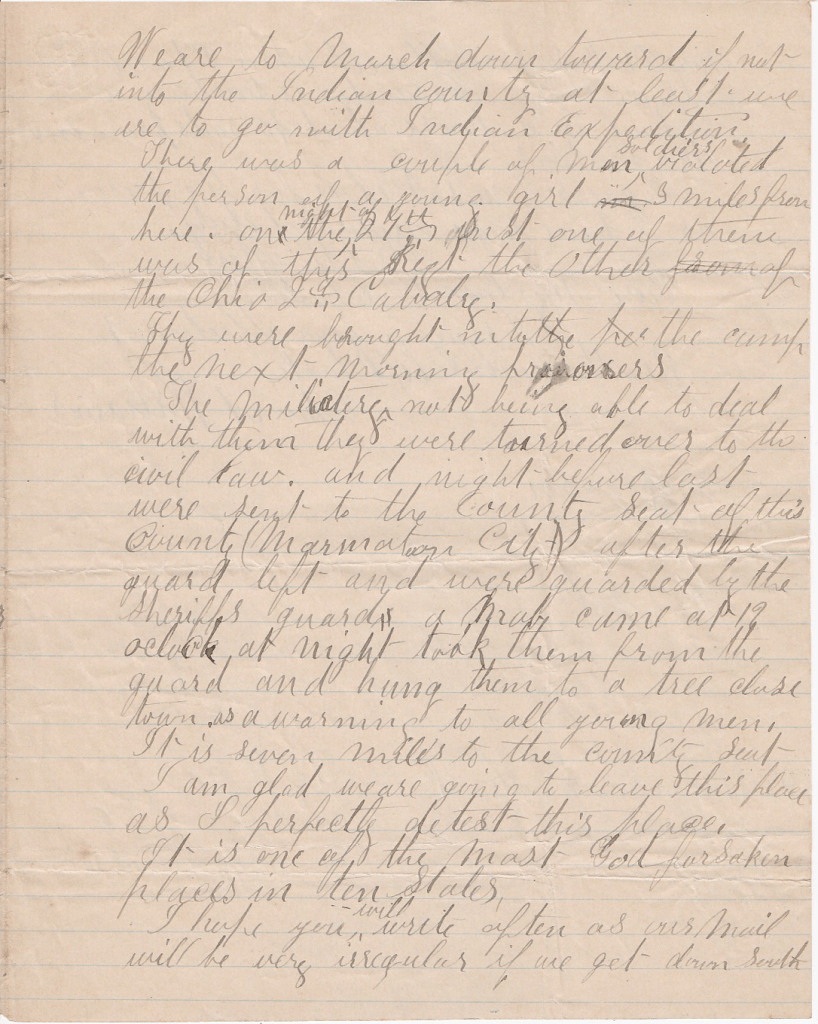
There is four companies ordered to march tomorrow—the four companies of the old 3rd. That looks to our speedy recognition as the 3rd regiment again. We are to march down toward—if not into—the Indian country. At least we are to go with [the] Indian Expedition.
There was a couple of soldiers violated the person of a young girl 3 miles from here on the night of the 27th instant. One of them was of this regiment; the other of the Ohio 2nd Cavalry. They were brought into the camp the next morning prisoners. The military not being able to deal with them, they were turned over to the civil law and night before last, were sent to the county seat of this county (Marmaton City). After the guard left and [they] were guarded by the sheriff’s guard, a mob came at 12 o’clock at night [and] took them from the guard and hung them to a tree close [to] town as a warning to all young men. It is seven miles to the county seat. 2
I am glad we are going to leave this place as I perfectly detest this place. It is one of the most God forsaken places in ten states.
Mr. Durbin’s were all well when I heard from them. Casandra is teaching a school in a house about 40 rods from Mr. Durbin’s.
I guess I must close for the present as I have to go on guard duty. Write often. Give my love to Charles. I remain your affectionate brother while life lasts. — Edward Williams
[To] Mary Paxson
June 1st. I understand it is to be a general move south from here of all the troops going from Kansas. We will have a train of over 100 wagons besides the company & regiment wagons. 9 a.m. Tents are struck ready to march. Hurrah for the Cherokee Country. — Ed Williams
1 The following article on the origins of the 3rd & 4th Kansas Regiments explains: “The Third and Fourth Kansas volunteer regiments were neither at any time complete organizations, and after the danger of an invasion by Price had passed recruiting for these organizations became very slow; the regiments being organized under state authority were securing most of the new enlistments. The new organizations presented more promising possibilities for position or promotion, and, beside, were cavalry regiments, and the experienced horseman of the West preferred to ride when an opportunity to do so was at hand. In the spring of 1862 the War Department ordered the reorganization and consolidation of the Third and Fourth Kansas regiments. This was done, the infantry companies forming a new regiment, thereafter known as the Tenth Kansas Volunteer Infantry. It would have been very proper to have designated the new consolidation as either the Third or Fourth Kansas Volunteers, instead of the Tenth, but both regiments thought their regimental designation the one to adopt, and to settle the contention, the next vacant number was assigned to the reorganization. The cavalry companies were transferred to the Fifth, Sixth and Ninth Kansas Cavalry regiments, and the artillery companies were consolidated into the First Kansas Battery.” For excellent full article, see The 3rd & 4th Kansas Vol. Infantry Regiments.
2 Under the title of History of Lynchings in Kansas, the lynchings of the two soldiers is listed as having taken place on 9 June 1862. They were identified only by their units: “2nd Ohio Cavalry and 10th Kansas.” Their crime: “Rape.”Almost all of the other lynchings in Kansas during those years were for stealing cattle or horses.
Letter 2
Camp Spring River on the Government Strip 1 mile south of the Kansas line June 26th 1862
Dear Bro & Sister,
I received your most welcome letter some 10 days since and should have answered it sooner but we marched from Ft. Scott the next [day] after receiving it and have been on the march since except two days, and as I am cooking for the mess, I got but very little time.
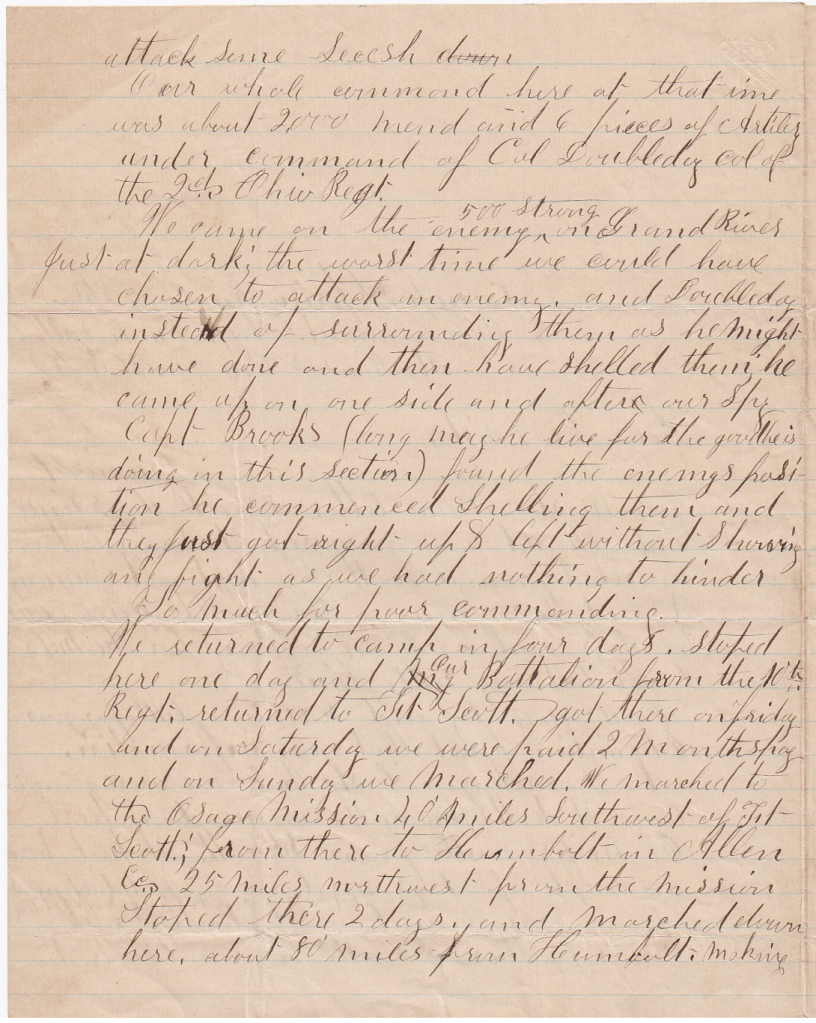
I will now try and scribble a little for your edification. If not that, them for] your information. As I wrote you last that we were going to leave Ft. Scott, we came down here 60 miles south from Ft. Scott, stopped here a couple of days, and then a detachment of our command, about 1000 men & 4 pieces of artillery, went down some 40 miles farther south on Grand River to attack some secesh. Our whole command here at that time was about 2000 men and 6 pieces of artillery under command of Col. Doubleday, Colonel of the 2nd Ohio Regiment.
We came on the enemy 500 strong, on Grand River just at dark—the worst time we could have chosen to attack an enemy, and Doubleday, instead of surrounding them as he might have done, and then have shelled them, he came up on one side and after our spy Capt. Brooks (long may he live for the good he is doing in this section) found the enemy’s position, he commenced shelling them, and they just got right up & left without showing any fight as we had nothing to hinder [his escape]. So much for poor commanding. 1
We returned to camp in four days. Stopped here one day and our battalion from the 10th Regiment returned to Ft. Scott. Got there on Friday, and on Saturday we were paid 2 months pay, and on Sunday we marched. We marched to the Osage Mission 40 miles southwest of Ft. Scott. From there to Humboldt in Allen Co., 25 miles northwest from the mission. Stopped there 2 days and marched down here about 80 miles from Humboldt, making all some 300 miles since the 1st of of June. We have here forces as follows: 2 batteries 6 pieces each, the 9th Wisconsin Infantry, 2 the 2nd Ohio Regt. (Cavalry), 4 companies of the 9th Kansas Regt. (Cavalry), the 10th Kansas Regt. Infantry, and 2 Regts. of Indians—one cavalry & the other infantry. In all, 2000 Indians & near 3000 white soldiers. We are in what is termed the Indian Expedition. There has gone out 300 infantry and the same of cavalry and 2 pieces artillery to have a little skirmish. I hardly think they will get any.
When we move from here or how long we stop here, I cannot say but I think when you hear from me next I will be under my old Col. (Col. Montgomery). Things are working in that direction. You will direct to me for the present in Co. E, 10th Kansas Regt. via Mound City, in care of Capt. Broadhead.
We are having a very dry time—almost bordering on a drought—and if we do not have rain soon, crops will be injured. We had a nice shower last evening but the ground was so dry that it done but very little good. Wheat is quite good and is being harvested.
Capt. Young Black Dog of the Osage Battalion who fought with the 10th Kansas Vols.
The Indians have given us a couple of war dances since we have been with them. The Osage Mission is a little village made the headquarters of the Osage Indian Nation. It is on the Neosha River. There is about 500 of the Osage Indians in our Indian Regiment. I must close for the present as I have to help get dinner and then go out on guard.
Excuse my hurried epistle as I look over all mistakes. I will quit cooking in 5 days more and then I will have more time to write. I remain as ever your brother—Edward Williams
Charles Paxson
Mary J Paxson
1 This expedition was described in The 10th Kansas Volunteer Infantry as follows: “The first action noted is the attachment of four companies of the 10th being assigned to the 2d Ohio Cavalry. This expedition formed for the purpose of attacking a force under the notorious Col. Waitie, of the 1st Cherokee Rebel Regiment. The command was all cavalry and artillery. The men of the 10th were compelled to keep pace with the cavalry in the burning sun keeping 30 miles a day and marching 120 miles to be before the rebels camp ready and willing to attack the enemy. Another testament to the “true metal” of the 10th. Marching from Fort Scott to the Osage Mission, and from the Mission to Humboldt, and then with 4 companies of the 9th, the Indian Regiments, and the 1st Kansas Battery marched to the Neosho River and thence to Baxter’s Springs. From Baxter’s Springs, now also with Solomon’s Brigade, marched to Cowskin Prairie. With the purpose of engaging the forces of Waitie, the advanced Brigade skirmished with the rebels. This failed to bring on a general engagement with the badly frightened rebels who fled in great confusion to the south.”
2 The 9th Wisconsin Infantry was raised in Milwaukee in the fall of 1861. It consisted predominantly of recent immigrants from German-speaking countries. An article appearing in the Muscatine weekly Journal on 23 May 1862 described the camp of the 9th Wisconsin at Fort Scott as “beautiful…in the streets of which are to be seen beautifully arranged flower beds, planted with a variety of early flowers and their tents variously and beautifully decorated…From the pains taken by the German to beautify and adorn their homes, it is evident they expect to rremain here for a time. Acting Brigadier General Doubleday is in command of the post. The forces there are the Wisconsin 9th, Ohio 2nd Cavalry, and Rabb’s Indiana Battery. Camp Marmaton is five miles northwest of the Fort, on the south side of Mill Creek, in a beautiful and healthy situation.”
Letter 3
Camp on Horse Creek 1 mile west of Grand River Cherokee Country July 3d 1862
Dear Sister Mary,
Your letter of the 13th of June was gladly received by me day before yesterday and I was very glad to hear from you and to hear that you were well. I thank you very much for that likeness. I will have to say for your encouragement that you have got a very good looking man for a husband—much better than I had expected you had got.
Since I wrote to you, I think we were at Humboldt. At the time of writing we came down from Humboldt to the Osage Mission, from there to the camp on Spring River, from Spring River down to Grand River, 40 miles farther south, and our present camp is 25 miles down the Grand River. Our yesterday’s march, my company and two other companies of the 10th Regiment remain here today. As an expedition went out yesterday or last night and 7 wagons went out from our regt. to carry the infantry that went with the expedition. The expedition was to take in some secesh 15 miles from here. I have not heard from them.
Since we left Ft. Scott the 1st of June, we have marched over 400 miles. We have four regiments of white men and two regiments of Indians & 12 pieces of artillery. Will have in a little more time 4000 men more & 12 more pieces of artillery. We will go down as far as Ft. Gibson & Ft. Smith and I do not know how much farther. Ft. Gibson is 35 miles from here in the Indian Country & Ft. Smith is about 80 miles in the edge of Arkansas. We can hear of secesh and see the signs of camping but to get a fight seems almost impossible.
Old [James Spencer] Rains is said to be figuring here and in the western border of Arkansas and the corner of Missouri 5000 or 6000 strong but we do not get a fight with him yet.
We are having quite a dry time but not as dry as it was. The dry year crops will be very good. I have seen some nice pieces of wheat. I saw some of the handsomest county yesterday and night before last that I have seen in a long time. It was really beautiful and then the soil was deep, would compare with any country. Plenty of good timber and good water but it is Cherokee Country.
Do not worry about me for I never enjoyed myself any better in my life but still I should like to be out so as to visit some of my friends, but while on a march I see new scenery enough to interest me so do not worry for me but remember me.
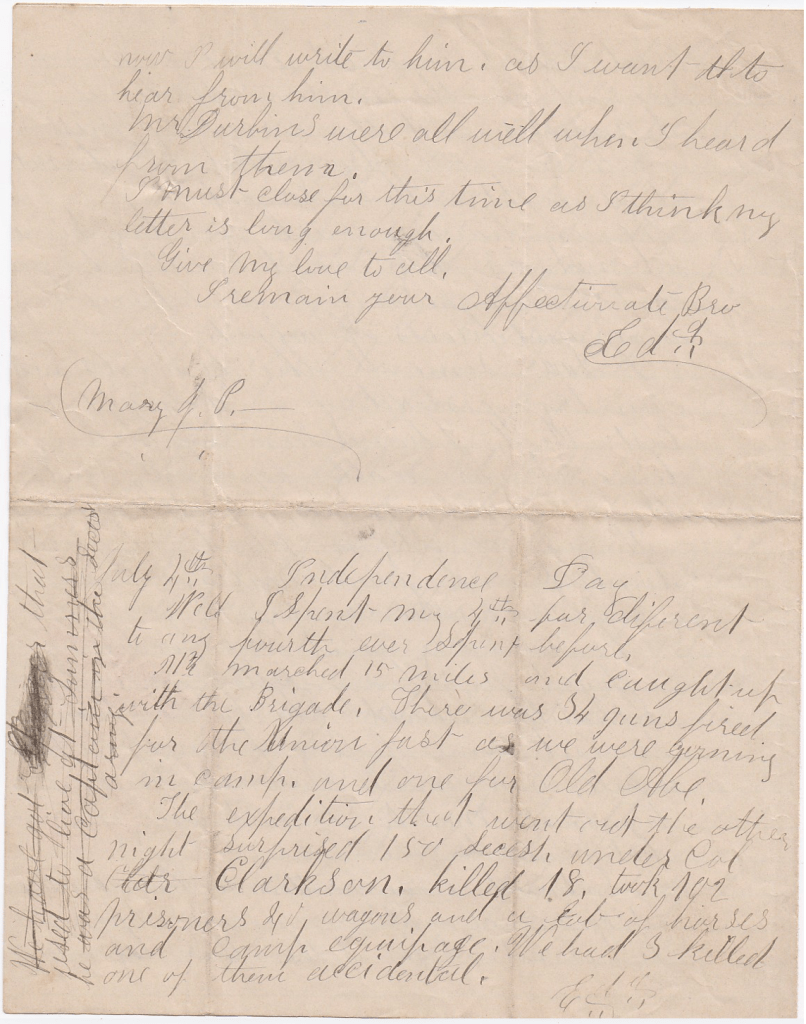
I should have written to Henry on this but he said he would give me his address which he has not. I got it the other day and now I will write to him as I want to hear from him. Mr. Durbins were all well when I heard from them. I must close for this time as I think my letter is long enough.
Give my love to all. I remain your affectionate bro—Ed’d
Mary J. P.—
July 4th Independence Day
Well I spent my 4th far different to any fourth ever spent before. We marched 15 miles and caught up with the brigade. There was 34 guns fired for the Union just as we were coming in camp and one for Old Abe. The expedition that went out the other night surprised 150 secesh under Col. Clarkson. Killed 18, took 102 prisoners & 40 wagons and a lot of horses and camp equipage. We had 3 killed, one of them accidental. 1
Ed’d
1 From the regimental history: “After a couple of days they marched south with Weer’s Division in the direction of the rebel Clarkson’s camp, hoping to surprise that precious cut-throat and his ragamuffins. A detail was formed and marched all night arriving before the rebel camp about sunrise on the morning of July 3d, 1862. The enemy was situated on a hill, the ascent being steep and rocky, and the only practicable road being a narrow track leading up on the south side. Weer, however, determined to throw his forces around the hill in order to capture the enemy if possible. The two companies of the 9th were moved to the northeast side, the 1st Indian Home Guard to the south and southeast, and the infantry of the 10th, supporting the 1st Kansas Battery, was ordered, after the artillery was found not to be of much service, owing to the abrupt rising of the ground, to fix bayonets and charge upon the enemy’s camp from the west. The attacking column coming from the west, the 9th and Indians being mounted, swept around on each side of the hill, driving the pickets, and then charged up the heights, while the command of the 10th, leaving a few Indians to support the artillery, charged up the western side of the heights, almost completely enveloping the enemy’s camp. Had it not been for the extremely rugged condition of the ground, and the density of the woods on two sides, the whole rebel command, amounting to about seven hundred, would have been captured. At the first dash, the enemy fired one round, and then broke in hopeless confusion over the two rough sides of the hill. Sixty or seventy of the rebels were killed or wounded, mostly killed, for the loyal Indians having but little quarter for their rebel brethren, and one hundred and fifty-five, including Col. Clarkson, their leader, taken prisoners, besides a large amount of camp and garrison equipage. The 10th’s loses were light with only a few men wounded.”














 Spared & Shared 23