Category Archives: 30th Ohio Infantry

1862: Isaac W. Wiggins to James G. Smith

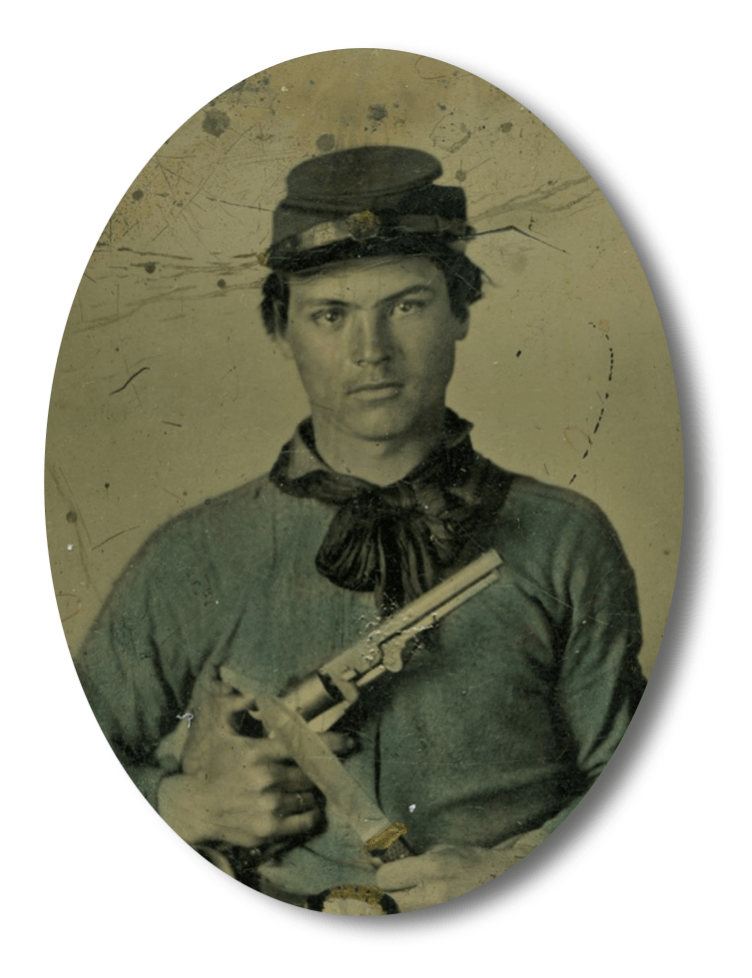
I could not find an image of Isaac but here is one of William Gallagher who served in Co. F, 30th Ohio Volunteer Infantry (Matt Cranford Collection)

The following letter was written by Isaac W. Wiggins (1832-1864), the son of Thomas Wiggins (1805-1881) and Sarah Eleanor Lutz (1808-1853) of Jefferson county, Ohio. Isaac was married in May 1852 to Anna Maria Smith (1830-1904).

In August 1861, Isaac enlisted in Co. G, 30th Ohio Volunteer Infantry (OVI). He was wounded on 13 May 1864 in the Battle of Resaca, Georgia, and died in a field hospital on the 25th of May, leaving a wife and four children.

Isaac wrote the letter to his brother-in-law, James G. Smith (1843-1912), the son of Jeremiah Smith (1804-1877) and Hanna A. Haines (1814-1889) of Phillipsburg, Jefferson county, Ohio.

Transcription
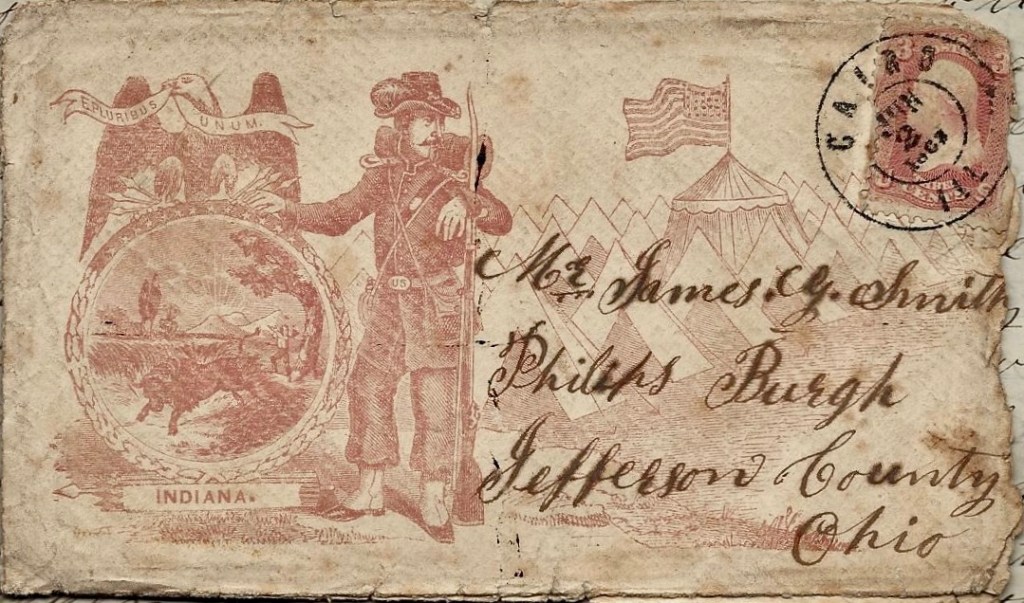
Camp Union
Fayetteville, Fayette county, Va
March 29, 1862

My dear brother,

It is with pleasure I take my pen in hand to let you know that I am well at present and I do hope that these few lines may find you all enjoying that great blessing which but God alone can bestow.

Well, dear brother, I received your kind letter today and I was happy to hear from you and that you was all well and hearty. And I also received a letter from home today. Both wrote the 18th of March. I am well pleased to hear that Anna got my likeness and I am happy to hear that Ann Maria and the children are all well.

Well, James, I sent a package home with Charles Young to leave at your house and I hope he has left it there. I want you, if you please, to take it up to Anna and give it to her. I am happy to hear from Noah and Jabez that they are both well and I want you when you write to them to give them my best respects and love. I hope that they will all live to return home in peace and love. I’d like to see you all in it.

Well, tonight we have to drill damn near all day and I can’t get time to say my prayers. All the writing I do is from supper till tattoo. That is at 8 o’clock and 30 minutes, then all is quiet and all the lights put out.

I was on guard last night and it rained and snowed all night but this morning the sun rose beautiful and the songs of the bluebirds and the meadowlark made me think of bygone days and of loving friends at home.

“We have the best company in the 30th Regiment. We have 95 men, well drilled, and full of fight, We have been in some damn hot places since we have been out here.”

— Isaac W. Wiggins, Co. G, 30th OVI, 29 March 1862

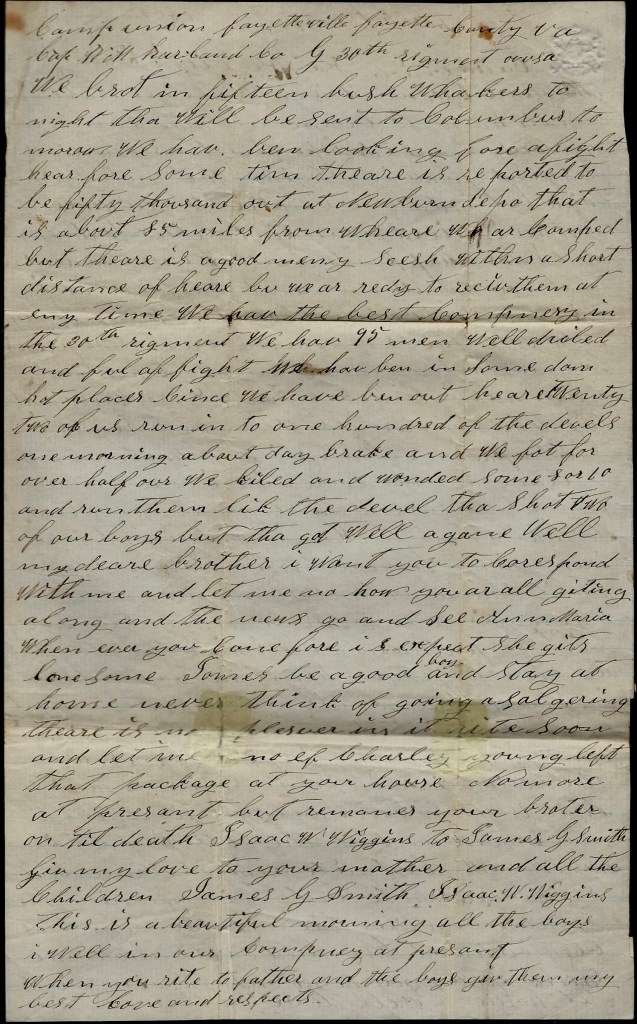
Well, dear brother, we brought in fifteen bushwhackers tonight. They will be sent to Columbus tomorrow. We have been looking for a fight here for some time. There is reported to be fifty thousand out at Newbern Depot—that is about 85 miles from where we are camped—but there is a good many secesh within a short distance of here. But we are ready to receive them at any time. We have the best company in the 30th Regiment. We have 95 men, well drilled, and full of fight. We have been in some damn hot places since we have been out here. Twenty-two of us run into one hundred of the devils one morning about daybreak and we fought for over half an hour. We killed and wounded some 8 or 10 and run them like the devil. They shot two of our boys but they got well again.

Well, my dear brother, I want you to correspond with me and let me know how you are all getting along and the news. Go and see Anna Maria when you can for I expect she gets lonesome. James, be a good boy and stay at home. Never think of going a soldiering. There is no pleasure in it. Write soon and let me know if Charles Young left that package at your house. No more at present but remain your brother until death.

— Isaac Wiggins

to James G. Smith

Give my love to your mother and all the children. This is a beautiful morning. All the boys is well in our company at present. When you write to father and the boys give them my best love and respects.

Co. G, 30th Ohio Regiment

1861: George Henry Hildt to Alida Braucher

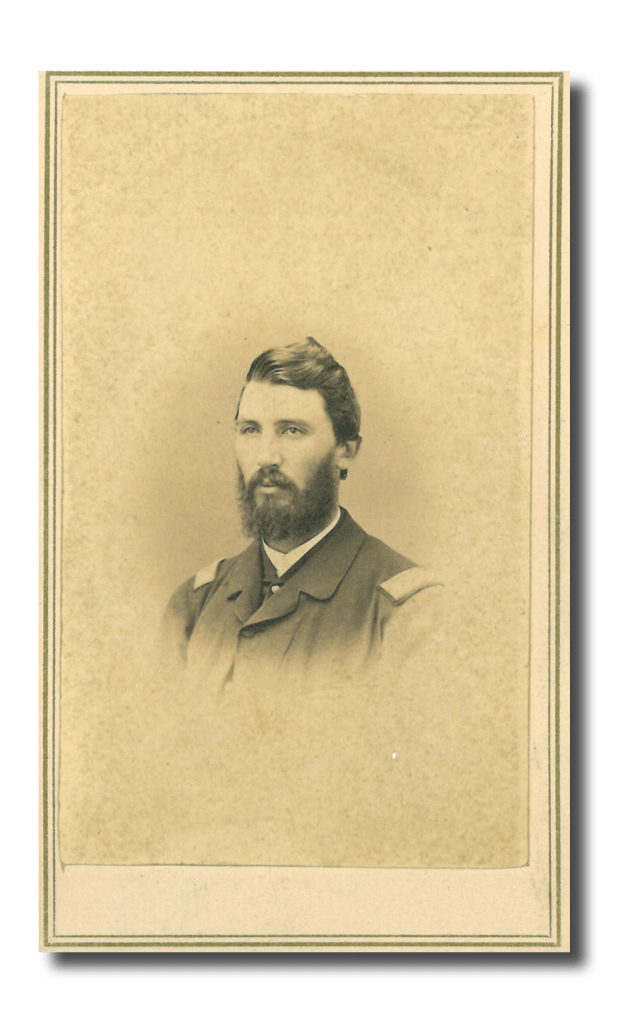
George Henry Hildt, 30th OVI (photo courtesy of Vicki Hildt Marjerrison)

The following letter was written by George Henry Hildt (1835-1914), the son of John Hildt (1807-1885) and Maria Elizabeth Gloninger (1812-1892) of Dover, Tuscarawas county, Ohio. George briefly homesteaded in Kansas in 1857 (see diary extract) and worked in St. Louis, but returned to Ohio in 1859.

He served in the 3-month 16th Ohio Infantry, enlisting as Private in Co. F and being promoted 2nd Lieutenant on 6 June. He mustered out with the company on 18 August. He then helped recruit another Company of volunteers which became Co. I of the new 30th Ohio Volunteer Infantry (OVI). He mustered in as Captain on 22 August 22, 1861. He was promoted to Major of the regiment on 28 January 1862.

George took command of his regiment during the Battle of Antietam as the senior officer after Lieut. Colonel Jones was captured. Colonel Ewing had previously been promoted to brigade command. After Antietam, the regiment headed south and west in the later part of 1862 and early ’63, seeing service in Kentucky, Arkansas, and three month stretch in Louisiana to March 1863. He was appointed Lieutenant Colonel on 18 April 1863 at Walnut Hills, Mississippi, then in operations around and in the siege of Vicksburg. He was wounded in the left hip there on 22 May 1863. The regiment was at Chattanooga and Knoxville in early 1864, and on the Atlanta Campaign May to September. He resigned on 22 September 1864.

After the war, George returned to Canal Dover (now Dover), OH and was a pension agent, once clerk in the office of Secretary of State of Ohio, and active in the Loyal Legion and Army of the Tennessee veteran’s groups. He also held the position of Commander of the Ricksecker Post (No. 469) of the Grand Army of the Republic. [Source: Antietam on the Web]

George wrote the letter to his cousin Alida Braucher (1843-1897), the daughter of Joseph Braucher (1810-1884) and Juliana Antoinette Hawley (1822-1895) of Canal Dover, Tuscarawas county, Ohio.

Transcription

Addressed to Miss Alida Braucher, Canal Dover, Tuscarawas County, Ohio

Camp Sutton
September 30, 1861

Cousin Lide,

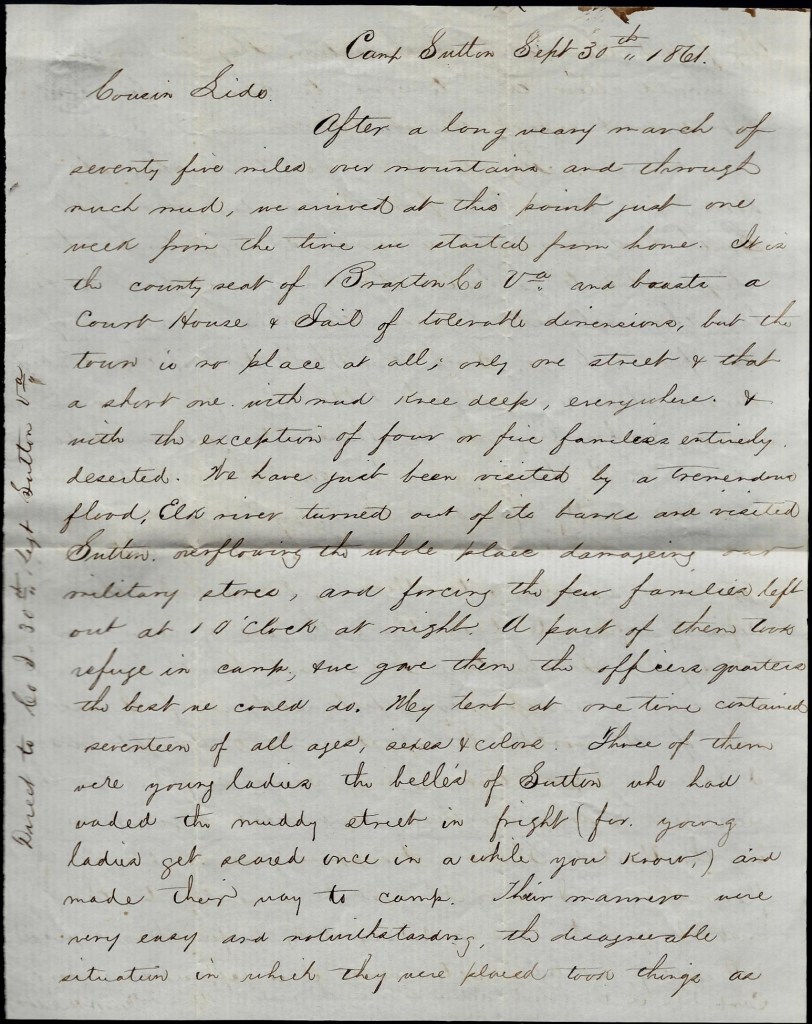
After a long weary march of seventy-five miles over mountains and through much mud, we arrived at this point just one week from the time we started from home. It is the county seat of Braxton County, Virginia and boasts a Court House and Jail of tolerable dimensions but the town is no place at all; only one street and that a short one, with mud knee deep everywhere. And with the exception of four or five families entirely deserted. 1

We have just been visited by a tremendous flood. Elk river turned out of its banks and visited Sutton, overflowing the whole place damaging our military stores, and forcing the few families left out at 10 o’clock at night. 2 A part of them took refuge in camp & we gave them the officer’s quarters—the best we could do. My tent at one time contained seventeen of all ages, sexes and colors. Three of them were young ladies—the belles of Sutton—who had waded the muddy street in fright (for young ladies get scared once in awhile you know) and made their way to camp. Their manners were very easy and notwithstanding the disagreeable situation in which they were placed, took things as they found them and were contented.

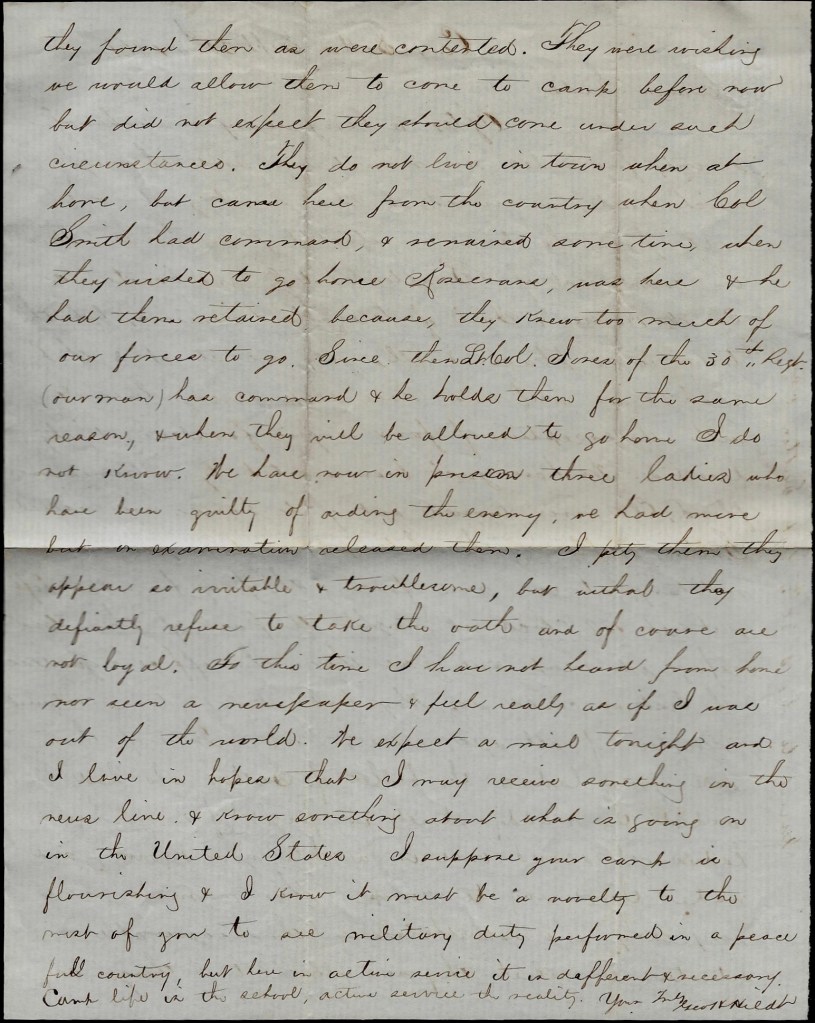
They were wishing we would allow them to come to camp before now but did not expect they should come under such circumstances. They do not live in town when at home, but came here from the country when Col. Smith had command, & remained some time. When they wishes to go home, Rosecrans was here and he had them retained because they knew too much of our forces to go. Since then, Lt. Col. Jones of the 30th Regt. (our man) has command and he holds them for the same reason, & when they will be allowed to go home, I do not know.

We have now in prison three ladies who have been guilty of aiding the enemy. We had more but on examination released them. I pity them. They appear so irritable and troublesome, but withal they defiantly refuse to take the oath and of course are not loyal.

To this time, I have not heard from home nor seen a newspaper & feel really as if I was out of this world. We expect a mail tonight and I live in hopes that I may receive something in the news line & know something about what is going on in the United States. I suppose your camp is flourishing & I know it must be a novelty to the rest of you to see military duty performed in a peaceful country, but here in active service it is different and necessary. Camp life in the school, active service the reality.

Yours truly, — George H. Hildt

Direct to Co. I, 30th Regt., Sutton, Virginia


1 This description of Sutton as it appeared in September 1861 certainly leaves us with the impression that aside from the court house and jail, there was very little “town” to speak of. Much is made of the burning of the town on 29 December 1861 by rebel guerrillas and the commissary stores that were there. See “Burning of Sutton.”

2 A History of Braxton County by John Davison Sutton reports that the flood of 1861 was one of the worst in county history. The water “ran down the main street of the town and was “belly-deep to a horse.”

1861: Ezra McConnell to his Brother

This letter was written by Ezra McConnell (1836-1902), the son of Michael McConnell (1801-1872) and Susan Gallagher (1795-1875) of Cadiz, Harrison county, Ohio. Ezra was commissioned a 2nd Lieutenant in Co. B, 30th Ohio Volunteer Infantry (OVI) in August 1861 and was promoted to 1st Lieutenant of Co. C on 25 October 1863. Ezra was not mustered out of the service until 10 January 1865. He was married in 1858 to Phebe Krim (1828-1894).

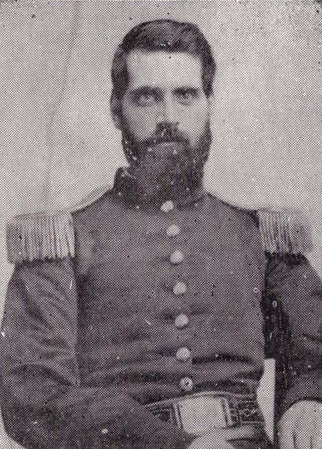
Ezra McConnell, Co. B, 30th Ohio Infantry

The majority of the content in this letter was devoted to a description of the desertion, arrest, court martial, and execution of Pvt. Richard Gatewood of Co. C, 1st Kentucky Infantry—the execution taking place on the date of letter, 20 December 1861. It was only the second Union soldier execution carried out by the military during the Civil War—the 7th of 267 recorded executions. From an article appearing in the Sunday Gazette-Mail of Charleston, West Virginia, written by Boyd B. Stutler and published on 4 February 1962, we learn that the 1st and 2nd Kentucky Infantry regiments attached to Gen. Cox’s command were “only nominally Kentuckians; the outfits were recruited along the waterfront at Cincinnati and were composed for a very large part of rivermen who had been idled by the suspension of steamboat traffic in the Southern waters. The men were rough and tough and did not take kindly to strict military discipline.”

Stutler’s article also informs us that the location of the execution was in the broad meadow just below the mouth of Elk River near the Kanawha river.

[Note: This letter is from the private collection of Greg Herr and is published on Spared & Shared by express consent.]

Transcription

Charleston, Virginia
December 20th 1861

Dear Brother,

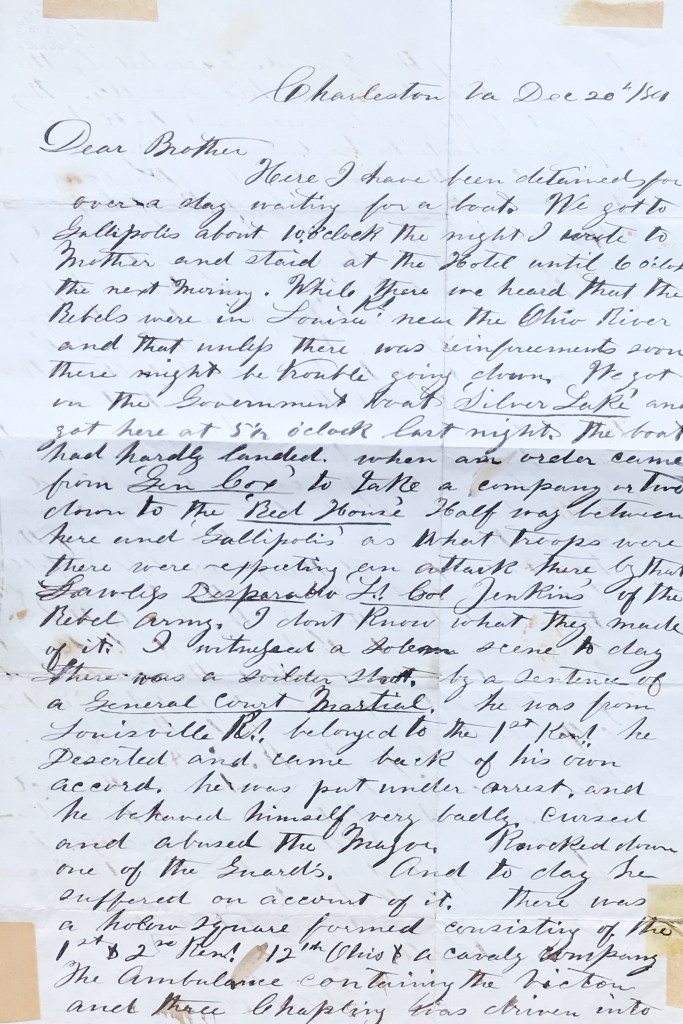
Here I have been detained for over a day waiting for a boat. We got to Gallipolis about 10 o’clock the night I wrote to Mother and stayed at the hotel until 6 o’clock the next morning. While there we heard that the Rebels were in Louisa near the Ohio River and that unless there was reinforcements soon, there might be trouble going down. We got in the Government boat Silver Lake and got here at 5:30 o’clock last night. The bat was hardly landed when an order came from Gen. [Jacob D.] Cox to take a company or two down to the Red House half way between here and Gallipolis as what troops were there were expecting an attack there by that lawless desperado Lt. Col. Jenkins of the Rebel army. I don’t know what they made of it.

I witnessed a solemn scene today. There was a soldier shot by a sentence of a General Court Martial. He was from Louisville, Kentucky, [and] belonged to the 1st Kentucky. He deserted and came back of his own accord. He was put under arrest and he behaved himself very badly—cursed and abused the Major, knocked down one of the guards, and today he suffered on account of it.

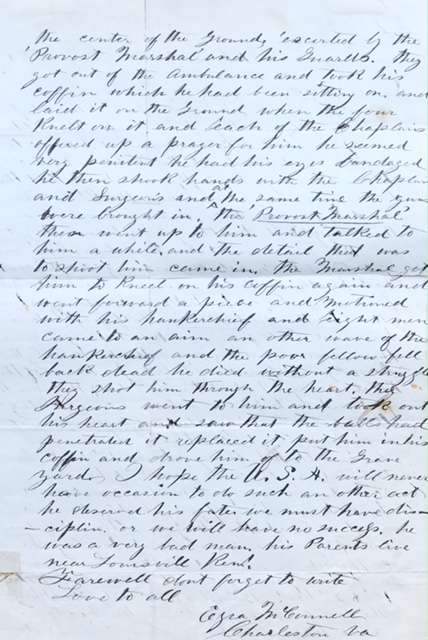
There was a hollow square formed consisting of the 1st and 2nd Kentucky, 12th Ohio, and a cavalry company. The ambulance containing the victim and three chaplains was driven into the center of the ground escorted by the Provost Marshal and his guards. They got out of the ambulance and took his coffin which he had been sitting on and laid it on the ground where the four knelt on it and each of the chaplains offered up a prayer for him. He seemed very penitent.

He ha his eyes bandaged. He then shook hands with the chaplains and surgeons and at the same time the guns were brought in. The Provost Marshal then went up to him and talked to him awhile 1 and the detail that was to shoot him came in. The Marshal got him to kneel on his coffin again and went forward apiece and motioned with his handkerchief and eight men came to an aim. Another wave of the handkerchief and the poor fellow fell back dead. He died without a struggle. They shot him through the heart. The surgeons went to him and took out his heart and saw that the balls had penetrated it, replaced it, put him in his coffin, and drove him off to the grave yard. 2

I hope the U. S. A. will never have occasion to do such another act. He deserved his fate. We must have discipline or we will have no success. He was a very bad man. His parents live near Louisville, Kentucky.

Farewell. Don’t forget to write. Love to all. — Ezra McConnell

Charleston, Va.

1 The article entitled “The Execution of Pvt. Gatewood,” by Boyd Stutler states that the Provost Marshal, “with merciful deception” told the prisoner he must wait a moment and he would return to him before the final order, but quickly stepping out of the range of the muskets, he gave the signal with his handkerchief and the man fell dead at the folley which sounded like a single discharge.”

2 Other accounts of the execution say nothing about the surgeons removing Gatewood’s heart from his body, examining it, and replacing it before placing the body in the coffin. If true, this seems to have been a highly unusual and unnecessary measure to establish Gatewood’s death and if it was actually done, must have been ordered only to instill greater order and discipline among the troops.