
The following letter was written by Arthur W. Mason of Co. E, 11th Wisconsin Infantry. He enlisted on 29 May 1861 and died of disease on 8 April 1862. The 4th Wisconsin Infantry first saw service in Maryland guarding the railroad but were sent to the Gulf of Mexico to join Butler’s Expedition to capture New Orleans. The regiment was converted to mounted infantry later in the year but Arthur would never see that happen. The comrades Arthur mentions were from Clinton, Wisconsin so that is probably also where Arthur enlisted.
[Note: This letter is from the private collection of Greg Herr and was made available for transcription and publication on Spared & Shared by express consent.]
T R A N S C R I P T I O N
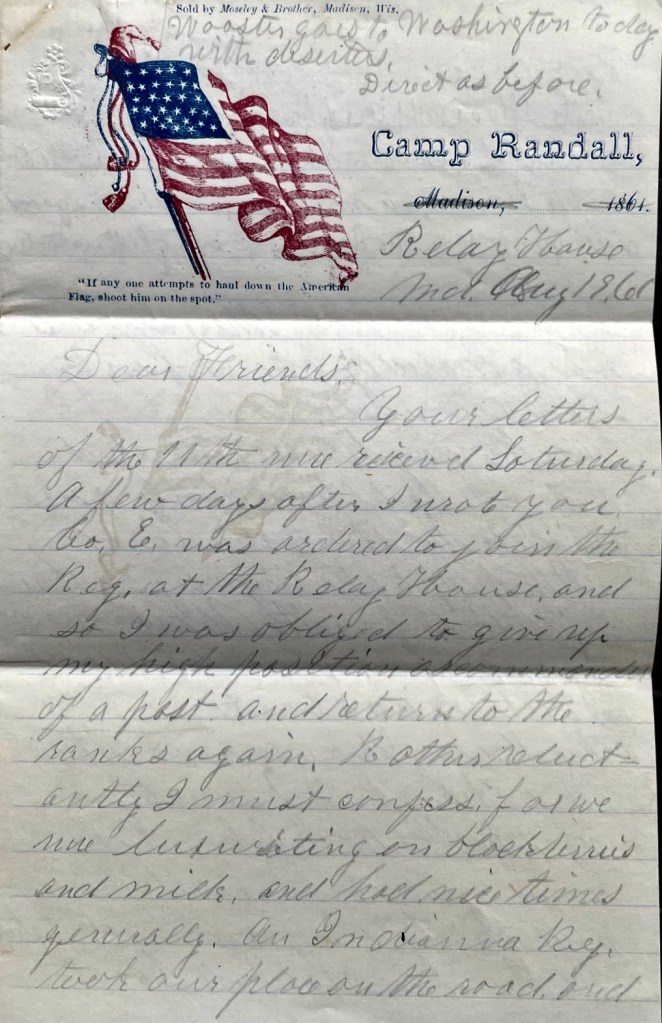
Relay House, Maryland
August 19, 1861
Dear Friends,
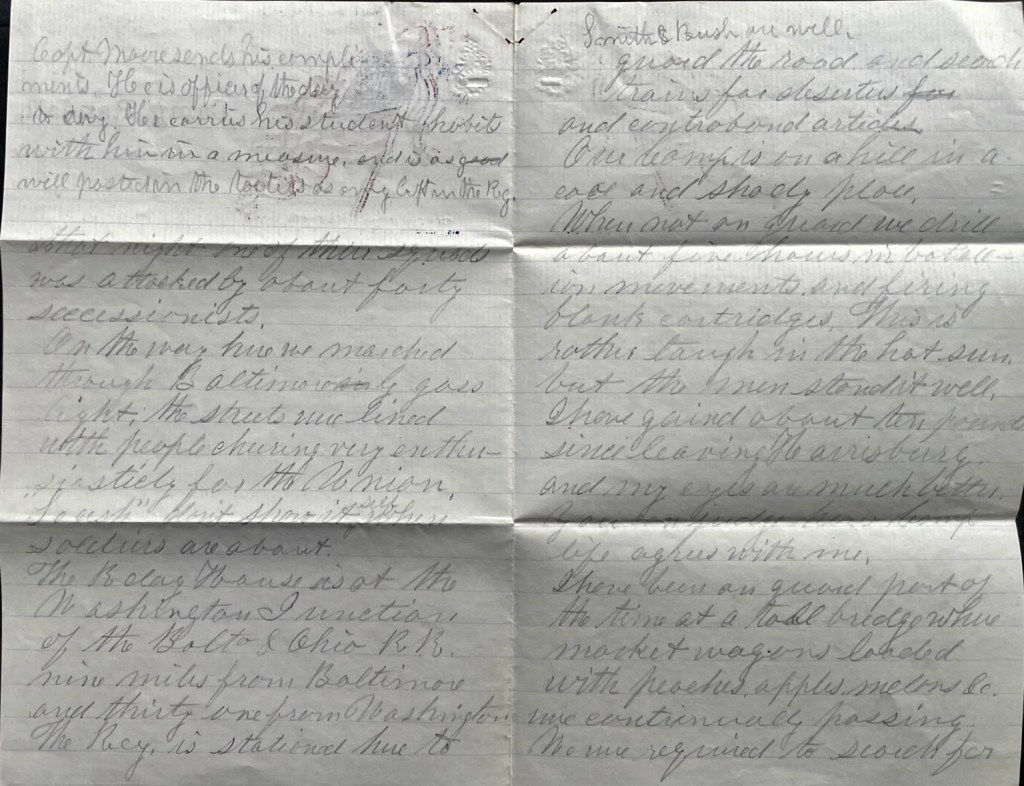
Your letters of the 11th were received Saturday. A few days after I wrote you, Co. E was ordered to join the regiment at the Relay House and so I was obliged to give up my high position as commander of a post and return to the ranks again—rather reluctantly I must confess for we were luxuriating on blackberries and milk and had nice times generally. An Indiana regiment took our place on the road and that night one of their squads was attacked by about 40 secessionists.
On the way here we marched through Baltimore by gaslight. The streets were lined with people cheering very enthusiastically for the Union. “Secesh” don’t show itself when soldiers are about.
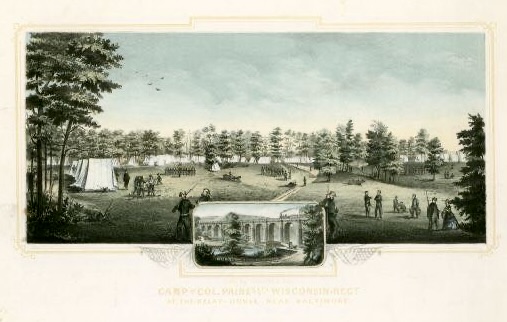
The Relay House is at the Washington Junction of the Baltimore & Ohio Railroad, 9 miles from Baltimore, and 31 from Washington. The regiment is stationed here to guard the road and search trains for deserters and contraband articles. Our camp is on a hill in a cool and shady place.
When not on guard, we drill about five hours in battalion movements and firing blank cartridges. This is rather tough in the hot sun but the men stand it well. I have gained about ten pounds since leaving Harrisburg and my eyes are much better. You can judge how camp life agrees with me.
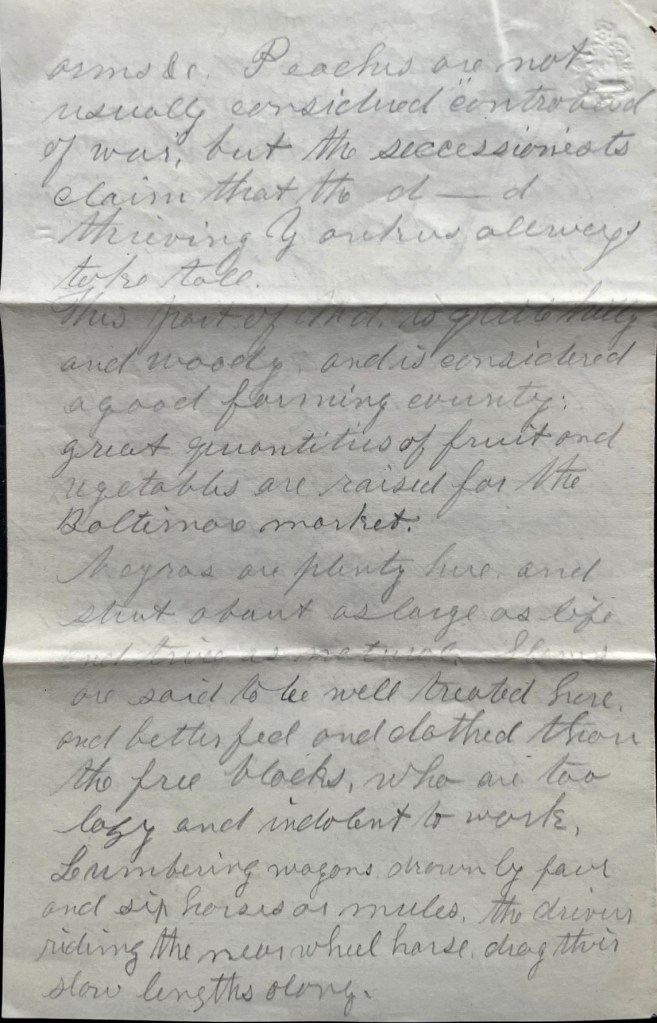
I have been on guard part of the time at a toll bridge where market wagons loaded with peaches, apples, melons, &c. were continually passing. We were required to search for arms, &c. Peaches are not usually considered “contraband of war,” but the secessionists claim that the damned, thieving Yankees always take toll.
This part of Maryland is quite hilly and woody, and is considered a good farming country. Great quantities of fruit and vegetables are raised for the Baltimore market.
Negroes are plenty here and strut about as large as life and twice as natural. Slaves are said to be well treated here and better fed and clothed than the free blacks who are too lazy and indolent to work. Lumbering wagons drawn by four and six horses or mules, the drivers riding the rear near wheel horse, drag their slow lengths along.
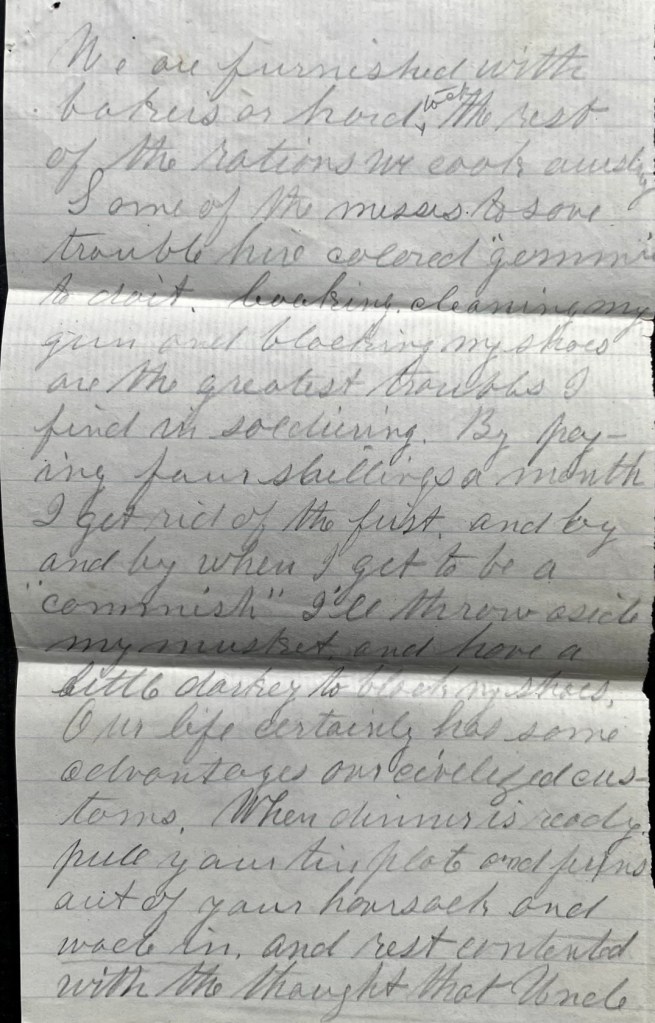
We are furnished with baker’s [bread], or hard tack. The rest of the rations we cook ourselves. Some of the messes to save trouble, hire colored “gemmies” to do it. Cooking, cleaning my gun and blacking my shoes are the greatest troubles I find in soldiering. By paying four shillings a month, I get rid of the first, and by and by when I get to be a “commish,” I’ll throw aside my musket and have a little darkey to black my shoes.
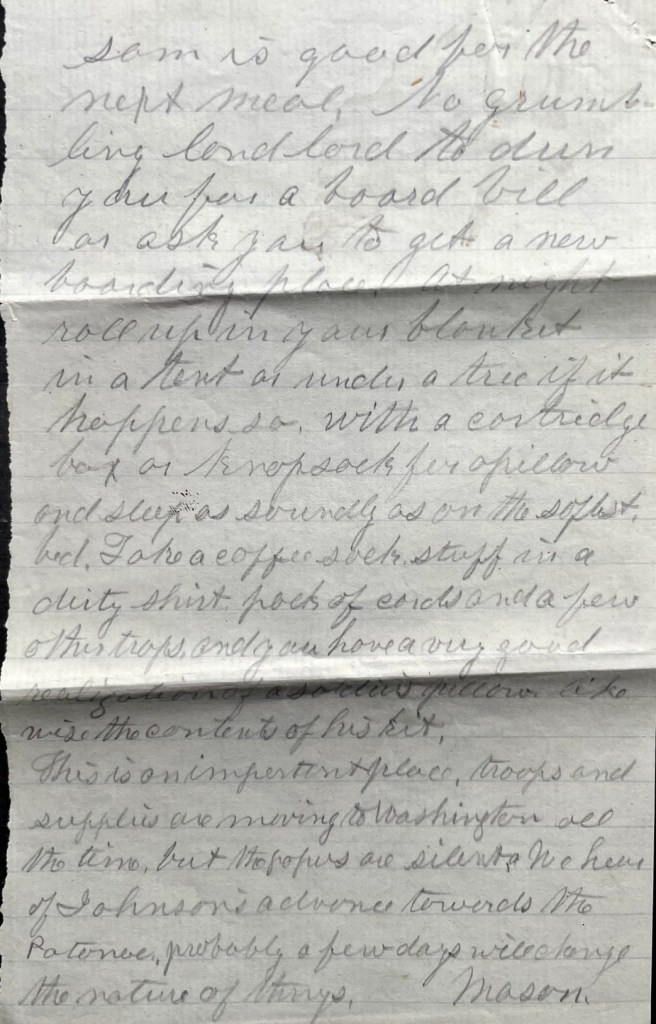
Our life certainly has some advantages over civilized customs. When dinner is ready, pull your tin plate and [ ] out of your haversack and wade in, and rest contented with the thought that Uncle Sam is good for the next meal. No grumbling landlord to dun you for a board bill or ask you to get a new boarding place. At night, roll up in your blanket in a tent or under a tree if it happens so, with a cartridge box or knapsack for a pillow and sleep as soundly as on the softest bed. Take a coffee sack, stuff in a dirty short, pack of cards, and a few other traps, and you have a very good realization of a soldier’s pillow. Likewise the contents of his kit.
This is an important place. Troops and supplies are moving to Washington all the time but the papers are silent. We hear of Johnson’s advance towards the Potomac. Probably a few days will change the nature of things. — Mason
[Charles D.] Wooster goes to Washington today with deserters.
Capt. [Webster P.] Moore sends his compliments. He is Officer of the Day today. He carries his student habits with him in a measure, and is as well posted in the tactics as any Captain in the regiment.
[Walter H.] Smith & [Peter] Bush [of Clinton, Wisconsin] are well.


 Spared & Shared 23