
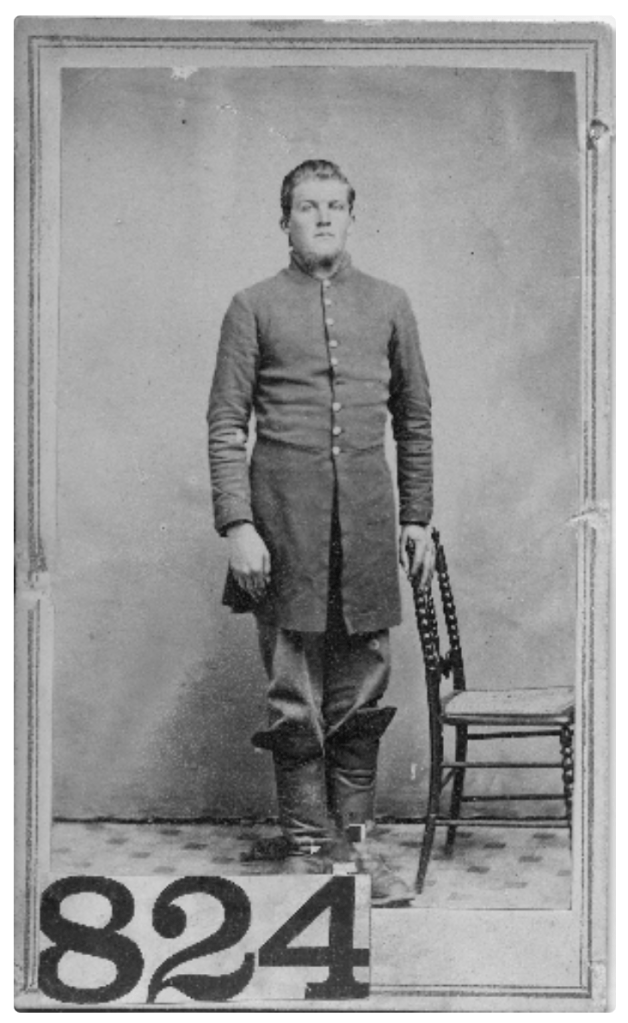
The following letters were written by John W. Oliver (1842-1895), the son of William Oliver (1815-1886) and Elizabeth Clute (1820-1888) of Union Church, Albany county, New York.
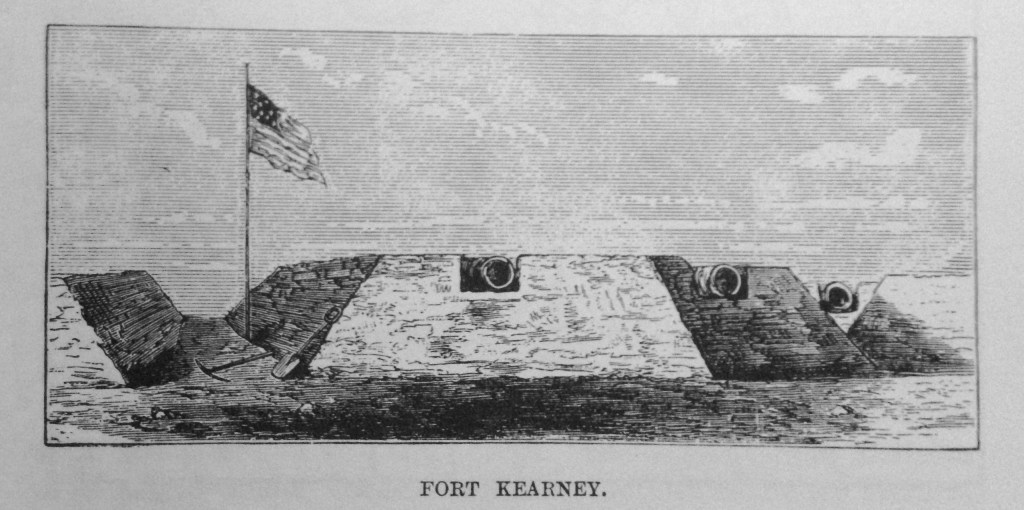
When he was 19 years old, John enlisted at Albany as private in Co. D, 113th New York Infantry on August 18, 1862, to serve three years. Before the end of 1862, the regiment had been reorganized as the 7th New York Heavy Artillery and garrisoned at Fort Kearney near Washington D. C. When the regiment was taken to the front and used as infantrymen in the spring of 1864, John was captured on June 16, 1864, at Petersburg, Va.; held at Andersonville prison for several months; paroled, December 6, 1864, at Charleston, S. C; returned to duty, April 5, 1865; promoted corporal, May 25, 1865; reduced, date not stated; mustered out with detachment June 16, 1865, at Fort Federal Hill, Baltimore, Md.
After the war, John married Mary E. Cady (1846-1881) and resided in Watervliet, Albany county, New York.
[Note: Three of the letters presented here are from the collection of Richard Weiner and were transcribed and published by express consent on Spared & Shared.]
Letter 1

Fort Kearney
Tuesday, February 3rd 1863
Dear Parents and Brother,
I now take the opportunity to answer your letter that I received yesterday. It found us all well and I hope this will find you the same. I received your letter with the postage stamps. The one had six in it and this last letter had 3 in so it is all right.
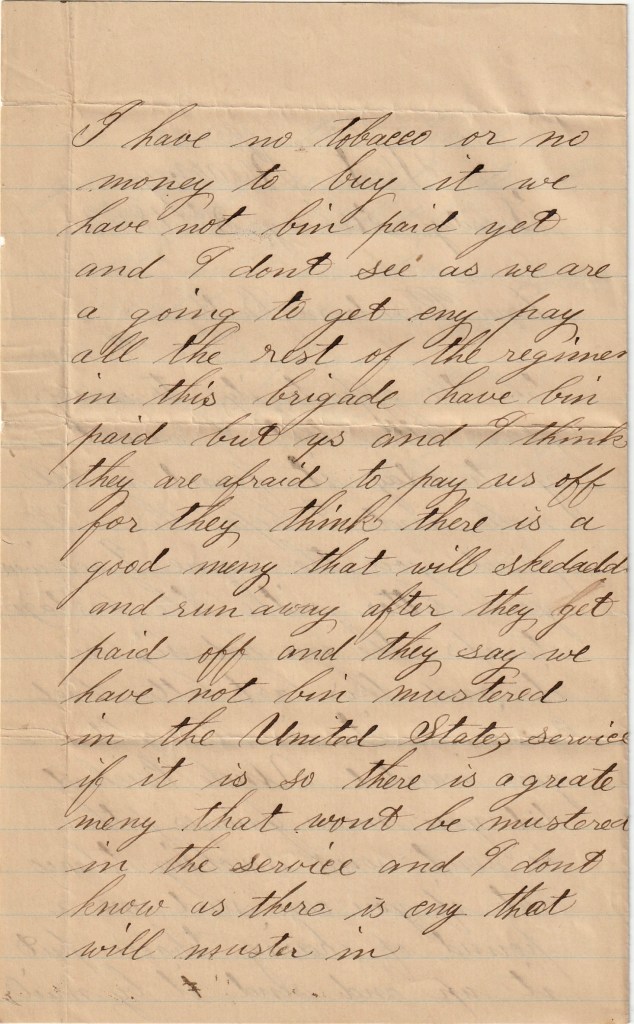
You wanted Uncle Richard. Did you mean James’ father? He sent some smoking tobacco but if you can send me a pound of chewing tobacco, put it up and send it by mail. I have no tobacco or no money to buy it. We have not been paid yet and I don’t see as we are a going to get any pay. All the rest of the regiments in this brigade have been paid but us and I think they are afraid to pay us off for they think there is a god many that will skedaddle and run away after they get paid off. And they say we have not been mustered in the United States service. If it is so, there is a great many that won’t be mustered in the service adn I don’t know as there is any that will muster in.
You said you hoped we would stay at this place. I think we will stay here this winter at least and then perhaps we will go to North Carolina. That is the talk some around camp. I hope it will come to a close soon so that we can come home.
Oh, how is Uncle Coon’s folks getting along? I have not heard you say anything about them. And what is John Jo a doing? Is he home now? You must tell him I have not had an answer from the letter I sent to him yet.
Brother, you must write every week and I will answer it if I can. No more at this time. Give my respects to all. Tell Grammy that I am well and send my respects. Write soon as you get this. From your son and brother, — John W. Oliver



Letter 2
Fort Kearney
Sunday, February 22nd, 1863
Dear Parents and Brother,
I now take my pen in hand to inform you that we are all well and I hope this will find you the same. I received your letter in due time but have neglected to answer it until now.
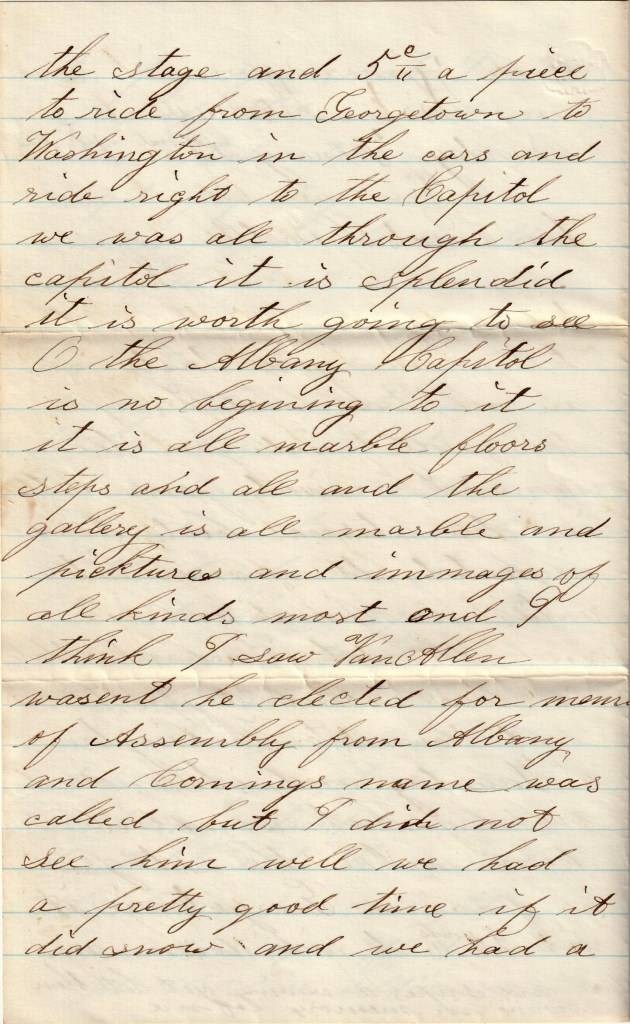
James and me and Sergeant [Edward S.] Burbanks that is our 2nd Sergeant went down to Washington a Tuesday and it snowed all day but we went down with the stage as far as Georgetown. It cost 25 cents to ride down in the stage and 5 cents apiece to ride from Georgetown to Washington in the cars and ride right to the Capitol. We was all through the Capitol. It is splendid. It is worth going to see. The Albany Capitol is no beginning to it. It is all marble floors, steps, and all, and the gallery is all marble and pictures and images of all kinds most, and I think I saw Van Allen. Wasn’t he elected for Member of Assembly from Albany. And Corning’s name was called but I did not see him.
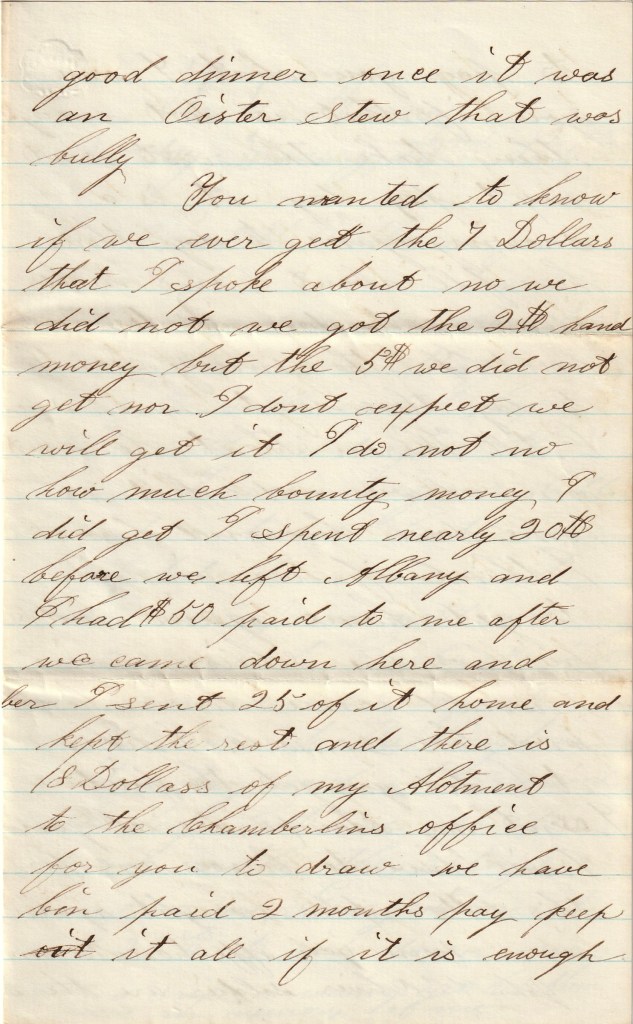
Well, we had a pretty good time [even] if it did snow, and we had a good dinner once. It was an oyster stew that was bully.
You wanted to know if we ever got the 7 dollars that I spoke about. No, we did not. We got the $2 hard money but the $5 we did not get nor I don’t expect we will get it. I do not know how much bounty money I did get. I spent nearly $20 before we left Albany and I had $50 paid to me after we came down here and I sent $25 of it home and kept the rest. And there is 18 dollars of my Allotment to the Chamberlin’s office for you to draw. We have been paid two months pay. Keep it all if it is enough to pay you what I owe you. If that is not enough, then take the rest out next pay day.
It is a snowing again today. There has fell about 6 or 8 inches of snow today. It does not look like the Sunny South today. There is too much snow.
Oh, tell Warren that he must come down and enlist or come down here and work. I think if ever I live to get home again and be free from a soldier again, I would come down here and live so well I like it. Did you get the picture I sent? My stamps are all gone. I will have to borrow one for this letter. Please write again soon. From your affectionate son, — John W. Oliver


Letter 3
[Note: The following letter was found in an antique store at Chickamauga, Georgia by Marilyn J, McCartney.]
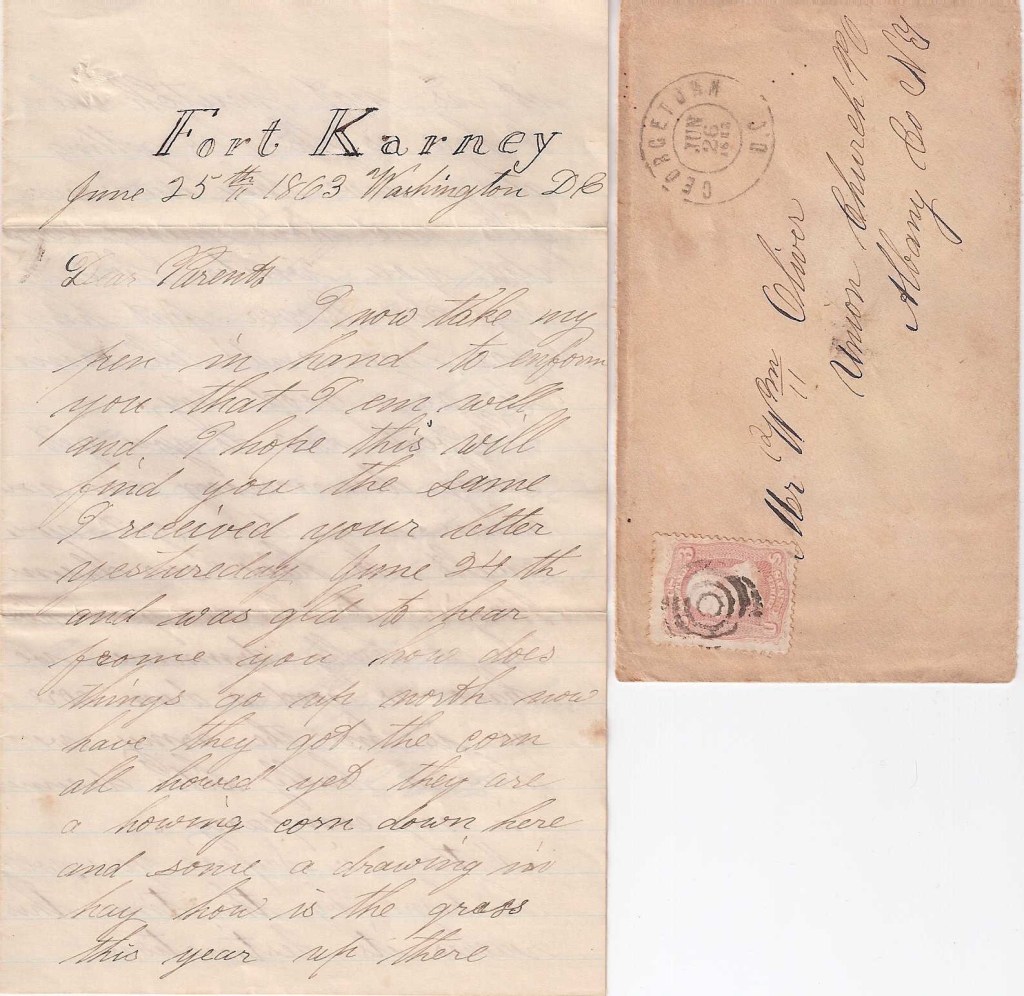
Fort K[e]arney
Washington D. C.
June 25th 1863
Dear Parents,
I now take my pen in hand to inform you that I am well and I hope this will find you the same. I received your letter yesterday, June 24th, and was glad to hear from you. How does things go up North now? Have they got the corn all hoed up yet? They are a hoeing corn down here and some a drawing in hay. How is the grass this year up there? It is not much here. How is the bees getting along? Have they swarmed yet? And how many swarms did you winter?
How is my dog Rover? Pat him for me and tell him to be a good boy.
Robert, how do you get along drumming? Can you drum any tune yet? You ought to have your drum major to learn you. He is a bully drummer. We have as good a drum corps as is in the army. We have a bully little drummer in our company.
Mother, I suppose you will be home by the time this reaches its destination. I hope you have had a good time or visit rather. Did you go to Uncle John’s? What for a woman is she, do you think? I would think enough of her to call her Aunt. That is all. Tell Mrs. Cole that I answered her letter as soon as I got it. Did you get the papers I sent? No more at present. I remain your affectionate son, — John W. Oliver
To his parents.

Letter 4
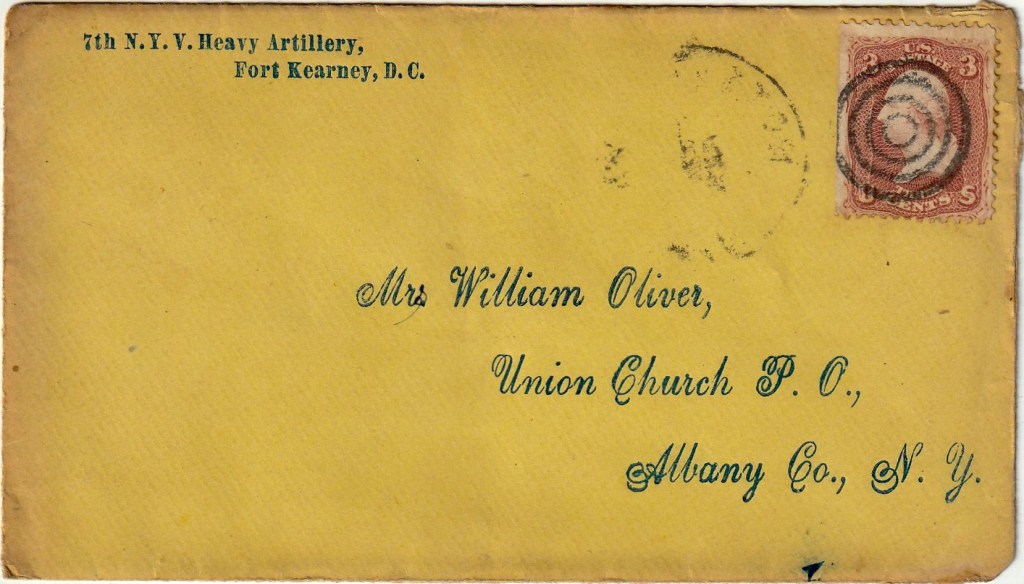
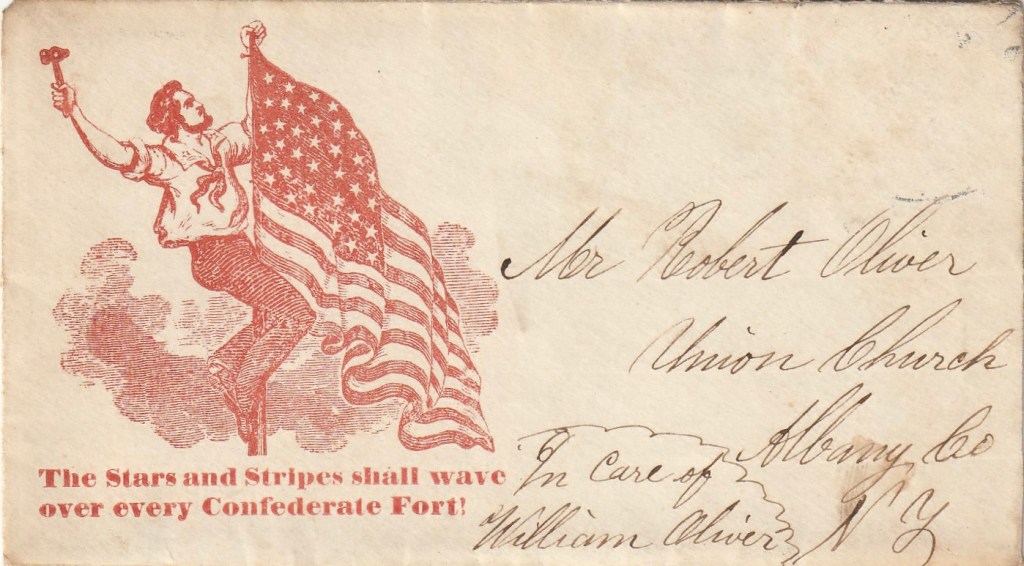
Fort Kearney
Washington D. C.
February 24th 1864
Dear Parents,
I received your letter last week but have not had much time to write since until this morning. It found us all well and I hope this will find you all the same. I and James [Vanderbilt] was away Sunday all day down to Chain Bridge and Monday was Washington’s Birthday so we did not have any drill and we went down to the Potomac. We came home in time for dress parade and yesterday Corporal McCullic [McCollock], William J. Stalker and me went down to Washington after two of the boys that went off day before yesterday without permission and was not back yesterday morning when we started.
You spoke about writing two letters to my one. I have answered every letter you sent. Then you could not have got my one letter. And about Rachel Oliver, I sent the last letter to her. Oh, tell Rob I have not seen that picture yet. That one he sent was not the genuine article. Then they are all a selling out around there? Tell Father he must sell out and move to Albany or come down to New Jersey. I don’t intend to live up there anymore, if I had my discharge tomorrow.
Give my respects to all enquiring friends. No more at present. From your son, — John W. Oliver
Give the song to Robert. Cut it off.







 Spared & Shared 23