
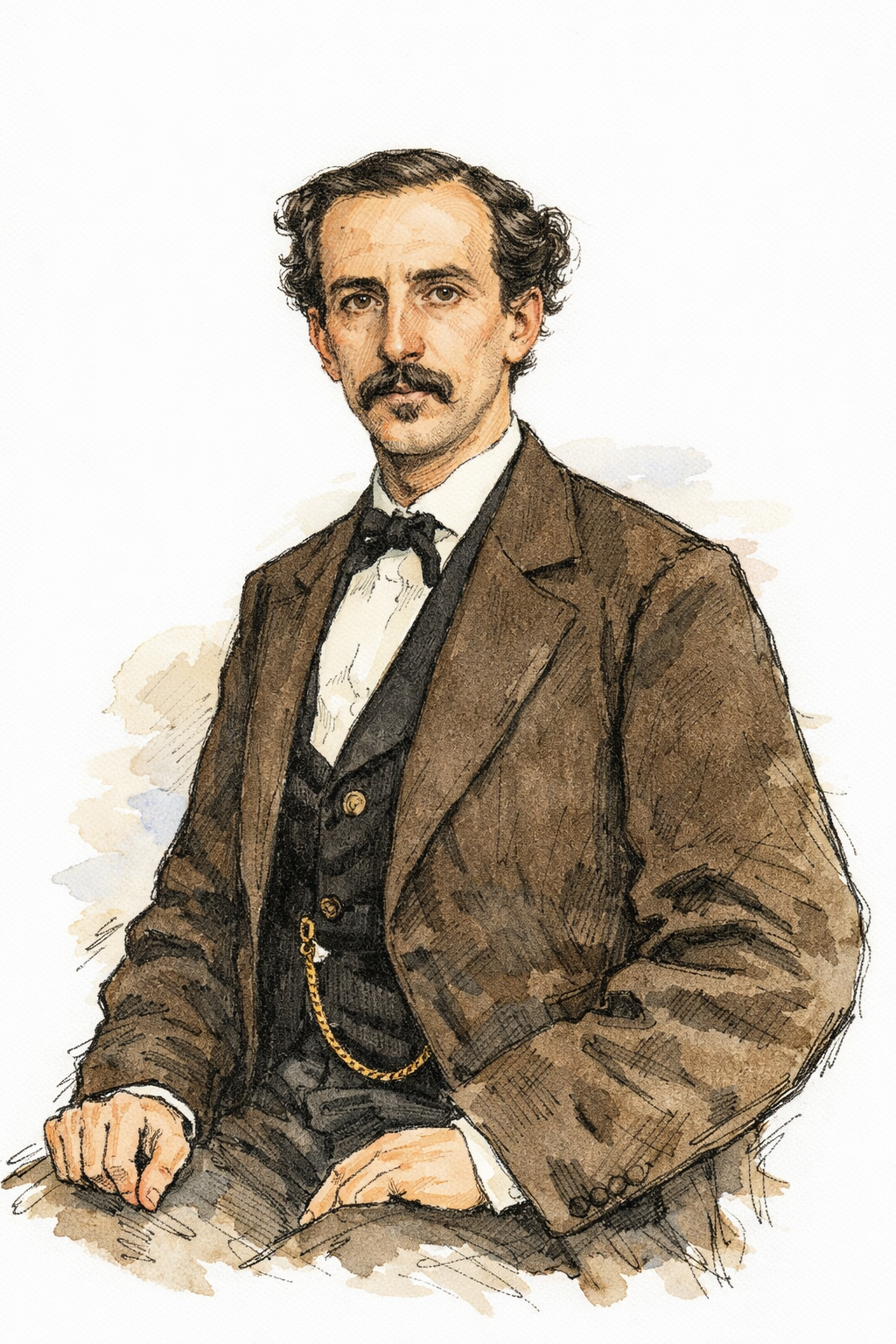
The following letter was written by William Halstead Kipp (1839-1918), the son of Quinby Kipp (1801-1887) and Cornelia Ann Halstead (1807-1883) of Manhattan, New York County, New York. In the 1860 US Census, William was enumerated in his father’s household, laboring with an older brother in his father’s wheelwright shop.
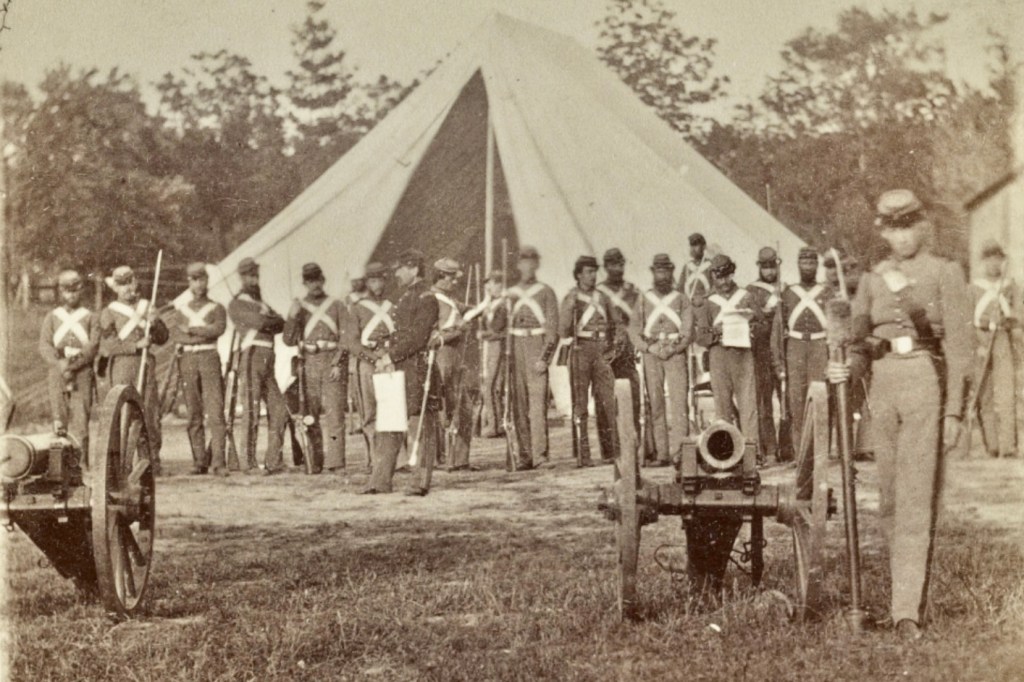
During the Civil War, William served in the 7th New York State Militia (or National Guard). This letter, datelined from Fort Federal Hill in Boston in June 1863, was written during the time his regiment was called out to meet the emergency of the anticipated rebel invasion that culminated in the Battle of Gettysburg less than two weeks later. In his letter, he refers to having been called out and posted at the same fort during Lee’s Maryland invasion in 1862. William’s obituary informs us that he rose steadily in rank from private to sergeant during the war and afterwards, to (State Militia) Colonel in 1895.
Kipp was married to Emily Augusta Hyatt in 1865 and at earned his living as an insurance agent after the war until landing a job in the New York City Police Department. He is credited with having designed the flag of the NYC police department in 1917, one year before his death.
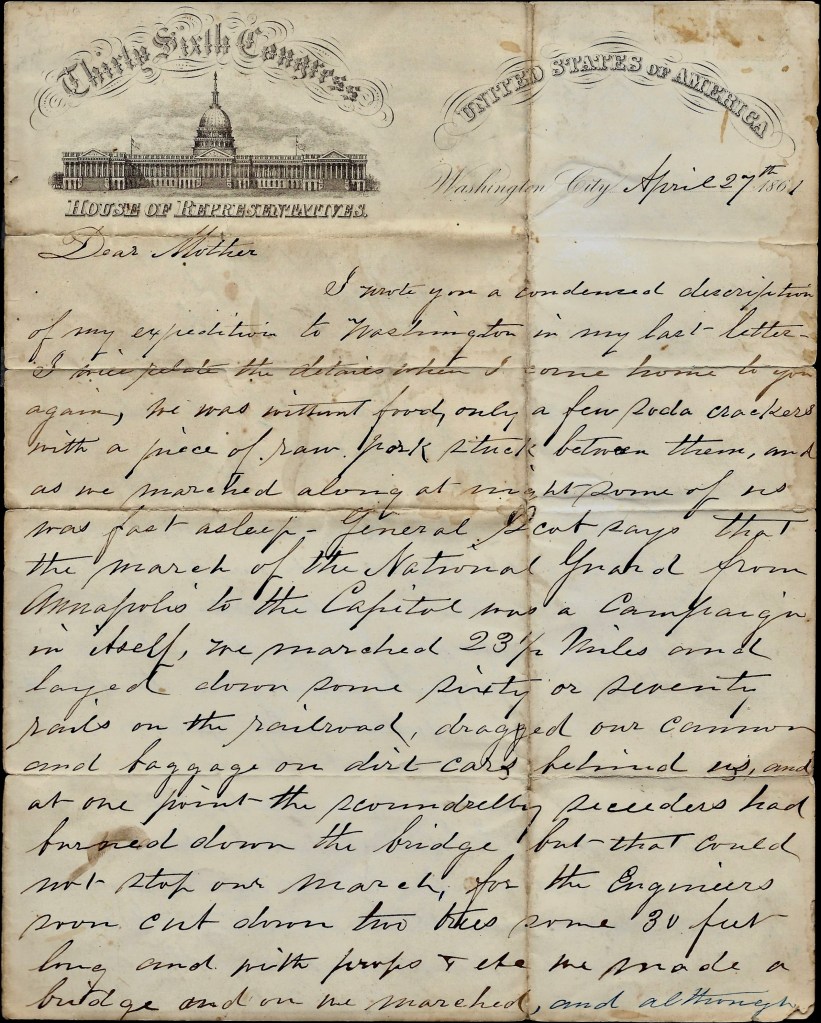
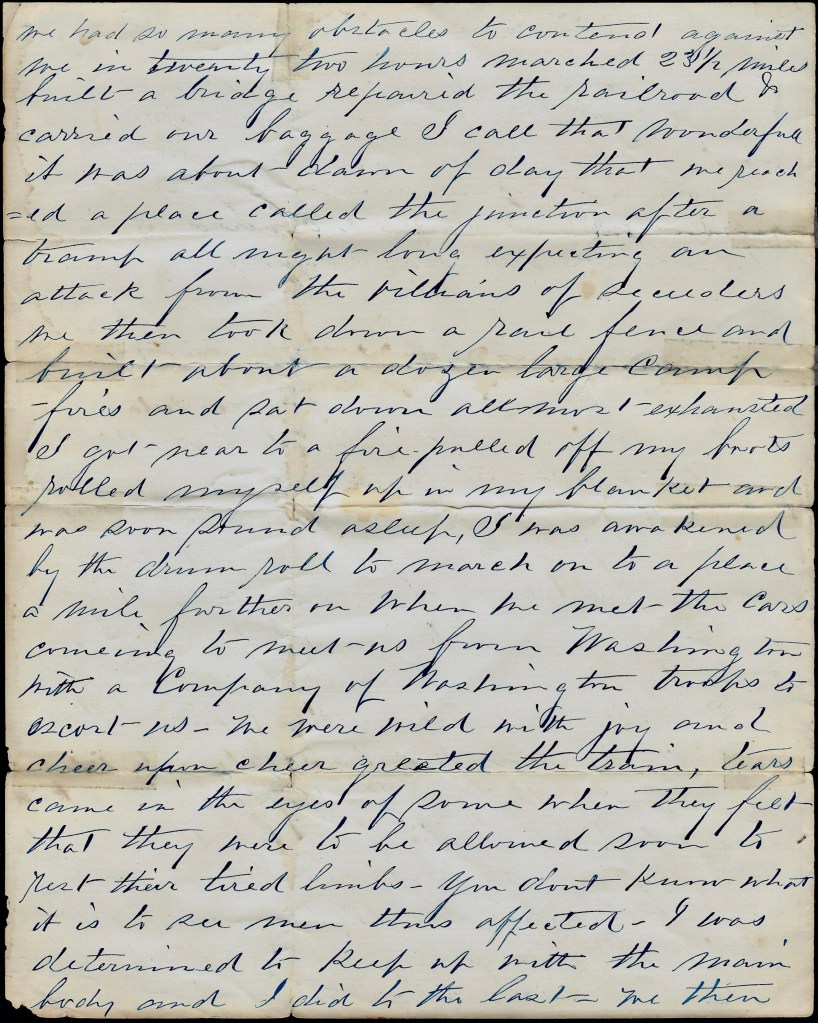
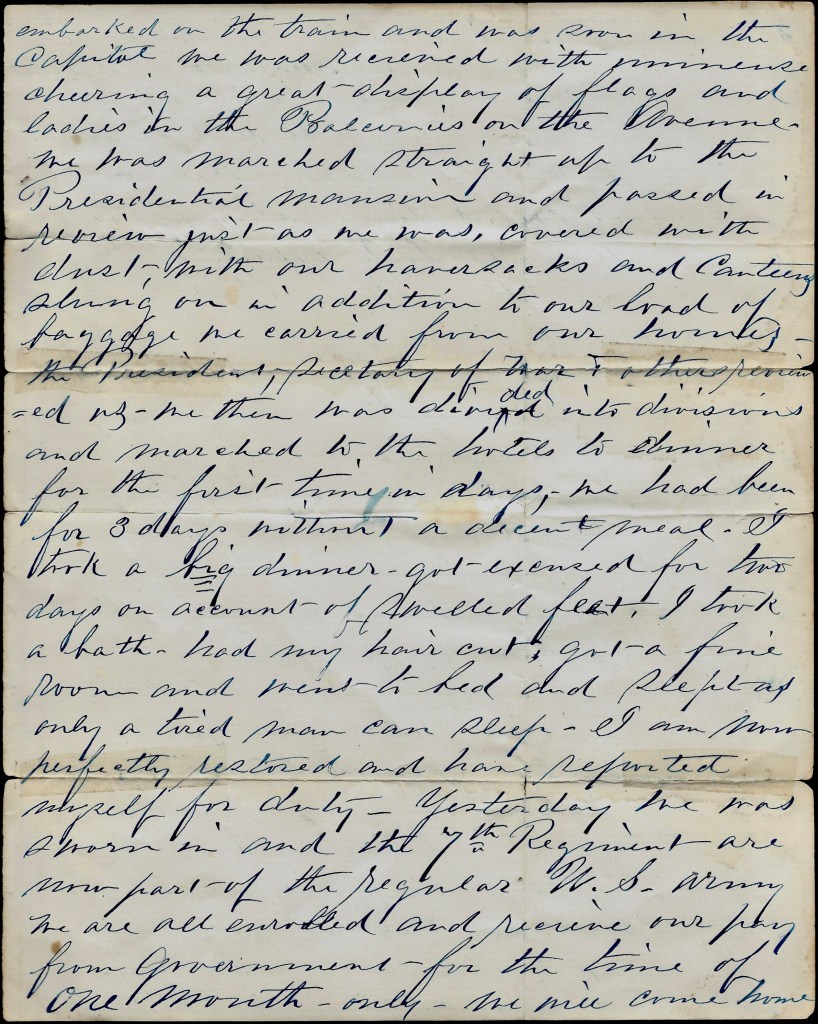
In this letter, Kipp shares the reports of Lee’s invasion and the rumors that Baltimore was the intended target. He observes that the secessionists living in Baltimore were noticeably more prominent and insulting to the soldiers with the news that Lee’s army was approaching. He also speaks of the measures taken to bolster the city’s defenses.
[Note: This letter is from the personal collection of Greg Herr and was made available for transcription and publication on Spared & Shared by express consent.]
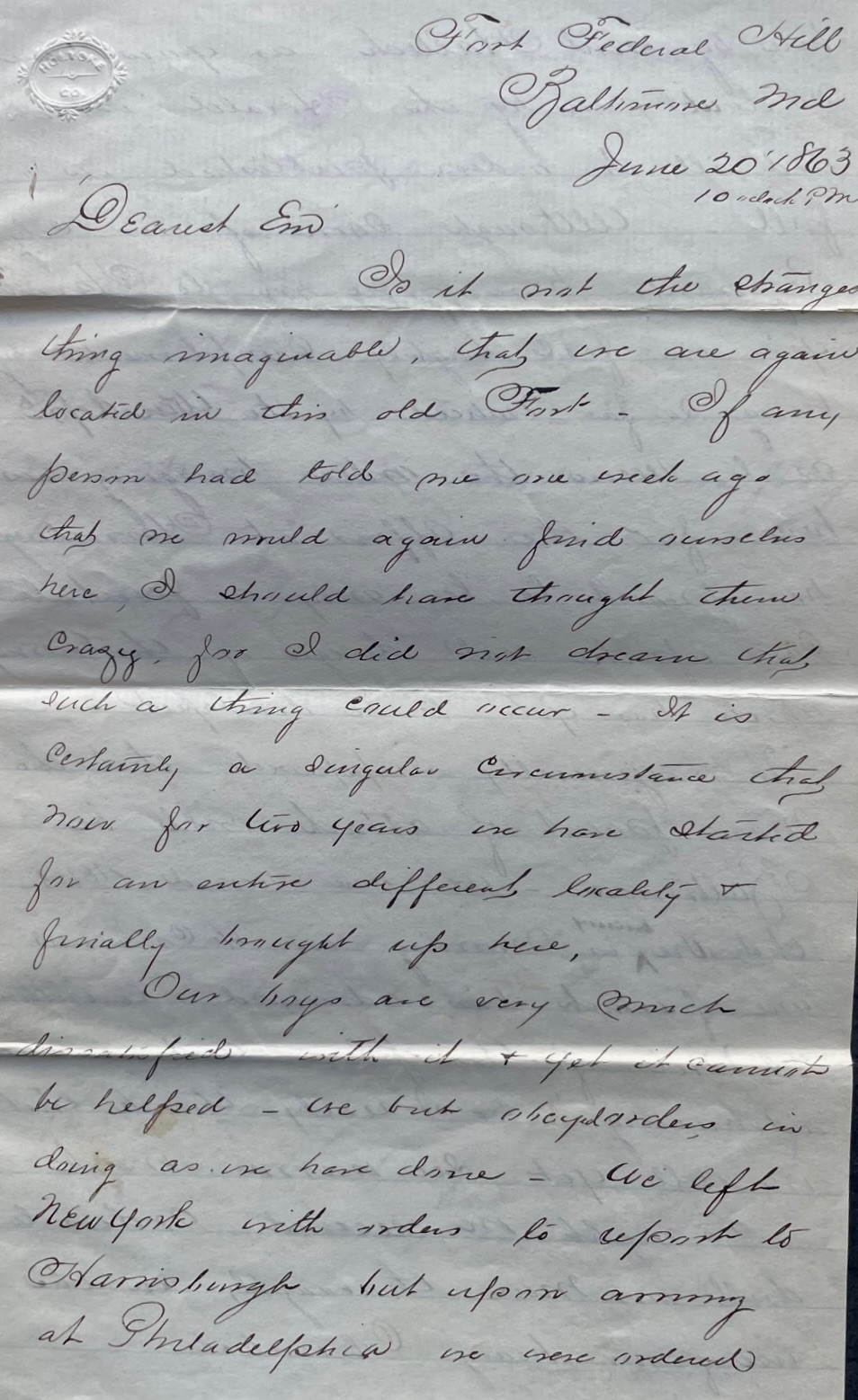
T R A N S C R I P T I O N
Fort Federal Hill
Baltimore, Maryland
June 20, 1863, 10 o’clock p.m.
Dearest Em.
It is not the strangest thing imaginable that we are again located in this old fort. If any person had told ne one week ago that we would again find ourselves here, I should have thought them crazy for I did not dream that such a thing could occur. It is certainly a singular circumstance that now for two years we have started for an entire different locality & finally brought up here.
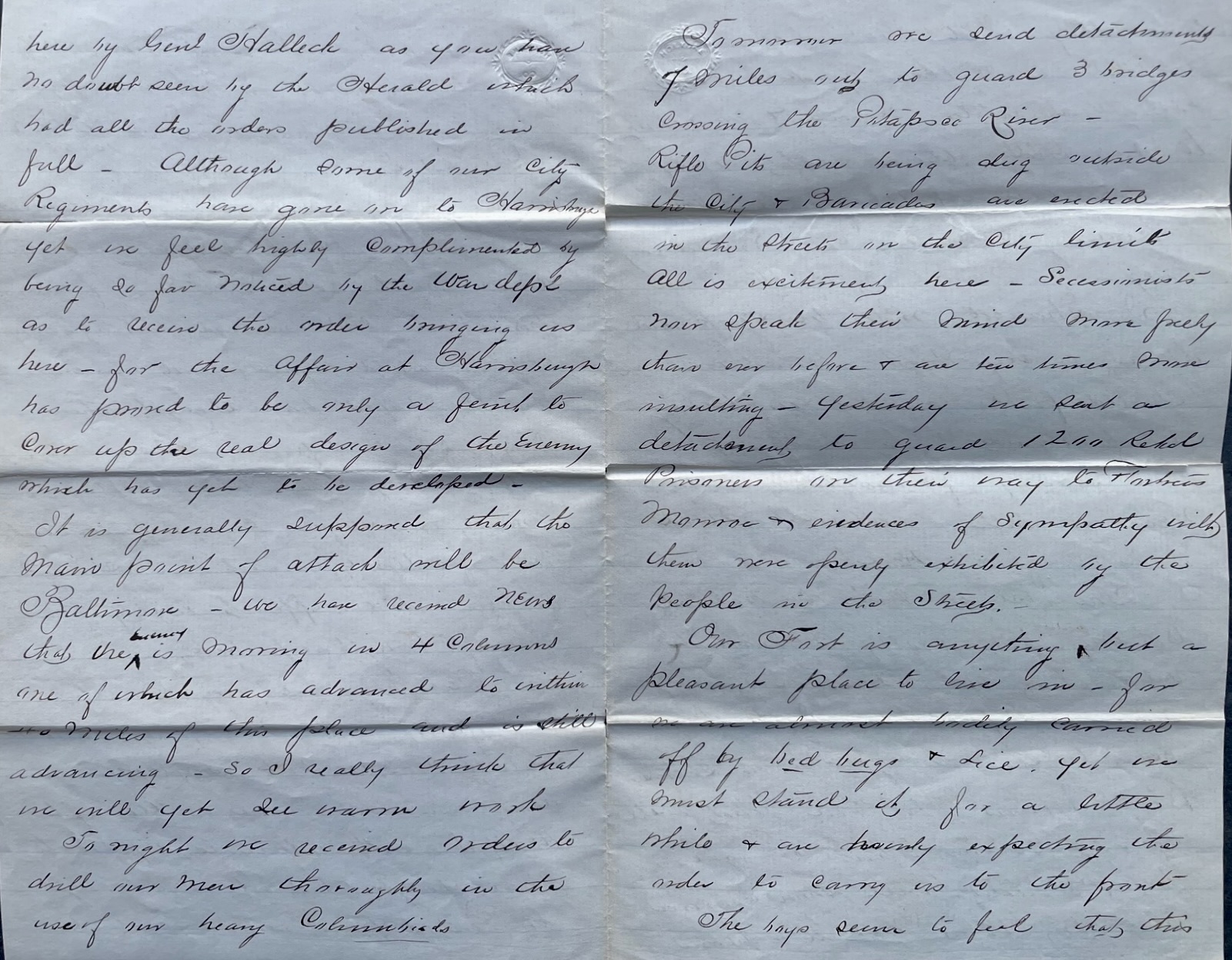
Our boys are very much dissatisfied with it & yet it cannot be helped. We but obeyed orders in doing as we have done. We left New York with orders to report to Harrisburg but upon arriving in Philadelphia, we were ordered here by General Halleck as you have no doubt seen by the Herald which had all the orders published in full. Although some of our city regiments have gone on to Harrisburg, yet we feel highly complimented by being so far noticed by the War Department as to receive the order bringing us here—for the affair at Harrisburg has proved to be only a feint to cover up the real design of the enemy which has yet to be developed.
It is generally supposed that the main point of attack will be Baltimore. We have received news that the enemy is moving in four columns, one of which has advanced to within 40 miles of this place and is still advancing. So I really think that we will yet see warm work.
Tonight we received orders to drill our men thoroughly in the use of our heavy Columbiads. Tomorrow we send detachments 7 miles out to guard three bridges crossing the Patapsco River. Rifle pits are being dug outside the city & barricades are erected in the streets on the city limits. All is excitement here. Secessionists now speak their mind more freely than ever before & are ten times more insulting. Yesterday we sent a detachment to guard 1200 rebel prisoners on their way to Fortress Monroe & evidences of sympathy with them were openly exhibited by the people in the streets.
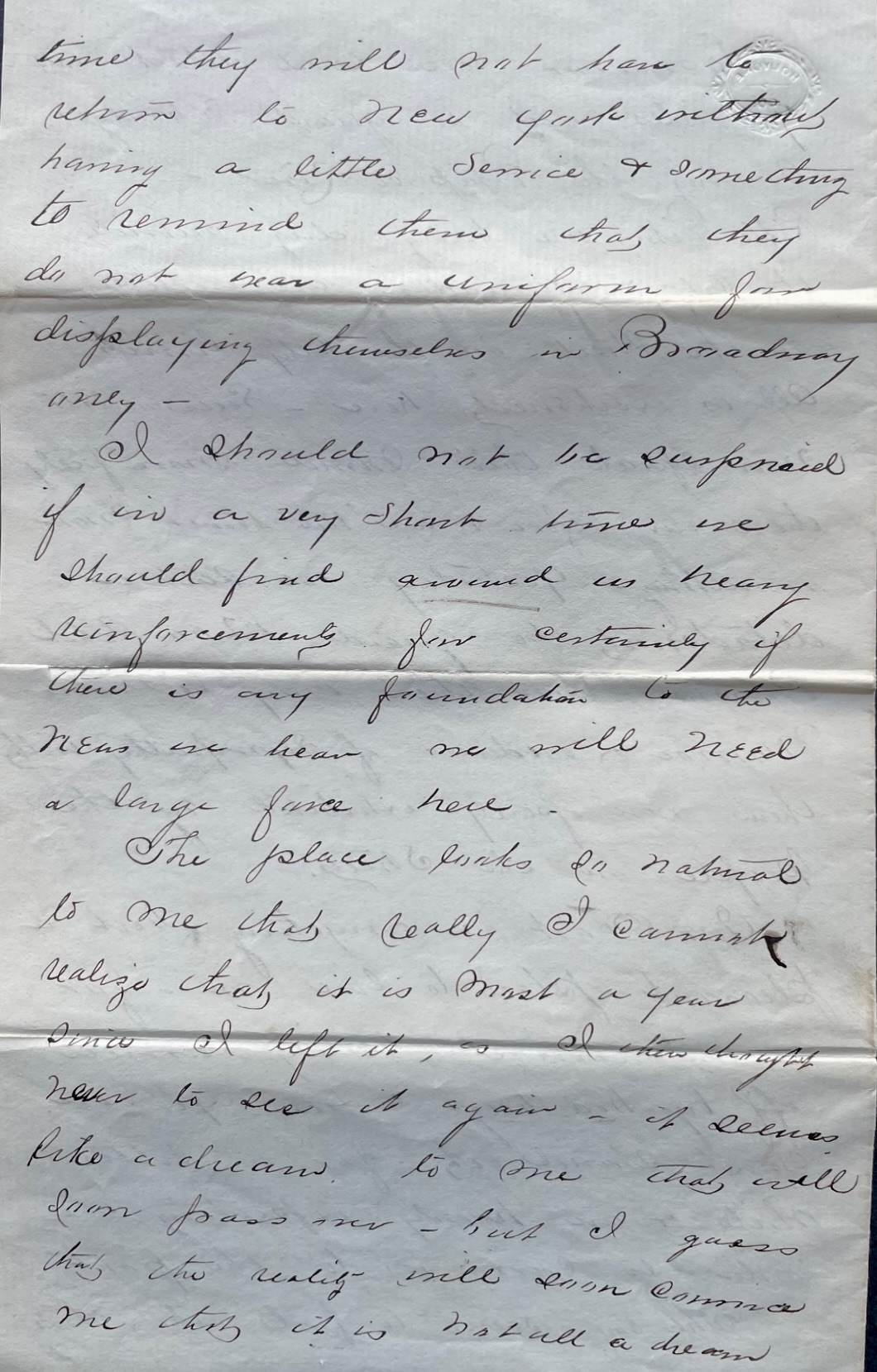
Our fort is anything but a pleasant place to live in for we are almost bodily carried off by bed bugs & lice. Yet one must stand it for a little while & are hourly expecting the order to carry us to the front. The boys seem to feel that this time they will not have to return to New York without having a little service & something to remind them that they do not wear a uniform for displaying themselves on Broadway only
I should not be surprised if in a very short time we should find around us heavy reinforcements for certainly if there is any foundation to the news we hear, we wil need a larger force here. The place looks so natural to me that really I cannot realize that it is most a year since I left it as I then thought never to see it again. It seems like a dream to me that will soon pass over. But I guess that the reality will soon convince me that it is not all a dream.
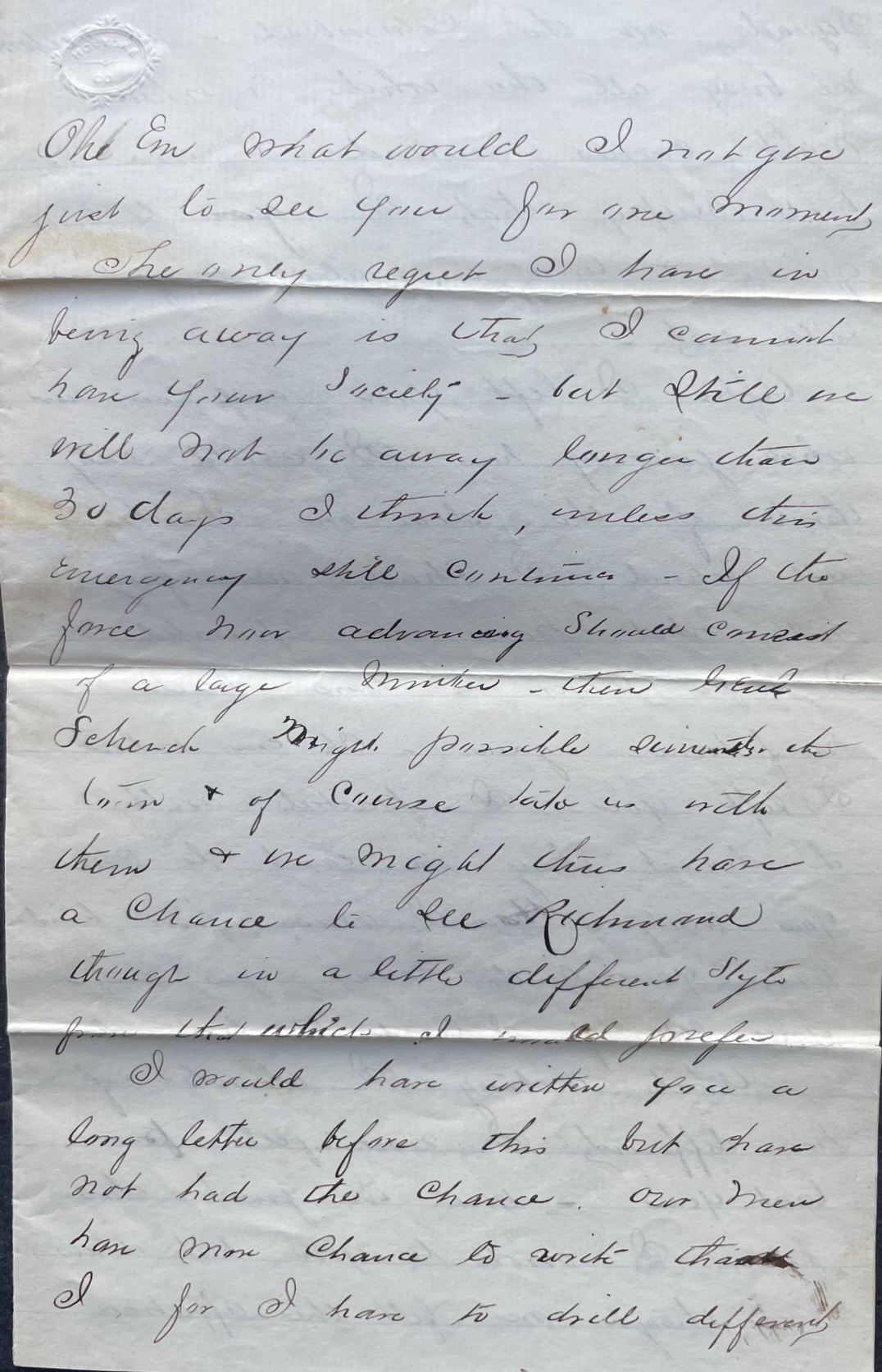
Oh Em, what would I not give just to see you for one moment. The only regret I have in being away is that I cannot have your society. But still we will not be away longer than 30 days, I think, unless this emergency still continues. If the force now advancing should consist of a large number, then Gen. [Robert C.] Schenck might possibly surrender the town & of course take us with them & we might thus have a chance to see Richmond though in a little different style from that which I would prefer.
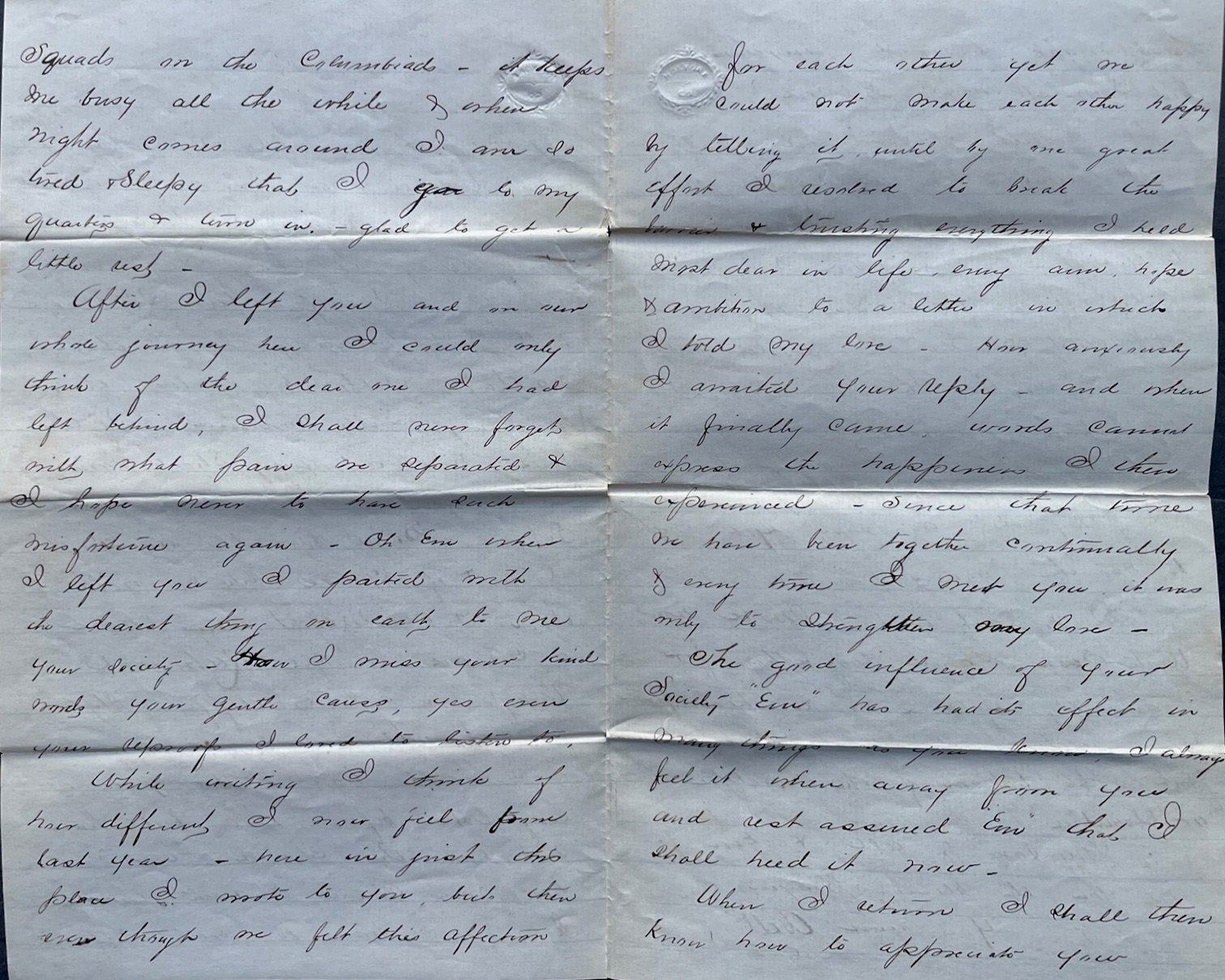
I would have written you a long letter before this but have not had the chance. Our men have more chance to write than I for I have to drill different squads on the Columbiads. It keeps me busy all the while & when night comes around, I am so tired & sleepy that I go to my quarters & turn in, glad to get a little rest.
After I left you and on our whole journey here, I could only think of the dear one I had left behind. I shall never forget with what pain we separated & I hope never to have such misfortune again. Oh Em, when I left you, I parted with the dearest thing on earth to me—your society. How I miss your kind words, your gentle caress. Yes, even your reproofs I loved to listen to. While writing, I think of how different I now feel from last year. Here in just this place I wrote to you, but then, even though we felt this affection for each other, yet we could not make each other happy by telling it until by one great effort I resolved to break the barrier and trusting everything I held most dear in life, any aim, hope, & ambition to a letter in which I told my love. How anxiously I awaited your reply. And when it finally came, words cannot express the happiness I then experienced.
Since that time we have been together continually & every time I met you, it was only to strengthen my love. The good influence of your society, Em, has its effect in many things, as you know. I always feel it when away from you and rest assured Em that I shall heed it now. When I return, I shall know how to appreciate your [company].
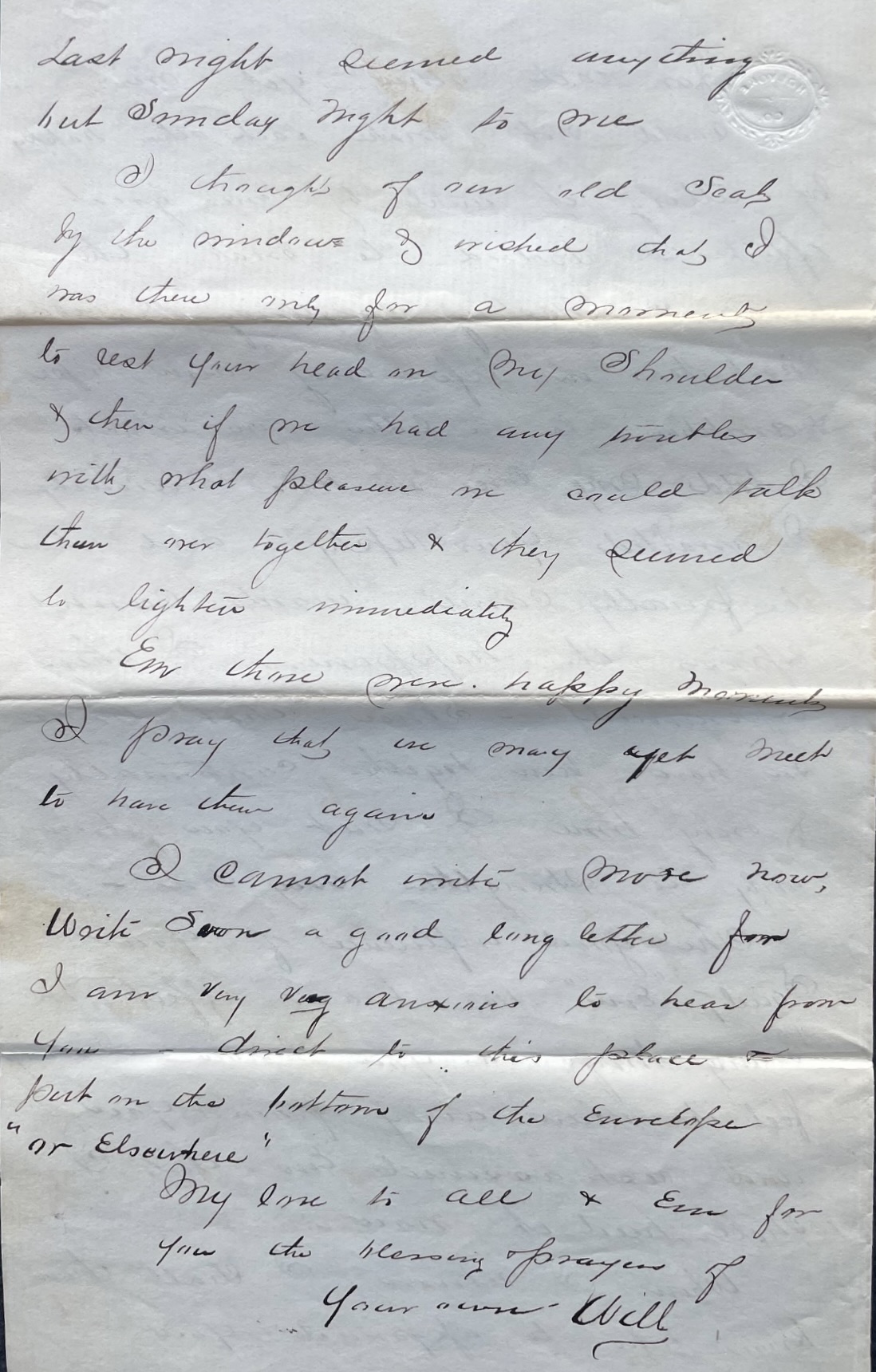
Last night seemed anything but Sunday night to me. I thought of our old seat by the window & wished that I was there [if] only for a moment to rest your head on my shoulder & then if we had any troubles, what pleasure we could talk them over together & they seemed to lighten immediately. Em, those were happy moments. I pray that we may yet meet to have them again.
I cannot write more now. Write soon a good long letter for I am very, very anxious to hear from you. Direct to this place & put on the bottom of the envelope, “or elsewhere.”
My love to all & ever for you the blessing & prayers of your own, — Will




 Spared & Shared 23