The following stampless letter was written by Oscar Martin Burke (1824-1902) and his new bride, Martha Caroline Meech (1824-1902). They were married on 23 June 1847 in Newburgh, Cuyahoga county, Ohio, and we learn from this letter that they soon after made the journey to Oscar’s farm near the village of Libertyville in Lake county, Illinois—approximately 37 miles from Chicago. The route from Cleveland to Libertyville was made by a direct journey across the upper Great Lakes, consisting of sailing or steaming west across Lake Erie, passing through the Strait of Mackinac into Lake Michigan and then traveling south along the western shore. Although the couple called the village “new,” it had already passed through several name changes prior to their arrival. It was first settled around 1834–1835 as Vardin’s Grove. It was renamed Independence Grove in 1836 and Libertyville in 1837. In 1839, Libertyville was made the county seat and renamed Burlington until the county seat was moved to Little Fort (now Waukegan) in 1841. At that time, the Village reclaimed the name Libertyville.
The Burke Family monument in Lake View Cemetery, Cleveland, Ohio.
Oscar was the son of Gaius Burke (1791-1865) and Sophia Taylor (1795-1859) of Cuyahoga county, Ohio. His wife Martha’s parents were Gurdon Parke Meech (1771-1854) and Lucy Swan (1781-1867). Martha—the youngest in her family—and her numerous older siblings were all born in Bozra, New London, Connecticut. Sometime in the 1830s they removed to Newburgh, Ohio. Closest in age to Martha was her brother Nelson Trace Meech (1821-1879) whom she wished to join her in Illinois but census records suggest he remained in Ohio all his life.
The Burke’s apparently remained in Illinois for a time despite Martha’s homesickness. In 1850 they were enumerated in Waukegan where Oscar was employed as a teacher. By 1860, however, they had returned to Cleveland, Ohio, where Oscar was employed as the Secretary & Treasurer of the Cleveland & Mahoning Railroad Company. An obituary informs us that when Oscar died in 1902, he had become one of Cleveland’s “most prominent” businessmen. After several years at the Railroad Company, he purchased the a foundry and built it into the Lake Shore Foundry Co. He then became one of the founders of the Dime Savings & Banking Co. his estate was estimated to amount to $500,000 (close to $20 Million today) at the time of his death.
T R A N S C R I P T I O N
Stampless Cover
Libertyville, Illinois July 24th 1847
Dear Parents,
How to begin this letter or what to say, I scarcely know. But this much I do know, that if I write, I must commence and say something. In the first place I will give you a brief description of my journey.
We left Cleveland Wednesday afternoon about four o’clock. The Lake was quite rough and I was quite sea sick but not enough to vomit any. There were two Ladies from Buffalo that started from the Franklin House with us that were going to Chicago which I got considerable acquainted with which made it quite pleasant for me. After the first afternoon, the lake was perfectly smooth all the way and we had a very pleasant journey indeed.
We arrived at Detroit Thursday morning about six o’clock which is situated quite pleasantly. We remained here for about one hour. About 11 o’clock, we stopped on Canada side for wood and Oscar & myself, those two Ladies from Buffalo, and quite a number of other passengers went on shore and took quite a long walk so that we can say we have walked on Queen Victoria’s soil. After we had been on the Lake about 2 days, we came to a settlement of Indians where we saw them at work—some getting wood, and some were getting bark for the purpose of fixing their wigwams I suppose, which I assure you are singular looking things. The edge of the water was filled with bark canoes and the banks were covered with squaws and their children. Some had on their blankets and some were perfectly naked but they seemed to enjoy themselves very much. The children seemed to be amusing themselves with their bows and arrows while their mothers were looking on.
The next place of any account that we stopped at was Mackinaw. There is on this Island quite a number of curiosities. Among them is the Fort. The boat stopped here long enough to give the passengers time to take a stroll if they wished, which we improved. Oscar, myself, Mrs. Smith & sister from B[uffalo] went up to the Fort where we saw the guns and balls which were used in the last war. The place where the Fort is situated is very pleasant as you have a fine view of the Lake and it is kept so perfectly clean and nice—everything seems to be in such perfect order.
The next place that we called at was Sheboygan which is quite small. I saw James Kingsbury. He came on board the boat but I do not believe you would know him. I should not—he is altered so. I should think he was going down pretty fast. We arrived at Milwaukie Saturday evening which is the most business place for a new one on the Lake. We arrived at Racine in the night, at South Port also. Mrs. B. Doxstader and Mrs. J. Finegan came as far as Racine on the boat with us and they went it, I assure you. They went on shore at Milwaukee and the boat went off and left them but finally went back after them on account of Mrs. Finegan leaving her child on board.
We arrived at Little Fort [Waukegan] Sunday morning about 6 o’clock which is quite a pleasant place for a new one. There is a great many buildings being built but everything looks new. There is not many very splendid door yards as yet.
Sunday afternoon we went out to look at Oscar’s farm and on Monday we moved our goods out. We boarded at Mr Cook’s about a week and then went to keeping house or the house kept us. I think this is a very pleasant country for a new one. But I suppose you want to know if I have been homesick any and I assure you I have. Oscar went to Chicago and was gone two days and left me at Mr. Cook’s and Oh dear me, if you was ever homesick, you will know how to pity me. And if I was ever glad to see anybody, it was him when he got back. Mr. Cook’s family are very fine people but they were all strangers.
And now a word about my neighbors. I have one as near as Mr. Carter’s. Another as near as Mr. Kimal’s. In a word, they are near enough.
Monday evening. I had a call from Miss Paterson, my nearest neighbor, Tuesday evening. I had a cal from James S. Clark and Lady & Mrs. Swan, and yesterday one from Mrs. Harvey. I had an invitation to take tea at Mr. Cook’s yesterday but did not go. I have about made up my mind that this is not the place for me. Mrs. Swan & Mrs. Clark say we must make up our minds to stay here for they say the longer they stay, the better they like it, and well they might for they are all relation to one another. Perhaps if I had those which are near and dear to me but the ties of nature with me, I should like it better. This is a beautiful country but not home. If Nelson has any idea of ever going West, I want him to come here this fall and see this country. I think he will be well pleased with it as far as the couyntry is concerned. I am going to leave the rest for Oscar to say. Give my love to all and especially to P___ & Mich. Tell Desdamonia & Olive I want they should write and tell me all the news. From your daughter, — Martha
[in a different hand]
Dear parents, Martha has very kindly left a part of the for me to fill out. She has made you acquainted with our departure from Cleveland, our journey up the Lake, and of our arrival at our own home at which place we have been about a week. The country is a new one. Therefore our home at present is a new one but give it a few years improvement and it will exceed norther Ohio for beauty and scenery. But with all beauties of this country, it is not home. Martha has been homesick which makes it very unpleasant. We are well at present and have not heard of any sickness. The crops never looked better in any country than they do here this year. Illinois [paper torn]
We are both well at present, have heard of no sickness as yet. We have had some very warm weather but at present it is very cool. I hope we shall get a letter as soon as possible after you receive this. Remember me to all. Yours truly, — O. M. Burke
Mother, I want you to write to me. I would give more for a letter from you than I would for all Illinois. I want Nelson to write and tell me all the particulars about everything. Tell Father I should be glad to have him come in and take a smoke with me. I have thought of him and his large chair very often since I have been here. Give my love to all and more particular to Harriet and Lucy and tell them I should be very glad to see them. [I believe this margin note was added by Martha.]
The following letter was written by Gabriel Andrew Cornish (1833-1850), the 16 year-old son of Jared Bradley Cornish (1810-1849) and Saphronia Louisa Cornish (1806-1880) of Algonquin (formerly called Cornishville or Cornish Ferry), McHenry county, Illinois. We learn from the letter that Gabriel’s father was on his way to California when he wrote the letter in mid-August 1849, having traveled at least as far as Fort Laramie at the confluence of the Laramie and North Platte rivers in present day Wyoming. He was most likely traveling with a party of “49ers” on their way to the gold fields of northern California. If he made it to California—which is doubtful, he didn’t stay for the date of his death is given as 10 October 1849 and he is apparently buried in La Grange, Walworth county, Wisconsin.
Gabriel wrote the letter to his uncle, Rev. John Hamilton Cornish (1815-1878), a native of Lanesborough, Berkshire County, Massachusetts, and the son of Andrew Hiram and Rhoda (Bradley) Cornish. When John was still a child, the family moved to the Michigan Territory, and it was from there that John left home in 1833 to attend Washington College in Hartford, Connecticut (Washington College changed its name to Trinity College in 1845). It was from there that he graduated in 1839 and later enrolled at the General Theological Seminary, though he never graduated from that institution. He moved to Edisto Island, off the South Carolina coast in January of 1840 and began tutoring the children of E. Mikell Seabrook. By 1843 he became a minister, ordained in the Episcopal Church, serving a number of different churches in the Sea Island and Carolina Low-country. By 1846, he had settled down at the St. Thaddeus Episcopal Church in Aiken, South Carolina. He married Martha Jenkins and with her had six children—Rhoda, Mattie, Mary, Sadie, Ernest, and Joseph Cornish. John Cornish died in 1878. [Sources: The Inventory of the John Hamilton Cornish Papers (Mss 01461), Wilson Library, at the University of North Carolina-Chapel Hill.]
Addressed to Rev. John H. Cornish, Aiken, South Carolina. Postmarked Algonquin, Illinois
Cornishville, Illinois August 12th 1849
Dear Uncle,
It is with great pleasure that I received your letter from the twenty-second of July which I have neglected to answer hoping to hear from father from whom we received a letter last Thursday dated Fort Laramie, June 17th. They were all well, in good health and fine spirits. He was eleven hundred miles from home. If you will take a map of Oregon, Missouri, and Upper California, you can trace his route through beginning at St. Joseph, from thence to Grand Island on the Platte river, and from thence to Fort Laramie near the South Pass from whence he wrote. I presume we shall not hear from him again until he reaches the end of his journey.
The letter that we received was blacked all over with fire and had the following hand bill on it, “Recovered from wreck of steamer Algoma burned at the wharf at St. Louis on the morning of the 28th of July 1849. Said boat had a large California mail—a large portion of which was entirely destroyed.” This bill was signed by the P. M. [postmaster]. 1
Peter [Arvedson] and [sister Hannah] Adelia have got a fine little girl about three weeks old. They call her Elsy Sophia. They are both of them smart and so is Grandma and our family. I have not got a very good crop of corn this season so I cannot brag on that but I think I can brag on my flower garden and summer house in which I now sit. It is made of willows tied together at the top and with cucumber vines trained all over them and it is a lovely spot in a hot day. As for my flower beds, they cannot be beat, covered all over with all kind of flowers. Among the most beautiful is the double ladyslipper or chimney pink. It has large blossoms as large and double as a full blown rose of all colors and sizes. When the seed gets ripe, I will send you some if you have not got any. If you was only here, I am sure you would think it is the most beautiful place that you ever see.
I have harvested seven acres of very good wheat. It is all we shall have to depend upon added to Jareds’ and my labor for which we get well paid. We have earned about five dollars apiece through harvest. Grandma lets me have all I can raise on twelve acres and I think what we can raise on that with [what] we can raise by working out we shall be able to get along. I wish you would send me some cotton seed with directions for planting it.
I must now bring my letter to a close as it is getting dark. Give my love to Aunt Martha and kiss my little cousins for me. From your affectionate nephew, — Gabriel
to Rev. John H. Cornish
1 Newspapers reported a fire on 29 July 1849 at ST. Louis aboard the steamboat Algoma which spread to four others steamers including the San Francisco at the waterfront. “The steamers San Francisco and Algoma, “had just come in loaded from the Missouri river. Their freights consisted of tobacco, hemp, grain, bale rope, bacon, and a variety of produce….A large mail, containing letters from California emigrants, was destroyed on the Algoma, but most of the papers and money on the boat were saved with the exception of $4,000. Two lives were lost, one, Capt. Young of the Algoma, and the other a passenger on the same boat.” It was further reported in the papers that after the fire, “a terrible fracas ensued between the firemen and a party of Irishmen, by whom, it is supposed, the provocation was given. Captain Grant, of the Missouri company, during the melee, received a pistol shot which slightly wounded him—The houses of the Irishmen, which was a resort for boatmen, were then assailed and one of them severely stabbed in several places….The fire and subsequent disturbances, coupled by the recent calamities endured by our city, from the [Cholera] epidemic, and the former sweeping and destructive fire [of May 1849 in which 23 steamboats were destroyed at the wharf and 430 buildings of the city burned] has cast a gloom over all our citizens.” [Source: The Cayuga Chief, 9 August 1849]
An unidentified young man from the mid 1850s (Rick Brown Collection)
This letter was written by 22 year-old Nathaniel Bourne (1833-1889), the son of Israel and Elizabeth (Jenkins) Bourne of Barnstable, Massachusetts. He was reared and educate in New England and was married in Oswego county, New York, in 1858, when about twenty-five years of age, to his cousin, Huldah Worth (1827-1913), a daughter of Thomas R. and Mary (Bourne) Worth. Immediately after their marriage the young couple came to Iowa, settling in Dubuque county, where they lived for three years. They then removed to Linn county, taking up their abode in Cedar Rapids, where Mr. Bourne continued to make his home until his death, which occurred December 27, 1889. Throughout that period he carried on operations as a builder and contractor and in later years was active in real-estate interests.
T R A N S C R I P T I O N
“City of Chicago” lithograph on stationery used by Nathaniel.
Chicago [Illinois] August 21, 1855
Dear Cousin,
I think you said that you would answer an effusion from the pen of mine illiterate self. At any rate, I guess I shall find out about it. Well, let me see. I left the fair town of Redfield on Tuesday, arrived at Rome the same day. Wednesday at about 11.30 I started en route for “Out West.” Arrived here Thursday evening. The people here talk about as much of going west as in New York. However, I think I can safely say that I have made a beginning in that direction.
Well, what next? What a minute and let me chew my pen holder. Let’s see—hmmmm—sus-a-day. Wish I knew what to write…Saw lots of houses and barns, some very fine looking farms and some not so fine. Have a confused idea of stumps and trees, highlands and swamps, towns and villages, dust, smoke, & cinders, &c. and after turning the world wrong and about so that North was South, they landed me in Chicago at about 9 in the evening and dark as pocket with a pouring rainstorm. Suppose I must bear in mind that I am writing to the fair sex. Therefore, I must not give my composition a too masculine turn. Well, I ain’t used to writing so [it’s a] tough job. Oh dear, most wish I hadn’t commenced (begun).
I don’t suppose that the detail of my journey will be very interesting. to you. Chicago is situated on a low, flat tract of land on the west side of Lake Michigan. It is a very thriving place at present. Work is very plenty. Almost anyone who has a mind to work can find employment. Professional gentlemen like myself are in good demand—wages from $1.70 to $2 per diem. Board 3.50 to $4 per week, washing about 50 cents besides. Costs about $5 a week to live. That is but a mere trifle for a rich man to pay but it makes a poor one with a family having rather hard times to make two ends meet. Fortunately I am neither one or the other.
The sidewalks are made of planks. They go jumping and tilting as you walk over them and in the dark if you are not careful, you may stub your — and fall headlong. 1 The lake water is used almost exclusively for cooking, washing, and drinking, &c. It is raised a sufficient elevation by steam power and then conducted over the city by the means of pipes. I haven’t seen any ladies that would scarce fear a comparison with those at R[edfield]. One of these days when I get in more comfortable circumstances, I may — well, never mind. Time enough yet if it isn’t too late…I once heard of a man who said that if he had any clothes to repair that he would take them to Quaker meeting for the old adage went that “where the least is said soonest mended.”
I like the place very well. Think I shall make quite a pause in this vicinity. Well, in fact I don’t seem to know either how or what to write. Won’t you please to give me some advice on the subject. Of course you will be favorably impressed with my connected, smooth, elaborate style of composition.
I have made a dot with a lead pencil on the picture in front where I reside. I suppose that house stands in the same place under the hill as when I last saw it. Wish you would present my compliments to that cow that I undertook to milk and didn’t. Suppose she would appreciate a handful of grass more highly than forty such. Wish I had a handful of—well, cheese in embryo. Well now, I am going to stop. I believe I can’t write… My P.O. addresss is Chicago, Illinois. You will please put this in the fire as soon as you have perused it. You. will please answer this. I’ll try to do better next time. So goodbye, — From Cousin Nathaniel
To Miss H. Worth
North side of Lake Street, west of Clark. 1843. (Heise and Edgerton, Chicago: Center for Enterprise)
1 Chicago’s sidewalks and many of its streets were planked in the 1840s and after years of exposure to the yearly cyclical nature of Chicago’s climate, began to rot and wear badly. “Before long, the planked streets became waiting booby-traps as the rotting boards would snap without warning with a resulting one-two punch: first, the broken plank would rise into the air, often slapping a horse in the face; then on the way down, the falling missile would crash into the muck below, splashing any innocent bystander with the ungodly [sewage] effluent [flowing beneath].”
The following letter was penned by Augustus Caesar Hoke (1825-1910), the son of John Henry Hoke (1796-1876) and Anna Margaret Byers (1801-1857) of Greencastle, Franklin county, Pennsylvania. Augustus—a farmer by occupation—was married to Rachel Lucinda Stamy (1830-1893) in 1850 and soon after relocated to Seneca county, Ohio, where he spent the remainder of his days.
Augustus actually wrote the letter for his illiterate friend, John Young—a 21 year-old black man, also from Greencastle, Pennsylvania. John Young was the son of Eli Young and Mary Simpson, both most likely former slaves born and raised in Maryland. Greencastle is located a few miles south of Chambersburg on the Mason Dixon line. There were a large number of free blacks living in the county by the time of the Civil War but it was still a very dangerous place for blacks to live in the 1840s for fear of being captured and sold into slavery even though they may have been free. Certainly in the mid 1840s, it would not have been without risk for a black man to travel from Pennsylvania to western Illinois by way of an Ohio and Mississippi steamboat without being accompanied by a white man who might be assumed to be his owner.
We learn from the letter that Augustus and John had traveled to Cherry Grove, Carroll county, Illinois, by steamboat. Mt. Carroll is just a few miles east of Savannah, the Mississippi river port where the young men would have entered Illinois. They were living with Daniel Arnold (1798-1857), a former resident of Chambersburg, Pennsylvania. Daniel and his wife, Betty Price, came to Cherry Grove (northeast of Mount Carroll) in June 1840, purchasing a 240 acre tract of land. Daniel was a community leader and a forceful minister in the Dunkard (German Baptist Brethren) Church. It isn’t clear from the letter what employment Augustus and John were engaged in though it may have been related to transporting mail.
Transcription
Cherry Grove [Illinois] May 31st 1846
Dear Sister,
I received your letter May 24th 1846 and was pleased to hear from you all that you were all well at present. I am living with Mr. [Daniel] Arnold from Chambersburg and gets $10.50 per month for three months. We were about two weeks too late to get big wages. Some men get $12 per month. We have to stay till July 14th, then our time will be up. We will not leave this till some time in August (towards the last of it). Hoke has been at me to go with him to Texas when we leave here but I cannot promise him. He said if I go, he will but I think I will come home sure this fall in time to attend singing the succeeding winter. If I come, he says he thinks he will unless he can get some other company to go to Texas. He appears to talk of nothing but traveling.
We have both been very healthy since we left home with the exception of a few days which we did not just feel so well. The camp meeting girl says she will not have the beau she had last year. Perhaps she may find a better one. If I could be at camp meeting, I should be with some of them Pennsylvania gals. A. Hoke and I goes partners in everything and in squeezing the gals. We have been taking sets with some of those Illinois gals since we have been here. There is some fine gals here. I must stop about gals. We must have one apiece tonight sure.
I am sorry that you were uneasy about us before we wrote home. We were so well contented on the boat that the time passed round so quick we did not think of writing. But I will continue to let you hear from us regularly from this till I leave for home—that is about three months yet. I intend coming to Cincinnati by water and then travel through Ohio by land. Perhaps I will buy a horse. If I do, I will come the whole way by land.
We have preaching here and singing all in the forenoon and singing in the afternoon. But I say three cheers for Old Pennsylvania gals forever. We are very well pleased with the country and the people that are in it [ink spill obliterates handwriting]…well, but there will not [illegible]…Corn is short yet but it has not been planted more than three weeks. Wheat is selling here for 40 cents per bushel, corn 16 cents per bushel, oats 16 cents per bushel, potatoes 12,50 cents.
The Dunkers have a big meeting at West Grove today but Hoke and I did not take the time to go to it. (I upset the ink after Hoke had wrote the letter but you can read it.) It is 35 miles from where we work. We could have had went in a wagon but we would have lost Saturday and Monday so we did not go. We have been buggying in 2-horse wagons to Mt. Carroll, preaching after night on Sunday evenings, gals and all in the wagons. Each man must hold his girl from falling although the road is smooth—or at least each has his army around the gal’s waist.
On the boats we lived first rate, $1 per day, & roast beef and turkey. We weighed when we landed in Mt. Carroll. Hoke weighed 198 pounds. I weighed 156 pounds. We are the same Old Coons yet and tell Will [that] we have both got our flannel pants and roundabout. He said we would come home with so we have made preparations.
My love to Father, Mother, brothers and sisters. I send nothing more but I remain your brother till death, — John Young
Dear Miss Mary, I write to you for John. He is present and tells me what to write. John & I are together every Sunday and gets along very well among all the Ladies & Gentlemen. And next Sunday we have preaching and singing where if you come to preaching and singing, you will find us if we are well. My love to you, your family, and all the Ladies and Gentlemen. Nothing more but remain your friend & well wisher. — Augustus Hoke
The following letters were written by William Newell Brainard (1823-1894), the son of Jonathan Brainard (1794-1856) and Sarah Gage (1797-1867 of De Ruyter, New York. William went to California as a gold seeker in 1850. He mined on the North Fork of the American River and then went to Sacramento where he engaged in the produce commission business with Morehouse. While there, he was elected city treasurer. He returned to Chicago in the spring of 1858 and engaged in the grain trade.
William wrote the letters to Ransom Morehouse (b. 1827) who, with his brother William Henry Morehouse (1832-1901) were partners with Brainard in the firm Morehouse & Brainard. The Morehouse brothers were from Kane county, Illinois.
William was married to Melinda B. Coley (1826-1908) on 3 May 1853 in Syracuse, New York. The couple had at least three children—Hattie Belle Brainard (1855-1855), William Vallejo Brainard (1857-1886), and Frances Marion Brainard (1863-1894).
Dear Morehouse, after I wrote you last, I made my way to Berkshire P. O., went to St. Charles, hired a team to carry me over to your father’s, passed him on the way—he was going to St. Charles—did not know him—he got there and found I had gone over & turned about & went home & found me there. I saw the old Elder before I got to your father’s—found your folks very well & very glad to see me—delivered your letters & Dogtype [daguerreotype]. I staid all night & your father took me to Elgin. I expected to find George Hawley there but he has sow pigged I guess for I have not heard from him. Spence came on first alone and attend our headquarters from Rock Island to this place as it was better for our purposes. Triune Adams has also failed in coming forward. We were very fortunate in getting my brother-in-law to go. I had rather have him than 4 like then although they are clever boys.
We have taken an old partner of Spencer’s in who used to ranch with him on the Sacramento whose name is Head & a blood fellow. We are getting traps and things together as fast as possible and five wagons including one 4-horse wagon. All kinds of stock is damned high—from 50 to 75 percent higher than last year & next it will be still higher.
The company have bought 7 horses costing about $120 each and rousing horses too. I have also bought a dray horse for our own use & going over on our own hook. He is a buster—17 hands high, coal black, and weighs 1500. He will take down anything in California. He is green as grass. I bought him of the man who raised him. 6 years old. I paid $150 & I could sell him in Chicago, I’ll bet, for $300. [Lewis W.] Walker 1 has on his own hook a French mare for his wife to ride. Spencer’s wife is on the ground all right.
We mean to leave here April 4th. We have about all our work oxen bought. We calculate on 16 yoke cattle. 4 wagons & 4 yoke to each wagon. We have also some cows bought up and the boys all out now buying. I have just come in town—have been out buying. Good cows will cost us on an average $20 & cattle for yoke $75. We shall start and buy along the road till the money gives out.
Your father paid me $275 & I wrote him to send me the balance he could make out to this place for as George has failed me, we cannot operate any up in Kane county & did not see Bill Smith. I sent and to him but he did not come up & did not see John McClelland & told your father about his & George’s affairs. I saw Ed Hucley. His father was away. I had quite a visit with the old Elder. He is all right. I was in a devil of a hurry when I was there, having learned that George & Lum were missing—and it was high time something was done. We shall be bothered for men some, I expect, for I understand that on the lines at Council Bluff their drovers are hiring men to go. There are not a great many single men going to California this spring. Last winter’s news gave them a damper all over this country, but I am in hopes we can get along on that score.
After I started for this place on the cars from Syracuse, that night we ran into a freight train & smashed everything up. I stove my head into the back of a car seat & my head looked as if I had had a little turn. The next night a train of cars ran off at a switch behind us & turned the engine bottom side up, thrower the engine and fireman 3 rods over a fence about half dead. I was sick of railroading & was delayed 4 days on the road by accidents before I landed at Peoria. My brother-in-law and sister came on ahead of me two days and laid over for me in Chicago. They are also on the ground. I have taken him in company with us & our investments will be about or over $5,500. Spence $900, Head $1600, making $8,000, and I am in hopes to get up a respectable train.
I will write you by next mail if possible but I shall be very busy and have hardly time to write this. I have not fully made up my mind about women yet. I may take one back & I may not. I have no time to think it now. Give my regards to the boys. Yours very hasty, — W. N. Brainard
You must not write to me after the middle of April for I mean to leave N. Y. for California 5th of June. Write to me to Panama.
1 Lewis W. Walker (b. 1825) was married to Lydia Jane Brainard (b. 1826). The couple made it to California on the overland trail in the summer of 1853 and Lewis took a farm in Petaluma.
Letter 2
Dowagiac, Michigan April 14, 1853
R. Morehouse, Esq. Sacramento, California
Dear Morehouse, I have got so far on my way back to New York and stopped here a few days to see some of my friends and am now waiting for the cars to come along and thus shall continue my way back home, and thought I would write you now for I don’t know when I shall have the opportunity to do so & get the letter in the mail that leaves New York the 20th inst. and I don’t know that this will be in but hope so.
Well, to commence where I left off in my last, we—the “New York California Co.” left Peoria April 4th with the 4 ox wagons & one 4-horse wagon, got in our loose stock about there & went over to Farmington & collected in the next day what I had bought about there and went on toward Burlington, Iowa. April 9th we crossed the Mississippi with 170 cows and heifers and steer, some 20 yoke of oxen, 7 horses belonging to the company, one of our own, one more belonging to my brother-in-law, and myself for my sister to ride, and 20 other horse belonging to two men in the train making 11 horses in all. The outfit was all about the wagons excepting flour, sugar, and bacon which they are to take in at Council Bluffs. And we have got O entire to say as good a lot of stock as will start this year from the states. I had rather have our 200 or more head than double the number of any stock I have seen start. The company consists of Spencer, Head & Walker with Spencer’s wife and my sister and 12 men besides. Some of the men paid in $50, some less, and some nothing, and are good men, I guess, as can generally be got together. The capital stock included is $7825 and I have invested on our account $4250, besides the dray horse and charges on him for shoeing & keeping him $160 and my expense going out and back will be not far from $100.
I left the company Burlington & they had some $1500 left for expenses & to invest in stock in trade across the plains or otherwise as needed and that will make as large a drove as is well to drive in one company. I did not go to your father’s on my way back for my time would not admit of it. Just before I started I had a letter from your father & one from George Hawley who had got out there but he was sick and of no account as to going across the plains. I got only the $275 of your money at home. Your father wrote me that he could not collect in the rest and it is just as well.
I have pledged the boys that you will meet them on the desert & you must if I should be cast away or go down to the bottom on my way back. I wish you would make some suitable enquiries as to where we can drive the stock after we get there into California. Perhaps we can make some arrangements with Jim & Alex McCane to drive them onto their ranch and I should like to have Alex or Jim go over to Carson Valley with you and buy stock in company & meet our train. Broach the matter to them in time for them to prepare for it and also as regards our business there.
You have as yet not wrote me how you are doing or how much or hoe much trade you have been having & I can form no idea about it & can’t advice. I have received your letter up to February 14. I think you had best try on [ ] as to the probability of hiring out lot for another year after our lease expires. When I was at New York I could not find Wortham.
Well, Morehouse, I expect I am stuck for a wife. I have asked a girl and she says she will go it live or die and if all signs don’t fail, I shall sleep with her before you get this letter. I shall of course take her with me & I wish you would prospect a good, quiet boarding place for us. I intend to leave New York June 5th if possible & be there about the 4th of July. Keep matters running as fast as possible for I shall be on hand if I don’t croak.
I have not much more time to write for I expect the cars along soon. I hope to see you “Prev Tempor” & will then tell you more particulars and of accidents by flood & field—matters that I have no time to write about. And I have a budget full to tell you. Give my regards to all the boys and all enquiring friends. I see by the papers that Tom Hendly has got some appointment. Tomorrow morning I expect to be in Detroit & shall drop this letter there, then take the steamboat to Buffalo. I am now on the Michigan Central Railroad. Well, goodbye.
The following letter was written from Chicago in November 1850 by Daniel C. Nicholes (1817-1889), the orphaned son of Daniel Nicholes (1773-1847) and Diantha Holly (1785-1845). We learn from the letter that Daniel and his brother Ira James Nicholes (1819-1881) had a law practice in Chicago at the corner of Randolph and Clarke Streets, conveniently located opposite the Court House.
Transcription
Chicago [Illinois] November 10, 1850
Dear Sister,
We received a letter last week from Phebe containing a general history of the times and of all matters which she thought would interest us. I was also very happy to learn your whereabouts. It has been a long time since you have written to me or since I have heard from you. I wrote a letter to John some time since and directed it to Shuylerville, not knowing where his post office address was. I have received no answer and presume he did not receive it. I was very glad to hear that you were all enjoying good health and prospering in business. I have been in hopes that John would find it for his interest to visit the West and perhaps settle somewhere in this vicinity. Whether he could do better here than where he is, I am unable to say. The people here complain of hard times and I presume they do in most other places. We would be very glad to have you make us a long visit and if it would be for your interest to do so, to live near us. We have a home of our own such a one as it is and we think it is tolerably comfortable.
Out lot cost us about two hundred and fifty dollars. We have got a fine fence around it which cost us about thirty-five or forty dollars. I will give you a short description of our house. It consists of a dining room, kitchen, bedroom and vestry below, and two rooms and two closets above. The rooms are all small as our house is small. We have got it carpeted and papered below. We are getting fixed so we can begin to live comfortably. Our law business has increased so that if it continues as good as it is at present, we shall keep our heads above water we think.
Out house is on Edina Place Street and our office is at the corner of Randolph and Clark Streets opposite to the Court House. Chicago is improving rapidly and we think is destined to be one of the largest cities in the West. It contains a population now of about thirty thousand. The city is connected with the Mississippi river by the Michigan and Illinois Canal & will be connected probably within a year with the same river by railroad. We have railroads now commenced connecting Chicago with the Mississippi river at Galena, also with the Ohio river at Cairo, and with the Gulf of Mexico at Mobile and with the Atlantic at New York City, and with the Pacific at Sacramento. The Pacific Railroad we think will commence at Chicago and will be continued from Chicago to Galena, from Galena to Council Bluffs, to the South Pass, and from thence to the Pacific.
During the past season, gas works have been erected here and the city is lighted with gas. We have had a Marine Hospital erected here this summer by the United States Government. The Tremont House which is six stories high and a hundred and eight feet one way and a hundred and sixty the other, has been finished this summer. It is furnished in the most splendid style. Mr. [Ira] Couch, the proprietor, purchased fourteen thousand dollars worth of furniture at one house in Boston. The furniture in the Bride’s Room at the Tremont cost three thousand dollars. It is one of the finest hotels in the Union. 1
We have also a new theatre [Rice’s Theatre], 80 by 100 feet, erected this summer and a great many other fine and large buildings. But perhaps you have heard enough about the city.
Ira and I are in company in the practice of Law. We have a great many cases but rather a small income compared with the amount of business we do. If we received as large fees as we get in New York State, we should make money fast, We have had about four hundred cases in Justice Court within the last year and a half and upwards of sixty cases in Courts of Record in this county. The highest fees we have ever received is thirty-five dollars and in Courts of Record from ten to twenty-five though some receive as high as from fifty to sixty for a suit. The business here is of a far more trifling character than it generally is in the State of New York.
Amanda and I shall probably visit New York State another summer and if you remain where you are now, we shall make you a visit. I and my wife made Hawley a visit a few days ago. We found him well. He had sold his house and lot and had bought two quite large lots and was building him a new house. Tell Calista that I would be very glad to see her and would like to have her come to Chicago and spend the winter with us and go to school. We live close by a large three-story brick school house. The public schools in this city are all free. There was given to the city a square mile of land situated in the city for the use of schools, the proceeds of which build all the school houses and pay all the expenses of the schools. My wife sends her best respects to you all and we expect you will write to us soon after the receipt of this. Very truly your brother, &c., — Daniel C. Nichols
1 The Tremont House…is one of the chief ornaments of the City, and reflects great credit upon its proprietor, Mr. Ira Couch. The Tremont fronts 120 feet on Lake and 180 feet on Dearborn street. It is five and a half stories high. Its internal arrangements, finish, furniture and decorations are in the highest style of art, and of the class denominated princely…The cost of the building was about $75,000.
I could not find an image of Aura but here is a young woman whose image dates to the late 1840s.
The following letter was written by 19 year-old Aura M. Hugunin (1827-1914), the daughter of Robert H. Hugunin (1792-1862) and Eleanor Waring (1804-1873) of Chicago, Cook county, Illinois. Aura’s father was a veteran of the War of 1812, a ship owner, and also a ship captain, sailing out of Chicago. Aura was married twice; first to Calvin D. Bristol (1817-1852), and second to Ephraim Holton (1814-1865). Both husbands were born in New York State.
From the letter we learn that Aura had only recently relocated from New York State to Chicago with her family which included not only her parents, but younger siblings named William (b. 1829), Robert (b. 1835), and Caroline (b. 1839). On the passage down Lake Michigan, the steamboat stopped at Southport (which is present day Kenosha) where Aura was persuaded to spend a few days with her uncle “General Hugunin” and his family. I believe this was Daniel Hugunin, Jr. (1790-1850) who served as a US Congressman from New York State in the late 1820s.
Aura wrote the letter to her friend, Elizabeth Gladwin (b. 1830), the daughter of William H. Gladwin (1797-1876) and Eleanor M Daniels (1802-1874) of Sacket’s Harbor.
Aside from her description of the trip from Sacket’s Harbor, New York, to Chicago Illinois, by way of railroad and steamboat, Aura shares her fist impressions of Chicago which were not very favorable. “It is a very large city but not a very genteel one. Everything looks so common to me—the streets so dirty. But it is all hurly burly. The greatest business place you ever saw. Everyone seems to be about crazy-looking and running every which way. ” And then she added, “The gentlemen look about as the city does—rather unpolished. You needn’t think that I am going to fall in love with the hoosiers here, I can tell you, for I have stood unmoved in more polished circles.”
Transcription
Chicago [Illinois] Sunday, June 6th 1847
Dear Elizabeth,
Agreeably do I fulfill the promise we contracted when we last parted; and having somewhat recovered from the fatigue and excitement of our journey and once more get set down and collecting scattering thoughts, my mind wanders back to Sacket’s Harbour and happily do I say that I left you all reluctantly and with feelings of soul felt gratitude to most of you for while we lived at your place I was dependent upon the treatment of others for my enjoyment and I was perfectly satisfied that in my case, the old adage was more than verified (that merit meets with its own reward). And if my conduct was worthy to warrant kindness and friendship from my acquaintances, it shows plainly that they are charitable; and do by others as they would wish others to do by them, and I will try to do justice to their feelings.
Now I must tell you, Libbie, how we all are and how we enjoyed our [journey] through the lakes. You will know that we enjoyed ourselves when I tell you that we were not sick a bit the whole way and that was almost a miracle for I never went the length of Lake Ontario without being very seasick before. We were just a week and one night getting to Chicago.
Monday evening we left Sacket’s and the next morning if I did not have my lunch [ ] to Oswego. I went up to Cousin Henry’s where I visited last summer and took breakfast and returned to the boat to receive calls as the news got there before we did that we were on our way to Chicago and we had the pleasure of seeing all our relations and friends and to bid them goodbye and I left Oswego very tired but pleased that we had seen all our friends. We had a delightful time to Lewiston with but one exception—that is we had to get up in the morning about three o’clock (and oh, I was so sleepy) to take the morning train of cars to Buffalo.
We got to Niagara Falls at sunrise. We stayed to breakfast and had a tramp or a regular romp over and round about the falls for there was a great many of us. Tore off one of the souls to my shoes and returned to the hotel where in a minute, our came the roaring iron horse a puffing and blowing with all vengeance, and into the box or whatever it is, we all tumbled and on we went as though we were never to stop and in an hour and a half we were in Buffalo. We spent the day there—was all over the town. Was shopping all day a buying a little of nothing. Had a call—a good long one—from Dr. Hunter, and in the evening went aboard of the steamboat Oregon, there to remain till we got to Chicago. We found the very steamboat we were anxious to take. She had only five hundred passengers but there was plenty of room. The Upper Lakes boats are magnificent. They are nicer than I imagined. There are indeed a “floating palace.” They always carry a band of music with them and a beautiful piano and an elegant sounding one. But they go to such an extreme in dissipation; they dance aboard every night and such bewitching music. It is such a temptation one can hardly refuse—[especially for] one that is as fond of dancing as I be.
We were disappointed in our visit to Cleveland for the boat was belated at Buffalo half a day so we remained in Cleveland only an hour. It was almost a calm, the lakes was, till we got to Lake Huron when it poured down rain as though we needed it on the lake. But my only trouble was that it would blow for it was just dark and they were clearing the saloon for dancing. But it did not discommode us in the least and everything went on finely.
The next morning was Sunday and I was waked up from my slumbers by the boats stopping and it proved that we had got to the Manitou Island to take on wood and in a few minutes I was up and ashore. And such a delightful walk as the clerk of the boat and my own dear self did have was not to be beat. We went along the beach where the most beautiful pebbles and shells was. The boat lay there three or four hours. Sunday evening was spent at Sheboygan on Lake Michigan. It was a bright moonshiny night and I was up in town and I enjoyed it beyond description. The next morning was in Milwaukee. Had a visit from Mr. Hopkins. The boat laid there all the forenoon. Our next stopping place was to Racine and the next was to Southport where General Hugunin’s family reside and one of my cousins happened aboard and nothing would do but I must stop and so I did and they kept me till last Monday [when] cousin escorted me to Chicago.
We come from Southport on the Hendrick Hudson—the most elegant boat of the whole and never did I behold so much splendor. We went aboard Monday at two o’clock and Tuesday morning was in Chicago to breakfast. Danced all the evening as a matter of course. I never was more pleased with a visit than I was at Southport.
Goodbye and ever remain your affectionate friend, — Aura M. Hungunin
Now Elizabeth, you will write to me as soon as you get this, won’t you? It seems as though I could hardly wait as long but I shall be obliged to. But remember that I am very impatient and not delay. You will forgive this horrible writing, won’t you, for if you know what a rickety old pen I have got, you would make all due allowance. Give my love to Clarissa and Maryett Pickering, if you please. Tell them to fulfill their promise in writing. Have you not thought how queer Maria treated me that night? I got all over it after the boat left the wharf two minutes and had a hearty laugh at her expense. Such child-like freaks but they are most intolerable. Ma says give my love to Mrs. Gladwin and Elizabeth, and Caroline says give mine too. I spent the evening with Dr. Hudson and his sister and Miss Luff Friday. It was indeed a Sacket’s Harbour party. They were over to see Emma Wilder. They said she was larger than her mother. No doubt.
I have become acquainted with Mr. Root, Samuel Root’s brother, and I am as much fascinated with his appearance as I was his brother and you know how much I was captivated they other way. The gentlemen look about as the city does—rather unpolished. You needn’t think that I am going to fall in love with the hoosiers here, I can tell you, for I have stood unmoved in more polished circles. I want you should remember me with a great deal of love to your mother. Tell Walter that I think Robert would appreciate his society now if he could have the privilege of enjoying it again. He is rather lonely but will soon commence school. Ma will go East in August so you will see her. Goodbye. — Aura
Since I saw you I have been in [ ] with the toothache but had it extracted last Saturday so I am happy again…
I have yet said nothing about how I liked Chicago for I have not been long enough in the city to know but one thing. I think I am quite certain that I do not like very much the appearances. It is a very large city but not a very genteel one. Everything looks so common to me—the streets so dirty. But it is all hurly burly. The greatest business place you ever saw. Everyone seems to be about crazy-looking and running every which way. Mother and I have both been homesick and Father makes all sorts of fun of us. Father comes in every day [and says,] “Mother, do you want to go back.” “Yes,” we cry. “Well,” he says, “you may go” (next Christmas, I suppose) but after we get acquainted perhaps we shall like it better. Dr. Maxwell and his lady were over to see us last week.
This letter was written by Clarissa (“Clara”) Dwight Marsh (1834-1899), the daughter of Henry Marsh, Jr. (1797-1852) and Sarah Whitney (1796-1883). Clara’s father was an 1815 graduate of Williams College and lived in Dalton, Massachusetts from 1821 to 1840 where he was a lawyer, a merchant, a farmer and wool grower, and a wool dealer and manufacturer. In 1840 he moved with his family to Pittsfield, Massachusetts, where he lost his savings with the failure of the Ashuelot Manufacturing Company. In 1843 he went to Racine, Wisconsin, in 1846 to Sandusky City, Ohio, and in 1850 to St. Louis, Missouri, engaging in the mercantile and produce business. He died of cholera in June 1852 but had managed to put three sons through Williams College and afforded his daughters, Clara, and Elizabeth (“Lizzie”) Willard Marsh (1829-1882), some outstanding educational advantages as well.
How Clara might have looked
Lizzie “was educated at Maplewood, Pittsfield, Mt. Holyoke and Bradford Seminaries, and spent her life in teaching. She had a school in St. Louis and at Batavia, Illinois, and afterwards taught in private families in Pittsfield, Mass., Batavia, N. Y., and Hudson, Wisconsin. At the latter place on Lake St. Croix she made her home with her life-long friend, Susan (“Sue”) Ellen Lockwood (1830-1915), the wife Charles Wendell Porter and the daughter of Judge [Samuel Drake] Lockwood of Batavia, Illinois. She died at Hudson, Wisconsin, on 23 April 1882.”
Clara attended the Cooper Female Academy in Dayton, Ohio, in the early 1850s. She married Samuel Watkins Eager, Jr. of St. Louis, Missouri, in May 1857.
Clara does not state her destination in this letter but she was clearly heading east—or up-river—on the Illinois river on her way from St. Louis to LaSalle, Illinois, where we learn she expected to catch the Illinois Central railroad to Chicago and from there to points East. Most likely she was going east to the Cooper Female Academy in Dayton, Ohio. In those days, young ladies did not travel alone so she was probably being escorted by the “Mr. Rice” who is mentioned in the letter.
Transcription
Steamer Belle Gould 1 Illinois River July 13th 1853
My dearest Mother,
I thought you might like to hear how I had got along so far though I have not yet come to a stopping place. I am afraid you cannot read this, there is so much motion to the boat, but perhaps [brother] Waldo can decipher it. I have enjoyed much thus far & my eyes are not worse though I have looked out on the water a good deal. I have been up in the pilot house all this afternoon for this morning I nearly smothered in the cabin.
Last night we ran onto a snag & tore the guards on the bow of the boat—rather a narrow escape they say. I did not feel alarmed though I knew what was going on. You will see it in the papers before you get this. We shall hardly get into LaSalle for the morning train as the snag detained us last night, though we may if there is no delay at Spring Creek bar.
I hope you do not get very very lonely. I will write every week and I want to hear from you. The boat is stiller now, as you will see by the writing though this is by no means elegant. Now for the motion again.
Mr. Rice is very polite &c., and please tell Mr. Eager that I like Mr. Packard 2 very much. He let me steer a little ways this afternoon. He offered to take this letter back. Goodbye. Love to all—Waldo, Charlie, Henry, & remembrance to Mr. Eager and Mr. Webb. Tell Mary and Ann not to get sick. Goodbye Mother darling. God bless you. With lover as ever, your affectionate Clara
1 The Belle Gould was a side-wheel steamboat built in New Albany, Indiana, in 1852 for the St. Louis-Keokuk trade. She ran the Illinois River in 1853 and was the first steamboat to arrive in Peoria. She was snagged and sank at Island 25 below Cairo, Illinois on 3 March 1854.
2 I believe “Mr. Packard” may have been Capt. Bryant Rogers Packard (1821-1869) who was a steamboat captain residing at 1409 Papin Street in St. Louis, Missouri.He named his daughter “Belle Gertrude Packard (1858-1864).”
This letter was written by Augustus William Cowan (1837-1913), the son of William Cowan (1803-1851) and Emeline Coffeen (1809-1867) of Watertown, Jefferson county, New York. Augustus (or “Gus”) married Mary H. P. Christian (1832-1914) in 1867.
Mary Christian of Watertown, New York—to whom the letter was addressed and who would marry Gus in 1867.
From a county history we learn that Gus “remained in Watertown until eighteen years of age, and was educated at the Jefferson County Institute. He came west in 1854 and the following year took up his residence in Pontiac, where he clerked in a general store for some years. He then formed a partnership with Judge Jonathan Duff in the banking and real-estate business, conducting it with such success that in a few years the firm had a together a considerable fortune, invested mainly in lands in this section. In 1870 the partnership was dissolved. Although the business relations were discontinued there still remained such warm personal feeling as exists between brothers and the closest friends, until the Judge’s death in 1881. Bound together by ties not only of personal friendship but that of political affinity and the brotherhood of secret societies, the two members of the firm were regarded as almost members of one family, and it was natural that the living member of the firm should be deeply affected at the departure of one he loved so well. Mr. Cowan continued in the real-estate business until 1882, when he was elected county treasurer and for four years held that office, discharging its duties in a commendable and satisfactory manner. Since 1889 he has been owner of the Livingston county title abstracts and has devoted his time and attention to that business, meeting with good success.”
Transcription
Addressed to Miss Mary P. Christian, Watertown, New York
Pontiac [Illinois] December 23rd 1859
Dear Mollie,
I wish you a “Merry Christmas” and a Happy New Year. May the mirth and festivities of the former not pass without leaving a happy impression on your usual smiling countenance, and the latter ‘ere it closes from the happiest year of your existence. As for me, I do not expect to be any more than ordinarily happy on those occasions but shall endeavor to pass away the time.
We have fine sleighing just now Mollie but I need not talk to you about sleighing for you are enjoying “sleigh rides” every day with some acquaintances I’ve no doubt. Nevertheless we enjoy it for it has been two years since we have had anything of the kind. Last winter we had very little snow here and that was while I was absent—while I was in that land of sunshine and cotton where I would like to live for several reasons, the principal one of which is its climate. A day or two ago I took a ride to that nice little town of Fairbury and on our return we stopped at a country farm house where they were having a party. We were cordially invited to stay.
January 8, 1860
This is really too bad to day writing so long when I had my mind fully made up on a lively correspondence hereafter but my besetting sin of procrastination has been busy and kept me from my duty. You will pardon me, won’t you Mollie? Remember that this delay has not been as long as they used to be. I remember of ine intervals of six months and I cannot blame you if you still retain a grudge against me for that but for this I must beg your forgiveness.
I received a letter from Ran about the same time I did your own but have not yet answered it. Tell him I will write sometime. He seemed to be having the “blues” when he wrote. I wish I could ret Ran a good situation here. I would like to have him with me.
Only Jany. 17th 1860
Well to be sure, what a fellow I am! I received a little letter yesterday which created not a little remorse of conscience. What a monitor to do right and what a quick detective of wrong. I almost wish sometime that I could banish it but it will reprove me and remain with me like a “Dutch Uncle” however much you may accuse me of not being possessed of anything of the kind. Well this evening I went to my desk for paper to write to Mollie with full faith that i had to commence on a new sheet (supposing that I had destroyed this one) when “Pontiac, Dec. 23rd 1859, Dear Mollie” etc. met my astonished gaze. So thinks I, I’ll go ahead with this and show Mollie how many grand efforts I occasionally make before I accomplished my desire. Your letter of yesterday was an excellent one—so different from what I anticipated before breaking the seal (conscience was at work again). I could think of nothing—was expecting nothing but reproof. But the tenor of your letter soon quieted my fears and I then felt that an early reply would effect that peace of mind so desirable to us both and cause you to grant the prayer of your humble petitioner as expressed in his petition of January 8th, 1860, namely: that of forgiveness.
I don’t half like the idea of your attending country “spelling schools” with “country cousins” and being obliged (from preference) to sit so close together in a sleigh box that your heads must be in a position well calculated to flatten noses and arms reaching the wrong way to meet other arms. I know I wouldn’t allow Gus Cowan to be caught in any such a “position” nor you wouldn’t either if you could help it but you write away, regardless of anybody’s feelings. I wish I had the capacity of the illustrious Mrs. Candle for lecturing. If I wouldn’t display some of it on this occasion, then I’m mistaken. But I desist. You are sick and if I could only be with you to soothe and comfort you, or make such attempts so to do as might be in my power, I would rather than be a famous lecturer. I know it is a comfort when one is sick to have friends to talk with and who feel an interest in your welfare.
I had a little experience in this way about two years ago when I was in St. Louis. I was very sick for a short time and the landlady’s daughter seemed to take quite an interest in me as well as all the others about the house and I can assure you it made my bed much easier than it would otherwise have been. I have known comparatively little of what sickness is, but my little experience has taught me that a friend at your bedside is better by far than all the remedies ever invented by the patent medicine man.
January 20th. I have this day received a letter from my dear Mother in which she tells me of the marriage of M. Louisa Clark and talks on how much I have lost etc., just as you did. I’d like to know how anything is to be lost until first having been obtained. I am satisfied and hope she will be. Did I ever tell you my experience in that matter while at home or by letter since I have been West? If not, I will some time. Louisa is a good girl and I hope she has a husband who will appreciate her. I once thought her the nearest perfect. What’s the use for me to be telling you about my boyish love. I won’t! No Mam, I won’t wont! She is married and gone. She is to me like a dead issue in politics. The party that has been successful is welcome to all the benefits.
In your next you must give me more definite news about the “lady in black,” or did you say, “woman?” That is, if there is anything definite about her. I used to know “a ____ in black,” you know, but whether she could be termed “mysterious” or not, I don’t know. I have not forgotten how she looked and all about her but am in no wise anxious to renew the acquaintance.
Mollie, we had such a good time at the “Sociable” night before last. How I wish you had been there. After the minister and all—no not all, but some—of the old folks had gone home, we started some old-fashioned plays wherein error was followed with penalty and most righteous judgements pronounced. This was the first public exhibition of the kind I have entered into since I’ve been West and I tell you, Mollie, I rather “like it.” Such amusement makes me feel younger. There was one pretty girl there too (our deputy sheriff’s sister, late of Buffalo, N. Y. 1) and when I was obliged to kiss her (I say “obliged” because our Judge was very stern and I had no friends to intercede for me on that occasion, neither money to induce him to change his mind, or rather didn’t offer any money or try to get any of my friends to intercede in my behalf as I thought there would be no use, and then again my early education has always been to be “obedient to the laws that be“). Well, if I digress from my theme, I am certainly excusable when the subject is such a “glorious” one that my mind has no affinity with paper and ink but rather with bright eyes, pretty hair, fair complexion, and pouting lips. Well, I am back very near to kissing. Well, when I was obliged to approach her, obliged to place my unwilling arm (why I nearly had the palsy) around her waist, obliged to let the other arm go where it had a mind to whether around her neck or not, obliged to place my quivering lips to those pouting ones of hers, obliged to make a noise (usually termed “smack”) with my lips loud enough so that there could be no mistake or doubts in the minds of those present about what I had done and whether I had fulfilled the requirements of the law, you can have very little idea of the sensations produced unless perhaps you think of your own experience once upon a time while out on a sleigh ride. Oh you little sinner. I think I’ll write “journals” hereafter.
Give my love to Electa and tell her that the moment I opened your letter, I thought of her. Goodbye. Write soon. My love to Hattie and a good portion for yourself. — Gus
1 The Deputy Sheriff in Pontiac, Illinois, at the time of the 1850 US Census was Edwin R. Maples (1832-1877) who was married to Eliza Jane Houser (1836-1905) in 1856. He was from Chautauqua county, New York, and the son of David J. Maples (1809-1892) and (1811-1843). His unmarried younger sister with the pouty lips was Alice Victoria Maples (1839-1901), not yet 21 years old, who became a school teacher in Livingston county, Illinois, and married Capt. John Jay Young (1836-1894) in September 1862. Capt. Young was the commander of Battery G, Pittsburgh Heavy Artillery during the Civil War and spent most of his time at Fort Delaware.
These letters were written by Clarissa (“Clara”) Dwight Marsh (1834-1899), the daughter of Henry Marsh, Jr. (1797-1852) and Sarah Whitney (1796-1883). Clara’s father was an 1815 graduate of Williams College and lived in Dalton, Massachusetts from 1821 to 1840 where he was a lawyer, a merchant, a farmer and wool grower, and a wool dealer and manufacturer. In 1840 he moved with his family to Pittsfield, Massachusetts, where he lost his savings with the failure of the Ashuelot Manufacturing Company. In 1843 he went to Racine, Wisconsin, in 1846 to Sandusky City, Ohio, and in 1850 to St. Louis, Missouri, engaging in the mercantile and produce business. He died of cholera in June 1852 but had managed to put three sons through Williams College and afforded his daughters, Clara, and Elizabeth (“Lizzie”) Willard Marsh (1829-1882), some outstanding educational advantages as well.
Lizzie “was educated at Maplewood, Pittsfield, Mt. Holyoke and Bradford Seminaries, and spent her life in teaching. She had a school in St. Louis and at Batavia, Illinois, and afterwards taught in private families in Pittsfield, Mass., Batavia, N. Y., and Hudson, Wisconsin. At the latter place on Lake St. Croix she made her home with her life-long friend, Susan (“Sue”) Ellen Lockwood (1830-1915), the wife Charles Wendell Porter and the daughter of Judge [Samuel Drake] Lockwood of Batavia, Illinois. She died at Hudson, Wisconsin, on 23 April 1882.”
Clara attended the Cooper Female Academy in Dayton, Ohio, in the early 1850s. She married Samuel Watkins Eager, Jr. of St. Louis, Missouri, in May 1857.
From these letters we learn that Clara and her older sister Lizzie were teachers at the newly opened Batavia Institute—a private academy that was chartered on 12 February 1853 by 13 men, including Rev. Stephen Peet, the Congregational minister, Elijah Shumway Town, Joel McKee, John Van Nortwick, Dennison K. Town, and Isaac G. Wilson of Batavia, Illinois The building’s central part, which still stands in Batavia at 333 South Jefferson Street, at Union Avenue, was constructed in 1853–1854 of locally quarried limestone at a cost of $20,000. The architect Elijah Shumway Town designed the building in a Greek Revival style.
The Batavia Institute as it looked in 1864.
Letter 1
Batavia, [Illinois] September 11th 1855
My dearest Mother,
It is just two o’clock & therefore I imagine you are now seated at the dinner table. Do the vacant places remind you of your wandering children? I told “Sue” [Lockwood] a few minutes ago that I would like very much to see my dear mother.
I have no doubt that Henry gave you our “few lines” written in the cars so that you know of our journey so far. We soon after reached Sandoval where Mr. Spooner rechecked our baggage and introduced us to Mr. DeWolf, the conductor of the train coming north. There was very little to see except boundless prairie and the road was straight and level and not particularly smooth. At Decatur we saw Mr. Hawley a moment. Lizzie had the sick headache all the afternoon but read all the time.
We got to Wapella about seven o’clock and got a very good supper, and I was hungry enough to do it justice. Lizzie’s tea did her good and she felt much better. We changed cars there and Mr. DeWolf put us in the care of Mr. Johns (a Decatur man) who was very polite to us. And now what a road we had, jolting and bouncing till I thought there would be not one breath left me, and really I never was so well shapen. I got quite out of patience and was glad enough to reach Mendota and change to a smooth, delightful track.
Presumably the same “forlorn…little old depot” at Batavia where the Marsh sisters arrived and waited for wagon transportation to the Lockwood residence on the west side of the Fox River. This Depot was built in 1854 and was moved to its current location in the 20th Century.
We got here about four o’clock and it was not light, and it seemed rather forlorn in the little old depot but we sat down and laughed and made the best of it for a half an hour when the man got a buggy-wagon and a driver from the “tavern” and we rode up here and roused them up a little before five. I had slept “more or less” in the night but have been sleepy ever since (Lizzie is sleeping now). We left all but two trunks at the depot and they will be sent tomorrow, I suppose, to where we are to board.
About nine this morn, we went with “Sue” to see about board and also went into the school building [Batavia Institute] which seems very pleasant. We expect to go to Mr. Town’s to board and hope to like it. The room is upstairs & has two windows and a good sized closet and bed, washstand, table and chairs, and an ugly carpet compose the furniture. But it looked clean and comfortable. We shall pay each $3 a week and have lights & towels furnished and have to get our washing done somewhere else. It will be cheap I imagine, however. The room is heated by a furnace. We could have had the parlor and a bedrom off it by paying $4 (each) but we cannot afford it.
The walk to school will be short (about as much as one square in the city—perhaps two) and we shall come to our dinner, I suppose. I imagine we shall have plenty of time to sew and read, and I do mean to improve it. With the prospect of seeing you in Chicago, I do not mean to be homesick. The family here are as cordial and pleasant as ever and it is worth everything to have nice people to visit. “Sue” is a real good friend.
Yesterday was very warm indeed and today would be were there not so much air stirring. Lizzie will write tonight or tomorrow, I guess. One of the teachers—Mr. Horton [Norton?] has just come to see us. Goodbye dearest mother. Love to all. From Clara
Letter 2
[Batavia, Illinois] Wednesday morning [10 October 1855]
Mr. Norton was here in the afternoon so that Lizzie could not write & she was too sleepy in the evening. She is just ready to start for school & I do not have to go this morning.
Lizzie will write so it will go tomorrow and you must wait for her letter that is to go in the box she says. She forgot all about the steel clasp to be put on the work box for Julia, and will you get one or get Mrs. Topping to do it, and while you are about it, please get one for me.
Lizzie thinks it would be a good plan for you to let us have your bureau as it is so inconvenient to get along without one; if Waldo thinks it is worthwhile to send it up. I suppose the freight on it would not be very much.
It is rainy this morning and seems dull enough. They are waiting for this letter and so I must stop. We feel much better for a good nights sleep. Goodbye with love from us both. Your affectionate Clara
Letter 3
Batavia, [Illinois] October 12th 1855
My own dear Mother,
I got up this morning before Lizzie went to school and dressed myself & after she had gone, I combed my hair through (sitting in the rocking chair) and fixed it up so it would do.
The Doctor has just been here and says unless I get worse, I shall not need him anymore. He says I must be very careful. Lizzie has come home from school & is writing too.
I read some this morning & since sinner, Alice [Mason] has been sitting here with her sewing.
I was disappointed that you did not tell us you were settled in your letter. I hope all will “end well.”
Dear Mother, I have been very thankful that I have had patience given me to bear my sickness as well as I could. It has been very trying to be out of school so long. But I think I can submit cheerfully to the will of my Heavenly Father and I trust He will give me strength to endure all.
I must stop for I am getting tired & the doctor told me not to write today.
My best love to dear Waldo. I hope he will enjoy “Rackensack.” 1 Yesterday was Charlie’s birthday. I wish I could have written him. Goodbye dear, dear Mother. With love now and ever, from your affectionate, — Clara
1 Waldo Marsh apparently was a member of the Rackensack Club in St. Louis. “Rackensack” was an old Indian name for the Arkansas River. I’m not sure what the club’s purpose was.
Letter 4
Batavia, [Illinois] October 15, 1855
My own dear Mother,
You will rejoice with me that I am so much better. I came down stairs yesterday afternoon and stayed to prayers, having my tea in Miss Mason’s room while the rest had theirs. I have taken a little walk in the yard this morning and it seemed delightful to breath the fresh air once more. How grateful I am to be gaining my strength though it comes rather slowly. I am going to have a ride after dinner if Lizzie does not change her mind at noon. The wind blows much more than it did yesterday, but it is very pleasant & sunny.
I am writing down in Miss Mason’s parlor and Alice has been here with her sewing till now she has gone to dress. I dressed myself entirely this morning though I had to sit down between times & to comb my hair. If I am as well, I shall try to go to school tomorrow. I shall be so happy when I am strong and feel bright again. My head aches a little but I think it will pass off. I do hope we shall have pleasant weather yet for some time. I am glad to have Lizzie relieved from the weight of care she has had. She has been a very kind & excellent nurse, but I have often thought how nice it would be to have Mother here. I shall be greatly disappointed if we do not hear from you early this week. It seems so long to have to wait till friday. Can you not possibly find or take time to write twice a week at least occasionally to do so?
I hope you are settled by this time and pleasantly situated. Have you heard from Racine at all. We wrote to Clara long ago and got no answer.
Dear Mother, I am very anxious to hear about my class in Sabbath School. Will you find out for me who has taught them & whether Fannie Post has then now? I would like to know too if the school is filling up. How very much I should like to hear dear Mr. Post preach again. 1 Give much love to them all.
I was exceedingly sorry to hear of the death of. Mrs. Wheelock Allen of Sheboygan. What a severe affliction it must be to the Rice’s. Mr. Blackford told Sue Lockwood in Chicago. I suppose you will hear particulars from Mrs. Studley. She did not hear much & I did not remember exactly what she did hear.
Lue and Anna [Lockwood] called here Saturday and Lizzie went with them to see Miss Stowe. They enjoyed their trip to Chicago very much.
I am anticipating a great deal of pleasure in going with Lizzie to visit Miss Mason. She says she is coming out after us so as to make sure of having the visit. If I am well enough, we shall probably go. I shall hope to see Aunt & Maggie & Uncle Robert.
Miss Mason and Alice have been exceedingly kind to me & have materially helped Lizzie in her watchful care. Indeed, Hattie and Rossy have done their share of kindnesses and I am sure I shall never forget them. I hope you will meet them this winter.
Mrs. Town too has been very kind and all have been willing to do. Warner Town 2 went five miles to get me some ice last Wednesday and it has not all melted yet. You cannot think how much ice has been to me; meat and drink and comfirt. The few days I could not get any were enough to make me prize it doubly when I did have it.
I had a little cold chicken (or rather a little piece of one) & a very nice baked potato with thick cream on it and a little toasted bread for my dinner yesterday; and it tasted very good. I have not much appetite & am to be kept on rather low diet for awhile, I suppose.
Warner [Town] has just brought me a letter from Cousin Robert which being unexpected was most truly welcome. Do thank him very much and tell him it shall be remembered among the ten I now have on hand which have accumulated in my illness. I got Mary Peck’s daguerreotype on Saturday and as it is a very good one, it is a very great pleasure. I did not expect to write so long a letter but I guess it won’t tire me.
Lizzie has just come from school. I have been watching for her this half hour & find she stayed to “correct compositions.” Goodbye dear, dear Mother. Do write to us often. Your letters are so much comfort. Love, love ever from your own affectionate, — Clara
After dinner, my dear brother Waldo,
I thought I must write a few words to you so that you will be sure I have prized your parts of the letters. I had some codfish fixed with cream and potato for my dinner like all the rest & went out to the table to get it. You can imagine how glad I am to be up and about though if I am not careful, I stagger when I walk alone. I feel quite encouraged & if I do not have a relapse, think I shall do bravely.
I am glad you are fixed at “the rooms” and hope you will find it very agreeable all winter. Where do you eat now? I wish you and Mother could have meals together. I am very glad that Charlie is looking better & hope he will learn a great deal. Are you any more busy now?
I think Hattie Naylor had quite a narrow escape. Give my love to her and Sophy. I hope you will call there frequently & will you go occasionally to see my friend Ginnie Stephenson? Have you been to see Fannie Post? You will I hope.
Please tell Henry my next letter shall be addressed to his lordship. Remember me to each member of the “Rackensack Club” and dear Waldo, accept ever the warm love of your affectionate sister, — Clara
Lizzie sent a quantity of love to all as she hurried off to school.
1 Rev. Truman Marcellus Post (1810-1886) was invited to take charge of the Third Presbyterian Church in St, Louis in 1847. He was “unwilling to live in a community in which slavery existed. He finally accepted the invitation on the express condition that his letter of acceptance should be read publicly, and then the question of renewing the call be submitted to the people. In this letter he stated that he regarded holding human beings as property as a violation of the first principles of the Christian religion, and that while he did not require the church to adopt his views, he thought every Christian should be alive to the question of slavery; and as for himself, he must be guaranteed perfect liberty of opinion and speech on the subject, otherwise he did not think God called him to add to the number of slaves already in Missouri. The church heard the letter and unanimously renewed the invitation, where upon Professor Post, in the fall of 1847, became the pastor of the Third Presbyterian Church of St. Louis, limiting the engagement to four years, in the hope he might be able to return to the college at the expiration of that period. But at the close of the alloted term, the church with great unanimity voted to become a Congregational Church, and chose Rev. Mr. Post as its pastor, a position which under the circumstances he was constrained to accept, and which he held uninterruptedly until his resignation, which took effect January 1, 1882. Under his pastorate the church prospered, and became the rallying-point for opinions that later became potential in the great Civil War. During that period Mr. Post did not forbear to assert the supremacy of those principles of personal liberty and responsibility which he had brought with him from New England, but did so with so much courtesy as well as courage, the he commanded the entire respect of a congregation and community of widely differing opinions.” Rev. Posts’s daughter was Frances (“Fanny”) Henshaw Post (1836-1916). She married Jacob Van Norstand (1830-1895).
2 Ebenezer Warner Towne, Jr. (1839-1907), was the son of Bible Society Agent Ebenezer Warner Towne (1802-1892) and Sophia A. Hawkes (1813-1874) of Batavia, Kane county, Illinois.
Letter 5
[This letter was written by Clara Marsh to Samuel Watkins Eager, Jr. (her future husband)]
Batavia [Illinois] November 22, 1855
My very dear Sam,
It is late but I cannot help writing a short time. I received the paper you sent since tea, & was struck with one idea in the notice of Bishop Hopkin’s lecture, for it is one of which you have often spoken—viz: “mutual confidence.” I have no fear that you, dearest, will fail in that respect, or indeed in any other; and I shall strive not to be found wanting. I often feel what I cannot express, but it seems to me now that I never shall again find it impossible to speak to you my various thoughts. Help me to become worthy of your love and I cannot but be happy. Are you sure I can add to your happiness after all my errors?
I have been writing to Henry & probably you ill see the letter. Would you rather I had not said what I did? Tell me truly now. I had a letter from Sarah Hunter on Monday and she urges me to visit them soon and I may go in next week. You will love her a little for my sake, won’t you? You pity us in our disappointment that Mother is not here this evening.
It was some time before I could really feel submissive and I almost cried, but that would not do in the cars; still I feel that infinite love and wisdom cannot err and I can “trust a Father’s love.” God is good. My dear Sam, will you not use your influence with Henry that the solemn warning conveyed by the awful scenes of November 1st may be heeded. I am sure he must feel deeply. Still I fear he may seem to treat the matter with indifference. Oh! it is my earnest prayer that dear Waldo and Henry may by this mysterious Providence be brought back into the fold of the Good Shepherds; that they may be once more the professed followers of the Savior.
And for cousin John, must we give up all hope? Can he not be saved? To you I speak thus. When we can do nothing to rescue (apparently) we can pray. Blessed privilege. Let us improve it. I have enjoyed so much the last two Sabbaths in reading the “course of Faith” that I hope to read it again with you some of these days that may come.
Lizzie has fallen asleep over her book and we must retire. Good night love.
Friday eve. Ten o’clock. Dear Mother is here safely and I am very thankful. A few moments since I finished reading the long, long precious letter which she brought. I cannot sleep without thanking you for it. I cannot possibly “burn it.” You did not mean that, did you? And more than that, Lizzie is now reading it with my permission. I could not refuse, and if at first you think I might, you will in the end say I did right to show it to so good a sister (I hope so at least). I shall not say anything I wish tonight for I may disturb dear Mother if I sit up late. I have been quite excited and my thoughts jostle one another too often to be recorded.
I have asked our Heavenly Father to bless us and help us to love one another, adding an earnest petition for entire submission to the divine will. God bless you this night, dearest. The moon is most beautiful and truly “the Heavens declare the glory of God.” He watcheth over all, however distant from those they love. He will keep you and me and us all I trust in His care. Dear, dear Sam, I am yours when He permits. Good night love!
Letter 6
[This partially transcribed letter was written by Clara Marsh to Samuel Watkins Eager, Jr. (her future husband)]
Saturday eve., 7:30 o’clock November 24, 1855
All the day, dearest Sam, my thoughts have been with you and many of them would have been penned could I have done so consistently.
Now it is eight o’clock and I have been downstairs singing the last half hour as I had promised Mr. French at tea to that effect. Charles Town played the melodeon and we all sang a few set pieces. Mr. French is very fond of it and is a good bass singer. We often sing after prayers on Sabbath evening. And as I am upon the subject, I may as well say that I often wish we had a piano in our room & especially now that Mother is here. I can only practice by going up to the Institute on Saturday, so my poor books are unopened from week to week. Yes indeed, I do like “Katy darling” and I would sing it for you tonight, dearest, with a great deal of pleasure were I permitted though I am quite hoarse having a very sore throat which I hope to cure with a cold water bandage.
I am so glad that you have thought you would like to hear me play once more. we will hope to sing together many a song of praise.
Mother and Lizzie are in the other room and I have come in here by myself to have a talk with you; and if I jump from one subject to another, you will excuse for I really cannot arrange my ideas they come in such crowds.
Mother has just left me and as she kissed me at my request, the tears came welling up, but I cannot permit them to fall anymore—to hinder me. I have been reading some parts of your dear little letter (do send me word I may keep it) and have been talking with her. She says we have her entire approval and sees no reason why we cannot make each other happy if we make up our minds to strive to do so. She says we need to exercise great forbearance each toward the other for neither of us are perfect. Let us pray each day for a gentle forgiving spirit, for lowliness of mind, for the “charity that thinketh no evil.”
Mother sends a particular remembrance to you and be assured, dearest, she thinks very highly of you as she always has.
I feel that after a stormy and weary tossing on the billows, I have reached a peaceful haven. I am calm and trustful and happy and we will remember that often. The bitter draught has healing power. Shall not the bitter experience teach us a useful lesson and will not the memory of the bright hour cast more joy over present happiness. Let us have no fear of the days to come for now to distrust the love and kindness of our Heavenly Father would be sin, as indeed in any event, for the promises are sure and God cannot err. It is my desire to love Him supremely but you must not tell me I have attainedm for I too often wander far away and oh! how many times I tremble lest I should be but a child of God in name.
Oh for faith! Faith to believe that our names will be written in “The Lamb’s book of life.”
Dearest, will you get your Testament now (before you finish this letter( and read the 4th Chapter of Hebrews, marking the 1st, 11th, & 16th verses. The first verse came so vividly to mind that I have just found and read the whole chapter….
I hope for a letter from you tomorrow. Shall I really see you in the Holidays? I can hardly believe they are coming so soon. May we have the pleasure of meeting one another then. I must go to school. God bless thee dearest, now and ever, prays your loving, — Clara

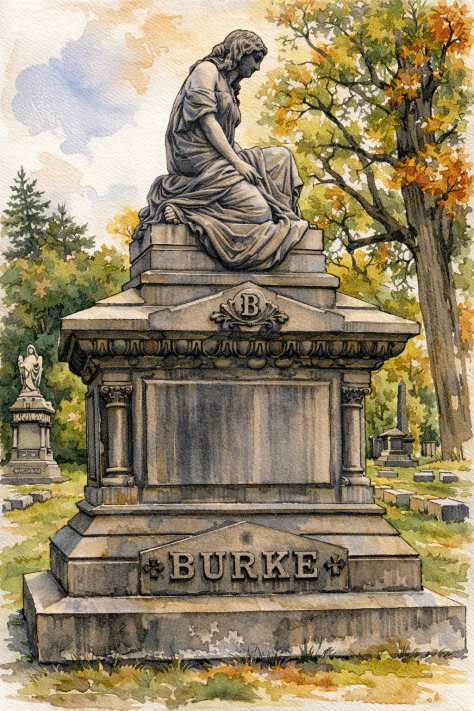
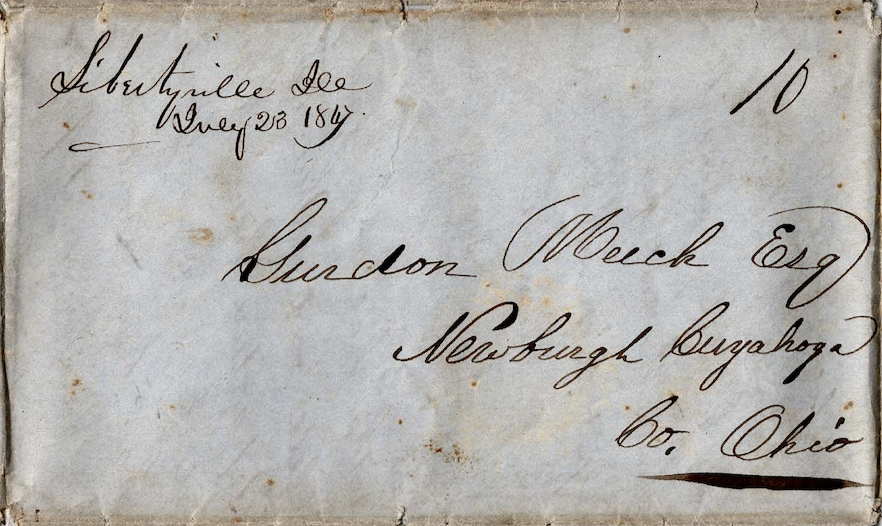
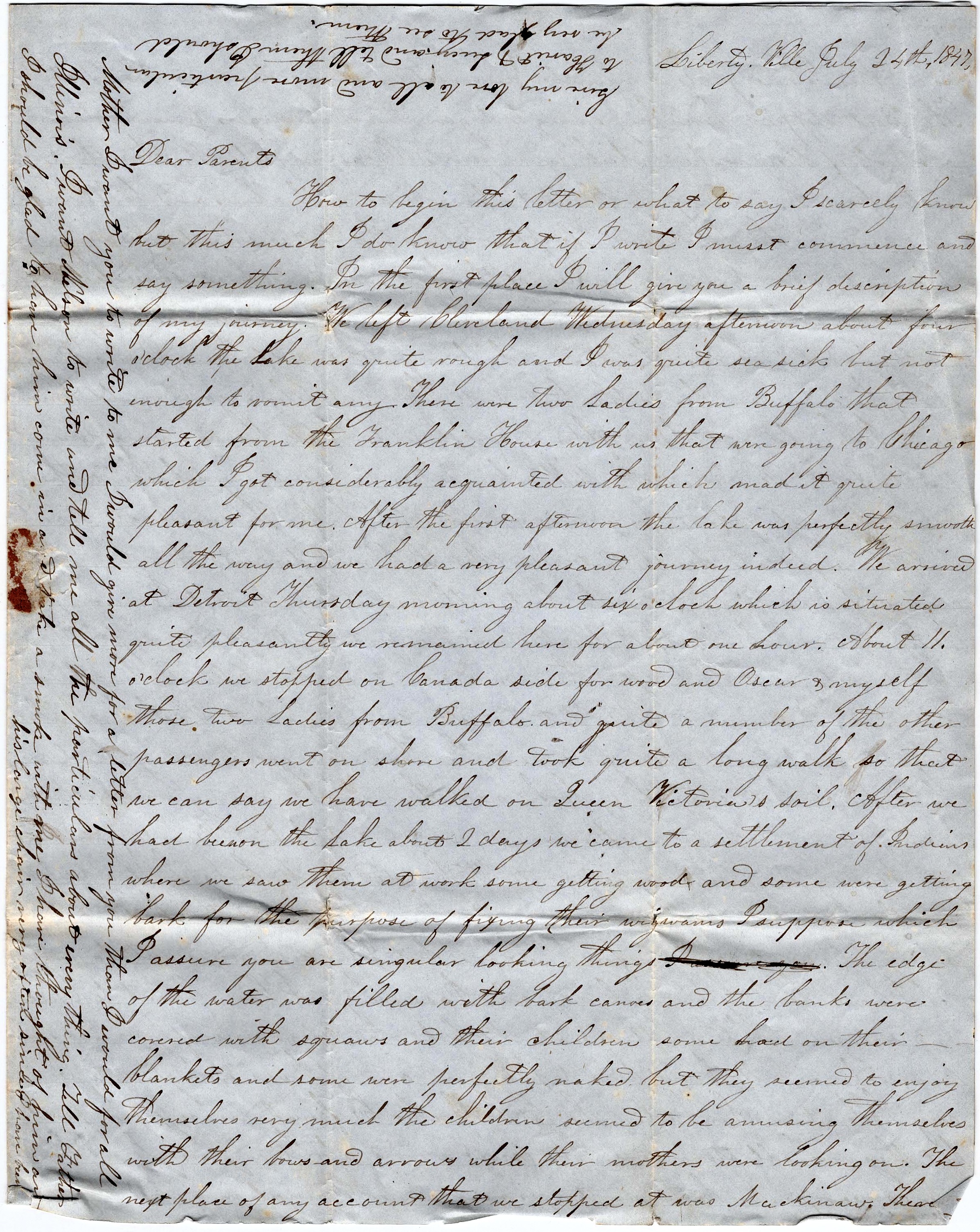
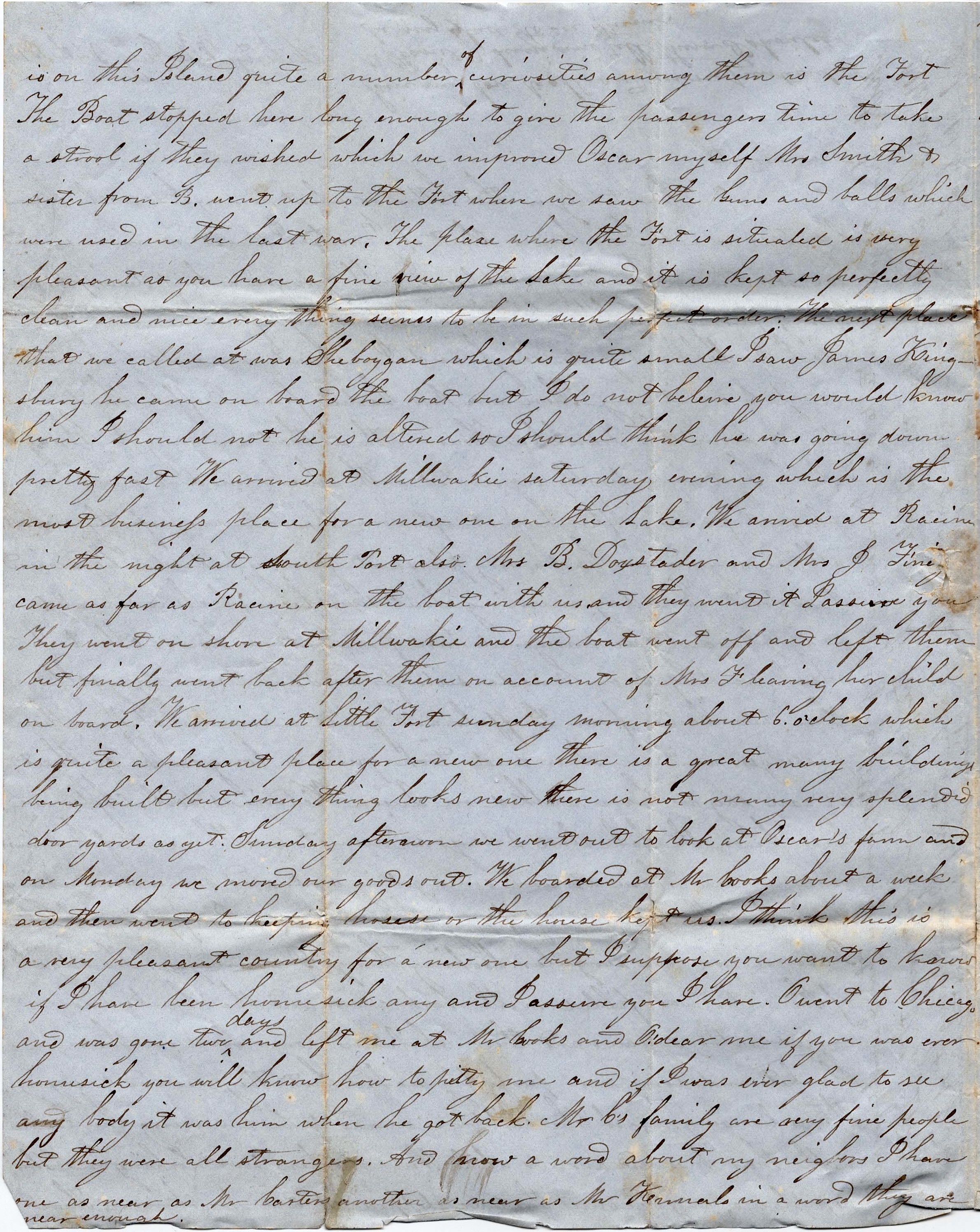
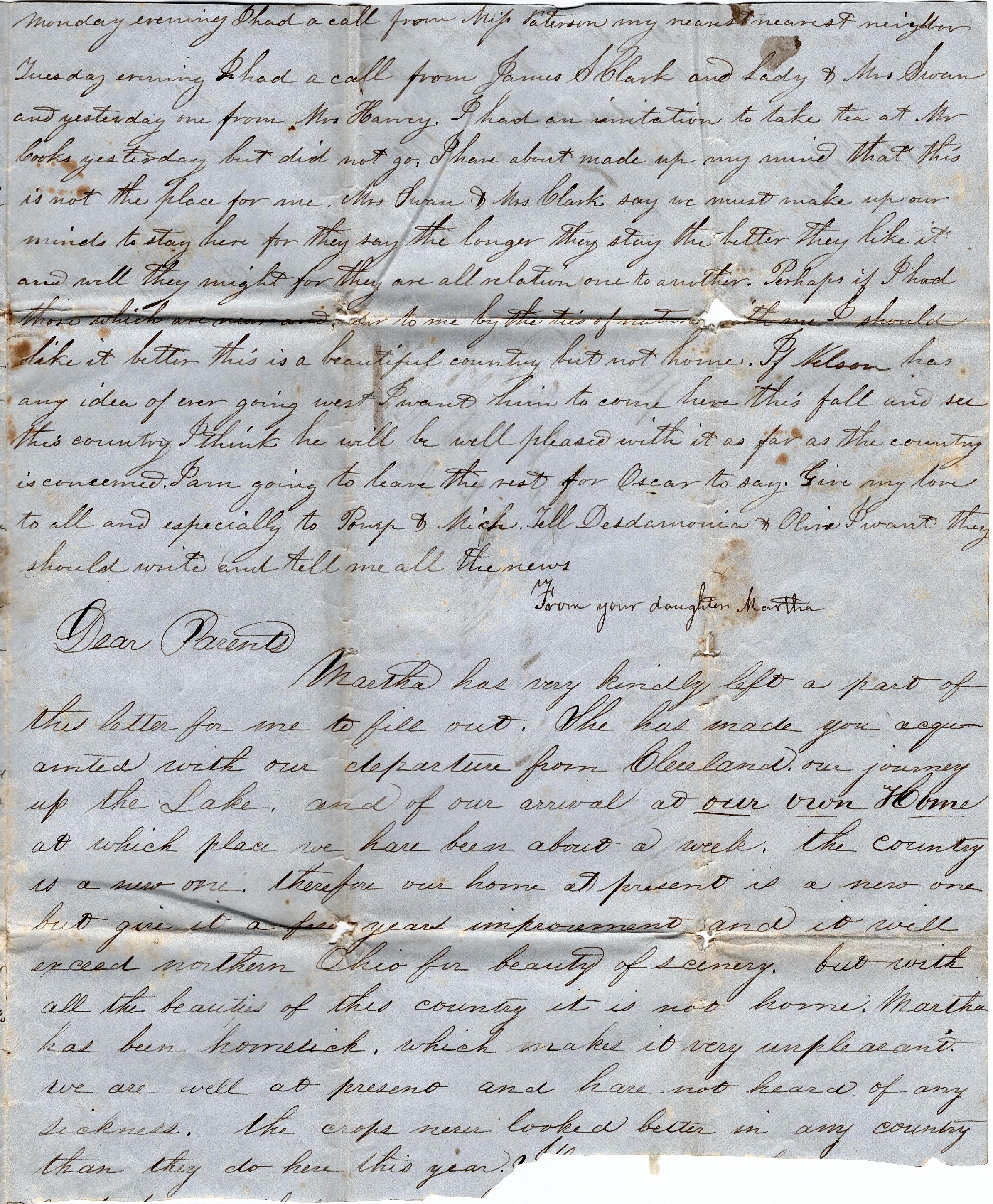
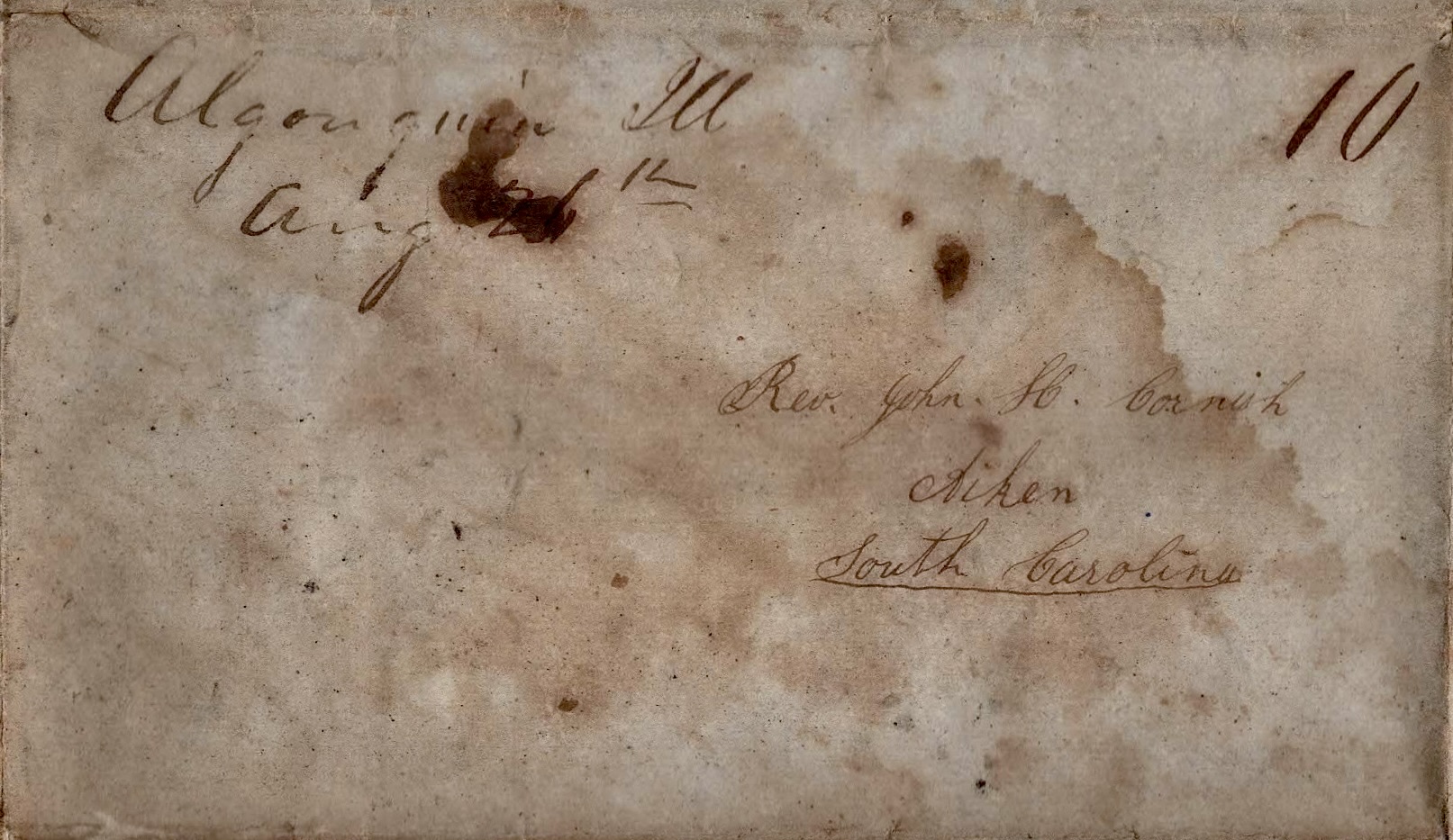
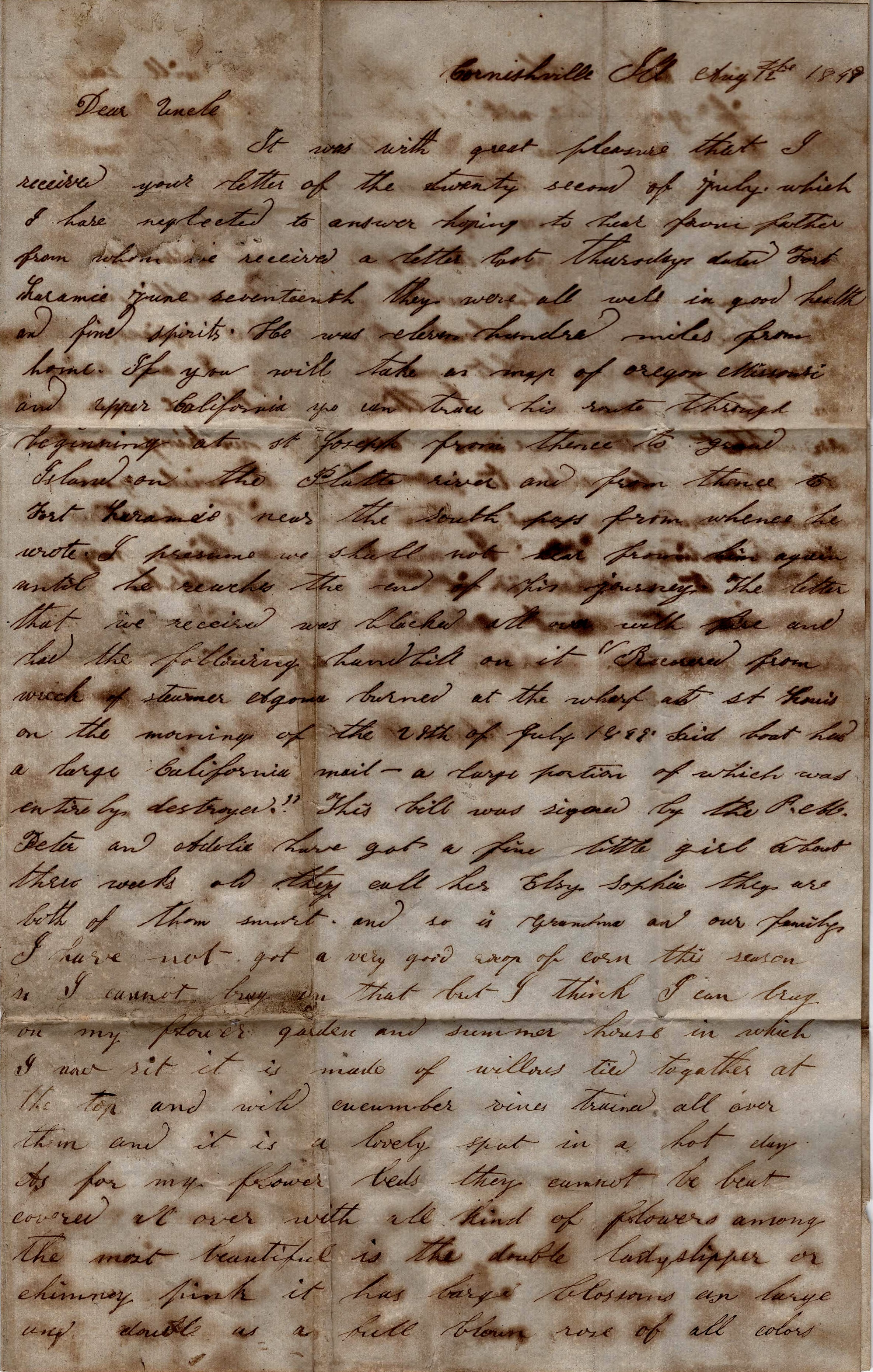
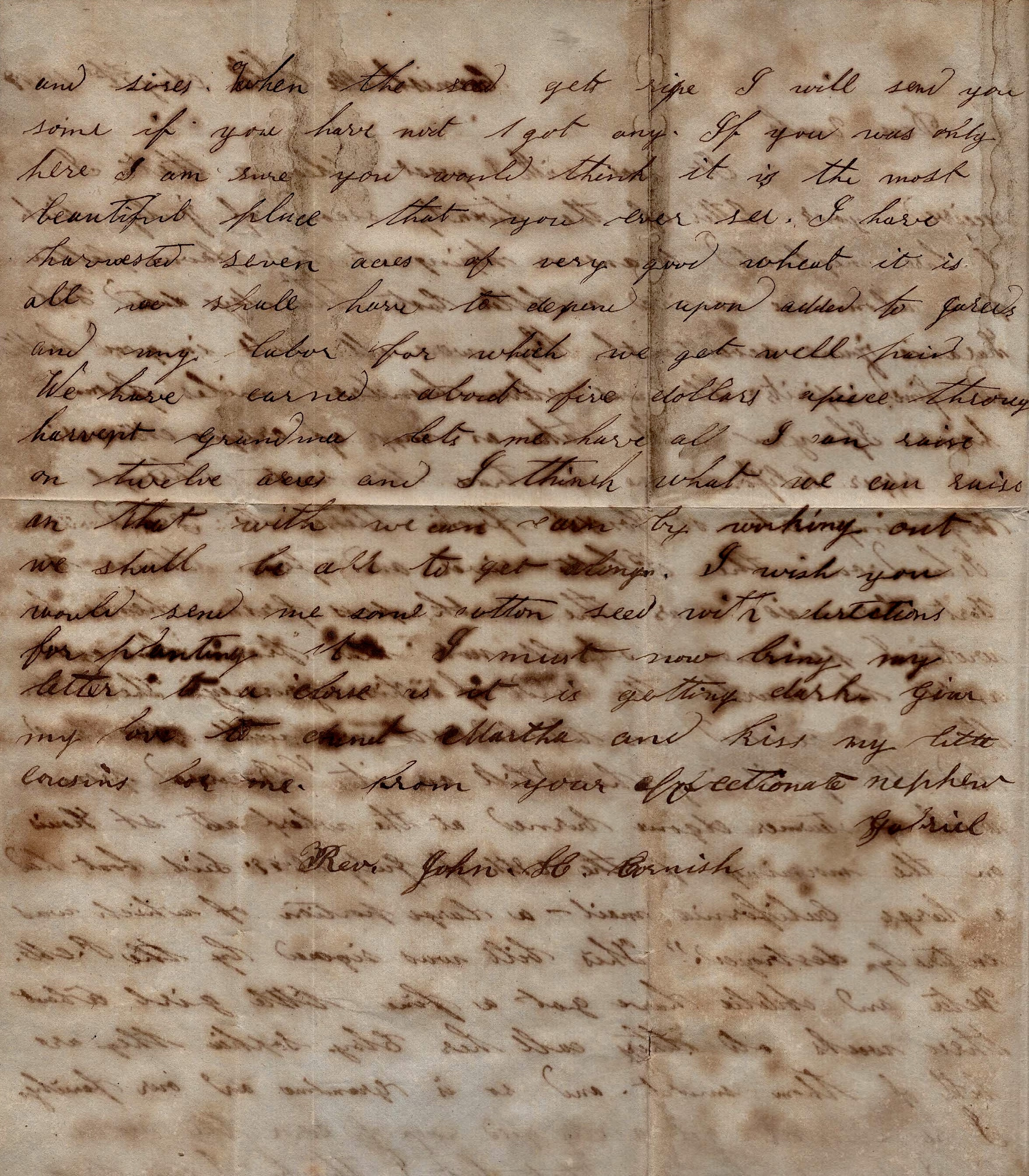


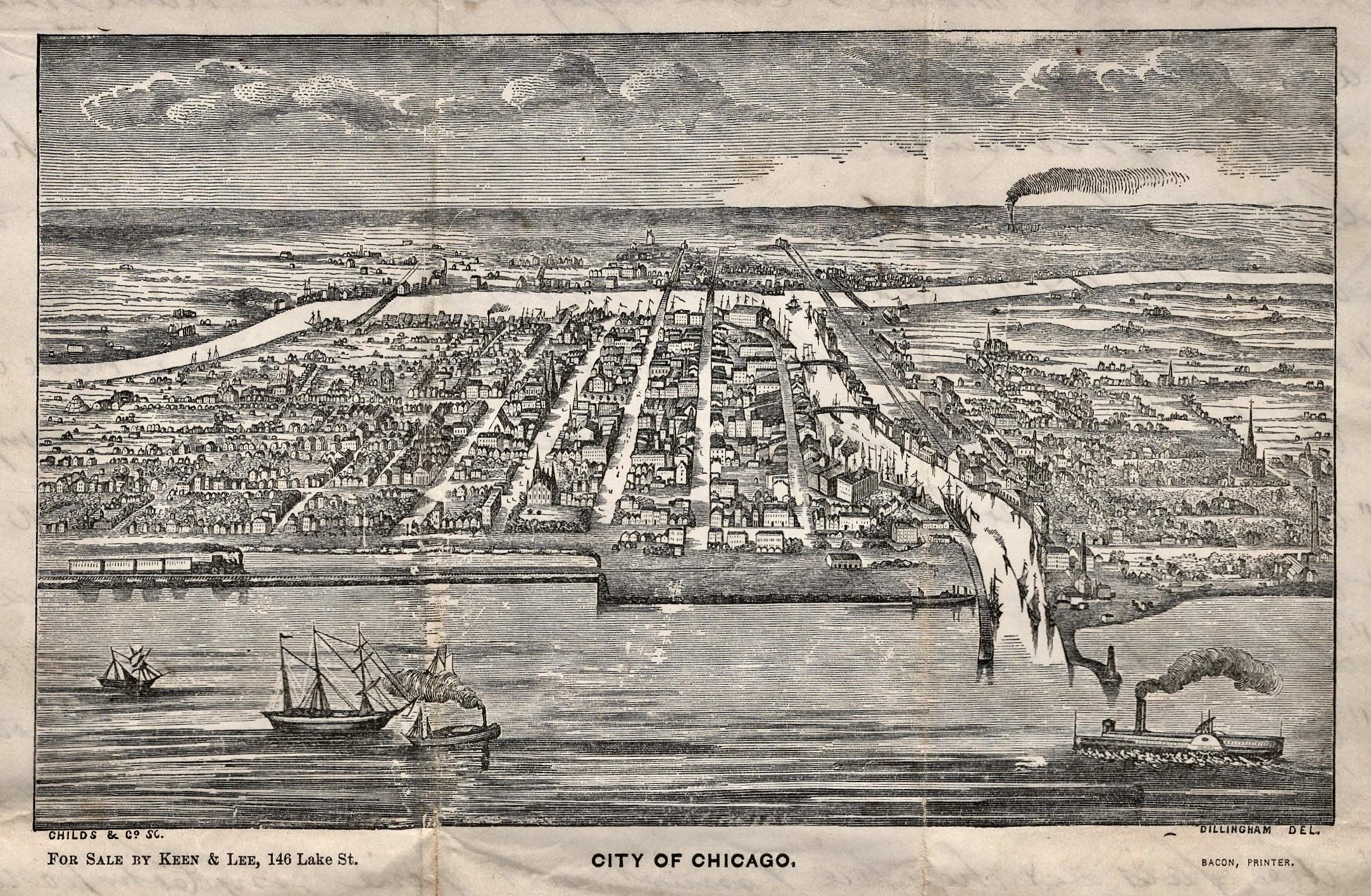
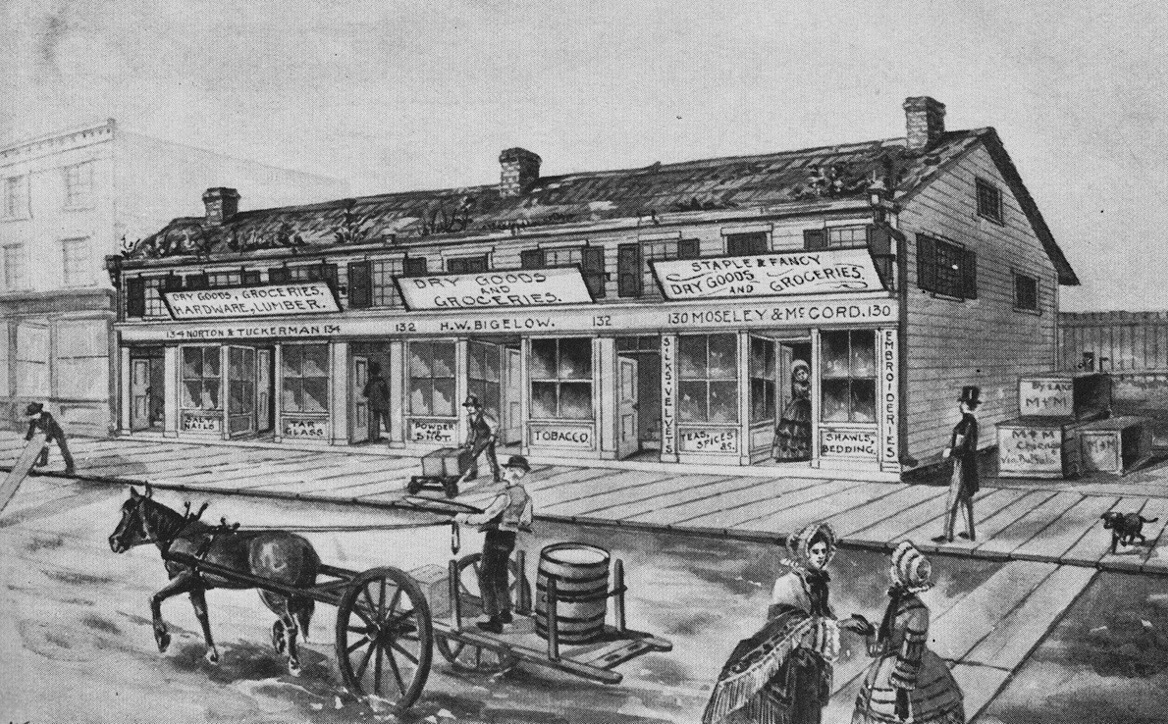

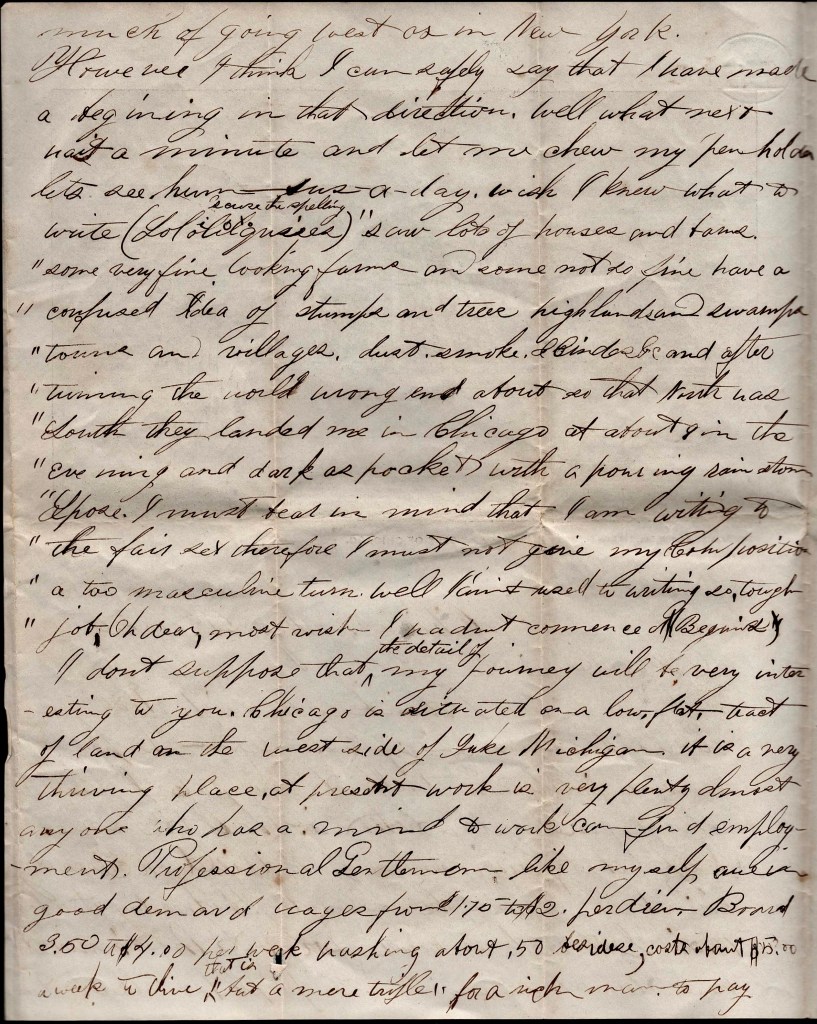

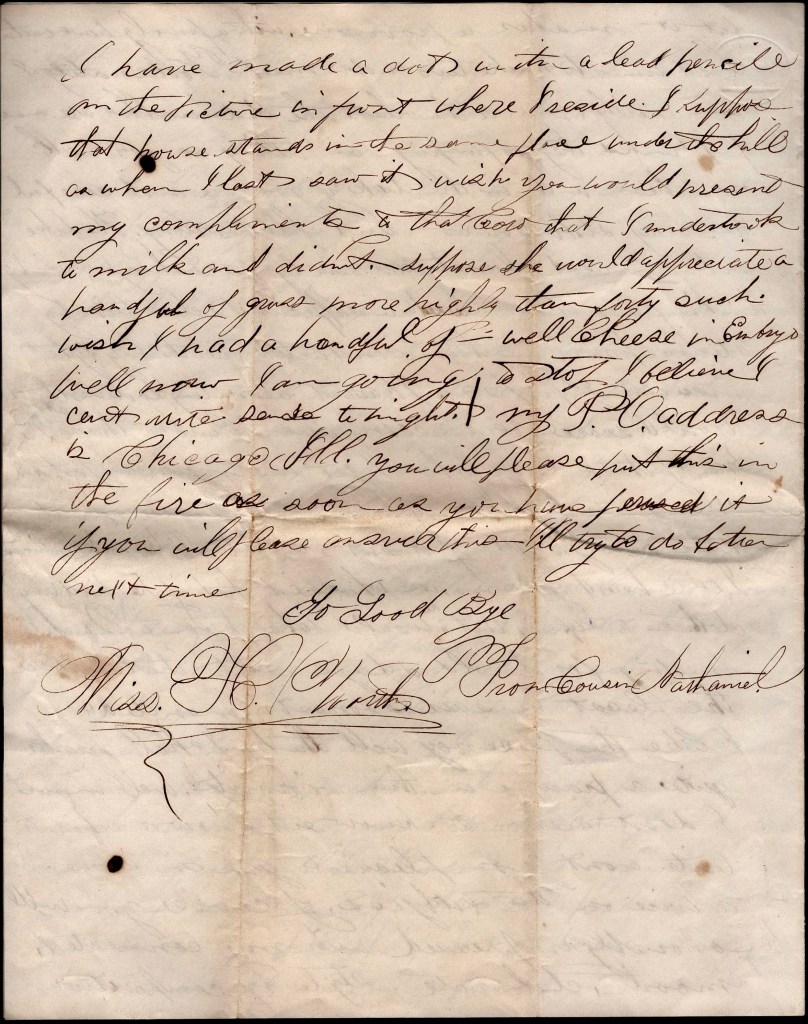


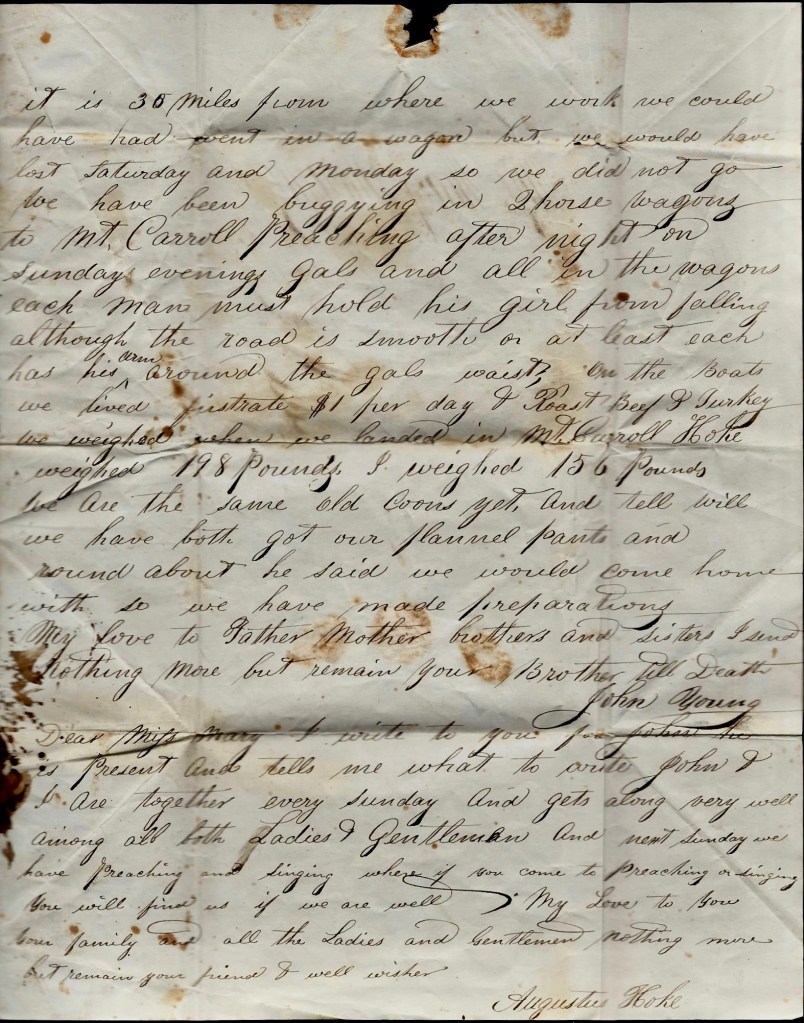
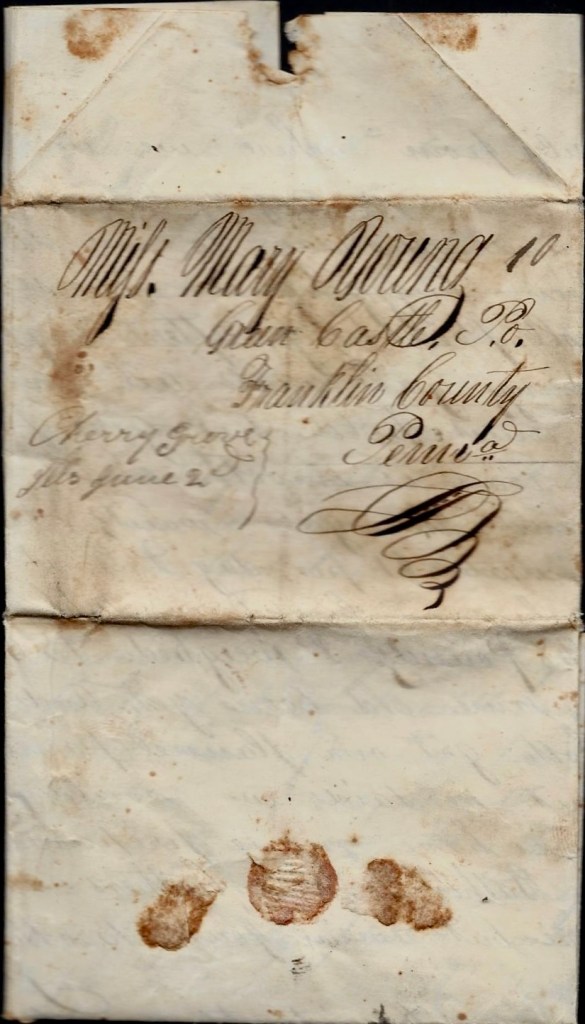
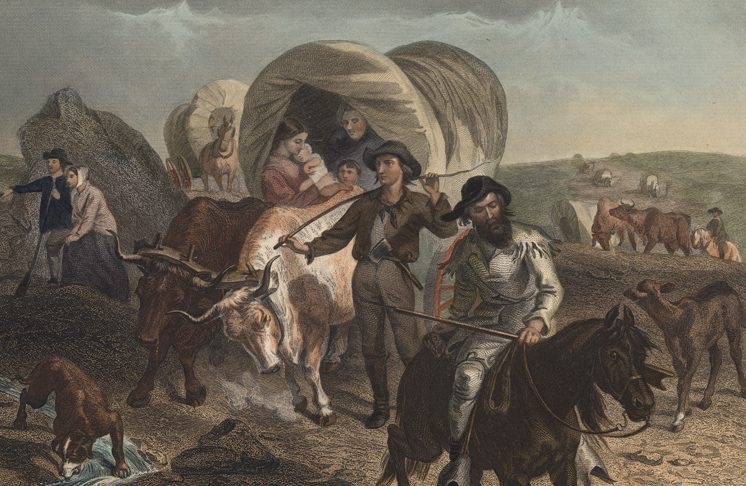
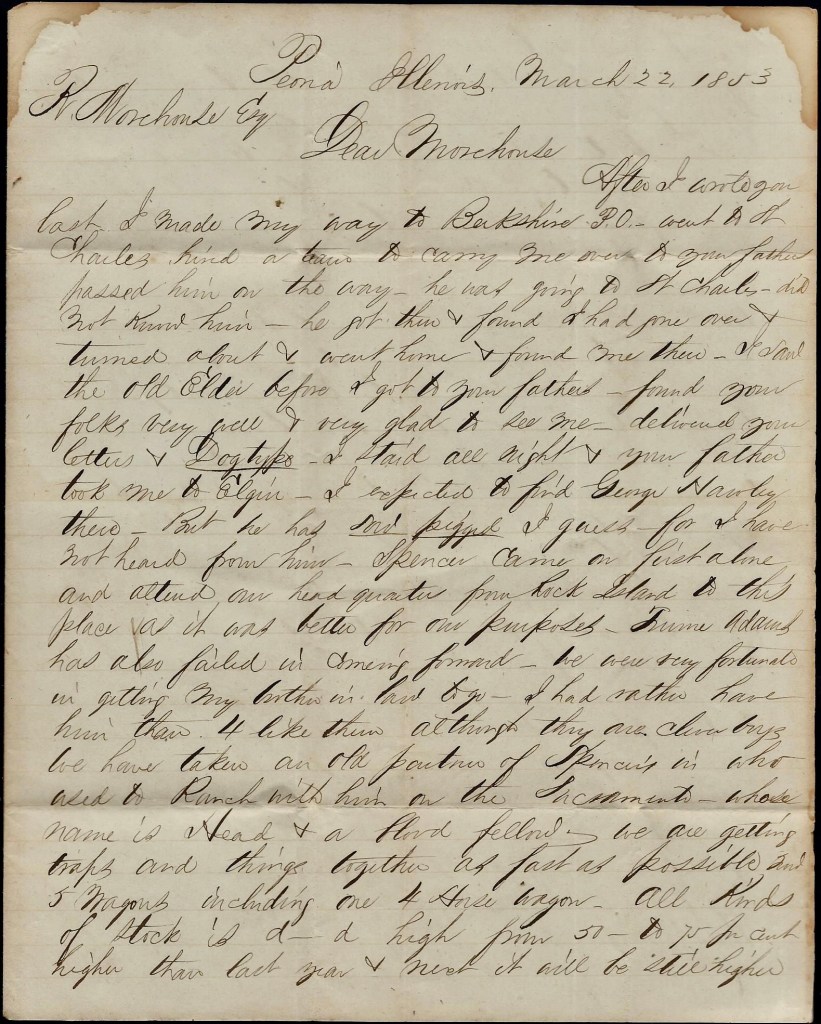

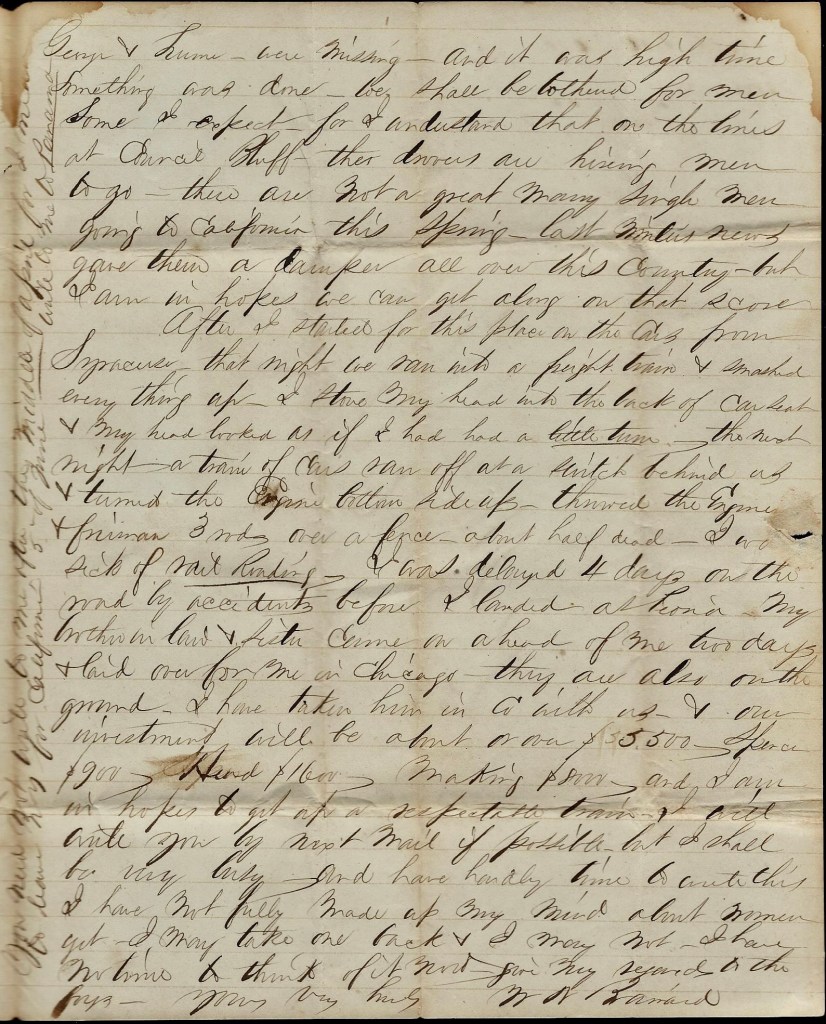


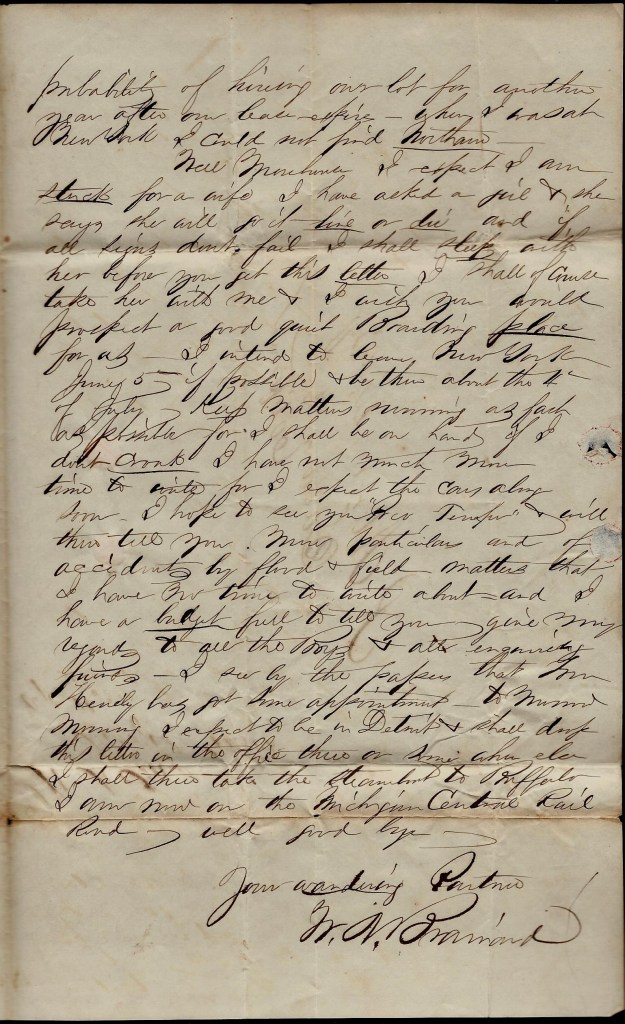

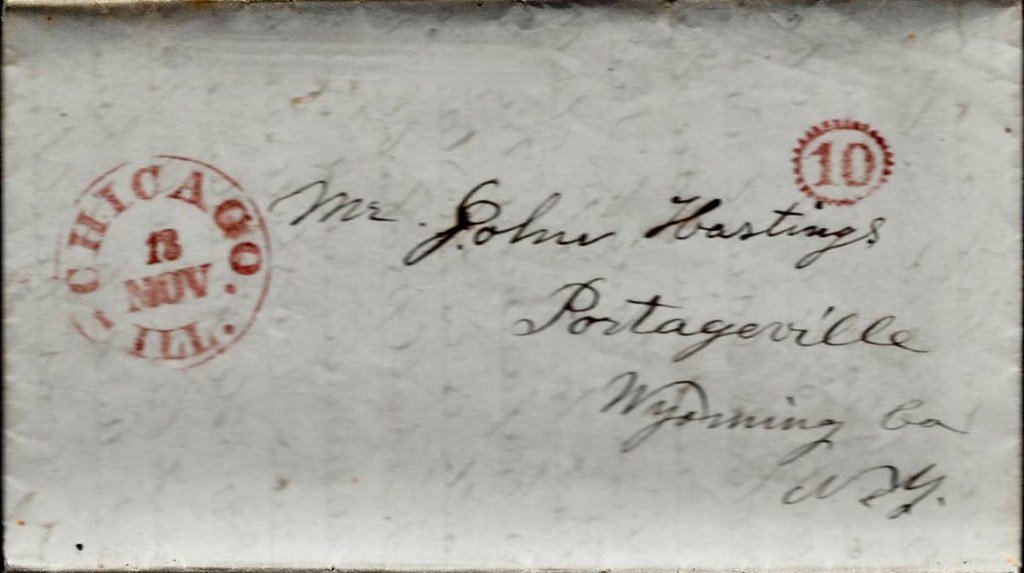


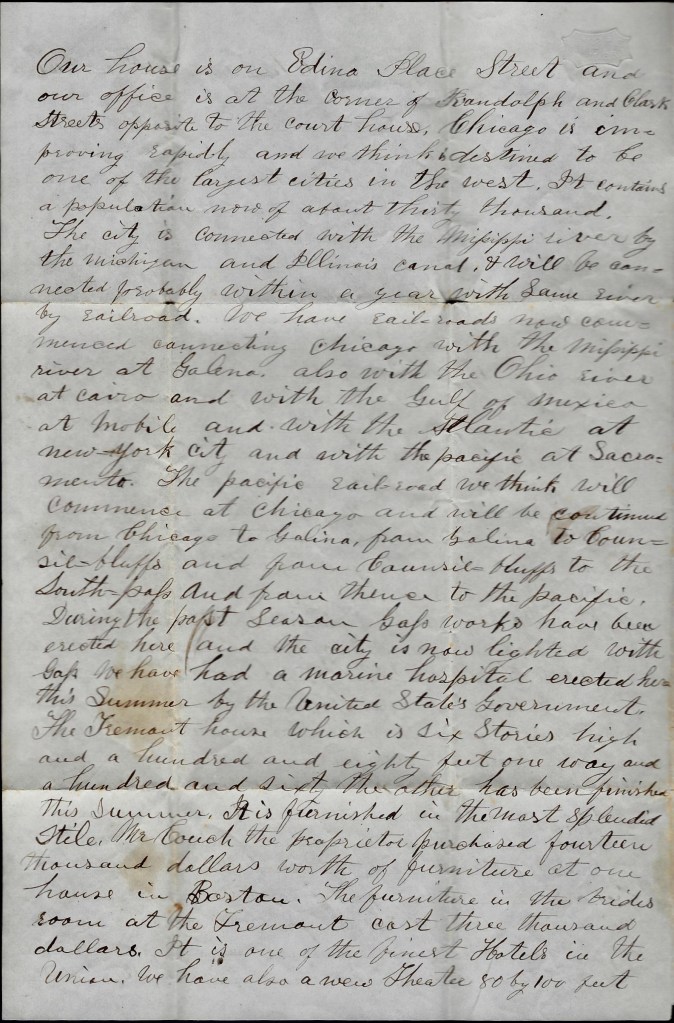
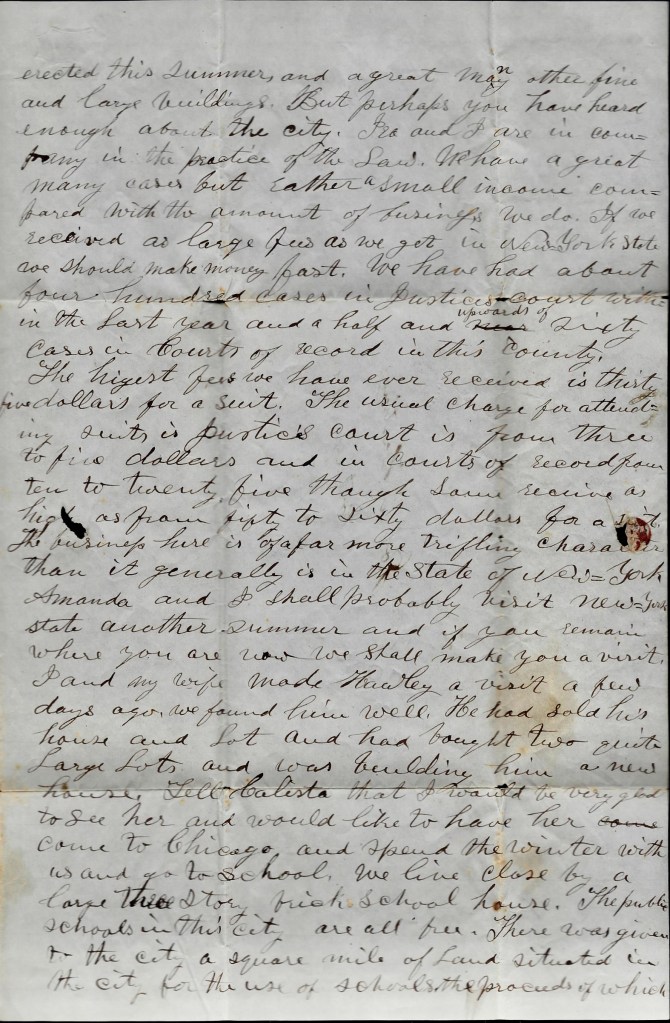
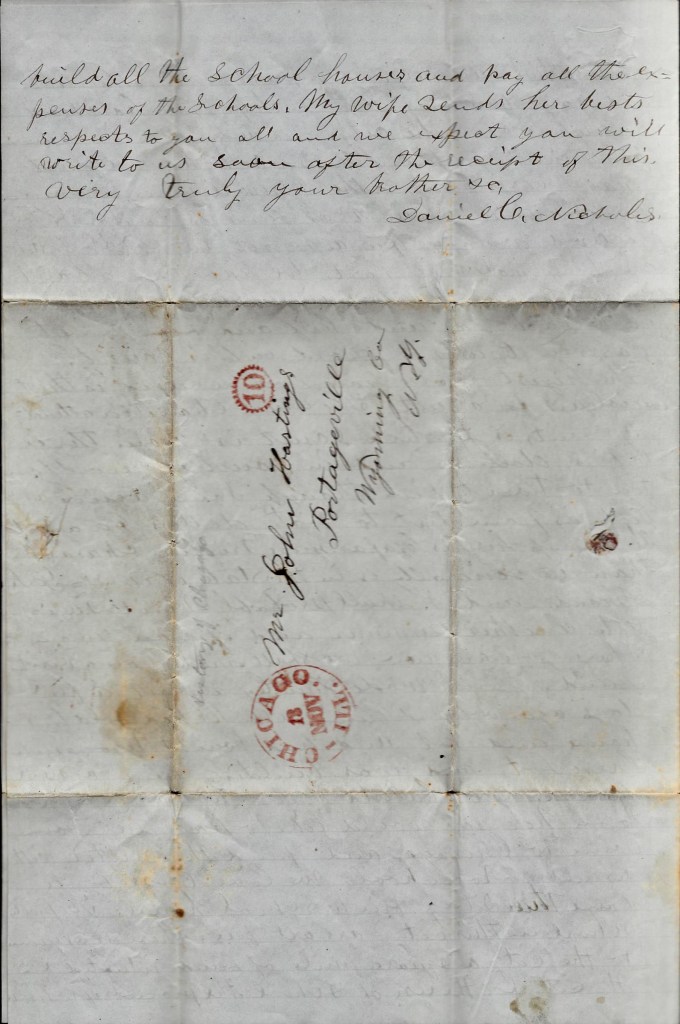

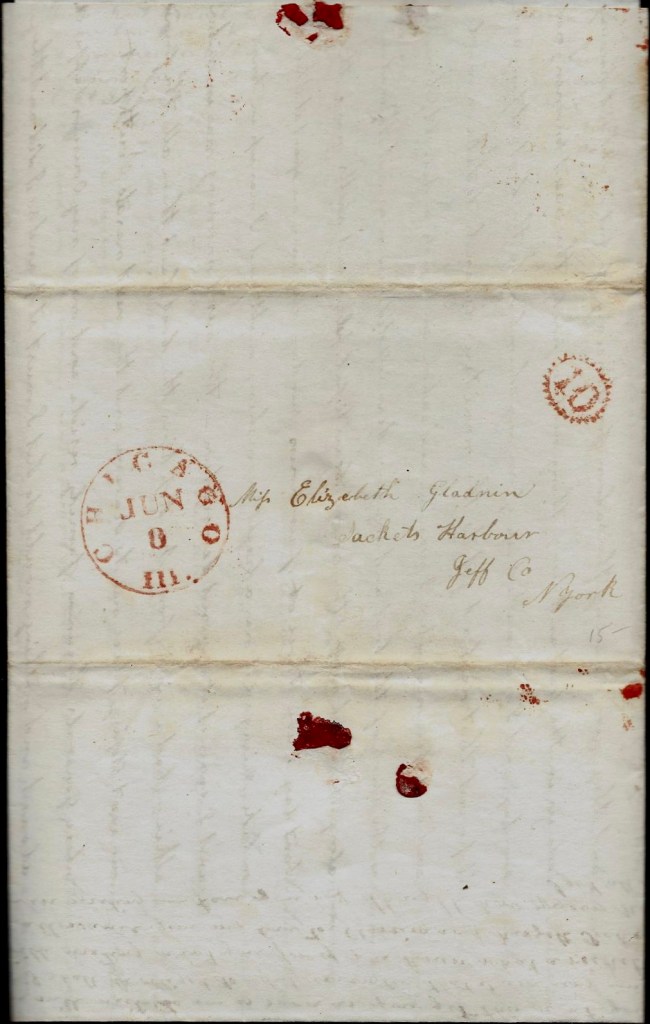


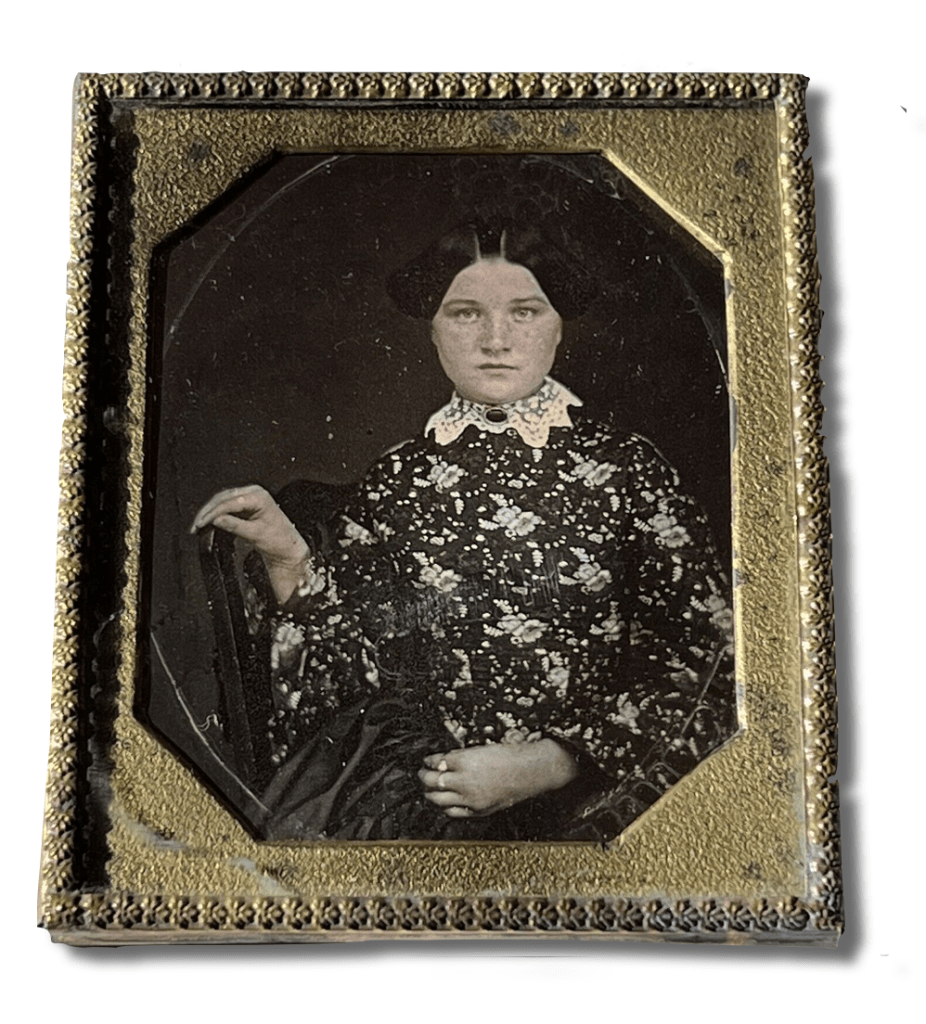
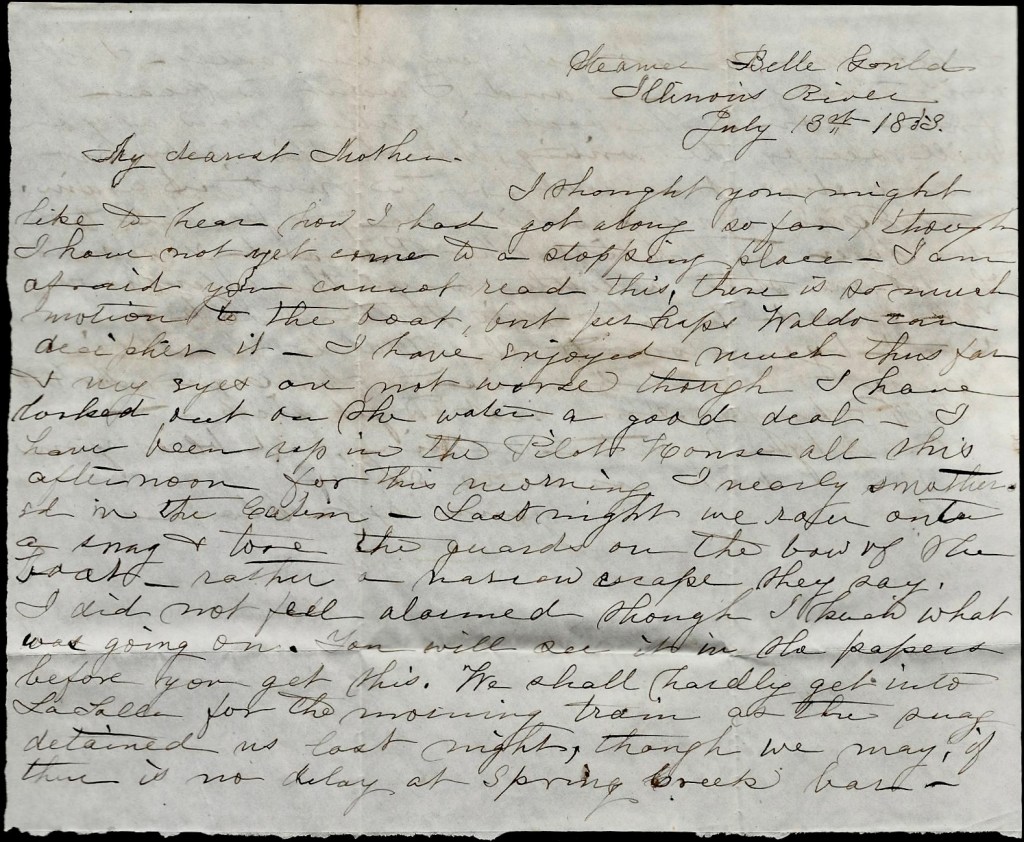
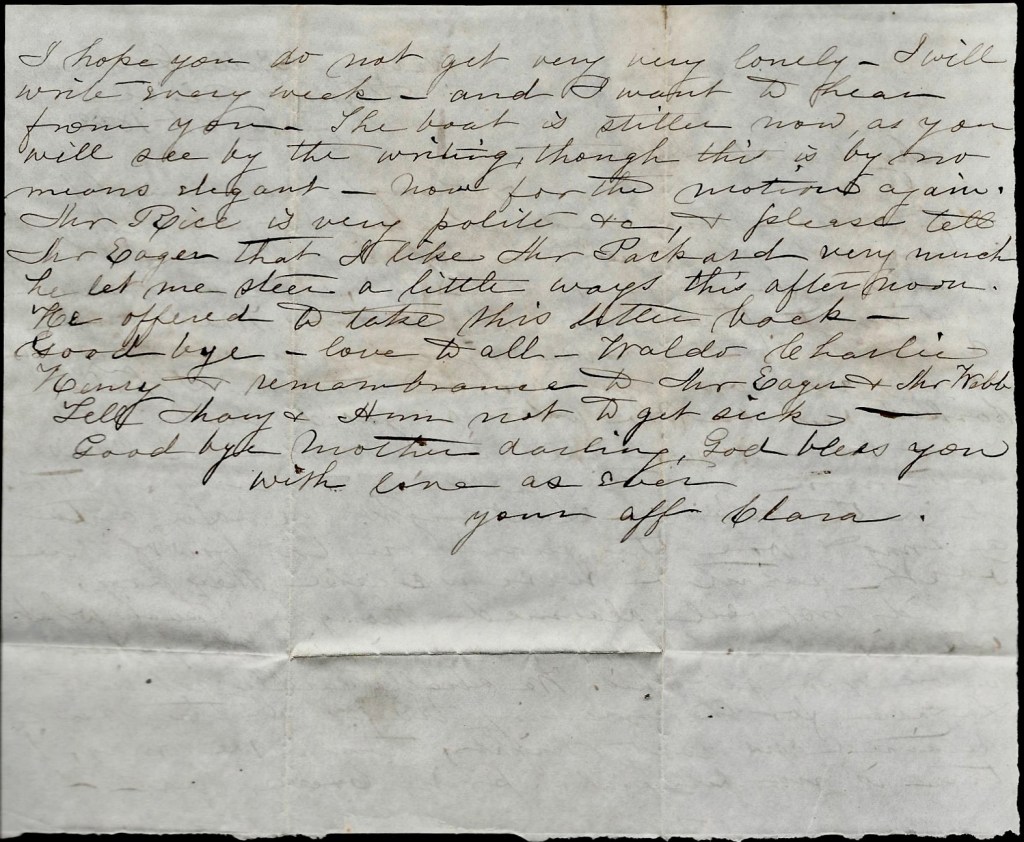


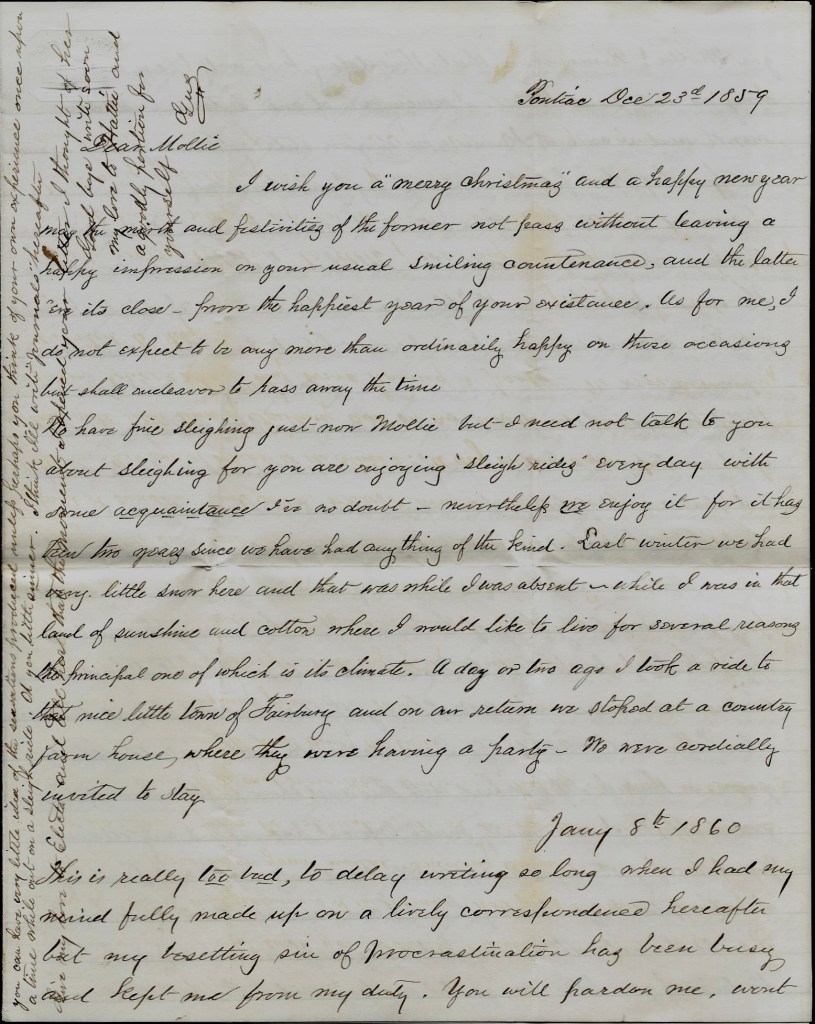
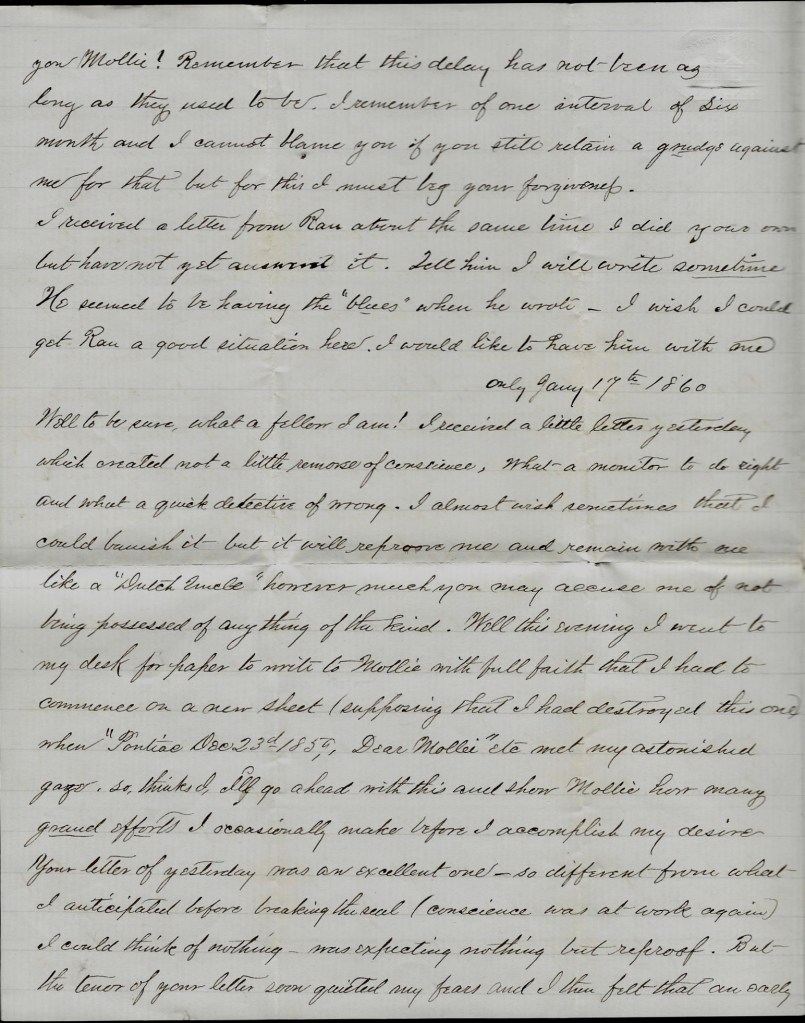
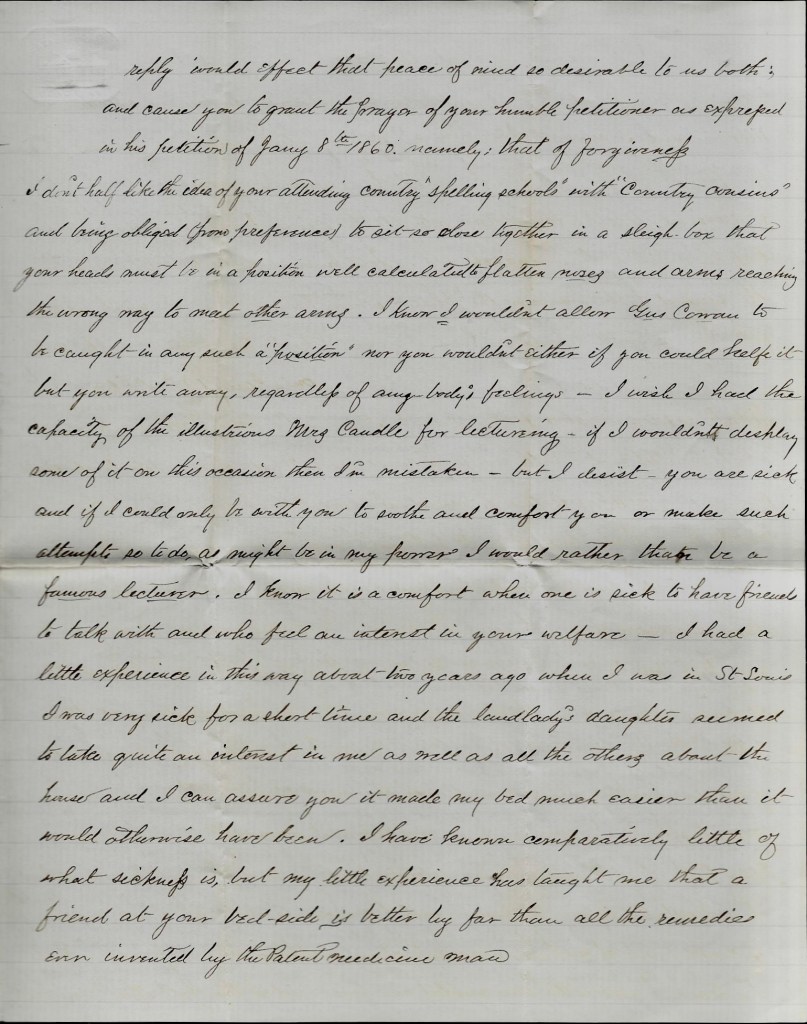


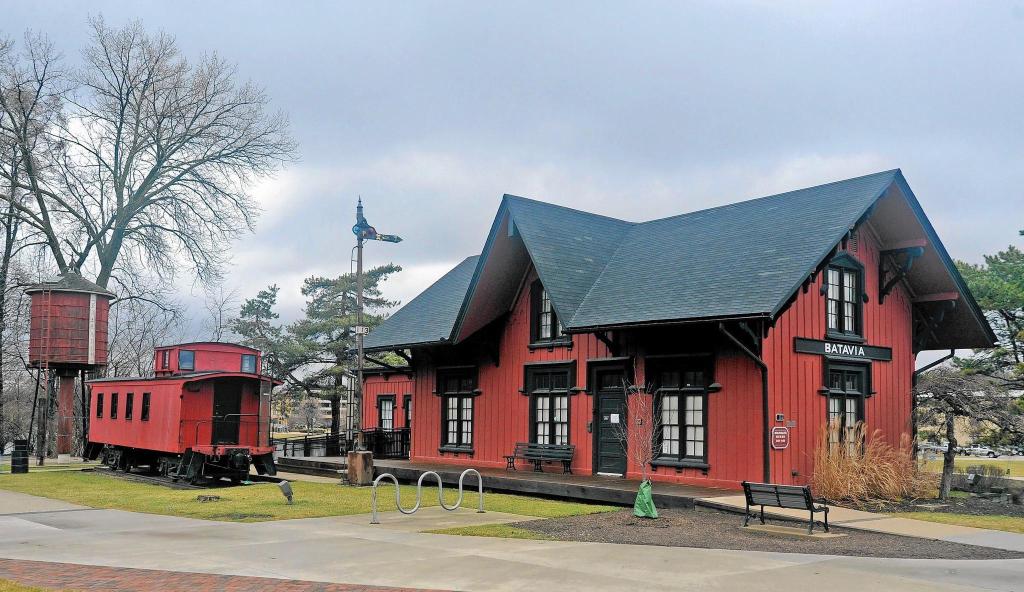
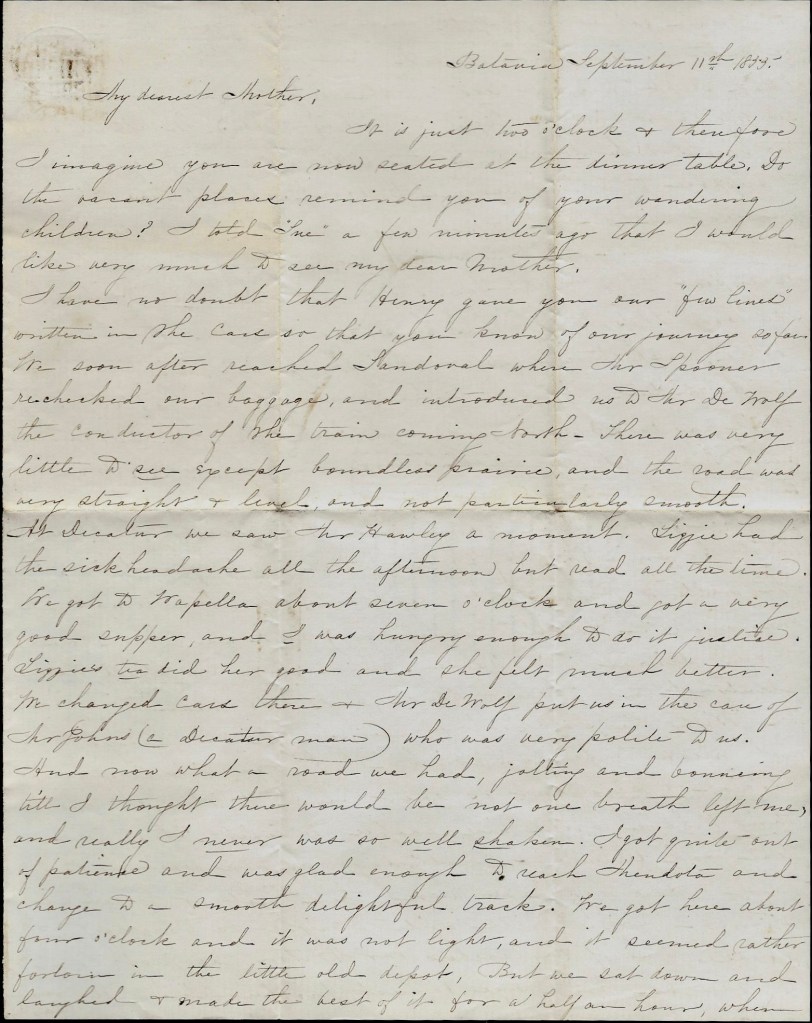


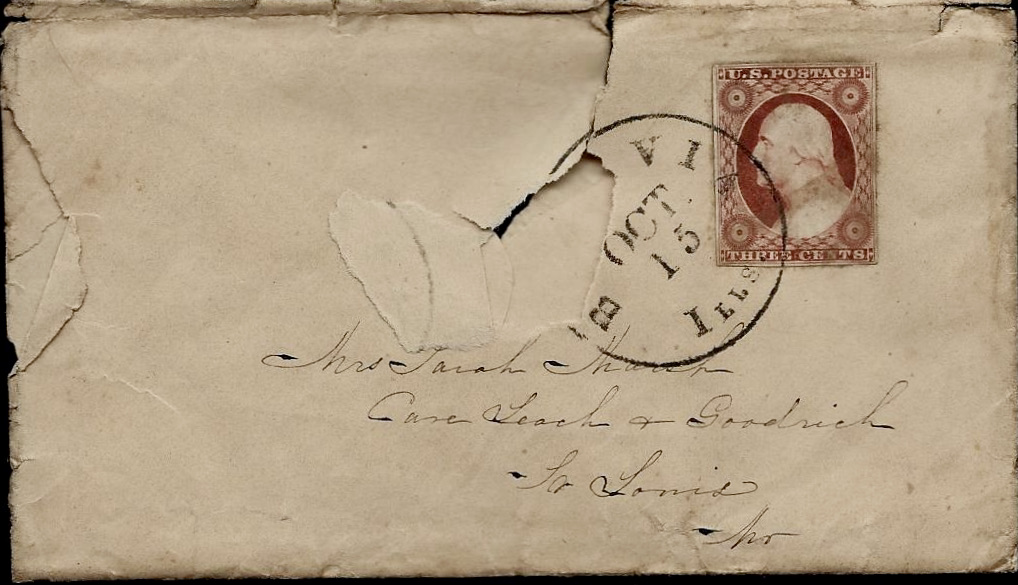
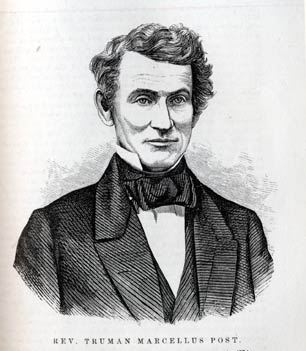
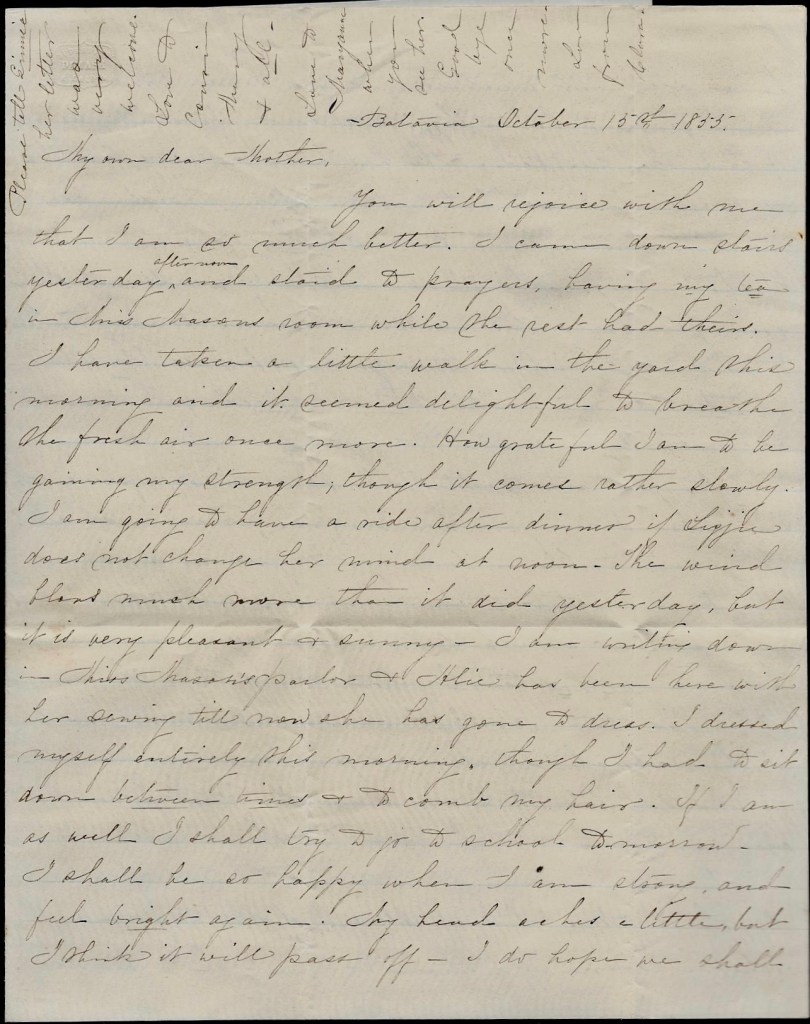


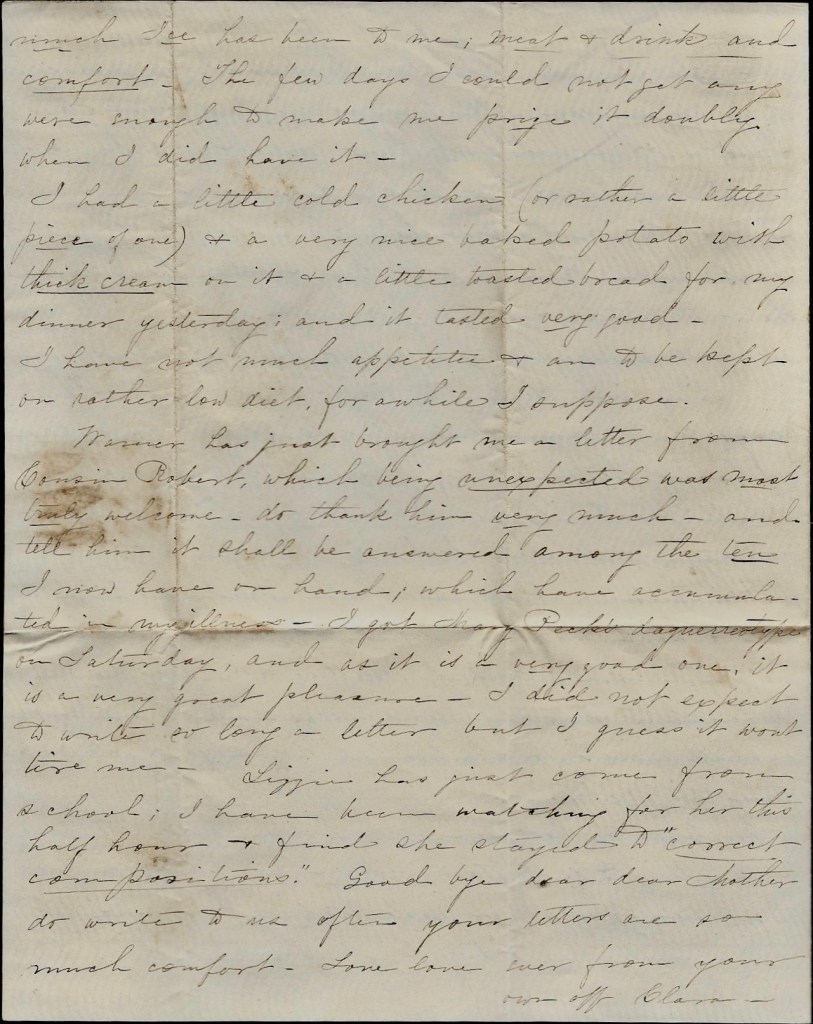
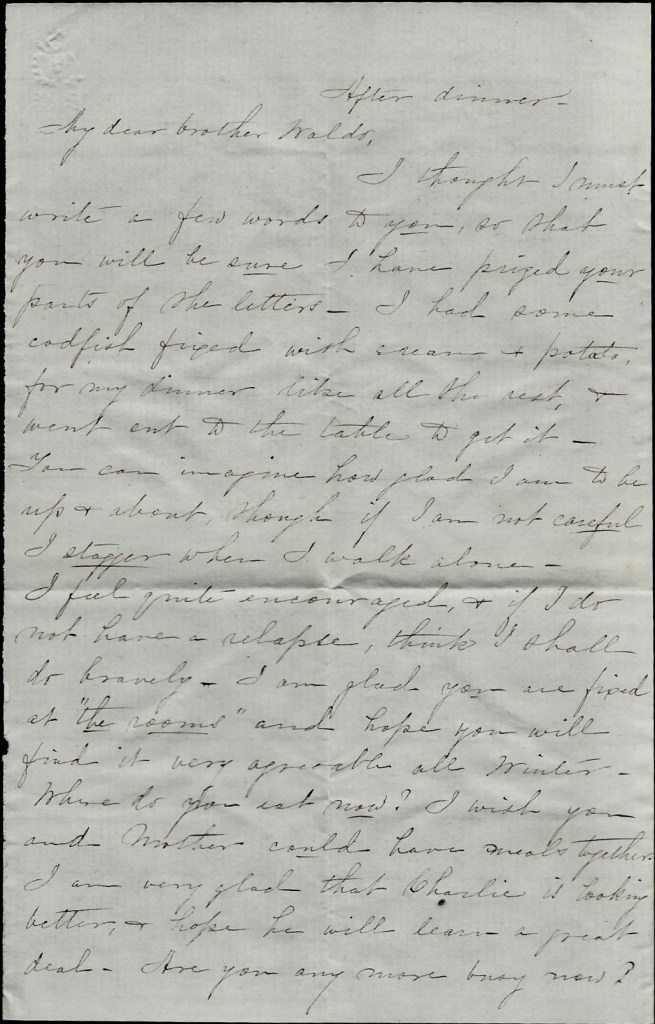
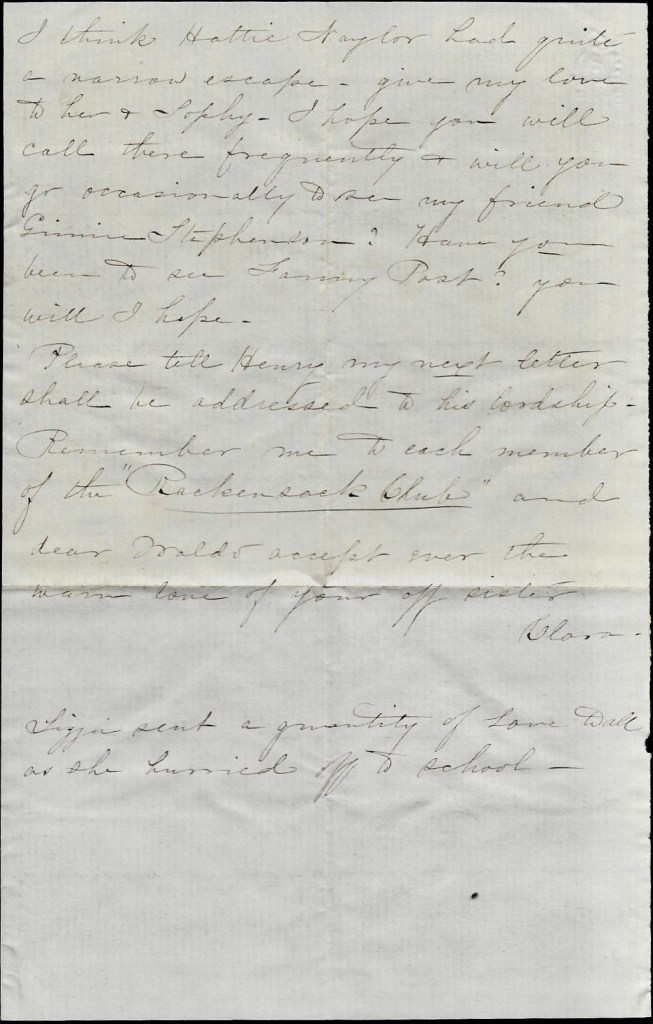

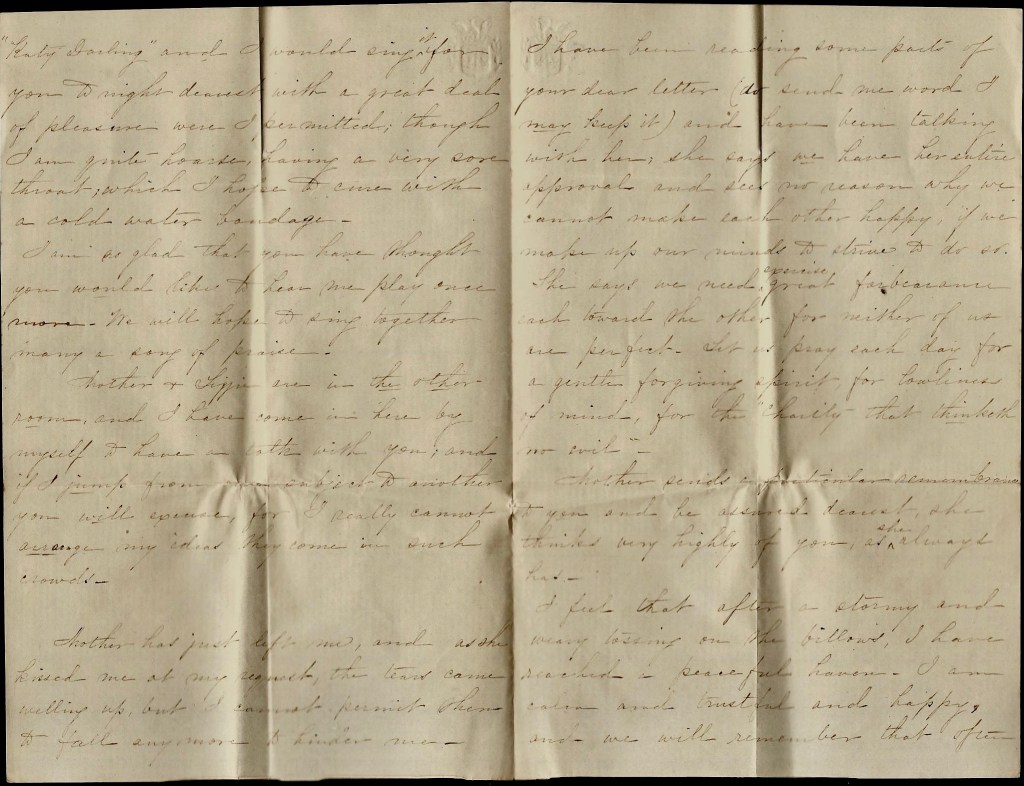

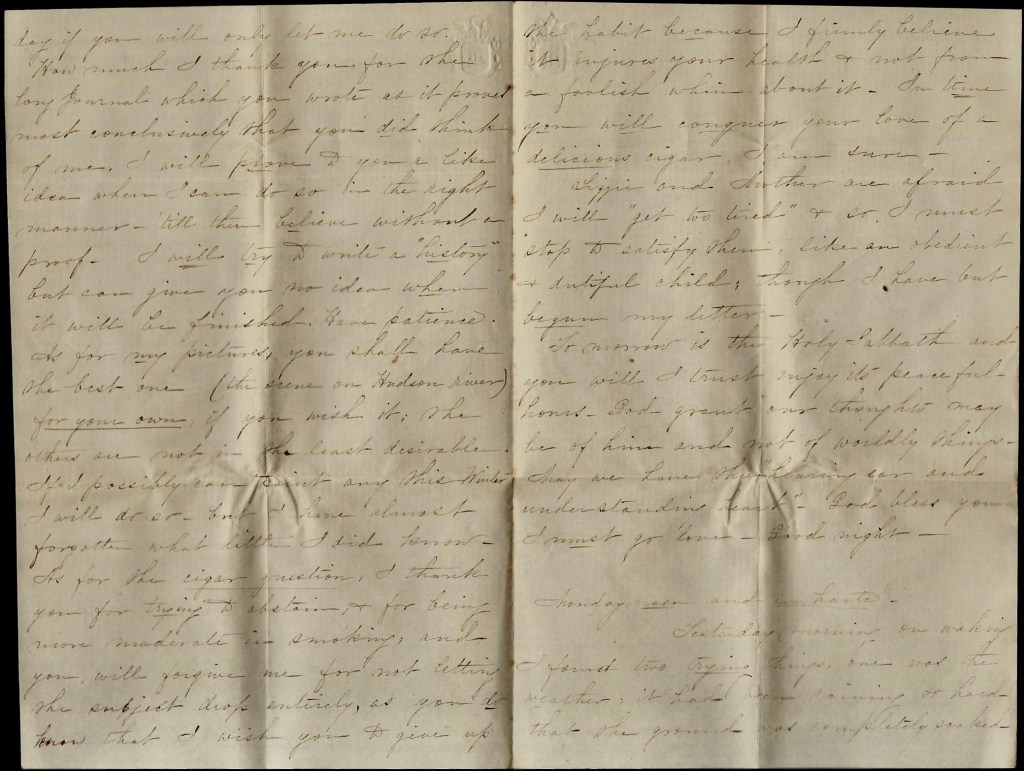

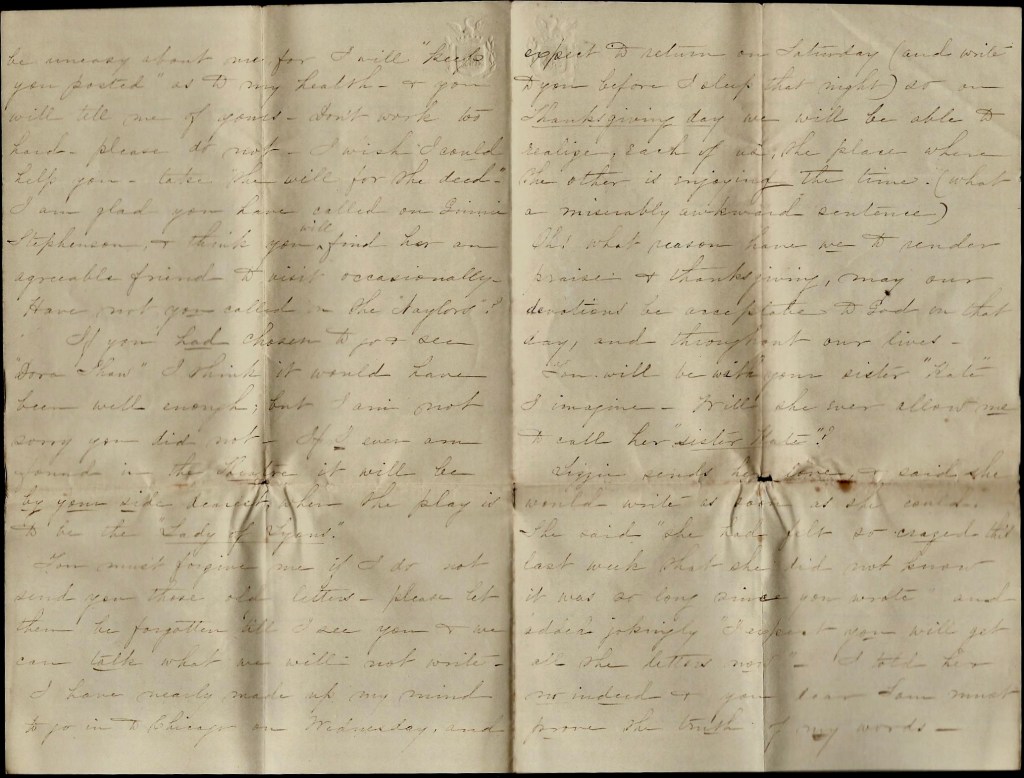
 Spared & Shared 23