Category Archives: Antebellum Louisiana

1844: Jeremiah Woolston Duncan to John A. Duncan

The following letter was written by Jeremiah Woolston Duncan (1810-1854), the son of John Duncan (1776-1852) and Elizabeth Woolston (1778-1851). He wrote the letter from New Orleans in February 1844 to his older brother, John A. Duncan (1806-1868) of Wilmington, Delaware.
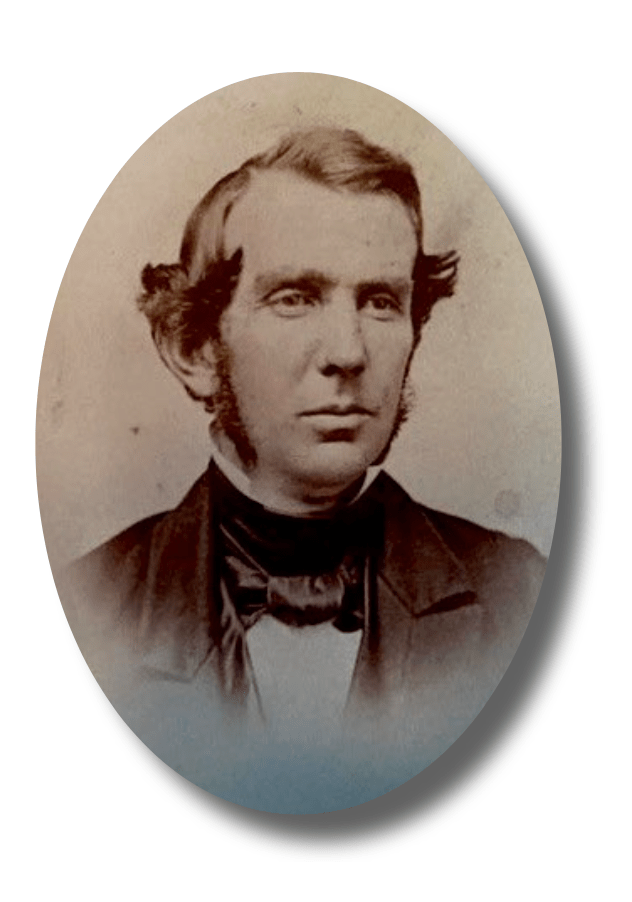
Jeremiah Woolston Duncan

Jeremiah was married in 1833 to Elizabeth Strode Brinton (1810-1859) and the couple had two children by the time of this 1844 letter. They would have at leasts four more children, the last two after the family moved to the fledgling city of Chicago in 1849.

“Jeremiah was born in Baltimore, Maryland in 1810. He received, in common with all the other members of his father’s family, a good English education, but his active and enterprizing nature early asserted itself, and while still but a boy in years, he proceeded of his own volition to Philadelphia, where he became a clerk in a hardware store, remaining till he was twenty years of age. He then went into partnership, in Wilmington, with his brother, John A. Duncan, in the hardware business. In 1830 he withdrew from the firm and went into the lumber business with Baudy Simmons and Company, of Wilmington. He afterwards retired, also, from this firm and went into the West India trade and wholesale grocery business, in partnership with Matthew and Andrew Carnahan, in the same place. He next erected a steam saw mill on the “Old Ferry” property. In 1850 he removed to Chicago, where he engaged extensively in the lumber business. He owned large tracts of land in Michigan, near the straits of Mackinaw, and the town of Duncan, in that vicinity, was named in his honor. But the life he now led subjected him to frequent and severe exposures, and carried away by his activity and energy, he paid too little regard to his health. It thus happened that in the prime of his vigorous and most valuable life he contracted a fatal sickness. He returned to Wilmington and died, December 31, 1854.  Mr. Duncan was a man highly respected in all his wide circle of acquaintance, and warmly regarded among his friends. His activity and energy were remarkable, and the results proportionate.” [Source: History of New Castle County, Delaware]
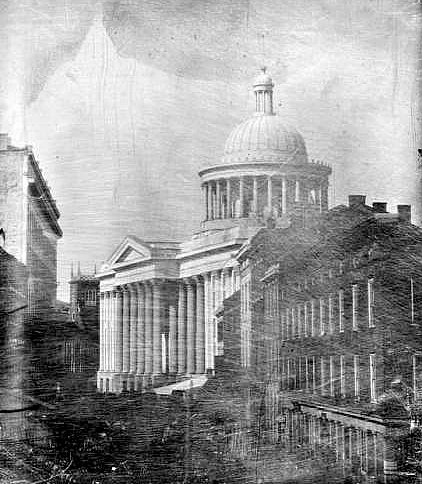
The St. Charles Exchange Hotel in New Orleans in 1847
(Courtesy of Fred Diegel)

[Note: This letter is from the private collection of Richard Weiner and was transcribed and published on Spared & Shared by express consent.]

Transcription

Addressed to Mr. John A. Duncan, Wilmington, Delaware, via Philadelphia

St. Charles Exchange Hotel 1
New Orleans
February 22, 1844 2

Dear John,

Having a little leisure before dinner, I thought I would improve it by writing you a few lines. Today here you will observe by a paper I mailed to you this morning, is a busy one. There is a great gathering of the Whigs of Louisiana beside a grand military parade, sham battle, &c. about going on at this moment—2 o’clock—and most of the business is stopped on account of it. Many stores closed.

The Daily Picayune, 22 February 1844“All will be life, marching, music and animation”

Yesterday was another gala day being Mardigra [Mardi Gras 3] on which occasion carriage of men and women ride about the city in mask & all kinds of grotesque forms imaginable & form a procession the B[ ] throwing dust and flour in their faces at the corners (and by the way, you never saw a dusty city—it is here about ankle deep—and as far as flour, until yesterday we had a little rain which reversed the matter into mud half shoe deep). The citizens consider the turn on yesterday pretty near a total failure—nothing much but ordinary women & rowdies whereas heretofore respectable people used to parade. Old Harry stay much of his time at [illegible] & is to be here tomorrow & hold a sort of Levee in our spacious dining room. 4

This is the finest hotel I ever was in—much ahead of the Tremont or Astor House but, O Harry, how they plaster it on $3 per day or $15 per week if you stay a week at a time. This city is like all other cities—plenty of people here for the business at this time but the prospect for a lively spring trade is pretty good. The wharves look beautiful today. The immense number of ship with all their flags displayed—ships of many nations. It is really a pleasing sight. Steam boats by dozens a belching like volcanoes. I must say I really hate these high pressure boats. With all I had heard about the immense boats on the Mississippi, I am disappointed. The Empire on the North River would eat one of the largest for a breakfast. But there is a great quantity of them going & coming all the time and full of freight.
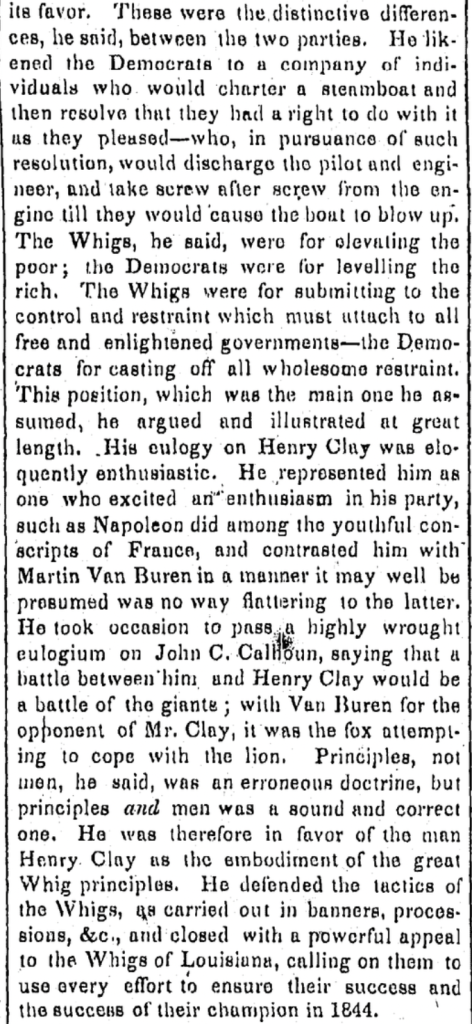
The substance of Prentiss’s speech
The Daily Picayune, 23 February 1844

February 24. I had to knock off for dinner. I have not found time sure to get at it again until this morning at 7 o’clock. If you ever saw a swarm of bees, this house has been one for three days past. I was at a great Whig gathering last night & they began to call for [Seargeant Smith] Prentiss of Mississippi who addressed the convention the day before & one continual cry for at least one hour.

I have ridden out round the city, down the Shell Road & Cr & taken a general survey. Went on the Parade [ground] after the Battle had been fought & see company after company of Frenchmen—all small men and all commanded in French—not a word in English. These French here are great military men. The 2nd Municipality, you could not be from New York in which most of the business is done & in the 1st and more in the 3rd. you will hear all the negroes talk French. I had not been down in the 3rd before the afternoon of the parade the whole of which I spent in that part of the town as it was a complete holiday.

The idea I had formed of the levee was a very enormous one. It to be sure is much higher than the rest of the city, but a stranger may land on it and walk into the city & not observe it. I could write you an hour more but must close. I have some other writing to be done this morning. Give my love to my dear wife & little ones & all your folks & to all my friends my best respects.

From your affectionate brother, — Jeremiah W. Duncan

P. S. Shall have much to talk [about] when I see you. T. H. Larkin is here. Old Mr. Handy of Chil & the 2 McMain Boys & sundry others.


1 “The St. Charles was the first large building erected above Canal Street.  Within its walls, 
over the next hundred years, half the business of the city was to be transacted and half the 
history of the state of Louisiana was to be written.  The hotel was designed by noted architect James Gallier. It was the grandest hotel in the South, in fact, the first of all great American 
hotels. Oakey Hall, who later became the mayor of New York, said of it, ‘Set the St. Charles
down in St. Petersburg, and you would think it a palace; in Boston, you would christen it a 
college; in London, it would remind you of an exchange; in New Orleans, it is all three.’  Mr. 
Hall was unable to contain his surprise at finding in the city of New Orleans something far 
grander than anything New York could boast of. The hotel had a magical effect upon the quarter of the city in which it stood.  It rapidly built up the First District, known as the American sector.  Around it, as a center, gathered the traffic and trade of the city.  Churches sprang up near it; stores and dwellings spread out in every direction.  St. Charles Street, which did not extend far above the hotel, became the most animated thoroughfare in the United States.”

2 Jeremiah’s visit to New Orleans in February 1844 was just prior to a fire in the summer of 1844 which destroyed about seven blocks of buildings between Common and Canal Streets, near the Charity Hospital.

3 After decades of suppression (under Spanish rule) the Mardi Gras parade was reinstated in New Orleans in 1837 (at least the first recorded). It remained popular until the early 1850s when it began to wane, but then was reinvigorated in 1857.

4 “Old Harry” is often an alternative name for the Devil but in this case it is referring to Henry Clay, the Senator from Kentucky, who was being nominated again by the Whig Party as their choice for President in 1844.

1839: Samuel Merry to Ebenezer Merry

The following letter was written by 27 year old Samuel Merry (1811-1883), the son of Ebenezer Merry (1773-1846) and Charlotte Adams (1780-1879) of Milan, Erie county, Ohio. Adding a second brief letter on the same sheet was James Bradford Pier (1813-1888) who was married to Lucy Merry (1814-1897)—the younger sister of Samuel.

James Bradford Pier was the son of Dr. Ira and Sarah A. (Bradford) Pier of Circleville, Ohio. He came to Texas in 1835 with his wife Lucy (Merry) and settled near the site of the early Texas town of Travis, in Austin County. James B. Pier was a merchant and druggist in Velasco, Texas, prior to moving to Travis. Pier served as a member of the Texas Army during the war for independence. He was detailed as a rear guard at the camp opposite Harrisburg during the Battle of San Jacinto. In later years, he was a farmer, stock raiser, teacher, and merchant. He served as Justice of the Peace of Austin County and was the first postmaster of the Travis community. The State of Texas erected a monument to his memory at the intersection of Travis Street or old SH 36 and Nelsonville Road, in Austin County.

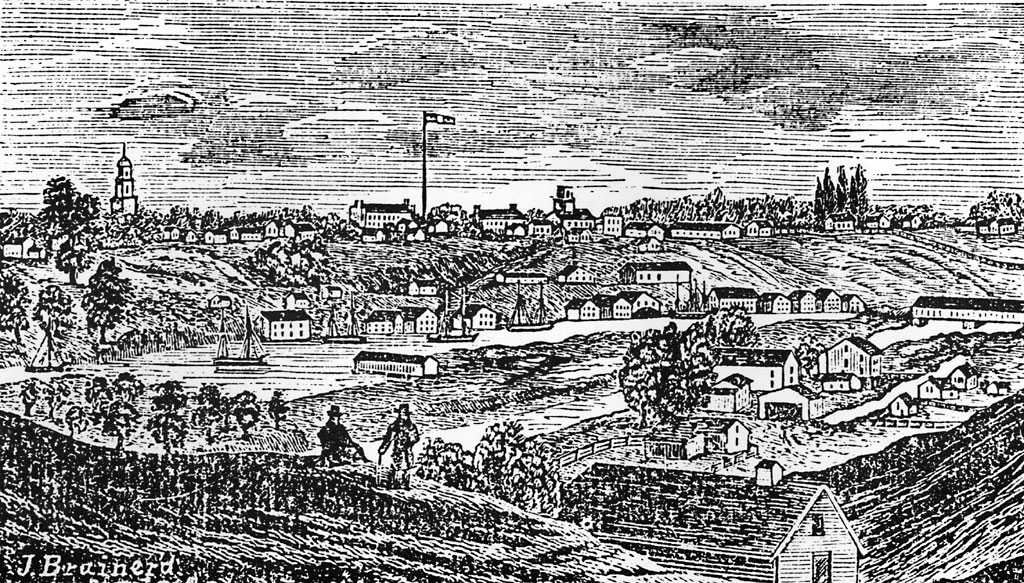
Samuel’s hometown, Milan, Ohio (1846)

Transcription

Caddo Parish, Louisiana
January 11, 1839

Dear Parents,

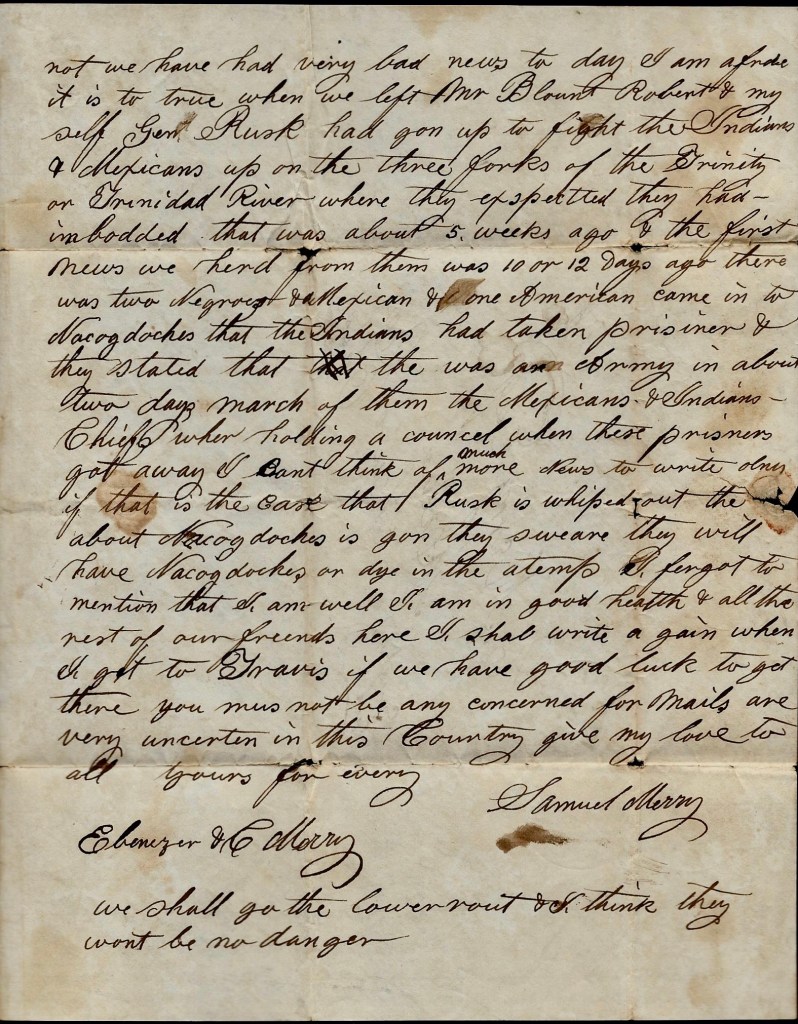
It is little more than a month since I wrote home. That was at this place. We heard such bad news about the Indians we left our wagon here at Old Mr. Blount’s and one horse as we traded horses, as I mentioned in my last letter, and Robert & myself took the two gray horses and rode them into Texas. We stopped to Nacogdoches at Doct. [James Harper] Starr’s 1—a brother of Hiram Starr that went to the Seminary in Milan last winter with R. O. Pier. He invited us to stay with him all night. We accepted of the invitation. We was treated very kindly & we got information of him for the rest of our rout. We had a first rate time in getting there and you must guess at the times we had when we arrived. We stayed there long enough to keep Christmas with them. Then J. B. P[ier] & myself started for our wagons.

We arrived here last Saturday. I had some business up to Cross Lake with our old friend McAlister about 25 miles from here & from there I went to Shreveport. I had some cash to collect from our horse trade & I had the pleasure of staying with our Mr. Poulice—that youngster who kept the Eagle Tavern in Milan. He is at that business in Shreveport. He sent his compliments to you all.

Tomorrow morning we calculate to start again for Travis. I don’t know whether we shall get through or not. We have had very bad news today. I am afraid it is too true. When we left Mr. Blount’s—Robert & myself, Gen. [Thomas Jefferson] Rusk 2 had gone up to fight the Indians & Mexicans up on the three forks of the Trinity or Trinidad River where they expected they had imbedded. That was about 5 weeks ago & the first news we heard from them was 10 or 12 days ago. There was two Negroes & a Mexican & one American came in to Nacogdoches that the Indians had taken prisoner & they stated that there was an Army [with]in about two days march of them. The Mexicans & Indian Chiefs were holding a council when these prisoners got away. I can’t think of much more news to write—only if that is the case, that Rusk is wiped out [and] the [area] about Nacogdoches is gone. They swear they will have Nacogdoches or die in the attempt.

I forgot to mention that I am in good health and all the rest of the friends here. I shall write again when I get to Travis if we have good luck to get there. You must not be any concerned for mails are very uncertain in this country. Give my love to all. Yours for ever, — Samuel Merry

[to] Ebenezer & C. Merry

We shall go the lower rout & I think there won’t be no danger.

[another hand]

James Bradford Pier, ca. 1875

Caddo Parish
January 12th 1838 [1839]

Dear Parents & friends,

After so long a time we had the pleasure of seeing Brother Samuel & Robert at my house in [Travis] Texas. We was happy to hear of your good health & doing well & further our pleasure at seeing our long expected friends. The boys Robert & Samuel got this far with their wagon & heard such bad news concerning the Indians, they left the wagon here and rode two of the horses to Texas where I live 300 miles from here. Samuel & me came back after the wagon. We calculate to start in the morning for home.

We have just heard that our Texas Army commanded by General Rusk has been cut off by the Indians. If so, we will see the devil. We have 300 miles of Indian country to go through. I merely write a few lines to get Samuel [free postage. I will give you a full detail when I get home, if we are lucky enough to get there.

My love to you all, my friends that I can spare, from my wife & child who God, I hope, will protect. Yours forever, — J. B. Pier

[to] Alexander & Mary McClure

You are remembered by your friends as well as others.

1 James Harper Starr (1809-1890), physician, Republic of Texas treasurer, land agent, banker, and Confederate official, son of James and Persia (Shaw) Starr, was born at New Hartford, Connecticut, on December 18, 1809. The Starr family originally migrated from England in the early seventeenth century. Starr’s immediate family moved to Franklin County, Ohio, in 1815, and the elder Starr died in 1824. At fifteen, J. H. Starr permanently injured his knee. He attended an academy in Worthington, Ohio, taught school near Columbus, taught himself medicine, and in 1830 became a member of the first class of the Reformed Medical Society of the United States of America, located in Worthington. He moved to Georgia in 1832 and practiced medicine at McDonough and later at Pleasant Grove. He and his wife, the former Harriet J. Johnson (daughter of Samuel Johnson), moved to Nacogdoches, Texas, on January 17, 1837, with other Georgians.
2 Thomas Jefferson Rusk (1803-1857) was an early political and military leader of the Republic of Texas, serving as its first Secretary of War as well as a general at the Battle of San Jacinto. He was later a U. S. Politician and served as a Senator from Texas from 1846 until his suicide in 1857.

1840: Henry Owen to Henry Jessop

The New Orleans Fire Department

This letter was written in mid-March 1840 by Henry Owen from New Orleans, Louisiana, who we learn has just lost his inventory in a fire that took place at No. 24 Chartres Street where he had it stored. A newspaper advertisement placed by Henry Owen appearing in The Daily Picayune of Thursday, March 5, 1840—just 8 days before the fire started—indicates that he was an agent selling Joseph Gillott’s Patent Steel Pens. The advertisement states that he had “a large assortment of the well known pens for sale wholesale…at 24 Chartres street, upstairs.”

According to a newspaper article appearing in the New York Daily Express on Monday, 30 March 1840, the fire that “broke out on the night of the 13th inst., [was in] the bookstore and stationery warehouse of D. Felt & Co., No. 24 Chartres street. The flames rapidly extended to other houses on either sides; viz., to Armistead & Spring’s foreign & domestic dry goods store, No. 22, and to L. Chittenden’s importing silk and fancy store, No. 26. Notwithstanding the indefatigable exertions of the firemen, the flames took a northerly direction and rapidly consumed the clothing store of Paul Tulane & Co., No. 23, and the saddlery and harness warehouse of Smith, Cantzon, & Co., No. 30, corner of Chartres and Custom House streets.

It does not appear that Henry operated as an agent selling Gillott’s Patent Steel Pens for more than just a few months in the winter of 1839-40. From newspaper advertisements we learn that he was selling Gillott pens in New York City at 109 Beekman Street in the summer of 1837 and in 1838. He apparently returned to New York City following his loss (albeit insured) at New Orleans. There is a notice of his selling these same pens as the “sole agent” at 91 John Street in New York City in 1847 and even as late as 1864.

Henry wrote the letter to Henry Jessop (1808-1849), the son of William Jessop (1772-1835) and Rebecca Taylor (1770-1859). Henry took over his father’s firm William Jessop & Sons after his father’s death in 1835. The firm produced high quality steel in its Sheffield, England, factory, but shipped to agents in America.

Henry’s connection to the Jessop’s of Sheffield, England, convinces me he was the same Henry Owen who was born in Sheffield, England, on 10 May 1811 who was described as being 5’10” inches tall, with blue eyes and light brown hair, and 53 years old when he applied for a passport in 1864 giving 26 West 25th Street on NYC as his address.

Transcription

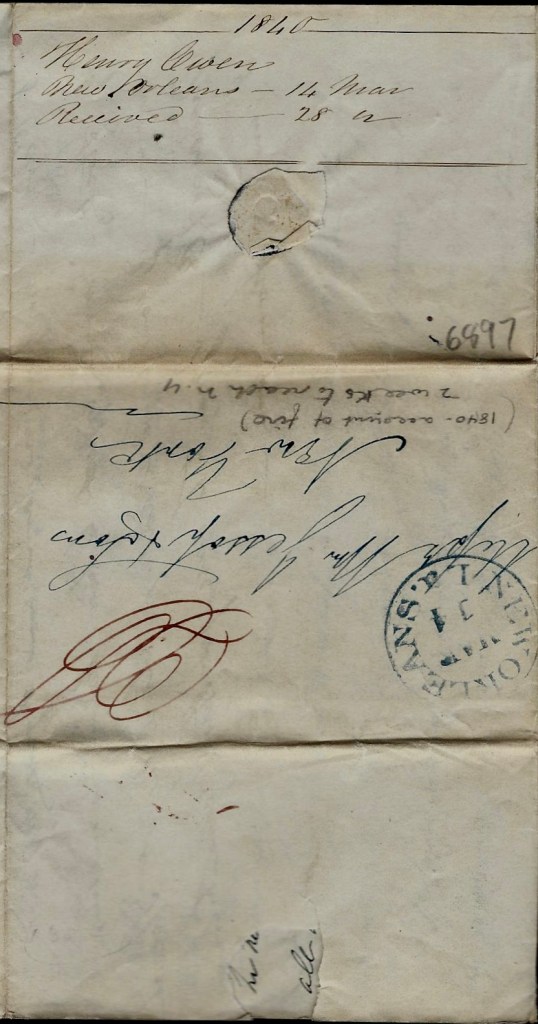
Stampless cover addressed to Messers. William Jessop & Sons, New York

New Orleans [ Louisiana]
3 a.m., March 14, 1840

Mr. Hy. Jessop
My dear sir,

Late as it is, I must write you, as were I to trust to writing early in the morning, I should probably fail. The fact is, I am burnt out, not as a rap saved, but fully insured, my book is burnt, for fortunately, I yesterday added up the sales, and can most unequivocally swear to the amount within a trifle.

Now for particulars. I was engaged in conversation with a stationer, when the cry of “Fire” arose. We ran out of the verandah & learnt the fire was at No. 24 Chartres Street. I hurried to the spot and running into the lower store for the key, asked some gentleman to lend a hand. On opening the side door leading upstairs, I found the top of the stairs on fire. Of course I could not go through them. I got to the street and that moment every iron window shutter was burst open by the force of the flames. The fire burnt the store on the South and Four on fire on the North to Custom House St. Luckily for the neighboring [buildings], the walls fell almost as the fire reaching them. But for this, I should probably have been burned out of house as well, to make sure I did not pack up. Whiting & Stark, narrowly escaped. All I regret the loss of is the prices you sent & the power of attorney of he firm.

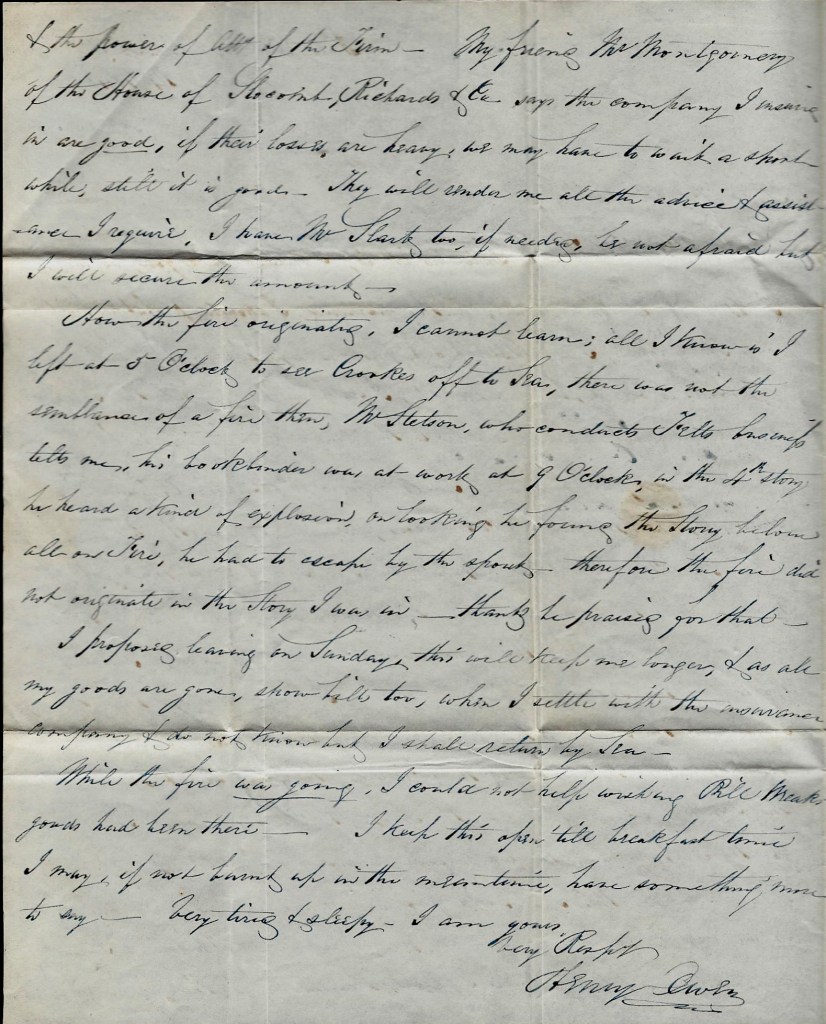
My friend, Mr. Montgomery of the House of Slocomb, Richards & Co., says the company I insured in are good. If their losses are heavy, we may have to wait a short while—still it is good. They will render me all the advice and assistance I require. I have Mr. Stark too, if needed. Be not afraid but I will secure the amount.

How the fire originated, I cannot learn. All I know is I left at 5 o’clock to see Crookes off to sea. There was not the semblance of a fire then. Mr. Stetson who conducts [David] Felt’s [stationery] business tells me his bookbinder was at work at 9 o’clock in the 4th story. He heard a kind of explosion [and] on looking, he found the story below all on fire. He had to escape by the spout. Therefore the fire did not originate in the story I was in—thanks be praised for that.

I proposed leaving on Sunday [but] this will keep me longer. And as all my goods are gone, show bills too, when I settle with the insurance, I do not know but I shall return by sea.

While the fire was going, I could not help wishing Phill Meaks’ [Weak’s?] goods had been there. I keep this open till breakfast time. I may, if not burnt up in the meantime, have something more to say. Very tired and sleepy, I am yours. Very respectfully, — Henry Owen

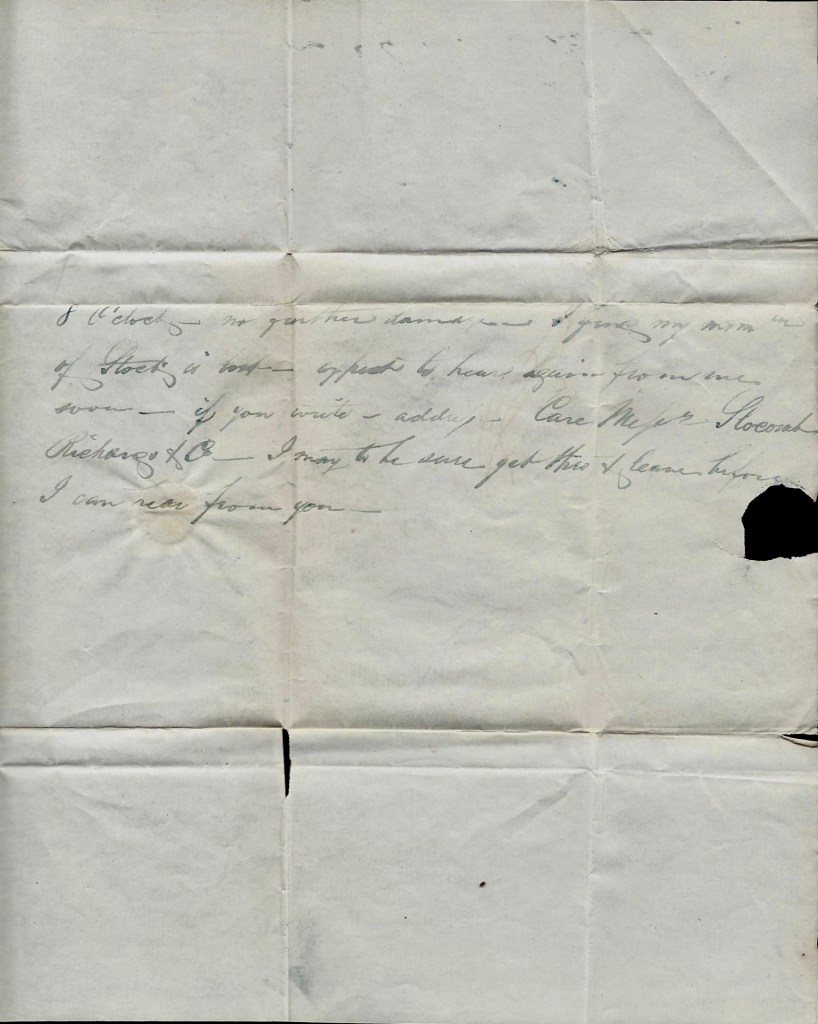
8 o’clock. No further damages. I find my [ ] of stock is lost. Expect to hear again from me soon. If you write. Address Care of Messer Slocomb, Richards, & Co. I may to be sure get this and leave before I can hear from you.

1856: William Monroe Pinckard to Thomas Butler Pinckard

This letter was written by William (“Will”) Monroe Pinckard (1837-18xx), the son of Dr. Thomas Butler Pinckard (1793-1860) and his first wife, Catherine Lawrence Vance (1804-1839) of Lexington, Kentucky.

During the Civil War, Will volunteered as a cannoneer in the Washington Artillery of New Orleans. His muster records indicate that he was present for all of the battles of the unit in 1864 and 1865. He mustered out of the service in April 1865.

Will’s letter includes a description of his efforts to sell a slave named Bob in 1856.

Transcription

Addressed to Dr. T. B. Pinckard, Lexington, Kentucky

New Orleans [Louisiana]
March 10th 1856

My Dear Father,

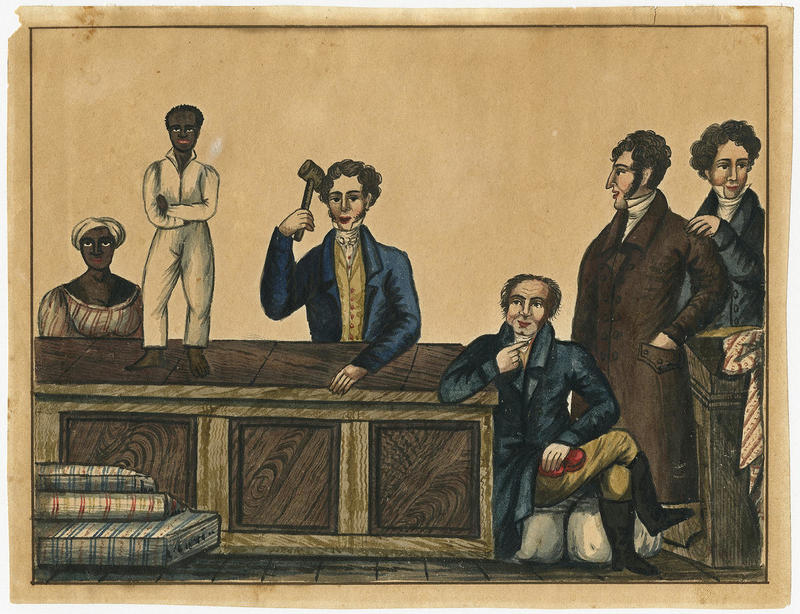
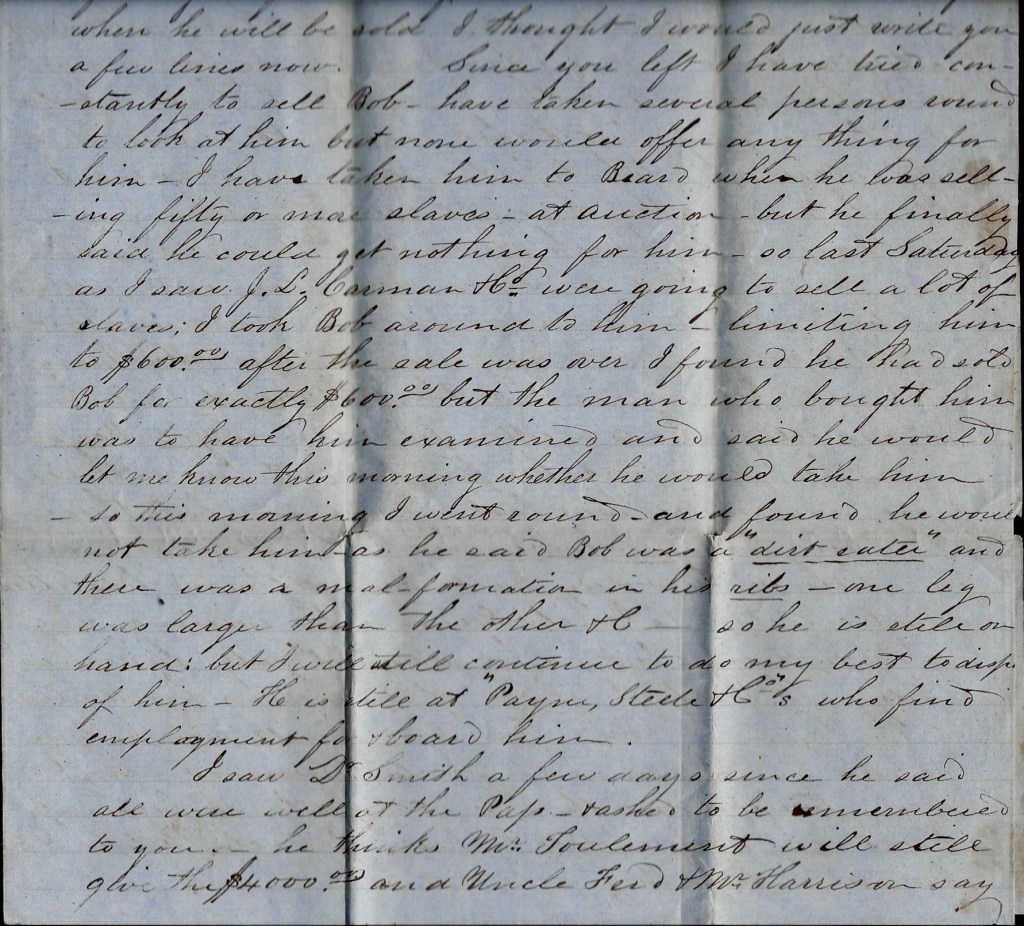
I received your affectionate letter a few days since and did not intend to answer it until I could inform you of the sale of Bob. But it is rather doubtful when he will be sold. I thought I would just write you a few lines now. Since you left, I have tried constantly to sell Bob, have taken several persons round to look at him, but none would offer anything for him. I have taken him to [Joseph A.] Beard when he was selling fifty or more slaves at auction, but he finally said he could get nothing for him. So last Saturday as I saw L. Carman & Co. was going to sell a lot of slaves, I took Bob around to him, limiting him to $600.

After the sale was over, I found he had sold Bob for exactly $600 but the man who bought him was to have him examined and said he would let me know this morning whether he would take him. So this morning I went round and found he would not take him as he said Bob was a “dirt eater” 1 and there was a malformation in his ribs—one leg was larger than the other, &c. So he is still on hand but I will continue to do my best to dispose of him. He is still at “Payne, Steele & Co.” who find employment for & board him.

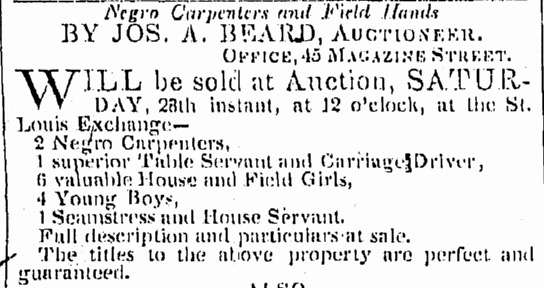
Joseph A. Beard, Auctioneer, kept his office at 45 Magazine Street in New Orleans

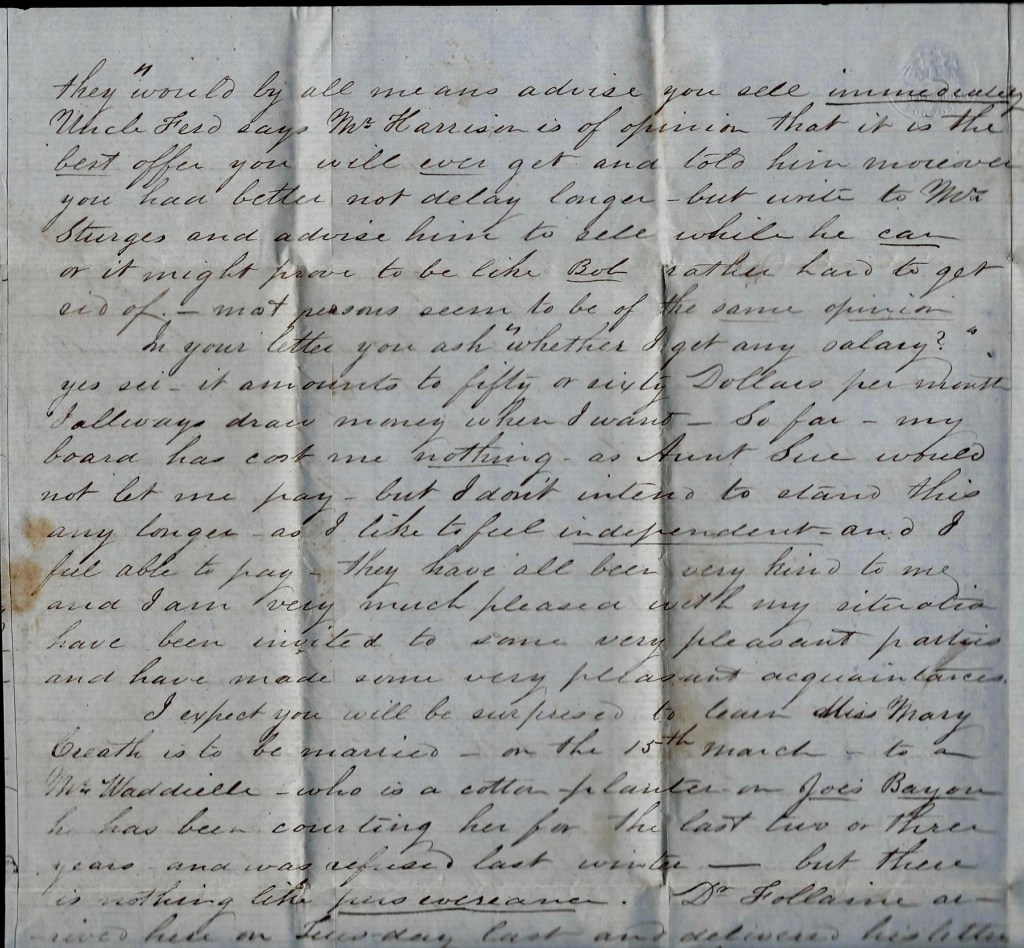
I saw Dr. Smith a few days ago since. He said all were well at the “Pass” [Pass Christian, Harrison county, Miss.], & asked to be remembered to you. He thinks Mr. Toulement will still give the $4,000 and Uncle Ferd & Mr. Harrison say they would by all means advise you to sell immediately. Uncle Ferd says Mr. Harrison is of opinion that it is the best offer you will ever get and told him moreover you had better not delay longer but write to Mr. Sturges and advise him to sell while he can or it might prove to be like Bob—rather hard to get rid of. Most persons seem to be of the same opinion.

In your letter you ask “whether I get any salary?” Yes sir, it amounts to fifty or sixty dollars per month. I always draw money when I want. So far my board has cost me nothing as Aunt Sue would not let me pay. But I don’t intend to stand this any longer as I like to feel independent and I feel able to pay. They have all been very kind to me and I am very much pleased with my situation. I have been invited to some very pleasant parties and have made some very pleasant acquaintances.

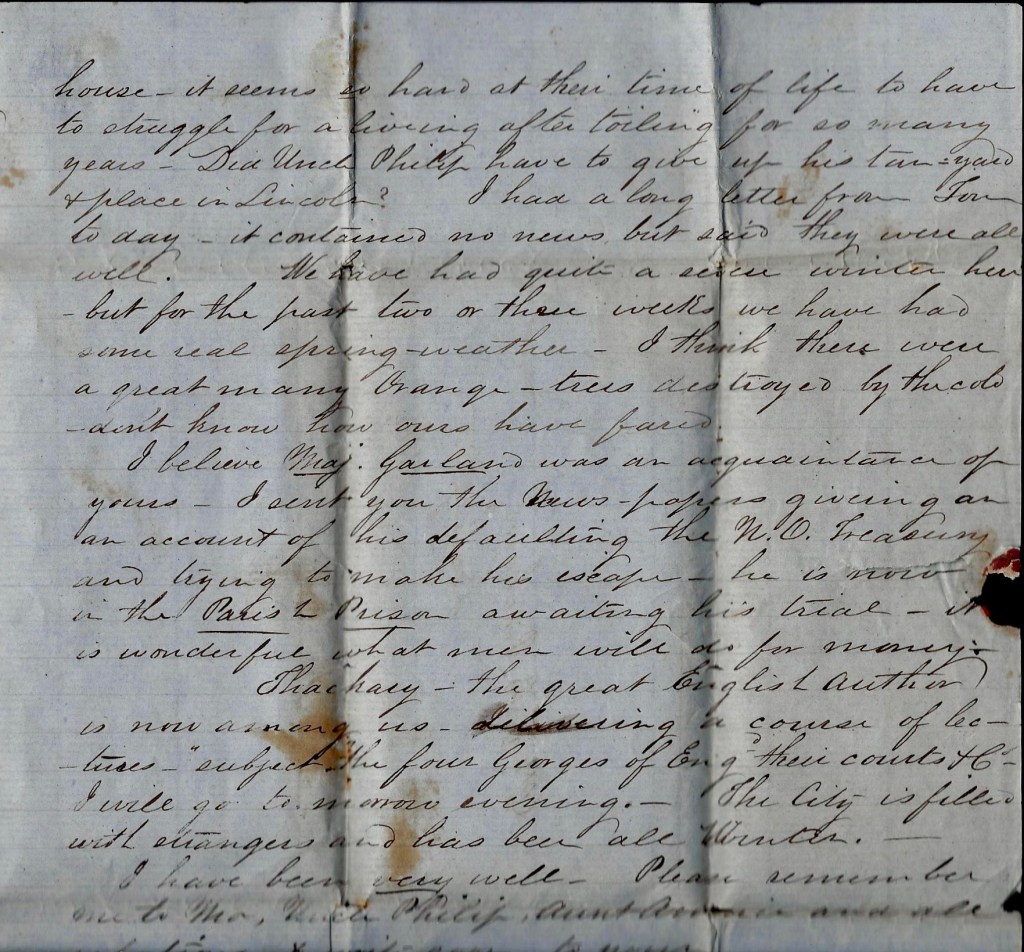
I expect you will be surprised to learn Miss Mary Creath is to be married on the 15th of March to a Mr. Wassielle who is a cotton planter on Joe’s Bayou. He has been courting her for the last two or three years and was refused last winter. But there is nothing like perseverance. Dr. Follaine arrived here on Tuesday last and delivered his letter of introduction to Uncle Ferd. In the evening we called on him but he was out. Only saw his lady. He thinks I believe of spending his summer at the pass. Uncle Ferd is very well and as busy as can be. He comes to Uncle Munroe’s about once or twice a month—is doing a large business. I was very sorry indeed to hear of Uncle Philip’s ill fortune. Hope they will not have to give up their house. It seems so hard at this time of life to have to struggle for a living after toiling for so many years. Did Uncle Philip have to give up his tan yard & place in Lincoln?

I have a long letter from Tom today. It contained no news but said they were all well. We have quite a severe winter here but for the past two or three weeks we have had some real spring weather. I think there were a great many orange trees destroyed by the cold. Don’t know how ours have fared.

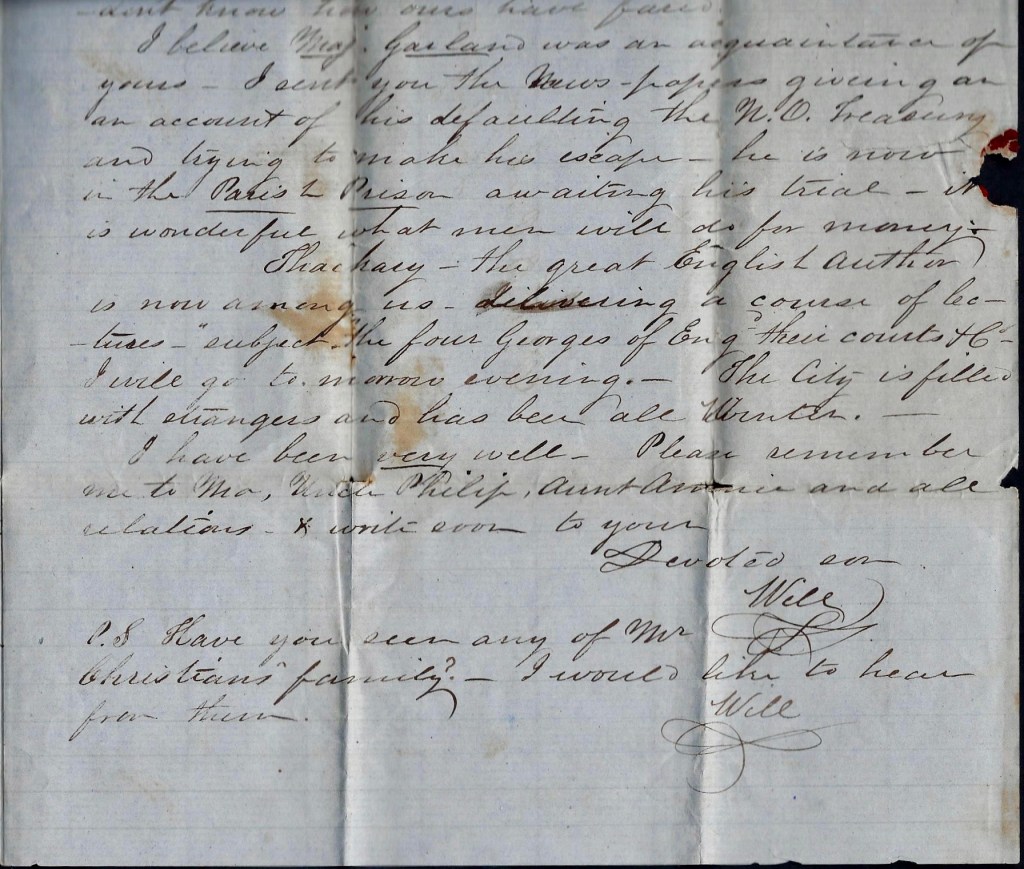
I believe Maj. Garland was an acquaintance of yours. I sent you the newspapers giving an account of his defaulting the New Orleans Treasury and trying to make his escape. He is now in the Paris Prison awaiting his trial. It is wonderful what men will do for money.

[William Makepeace] Thackeray—the great English author—is now among us delivering a course of lectures. Subject—the “four Georges of England, their courts, &c.” I will go tomorrow evening. The city is full with strangers and has been all winter. 2

I have been very well. Please remember me to Mam Uncle Philip, Aunt Armenia and all relations & write soon to your devoted son, — Will

P. S. Have you seen any of Mr. Christian’s family? I would like to hear from them.


1 “Dirt eating” or “geophagia” was a practice brought to the US by African slaves. I’ll refer readers to a sounder head than mine (see Geophagia) but suffice it to say that many slave owners avoided purchasing slaves known to eat dirt because they believed it made them more vulnerable to disease.

2 Thackeray’s lectures across the south from Savannah to New Orleans were not particularly lucrative. “I wish I had gone to Havana instead of peddling about the petty town in Georgia &c. where I did little more than pay my expenses,” he wrote a friend. [From Augusta to Columbus: Thackeray’s Experiences in Georgia, 1853 ad 1856, by Jane Lightcap Brown.]

1859: Horace Moore Polk to John Houston Bills

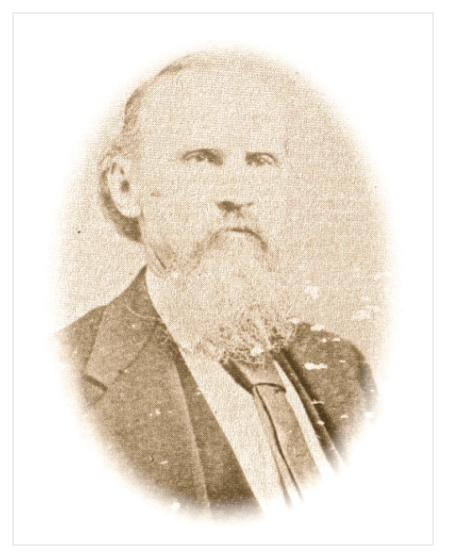
Horace M. Polk in later years

This letter was written by Horace Moore Polk (1819-1883), a native of South Carolina, the son of Thomas Independence Polk (1786-1861) and Sarah Isham Moore (1786-1848). Horace was married to Ophelia J. Bills (1826-1885) and was the father of at least seven children by the time this letter was written in 1859. Ophelia was the daughter of John Houston Bills (1800-1871)—-to whom Horace addressed this letter.

Horace served in the Louisiana legislature from 1856 to 1859. In the 1850s and 1860s, Moore owned a plantation in Morehouse Parish, Louisiana, and he lived in Bolivar, Tennessee, from the late 1860s until his death on September 14, 1883. Many of Polk’s letters can be fund in the Clements Library at the University of Michigan. Some of these letters pertain to state and national political issues such as a Louisiana legislature elections committee and related threats from “thugs” in New Orleans (January 31, 1856); the possible presidential nomination of Stephen Douglas and Polk’s preference for Douglas over a “black Republican” (March 7, 1859); and the rise of African Americans in Reconstruction-era Louisiana politics and of Radical Republicans in the U.S. Congress (February 20, 1868). Polk also provided news of the health of his wife and children, commented on plantation crops such as cotton and corn, and mentioned the effects of delayed telegraph news on war excitement in Bastrop (October 11, 1861). [see Polk Family Letters]

See also 1861: Horace Moore Polk to John Houston Bills published on Spared & Shared 9 in 2015.

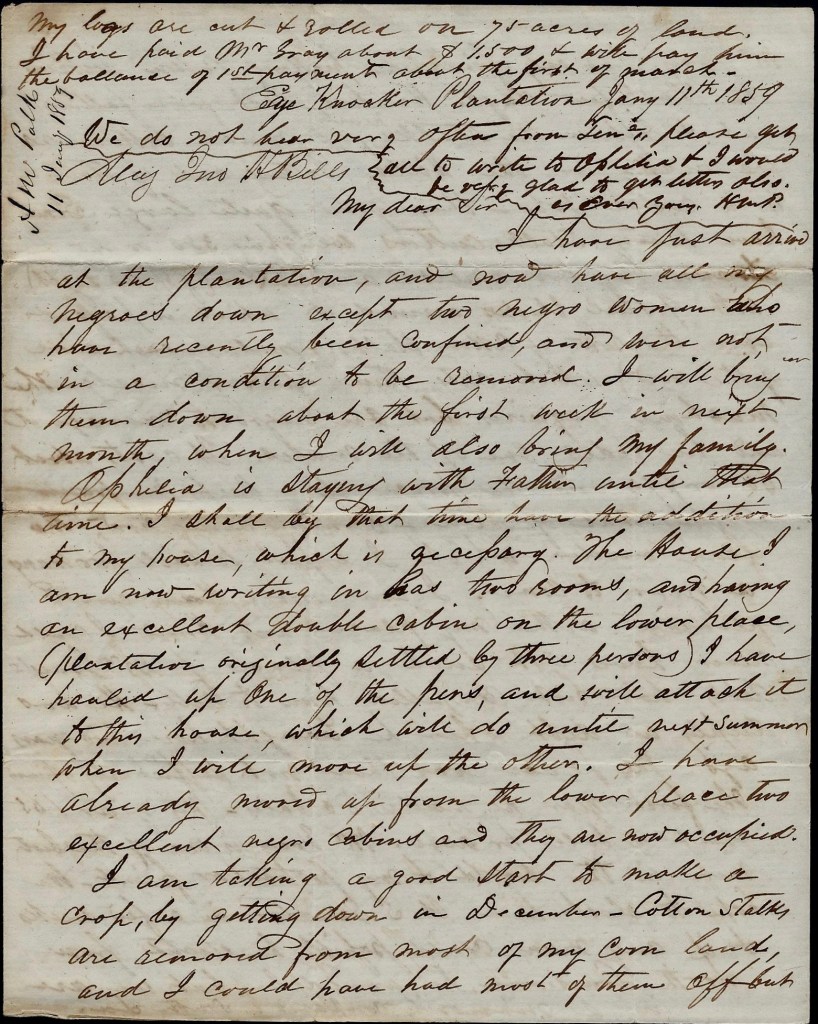
Transcription

Eye Knocker Plantation
January 11, 1859

Maj. Jno. H. Bills
My dear Sir,

I have just arrived at the plantation and now have all my negroes down except two negro women who have recently been confined and were not in a condition to be removed. I will bring them down about the first week in next month when I will bring my family. Ophelia is staying with Father until that time. I shall by that time have the addition to my house, which is necessary. The house I am now writing in has two rooms and having an excellent double cabin on the lower place (plantation originally settled by three persons), I have hauled up one of the pens and will attach it to this house which will do until next summer when I will move up the other. I have already moved up from the lower place two excellent negro cabins and they are now occupied.

I am taking a good start to make a crop, by getting down in December. Cotton stalks are removed from most of my corn land and I could have had most of them off but Mr. Gray has only finished picking cotton within the last few days. He has lost from falling out & left in the stalks nearly as much cotton as we make in the hills. Getting rid of stalks is a rough job. They grow quite large. Some have heavy stalk cutters weighing 350 or 400 lbs. drawn by two mules—a cylinder 9if spelled right) with 9 steel blades around it which is passed over the row of cotton stalks (1 mule on each side of the row) which cuts them up very nicely. The machine requires but one negro to manage it and he rides one of the mules. It costs about 60 or $70 and the price alone keeps me from getting one of them. Economy being now the flag under which I expect to sail for many a year to come.

I am more than ever pleased with my place and know that I could never have got such a place if Mr. Gray’s debts had not compelled him to sell. He was deeply in debt when he bought here two years ago. The place was then not sufficiently opened. The first year he made 80 bales. This year 165—about a bale per acre. Mr. Gray is one of the best men in the world & my particular friend. we hope to elect him U. S. Senator in a few weeks & if any man could possibly be elected from North Louisiana, he would be. But we are in a minority compared to South Louisiana.

I expect to go down on his account to remain until after the election which take place (by our Constitution, the 2nd Monday after the meeting of the legislature & then return home and see my ground properly prepared for corn, stay 3 or 4 weeks, and return the last week of the session, and close out my political career. This I expect to do without a sigh even though my chances for preferment for high office from my position and unmerited goodwill of many friends throughout the State would be almost certain to advance me long beyond my deserts.

My name has been connected with two of the highest offices in the gift of the people in the State, but I have most peremptorily refused to be considered in any way a candidate for office. My first and last duties are to my family and every energy must now be bent to pay for a place which will be a small fortune when paid for to my children. I feel sensibly the force of your remarks in regard to my future prospects depending so much upon the price of cotton. I had weighed the subject as well as I was able, knew you and others of my family were anxious for me to leave the hills—felt that I was there breaking slowly through surely—which would soon be accelerated as my children grew larger, and feeling confident that if cotton kept up (and all the chances are favorable to it for years to come) and sickness did not injure me, I had found a place where I could redeem the past and get to making money. I was glad to meet the chance I did for a No. 1 place. I have no fears it will ever command as little money as I gave for it.

Lands scarcely worth half the money are selling for as much and still they come and want to buy on Bartholomew. I have been told by an intelligent gentleman that my lands are worth nearer $50 per acre than what I gave for them and I have yet to meet anyone who thinks Mr. Gray got as much as they are worth. Old Mr. Smith, a stranger to me, says my track is nearer to Maury City, Middle Tennessee lands than any he has seen since he left there 40 years ago. I shall plant 200 acres in cotton & shall expect with ordinary luck to make 200 bales id I can pick them out. We can safely calculate on 40 bushels of corn per acre. C. B. Polk made corn enough for 50 hands and 25 mules on 100 acres last year.

I wish Marshall would come and look at the place [ad]joining me. It is small—240 acres—but can be added to. 100 in cultivation about the same old deadening and cut down. Could make a bale an acre. The man who owns it has 3 negroes and makes last year 40 bales cotton. 15 of it yet to pick. I am under many obligations for your kindness in offering to assist me in entering back lands but I have through Mr. Gray already purchased all that is desirable (he having discovered another area about to enter them). I shall enter only 120 acres more.

Write me at Baton Rouge. Love to all. Am very truly yours, — H. M. Polk

My logs are cut and rolled on 75 acres of land. I have paid Mr. Gray about $1,500 & will pay him the balance of 1st payments about the first of March. we do not hear very often from Tennessee. Please get all to write to Ophelia & I would be very glad to get letters also. As ever yours, — H. M. P.


1839: Lyman Adams to Austin Adams

How Lyman might have looked in 1839

This letter was written by Lyman Adams (1815-1859), the son of Dr. Charles Adams and Sarah McAllister (17901868) of Oakham, Massachusetts. The letter was datelined from New Orleans in late December 1839, less than two weeks after his arrival in the Crescent City and captures his first impressions of the city and its inhabitants.

From the content of the letter we can deduce that he traveled to New Orleans to enter into employment with the firm Layton & Co. I cannot find that firm listed in New Orleans; it may have been a firm based in New England and Lyman was merely their New Orleans agent. Later he would establish his own business, partnering with Frederick Brand in the firm, Brand, Adams & Co., their ship chandlery and hardware store located at 53 Old Levee and No. 16 and 18 Conti Street. The partnership was dissolved in 1852 and Lyman died at the age of 1843 on 19 March 1849 in New Orleans but not before he married Sarah Brown and had a child named Urgust Lee Adams.

Lyman wrote the letter to his younger brother, Austin Adams (b. 1811).

New Orleans in the mid 1840s.

Transcription

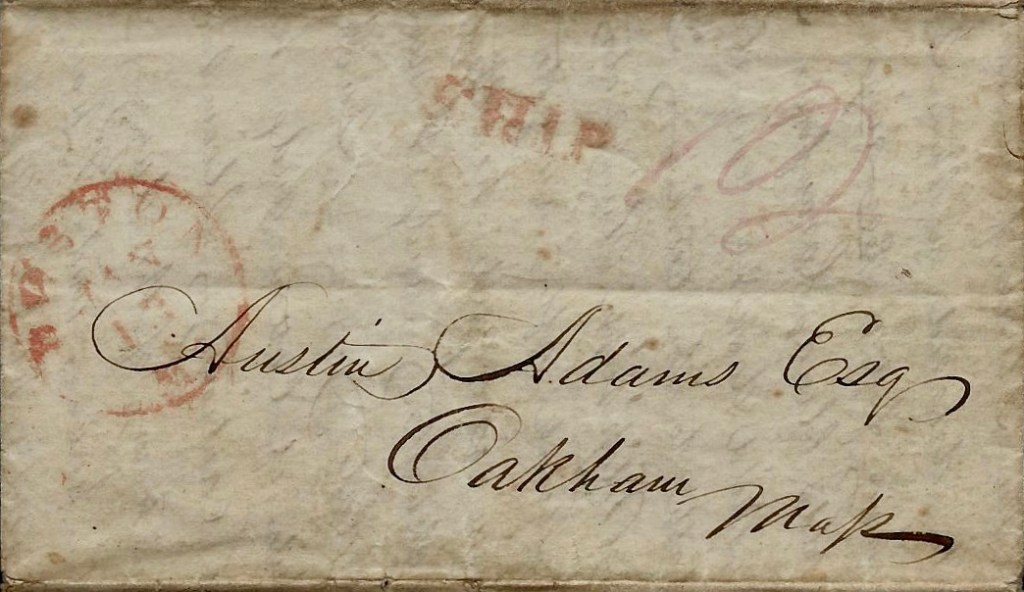
Addressed to Austin Adams, Esq., Oakham, Massachusetts

New Orleans [Louisiana]
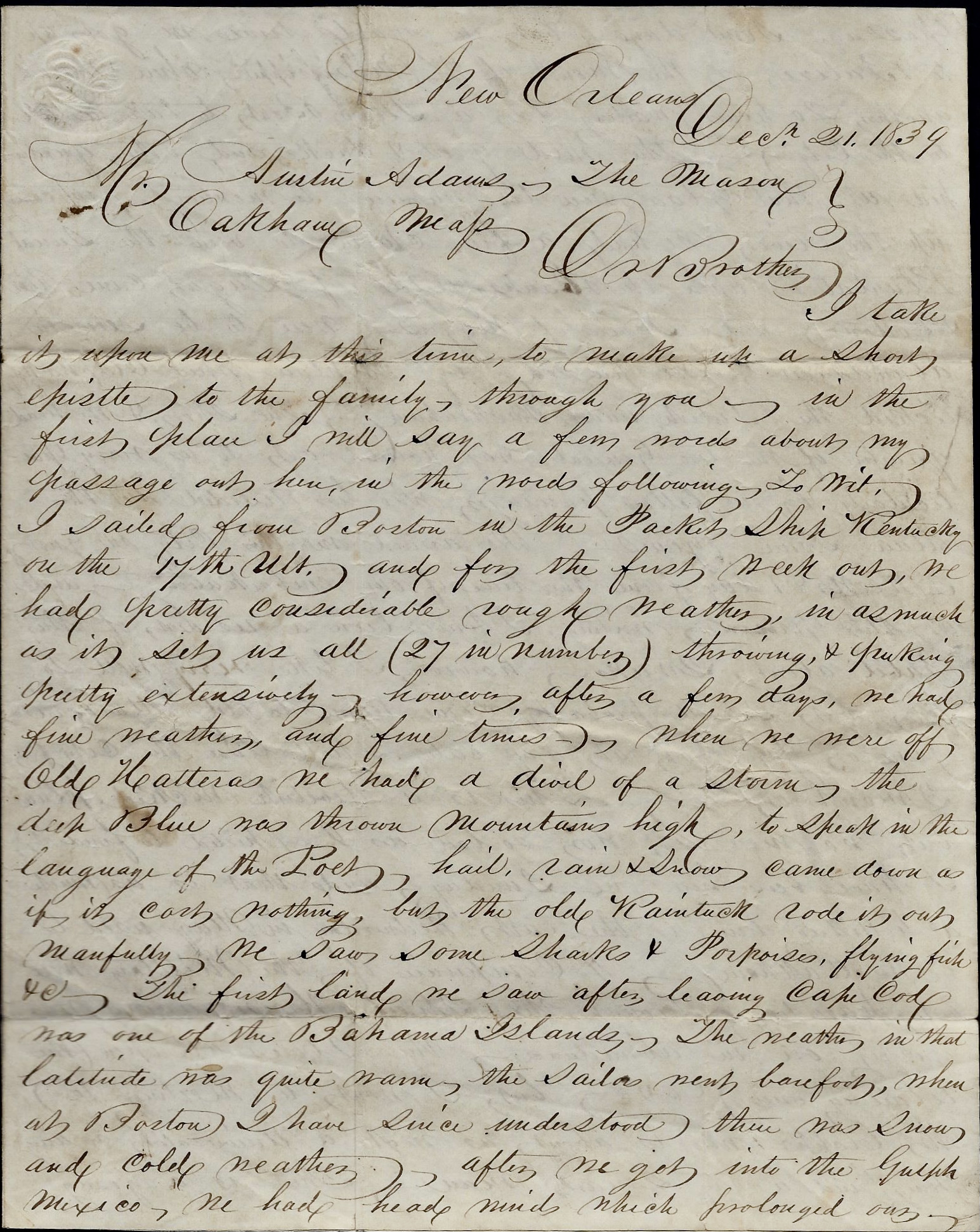
December 21, 1839

Mr. Austin Adams, the Mason
Oakham, Massachusetts

Dear Brother,

I take it upon me at this time to make up a short epistle to the family through you. In the first place I will say a few words about my passage out here, in the words following, to wit: I sailed from Boston in the Packet Ship Kentucky on the 17th ult. and for the final week out, we had pretty considerable rough weather, inasmuch as it set us all (27 in number) throwing & puking pretty extensively. However, after a few days, we had fine weather and fine times. When we were off Old Hatteras, we had a devil of a storm. The deep blue was thrown mountains high, to speak in the language of the poet, hail, rain & snow came down as if it cost nothing, but the Old Kaintuck rode it out manfully. We saw some sharks & porpoises, flying fish, &c. The first land we saw after leaving Cape Cod was one of the Bahama Islands. The weather in that latitude was quite warm. The sailors went barefoot, When at Boston I have since understood there was snow and cold weather.

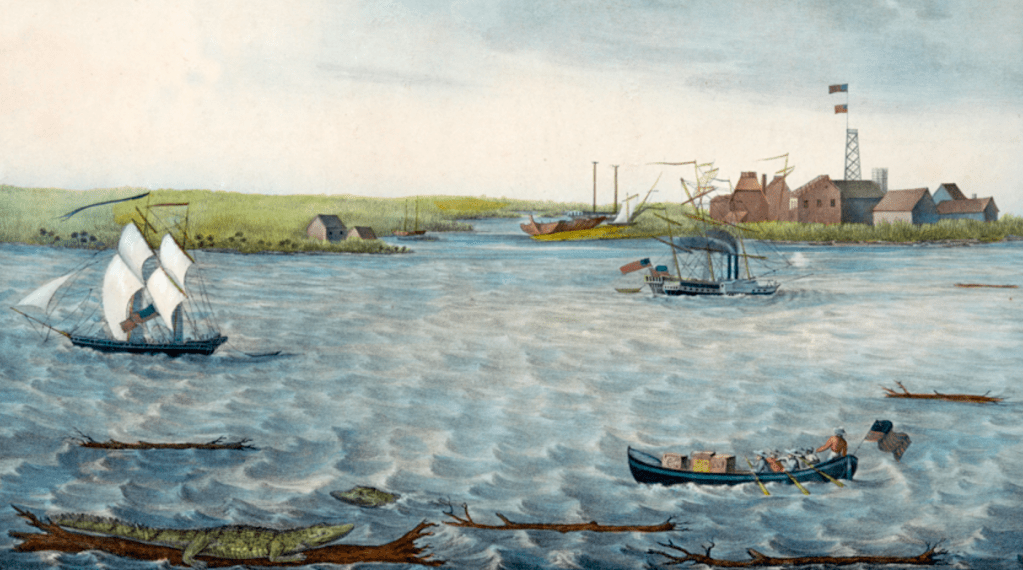
After we got into the Gulf of Mexico, we had head winds which prolonged our passage some days but in good time we got to [La] Balize or the mouth of the Mississippi where we laid another 20 hours waiting for a steamboat to take us up to the city. The wild geese and ducks and other quadrupeds at that place were too numerous to mention. In coming up the river, we had a fine chance to view the several plantations upon the banks, fields of sugar cane, rice and cotton, and scores of niggers were to be seen in abundance. We passed by the place where Old Hickory licked the British under Packenham. The spot and the headquarters of the two generals was pointed out to us very particularly by a fellow passenger who has resided in this place some years.

La Belize was a French fort and settlement near the mouth of the Mississippi. This painting is circa 1828.

We arrived in the city in just 3 weeks & 1 say from the time of our embarkation and at this present writing, I have been a resident of this Babel about 2 weeks. However, I like it very well so far, but shall probably come home to Old Mass. in June or July or at any rate shall leave the city for 3 months or so.

Parson Theodore Clapp

This is a devilish, wicked place but no more so nor so bad as I expected to find it. I have been here one Sunday and that is as much a holiday here as the last Wednesday in May used to be in Oakham. Four companies of the military were out parading through the streets, horse racing was going on in abundance, the stores [were] all open (the retailing ones), &c. &c. but I went to meeting to Mr. [Theodore] Clapp’s 1 who is about as nigh a Universalist as anything, and a very smart man. There is a young man here by the name of Battles who I used to board and room with in Boston and we are together here which makes things very pleasant. There are lots of other Boston people here that I am acquainted with.

Secondly, the inhabitants of this place are made up of people of all Nations, and from all quarters of God’s earth, and of all colours from White to jet black, speaking all languages & tongues, dozens of Indians are daily ramifying the streets from the north with game and skins for sale, dressed in the style of blankets & leggins, thin noses hung full of ear-rings, and packs on their backs as big as old blind Crawford’s Show Box. We have lots of venison, wild ducks &c. every day where I board which are very comfortable to the teeth. The best water there is here is the Mississippi River water which is the best in the world to drink after one gets used to it. The city at this time is quite healthy. The weather like June in Massachusetts and I never was better than at the present date.

Such a bustle of steamboats, piles of cotton and herds of niggers as there is here is a caution. Steamboats are arriving or departing at every hour of the day.

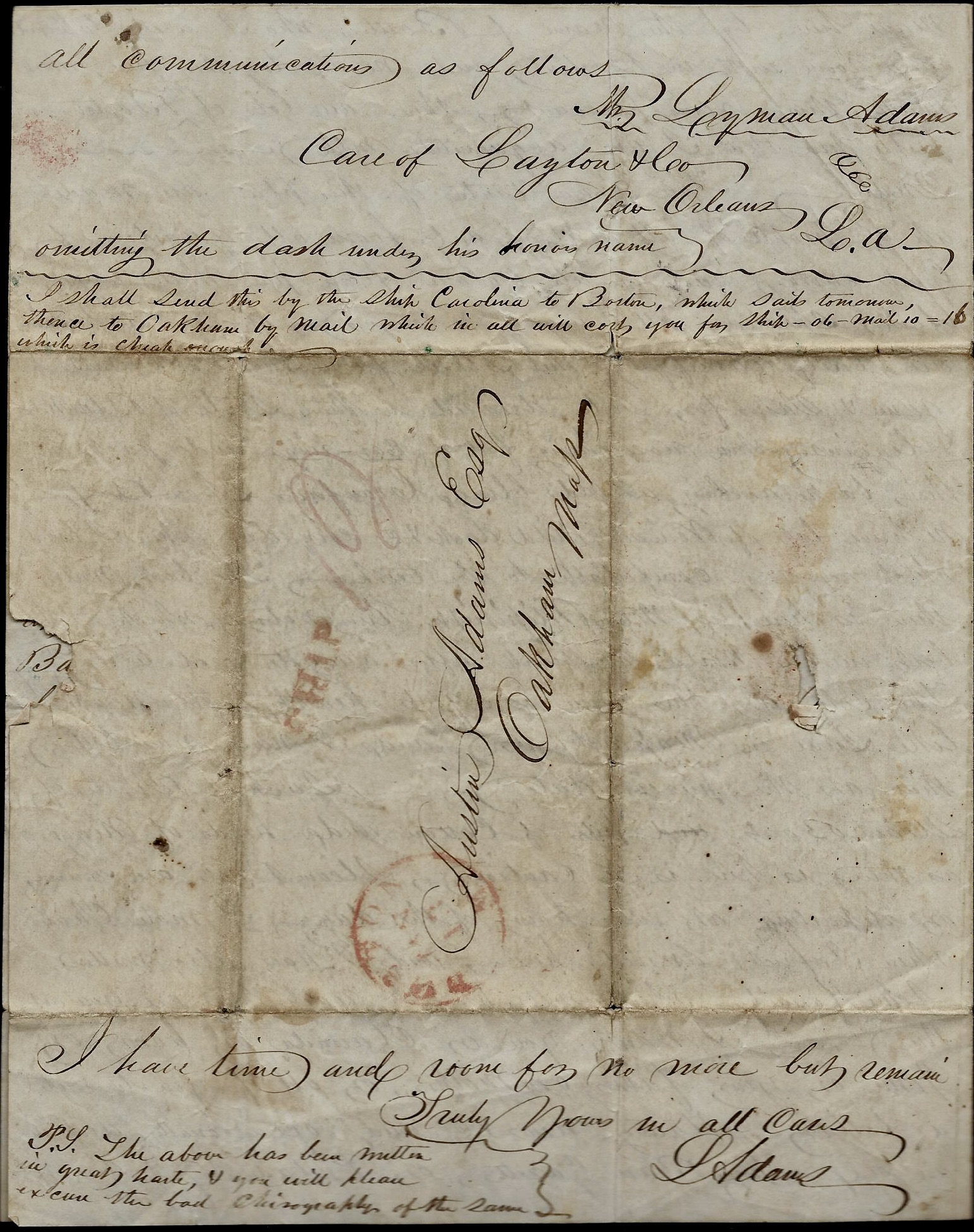
I wrote Charles when I first arrived here and I have also written John Howard which will probably reach them ere you get this. I want you or Clarinda or Horr or John or your father or mother or all of you to write a feller, stating news, &c., and occasionally drop in and Old Spy, Barre Gazette, or Philadelph & direct all communications as follows.

Mr. Lyman Adams, Care of Layton & Co., New Orleans, La.

Omitting the dash line under his honor’s name.

I shall send this by the ship Carolina to Boston, which sails tomorrow, thence to Oakham by mail which is all will cost you for ship 06, mail 10 = 16 which is cheap enough.

I have time and rom for no more but remain truly yours in all cases, — L. Adams

P. S. The above has been written in great haste and you will please excuse the bad chirography of the same.


1 “Unitarianism in antebellum New Orleans was among the most distinctive religious forces in the Old South. The church was founded and shepherded by parson Theodore Clapp, a New England native and former Presbyterian divine who continually challenged the sacred dictums of Christian orthodoxy. As New Orlean’s celebrated iconoclast, Clapp voiced strong opposition to revivalism, as well as theological concepts involving the Trinity, everlasting punishment, and predestination. His only concession to an overarching Southern culture was his quixotic defense of slavery.” [Parson Clapp of new Orleans: Antebellum Social Critic, Religious Radical, and Member of the Establishment, by Timothy F. Reilly]