I could not find an image of Ira but here is a tintype of John L. Cleveland of Co. B, 3rd Vermont Infantry
The following letters were written by Ira E. Morse (1837-1862) of Co. D, 3rd Vermont Infantry. Ira enlisted on 1 May 1861 and was mustered into the regiment on 16 July 1861. He received a gunshot wound on 16 April 1862 at Lee’s Mills, Virginia, but recovered only to die of disease on 29 November 1862. It appears that Ira, weakened from chronic diarrhea, had fallen out of the ranks while on a march and that a Boonsboro, Maryland, resident named Cornelius Wertz found Ira by a tree in the woods near his home and took him in and cared for him until he died. He was buried “in front of the church in Boonsboro where several Union soldiers had been buried.” David Trull claimed to have received Ira’s diary and bible from Mr. Wertz and delivered them to Ira’s parents.
Ira was the son of David Morse (b. 1807) of Charleston, Vermont, who was said to be physically unable to support his family financially. David and his wife Fanny’s net worth in 1860 was only $400 and they had come to rely on the money that Ira sent home to his family. By the time of his death, Ira had sent home $200 between his wages and the bounty he received for enlisting.
While researching Ira, I discovered in the “Widow’s Pension” claim filed by Ira’s mother following his death, that two of Ira’s letters written during the Peninsula Campaign in the summer of 1862 had been sent to the Pension Office as proof of Ira’s having sent money home to his parents for their use. I have transcribed these and added them with the 3rd Letter describing the Battle of Antietam.
Letter 1
Dixie Land June 13, 1862 Camp at Fair Oak, Va.
Dear Parents,
I received your letter last night & was very glad to hear from you & now I seat myself in my little tent to write a few lines to let you know that we (Port & I) are well and hope that these few lines will find you the same.
We have crossed the Chickamoniny Creek at Fair Oaks on the grapevine bridge. We are now encamped on a hill on the south side of the creek. Our regiment is detailed out to build a bridge across the crick. The rest of the [Vermont] Brigade is 1.5 miles ahead. There is heavy cannonading up there this morning. Our picket is so close to the Rebs that they have to post themselves in the night & lay flat on their bellies until the next night. Our men are a building forts all along the lines. We shall have Richmond before long.
This is a very pretty place here. It is all oak on the hills and pine in the swamps. The niggers is as thick as the hair on a dog. One old nigger is 106 years old. Little niggers from 10 to twelve will carry a pail of water on their heads and not touch a hand to it.
I am sorry to hear that Dan ain’t so well. I don’t think he had ought to work at all. You may take any of my money that you need and use it and get Dan some clothes too if he needs them. I don’t want any of my folks to suffer as long as I can work. We probably shall be paid off again before long & then I shall send home some more.
I see in the papers that the Mississippi River is open now.There was a great fight here the last day of May & the 1st of June. The Rebels got licked. The loss was great on both sides. The Vermont boys weren’t in it but we could hear it. There is nothing more to write—only direct as before. So goodbye from your son, — I. E. Morse
I wrote this in a hurry.
Letter 2
Camp near Berkeley’s Landing, Va. July 6th 1862
Dear Parents,
I received your letter the third. I was very glad to hear from you. i now take this opportunity to write you a few lines to let you know that Port and I are well and I hope that these few lines will find you the same & to let you know where we be & how we come here. Probably you have heard of our skedaddle before this time and are anxious to hear from us.
Well, first of all I will say that them postage stamps was all right.
Thursday the 26th of June, a battle was fought on our right & we got news that our boys was a licking them. Cheers after cheers was given all along the lines. We was paid off the same day & Port & I sent home our money the next day by the pay master…
Well. Friday the 27th we was all under arms & marched up onto the hill into some rifle [pits] by a little fort that we had built to support a battery & the pickets. We had not been there long before the artillery on both sides began to fight. It was the hottest place that I ever see. I see that some of our batteries throwed shell over across the crick to the Dr. Gaines’ farm & I could see rebel troops & further around to the right I could hear fighting & hard fighting too.
And then I began to think that there was something up. Our artillery silenced the rebel guns. In the afternoon we went down & tore up a bridge that some of the nigs built across the creek & there I had a fair view of a battle. Our men drove the rebs & then the rebs drove our men & they kept up just so all day and then our men give up the battle & come back across the creek. We stood to the bridge that night to keep they rebels from coming across. The next day—that was Saturday—our troops wrecked the rebels all out and took a lot of prisoners. We was completely cut off twice but forces come up in the rear from the James river and drove the rebels back. The 2nd day we arrived at this landing. It rained all day hard & the mud was half a knee deep & we all got wet as rats & our legs was all mud up to our bodies.
The next day the rebels got into a hill and began to shell some of our camps. The cavalry went up and drove them off & took their guns & then we loved to the place that we are now. We lost everything on this retreat almost. We are a building a fort here. There is not much danger here. Our front is only 5 miles long. The gunboats is right in sight of some of our camps. They protect our flanks. I said that we had no one hurt in our company but one of our boys has not been seen since the Battle of Sunday night at Savage Station. I am a going to send 3 gold dollars in this letter. There is nothing more for me to write. So goodbye. Please write soon. From your son, — I. E. Morse
Direct as before.
Letter 3
Camp near Hagerstown, Maryland October 13, 1862
Dear Brother & Sister,
It is with pleasure that I can have time to write you a few lines to let you know that I am some better than I have been. I had had the diarrhea for two months but I am on the gain now. I shall be all right before long now.
We are to Hagerstown a doing guard duty. You have probably heard of our big fight here so I can’t tell you any news about that. I was sick about this time so I was in the rear but I went all over the battlefields. Our brigade drove them over the Blue Ridge. The 4th regt. was skirmishers & they done a most all the fighting on this ridge. They give it to them Rebs good. They took two guns and drove them all out of sight.
The valleys here is full of all kinds of fruit & corn & wheat. The farms is as pretty as I ever see in old Vermont.
Ira’s account of the battlefield—the stench, the unburied soldiers and animals, & the houses filled with wounded are described in detail in Steven Cowie’s new book, “When Hell Came to Sharpsburg”
The Battle of Sharpsburg was an awful slaughter. Our Brigade lay on their bellies 36 hours under a raking fire of the enemy [guns]. 1 John Stanton was shot through the heart. He was all the one that was hurt in our company. Every house & old barn and shed was full of wounded. The fields was full of dead. We passed across the battlefield en route for this place three days after the fight. It stank awfully then. The dead was not nye all buried. They burnt a lot of them.
We have got a good place to stay now. The citizens bring in a lots of good provisions & sell it cheap too. It has cost me some money to live since I have been sick. The government don’t furnish one thing that a sick man can eat. We are to the head of a large spring. The water that comes from it carries two grist mills & two saw mills & several small shops.
Tell Dan to be saving of his money for we shall need it sometime more than we do now. Tell him to let father get his clothes and have mother mail them. Direct to Washington. From your brother, — I. E. Morse
1 The 3rd Vermont, being in Brooks’ Brigade, left its camp in Pleasant Valley at 6 A.M. of the 17th, crossed the Antietam at Pry’s Ford and reached the field about noon. It was ordered to the support of Sedgwick’s Division, Second Corps, on the Union right but, before getting into position, was ordered to the support of French’s Division and formed in Mumma’s Cornfield, on ground vacated by the 14th Connecticut, its left connecting with French, its right resting on Mumma’s Lane, facing south parallel to and about 170 yards from the Bloody Lane. It was subjected to a galling fire of both Artillery and Sharpshooters, causing some loss. It remained in this position until the morning of the 19th.
I could not find an image of Philip but here is John Murphy who served in Co. A of the 34th New York Infantry. He enlisted at the age of 54. (Jim Jezorski Collection)
The following letters were written by Philip J. Crewell (1840-1917) who enlisted for two year’s service on 1 May 1861 and entered Co. F, 34th New York Infantry as a corporal. The 34th New York Infantry, a two years regiment, were known as “The Herkimer Regiment,” and they served in the 2nd Corps, Army of the Potomac. They saw action at Yorktown; at Fair Oaks, where they lost 97 men, killed, wounded and missing; they lost heavily in the 7 Days Battles; at Antietam, they lost 154 men, killed, wounded, and missing; and they also fought at Fredericksburg and Chancellorsville. Philip was discharged on 30 June 1863.
On May 1, 1863, the day prior to the Battle of Chancellorsville, six companies of the regiment mutinied and refused to fight on the grounds that their two year enlistment terms had expired, although in fact this was still almost two months away. Brig. Gen John Gibbon, who commanded the division that the 34th New York was in, brought up the 18th Massachusetts and gave them orders to shoot the men of the 34th New York if they wouldn’t fight. The regiment reformed and served dutifully during the Second Battle of Fredericksburg two days later. On June 30, the 34th New York mustered out and the two year men went home, the remaining companies, who had signed up for three years of service, being transferred to the 82nd New York Infantry.
Philip’s first letter also contains an account of a mutiny that occurred in the ranks of the 34th New York Infantry—this one taking place a year earlier. Philip’s version of events appear markedly different than the official newspaper accounts which don’t quite tell the whole story. Philip’s second letter describes in great detail the Battle of Antietam and his third letter was written approximately three weeks before the Battle of Chancellorsville.
Philip was the son of John Crewell and Alida Luke of German Flatts, Herkimer county, New York.
Letter 1
Camp West Point, or 3 miles up the Pamunky River from West Point to Richmond May 12th 1862
J. J. Crewell,
Brother, I now sit down to answer your letter of the 6th. I was very glad to receive a letter from you and to hear from you all, Now as to the boys and myself, I have not been well for about 10 days but I can say that I am well today. My ailment was the measles working in my head. I had caught a very bad cold and it all seemed to work in my head till it broke and then I am all right in a day or two. The rest of the boys are in good health, hoping these few lines will find you all the same.
Now as to the warfare, there hasn’t any happened of late that I shall speak of more than we still mean to invade on after the rebels and get them out of existence as soon as possible. The show is now that they mean to make a stand 3 miles this side of Richmond but that will be of not much account for we have fources coming from three different ways on them and I don’t think that there will be much fighting for us to do. Our division is the third reserve adn the battle must be a hard one when we have to come in.
We move on towards Richmond today. There’s 60,000 ahead of us within but short distance of the rebels. The fight will soon open there. This thing has got to come to a close in short.
Hartford Daily Courant, 11 June 1862
Now a little circumstance that has happened in the regiment. Last evening at dress parade, there was two companies that mutinied and stacked their arms. And now [I will tell you] the cause for it. In the first place, Co. A has held the right of the regiment ever since we have been in the service and Co. F is next. So Old Gorman 1 thought he would make a change in the regiment because his son [Richard L. Gorman 2] was in Co. C—that is the color company and he didn’t know but what if we were brought into action that his son would be in a little more danger than the rest of the companies. So Co. A if they had to rank to the senior captain, we would be the 4th and Co. A that was held to the right of the regiment would be the 9th comany. The companies that have stacked arms are A and B and the officers are Capt. [Davis J.] Rich [of Co. D], Capt. [William L.] Oswald [of Co. A], Lieutenant [Benjamin H.] Warford. These are the three officers. The talk is that the officers will be sent to Fort Lafayette and the privates to the rip raps to Fortress Monroe. There they will have to handle stone till their time is out and not receive one cents worth of pay. They was offered their arms this morning again but would not accept of them.
That is all. Write soon and as often as you can. Sell my [ ] if you can no matter what the rest says. I will be satisfied. From your brother, — Philip Crewell
Hoping soon to all meet again.
1 Willis Arnold Gorman (1814-1876) served as a Major in Gen. Lane’s regiment of Indiana Volunteers in the Mexican War where he was severely wounded at the Battle of Buena Vista. He was appointed governor of the territory of Minnesota in 1853 and later served in the Minnesota legislature. In the Civil War he began his service as the Colonel of the 1st Minnesota but was promoted to Brigadier-General of volunteers in September 1861 and commanded a Division that included the 34th New York during the Peninsula Campaign. According to Philip’s letter, the mutiny in the 34th originated from Gen. Gorman’s desire to have his son’s company’s letter designation changed which upset the seniority hierarchy of the officers in the regiment.
2 Richard L. Gorman was 26 years old when he enlisted on 27 April 1861 at St. Paul, Minn., to serve as a private in the 1st Minnesota Infantry. On 1 January 1862 he received a commission as 1st Lieutenant of Co. C, 34th New York Infantry. Richard was promoted to Captain of Co. A on 24 June 1862. He resigned his commission on 2 March 1863.
Clipping from the Cincinnati Daily Commercial. Monday, 2 June 1862
Letter 2
[Note: The following letter is from the private collection of Keith Fleckner and was offered for transcription and publication on Spared & Shared by express consent.]
Camp Bolivar Heights, Virginia Sunday, October 5th 1862
Brother,
Today I will try and give you a better description of the Battle [of Antietam] and the feelings of that day’s fight and the feelings of the 34th [New York Infantry] ever since they left their homes. Now as to the 17th day of last month, or ever since we left Tenleytown on the march to face the Rebels in Maryland, every soul of the 34th was anxious to once move to meet them face to face with the instrument of death in their hand. We all marched forward with a brave and willing tread, willing to grapple with our enemy at any moment. And so we marched forward till within sight of the butternut’s colored coats and there we laid whilst they were fighting for two days, and when they would throw a shell over in our camp, everyone was willing to face the messenger of death on equal footing.
So the next morning we were ordered to take eighty rounds of ammunition and every hand worked with a willingness to be ready at the time that we were to march. We all moved off together—some 30 thousand or more. We moved on, and about halfway between our camp and the line of battle, there was a stream of water of three feet deep that we had to ford, and every man moved forward getting wet up to his body, but not a word was spoken. Every eye looked forward to catch the first sight of the battlefield, for the earth was shaking with the heavy sound of cannon. Onward we moved and soon we came in sight of the enemy’s guns, and then we formed a line of battle and then pressed forward, passing over the battlefield where there lay thousands of dead.
Sedgwick’s Division was in front and Gorman’s Brigade on the left, and the left of that was the 34th—without any support whatever. Now they said that 34th was ordered by the left flank and that whilst attempting to execute the order under a most intense fire from their enemy’s lines. In the first place, we were marched right up in front, there being a heavy knoll between us and the enemy that is in the woods. We advanced to the brow of the knoll just so we could look down the other side, and there the enemy were, eight deep, laying with their faces down, within 15 rods [80 yards] of us. They lay there waiting to have us show our whole bodies, but we had too quick an eye and took our chances for the first fire. The order was given to hold low and so we did. We held in the face of the first line and the word was given, “fire!” when the whole line opened with one sheet of fire and lead which lifted them from the dirt, but to fall again, for our aim was sure. Them that was left run out of the woods, or attempted to, but a good many bit the dust.
We drove the whole line before us and they, seeing our left unsupported, they came back with five times our number, and then we held our ground till we were ordered back. When we left our lines, the rebels was within two rods of us, and had it not been for the knoll, they being coming up one side and we went down the other, or they would have shot every one of us. But their balls all went over [our heads], or the heaviest fire. Now, how could we have run so quick and held our ground till we fired 13 times, so that is the way we run.
Now, about the time we left home. When we left home there was some that said that Herkimer Country had got rid of all their loafers and thieves and that if they all got killed, or half of them, they wouldn’t be missed. But who has won the name of honor for that old county, and had her name among the highest? None but them that they call loafers. But when them loafers went to serve their country’s cause, they didn’t sell their lives for $2.00 and two but for $11 and no more. We have come and won the honor that they have to crow over, and we feel as though a share of that bounty had out to be ours. No more.
Your Brother, as ever — Philip Crewell
Good morning
Letter 3
Camp Falmouth, Va. Thursday, April 10, 1863
Father & Mother, sisters and brothers,
As I told you I would write before a move or battle if I had the opportunity and so I will write one letter to you all for I can’t write any more in one than in the others. We were to move yesterday morning at six o’clock but a heavy rain set in which has kept back the move. But today it is cleared up very nice. We expect orders every day or every moment to march. We have eight days rations ready. give in my knapsack and three in my haversack. They have taken all our clothes that wasn’t needed but I was on picket so I hadn’t any chance to send anything. I would liked to of sent off my dress coat and also a blanket for I have too much to carry but when I throw them I will stay with them whether I get taken prisoner or not.
But the time will seem long before I shall write again as I have no paper nor ink nor any to take along. But it seems still longer for me to wait for a letter from some of you. I have looked with an anxious eye when the mail arrived to see if I couldn’t hear from you but [I was] disappointed as usual.
Oh how I dread this next coming battle. It is likely all we ever will go in but then there is so few of us and still we have to take our place as a regiment in battle and fight five times our number, and by all appearance, they put great confidence in winning the next coming battle and without we fight with the determination of either dying on the battlefield or else conquer our enemy, why they will think that we don’t mean to fight because our time is so near out. But if I have to fight so much greater the odds as we have in other battles, why I don’t think the Old 34th will be very apt to stand.
But, [what] is the use of me writing to have your minds if I am to be spared and get through all safe. Why it will be so we must trust for the best. But after the firsts of May. I think my fighting is done with. The damn pay master hasn’t been around yet nor will he till after the next battle is over with for fear if there is any of the Boys skins out and they court martial them if they have their pay, they are all right. But if we have any money coming, they can take it. But the bounty they can’t touch nor have we had a chance to touch it.
Well, I haven’t much to write. The wagon train is moving up to the right. The talk is that Stonewall Jackson is in the rear of us with 50,000 men. If so, we will have to fall back. But I think we will have to cross the Rappahannock again and then a death struggle will take place for the Rebels look at the next battle as closing the war in [their] favor or else [our] crushing them forever.
Now I know this will make you feel uneasy but trust in my next if I am spared to write that you may hear better news. Write soon and don’t wait so long. I will have to send this without my stamp for I have neither money nor stamps. No more. I remain your son and brother, — Philip Crewell
These letters were written by John S. Halley (1837-1913), the son of John and Jessie (Spital) Halley of Markinch, Fifeshire, Scotland. He wrote the letters to his sister, Mary Arnot Halley (1836-1888).
I could not find an image of John but here is a tintype of Pvt. William W. Heath who also served in Co. H, 4th Vermont Infantry. Health was killed on 5 May 1864 in the Wilderness. (Bruce Hermann Collection)
Their father, John Halley, came to America with his family in 1847, his wife dying enroute in Montreal before he settled in Vermont. John grew up in Orange county, Vermont, and was married there in 1861 to Eveline A. Richardson (1841-1924) before enlisting in late August 1861 as a private in Co. H, 4th Vermont Infantry. He was wounded on 14 September 1862 at Crampton’s Pass, South Mountain, but the wound was not disabling and he continued in the service until mustering out on 30 September 1864. His name appears variously in military records as Holley or Halley.
John’s enthusiasm for fighting flagged considerably by the summer of 1864, prompting him to confess to his sister, “I am willing to recognize the South. I have got tired and sick of seeing so man men killed and mangled every day…I have but little faith of getting out [alive] anyway. It will make but little difference with me anyway. I have got demoralized out here.”
After the war he relocated to Lincoln, Black Hawk county, Iowa, where he made his living as a farmer.
Letter 1
Camp Winfield Scott April 29, 1862
Dear Sister,
I received a letter from you day before yesterday. I was very glad to hear from you/ I should have answered it yesterday but lacked time so I will scratch a few lines today. You must not expect much of a letter more than to merely let you know that I am well. I was very much obliged to you for the stamps that you sent me as I was nearly out and was very saving of what I had left as I do not know when we shall get paid off. We have not got our pay for January and February yet. The boys are pretty short. I get along very well. All I need is stationery and I guess I shall get along till we are paid. I have saves some for some stamps.
My health is very good now—as good as it has ever been. I have written to no one but you and my wife for some time but I must write to Lizzie and Willy soon.
This place in front of us on the Peninsula is probably the strongest fortified place that the rebels have. How we shall succeed in taking it, time along will tell. I have not faith in us taking it although I hope we shall. You have ere this read in the paper about the skirmish that the Vermont Brigade had with the enemy. We got the most of it and had to retire. What the next move will be, I do not know. I do not know much about what is going on as I do not see many papers and what I do see is about a week old before I get them. I have no news to write nor nothing else. I suppose the most you care about is to know how I am getting along.
We had a lot of new recruits come in today. I pity them. I wished I was to home. But I also do not expect to get home till three years are out, if I live. I try to be as good as I can but I am in an awful place. I need your prayers. My letters you can [ ] as you have done. I will close hoping and praying for you, from your brother, — J. S. Holley
Letter 2
Addressed to Miss Mary A. Halley, Xenia, Ohio
Camp near Hagerstown, Maryland October 5, 1862
Sister Mary,
I received a letter from you the other day. the first that I have got from you for some time. I was very glad to hear that you was well. Did not know but that you was sick and I was glad to learn that you was back in Xenia. I feared that times were so hard that you would shut the school down.
Well, as I said, we have got into comfortable quarters for the present. It is rumored that we are going to move soon. How true it is, I cannot say. I hope not, however, as I want to stay here all winter. I like it here first rate. We are near what is called the White Springs, Maryland. We are near the town of Hagerstown. It is a place of about four thousand inhabitants.
There is nothing here now but our Brigade. I expect the whole Corps will be here soon. I have passed through the campaign of Maryland safe. At the Battle of Antietam, there was a piece of a shell struck me on the shoulder. It just bruised me a little making my arm a little lame for a day or two. If it had struck my shoulder two or three inches lower, it would have shattered my shoulder and probably I should never get better.
I am very thankful that I came off so easy. There is no news to write so I will close for this time. Yours respectfully and sincerely, — John S. Halley
Letter 3
Camp in the field Near Spottsylvania Court House May 21st 1864
Dear Sister Mary,
I write you a line and let a [ ] at the present. I suppose you will want to hear from e. I am well and am unhurt so far for we have had some terrible fighting and it is not over with [us] yet. It is as near a drawn battle as can be—at least that is the opinion of your humble servant.
We have lost fifty thousand in killed, wounded, and missing. Our reinforcements will keep our army as strong as when they crossed the Rapidan—that is, in point of numbers. Our regiment and brigade suffered terrible, losing more than half. It is awful. I can not give you particulars at this time. I am at the division hospital in the field. We keep one mile or two in the rear of the troops according to guard for the hospital. I have escaped unhurt so far.
My love to you, — John S. Halley
Letter 4
Camp in the field, Virginia June 24, 1864
Dear Sister,
I received your letter today dated June 16th. I was very glad to hear from you and learn that you was well. I was very glad to learn of your intended change. Hope it will be for the better. You have my best wishes with you.
I am truly sorry, however, for Willie. He is too young. He ought to have a little more experience before he takes that step. I shall say nothing to him. Let him act his own pleasure. I wish it was otherwise. It may be all for the best. I have not heard from him since he left home or rather since he went back home.
I had a letter from [my wife] Eveline. She was well. No news worth repeating. Everybody was well. There is no news to write from here—only we are not in Richmond yet and hardly think we shall get there in a hurry. I am willing to recognize the South. I have got tired and sick of seeing so man men killed and mangled every day. Yesterday they used up the rest of the 4th [Vermont] Regiment. 1 They were on the skirmish line one mile and a half from any support. They were flanked by the rebels and there is but fifty men with the colors now [though] some more may come in. The rest are either killed, wounded, or prisoners. Capt. Tracey was brought in dead today. They will probably put what is left of us in to some other regiment. If so, I shall have to carry a gun and if I do, my chances of getting through safe are not worth much.
I have but little faith of getting out anyway. It will make but little difference with me anyway. I have got demoralized out here and will not work and there will be no other way for me to live. I can never save enough to but a house.
Excuse this as I feel blue. Truly yours, — J. S. Halley
1 On June 23, 1864, the regiment “suffered the greatest loss of men by capture” it ever experienced. It was engaged with the brigade and the Sixth Corps in a movement against the Weldon Railroad, and was thrown out in front under command of Major Pratt, with a battalion of the eleventh. The enemy broke through the line with a strong force, and surrounded and captured seven officers and 137 men of the Fourth, as well as almost the entire battalion of the Eleventh. The colors of the Fourth were saved by the activity and coolness of the color guard. The officers so captured were Major Pratt, Captains Chapin and Boutin, and Lieutenants Carr, Fisher, Needham and Pierce. Among the killed was Captain William C. Tracy, of Co. G. His dead body was found on the field next day, stripped of arms, watch, money and boots, and surrounded by the muskets of his men, showing that he had rallied his company around him, and that they threw down their arms only when their gallant leader had fallen.”
In 1860 he was a 20 year old divinity student living on his parent’s farm in Derry Township, Westmoreland County, PA. His parents were John and Nancy (Morrison) Barnett. James mustered into service as Private, Co. K, 53rd Pennsylvania Infantry sometime after 16 September 1861.
Inside cover of Barnett’s Journal
After the Battle of Antietam in September 1862, James was appointed Commissary Sergeant of the regiment and later Quartermaster Sergeant. He passed an examining board and was commissioned First Lieutenant, 10th Regiment, US Colored Troops, and mustered and joined the regiment on 22 November 1863. He was appointed acting regimental Assistant Quartermaster in February 1864, and was acting Brigade Quartermaster (in 1st Division, 25th Army Corps) from June to September 1864. He was back with his regiment from January to April 1865, then detailed again to Brigade staff (in 3rd Division, 25th Army Corps), then at Corpus Christi, TX. From October 1865 to January 1866 he was Brigade Assistant Inspector General, briefly back with his regiment, then in March and April 1866 the Depot Quartermaster at Houston, TX.
After the war, he taught school for a year and was a clerk in a Pittsburgh, PA store. He opened his own store in Johnstown, PA in 1868, then, in 1870, with 2 partners, two more stores, in Derry and Hillside, PA. He ran the Hillside store as sole owner after 1874. At the 1870 census he was living with his parents in Derry Township but by 1880 he was a dealer in general merchandise living in his own place with his wife and 5 children. In 1900 he was ticket agent for the Pennsylvania Railroad, but by 1910, still living in Derry, was the postmaster at Hillside, PA. He’d finally retired completely by 1920.
To read excellent letters by other soldiers in the 53rd Pennsylvania that I’ve transcribed and published on Spared & Shared, see:
[Note: This diary is in the personal collection of Greg Herr and was transcribed and published on Spared & Shared by express consent.]
Transcription
Camp at Harrison’s Landing, August 5th 1862 James W. Bennett, Co. K, 53rd P. V., 3rd Brigade Richardson’s Division, Sumner’s Corps D’Armie
The only image of James Wilson Barnett not in an officers’s uniform so this might be the image he had taken at Harrison’s Landing in August 1862. There is no back mark on the image.
Monday, August 4, 1862—Went down to the artists and got picture taken. Cost $1.00. Were paid off on Sabbath for the two months ending June 30th. Making the fifth payment, sum total one hundred and twenty-three dollars and fifty-five cents ($123.55) I sent home $15. I altogether I have sent home $80 and from various sources have received $30 in addition to the above. Deducting the amount sent home from the sum total leaves $73.50. What I have spent since entering the service on the 16th of September 1861. A rather large sum considering that Uncle Sam has kept me in grub and clothing.
Tuesday, August 5, 1862—The first item of importance that I have to record is my ne memorandum is the taking of Malvern Hill by our forces this morning by portions of Hooker’s and Sedgwick’s Divisions. The cannonading commenced about six a.m. and was very heavy for two hours. The affair was attended with a good deal of loss on both sides. We packed up expecting to be called out but when the news came of the success of the expedition, we felt much relieved. Two hundred prisoners were taken, 5 killed, eleven wounded on our side. Received a letter from Father & one from J. S. this morn. John sent me his pen. Wrote home & to A. F. Sent a gold dollar to father.
Wednesday, August 6, 1862—Are under marching orders today. Went with Ed to the artists. Got his picture taken. I stand behind him leaning against a tree. Gen. French drilled us in Division drill till eight p.m. A few minutes after, orders came to march in ten minutes.
Thursday, August 7, 1862—Marched out within half a mile of Malvern Hill. Remained an hour and marched back to a hill a mile and a half from our fortification where we remained till this morning. After daylight all of our Division left us except the 57th and a battery (Frank’s). All of our troops having gone in except some few regiments that had been left on picket. The sun was scorching hot and we suffered a good deal. In the afternoon most of us left our stacks and sought the shelter of trees.
Friday, [August 8, 1862]—Slept well last night on corn husks. This morn one of the 11th came up. He is one of the released prisoners who came down from Richmond on Thursday. All of the 11th that were taken during the seven days fighting. Orders came near noon for our Brigade to go to camp. Though but three miles, it was a most terrible hot and fatiguing march. The roads were dusty and the heat intense. The men suffered very much. Went to the river to bathe this evening.
Saturday, [August 9, 1862]—Went over to the 11th last eve. Saw several of my old friends. Rob, Roy,Jos. Walkinshow, and others. They were rather the worse for their hardships and were very glad to get back. McNulty, Holther & some more were up here today. They give a sorry account of their captivity and have no desire whatever to try it over. It seems that the rebels are somewhat short of provisions and cannot supply the prisoners with a sufficient quantity of food. All they got daily was half a ration of bread and beef full of maggots, a little soup. This was rather hard fare. And if all the soldiers knew it, would shun capture.
Sabbath, August 10, 1862—This is another very warm day and the flies are as bad as ever. They are an almost intolerable nuisance. There was preaching this morning in the 64th. I did not get there in time to hear the text as I was up assisting to draw rations. It was a good sermon. I received a letter from Mr. J. Culbertson this morning. Everything seems to indicate an onward movement at no distant day. Orders for baggage were read this eve on dress parade. Richmond is again to be attacked in front and rear. God grant that our arms may be successful and but little blood be shed, and that rebellion may speedily be crushed out.
“It does seem a little as though the Peninsula was to be abandoned and the James left to the gunboats entirely. Perhaps it is as well so. It has been and is one vast charnel house where the bones of brave comrades and their rebel foe lie moldering.”
—James W. Barnett, 53rd Pennsylvania, 11 August 1862
Monday, August 11th 1862—Last evening we were told that we would march at one today. This morning we were ordered to pack up all our baggage and carry it out. we did so, only keeping tent and gum blanket. The knapsacks were taken down to the river to be put on transports. Appearances indicate that we are going to make a big move but we don’t know where we are bound for—whether to the rebel city or northward. It does seem a little as though the Peninsula was to be abandoned and the James left to the gunboats entirely. Perhaps it is as well so. It has been and is one vast charnel house where the bones of brave comrades and their rebel foe lie moldering.
Tuesday, August 12, 1862—Last night I was detailed with a squad of nine men to load the knapsacks on the boat. We packed them into and old canal boat which was to hold the baggage of French’s Brigade. It was rather an old hulk and there will be some danger of them getting wet. We got through at midnight. This morning an order came round for roll call every hour, and to be in readiness for marching at a moment’s notice. The sutlers have packed up and left. Everything seems dull and lifeless. All seem to be waiting for the order to march and all too are anxious to get away. This state of uncertainty is what we all dislike.
Wednesday, August 13, 1862—This is a cool pleasant morning—not near so warm as it has been for several days. No more signs of a speedy movement today than were yesterday. This evening copious orders were read on dress parade from which I would infer that we are to make a big march, Some think it will be towards the York [River] and connect our lines with those of Pope. I rather think we will move up the [James] river and attack Richmond in the rear. But whether we move on the rebels or away from them, I don’t think that our movement will be the result of fear. The officers of the 11th came down from Richmond today.
Thursday, August 14, 1862—Was down to see Col. Gallagher today. He is quite unwell. They give (the officers) a hard account of their treatment while in Richmond prison. And the clothes and appearance of each bears out their testimony. Quite a number of them came up to our quarters this eve. Ate supper with the Captain and had a jolly time generally. Our company officers got a keg of ale with which they treated their visitors and also their company. I expect there will be a rather high time in [Co.] K tonight. Some of the officers did not present a very sober appearance on dress parade. Lieut. Weaver is acting Quartermaster—Rice being sick.
Friday, August 15, 1862—The Orderly of Co. G was buried this morning. He died yesterday. A man in Co. H fell over dead. Do not know what ailed him. It was a very sudden death. It is said that we will march at five a.m. It is as yet to us a mystery where. Have been waiting very patiently all day for the order to march. Everything is torn up and in marching trim. I suppose the advance has left ere this and on their way down the peninsula. Our pickets are out yet as far as usual & the Rebs will be apt to be surprised in a day or two to find Harrison’s Landing & the Yankee Army goners.
Saturday, August 16, 1862—At eleven got orders to march. Was in line in a few minutes where we lay for an hour. After fixing up things around our camp in a manner to suit our taste, we “fell in” and took up the line of march.We made frequent swoppegs [?] before getting outside our fortifications, marched four miles at a moderate pace and passed some very fine farms. Halted for the night in a large bottom and side by side to a cornfield. We made good use of our opportunity and enjoyed a good big mess of roasting ears—roasting them on the coals. Oh! Secessia!
Sabbath, August 17, 1862—Started pretty early this morning and made a big day march of 16 miles and through rough, wooded country. Passed by Charles City Court House—a rather dilapidated looking place for a county seat. At dark arrived at the Chickahominy half a mile from its junction with the James River. Crossed it on a pontoon bridge half a mile long. It was solid, noiseless, and a great success. It proves a great benefit to our army. Camped for the night on the point of land between two rivers. One other Division (Slocum’s) is camped on this side.
Monday, August 18, 1862—Moved at eight this morning. Passed through a tolerable looking country. A great deal of timber land but not very heavily wooded. A great [deal] of scrub and underbrush. Stopped for the night on a farm near the James. Strolled around and found a cornfield which was laid under [ ] for a large quantity of roasting ears. They were delicious and formed quite a feast for us. The roads were quite dusty today and made the marching very disagreeable.
Tuesday, August 19, 1862—Left camp at an early hour and marched to Williamsburg where we halted an hour. In the afternoon we marched three miles out from town and camped. Williamsburg is a very pretty rural village and wears the aspect of one of the old provincial towns. The homes are scattered and the streets very much shaded. It is indeed a pleasant place, or rather was before the war commenced.
Wednesday, August 20th 1862—Marched to Yorktown today. Camped near our old camping place. The probability is that we will have to march to Newport News. Kearny and Hooker’s Division are embarking tonight. Go to Burnside.
Thursday, August 21st 1862—Left early this morning and going outside of the Rebel fortifications, took a road leading most of the way between the two lines. Halted three hours at Warwick Court House and got our dinner. Found an orchard not far off and got as many peaches and apples as could carry. Marched five miles further making 16 miles for the day and camped for the night. It was a pretty hard day’s march and very many of the boys gave out. Our company was rear guard and had great difficulty in keeping up stragglers. We were about played out ourselves.
Friday, August 22, 1862—Newport News. Arrived here this morning after a short march of five miles. It rained very hard the last half hour of the march but it didn’t incommode us very much. By the time we got our tents pitched, the rain had ceased. We are camped above the point on a bluff overlooking Hampton Roads. It is a beautiful and pleasant location. This afternoon I sauntered down to the landing which is inside the fortifications and found it to be a very business-like place. There are barracks for several thousand men and a great number of army stores and sutler shops. Franklin’s Corps are embarking today. We will likely go as soon as possible.
Saturday, August 23, 1862—Am on guard today. Our stacks being right on the edge of the bluff. The sea breezes wafted o’er the “Roads” are a luxury well worth enjoying. It is indeed pleasant to sit on the bluff. The salt water foaming on the beach below making music melodious to the ear—the zephyrs playing with the sea air—while the broad expanse of water the shipping on its bosom and the landscape around found a panorama equally grateful and pleasing to the eye. We received a large mail today which had been waiting on us nearly a week. I got four letters—one from home, [ ], M. R., & sister M. J. P. The boys are fishing for crabs in the river today.
Sabbath, August 24, 1862—Orders came to go on board a vessel this morning. Got on the steamship United States about noon—our regiment and the 64th. Gen. French was was on board.
Monday, August 25, 1862—Our corps is getting on board the different vessels as rapidly as possible. Will not get away till morning. The most of the troops will be loaded this evening.
Tuesday, August 26, 1862—Cast anchor at an early hour and steamed down the roads past the fortress and rip raps and our noble ship ploughed her way up the bay. Our boat is very much crowded.
Wednesday, August 27, 1862—Cast anchor last night in the river and today were taken on shore by a lighter. Remained about two hours when we were ordered on board again. Steamed up the river and cast anchor off Alexandria at ten p.m.
Thursday, August 28, 1862—Landed at Alexandria. Marched out to Camp California and camped a short distance from our old camp. The place seems quite familiar. I did not think when we left it last spring that we would return under the present circumstances but such are the fortunes of war.
Friday, August 29, 1862—Got marching orders this morning and ordered to have four days rations. Wallace is quite unwell and is likely to have a hard spell of sickness. Ed. Wils, Hummes, Hols. Horbach, and Blakely are also sick and will have to be left behind. The boys got somewhat rapid today and pitched into some sutlers’ wagons rather roughly, tumpbling the articles out and making way with them. The sutlers were selling their truck at high rates for which there was no excuse & the boys thought they would punish them “instanter.”
Saturday, August 30, 1862—Marched last eve at five. Passed through Alexandria and took the road for Arlington Heights where we arrived about midnight and bivouacked. This morning we marched a mile further to the Georgetown Aqueduct where we again halted and pitched tents. Any number of hucksters came around and the soldiers soon got to relieving them of their loads. While in the midst of them, orders came to march immediately by leaving tents behind. Heavy firing has been heard all day in the direction of Bull Run.
Sabbath, August 31, 1862—Marching to within 3 miles of Centerville last night. This morning came on and took up a position on the heights. The battle yesterday proved very disastrous to our arms. McDowell’s Corps retreated in great disorder to Centerville. I saw several of my old acquaintances that were in the battle. Lieut. Dalby of Hillside was killed. McDowell is severely censured and Pope seems to be played out. There was evidently a want of generalship on our side. The veterans of McClellan’s army covered themselves with glory. There appears to be a good deal of disorder. No fighting today.
Monday, September 1, 1862—Quietude seems to reign today. We are in some doubt as to whether we are to go backward or forward.
Tuesday, September 2, 1862—About midnight we were ordered to “fall in.” Took the back track and about daylight arrived at Fairfax. Marched two miles this side on the Vienna road and camped. The sun came out warm and we enjoyed a fine rest. Porter’s Corps passed us and at three Sumner’s Corps fell in the rear of it. Our Co, K was placed as flankers on the left, marching some 150 yards from the main body.
Wednesday, September 3, 1862—When we arrived at Balls Cross Roads last night, the 53rd with two pieces of Capt. Pettit’s Battery was left to guard the turnpike until the Corps got past. Just when we were ready to start, firing was heard in front and cavalry coming back reported that we were cut off by rebel cavalry from the [rest of the] Corps. The battery and regiment were immediately ordered down the pike on a double quick towards Falls Church. At Upton’s Hill, we took the road to Georgetown, halting soon in a cornfield where we remained till this morning when we marched down to the camp we left on Saturday. We are quite tired and will relish a good rest.
Thursday, September 4, 1862—Left our camp at Georgetown last eve at five. Crossed the aqueduct and proceeded up the river on the chain bridge road. when nearly there the Colonel overtook us and we turned up the hill taking a road which led us back to Georgetown. Then we took the pike for Tennallytown where we camped. The Colonel [John R. Brooke] and Lieut.-Colonel made an inexcusable blunder in taking the wrong road. The men are very tired and footsore. This is a pleasant place. Our whole Corps is here. Fulton came up to see us. We were very glad to see him, not having seen anything of him since last winter.
Friday, September 5, 1862—Marched at three p.m. Banks’ Corps is alongside. Halted for the night one mile from Rockville.
Saturday, September 6, 1862—Marched this morning at eight. Passed through Rockville and met the [wagon] trains coming back as it was reported the enemy were advancing. Went a couple of miles where we were maneuvered about till evening and almost exhausted when we were placed in a strip of wood in line of battle and permitted to rest. Rations are very scarce and we are doing as well as we can on corn and apples.
Sabbath, September 7, 1862—A very beautiful and quiet day. Oh, how I could enjoy a seat with my friends today in the Holy Tabernacle. This evening we drew two days rations of bread which is very acceptable.
Monday, September 8, 1862—Gen. French today received the command of a new Division and Col. Brooke takes command of the Brigade. Lt. Weaver is adjutant.
Tuesday, September 9, 1862—Left Camp Defiance at noon, marched six miles, bivouacking for the night in a clover field—the clover being cut for seed. We used it for beds.
Wednesday, September 10, 1862—Marched three miles today. Bivouacked in a wood.
Lt. Col. Richard McMichael led the 53rd Pennsylvania Vols. after Col. Brooke was promoted to Brigade Command on 8 September 1862.
Thursday, September 11, 1862—Started early this morning and arrived at Clarksburg at one p.m. Our regiment lay in a cornfield. Being out of rations, we eat corn. At dark, [Lt.-]Col. [Richard] McMichael was ordered to take the regiment out on picket. He run us around nearly all night, not being able to find the line.
Friday, September 12, 1862—When we came in this morning, the Brigade was gone. We followed on in the rear. Reached Urbana in the afternoon and camped where a body of Rebel cavalry had been a night or two before on the bank of a beautiful stream where we had the pleasure of a bath.
Saturday, September 1862—Marched at an early hour this morning, passed Urbana, and soon crossed a range of hills when the Monocacy [river], its beautiful valley, and Frederick City, appeared to the view. Crossed the river on the turnpike bridge just below where the railroad crosses. Marched through the town and camped in a clover field beyond. The ladies welcomed us with flags and smiling countenances as we passed along.
Sabbath, September 14, 1862—Was on guard last night. Nearby the inhabitants of it were a fair specimen of secession sympathizers. Marched this morning. Crossed the Catoctin Range and descended into the valley of the same name. The advance of our army was fighting on the next mountain. Towards evening the heights were carried and our Corps was ordered up. We halted for the night at the foot of the hills. Passed quite a number of wounded which was evidence of a pretty hard fight. On our way we met Lt. [Hugh] A. Torrence, Quartermaster of the 11th P. R. C. [40th Penn. Infantry] wounded in the face [at Turner’s Gap] and unable to speak.
Maj. Gen. Israel Bush Richardson led the 1st Division of Sumner’s 11 Corps at Antietam. The 53rd Pennsylvania was in the 3rd Brigade of his Division. He was mortally wounded in the battle.
Monday, September 15, 1862—This morning our Division moved up the mountain supporting Hooker. Cast about awhile for the enemy but found him not. Our Division was then ordered down the mountain on the national pike in pursuit. By ten we arrived at Boonsboro—a pleasant village—an hour behind the enemy. The 8th Illinois Cavalry and a battery of flying artillery took the Hagerstown Road while we turned off on the Sharpsburg Road. About five miles out we hove in sight of the rebel front, formed on a range of high hills. They presented a very bold front. Gen. R[ichardson] got three pieces up and commenced shelling them—a rather hazardous experiment considering our small force. We were formed behind a hill and did not suffer any. Towards eve the army began to come up,
Tuesday, September 16, 1862—Shelling commenced on both sides this morning and continues vigorously Our troops are getting up and into position ready for the expected battle. It seems certain that tomorrow will witness a great battle and a very desperate one. The contending armies are now putting on their armor and burnishing their weapons for the conflict. The loyal and patriot heroes wait with longing for the command of the young and gallant chieftain to move on the traitor horde.
A sample of Barnett’s Handwriting; his entry on 17 September 1862
Wednesday, September 17, 1862—This morning the battle opened on the right. Our Division supporting a battery in front was ordered to the right about seven a.m. We crossed the Antietam creek [at Pry Ford] and marching to the front formed in line of battle—the Irish Brigade in front, Caldwell next, and Brooke in the rear. [Thomas] Meagher and [John] Caldwell soon became engaged hotly. Our regiment was ordered into an orchard and told to hold it at all hazards while the remainder of the Brigade were taken into the action on the left. We did not get firing a single shot during he day. We had two men wounded—Joe Coulter and Toby [Tobias] Sigel. Lieut. John D. Weaver [of Co. K] was mortally wounded & he was very gallant brave soldier—a noble patriot—beloved commander—a martyr in the country’s cause. Future ages will extol you as among the noble band of heroes who left the peaceful pleasure of home and laid their lives a sacrifice at the altar of their country’s freedom. Soon after he was wounded, he said, “Tell my mother that I died as a brave man.” I assisted to carry him back to the hospital and remained a short time with him. His wounds were cleaned and all in human power done for him. Kew and [John] Keenan carried him to Keedysville.
The 53rd was moved from the battery to the right and two companies thrown out on picket. Gen. Richardson was wounded severely in the shoulder by a grapeshot and carried off the field. Although our regiment did not get firing any, we were in pretty hot places at times and at other times the sharpshooters’ bullets whistled uncomfortably near. The storm of battle raged fiercely on the left where Burnside was posted late in the eve., seeming to be one great spasmodic effort of either party to gain the day. When night came on, we arrived at the conclusion that the enemy were practically whipped but they might be rash enough to try it again on the morrow. Many of our generals were wounded and many regiments disorganized.
A map of the Fighting in and around the Sunken Road (“Bloody Lane”) on 17 September 1862. The 53rd Pennsylvania is shown at upper right being detached from the rest of the Brigade and sent to support a battery planted in the orchard of William Roulette behind which his house and barn were filled with Union wounded soldiers. (Map from Antietam, the Soldiers’ Battle)
Thursday, September 18, 1862—This morning there is a lull—pickets skirmishing now and then—but there is no sign of a renewal of the conflict. Both parties seem exhausted. Our lines embrace the greater part of the battlefield and the rebel dead are strewn thick upon the ground.
Historic photo of Roulette Farm taken several days after the Battle of Antietam. Alexander Gardner (Antietam National Park Archives)
The following is Lt. Col. R. McMichael’s Post-Battle Report:
Headquarters 53rd Pennsylvania Camp of Richardson’s Division September 21, 1862
Sir, I have the honor to make the following report of this regiment in the several engagements near this place. On Monday, the 15th ultimo, we arrived in sight of the enemy near Antietam Creek. My command being on the left of the brigade, I was ordered by Colonel Brooke, commanding the brigade, to halt in a cornfield, being then in rear of the 57th New York. We were considerably exposed to the shells from the enemy’s batteries while in that position. Some time afterward I was ordered to march by the right flank and follow the 57th New York. My command was then placed in the second line, in rear of the 69th New York, of General Meagher’s brigade. I remained in that position until the morning of the 17th ultimo, when I was ordered to march by the right flank on left of the brigade.
After crossing Antietam Creek, I was ordered to halt in front of the 57th New York, and have my men load and prime their pieces. Shortly afterward we were again advancing in same order as before, until we came near the scene of action. I was then ordered to form in line of battle on the left of the 66th New York, which was done speedily and in good order. We were then in the second line. While in this position, General Caldwell’s brigade passed through the line of this brigade on the right of my regiment. Shortly afterward we were ordered to advance to the front and take position on the left of the brigade. On arriving there, however, found the enemy, after repeated efforts, had succeeded in piercing the line of the division immediately on our right, leaving us in imminent danger of being flanked. Colonel Brooke at once saw that they must be held at bay at all hazards. Ordering the 53rd to file to the right, my regiment passed down the enemy’s line to the right in perfect order, receiving their fire with entire composure. General Richardson ordered Colonel Brooke to send the 53rd Regiment forward, and hold in check the rebel brigade now on our right and in front; also to hold at all hazards the barn and orchard a short distance in front, the barn being used as a hospital. Steadily, under a shower of musketry, my regiment advanced to the orchard and gained the barn about 100 yards in front of the main line, and, still pressing onward, reached the crest of the hill and drove back the enemy. We moved forward until we formed a connection with General French’s division, and held that position until ordered by Colonel Brooke to support a battery.
While in this position, First Lieut. John D. Weaver, acting adjutant of the regiment, was mortally wounded when nobly cheering the men on to victory. It was here, also, that First Lieut. Philip H. Schreyer was wounded. We were exposed to a murderous fire from the enemy’s batteries during the whole time we were in this position. After we had supported the battery for some time, I was ordered to move my regiment and occupy the ground vacated by the 5th New Hampshire Regiment, in front line, on right of the brigade. I moved my regiment there under a heavy fire from the enemy’s batteries, yet my men behaved splendidly and never once flinched. I sent out my left company (B), commanded by Captain Eicholtz, as skirmishers, to a corn-field some distance in the front. During the balance of the day my regiment was continually exposed to the destructive fire from the enemy’s batteries, yet I had not a man who left his post or went to the rear. My regiment remained in front line until the 19th ultimo, when I was ordered to be in readiness to march, the enemy having retreated.
My loss in killed is 6, including Acting Adjt. J. D. Weaver, who died on the 18th ultimo; wounded, 18; missing, 1. I cannot particularize any of my officers, from the fact that they all did nobly. Capt. S. O. Bull, acting major, ably assisted me during the whole engagement, as also did all the officers of the regiment.
Very respectfully, – R. McMichael, Lieut.-Colonel, Comdg. 53rd Regt. Pa. Vols.
[There are no entries between September 19-29, 1862. The regiment is known to have forded the Potomac River at Harper’s Ferry on 22 September 1862 and encamped the following day on Bolivar Heights, where new shoes and clothing were given to the men to replace the clothing worn since the previous winter.]
Tuesday, September 30, 1862—Drilled this forenoon in company drill. In the afternoon we were brought out in review (Col. Brooke commanding) and formed in “close column” on the heights. Just as we got into line a pelting rainstorm came on but soon after the sun smiled gladly upon us. A salute of 24 guns warned us that some high dignitaries were on hand. In a few minutes “Od Abe” * came riding down the line accompanied by “Mac” and [his] staff. Round after round was heartily given to them as they passed from the enthusiastic soldiers. Ling live “Old Abe” and “Little Mac.” They are the soldiers’ hopes, and the pets of the Nation.
* It has always been assumed that President Lincoln did not leave Washington D. C. until the morning of October but this entry places him in the vicinity of Harper’s Ferry on 30 September and already in company with McClellan. He would spend several more days with McClellan at Grove’s farm (“Mount Airy”) just outside of Sharpsburgduring which time he would gently, but futilely, urge McClellan to take the offensive against Lee’s army.
Wednesday, October 1, 1862—The President looked jaded yesterday. McClellan was bright and full of smiles. This morning they reviewed the troops on Loudon Heights [near Harper’s Ferry]. Everywhere they go they are greeted with great enthusiasm. The President exhibits great interest in the soldiers and they appreciate it. Today we drew new clothes. I took mine to the river, washed and changed from top to toe and having previously shaved and had my hair cut, I feel like a new man. I have got rid of all the “raiments” and I hope to keep clear of them. Our regiment looks much better and have higher spirits since getting the clothes.
Thursday, October 2, 1862—Did not drill any today. Are waiting for inspection. Our brigade has been furnished with new clothes and today are drawing canteens, haversacks, and knapsacks. We are anxiously looking for some of our friends to see us. Cy had a letter from Wallace which is in Washington sick. I believe that I never felt so anxious at any time since I left home to see some of my friends as I have been during the past week. It seems as though we were going away from home again.
Friday, October 3, 1862—A very warm day—quite sultry. I was very much surprised to see T. B. enter our tent accompanied by Robert Elder. I was indeed glad to see them and will enjoy a good long conversation with them. They were out in a militia company and being disbanded at Harrisburg, came down by way of the Antietam Battlefield to see us. It does one good to look on their familiar faces. It brings back past scenes to memory when we mingled together in the peaceful pleasure of good old Elder’s Ridge.
Saturday, October 4, 1862—T. B., Robert, Cy, & I rambled about the forenoon and took a bath in the clear waters of the Shenandoah. I got dinner for them at the boarding house and then went down along to Harper’s Ferry and saw them off on the cars for Harrisburg via Baltimore. I think they were well pleased with their visit. Harper’s Ferry is assuming a more business aspect than it did when we came. Everyone seems anxious to make something off the soldiers and many little shops are starting.
Sabbath, October 5, 1862—This morning we were inspected byCol. Brooke, he having returned to the regiment of the Brigade by Col. Frank and he by Col. Zook. I have been at no preaching today and I do not know where there is any. As yet, we have no chaplain in our regiment and the officers do not seem to care whether we get one or not. Dr. [William B.] Wynne has been promoted to a Major Surgeon and we have got another in his place—a very young and seemingly inexperienced man [Charles William Spayd].
Monday, October 6, 1862—Nothing important transpiring today. It is very hot.
Tuesday, October 7, 1862—Weather continues warm. Men are engaged cutting down the timber on the surrounding heights. Was detailed for fatigue today at Gen. Hancock’s Headquarters. Was engaged fixing up a pine dining arbor for him and putting a pine floor in his tents.
Wednesday, October 8, 1862—On fatigue today again. About 9 a.m. I saw two gentlemen walking along and recognized them immediately as my father and Mr. Altman.
Thursday, October 9, 1862—Went round with father a good deal yesterday showing him the sights. This afternoon I got a pass for myself and John Altman to go along with them as far as Sharpsburg as they expect to go home by way of Hagerstown and Chambersburg.
Friday, October 10, 1862—Left camp yesterday about 4 p.m., crossed the river on the pontoons, found the roads extremely dusty. Stopped for supper sometime after dark four miles from the Ferry. Got a good supper for 21 cents. After we were through eating, an ambulance came along and I got father in it with the baggage. The rest of us walked and came up with him at Sharpsburg. We proceeded to the battlefield last night and bivouacked in a corn field. This morning went to a farm house on the edge of the battlefield and got the girls to make us some coffee. After breakfast we started over the battlefield passing over it from where the left of our Corps fought till where the right of Hooker’s Corps rested. After they had viewed the field of strife to their satisfaction, we started to hunt up some of our acquaintances, leaving their baggage at the toll gate. We went first to the 11th [Pennsylvania], Col. Richard Coulter, and found the boys well. Then to the Reserves and the 56th Pennsylvania and finally we went to the 133rd P. V. and there I found several of my old school mates. I was sorry to [hear] Sammy Gilson was very sick and in the hospital. Unless he is removed from that, he will stand but a poor chance of recovering. We left their camp between three and four, father and Mr. Altman going to Sharpsburg, there to take a hack for Hagerstown, and John and I taking the Harper’s Ferry rod. The Heavens were overcast with clouds and gave abundant indications of rain.
Saturday, October 11, 1862—It commenced raining on us last night about the time we got on the towing path and soon became so dark that we could not see our way. We sat down by the foot of a tree and remained till midnight when we tried it again. We arrived at the pontoon bridge about daylight the preceding morning. We drilled in the afternoon. Today we got the news of the invasion of Pennsylvania and the rebels [JEB Stuart’s Cavalry] being in Chambersburg. It is certainly very daring of them and yet it is more than likely that they will get away safely.
Sabbath, October 12, 1862—This morning I was detailed on picket. After we got out to the main reserve, I lay down and fell asleep. About noon I woke up and found D. Wineland and Joe Landis had come out to relieve John Atman and I. Our fathers had been turned back at Greencastle on account of the Rebel raid and had made their way back to camp. Mr. Altman intends remaining a day or two to take Murray home with him as he is getting his discharge. There was cannonading this forenoon in the direction of Edwards Ferry and the probability is that the Rebels are attempting to effect a crossing back into Virginia.
Monday, October 13, 1862—Father left on the two p.m. train today. I hope he may have a speedy journey home. Nothing of interest transpiring today. [Alexander] Douglass and McAuley were taken up in Bolivar by the Provost Guard. They were taken to Harper’s Ferry and incarcerated. Capt. [Henry S.] Dimm [of Co. I] released them this morning.
Tuesday, October 14, 1862—Am on picket today on the 3rd Relief. Will be on duty from 10 p.m. till 4 a.m. Picketing is quite easy duty the way it is managed now! Each sentinel has to stand guard only two hours in the twenty-four.
Wednesday, October 13, 1862—Nothing of special occurrence occurred today. Came off picket this morning.
Thursday, October 16, 1862—Last night received orders to be ready to march at daylight this morning in light trim with two days rations. Our regiment and the 1st Minnesota took the advance under the command of Col. Brooke. Our Division and a Brigade of Howard’s with the requisite amount of artillery and cavalry followed all under the command of Gen. Hancock. The object was a reconnoissance to Charlestown [Va.] and beyond. About eight our advance cavalry and light artillery came up with the rebel outposts when soon after four pieces were opened on us which were promptly replied to. The artillery duel lasted nearly an hour when the infantry skirmishers from the advance regiments were thrown out and the column advanced slowly to the town encountering no further opposition. We halted outside the town and remained till night in that position. One man was wounded in Co. A. No firing was done by infantry but what was done by the skirmishers from our regiment. There were three regiments of the enemy—all cavalry and one battery.
Friday, October 17, 1862—[part of page left blank as if he intended to write something there later; then began…] At this point we captured a lot of prisoners & decided to parole them. I was detailed to go to the Provost Marshals offices in hotel opposite stone jail (Charlestown, Va.). I was left there without being notified. Became alarmed—looked out of door and saw all guards gone. Looking up street I saw convalescent soldiers & militias in command. I looked down street and saw the Rebel pickets coming. I jumped into street and took to my heels & as I passed a ten or eleven year-old boy pulled off [ ] straw hat, swung it around his head and yelled, “Go it blue belly.” He commenced [ ] and crowded in street behind. I ran until I reached the top of the hill to the tree where John Brown was hung. My regiment was camped on opposite hill. I got to them as soon as possible & found them eating supper. On my way I met Maj. Bull on his way back for me. I avoided the command closing in on me, a safety guard, and gave me courage.
[There are no entries again until October 29, 1862]
The needlepoint cover of Barnett’s “housewife” carried with him in the service.
Wednesday, October 29, 1862—We were not relieved on picket till five o’clock. Marched rapidly into camp and found our Division engaged pulling down tents and packing up, having just received orders to be ready to march in an hour. I was glad to find Cy’s father in camp, he having come at noon and brought some things for Cy & Foster & I. Did not have much chance of talking to him. He brought Cy a pair of boots but they were rather small. I got a can of peaches from sister Martha P. We also got some butter and apple butter.
Thursday, October 30, 1862—Marched last night at eight. Crossed the Shenandoah on a pontoon bridge and proceeded around the base of Loudon Heights and halted for the night two miles from the Potomac & four miles from Harper’s Ferry. This morning we again marched and made about six miles. Camped and pitched our tents.
Friday, October 31, 1862—Our regiment was ordered out on a reconnoissance. Just as the regiment was starting, the Captain directed me to stay and make out a muster roll. They got back by three p.m. without meeting the enemy. I worked busily all day and had the roll ready for mustering by eve.
Saturday, November 1, 1862—Marching orders this morning. Started about ten. Marched eight miles. Bivouacked in a wheat field. A very heavy picket sent out.
Sabbath, November 2, 1862—Our Division took the lead this morning. Reached Snicker’s Gap by noon. Marched up the mountain at a rapid rate and found the enemy hastening up the other side but we got there first & got the position. Our Brigade went up to the summit on the left of the pass and from our picket line had a fine view of the enemy. Sykes’ Division relieved us at dark and we marched down to the Valley and and camped.
Monday, November 3, 1862—Last night several of us went over to Humphrey’s Division to see some of our friends but the lost of them were on picket. This morning Singleton and Tom Davis came over. Both look well. Marched at nine a.m. Reached the splendid farm of a Col. Carter of the Rebel Army (but killed at Malvern Hill) near Ashby’s Gap—a distance of eight miles.
Tuesday, November 4, 1862—Had marching orders this morning.
Wednesday, November 5, 1862—This afternoon we received orders to be ready to march. Started at three. Made a very rapid march of eight miles. Reached an old mill by dark and were sent out on picket (53rd).
Thursday, November 6, 1862—Took up the line of march at an early hour this morning. Crossed the railroad (Manassas Gap Road) at Piedmont and wound round the hills to Rectorville. We halted at two p.m. and pitched our tents. The clouds became very black and the wind rising threatened to bring us some snow. Harry Fulton came over from headquarters to see us.
Friday, November 7, 1862—Quite stormy and snowy today. This is a forsaken looking country—bleak and barren. Today I was ordered to report to the Quartermaster as clerk. It may prove to be worth something and may not.
Saturday, November 8, 1862—Last night we got marching orders. The troops started at the appointed time, 7 a.m., but the train did not get stretched out until four p.m. We had a very tedious march of 11 miles over a bad road and did not get parked till ten at night. Did not get with the regiment.
Sabbath, November 9, 1862—Troops started at seven but the train did not stretch out till eleven. Marched about 8 miles over a hilly country to Warrenton where we camped. reached the regiment about three p.m. Put up our tent. Got supper and went to bed to sleep.
Monday, November 10, 1862—he great event of today was the leave taking of Gen. McClellan. He took his final departure. The cause we know not, but it has caused great sorrow throughout the army. When he rode along the line of troops, McClellan looked sad and yet magnificent.
General George B. McClellan Bidding Farewell to Army of Potomac, November 10, 1862, Watercolor by Alfred R. Waud
Tuesday, November 11, 1862—Gen. McClellan left in a special train for Trenton, New Jersey. All seem to regret his leaving very much yet it may all be for the better.
[No entries November 12-14, 1862]
Saturday, November 15, 1862—Orders came last night to march at seven this morning. Rations were drawn and issued last night. At the appointed hour this morning the column moved. Our trains did not move till ten. Our course lay along the Warrenton Railroad for some five or six miles, when we kept to the right, striking the Va. Central Railroad two miles below Warrenton Junction where we camped for the night. Went a mile to get some rails to make a fire. Got some coffee and retired.
Sabbath, November 16, 1862—Troops started at seven. Trains got started about ten. Marched 14 miles through a barren pine region, thinly populated and abounding in nothing. Camped on a large plantation. Water tolerably convenient. I do not see how the country we came through can support any population whatever. Barrenness reigns supreme.
Monday, November 17, 1862—Column moved at daylight. The 53rd [Pennsylvania] having the advance. Trains started out at the usual time. After having travelled 10 miles, heard quite heavy cannonading in front which proved to be our advance batteries (Capt. Pettit) shelling the Rebels across the river at Falmouth. We went into park two miles from the village and put up for the night, finding it impossible to get to the regiment. Drew the balance of clothing due on estimate.
Tuesday, November 18, 1862—This morning the Quartermaster and Whitney went out to find the regiment while I packed up the clothing and loaded it. They came back in an hour or so and took a team with rations to the regiment. Our train moved on two miles and parked. In the afternoon orders came to draw three days rations at the Brigade Commissary. Two days were taken to the regiment and the remainder left in park. All of the regimental wagons went in except one which was loaded with rations.
Wednesday, November 19, 1862—This morning at daylight, I started to the regiment with the team in advance of the train. Found them lying in front of Fredericksburg and having a good view of it. One day’s beef was drawn and [ ] together with one day’s hard bread. The clothing on hand was also [ ]. None of our troops have yet crossed the river and the Rebels seem to be quite busy in removing supplies &c. from the town. Why they did not cross when the column first came up is a query.
Thursday, November 20, 1862—This has been a dreary, wet day, and very unpleasant. Forage is very scarce and the poor mules suffer very much for want of it. All of our supplies must come from Aquia Creek and the roads are so thronged that it is difficult to get along with a train of wagons. Fredericksburg lies directly opposite us and we have a very good view of it. Our pickets are within hailing distance of the enemy. They sometimes talk together.
Friday, November 21, 1862—Drew fresh beef this morning. Before we were done issuing, orders came to pack up and move to town. The quartermaster started away this morning with all of our teams but one to Aquia Creek for supplies and we have but that one team to do all the moving with. I remained at the camp till dark, went down and fixed up our tent, while Whitney went back for another load. We have things quite nice now. The regiment is comfortably quartered in the town.
Saturday, November 22, 1862—Everything went on swimmingly today till evening. We were issuing rations when orders came to pack up and move all the baggage out of town immediately. With a good deal of hurrying, we succeeded in getting everything packed and loaded by nine, sending the teams out to park. W & I stayed in town with our Co. K. I was expected that the Rebels would shell the place and we thought to stay and see the fun. Col. Brooke took up his quarters in a house preferring that to a tent.
[end of diary]
CDV’s of James Wilson Barnett. He is wearing an officer’s coat in all but one.
The following letters were written by Solomon Hege (1813-1875) or his wife, Catharine Guenther (1813-1874) of Midway, Davidson County, North Carolina, during the Civil War. They were written to their son, Constantine Alexander Hege (1843-1914) who was in the Confederate service. Constantine was raised as a Moravian and was naturally opposed to the war, but he was never the less obliged to enlist in the summer of 1862 in Co. H, 48th North Carolina Infantry. He served for 14 months during which time he was captured at the Battle of Bristoe Station on 14 October 1863 and was confined in the Old Capitol Prison in Washington. While there he was visited by some North Carolina Moravians working in the capitol, and under their guidance, Hege decided to take the oath of allegiance to the United States. After his release, he went to Bethlehem, Pa., where he found employment in the iron works.
A few of the letters were written by Mary Louisa Hege (1848-1920). She married Samuel Alexander Burke (1848-1925) in 1871.
See also—1862-63: Constantine Alexander Hege to his Family below:
Midway [Davidson, North Carolina] September 6th 1862
My dear son,
I avail myself of the present opportunity to write to you to let you know how we all are. We are all quite well and hope that when these few lines reach you it may find you enjoying the same blessing. Elisha Raper’s youngest child [William A. Raper] died with a brain fever and is to be buried at eleven o’clock today at Olivet and Mary is going and take Mary Chitty with her who is here on a visit.
We heard that Solomon Wilson 1 had run away from the army and his mother is troubled about it for she has not heard from him in some time. When you write again, you must tell us whether he is with you or not, and let us know if you ever see or hear anything of Daniel Wilson. 2 Mr. Joseph Delap was married to Daniel Wagoner’s daughter 3 on the 4th of this month and your father saw them at the Widow Vehrel’s sale.
Alec [David Alexander] Spaugh 4 run away from camp but he didn’t get home for the guard caught him and gave him 24 lashes and sent him back so it didn’t do him much good to runaway and I think they had better be contented and stay where they are. And I do hope that you may always be contented and put your trust in the Lord and He will protect you from all danger and harm.
We have a great many watermelons this year and whenever we eat one, we think of you and wish you had some of them and of the nice peaches and apples that are wasting here. Mary has returned from the burying and on the road home thy overtook Uncle Christian Spaugh and rode with him in the buggy. He heard that Theophilus 5 was sick in the hospital and he thinks he will go to see him next Wednesday with Mr. Jordan Ruminger.
We would be glad to send you a box of provisions if we were certain you would get it safely. Next time you write, let us know what you want and what you are in need of and if it is in our power to send it, you shall have it. I must stop writing for I have not anything more that would interest you.
[Your brother] Julius is in the meadow raking hay and we are all busy drying fruit for there is lots of it here and a wasting here too. How I wish you had some of it. Selene Faw said I should tell you howdy and sad she wished you well and hoped you would soon return.
Much love from all of us and write soon to your affectionate, — Mother
1 Solomon Wilson (b. 1842) was conscripted with Constantine Hege on 8 August 1862 in Co. H, 48th North Carolina. His military record indicates that he was taken prisoner at Sharpsburg, Maryland and paroled on 10 October 1862. He did not return to the regiment, however, until 6 August 1863 and then deserted to the enemy on 6 March 1865, after which he took the oath of allegiance.
2 Daniel Wilson (Solomon’s older brother) served as a private in Co. H, 15th North Carolina Infantry. He was conscripted in mid-July 1862, became sick almost immediately, but joined his regiment in time to participate in the Battle of South Mountain where he was taken prisoner on 14 September, sent to Fort Delaware, later paroled and then hospitalized at Richmond until his death of scurvy on 11 November 1862.
3Joseph Franklin Delap (1837-1917) was married to Ann Elizabeth Wagoner on 3 September 1862 according to Davidson county Marriage Records. Joseph was commissioned (by election) a 2nd Lieutenant in Co. H, 48th North Carolina Infantry on 5 May 1862. He resigned his commission on 15 August 1862 claiming that he had been experiencing a “violent sickness” and returned home to marry Ann.
4 David Alexander (“Alec”) Spaugh (1837-1900) was the son of Christian Spaugh (1803-1885) and his first wife, Sarah Tesch (1772-1844). After Christian’s first wife died, he married Catherine Hege (1811-1862) who died on 25 November 1862. In June 1863, David joined Co. B of the 10th Virginia Cavalry. He may have initially served in Co. I, 33rd North Carolina Infantry.
5 Theophilus Thomas Spaugh (1843-1913) was the son of Christian Spaugh (1803-1885) and his second wife, Catherine Hege (1811-1862). Theophilus was conscripted in July 1862 into Co. F, 15th North Carolina Infantry and was hospitalized in Richmond on 25 August 1862 and was absent without leave quite a bit of his time.
Letter 2
Addressed to C. A. Hege, Richmond, Va., In care of Capt. Michael, 48th Regiment N. C. Troops, Company H
Davidson County, North Carolina September 11, 1862
My dear son C. A. Hege,
Yours of the 30th of September [August] came to hand this evening. I am glad to hear you are well for many anxious care and thought crosses my mind concerning you & for all the rest of you, but with all my care, I lean upon the Lord who alone can support us through all the trials & troubles of life. I hope you have that confidence in God’s word & promises that you can under all circumstances with childlike confidence put your trust in the Lord, let what may befall. All things shall work together for good to them that love the Lord Jesus. Therefore, serve God and be cheerful though rough & stormy be the road. Still look to Jesus.
I am sorry to hear our letters do not all reach our conscript friends as they complain often that they get no letters from home. It appears from all letters I hear read [that] your provisions are shamefully scanty. Why is it so? I have often wished to send some peaches, &c., but there is no chance unless by Express. Then freight is so high. Yet if I knew that you would get them before rotting, I would send some to you.
Uncle Christian Miller & [Rev.] Jordan Rominger have put off going to Richmond because others could not get conveyance from Richmond on to their relations. As for my part, I could not hold up as I am not able to labor much. However, we are tugging along with our work on a small scale. Not a hand can be hired for mowing grass. Sam and Alec are making hay but half won’t be cut until I can get hands. Each man has more work than he can do to save hay for himself and Congress has passed a law demanding all men under 35 as conscripts—none exempt (suppose you know it) and not allowed to have substitutes—except carpenters are allowed substitutes so railcars can be built it is supposed—so the papers say.
If many more have to go into the army, man and beast will suffer for food. But I do hope & pray that the war will soon close. Oh! that all would plead with God to interpose & bring this war to a close in the best way possible to all involved in it. I heard yesterday with pleasure that there is a proposal being made in the North that may prove favorable to bring the war to a close. It is said it is proposed to have an assembly of delegates from every state of both North and South in order to deliberate and discuss plans and proposals for a better way of settling the war than fighting. Oh that the Lord would give them all a willing heart to close the war in the right way. How many sorrowing hearts at home & abroad would be lifted up with joy & praise to God.
Great God whose powerful hand can bind The raging waves, the furious wind, Oh bid the human tempest cease And hush the warring realm to peace.
I have but little general news to write, however I will give a few items. Our wheat made 194 bushels. The weather is dry. We have plowed only 10 acres for wheat. We have harrowed oats in the 8 acre field towards Walks amidstern. I want to sow oats in both oat fields at Scott’s. Wheat is elling at 3 dollars and 25 cents per bushel. Confederate money scarcely can be passed anymore. I would like to know how many ran away of our acquaintances. None have yet been seen about home. What have you done with your medicine? Do you carry it along or what? How do you rest at night? Can you avoid exposure? Be careful in exposure in damp and chilling situations. I am tired and must bring my letter to a close. We are in common health hoping you enjoy the same. If you get unwell, make your apology. Now may the Lord’s goodness and mercies keep you under his kind guardian care. Give my best respects to all acquaintances. Tell them to cast their cares upon the Lord.
Yours, &c. — Solomon Hage
Letter 3
[Davidson county, North Carolina] September 28, 1862
My dear Son,
I now have the opportunity of writing to you stating that we are all about in common health and hoping that you enjoy the same good blessing. We received no letter from you since that which was wrote August 30th. We wrote two since that but we don’t know whether you ever got them. Now I will tell you about home.
We are done drying fruit but we have a plenty apples and peaches yet. In making hay, we can’t get along for we have the whole upper meadow to cut yet but I don’t think it will get made for we have to make our molasses. Too much plowing has to be done for it was so dry, it could not be done in right time and no hands to so it and your father is hindered very much a riding about to see the sick.
Now, I [will] tell you something about Uncle Christian Spaugh’s boys. [Solomon] Augustus 1 died the 9th of September and Emanuel 2 came home on the 22 of this month very sick with the typhoid fever. He lays very low at this time. He come afoot nearly all the way. Craver’s boys 3 came home and several more.
Please excuse my bad spelling and writing for you know I am not in practice but I hope and pray that the good Lord may protect you from all danger if you humble yourself in prayer in Christ. Your affectionate mother, — C. Hege
I now take my pen in hand to inform you that I am tolerable well at present and hope that when these few lines reach you, may find you well. I was at Friedburg [N. C.] today and Sam Foltz, 4 Frank Foltz, Mike Swim was killed. Solomon Tesch and Frank Foltz 5 was wounded and Solomon Tesch 6 is on his way home.
We have made some of our molasses but we have a heap more to make. We want to make some this week. The peaches and apples are almost all gone. Me and Julius was always in hopes that you would get home before they was all gone. Julius gives his best respects and love to you and wishes that you could come home. So no more at present. Please write soon. If there is any killed and wounded that you know of, write to us.
Yours truly, sister M. L. Hege
1 Solomon “Augustus” Spaugh was the eldest of six children of Christian Spach (became Spaugh) (1803-1885) and Catharine Hege Spaugh (1811-1862), who married on 31 Oct 1833 at Davidson County, North Carolina. Augustus was a private in Co. B (Thomasville Rifles), 14th North Carolina Infantry.
2 Emanuel Jacob Spaugh was the third of six children of Christian Spach (became Spaugh) (1803-1885) and Catharine Hege Spaugh (1811-1862), who married on 31 Oct 1833 at Davidson County, North Carolina. Emanuel was conscripted into in Co. F, 15th North Carolina Infantry. He became sick soon after entering the service and was reported absent without leave since 29 August 1862. He eventually returned to the regiment but was taken prisoner in the Battle of Bristoe Station on 14 October 1863 and not exchanged until 3 May 1864.
3 Alexander Rowan Craver (1812-1901) had two sons (Nelson and Frank) conscripted into Co. D, 15th North Carolina Infantry. They both deserted on 21 August 1862.
4 Samuel A. Foltz (1841-1862) was the son of John Theophilus Foltz and Ann Melvina Hartel (1821-1882) of Davidson county, North Carolina.He might have been in the 33rd North Carolina?
5 Francis (“Frank”) M. Foltz was a brother of Samuel Foltz. He was conscripted into Co. D, 15th North Carolina Infantry in July 1862 and wounded two months later in the Battle of South Mountain on 14 September 1862. He was missing and assumed dead until later when it was learned he had been taken prisoner to Fort Delaware and exchanged on 10 November 1862.
6 Solomon Tesch was listed on the muster rolls of Co. H, 15th North Carolina as “Tesh.” He was wounded in the fighting at South Mountain on 14 September 1862 and furloughed for 60 days. He returned to his regiment and was present for duty until his death on 18 December 1864 in a Richmond hospital.
Letter 4
[Midway, Davidson county, North Carolina] October 12, 1862
Dear Brother,
I now take my pen in hand to inform you that I am well at present and hope that when these few lines reach your hands, [they] may find you enjoying the same state of health. We have made some of our molasses but we haven’t made it all yet. Nelson Craver and Frank Craver, [and] Thomas Esie has run away from camp and they are at home now. And the officers are a hunting for them but they haven’t caught them yet. Thomas Cecil & Wesley Cecil 1 have run away from camp and they are at home now. Solomon Tesch—he came home September 30th with a furlough. He was wounded in the side but not bad. John Hanes died last Monday with the typhoid fever. Pappy doctored on him and they sent for Dr. Dosset last Sunday. He couldn’t do him any good for he died on Monday afternoon.
Antoinette Berriers’ oldest child died October 4th and was buried on Sunday at Shiloh [United Methodist Church Cemetery]. It died with the sore throat. 2
Catharine Weisner wrote one letter to you and she hasn’t received any answer yet. She don’t know whether you ever got it or not. A[nna] M[aria] Pickle 3 said that I should tell you howdy for her and that she would like to hear from you but she is in hopes that you will all come home before long.
We get along but slow with the work. We have not made the upper meadow of grass yet and are sowing wheat. They have sold one field. We can’t get nobody to work but we got Daniel Miller a couple days and Aleck and Sam. Aleck said that I should tell you howdy for him and he hopes that you will come back before long and hten you can tell us more about the things there.
Fanny Brinkley–she is here now and she said that I should tell you howdy for her and she wishes you well and hopes that you will soon return home again for she hasn’t forgotten you yet and she wants to know whether you know anything about Elijah Scott and Sandy Scott. And if you do, she wants you to write.
Do you know where Solomon Wilson is or not? And do you hear anything from Daniel Wilson or not? We haven’t heard anything from him in a long time. So I must bring my few lines to a close. Please write soon.
Your affectionate sister until death, — M. L. H.
1 Thomas and Wesley Cecil were conscripted into Co. K, 48th North Carolina Infantry. They both deserted on 14 August 1862 and did not return until 15 June 1863. They deserted to the enemy in September 1864.
2 Antoinette (“Atney”) Elizabeth Spaugh (1836-1882) was married to Henderson Charles Wesley Berrier (1833-1862) in 1857. Their eldest child was Wilson Franklin Berrier (1858-1862). Antoinette was the daughter of Daniel and Catherine (Fishel) Spaugh.
3 Anna Maria Pickle (b. 1845) was the daughter of Christian David Pickle (Beckel) and Louisa Lashmit of Davidson county, North Carolina. She was married to Theophilus Thomas Spaugh (1843-1913) in 1868.
Letter 5
[Midway, Davidson county, North Carolina] Tuesday, October 14, 1862
My dear son C. A. Hege,
I took my pen in hand to inform you that we are all well at present and hoping that these few lines will find you likewise for we hear of so many sick ones that I am always afraid that you will get sick too for Wesley Mock is sick so long already and Henry Weaver. They are both at Richmond as far as we know and Jessie Knouse came home crippled with the rheumatism. He looks very bad and Emanuel Spaugh—he is at home sick with the typhoid fever, but he is on the mend.
Maria Spaugh and her mother have the typhoid fever. They are very low and a god many more. And the diphtheria is very bad for the Berrier’s family had it a most all and so many children died in Salem with it. Little Ellen Mining died with that compaint. The Mariad people’s festival was today, the 12th, and I was at meeting and I heard Brother Daniel Spaugh say that they haven’t heard nothing of Louis Spaugh since they crossed the Potomac. If you can hear anything of him. Please write to me and I will tell them. I am sorry to hear that you don’t get our letters for I have sent three already and I would send a heap more if you would get them for I lay many a hour sleepless and think about your condition. If we only could hear that there would be any hopes for peace before long for I am afraid it will kill you all to lay out all winter and fare like dogs.
Christian Spaugh sent a substitute for Theophilus if they will receive him—Old Mr. Shusky—but we are doubtful whether they will take him and they sent for Augustus’s body to be brought home and to be buried at Friedburg.
About the price of things, wheat sells at 4 and 5 dollars per bushel, hay at 1 dollar per hundred, molasses at 2 dollars per gallon, sugar at 75 cents per pound, and spun cotton at 5 dollars a ….and everything in proportion.
You want to know about the protracted meetings. There was a 2-days meeting at Olivet in September and at Hopewell, but Friedburg, I don’t know. They talk about having one but I don’t know when. Mr. Frye says that they had a great revival at Philadelphia at their protracted meeting. I hope and pray that you may have revivals among you out there too. Oh! if it only could peace be made and you all could return home again. Oh then we could have meetings for joy and gladness and thank the good Lord over and over. Oh, it pains my heart to hear of so much bloodshed.
I want you to write as soon as you get this letter to me what you need of clothing, stockings, or anything else. Mr. Wesner says as soon as you all get to Richmond, he is a going to come out there to see you all. then I hope I can send some things.
Please excuse my bad spelling and writing for you know I hab’t in practice at all but as to you, I thought I write a few lines. But I must bring my letter to a close.
Remain your dear Mother until death, — Catharine Hege
Just as I finished my letter come news to me that little William Berrier died yesterday (13th) and was buried at Shiloh [Cemetery[ today. He was sick nine days. They send for Pap a Sunday evening but in the morning he died.
Letter 6
[Midway, Davidson county, North Carolina] October 25, 1862
Dear brother,
I now take my pen in hand to inform you that I am well at present and hope that when these few lines reach your hands, may find you enjoying the same state of health. I received a letter from you today which gave me much pleasure to hear from you. The commission officers caught Andrew Berrier 1 at his Father’s house day before yesterday evening. They [have] taken him to Lexington and Mr. Berrier gave his bond of two thousand dollars that Andrew should go back to his company next Friday again. Adam Spaugh’s child died day before yesterday and was buried yesterday and Mary Spaugh, his wife, is very low with the diphtheria. They do not think that she will ever get well again. 2
Rebecca Fishel died last Wednesday and was buried on Thursday at Friedburg. William Raper’s youngest child has the diphtheria yet and David Berrier’s family has the diphtheria yet and David Barrier has the fever. Eli Weaver came home. He was wounded in the leg and they think that the bullet is in his leg yet. 3 Little Henry Disher and little George Tesch came home last Saturday.
I haven’t dug you ground peas and grassnuts yet but I will next week and I will send you some if I can.
I am a going to preaching tomorrow. Mr. Leineback is to preach at Friedburg. We are a gathering the corn in the orchard to sow it in wheat. There are a heap of gourds in it. There are some large ones and some small ones.
We received a letter from Daniel Wilson last Saturday. He stated that he was taken as a prisoner on the Sunday fight and they was paroled and sent to Richmond. And his mother got one from Solomon and he said that he was a prisoner too but he expected to go to his company before long.
I must bring my letter to a close so no more at preset. Here I will send you some papers. We are not allowed to send more than one sheet or I would send more. So no more at present. Giving you my best love and respect, please write soon. Your sister, — M. L. Hege and brother J. A. Hege
October 26, 1862
My dear son,
I now take my pen in hand to write a few lines to you that we are all well at present and hoping that these few lines will find you likewise in health. Now I will tell of my [ ]. George Hege was at our our Tuesday the 21st and bought a lot of our chickens and ducks and guineas for we had to sell them nearly all because they sowed wheat all round the barn. I and Selena took them down to them the 24th and came back on the 25th and Selena was very sick with the headache and just as we came home Solomon Tesch brought your letter from the office. We was very glad to hear from you which was dated the 17th. If we only could make it that you would get our letters quicker for we write a good many for they are always old before you get them.
Alexander Hege and his daughter Fannie (ca. 1880). Alexander was blinded at the Battle of Antietam when a bullet grazed his eyes and nose.
Now I will tell you something about the sick that came home with a furlough. Wesley Mock came home very sick last Thursday and Alexander Hege came home wounded very bad for he was shot across his eyes and nose 4 and it is said that Henry Weaver 5 is very sick in the hospital but we think he will come home next week.
We heard Christian Disher is very sick at the hospital at Richmond and a good many more, but it is said that some good news came in the papers for some prospect of peace before long. I hope and pray that it may be so. I hope that the good Lord will decide it before long for He knows which side is right and that side will gain it for the big men will never settle this war if they don’t call on the almighty and all of us for Him to settle it and humble ourselves in prayer. Lord grant it that it may be so before long for there is so many precious lives lost.
“….some good news came in the papers for some prospect of peace before long. I hope and pray that it may be so. I hope that the good Lord will decide it before long for He knows which side is right and that side will gain it for the big men will never settle this war if they don’t call on the almighty and all of us for Him to settle it and humble ourselves in prayer.”
— Catherine (Guenther) Hege, 26 October 1862
We heard yesterday of 3 men had run away from the company three times and they caught them every time and now they are a going to shoot them next Friday. It is horrid to think about it. Don’t try to run away. Try to hold out faithful and pray to the good Lord that He shall be with you through all the troubles and difficulties and bring you safe home again and He will do so if it isHis will that we shall meet at home again. And if we don’t meet on earth, we hope and pray that we may meet in Heaven above where there is no parting no more. And I hope you remember your dear Mother in your prayers.
I want to send you pair of pants and a pair of stockings and a haversack and book sack and your gloves. I want you to answer this letter as quick as you get this letter for I want you to write whether you want your overcoat out there. I will send you a blanket. Write whether you need a shirt and drawers.
I must bring my letter to a close but remain your dear Mother until death. — C. Hege
A few words of [your brother] Julius. He is well at present and he pities you very much. Often he says, if only Constantine had some of it when he has got something good. He caught one rabbit in the [ ] last week. He plowed a couple rounds and he is helping out in the field right smart. Today we had a very cold rainy day. I hope it was not so bad with you for it was too bad to be out all day without shelter. I was a thinking about you many a time the day through. Your Father sent 20 dollars in a letter last Monday, the 20th. Cast yourself upon the Lord in prayer and avoid evil company is my wish. Please excuse my bad spelling and writing for you know I am not in practice. So no more but remain your dear Mother until death.
1 Andrew Berrier (1836-1894) was the son of Charles Berrier (1810-1873) and Susanna Shoaf (1814-1886) of Lexington, Davidson county, North Carolina. Andrew was married in March 1859 to Sarah Ann Waitman and their first-born child was named Laura Ann, born in the spring of 1860. Andrew was conscripted into Co. B, 49th North Carolina Infantry in July 1862. He deserted from a hospital and did not return to the regiment until late February 1863. He was taken prisoner in the Battle of Sand Ridge (N. C.) on 20 April 1863 and deserted parole camp at Petersburg, Va., in late May 1863. He was arrested and thrown in the guard house at Weldon, N. C. in December 1863 and finally discharged from the service.
2 The child’s name was Beatus “Baby Boy” Spaugh (18 Sept 1862-23 Oct 1862), the son of James “Adam” Spaugh (1838-1863) and Mary Elizabeth Berrier (1841-1908). As you can see from the birth-death dates, Mary did not die of the diphtheria but lived until 1908. Her husband Adam, however, died of typhoid fever on 10 May 1863 in Richmond while in the Confederate service.After Adam’s death, Mary remarried to William Franklin Vogler (1843-1901).
3 Elias (or “Eli”) Weaver (1833-1916) was the son of John Weaver and Ann Hoffman. He was conscripted into Co. H, 48th North Carolina Infantry in early August 1862 and was wounded five weeks later in the Battle at Sharpsburg, Maryland on 17 September 1862. He did not return to the regiment until April 1863.He was wounded again in December 1864.
4 Alexander J. Hege was conscripted into Co. K, 15th North Carolina Infantry in July 1862 and was wounded in the Battle at Sharpsburg, Maryland, on 17 September 1862. He was sent home to North Carolina on furlough with the annotation “both eyes out” in the muster rolls. He was illiterate and signed company rolls with an “x.” He never returned to the service.His obituary notice in the Winston-Salem Journal of 2 October 1920 claimed that the wound he received at Sharpsburg “made him totally blind” and that he bore this affliction “bravely and patiently fr fifty-eight years.”
5 Henry F. Weaver served in Co. B of the 5th North Carolina Infantry.
Letter 7
[Midway,] Davidson county, North Carolina Sunday afternoon, November 2, 1862
My Dear Son C. A. Hege,
On yesterday I expected to hear from you but received no letter at the office and now have a few minute’s leisure so I will drop a few lines to you. We received yours dated October 17th—one sheet for Mary and one for Julius. They sent you a letter by Charles Fishel a few days ago.
As you said you had orders to march next morning, I have wished to hear from you so I could arrange to send your blanket and other things for your comfort against exposure. on last Sunday night we had a cold, rainy, stormy night. We could rest but little because of the thought how is Constantine sheltered in this dreary night. With heart uplifted in prayer to God, we remembered you. On Tuesday morning I saw ice half an inch thick in a trough. This sudden cold effected me with much lameness and pain through my body as it formerly has, however I am tugging along part of the time after hte plow sowing wheat. It is uphill business to get along with our work, No hand to hire (and my little Aleck says Mike gets 9 dollars per month and I must have that if you must have me still to work for you0. You may imagine the work and the trouble is bearing heavy upon us all at home as well as in the army.
Oh, the moaning, sighs and mourning and weeping and sad lamentation that meets my sight almost wherever I go. But I trust and hope still in a prayer hearing & answering God who has permitted this calamity to come, ad only who in His own good time will restrain the wrath of men in answer to the fervent effectual long continued prayers of His people in behalf of the distress & perplexity of our once far-famed country. Then let us earnestly cry and never faint in prayer. He sees, He hears, and from on high will make our cares His care.
While war and woe prevail, and desolation wide in God the sovereign Lord of all, the righteous will confide.
To thee oh Lord, to thee alone. We look for help while drowned in tears. Send down salvation from the throne. Subdue our hearts and remove our fears. Many are the promises of God to those who put their trust in God. I admonish you therefore to cast your care upon the Lord. Turn your back to evil. Hold fast that which is good. be kind to all. Avoid getting into battles if possible. Pray God to direct you.
“Avoid getting into battles if possible….Perhaps you can get into some other employ so you may not have to bear arms. It is so painful to me to think you must be compelled to try to kill a fellow mortal. May God in mercy keep you from doing evil and direct you in the way you should go.”
—Solomon Hege, 2 November 1862
Perhaps you can get into some other employ so you may not have to bear arms. It is so painful to me to think you must be compelled to try to kill a fellow mortal. May God in mercy keep you from doing evil and direct you in the way you should go.
Theophilus Spaugh, I am told, is still about the hospital near Culpeper. His Father has sent a substitute but they would not receive him. I am told he had paid about two hundred dollars to Old Shurkey who was to be the substitute. The balance was to be left at the Bank in Salem for him.
I sent enclosed 20 dollars in a letter to you on the 20th of October. I hope you will get it to spend for what is most needed till I can send things necessary for you. I would by all means have you comfortable in body and cheerful in God, let what may be His purpose and will. I believe all things shall work together for good to them that love the Lord.
Henry Meser is still in the hospital lame in one knee with rheumatism but helping to wait on table for the sick there at Leesburg. Henry Mock is at Petersburg. His fare is cornbread and beef. Aleck Mock and Andrew Berrier are going to their company again. The rest of them have not been seen in public yet. The officers frequently are searching for runaways but get few of them. Poor fellows. God have mercy on all of us & them. By your Father, — Solomon Hege
Letter 8
[Midway, Davidson county, North Carolina] December 7, 1862
My dear brother C. A. Hege,
We was anxiously from one Saturday till the other looking for a letter from you but we didn’t receive any. Father sent one with Mr. Weisner three weeks ago and he sent one with Mr. C. Peramon November the 26th in hopes that he would get to see you so that you could tell him all about whether you received your money and box of clothing and provisions which was sent by Mr. Weisner.
Father was taken very severe last Sunday morning the 30th with chills and typhoid fever. He is very weak but I hope it will soon make a change that he will get better. The rest of us are all well at present and hoping that when these few lines reach your hands may find you enjoying good health. It is a very serious time for so many of our neighbors are sick. Uncle Christian [Spaugh] is not much better yet and Mr. Berrier is very low withthe typhoid fever. Pheba Tesch and one of her girls is a lingering very low with the same fever for several weeks already.
Now I would like o know whether you have to lie out all winter without tents like brutes. There are so many a coming home and I think you would better all gone home. We heard that Ransom Sink and William Bike and several more come home last week and Hill’s boys and a good many more. But now they say Colonel Clinerd received orders to call the men out from 18 to 40. The Lord only knows what will become of us all if this war keeps on much longer.
Julius said that I should write that he caught a possum in his rabbit gum and 12 rabbits. He is offered 50 cents per dozen for the skins. He has 4 gums a setting. He says a many a time if only Constantine would be here to help me set the gums, I could catch more. Julius always says that he hopes that you will come home before Christmas.
And if Sunday morning comes, I feel sorry that you can’t go with me to Friedburg to meeting like we used to. Oh, I hope and pray that the good Lord will soon stop this war and let you all come home again. Please excuse my bad writing. Please write soon. your sister, — Mary L. Hege
Letter 9
Davidson county, North Carolina Monday, December 15, 1862
My dear son C. A. Hege,
I was pleased on Saturday last to receive a letter from you dated November the 29th in which you state that you received 20 dollars in one letter and also 25 dollars in another from Lieutenant Smith. I am glad you received it so you can have the good of it But I am sorry from what you write & from what C. M. Periman told me you told him that your box of clothes and eatables had not yet been received by you. I do hope you have it by now. If Mr. Periman would only carried your box but I sent it without delay by the first opportunity but Mr. David Weisner could not get to you—you being on a march to Hanover Junction, I think, and he was told by some of the leading men to leave your box at Gordonsville & you could easily get permission to come to Gordonsville and get your box of goods, &c., and convey it to your camp. You ought to begged permission forthwith to go to Gordonsville & search at every depot till you got the box by all means. You will know the box if you see it. It is planly directed to you as your letters are that I have been sending. It is the same box with raw hide hadles at each end which I had brought from Macon, Georgia, with medicine which you helped to carry from C. Berrier’s one evening last winter. Br. Weisner also wrote to you in a letter containing the 25 dollars where he left the box so you could go to Gordonsville & get it.
Surely if you appeal to your officers, they will assist you in getting your box of clothing &c. Surely they will not suffer it to be lost. It is of course their duty to assist you to procure the box with its contents for your use. It contains 1 blanket, 1 hat, 1 pair of the best made shoes, 1 pair pants, 1 pair drawers, 1 cotton shirt, 1 woolen shirt, 1 vest, pair socks, 1 pair gloves, 4 pocket handkerchiefs, 1 book and haversack, some medicine, some paper, some envelopes, and postage stamps and ink and every corner of the box was crammed tight with eatables such as dried peaches, apples, potatoes, sweet bread, pies, butter tin bucket, coffee pot with coffee, chestnuts, grassnuts, ground peas, peach cobbler, &c. onions, garlic, *c. and now if you have not yet got your box, I urge upon you to attend to it with the most pathetic appeals to your officers to assist you in getting it without delay. It is of too great value to be lost.
I was pleased to hear that the 15th Regiment is placed in your brigade so you have the pleasure of being with many of the neighboring friends to console each other & cheer up amidst hardships. Tell the dear acquaintances you named in your letter I wish and pray that the good Lord may keep you all under His kind protection.
As to Daniel Wilson, I have not heard from him since October the 14th. He wrote to me from Camp Lee near Richmond where he was kept guarded like many others that were paroled prisoners.
As to your box of wonders, caps, &c. set by William Swaim, it came to hand and was carefully examined by Julius over and ver again. Henry Messer is come home having a full discharge, it is said. Next Saturday they will enroll conscripts up to 40 [years old- to take into the army, it is said. It is doubtful whether they will be driven from their homes into the camps. It is said many have left the camps and gone home & keep concealed. The officers seldom catch any though frequently hunting and searching for them. I must close as I am very weak. I have been severely sick several weeks with fever. Your Mother nursed me with tender care till se was taken down sick with the same disease but thank God, she is some on the mend again. We are both able to be up part of the time. I still have sticking pains in my right side of my chest when I draw breath. Trouble and grief has caused much oppression on my breast in common.
Your affectionate Father, — Solomon Hage
Letter 10
Davison county, North Carolina Sunday evebing, January 4, 1863
My dear son C. A. Hege,
On yesterday your Mother, being at Salem, received two letters which were eagerly read. We were pleased to hear that you had again nearly recovered your health. One letter was of date December 18th. The other 25th but I had still entertained some hopes of you yet getting your box of clothing. Hoever, on the night before New Year (as I have already informed you), we packed up in haste all we could to send next morning to you by Bro. Jordan Rominger. Also your Mother was sewing all day on New Year to make one pair of pants for you to send to you with Bro. Solomon Tesch next morning. We were grieved exceedingly on hearing in your letter received on the evening before New Year (after sorrowing four weeks for a letter from you) to hear that you had not received your valuable box of goods. But pause and reflect, it was the kind Providence of God no doubt which out of the loss or delay of the box caused good results thereby on your behalf although you may have suffered much for the want of the contents of the box, yet still let us trust in the promises of God’s word to those who love, serve, and trust in Him, let what may befall. Behind a frowning Providence, He hides a smiling face. Temptations, trials, troubles and suffering is the common lot of all in this world but let us the more steadfastly by humble prayer i faith and hope cleave to God.
We with you regret very much that you are deprived of enjoying the Christmas Holidays and religious services in our Friedberg Church with your associates & friends and in singing as formerly Glory to God in the highest, peace on earth, good will to men. But Oh, how changed the scene that now surrounds you in te midst of a multitude, yet no doubt you have some good Christians in your camp who enjoy that peace of God in their hearts by faith in Christ the Lord. Oh how often is my heart’s desire and prayer raised to our merciful Father in Heaven that you, my dear son, may enjoy that peace and love of God in your heart by Faith in Christ Jesus though many unpleasant scenes may be exhibited before your eyes. But God’s promises is cheering. The Angel of the Lord encampeth round about them that fear him and delivereth the (Psalms 37:7)
…I would ask what is your common fare & how prepared. How do you manage to keep warm in cold nights> Have you huts with chimneys like some othrs or have you brutish provisions and lodgings of night. Many a sleepless hour have I passed of nights in sorrowful reflection fearing you was suffering cold. I hear so much of the hardships and suffering of poor soldiers. I am surprised that they do not all leave and go home as many have done although they have to keep concealed. The officers catch one once in awhile & the other conscripts that were to leave on New Year’s Day, only a few went. Many say they will die at home before they will go in the army.
Oh what a deplorable condition our country is in. What woes and suffering are entailed upon the community. Oh my God, come to our help and cause the war to cease. Forbid it Lord, that my son should ever have to go in a battle any more. It seems wrong.
I must close my letter by saying we are well as common except myself. I am still suffering with pain in my breast and unable to stand cold or work. Your letters are always eagerly enquired for. Write often. Oh may the goodness & mercy of god keep you from all harm. By your Father, — Solomon Hege
January 4, 1863
My dear brother,
I received your very welcome letter yesterday evening when Mother came from Salem where she had gone to bring Mary Chilly down to teach school for Mary and myself and then I will learn to write my own letters. But I hope you will come home soon that we all may enjoy your pleasant company once more.
I spent a right happy Christmas. We all went to church except Father where I recited two verses that we sang last year and after meeting we went to Uncle Christian Spaugh’s and was vaccinated [for small pox]. But it did not have any affect ad today Father went with Mary, Selena, and me over to Mr. David Mock’s and we all tried it again. I will try not to rub the scab off again. I did not go to church at New Year but stayed at home with Sam and begged him to fix my partridge traps, but he wouldn’t and so I haven’t caught any yet.
I am sorry to hear that you are barefooted but glad that you escaped the awful battle [at Fredericksburg] and I do hope and trust that you can come home before there is another fight & if there is, may God protect you from all harm is the wish of your affectionate brother, — Julius Hege
Letter 11
Davidson county, North Carolina Saturday the 23 January 1863
My dear son C. A. Hege,
Your letter of January 17th came to hand last evening. I am always glad to hear from you. I am glad to hear that you are in North Carolina again but it would be the greatest pleasure to me if you could return home again. I am glad to hear you are well. It often surprises me that you are not sick from the exposure you have to bear [though] tis true you are in the vigor of youth. As you are now at Goldsborough, you entertain strong hopes of your neighbors & your Father coming to see you. Indeed, if my health would admit of my turning out, I would come to see you and bring you what you wish, but my health is not yet sufficient to turnout only a few miles from home and the least exposure to cold will again and again affect my breast with severe pain and mercurial lameness as you often heard me say, “Mercury will ruin the best constitution.” Therefore, beware of mercurial medicines. Yet I hope I shall be able to send you what you want shortly as I’ve no doubt some of the neighbors will come out to you if I cannot come to see you.
I wish you would try to get a furlough to come to see us as you are acquainted with traveling about and being near to home now. Tell your officers your Father cannot come to bring you things to wear, having been sick and still in feeble health, & you wish to go home to get them and you have been out about six months. They formerly allowed [soldiers] to go home before being out so long. I am at this time hardly able to write because of a fresh attack on my breast and being scarce able to be about out of doors as warm as it is.
I had been to Lexington some days ago expecting to get the box Jordan Rominger found at Gordonsville but it was not yet come to Lexington so I was only exposed to a fresh attack of disease. I could not have went myself but for paying the freight as I was doubtful I could not bear it, my hear being feeble, so I was disappointed about the box again. The agent at the depot told me it was very doubtful of the box ever being brought to Lexington. Only the man ordering it sits a straddle of it and carries it along with him as he goes along. Otherwise it will be neglected as every depot is crowded and half of the boxes are not transported so I fear it will be lost or partly rotten by the potatoes & fruit in it rotting before I ever get it. But I must see Mr. Rominger about it as I paid him ten dollars for his trouble in bringing your pack to you & finding & bringing your box to you or home as I had directed him. I am going to the office today and will try to find out if any of the neighbors are going out shortly to your regiment.
I am told Mr. Trougut Chitty is going before long to bring his son a box of provisions, &c. I understood a few moments ago the 48th Regiment is gone to Wilmington. If so, it appears you are almost constantly going so it is difficult to know where to find your regiment. However, I will try to buy another hat and send you what is wanted as soon as I can. I wish to do all I can for you temporally & spiritually. If my coming out to your regiment to see you would be of great blessing to you, I would soon be with you if I knew I would not be taken sick but I know I would be taken down sick which would only make matters worse & cause sorrow to you. We are all on foot but I am not well. I want to go to Mr. Beards to buy a hat for you. I fear it will make me worse. I must close by saying you know my advice to you—to serve God and be cheerful, shun all evil, follow that which is good, and may the Lord’s kind Providence keep you always under His care and protection.
By your affectionate Father, — Solomon Hage
Letter 12
[Davidson county, North Carolina] February 3, 1863
My dear son,
I take my pen in hand to answer your letter to inform you that we are all in common health except Selena Faw. She has been vaccinated [for small pox] a week ago this morning. She took a chill and is very sick. Your Father took Miss Mary Chitty home yesterday. She wants to stay one week at home because her brother came home from the army on a visit. He was at our house yesterday a few minutes but I did not see him for I was not at home in the afternoon. I went to see Phebe Tesch and her family. Two of her children has the typhoid fever but I think they are not very dangerous. But Henry Chitty said he will come next Sunday to our house and bring Mary again and talk with us. He says he is to hunt those runaways and talk with them to go back again to the army. The talk is now that all them that has furloughs shall be out there till the 10th or 15 in this month but I don’t think that many of them will go for Uncle Christian [Spaugh] was at our house last Saturday [and] he said he don’t know if his boys will go or not for they can’t stand it.
Old Mr. Miller went out to Lynchburg three weeks ago to bring Jacob Sink, 1 son of Dan Sink, home on furlough but day before yesterday he brought him home a corpse and so we can hear a’most every day of deaths in the army of the poor soldiers.
Oh what distressing news came to us when we read your letter dated the 24th of January our our poor Daniel Wilson’s death. 2 We all felt sorry for his death and lament that he had to suffer so much and be punished to death. But I hope and trust that his precious soul is at rest if his body was punished to death. It will be all clear at the day of judgement. His sister Ellen came to our house that afternoon and heard your letter read. It almost broke her poor heart to think how he had to suffer and to be punished. Now I want you to try and find out when he died and whether he was sick or staved to death if you can see that steward that brought the news to you about him. Oh, it pains my very heart to think that you all have to stay till you die. Why not make peace and let them all come home and die at home. Oh, I do hope the good Lord will say before long, stop this war. It is enough. Live in peace.
We have a deep snow. It fell last night. About a week ago it snowed a while day but it melted off as fast as it came down.
I will tell you a little about home concerns. we sold 20 bushels of turnips at 1 dollar per bushel, a couple hundred weight of pork at 30 dollars per hundred [weight], 5 loads of hay at one dollar per hundred. 1 load of hay was divided to Sam, Aleck, Julius and Mary. It amounted to 21 dollars. Mr. Raper said last week that the wheat sold at 7 dollars per bushel. Corn at 4 dollars, and two sheep sold at 22 dollars. It was Lawyer Paine’s sale. Now they want to thrash the clover seed but it is always too damp and there is much cry for seed everywhere. Philip Hege—he is lost. His mother says she don’t know nothing of him at all. And Levi Fishel—he is gone the same way, They say they don’t know nothing of him—where he is. Julius sold his rabbit skins for 50 dozen. Henry Shoafs two boys came home and now are taken very sick. They think that they may die. About your provision box, we’ll send it the first opportunity we have. I would be glad if you had everything you mentioned and a heap more if I could make it so. Please write as often as you can. But remain your dear Mother until death, — Catherine Hege
1 Jacob Sink (1842-1863) was the son of Daniel Sink (1814-1883) and Mary Belinda Leonard (1819-1895) of Davidson county, North Carolina. Jacob was a private in Co. C, 33rd North Carolina Infantry. He died on 28 January 1863 at the age of 20.
2Daniel Wilson served as a private in Co. H, 15th North Carolina Infantry. He was conscripted in mid-July 1862, became sick almost immediately, but joined his regiment in time to participate in the Battle of South Mountain where he was taken prisoner on 14 September, sent to Fort Delaware, later paroled and then hospitalized at Richmond until his death of scurvy on 11 November 1862.
Letter 13
Davidson county, North Carolina Sunday, March 1st 1863
My dear son C. A. Hege,
I today received a letter from you dated February 23rd near Pocataligo Station, South Carolina. It gave us much pleasure to hear that you was well and kind Providence still protected you from har,. We also had received a letter on Wednesday last (bearing date Thursday the 19th February, Wilmington, N. C.) in which you seemed to write with a sorrowful heart because you had to be ordered to leave North Carolina to go to Charleston where fighting was expected & would likely be a disappointment to us and you in our coming to see you at Wilmington and bring you the box of provisions and clothing. And sure enough we were disappointing. When we got to Goldsboro, we were told by General French to a certainty that Cook’s Brigade was gone to Charleston, S. C. and with a sad heart we turned our oars toward home again, praying God’s mercy and kind Providence to go with you and bless, cheer and comfort you wherever you have to go.
We are subject to troubles and disappointments in this world but blessed by God for the consolations in the promises of His holy word where I trust, as I have already informed you by a letter or two, of our trip to Goldsboro, the difficulty and exposure in getting along with our boxes, and my sending to you, on my way home the more valuable part of my box by a stranger who told me he was going to Charleston and proffered to take it to you. He told me his name was Lt. H. Purdew [Pardue?], 22nd Regiment S. C. troops (from Edgefield District, S. C.). I want you to write to me if Perdew did deliver it to you or not. Perhaps it may be never brought to you. I am anxious to know if he is true to his promise. If not, it is a warning for the future.
I on yesterday before went to Salem to see Henry N. Chitty expecting to send you some nick nack eatables by him but he was just on the point of starting to his regiment again so I missed my aim again. However, I bought paper, envelopes, and postage stamps and sent them to you by him (1 dollar paper, 1 dollar postage stamps, and 30 cents envelopes). I wrote to you what I sent to you by Lt. Perdew in the other last letter. If you ge the articles sent by Mr. Perdew, tell me what you received from him. Mt. Lt. Perdew promised faithfully to bring it to you. If he deceives me, I will never trust anything in another man’s hand again.
Mary and Julius were greatly amused with the little string of palm leaf you sent them. Julius and Aleck sometimes get the cymbal you gave to Julius to turnoff some music wishing you was here again to help fix it in tune. I myself often which I could arrange to get you out of the army but it appears our big heads are going to have everybody in the army and but few to raise food for man or beast.
Deserters are nearly all gone to the army again but some have scattered fences for Captain Roper and [ ]. Levi Fishel also was taken to Raleigh and is unable to walk, I am told. It is said they must all go from the shoe shops, iron works, and other government contracts into the army but who will raise breadstuffs? I di think many are already suffering for food at home and abroad. Corn is not to be had even at 5 dollars per bushel, oats at 3 dollars, wheat at 6 and 7 dollars per bushel for Confederate money. There is a famine coming if the war does not cease. There are some movements in the western states favorable for peace. May God aid ever effort for a speedy settlement of this unhuman war.
In conclusion, I will only say to you, my dear son, let us pursue our race and work and strive and pray, still growing more in grace and knowledge day by day. By your Father, — Solomon Hege
Letter 14
Davidson county, North Carolina March 11, 1863
Dear brother,
I now take my pen in hand to inform you that we are all well at present and hope when these few lines reach your hands may find you enjoying the same state of health. I am sorry that you can’t be at home when your birthday is. Last year you was here and Daniel Wilson and Aunt Caty Spaugh was here too and now they are both dead. There has been a heap of deaths and births and marriages since then. Your grape stalks and service trees are growing.
The balance of the conscripts will have to go off the second of April but there won’t be many to go for the most of them are in some government business. Mr. John Burk and Louis Hardman and several more are making saltpetre at Mr. Hardman’s. They make it out of ashes.
The deserters are almost all gone to their companies again. The officers caught June Albarty last week on a pine tree. He was breaking some pine bushes to lay on. They also found Christian Fishel hiding place under the hog stable. Mr. Weisner says that as soon as you are stationed at a place, he will try again to come to see you.
I will tell you about our work. We planted our potatoes last and Sam and Aleck and Mike Craver went up to Uncle John Fishel’s Monday to sow oats and it rained yesterday and it was too wet to plough and they came home. We haven’t made garden yet. It is always too wet.
Now I will tell you about the prices. Corn $5 per bushel. Wheat 68 per bushel. Flour #30 per barrel. Bacon $1 per bb. Clover seed $40 per [ ]. Pappy has taken your watch to Esqr. Riley in Lexington to fix it. He hasn’t fixed it yet. Jesse Mock went after his boys. They are both sick in the hospital. He has been gone two weeks and han’t come with them yet. They hadn’t their furlough yet last Sunday. I must stop writing. Requesting you to write to your affectionate sister, — Mary
Letter 15
[Davidson county, North Carolina] 8 April 1863
My dear son,
I now take my pen in hand to drop a few lines to answer your letter which gave us great satisfaction to hear once more from you for we send to the office last Saturday and it was for nothing. This morning we received your kind letter which gave us great satisfaction.
Now I will tell you something about Good Friday and Easter Sunday. I and Pappy and Miss Mary went on Friday. We had a very interesting meeting and on Sunday Brother Bonson preached and the church was plum full but our thoughts was with you poor soldiers in what way you have to spend Easter. You was all remembered in our prayers in Friday’s meeting—especially in communion. On Saturday evening, Black Lucy, Sam’s sister, came to our house and was much rejoiced to see us and the old place but Mary—she went to Uncle Christian’s on Saturday evening and stayed until Sunday morning [so] she didn’t see her. She asked about you and how you are and how you are a getting along.
And now the talk is that the [ ] that they are going to take the negroes to throw up breastworks and when they are done throwing them up, send them home again until they need them again and then call them out again.
We will try and send a box of things with Mr. Troy and a good many of our neighbors will do the same. I send you a little pack with Mr. Chitty on Sunday which i hope you got it before now. I thought it would do you a little good if you get nothing but [ ] corn and beef and not too plenty of that.
I must bring my scribbling to a close for my head aches and I am very tired for they all went to bed but sam. He was a sitting on the chair asleep and so no more. you may know that you fel very nigh to me or I would not write a letter when I was so tired. But remain your dear Mother until death, — Catharine Hege
Letter 16
Davidson county, North Carolina June 20, 1863
My dear son C. A Hege,
I drop a few lines to inform you that we are all well except myself. I have been affected with rheumatic pains in my shoulders and in my neck which I suffer very much pain—almost unable to do my work. I hope when these few lines come to hand, they may find you in good health. It is a great blessing to hear that you can enjoy that. May the good Lord be with you all times through all your hardships and suffering which you have to make through during this war. Be obedient and kind in every respect and pray daily and hourly to our good Savior to protect you from dangers and suffering during this war and bring you safe home again to your dear parents.
I have been told by some that come from the army that if you would go to your General Cook and would beg kindly, you could get a furlough to come home for a week or two and tell him that you would like to see your folks and you would be sure to come back again until the furlough is out. I received my ring which you sent me with much love and respect to you for it in remembrance of you and thank you kindly.
Now I tell you something about our work and what for girls I have to work this week for me. Catharine Weisner washed one day, spun wool one day, and then she had to go to Rapers to bind wheat. He had her a couple weeks ago to bind for him. And Annie Fishel came on Tuesday morning and spun wool all the week. And Tracy Weisner came on Thursday noon to bind wheat. She is going to bind all harvest here for us. And next week Mary Weaver will come to bind also. But Sam and Pappy has to do all the cradling all by themselves for we can’t hire nobody for they say all the officers has to leave—all but the Captains now—in a couple of weeks.
We heard today that they caught Henry Weere 1 in John Buck’s meadow. They told him to stop and he commenced to run and they shot at him. They didn’t hurt him. Mr. Raper took him by the hand and led him about. Henderson Canen got killed a guarding a bridge down below here. He sat on the track and the cars run over him and killed him quite unexpected.
Miss Fanny said you shall tell David Fry that she is at our house and she wants him to write a long letter to her. Direct it to Midway. So no more at present. Remain your dear Mother until death. — C. Hege
1 Henry Weere was a private in Co. H, 15th North Carolina Infantry.
Letter 17
Davidson county, North Carolina July 15, 1863
My dear son C. A. Hege,
Today I received a letter by the hands of Solomon Tesche’s daughter sent by you by Mr. Livengood which of course was interesting to us all as we were expecting a letter from you on Saturday, more especially so as we heard there had been some fighting near Richmond and the 48th and 15th regiments had been in it but at the same time was told it was only driving back the Yankees [with] but one man was killed and a few wounded—bad enough, but thank God it was no worse. Em Spaugh wrote in his letter you run them nearly 40 miles. I hope they did not want to hurt you. If only they would always run from each other.
I was much grieved to hear that Gen. Lee went into Pennsylvania and soon hear they had a horrid battle in Pennsylvania and Lee took 40 thousand prisoners and many other lies which was soon contradicted. They had better not went into Pennsylvania. Next we’ll hear they are prisoners over there. If only the poor soldiers—both North and South—would lay down their arms and tell their officers they will no more fight as that is not the right way to settle the matter for it only makes bad worse.
The State Legislature has passed an act the other week to enroll all white men from the age of 18 to 50 years of age to call out as a Home Guard for State defense or a part of them if need be to serve only in the state of North Carolina only three months at a time. How it is going to operate is yet untried as there are but few left now to take care of the farms and procure bread for the people and with all the wearisome toiling, it appears as if for some wise purpose our gracious God intends to cause a part of the wheat and oats to rot in the fields before it is housed.
Men have been boasting there is a plenty of grain to feel the army two years but they have forgotten that there once was a great ruler boasting of his power and wealth (called) Nebuchadnezzar who was turned out to graze with the cattle till his nail had grown like birds claws. The season has been excessively wet for about four weeks so but little wheat or oats is yet under shelter. The corn is running away with grass. It would be more service for you all to come home and fight General crab so we could hope to raise corn and live like our Divine Savior designed we should live—in peace with all men—for it is certain the longer the war is prosecuted the worse it makes the matter as it is a public acknowledged fact (yet with reluctance) that a large portion of our Confederate States have been given up to be ruled by the Northern Government.
Vicksburg is taken & without it, the whole of country west of the Mississippi will be under the control of the North I am told. What then do we have of the Confederate States yet? Oh, what has secession brought us to? — waste, anguish and ruin. Oh that God in infinite mercy would speedily bring things right before all to ruin goes in our once far-famed country.
On yesterday we received your bundle of clothing & some tracts. Ephraim Fishel also brought some things yet at Lexington. I will go to see Mr. Elias Livengood & try to send what you wish if he goes back to camp again. You are getting many tracts to read it appears from what you send home. For the most part it is good reading—only the great principle seems to be wanting to a great extent—love to our fellow man in all places. Loves is always commendable but revenge is not. Oh how much better if all ministers of the gospel in the camp and elsewhere in writing tracts and preaching would have dwelt more on the true principle of the Savior—true charity. Ask your chaplain with all courtesy to preach from Matthew 5th Chapter, 43 to 47 verses. May God bless you and keep your heart and mind in Christ.
By your Father, — Solomon Hege
Letter 18
Davidson county, North Carolina Tuesday, July 28, 1863
My dear son,
In haste I drop a few lines to inform you hat we are all in common health [though worn down] very much from exposure of hard labor. But I hope it will find you in good health. That is always some encouragement to hear—that you keep in good health [even] if you have to fare worse than our dog, for we can so often hear that you have nothing but a little cornbread and bacon day after day. Can’t you get nourish taters or nothing of that kind? If you would draw some flour and buy some apples if you can, you could make some apple dumplings. We had some for dinner and Aleck said he eat one desert and Sam not far behind. Julius thought he could eat 8 but he couldn’t finish 6. We had 1 dozen left. We all said if only Constantine had them. But all we can do is to trust in the good Lord to protect you from this horrid and miserable affair and perhaps bring [you] safe home again. You know it is nothing impossible for Him for I do believe and trust in the good Lord. If we all would pray from the bottom of our hearts to our heavenly father and call on Him to have mercy on both sides—North and South, it would soon come to a close, but so [far] they all have forgotten that they ought to call on the Almighty to decide it. But still I will pray in secret and in private to the Almightly to have mercy on his poor people and say to those big men, let them go home in peace and safety for their life can be taken from you also as well as them.
Last Saturday Papa had to tend at the old muster ground to the enrollment from forty-five to fifty for home guard and next Saturday they have to attend at Wash Wilson’s to elect officers. But your Pap says he can’t go unless they take the car___ for him to ride for he can’t run the Yankees, and if they take them all, what will become of the balance. The Lord only knows.
Now I will tell you something about the neighborhood. Catharine Weisner is a going to Salem in the dining room in the school house next and Sam Tesch’s wife has the erysipelas at her leg. Rosey Pealer was buried last Wednesday at Freidburg and July Disher was buried at Olivet, wife of Henry Disher. They had the typhoid fever. Miss Pealer was 4 weeks sick and Mrs. Disher 9 days and he is no better yet and their baby is sick too, All the rest of the neighbors are in common health as far as I know.
Next Saturday Mr. John White’s (father of John Henry White) funeral will be preached at Friedburg by Bro. Helsebeck. It was his request to get him to preach it and our next communion will be on the 15th of August and there will be but few if they keep on taking off like it is said they would, and there will be a quarterly meeting at Olivet. It commences on Saturday, August the 1st.
Aleck and Mike is a working here this week. Next week Aleck will stay at home and [ ] will come so they gang about the whole summer. They cleaned off the stockyard to stack the straw. The talk about thrashing wheat next week but I don’t know whether they get ready.
We had no letter from you since 19 July. It was dated the 13th. We wrote two or three times to you since that. Tell David Fry we received his letter but Fanny was not at our house but she shall have it next Saturday. She is well as far as I know. I have got her to answer Mother’s letter as quick as she can.
Dear brother, I will finish Mother’s letter. Andrew Berrier was here last Sunday and told us all about what he seen when he was taken prisoner. He said that he was in the mud above his knees and the Yankees came so fast that they just taken him. I was at preaching last Sunday and there we heard from your regiment. The quarterly metingwill be at Friendship next Sunday and at Midway on the second Sunday of August. There I would like to go but I can’t go by myself. Oh, if you would be at home, I would go to a heap of places where I don’t go to now.
Please write soon. Your dear Mother, — Catharine Hege
Letter 19
Davidson county, North Carolina November 4, 1864
Dear brother Constantine A. Hege,
With pleasure we again receive a letter from you of date October 1st and were much pleased to hear that you are well and doing well. And your fellow school mates from Salem are also well and it is a great consolation to us to hear of the kindest care and attention on your part by the kind ministers you spoke of with such praise and honor. Surely you have good cause to adore and praise our Heavenly Father in causing it to be so well with you and your school mates since the war has caused such in surmountable difficulties in sending you means of assistance.
Father is about to hire a teacher to teach school for Julius and myself at home for the time being. Oh, may the good Lord give us peace—blessed peace–throughout a loud land so we may live a life of peace on earth in hope of everlasting peace in Heaven.
We are all well as usual though often surrounded with cares and sorrowful hearts. But again we cast our care upon the Lord and rejoice in His promises. May He be with you to bless you and sustain you. Still remaining your affectionate sister until death, — Mary L. Hege
An unidentified North Carolina soldier (Adam Ochs Fleischer Collection)
The following letter was written by John McDonald (1833-1897) who was conscripted into service on 20 July 1863 and assigned to replenish the ranks of Co. C, 3rd North Carolina. Most of the members of Co. C were from Cumberland county when it was first formed in May 1861.
John’s letter was written from Richmond on 2 August 1862 after being in the service only two weeks. He joined the 3rd North Carolina just days before Lee launched his Maryland Invasion. They were in the reserve at 2nd Bull Run and Chantilly, only marginally engaged at South Mountain, but at Sharpsburg, members of the regiment burned the Mumma farm buildings and then changed front to the north to support Jackson’s men near the Dunker Church. An intense fire fight followed against the Federals of Hooker and Mansfield and the regiment was out of ammunition when reinforcements from Hill and Hood arrived. Federal reinforcements also arrived under Summner and forced the Confederate line back. Reinforcements from Walker and McLaws arrived and advanced over the regiment as it lay prone at the edge of the field. The reinforcements allowed the regiment to temporarily withdraw and refill its ammuition, after which it returned to the fight. After the fighting died down at the end of the day it fell back to a position near the Dunker Church.
During the day’s fighting at Sharpsburg, John took a gunshot wound to his left leg, fracturing the bone and temporarily disabling him. Left on the field, he was taken prisoner and not exchanged until 15 February 1863. After he was exchanged he was often absent from the regiment due to sickness or on detached service until Lee’s surrender at Appomattox.
John was the son of Alexander McDonald (1810-1879), an emigrant from Scotland who came to North Carolina in 1833. In the 1860 US Census, the McDonald family was enumerated in Carthage, Moore county, North Carolina. John wrote the letter to his older sister, Sarah McDonald (b. 1830).
Transcription
Addressed to Miss Sarah McDonald, Carthage, N. C.
Richmond, Virginia August 2, 1862
Dear Sister,
I take my pen in hand to drop you a few lines to inform you that I am well, hoping this may find you all well.
Last Wednesday at four o’clock, we left Camp Holmes and reached Weldon about 12 o’clock that night. Thursday morning we left Weldon [and] reached Petersburg about 12 o’clock. Four o’clock we started for Richmond. Arrived there about 6 o’clock Thursday evening. We then had to shoulder our musket and march 4 miles to this place northeast of Richmond. It was after dark when we came here. There was no tents for us to put up. Some of us got into tents which were not full. The rest had to sleep without tents.
Friday morning we were divided among the companies of the 3rd Regiment N. C. Troops. Myself and 16 more of the Moore County boys are in Co. C, H[enry] W. Horn Captain. There are 450 conscripts in this regiment, 65 of them is from Moore County. 18 of our men were left at Camp Holmes for camp guards. 12 or 13 deserted. About 400 of the conscripts deserted last Sunday night.
I have got a plenty to eat so far but some are complaining. I could write a great deal more but there is so much noise about here so I must close hoping to hear soon from you. Your affectionate brother, — John McDonald
Address Richmond, Va. care of H[enry] W. Horn, 3rd Regt. N. C Troops
I couldn’t find a photograph of Martin but here’s a cdv of Russell Levan who served in Co. D, 131st Pennsylvania. Posted on Civil War Faces by Ryan Lindbüchler in July 2013
The following letter was written by Martin Conley (1831-1906) of Co. D, 131st Pennsylvania Infantry, a nine-months regiment that was formed in the fall of 1862. Co. D was recruited primarily in Northumberland county—Lewistown and vicinity. Martin was among those who enlisted at Lewistown and served from August 12, 1862 until 23 May 1863. During this time the regiment participated in the Battle of Fredericksburg, Burnside’s Mud March, and the Battle of Chancellorsville. The regiment lost during its service 2 officers and 36 enlisted men killed and mortally wounded ,and 1 officer and 44 enlisted men by disease.
Martin was the son of James Conley and Sarah Delilah Lepley—all born in Ireland and emigrated to the United States about 1850.
Transcription
Camp near Warrenton [Virginia] November 13th 1862
Dear Friend Sam,
I seat myself down to answer your most welcome letter which was duly received today. This letter found me well and enjoying the pleasures of war. I hope that those few lines may find you all enjoying the greatest of pleasure that life can afford.
You stated that Thomas was shot at the Battle of Antietam. I had not heard that Thomas was killed until I got the letter. It made me feel very sorry when I heard it. In the army, it is very hard getting along. Since I have been in the service, I have seen some pretty hard sights—men lying over the [battle] field and no attention paid to them at all. I heard that John was promoted to Lieutenant Colonel but I heard since that he was going to be Colonel altogether. I hope he is. I would not care if they would promote me to be something else than privacy.
“I have not been in a battle yet nor don’t want to get in one vary soon. The reason i don’t want to get in one is because they shoot at a fellow. But if i have to i will do all i can for my courntry.”
— Martin Conley, Co. D, 131st Pennsylvania, 13 November 1862
I have not been in a battle yet nor don’t want to get in one very soon. The reason I don’t want to get in one is because they shoot at a fellow. But if I have to, I will do all I can for my country.
I wish I was there to get a share of those potatoes and turnips. I well believe that I would be well fed. I would like some apple butter too for i know it is nice. I will tell you what we have to eat. It is hard crackers and black coffee and a little meat and sometimes bean soup. It is pretty hard living for a fellow thats had good living all his life time.
Sam, I want you to get me a good pair of boots made and send them to me. I suppose sevens would be about right. We need them pretty big for we have mud and water to wade. We have been marching for about a week.
We left Sharpsburg on the 31st and are still under marching orders. I tell you that march set pretty hard on me for I had a big knapsack to carry. But I got along as well as I could. I did not get the money for them clothes and if you can get it, I wish you would. The clothes was too cheap, I know, but I can’t help it. Try and get the money for me if you can. I told you I would be back, Sam, but if I live in six months, I will come if that suits you. You know I can’t come sooner for I am under Uncle Sam and he won’t let me go soon.
I must bring my letter to a close for it is supper time. I got a letter from my sister and if I don’t happen to get home, you can send my money to my sister. When I get paid, I will send you the rest of my money. This is the directions how to write to my sister. Bridgeport P. O., Widen River, New Jersey. Her name is Lurensa Robbins.
This incredible letter was written by William E. Vanauken, the son of John Vanauken (1810-1856) and Emmaleta Vredenburg (1804-1862) of Chemung county, New York. William enlisted at the age of 21 as a private in Co. D, 107th New York Infantry (the “Campbell Guards”) on 7 August 1862. At the time of his enlistment he was described as standing 5′ 7″ tall, with blue eyes and brown hair. He was promoted to a corporal sometime prior to 10 April 1863 and made sergeant on 5 March 1864. Unfortunately, William himself died in a similar fashion to what he described in the present letter at Dallas, Georgia, on 25 May 1864.
William’s Headstone in Marietta National Cemetery misspelled “Nanauken”
In his letter, William describes the maelstrom the 107th New York found itself in on the morning of 17 September 1862 near Miller’s Cornfield and the East Woods on the Antietam Battlefield. After making their advance, the yet untested regiment soon found itself hunkered down behind a fence on the Smoketown Road near Mumma’s Lane. Across the clearing before them, through the dense smoke of battle, they could just barely make out the Dunker Church and the West Woods beyond. On the right before them was Monroe’s Battery and to the left was Owen’s Battery, both under heavy fire from Rebel cannoneers. And when their right flank was threatened, the regiment was order to change front to meet the new attack, only to find themselves soon afterward prostrate again between two rows of Union artillery, every cannon belching out fire and canister as fast as it could be loaded. For four hours, the regiment lay pinned to the ground between the rows of artillery, one member of the regiment [Newton T. Colby] telling his father he “tried to get as thin as possible and felt somewhat like a pancake.”
Not all of the boys in the 107th performed as well as they thought they would under fire according to Willie Graham of Co. B. “I honestly think we have a great many cowards in our regiment. We have got a great many of the village loafers and whiskey soakers—great braggarts—swearing what they would do when they got there [on the battlefield] and when we did get there, them very boys was taken sick or skulking behind straw stacks.” [see 1862: William Graham to Libbie Graham]
[Note: This letter is from the personal collection of Richard Weiner and was transcribed and published on Spared & Shared by express consent.]
Transcription
Camp Third [Brigade] 1 September 27, 1862
Dear Brother and Sister,
I got your letter and was glad to hear from you. We are at Harper’s Ferry now. We are both well. Frank is reading your letter now. I have not seen Frank Vredenburg 2 since he was wounded. He is wounded in the hand. We are up on the hill a half a mile away from Harper’s Ferry. We can see the little village all the time. We went down to the Potomac this afternoon and went in a swimming and washed our clothes. We had a good time. When I got back, the mail had come in and there was jumping to get our letters.
Here is where John Brown was hung. The rebels was here and burnt the bridges to Harper’s Ferry. The engineer company has been here building bridges.
I am writing by candle light and I can’t half see. You need not be alarmed about the rebels coming up there for we give them one of the finest dressings that they ever had. The most of the talk now is that we have got them whipped now. They are a hard-looking set. Ez, I saw a good many of them giving their last prayer to God. I saw them gasp their last breath.
They had a battle here before we came and there was a [Union] General give up his men 3 and he is arrested now for it. That is when they burnt the bridge.
Ez, I went over the battleground the 3[rd] day and they was not half buried yet and they had all turned black. You could not have told your own brother if you had seen him. They reckoned that we killed two to one At any rate, I saw 40 of them in one place where our men had made a charge and there was only 5 of our men was killed there. That was an awful day. I was nervous to get into the fight but I would give my old hat and boots if I had been out of it. I tell you that it’s bad to see your companions dropping on every side of you.
When I first went in, the first thing that I saw was a shell come over my head and went about 6 rods beyond me and hit the ground and bursted and tore one boy’s leg off close to his body and tore one side off his head. He was the worst looking sight that anybody ever saw. I stepped over a good many dead bodies, some with their brains shot out and some with their legs shot off and such cries you never heard. Some of our boys [were] hollering, “Go in boys and kill the sons of bitches!” Horses was killed—lots of them. We saw one man with his horse. He was riding him and there come a shell and cut him in two and the horse ran away with his hind quarters on his back riding him as though he was alive and that looked hard. Ez, you can’t imagine nothing about it.
You must tell Bill Rockwell that Frank is wounded. I wrote a letter to Richard day before yesterday and two yesterday—one to Chloe and one to George Stanley. And tonight I got three letters—one from Richard and one from Emma Crandall. I will write a little more in the morning and let him know that I got his letter. I will write to Em in the morning so I will put them all together. That will be 5 letters. The mail goes out at 1 o’clock tomorrow afternoon. Frank got a letter from Rachel tonight. He is reading a newspaper now. Tell Jim he must take good care of the old fiddle. Rachel, kiss the children for me. This is all from your affectionate brother, — William Vanauken.
I heard that Melissa Crandall was married. I want you to write as soon as you get this. Goodbye. All my love to all of you.
1 I can’t be certain that I have transcribed the name of the camp correctly. It may have been “Third” Brigade, XII Corps, as that is the unit the 107th was part of at the time. After the Battle of Antietam, the 107th New York, 13th New Jersey, and the rest of the Third Brigade went into camp across the Potomac from Harpers Ferry on Maryland Heights, where they occupied a piece of farmland on a plateau on the west side of the ridge. They did not see action again until Chancellorsville.
2 Francis (“Frank”) D. Vredenburgh was 21 years old when he enlisted with William at Elmira in Co. D, 107th New York Infantry. Muster rolls indicate that he “deserted, no date, from hospital.”Frank was a cousin of William’s.
3 William is probably referring to Union General Dixon Stansbury Miles (1804-1862) who surrendered Harper’s Ferry to Stonewall Jackson’s men on 15 September 1862 giving up almost 12,500 prisoners. Miles was mortally wounded after calling for a ceasefire so probably avoided being cashiered.A commission was subsequently tasked to investigate the fiasco and concluded that Miles was probably a traitor and one or more subordinates were found at fault as well.
I could not find an image of Hege but here is one of John Young Shitle of Co. I, 48th North Carolina Infantry. He was mortally wounded at Sharpsburg.
These letters were written by Constantine Alexander Hege (1843-1914), the son of Solomon Hege (1813-1875) and Catharine Guenther (1813-1874) of Davidson County, North Carolina. Constantine was raised as a Moravian and was naturally opposed to the war, but he was never the less obliged to enlist in the summer of 1862 in Co. H, 48th North Carolina Infantry. He served for 14 months during which time he was captured at the Battle of Bristoe Station on 14 October 1863 and was confined in the Old Capitol Prison in Washington. While there he was visited by some North Carolina Moravians working in the capitol, and under their guidance, Hege decided to take the oath of allegiance to the United States. After his release, he went to Bethlehem, Pa., where he found employment in the iron works.
“In August 1865 Hege returned to North Carolina, but a few months later entered the Bryant & Stratton Commercial College in Philadelphia where, upon completing the course, he was employed by a mercantile firm. In the spring of 1867 he opened a small country store at Friedburg, N.C. A few years later he moved to Salem to start a small foundry. After acquiring a steam engine his business expanded, and in 1877 he obtained a patent for an improved set of works for circular sawmills. He then began manufacturing sawmills and wood-working machinery which he also invented. The sawmills produced at Hege’s Salem Iron Works were sold throughout the United States and in several foreign countries. The first sawmill in Alaska was one he gave to the Moravian mission there.
The Salem Iron Works were owned and operated by Constantine Hege, who began the business in 1867 from a small shed in Salem. By 1882 the business had grown and his engines, wood planers, saw mills, and woodworking machinery were in great demand. He erected this three-story building on Salt Street at a cost of $30,000. A group of boys sit on the hill in the foreground viewing the impressive industrial complex. [Digital Forsyth]
Hege was married in 1870 to Frances Mary Spaugh from an area near Salem, and they were the parents of Walter Julius, Ella Florence, and Rose Estelle. Following the death of his first wife, Hege married Martha Caroline Spaugh in 1895.” [William S. Powell, 1988]
Letter 1
Camp Holmes, Raleigh N. C. August 8th, 1862
Dear Father, Mother, Sister and Brother
I now have the opportunity to drop a few lines to you stating that I am well at present—only I feel very weak. I hope that you are all in good health at home. We arrived at Raleigh this morning at half past 1 o’clock where we stayed until daylight. Then we marched to this place where we are now encamped. My tent mates are Hiram Everhart, Henry Chriesfezer, Christian Fishel, Hiram Painter, Thomas Cecil, Wesley Cecil and Costin Miller. It is supposed that we will go to Petersburg next Monday.
I enjoyed my ride tolerably well. I saw a great many things that interested me very much. I counted 14 engines at the company shops. I also saw the state house and many other fine buildings. We are now in Camp Holmes about 4 miles from Raleigh. We have good tents and a beautiful grove to camp in. There are also several wells of good water in the camp. We are guarded all round by stout looking guards with muskets well loaded.
I will now tell you what I think of camp life. I think it is a very hard life. We drawed 440 lbs. of flour for 4 days. We also drawed 3 skillets & 1 pot for about 20 men to prepare their victuals in. I do not like such fare nor I am not content at present. I feel very much downcast but I think that several of my tent mates are very nice men and I hope that I can after a while do better if I must stay in camp. So no more at present. Do not write until I write again or wait until you hear where we next move to.
Please remember me, and tell Elick and Evander that they shall be contented at home and not to wish to be a soldier. I still remain, dear father, your affectionate son until death.
Yours truly, — C. A. Hege, Camp Holmes, Raleigh, N. C.
Letter 2
Petersburg, Virginia August 13th 1862
Dear Father,
I now have the opportunity of writing to you this afternoon stating that I am well at present, hoping that you enjoy the same good blessing. We arrived here at Petersburg today about noon and moved to the camp. There is a battle expected here very soon. They are a throwing up breastworks here very rapidly. It is supposed that the fight will extend from Richmond to Petersburg.
It fell to my lot to go in Capt. [John H.] Michael’s company. I there saw very many of my acquaintances which I had not seen for several months which revived me somewhat but I am not satisfied here. I do not like to hear of going to face the cannons and the muskets. I would be very glad if you could hire a substitute in my place because I cannot stand such a life with any enjoyment at all. I went over to see the flying artillery. There were 12 cannons there, and for a person to see them, it would make the cold chills run over anyone, I think. Therefore, I want you to try to hire a substitute and if you do hire one, get a competent man to bring him to Captain [John H.] Michael’s company, 48th regiment, N. C. troops.
We drawed each of us a knapsack, coat, cap, 1 pair of pants, 1 pair of drawers and shirt. I sent my carpet sack and my pants, shirt and drawers and several other things. Wesley Cecil, and Christian Fishel and I have sent our sacks to A. C. Hege’s store in Lexington and we want you to go and bring them home and pay A. C. Hege the freight if there is any to be paid and sent them home and Wesley Cecil’s wife will pay you for his and also send Christian’s home also.
We left Raleigh last Monday evening about 5 o’clock P. M. and came on as far as Weldon on Tuesday morning A. M. and staid there until Wednesday morning about 3 o’clock and arrived at Petersburg about 10 o’clock A.M. and remained there a few moments and then marched out to our camp about 3 miles east of Petersburg. We have very bad water here. It is said that the yankees are about 12 miles from here now. I saw about 300 Yankees from Salisbury on their way home at Weldon. I talked with several of them. They seemed to be as fine a set of men as are anywhere. I here send a few shells to Mary & Julius which I picked up on the field where we are encamped. There are a great many shells about here of different sizes and forms. I ate my first camp supper this evening.
Aug. 14th. We arose up this morning and went out to drill for our first time. We have to drill 4 times a day—twice in the forenoon and twice in the afternoon. I want you to write to me as soon as you can whether you will hire a substitute or not, but if you hire one, try and get one over 50 or under 18. He must be a stout-looking man; I want to know very soon all about it. Samuel and Emry Davis got substitutes from Richmond.
So I must close my letter. Tell all my friends to write to me. Please write soon. Please excuse my bad hand writing and bad composition because I have to write by chance. I remain your dear son until death.
— C. A. Hege
Direct your letters to C. A. Hege, Petersburg, Va., in care of Capt. [John H.] Michael, 48th Regiment, N C. Troops
Letter 3
Petersburg, Virginia Sunday morning, August 17th 1862
Dear friend,
I now have the opportunity of writing a few lines to you stating that I am well at present and hope that you enjoy the same good blessing. We left Raleigh last Monday evening about 5 o’clock and got as far as Weldon about two o’clock on Tuesday morning and staid there until Wednesday morning about 3 o’clock when we started again and arrived at Petersburg about 10 o’clock the same morning. We then marched to our camp which is 3 miles east of Petersburg. We were then divided off in different companies. I fell in Capt. Michael’s company [H]. I there saw many of my acquaintances. But I do not like the camp life. I would a great deal rather be at home a working than to be here. We fare tolerably well but our water is bad. We have to drill 4 times a day and some of the company stand guard of a night.
There is a massive breastwork a being thrown up about 3 hundred yards from our camp. It is said to extend 50 miles in length. Nearly all of Wake’s Brigade were called out last night to go out on Picket guard about 6 miles east of this camp.
I have been thinking about old Friedberg a great many times this morning, I have been wishing that I was there again as I usually was on Sunday morning. I will now tell you how Sunday is spent in camp. In the morning we are waked by the sound of the drum, then the roll is called, and about eight o’clock we get our breakfast. I now hear some singing, some reading, some playing marbles, some walking to and for as if in a deep study, while there are some cursing and swearing, some working, and they have the closest inspection of arms on Sunday morning. I have better hopes of the people in camp then I expected. I find a great many devoted Christians in camp whose voices can be heard at night in prayer and songs of praise. There is prayer meetings held in the camp at night and also preaching on Sunday.
We now have a very bad chance for reading or anything of that like, but I have been a studying the bible some and a reading tracts and trying to pray, but I have not attended half to my duties as I should have done, but I am agoing to try by the grace of God to live more of a Christian life.
We have not tents enough yet for all of our men but we expect some more soon and when we get divided off in tents, we can have a better chance for devotional exercises but the way we now are, the tents are crowded full and then some have to stay out.
If you get to see my father, tell him that I am well at present. I was at preaching today in the camp. Rev. Mr. Johnson, the Presbyterian preacher of Lexington preached. His text is found in second Timothy, Chap 2.2, “Thou therefore endure hardness, as a good soldier of Jesus Christ.” He preached a very good sermon. He urged Christians to take heed and not to become backsliders but to be the more watchful and prayerful lest they be overcome by the wicked one. He also admonished sinners to repent and believe the gospel of Jesus Christ because they know not what moment death will overtake them.
So I must close. Please remember me in your prayers. I remain your friend and brother in Christ and if I never should meet you on earth, I hope and pray that I may meet you in heaven above where all is peace and where there is no more sorrow nor sinning.
Yours truly, — Constantine A. Hege
Direct your letters to Petersburg, Va., Company H, care of Capt. Michaels, 48th Regiment N. C. Troops.
Please excuse my bad handwriting and bad composition.
Letter 4
Petersburg, Virginia August 19th 1862
Dear Father,
I am not very well at present but I hope you are all well. I want you to try to hire a substitute for me if you possibly can. I would rather be at home and work like a negro than to be here in camp. We now have to leave here in a few minutes and we do not know where we will go to. Now you can guess how one feels in such a case. Try and get on until the last of this week if you can. You have no idea how one feels. Get Joseph Delap or somebody that understands how to manage and bring him on to Petersburg and there you can find out where we are.
Your affectionate son, — C. A. Hege
Letter 5
Richmond, Virginia August 26th 1862
Dear Parents,
I now take the opportunity of writing a few lines to you stating that I am well at present and hope that you enjoy the same good blessing. I wrote three letters home to you and have not received any answer yet. Therefore, I would like to know what is the reason that you do not write to me because I want to hear from home very bad. I would like to know whether you have any notion of hiring a substitute for me or not. I would be very glad if you would hire one, but do just as you think best. I will do just as you say. If you think it best for me to stay, I will be contented with my lot for I believe that Providence will carry me through safe. I am a little better satisfied than I was at first, but I have not learned to love the camp life.
One thing I like and that is that we have preaching in camp every Sunday and prayer meeting once or twice a week. I believe that there are a great many good Christians in camp.
We left the camp near Petersburg last Wednesday morning and marched about twenty-five miles to a camp about 3 miles east of Richmond. We left there on last Saturday morning and marched about a mile farther to another camp. But we now have marching orders again and we do not know where we will go to next. When we march we have to tote a large musket, bayonet, bayonet scabbard, cap box, cartridge box with about 30 or 40 cartridges, blanket and haversack full of provisions for to last 3 days. All the above named articles we have to tote when we are on a march. We had nothing but crackers and fat meat to eat from last Wednesday until Sunday morning. We then drew about a half a gill of molasses apiece.
So I must bring my letter to a close for we have to march soon. Please write as soon as you possibly can for you know that I would like to hear from you all very much tell my friends and relations to write. If we never meet here on earth anymore, I hope and pray that we may meet in heaven.
Your affectionate son, C. A. Hege
Direct your letters to Richmond Va., in care of Capt. Michael, 48th Regiment N. C. Troops. If we leave here, our letters will follow us. Therefore, direct them to the above-named address.
Letter 6
Gordonsville Virginia August 30th 1862
Dear Father,
I now have the opportunity of writing to you stating that I am well at present and hope that you enjoy the same good blessing. I received your letter of the 21st instant on last Tuesday evening. I was very glad to hear from you once [more] and you said that C. Spaugh and J. Miller were a coming to see us and I would be very glad if you would come along.
We left Richmond last Tuesday about noon and started for the cars for Gordonsville. We arrived there about midnight and stopped awhile and then came on about 20 miles further where we [have] taken up camp on a high hill near the Rapidan river and we are here yet. Yesterday afternoon the 15th Regiment came here and camped about 200 yards from where we are camped. I went to their camp and there I saw nearly all of my old acquaintances. I saw Daniel Wilson and talked with him and I was very glad to see them all. He is well. Ephraim Weasner is well. Solomon Tesh is very much worsted, but he keeps with the crowd. Henry Weaver is sick. George Tesh is sick and a good many more of my acquaintances.
Tell Uncle Christian that I saw Theophilus and that he is well but I did not get to see Emanuel nor Augustus. Theophilus said that they got sick on the march and could not keep up and they have not caught up yet this morning and he knows not how they are, nor where they are. They left their sick men here for to be taken to the hospital at Richmond while the balance of the 15th Regiment went on another march and it is supposed that they are going to Stonewall Jackson.
I can tell you that it went hard with us to see our friends leave us so soon again because we were just enjoying the company of our friends. They have been marching for 3 days and had only 3 biscuits and a little meat to eat and they had a heavy luggage to tote, and when they came here last night, they were very nigh all run down. And this morning they started again on another 3-day’s march. And how they will stand it, I do not know. They said that some fell down dead on the march and a great many are a getting so that they cannot go much further because they are run down. They said that they wanted me to write and to let their friends know where they are and how they are so then you can tell their friends that I saw them very near all and that they nearly all started on the march this morning except the sick [ones]. But I do not know how long they will hold up.
So I must close my few improper lines, giving you my best wishes and hoping to return home again. Please write as soon as you receive this letter, write a long and interesting letter, and tell Mary to write me a long letter also and write all the news about home. I remain, dear father, your obedient and affectionate son, — C. A. Hege
Direct your letters to Richmond Va., in care of Capt. Michael, 48th Regiment N. C. Troops, Co. H.
Letter 7
Near Martinsburg, Virginia Sunday, September 21, 1862
Dear Parents,
I now have the opportunity of sending you a few lines stating that I am well at present with the exception of a very bad cold and several boils, but I hope that you all enjoy the blessing of good health. I wrote a letter to you yesterday but I did not know whether you received it or not and therefore I thought I would write today again because I can send it with Mr. Jackson Stafford and I also thought that you would like to hear from me.
I received a letter from you day before yesterday dated August 30th which I was very glad to receive and to hear from you. I wrote some about the battle [Battle of Sharpsburg] which I was in last Wednesday but I will tell you something in this letter also, and also something about our march.
We have been marching for about 20 days and sometimes we have [had] to march all night. We crossed the Potomac River four times and over into Maryland. The first time that we went over, we staid 2 or 3 days and came back safe. And then we went to Harpers Ferry and there we had a very hard bombing last Monday, but we whipped the Yankees without any musket firing except from the pickets. We captured a great many wagons and cannons and taken about 800 prisoners. We then marched over into Maryland again on last Tuesday evening and on Wednesday morning [17 September] about nine or ten o’clock, we were marched in the battlefield and we made a charge on one of the enemy’s batteries. But when we got [with]in about 75 or 100 yards of them, we were bound to retreat because they were too strong for us, and a great many of our men were killed and wounded. There were about twenty wounded in our company. Jackson Koontz was killed. Augustus Bryant was mortally wounded and died. 1
I will not write about the horrors of the battlefield at present, but I hope that Providence will spare my life to return home again and then I can tell you something about the war because I cannot write the hundreth part of the horrors of the battlefield.
You said that I should tell you if I heard from Daniel Wilson’s crowd. I saw some of the 15th [North Carolina] Regt. last Thursday and they said that nearly all of the 15 Regt. was killed, wounded, and taken prisoners last Sunday [at Crampton’s Gap] and Daniel was in the crowd, but I do not know whether he got hurt or not—but I hope not. And you said that I should tell you who my tent mates are. We do not stay in tents. We have to lie out in the open air, rain or shine, and therefore we have no tent mates but I am with Mr. Pleasant Murphy very near all the time. I march and sleep with him. He is a very fine man and also a Christian. He lives near Thomasville. You said that I should tell you whether Cecil’s boys ran away or not. They run away when we were at Petersburg and Nifong’s boys and William Hill and Henry Mock and Alex Mock left when we were on the march near Leesburg.
I would be very glad if you could come to see us when we get back to Richmond. I will write to you as soon as we get there and then I would be glad if you could come to see us. We now are about a mile from Martinsburg, Virginia, but we will have to leave in the morning and I do not know where we will go to. I am tolerably well satisfied at present. We get nothing to east excepting fresh beef and slapjack cakes unless we buy it sand my money is a getting scarce.
So no more at present. Please write as soon as you get this and tell Mary to write also and I want you to write once every week whether I write or not because I have a bad chance to write.
Your affectionate son, — Constantine Alexander Hege
Just direct your letters to Richmond, Va., in care of Captain Michael, 48th Regt. N. C. Troops
1 The 48th North Carolina Regiment was commanded by Colonel Robert C. Hill. It brought around 400 men to the field and lost 50% casualties in fighting near the Dunker Church. According to the field marker for Manin’s Brigade: Manning’s Brigade reached Sharpsburg on the afternoon of September 16 and was held in reserve until daybreak of the 17th, when it took position opposite Snavely’s Ford on the Antietam, one and a half miles from town. Between 8 and 9 A.M., it moved to the left and supported McLaws in his attack on the enemy in the West Woods. Arriving on the rise of ground 300 yards west of this point, the 3d Arkansas and 27th North Carolina formed to hold the open space between the West Woods and the left of D.H. Hill’s Division east of this road. The remainder of the Brigade advanced on the right of Ransom’s Brigade to and beyond the road at the Dunkard Church, where it was repulsed. The 3d Arkansas and 27th North Carolina co-operated in expelling Greene’s Division from the woods about the church, after which they crossed the road and advanced through the fields to the east, but were repulsed and resumed their original position and were not again engaged.“
In this vivid drawing by Frank Schell, curious Sharpsburg civilians watch as Union soldiers excavate mass graves on the Roulette Farm and quickly fill them with corpses. (Atwater Kent Collections/Bridgeman Images)
Letter 8
Winchester, Virginia October 7, 1862
Dear Parents,
I now have the opportunity of writing a few lines to you stating that I am well at present and hope that you all enjoy the same good blessing. I received your kind letter dated September the 11th last Saturday evening. It gave me very much joy to hear from you and I also received 3 dollars in money which I was very glad to get because I began to need money because I have to pay very high for everything that I buy. I have to pay 10 cents a sheet for paper, therefore when you write, I want you to fold up a blank piece of paper large enough for me to answer your letter with.
I have now wrote 4 letters since the Battle [of Sharpsburg] and therefore I thought it not worth while to say anything in this about the battle. We are still resting about 4 or 5 miles north of Winchester, Virginia, but I call it very poor resting because we get such bad fare and the weather is a turning cold and we are so scarce in blankets that we can hardly make out. There have been a couple of right smart frosts here. I hope that we will soon move from here to Richmond. We are between 4 and 5 hundred miles from home and also very near directly north and so you may suppose that the weather is a getting colder.
When we get back to Richmond, or wherever we get stationed, I will then write to you what I want and I want you then to come to see us and bring them along with you. But I do not want you to come before I write that we are stationed and where we are stationed. Tell mother that I want her to make me another haversack and also another book sack out of strong cloth and make them a little larger then my others were because these are nearly wore out. I toted them on all this long march and you know that they cannot last much longer. Send them with Pap when he comes.
There are very dull times now in camp but the soldiers are in hopes that it is for the better. It is a general enquiry through the camp, “What’s the news? whether good or bad, or whether it be for war or for peace. And it is thought that there will soon be peace and that we will soon get home. There has been but very little fighting a going on since the battle over in Maryland and I hope that the war will soon entirely close and that peace and prosperity may soon reign supreme.
I have been spending a part of my time when at leisure in reading the Bible and in writing letters for myself and for others. I have read the New Testament about nearly through and learned the 91st Psalm by heart since I have been out. I have not much news to write at this time except that I will tell you how things sell. Apples from 25 to 50 cents per doz, peaches 25 per doz, honey $1.00 and $1.50 per lb, butter $1.00 per lb, bacon 75cents per lb, light bread $1.00 per loaf, and everything else in proportion.
I want you to write whether you know where any of uncle Christian’s boys are, and also whether you hear anything from Daniel Wilson or not. There are none of them with the Regiment any more. And also write whether Solomon Tesh got home or not and any other of the neighbors.
You said you wanted to know what I done with my medicine. I take several packs in my pockets and the rest I was obliged to leave in my knapsack which was left at Richmond. We rest very bad at night and as to avoid exposure is a matter out of the question because we have to be out in the open air day and night, rain or shine, wet or day. But I do the best I can. I sometimes make me a shelter of brush and a bed of straw when I can get it and lie down to rest, trusting in Providence as to the issue. I have enjoyed tolerably good health so far and I hope and pray that Providence will spare my life and health through all this war and bring me safe home again.
A few words to Mary and Julius. I want you to save all the good peach and apples seeds that you can and get Pap to plant them for me in some rich spot of ground and I want you to dig my ground peas and grass nuts and send me a few of them when Pap comes to see me. I want you to be obedient and smart children and to write to me as soon as you can and write a real long and interesting letter. Tell Elick and Sam to be smart because they know not how good they have got it. So no more at present. Please write as soon as you get this.
From your affectionate and obedient son, C. A. Hege
Direct your letters to Richmond Va. in care of Capt Michel 48th Regiment N.C. Troops
Letter 9
October 17, 1862 Winchester, Virginia
Dear Father,
I now have the opportunity of writing you a few lines stating that I am well at present except a very bad cold, but I hope that you all enjoy the blessing of good health. I received your letter last Thursday dated September 28th. I was very glad to hear from home. You cant imagine how glad it makes me [feel] to get a letter from home and therefore I want you to write once a week at least and as much oftener as you can. I have a very bad chance here to write to you because a letter cost so much here. Paper sells at 10 cents a sheet, envelopes 5 cents apiece and so a letter will cost 25 cents with the stamp. I would be very glad if you could send me a few dollars in a letter or else by hand if you can. I received a dollar in a letter some time ago which I soon answered.
We are still camped about 4 miles north of Winchester, Virginia, but it [is] thought by some of our officers that we will go back to N. C. before long and I hope that you will then come to see us and bring me some clothing and other things that I have wrote for. I do not want you to try to come to us before I write where are. We are stationed near the railroad. We have been a tearing up the Winchester & Harpers Ferry Railroad for about 12 miles. I had to help to take it up last Sunday. We are here in a very scarce part of the country both for food and water. We have to take our water nearly half a mile. Our rations are nothing but slapjack cakes and beef, and sometimes there is no salt for the broth nor beef and we can scarcely buy anything at all.
It seems to me like as if the head men of the war had any sympathy for human beings that they would stop this war. It is thought that there is some prospect of peace before long and I hope and pray that the Almighty will interpose and stop this war. So no more at present. Please write and soon as you get this. I remain your affectionate son, — C. A. Hege
Direct your letters to Richmond Va., in care of Capt Michael, 28th Regiment N. C. Troops.
October 17, 1862 Winchester, Virginia
Dear Mother:
I now have the opportunity of writing you a few lines. I received 2 letters from last week. The one was dated September 28th and the other September 6th. You do not know how glad I was to hear from you. You said that Augustus Staugh was dead and Emanuel was sick but you did not say any thing about Theophilus.
I can tell you I have learned a great lesson since I have been in the army. I have learned to eat such as I can get. Dear mother, you do not know how much good it would do me to get to eat one breakfast prepared by you and to sleep on a soft bed one time more. But I hope and pray that the Lord will spare my life and health and permit me to return home again to enjoy the blessings of a comfortable house and home. I have not the time nor paper to write much at present but I hope to return home again before long and then I can tell you more. Please write soon. With much love, from your affectionate son, — C. A. Hege
October 17, 1862 Winchester, Virginia
Dear Sister & brother,
I received your letter last week and I was very glad to receive it but all I regretted was that you did not write more. I want you to be good and obedient children to your Parents and be smart and help all you can and learn your books. I want you to send me some grass nuts & ground peas when Pap comes to see me. Tell Sam I want him to be a good boy and be smart and to catch all the rabbits that he can. Tell Elick that I would be glad if I was at home with him a plowing. Tell him to be a good boy and smart and I hope that we will all be permitted to return home again before long. October 18th. I finish this, this morning. We have orders this morning to be ready to march at day light, but I do not know where we will go to. So no more. Please write soon. Your affectionate brother, — C. A. Hege
Received this the 25th October
Letter 10
Upperville, Virginia Tuesday, 28 October 1862
Dear Parents,
I now have the opportunity of sending you a few lines stating that I am well at present and hope that you enjoy the blessing of good health. I received 3 letters from home the 20th of this month—the one from you, one from mother, and the other from Mary. I was very glad to get them and to hear from you once more. I have not had the chance to answer them any sooner because we left Winchester last Wednesday morning and came on here across the Blue Ridge to Upperville where we have been several days. But it is thought that we will soon go on to Culpeper Court house. I received a letter this morning from Theophilus Spaugh. He was at Culpepper Court house in the hospital the 15th of this month when he wrote his letter. He thought that he would soon go to his regiment.
There is a man sent home from each company this morning to get clothing and blankets for the soldiers and if any acquaintances wish to send anything, they can do so. I would be very glad if you could come yourself and bring me the following articles but if you cannot come, send them with Lieutenant Smith when he comes. I want a blanket, hat, 1 pair shoes if you can get them, 1 vest, 1 pair stockings, 1 pair drawers, 1 pair gloves, 1 pair pants, a cravat for round the neck, a haversack, book sack, 2 large strong handkerchiefs, some cotton and woolen patches, a woolen shirt if you can and then I want a box of provisions: viz, onions, garlic, pies, sweet cakes, a little butter, and a little tin bucket of apples, peaches, sody, a small blank book, some No. 3 Perfect, a small coffee pot and some coffee, grassnuts, ground peas, chestnuts and some dried fruit of different kinds and any thing else that is good. I want you to bring these yourself if you can and if you cannot then do the best you can. Your affectionate son, — C. A. Hege
I have no time to write much. Direct your letters as usual.
Letter 11
Culpeper Court House, Virginia November 3, 1862
Dear Father,
I now have the opportunity of sending you a few lines stating that I am well at present and hope that you enjoy the same good blessing. I have not had any letter from you for about two weeks. The last letters that I got from you I received the 20th of last month. Then I got 3 letters—one from you, one from mother and the other from Mary. We came here to Culpeper last evening awhile before sunset and we expect to go on to Richmond in a few days. We have had some very bad weather since we left Winchester. Last night a week ago was a very windy, cold, and rainy night and it commenced hailing the next morning and we were all wet and cold. We were camped on the side of a mountain near Upperville, Virginia.
I sent a letter to you with Lieutenant Smith who is gone home after some clothing for us and there I mentioned what I want you to bring to me yourself if you can come, and if you cannot come, send them with him or some other person that is coming to the regiment. Tell mother to send me a pair of goulashes, some soap and a little sody if she can, and anything else that is good. When I wrote my other letter, I thought that perhaps we could draw sloes at Richmond, but I have heard since that we cannot and therefore I want you to have me a large strong and able pair of shoes made and have Rapers Michael to put irons on the heels and send them as soon as you possibly can because my shoes are about wore out.
I would be very glad if you could come to see us. I think that you would not begrudge your trip. I think that we will be at Richmond in a few days. When you come, come on to Richmond and there you can find out where the regiment is stationed. Tell mother and Mary that I cannot write to them at present because the paper and ink is so scarce, postage so high, and I am very scarce in money but I want them to write to me the oftener. Send me some postage stamps if you can, and also some money. We have not drawed any money yet. So I must close by giving you all my best wishes and respects. From your affectionate son, — C. A. Hege
Direct your letter to Richmond Va, in care of Capt Michael, 48th Regiment N.C. Troops, Co. H.
Please write soon.
Letter 12
Madison Court House, Virginia Saturday, 15th November 1862
Dear Parents,
I now have the opportunity of writing you a few [lines] stating that I am well at present and hope that you all enjoy the same good blessing. I received a letter from father last Sunday dated Nov. 2nd and I also received a letter from mother last Thursday dated October 26th. You said that you started 20 dollars in a letter to me the 20th of October, but I have not received it yet. But I hope that I will get it yet because I am in need of money. I think that it would be safer if you could send money by hand, than by mail, because we move so often that it is a hard matter for the letters to follow us. You need not to send my overcoat yet because I have a load to carry without it. I will write when I want it. We drawed 8 dollars of our money wages. I have been borrowing several dollars and that takes all of my wages to pay my debts. We are obliged to buy something to eat if we want to live like human beings because it would be hard living to eat nothing but light bread & beef.
I like the army life a great deal better than I did when I first came out, but I can tell you that it is a hard life anyway that you take it, but I can enjoy myself tolerably well by reading, writing and talking with my friends, and sometimes by walking about and viewing the mountains and all the surrounding country. But there is one thing that I do not like and that is the battles which are dreaded by all.
I got my knapsack the 7th day of this month but I lost all of my medicine, 1 pair pants, 1 pair drawers, and several other little articles. I would be very glad if you could send me some No 6, some composition, and some other medicine as you think I need and also a box of ointment because I am pestered very much with boils.
We have had some very cold weather. We had a right smart snow the 7th of this month, but it has been very pleasant weather the last week. We now are here at Madison Court House close to the Blue Ridge. We came here this day a week ago and we do not know how long we will stay here, but I think that we will go to Gordonsville in a few days.
Elijah Scott is dead, he died the 6th of this month near Culpeper about 3 o’clock in the afternoon and was buried about 5 miles on this side of Culpeper Court House. So I must close my letter by giving you all my best wishes and respects and hopeing that you will remember your son in your prayers. Your son, — C. A. Hege
Please write as soon as you get this.
Dear sister and brother, I will send you a few lines to let you know that I received a very interesting letter from you last Thursday dated Oct 25th which I was very glad to receive. You said that Daniel and Solomon Wilson were taken prisoner. I was very glad to hear where Daniel was because I could not hear anything from him since the Maryland battle. I want you both to be good children, obey your parents, be smart and be thankful that you have a good warm house and home to stay in and comfortable bed to lie in the cold and rainy nights, while we here have to lie out in the open air with nothing but a blanket or two. We now sometimes have some tents but not half enough for us all. Tell Elick and Julius that I have a present to send to them as soon as any one comes to see us from that neighborhood.
From your affectionate brother, — C. A. Hege
Direct your letters as usual.
Letter 13
Fredericksburg. Virginia November 29, 1862
Dear Father,
I now have the opportunity of writing you a few lines stating that I am well at present and hope these few lines may find you enjoying the same good blessing. I received a letter from you the 16th of this month dated October 20th containing 20 dollars in money, and I also received a letter from you last Thursday dated Nov 11th and 25 dollars in money which Lieutenant Smith brought. I hope that you will not think hard of me for not writing sooner because we have been on a march for 5 days and then after we got in camp, there was no chance to send a letter out of the camp unless by hand. And now I have an opportunity of sending one and therefore I thought that I would write.
We are here about 5 miles south of Fredericksburg. We came here today a week ago and I do not know how long we will stay here. We had to march 4 days through the mud and water and rain. The 15th N. C. regiment joined our Brigade this morning, I was very glad to see them. I saw George Mock, Leander Mock, John Hartman, Alexander Weaver, Alexander Scott, George Tesh, Franklin Rominger, and a great many more of my acquaintances but Daniel Wilson was not with the regiment. They do not know where he is. If you know where he is, I would like if you would write. The boys are all well.
William Swain, Esq., was out here to see us last week and he said that Mrs. David Weasner left my box at Gordonsville and I am afraid that the pies will spoil before I get them. The clothing that was sent to the company was left at Richmond and I therefore think that we will go there before long. It is now reported through the camp that we are ordered to Weldon N. C. to take up winter quarters. Our fare is bad. We get nothing but bread and beef and we sometimes draw pickled pork and that very scant rations. We draw 1.25 lbs. flour and 1.25 lbs. beef to the man for a days rations. Things sell very high here. Apples 1 dollar per dozen, pork 50 cents per lb, sugar 1 dollar per lb, and everything else in proportion so that we cannot afford to buy much. I am very thankful to you for sending me some money so that I can buy me something to eat.
Tell Theophilus Spaugh to write to me when he is coming back to his regiment. Tell him that his regiment is now in our brigade—namely (General Cook’s brigade) and that we will be close together from this time on. Tell him that I was over to see the regiment this morning when it came in and talked with several of the boys and that they were well. I have not much news to write at present. I would be very glad if you could send me some postage stamps because I cannot buy them here. So I must bring my letter to a close by giving you all my love and best respects and if I never meet you on earth anymore, I hope to meet you in heaven above where there will be no more parting nor pain.
Please write soon and write a long, long letter. Your letters are never half long enough.
From your affectionate son, — C. A. Hege
I sent a cartridge box, cap box, gunlock, and several other little things that I brought from The Maryland battleground that I hope you will keep until I come home because I hope that Providence will spare my life to return home.
Tell Alexander Craver and Julius my brother to take each of them one of them caps. I sent them with William Swain, Esq.
Letter 14
Near Fredericksburg, Virginia Monday afternoon, December 8, 1862
Dear Father,
I now have the opportunity of writing you a few lines stating that I am well at present and hope that these few lines may find you all enjoying the same good blessing. I received a letter and some medicine last Friday which you sent with Charles Perriman. But I have not received my box of clothing yet. I have tried every way that I knowed how to get them but failed and I asked Capt. Michael what to do about it. He said that I would better write to you immediately and he said that you would better come out here yourself and bring me some more clothing, &c., and if I should get my box yet, you could then take some back if I had more than I needed. I need shoes & pants very bad because I am about barefooted and I lost 1 pair pants and therefore have but one pair left and they are nearly wore out.
And now I will tell you what I want you to bring to me; viz: my overcoat, 2 pair pants, 1 woolen overshirt, 1 cotton shirt, 1 pair of stout cotton drawers, 1 pr socks, 1 pr gloves, 1 large cravat, 1 hat and 1 pr shoes if you can get them because I need them very much. And I would be very glad if you could bring me some molasses or honey, some butter, some good old ham, a little salt, and some sweet cakes for Christmas and some ground peas, grassnuts, chestnuts &c. and anything else that is good that you think I need. I want you to bring them as soon as you possibly can because I need them very bad. Try and come before Christmas yet if you can come when Solomon Tesh comes, if you cannot come before. We are here about 5 miles south of Fredericksburg, Virginia, and if we leave here we will go to Richmond. So I must close. Please write soon as you get this and write whether you will come or not.
I remain your affectionate son, — C. A. Hege
Direct your letters as usual.
Letter 15
Near Fredericksburg, Virginia Thursday morning, December 18, 1862
Dearly Beloved Parents,
I now once more have or take the opportunity of writing a few lines to you to let you know how affairs are here. I am somewhat unwell at present. I was taken with a chill and then a pain in my side night before last, but I feel right smart better this morning. I think that it was just a bad cold which I taken because I have nothing but old pieces of shoes on my feet. My toes are naked and my clothing are a getting ragged. I have not got my box of clothing yet and I don’t know whether I ever will get them or not because the boxes are very often robbed at the depots. I wrote to you to bring me a box of clothing as soon as you possibly can and come with them yourself so that you can be certain that I will get them because I need them very much.
There has been a very hard battle fought here last Saturday and our regiment was in the hardest of the fight. I did not have to go into the battle because I am so near barefooted. The Colonel gave orders that all the barefooted men should stay at the camp. I can tell you I was glad then that my shoes did not come because I would rather loose a hundred dollars than to go in a battle. There were a great many killed and wounded it is said that there were ten thousand Yankees killed during the battle. I do not know how many of our men were killed but I know that there were a great many wounded. There were 19 men wounded and one killed in our company. The human suffering, the loss of life, and above all, the loss of many a precious soul that is caused by war. Would to God that this war might close off this year and that we all could enjoy the blessing of a comfortable house and home one time more. I never knew how to value home until I came in the army.
It is thought that we will go on to Richmond in a few days. Tell Mr. Rights that I would be very glad to get a letter from him. Tell uncle Christian that I would like for some of them to write to me and I want you to write oftener and do not wait for me to answer every one of your letters before you write I have not received any letter from you since Charles Perriman was out here. We have a very bad chance to write out here because we have to drill twice a day in general and then we have dress parade in the evening so I must close by giving you all my best wishes and respects and if we never meet on earth, I hope to meet you in a better world above.
Your affectionate son — C. A. Hege
Please write us soon as you get this. Direct your letters as usual. I want you to come as soon as you can with my clothing.
Letter 16
Near Fredericksburg, Virginia Sunday morning, December 21, 1862
Dear Father and Mother,
I this beautiful sabbath morning have the opportunity of writing you a few lines to let you know that I have been sick a few days with the chills and fever and a pain in my side and headache, but I am better and think that I will in a few days be well again. I think it was just a bad cold which I taken from having bad clothes and from being nearly barefooted. But I hope that you all enjoy good health.
I received a letter from Mary last Friday night dated December 7th which I was very glad to receive but I was very sorry to hear that father had the typhoid fever. But I hope and pray that he may soon get well again very soon. I heard that the small pox was about home. I am very sorry to hear that but I hope that the Almighty will stop it before it goes very far. But I don’t believe it. It is also said that it is in the 15th N. C. Regt., but I hope that it may not be spread among the soldiers any further.
I have not yet received my box of clothing, &c., and I am afraid never will because I can’t hear anything about it anymore and I am afraid it is stole. I wrote in a letter some time ago for you to bring me another box of clothing and provisions and also to send my overcoat and I want you to bring them as soon as possible because I need them very much, but I am afraid that your health will hardly permit you to come and if you cannot come, send them with a man that you will be certain that he bring them to me and will leave them again at some railroad station to be stole or lost. I want you also to send me some dysentery cordial, some blackberry cordial, and some more No. 6. So I must close by giving you all my best wishes and respects, and hope and pray that I may come home before long.
Your son, — C. A. Hege
Please write soon.
I have heard since I commenced this letter that the boxes have been broken open and the things stole and therefore I will write for some more things. I need a hat very much. I want some dried peach fruit, peach leather, a large piece of hard soap because I need that very much, blanket, a knife, fork and spoon. a strong sack that will hold about a bushel, haver & book sack &c., some spice, black pepper ground. Tell Julius & Mary to send me some chestnuts, grassnuts and ground peas and pies. I hope that you will not think hard of me for writing for more clothing &c. because I need them very much
Near Fredericksburg, Virginia Sunday morning, December 21, 1862
Dear Sister and Brother,
It is with pleasure that I take my pen to answer your letter which I received a few days ago, but it was with greater pleasure that I received and read your letter and it would still give me a great deal more pleasure if I could come home and go to preaching and more especially at Christmas and New Year. I have been thinking this morning of the many sabbaths which I spent at Friedberg, and as you said of the many times that you and I used to walk to Friedberg. And I have also been thinking of the many times that we used to get angry with each other and quarrel; that was very wrong of us and I hope that you and Julius do not do so now. I want you to be good and obedient children and do what father and mother tells you to do.
There has been a very hard battle fought here at Fredericksburg, Virginia, the 13th of this month and our regiment was in the hardest of the battle. But I was not in the battle because I was too near barefooted and therefore I staid at the camp and kept out of the battle. There were a great many killed and wounded on both sides.
You wanted to know whether I received my money. I received 45 dollars. You also wanted to know whether we will have to be out all winter. I cannot tell how about that. It is said that we will be taken to N. C. before long and there take up winter quarters. Tell Julius that I am glad to hear that he has caught a possum and 12 rabbits and tell him to catch all the rabbits and partridges that he can, and tell Sam that I have not forgot him yet and I hope to be back before long with him on the farm. So I must close. I hope you will all remember me in your prayers and pray that this war may soon stop and peace be made and that we all may return home again. Your Brother — C. A. Hege
Direct your letters as usual.
Letter 17
Near Fredericksburg, Virginia Christmas morning, Thursday, 25th December 1862
Dear Parents,
I take up my pen this beautiful Christmas morning in order to write you a few lines to inform you that I am well again and hope that when these few lines come to hand that they may find you all enjoying good health. I received a letter from you last evening dated December 15th which I was very much pleased to get to hear from home. But I am very sorry to hear that you and mother are sick. But I hope and pray that the good Lord will soon restore you to health again.
There is a great deal of sickness here in camp such as pneumonia, jaundice, and various other diseases. Alexander Weaver is a going to the hospital this morning. He has been sick for several days. I have not yet got my box and I expect never will get it because I got Capt. Michael to go to Gordonsville and Hanover junction to search for my box, but he could not see nor hear anything of it, and therefore I expect it has been stole because it is a very common thing for boxes to be robbed about here. And therefore I think it is useless to depend upon getting that box any longer. I am very sorry that it is lost but I can’t help it.
I got to stay out of the battle here at Fredericksburg, Virginia, by being barefooted and therefore I think that it was ordered by Providence that I should not get my box, because if I had a got my box of shoes and clothing, I would to a have went in the battle. I would rather loose the box than to go in a battle.
Christmas has come once more and it is a very beautiful morning here. But Oh! how changed the scene to what it was last Christmas. Here I am in the army today and today twelve months ago I was at home where I could enjoy the blessings of a comfortable house and home of parents and friends and of religious worship, but this Christmas I am surrounded by warriors, cannons, guns, and all kinds of unusual sounds and actions to which I never was accustomed to. But I hope and pray that the good Lord in His tender mercy may soon bring this state of things to an end and restore peace and prosperity to our beloved country again, and turn the hearts of the rulers to peace forever instead of war.
Dear Father, I want you to bring me another box of clothing like the first and do not grieve because the other box was lost because it may have saved my life. I want you to try to bring it yourself and bring it as soon as you can. So no more at present. Please write soon as you get this letter and write once or twice every week. Be assured, dear parents, that I remain your affectionate son until death, — C. A. Hege
Direct your letters as usual.
Letter 18
Near Petersburg, Virginia Sunday noon, January 11, 1863
Dearly beloved Parents,
I this beautiful sabbath day have the opportunity of writing to [you] once more to inform you that I am well at present and hope that you all enjoy the same good blessing. I have not received any letter from you for a couple weeks and I thought that I would write to let you know that I received my box of clothing, apples, onions, shoes &c., which you sent with Mr. J. Rominger the last time. I was very glad to get them and I am very thankful to you, dear parents, for being so kind to me as to send them because I was very much in need of them. I have not heard anything of my first box you sent to me. I think it was stole.
We are now here about 3 miles northwest of Petersburg, Virginia. We left Fredericksburg yesterday a week a go and marched on by Hanover Junction and through Richmond and came on here last Wednesday and it is thought that we will go on to Goldsboro or Wilmington in a few days. We have had some very bad weather here lately. We had a right smart snow last Friday and yesterday we had a cold, rainy day.
Solomon Tesh came to his regiment last Tuesday and he brought me a pair of pants, haversack, and book sack. Ephraim Weasmer has also returned from the hospital to his regiment. He is well. He is here in our tent now. Mock’s boys are well. Leander saw Henry Mock at Petersburg in the Hospital. He is nearly well except his old complaint and he thinks he will get a discharge.
We fare a little [better] in the way of eatables now than we did some time ago. We drawed for tomorrow cornmeal, pickled pork, rice and sugar. It seems to me a little more like home since the 15 N. C. Regiment has come in our Brigade. I now can see some of my friends and acquaintances every day. I hope when we get to N. C. that you and Mr Weasner will come to see us. You need not be afraid to come because you will not be interrupted and you need not be afraid to ride on the cars. Tell Theophilus Spaugh to write to me. Tell Mary and Julius to write to me. So I must close by giving you my best wishes and respects and hope that the time may soon come when peace will reign supreme and when we can all once more enjoy the blessing of a comfortable house and home. I never knew what home was until I left home. Please write as soon as you get this.
Your affectionate son until death, — C.A. Hege
Direct your letter to Petersburg, Va., care of Capt. Michael, Co. H, 18th Reg. N. C. Troops and the letter will follow the regiment if we move.
Letter 19
Near Petersburg, Virginia Tuesday, 13 January 1863
Dearly beloved Parents,
I now have the opportunity of sending you a few lines to let you know that I am well at present and hope that you all enjoy the same good blessing. I received two letters yesterday from you—the one dated January 4th and the other December 31st. I was very glad to get them because I had not heard from you for some time. Mr. J. Rominger came to our camp last night. I received my pack of clothing last Friday night. I got all that you sent. I was very glad to get them because I was in need of them very much. Mr. Rominger said that he found my box which you had sent with him before he found it at Gordonsville. He sent it on to Raleigh, N. C., and is a going to send it home. I have as many clothing as I can carry at present, but I would be very glad if you would bring me a box of provisions before long. Your shoes that you sent me are rather small and they will hurt my feet when I have to march. I will wear my old ones out first and save your pair and if you come out I would be very glad if you would bring that pair that is in my box if they are larger.
We are still here about 3 miles northwest of Petersburg, Virginia, but it is thought that we will soon go to N. C. near Goldsboro. I have sent a small pack of nonsense to Julius which I have picked up. Tell him to save the screw drivers for me and the powder bullets and lead are for Father. I send you a Yankee ball which you can take in 3 pieces.
You wanted to know how we fare. I will tell you. We have hard times. We have no winter quarters to stay in and we have to shelter from the rain and cold the best way that we can. Some build themselves shelters with poles and cover with leaves and dirt; others stretch up blankets in the form of a tent, but the officers and the big men have tents and some have stoves in them. I and my mess have a fly to stay under at present and we build a large fire before the fly and lie with our feet toward the fire and cover with our blankets and we then keep tolerably warm.
As to our rations, they are very scant. We draw a little over a pint of meal or flour to the man a day and about a pound of beef a day. We sometimes draw a little sugar, rice and molasses and sometimes a little pickled pork or bacon but it is all very scant and a person is obliged to buy something more if he wants to have enough to eat.
I drawed my $50 bounty money on Christmas day. I have also drawed $30 monthly wages, but it goes very fast because everything sells so very high and a body will buy before they will go with a hungry belly.
So I must come to a close by saying please write as soon as you get this letter and write all the news and I want you all to write to me because I like to hear from you all. Write longer letters and more of them. Tell Julius I received his letter. Your affectionate son until death. Remember your son, — C. A. Hege
Direct your letters to Petersburg, Va., Co. H, 48th Reg. N. C. Troops
I here send all of my old letters home because I have no way to take care of them. I want you to save them all until I come home because I hope to get home before long. I also send my hymn book home because I just spoil it here.
Letter 20
Near Goldsboro, North Carolina Saturday, 17 January 1863
Dear Parents,
I now have the opportunity of writing a few lines once more in N. C. to inform you that I am well at present and tolerably well satisfied and I hope that you all enjoy good health. I feel more now like as if I was at home since I got here in N. C. than I did when I was in Virginia. We left Petersburg, Virginia, last Thursday afternoon and came on to Goldsboro last night and we then came out to a camp about 2 miles south of the town (Goldsboro). I can tell you, I am glad that we are away from the Mountainous Regions of Virginia and back again in the pleasant valleys & plains of N. C. and I hope that you and Mr. Weasner & Uncle Christian and all of our old neighbors will now come to see us and bring us boxes of provisions, &c. You need not be afraid of the distance now because it is only 150 miles from here to Lexington. You can now take the train at Lexington and come on all the way here without changing cars. I want you to be sure and come to see us now and bring me a box of provisions as soon as you can because we may leave here in a couple weeks. I want a hat and a pair of socks, ink, &c., pint cup, tin plates, coffee pot, knife, fork, & spoon, sody, shortened biscuits & several pounds of butter, pies, dried peaches, &c. &c. and anything else that is good.
So I must close by saying write as soon as you get this and write when you will come. Your son, — C. A. Hege
Am too cold to write much. Direct your letters to Goldsboro, N. C., Co. H, 48th Reg. N. C. Troops
Letter 21
In camp near Weldon, North Carolina May 19, 1863
Dear Pa,
I was taken with a very severe headache yesterday, had chills & fever last night, and feel quite unwell at the present time. I think I have a slight attack of the pneumonia. No ways dangerous so far. If I get worse, I will write in a few days.
Mr. Jordan Rominger spent last night with us. I was glad to see him. We are expecting to move back to Goldsboro in a day or so. Pa, do not feel uneasy about me on account of my sickness. Miss June Hege can tell you all about my case.
I remain your affectionate son, — C. A. Hege
Letter 22
Goldsborough, North Carolina Friday, 15th of May, 1863
Dear Parents,
I now take up my pen to drop you a few lines to inform you where we are and how I am. I am right smart better. I am up but I feel very weak. I have a pain in my right side and I have not got much of an appetite to eat, but I hope that I will get over that in a few days and get well again.
We left Weldon yesterday afternoon about half past one o’clock and arrived at Goldsborough about 9 o’clock last night and then we went about a mile east of Goldsborough on the Kinston Railroad and taken up camp.
Henry Messer handed me a package of clothes consisting of 2 pair pants, 1 shirt, 1 pair drawers, and a vest, and also a letter which I was glad to get and I send some of my dirty winter clothes home because they are too heavy to carry. I sent 4 letters to you with Jane Hege and some of my old letters. Write whether you got them.
I would be glad to see you and some more of the neighbors to come out to see us now while we are so near home because I believe that we will not move very far from here soon. If you come, bring Julius along if it is not too much trouble because I would like to see him and I also believe that he would be very much pleased with his trip. Henry Messer said that he cot bring those eatables which you sent and therefore he left them at the Widow Mocks.
Oh dear Mother, I never knew that you was so kind o me until I left home. Do not trouble yourself so much in trying to send me provisions. I can make out tolerably well now by buying.
So I must close by saying write soon as you can. Remember me in your prayers and believe me as ever your affectionate son, — A. A. Hege
P. S. Goldsborough, N. C., Co. H, 48th Reg. N. C. Troops, Gen. Cook’s Brigade
Letter 23
Kinston, North Carolina Tuesday, 19th of May 1863
Dear Parents,
I now take the pleasure of dropping you a few lines to let you know that I am well again and I hope that these few lines may find you all in the enjoyment of good health.
We left Goldsborough last Saturday and came on here to Kinston where we now are and I think that we will stay here near Kinston for a good while. The whole of our Brigade is here. We are only 26 miles from Goldsborough and if you or any of the neighbors want to come to see us, now is your time because it is only 189 miles from here to Lexington and because when we leave here, we know not where we will go.
We are in about 10 or 15 miles of the enemy here. Our pickets are sometimes attacked by them. I have heard that Gen. Leach is a making Union speeches. I should like to know whether it is so or not. I also want to know whether you have heard anything about them deserters.
Kinston is a beautiful little town somewhat like Thomasville, North Carolina. I have thought a great deal about home so very much and it almost seems to me that I am at home sometimes, but then I have to go to drilling &c. and I am here still.
Tell Mary and Julius to write all about affairs at home—whether they go to Sunday School yet or not, and how many little ducks, chickens and guineas you have and whether my service and grape stalks are a growing, and how Sam is a getting along, &c. &c.
So I must close by saying, write soon. Believe me, dear parents, as ever your affectionate son, — C. A. Hege
Direct your letters to Goldsborough, N. C., Co. H, 48th Reg., N. C. Troops, Gen. Cook’s Brigade
Letter 24
Camp near Kinston, North Carolina Saturday the 30th of May 1863
Dear Parents,
I now take my pen in hand to drop you a few lines stating that I am well at present and hope that you all enjoy te same like blessing. I received a letter from Mother and Mary today dated May 24th and 25th which I was very glad to get to hear from you all, but I am sorry to hear that Julius is sick. But I hope he is well again by this time.
Our company has just returned from picket duty. We were on picket about 24 hours, but it is easy picketing where we were. I wrote you a letter a few days ago which I hope you will get today.
We had some rain yesterday. Corn crops look very nice around here but there was but little wheat sowed about here.
I have got acquainted with David Fry, Thomas Fry’s son, who is in Co. K in our regiment. He said that I should tell Fanny Brinkley to write to him if she is at our house yet. The 15th North Carolina is camped in about 1 mile of us now. We are camped 4 miles below Kinston where there are the most ticks that I ever saw. It is thought that we will have to go to Old Virginia before long, but I hope not. You said that Mr. Rights was talking of coming to see us. I wish he would come. I would be very glad to see you Father and Mr. Rights come out to see us.
We are only about 188 miles from Lexington now. Kinston is only 26 miles below Goldsborough. Mother, you wrote of coming out to see me. I would be very glad to see you but there is a very bad chance for women to stay here in camp. But I hope that the Almighty will preserve me alive, safe and well through all these troubles and soon bring this cruel war to a close and permit me soon in peace and safety to return home again to you, my dear parents, and brother and sister.
Remember me your son in your prayers. Your affectionate son, — C. A. Hege
Direct your letters to Goldsborough, N. C., Co. H, 48th Regt., N. C. Troops, Gen. Cook’s Brigade
A few words to Mary. Dear sister, I with pleasure received your letter this morning dated May the 4th and it gave me a great deal of satisfaction to hear so much about home affairs, but I am very sorry that I can’t be at home and enjoy some of the good fruit which is ripening and also to take a ride with you in your buggy. But I believe that the Almighty will preserve my life and bring me home safe again. I would like to know why cousin Betty and Theophilus don’t write to me. I wrote to them last and have not received any answer. Tell Julius to write to me and not get out of practice of writing. From your affectionate brother, — C. A. Hege
Letter 25
Camp near Kinston, North Carolina Wednesday, 3rd of June 1863
Dear Father,
I now take the pleasure of writing you a few lines stating that I am well at present and hope that you are all enjoying the same like blessing. I have received only two letters from home since we are here near Kinston and I am a getting anxious to know what is the matter that you do not write more.
We are still camped about 4 miles below Kinston. We are only about 185 miles from Lexington now. We are only 26 miles from Goldsborough and there is a good railroad all the way from Lexington to Kinston and it would not take you and Mr. Rights long to come to see us now. It only costs about $8 or $9 to come.
Our company has to go out on picket today. We have to drill very hard now again because we have commenced to drill the rifle drill. I am a getting tired of this miserable state of affairs. Oh, how I wish that I could be at home with you now to help now the grass and to swing my new cradle in the golden harvest and to enjoy some of those delicious fruits which I suppose are ripening. I think I would not be quite as lazy as I used to be.
We enjoyed the privilege of hearing several good sermons during the last few evenings. Our chaplain has gone home and I am afraid that he will not return again. It would give me a great deal of pleasure to be at Friedberg again as I used to and hear more of them excellent sermons.
I have to go on fatigue duty today to throw up breastworks. It seems as if our Brigade has to fortify Virginia, North Carolina, and South Carolina.
The small pox is a breaking out again in Co. F in our regiment but the doctor has moved the camp out of the regiment. There is right smart of sickness now here in the regiment.
I wrote a letter to Mr. Rights a few days ago. I would like to know whether he received it or not. So I must close for this time. Write soon. Remember me, your son in your prayers. Believe me, dear parents, as ever your affectionate son, — C. A. Hege
Letter 26
Kinston, North Carolina June 4th 1863
Dear Parents,
I now take my pen to drop you a few lines stating that I am well at present and hope you all enjoy the same like blessing. It is with sorrow that I write these few lines to let you know our brigade has to start back to Virginia again today and it makes me feel very sorry to think that we have to Virginia. But I believe that everything shall work together for our good if we love the Lord Jesus.
We are ordered to Petersburg, Virginia, and when we get there I will write again. I hope you will not trouble yourself much but pray for this cruel war to close and for my protection from all danger that I may return home in safety again.
So I must close for this time by saying, remember your affectionate son, — C. A. Hege
Direct your next letters to Petersburg, Va. because I think that in all probability we will be there in a few days. Direct to Petersburg, Va., Co. H, 48th Regt., N. C. Troops, Gen. Cook’s Brigade
Letter 27
Camp Lee near Richmond, Virginia Sunday the 7th of June 1863
Dear Parents,
I embrace the present opportunity of writing you a few lines to let you know where we are and how I am. I am in very good health at present and I hope these few lines may find you all enjoying the same like blessing.
We left Kinston last Thursday and come on to Richmond this morning and then marched out to Camp Lee about 2 miles from town. I have not any idea how long we will stay here. It is thought by some that we will have to go to Fredericksburg again in a few days and others think that we will stay here around Richmond as reserves. But as for my part, I hope that everything will work for our good.
I wrote for you to come to see me when we were in North Carolina but now we are out here in Old Virginia again near Richmond, which is nearly 300 miles from home; and if you cannot come out to see us now, I would be very glad if you could send me a few cherries, apples, &c. If you have any notion of coming now, I would rather you would wait until we are settled down somewheres and then I will write because it is very uncertain now to find us as we are now moving about so much. It made me feel very sorry to leave North Carolina and to have to come back again to Old Virginia—the state that is so much dreaded by the soldiers.
As I was coming on here to Virginia, I saw so many beautiful fields of wheat and corn which reminded me so much of home that I could hardly bear the idea of having to stay here in the army while you need me so much at home. You can’t imagine how it makes me feel to see such nice farms and to see so many hundred of acres a lying idle, which plainly show the need of the men at home who have to be here in the army idling away their time in trying to kill their fellow man. The wheat and corn crops look very good—what I have seen, and there is a great deal of fruit on the trees.
So I must close for this time by asking you all to write soon and remember your affectionate son in your prayers. Your son, — C. A. Hege
Direct your letters to Richmond Va., Co H. 48th Reg., N. C. Troops, Gen. Cook’s Brigade
Letter 28
Hanover Junction, Virginia June 11, 1863
Dear Parents, brother and sister,
I now take up my pen in hand to drop you a few lines stating that I am well at present and hope that you all enjoy the same like blessing. I received a letter from father a few days ago dated May 29 and 30 which gave me a great deal of pleasure to hear from home.
We left Richmond yesterday evening and came on here to Hanover Junction. It is said that we are to guard the railroad bridges around here to keep the Yankees from bothering them. It is reported that there was a fight near Culpeper a few days ago, but it is said that our men whipped the enemy. [See Battle of Brandy Station, 9 June 1863]
We drawed a new uniform suit at Richmond and they then gave orders for each man to have only two suits of clothing to carry along, and Capt. Heitman said that if we would pay the freight, he would box up our clothing and send them to Lexington in care of his father and I sent a small package of clothing in the box which I was not allowed to carry along. You can get the package on Tuesday by going to Lexington to Rev. Henry Heitman who has them in care. Your name is on [my] package.
The soldiers all seem to be somewhat down cast since we have come back to Old Virginia. It seems as if we have again started in a regular campaign again, but I hope that the Lord will be with us, interpose in our behalf, and stop very soon this cruel war.
Dear Mother, I here send you a finger ring which I made yesterday. The ring has the two letters of your name on the top. I hope that you will receive this ring as a remembrance of me. I would like very much to see you all again and I believe if we pray sincerely, that the Lord will answer our prayers and soon bring this war to a close and bring me home again alive, safe and well. It is said that there is a revival of religion throughout nearly all the entire Army of Tennessee and there also has been a revival at Fredericksburg. I believe that is a good step for the close of the war. So I must close by saying write soon and remember me in your prayers. Your affectionate son, — C. A. Hege
Direct your letters to Richmond Va., Co H. 48th Reg., N. C. Troops, Gen. Cook’s Brigade.
Letter 29
Richmond, Virginia Monday the 15th of June, 1863.
Dearly beloved parents,
I now take my pen in hand to drop you a few lines stating that I am well at present and hope that these few lines may find you all well. I received 2 letters from you this morning dated June the 9th and 10th which gave me a great deal of pleasure to hear from you, but it makes me feel very sorry that mother went to the trouble of fixing such a nice trunk full of provision to bring to me and then get so badly disappointed. But I hope that you will not grieve yourself about me, because I trust in Providence and believe that all things will work together for our good.
Our rations are a getting some better than what they were. We now draw a half lb. of bacon a day and flour and sugar and we can make out tolerably well at present, if it gets no worse. Send me some soap if you can.
Good News. Revivals of religion are commencing in our army. It is said that the Army of Tennessee has a very extensive revival and there has been a very interesting revival in the army around Fredericksburg. It is said that the 14th N. C. Regt. has been peculiarly blessed with a revival. I think that will be one step and a very good step to stop this war.
It is thought that we will go back to N. C. again before long. It is reported that the Yankees have got Kinston. I would like very, very much to be at home now to help you with your work. So I must close for this time by saying, write soon and remember your son until death, — C. A. Hege
Direct your letters to Richmond Va., Co H. 48th Reg., N. C. Troops, Gen. Cook’s Brigade
Letter 30
Seven Pines near Richmond, Virginia June the 18th 1863
Dear Parents,
I now take my pen in hand to drop you a few lines stating that I am well at present and hope you all enjoy the same like blessing. I have bought me a small pocket Bible in Richmond and therefore I will send my large Bible home, also send[ing] two little books for Mary & Julius with their names in them. I also send my old letters, some tracts and a blank book which you will please keep for me, if I am permitted to return home. But you can read all the tracts. I send these things with [2]Lt. [David C.] Perrill who is going home on a 10-day’s furlough.
Mother, I also send you the 2d book of my memorandum. You can get the books at any time at Mr Alexander Hege’s in Lexington. Your name is on the package of books. I send those 2 little books to Mary & Julius as a remembrance of me.
I went over on the Richmond battleground today and there I saw where the dead was buried. They were just covered with a little dirt on the top of the ground and a great many of their bones were scratched out. I saw seven human skulls a lying in one little place and all such like horrid scenes. It is enough to make any one shudder to think of such scenes.
So I must close by saying, write soon and remember me in your prayers. Your affectionate son, — C. A. Hege
Direct you letter to Richmond Va., Co H. 48th Reg., N. C. Troops, Gen. Cook’s Brigade.
Letter 31
Seven Pines near Richmond, Virginia Sunday, June the 21st, 1863
Dear Parents,
I now take the pleasure of dropping you a few lines stating that I am well at present and hope that these few lines may find you well. I have not had my letters from you for about a week and I am a getting very anxious to hear from you. Mr Leifhamer of Lexington is here to day and I am a going to send this letter with him. I sent some clothing to Lexington a week or two ago to Henry Heitman’s and I also sent some books, &c. with Lt. Perrill day before yesterday. He is to leave the books at Mr. A. Hege’s in Lexington. I would be glad to know whether you got them or not. I would be glad if you would send me a piece of hard soap and some onions, &c. with Lt. Perrill when he comes out again.
I have just returned from preaching. I do not know the man’s name who preached, but his text was in Luke 14, 18th verse. He preached a very good sermon. We had a very good rain here night before last.
I will here send Mary a ring which I made yesterday. I send it to her as a remembrance of me. I sent a ring to mother about a week ago. I would like to know whether she got it or not. So I must close by saying please write soon and remember me in your prayers. Your affectionate son, –C. A. Hege
Direct your letters to Richmond Va., Co H, 48th Regt. N. C. Troops, Gen. Cook’s Brigade
Letter 32
Seven Pines, Richmond Va. Thursday the 25th of June, 1863
Dear Parents,
I now take my pen in hand to drop you a few lines stating that I am well at present and hope these few lines may find you all in the enjoyment of good health. I have not received any letter from you for over a week, but I received one from Edward Mock a day or two ago.
We are still camped about 4 miles east of Richmond near the battleground. Our company was on picket yesterday and day before. We have had right smart of rain for the last week. It is raining now. Our rations are as usual only. We draw half lb. of meat per day to the man. We draw cornmeal still.
I often think of you all at home and wish that I could be there to help you all to work. It seems to look so very foolish for me to be here idling away their time and talents when they are so much needed at home. I here send a few little tricks with E. Fishel to Julius which were picked up on the battleground. The little vise I want him to take care of and keep it for me if Providence spares my life to return home again in peace and safety. I sent my Bible and some other things with Lt Perrill. I want to know if you received them. I want you to please send me a piece of hard soap with Lt Perrel when he comes back. I want Mary and Julius to write to me often and not to forget how to write because their school has stopped.
So I must close for the present by saying remember me in your prayers. Write soon and often. Your affectionate son, — C. A. Hege
Richmond Va., Co H. 48th Regt. N. C. T., Gen Cook’s Brigade.
This day twelve months ago, the memorable Seven Days fight before Richmond commenced in about a mile from where we are now camped.
Letter 33
Camp near Richmond, Virginia June the 30th, 1863
Dear Parents, brother and sister,
I now take my pen in hand to drop you a few lines stating that I am well at present and hope these few lines may find you all in the enjoyment of good health. I received your very welcome letter today dated June 20 which I was very glad to get to hear from you and to hear you were all well except mother and I hope she soon will get well again.
We are now camped about 4 miles north of Richmond near where the hard Richmond battle was fought about a year ago. We are now expecting an attack by the Yankees here every day. It is said that there are 20,000 Yankees [with]in about 12 or 14 miles of here.
We have had a great deal of rain for the last week. There is right smart of sickness in our regiment now. Our rations are a little better in the meat line. We draw half lb. of bacon a day to the man but we draw no flour, but altogether cornmeal now. We sometimes gather us a mess of polk leaves and make a splendid mess of salad.
We have preaching every Sunday and prayer meetings on Sunday and Wednesday nights if not prevented by unavoidable circumstances.
As to me going to General Cook and asking for a furlough, that I fear would be of but little use at present. But I hope we will soon go back to N. C. again and then there might be a chance.
Dear parents, brother and sister, I would like to see you very much, but it may be for my good to seperate us for a while. But I hope and pray that the good Lord in his own good time and pleasure will bring this cruel war to a close and bring me home in peace and safety, alive, safe and well. So I must close for this time by saying, please write soon. Remember your affectionate son in your prayers. With much love and affection from your son, — C. A. Hege
Direct letters to Richmond Va., Co H. 48th Reg N. C. Troops, Gen. Cook’s Brig
Letter 34
Camp near Richmond, Virginia July 1st, 1863
Dear Father, Mother, sister and brother,
I now take my pen in hand to drop you a few lines stating that I am well at present and hope these few lines may find you all likewise in good health. I received a letter from you yesterday dated June 20th and I also wrote an answer and sent it by mail to Midway. I wrote a letter about a week ago to you to send with E. Fishel, but his furlough did not come until this morning and he is in a hurry and I have not much time to write much now.
I here send you today’s paper so that you can read the speech of Hon. James W. Wall of New Jersey.
Mary and Julius, I want you to write as soon as you can. So I must close by saying write soon. Remember your son in your prayers, — C. A. Hege
Letter 35
Camp near Richmond Virginia Monday, July the 5th, 1863
Dear Parents,
I now take the pleasure of dropping you a few lines stating that I am well at present and hope these few lines may find you all enjoying the same like blessing. I have not had any letter from you since E. Fishel left us. I sent a letter with him and some little notions in a tin box which were gathered off of the battleground around here.
Our company is on picket to day at McClellan’s Bridge which the Yankees built about a year ago across the Chickahominy River. Last Wednesday we marched down to the Chickahominy River on the road to the White House [Landing] and then we crossed and went over to where the enemy was and our men fired several pieces light artillery and several rounds of small arms at the enemy which soon caused them to retreat. And we then followed them [with]in about 5 miles of the White House which (it is said) is in reach of their gunboats which they retreated. We then came back on this side of the river and taken up camp for the night and the next morning came on to our camp.
I received two pieces of soap which you sent with Lt. Perrill and I am very much obliged to you for sending it because I need soap.
Our rations now are one and a half pint cornmeal, half lb. bacon, and a little rice and sugar for a day’s rations. We sometimes gather a mess of poalk for greens and sometimes gather blackberries and stew them. I have just been a taking a very good mess of huckleburries. I bought me a half dozen eggs yesterday for seventy-five cents. That was trading on Sunday, but a soldier is often obliged to buy on Sunday or suffer, but I don’t believe it is right.
I have learned to make a good breakfast of cornbread and fat meat and am very glad to get that. Some of the boys are now a fixing them a mess of frogs. I tasted them and I like them very well.
The 15th North Carolina Regiment was in a fight last Saturday at Hanover Junction (so it is said) but I do not know if it is so or not. There is a very good season here in Virginia now. Corn is small but it is a growing very fast. I saw some very nice watermelon vines yesterday.
I want Mary and Julius to write to me all about how my grape stalks are and Service trees and how many are growing and whether their palm leaf stalks are growing or not and how their peach and apple nursery is doing, &c., &c., and all about my dear, dear old home, because the recollections of home are sweet. What are Sam and Craver’s boys a doing? It is seldom that I hear from them any at all.
So I must close for the present by saying please write oftener and remember your affectionate son in your prayers. Be assured dear parents I remain as ever your affectionate son, — C. A. Hege
Direct your letters to Richmond, Va., Co. H, 48th Regt. N. C. Troops, Gen. Cook’s Brigade
Letter 36
Camp near Taylorsville Station, Virginia Friday the 10th of July, 1863
Dear Parents,
I now take the pleasure of dropping you a few lines in answer to your welcome letter which I received last Wednesday dated June 28th which gave me a great deal of pleasure to hear from you and to hear that you are still enjoying the blessing of good health. This leaves me in good health.
We are now camped between two rivers about two and a half miles southeast of the Hanover Junction and about 21 miles from Richmond. We came here day before yesterday. The Yankees made a raid here last Saturday night, but they did little damage.
I saw in the papers that the men have to come out from 18 to 50 and I want to know if it is so or not. I think they had better leave the men that are at home because there are enough out now a suffering for something without bringing more out. It seems as if our men had better give it up and the sooner the better because I believe the Yankees will overpower us after all.
Mr Elias Livengood is a going to start home today on a 12 days furlough and I would be very glad if you would send me some onions with him and some biscuits and some little nic nacs if he will bring them.
There is right smart of talk of our going back to N. Carolina again before long. I hope we will go back and I think then I ought to get a furlough. I would be very glad if Mary would make me another haversack and send it with Mr. Livengood. My old one is a getting worn out.
So I must close by saying please write soon and remember me in all your prayers and pray for me and for my deliverance from this war and bring me home alive safe and well. Your affectionate son, — C. A. Hege
Direct letters to Richmond Va., Co H. 48th Reg. N. C. Troops, Gen. Cook’s Brigade.
Letter 37
Camp near Taylorsville, Virginia July the 13th, 1863
Dear Parents,
I now take the pleasure of writing you a few lines stating that I am well at present and hope these few lines may find you all in the enjoyment of good health. I write about 2 letters to you every week whether I get any from you or not because I know that you are anxious to hear from me. I do not know whether all my letters get home or not. I would be very glad to get more letters from home.
We are still camped near Taylorsville Station which is about two and a half miles from Hanover Junction. We have been under marching orders for the last three or four days and it is thought that we will go to North Carolina because there has been several Yankee raids there about Goldsborough.
We have very wet weather here now. Corn is growing very fast. I saw some tassel a few days ago.
I am very glad to hear that David Haines has dug that race to draw the sand off of the bottom and I hope you can now get your meadow in better fix. I would like to have been at home and got after Sam with the cradle or grass scythe. I think I would have made him earned his mush. Tell Sam and Julius to make some peach lather for me.
Our chaplain is a going to leave us now. I am very sorry of that because we need a chaplain very much in this regiment. I was over at the 15th [North Carolina] regiment yesterday. It is camped about half a mile of us. Solomon Teshe is well. Ephraim Weisner is well and the rest of the boys from Davidson county, I believe are well as far as I know.
Mary & Julius—dear sister and brother,
I would like to see you very much. I expect that you have growed so that I would hardly know you now. I hope you will remember me as your brother and write to me often. I hope we will soon get to North Carolina and then I hope I can get a furlough to come home. I want you to write all about affairs at home—the dearest spot on earth. Home sweet home. How I long to get there to see the scenes of my childhood where I used to roam over the fields in the days of my youth, where Daniel Wilson and I enjoyed ourselves in many a pleasant ride to or from the fields to work. But Daniel is gone, I trust, to Heaven. I very often think of him and sometimes almost wish him back with me again, but cannot come to me. But I hope one day by the blessing of God to meet him in paradise.
It is very hard for one to live as he should here in the army, but by the help of the Almighty, I am determined to try to do my duty. I often feel very much distressed and troubled both in body and in mind but then I take my Bible and tracts and read and I again cheer up.
So I must close for the present, hoping that my next letter will be wrote in North Carolina. Remember me at the throne of grace. Yours with much love, — C. A. Hege
Letter 38
Camp near Taylorsville Station, Virginia Monday, July the 20th 1863
Dear Parents,
I now take the pleasure of answering your kind and very welcome letter which came to hand today dated July the 15th which gave me a great deal of pleasure to hear from you and especially that you were all well. This leaves me well and I hope these few lines may find you all in the enjoyment of good health, because health is desirable.
We are still camped near Taylorsville Station. We now for the last few days have had fair weather, but about a week ago we had very wet weather. There have a great many wounded soldiers passed by here on the cars from Lee’s army. It is said that Lee has come back on this side of the Potomac river again.
I was at preaching yesterday at Taylorsville church. Rev. Mr Howerten, the chaplain of the 15 [North Carolina] Regiment, preached. We also had preaching in camp last night. Our chaplain has left our regiment and so we are now without any chaplain. Yesterday while at preaching I thought of you and was wishing that I could be with you at dear old Friedberg Church. Tell Mary that I received her letter a few days ago and I was very glad to hear from her because it is very seldom that she writes and what is the matter with Julius? Has he forgot already how to write or what is the matter that he does not write to me? I hope I will have the pleasure of soon receiving a long letter from him.
There are very dull times in camp now. We get but little news. We are still in hopes of going back to North Carolina before long. We have very warm weather at present. I saw Solomon Tesh and Ephraim Weisner yesterday. They were both well. Mr. Murphy has been somewhat [unwell] for the last few day, but he is better again and I hope he will soon get well again.
There were 12 men deserted from the 46th North Carolina Regiment last Friday night and it is said that 200 left Lee’s army. I would like to come home but not as a deserter. But I hope and pray that the time is not far distant when peace will be again restored to our country and we poor soldiers be again restored to our homes, families, and friends. So I must close for the present, by saying I hope to meet at home again if it is the Almighty’s will. But if not, I hope to meet you in Heaven above where parting will be no more. Your affectionate son, — C. A. Hege
Direct you letters to Richmond, Va.
Letter 39
Camp near Taylorsville, Virginia Saturday, July the 25th 1863
Dear Brother and Sister,
I now take the pleasure of answering your very welcome letters which came to hand this morning dated July 19th & 20th which gave me a great deal of pleasure to hear from you and especially to hear that you were all well and a getting along so well with the work. I hope you are smart and help all you can. I would like very much to be at home now and see you all and eat some of your good peaches and apples and watermelons and I believe if could get home now to stay, that I could be contented there better than I ever was before. I used to want to be everywhere else except home. But now I want to be at home and no where else.
We have very good meetings in our brigade now. There is a glorious revival of religion a going on in the 15 [North Carolina] Regiment. There has been preaching over in the 15th Reg. for the last 4 days and nights. There are about 12 mourners—some of whom have professed; namely, J. E. Rominger, Franklin Rominger, and James Shut of the Davidson [county] Boys have professed. I do not know how much longer the meetings will continue but I believe if we do not have to leave too soon, that there will be a general revival in our whole brigade. We have had interesting meeting in our regiment this last week also.
So I must close for the present by saying I hope and pray the Almighty will soon cause this war to close and bring me home to live in peace and safety again alive, safe and well. Your affectionate brother, — C. A. Hege
Direct your letters to Richmond Va. Please take Mr Nifong’s letter to him as soon as you can.
Dear Parents,
I this morning received a package of eatables by the hand of Mr. Elias Livengood. They were all good and I am very thankful to you for your kindness in sending me such nice eatables and I hope the time will soon come when I can get home again to do something in return for your kindness to me. But as you often told me (and I now see it to be true), I never can repay you for your kindness to me.
I would be very glad if you and Samuel Nifong’s father would send us a box of provisions by Rev. T. L. Troy who is a coming by Lexington on the 12th day of August next and he will bring all the boxes for our brigade directed in his care. Please send me some more onions, garlic, hard soap, flour, a little piece of ham, eggs, dried berries, butter, molasses, potatoes, coffee, pepper black, a pair of shoestrings, a pair suspenders, a bottle of No. 6., a bottle dysentery cordial, cakes, biscuits and cheese. Don’t send anything that will spoil soon. Hoop the box and bore it full of air holes—give it plenty air. Take the box on the 11th to Lexington because on the 12th of August, Mr. Troy will come by and bring all the boxes for our Brig. Direct the box to me thus C. A. Hege, Co. H. 48 Reg. N.C. Troops Gen Cooks Brig.
Rev T. L. Troy charges $2.00 for all boxes to bring to us and therefore Samuel Nifong and I though we would better have our box together and it would only cost us $1.00 a piece. Your affectionate son until death. From — C. A. Hege
Letter 40
Camp near Taylorsville, Virginia Monday, July the 27th 1863
Dear Parents,
I now embrace the present opportunity of writing you a few lines to inform you where we are and how I am. I am well at present and hope these few lines may find you all likewise in the enjoyment of good health. I wrote a letter to you last Saturday in answer to the one which Mr. Livengood brought for me, but for fear that will not reach you in time, I thought I would write you another letter because I want you to send me a box by Rev. T. L. Troy. I received the eatables which you sent with Mr. Livengood last Saturday and I am very thankful to you for them. They were all good when I got them, but the buiscuits are now a beginning to mold on account of the damp weather.
There is a great deal of sickness in our brigade now—nearly one-third of the 15th [North Carolina] Regiment is sick with the diarrhea and dysentery. Solomon Tesh is very bad off with the bloody flux. Hardly anything but blood passes from him. All three of Mock’s boys have got the diarrhea; but not so bad. Emanuel Spaugh is also somewhat unwell. Ephraim Weisner is well. Our regiment is also very sickly. There is more sickness now in our brigade than there has been since I came in the army. But I have been peculiarly favored by kind Providence in preserving my health.
The revival in the 15th Regiment is still going on. I was over there yesterday at preaching. There were seven mourners. There have been several professions since the meeting commenced. Jacob Rominger, Franklin Rominger, and James Shut professed of the Davidson [county] boys.
I wrote in the other letter what to send me in the box but for fear you will not get the letter, I will write another. Rev T. L. Troy is comming by Lexington depo on the 12 of August next and you must take the box to the depo on the 11th of August. Samuel Nifong and I have thought it best for you and Mr Alexander Nifong to put our things in one box, because it will cost us only half as much as for each to have a separate box, as Mr Troy has $2.00 for each box. You and Mr. Nifong will please arrange the matter.
Please send me some hard soap, potatoes, flour, dried berries, butter, molasses, coffee onions, garlic, black pepper, eggs especially, a piece of lean meat, sweet cakes, a pair shoestrings and anything else you think best. So I must decease [fir] it is a commencing to rain. Remember your son, — C. A. Hege
Direct your letters to Richmond, Va.
Letter 41
Fredericksburg Ruins
Fredericksburg, Virginia Sunday, August 2d, 1863
Dear Parents,
I now once more this beautiful Sabbath afternoon take the pleasure of writing to you as I know you are anxious to hear from me. I am well at present and hope these few lines may find you all in the same state of health. I have not had any letter from you for about a week and I am a getting very anxious to hear from you, because it cheers me up a great deal to get a letter from home.
“I went over a part of the town today and I never before saw such a shocking scene of houses shot to pieces as there is here. There is hardly a house through the whole of this town (Fredericksburg) that is not shot through several times by bomb shells or cannon balls. It is awful to see how the churches—the places of sacred worship—are torn to pieces by cannon balls. It seems as if man almost defies the Almighty.”
— Constantine A. Hege, Co. H, 48th North Carolina, 2 August 1863
We are now camped in Fredericksburg, Virginia. We came here yesterday from Taylorsville and this morning we were marched in[to] town and [have] taken up quarters in the unoccupied houses which the citizens left at the time of the Fredericksburg battle. I went over a part of the town today and I never before saw such a shocking scene of houses shot to pieces as there is here. There is hardly a house through the whole of this town (Fredericksburg) that is not shot through several times by bomb shells or cannon balls. It is awful to see how the churches—the places of sacred worship—are torn to pieces by cannon balls. It seems as if man almost defies the Almighty.
It is thought that the Yankees will soon again make another attack on this place but I hope they will not as long as we have to stay here. It is thought the Yankees will make another desperate effort for Richmond before long and I would not be much surprised if they don’t take it the next time. We have heard that there have been some Yankee cavalry through Salem, North Carolina. Is it so?
We have very warm weather now and plenty of strong bacon and wormy crackers to eat. We have fared tolerably well since we have been in Virginia this time in the meat line. We draw half lb. of meat a day but it is very fat and strong so that it is hardly fit to eat.
I wrote to you in two letters last week for you and Samuel Nifong’s father to send us a box of eatables with Rev. T. L. Troy who is coming by Lexington on the 12 of this month. Take the box to the depot on the 11th and have plenty of air holes in the box. I would like very much to be at home now in fruit time and enjoy some of the rich fruits, melons, berries, &c., but so it is here I am still. But Providence has so ordered and I pray it may be for my eternal good. I am sometimes almost out of courage and sometimes almost tempted to desert but then I think that won’t do. Then I think of the providence of God and that He has said that all things shall work together for them that love the Lord Jesus and I trust. I do love him and pray that I may love him more. Lord help me. I am a beginning to see that there is no safety in trusting in any other power except that of the Almighty. I hope this war may soon close and pray that the Almighty may preserve my and your lives through all this war and bring me home to you again in peace and safety and permit us to meet on earth again. But if we meet on earth no more, I hope and pray we may all meet in heaven around the Redeemer’s throne. Remember your affectionate son in your prayers, — C. A. Hege
My. Murphy is my best friend in the army. He is a friend indeed and a devoted Christian soldier. He is well.
Ephraim Weisner is very sick with the diarrhea. Solomon Tesh is some better. E. J. Spaugh is well.
Letter 42
Camp near Fredericksburg, Virginia Friday afternoon August 7th 1863
Dear Parents,
It is with great pleasure that I this afternoon take the privilege of answering your very welcome letter which came to hand day before yesterday which gave me a great deal of pleasure to hear from home again because I had no letter from you before for about a week and a half and I was a getting very anxious to hear from you. It always gives me a great deal of pleasure to hear that you are all well and doing well. I am well at present—only somewhat tired from washing my clothing—and I hope these few lines may find you all in the enjoyment of the same good blessing. We have very warm weather here now.
I was on picket a few days ago down in Fredericksburg on the bank of the Rappahannock River and [one] of our pickets saw some Yankees on the other side of the river. I don’t much believe the enemy will make any attack here, but I believe their intention now is for Richmond. It is said that Gen. Lee has fallen back on this side of the Rapidan River. I think he has got nearly enough of the Yankees. There is some talk of us going back to North Carolina again before long. I hope we will. Our rations are about as usual. We can make out by buying sometimes. We draw some beef now and cornmeal.
I have bought a quire of good paper which I want to send to you as soon as I can as I suppose paper is very scarce about home. Solomon Wilson and William Mickel got to the regimen yesterday. There has been a great many deserted from our brigade for the last month. Tell Sam that I said I have not rode on horseback now for one year, and I expect I would be somewhat awkward to ride now. But I would like to come home and try to ride.
Dear mother, it is now twelve long months since I saw you last—twelve long months since I heard your kind voice speak that gentle old word, “goodbye” and O! the feelings that I then had I cannot express. But they are still sweet recollections to me. Twelve months since I last sat down to your well-furnished dinner table and behold, here I am still alive safe and well—a spared creature of God’s providence.
To you, my dear brother and sister, I will say remember your brother and pray for me and that I may be permitted to return home again alive, safe and well. You have no idea how I feel at this moment. It makes me cry almost like a child to think of you all at home. I cannot help but weep as I write this. I don’t know how to express my feelings now. Sam, I still remember you. I often think of your kindness to me when a child. I would like to see you and tell you what I have seen. You have a great deal better times now than I have. You have a good house and bed to sleep in and plenty to eat.
Dear Father, I have not forgotten but remember you with the warmest affections of dear parent to me and it is now nearly 5 months since I gave you farewell. Your kind letters from all of you seem to me almost as if you were speaking to me. I have wrote many a line to you for the last 12 months which I believe were received with more interest by you all than my idle talk was when I was at home. I know that I take a great deal more interest in your letters than I did in any of yor talk when I was at home, [even] if it was ever so interesting. I have seen a great deal in the last 12 months.
Letter 43
Camp near Fredericksburg, Virginia Sunday, August 16th 1863
Dear and most affectionate parents,
It is with pleasure that I take my pen to write to you stating that I am in very good health at present and I hope these few lines may find you all in the enjoyment of good health. I received one letter from Mary last Tuesday dated August 5th and I also received one from mother yesterday dated August 10th which gave me a great deal of pleasure to hear from home. I would have wrote sooner, but I thought I would wait till I heard from my box. I have not got my box yet, but I am looking for it today or tomorrow.
We had a most excellent sermon preached to us today by a minister belonging to the Georgia Brigade. His text was, “Let us not fight against God,” Acts 23.9.
There was a meeting held yesterday by the officers of our regiment to see if the soldiers were willing for North Carolina to go back in the Union again or not, but they would not let the privates have a fair showing. The officers drawed off some resolutions and read them out for North Carolina never to go back in the U.S. again. They then took a sly kind of way to take a vote on it. They would not explain it fully—only enough for the officers to understand it—and then voted on it by saying, “Aye, all that were in favor of fighting till we gain our Independence, and those in favor of going back to the old U. S. by saying no. There were but few aye’s and the men were afraid to say no for fear of being punished. Now they will make out as if our whole regiment is willing to fight till we gain our independence, but it is not so. The privates are willing for peace on almost any terms.
The officers have been breaking open some of our letters and therefore I would say be careful what you write to me. The soldiers are very much discouraged under the present state of affairs. I believe there will be a great many run away before long if things do not change. The Yankee cavalry came down to the Rappahannock River here at Fredericksburg yesterday and fired on our pickets, but I don’t believe they intend to fight here soon, if ever.
I have now been out here 12 long months and over and have never had an offer of a furlough and I am a getting tired of staying here in this way and you need not be surprised if you see several of us Davidson [county] boys come home some of these days. But do not write anything to me in my letters about running away unless sent by hand. Dear Parents, sister, & brother, I would like to see you very much and to eat some of your good melons, apples and peaches which I know are wasting at home while we are here suffering for them. It is enough to put anyone out of courage to stay. So I must close for the present by saying, please answer soon as you casn and I hope to meet you all again on earth, but if not, I hope and pray we may all meet in Heaven above where the wicked cease from troubling and where the weary are at rest. Your affectionate son. – C. A. Hege.
Direct to Richmond Va.
Letter 44
Camp near Fredericksburg, Virginia August 19th 1863
Kind and most affectionate Parents and sister and brother,
It is with pleasure that I embrace the present opportunity of writing a few lines to you stating that I am well at present and hope that these few lines may find you all enjoying the same like blessing.
On yesterday evening I received my rich box of provisions which you sent to me by Rev. T. L. Troy. When I opened my box, I found that all was perfectly nice except the light bread which was moldy and the pickles a little damaged. All the rest of the things were very nice and I received all that you said you sent and I also found $2 in Mary’s letter. You had my box packed just right and it was the soundest box that I saw opened. Samuel Nifong’s things were badly damaged on account of the fruit being mixed with the bread and cakes. In some of the boxes there were watermelons and they were all rotten. Kind parents, I cannot tell you how thankful I am to you for all your kindness to me in many ways. I never knew the feelings and love that parents have for their children until I had to leave you, my dear parents, and I hope and pray that the Almighty will reward you for your true kindness to me and that he will preserve my life, health, and strength through all this war, these troubles, trials and difficulties, and bring me home again very soon in peace and safety to enjoy myself with all, and to work on the old farm with Sam and Julius and others.
Solomon Tesh brought me my watch and some sweet cakes last Monday. I believe I shall send my watch home again as I have not much use for it here and I would rather have the watch than $40 confederate money. I can get forty dollars for my watch but I believe the watch is worth more than the money at present.
Our regiment is on picket today in Fredericksburg but I did not go with them. Capt. Heitman told me to stay at camp and take care of our company’s boxes. Our pickets and the Yankee pickets fired on each other last Saturday. It is again rumored through the camp that our brigade will soon go back to North Carolina.
The health is tolerably good now in our brigade. The Davidson [county] boys in the 15th [North Carolina] are in tolerably good health. Times seem to be very still as to military affairs at present. I have not much to write as we have not much news and I want you to have all the news about home in your letters. So I must close for the present by returning to you my sincere thanks for your kindness to me and I hope and pray we may soon meet again on earth, but if not, Oh may we meet in heaven. Remember your son in your prayers. — C. A. Hege
Tell Mary that she must not think hard of me for not writing to her instead of to you. It is all the same to me.
Letter 45
Camp near Fredericksburg, Virginia Sunday, Aug 23d 1863
Dear Parents,
It is with pleasure that I take the present opportunity of writing to you stating that I am well at present and hope these few lines may find you all enjoying the same like blessing. I wrote a letter to you last Wednesday when I received my box stating that all my things in my box were sound except the bread that was moldy. Rev T. L. Troy is coming by Lexington again on the 16th of September next and will bring all the boxes there in his care. Solomon Wilson and I thought it best to send for you and his mother to fix us up a box together, if you please, as we have to pay $2 for each box, large or small, and therefore we thought it best to have a box sent together. Take it to the depot on the 15th of September next.
Mother I would be very glad if you would make me two checked colored shirts and two pair of strong colored drawers and do not send them to me until I write for them. I am in hopes I will get to come home to wear them, but if not, I will write for them when I want them.
My box has come in a very good time because I was a getting tired of cornbread and fat meat. We have very warm weather here now. The health is generally good now in our brigade. We have a great deal of picket duty to do here now. Our regiment has to go on picket two days in every eight days. We can see Yankees aplenty just on the other side of the river.
I have not much news to write at present. Father! there have been several of the boys who hired substitutes at the draft a getting out of the war by civil laws and superior courts and I would be glad if you would please inquire into the matter [as to] how and what they do to get out.
Have you many melons, apples, peaches and fruits of all kinds or not? I imagine you have plenty and I would like very much to be there to eat some of them. Cousin Emanuel Spaugh and Ephraim Weisner are well again.
So I must close for the present as we are looking for Mr. Rominger to come out in a day or two and I am going to send a letter by him. Please write sooner and oftener and remember your son in your prayers, — C. A. Hege
Direct your letters to Richmond Va., Co H. 48th Reg. N.C. Troops, Gen. Cook’s Brigade.
Letter 46
Fredericksburg Va. on Picket Thursday, August 27th 1863
Kind and most affectionate parents,
It is with pleasure that I take the privilege of answering your very welcome letter which I received today dated August 21st which was received with much joy by me. It always revives my drooping spirit to get a letter from home and especially to hear you are all well. I am well at present and hope these few lines may also find you all enjoying the blessing of good health.
Our regiment is on picket today in Fredericksburg on the river bank and the Yankees are on the other bank. We talk with the Yankees and today we exchanged papers with them. They seem to be very friendly with each other and Oh! that they would always remain friendly. I don’t think that there will be any fight here soon, if ever. We have had a couple very cool nights for the time a year. There is not much news in camp now as I know of.
My box has done me a great deal of good this time as we were stationed when I got it. I have eat nearly half of the ham up already it don’t seem to last long. Solomon Wilson and I thought that we would write to our parents to please send us a box together next month as Rev T. L. Troy is coming by Lexington on the 16th of September next and will bring all the marked boxes in his care.
I would have liked to [have] been at Friedberg at meeting on the 13th of August. We have no chaplain in our regiment now and we do not have much preaching. It seems as if the ministers have forgot the soldiers or else think they have not need of hearing preaching or else they would certainly some of them come and preach for us. I believe there might be a great deal of good accomplished in our regiment if some competent minister would take the lead. The soldiers seem to be almost out of courage and a great many run away. Some people think that there will not be much more fighting, if any at all.
We have been looking for Mr Rominger to come out for a week or more but he has not yet come as I know of. Mary said she wished I was at home to go with her to meeting. I wish so too. We would take many a ride in the buggy and I hope the Almighty will soon give us peace and bring me home again very soon alive, safe, and well in peace and safety to you, dear parents and brother and sister. What is Levi Fishel up to? is he in the army or not? I wrote in a letter a few days ago for Mother to make me two checked colored shirts and two pair strong colored drawers but do not send them till I write for them. So Mi must close for this time by asking you to remember your son in your prayers.
Your son, — C. A. Hege
Please send me a pocket handkerchief in our box.
Letter 47
Camp 48th Reg. N. C. Troops Near Taylorsville Va. September the 3d, 1863
Mr. T. S. Stoltz Dear sir,
It is with great pleasure that I avail myself of the present opportunity of answering your very welcome letter which came to hand this morning dated August 28th which I was very glad to get to hear from you.
We are now camped near Taylorsville, Virginia. We came here last Saturday from Fredericksburg where we had a great deal of picket duty to do. It is thought that we will go to North Carolina again before long.
I am in very good health at present and have been all the time since I have been out except colds and a slight attack of chill and fever, but I have been with the regiment all the time. We have had some very hard times since I have been in the army. I have witnessed many horrid scenes [and] have undergone many things which I hardly ever dreamed of before, but we have tolerably good times now.
We had some very interesting [religious] meetings in our brigade about a month ago. Our regiment is without a chaplain now, but I think we will have one in a few days. We had preaching in our regiment last night by a Presbyterian minister who visited us. We’ve had very cool weather for the last week or two for the time a year.
“…do all you can for the good Old North State and the quicker she goes back in the Union, the quicker we will have peace. This is the opinion of the majority of the soldiers. [Even] if they are not allowed to speak boldly now, they can write it. But I believe they soon will see the Stars and Stripes a waving o’re Old North Carolina again.”
— Constantine A. Hege, Co. H 28th North Carolina, 3 Sept. 1863
There is not much news in camp now nor has not been for some time, but the opinion of the soldiers is that there will not be much more fighting, if any, and it seems as if the big officers are about willing to give up the chase. I say, Hurrah! Boys at home and do all you can for the good Old North State and the quicker she goes back in the Union, the quicker we will have peace. This is the opinion of the majority of the soldiers, [even] if they are not allowed to speak boldly now, they can write it. But I believe they soon will see the Stars and Stripes a waving o’re Old North Carolina again.
I suppose you have a lively time now about home among the young ladies. I would like very much to be with you and take a part in the fun. It is very seldom that we get to see any of the fair sex here and much less get to speak to them. But I hope the time is not far distant when we will all be permitted to return home to enjoy the pleasure of home and its comforts. Give me all the news about home and especially something how you are enjoying yourself among the young ladies.
So I must close by saying please excuse my bad writing and improper composition. I suppose as you know the disadvantages of a soldier. Please write soon and remember your sincere friend. Truly yours, — C. A. Hege
P. S. Give my love and respects to the young ladies.
Letter 48
Camp 48th Reg N. C. Troops Near Taylorsville, Va. Monday, September 7th, 1863
Dear Parents,
It is with pleasure that I take the privilege of answering your very welcome letters which came to hand last Saturday and Sunday. One was dated August 31st and the other had no date and was signed J. A. H. but it was all right. I got it safe and understood the meaning of it. I am in very good health at present and hope these few lines may find you all likewise enjoying the blessing of good health.
I talked with the captain yesterday about getting a furlough or permit but he said he could not give me one because there are several of the old volunteers who have not been at home yet. I will do all I can to get to come home if you are certain that I can get clear. I have drawed $50 bounty and about $126 [in] monthly wages and I have heard that makes a difference. Please be certain and find out. I think that we will get back to North Carolina again before long and you stated if we got to N. C. you would try and see what could be done. Be cautious [in] how you proceed so that they can’t get any hold on you. If we get to N. C., I will again try to get a pass or permit to go home and if they won’t then give me one, I think I and several more will take a highlow. I do not want to desert, but I cannot bear quite to be treated like a brute. Some of the officers had 2 or 3 furloughs since I have been out and then when I asked for just a permit of seven days, they refused to let me have it. It is too bad.
I have bought me a pocket map of Virginia and I would be very glad if I could get a map of North Carolina. Please send me some of the resolutions adopted in some of the peace meeting of North Carolina. We are not allowed to get the Raleigh Standard in our regiment. Our officers wont let us have the paper. The 21st North Carolina Regiment went through Richmond last Friday. It is said they are going to Tennessee.
I was at preaching yesterday at Taylorsville Church. Our regiment is still without a chaplain, but we will have one in a few days I think. We can hear of very interesting meetings both at home and in the army and the opinion a great many is that if the church can be thoroughly aroused from the lethargy in which she has fallen and will pray mightily to God, that we will soon have a permanent peace. I believe great good might be accomplished in the army by the right kind of men.
E. Weisner, E. J. Spaugh, Solomon Tesh and Mocks’ boys are well. David Zimmerman tried for a permit but also failed. He is in my fix as he had also hired a substitute. So I must close for the present by saying I hope to meet you all on earth again, but if not, Oh may we meet in heaven.
Letter 49
Camp 48th Reg N. C. Troops Near Taylorsville, Virginia September the 14th 1863
Dear Parents,
It is with great pleasure that I take my pen to answer your very welcome letter which came to hand today dated September the 8th which gave me a great deal of pleasure to hear from you, but I am very sorry to hear that your health is failing so fast. But I hope the Almighty will restore you to health again very soon. I am in very good health at present and hope these few lines may find you all enjoying the same rich blessing.
As to getting a furlough or permit to come home, there is no chance. I asked the captain about it and he said he could not give me one. I would like very much to come but it seems as if there is no chance and to desert—I do not want to do it. So I have determined to try to do the best I can, praying to God to guide, guard, and protect me as He sees best. And I believe He will in His own good time and pleasure, bring me home again alive, safe, and well.
We were privileged yesterday to hear three very good sermons preached—first sermon in Taylorsville church at 11 o’clock, second sermon at 3 o’clock at our brigade meeting ground, and at four o’clock there were 5 young men baptized in a little river near here by Rev. Mr. Howerton, chaplain of the 15th N. C. Regiment. Rev. Mr. Butler (German Reformed) from Davidson [county] who visited our regiment preached to us last night. There will be preaching tonight and every night this week (if Providence permits) at our brigade meeting ground, and I believe it will be the cause of a great revival if properly managed. You would be surprised to see what good attention and respect is paid during preaching. There is but little getting up and running off as is the case commonly at meetings at home. I am very much pleased with some of the movements of some of our officers in our regiment. There are a few of our officers who take the lead and have prayer meetings immediately after roll call. I have been attending them and am very much gratified to see the officers take an active part in religious matters.
As to coming to N. C., I don’t know how that will be, but we are still of the opinion that we will go back before long. Some of the soldiers believe that peace is already made. Others think it soon will be made and we are all desirous for peace and I believe we can soon look for better times as we can hear of glorious revivals in different sections of our country—both at home and in the army. I have no news to write at present—only I will say I sent a letter and a book and a pair of pants and some little notions with Wm. Weaver who went home a few days ago. He is to leave them at Mr. William Weaver’s or at Alexander Hege’s in Lexington. Let me know when you get them. Please write soon and often and remember me as ever your affectionate son in your prayers.
Your son, — C. A. Hege
Letter 50
Camp 48th Regiment N. C. Troops Near Taylorsville, Virginia September the 17th, 1863
Dear Parents,
It is with pleasure this beautiful autum morning that I take my pen to drop you a few lines to let you know where we are and how I am. I am in very good health at present and hope by the blessing of the Almighty these few lines may find you all likewise well. I have not had any letter from you since last Monday and I thought I would write anyhow. I answered your letter the same day I got it. I always try to answer my letters as soon as I can.
“Today is a memorable day to most of our regiment! On this day twelve months ago, and about this time in the day (11 o’clock A.M.), we were in the Sharpsburg battle amid the roaring thunder of cannons and the clatter of musketry surrounded on every side by the screams of the dying and wounded soldiers while the shells, bullets, and balls were whizzing by us at a shocking rate.”
— Constantine A. Hege, Co. H, 48th North Carolina, 17 Sept. 1863
Today is a memorable day to most of our regiment! On this day twelve months ago, and about this time in the day (11 o’clock A.M.), we were in the Sharpsburg battle amid the roaring thunder of cannons and the clatter of musketry surrounded on every side by the screams of the dying and wounded soldiers while the shells, bullets, and balls were whizzing by us at a shocking rate.
But O! how different the scene now is in our brigade. We now have a glorious revival of religion in our brigade. It is delightful to behold the scene of our meeting which commenced last Sunday at the brigade stand by the chaplains of our brigade. It has been every night since Sunday and there are about 2000 soldiers every night. There were about 25 mourners last night and the whole congregation paid very good attention—superior to what I almost ever saw at home. It is encouraging to see with what willingness the mourners come forward. The meeting is to continue all this week (if not disturbed) and I think we will have meeting all day on next Saturday and Sunday. I believe we will have a most interesting meeting, and oh! that God might pour out his holy spirit upon all mankind and I verily then we would soon have peace, both of country and of mind.
We have very nice weather now—only there are slight showers which cause the ground to be very damp and uncomfortable for meeting out doors. There is not much news in camp now. We have been faring very well lately—as well as soldiers can expect. Our rations are changed. Sometimes we draw flour and bacon, some days cornmeal and beef or mutton other days, and sometimes some potatoes or something new.
David Zimerman got a furlough yesterday to go home 10 days. There has been some fighting about Culpeper Court House a few days ago. We have heard that the 21st N. C. Regiment is at Salem, North Carolina. Is it so? Are there any revivals close about home? We can hear of many revivals both at home and in the army. I am very much pleased with the religious movements and I believe it is the commencement of better times. Will there be any protracted meeting this fall? Is the Sunday school still kept up as usual? What are the times in general about home?
So I must close for the present by asking you to please write soon adn often and remember me in your prayers and i hope by the blessing of the Almighty that I will be permitted to return home again alive, safe and well in peace and safety.
Remember me your affectionate son, — C. A. Hege
Letter 51
Gordonsville, Virginia September 30th 1863
Dear Parents,
I now take my pen in hand to drop you a few lines in answer to your very welcome letter which came to hand yesterday dated September 24th which gave me a great deal of pleasure to hear from you. I am in bad health now and have been so for the 4 or 5 last days. I have something like the colic accompanied with the diarrhea, but I am getting better now.
I received my box day before yesterday which I was anxiously looking for. I found two dollars in a letter in the box. The things were all good. The reason why we did not get our boxes sooner was because we were moving about so much. I am in a bad fix to enjoy my box this time because I cant eat hardly anything but I get the colic.
Our [religious] meetings are still going on, but not as interesting as they were at Taylorsville.
I bought me a warm army overcoat for $20. I sold some of my flour and dried fruit as I was afraid I could not take care of it if we moved. There is right smart talk of us taking a march again before long. It is said they are a going to take all our tents from us except from the officers and if they do that, I will be strongly tempted to go where I can get a house to stay in (home). There are a great many men who will soon go home if they make that move.
There were three men whipped this morning for running away. They got 50 lashes apiece. John Crouch was one who was whipped. The men who are at home would better stay there because if they come back, they will be punished severely. J. E. Rominger is not at home. He is here. There is nothing of it of the capitol at Richmond being burnt.
John Crouch told me a good deal about home and I am sometimes almost ready to start home and I dont know but what I will before long if they take our tents away from us. Do not write anything at all to me about running away as Colonel Hill might find it out. So I must close for this time by saying please remember me in your prayers and pray for me to get home safe again. Your son, — C. A. Hege
I am in a hurry.
Letter 52
Camp 48th Reg N. C. Troops Near Gordonsville, Virginia October 3, 1863
Dear Parents,
I now take the pleasure of writing to you to inform you that I am well at present and hope these few lines may find you all enjoying good health. I wrote a letter to you a few days ago but for fear you won’t get it, I will mention again in this letter that I received my box last Monday and there was nothing at all spoilt in the box and I am very thankful to you for your kindness in sending me such a fine box. You did not need to send me so much flour and meat because we draw right smart flour and meat and you are perhaps robbing yourselves at home to try to send me something good to eat. I hope and pray the Almighty may reward you for your kindness. You are kind parents indeed and I can never repay you for your kindness. I did not have to pay for bringing my box as Mr. Troy got me to collect the money in our regiment for the boxes he brought.
I and Cousin Emanuel J. Spaugh packed his trunk full of bottles, &c. and sent it by Rev T. L. Troy. He will deliver the trunk at Lexington on the 14th of this month as he goes to Salisbury and on the 15th of this month he will again come by Lexington and bring all the boxes for this brigade. The trunk is marked to Uncle Christian Spaugh and your pack in the trunk is marked in your name. You will find the trunk at Lexington Depot or at Mr. Alexander Hege’s store on the 14th of this month. I would be glad if you would please send me a pair of woolen pants, my gloves, a winter vest, and two colored shirts if you have them in a small, light box by Rev T. L. Troy as he comes by Lexington on the 15th of this month. Take it to Lexington on the 14th and then you can get the trunk.
I would be glad if mother would get me a heavy cloth hat made as my hat is nearly wore out. My hat was of a very indifferent kind. We had a good rain yesterday. Our meetings are still going on, but they are not quite as interesting as they were at Taylorsville. Your [Raleigh] Standards that you sent to me in my box are well read over and over. The Christian Advocate (a religious paper printed at Raleigh N.C.) is a regular visitor to our regiment. It is a good paper only it is somewhat too much of a secession principal. I want you to give me all the news about home and whether Mr. D. Zimmerman got clear or not, &c. Cousin E. J. Spaugh, S. Tesh, E. Weisner and Mock’s boys are well. So I must close for this time by asking you to write soon and often and remember me as ever your affectionate son in your prayers, — C. A. Hege
Letter 53
Old Capitol Prison in Washington D. C.
Old Capitol Prison Washington D. C. October 31, 1863
Dear Parents,
I now take my pen to drop you a few lines stating that I am well at present and in good heart and hope you are all likewise. I have wrote you a couple of letter since I have been here but I don’t know whether you get them or not. I am still here in the above named prison, but I think that I will be released and set free in a week or so. I have got in with a pious young man who lives in Philadelphia, Pa., to help me to get is some business there to make a living. I want to try and get Rev. F. F. Hegen or Rev. Mr. Senamon to help me along also if I can. There are several of my acquaintance here with me who also are a going North. I think we will be provided for by Providence. I hope you will not trouble yourselves about me as I can assure you I have received very kind treatment so far. Do not believe false reports.
So I will put my trust in the Almighty and I hope you will pray for me. Remember your son in your prayers, — C. A. Hege
I am not allowed to write much or the letter won’t go.
Letter 54
Old Capitol Prison Washington D. C. December 18, 1863
Dear Parents,
I am here in the above named prison, a prisoner of war. I have been here now two months. I am well as usual and have received several letters from friends—namely from Rev. F. F. Hagen, and Rev. E. T. Senseman who are now living in Pennsylvania. There are several of the Davidson boys here with me. I’ve wrote several letters to you since I’ve been a prisoner but have not heard from them yet.
Please write as soon as you get this and direct your letter to Bethlehem, Northampton county, Pennsylvania, care of Rev. F. F. Hagen.
Remember me in your prayers, — C. A. Hege
Letter 55
Old Capitol Prison Washington City D. C. January 7th 1864
Dear Brother and Sister,
I will also drop you a few lines as I am very often thinking of you and wising to see you and as I am certain you would [be] glad [to] receive this, which I hope you will soon. I cannot write much but I will tell you that I am very comfortably situated as a prisoner and am where I can everyday see the beautiful structure of the Capitol of the U. S.
Julius, I hope you are a smart boy and I want you to take all of my tools and my books and make all the little tricks you wish to. I hope you will be an industrious boy and study your books and grow up a wise and good man.
Mary, I hope you remember your brother, and as you have my [tin]type, you can see me though I am far way. I would like very much to have yours and Julius’s and Father’s and Mother’s types, if I could, they would be a great deal of company to me. With this, I remain your affectionate brother until death, — C. A. H.
Letter 56
Old Capitol Prison Washington D. C. January 13th 1864
Dear Parents,
It was with great pleasure that I on yesterday received a letter from Rev. F. F. Hagen in which he stated that he received a letter from you requesting him to send me some money which he has done. He sent me $50 to buy clothing for my wants.
We have very cold weather now and snow plenty. My health is good with the exception of colds. I received a letter from Jonas L. Weisner some time ago. He was well and is now living in Hope, Indiana. Levi Stuart (son of Amos Stuart) came in here a few days ago a prisoner. He is well. Henry and James Wear came prisoners also who told me they saw you before they left North Carolina.
So no more at present. With many thanks for your kindness, I remain your affectionate son, — C. A. Hege
P. S. Direct your letters to Bethlehem, Northampton County, Pennsylvania, care of Rev. F. F. Hagen
Mr. Hagen will forward the letters to me.
Letter 57
Old Capitol Prison Washington City, D. C. February 1st 1864
Dear Parents,
With much love for you all I drop you a few lines accompanied by a Christian Banner. I am in very good health and I think I will soon be released and then I expect to go to Bethlehem, Pennsylvania, to Rev. F. F. Hagen.
I received fifty dollars from Rev. F. F. Hagen about two weeks ago. He will furnish me with three hundred dollars as by your order. I am very thankful for your kindness in writing to Rev. Mr. Hagen to send me money as I was in need, but now I am very comfortably clothed and am doing well as a prisoner.
I often think of my dear old home and long to get there but here I am many miles from home. But it all has been so ordered by Providence and that for the best. I therefore take it patiently trusting in God to protect me from all harm and danger and to keep me safe, alive, and well, and I hope by his allwise providence to meet you all on earth again, but if not, God grant that we may all meet in Heaven above.
Remember me in your prayers. Truly yours, — C. A. Hege
Letter 58
Bethlehem, Pennsylvania March 19, 1864
Dear Parents,
I drop you a few lines in answer to your kind letter dated February 10th which I received on the 8th instant at Washington. I am well as usual.
I arrived at Bethlehem last Tuesday and went to Rev. F. F. Hagen’s house. I visited Rev. H. A. Shultz who was very much pleased to see me. He sends you his best love and respects. He is almost as a father to me. I find a great many Salem people here. I have found the warmest friends on all sides.
I am at work in a zinc work here in Bethlehem. I get $1.25 per day. Boards costs $3 per week. I am boarding with a Moravian family—all Germans—who treat me very kindly. Dear parents, you can’t imagine how glad it makes me feel to find such dear friends as I have found here.
Please remember me in your prayers. — C. A. Hege
Letter 59
Bethlehem, Pennsylvania April 1st 1864
Dear Parents,
I once more drop you a few lines to inform you where I am and how I am. I wrote you a letter on the 19th of March but have not had any answer from you since the one dated Feb 10th. I hope you get my letters.
I arrived here at Bethlehem on the 15th of March and went to Rev. F. F. Hagen’s house. He was very glad to see me and aided me in procuring a good place to board and to work. I am working at the Bethlehem Iron Works. My wages are $1.35 per day and my board costs $3.50 per week. I am now boarding with Mr. John Fimstick—a Moravian family—and they are very kind to me as I will soon tell you.
I have been sick for several days confined to bed, but I am now nearly well again, and hope will soon able to go to work again. While I was sick, Mr. and Mrs. Fimstick attended to me with the kindest care and Mother, you could not have nursed me better. I can’t tell you how I feel to find such kind people. I find many of the Old Salem people here who treat me with the greatest kindness.
Rev. H. A. Schultz is almost as a father to me. He comes to see how I get along. He does a great deal for me, and Rev F. F. Hagen has gone a great deal for me and is very much interested in my welfare. Rev. Mr. Clouder has done a great deal also in helping me along. So I must say, I like the people of Bethlehem better than any place that I have been at since I left home.
So I must close for this time by asking you to please remember me in your prayers and I hope we may all meet again on earth. But if not, I pray that we may meet in Heaven. Your affectionate son, — C. A. Hege
Letter 60
Bethlehem Pennsylvania May 18th 1865
Dear Parents,
Supposing you would be glad to hear from me and as I have a good opportunity to write, I will send you a few lines and promising you another letter soon.
I am now in school in the Moravian College, aided by Br. Shultz, who kindly offered to pay for my schooling & board until the way was opened so that you could pay him as you wrote in your letters. Dear father, I am sorry that I have to ask you to pay for my schooling, but I hope if it pleases kind Providence to spare my life to return home, to be soon able to render you some service and to yet be a joy, instead of a burden, to you all. I cannot express my feelings of gratitude to you for your many kindness to me and especially when I think of my former days when I was so disobedient, and causing you more trouble and anxiety than I was worth as you often told me.
My reason for wishing to go to school here now are these. I feel my ignorance more every day and I thought that if I waited until I came home, I would hardly go to school and to enter upon life as I was appeared to me very dull in the present age, as I had forgotten nearly all I had learned while at school; and several more reasons which I will explain when I see you.
I suppose you can readily see by my letter that I am very much out of practice. I commenced going to school on the 26th of April and expect to go until the end of the session, which is in July, unless you wish me to come home before then. I love the North very much but not so well yet as the dear South, where I spent my youthful days in sports and where the rich fruit so plentifully abounds. I do not mean that I love secession or anything connected therein. But I love the county, the climate, and all the good loyal Union people—because there is my home and parents and brother and sister, whom I love so very much.
I hardly know what to write as Mr. James Fisher will tell you all the news when he arrives in Salem and I will send a letter by him also. Hoping the time is not far distant when we will all be permitted to meet each other again in the dear family circle and embrace each other’s hands, as I believe you will be glad to see the prodigal son return and will meet him with expanded arms to receive him once more. I often think of the Prodigal son and it appears to me that my case corresponds with his exactly.
So by bidding you all good night and hoping you will remember the absent member of the family in your prayers. I remain your affectionate son, — C. A. Hege
Letter 61
Bethlehem, Pennsylvania May 21st 1865
Dear folks at home,
You will please excuse my writing this letter on Sunday as Mr. J. Fisher expects to start for Salem, N. C. tomorrow morning and I wish to send this with him. I wrote two letters a few days ago to send by Felix Lernback who is also going to Salem.
I am at school in the Moravian College as I suppose you know already. I commenced the 26th day of April and expect to continue there until August unless you are not willing. I have hardly got in the way of studying yet and as you see, my hand is not very well trained to the pen either. I am sorry to have to ask you to pay for my schooling as I wish Mary and Julius to go to school several years yet, but as you so kindly desired me to go to school and by the advice of one of my best friends or almost a father to me in directing me aright and helping me in many ways (Rev H. A. Shultz) and who so kindly offered to pay my expenses so that I thought it would be wrong on my part to not accept so good an offer and as it was so much my desire also. So now I am at school and board with Rev. H. A. Brickenstein who married Bro. Shultze’s daughter, Susan, who often speaks of you, dear mother, and it was on your account that they kindly offered to board me while at school.
Rev. Mr. Brickenstein is one of the teachers in the College, and he seems to take especial interest in me as he often hears my private lessons and gives me any instruction at any time when I ask him. I have to pay $4 per week for board and the tuition and books will cost about $20 dollars for those three months and I will require some more clothing before the end of the session, which will cause my school bill, including board, tuition and clothing, &c., to be about $90 or $100. And then I have not yet paid Br. Hagen those $50 dollars received from him while at Washington.
Everything is very high and wages were comparatively small so that I could not make more then enough to pay my board and supply myself with plenty of warm clothing for the cold winter as I prized my health and comfort more than money. You will perhaps be surprised and may perhaps scold me for the way I have acted since I have been away from home, but I generally did what I thought to be best & right, and I could have made more money if I had remained at the Rolling Mill but I thought that I could not stand the heat very much longer without injuring [myself] and as I often said, I prize health more than gold, so I thought best, by the advice of friends to try to get a better or at least a more healthy job of work, which I very soon did at the barrel factory as you already know, and I worked there 8 months at $1.75 per day and frequently worked overtime and you would readily suppose I ought to have saved some money, but I had to buy so many things that I could hardly make my income meet my expenses during the winter. And so I had to pay $45 dollars for a summer suit which consisted of coat, vest & pants. You can imagine where my money went.
I have kept a diary ever since I left home and a memorandum of my expenses since I have been here so that I can easily see for what I spent my money. Mr. Fisher will tell you all about my circumstances better than I can write them. I must write faster so that I can finish this before Sunday as I have to attend as a teacher at 9:30 A. M. but not as competent teacher as I would like to be. I have about one dozen boys in my class whose ages range from 9 to 17 years of age. We have a small school house to keep the Sunday school in in West Bethlehem and there are about 100 scholars so we have only about one fourth room enough for the children to be seated comfortably. Mr. Eugene Shaffer, one of the students, is the superintendent and Theodore Rights and I and four of the other students are the male teachers and then there are about as many female teachers.
I attend preaching at 10:30 A.M. in the Moravian Church Bible Class at 1:30 P. M. kept by Br. Sepweinit for the benefit of the young men of town and at 7:30 P. M. at preaching again in the Moravian Church.
Edward G. Mock arrived here last Thursday. He was prisoner for nearly 16 months during which time he had the small pox and several other diseases at different times of which he has very fortunately recovered and has now more of a healthy appearance than ever. He is at work here in Bethlehem. I procured a good place for him to board at and helped him along as best I could. I will herein send you one of my photographs which I had taken in my working style. I will send you a better one soon as I have more taken. Do you expect to furnish your new storehouse near Sheltons with goods? It is thought that the South will be full of Yankee merchants in a few years which will be a great help to the South. Slavery is what has kept the South down so long.
“How does Sam like his freedom? and what and how do the Negroes do? Do they work for their old masters? I am glad that the curse of slavery has at last been brought to a close….Old Jeff, that brave President of the Great Confederacy showed his bravery, dressing up in his wife’s dress and tried to carry the last remains of the C. S. A. in a band box—brave fellow. He is done issuing orders to hunt deserters and sentencing poor innocent men to be shot. He will now take his turn, and we’ll hang Jeff Davis on a sour apple tree as go marching home. I would like to see his neck stretched.”
— C. A. Hege, 21 May 1865
Tell Cousin Nannie Hege and Prof. G. W. Hege to write to me unless they have disowned me as their cousin on the account of my coming North. I would be very glad to receive letters from any of my old friends, acquaintances, school mates. Was you robbed of any property or had any horse stolen? How does Sam like his freedom? and what and how do the Negroes do? Do they work for their old masters? I am glad that the curse of slavery has at last been brought to a close.
Old Jeff, that brave President of the Great Confederacy showed his bravery, dressing up in his wife’s dress and tried to carry the last remains of the C. S. A. in a band box—brave fellow. He is done issuing orders to hunt deserters and sentencing poor innocent men to be shot. He will now take his turn, and we’ll hang Jeff Davis on a sour apple tree as go marching home. I would like to see his neck stretched.
So I must close. Please excuse nonsense, haste, bad writing, &c., as I am in a hurry and have not time to look over the letter to correct errors, &c.
Don’t forget an erring son far away from home, but yet among friends. Yours with much love, — C. A. Hege
P. S. Please write a long, long letter in return.
Letter 62
Bethlehem, Pennsylvania June 17th 1865
Dear Folks at Home,
Your kind favor of the 1st inst. came duly to hand and after some delay, I now as I have a very good good chance to send this by some Salem brethren who are here now. My progress in my studies are not as good as I anticipated, but I do the best I can and try to understand what I do learn. The weather is so very warm that I do not feel so much for studying as I would like to. The thermometer stands at 96 degrees today.
I begin to like Bethlehem very well and if it were not for you, for the love I have for you, I would not come South to live. But as you, my dear parents, and brother and sister, and some of my dear friends & relations are in the South, I will return again (if all goes well) the first part of next August. And if I do not then like to live in the South, I can come back North again if you are all willing for me to do so.
I believe it has been a great blessing to me to have to leave home as I [have] now learned many very important lessons and undergone some hardships. I have given a great deal of my attention to the different ways of farming and the various kinds of labor [with a] sawing machine, by which a small number of men can do a large amount of work. I have given a great deal of my time to machinery and in particular to those which I thought night be of benefit to our farmers at home, and I have come to the conclusion that by the aid of these, or similar machinery, our work could be rendered a great deal easier. Our buildings too differ a great deal from those in the North—more especially our houses.
I am glad to hear you have plenty of fruit and I think the people ought to dry a great, or all, if possible, as dried fruit sells very high up North, and if you could get goods or else get some other man to get them for you, in your new house, and then sell those goods for fruit, that it would pay at least a hundred percent. Now if some man with good recommendations would come here to New York and make an agreement with some of these large, wholesale merchants to sell goods on commission, and buy up all the fruit he could get, and send it to those merchants, it would be a very profitable investment. Now is the time to strike, while the iron is hot, and if I had the means, or a good recommendation as some of those men in the South have, I could soon be in New York and see what could be done.
Theodore Rights is well and doing well. He has procured the agency to sell a very interesting book with which he thinks he can make several hundred dollars. If I was not intending to return South so soon, I would also apply, for the agency of some books, maps, &c., with which there can be a great deal of money made by an active agent.
I herein enclose a photograph of one of my best friends and I would like to know what you think of him, and whether you would have any objections for him to come South and spend a few weeks with you, as he is anxious to see North Carolina and also to see how some of those awful secesh look, of whom he has heard so much since the war commenced. Mary & Julius, please tell me what you think of my friend and whether you wish him to come and spend a few weeks with you.
There are many pretty young ladies here in Bethlehem, some of whom I have formed an acquaintance with, and especially one whose photograph I would like to send to you. But as I have only one of her photographs at present, I must keep that, and will show it to you when I come home.
There is to be a most magnificent celebration on the 4th of July here throughout the North. There will be grand fireworks and everything is to be conducted on a grand scene in honor of the glorious victory which the Union Armies have achieved. I was very much pleased to hear of the good Union feeling at Salem—especially on the day when the Stars & Stripes were again over the almost desolate town. Salem is here rejoiced as one of the most loyal places in the South and if only those few secesh who were there had been hung five years ago, it would have been most glorious event.
Rev. H. A. Shultz sends you his warmest love and said that if you could help his sister (Mrs. Solman) and Miss Baggie with provisions, &c., what they needed, that would answer as well for to pay my board, &c, as if you were to send the money here to him. I wrote the probable amount of my expenses &c. to you in several letters, so it is not worth my while to write them again.
I have written to you in several letters to [let me] know how a man in my condition (any one who came North since the war) is received there among his old friends. I am anxious to know.
Edward Mock is well. I procured a place for him to have regular work on a farm as long as he desires and is to receive good wages. He intends to remain North a year or so yet, and perhaps all the time as he seems to fall in love with some of the ladies whom probably may have a great influence over him in time to come. I wrote a letter to you some two weeks ago and sent it by mail. Did you get it?
Hoping to hear from you soon and that my friend and I intend, (if life and health permits) to come to N. C. about the 7th or 8th of August if we can, as then it will be three years since I left home. With much love to you all and wishing you a long life and a happy one, I am your affectionate son, — Constantine Alexander Hege
A few words to Mary & Julius. Dear Brother & Sister,
Have you forgoten me! Or what is the reason that you do not write? I have not had a letter from you in—well, I don’t know when. Well how are your Palm Leaf stalks a thriving? And those grape stalks, how are they doing? Julius, what kind of new inventions have you been making since I left home? Do you make good use of your tools? Hurrah! I say, and try and make all the inventions you can. And ask Papa to help you if you can’t get along yourself. How many lambs and how many ducks did you raise this year? I hope you will have a good fat chicken for dinner when I come home so I have to had any chicken to eat for a long time. Can you ride Nellie? How many horses have you and what are their names? How is the meadow? Is it still so wet? Is the wheat good? &c &c. I have a magic lantern to give you when I get home. What kind of a fix do you suppose it is? When I get home I will show you.
Mary I hope you are not a secesh (like a sister of a friend of mine who wrote to her brother that she did not want to see him any more because he was a good Union) that you do not write to me. No, I do not think any such thing of you. I even would not believe such to be the case if you were to tell me so. So I hope you will write to your brother and give him all the news you can. Tell him what the young ladies there say of him for coming North and tell them if they will not love him, he can get a Yankee wife as they call them, but he would prefer a southern lady. I want you to go to school in the Academy at Salem N. C. as soon as you can, and when I get home I will do all I can for you so that you can get a good education. Write soon and often and give all the news and please don’t write less than a sheet full like this, each of you. You know what to write. Anything about home will be interesting to me. Your Brother, — C. A. Hege
P. S. Please excuse all nonsense as I feel somewhat lively this evening. C. A. H.
Letter 63
No. 85 Market Street Bethlehem, Pennsylvania June 29th 1865
My Dear Sister:
I must complain a little at you for not answering my letter sooner, but I was very glad to get the answer, when it came at last. I am very sorry that you have to work so hard but I will be there soon and then I will try to make some different arrangements. I want you to go to school several years yet at Salem. You must plead with Father to send you to school because a good education is more valuable than gold.
You say the southern girls are marrying the Yankees. I am very sorry to hear that they think more of the Yankees than of their own people but be that as it may, I am now also a Yankee and perhaps I may stand a better chance to get a southern wife also. But we will reverse the the case. What would the southern girls say if I were to marry a Yankee lady? What would you say?
There is a young lady here by the name of Miss Pearson to whom I pay frequent visits and whom I believe is a very nice lady and would be willing to trust herself to the care of such a Rebel as I am if I would but say so. But I have not said so yet, nor I don’t know as I will, as I would prefer a southern lady. She is in but moderate circumstances in life—not rich. I will show you her photograph when I come home. So I will close. Write soon. Excuse bad writing & all nonsense. Your brother, — Constantine A. Hege
A few words to Julius.
My Dear little brother.
Little Julius for as sick you was when I left home. How are you? and what are you doing? Why did you not write your letter yourself?
I think you have made a very good trade with your corn. Hurrah for you, I say. Make all the good and new inventions you can and when I come home, we will work together and then I know we will make. I want a good large watermelon when I come home and some good apples. I have not tasted any apples this year yet.
I showed your picture to my lady friend, yesterday and she thought you was so very fat. I think so too. If I knew what day I would be at Lexington, I would tell you to meet me there. Your affectionate brother, — C. A. Hege
Letter 64
No. 85 Market Street Bethlehem, Pennsylvania June 29th, 1865
My Kind and Dear Mother,
You can’t imagine how glad I was yesterday when I opened your letter to see that you wrote one of the letters. I always feel cheered up when I receive a good long letter from home.
I am very sorry that you have to work so hard but I hope to soon be there and take a part of the work own myself. Your harvest comes very early. The wheat will not be fit to eat here until about the 4th of July. I was almost tempted to go out and work in the harvest a few days, but Mr. Brickenstein thought it would not pay me to leave school a few days as I would just fall back in my studies.
You seem to be down on the Yankees as you call them. You say they work on Sunday. That is nothing strange to me as I worked many Sundays in the Rebel army while I was in the service of our brave President Jeff Davis who dressed up in women’s clothes—brave fellow was he!
I suppose you also call me a Yankee. If you do, all right. I consider that more of an honor than a disgrace. I have taken a particular fancy to the Yankees (so called) and especially to the young ladies who seem to take pleasure of being in company with a southern boy and they very seldom ever mention anything of my having been in the Rebel army which I would consider a disgrace.
“I suppose you also call me a Yankee. If you do, all right. I consider that more of an honor than a disgrace. I have taken a particular fancy to the Yankees (so called) and especially to the young ladies who seem to take pleasure of being in company with a southern boy and they very seldom ever mention anything of my having been in the Rebel army which I would consider a disgrace…I hope we shall a pleasant time on my return home after having been separated for three years. I believe it was for our good, and especially for mine, as I have learned many new ideas and also how to work. We people in the South do not work near as hard as the people here in the North.”
— Constantine A. Hege, 29 June 1865
I complied with your request to Mrs. Brickenstein and I suppose she will write to you.
I want to try to get home about the 7th of August if I can, as it will then be just three years since I left home and I hope you will have a good fat chicken to make a large pot pie with for me when I come home because I have not tasted chicken in six months (as well as I remember). The people here in town don’t believe in buying such dear chicken for dinner.
If I had the money, I would like to bring you all a nice present when I come. I hope we shall a pleasant time on my return home after having been separated for three years. I believe it was for our good, and especially for mine, as I have learned many new ideas and also how to work. We people in the South do not work near as hard as the people here in the North.
The families with whom I have boarded here, are very anxious to see you all—especially the first family with whom I boarded who are Germans. I tell them I intend to bring you all out here on a visit in a year or so. I know you will agree to come to see Bethlehem.
So I must close for the present hoping to see you all soon again. Write soon. Your son, — C. A. Hege
In this letter, 32 year-old Capt. William Thomas Marsh (1830-1862) of the “Bloody 4th” North Carolina, writes his cousin Maggie just seven weeks prior to being mortally wounded while commanding the decimated 4th in the “sunken road” at Antietam.
This is Capt. Edward Stanley Marsh of Co. I, 4th North Carolina Infantry, who took over as captain after the death of his older brother William. Edward & William farmed together in the South Creek District of Beaufort county assisted in their work by more than twenty slaves. The two brothers probably bore a resemblance to one another.[See State Troops & Volunteers]
A wealthy planter and 1851 Yale law school graduate, Marsh was a Whig representative of Beaufort County in the North Carolina General Assembly in 1861. He enrolled for war service on 6 April 1861 and was commissioned Captain of the “Pamlico Rifles,” Co. I of the 4th Regiment on 10 May 1861 as the regiment was first organized. He was reelected to the legislature shortly before the Battle of Antietam but decided to remain with his men. He was in command of the regiment in the Sunken Road at Sharpsburg on the morning of 17 September 1862 as the senior officer present, and was mortally wounded in action there. The fighting in or near the sunken road resulted in over 5,600 casualties (Union 3,000, Confederate 2,600)—including Marsh—during a 3.5 hour period from 9:30 a.m. to 1:00 p.m.
Marsh died of his wounds at Shepherdstown, VA on 25 September 1862. The news of his death was carried home by his servant who returned to North Carolina carrying the captain’s watch which had been struck by the bullet that caused his death. “The watch is a small gold one, and was in the overshirt pocket on his left breast. The ball struck the lower part of the watch, crushed and bent it, and passed into his body.” [The Standard of Raleigh, 8 October 1862]
According to the survey of Antietam field burial graves done a few years after the war (available online), Capt. W. T. Marsh’s body was found buried alongside those of others from the 4th and 14th NC near an apple tree in Ben Graves’ garden on the north side of the Shepherdstown Road. Sometime later these remains were exhumed and buried at the Washington Cemetery at Hagerstown, Maryland. Capt. Marsh, it seems, was transported to Bath, North Carolina for burial in the Palmer House graveyard. A tall white memorial column in his honor stands in the shade of a giant oak behind the historic Palmer-Marsh House (the family residence) in Bath. It reads: “Fell mortally wounded on the field of Antietam, Sept. 17, 1862, gallantly leading his veteran regiment to battle and to victory. He breathed his last eight days thereafter in the home of strangers, who yet soothed his final hours with their sympathy and kindness.”
The 4th North Carolina’s regimental history described the fighting at the sunken road as follows:
“About nine o’clock the enemy’s line of battle appeared, moving in magnificent style, with mounted officers in full uniform, swords gleaming, banners, plumes and sashes waving, and bayonets glistening in the sun. On they came with steady tramp and confident mien. They did not see our single line of hungry, jaded and dusty men, who were lying down, until within good musket shot, when we rose and delivered our fire with terrible effect. Instantly the air was filled with the cries of wounded and dying and the shouts of brave officers, trying to hold and encourage ‘ their men, who recoiled at the awful and stunning shock so unexpectedly received. Soon they rallied and advanced again; this time more cautiously than before. Our men held their fire until they were within good range again, and again they rose to their feet and mowed them down, so that they were compelled to retire a second time; but they rallied and came again, and the battle now became general all along the line. The roar of musketry was incessant and the booming of cannon almost without intermission. Occasionally the shouts of men could be heard above the awful din, indicating a charge or some advantage gained by one side or the other. Horses without riders were rushing across the field, occasionally a section of artillery could be seen flying from one point to another, seeking shelter from some murderous assault, or securing a more commanding position. Soon Captain Marsh was mortally wounded and borne from the field.”
In the letter, Marsh describes how he contracted pneumonia following the Battle of Williamsburg in early May 1862 and was sent to a hospital in Richmond for recovery, fortuitously enabling him to miss the Battle of Seven Pines on 31 May. He returned to his regiment in time for the Battle of Gaines Mill, VA on 27 June where the much smaller regiment lost another 23 killed and wounded. Marsh also describes the gallant, though reckless death of Captain Thomas M. Blount of the 4th North Carolina who was serving as Asst. Adjutant to Gen. George Burgwyn Anderson.
In his letter to his cousin, Marsh also reflects on the effects the war is having on him: “I have been so often under fire with the missiles of death falling around me, seen so many friends and companions slain that my sensibilities have become callous. Such is war.” He also goes on to discuss the hard life of the Confederate soldiers: “This is exceedingly to be deplored as our brave men are making every sacrifice in defense of this country, abandoning home and all its comforts and should not want for sufficient food if in the power of the Government to provide it yet it is often the case.” Towards the end of his letter Marsh concludes by expressing his ardent desire for peace and his belief that that desire is also felt by other soldiers, not just on the Confederate side, but on the Yankee side as well: “None can hope or wish for peace more ardently than myself. Or than the army generally and if I may judge from the language used by Yankee prisoners, the same sentiment prevails in the army of the enemy. Their letters found in the camps disclose the same sentiment among the people of the North.”
[This letter is from the private collection of Richard Weiner and is published on Spared & Shared by express consent.]
Artist’s rendering of Confederate troops fighting in the Sunken Road at Antietam
Transcription
Camp 4th Regt. N. C. State Troops Near Richmond [Virginia] July 29th 1862
Dear Cousin Maggie,
Your oft looked for letter of the 27th ult. was received a few days since after many delays in the Post Office to which those of us in the army are particularly subject—especially those whose letters have to pass through the Richmond Office. The pressure upon it for so vast an army in addition to the usual business of that office is the excuse. It is often the case that our letters remain in the office there two or three weeks before they are distributed—another source of annoyance tending to render he life of the soldier more intolerable. To those whose homes are free from the dominion of our invading foe, this inconvenience is a serious discomfort, but to those situated as myself, it only affects a temporary or transient correspondence with a few friends in the army or elsewhere, and a few home folks who are like yourself refugees.
I can well conceive of the condition Washington and New Bern are in. I have seen several places after the enemy has been driven from them. A blight of famine and age rested upon them. I have seen the horrors of this war, though, so much more sadly exhibited in other respects, that those seemed to be light. Where a country is occupied by the enemy without resistance or any irritating causes to arouse the most passions, or give excuse to the basest for the commission of outrage and devastation, it cannot suffer, as where two great hostile armies confront each other, and where the localities alternately are occupied by first one, then the other. Where such is the case, scarce a sign of civilization is left—scarce a green shrub—or herb—everything bears the evidence of devastation.
On the day your letter was written—the [June] 27th—we were having stirring times here. The series of battles on the Chickahominy which resulted in such signal success to our arms were upon that day inaugurated. They commenced the evening before but on the 27th the enemy were routed and commenced retreating. A fortunate fatality—or more properly, the protecting care of a kind Providence—has shielded me from the dangers which environed and brought me through so far untouched. I have been so often under fire with the missiles of death falling around me, seen so many friends and companions slain, that my sensibilities have become callous. Such is war.
Capt. Jesse Sharpe Barnes of Co. F, 4th North Carolina Infantry lost his life at Seven Pines. He’s wearing his South Carolina Militia Uniform (he initially joined the militia in S. C. before N. C. seceded). (LOC)
The Battle of Seven Pines in which our regiment suffered so severely, to which you refer, I was unable to participate in. 1 The Battle of Williamsburg, fought May 5th was upon a very cold, rainy day. The exposure to which I was there subjected, made me quite sick. I was sent forward to Richmond laboring under a severe case of pneumonia or pleurisy, and was still sick there when this battle was fought and for two weeks after, since which time my health has been as well as could be expected under the circumstances though delicate.
Our friend Perry met a brave and gallant death. He fell in the midst of the battle in the full discharge of his duty. Was taken to Richmond but his wound being mortal, he died the next day. He was but one among many noble friends of mine who fell upon that occasion. Also, it would almost seem that our bravest and best men are the first to fall. In my own company I have lost in battle the best men I had. Other officers remark the same thing. Thirteen of my company have thus fallen and eighteen others been wounded, many of them so as to be unfit for service again, crippled for life.
In the last battle, our regiment did not suffer so seriously as others. We were only once ordered to charge and then the enemy did not stand but fled before us, only firing a few shots. In this charge, we lost one of our best officers—as brave and gallant a man as there was in the army—Capt. Thos. M. Blount [Jr.]. He was a cousin of the Maj. T. H. Blount’s family, the Miss Hoyts & Treadwitt’s. Perhaps you have met him in Washington, N. C. just before my company and Capt. [David M.] Carter’s left there last spring 12 months and joined Capt. Carter’s Co. as a private. Was promoted to be Asst. Quartermaster, and at the time of his death was acting as Asst. Adjutant General on the staff of Gen. G. B. Anderson.
Our Brigade being ordered to charge, one of the regiments—the 30th N. C.—seemed to hesitate or did not move forward promptly as he thought it should. Riding up to the standard bearer, he seized the colors of the regiment and called upon it to follow them. Spurring his horse forward, dashed among the enemy far in advance of any of our forces. This act of rash gallantry cost him his life as he was instantly shot from his horse, pierced by several bullets. No man belonging to our regiment has fallen whose death has been more generally lamented.
I might give you many incidents which came under my personal observation during the six days consecutive fighting on the Chickahominy but doubtless you have seen many of them noticed in the papers and he small space allotted to such a purpose in a letter cannot admit of it. I think I wrote you of the destruction of the confederate property at Manassas when we evacuated that point, but there was no comparison between what I then saw and what I witnessed in the many Yankee camps. Their fairly equipped army feeling secure had gathered around them every necessary and many luxuries. In their precipitate flight, these were hastily destroyed or damaged and abandoned. In some instances, we succeeded in getting articles we needed much for our personal comforts and many of those little delicacies to which we had long been strangers, such as cheese, West India fruits, wines &c.
The Union wounded at Savage’s Station. This image was taken the day before Confederate troops overran the location, taking prisoner those wounded soldiers who could not hobble along on their own. Vast stores of provisions were ordered to be set to the torch by McClellan when the location was vacated.
At present all is quiet with us and we are allowed for the first time since we left Manassas to get some repose though our living is very hard. The country is devoid of gardens or any marketing. We pay 50 cents a pound for fresh meats. One dollar apiece for chickens not larger than a partridge. Irish potatoes 50 cents per quart. Onions 15 cents apiece. Small ones 75 cents per quart. Butter from one dollar to one and a half. All other things in proportion. The provisions furnished to the army are very scanty and of inferior quality. This is exceedingly to be deplored as our brave men are making every sacrifice in the defense of their country, abandoning home and all its comforts, and should not want for sufficient food if in the power of the government to provide it. Yet it is often the case.
We do not anticipate any fighting here soon. McClellan cannot get ready to make an offensive demonstration before some time in November. We indulge the hope that e’re that time, there will be intervention or mediation which will bring with it peace. None can hope or wish for peace more ardently than myself, or than the army generally, and if I may judge from the language used to me by Yankee prisoners, the same sentiment prevails in the army of the enemy. Their letters found in the camps disclose the same sentiments among the people of the North.
Give my kind remembrance to cousins Martha and Mary and let me hear from you again sooner.
Yours sincerely, — W. T. Marsh
1 The regiment’s first major battle was at Seven Pines, in which they took part in the attack on Casey’s Redoubt, losing 369 men and officers out of 678 engaged, or 54%. In June 1862, the 4th was placed in an all-North Carolina brigade under their former colonel and now brigadier general George B. Anderson, consisting of the 2nd, 4th, 14th, and 30th North Carolina Infantry Regiments. They would see action throughout most of the major battles in the Eastern Theater, among them Gaines’ Mill and Malvern Hill, the Sunken Road at Antietam, May 1-3 at Chancellorsville, Oak Ridge at Gettysburg, the Bloody Angle at Spotsylvania, the 1864 Valley Campaign, and the Siege of Petersburg. Only 8 officers and 101 men were present when surrendered at Appomattox.


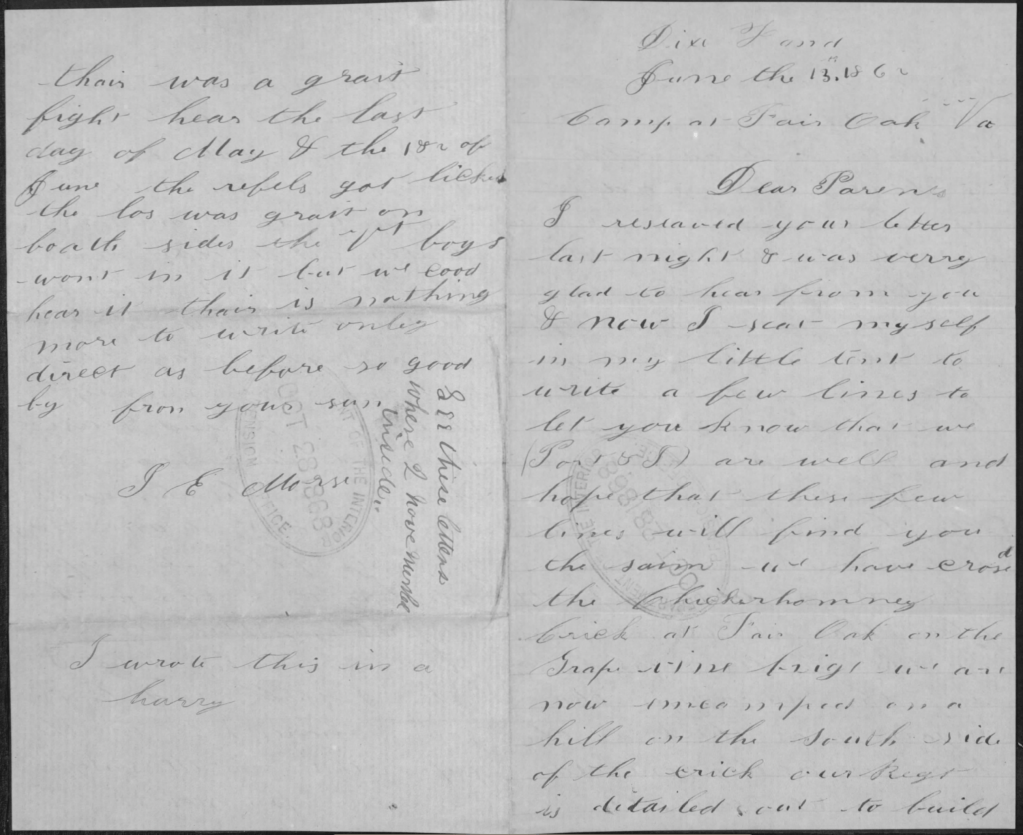

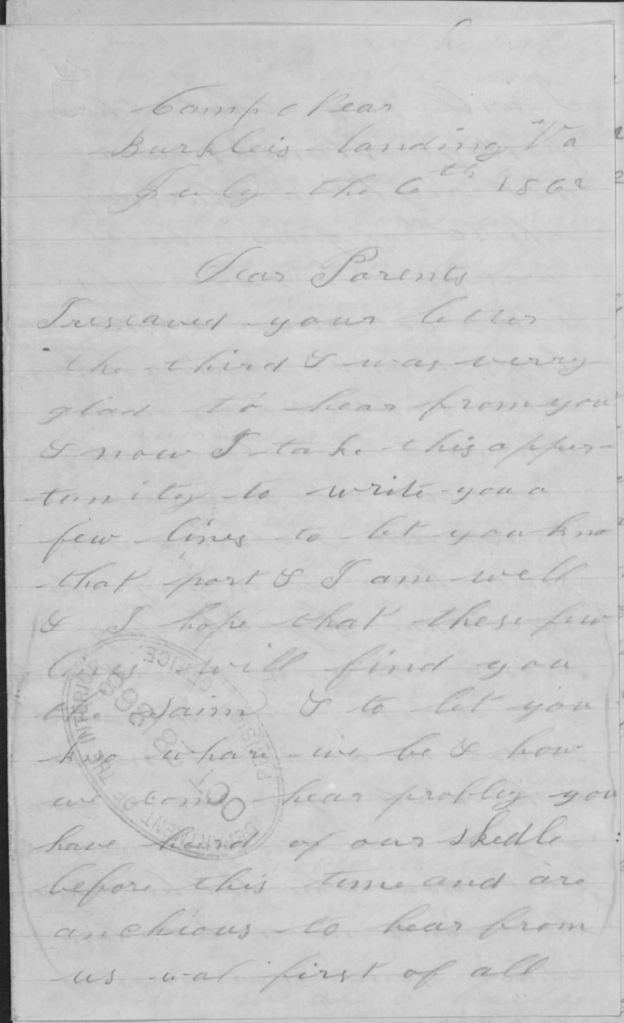

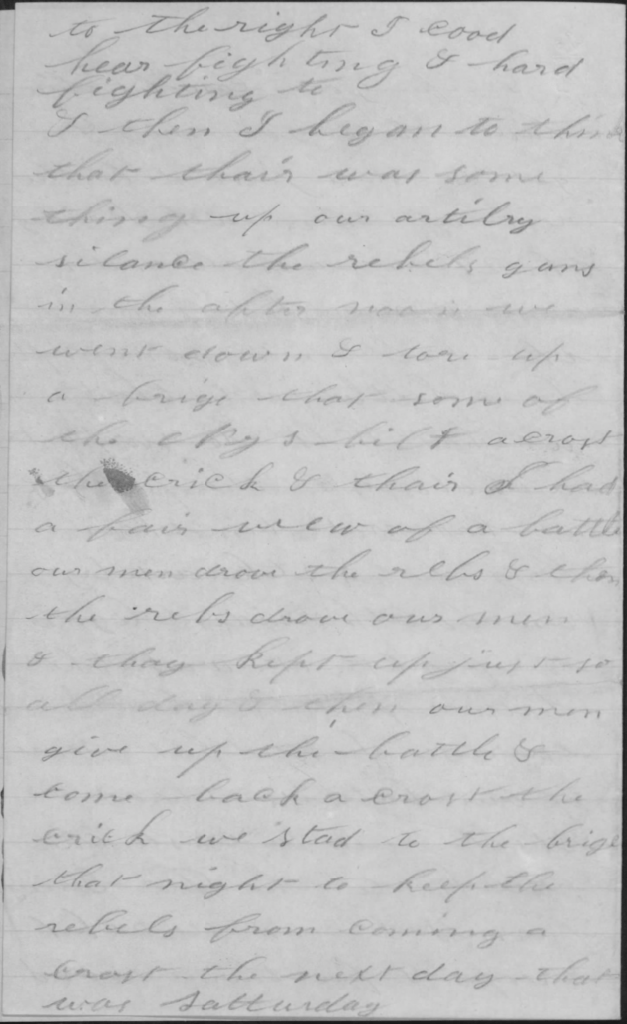

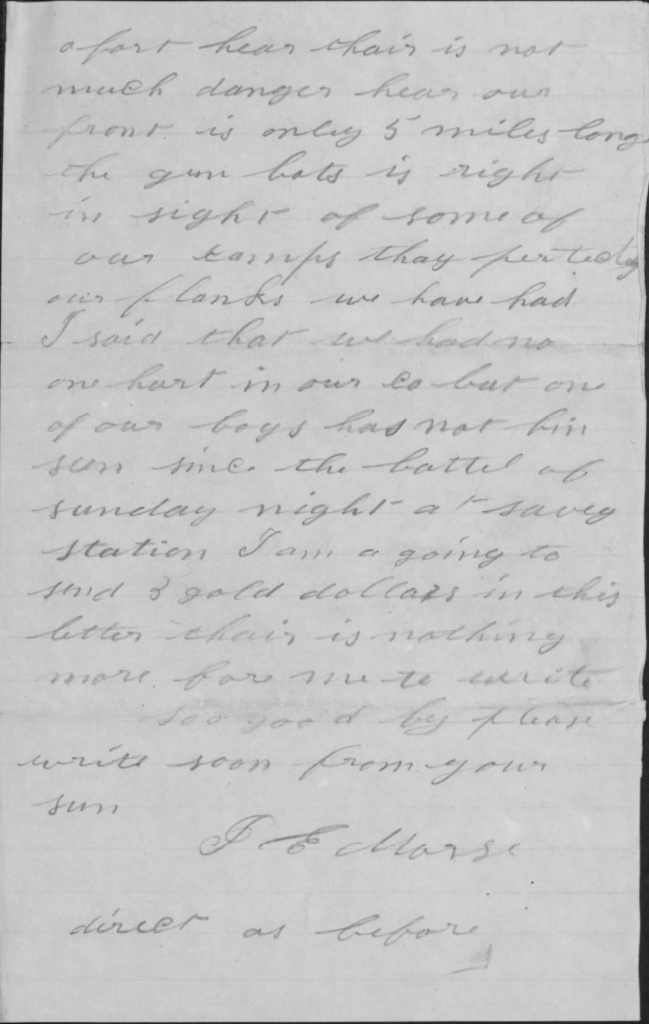


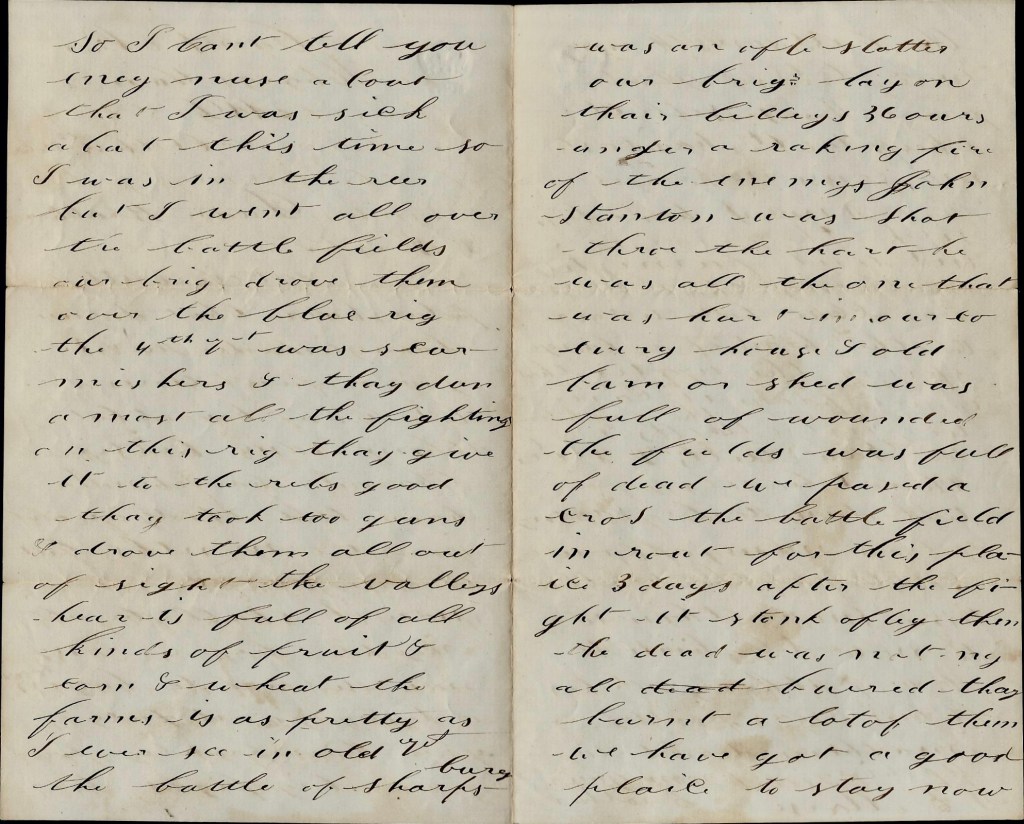
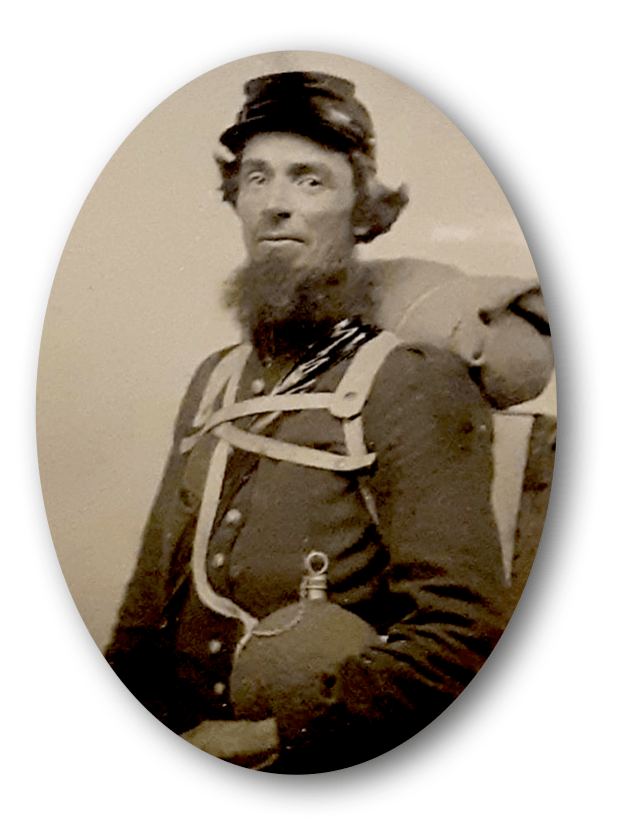


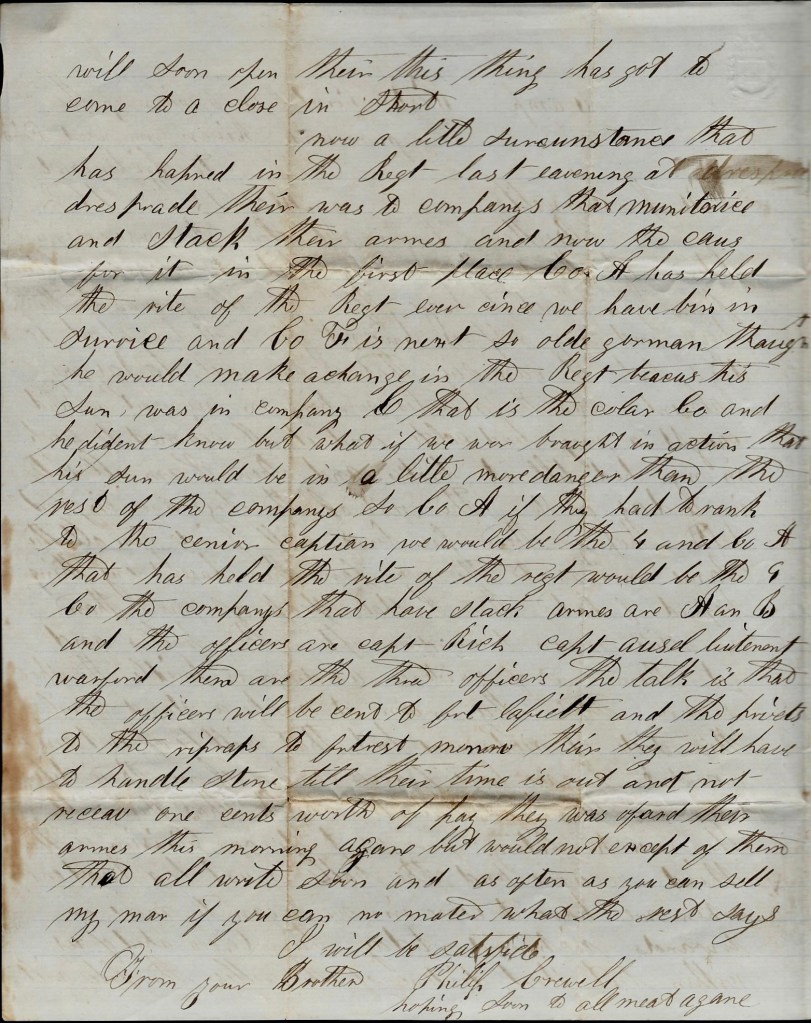
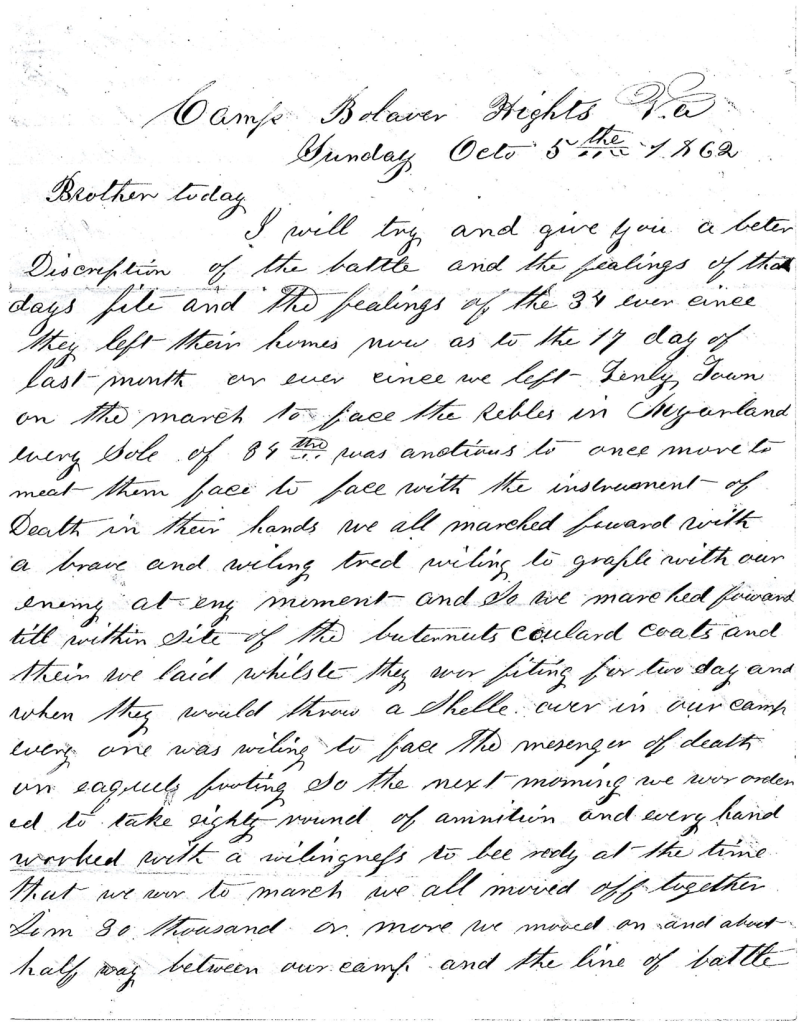
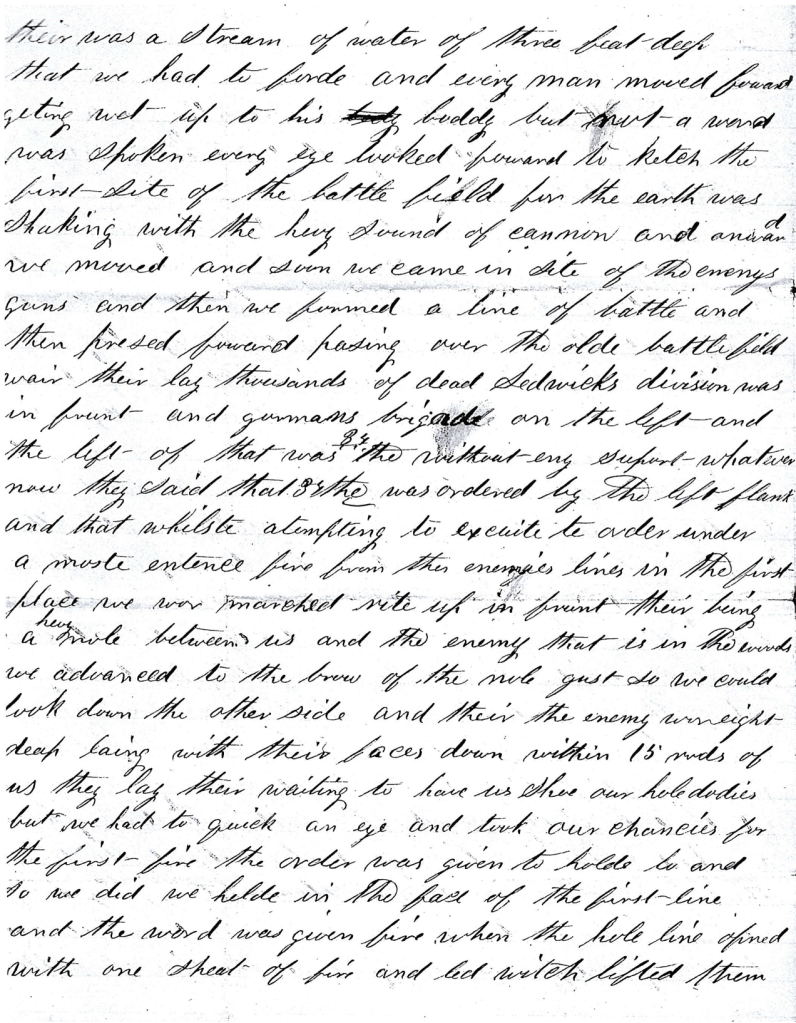
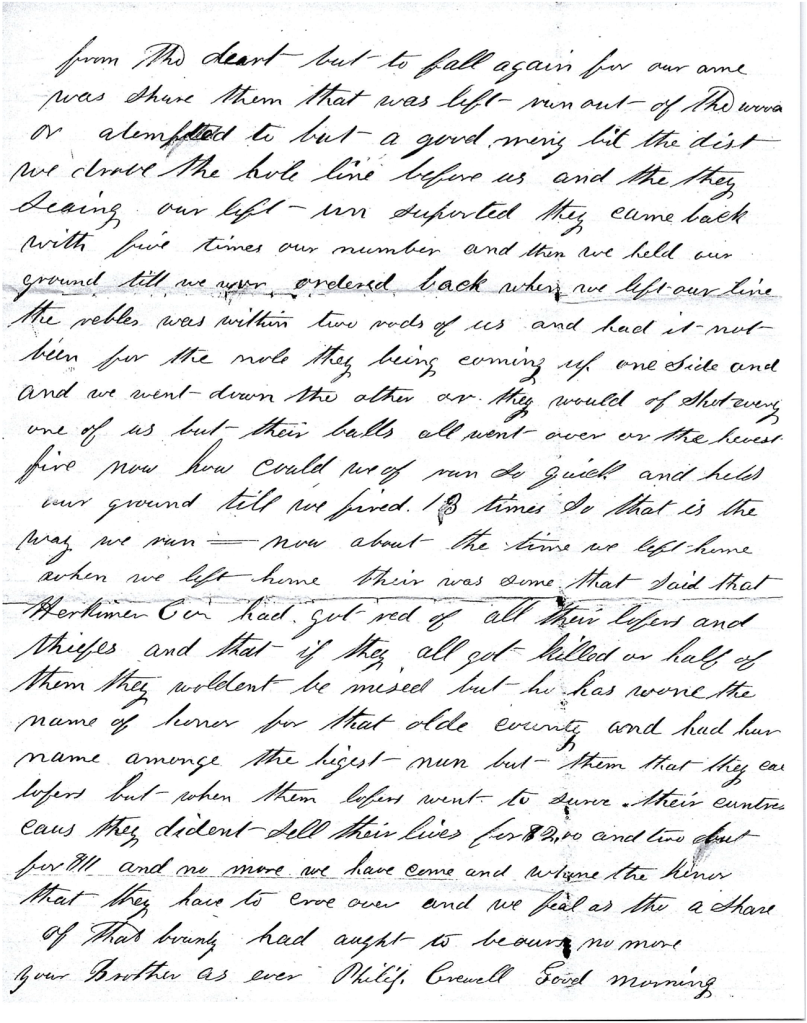
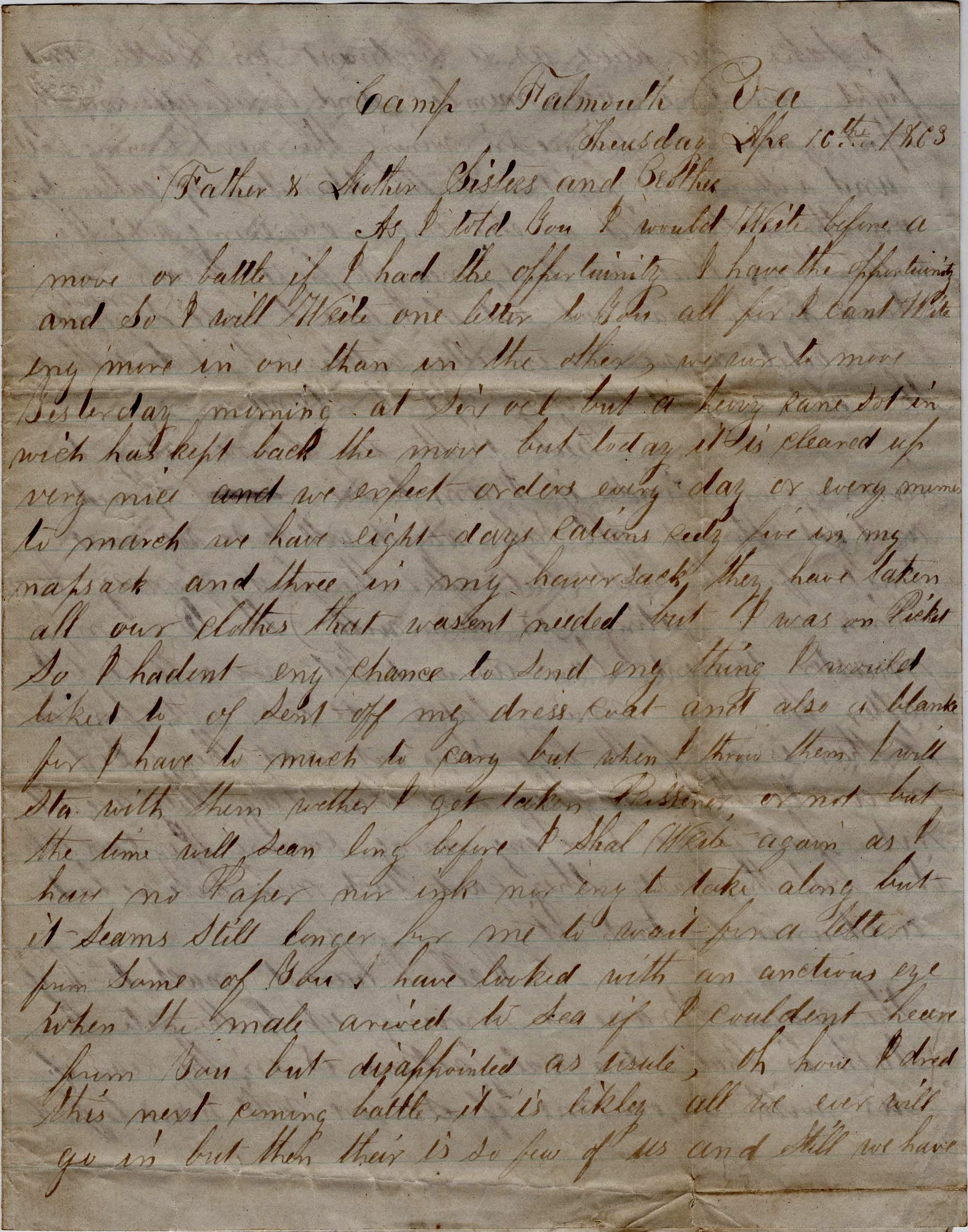

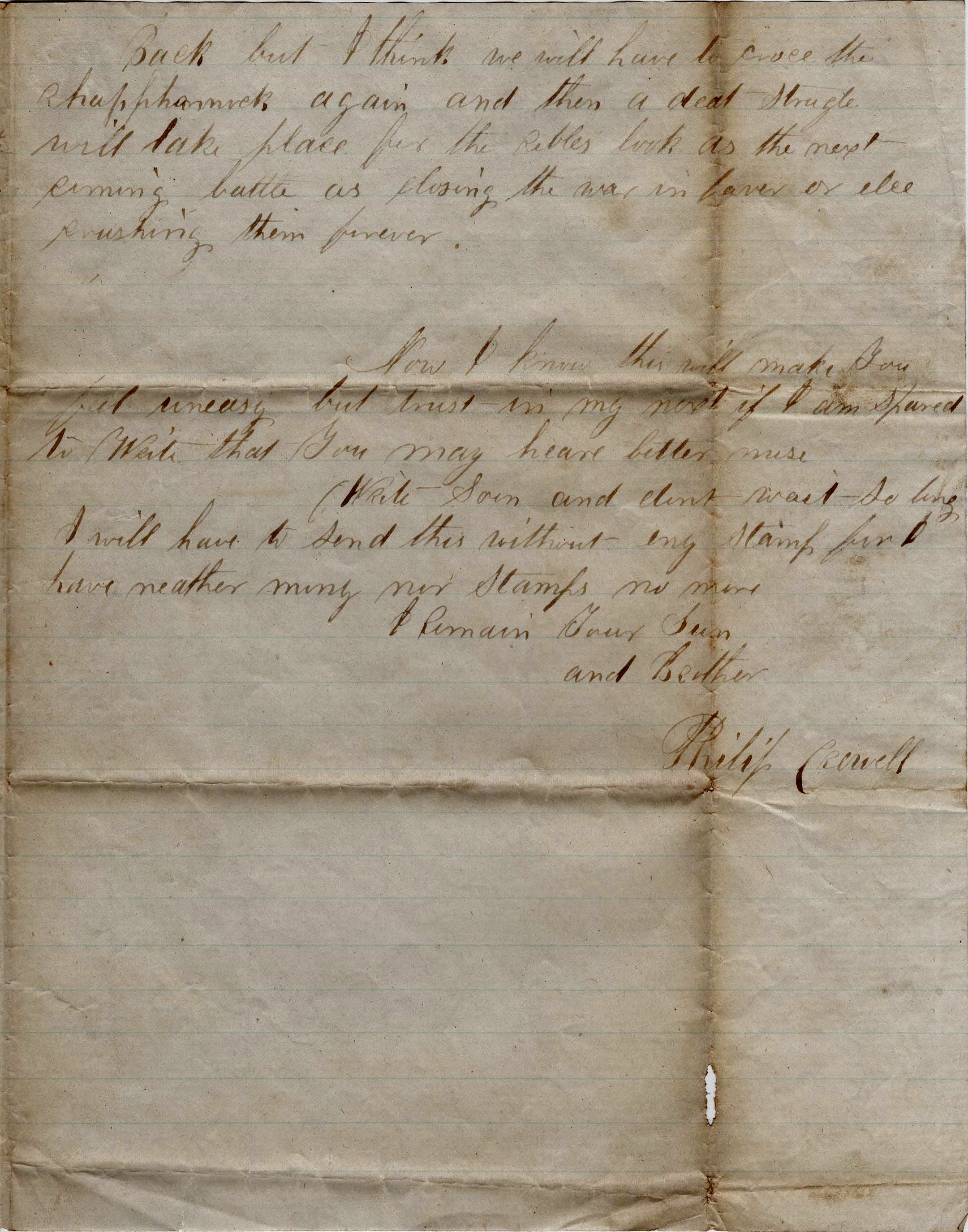


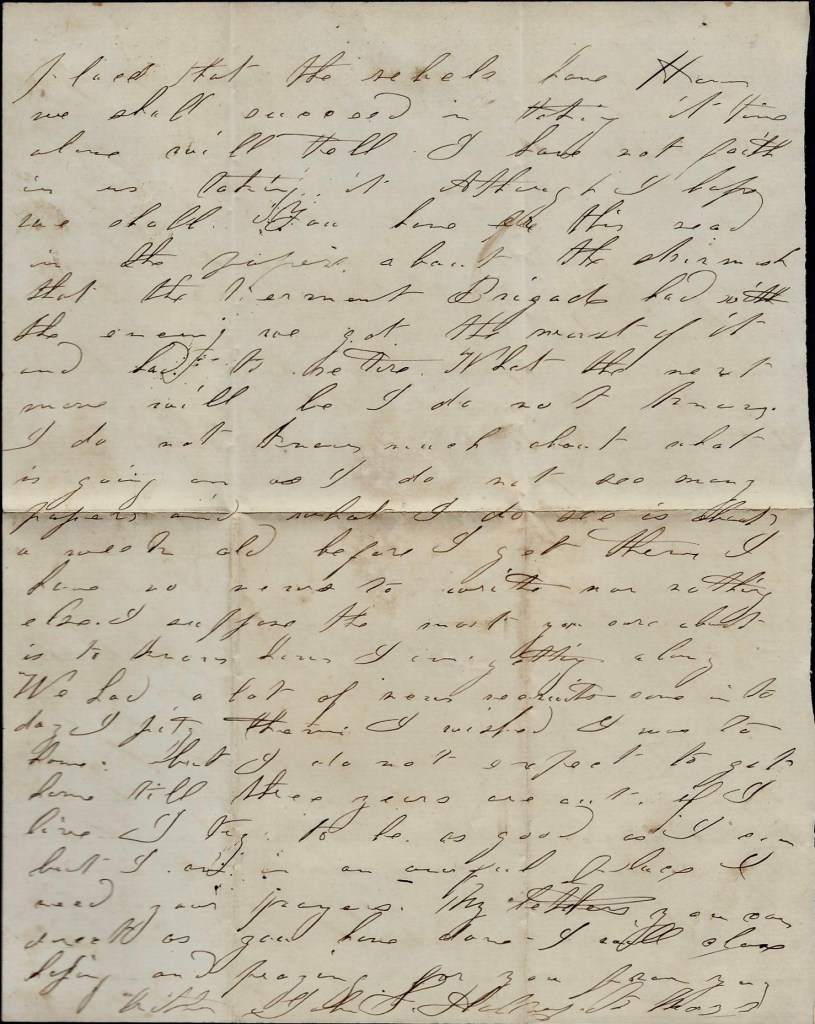


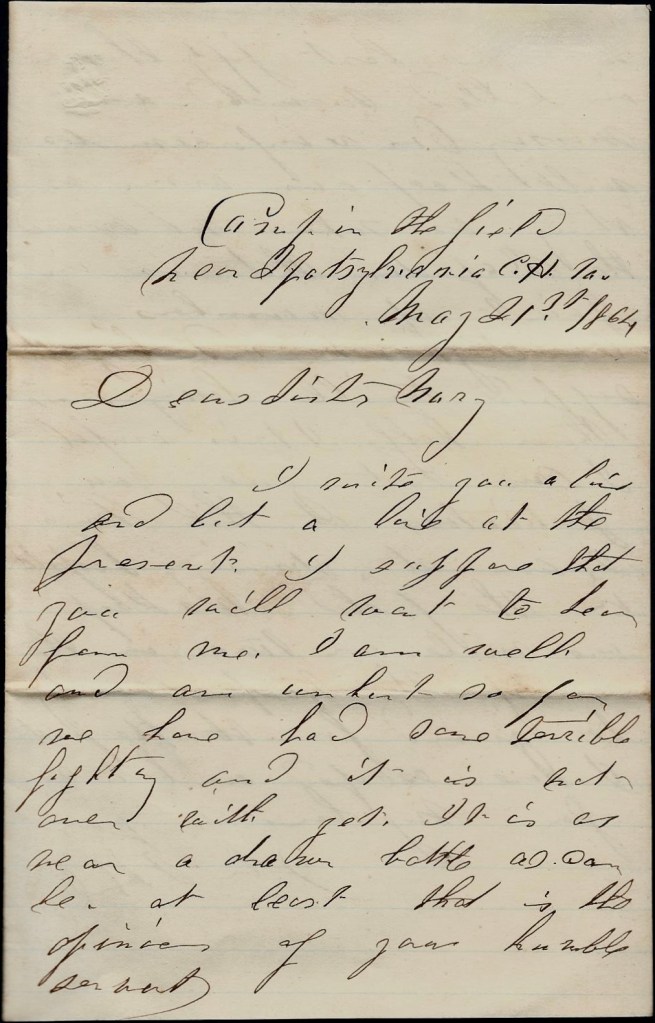

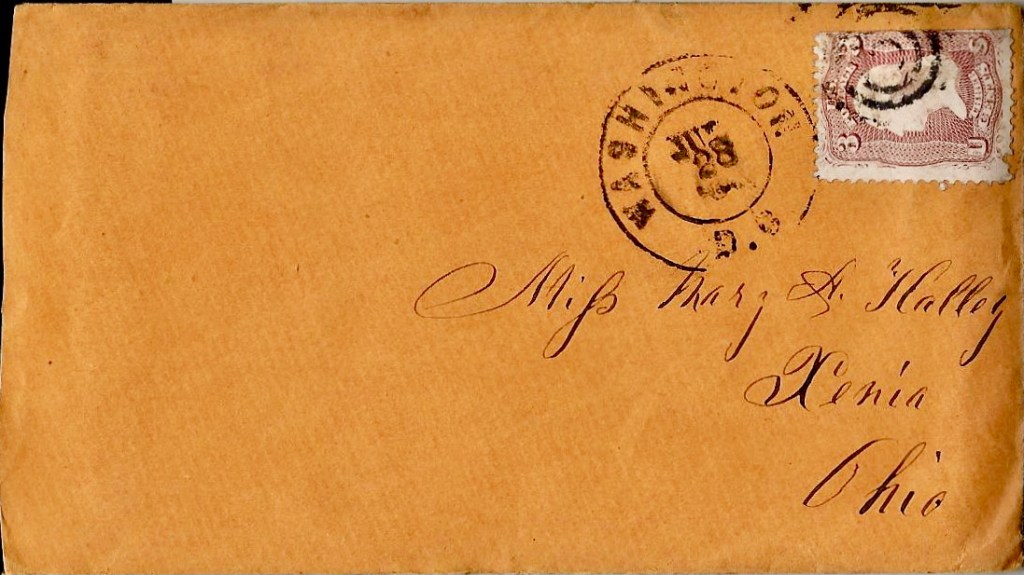
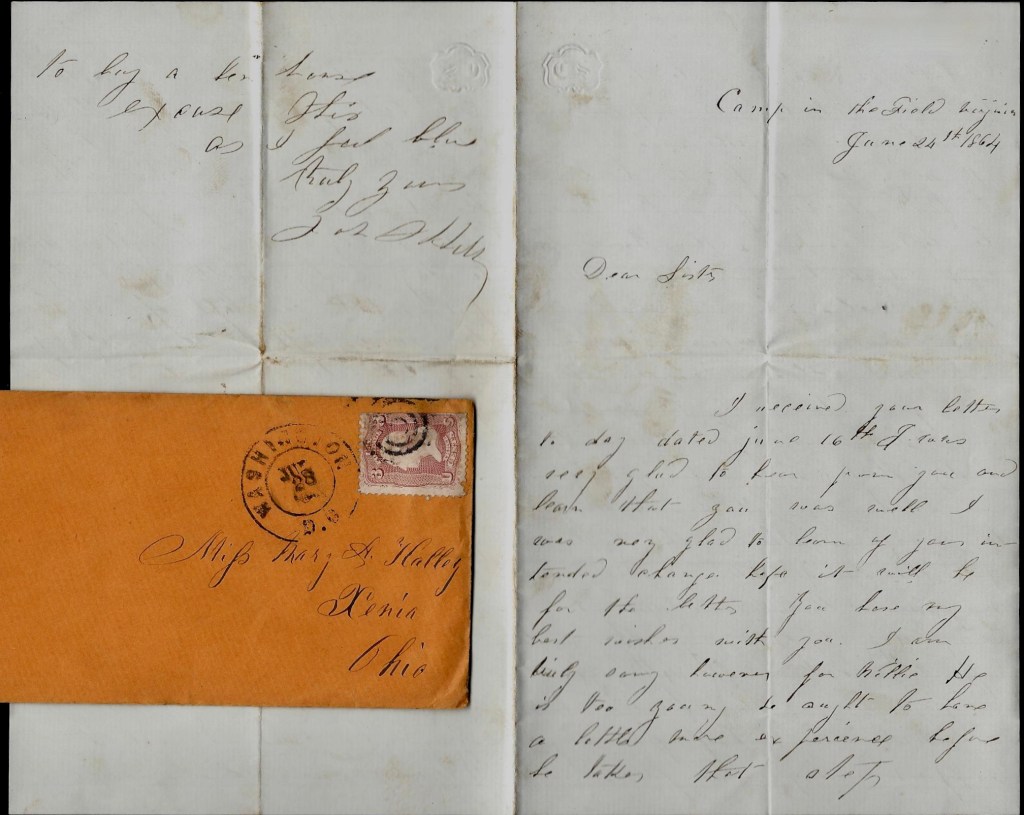
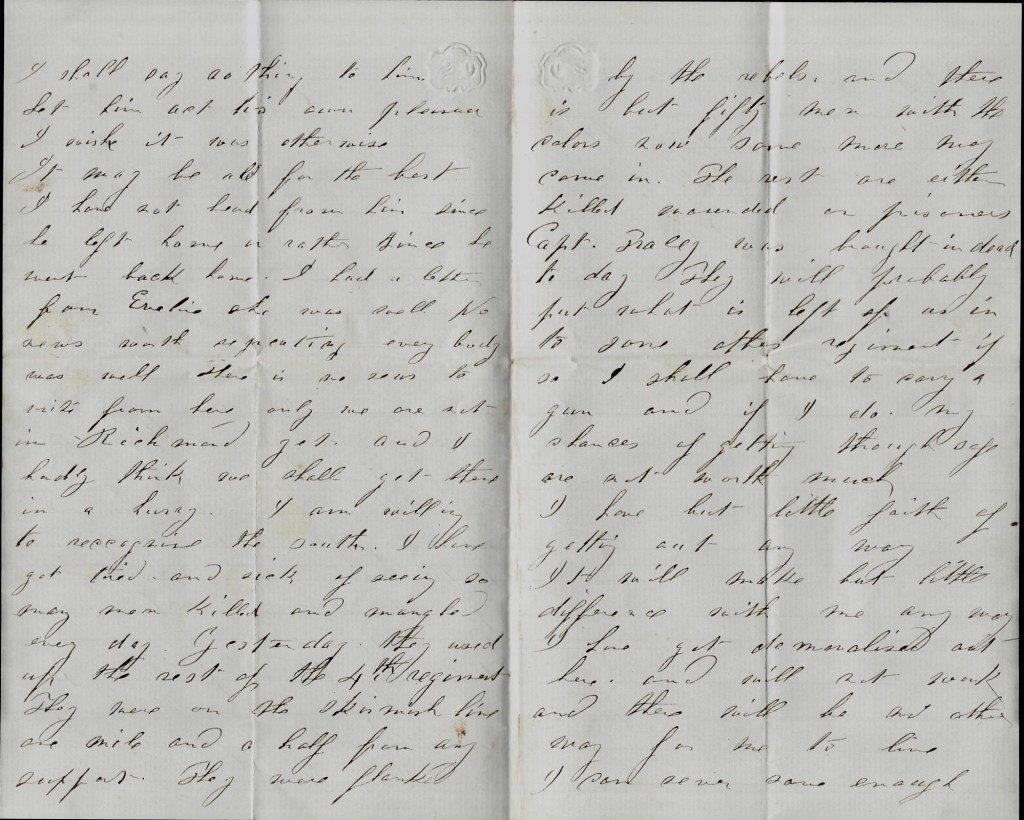

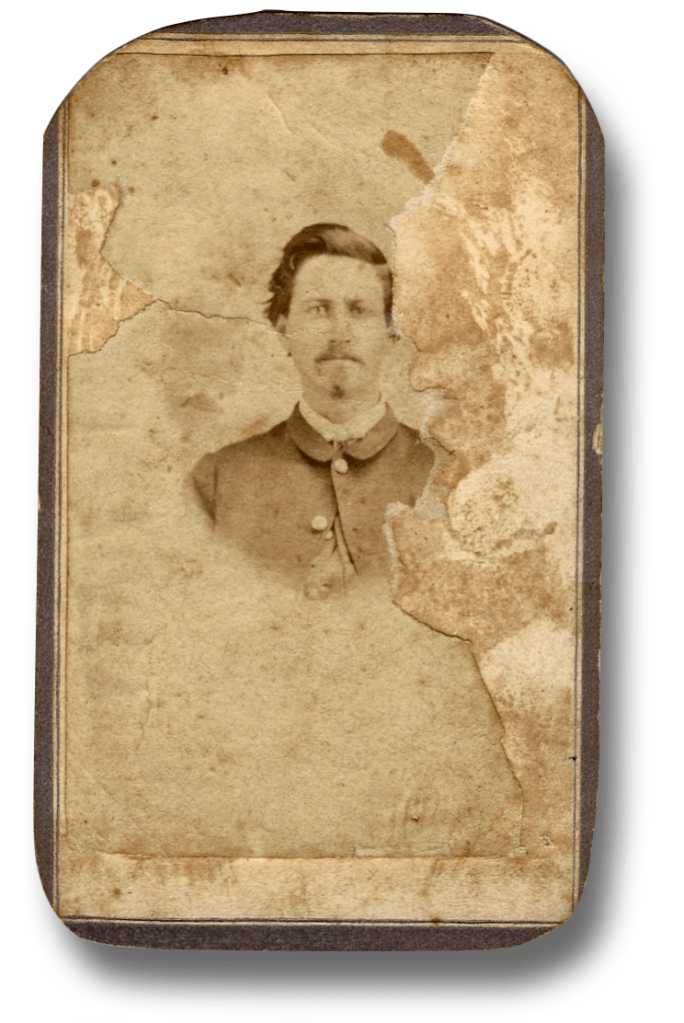
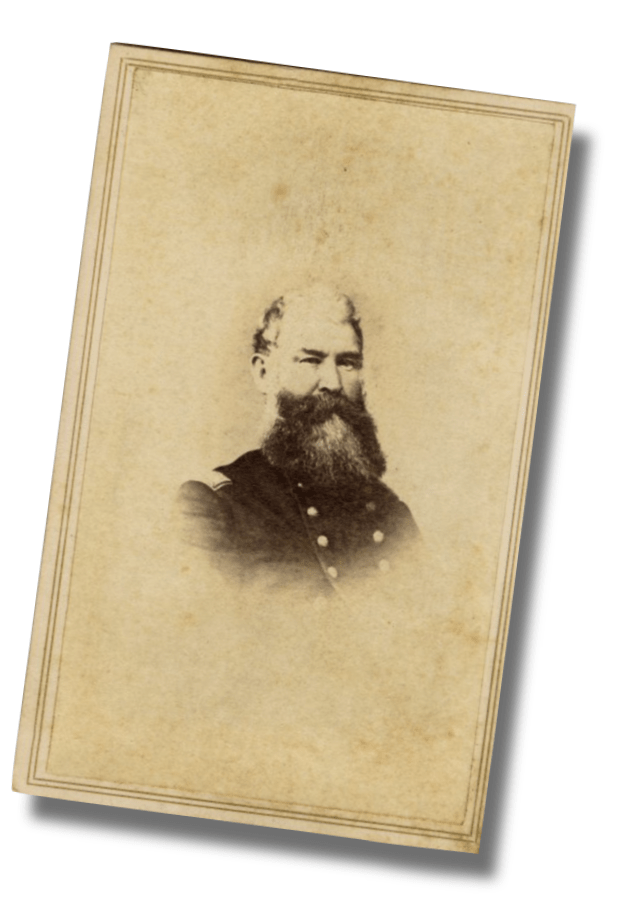


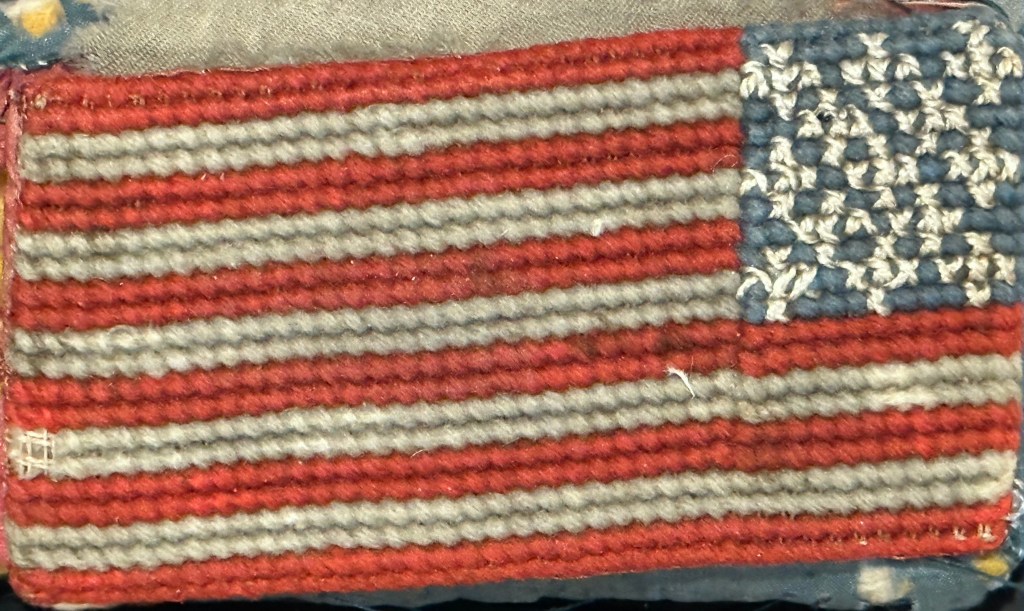


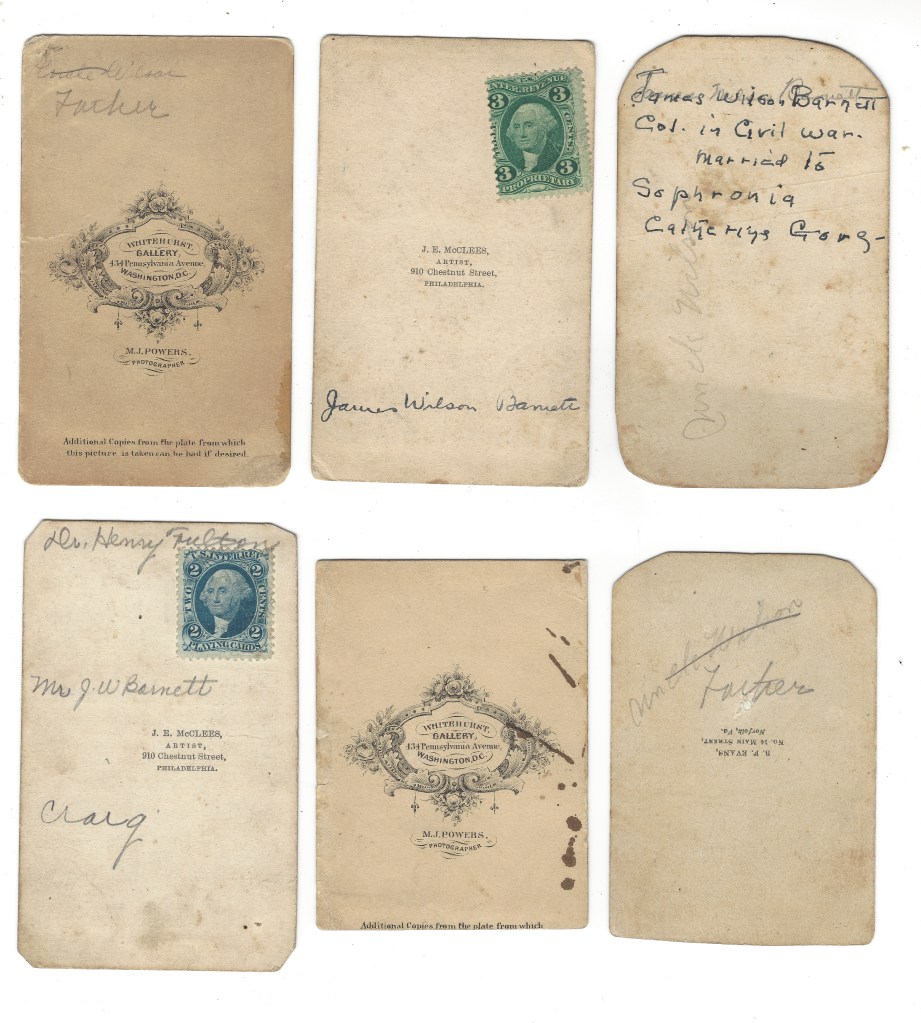


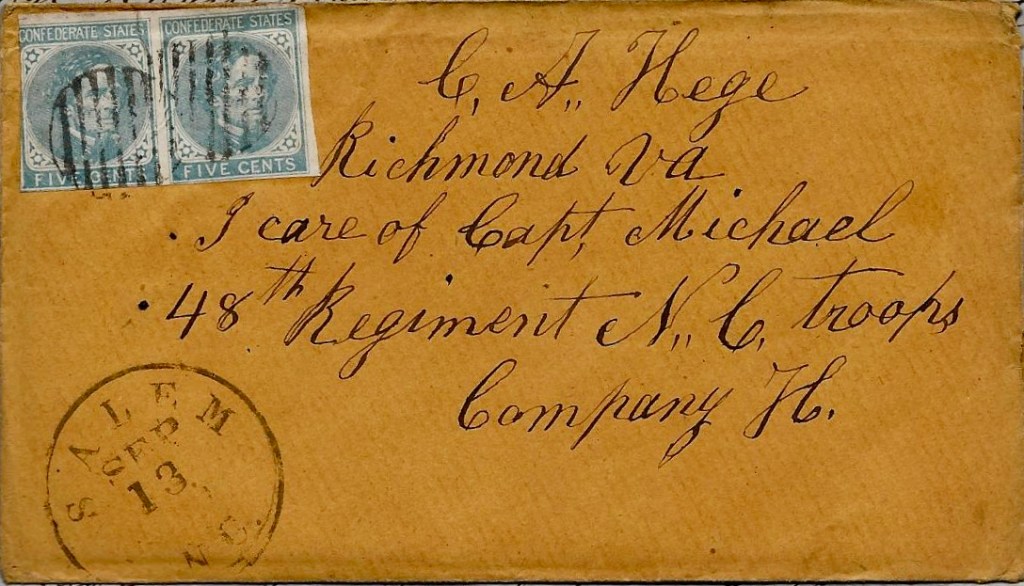
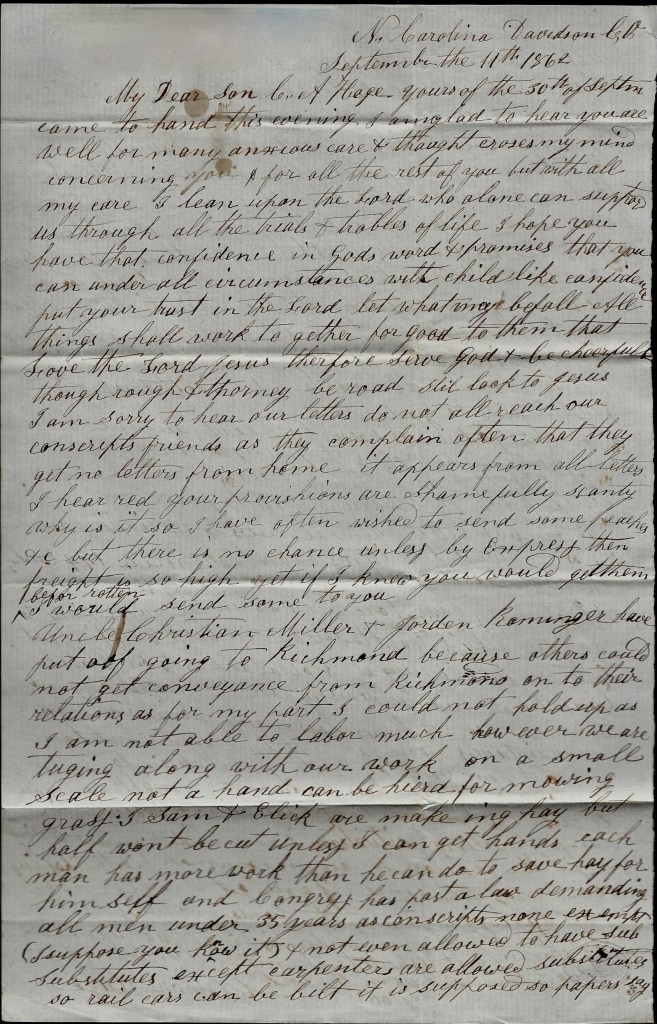
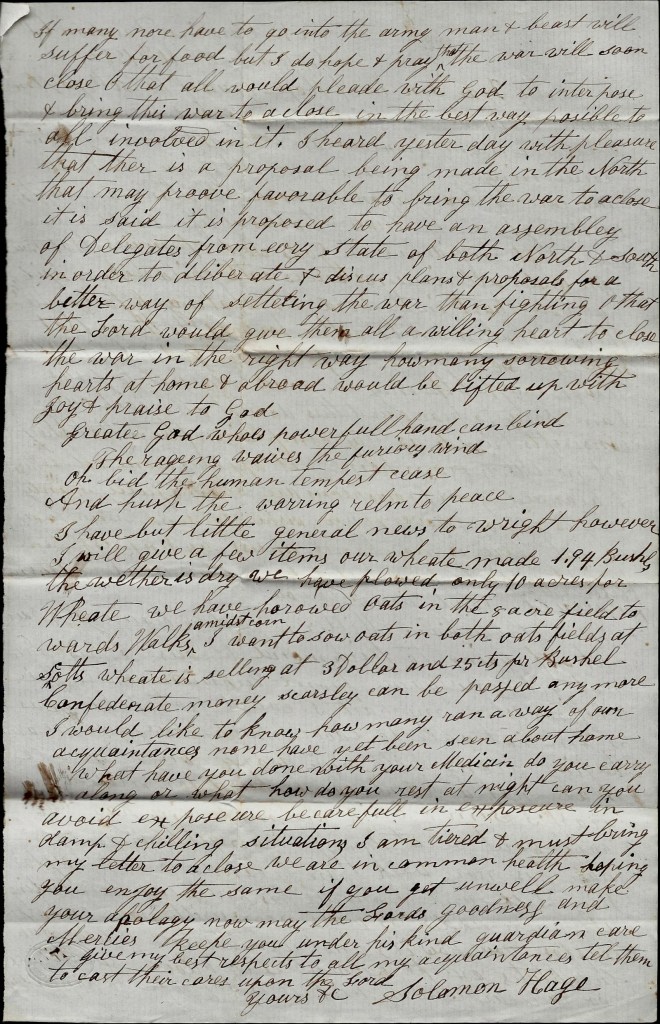


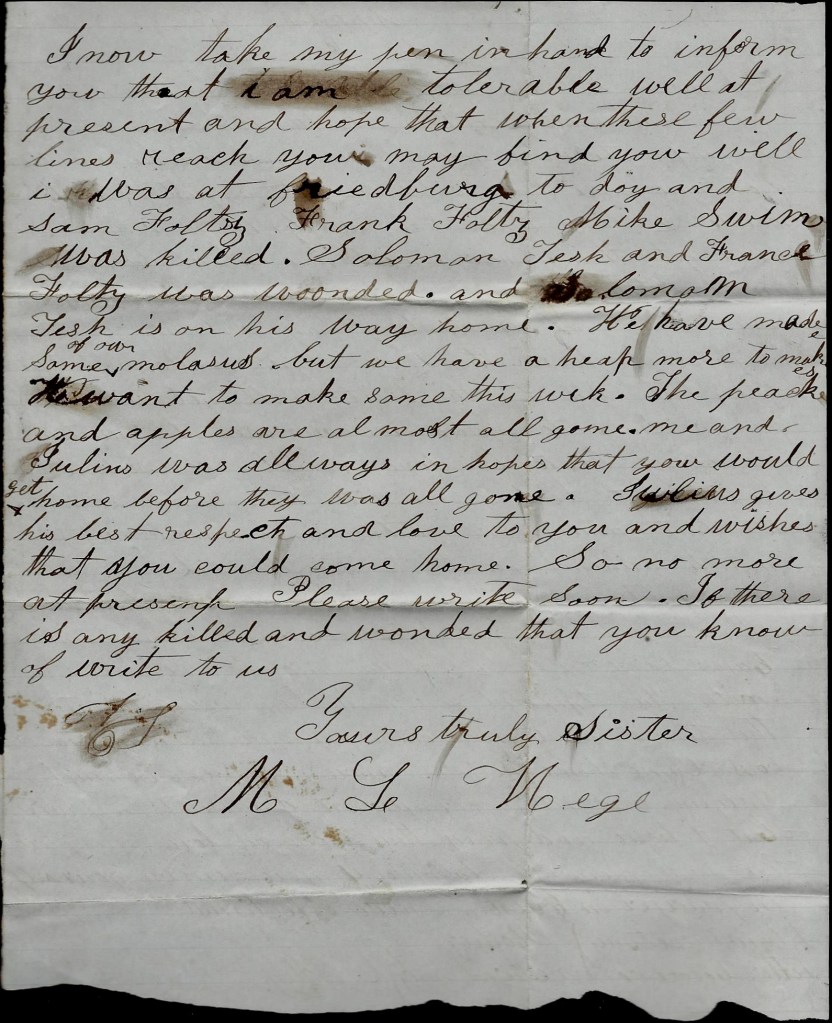
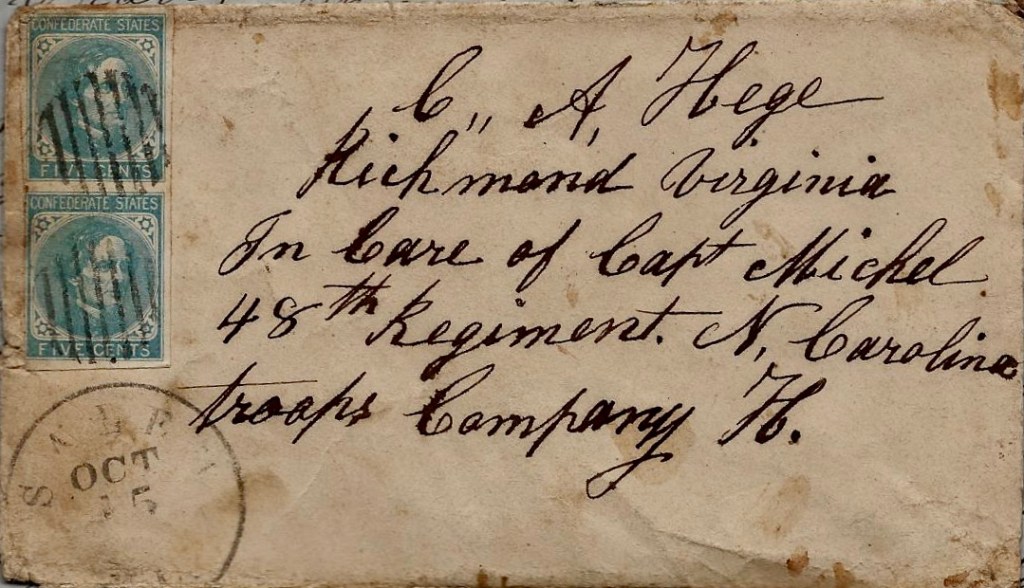


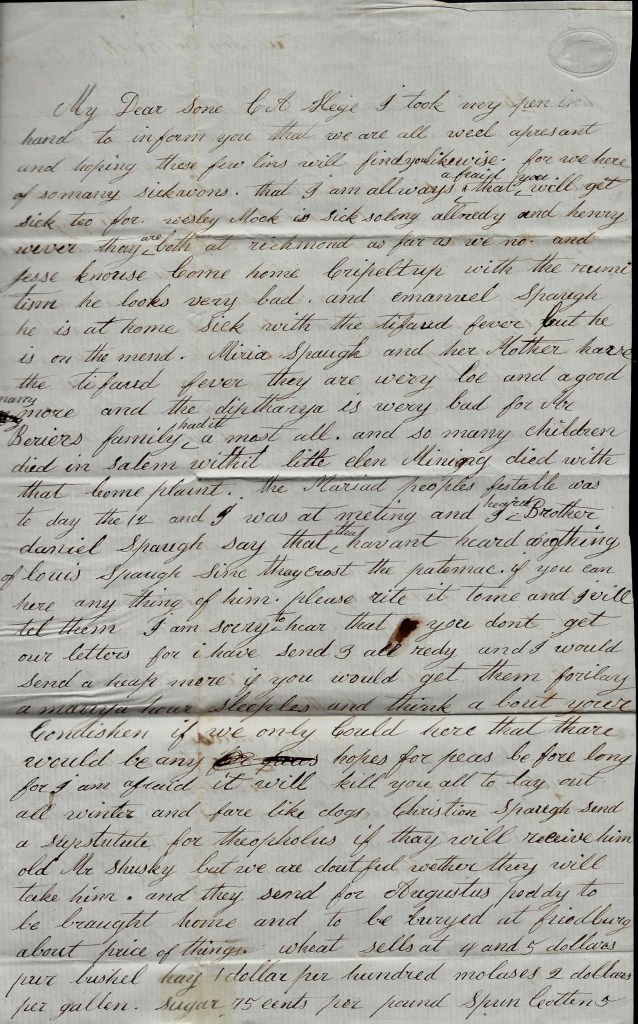

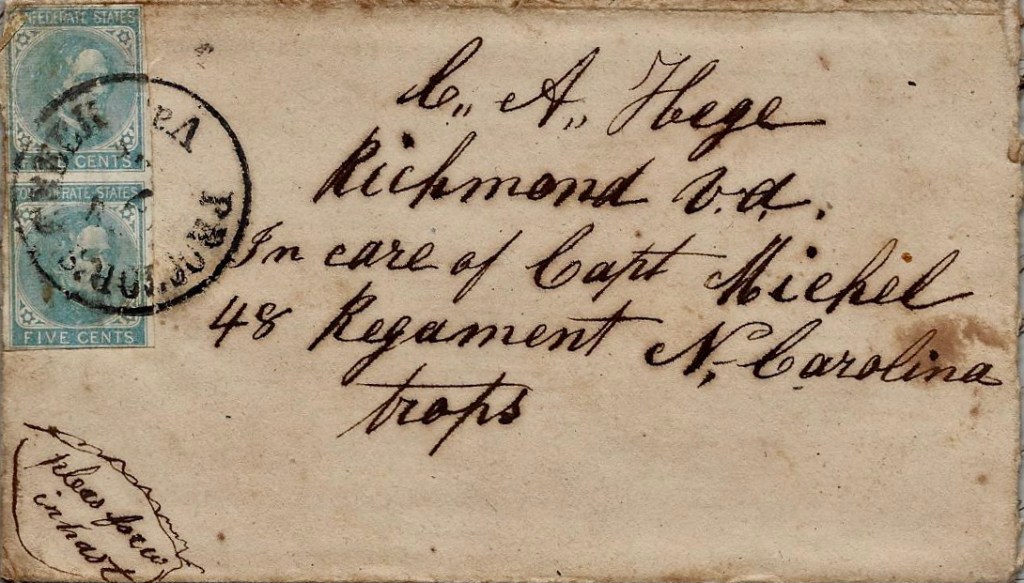


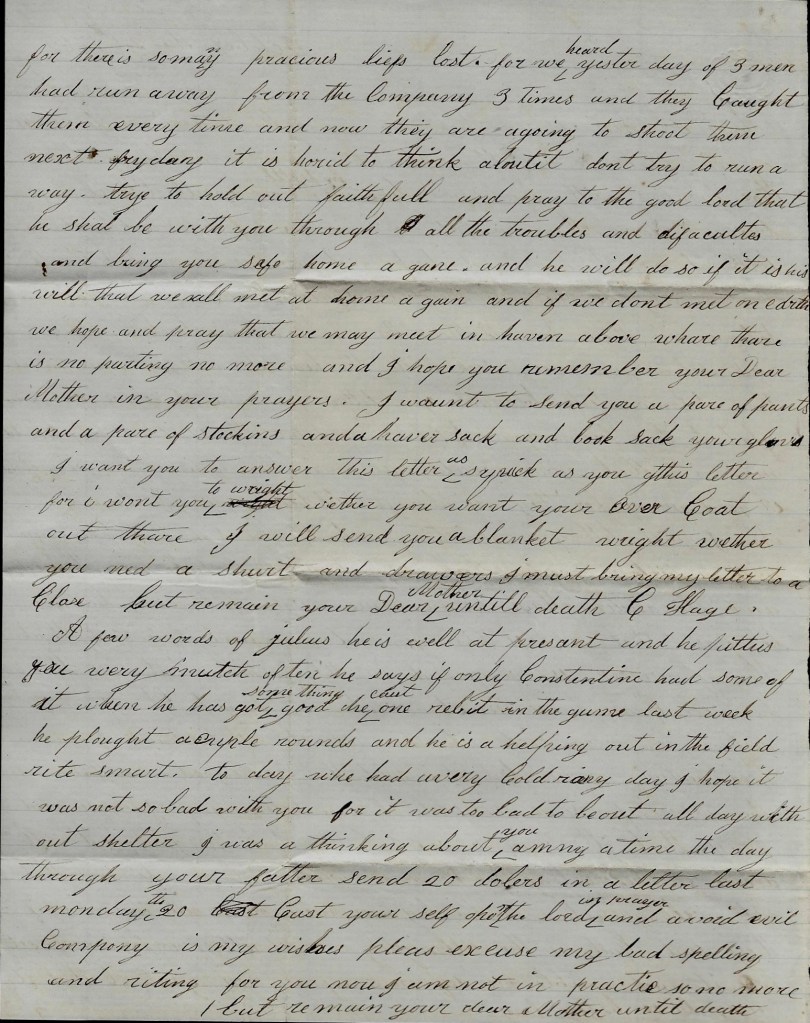


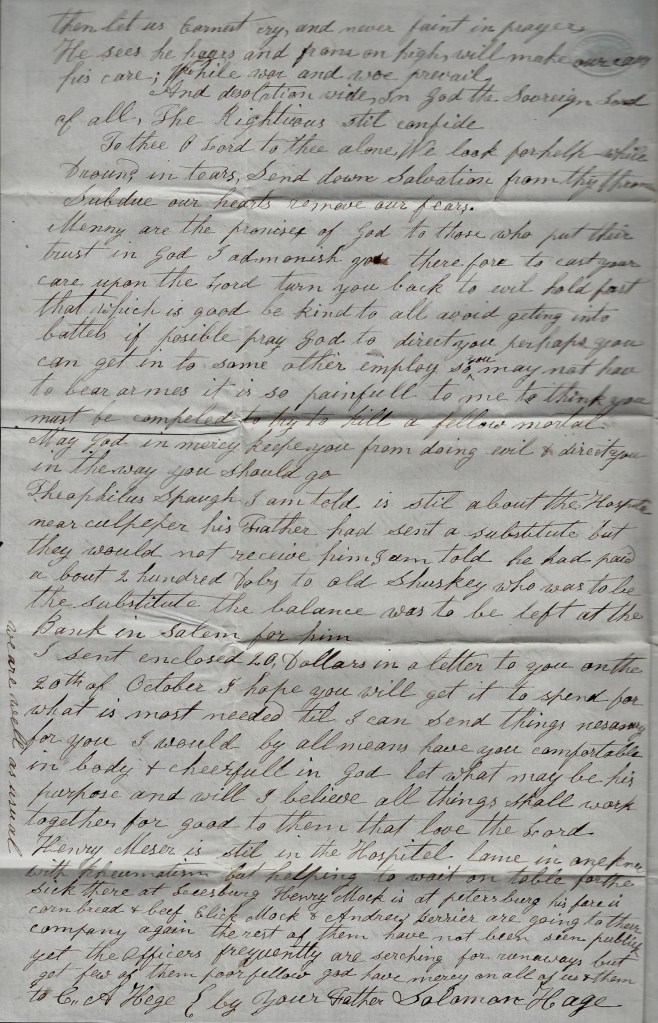


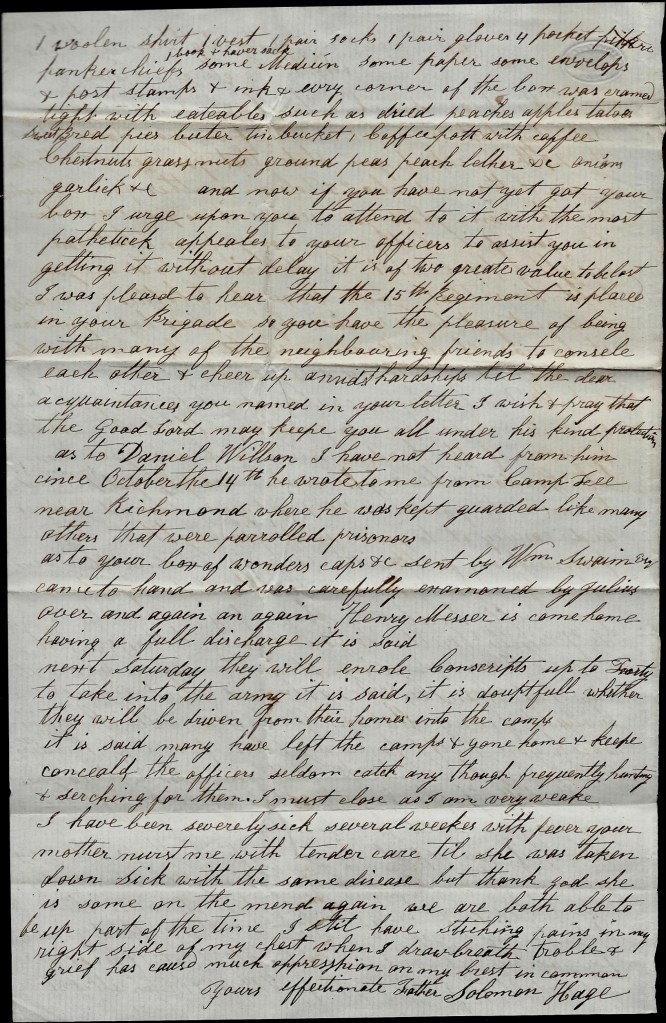
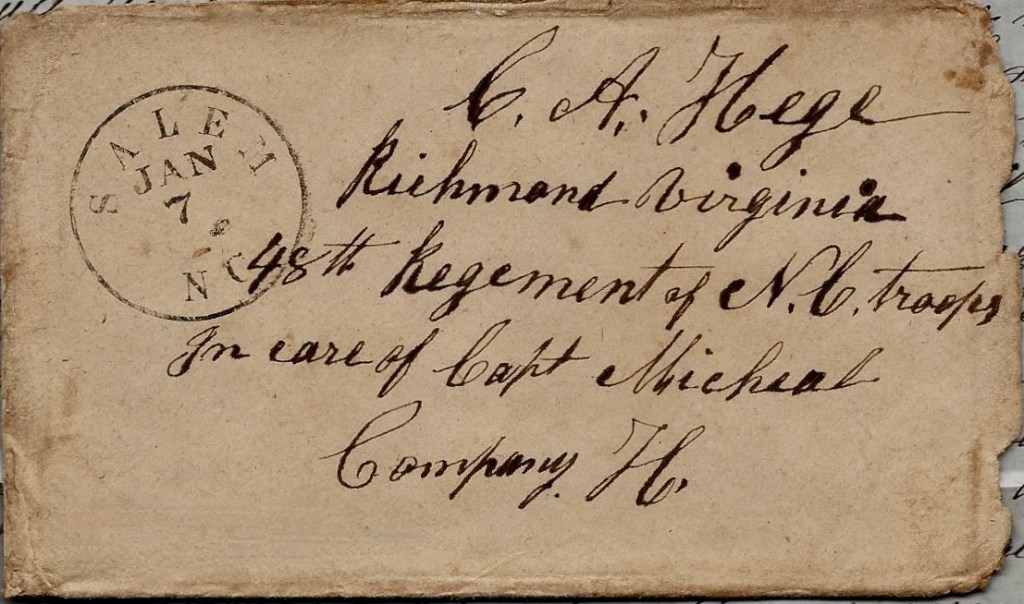
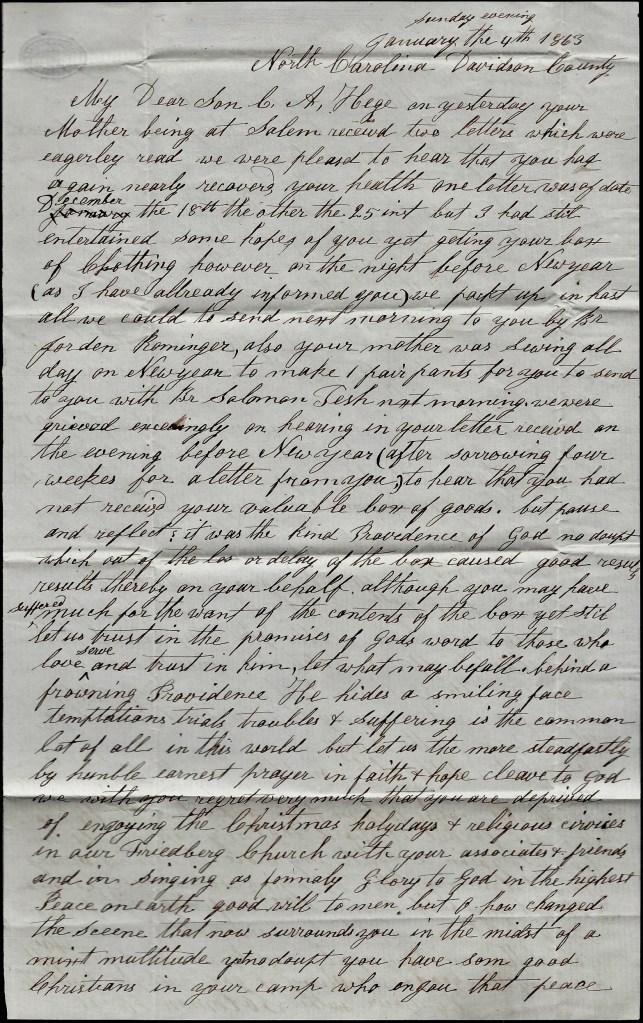
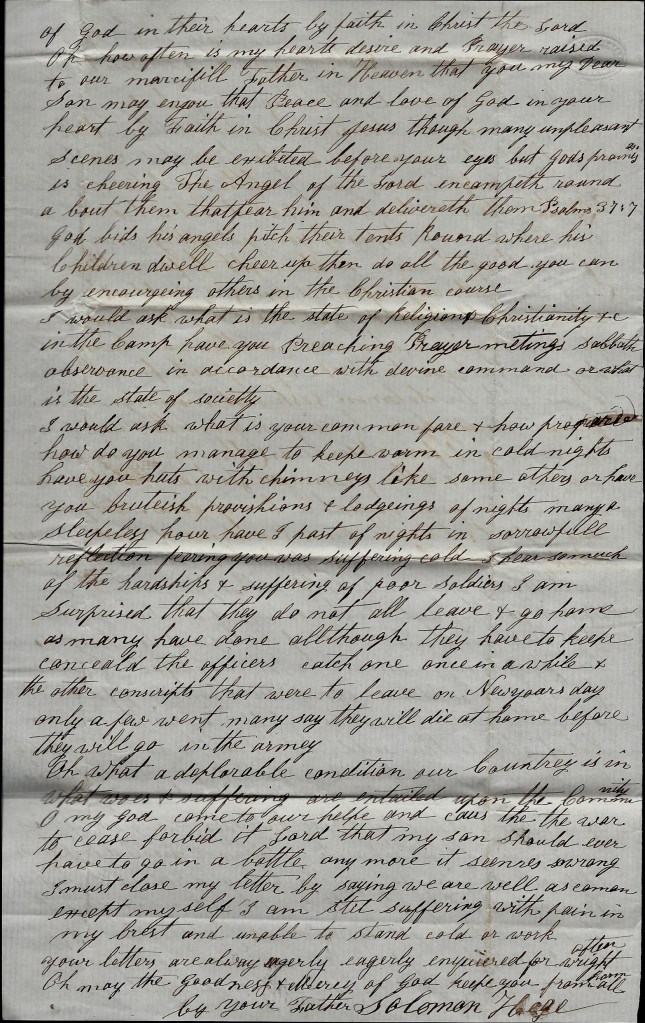

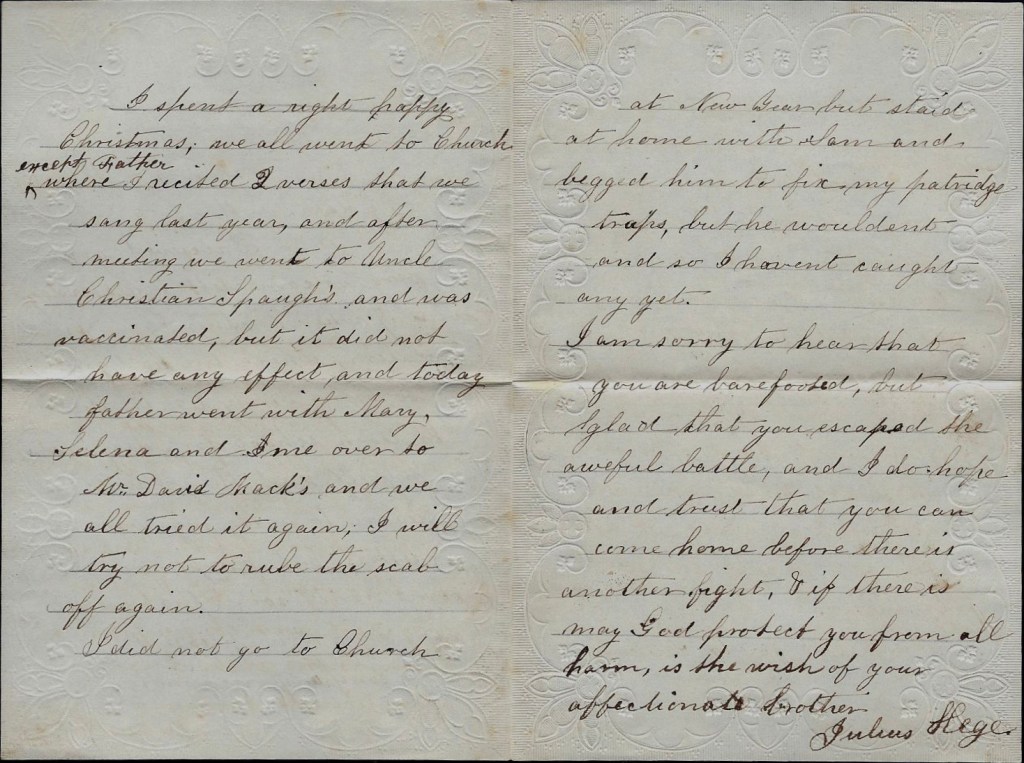






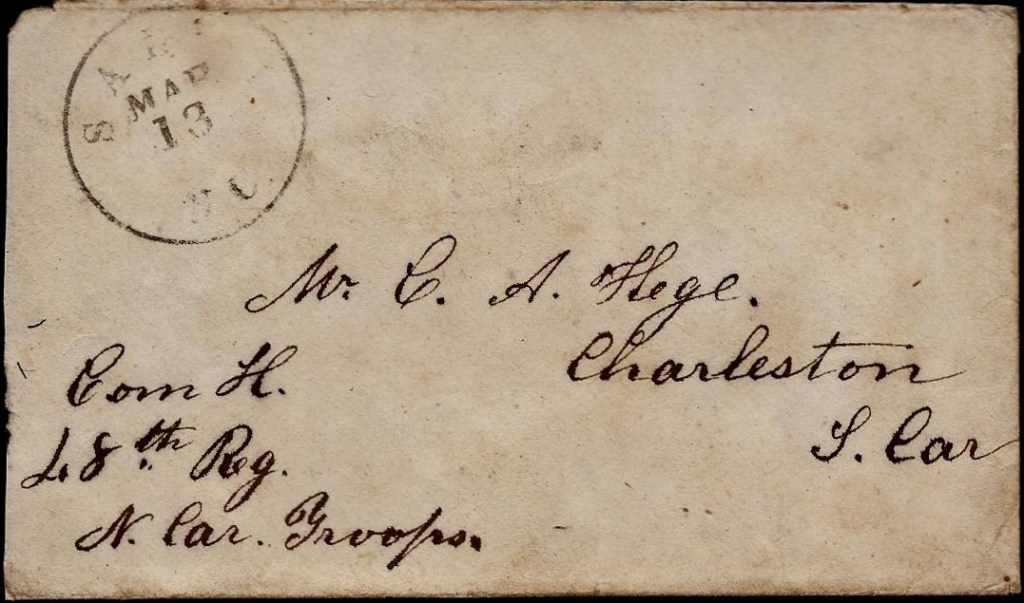
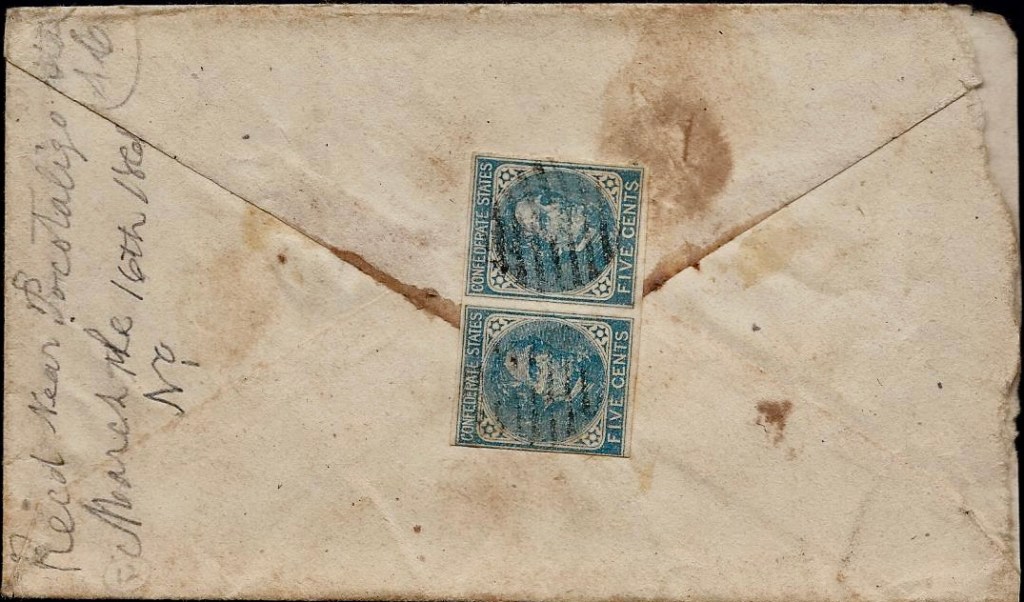
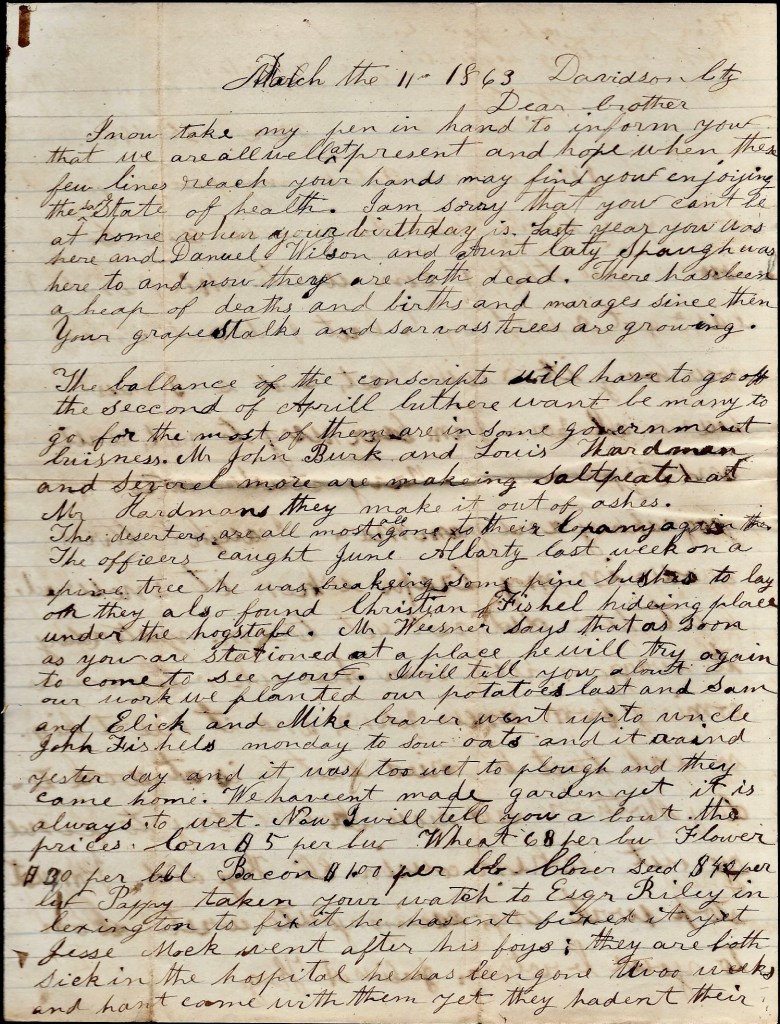


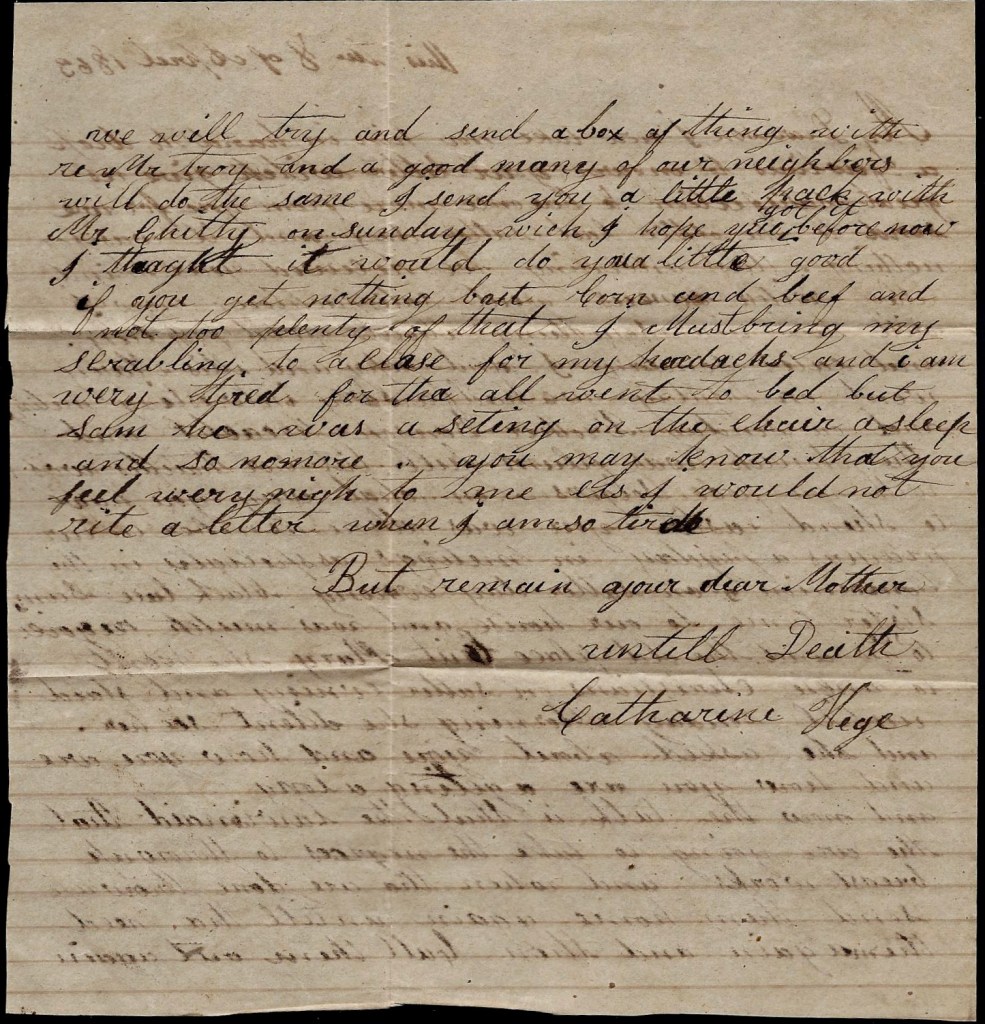








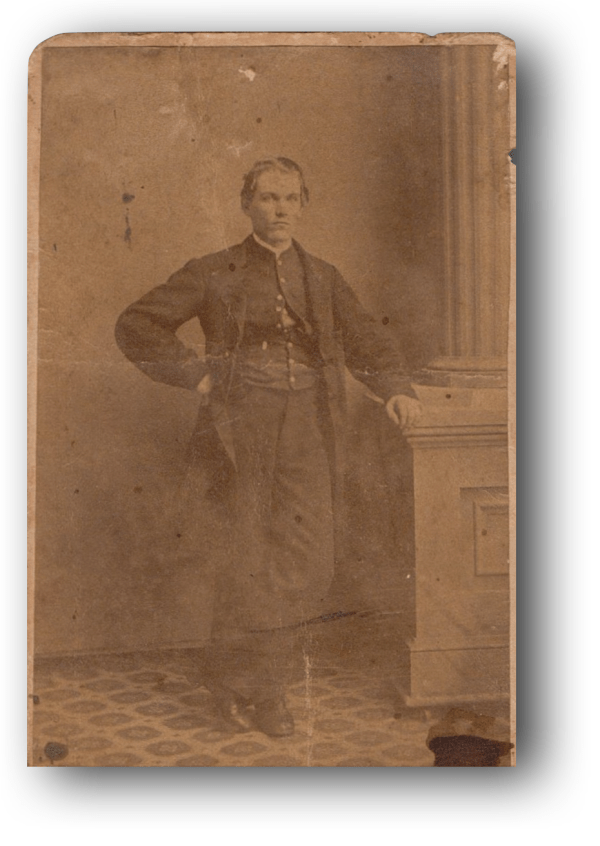


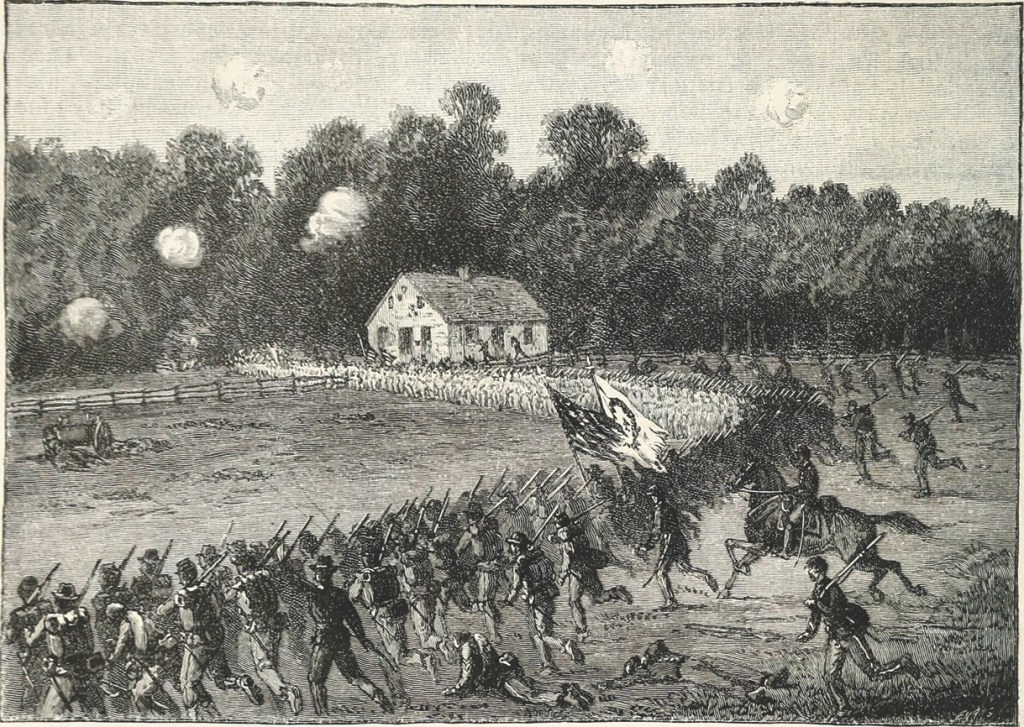


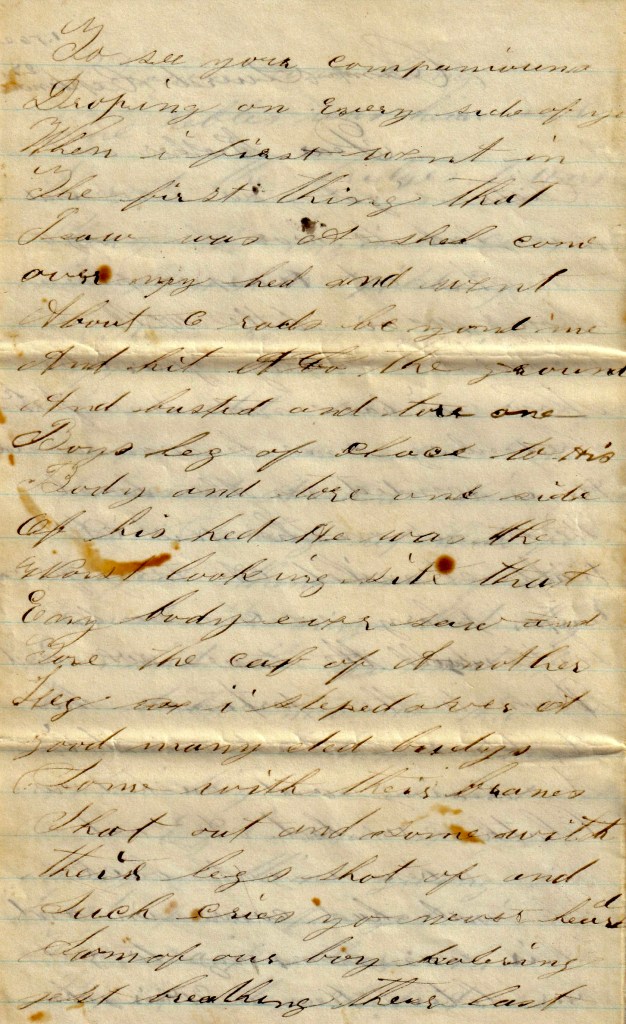
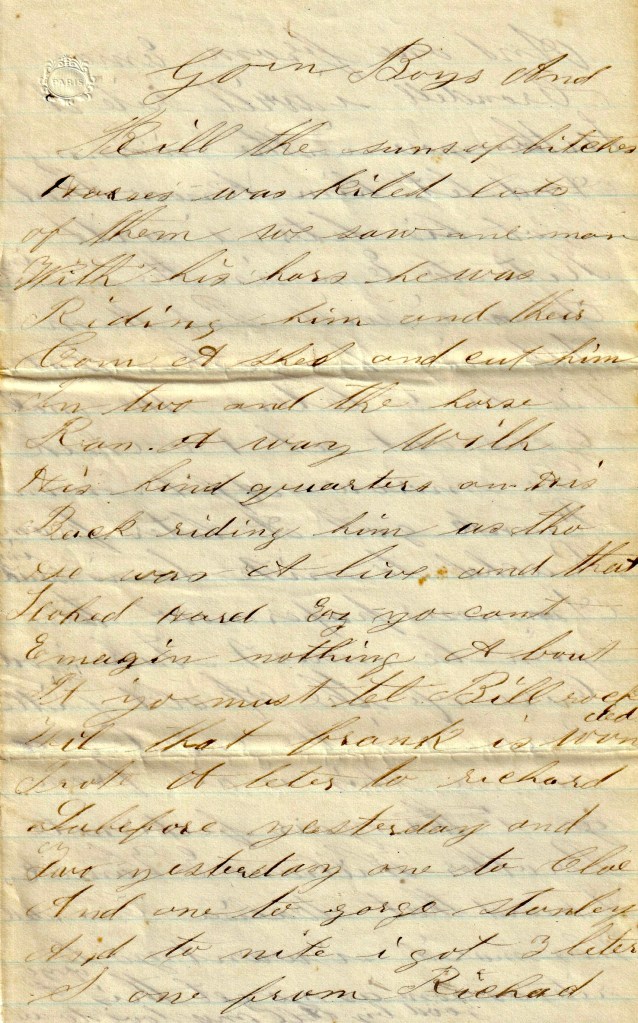
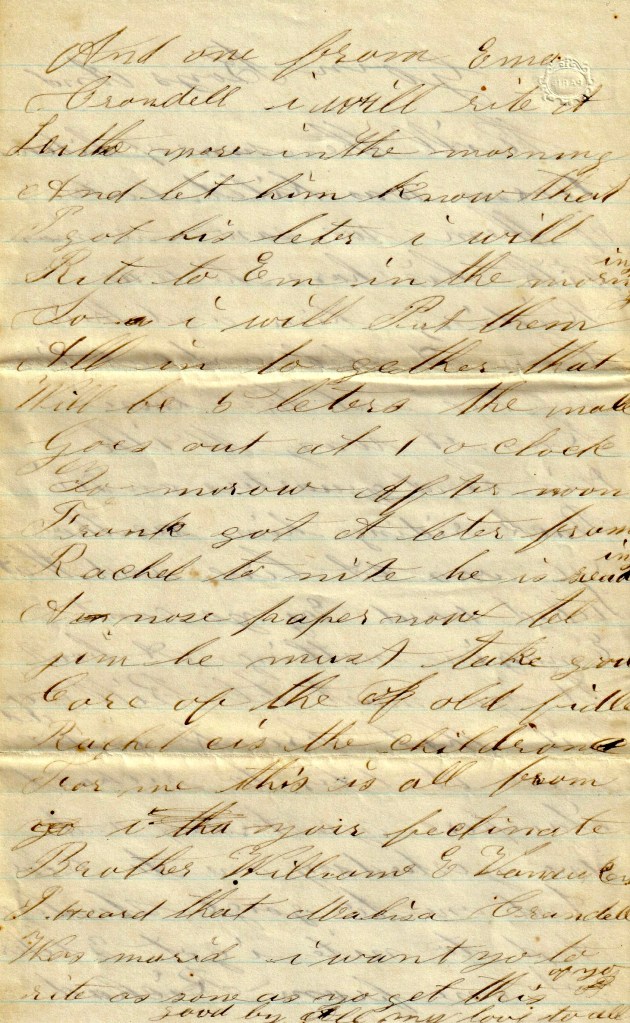


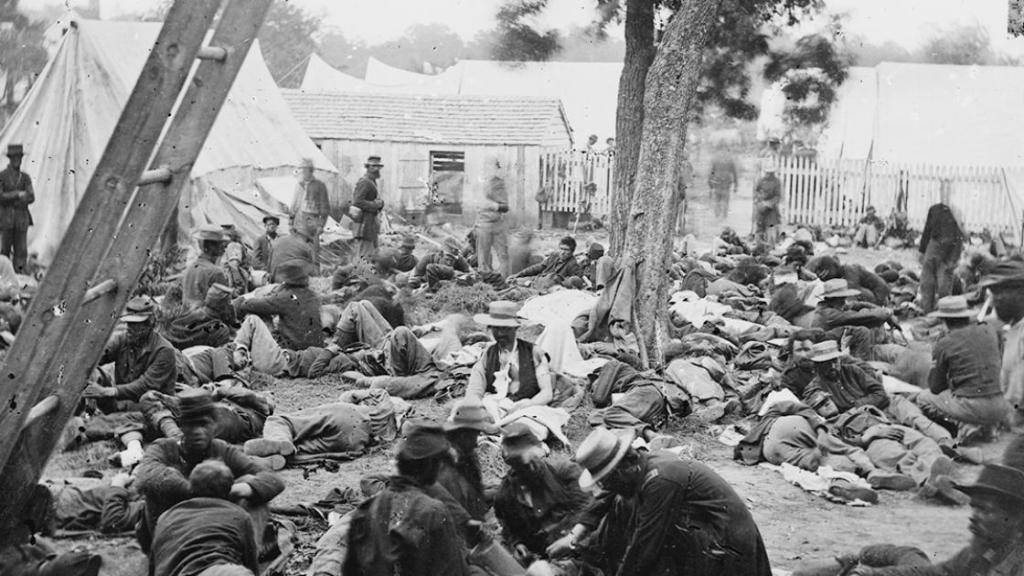

 Spared & Shared 23