Category Archives: Battle of Second Manassas

Alexander Samuel Diven Letters

Alexander Samuel Diven (February 10, 1809 – June 11, 1896) was an American politician from New York and an officer in the Union Army during the American Civil War.

Born in Catharine, New York, Diven attended the common schools and the academies in Penn Yan and Ovid, New York, and then studied law. He was admitted to the bar in 1831, and commenced practice in Elmira. He was member of the New York State Senate (27th District) in 1858 and 1859.

Diven was elected as a Republican to the 37th United States Congress, holding office from March 4, 1861, to March 3, 1863. Though opposed to slavery, he was hardly an abolitionist and he did not consider Blacks his equal. He gave up his seat in Congress to fight for the preservation of the Union, but not to liberate the slave nor to make them free and equal citizens. Rather, he hoped they might be settled elsewhere, even deported if need be. This was not uncommon. Even President Abraham Lincoln held this same policy.

Diven entered the Army on August 13, 1862, as lieutenant colonel of the 107th New York Infantry Regiment. He was promoted to colonel on October 21, 1862. He was granted leave of absence from the Army for ninety days to take his seat in Congress. He was honorably discharged as colonel May 11, 1863, and later brevetted brigadier general of Volunteers April 30, 1864. He spoke at the dedication of the monument honoring the 107th New York in 1869. He engaged in railroad building and operation from 1865 to 1875, and was prominently identified with the Erie Railroad.

In the 1870s Pennsylvania native Truckson LaFrance obtained several patents on improvements he developed in the rotary steam engine. John Vischer, head of the Elmira Union Iron Works, became interested and was convinced by LaFrance to back him in the manufacture of a steam fire engine. They subsequently formed a business partnership to manufacture fire apparatus. Their success attracted the attention of Diven and his four sons, who bought the company in April 1873. They renamed LaFrance Manufacturing Company and appointed John Vischer as a Director and Truckson LaFrance as the company’s Mechanical Engineer. Within three months, the new company bought 10 acres of land and built a plant to manufacture steam engines and related equipment, including railroad locomotives.

General Diven was married, in 1835, to Miss Amanda Beers, of Elmira, and had four sons and four daughters. He died in Elmira, New York, on June 11, 1896, and was buried at Woodlawn Cemetery.

One of Diven’s sons, his eldest, George Miles Diven (1835-1909), wrote or added notes to some of these letters. George was born in Angelica on 28 August 1835. He was educated at the old Elmira Academy, at a private school in Geneva, and was graduated from Hamilton College in the class of 1857. He studied law in his father’s office and was admitted to the bar in Binghamton in 1862.


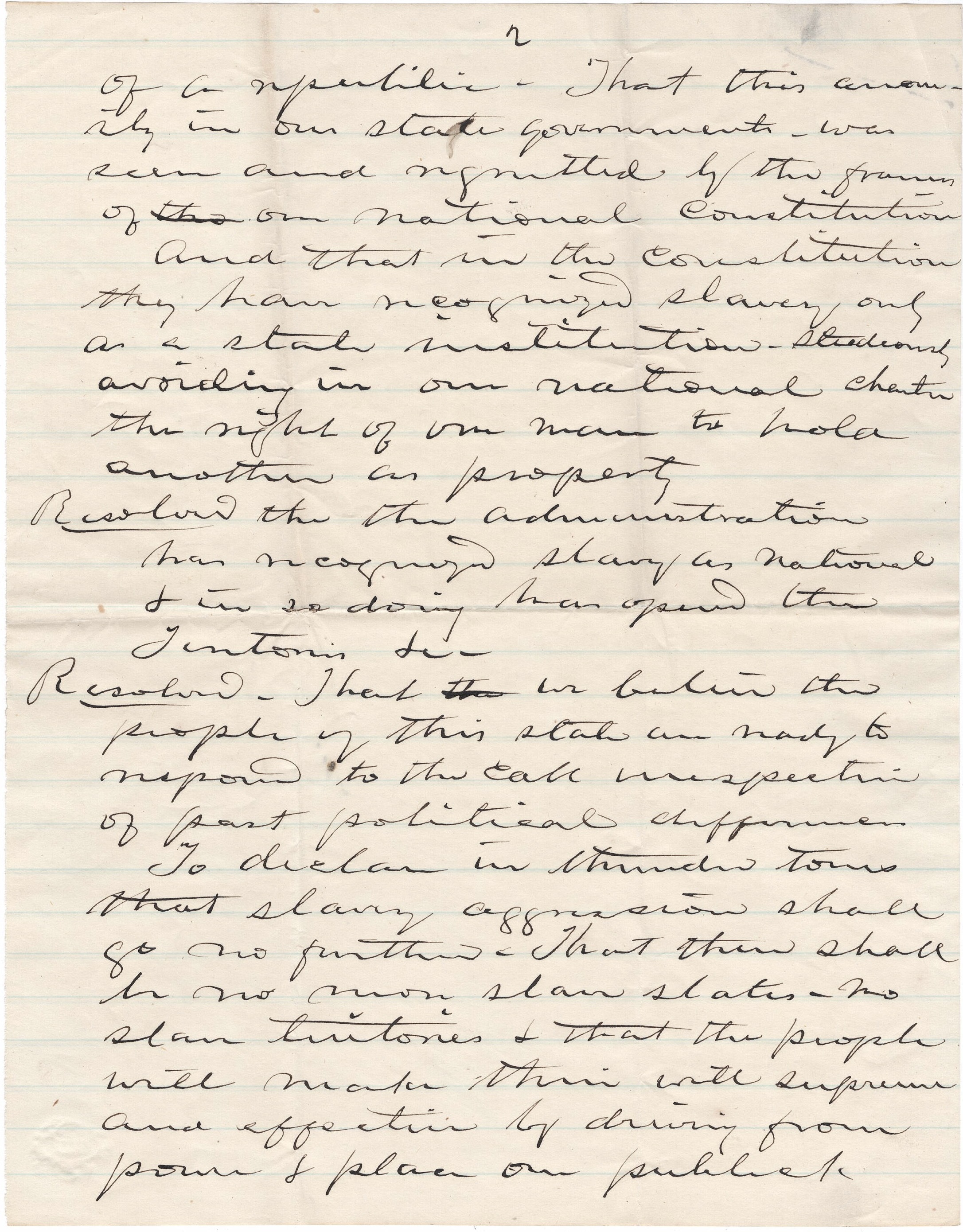
[Note: This is the earliest piece in the “Diven Collection” and it was not a letter but most likely a draft or copy of a set of resolutions written by Alexander S. Diven in 1854 after the passage of the Kansas-Nebraska Act. Alexander was not yet in the State Legislature so it isn’t clear what organization he represented when he wrote this. It may have been a political party organization.]

19 August 1854

Resolved. That we disapprove of the late law of Congress organizing the territories of Kansas and Nebraska by which slavery is admitted into territory heretofore dedicated to freedom and by which the Missouri Compromise (so called) was abrogated and annulled and that we are in favor of the repeal of said law so far as it respects said compromise.

Resolved. That we hold that our Republican institution rest upon the great doctrine of the equality of man in their political, civil, and religious rights, and that the stability of our free institutions depends upon our faithful adherence to these principles.

Resolved. That we consider the institution of slavery inconsistent with the Republican form of government insomuch as it denies to a portion of mankind that equality of right which constitutes the foundation of a republic. That this anomaly in our state governments was seen and regretted by the framers of our national constitution and that in the constitution they have recognized slavery only as a state institution—studiously avoiding in our national charter the right of a man to hold another as property.

Resolved. That the Administration has recognized slavery as national & is so doing has opened the territories, &c.

Resolved. That we believe the people of this state are ready to respond to the call irrespective of past political differences. To declare in thunder tones that slavery aggression shall go no further. That there shall be no more slave states, no slave territories, and that the people will make their will supreme and effective by driving from power & place our public [rest of document missing]

Letter 1

Jefferson City, [Missouri]
November 8, [1855]

My ever dear wife,

I am just within the range of post offices having been the last 18 days over wild prairies & wilder woods. You doubtless heard of the dreadful disaster on the Pacific road 1 and had you fears lest I was on the train. But a kind Providence had kept me from getting in in time to join the excursion which I contemplated, and would in all probability have been near my friend poor [Thomas] O’Sullivan.

He perished unhappily & yet had I been he, I had rather have perished than to have survived. Now sympathy is with him. Responsible as he was for the accident, he would only have lived to share the public execration. There are circumstances that cannot excuse his rashness. An engine had passed the bridge and after passing said he would not cross it again for five thousand dollars. O’Sullivan discharged him. The engineer of this train objected to cross. O’Sullivan, to encourage him, went upon the locomotive with the President of the road and told the engine man to put on steam. He did so and the consequence you know. 2

The death of O’Sullivan & the general result of the disaster may keep me here longer but I hope not. I am now waiting a steamer to go down to St. Louis where I expect a letter from you. I was never so anxious to hear from home. I have all kinds of fears and apprehension.

I wish I was out of this miserable contract—and all others. I want peace—peace & home. My dear wife, goodbye. Your husband, — A. S. Diven

1 “The Pacific Railroad was chartered in Missouri in 1849 to build a railroad from St. Louis to the Pacific Ocean. Due to financing problems and outbreaks of cholera, construction did not begin until 1851 with a groundbreaking at which prominent citizens of St. Louis turned out to celebrate the start of construction of the line.  It included speeches, a national salute, and the reading of a poem written for the moment in history. Due to the time required to make tunnels and build bridges, the line did not reach the nearby city of Pacific until 1853.  Much of the line between a point just east of Washington and Jefferson City was along the Missouri River.  Over the next two years, it would reach the capital city of Jefferson City with a planned grand entry on November 1, 1855.  All of their bridges were of wood with the largest one being across the Gasconade River, a tributary of the Missouri River.” [See Gasconade Bridge Failure 1855]

2 For a description of the accident and the names of those killed in the disaster, see Gasconade Bridge Train Disaster, 1855.


Letter 2

Jefferson City [Missouri]
July 25, 1858

My Dear,

I have been waiting all day for it to get a little cooler before writing but it has run the degrees of comparison, hot, hotter, hottest. I have been twice to church. The minister was just as ardent as the sun. Everything is ardent here—even the climate of the people is ardent. I don’t object to ardor but somehow here they don’t seem to get it in the right place.

It is near election. Night before last at St. Louis I went out to try and get cool & a crowd was at the first corner listening to a ranting brawlee to what was intended for a political speech but which was indeed very stale abuse of Yankee Abolitionists & Christians. A little further and a candidate for Congress was proving himself to be the very man for the support of his fellow citizens. At all the beer shops 9and they are legion), it was politics. All their quarrels are political. Indeed, it appears that the election affords a good opportunity to the fiery Missourians to let off their excessive calories.

Tomorrow we are to open the Pacific Railroad to Round Hill 45 miles west of this. I hope now to be ready to start home on Monday, a week from tomorrow, but will keep you advised of the prospect.

Porter, Brayton, and Tomy are here. Mr. Brayton, his two girls, and Mrs. Porter are at Clifton.

I hope you have it a little cooler. Don’t forget those Niggers. I shall expect to see the house black with them on my return.

Tell George about my letters. Those relating to Yates County Bank are to be sent to Petter Oliver. Political ones to be given to Thurston—Doctor Buell. First to Stonecliff for him to show to such parties as he thinks best. It is absolutely too hot to think, much less to write. So my dear wife, accept a melting adieu from your husband, — A. S. Diven


Letter 3

Jefferson City [Missouri]
August 1858

My dear wife,

You will see by the way my letters are dated that I am alternating between this & St. Louis rather rapidly. I am getting rather tired of the scenery of bluffs and flats. There is but one thing in the picture that continues to please me. That is the way the green ivy clings to the stems of great trees perfectly enveloping them in a casing of bright green. Occasionally the tree is dry with its great limbs stretching out like the branching of coral rocks, and the whole closely enveloped in the “ivy green.”

This is election day and I have to be idle as my partner, Gen. Price 1 is clearly interested in politics. I shall be glad when it is all over for I have heard more spread eagle speeches than I can well endure with the heated atmosphere. My great anxiety just now is to get away this week and I have not given it up yet. You can ewll imagine how irksome it is to lose an entire day under such anxiety.

I am getting very impatient to be home. If I could only hear from you & know that the children and all were well, I could wait while longer contented. Hoping very soon to see you my dear wife. I remain your husband, — A. S. Diven

1 After the expiration of his term as Governor of Missouri in 1857, Gen. Sterling Price (former General in Mexican War) became the state’s Bank Commissioner from 1857 to 1861. He also secured construction of a railroad through his home county, which now forms part of the Norfolk and Western Railway.


Letter 4

Jefferson City, [Missouri]
August 3d [1858]

My dear wife,
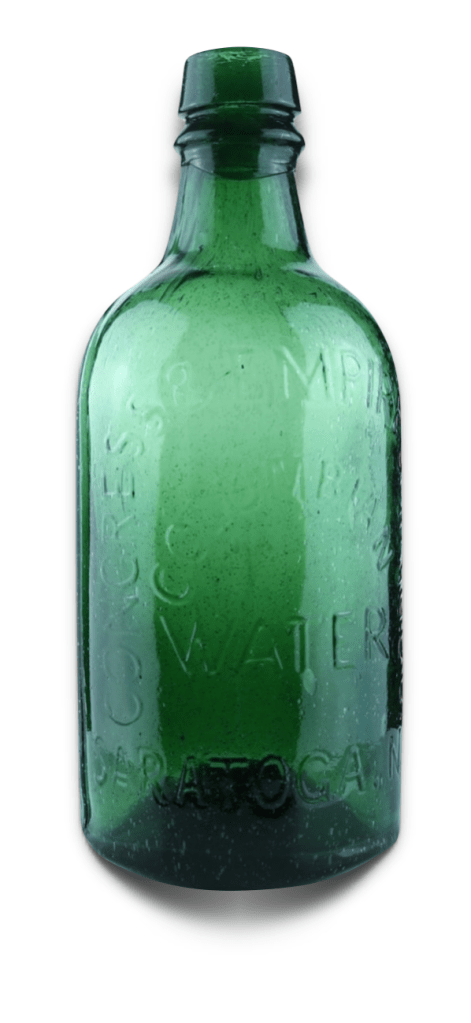
A mid-19th century Congress & Empire Water Bottle from Saratoga, New York

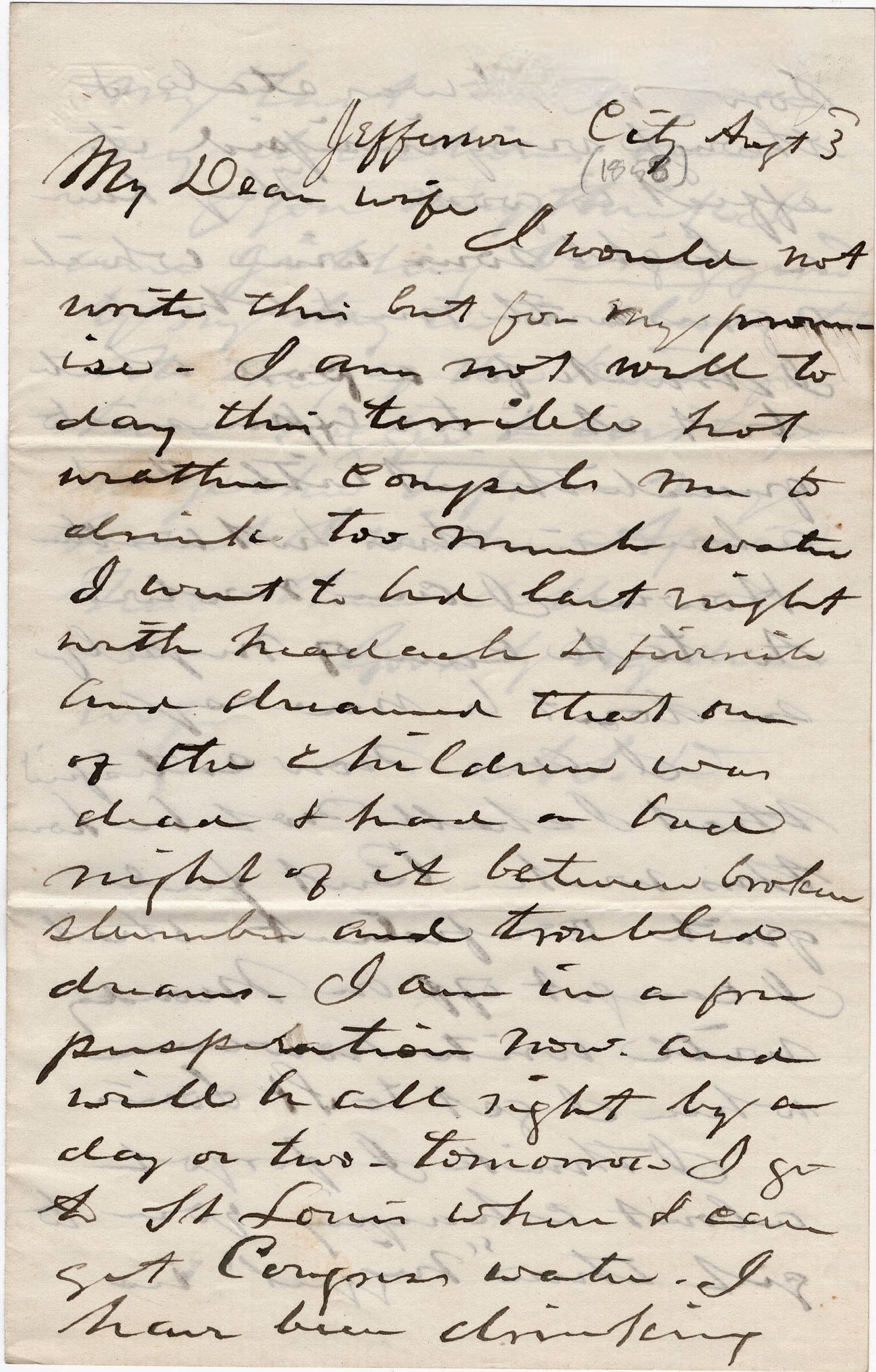
I would not write this but for my promise. I am not well today. This terrible hot weather compels me to drink too much water. I went to bed last night with headache & feverish and dreamed that one of the children was dead and had a bad night of it between broken slumber and troubled dreams. I am in a free perspiration now and will be all right by a day or two. Tomorrow I go to St. Louis where I can get Congress water. 1 I have been drinking some that was stale & though very insipid, its effect is good. They have a light, sour wine which agrees with me & which I drank for a good while but it is too expensive to quench thirst with that alone in this hot weather. However, I am resolved to take care of myself so don’t be uneasy.

I am now satisfied that I shall not be home this week but feel quite content that I can get off on Monday. Will write, however, when I get to St. Louis. I think I forgot about charging you to get those “niggers” in my last so I renew my directions here. You may think I am getting beniggered by my stay in a slave state. Nothing of the kind for here nigger & dirt go together & from my heart I wish Africa had them all.

Goodbye my dear wife, — A. S. D.

1 “Congress water” referred to a popular, bottled mineral water sourced from Congress Spring in Saratoga Springs, New York. It was sold nationwide and prized for its supposed health benefits. 

Letter 5

Statehouse overlooking the Missouri River at Jefferson City, Missouri (ca. 1860)

Jefferson City [Missouri]
New Years Day 1860

Dear Johnny,

I was very glad to receive your letter. I don’t think Caper’s bite will hurt you though sometimes the bite of a dog does cause hydraphobia & then the party bitten does a most terrible death. It is too dreadful to joke about such a disease.

You want to know what kind of a place this is. Well it is built on a great many steep hills. A river as far across as from our house to Mr. Hall’s is at the foot of the hills & across the river is a great flat and broad as from our house to the village. This is nearly all covered with corn. They don’t cut up their corn here as we do but let it stand in the field and husk it where it stands during the winter.

Then across this river & this flat are hills, not very high, but very steep and a great many of them on the side next us are white rock. And looking across from Jefferson [City] They look like houses as though there were a villages on those hills. The view is now all frozen over hard and boys skate on the ice.

It is not a lot like our Jefferson—not near so pretty, and I want very much to get away from it and go home & see Johnny. Your father, — A. S. Diven


Letter 6

[Note: This letter refers to the Battle of Bull Run, fought one week earlier on 21 Sunday 1861.]

Washington
Sunday, [July] 28, 1861

My dear,

I am in receipt of yours & Ella’s letter of Friday. You can scarcely imagine how these letters from home come like bread to the hungry or water to the thirsty. Don’t fear for my safety. I was never in better health & never more free from danger. When you read my last, will see how exactly like yourself I am affected by the departure of Alen. It does seems as though a link was broken in a cherished chain. But no matter now about these sad [ ].

Our country is still in a condition to retrieve the one disaster we have experienced. It is only a lessen to teach us the true magnitude of our difficulties. If the fault finders would only cease their croaking, we would lose all traces of the disaster save in the vacant places of those who fell & in the scears of the wounded and in the disgrace of the cowardly.

I hope your next letter will be more cheerful—that your philosophy will prevail over your melancholy. Above all, do take care of your health and don’t [ ]. It seems as though this year has been one in which your cares were piled up. Eugene prepared first for the Army, then for West Point…

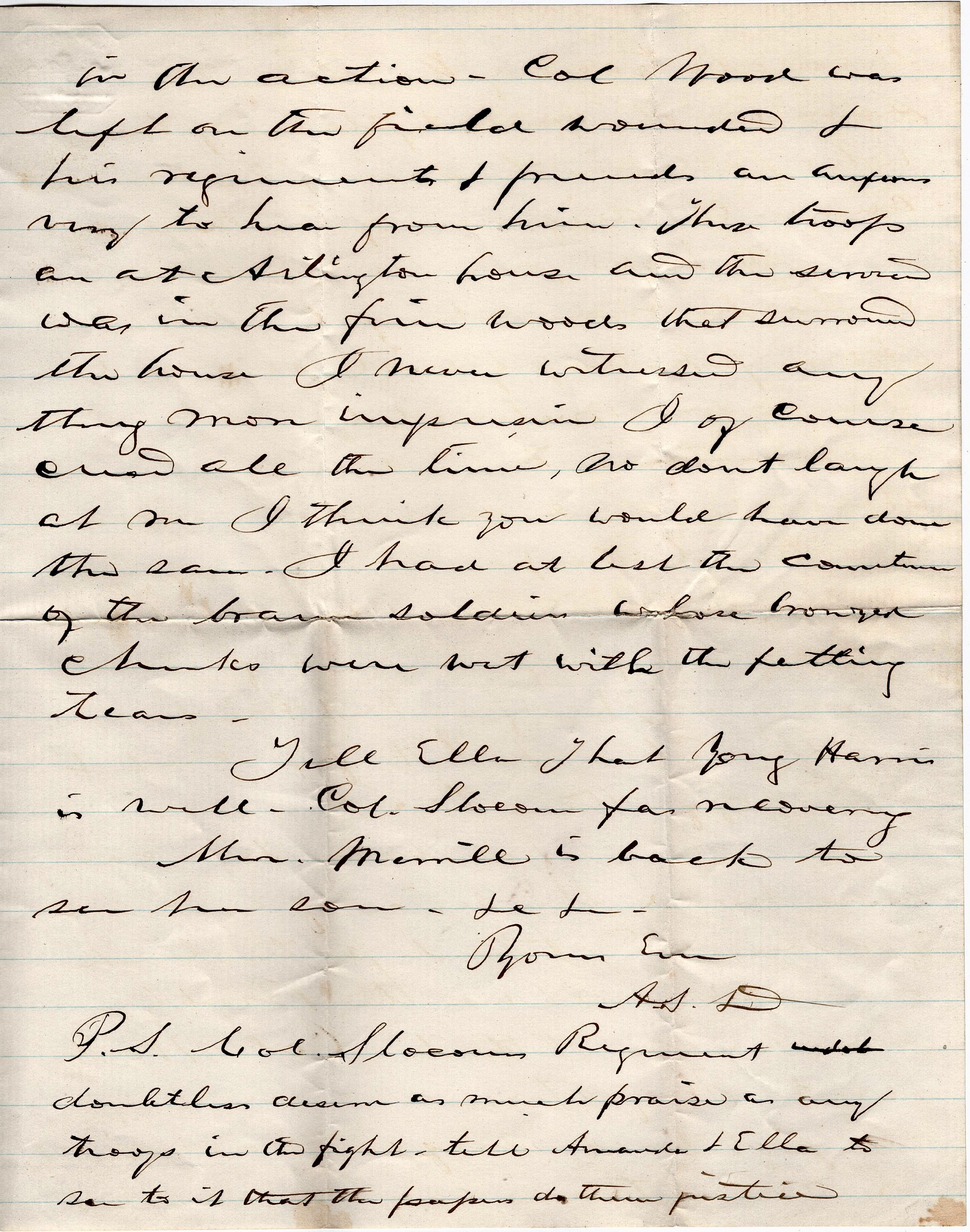
I have been to a camp and heard the service of a most zealous and I think patriotic Christian. It was the [14th] Brooklyn Fire Zouaves, I think. Col. [Alfred M.] Wood’s regiment. They stood as much of the fight & suffered as much or more than an regiment in the action. Col. Wood was left on the field wounded & his regiment & friends are anxious to hear from him. These troops are at Arlington House and the service was in the pine woods that surround the house. I never witnessed anything more impressive. I , of course, cried all the time. No, don’t laugh at me. I think you would have done the same. I had at least the countenance of the brave soldiers whose bronzed cheeks were wet with the feeling tears.

Tell Ella that young Harris is well. Col. [Henry Warner] Slocum fast recovering. Mrs. Merrill is back to see her son, &c. &c. Yours ever, — A. S. Diven

P. S. Col. Slocum’s Regiment [27th N. Y. Infantry] doubtless desire as much praise as any troops in the fight. Tell Amanda & Ella to see to it that the papers do them justice.


Letter 7

Addressed to Hon. A. S. Diven, M. C. [Member of Congress], Washington D. C.

U. S. C. C. West Point
Sunday, March 2, 1862

Dear Mother,

You complain in your last letter of not having received a letter from me the week before last. It must be the fault of the mails as I have mailed a letter to you ever Monday morning since I came to West Point. I think I promised you on leaving home that I would write you once a week while I remained at West Point. This promise, at least, I have kept faithfully do far, and I mean to stick to it for it gives you half as much pleasure to receive my letters as it does me to receive yours. I shall consider myself well paid for the trouble of writing.

Yesterday morning I received a letter from Ella to you that Maud sent me. I was surprised to hear that the folks at home liked my photographs so much. I thought they were not very well taken and I shouldn’t have taken them but the poor fellow 9artist he called himself) who took them looked as though he needed the money and he took them very cheap—only 50 cents apiece. I think that Ella was rather profuse in her compliments to my picture. She “laid it on pretty thick”, “cut it fat,” to use a slang phrase. But it is so long since she has seen me that she has probably forgotten how I do look.

Did Maud attend the ball at the White House and was she attired in a head dress and “no. 4” gaiters and a complete set of ear rings?

Last night we had another concert. Those who went said that it was a splendid affair. Unfortunately I was on guard and couldn’t go. This makes the fifth that we have had and I have been unable to go to but one.

How do things look in Washington now? Was it “All quiet on the Potomac up to 12 o’clock last night?”

Excuse this short letter. your son, — Eugene


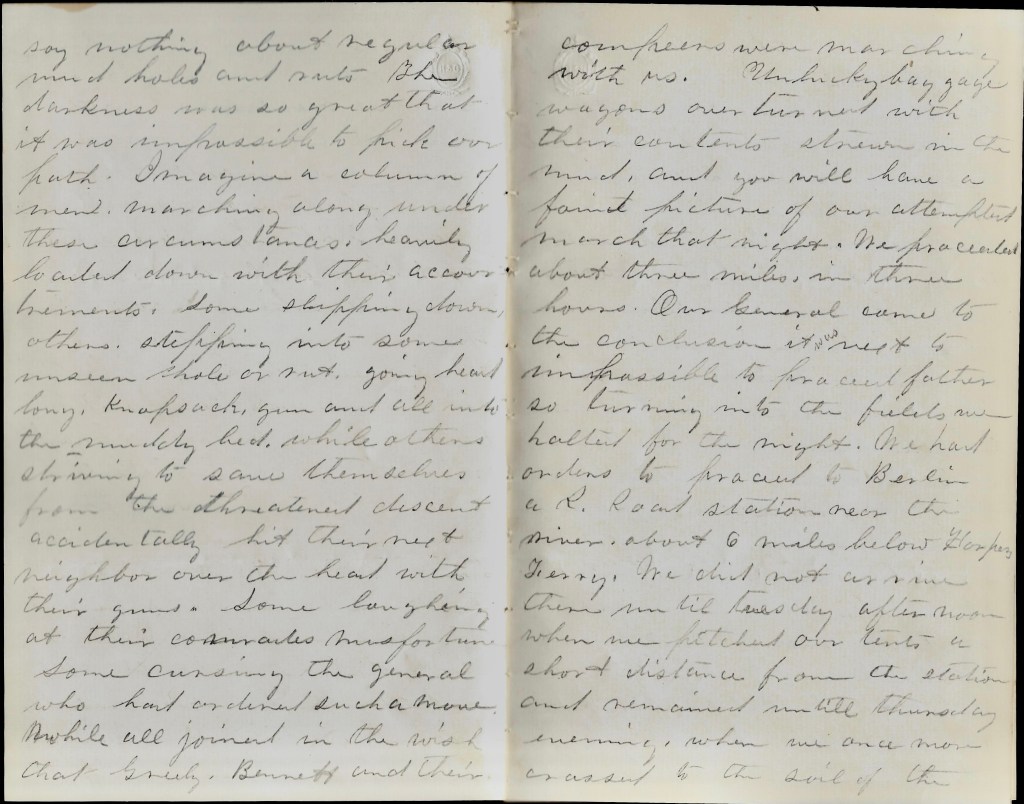
Boston Post, 10 July 1862.


Letter 8

Camp Seward
August 22, 1862

My dear,

I have just received your letter. You must have received a letter from me soon after writing. We are now packing up. Have our orders to move at six in the morning. Go to Fort Lyon about a mile and a half back from Alexandria. As soon as we are settled, then will write again. We are very anxious for our army [to advance on] the enemy. As I expected, don’t intend to wait for the reinforcement of our army. They are at it now.

I have a promise from Secretary [Gideon] Wells that Eugene shall have the first vacancy of a lieutenant in th Marine Corps. God bless you all, — your husband.

Address “Lt. Col. A. S. Diven, Fort Lyon, Alexandria, Va.”


Letter 9

Camp Seward
Near Fort Craig, Virginia
August 31, 1862

My dear,

I wrote George yesterday about noon saying that the fight was raging. It had not then reached its fury by a great degree. It slackened a little about one and then opened with terrible fury, raging until dark. I am now writing to hear the commencement this morning. I rode out about five miles toward the battle last evening. Met a Colonel with a broken arm. I thought him too badly frightened or hurt to give much information. I afterward met a young Lieutenant from the Maine Cavalry who was more intelligent or communicative. He said he was in all the fight of the day before. That that was with Jackson’s forces. That Sigel was in his rear and he had made three attempts to force his way through Sigel’s lines. That McDowell was pressing him from the front and the fight had been very obstinate on both sides. Both armies sleeping on the battlefield. that when he left the next morning (yesterday), the battle was raging on the old Bull Run battlefield. That the main army under Lee was held in check by Banks and that the probability was that the fight would become general taking in the whole army.

From the fury of the firing the last three hours before dark, I think there must have been a general fight without any decisive result as night evidently put an end to the firing. From there being no renewal of it this morning, one party may have retreated during the night. Sumner’s Division passed here towards the battle about three o’clock yesterday and another Corps de army soon after. The whole of our old army will be engaged if the fight is renewed today. Of one thing be assured, our troops are not routed as we are directly on the road where the stragglers would retreat and not a frightened sutler or camp follower has been seen.

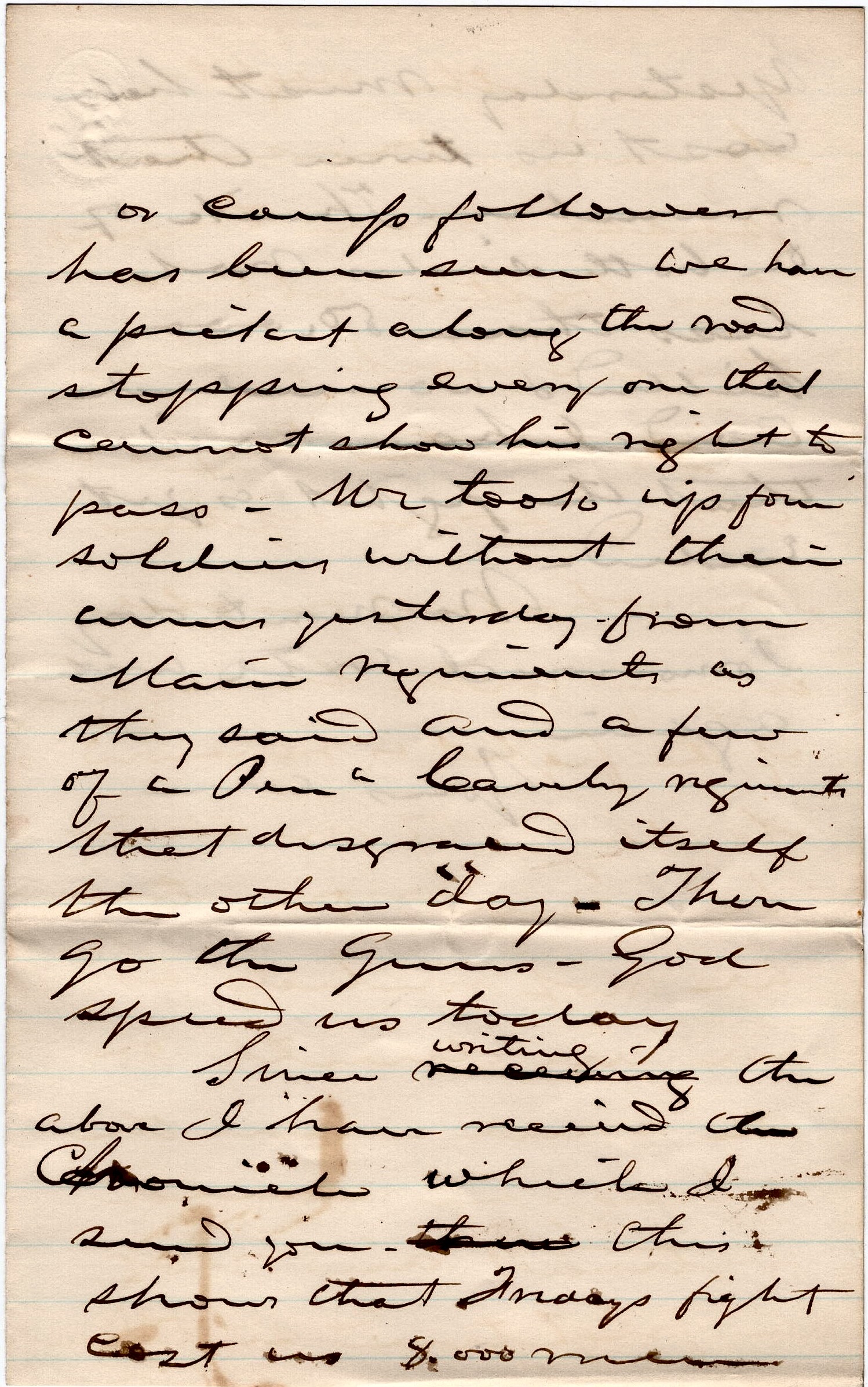
We have a picket along the road stopping everyone that cannot show his tight to pass. We too up four soldiers without their arms yesterday from Maine regiments as they said and a few of a Pennsylvania Cavalry regiment that disgraced itself the other day. There go the guns! God speed us today.

Since writing the above I have received the Chronicle which I send you. This shows that Friday’s fight cost us 8,000 men. Yesterday must have cost us twice that number. Think of on both sides not less than 50,000 killed and wounded and I have no idea that the fight is yet ended.

No more today. Tomorrow I will write again. Yours ever.


Letter 10

Camp Seward, Virginia
September 1, 1862

My dear wife,

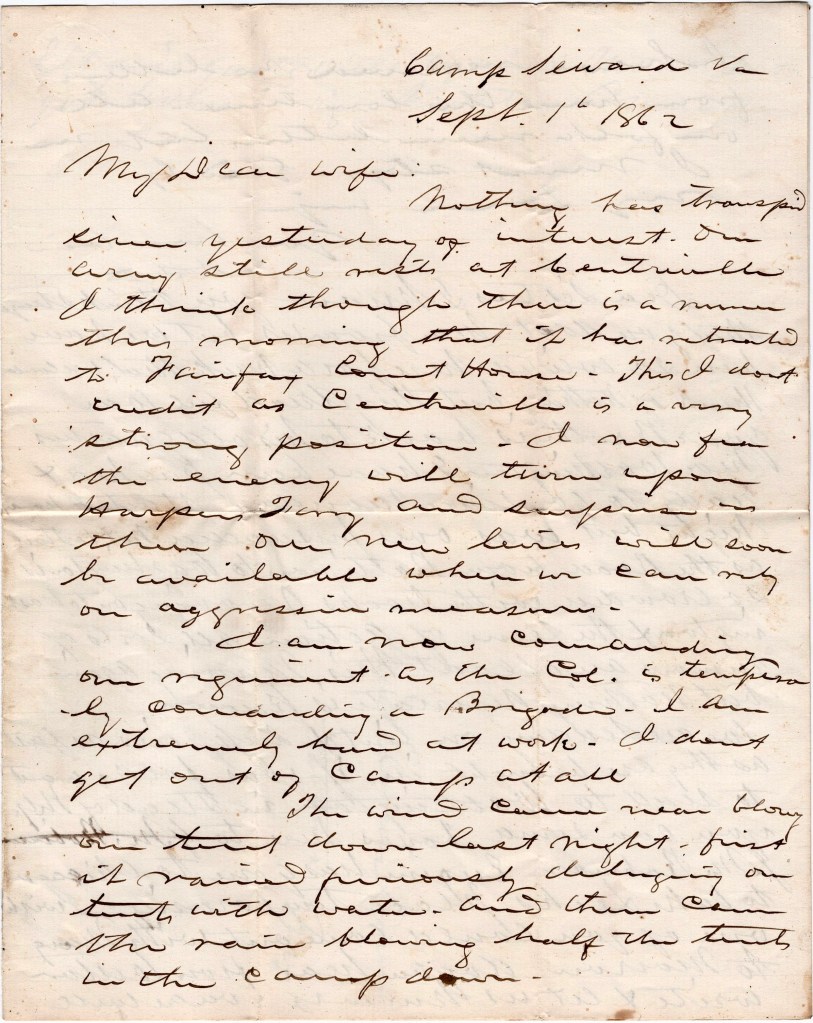
Nothing has transpired of interest. Our army still rests at Centreville, I think, though there is a rumor this morning that it has retreated to Fairfax Court House. This I don’t credit as Centreville is a very strong position. I now fear the enemy will turn upon Harpers Ferry and surprise them. Our new [ ] will soon be aailable when we can rely on aggressive measures.

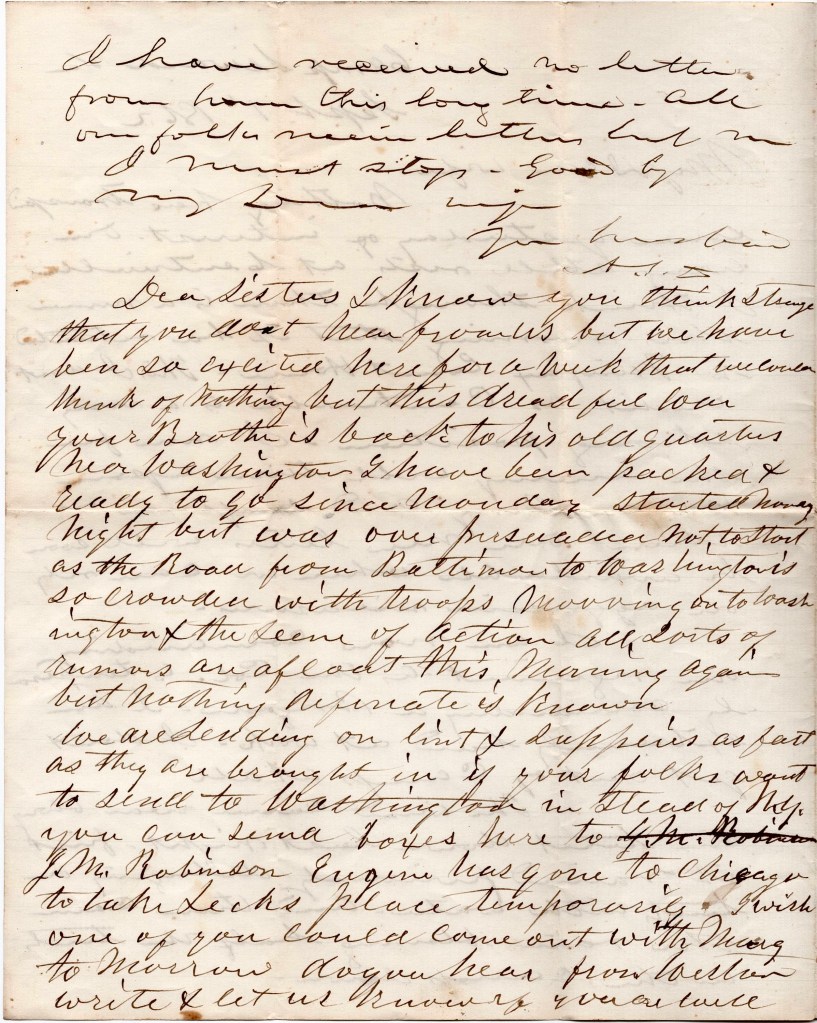
I am now commanding our regiment as the Col. is temporarily commanding a Brigade. I am extremely hard at work. I don’t get out of camp at all. The wind came near blowing our tent down last night. First it rained furiously, deluging our tents with water and then came the rain [wind] blowing half the tents in the camp down. I have received no letter from home this long time. All our folks receive letters but me. I must stop. Goodbye my loving wife, — your husband, — A. S. D.

[In a different hand]

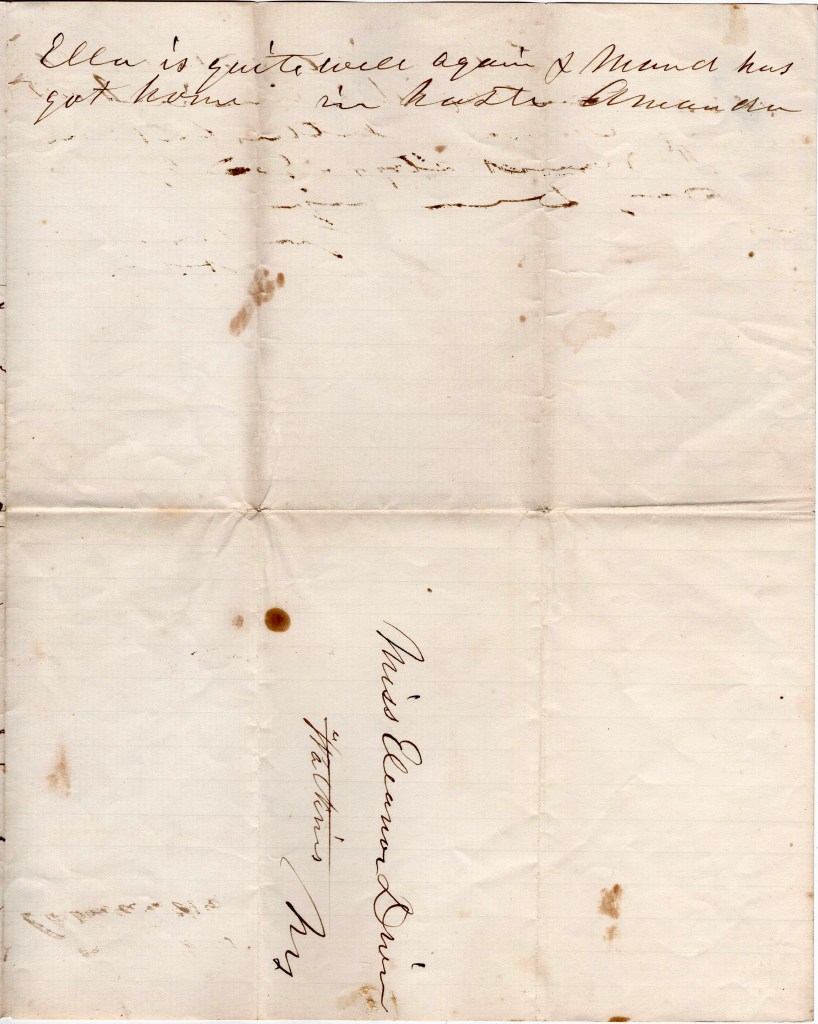
Dear sisters, I know you think strange that you don’t hear from us but we have been so excited here for a week that we could think of nothing but this dreadful war. Your brother is back to his old quarters near Washington. I have been packed and ready to go since Monday. Started Monday night but was over persuaded not to start as the road from Baltimore to Washington is so crowded wit troops moving on to Washington & the scene of action. All sorts of rumors are afloat this morning again but nothing definite in known.

We are sending on lint & supplies as fast as they are brought in. If your folks want to send to Washington instead of New York, you can send boxes here to J. M. Robinson. Eugene has gone o Chicago to take Lech’s place temporarily. I wish one of you could come out with Marg tomorrow. Do you hear from Weston? Write and let us know if you are well. Ella is quite well again & Mand has got home. In haste. — Amanda
Letter 11

Camp Seward, Virginia
September 6, 1862

My dear wife,

We have had a quiet day and night. Nothing but the routine of camp life. We have had all kinds of rumors about the enemy falling upon Maryland and we heard last night that they had crossed in force near Harpers Ferry. I doubt it. We have now an immense army about Washington. What we are to do with it is quite a puzzling question with me.

I was never in my life more at a loss to form an opinion as to what should be done. I am quite at a loss for anything to write about this morning but don’t let the want of interest in this letter prevent you writing to me.

Excuse this. Your husband, — A. S. D.

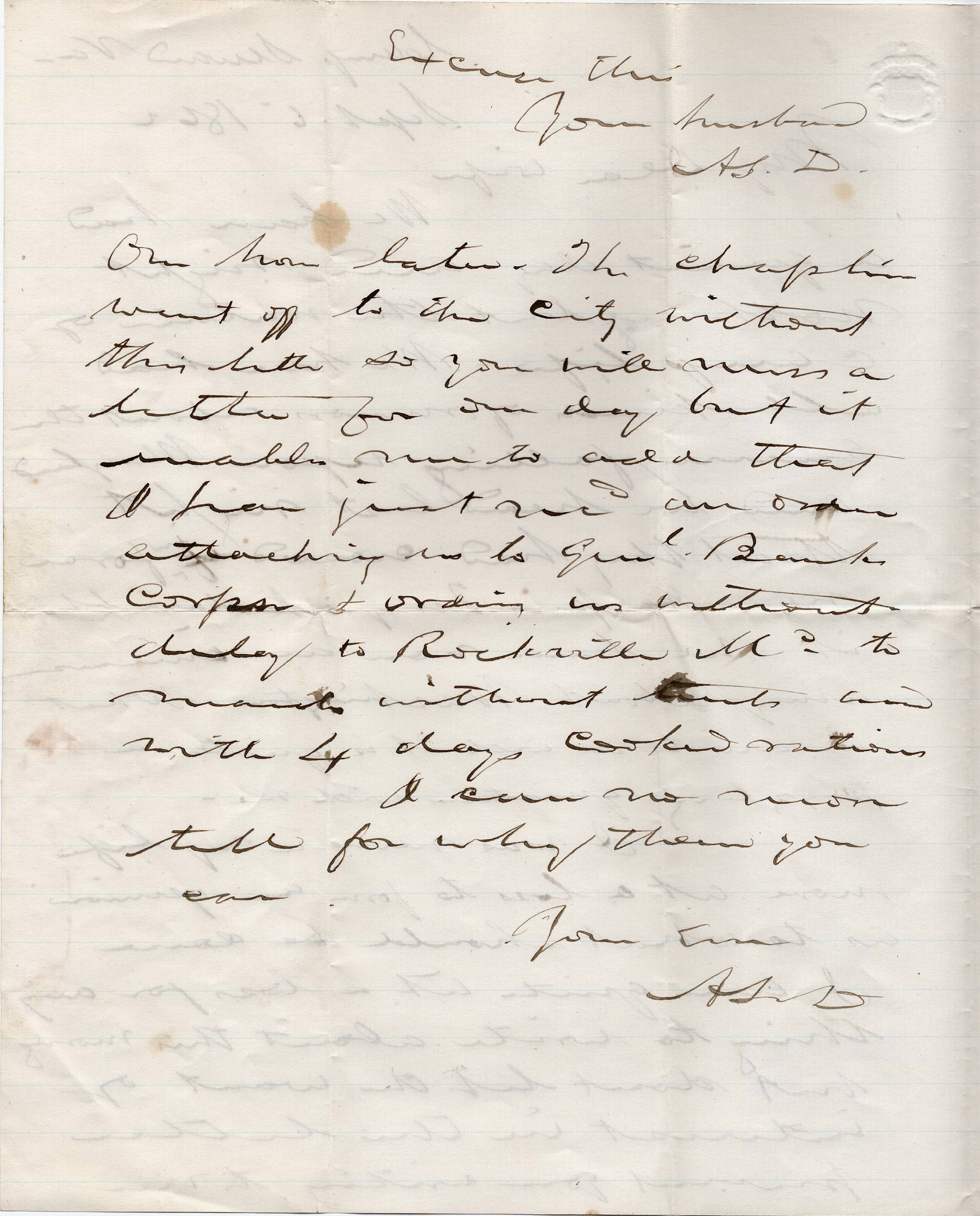
One hour later. The chaplain went off to the city without this letter so you will miss a letter for one day but it enable me to add that I have just received an order attaching us to Gen. Banks’ Corps & orders us without delay to Rockville, Maryland, to march without tents and with 4 days cooked rations.

I can no more tell for why than you can. Yours ever, — A. S. D.


Letter 12

Camp Seward near Rockville, Md.
September 9, 1862

My dear,

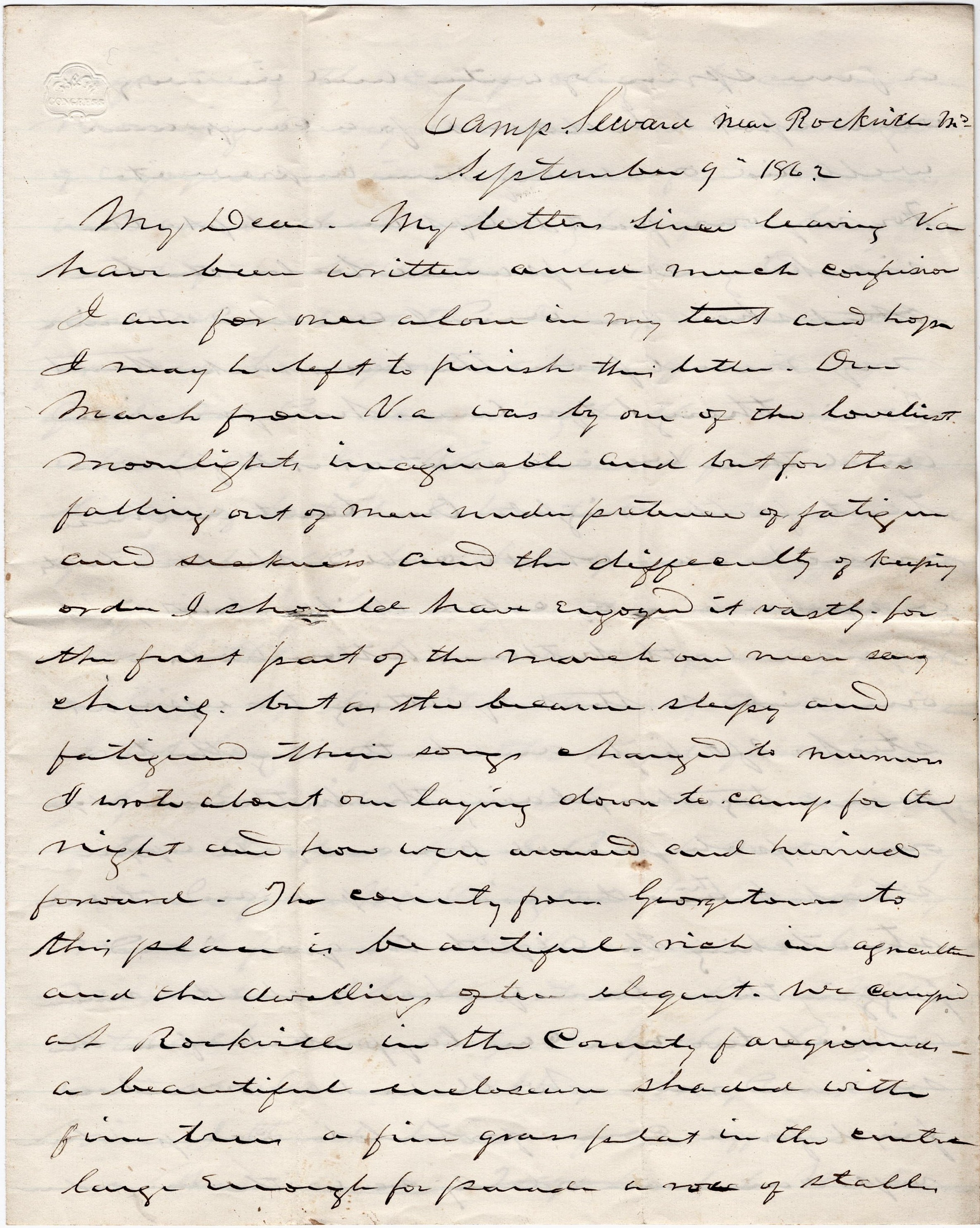
My letters since leaving Virginia have been written amid much confusion. I am for once alone in my tent and hope I ay be left to finish this letter. Our march from Virginia was one of the loveliest moonlights imaginable and but for the falling out of men under pretense of fatigue and sickness and the difficulty of keeping order, I should have enjoyed it vastly for the first part of the march our men sang cheerily. But as they became sleepy and fatigued, their songs changed to murmurs. I wrote about our laying down to camp for the night and how we were aroused and hurried forward.

The country from Georgetown to this place is beautiful—rich in agriculture and the dwellings often elegant. We camped at Rockville in the county fairgrounds—a beautiful enclosure shaded with fine trees, a fine grass plot in the centre, large enough for parade, a row of stalls, a fine spring of water and in every way a spot to be desired for a camp and well did our weary men improve it. For my part, I slept and slept. The sinking sun passed below the tree that shaded me and I awakened, made my meal from the haversack that Tom’s thoughtfulness had provided and then we all went at it to fix our tents for the night.

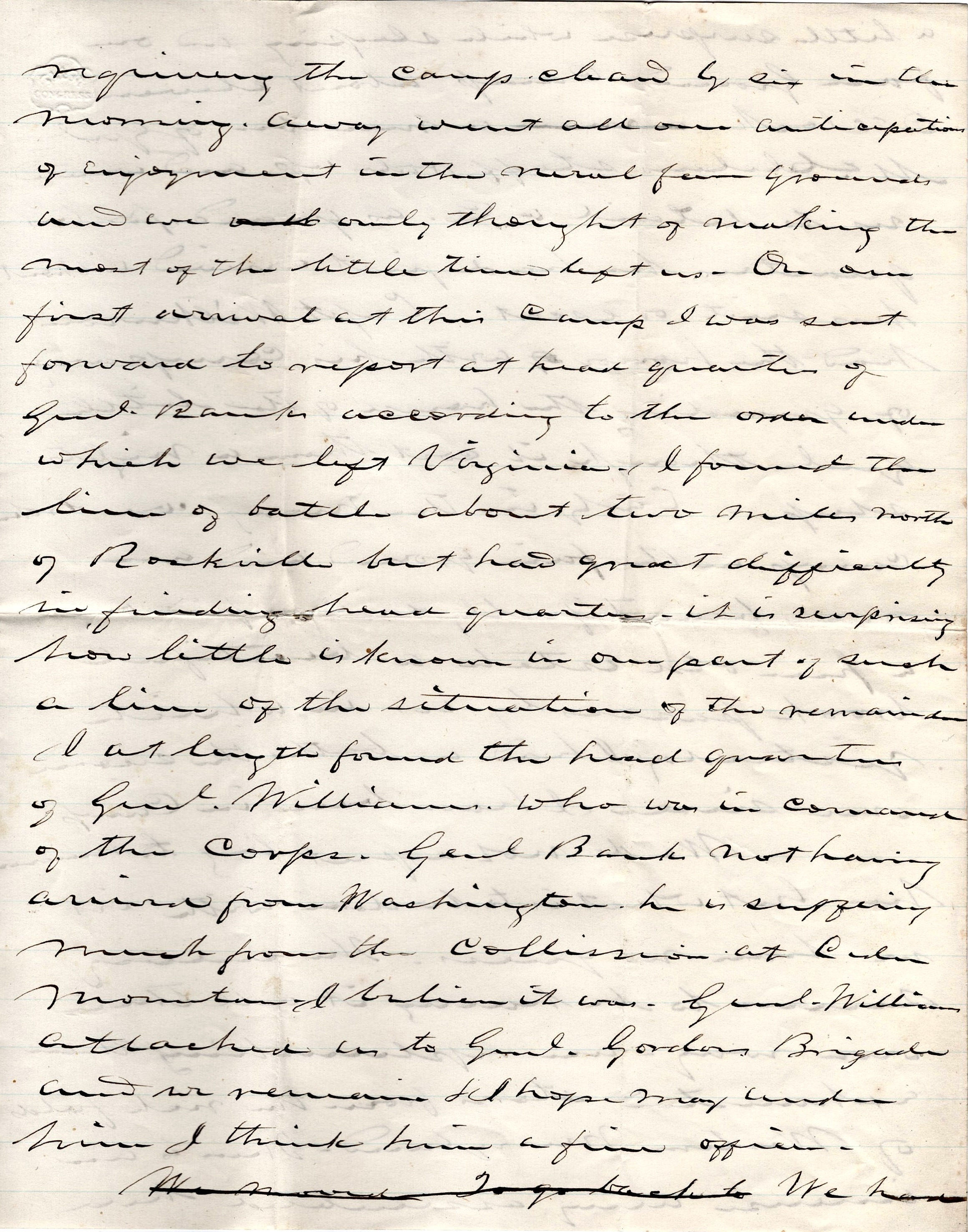
Our tent on these marches are what is called shelter tents—a square piece of cotton drill about 7 feet square with buttons & button holes in one side so that by setting two upright sticks 3 feet high and buttoning the two together placing the buttoned edges over a pole passed from one of the upper sticks to the other as a ridge pole and then stretching the edges to the ground and pegging them down, you have a shelter under which two men can lay protected from the sun and rain. Well we had ourselves fixed for a comfortable camp when up came an orderly with an order requiring the camp cleared by six in the morning. Away went all the anticipation & enjoyment in the rural fairgrounds and we only thought of making the most of the little time left us.

On our first arrival at this camp I was sent forward to report at headquarters of Gen. Banks according to the order under which we left Virginia. I found the line of battle about two miles north of Rockville but had great difficulty in finding headquarters. It is surprising how little is known in our part of such a line of the situation of the remainder. I at length found the headquarters of Gen. Williams who was in command of the Corps, Gen. Banks not having arrived from Washington. He is suffering much from the collision at Cedar Mountain I believe it was. Gen. Williams attached us to Gen. Gordon’s Brigade and we remain & I hope may under him. I think him a fine officer.

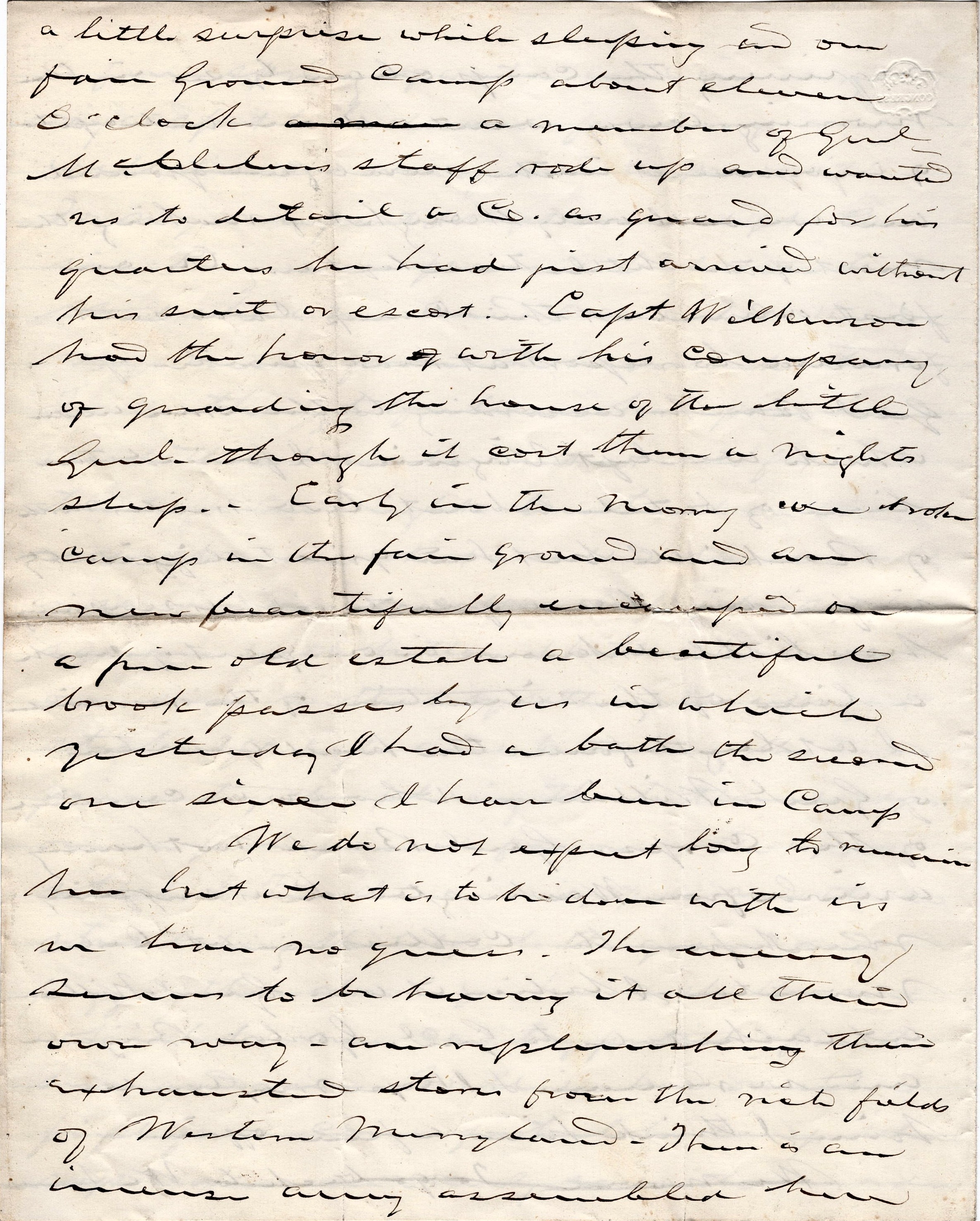
We have a little surprise while sleeping in our fairground camp. About 11 o’clock a number of Gen. McClellan’s staff rode up and wanted us to detail a company as guard for his quarters. He had just arrived without his suit or escort. Capt. Wilkerson had the honor with his company of guarding the house of the little General, though it cost them a night’s sleep. Early in the morning, we broke camp in the fairground and are now beautifully encamped on a fine old estate. A beautiful brook passes by us in which yesterday I had a bath—the second one since I have been in camp.

We do not expect long to remain here but what is to be done with us we have no guess. The enemy seems to be having it all their own way, are replenishing their exhausted stores from the rich fields of western Maryland. There is an immense army assembled here [rest of letter missing]

Letter 13

Baltimore [Maryland]
18 September 1862

Dear Mother,

I had a slow time of it coming here. Only reached here at eleven this morning & must stay over till half past eight tomorrow morning before I can go in. There is but one train a day on th Baltimore & Ohio and that only runs to the Monacacy about five miles this side of Frederick City. I understand there is a line of stages running to Harpers Ferry. I shall got o Frederick & then probably to Boonsboro. I have been able to trace Banks Corps up to Tuesday. It was not in any of the previous fights but was on the right of the army in Tuesday’s battle. That wing was not very hotly engaged. the brunt of the battle being done by the center and left wing.

Yesterday’s fight was the fiercest probably of the war. It’s final result has not yet transpired in this vicinity. Baltimore is about like Washington for getting news. The N. Y. papers for this morning are just in & perhaps I can learn something from them. I shall take good care of myself & let you hear from me as often as possible. In the meantime consider no news as good news. The N. Y. Times has the most reliable & intelligible reports from the battlefield. You might have Towner save it for you & give it to Turner so that you can get it at the office.

I had very little sleep last night & am rather “shakey” & can’t write very smoothly as you perceive. Yours on, — G. M. Diven


Letter 14

Sandy Hook near Harpers Ferry
September 21, 1862

My dear,

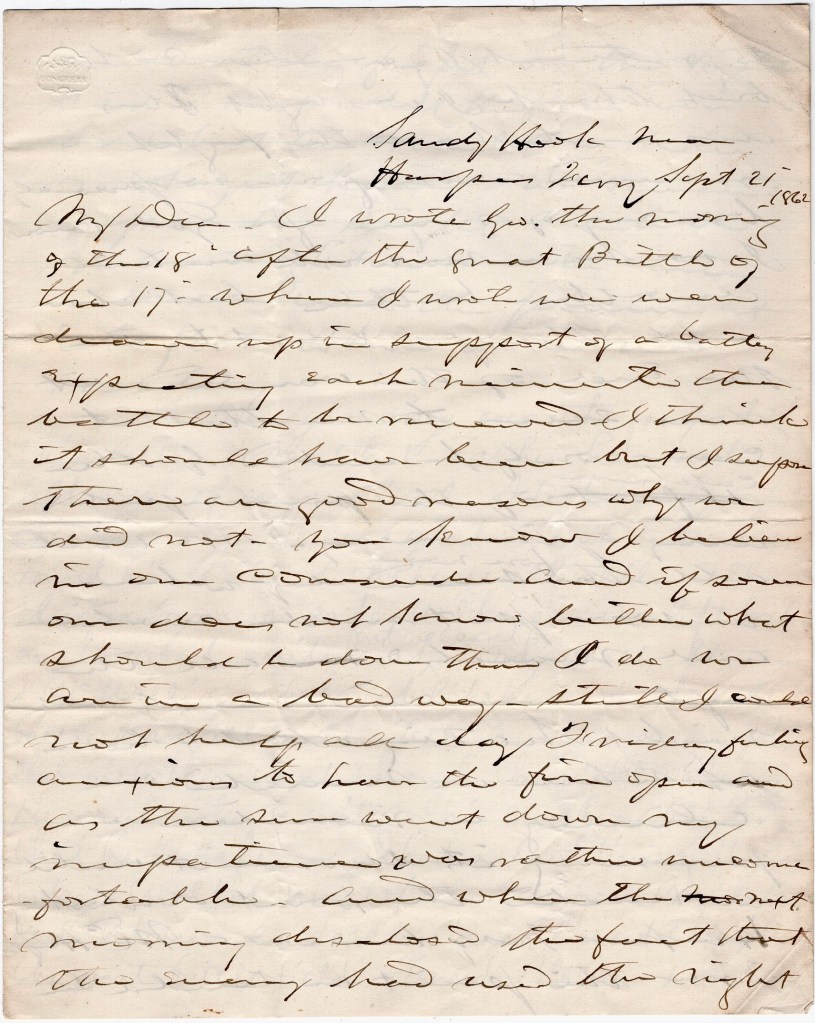
I wrote George the morning of the 18th after the great battle of the 17th [Antietam]. When I wrote, we were drawn up in support of a battery expecting each minute the battle to be renewed. I think it should have been but I suppose there are good reasons why we did not. You know I believe in our commander and if someone does not know better what should be done than I do, we are in a bad way. Still I could not help all day Friday feeling anxious to have the fire open and as the sun went down my impatience was rather uncomfortable. And when the next morning disclosed the fact that the enemy had used the night to retreat, I could not but think I was right. This desire to have the fight renewed arose from no personal bravery of mine for God knows I have no wish ever to see another battle, but above all things I want to see the end of this war and it does seem to me that it can only be ended by the capture of the principal army of the enemy.

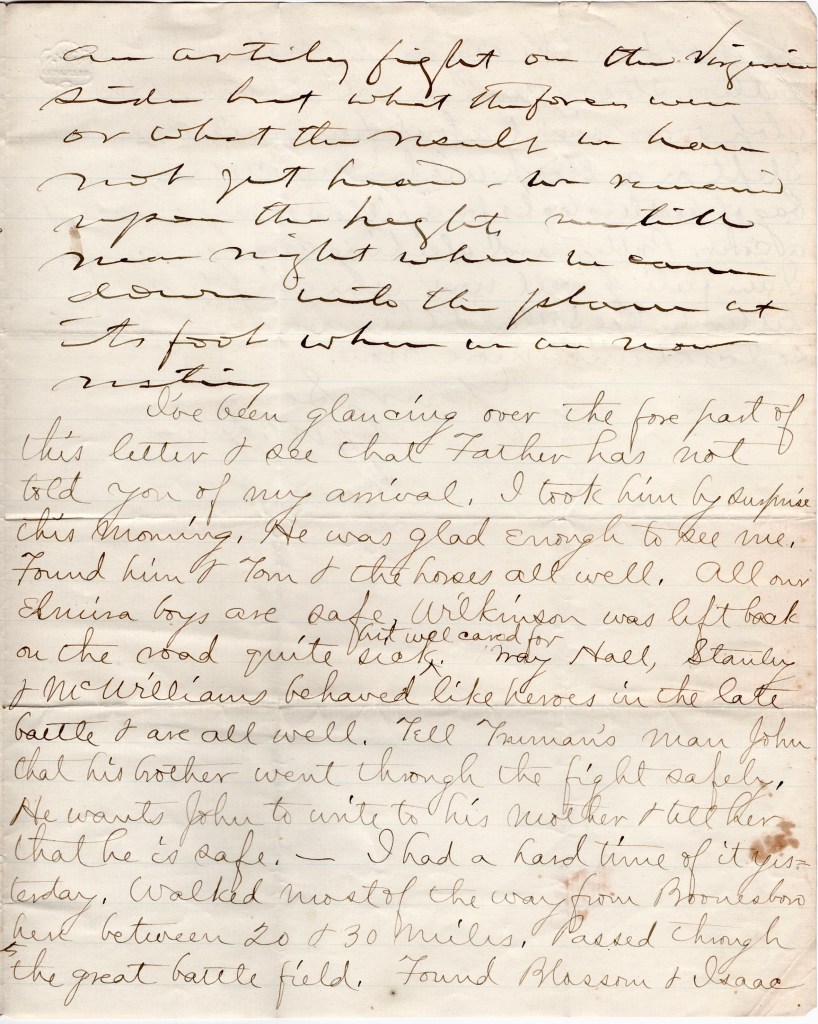
We waited all the forenoon of the second day when we were out under motion and marched all the afternoon and nearly all night, halting about four hours, when we marched on, climbing a mountain and passing its summit until we reached the point overlooking Harpers Ferry known as Maryland Heights. From this point we could see an artillery fight on the Virginia side but what the forces were or what the result we have not yet heard. We remained upon the heights until near night when we came down in to the plain at the its foot where we are now resting.

[In George Diven’s hand]

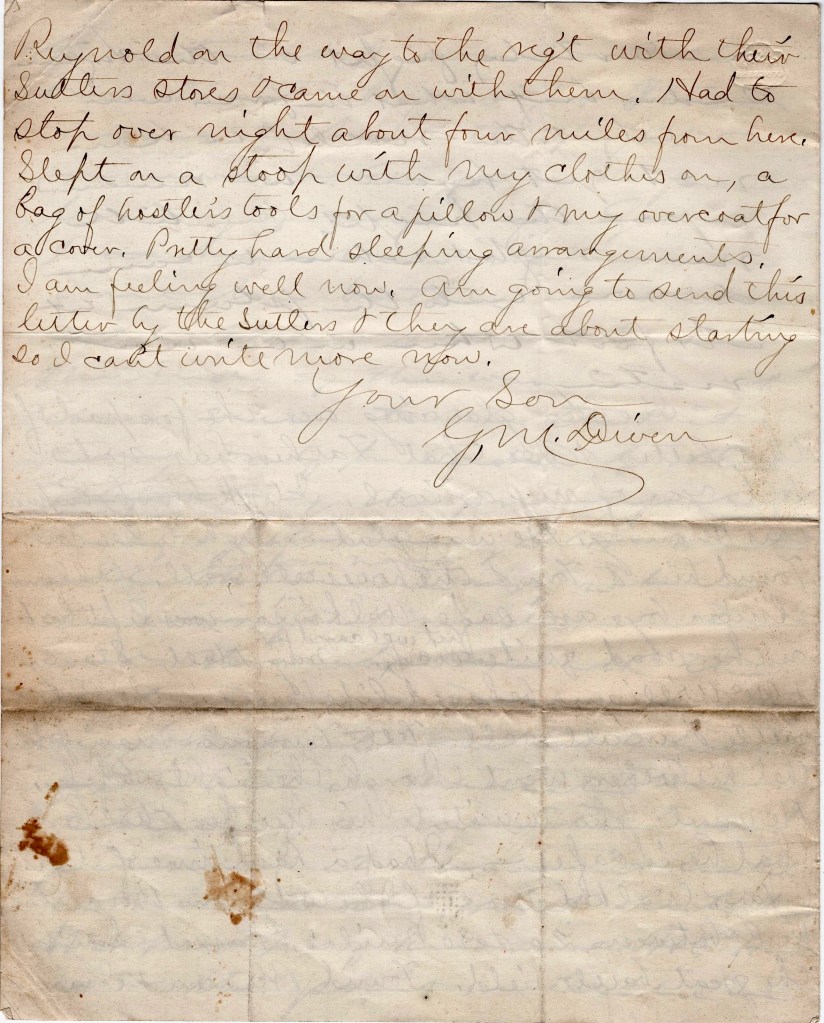
I’ve been glancing over the fore part of this letter and see that father has not told you of my arrival. I took him by surprise this morning. He was glad enough to see me. Found him & Tom & and the horses all well. All our Elmira boys are safe. Wilkinson was left back on the road quite sick but well cared for. Maj. Hall, Stanley & McWilliams behaved like heroes in the late battle & are all well. Tell Truman’s man John that his brother went through the fight safely. He wants John to write to his mother & tell her that he is safe. I had a hard time of it yesterday. Walked most of the way from Boonsboro here, between 20 and 30 miles. Passed through the great battlefield. Found Blossom and Isaac Reynold on the way to the regiment with their sutler’s stores & came on with them. Had to stop over night about four miles from here. Slept on a stoop with my clothes on, a bag of hostler’s tools for a pillow & my overcoat for a cover. Pretty hard sleeping arrangements. I am feeling well now. Am going to send this letter by the sutlers & they are about starting so I can’t write more now. Your son, — G. M. Diven

Letter 15

Washington
30 December 1862

Mrs. A. S. Diven

Dear madam, Col. Diven came in this morning and has gone on to the regiment which last evening returned to its camping ground near Fairfax Station.

On Sunday the rebels came in 4 miles this side of Fairfax Station and burned Accotinick bridge and carried off our telegraph operator there but the bridge is now repaired and the Colonel had gone to the regiment up the road. He desired I should write to you of these facts so that you may know his whereabouts. Very respectfully yours, — G. L. Smith


Letter 16

Fairfax Station, Va.
December 31, 1862

My dear,

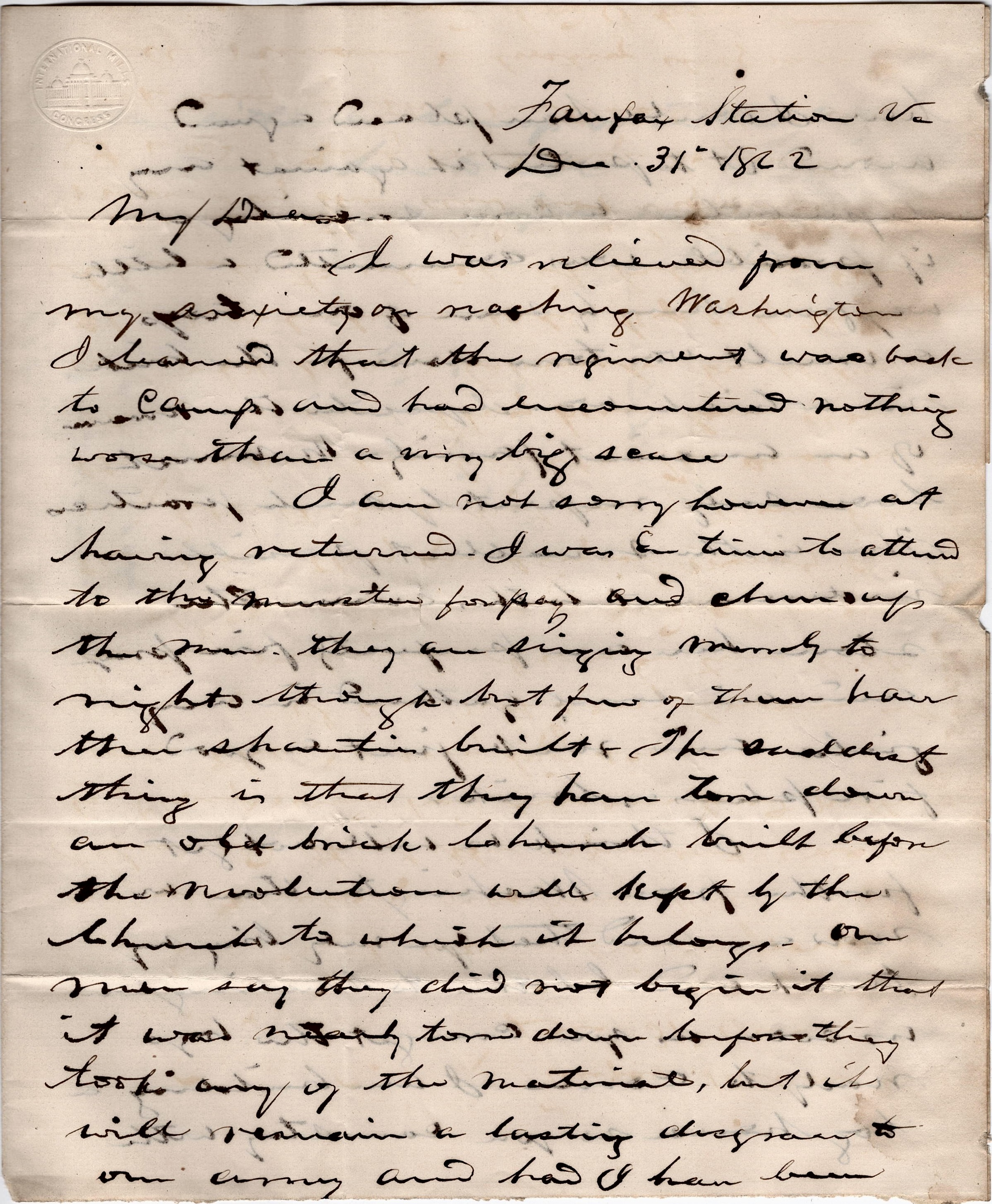
I was relieved from my anxiety on reaching Washington. I learned that the regiment was back in camp and had encountered nothing worse than a very big scare.

I am not sorry however at having returned. I was in time to attend to the muster for pay and cheer up the men. They are singing merrily tonight though but few of them have their shanties built. The saddest thing is that they have torn down an old brick church built before the [American] Revolution well kept by the church to which it belongs. Our men say they did not begin it—that it was nearly torn down before they took any of the material but it will remain a lasting disgrace to our army and had I have been here I would have placed a guard around it to protect it against any depredation. 1

A worse sacrilege if possible was committed a little way from here by some of our troops. A vault was torn down for the brick in which was deposited the remains of an ancient family. We must lose self respect by such practice. There is the smallest possible inducement to this crime. The stone here is perfectly fire proof and easily gathered in any field and makes just as good a fire place as brick.

I think we will not get further from Washington than we now are and that you may bring my trunk and clothes to Washington as soon as you can get the boys ready to come. I am building a log house so you can stay with me either in camp or in the city. Love to all. Your husband, — A. S. Diven

1 Diven is most likely referring to the 2nd Pohick Church which was built between 1769 and 1774. The church was located in Fairfax county in the general vicinity of Fairfax Station. It was a parish church for prominent colonial figures including George Washington. Union troops that wintered in the vicinity in 1862-63 dismantled the church for its brick to make fire places.

Letter 17

Fairfax Station
Friday, January 9, 1863

Dear Mother,

I suppose you think it it about time that I was writing to you to let you know how I like soldiering. There goes the ever welcome supper bell so I must stop before I have fairly begun and finish this after that important duty is performed.

Have just returned from a supper of beef steak, fried liver, fried potatoes, cold tongue, toast and coffee. Very good fare considering the place that we are in. The general [Jackson] and his staff all mess together and we don’t starve either.

I like General Jackson very much. He is a very sociable and agreeable and a perfect gentleman. He is a great smoker and the first day I came he made the discovery that I had some good tobacco and since that, he comes every night after supper with his pipe to my tent and spends about half an hour with me smoking and talking.

I thought when I came out here that as long as there was no one around to see how I looked, I need not pay any attention to my personal appearance. But I find that the General, though a very plain dressed man himself, likes to have his staff—especially his Aides—dress up in style. I got me a riding jacket in Washington & as soon as he saw it, he said I must send it back and have my rank designated on the sleeves. So I had to send it back to Washington to have two or three yards of gold lace put on the sleeves.

The day after I arrived here we went through the pleasant operation of moving our camp. We are now camped in the woods about a mile from Father’s regiment. This a.m. I rode over and saw Father. He is busy putting up a log hut for his winter quarters.

Lowe, I suppose, is now home. Jim Flynn tells me that Towner is coming back with him. I hope he will. The more Elmira faces I see around, the more like home it will seem. I never felt better than I have since I came here. The weather is cold but I have a good tent with a stove, a contraband to keep it supplied with wood. I guess I will manage to live this winter. Let me hear from you soon. your affectionate son, — Eugene [Diven]

Lt. Eugene Diven, A. D. C., 2nd Brigade, 2nd Division, 12th A. C. Fairfax Station.


Letter 18

Washington
January 11, 1863

My dear wife,

I came down from camp this morning and had just a little hope of finding you here. I have now but a little more than a month and a half of freedom from the discipline of the army. After the 4th of March, it may and probably will be impossible for us to meet. Had we not then better improve the little liberty let us? May I not expect to find you here next Sunday? I have a nice place in camp. Have built it with Tom and my plan is to stay in Congress during the week, go to camp Friday night, and return Monday morning. You can go with me. bring my cravat. Love to all. Good night, your husband.


Letter 19

Headquarters 107th Regt. N. Y. V.
March 13, 1863

My Dear,

I am again in camp. I found my men much more comfortable than I expected. THey have never had a better camp except kitchen. We are as well off as at Antietam. Great injustice was done in the regiment by inspecting it when the men were all detailed to fatigue duty. The men were taken right out of the mud and inspected without any chance to change or clean their clothes. I have little doubt but that injustice done us will be committed.

I was sorry to hear that Truman was going to leave the farm. I think he had better stay. Produce is going to be very high and he can do well. But if he don’t get another farmer, don’t attempt to carry on the farm yourself. I don’t want George to be kept from his business & I don’t want you perplexed with it. You will have quite enough to do about the house and garden.

It is terribly cold here today. We have an old ragged tent and last night I could not kep warm but the cold weather cannot last. Tom came in good condition. The horses are fat and frisky.

Major Dickenson made us a good visit. There is sense in having a visit from such a man. It does the men good but no visit from men who promote discontent.

Eugene is looking well and getting fat.

We have plenty of good rations and I fall right into camp life with a good will.

We are putting ourselves in condition to open the campaign and I think it will be a very active one. Love to all. Your husband, — A. S. D.


Letter 20

Aquia Creek
March 16, 1863

My dear,

The chaplain goes to Washington in the morning and it expedites a letter one day to send by him instead of sending to Headquarters so I write a line without having anything to write about.

Yesterday was a terrible day. It thundered and lightnied terrifically and today the hail lay on the ground so deep that we had no drill. So I have been shut up studying tactics a little, having the blues a little, thinking of home a great deal. I have a miserable old ragged tent 9 feet square and the Major and I have to occupy it together but we get on very well.

[Our son] Eugene looks well. Is getting quite fat.

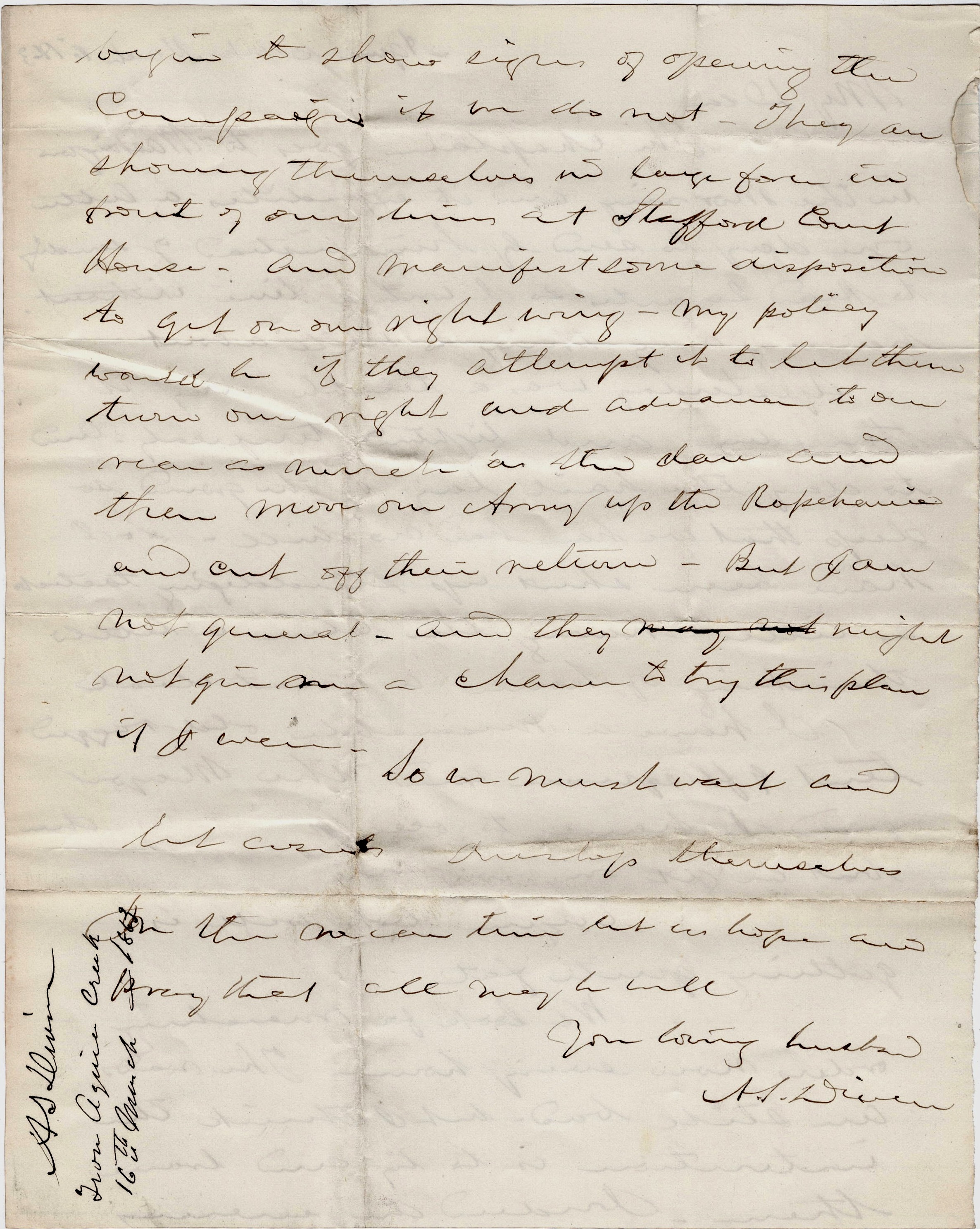
We look for marching orders now every hour. The roads are still bad but I think the intention is to try and brave them. Indeed, the enemy begin to show signs of opening the campaign if we do not. They are showing themselves in large force in front of our lines at Stafford Court House and manifest some disposition to get on our right wing. My policy would be if they attempt it to let them turn our right and advance to our rear as much as they dare and then move our army up to the Rappahannock and cut off their return. But I am not general, and they might not give me a chance to try this plan if I were. So we must wait and let events develop themselves.

In the meantime, let us hope and pray that all may be well. Your loving husband, — A. S. Diven


Letter 21

Headquarters 107th Regt. N. Y. V.
Aquia Creek
March 16, 1863

Dear Alice,

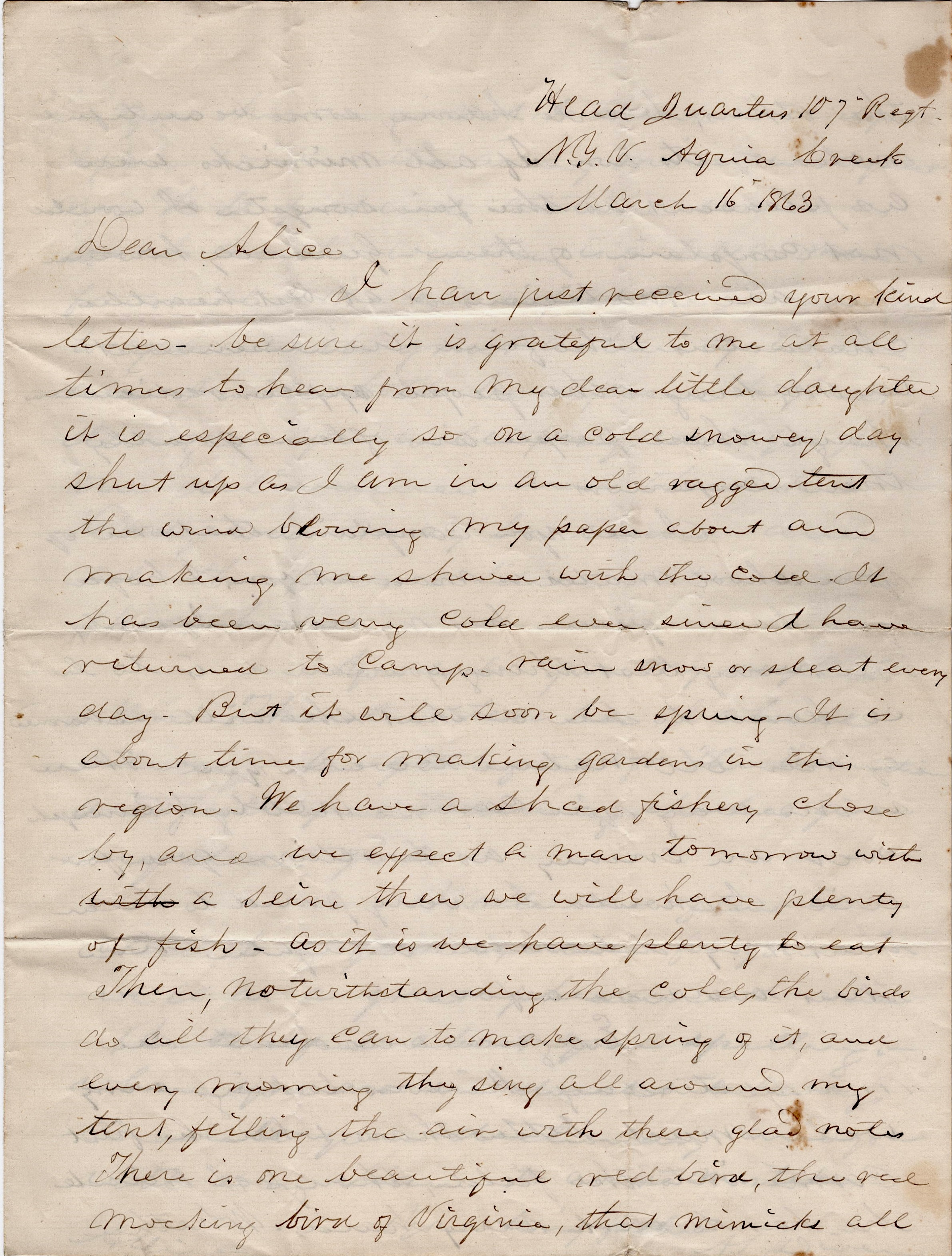
I have just received your kind letter. Be sure it is grateful to me at all times to hear from my dear little daughter. It is especially so on a cold, snowy day, shut up as I am in an old ragged tent, the wind blowing my paper about and making me shiver with the cold. It has been very cold ever since I have returned to camp. Rain, snow, or sleet everyday. But it will soon be spring. It is about time for making gardens in this region. We have a had fishery close by and we expect a man tomorrow with a seine. Then we will have plenty of fish. As it is, we have plenty to eat. Then, notwithstanding the cold, the birds do all they can to make spring of it and every morning they sing all around my tent, filling the air with their glad notes. There is one beautiful red bird—the red mocking bird of Virginia—that mimics all the others besides having some beautiful notes of its own. If all mimics were as pleasant as this fair songster, I would not complain of them. Generally however, they are malicious or at best heartless characters who find amusement in making other people appear ridiculous those these people are often greatly their superiors.

I see you complain that one of yout school mates is mad at you. I hope you have given her no reason. If not, the very best thing you can do is to be so kind to her as that she will [be] ashamed of her ill nature toward you. There is no way you can so nobly triumph over an enemy as to return good for evil. I should be very proud to hear that my dear little daughter had thus overcome a foe.

Eugene was over to see me yesterday. He was looking very well—much better than when he first came into the field though i think he has to work very hard. Whether he goes home or not, I think will depend upon when the army moves. We expect now to be put into active service as soon as the weather is a little more favorable. We all expect the campaign to open with great activity. Eugene and I will both be exposed to great danger. You will pray, won’t you, for our deliverance and that this bloody war may be ended and all the poor soldiers returned to their homes.

You will give my respects to Mrs. Thurston, Tell her I shall always be grateful for the instruction and faithful training she has given my dear girls.

Write me often. It will be a good exercise for you as will be a great pleasure to me. Be careful about your spelling. When you are in doubt, always consult your dictionary and you will soon learn to avoid mistakes. Your loving father, — A. S. Diven

Letter 22

[Note: The following letter was written by Thomas Grady who was, to my knowledge, not a member of the 107th New York Infantry, but employed by Col. Diven to care for his horses and to cook for him. There was an Irish emigrant named Thomas Grady (b. 1810) who lived in Elmira or Horseheads of Chemung county who appears to match this description.]

Camp of the 107th Regt.
Hope Landing
March 18th 1863

Mrs. A. S. Diven

Dear madam, I now will as an opportunity offers itself write you as I promised you I would. I arrived here safe and sound and was greeted by many a warm friend. Ues, I was glad to get home as this is all the one I have at the present time but I hope that the time is not far distant when we can all go to our homes & enjoy the society of the many friends that we all have in a land of peace and gratitude. I am also happy to inform you that the Colonel is feeling as well as I ever knew of his feeling in all of the time. He has two wall tents, one directly behind the other. Everything is as cozy as one can wish for I was over to see Eugene & took him over that roast & also 25 of the best quality of Spanish cigars & he was over here yesterday and stayed to dinner.

Now I will give you a bill of fare that was given at our house. First a nice platter of pickerel, mashed potatoes, broiled ham, a fine plate of wheat cakes well buttered, stewed peaches, as fine a dish of coffee as you ever saw. Now I will speak of our coffee pot. It is none of those with a rectifier in it & I tell you it makes the best of coffee—clear and good. I am going to fetch it home when I come. Eugene said our dinner was the best he had since he had been in the service and we would of had chicken if it had of been after dark but we could not very well reach after them in the day time. Tell Bridget I am as good a chicken reacher as I ever was. I would like to have you to tell Mr. George to write to me & tell me how Topsey is getting along. Tell him I miss that good stable and plenty of good straw for bedding for my horses are better cared for than they were when I first got back for I have since my return built a good log stable & have got it well covered with good new tent cloth & they seem to enjoy it & I am sure I am better satisfied to have them in a good stable than to have them out through all of the storms.

The Colonel has returned this evening from a visit to the 23rd Regiment & Major Greg come home with him. He was quite disappointed to learn that neither him or I had not yet got a letter yet. You will please answer this as soon as you receive this. No more at present. From your friend & coachman, — Thomas Grady


Letter 23

Camp 107th Regiment N. Y. V.
Hope Landing, Virginia
April 1863

My dear, dear wife,

I had such a food letter from Ella day before yesterday and from Amanda yesterday. And then that dear one from you with the image that never leaves me. For all this, I certainly owe you one.

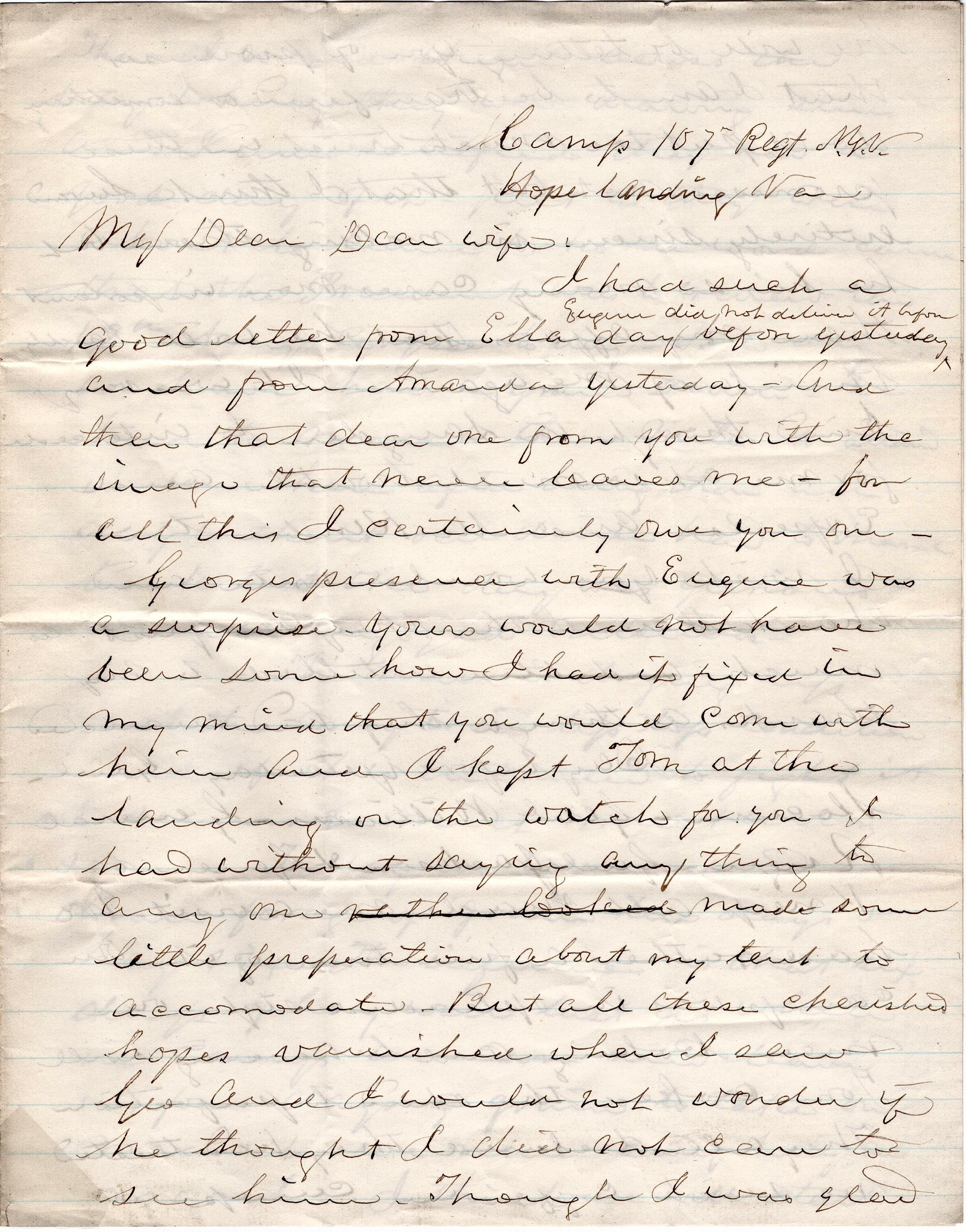
George’s presence with Eugene was a surprise. Yours would not have been. Somehow I had it fixed in my mind that you would come with him and I kept Tom at the landing on the watch for you. I had without saying anything to anyone made some little preparation about my tent to accommodate. But all these cherished hopes vanished when I saw George and I would not wonder if he thought I did not care to see him though I was glad. He will be telling you of promises that I am to be transferred or something. Don’t put too much trust in these promises, not but that I think Seward entirely sincerely in making them, but he has so many cares more important than my affairs that he will hardly think of me again. It was very kind though in Langden to intercede for me at so much trouble and expense and Mr. Kimber too. I wish you would write and thank them both. They are just as much entitled to my thanks as though they had succeeded.

Day before yesterday Gen. [Henry W.] Slocum, Gen. [Alpheus S.] Williams, Gen. [Thomas] Ruger, Gen. [Nathaniel J.] Jackson, and Gen. [Joseph] Knipe all made me a visit. We had rather a fine time of it. Our camp was in splendid style, our men looking and behaving well. Tom cooked the shad to perfection. They all declared they had tasted no such coffee in camp. Then I rowed them across the bay where they were drawing stores and I am satisfied they had a good day of it. Just as they were about to leave for home, word came that the President was to review the 12th Army Corps today. So today we have had a Grand Review. We had to march three miles to attend it and then after being there all day without our dinner, had to march back. But the day was glorious & we all enjoyed ourselves. 1
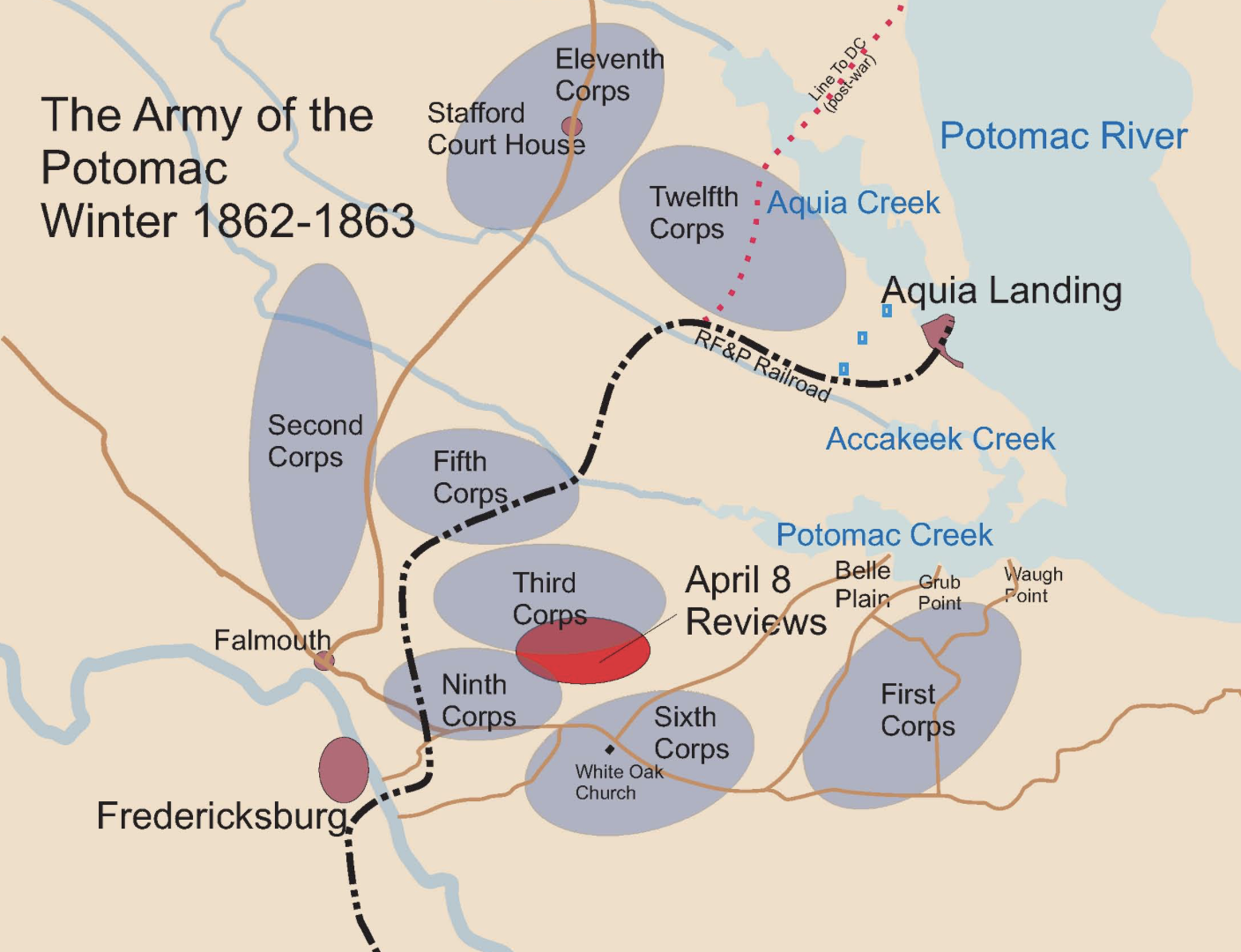
Location of the various Corps winter encampments between Aquia Landing and Fredericksburg

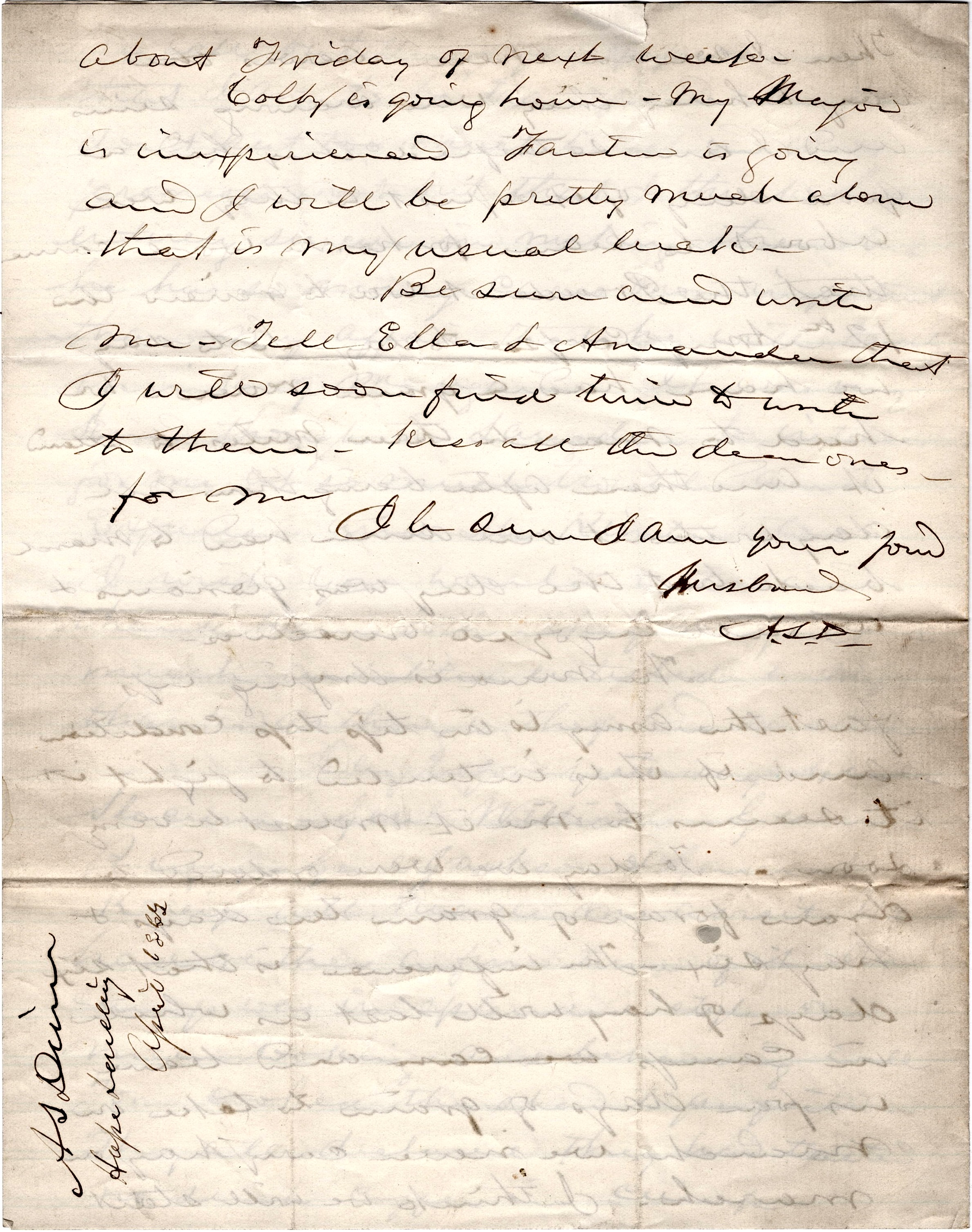
The mud is drying up fast. The army is in tip top condition and if it is intended to fight, it seems to me it must be very soon. Today we were ordered to draw forage of grain ten days and hay six days. The inference is that six days of hay will last us while in camp and leave us four days of grain to take on march. We never carry hay on march. I think we will start about Friday of next week.

[Newton T.] Colby is going home. My Major is inexperienced. [Hull] Fanton is going and I will be pretty much alone. That is my usual luck.

Be sure and write me. Tell Ella and Amanda that I will soon find time to write to them. Kiss all the dear ones for me. I am your fond husband, — A. S. D.

1 President’s Lincoln’s review of the 11th and 12th Corps took place on 9 April 1863 at Stafford Court House. Diven places the distance from their encampment to the parade ground at Stafford Court house at approximately three miles.

Letter 24

Headquarters 107th N, Y. V.
Camp Hope’s Landing
April 14, 1863

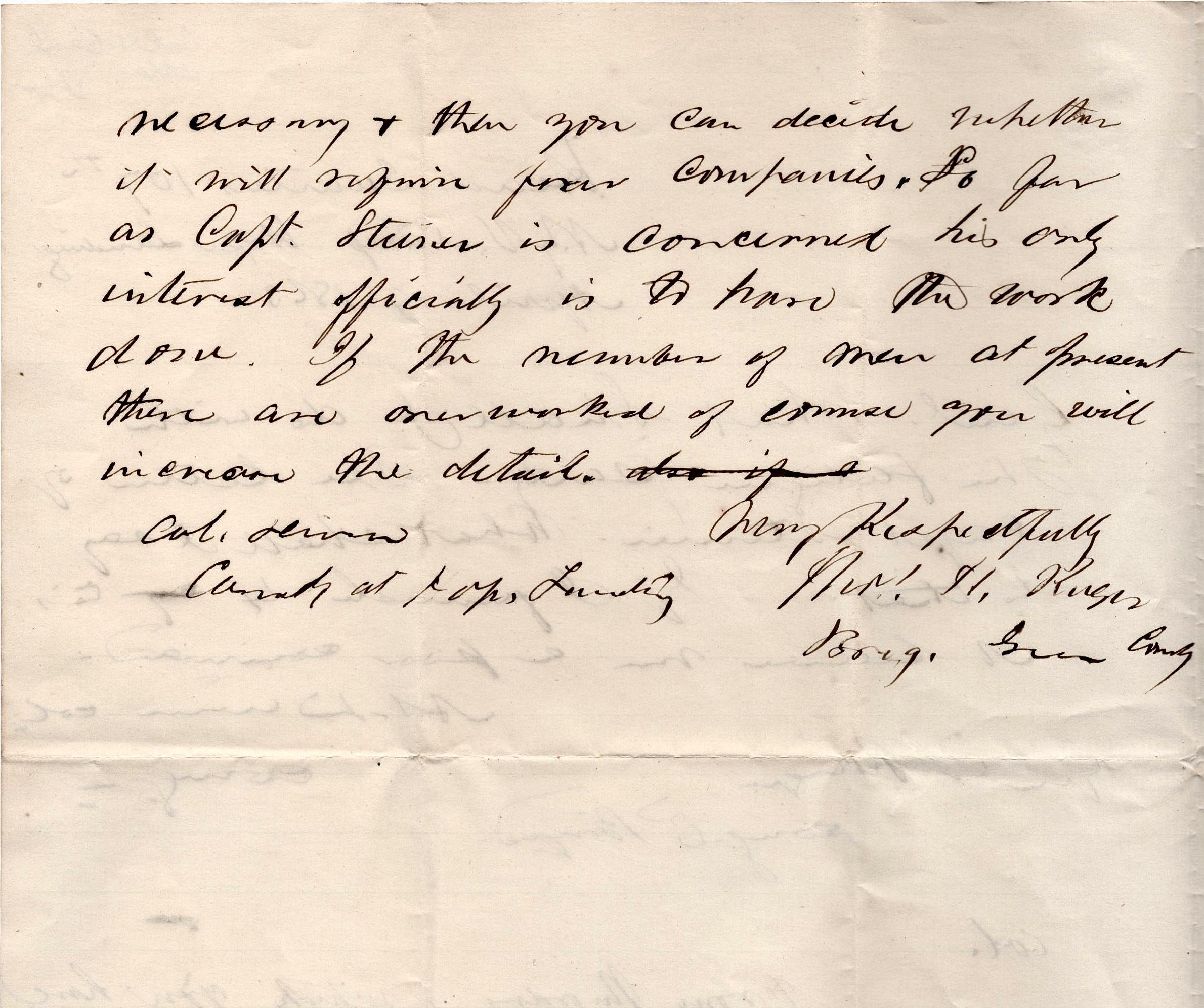
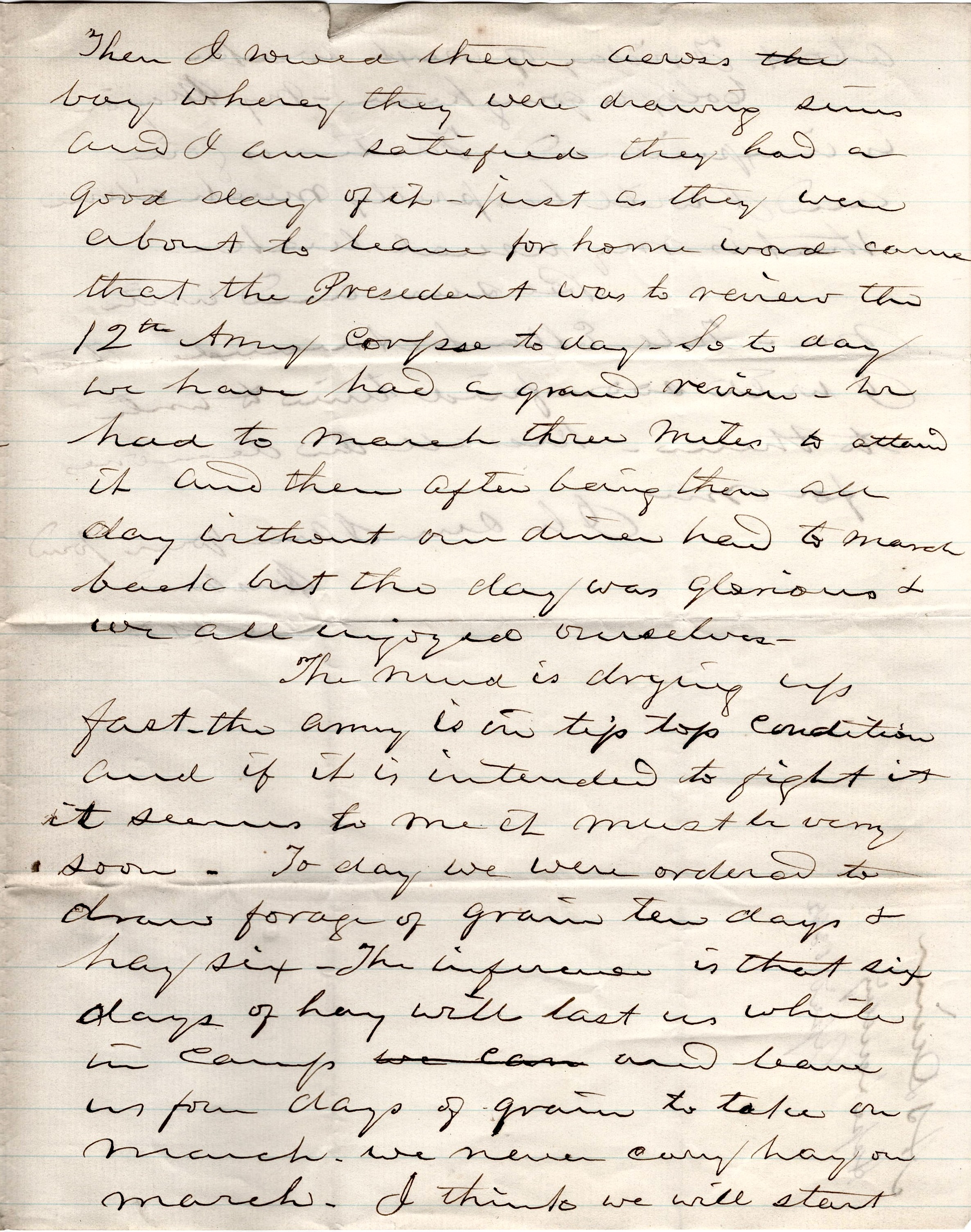
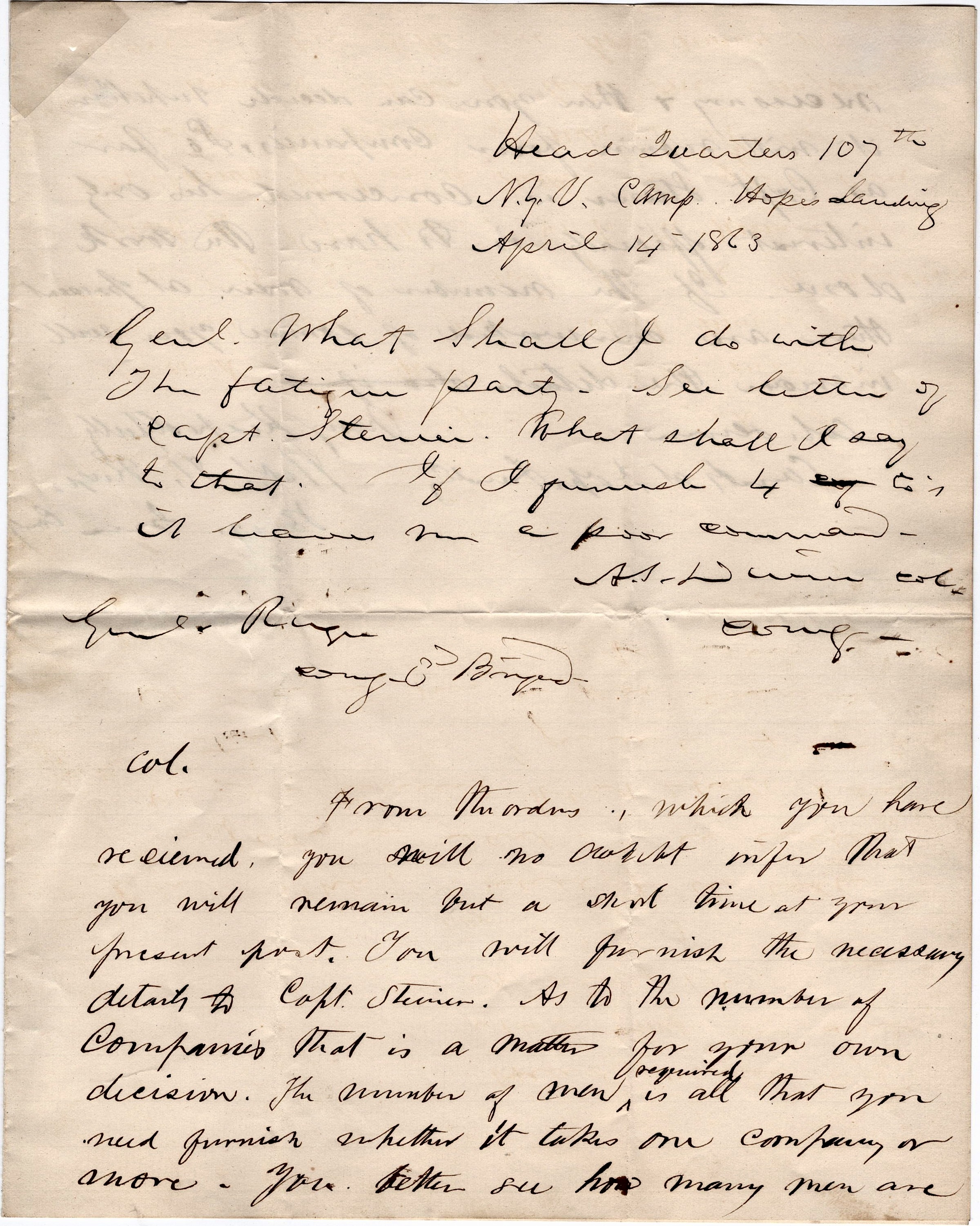
General, what shall I do with the fatigue party. See letter of Capt. Steiner. What shall I say to that? If I furnish four companies, it leaves me a poor command. — A. S. Diven, Col. commanding.

[to] Gen. Ruger
Commanding Brigade

[response from Gen. Thomas Howard Ruger in his own hand]

Brig. Gen. Thomas Howard Ruger

From the orders which you have received, you will no doubt infer that you will remain but a short time at your present post. You will furnish the necessary details to Capt. Steiner. As to the number of your companies, that is a matter for your own decision. The number of men required is all that you need furnish, whether it takes one company or more. You better see how many men are necessary and then you can decide whether it will require four companies. So far as Capt. Steiner is concerned, his only interest officially is to have the work done. If the number of men at present there are overworked, of course you will increase the detail. Very respectfully, Thos. H. Ruger, Brig. Gen. Commanding

[to] Col. Devin, Commanding at Hope’s Landing

Letter 25

On the march
April 28, 1863

Dear wife,

We are halted to let the wagons pass. Last night 3 Grand Army Corps bivouacked at Harewood Church, 23 miles from Rappahannock Station. We expect to make 19 miles today leaving us 4 miles to march in the morning tomorrow. I think the enemy will fight us at the crossing. They are moving up on the south side as we are on the north. I think our army as large as at Antietam and twice as efficient. Though our men seem to know what is before them, they march to it as to a feast.

The weather has been beautiful but threatens rain today. If it rains, it may delay the fight a few days, I thin to our disadvantage. Be of good cheer. Be sure I will write each day.

Eugene is acting quartermaster of his brigade—not a post of danger. Then remember this movement over [?] Yours, — A. S. D.

Kelly’s Ford, 5.30 p.m.

Well here we are. We have made 19 miles today with 8 days rations and 60 rounds of cartridges—a very heavy marching load. I think the fight will begin tonight and you may have another post script in the morning.

Oh how happy your dear letter has made me. I have just received it and read it right here in camp. If the chaplain goes off with our letters before the fight, you may have to wait a few days before hearing from me. Tell George that that small note of Brayton & Co., is for Philip Church to pay. Have him see Phil about it. Tell him to go to Albany and see about that other matter. We sent a deed for 700 that should at least have been paid…

29th. 7 o’clock a.m. My horse is g—there he jerked my arm—grazing. Boy take my horse. Thank you—on the south bank of the Rappahannock. Three Army Cops. Slocum in command. Hooker came up last night and gave him command. Here we are 60,000 in good troops as ever strapped on knapsack.


Letter 26

April 30th 1863

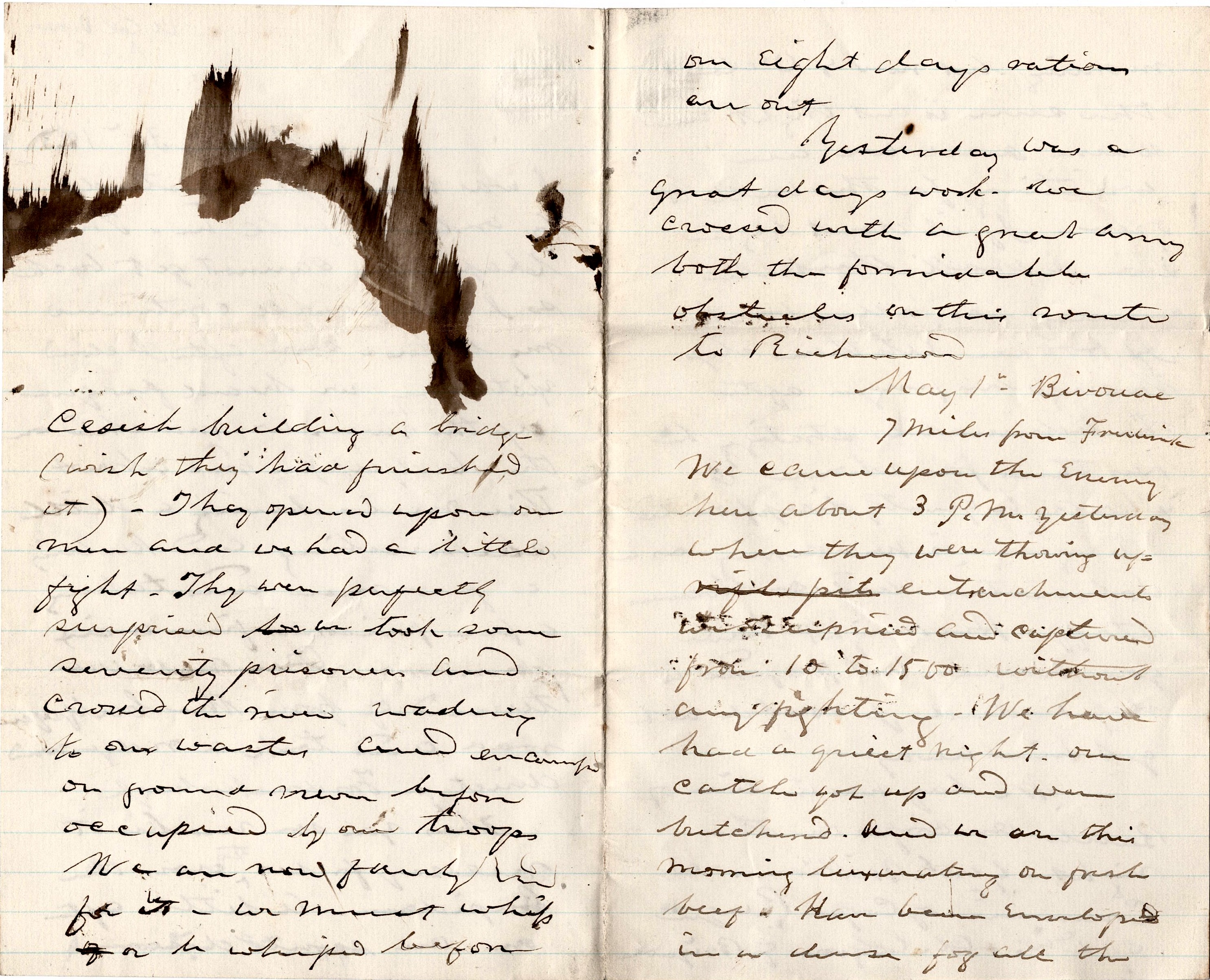
I was interrupted yesterday by order to fall in. The chaplain cannot get back so I may as well continue my letter. Soon after I closed yesterday we heard a few guns up the river. We marched on the Culpeper Road about three miles having a little skirmishing and killing a few men and taking a few prisoners—five or six prisoners. We turned off from the Culpeper road and took a ridge road direct for Fredericksburg. This you see makes it necessary for us to cross the Rapidan.

A little after one, our scouts discovered secesh building a bridge (with they had finished it). They opened upon our men and we had a little fight. They were perfectly surprised. We took some 70 prisoners and crossed the river, wading to our waists, and encamped on ground never before occupied by our troops. We are now fairly in for it. We must ship or be whipped before our eight days rations are out.

Yesterday was a great days work. We crossed with a great army n=both the formidable obstacles on this route to Richmond.

May 1, bivouac 7 miles from Frederick[sburg]

We came upon the enemy here about 3 p.m. yesterday where they were throwing up entrenchments. We surprised and captured from 10 to 1500 without any fighting. We have had a quiet night. Our cattle got up and were butchered and we are this morning luxuriating on fresh beef. Have been enveloped in a dense fog all the morning but now, 8 o’clock, the sun is out bright and warm and we are waiting for the ball to open. If it don’t begin soon, I shall think the enemy has fallen back. If Hooker lets them slip through his fingers after the admirable strategy he has thus far shown, I shall be greatly disappointed.

Eugene is now serving as a volunteer and on Slocum’s staff. He might have gone home but preferred to stay. Indeed, I could not get him away. We lay now in line of battle. Our coups on the right. Gen. Williams in command of corps, Ruger of division, & Col. Colgrove of brigade.

We, as at Antietam, support a battery—the same battery too, rather more skillfully arranged for a support I think than before. The chaplain is leaving. The telegraph will give you more glorious news before this reaches you. Your husband, — A. S. Diven

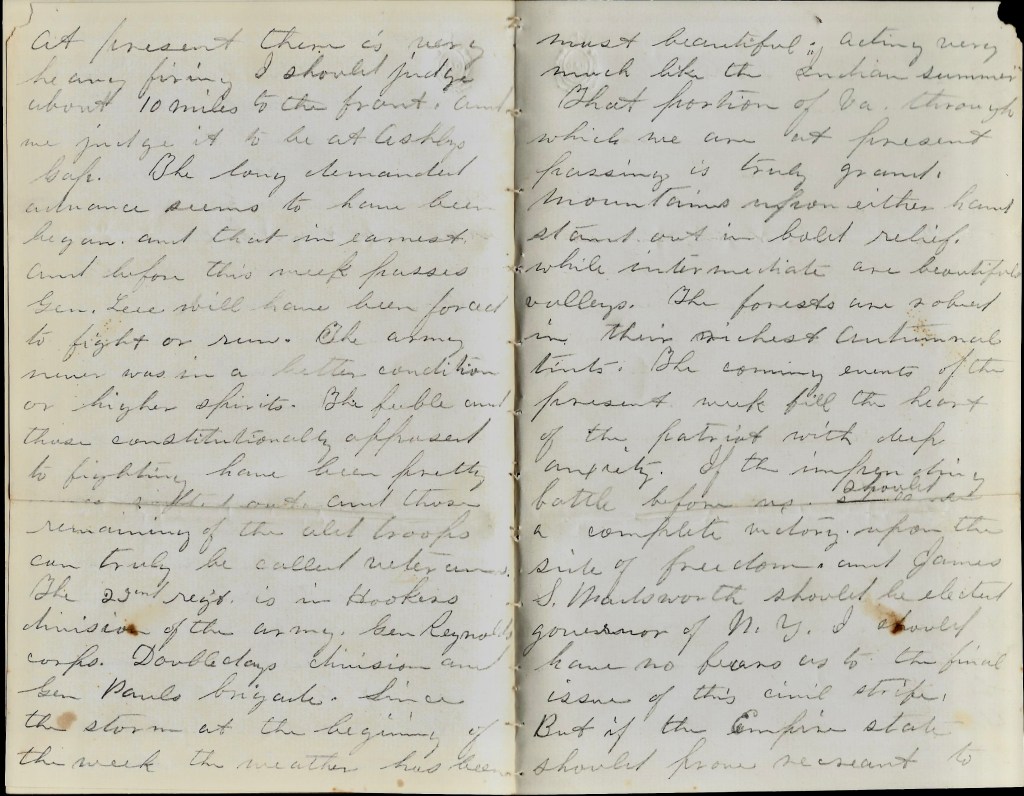
The following letter from a soldier in the 107th New York Regiment was printed in a period paper:

LETTER FROM 107th REGIMENT.
Camp 107th Regiment N. Y. Vols. near Falmouth, Va., May 12, ’63.

“Since our arrival at this place, several resignations have been tendered by our Officers, and two of them, Col. ALEXANDER S. DIVEN, and Adj’t HULL FANTON, have received honorable discharges from the Service. Of Col. DIVEN, I cannot speak in language too warm, of his connection with our Regiment. He assumed the command on Maryland Heights, at the time, the darkest in its history, when disease and death was everywhere in the camp, and by his untiring energy and zeal in behalf of our suffering Regiment, we owe our present welfare and position. Strictly speaking, Col. DIVEN never made pretensions as a strict military tactician, and, yet, such a person as he proved himself to be, is needed in every regiment. To the 107th, he was emphatically “the “Father of the Regiment,” always looking to its welfare, always ministering to its wants, always attentive to its requirements. At the battle of Chancellorsville, Col. DIVEN proved himself to be a brave man, and in the thickest of the fight he did not leave his Regiment, but encouraged and animated the men by his example. Unaided by his field and staff, and assisted by Col. COLGROVE, of the 27th Indiana, his Regiment stood manfully by him, and would have followed these brave Commanders even to the jaws of death. Col. DIVEN leaves us with the respect, and heartfelt wishes of the Reg’t for his future happiness and welfare, and he will ever have a place in the hearts of his old command.”
1862: William N. Horton to Friend Chloe

The following letter was written by William (“Will”) N. Horton (1842-1864) who enlisted at Elmira on 11 August 1862 to serve three years as a private in Co. K, 107th New York Infantry. He was promoted to a corporal in October 1863 and was killed in action on 25 May 1864 near Dallas, Georgia.

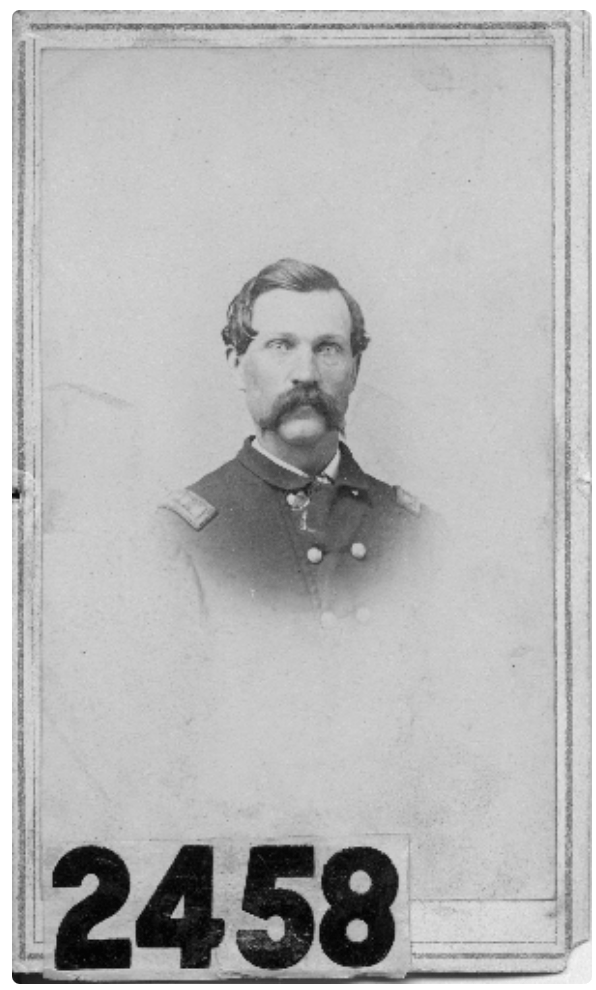
I could not find an image of Will but here is a cdv of Allen N. Sill who served as Captain of Co. K. (Photo Sleuth)

The 107th New York was recruited in the counties of Chemung, Schuyler and Steuben, New York.  It was noted for its efficiency and discipline, for being the first regiment from the North organized under the second call, and the first to arrive at Washington, in acknowledgment of which it received a banner from the state and a personal visit from the president. The regiment was stationed for a month in Washington D. C.—when this letter was written—before it was sent with Mansfield’s 12th Corps to Sharpsburg, Maryland, where its members tasted gunpowder for the first time. They later participated at Chancellorsville and Gettysburg before being sent to Tennessee to reinforce Rosecrans’ army and become a part of Sherman’s Atlanta Campaign.

Will was the oldest son of Dr. Thomas Hyatt Horton (b. 1819) and Laura Ann Torrance (b. 1819) of Addison, Steuben county, New York.

Transcription

Patriotic stationery used by Will Horton

Camp Seward, Virginia
August 31st 1862

Much respected friend,

I thought I would write again and see if you would answer this letter. I have written quite a number of letters and I have not received a letter yet but I live in hopes that you have not forgotten me yet.

We are encamped at Arlington where we was when I first wrote. We have been encamped at Fort Lyons near Alexandria but they thought that the rebels was liked to come there so we had orders to march back in the rear. But they did not come for they had all they could tend to at Manassas and a little more. There was a great battle at Bull Run yesterday. Pope took 16,000 men prisoners. I have not heard what their loss was in killed and wounded. Our loss in killed and wounded was 8,000. They brought 12,000 prisoners in[to] Washington yesterday. We could hear the roar of the cannons very plain here. The orders was last night was that every man must have forty rounds of cartridges and be ready to march at a moment’s warning.

I have not been homesick but once and then I was sick. Time flies away very fast. I cannot hardly tell when Sunday comes but it seems quite a while since I parted with you. I would like to come up there tonight and see you but that is out of the question for I am down here in Dixie Land. But I hope that it won’t be many months before I shall be with you.

Chloe, you must excuse my bad writing for I have not got a very convenient place to write on. I have got an old box to write on, but soldiers have to take up with soldier’s fare. Chloe, write as soon as you get this and I will do the same. No more at present. So goodbye. From your Will

P. S. I will give you the direction again so if you do not get them you will know where to direct to.

William N. Horton
Co. K, 107th New York State Volunteers
Capt. [Allen N.] Sill

All our joys my soul remembered
How like quivering flames they start
When I feel the living embers
On the hearthstone of my heart 1

1 These lines are from a poem written by Henry Wadsworth Longfellow called “To the River Charles.” It wasn’t published in his “Complete Works” until 1866.

1862: Seymour Dexter to Charles Tubbs

The following letters were written by Seymour Dexter (1841-1904), the son of Daniel Dexter (1806-1891) and Angeline Briggs (1816-1891) of Independence, Allegany county, New York. Seymour received his preparatory education at Alfred Academy and graduated from Alfred University in 1864 (A.M., Doctor of Philosophy). Studied law,1864-1866. He was admitted to the bar at Elmira in 1866 and became the City Attorney in 1872. In that same year he was elected to the New York Assembly.

Carl A. Morrell’s book showcasing Dexter’s wartime diary and letters.

Seymour enlisted in May 1861 at Elmira to serve two years in Co. K, 23rd New York Infantry. He entered the war as a private, was promoted to corporal in Mach 1863 and mustered out of the regiment on 22 May 1863. There was a book published in 1996 by Carl A. Morrell which contained the Civil War writings of Seymour Dexter [See: Seymour Dexter, Union Army: Journal and Letters of Civil War] but I don’t believe that this letter was included. The introduction to that book states, “‘Freedom, the true government, has called upon her loyal sons, and as our response to this call and also to the demands of truth and humanity, seven of us determined on the 26th day of April, 1861 that we would immediately volunteer our services in the defense of the stars and stripes.’ So wrote Seymour Dexter in the opening pages of his Civil War journal. A student at the time of Fort Sumter, Dexter joined Co. K in Elmira, New York. Private Dexter, who would enjoy a distinguished career as a lawyer following the unpleasantness, gives us an unusually keen view of the war, capturing the emotions of the men in the field and the camaraderie of Company K.”

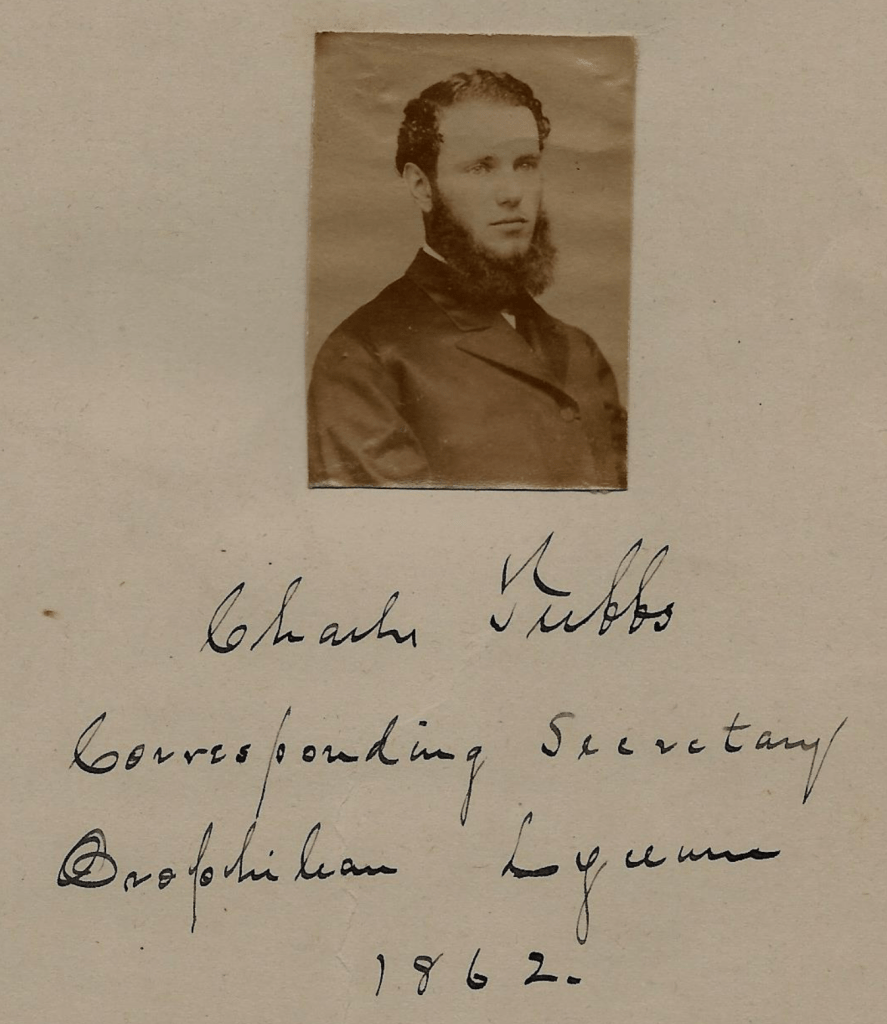
Dexter wrote the letters to Charles Tubbs, the corresponding secretary of the Orophilian Lyceum of Alfred University in Alfred Centre, New York. Founded in 1836, Alfred University was an early-day coeducational college. Tubbs later attended Union College, graduated with honors in 1864, and then attended the law school in Ann Arbor, Michigan. In researching Tubbs, I was surprised to discover a 1996 publication entitled, “Mr. Tubbs’ Civil War” by Nat Brandt. In his introduction. Brandt wrote that, “Charlie Tubbs experienced the Civil War vicariously. He never volunteered nor was drafted in the Union military forces. But many of his friends went to war, and it was through them that the day-to-day experience of the war came alive for him in the most personal way. Throughout the war, Tubbs received more than 175 letters from his friends, ordinary young men, all products of rural New York and Pennsylvania.” Curiously, of the 17 letter writers mentioned in Brandt’s publication, Seymour Dexter is not listed and his letters do not appear in the book. It may be that these letters, which were once part of a larger collection of Tubb’s collection, were separated from the rest at an early date. It may also be possible that Brandt chose not to include these letters in his book for some reason.

Members of the 23rd New York Volunteers. These boys are from Co. A. (National Archives)

Letter 1

Camp 23rd Regt New York Vol.
Opposite Fredericksburg, Stafford County, Va.
May 3, 1862

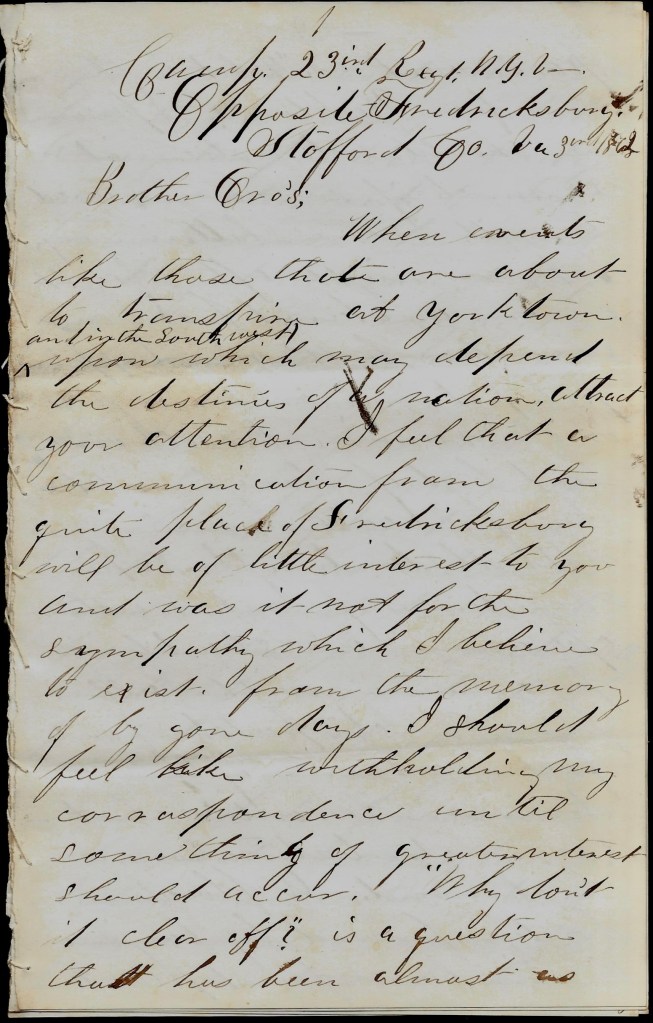
Brother Oro’s:

When events like those that are about to transpire at Yorktown and in the southwest upon which may depend the destinies of the nation attract your attention, I feel that the quiet place of Fredericksburg will be of little interest to you and was it not for the sympathy which I believe to exist from the memory of bygone days, I should feel like withholding my correspondence until something of greater interest should occur.

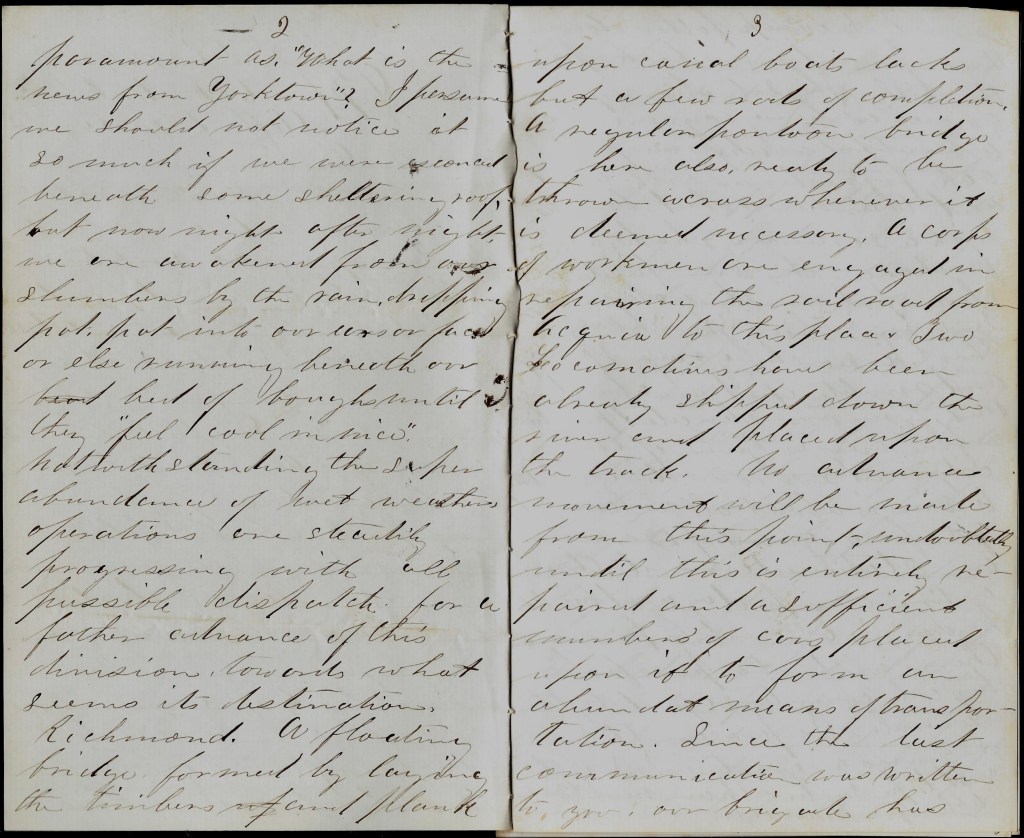
“Why don’t it clear off?” is a question that has been almost as paramount as, “What is the news from Yorktown?” I presume we should not notice it so much if we were ensconced beneath some sheltering roof but now night after night, we are awakened by the rain, dripping pot, pot into our face or else running beneath our bed of boughs until they “feel cool in vice.” Notwithstanding the super abundance of wet weather operations one steadily progressing with all possible dispatch for a further advance of this division towards what seems its destination—Richmond.

A floating bridge formed by laying the timbers and plank upon canal boats lacks but a few rods of completion. A regular pontoon bridge is here also, ready to be thrown across whenever it is deemed necessary. A corps of workmen are engaged in repairing the railroad from Aquia to this place. Two locomotives have been already shipped down the river and placed upon the track. No advance movement will be made from this point undoubtedly until this is entirely repaired and a sufficient number of cars placed upon it to form an abundant means of transportation.

Since the last communication was written to you, our brigade has moved its camp farther down the river and more back upon the hill. The situation is pleasant as well as being convenient. A beautiful wood, principally oak, furnishes us with wood, and their new, robust boughs with a screening shade when, perchance, the sun finds a clear spot in the watery reservoir through which to shoot his searching rays. Springs and rivulets exist in abundance and from our elevated position a fine view is given of the city and surrounding country. A view is about all we can get for a guard of 120 men are stationed around the entire camp, day and night. No one is allowed to pass from his colonel, countersigned by the general. To procure this requires a greater use of the “red tape system” than most are able to manage.

Our General, (M. R. Patrick) is a graduate of West Point and he seems striving to enforce all the severe discipline which is supposed to exist among regulars. Many of his orders seem onerous to a volunteer corps and to speak in soft terms, bitter are the anathemas uttered against him at times.

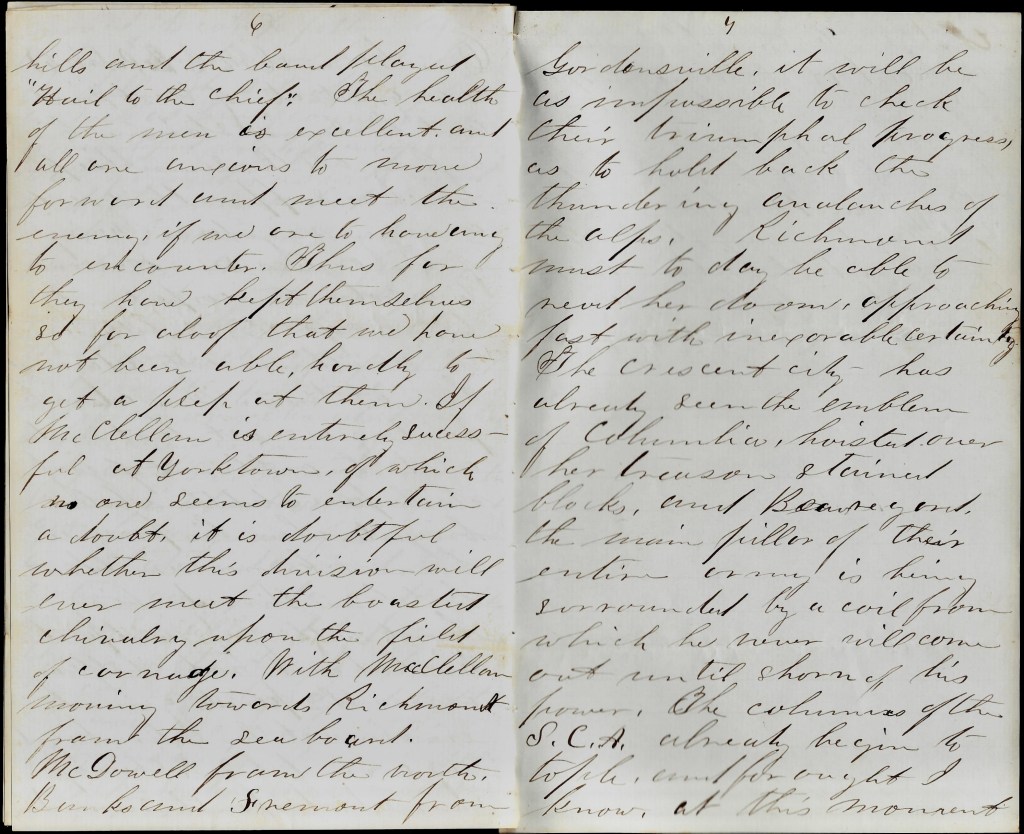
Gen. Wadsworth paid us a visit last Sunday and the outburst of joy which pervaded the whole brigade when his presence became known could not but have stirred his heart with joy and pride. He had not rode halfway across the parade ground ere almost the entire brigade was around him. Cheer upon cheer echoed upon the surrounding hills and the band played “Hail to the Chief.”

The health of the men is excellent and all are anxious to move forward and meet the enemy if we are to have any to encounter. Thus far they have kept themselves so far aloof that we have not been able hardly to get a peep at them. If McClellan is entirely successful at Yorktown, of which no one seems to entertain a doubt, it is doubtful whether this division will ever meet the boasted chivalry upon the field of carnage. With McClellan moving towards Richmond from the seacoast, McDowell from the north, Banks and Fremont from Gordonsville, it will be as impossible to check their triumphal progress as to hold back the thundering avalanches of the alps. Richmond must today be able to read her doom approaching fast with inexorable certainty.

The Crescent City has already seen the emblem of Columbia hoisted over her treason stained blocks, and Beauregard—the main pillar of their entire army—is surrounded by a coil from which he never will come out until shorn of his power. The columns of the S. C. A. already begin to topple and for ought I know, at this moment the thunder of battle may be heard at the renowned place of Yorktown and in the Southwest, the concussion of which will fell them to the ground, and over their eclipsed majesty shall be raised the standard of the free forever and age. — S. Dexter


Letter 2

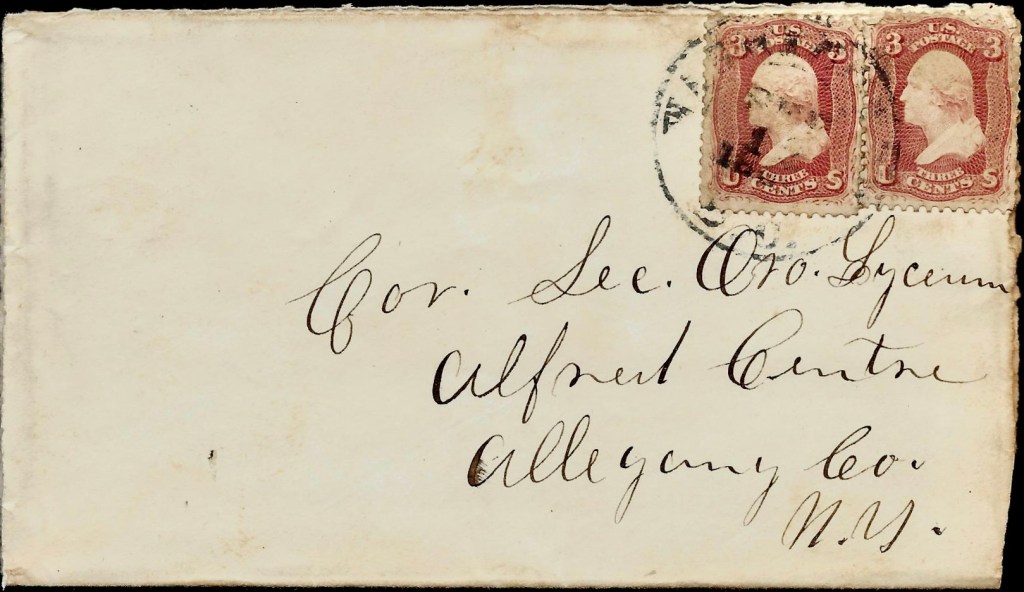
Addressed to Corresponding Secretary of Oro. Lyceum. Alfred Centre, Allegany county, N. Y.

Leesborough, Maryland
September 9th, 1862

Brother Oro’s:

The labors and fatigues of the last three weeks have made the pen a useless article to the soldier but now some miles nearer the north star than ever before since we landed in Washington one year ago last July. A short interval has been allowed us to rest amid our dancings to “Stonewall Jackson’s” music. On the night of the 18th ult. the “Army of Virginia” with its boastful leader [Maj. Gen. John Pope] began its retreat from the Rapidan and which did not cease until a portion of it was lodged behind the lines of defense about Washington and the other portion of McClellan’s army and also that of Burnside’s. From the 22nd ult. until the 3rd inst., not a day passed but the thunder of cannon was borne to our ears and many of the conflicts were most desperate and bloody. On the 22nd ult., our Division was engaged in an artillery duel across the Rappahannock near the Station, our regiment supporting a section of one of our batteries. From there we marched to Sulphur Springs via Warrrenton where upon the 25th ult. we were again in an artillery fight with skirmishing—our regiment acting as a guard on the left flank with companies K & G thrown out as skirmishers. Here for the first time as a company we fired our guns at real rebels.

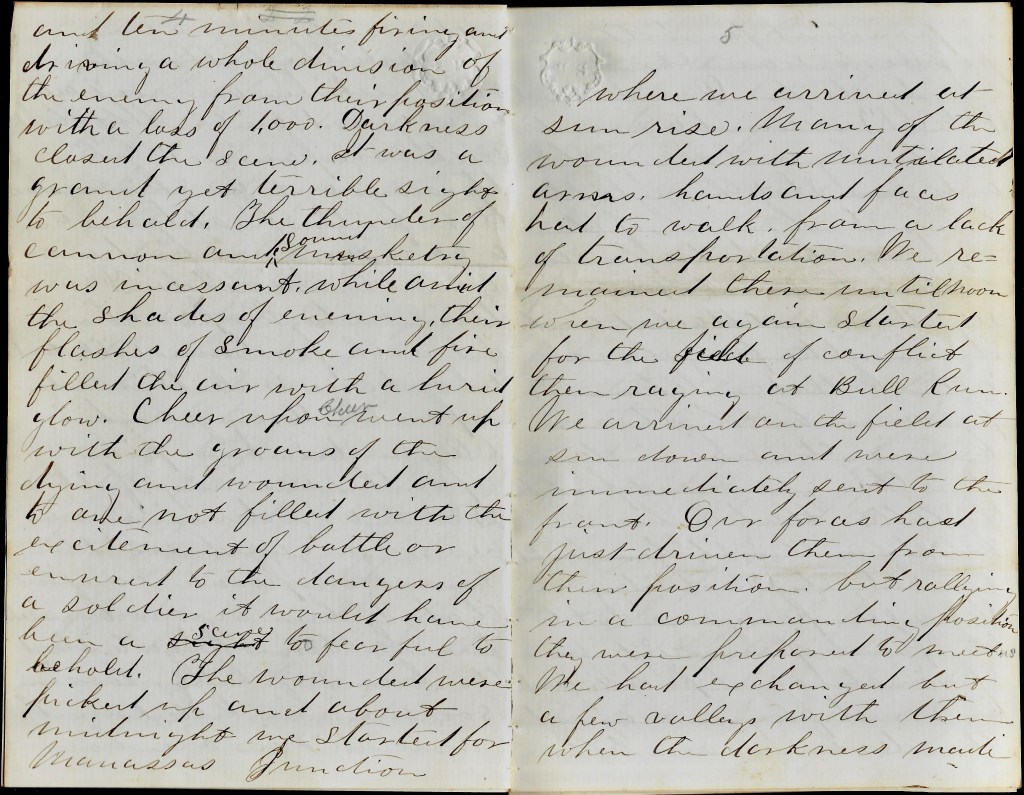
From there we took up our line of march for Gainesville and about one mile this side upon the Orange and Alexandria turnpike, upon the evening of the 27th ult., our Division was again engaged in the most desperate conflict [see Brawl at Brawner’s Farm] that I have yet witnessed. Gen. Gibbon’s Brigade stood the brunt of the battle, losing 800 men in killed and wounded in one hour and ten minutes firing and driving a whole division of the enemy from their position with a loss of 1,000. Darkness closed the scene. It was a grand yet terrible sight to behold. The thunder of the cannon and sound of musketry was incessant, while amid the shades of evening their flashes of smoke and fire filled the air with a lurid glow. Cheer upon cheer went up with the groans of the dying and wounded and to one not filled with the excitement of battle or inured to the dangers of a soldier, it would have been a scene too fearful to behold.

The wounded were picked up and about midnight we started for Manassas Junction where we arrived at sunrise. Many of the wounded with mutilated arms, hands and faces had to walk from a lack of transportation. We remained there until noon when we again started for the field of conflict then raging at Bull Run. We arrived on the field at sundown and were immediately sent to the front. Our forces had just driven them from their position but rallying in a commanding position, they were prepared to meet us. We had exchanged but a few volleys with them when the darkness made it prudent for both parties to cease the bloody strife. Our General (Patrick) received a wound in the leg and one of his aides was shot through the lungs. A brigade of the enemy charged upon the battery to which Tommy Sanders was attached and during the fray, he was either killed or taken prisoner. But by those knowing the circumstances, it is thought most probable the latter. Had he been killed we should have found his body the next day.

Our company was out to the front of our regiment as skirmishers and pickets and in our deployment amid the darkness, our left ran in between two bodies of the enemy. Two privates and one sergeant were taken prisoners while two others made their escape with an orderly sergeant of the enemy a prisoner. That day had proved a victory to our arms and all felt confident on the morrow of sending the rebel horde back to the mountains with as great speed as they had come up.

Morning showed the enemy to have fallen back and taken up a new position. Very heavy reinforcements arrived for them during the night and morning. The forenoon was spent in arranging our forces and preparing for the attack. Whoever planned was out generaled by the enemy and the sequence proved most fatal to our cause. McDowell’s Corps began the attack between one and two o’clock with cannon and skirmishing. Our Division had the right of the centre. We advanced in two lines of battle, our regiment being in the second. We had to push through a dense piece of woods beyond which lay the enemy. As soon as our front lines became visible, they opened with battery after battery and infantry, filling the woods with a perfect shower of shell, grape, canister, and musket balls. Still our lines in the centre and right pressed forward and for the moment broke the enemy’s centre but we soon found the enemy were turning the left flank and thus getting an enfilading fire upon us and cutting us off from the position held before the attack.

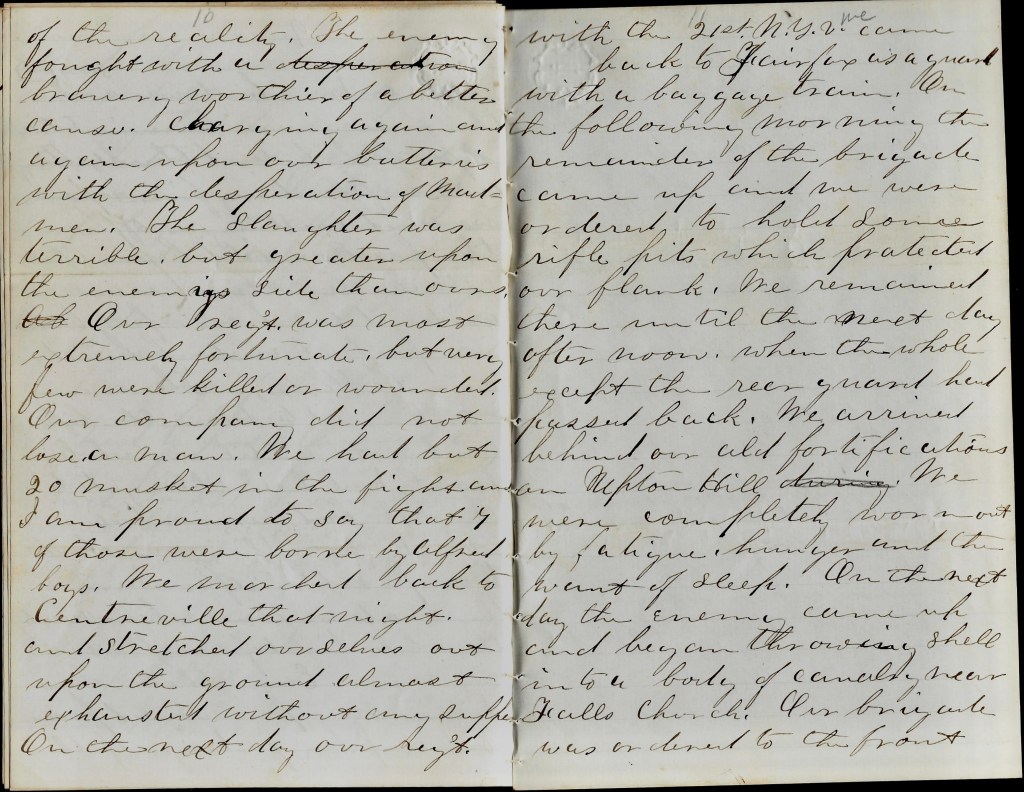
A retreat was ordered and we fell back in perfect order behind our batteries. The enemy continued to turn the left and not until our whole front had been changed to the left were our forces able to hold them in check. Our position after leaving the woods was one where nearly the whole field of conflict was in view. My pen would prove but a poor portrayer of the reality. The enemy fought with a bravery worthier of a better cause—charging again and again upon our batteries with the desperation of mad men. The slaughter was terrible but greater upon the enemy’s side than ours. Our regiment was most extremely fortunate—but very few were killed or wounded. Our company did not lose a man. We had but 20 muskets in the fight and I am proud to say that 7 of those were borne by Alfred [New York] Boys.

We marched back to Centreville that night and stretched ourselves out upon the ground almost exhausted without any supper. On the next day our regiment with the 21st New York Vols. came back to Fairfax as a guard with a baggage train. On the following morning the remainder of the brigade came up and we were ordered to hold some rifle pits which protected our flank. We remained there until the next day after noon when the whole except the rear guard had passed back. We arrived behind our old fortifications on Upton Hill. We were completely worn out by fatigue, hunger, and the want of sleep.

On the next day the enemy came up and began throwing shell into a body of cavalry near Falls Church. Our brigade was ordered to the front where it remained over night. On the night of the 6th inst. a large portion of the army came back across the Potomac and is now laying north of Washington, ready to be moved either way to confront Jackson if he shall dare to push a heavy force into Maryland or to protect Washington in the front if it shall be attacked there.

Pope—much to our satisfaction—has gone to the Northwest and McDowell, I trust, to his home. The restoration of McClellan to command has given a new confidence to the army. He is their favorite and they will fight under him as under no other man. Marching orders have just come and I must close. Receive this most hastily written correspondence from an old Oro. — S. Dexter


Letter 3

Camp 23rd New York Vol.
Near Sharpsburg, Maryland
October 14th 1862

Brothers Oro’s:

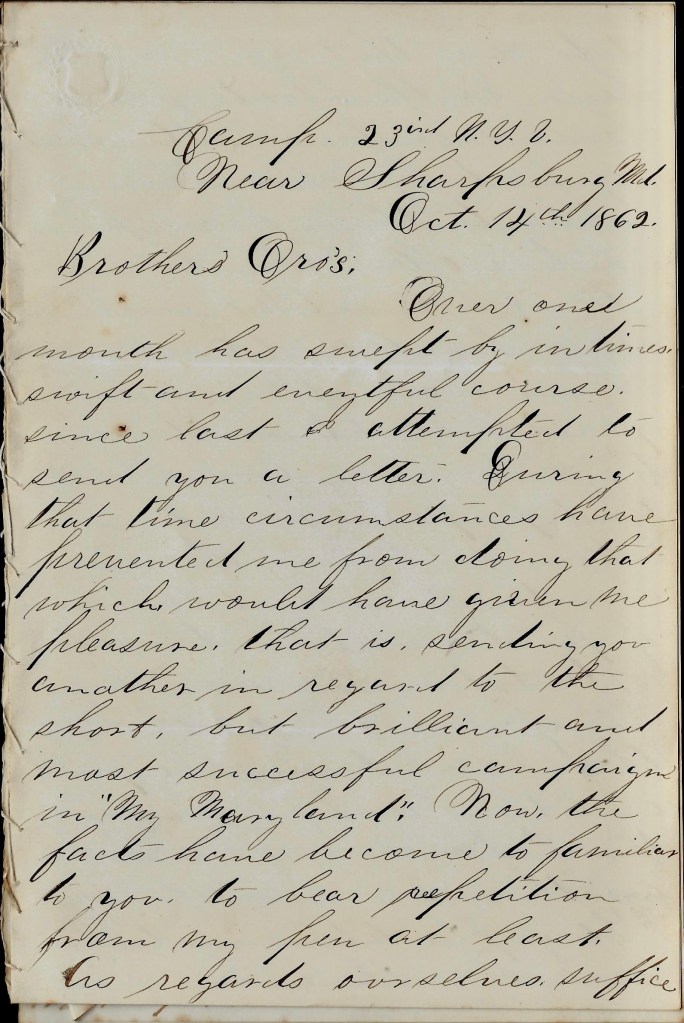
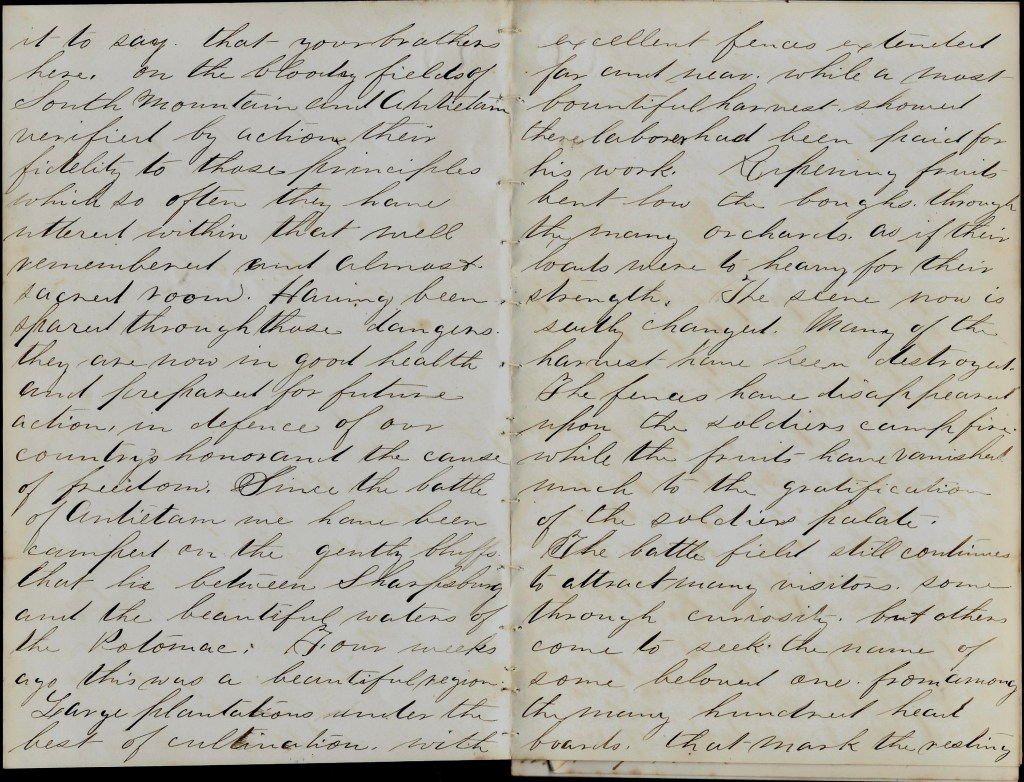
Over one month has swept by in time’s swift and eventful course since last I attempted to send you a letter. During that time, circumstances have prevented me from doing that which would have given me pleasure—that is, sending you another in regard to the short, but brilliant and most successful campaign in “My Maryland.” Now the facts have become too familiar to you to bear repetition from my pen at least. As regards ourselves, suffice it to say that your [lyceum] brothers here on the bloody fields of South Mountain and Antietam verified by action their fidelity to those principles which so often they have uttered within that well remembered and almost sacred room. Having been spared through those dangers, they are now in good health and prepared for future action in defense of our country’s honor and the cause of freedom.
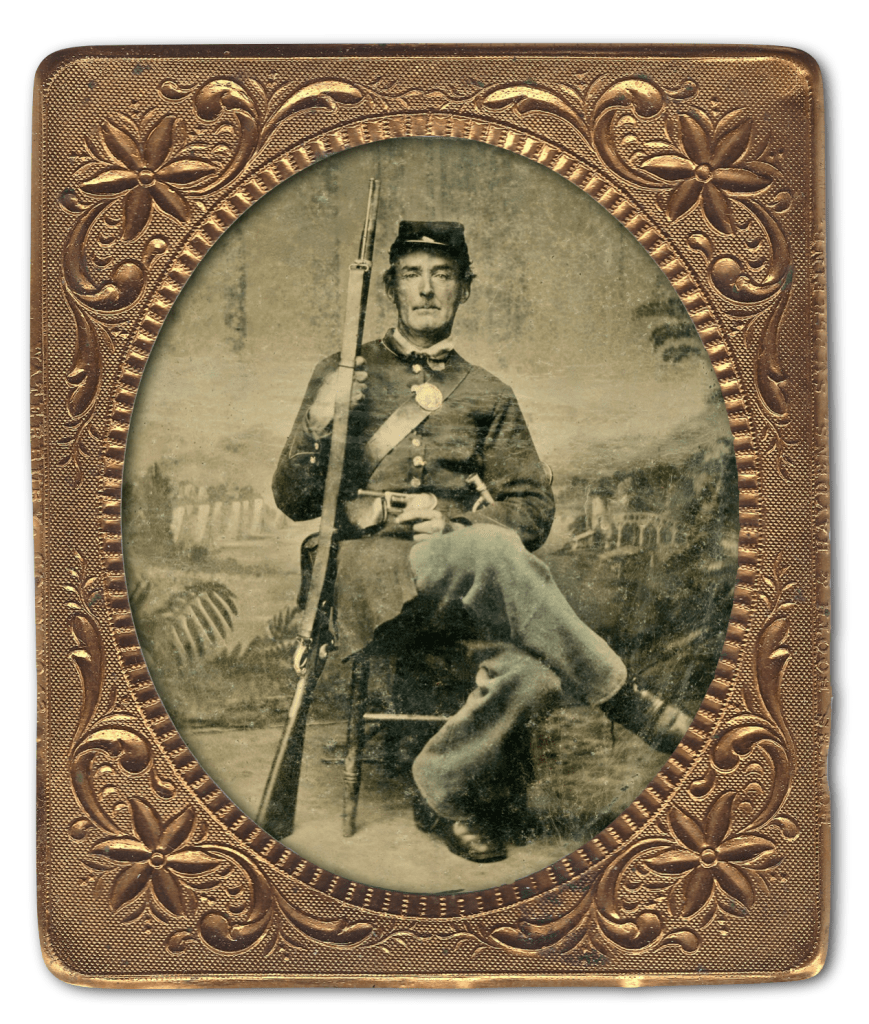
Since the Battle of Antietam, we have been camped on the gentle bluffs that lie between Sharpsburg and the beautiful waters of the Potomac. Four weeks ago this was a beautiful region—large plantations under the best cultivation with excellent fences extended far and near, while a most bountiful harvest showed their laborer had been paid for his work. Ripening fruits bent low the boughs through the many orchards as if their loads were too heavy for their strength. The scene now is sadly changed. Many of the harvest have been destroyed. The fences have disappeared upon the soldier’s camp fire while the fruits have vanished much to the gratification of the soldier’s palate.

The battlefield still continues to attract many visitors—some through curiosity, but other come to seek the name of some beloved one from among the many hundred head boards that mark the resting places of so many heroes and martyrs to their country’s cause who fell on that terrible and memorable day.

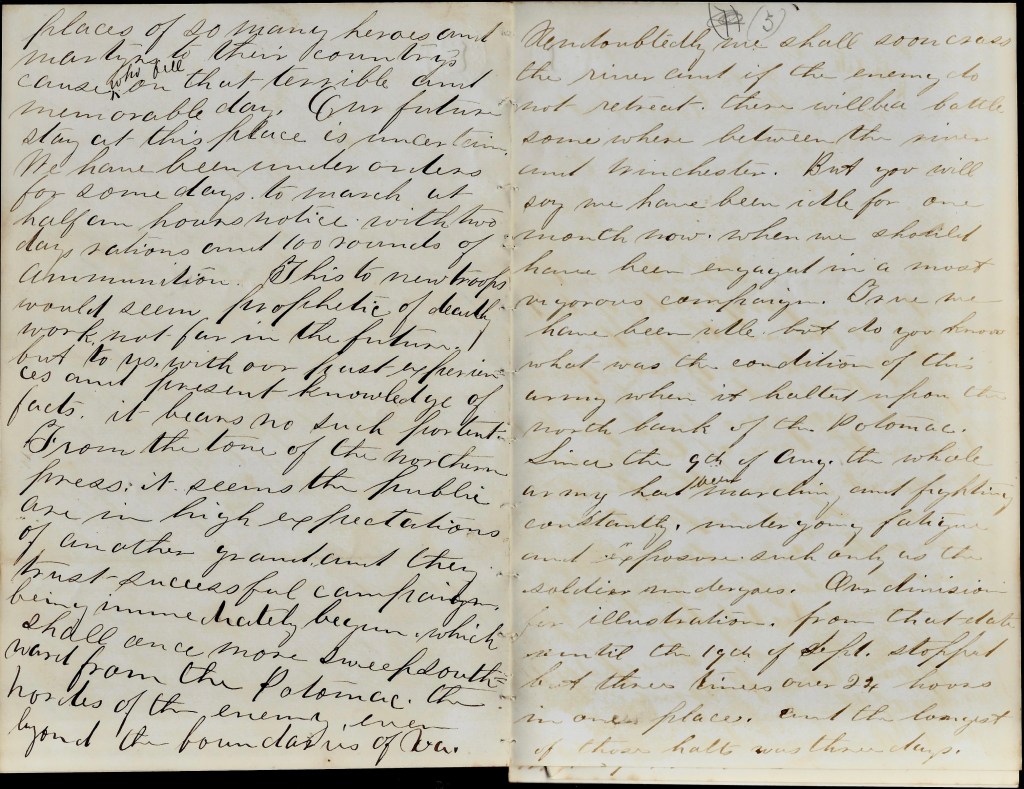
Our future stay at this place is uncertain. We have been under orders for some days to march at half an hour’s notice with two days rations and 100 rounds of ammunition. This to new troops would seem prophetic of deadly work not far in the future, but to us with our past experiences, it bears no such portent.

From the tone of the Northern press, it seems the public are in high expectations of another grand and, they trust, successful campaign being immediately begun which shall once more sweep southward from the Potomac, the hordes of the enemy ever beyond the boundaries of Virginia. Undoubtedly we shall soon cross the river and if the enemy do not retreat. there will be a battle somewhere between the river and Winchester. But you will say we have been idle for one month now when we should have been engaged in a most vigorous campaign. True, we have been idle. But do you know what was the condition of this army when it halted upon the north bank of the Potomac? Since the 9th of August the whole army had been marching and fighting constantly, undergoing fatigue and exposure such only as the soldier undergoes. Our division for illustration, from that date until the 19th of September, stopped but three times over 24 hours in one place and the longest of those halts was three days. We were constantly broke of our sleep while our food was scanty and irregular. When we entered the Battle of [2nd] Bull Run, we had been 60 hours with but 4 hours sleep and starvation really staring us in the face. Pope’s official report was true in that respect.

When we halted here, brigades were but regiments, and divisions but brigades. Our brigade numbered but 825 men for duty and Hatcher’s Brigade of five regiments did not number half that amount. And so it was throughout the whole army. All were dirty and be not shocked, most were lousy. We had not even found time and opportunities to wash our clothes. This remnant of the army was completely worn out like the horse that has lumbered all winter upon scanty fare. Could civilians, unless they believe a soldier is proof against fatigue and exposure, expect that such an army which had so nobly crowned its country’s banners with victory in her darkest hour should immediately, without rest, be sent into another campaign equally laborious? And because it has been delayed thus far already? Yes! Scarcely before the lightning messenger had ceased to transmit the details concerning the victories in Maryland, the northern Republican press began to heap its abuses upon Gen. McClellan because he did not immediately, without a halt, throw his decimated and worn-out columns across the Potomac.

As those expectations have been unrealized so far, so I think they will be in the future to a certain degree. You ask why. It is simple. Because the lateness of the season will not permit it. Four weeks more and it would be inhuman to ask troops to live in shelter tents and should they attempt it, not many weeks would elapse ere over one half the army would be on the sick list or in their graves. Four weeks more and the condition of the roads in Northern Virginia will be such that artillery and baggage trains cannot be moved except upon macadamized roads and these are not in sufficient numbers. Most surely that length of time at this season when no dependence can be placed upon the weather, is not sufficient to warrant the success of a movement as extensive as such an one must necessarily be.

The military authorities know what an army could stand and because they ordered a halt, the radical press of the North with the N. Y. Tribune at the head, began anew to poison and distract the public mind by charging McClellan with incompetency. They belie facts and have belied every act of McClellan’s and that simply because he does not belong to their party politic. The whole race of New York editors would be but little safer in this army than in a rebel camp. It makes the heart of the true patriot in the field fighting for his country’s cause weep to see the public mind thus poisoned and distracted by political intriguers. And were it not for that true patriotism, that untainted integrity, that unswaying judgement that characterizes him who holds the helm of our national ship, I should almost fear for the final issue. But he is the right man in the right place and by him the distracted element may be brought into unison for the common good.

Your brother Oro., — S. Dexter


Letter 4

Purcellville, Va.
November 2, 1862

Brother Oro’s:

One week ago today as we sat huddled up in our tents, striving fruitlessly to be comfortable with a cold, windy, autumnal storm sweeping drearily over the land, orders came to march. It was after dark before we got under motion—the rest of the Division going ahead. We supposed we had experienced rough marching before and we expected it that night but it proved to be far beyond any of our former experiences. A constant rain of twelve hours together with the large amount of travel upon the roads had formed a mud pudding over shoe deep in most places, say nothing about the regular mud holes and ruts. The darkness was so great that it was impossible to pick our path. Imagine a column of men marching along under these circumstances, heavily loaded down with their accoutrements, some slipping down, others slipping into some unseen hole or rut, going head long, knapsacks, gun, and all into the muddy bed while others striving to save themselves from the threatened descent accidentally hit their next neighbor over the head with their guns. Some laughing at their comrades misfortune, some cursing the General who had ordered such a move, while all joined in the wish that [newspaper editors] Greeley, Bennett, and their compeers were marching with us.

Unlucky baggage wagons overturned with their contents strewn in the mud, and you will have a faint picture of our attempted march that night. We proceeded about three miles in three hours. Our General came to the conclusion it was next to impossible to proceed further so turning into the fields, we halted for the night. We had orders to proceed to Berlin—a railroad station near the river about 6 miles below Harpers Ferry. We did not arrive there until Tuesday afternoon when we pitched our tents a short distance from the station and remained until Thursday evening. When we once more crossed to the soil of the Old Dominion and proceeded about one mile beyond Lovettsville and bivouacked for the night. It was a beautiful evening and as we once more set foot upon the “sacred soil”, there was a feeling of humiliation to think that fifteen months ago we had crossed the same river for the same purpose and after thirteen months of occupation, we had been forced back by the foe whom we thought to reduce.

On the following morning we were mustered for pay and in the afternoon moved for want about one mile farther. And yesterday moved forward to this place which is a small hamlet situated on the pike leading from Leesburg to Winchester. Snicker’s Gap, the point where the pike crosses the mountains that lay between us and Winchester, is about six miles distant and is said now to be in our possession. Our advance cavalry under Gen. Pleasanton drove the enemy’s cavalry from this vicinity yesterday and took one piece of their artillery.

While we were coming forward, the roar of their guns gave us music to march by. Quite early this morning there was cannonading abour six miles to the front that soon ceased and very distant cannonading could be heard in the direction of Thoroughfare Gap. We suppose that to be Siegel. At present there is very heavy firing I should judge about 10 miles to the front and we judge it to be at Ashby’s Gap.

The long demanded advance seems to have been begun and that in earnest. And before this week passes, Gen. Lee will have been forced to fight or run. The army never was in a better condition or higher spirits. The feeble and those constitutionally opposed to fighting have been pretty well sifted out and those remaining of the old troops can truly be called veterans. The 23rd Regt. is in Hooker’s Division of the army. Gen. Reynolds Corps, Doubleday’s Division and Gen. Paul’s Brigade.

Since the storm at the beginning of the week, the weather has been most beautiful, acting very much like the “Indian Summer.” That portion of Virginia through which we are at present passing is truly grand. Mountains upon either hand stand out in bold relief while intermediate are beautiful valleys. The forests are robed in their richest autumnal tints. The coming events of the present week fill the heart of the patriot with deep anxiety. If the impending battle before us should be a complete victory upon the side of freedom and James S. Wadsworth should be elected Governor of New York, I should have no fears as to the final issue of this civil strife. But if the Empire State should prove recreant to the man whom she helped place in the executive chair in this his most trying hour, I shall feel like disowning her as my native state. Add to this political defeat another defeat in our army now advancing and I should despair of success. Time alone shall be the revelation of the issue which now is known only to Him “who rules the destinies of nations.”

Yours in haste, – S. Dexter


The Buffalo News, May 6, 1904

Samuel Brown Beatty Civil War Diary 2

This image has an empty alt attribute; its file name is screenshot-2023-11-16-at-9.23.33e280afpm.png
I could not find an image of Samuel but this long lanky soldier probably bore some resemblance to him. Samuel’s tall, slim figure and dark hair no doubt made him appear younger than his actual years. (Megan Kemble Collection)

This diary was kept by Samuel Brown Beatty (1818-1863) of Co. E, 57th Pennsylvania Infantry. Samuel was 44 years old when he enlisted as a private in October 1861. At the time of his enlistment, he was described as a 5 foot 11 inch tall shoemaker with dark eye color and black hair. When he joined his comrades in arms, he left a wife—Susan M. (Walker) Beatty (1823-1899) and at least eight children in Delaware Grove, Mercer county, Pennsylvania. Samuel’s parents were Francis G. Beatty (1789-1872) and Isabella Williamson (1792-1879).

Also serving in the war was Samuel’s oldest son, David “Walker” Beatty (1844-1863)—a member of Co. K, 63rd Pennsylvania Infantry. David’s letters to his mother may be found at the following URL—1861-62: David Walker Beatty to Susan (Walker) Beatty.

An extremely pious man, Samuel often urged his wife to pray for him such as the following passage: “Now I want you to always remember me in your prayers that I may not falter in well doing and that I may be preserved from evil and sin of every kind. That I may be prepared to stand my lot and always be found at my post let that be what it may.” Tragically, Samuel never returned home from the war. He died at the Union Hotel Hospital in Georgetown on 18 January 1863 from wounds that he received in action at the Battle of Fredericksburg on 13 December 1862. Likewise, Samuel’s son Walker died in a Georgetown hospital less than a month later on 7 February 1863 and was interred at the Soldier’s Home Cemetery (Grave 3344).

To read the letters Samuel wrote to his wife, see—1861-62: Samuel Brown Beatty to Susan (Walker) Beatty.

To read the letters written by Samuel’s son, see—1861-62: David Walker Beatty to Susan (Walker) Beatty.


Samuel’s diary with some newspaper clipping and pressed Holly leaves. All entries are in pencil.

Transcription

S. B. Beatty’s Memorandum Book. If I should be killed or die of disease, you would confer a great favor by sending this by mail to Mrs. M. S. Beatty, Delaware Grove, Mercer county, Pennsylvania.

January 7, 1862—Commenced nursing in the hospital.

February 18, 1862—Left camp Merced today for the other side of the Potomac and it being very muddy and we had a hards march but got along very well, all but some that got drunk. We got our tents up by dark and slept in them and the mud was two inches deep in them.

Wednesday, February 19th—We were all day carrying brush and fixing up our hospital and it was still muddy and sad but we done the best we could but we had but few in it.

Thursday, February 20th—Nothing of interest today. I am well and saw Daniel Young today.

Friday, February 21st—It is still wet and muddy.

Saturday, 22nd—-The birthday of Washington and we can hear the booming of cannon all around commemorating the day. Nothing of interest.

Sabbath, 23rd—This is the first that I have spent on the sacred soil of Virginia and it was wet and muddy as usual and there was nothing done.

Monday, 24th—It was clear in the morning till about ten o’clock and then there was a shower of rain and the wind rose and it sleeted and it blew a hurricane and blew down all the tents in the regiment and one of our hospital tents and it looked like desolation.

Tuesday, February 25th—It does not blow so hard this morning and we made ready to put our tent and we got it up. I am still well and in good spirits.

Wednesday, February 26th—Got case of varioloid [small pox] in the hospital but I will not run from it but will do my duty and trust my God [that] all shall be well. Nothing else of interest.

Thursday, February 27th—Very busy preparing for inspection. Feel tired but that is nothing new.

Friday, February 28th—The day of inspection. Fixed upon it and got everything ready but they did not come to the hospital at all. Feel all right today, thanks to God for his mercy to me.

Saturday, March 1st [1862]—In the hospital. There was regimental drill today, the seventh time since we left Camp Curtin. In the evening, General Jamison put them through a while and scared our officers and got [ ] up some but they soon got their wits again and then they were all right again. The colonel [William Maxwell] resigned today and left the command.

Sabbath, March 2nd—The Colonel started home this morning and was quite a touching sight to see him bid goodbye to the boys. Got dinner and then went down to the 63rd to see the boys and it snowed like fury for a while. Came back to the regiment, went to prayer meeting, and then came back to the hospital. I feel well in my mind and of course in body.

Monday, March 3rd—The snow is soft with a crust on it and it is foggy and dark. It rained this afternoon. There was regimental drill today and there is a great wonder who will be our Colonel. Nothing else of interest. I am still well. Got vaccinated on Sunday and my arm is some sore and it makes me think of my family at hoe. God has been very gracious to me this day in upholding and comforting me and in drawing me near to Himself. Oh that I may be enabled always to trust Him and take Him for my [ ].

Tuesday, March 4th—It is clear this morning. Our patients are all better in the hospital. Regimental drill this forenoon. Nothing else of interest today. I am well. My arm’s quite sore today. It makes me almost sick.

Wednesday, March 5th—It is clear this morning and cold. It clouded up about noon. I am well today. There was a Captain [Charles W.] Chapman of the 63rd Regt. shot on picket this morning. Nothing else of interest.

A detachment of the regiment consisting of one hundred men, under command of Lieutenant Colonel Morgan, while out upon the picket line beyond the Occoquan, near Pohick Church, on the night of the 5th of March, 1862, was attacked by a party of the enemy. A skirmish ensued in the midst of the darkness, in which Captain Charles W. Chapman, of company K, and Quartermaster James M. Lysle, were killed.” [63rd Regiment Pennsylvania Volunteers]

Thursday, March 6th—It is a fine day and it looks like spring. Our new Colonel came on today. His name is [Charles Thomas] Campbell, Regimental drill as usual.

Friday, March 7th—It is clear but cold and windy. Nothing of interest.

Saturday, March 8th—Clear and fine this morning and I think of going to Mount Vernon today and I went and saw what was to be seen. This is a barren and desolate-looking country. The fences are all out of repair and the land looks poor. The houses are old and small and the barns are miserable. It looks as if there was a curse upon it but it might be a fine country. Mt. Vernon is a fine looking farm but it looks neglected and forlorn. I saw the tomb of Washington and Martha, his wife, and several of his family relations and the old mansion and some trees that he planted and the old garden and the fountain and everything that was to be seen. Came back and feel tired but don’t begrudge my tired legs for it was worth all and more too.

Sabbath morning, March 9th—warm and pleasant-looking. Like spring. There is a general inspection this morning. I am well today. I have been mercifully preserved thus far amidst all the hardships of camp life. I have not been one day sick thanks be to God for his goodness to me and I am still encouraged to put my trust in Him for time to come.

Monday, March 10th—It is raining this morning and it was most of the day. We drew oil cloth blankets for tents when we march. The Division on the right of us moved today and we expect to move tomorrow. Nothing else of interest.

Tuesday, March 11th—It looks like spring. There is some excitement today about movement but i guess we will not move today, The day passed and we are here yet.

Wednesday, March 12th—It is clear and fine this day. There is review today and I went to the Potomac River and it is a noble looking stream. I am well today and in good spirits. There is a report that our army has possession of Manassas.

Thursday, March 13th—It is clear and war and it looks like spring. The spring birds are singing and the leaves are beginning to start on the elders and briers and the grass.

Friday, March 14th—Last night got orders to prepare immediately for a march and today we were all ready for a move but we were not commanded to march and we are here yet.

Saturday, March 15th—There is quite an excitement in camp today about where we are to go but we know nothing about it. But we are to go on steamers down the Potomac somewhere. I am well and in good spirits. We had a very wet day.

Sabbath morning, March 16th—Well and in good spirits. It is fair this morning and there is nothing of much interest. There is still troops coming in for to go down the river. We had preaching today.

Monday, March 17th—we marched to Alexandria and went aboard the Elm City—a large and good boat, the best that is here, and where we are going, I do not know.

Tuesday, March 18th—We are here on the Potomac and when we will leave this, none of us knows. It is just one month today since we crossed the Potomac. I am well as usual. We started down the river about noon. There was nothing of interest until sunset and it was a grand sight to me.

Wednesday, March 19th—A beautiful morning. We are in the Chesapeake Bay and it is so broad that I cannot see land—only on one side, and it looks fine to see so many sails on the water. We landed at Fortress Monroe about sunset and loaded our goods on a horse car, moved them from the wharf and then unloaded them in the middle of the street and I slept for the first time in the street and it rained all the night and the water ran all around.

Thursday, March 20th—Morning, it is still raining and I had to help load the regiment’s stuff and the hospital stuff and then went to hunt the regiment and it was quite a job. After a while, found them quartered in a stable.

Friday, March 21st—Slept in a stable last night for the first time and I did not sleep much. We are just beginning to be soldiers. I am still well and i desire to be thankful for mercies past and the blessing that I now enjoy. The regiment moved their quarters and tented out in the open field in their dog tents and it rained in the evening and I stayed and guarded the stuff.

Saturday, March 22nd—Still on guard till noon and then went to the regiment and then got some dinner. Our quartermaster is a poor excuse. I am well and in good spirits.

Sabbath, March 25th—It is a beautiful morning and is as still as if there was but one regiment here but I believe there is about thirty thousand here and more coming. Nothing of interest till evening. Then it rained. It is quite cold at night.

Monday, March 24th—We got orders this morning to be ready to move again at seven o’clock. The regiment started at eight and we did not get off till about twelve. We went about two miles and pitched our tents. We went through the old town of Hampton that the Rebels burnt last summer. It has been a nice place but it is all burnt. We are about four miles from Fortress Monroe.

Tuesday, March 25th—It is clear and the wind feels cold. I am well as usual. Nothing of interest.

Wednesday, March 26th—It is cloudy this morning and it spit snow this afternoon. I am well and I got a letter from my wife and it was a comfort to me.

Thursday, March 27th—It was clear again this morning and it looks like summer. There is nothing of interest. I am well, thanks to God for His goodness to me.

Friday, March 28th—It is clear and beautiful this morning. I washed some this forenoon and I am in the hospital. I am well and in good spirits. Nothing else but the usual montage of duty.

Saturday, 29th March—The wind is in the east and it’s cold and chilly this afternoon. It is raining and sleeting. It is hard to see the soldiers camped in these small tents when it is cold and disagreeable, Got a letter from A. Walker today.

Sabbath morning, March 30th—It rained all night and when I woke up this morning, I was lying in the water about two inches deep but I am still well. There seems to be no regard for the Sabbath here. While I write, the boys are playing ball and some are building fire places and walling up the front of their tents and some are at prayer meeting and some are lying in their tents.

Monday, March 31st—It is clear and fine this morning. It is as warm as summer today and it makes me feel lazy but I am alright. I am still in the hospital but do not know how long I am going to stay but will know by tomorrow. It is two at night and I am on duty in the hospital.

Tuesday, 1 April—It is clearcut not as warm as it was yesterday. I am going to stay awhile longer in the hospital. I am well but feel sleepy and tired. Went to bed at six.

Wednesday, 2nd April—Up at twelve and I did not sleep more than two hours last night and I feel kind of used up but I am in good health.

Thursday, 3rd April—Morning on duty in the hospital. I feel almost used up for the want of sleep but I am in good health. There is eleven in the hospital today but there is none of them dangerous. This is a beautiful day. We had a thunder shower last night and it started the grass to grow and it looks quite refreshing.

Friday, 4th April—We have marching orders this morning to march on Yorktown. We started at seven and marched to Great Bethel and the Rebels lead left just before we got there and I was very much disappointed in the place. There is but one house beside the Meeting House and the fortifications are but very slight. There is nothing but mud works and we went on about two miles and encamped for the night and slept under the wagon. Slept very well and feel well this morning.

Saturday, 5th April—I am well this morning. Our men started for Yorktown and I saw General McClellan this morning for the first time and he is a very plain looking man but is bold as a lion. It is a bad day for a march. It is raining but I am with the train and we can hear the sound of the cannon ahead of us towards Yorktown as if there was a skirmish. It is twelve and we have not started yet. This evening it cleared up and we have not started with the train yet.

Sabbath morning, 6th April—It is clear and fine. We are here yet and the regiment is some six or eight miles ahead. Our train started at 6:30 o’clock for the camp. This is a very sandy country and there is more timber than in Mercer county and more swamp. We came to the place about noon that the skirmish was yesterday but do not know any of the particulars, We are beginning to soldier it now. It does not seem much like the Sabbath. We had very bad roads part of the way. Got to the camp about sunset and found all safe and sound, The Rebels threw some shells into our camp and killed a few of the artillery horses.

Monday, 7th April—Don’t feel very well today and took some medicine. Got our hospital in big. There is nothing of interest in camp today worthy of note.

Tuesday, 8th April—I am still unwell but am able to attend to my duty. I am very bilious but hope to be all right soon. It is a very wet day and nothing doing.

Wednesday, 9th April—It is still wet and cold. Got orders this morning to move the hospital and it was a hard job for me and the work all fell on [1st Sergt. Thomas O.] Collamore and I. There was about ten or twelve in and they were moved out about one and a half miles and there was no provision made for them and we had no hands to put up our tents and we had to depend on the charity of our neighbors for their night’s lodging but we got along some way. I feel some better now.

Thursday, 10th April—It is cold and spitting snow a little. We are here beside a Meeting House and there has been a Rebel camp here and there is several of their soldiers buried in the graveyard. It is a very flat and wet [place] and I should think unhealthy, I am some better today but do not feel right yet.

Friday, 11th April—It is clear and fine this morning and it is quite refreshing. I am some better today and the boys are all doing well. Our regiment had a skirmish today with the enemy and there was three of them wounded and they killed about fifty or sixty of the Rebels.

Saturday, 12th April—It is still clear and pleasant. All is quiet in camp as if nothing had happened. I am still able for duty. There is nothing of interest thus far.

Sabbath morning, 13th April—It is clear and it makes me think of home that I left and my wife and children and a wish to be with those to spend if but one day with them and enjoy one Sabbath at home. All is quiet this morning. Nothing of interest. Our regiment went out on picket this evening.

Monday, 14th April—Still clear. I am as well as common. All is quiet. Our pickets brought in one prisoner this morning. Nothing else of interest.

Tuesday, 15th April—Cloudy this morning. I am well and feel thankful for my returning health. Our men are in god spirits. It is clear this afternoon. All is quiet except some shells flying back and forth from one camp to the other. Nothing else of interest.

Wednesday, 16th April—It is clear and fine today, It is very warm. I am well and in good spirits. There is some cannonading today. There is no stir in camp. Nothing of moment today.

Thursday, 17th April—It is very warm today, Our men are throwing some shot and shell today at the enemy. Our regiment is out on picket today. We moved our hospital again today. This evening there was the first of our regiment killed by the bursting of a shell. Nothing else of interest. Frederick Varick [of Co. G was killed].

Friday, 18th April—It is clear and would be pleasant if I was at home. It is just one month since we left Alexandria and not much done yet. Our men are besieging Yorktown.

Saturday, 19th April—It is cloudy this morning but pleasant. There is not much a doing. It is raining a little this afternoon. There was a ball threw over our camp. Nothing else of note.

Sabbath, 20th April—It is raining and cold and all is quiet except an occasional cannon shot, I am well. Nothing else of note.

Monday, 21st April—It is raining this morning. I am well. Got a letter from my wife and wrote one to her, All is quiet. Nothing else of interest.

Tuesday, 22nd April—It is clear and beautiful. I am in good health and spirits. There is no fighting today. The soil here is good but it is wet and marshy.

Wednesday, 23rd April—It is still clear and pleasant. All is quiet as if there was no army here. I am as usual. It is a beautiful place here in the woods. Nothing else of interest.

Thursday, 24th April—It is clear and cold this morning. I am well. Drew new pants today. Was down at the regiment today. All is quiet.

Friday, 25th April—It is cloudy and cold and chilly. I am well this morning. All is quiet in camp.

Saturday, 26th April—Is wet and cold. There was a small skirmish this morning and our men took twenty prisoners. Our regiment was called out but was too late. It was wet all day and there was nothing of interest.

Sabbath, 27th April—It is still cold and cloudy. I am well and hope that I may have good health.

Monday, 28th April—It is cloudy this morning. At noon it cleared up and it is pleasant. There is nothing of interest in camp today.

Tuesday, 29th April—It is foggy and dark this morning. Cleared away about ten. Our regiment moved their camp today.

Wednesday, 30th April—It is cloudy this morning. All is quiet as usual. I am well at present. Our regiment on picket. Nothing else.

Thursday, 1st May—It’s warm and foggy. Still in the hospital. I am in good health. Went over to the regiment and was mustered for pay. There is four months pay due us now. All is quiet. The siege is still progressing but silently.

Friday, 2nd May—It is clear and warm. The Rebels are throwing shot and shell quite rapid today. Our men don’t answer them but work away. I am well.

Saturday, 3rd May—There is nothing of much interest yet today, The Rebels are throwing shells pretty rapid this evening and some think they are leaving.

Sabbath morning, 4th May—The Rebels have evacuated Yorktown and our men are on the march to take possession. I am well and in good spirits. Henry Eberman died last night in the Church Hospital and was buried today. We got orders to march about 2. Yorktown is very strongly fortified and I think they missed it by leaving. It does not seem much like the Sabbath to me, one the quiet days at home.

Monday, 5th May—It rained last night and it still rains today. Our Brigade stands to pressure the Rebels this morning and we soon heard firing and it was kept up all day. We do not know the result. The roads are very bad and the road was full of teams all day. Our teams went about two miles. it still rains.

Tuesday, 6th May—morning is clear and there is still more troops coming. Soldiering is hard business. We have different reports about the fight yesterday. our regiment was not in the engagement. We are stopped for the night. I wish we were with them.

Wednesday, 7th May—Is clear and fine. We are about four miles from Williamsburg and no prospect of us getting on today. Some of our army went back to Yorktown this afternoon. Our team stayed. I stayed to guard the balance of the stuff. It is a beautiful day and I would like to be with the regiment.

Thursday, 8th May—It is clear and pleasant. Our teams are here and I am going on to the regiment and I am glad of it. There is very bad roads. We went past the battle ground and it was a strong position. Our men could have held it against one hundred thousand of the best troops but it was a hard fought battle. It is a fine country around Williamsburg.

Friday, 9th May—It is clear and pleasant. We are under marching orders. We started at ten from Williamsburg for some place up river. We saw plenty of rebel clothes thrown away in their flight from us. This is an old town, It was settled long before the Revolution. I saw wheat out in head today. We were all day going six miles. Camped for the night in the road, Went o bed at 12.

Saturday, 10th May—Up at daylight making ready for a march. It does not seem much like the days at home for there is a train of wagons on the move ten miles long. After going four miles through a dense forest of pine to an improvement and it is the best I have seen in Virginia. The road is bad. I am well and wish I was at home to spend the day with my family but I must be contented and act the soldier. I spent last night in the middle of the road and slept very ell. Got to the regiment at sundown.

Sabbath, 11th May—It is clear and warm. Are making ready for a march. I am well and it does not seem much like the day of rest. It is hard to spend the day in the army for there is so much noise and confusion.

Monday, 12th May—Is still clear and beautiful. We are camped on the road forty miles from Richmond. I am well. Got a letter from my wife today. I was glad to hear from home and wish I was ready to go there but that is out of the question.

Tuesday, 13th May—Clear and fine. Up at five. Slept under the wagon. Got orders to be ready to march at ten. All ready. This is a beautiful place. Started at the hour. It is slow traveling in the army. Saw corn four inches high. Marched about one mile and camped for the night and got two months pay.

Wednesday, 14th May—Up at three. Started to march at four. Saw an orchard in the woods and several places where whole farms were overgrown with timbers of quite large trees. This wound be a fine country if it was not for slavery. Marched seven miles, then camped adn pitched our tents and stayed there all night.

Thursday, 15th May—Is raining this morning. Got orders to march at six. Our train went half a mile and I stood about three hours. Saw more land that has been farmed overgrown with timber. Stopped for the night at Cumberland Landing and it is a very nice place. If it was in the North, there would have been quite a town. I am well but partly wet.

Friday, 16th May—It is cloudy but not wet. I am well as usual. Nothing of interest today in camp. I saw some steam adn sailing vessels today. Sent home twenty-five dollars to my wife by Adams Express. Sent it to J. K. Hamblin.

Saturday, 17th May—It is clear and warm. Washed some today. Sent off all the sick today in a boat. I am in good health. Nothing else.

Sabbath, 18th May—Up at five. I am well as usual. It is the quietest Sabbath we have had for some time. There is nothing else of interest.

Monday, 19th May—Our Brigade left—all but our regiment and we stayed to guard the Landing. The name is Cumberland on the Pamunkey River—the south branch of the York river—and it is about 70 miles from the bay and the tide rises at least two feet.

Encampment of Army of Potomac at Cumberland Landing on Pamunkey River, May 1862

Tuesday, 20th May—We are still here. I am not well today but think I soon will be. It is warm and dry.

Wednesday, 21st May—It is clear and warm. I am some better today. We are still at the landing and I do not know how long we will stay here. Commenced to write a letter to my wife today. The Locust trees are white with blossom. All is quiet and nothing of interest.

Thursday, 22nd May—Morning is clear and there is a fine breeze. It is quite refreshing. Wrote to my wife today. I am well and in good spirits and I am thankful.

Friday, 23rd May—Got orders to march at six. All ready and on the march. Went eight miles and pitched our tents and got dinner and then got orders to pull up and be off again all on the march and it is slow going. I saw roses today for the first I have seen. Ten at night. We are still on the road as good boys working for Uncle Sam. Came through a fine country but it is like all the rest of Virginia—cursed with slavery. Fields overgrown with bushes and briers.

Saturday, 24th May—Up at five. Slept by the side of the road. Slept about three hours, Feel all right. it is pleasant. We are ready for a move. Got to the Brigade at nine o’clock. At ten it commenced raining till evening.

Sabbath morning, 25th May—Up at five. I am well, thanks be to god for His mercies to me. Got orders to march. Started at 7 o’clock towards Richmond. Crossed the Chickahominy and camped within 12 miles of Richmond for the night. All is quiet. the same curse rests on the country now. Within ten or twelve miles of the Capitol and it looks like the vineyard of the sluggard.

Monday, 26th May—It is clear and cold for the place. I am well. Got orders to send everything back but the shelter tents and one blanket. I went back with the doctors things across the Chickahominy.

Tuesday, 27th May—It is raining. The teams went back for the rest of the stuff. I am well and would like o be with the regiment. There is about one thousand wagons in sight of this place. There is some cannonading on our right this afternoon. Our regiment is on picket.

Wednesday, 28th May—It is clear and fine. I am still guarding the doctor’s goods four miles in the rear of the regiment. I am well. Wishing the war was over that I could go home to my family. I long very much to see them.

Thursday, 29th May—It is clear. I am still guarding. It is very lonesome away from the regiment. I wish I was relieved so that I could go forward to the boys. I am well. Butter is selling at 40 cents and cheese at 35 and eggs at 40 per dozen. Small round ginger cakes 2 cents apiece adn everything else in proportion.

Friday, 30th May—It is cloudy this morning. I am still on the north side of the Chickahominy guarding the doctor’s traps. I am well as usual. Our Brigade moved back two miles and took up position on the railroad to guard it.

Saturday, 31st May—It rained last night and there was thunder and lightning. All is quiet. Still in the same place. I am well. It is very warm. There is a battle going on in front. it has lasted all afternoon. Our Brigade is called out. there is conflicting reports about the fight.

Sabbath morning, 1st June—It is cloudy and misting rain. The fight has commenced again. It is 5:15 o’clock and it was a hard fight for 5 or 6 hours but our men drove them back. Our army were attacked both days and they fought bravely doing honor to themselves and their country. There was several of our regiment killed and some wounded on Saturday. Today no particulars.

Monday, 2nd June—I am still in the same place. Moved back about sixty rods to get better ground. There is quite a number of our men in. The most of them are wounded in the hand. The river has risen by some means not known to us about two feet so that it is hard for the wagons to cross. All quiet but the water is still up. Nothing else.

Tuesday, 3rd June—I am well and in good spirits. We had a thunder shower last night. It is very warm this morning. We are still away from the regiment guarding the medicine and other hospital stuff. Crossed the Chickahominy and I went to the regiment and slept out in the open air and it rained all night.

Wednesday, 4th June—It is still raining and there is many of our men that have neither blankets nor tents and it seems hard to haven exposed without shelters of any kind. I am well.

Thursday, 5th June—It is still cloudy and cool. there is not much of interest—only that our men are still fetching in the wounded rebels and it is a horrid sight to see men that have lay on the field wounded for four days all fly blown. But war is cruel.

Friday, 6th June—It is cold and chilly and I am very unwell today. All is quiet. Nothing else of interest.

Saturday, 7th June—It is clear this morning. I am still sick. It rained this afternoon. Nothing of much interest in camp today.

Sabbath, 8th June—It is clear and nice. I am in the wood away about 1.5 miles from the regiment and it is the quietest Sabbath I have seen for some time. I am still quite unwell. There is nothing else of interest.

Monday, 9th June—I am still sick. We are going to move the hospital up to the regiment. Started to ride in the wagon but I could not stand it. Got there all safe [but] do not feel any better.

Tuesday, 10th June—It is raining and is quite cold. I am still under the weather. I am able to walk around. Went over part of the battle field and the balls must have flew thick and fast. I saw little bushes not more than two inches through that had sixteen balls in them.

Wednesday, 11th June—It is clear and cold. The Regiment marched back about one mile. All is quiet. i am still not well but think i am some better.

Thursday, 12th June—It is still clear but warm. I am some little better. There was picket firing today. How I wish for the sight of my home and wife and children. I think I would soon recruit up again but it will take me some time here

Friday, 13th June—It is clear and warm. Up at five. Got breakfast and started for the regiment. The Rebels are throwing shells at our men. I am some better but still have that oppression in my left side. I am almost done soldiering.

Saturday, 14th June—It is very warm today and the water is poor and scarce and the land literally stinks and I cannot help but be unhealthy. i am still better and think that I am going to get well. Went to the regiment for a letter but was disappointed again. Did not get any.

Sabbath, 15th June—It is clear and warm this morning. It makes the sweat run free. I am still at the hospital. There is about fifty under the doctor’s care. I am about well now. This is a quiet day. One of the quietest I have spent in the service.

Monday, 16th June—It is clear and cold this morning. I feel quite well, thanks be to God for continual blessings. All is quiet today.

Tuesday, 17th June—It is clear and cold. Up at sunrise. Feel well. I am at the hospital. There is some heavy cannonading on the James River. there is nothing else.

Wednesday, 18th June—It is clear and warm. I am well and able for duty. Wrote a letter to my beloved wife today. There is seventy here under the doctor’s care at this time. All is quiet.

Thursday, 19th June—All is quiet. I am well today, thanks to the Giver of every good for HIs goodness to me.

Friday, 20th June—It is still clear. There is nothing new. The same monotonous life. Oh how I wish I was at home with my family. I am about satisfied with a soldier’s life. It is not the life for me.

Saturday, 21st June—Clear and warm. All is quiet. I am well. Wrote to my wife. There is nothing of interest today.

Sabbath, 22nd June—It is still clear and warm. This is the quietest Sabbath I have spent for a long time. There is no stir of any kind. I am well and think I feel truly thankful to God for His goodness and mercy to me. This evening there was a small skirmish on which the Rebels lost about seven hundred in killed, wounded and prisoners and our men lost in all forty.

Monday, 23rd June—It is warm and beautiful. All is quiet. I am well and able for duty. It rained this evening and there is some picket firing this evening. Nothing else.

Tuesday, 24th June—It is clear but it looks like rain. I am still well and at the hospital we have 92 men here but they are all doing well except three and I think they will get well. There is nothing of interest.

Wednesday, 25th June—It’s clear and pleasant this morning. There was an advance of our army today and there was quite a hard fight but our men drove the Rebels about 1.5 miles and held the position all night.

Thursday, 26th June—All is quiet this morning but it may not last long. I do not know any particulars of yesterday’s fight. I am well and in good spirits. The men are getting along very well. Heavy cannonading on our right this evening is heavy and has continued about three hours. 6 o’clock, the firing still continues. At 9 the firing slackens a little. At 10, it has ceased and there is great cheering. [See Battle of Mechanicsville. Lee lost 1,475 men; Union losses were only 361. But Lee had stunned McClellan, who then began to fall back away from Richmond.]

Friday, 27th June—The cannonading has commenced at three o’clock and it has continued till four in the evening. I am well and on duty at the hospital. [See Battle of Gaines’ Mill]

Saturday, 28th June—There was some picket firing last night. All is quiet this morning. Got orders to move our hospital to the Division Hospital. Moved there and put up our tents. Got orders to move again. Traveled all night.

Sunday, 29th June—Put up our test and got our sick in them. There is some very sick. Our men were retreating before the enemy. They are going to James River this morning. There is some fighting today on the right and there was some slaughter on both sides. [See the Battle of Savage’s Station]

Monday, 30th June—This morning aroused at there and ordered to be ready for a move. Ready and started and the rebels followed close in our rear and they had our army drove back. The enemy got to the river.

Tuesday, 1 July—This morning the wounded men begin to come in and I had a very busy day helping to dress the wounds and there was a great many that could not be attended to.

Wednesday, 2 July—There was a general move of the army this morning and the surgeons all left last night and gave no orders what to do with the men and we all left as I was only a volunteer. I thought I would not stay but go to my regiment.

Thursday, 3 July—Got orders to move from City Point. Went out about three miles and camped for the night.

Friday, 4th July—All quiet this morning. At ten there was some picket firing and some thought there would be a general engagement but it soon blowed over, Nothing else of interest.

Saturday morning, 5th July—This is a fine day. All is quiet thus far. I am well and with the regiment. Went to the hospital.

Sunday, 6th July—It is a fine day. All is quiet. I am still well. We are still in the woods and it seems the most like the day of rest of any that I have spent for some time.

Monday, 7th July—It is clear and warm. All is quiet. I am in good health. There is nothing else of interest thus far. I am well and in good spirits.

Tuesday, 8th July—It is very warm for us fellows here. It makes us sweat lying in the shade. All is quiet along the line. I am still well and able for duty.

Wednesday, 9th July—Still fine and warm. I am well, all but a little diarrhea,. Got along very well today. Nothing of note.

Thursday, 10th July—Is warm but looks like rain. It rained this evening. I am not very well. Still in the woods. the water is bad. All is quiet.

Friday, 11th July—Cloudy and warm. I am sick this morning but still trying to do all that I can. There is nothing new.

Saturday, 12th July—Moved our hospital today. A new surgeon came to the regiment today. I am well. All is quiet.

Sabbath, 13th July—It is cool this morning. I am well and in good spirits. I feel thankful to God for his goodness and mercy to me. I would like to be at home to spend the day with my family.

Monday, 14th July—It is clear and warm. I am well and feel like staying through the war but that will be some time yet by present appearance. All is quiet today.

Tuesday, 15th July—Clear and warm. All is quiet. There is nothing new today, I am well today.

Wednesday, 16th July—It is very warm today. It makes the sweat run sitting in the shade. I am well. At the hospital. Nothing else of note.

Thursday, 17th July—We had the biggest rain last night I have seen in Virginia. It is warm and sultry today. I am well. All is quiet.

Friday, 18th July—Rained last night again. It is cooler today. Signed the pay roll. I am well. Nothing else of note.

Saturday, 19th July—It is cloudy and warm. Got my pay $52 and sent $50 home to my wife. All is quiet. Nothing else.

Sabbath, 20th July—This is a fine morning. I am well. Wrote a letter to my wife. It is a very quiet day. All is quiet and no alarm of any kind.

Monday, 21st July—Up at five. It is very warm. All is quiet. There is nothing doing.

Tuesday, 22nd July—It is cloudy and pleasant this morning. I am well. Our sick are doing first rate. All is quiet in camp. Our regiment’s out on picket today.

Wednesday, 23rd July—There is nothing of interest. I am well as usual.

Thursday, 24th July—Our regiment moved their camp today. I am well. Nothing else.

Saturday, 25th July—It is still clear and warm. This evening it rained. It is cooler since.

Sabbath morning, 26th July—This is a beautiful day. I am well, thanks to the Giver of all good for His goodness to me.

Monday, 28th July—Morning 5 o’clock, I am well. On duty today in the hospital. We have two more nurses today and I will not have it quite so hard.

Tuesday, 29th July—It is clear and warm today. There is three very sick men here today. I am all right and on duty.

Wednesday, 30th July—It is still warm. I am well, thanks to God for His goodness to me. There was one died in the hospital today.

Thursday, 31st July—All is quiet. There is some sick here in the hospital. One more died today.

Friday, 1st August—It is cloudy and cool this morning. There was an attack on our gunboats last night about 1 o’clock but it did not last long. All is quiet now.

Saturday, 2nd August—It is clear and pleasant and all is quiet, I am well and on duty at the hospital. Our sick are doing very well. Nothing else.

Sabbath, 3rd August—It’s cloudy and threatens rain. There was another man died today. All is quiet. There is nothing worthy of note.

Monday, 4th August—It is cloudy and warm at noon clear. I am well. All is quiet yet. There is nothing of interest today.

Tuesday, 5th August—It is warm and almost insufferable. We sent off some of our sick today. I am well. There is nothing else.

Wednesday, 6th August—It is very hot today. All day fixing up our hospital. I am well. Nothing of interest.

Thursday, 7th August—All is quiet. There was some of our prisoners returned last night. Wrote a letter to my wife today. I am well.

Friday, 8th August—It is very warm and that is no name for it. It is hot! I am well. All is quiet. There is nothing of interest. Captain Maxwell us under arrest for disorderly conduct.

Saturday, 9th August—Ordered to move. Went about half a mile. Al fixed up. I am well.The captain came back this evening.

Sabbath, 10th August—All doing well at the hospital. All is quiet. This is one of the stillest days i have seen since we left Washington.

Monday, 11th August—All is bustle and confusion. We got orders to be ready for a move at two. I am going to stay with the sick and I expect to go to Richmond in a few days as a prisoner.

Tuesday, 12th August—The regiment has not moved yet. They are ready at a moment’s warning. They do not know where they are going. I am well and in good spirits.

Wednesday, 13th August—Our regiment was put into Birney’s Brigade. All our officers come back. It is cool and pleasant. We have not marched yet. We are still here yet and no hopes of us getting any.

Thursday, 14th August—It is clear and warm this day. Still here and I think will be sent off before the regiment yet. I am well.

Friday, 15th August—Got orders to move at four in the morning. All ready and on the way. Marched ten miles down the James river. Camped for the night 1.5 miles from the county home [?]. Nothing of interest. I am well.

Saturday, 16th August—Marched at five in the morning. Marched ten miles again 11 o’clock to the Chickahominy. Stopped for dinner. Camped there till the next morning. There was nothing of interest. I am well.

Sabbath, 17th August—It is clear and cool at five and got breakfast. We are within 20 miles of Williamsburg. 7 o’clock got orders to march. went ten miles out of the direct road, We marched twenty-one miles. I am pretty tired but well.

Monday, 18th August—On the march at six. Feel all well. Marched to Williamsburg. The roads fine and the men march well. Camped for the night. Slept in the open field.

Tuesday, 19th August—Up at four and got breakfast. Got orders to march at seven. It is a desolate looking place here. On the march. Passed over the old battle ground. It looked quite familiar, Got to Yorktown at seven. Camped for the night.

Wednesday, 20th August—It is cloudy and cool Seven and not on the move yet. Moved at ten. Got on board boats to go down the river, Nothing else of note.

Thursday, 21st August—Steaming down the York river. It makes me feel sorry to retreat and leave all the ground that we had gained. This is a noble river. Cast anchor at the mouth of Aquia Creek for the night.

Friday, 22nd August—Started down the river. Got to Alexandria at nine. I am well but feel sleepy. I have slept but little for three nights. It looks like home here. Landed near our old camp after an absence of more than six months. Went on the cars and started for the Shenandoah. All night on the road.

Saturday, 23rd August—Got off the cars at Warrenton Junction and camped for the night.

Sabbath, 24th August—Got orders to move. Went back to the station and then moved along the railroad five miles and camped.

Monday, 25th August—Still in camp resting and rest is sweet to the weary. We are almost worn out with fatigue but my health is good, thanks be to God for His goodness to me.

Tuesday, 26th August—It is clear and fine. Still in the same camp. I am well. Think long to hear from home. I have not wrote home for two weeks and there has been no chance to mail a letter. Marched two miles and camped for the night on a very fine farm.

Wednesday, 27th August—I am in good health. Have orders to march at any minute. On the march. Started back on the same route we came. Marched hard all day and went about 24 miles and camped for the night.

Thursday, 28th August—Up at two. Started for Manassas. Got there at 11 and we had a hard march, It was warm and we marched from seven till eleven without halting fifteen minutes and our men were very much fatigued. At three started for Centreville. met the Rebs. No harm done. Went on and camped in the town for the night. Put at three and on the march at five.

Friday, 29th August—Started for the Rebs. Had quite a fight. It lasted from eleven till after night. It was near the old Bull Run Battle Ground but we worsted the Rebs. [See Second Manassas]

Saturday Morning, 30th August—Our regiment had quite a little skirmish and there was two or three wounded. There was a solid shot went within one foot of my head. Retreated back to Centreville. It was a hard march. We waded streams up to our hips and camped about 11 at night.

Sabbath, 31st August—We are still at Centreville. Saw Walker today. Stayed all day.

Monday, 1st September—Left Centreville this afternoon and had quite a fight but we drove the Rebs and lay all night on the field till three in the morning. [See Battle of Chantilly]

Tuesday morning, 2nd September—At Fairfax Court House. Got breakfast, then started and went to Fairfax Church, thence to the railroad station, then turned to the right and marched till night and camped.

Wednesday morning, 3rd September—18 miles from Alexandria. Started at five, marched by Pohick Church. Got to Alexandria at 12 and camped for the night. I am well. Nothing else of interest.

Thursday, 4th September—I am well. Still in camp and it looks as if we were going to stay a while and I hope it may be so. On guard today. I feel very much fatigued. My feet is so sore I can hardly walk. Nothing else of importance.

Friday, 5th September—Still in camp. I am well. Nothing else of importance.

Saturday, 6th September—I am well. On guard today. Again it sets pretty hard on me for I have not been used to it. I have been in the hospital but the regimental hospital is broken up and all the nurses are sent to the ranks, It is almost eleven months since I left [home] and seems as if I would never see it again. But I still live in hopes that i get home some of these days but it looks dark at this time. But it may be all for the best. Now I want you to keep this till I get home for I want to see it and I can tell you a good many things that I did not write. So no more nonsense. Good evening. From your husband, — S. B. Beaty

August 25, 1862—Within five miles of Warrington Station, Virginia
Dear Susan, as we were not on the march today, I thought I would write a few lines to let you know that we have left the Peninsula and abandoned all the ground that we have been fighting for for the last six months for which so many of our brave soldiers have lost their lives. We started on our march Friday the 15th and we marched every day for five days and my feet got very sore and my heart was sad to think that we had to retrace our steps and take a new start. I think it was a grand mistake in somebody—our going there at all—for it has cost a great many valuable lives and gained nothing by it. But we have proven to the world that the Army of the Potomac will fight and that they never leave the ground without orders.

On our march we went over the battle ground of Williamsburg and saw the old encampments at Yorktown and we slept under the guns of the old fort that we besieged so long. It looked quite natural. Then we went on board the boats and went down the York river into the Bay and then went up the Potomac to the City of Alexandria and landed near our old camp. On the same day we landed, we got on the cars and started for Pope’s army and we were so crowded that I could not sleep for three days and nights and I was almost used up. But on Saturday night, we got off the cars and camped for the night and I slept very well.

On Sabbath we marched six miles and camped in a very nice grove and we are resting today and rest is sweet to the weary.

August 26th—We are still encamped in the same place and we can hear the sound of battle to our right but we will not be in this fight. Our regiment is in General Birney’s Brigade now and we get along better than we did in Robinson’s. I have not seen Walker since we left Yorktown but he is still in the same Division with us yet and he was well when i last saw him and I hear from him often. This is a better country here than the Peninsula. Still the curse of slavery rests on it too and the fences are all gone, the fields all untilled, the forest is all destroyed, and it looks like a desolation.

August 27th—This morning we took the back track and we had a hard day’s march and it sets hard on me as we are not rested yet but we will have to try and stand it. We marched about 21 miles and camped for the night. Started the next morning at four and out it through till eleven o’clock and we stopped two hours and we have been expecting a fight all day but the Rebs are still on the move and we will still follow them up, We went across Bull Run and formed a line of battle and stood a little while and then started for Centerville, Got there about ten at night and camped. Up at three and ready for a march. We look for a fight and it is fight or die now with both armies. Still we have one side open yet.

Now Susan, we have had a hard time of it, having been on the march every day for six days, but we are not out of heart yet for we have every confidence in our General Kearny but he only commands one division and that is but a small portion of the army.

August 29th—Moved up to the battle ground today and there was quite a hard fight but we lost none of our regiment.

August 30th—This is the second day of battle and it was a terrible day to those that were engaged. It was one continual roar of artillery mixed in with musketry. Our division was not engaged but the cannon balls flew thick around us but there was but few of us hurt. There was one came within less than a foot of me but I suppose you know more about the battle than I can tell you. But still I think I can tell you something when I get home that you have not heard.

September 19th [1862]—Dear Susan, I am still alive and notwithstanding the hard marches that we have went through, sleeping on the ground in the open air, and in the rain. We were at Alexandria four or five days after the fight at Bull Run. On Monday night we left for the land of Mary. We are now near Balls Bluff on the Maryland side watching the Rebs to keep them from making a raid into the country. We marched 60 miles in two days and a half and it set hard on us. My feet and legs are so swelled that I can hardly get on my shoes at all but they are not sore—only stiff. But I am in good health and spirits. I have great reason to be thankful to God for his goodness and mercy to me. Since I left home, I have not been one day but what I have been able to take care of myself and I still put my trust in Him for life and health.

September 22nd—I am still well. We are doing picket duty. Our company was out yesterday. We did not see any Rebs. There is none of our brigade here but our regiment. I hope we may be left here for some time as it is a nice place and out of danger. Now I suppose you think that I do not write very often to you but my excuse is the want of time and chance of sending letters as we are on the move almost every day. I have wrote you two letters since we left the Peninsula and I sent you five dollars in each letter and I have not got any letter from you for a month. But we expect a mail today and I think I will get one then. Write often to me for I think the time long. No more. Goodbye. Your husband, — S. B. Beaty