
These letters were written by Hugh Sleight Walsh (1810-1877), a native of New Windsor, New York, who “spent his entire childhood and much of his early adulthood in New York, but also lived for a time in Alabama before coming to Kansas Territory in 1857. In Kansas, Walsh worked as a private secretary, first to Frederick P. Stanton and later to James W. Denver, with whom he appears to have cultivated a close political relationship. On May 12, 1858, Walsh became the territorial secretary, replacing Denver, who had vacated the position to become territorial governor. As territorial secretary, Walsh had the job of serving as acting governor when necessary. This occurred four times total.
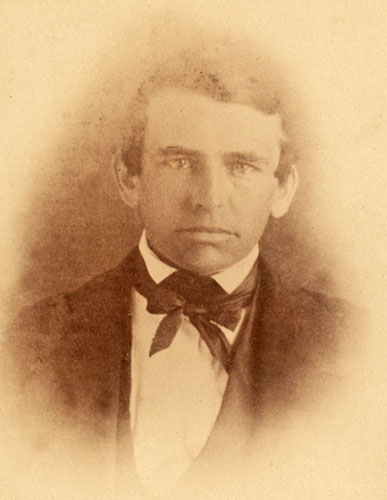
Walsh’s first stint as acting governor lasted from July 3 to July 30 in 1858 during the temporary absence of Governor Denver. Little of note occurred during this time.
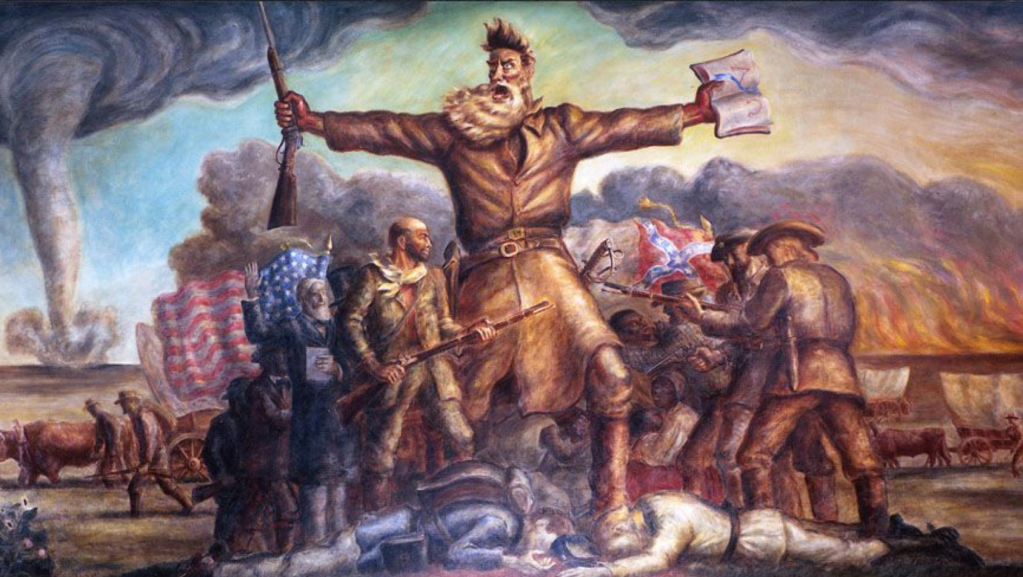
He next became acting governor on October 10, 1858, upon the resignation of Governor Denver. Walsh remained in close contact with Denver, however. He confided to the outgoing governor that he entertained some hopes of securing an appointment to the office himself, although he was also amenable to the idea of having a Kentucky man as the next territorial governor. When word came that Samuel Medary was the president’s selection, Walsh was disappointed, but admitted to Denver that he respected the future governor’s tact. Meanwhile, Walsh occupied the rest of his time as acting governor petitioning for federal money to offer as a reward for the capture of John Brown and dispatching Missouri guerrilla fighters to stamp out an opposing abolitionist band under James Montgomery known as the Jayhawkers.”
Tensions and distrust grew between Walsh and Medary “until the governor asked to have Walsh removed from office claiming ‘incompatibility of temper’ as a pretext. Walsh resigned in June 1860 and took up a more congenial life of farming near Grantville in Jefferson county, Kansas.” [See Homestead on the Range]
Most free-staters held a relatively low opinion of Walsh, believing him to hold “the interests of liberty and freedom in Kansas” as only a “secondary concern” and was preoccupied with keeping Montgomery and Brown’s “Jayhawkers” in check. To be fair, however, Montgomery & Brown did foment continued violence on the border and performed unlawful acts.

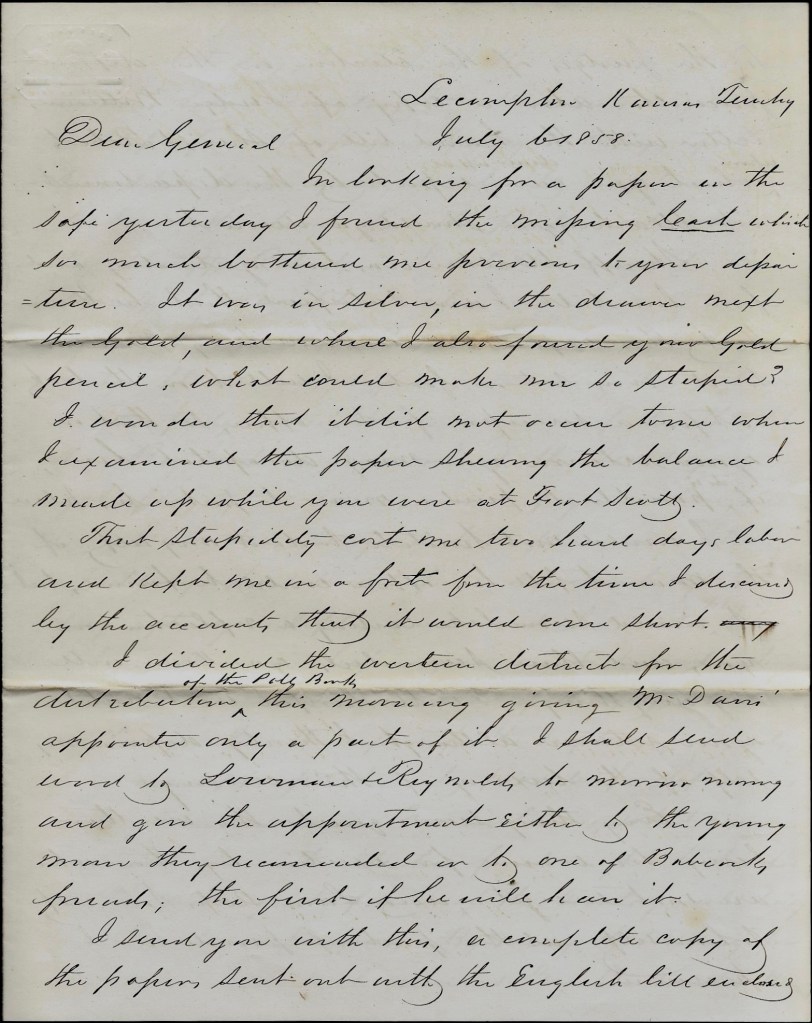
Letter 1
Lecompton, Kansas Territory
July 6, 1858
Dear General,
In looking for a paper in the safe yesterday I found the missing cash which so much bothered me previous to your departure. It was in silver in the drawer next the gold, and where I also found your gold pencil. What could make me so stupid? I wonder that it did not occur to me when I examined the paper showing the balance I made up while you were at Fort Scott. That stupidity cost me two hard days labor and kept me in a fright from the time I discovered by the accounts that it would come short.
I divided the western district for the distribution of the Poll Book this morning giving Mr. Davis appointee only a part of it. I shall send word to Lowman & Reynolds tomorrow morning and give the appointment either to the young man they recommended or to one of Babcock’s friends; the first if he will have it.
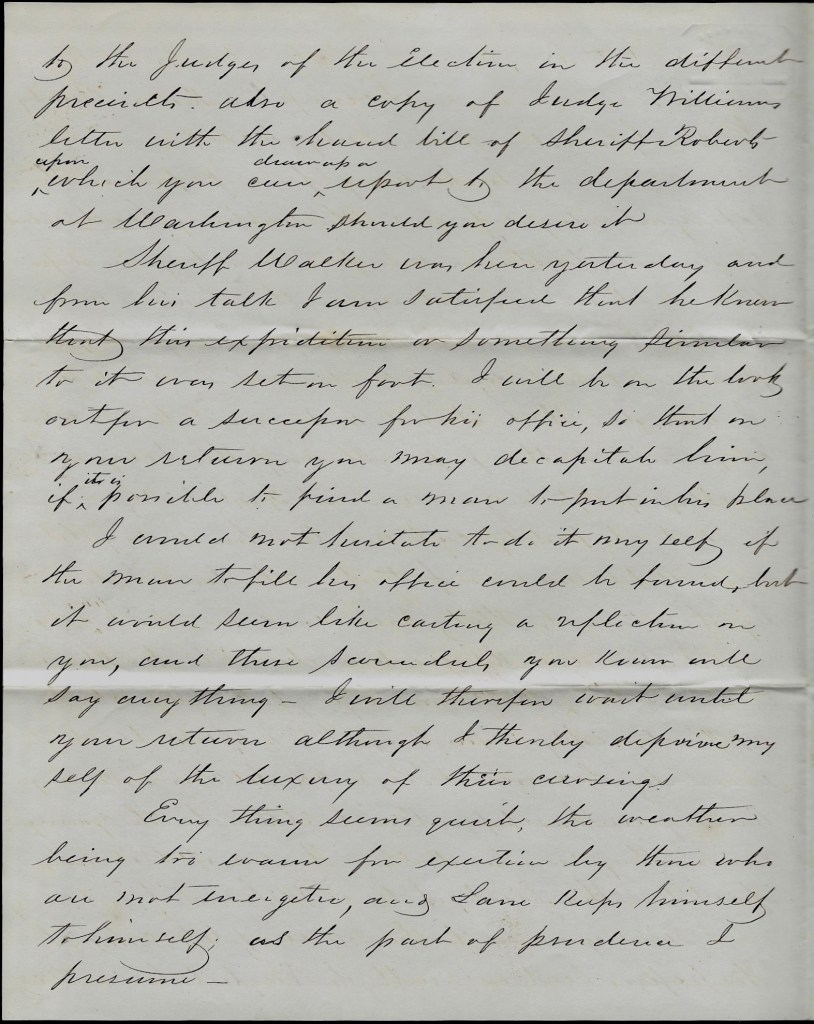
I send you with this a complete copy of the papers sent out with the English bill enclosing to the judges of the election in the different precincts; also a copy of Judge Williams’ letter with the hand bill of Sheriff Roberts upon which you can draw up a report to the department at Washington should you desire it.
Sheriff [Samuel] Walker 1 was here yesterday and from his talk I am satisfied that he knew that this expedition—or something similar to it—was set on foot. 2 I will be on the lookout for a successor for his office so that on your return you may decapitate him if it is possible to find a man to put in his place. I would not hesitate to do it myself if the man to fill his office could be found, but it would seem like casting a reflection on you, and these scoundrels you know will say anything. I will therefore wait until your return although I thereby deprive myself of the luxury of their cursings.
Everything seems quiet, the weather being too warm for exertion by those who are not energetic, and [James] Lane keeps himself to himself; as the part of prudence, I presume. 3
I send today to each of the sheriffs of Johnson, Lykins [now Miami], Linn, Douglas, Franklin, and Anderson a slip from the paper, being a copy of the handbill sent you, as also to Captain Weaver to be on the look for the parties advertised by Sheriff Roberts. I will send one to the sheriff of Doniphan also.
I will await further dispatches for Judge Williams before answering his letter. The judge might be nervous if he thought the Big Indian [Gov. Denver] was out of the Territory and get fidgety in consequence of your absence.
[Judge] Cato has resigned his office and states so publicly. He returned from Kansas City the day after you left and said he would have liked to have seen you before you went to Washington.
Is there not some law of Congress which authorizes the transfer of the surplus of funds from one appropriation to provide for delinquencies in a similar one? For instance, what can be saved from the Election fund might be transferred to the contingent fund of this Territory—all being for Territorial purposes. By using that money for rewards, &c. for such men as Preacher Horse thief Stewart and Charley Lenhart and others, their operations might be put a stop to in the Territory. As it now is, the Territorial Taxes are not collectible until December next and there is no money to pay for anything.
I have not the least doubt but a little money could be used to great advantage & men easily be found who would apprehend them and deliver them over to the civil authorities for a reward or run them out of the country.
Since writing the above, Dr. C[harles] Robinson called at the office and appeared much pleased with the appearance of matters about Fort Scott and said that Stewart and Lenhart—being Lane’s own peculiar strikers, he had no doubt that Lane had a hand in these matters.
Very truly your friend & obedient servant, — Hugh S. Walsh
To James W. Denver, Governor, Kansas Territory
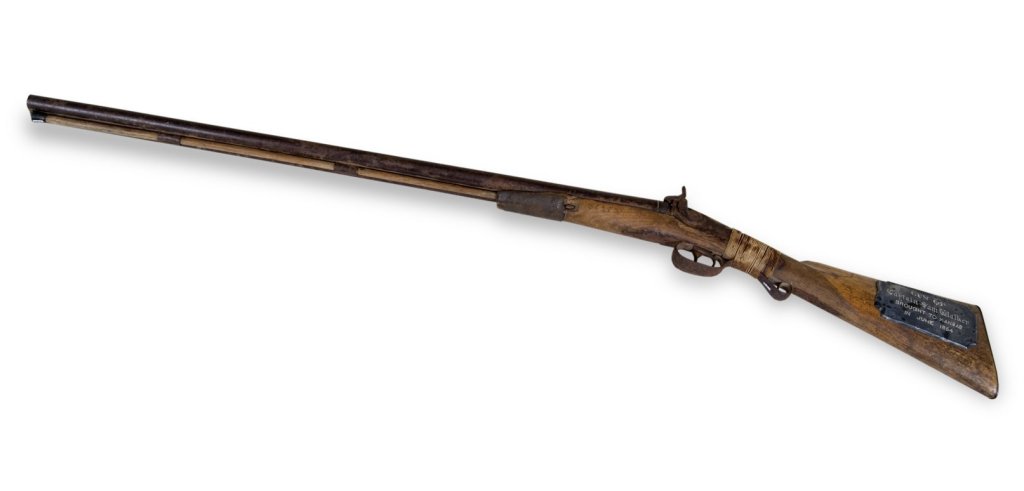
(Kansas Historical Society)
1 Samuel Walker (1822-1893) came to Kansas Territory in 1855 and organized the free-state local militia known as the Bloomington guards. He became the Sheriff of Douglas County, Kansas in October, 1857 and served in this capacity until January, 1862.
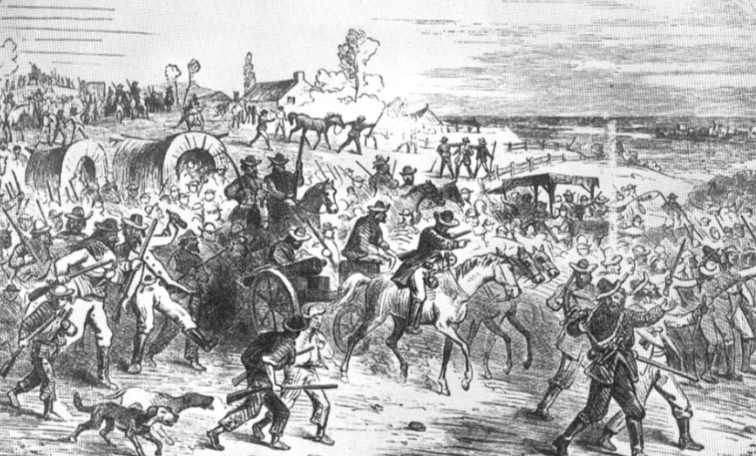
2 My assumption is that Walsh is referring to the raid of Fort Scott conducted on 5 June 1858 by free-stater James Montgomery and his followers in which they attempted to burn down the (pro-slavery) Western Hotel. Several shots were fired but no one killed and the hotel was saved from destruction. The raid on the Hotel was in retaliation for the murder of 11 free-staters in the Marais des Cygnes Massacre the previous month. Of course this massacre was in retaliation for free-staters driving pro-slavery families out of Linn county the month before that. In an attempt to break the cycle of violence, Governor Denver traveled to Fort Scott in mid-June 1858 to hold a meeting at the Western Hotel to try to settle the political unrest. It worked—for at least five more months.
3 This mention of “everything being quiet” and “Lane keeping to himself” is probably a reference to the free-state and pro-slavery hostilities as well as the recent (3 June 1858) killing of Gaius Jenkins by Jim Lane over a land dispute in Douglas county. Lane had yet to be brought to trial for the murder. [See—Man of Douglas, Man of Lincoln: The Political Odyssey of James Henry Lane, by Ian Michael Spurgeon, p. 154]


Letter 2
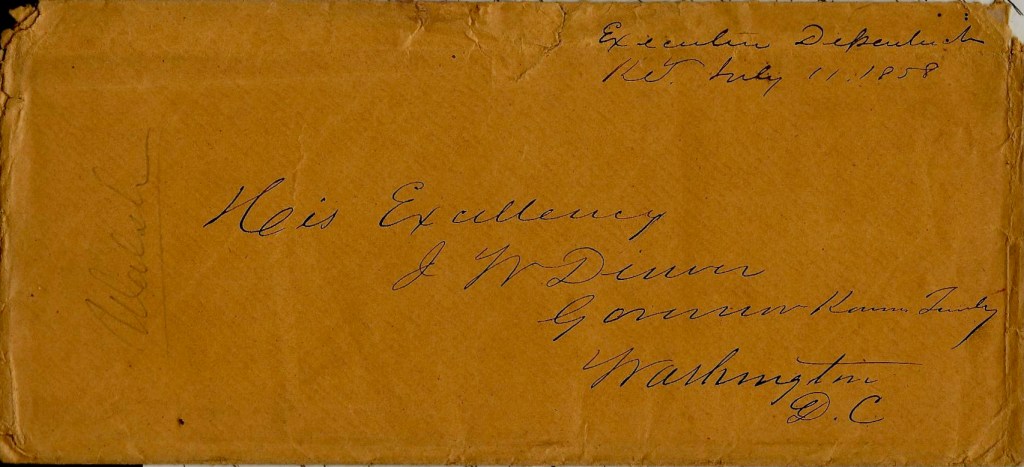
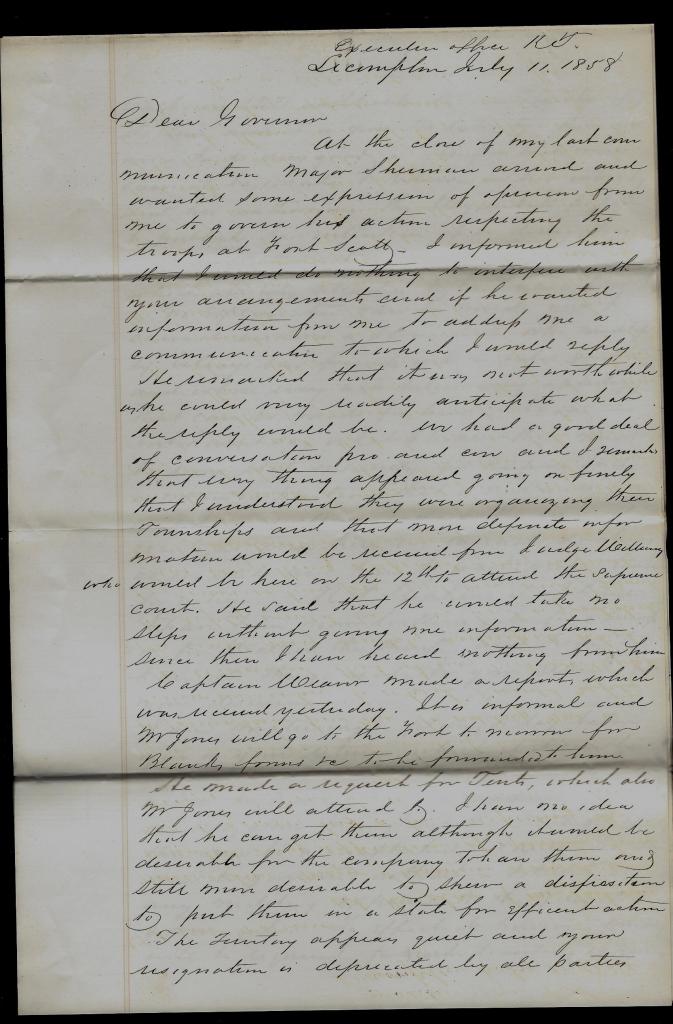
Executive Office, K. T.
Lecompton
July 11, 1858
Dear Governor,
At the close of my last communication, Major Sherman arrived and wanted some expression of opinion from me to govern his action respecting the troops at Fort Scott. I informed him that I would do nothing to interfere with your arrangement and if he wanted information from me, to address me a communication to which I would reply. He remarked that it was not worth while as he could very easily anticipate what the reply would be. We had a good deal of conversation, pro and con, and I remarked that everything appeared going on finely, that I understood they were organizing their townships and that more definite information would be received from Judge Williams who would be here on the 12th to attend the Supreme Court. He said that he would take no steps without giving me information. Since then I have heard nothing from him.
Captain Weaver made a report which was received yesterday. It is informal and Mr. Jones will go to the Fort tomorrow for blanks, forms, &c. to be forwarded to him. He made a request for tents which also Mr. Jones will attend to. I have no idea that he can get them although it would be desirable for the company to have them and still more desirable to shew a disposition to put them in a state for efficient action.
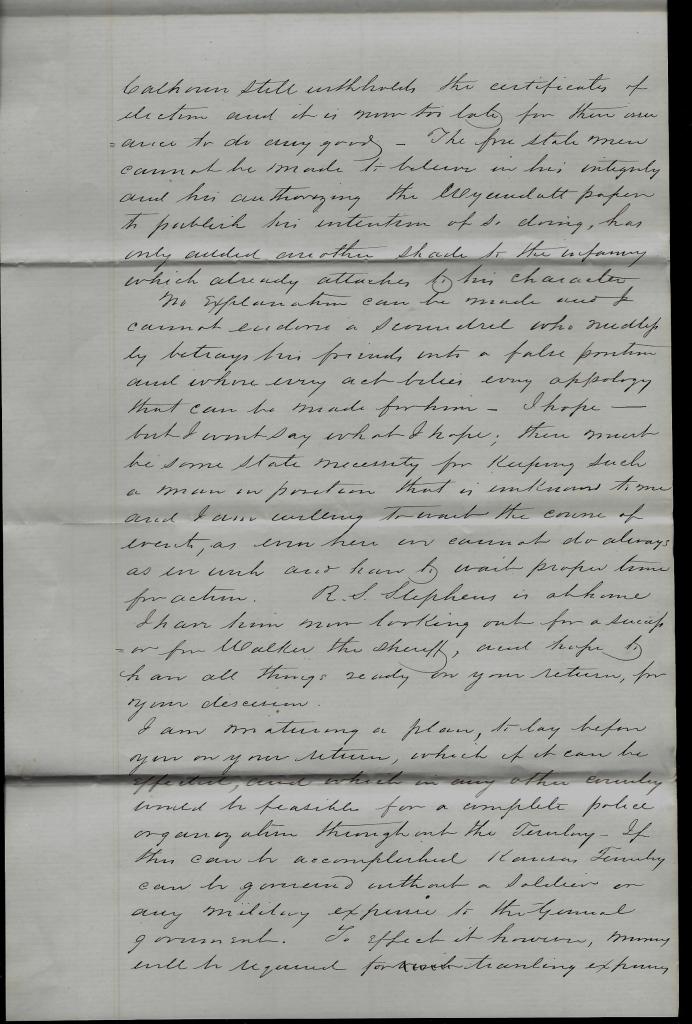
The Territory appears quiet and your resignation is deprecated by all parties. [John] Calhoun 1 still withholds the certificates of election and it is now too late for their issuance to do any good. The Free State men cannot be made to believe in his integrity and his authorizing the Wyandotte paper to publish his intention of so doing has only added another shade to the infamy which already attaches to his character. No explanation can be made and I cannot endorse a scoundrel who needlessly betrays his friends into a false position and where every act belies every apology that can be made for him. I hope—but I won’t say what I hope; there must be some state necessity for keeping such a man in position that is unknown to me and I am willing to wait the course of events as even here we cannot do always as we wish and have to wait proper time for action.
R. S. Stephens is at home. I have him now looking out for a successor for [Samuel] Walker, the sheriff, and hope to have all things ready on your return for your decision.
I am maturing a plan to lay before you on your return which, if it can be effected, and which in any other country would be feasible, for a complete police organization throughout the Territory. If this can be accomplished, Kansas Territory can be governed without a soldier or any military expense to the general government. To effect it, however, money will be required for traveling expenses to the different sections of the Territory. Without means, it will be a tedious operation and the whole plan be disconcerted by delay.
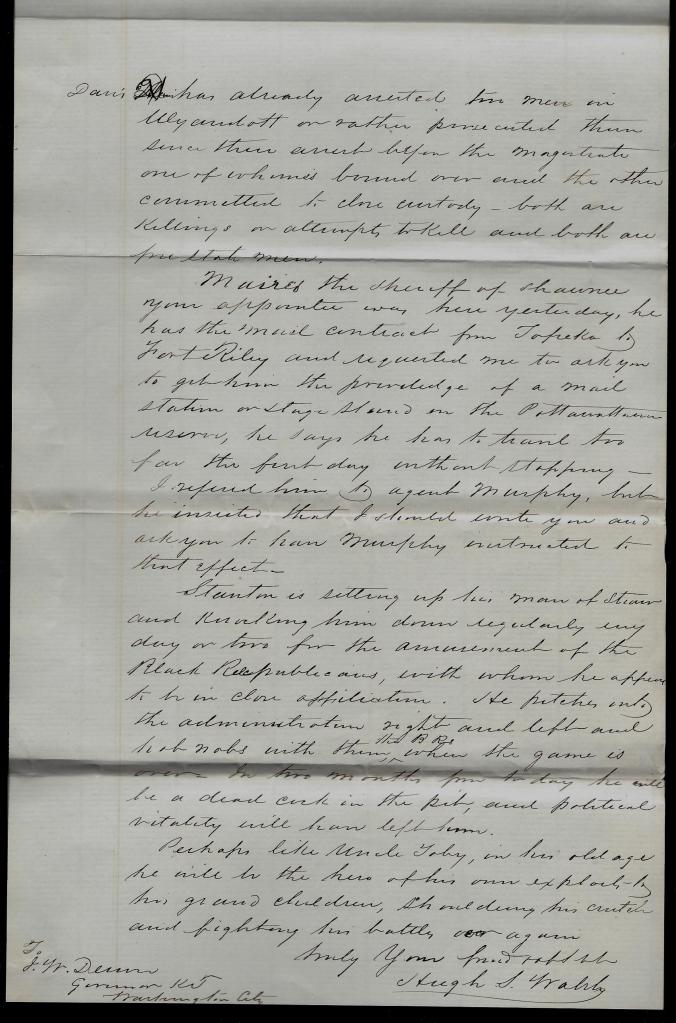
[U. S.] Marshall [William P.] Fain’s bond was issued a day or two since with directions to forward it to him. The commission was sent to Judge LeCompte and I have written to him to know if he can give me information of his location so that I may inform him his presence is needed. I hope he will not come at all as from the best information I can obtain, there is not an officer of any efficiency who will serve under him. They will not risk their reputation in so doing. Sheriff Walker is the only one whom I have heard speak or of speaking a word in his favor and that is the best evidence of his unfitness. I presume Walker thinks he can use him as his tool. Ashton of Leavenworth, Berry of Kickapoo, Forsyth of Wyandotte—all announce that they will not serve under him, having an utter want of confidence in his efficiency & capacity. They all know him and have all been efficient deputies.
[Alson C.] Davis 2 is here—the district attorney, and he appears to apprehend that he will not be aided to any extent by Fain, and the moral effect upon the opposite party would be extremely bad if a crime should be committed by one of our own party and Fain should make a faux pas in the arrest. Davis has already arrested two men in Wyandotte—or rather prosecuted them since their arrest, before the magistrate, one of who’s bound over and the other committed to close custody. Both are killings or attempts to kill and both are free-state men.
[Thomas W.] Maires, 3 the Sheriff of Shawnee you appointed was here yesterday. He has the mail contract for Topeka to Fort Riley and requested me to ask you to get him the privilege of a mail station or stage stand on the Potawatomies’ reserve. He says he has to travel too far the first day without stopping. I referred him to agent Murphy but he insisted that I should write you and ask you to have Murphy instructed to that effect.
[Ex-Governor Frederick Perry] Stanton is setting up his man of straw and knocking him down regularly every day or two for the amusement of the Black Republicans with whom he appears to be in close affiliation. He pitches into the administration right and left and hob nobs with them (the Black Republicans) when the game is over. In two months from today, he will be a dead cock in the pit and political vitality will have left him.
Perhaps like Uncle Toby 4 in his old age, he will be the hero of his own exploits to his grandchildren, shouldering his crutch and fighting his battles over again.
Truly yours friend & obedient servant, — Hugh S. Walsh
to J. W. Denver, Governor K. T., Washington City
1 John Calhoun (b. 1806) was a pro-slavery Democrat who used the influence of his friend Stephen A. Douglas to help him secure the appointment as surveyor general of Kansas and Nebraska Territory in 1854. “During frequent absences of the territorial governor, the surveyor general exercised gubernatorial powers, and also served as a liaison between federal and territorial officials. As Kansas’s most prominent Democrat, Calhoun sought to secure a majority for his party in the territory and promoted the popular sovereignty solution to the slavery issue. In 1857 he attended the Lecompton Constitutional Convention as a delegate and was made president of that organized body. The radical proslavery delegates attending the convention were determined to adopt a proslavery constitution and send it directly to the U.S. Congress without a popular vote. Calhoun and the moderate delegates urged submission of the constitution to the populace of the territory to win ratification and then submittal to the U.S. Congress for final adoption. A struggle ensued between the two rival factions of the convention, and in the end a compromise solution was reached whereby article seven legalizing slavery in the constitution would be submitted to a popular vote, thus assuring the survival of the remainder of the constitution, regardless of outcome of the referendum. The vote of December 21, 1857, became an election centering on inclusion or exclusion of the slavery article in the constitution. The free-state majority in the territory refused to vote, and the “constitution with slavery” won by a large margin. The Lecompton Constitution was rejected in a second vote on January 4, 1858, in which free-staters participated. Final rejection by the voters of this constitution came on August 2,1858. By 1858 control of the Kansas territorial legislature had passed firmly into free-state hands. The legislature initiated an investigation into the alleged fraudulent practices of the December 1857 election. This action prompted Calhoun to leave Kansas for the safety of Missouri. His unpopularity within Kansas eventually led President James Buchanan to relocate the surveyor general’s office from Lecompton to Nebraska City. On October 13, 1859, Calhoun’s career and personal involvement in the politics of Kansas came to an abrupt ended with his unexpected death at St. Joseph, Missouri.” [Kansapedia]
2 Alson C. Davis served as the third Attorney General of Kansas Territory from 5 June 1858 to 9 February 1861.
3 Thomas W. Maires was from Tecumseh, Kansas Territory, which was a few miles east of Topeka. He was appointed to the post of Shawnee County Sheriff by Gov. James Denver in March 1858 after his predecessor resigned. He drew criticism from the residents of the county when he in turn appointed three deputies to assist him—a Republican, a Democrat, and a Conservative. Too many deputies, they argued, adding that he only picked them to increase his chances to get elected in the next election.
4 This is a reference to the “Uncle Toby” who was a character in The Life and Opinions of Tristam Shandy by Laurence Sterne. It was a popular novel in mid-19th Century. He was a harmless old fool who was obsessed with war games.

Letter 3
[Note: This letter is from the private collection of Rob Morgan and is published on Spared & Shared by express consent.]
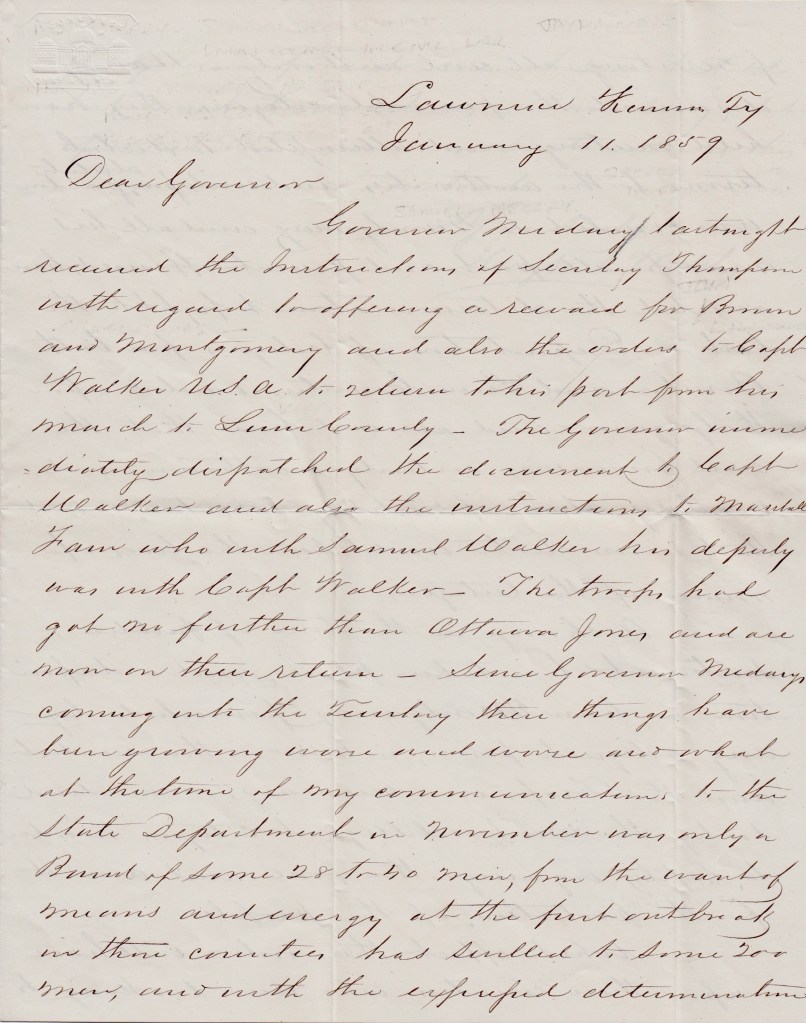
Lawrence, Kansas Territory
January 11, 1859
Dear Governor,
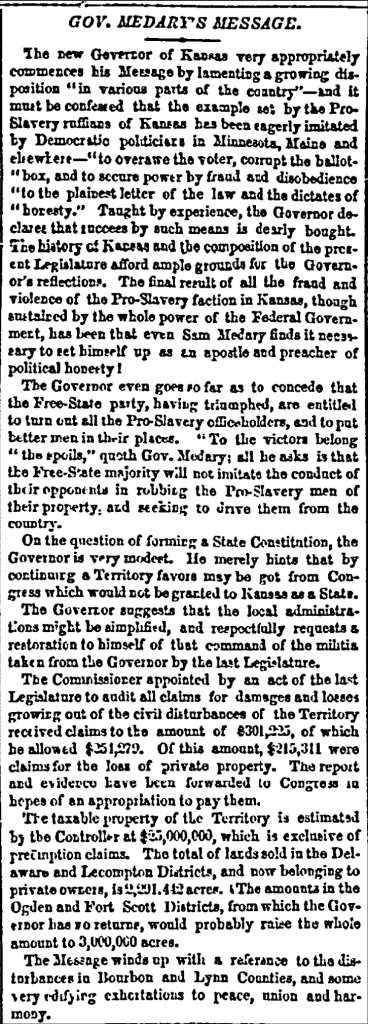
Governor [Samuel] Medary last night received the instructions of Secretary Thompson with regard to offering a reward for Brown and Montgomery and also the orders to Capt. Walker, U. S. A. , to return to his post from his march to Linn County. The Governor immediately dispatched the document to Capt. Walker and also the instructions to Marshall [William P.] Fain who with Samuel Walker, his deputy, was with Capt. Walker. The troops had got no further than Ottawa [John Tecumseh] Jones’ [house near Ottawa, KT] and are now on their return.
Since Governor Medary’s coming into the territory, these things have been growing worse and worse and what at the time of my communications to the State Department in November was only a band of some 28 to 40 men, from the want of means and energy at the first outbreak in those counties, has swelled to some 200 men, and with the expressed determination of resisting all civil authority.
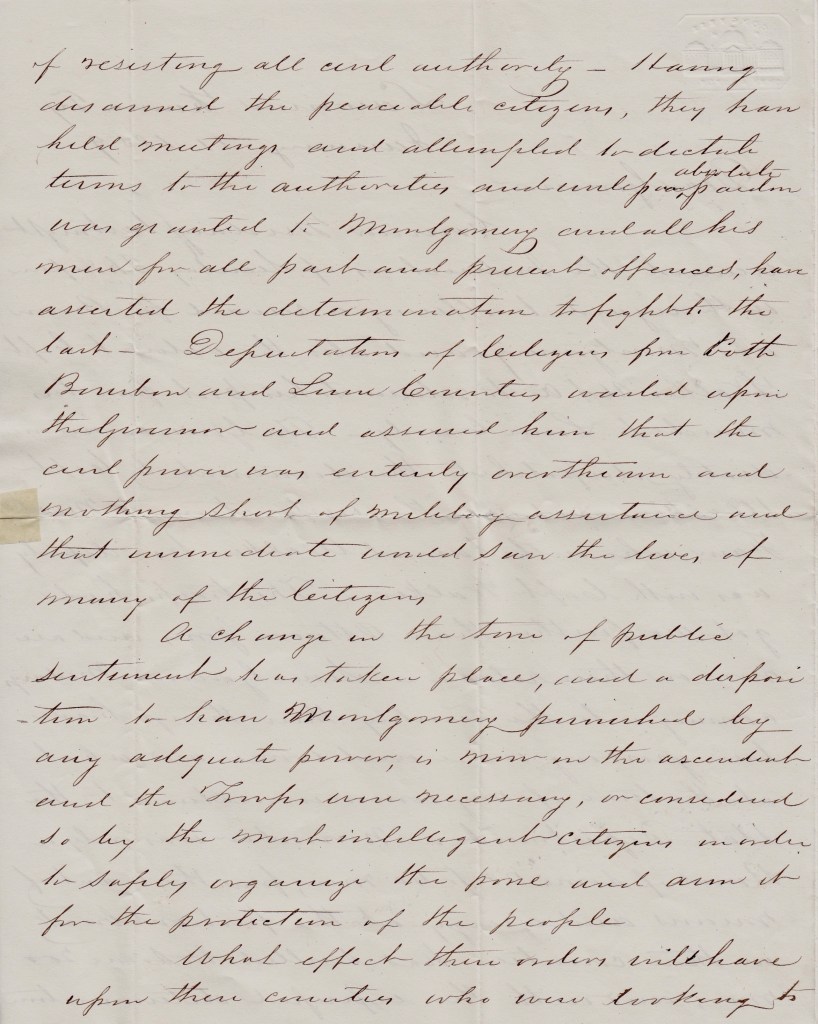
Having disarmed the peaceable citizens, they have held meetings and attempted to dictate terms to the authorities and unless an absolute pardon was granted to Montgomery and all his men for all past and present offenses, have asserted the determination to fight to the last. Deputations of citizens from both Bourbon and Linn counties waited upon the Governor and assured him that the civil power was entirely overthrown and nothing short of military assistance—and that immediate—would save the lifes of many of the citizens.
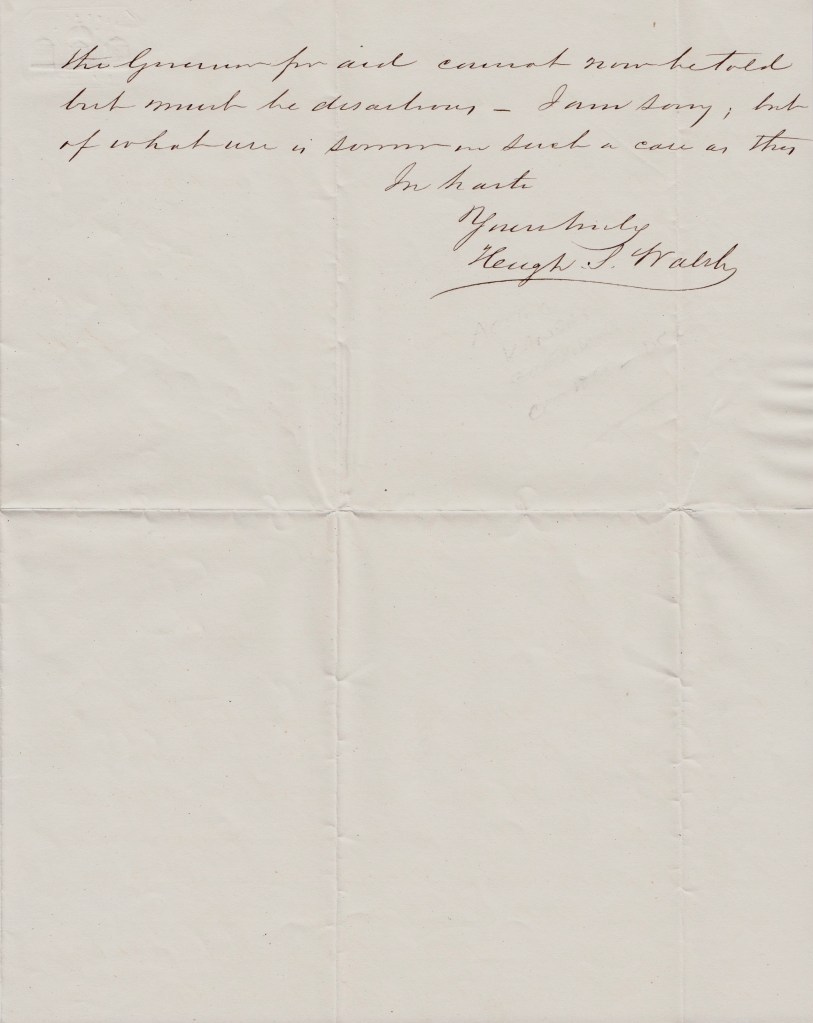
A change in the tone of public sentiment has taken place, and a disposition to have Montgomery punished by any adequate power, is now in the ascendant and the troops even necessary, or considered so by the most intelligent citizens in order to safely organize the posse and arm it for the protection of the people. What effect these orders will have upon these counties who were looking to the Governor for aid cannot now be told but must be disastrous.
I am sorry but what use is sorrow in such a case as this. In haste. Yours truly, — Hugh S. Walsh
Letter 4
Lawrence, Kansas Territory
February 2, 1859
Dear General,
I have been putting off writing from time to time from various causes but mostly from the snarl things got into just upon the arrival of the Governor. What between the fuss in Linn & Bourbon [counties] and giving Governor [Samuel] Medary information and the preparation for holding the session of the Legislature and then fight with me respecting printing and exenses, I have been kept fully busy until within a day or two.
The Democrats in Doniphan & Leavenworth counties never appeared to claim their seats although I kept everything open until the last minute and all my plans went for nothing for the want of cooperation—never being able to bring the contestants or our friends to the scratch. And as they did not appear at all, it was not worth while to make myself ridiculous by attempting an impossibility.
The moving to this place might have been prevented possibly or the session might have been closed there for the effect of their joint resolution was an adjournment sine die. But the Governor required the cooperation of the Legislature if possible in the situation of the Territory and by the Journals which I send you, you will be able to see that he has effected something and he has been able to check their most ultra measures so far by working on their private interests—the only touchstone known to the set who now have the control of the Legislature.
In making the contract with Joel R. Gordon for the printing, I subserved two ends—I kept it out of their hands first, and second the profits will be used to furnish the material for another democratic press at Centropolis this summer. [S. W.] Driggs could not have done the printing if it had remained at Lecompton. As it is, he has made arrangements with Brown to print the Governor’s Message at this stage of the session when it was ordered the 1st day. He is inattentive as ever and his habits are not good.

With regard to the Post Office here, I have somewhat changed my views. I have now been three weeks occupying the old room at the Johnson House where we were quartered last winter. [Samuel Kress] Huson keeps the house and his interests are entirely diverse from Eldridge and there can be no community of interest between them. He is decidedly the man of the two and is a capital worker and has much more influence than a half dozen of H [E]. They are both good democrats, both good businessmen, but if particular interest is to be subserved, Huson is the man and we ought to make every edge cut to build up the party in the Territory.
I wish Currier would come home immediately and make a tour through the Territory and have someone with him to help organize the party in the different counties. Can not he obtain some funds from the National Committee for the purpose of bearing his expenses for that purpose? I have written him respecting it.
They have organized the Republican party and it is necessary for us to be at work. We held a caucus a few evenings since to endeavor to unite on some plan of operations for conducting the campaign. The Bill for the convention will pass over the Governor’s veto. if at all. I will get it for you & forward it by mail.
I have had a pretty hot time with this legislative assembly which has served to drain off their attention from the Governor and have beat them at their own game so far as I am concerned.
Since matters have got settled, I am becoming quite popular and the fawning, cringing, sycophants attempt by flattery what they could not obtain by force. So I let them lay it on thick. I with the help of a basket of champaign ha the most radical of the party under the table and on the floor and in any and every position that I wished.
Yours truly, — Hugh S. Walsh




 Spared & Shared 23