
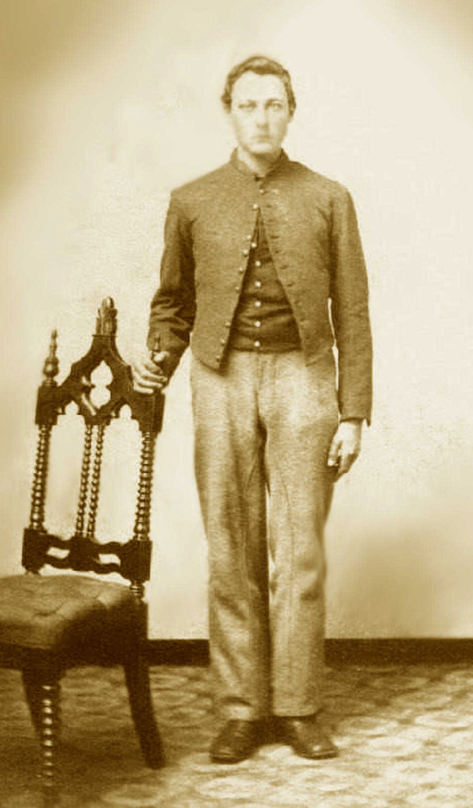
The following letters were written by Oliver H. Green (1837-1929) of Stephentown, Rensselaer county, New York, who was drafted at the age of 27 in September 1863 to serve as a private in Co. I, 21st New York Cavalry. He was immediately made a corporal and in January 1865 made a sergeant. He was reduced to the ranks in March 1865 before mustering out of Co. D in July 1866 at Denver, Colorado Territory. Oliver was a farmer before the war and later worked in the coal business.
Oliver wrote the letters to his wife Elisabeth M. Green (1839-1870). On the very same day Oliver wrote the first letter below, President Abraham Lincoln gave his address to the assembled citizens honoring the fallen soldiers of the battlefield and dedicating the National Cemetery at Gettysburg.
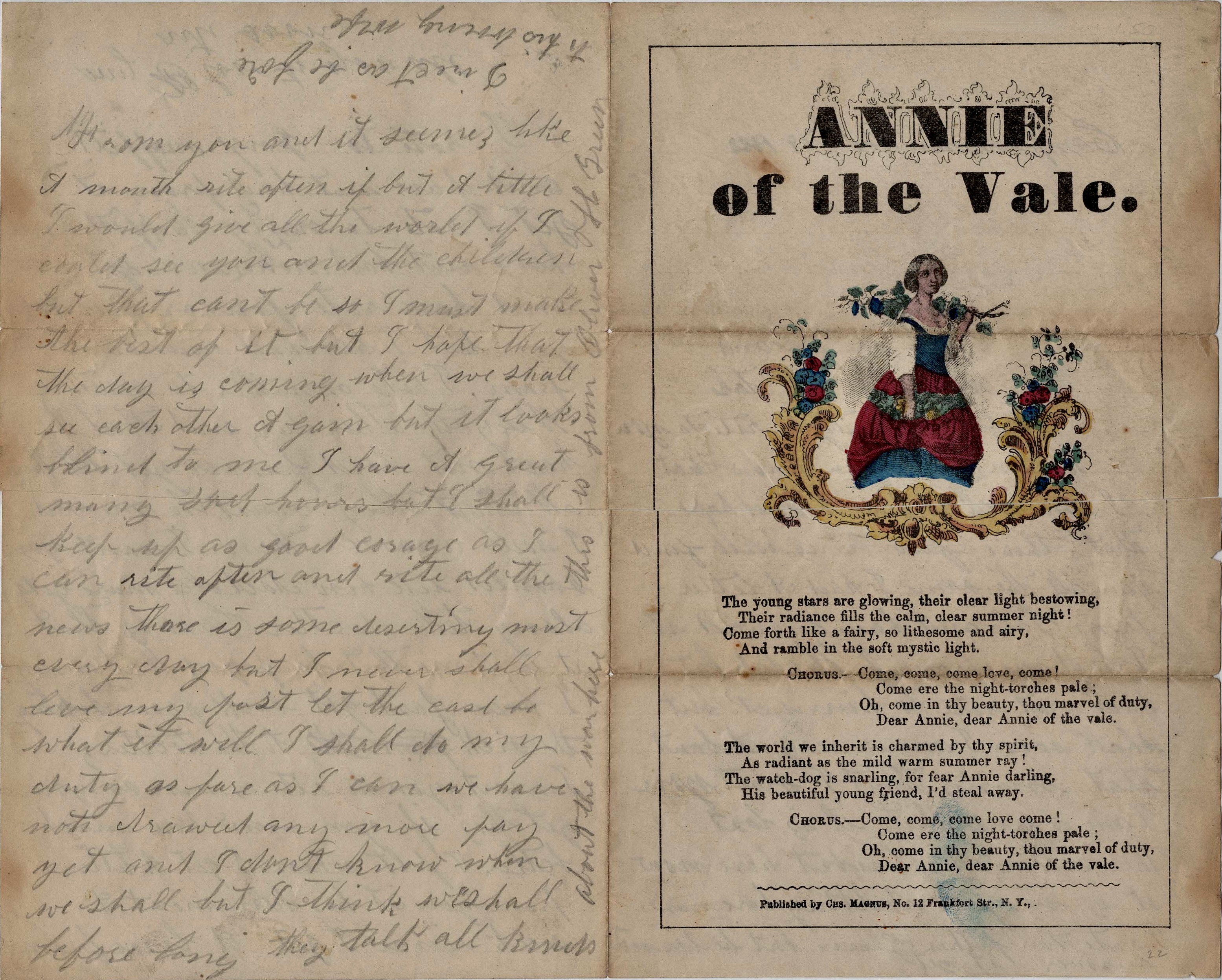
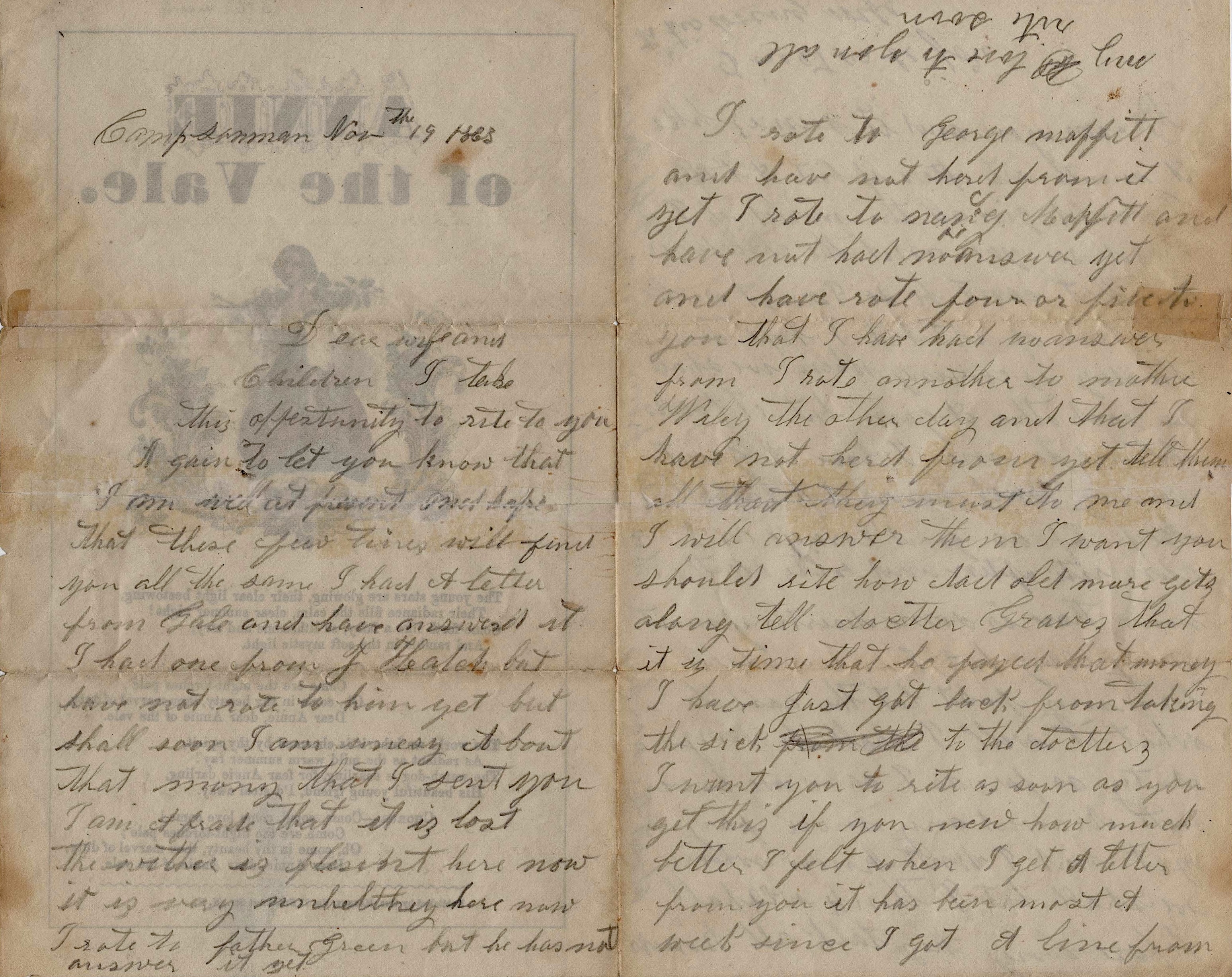
Letter 1
Camp Sanman [Stoneman] 1
November 19, 1863
Dear wife and children.
I take this opportunity to write to you again to let you know that I am well at present and hope that these few lines will find you all the same.I had a letter from Gale and have answered it. I had one from F. Hatch but have not wrote to him yet but shall soon. I am uneasy about that money that I sent you. I am afraid thsat it is lost.
The weather is pleasant here now. It is very unhealthy here now.
I wrote to Father Green but he has not answered it yet. I wrote to George Moffitt and have not heard from it yet. I wrote to Nancy Moffit and have not had no answer yet ad have wrote four or five to you that I have had no answer from. I wrote another to Mother Wiley the other day and that I have not heard from yet. Tell them all that they must [write] to me and I will answer them. I want you should write how that old mare gets along. Tell Dr. Graves that it is time that he paid that money.
I have just got back from taking the sick to the doctors.
I want you to write as soon as you get this. If you knew how much better I felt when I get a letter from you. It has been most a week since I got a line from you and it seems like a month. Write often if but a little. I would give all the world if I could see you and the children but that can’t be so I must make the best of it. But I hope the day is coming when we shall see each other again. But it looks blind to me. I have a great many sad hours but I shall keep up as good courage as I can. Write often and write all the news.
There is some deserting most every day but I never shall leave my post, let the cost be what it will. I shall do my duty as far as I can. We have not drawed anymore pay yet and I don’t know when we shall but I think we shall before long. They talk all kinds about the war here.
This is from Oliver H. Green
Direct as before. To his loving wife.
1 Camp Stoneman was a United States Army military facility located in Washington, D.C., during the American Civil War. It served as the Dismounted Camp for the cavalry forces of the Army of the Potomac from September 1863 to December 1864.
Letter 2
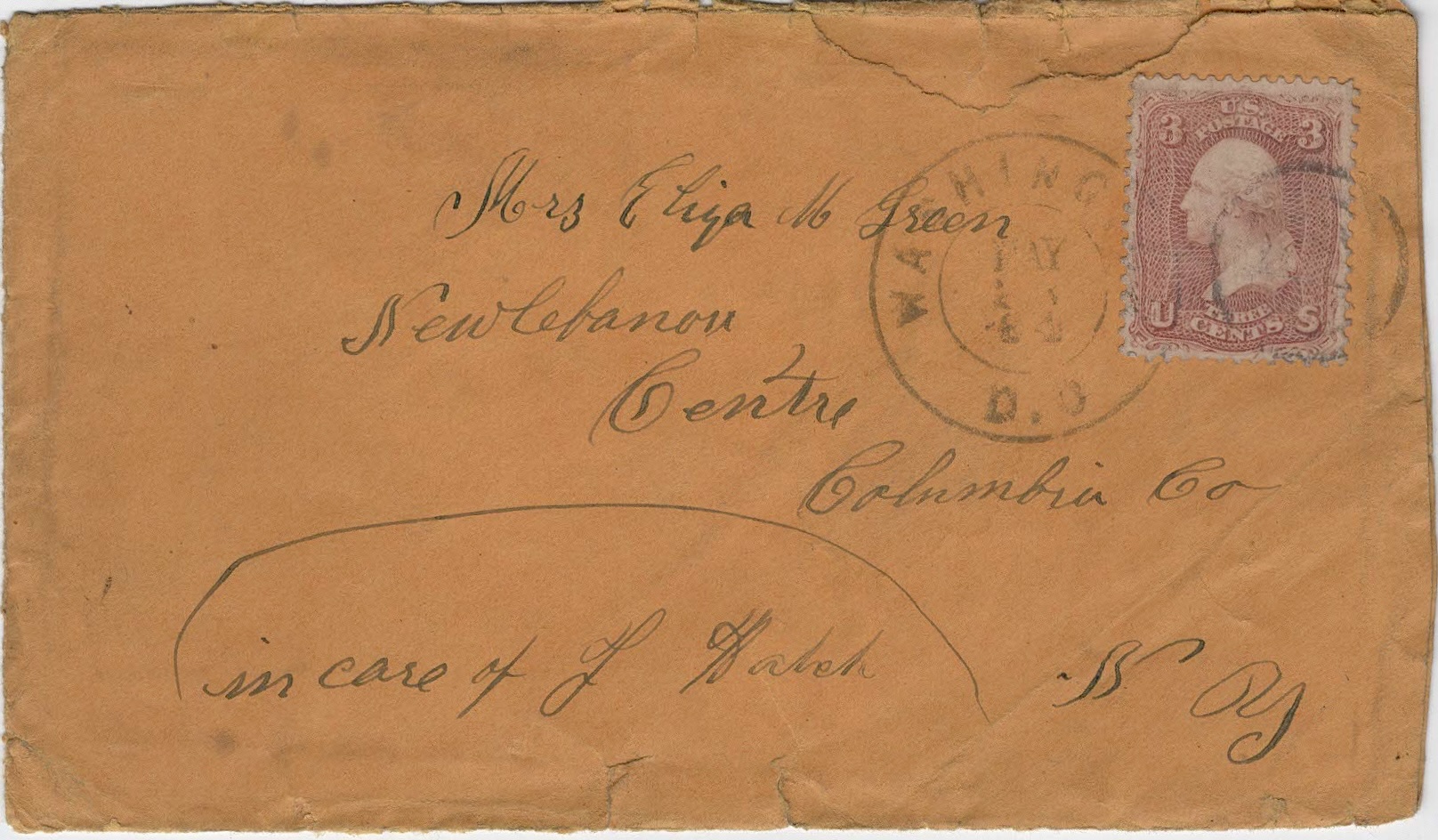
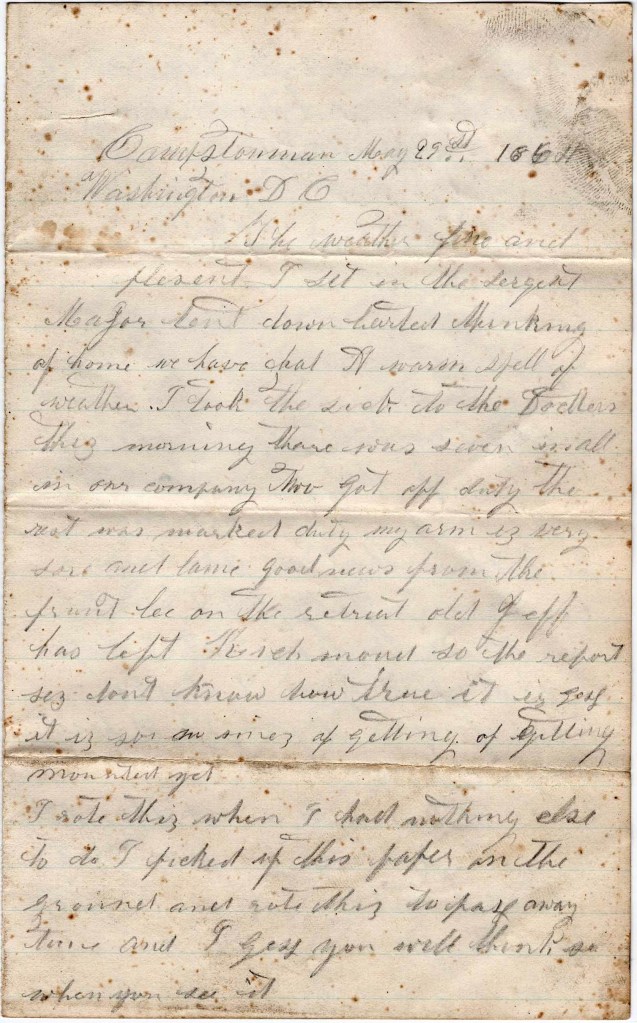
Camp Stoneman, Washington D. C.
May 29th 1864
The weather is fine and pleasant. I sit in the Sergeant Major’s tent downhearted, thinking of home. We have had a warm spell of weather. I took the sick to the doctor this morning. There was seven in all in our company. Two got off duty. The rest was marked [for] duty. My arm is very sore and lame.
Good news from the front. Lee on the retreat. Old Jeff has left Richmond so the reports say. Don’t know how true it is. Guess it is so. No signs of getting mounted yet.
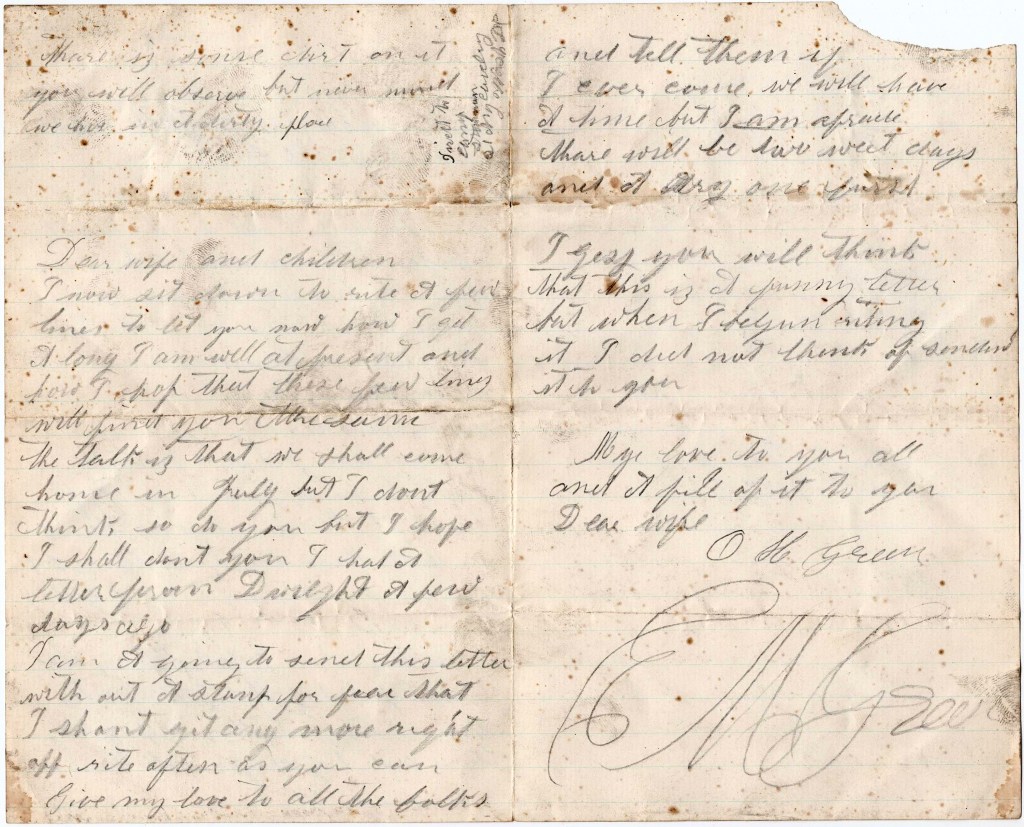
I wrote this when I had nothing else to do. I picked up this paper on the ground and wrote this to pass away time and I guess you will think so when you see it. There is some dirt on it you will observe but never mind, we live in a dirty place.
Dear wife and children, I now sit down to write a few lines to let you know how I get along. I am well at present and I hope that these few lines will find you the same. The talk is that we shall come home in July but I don’t think so, do you? But I hope I shall, don’t you? I had a letter from Dwight a few days ago. I am going to send this letter without a stamp for fear that I shan’t get any more right off as you can. Give my love to all the folks and tell them if I ever come, we will have a time. But I am afraid there will be two wet days and a dry one first.
I guess that you will think that this is a funny letter but when I begun writing it, I did not think of sending it to you. My love to you all and a pile of it to you, dear wife, — O. H. Green
To E. M. Green
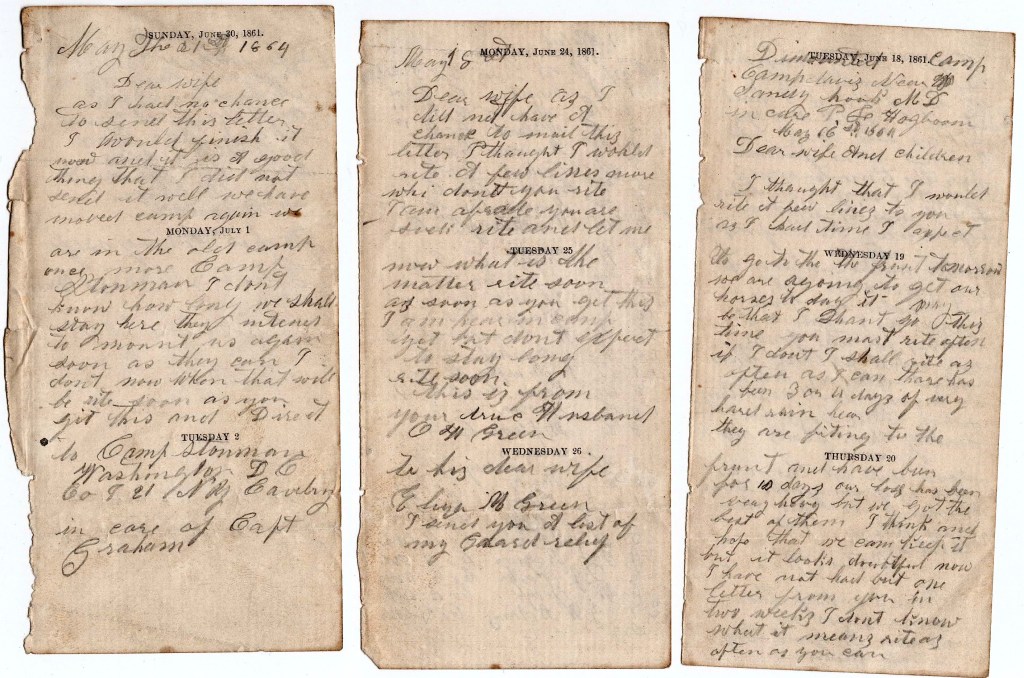
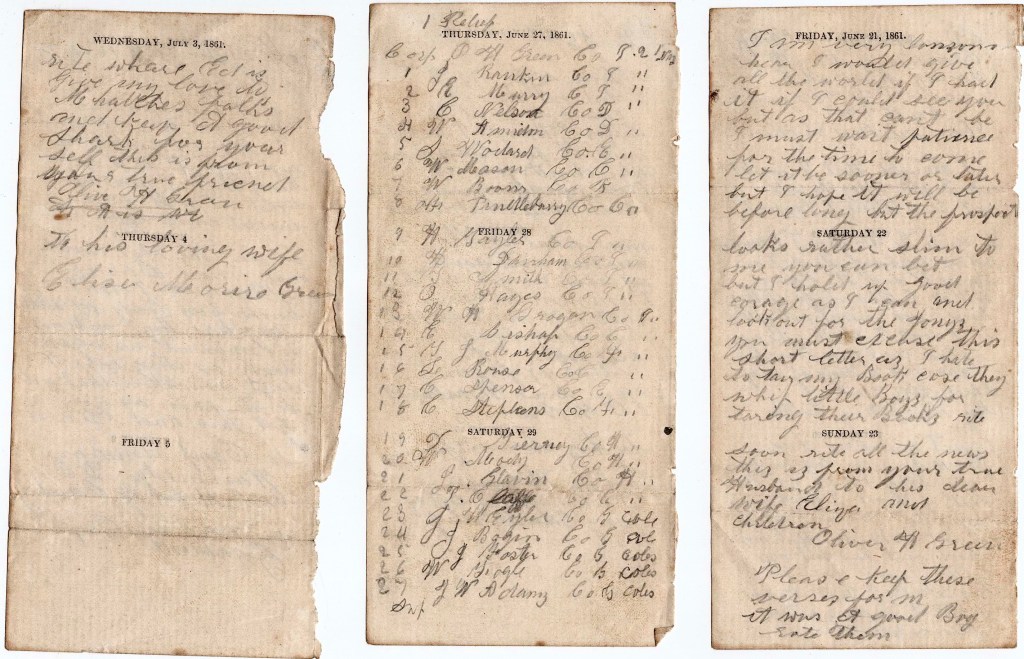
[Note, the following scraps written on pages ripped from a diary were included with the letter.]
May 16, 1864
Dismounted Camp near Sandy Hook, Maryland in care of P. L. Hogboom
Dear wife and children, I thought that I would write a few lines to you so as I had time. I expect to go to the front tomorrow. We are agoing to get our horses today. It may be that I shan’t go this tie. You must write often if I don’t. I shall write as often as I can. There has been three or 4 days of very hard rain here.
They ar fighting to the front and have been for ten day. Our loss has been very heavy but we got the best of them, I think, and hope that we can keep it. But it looks doubtful now. I have not had but one letter from you in two weeks. I don’t know what it means. Write as often as you can. Write where Ed is. Give my love to M’s folks and keep a good share for yourself. This is from your true friend, Oliver H. Green to his loving wife, Elisa Moser Green
May 18th 1864
Dear wife, as I did not have a chance to mail this letter, I thought I would write a few more lines. Why don’t you write? I am afraid you are sick/ Write and let me know what is the matter. Write soon as you get this. I am here in camp yet but don’t expect to stay long. Write soon. This is from your true husband, — O. H. Green
To his dear wife, Eliza M. Green.
I send you a list of my guard relief.
May 21st 1864
Dear wife, as I had bo chance sooner to send this letter, I would finish it now and it is a good thing that I did not it. well, we have moved camp again. We are in the old camp once more—Camp Stoneman. I don’t know how long we shall stay here. They intend to mount us again soon as they can. I don’t know when that will be. Write soon as you get this and direct to:
Camp Stoneman, Washington D. C., Co. I, 21st N. Y. Cavalry, in care of Capt, Graham





 Spared & Shared 23