

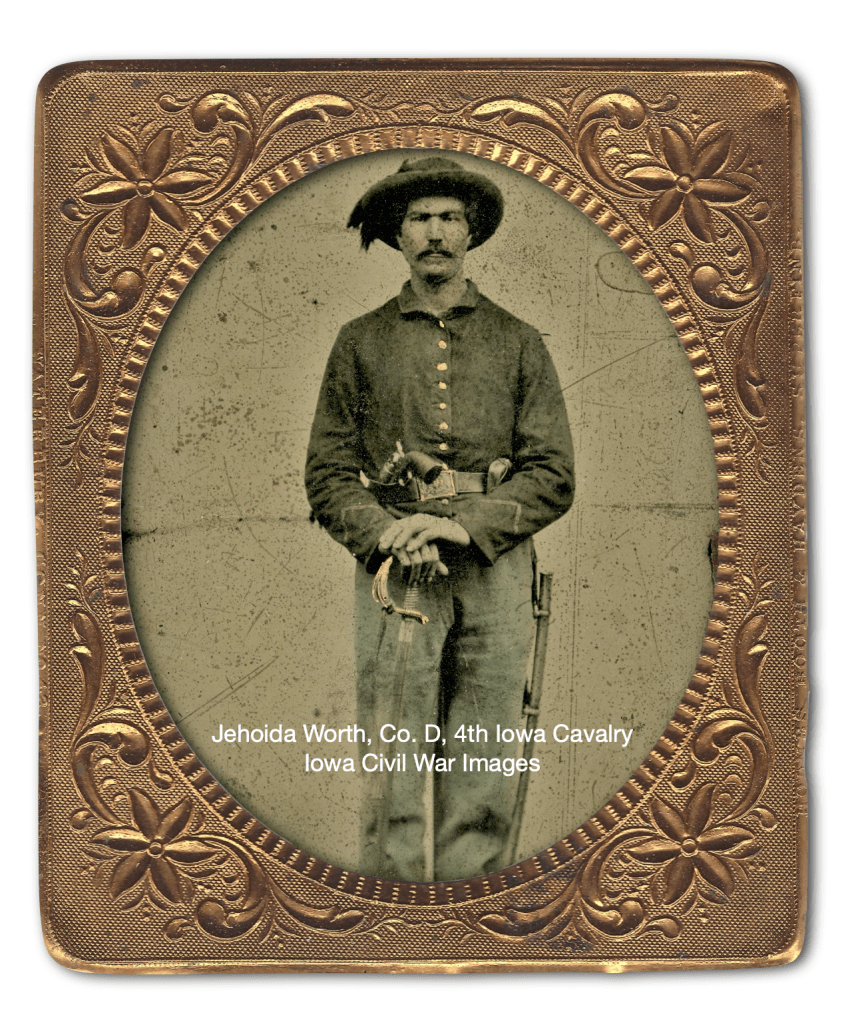
The following letter was written by Isaac Harry Botkin (1834-1922), the son of Robert C. Botkin (1791-1863) and Rachel Vernon (1796-1841). Isaac was living in Mt. Pleasant, Henry county, Iowa, when he enlisted as a Private in Co. C of the 4th Iowa Cavalry on Oct 15, 1861. He was mustered into federal service on Nov 25, 1861, and appointed as 4th Corporal. During his term of service, Botkin was promoted to 3rd Corporal on Feb 1, 1862; to 2nd Corporal on Feb 25, 1862; to 1st Corporal on Sept 1, 1862; to 6th Sergeant on June 10, 1863; to 2nd Sergeant on Feb 9, 1864; and finally commissioned as the 1st Lieutenant of Co. I of the 4th Iowa Cavalry on Feb 18, 1865.
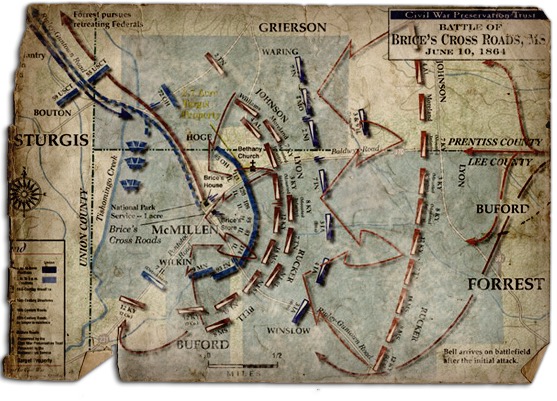
Isaac’s letter gives us a good description of Brig. Gen. Samuel D. Sturgis’s June 1864 expedition from Memphis down into Mississippi hoping to cut the Mobile & Ohio Railroad and proceed on as far as Mobile, if possible. The expedition was a disaster. Though Isaac claimed they were outnumbered 2:1, Maj. Gen. Nathan B. Forrest with only 3,500 cavalry were successful in turning back Sturgis who had 4,800 infantry and 3,300 cavalry with him—odds that favored the Federal force by nearly 3:1. Sturgis and his men retreated all the way back to Memphis, losing men and military supplies all the way. The fight came to be known as the Battle of Brice’s Cross Roads or the Battle of Guntown.
Several years ago I transcribed the diary of Lot Abraham who served in Co. D of the 4th Iowa. His diary entries for the day of the battle, June 10, and the day after read as follows:
Friday, 10. Moved out early. Went 10 miles & met the Rebels at 11 o’clock A.M. 1st Brigade of Cavalry went in 1st. We went in about noon & there in that thick brush at Brice’s cross roads [we] witnessed sights & heard noises that will never be forgotten. Infantry got cut all to pieces. Had our artillery taken & was in full retreat at sundown. Badly whipped.
June, Saturday, 11, 1864. A ruined army retreated all night. Lost all our train. Abandoned all artillery that was not taken [by the enemy] & could see nothing but confusion & rout. Rebels come up with us at daylight. Four hit hard in Ripley & got routed. They passed us hard, took all the infantry, then we come faster. All I knew how & kept the 1st Battalion together (except Co. A). The boys done well. The Rebels gave up the chase at dark.
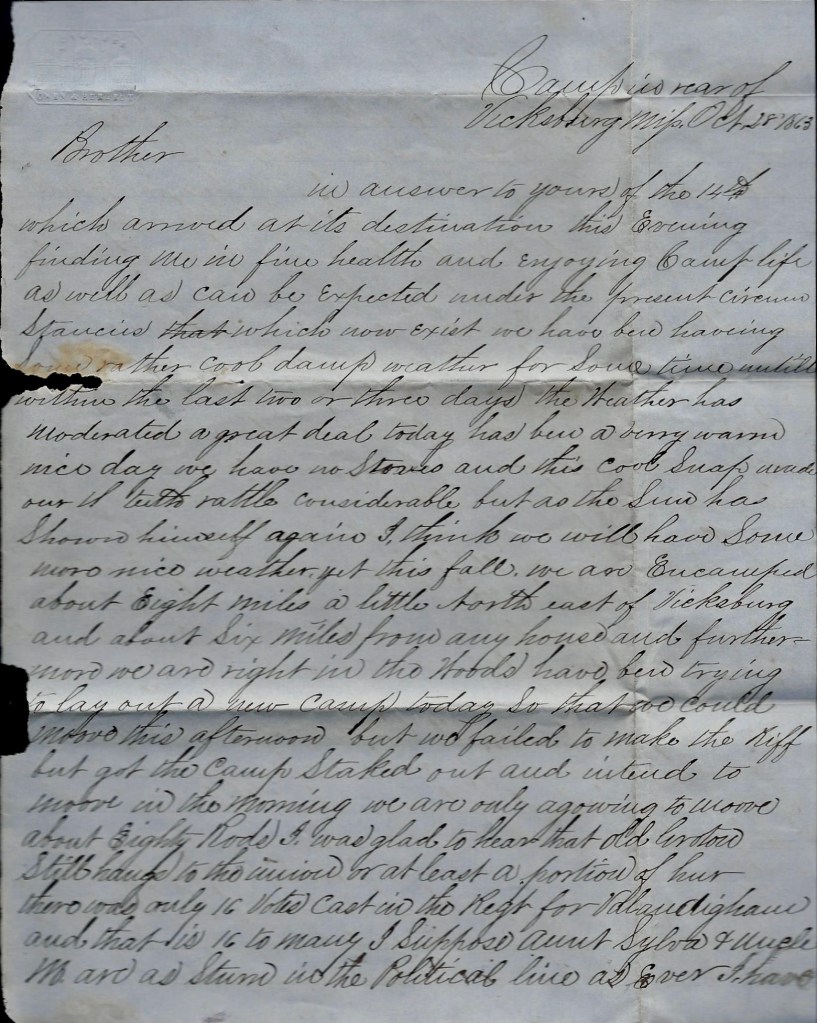
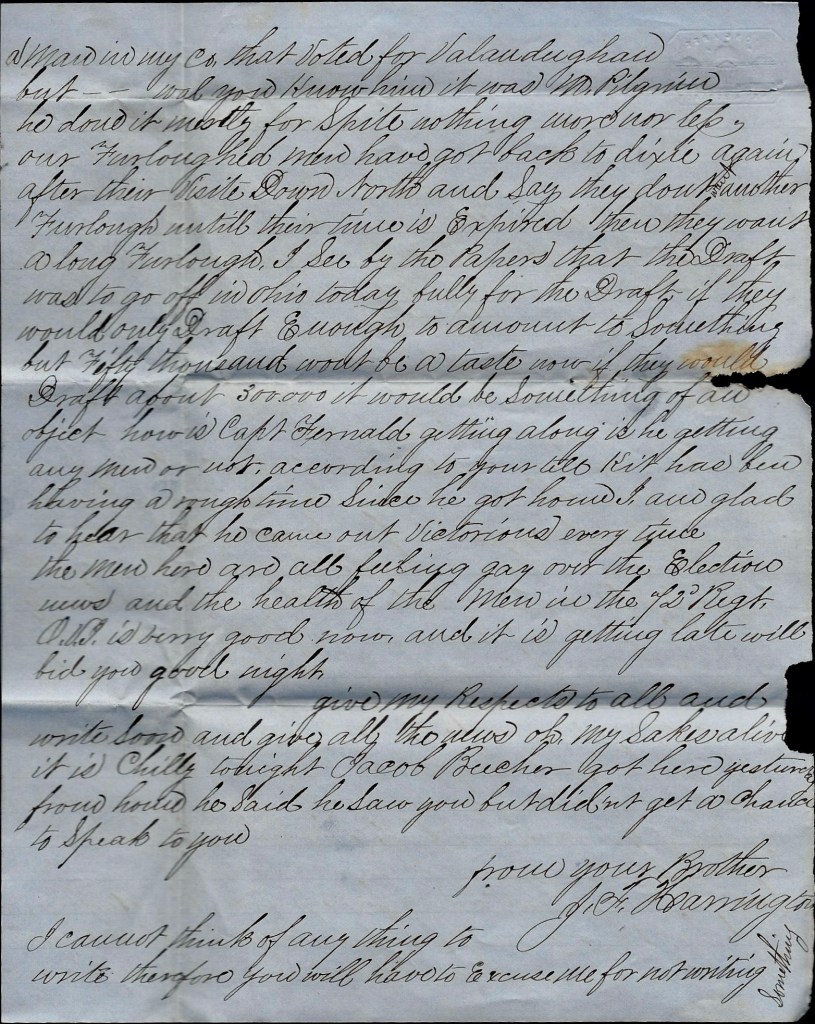
Transcription
Memphis, Tennessee
June 21st [1864]
Mr. William Lowery
Sir, being anxious to hear from that quarter, I thought I would drop you a few lines. I was reading a speech made by the traitor [Clement] Vallindigham 1 and was surprised to hear of his being back there again [in Ohio]. There is considerable talk in our regiment about it and I think the people of Ohio ought to do something with him immediately. He has come back on no other purpose but to raise another disturbance this fall and I am in hopes some soldier will shoot him. He has done more harm to our cause than Jefferson Davis himself and [I] say let him suffer a traitor’s doom. Well, I close on that subject.
I had a very pleasant trip from there back to the army again. Our regiment did not have a man that stayed over his time. All was prompt to return at their appointed time.
We have been moving ever since we came back into the field. We have just returned from the Expedition under General [Samuel D.] Sturgis. There was about eight thousand troops started from here to cut the Mobile and Ohio Railroad and to drive Forrest out of the country. Well we moved along without being molested until we came within five miles of the railroad where the enemy met us. I suppose they had been preparing for us and the met us in the morning about ten with about two to one. The fight lasted until dark. Our forces was rather worsted and retreated that night. The enemy followed in full force. We lost considerable in wagons and prisoners and some artillery. We fought the enemy all the way back to Memphis.
A. J. Smith is here now and is building the railroad from here to Corinth and is in command of the army and tomorrow we will move on the enemy again in the direction of Tupelo, Mississippi. I suppose you will hear from us soon again. The boys are anxious to give Forrest another fight and I think we will clean him out this time. Our company lost thirteen men killed and wounded—two killed dead, the rest badly wounded. We went into the fight dismounted and stayed there until the retreat was ordered.
I will close by saying do something with Vallandigham. Do not let him raise another fuss this fall.
Give my love to all and if I come back safe this time, I will write again. Yours, — Isaac H. Botkin
Co. C, 4th Iowa Cavalry
1 “During the Civil War he bitterly attacked the administration of President Abraham Lincoln, charging that it was destroying not only the Constitution but civil liberty as well. He also became commander of the secret, antiwar Knights of the Golden Circle (later Sons of Liberty). In 1863 he made vigorous speeches in Ohio against the war and the government and consequently grew to be one of the most suspected and hated men in the North. He was arrested in May by military authorities for expressing treasonable sympathy with the enemy; tried and found guilty by a military commission, he was sentenced to imprisonment. Soon afterward Lincoln commuted his sentence to banishment behind Confederate lines. Bored with exile in the South, Vallandigham made his way to Canada, where he continued his campaign of harassment from across the border. In September 1863 the Ohio Peace Democrats nominated him in absentia for governor, but resounding Union military victories at Gettysburg and Vicksburg in July ensured his decisive defeat at the polls. He returned illegally to Ohio in 1864 and took an active part in that year’s election campaign. He also wrote part of the national Democratic platform in which the war was denounced as a failure.”


 Spared & Shared 23