Category Archives: Cumberland Gap

1862: William Buchanan to his Cousin Em

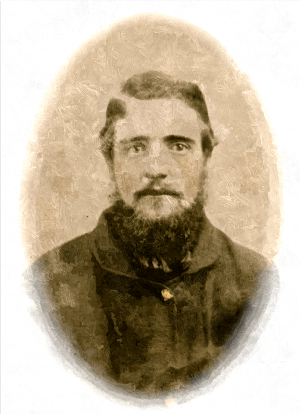
Sergt. William Buchanan of Co. B, 16th OVI

The following letter was written by Sgt. William Buchanan of Monroe Township, Holmes county, Ohio, who served in Co. B, 16th Ohio Volunteer Infantry. Sgt. Buchanan (not to be confused with Capt. William H. Buchanan of Co. F) served until he was discharged for disability on June 19, 1863, having participated in the regiment’s most bloody battles. Buchanan later re-enlisted as a 2nd Lieutenant in Company A of the 166th Ohio Volunteer Infantry, serving from May 2 until September 9, 1864.

When he enlisted, William took stock of the professions/trades of those who served in his company. He found the following: 66 Farmers, 13 carpenters, 11 school teachers, 2 blacksmiths, 1 shoemaker, 1 miller, 1 minister, 1 student, 1 potter, 1 surveyor, 1 sawyer and engineer, 1 clerk, 1 saddle & harness-maker, 1 teamster.


Transcription

Patriotic Letterhead of William’s stationery, “Strike for the Memory of Washington.”

Cumberland Ford, Kentucky
April the 23rd 1862

Cousin Em,

It has been so long since I wrote to you that no doubt you begin to think that something has happened me or that I have got away down Dixie & have forgotten Cousin Em. I often think of you & would like to see you & talk with you & east sugar & have such times as we had in times past & gone. But all this is very different from soldiering away down here.

Well, the reasons why I did not write sooner. I have so many persons to write to and have much to do as I act Orderly Sergeant. Sometimes we could hardly get writing material in this poor, forsaken country, and the troubles, trials, sickness & deaths at home called my anxieties to one place & the sad conclusion has come & home will never be as it was when I left. I take time to write home once a week for I know they must be very lonesome & as it is impossible for me to go home. I try to cheer & encourage them all that I can. I know they are anxious to hear from me often & I am thankful that I can tell them that my health is unusually good & that I have not been on the sick list since I came to camp. I have endured long, tiresome marches through the mud & rain, lay out all night in the rain, snow, and winter winds, lived on unsifted corn meal & old rusty bacon almost as strong as last year’s butter in Cuba, & sometimes half rations of that. But so long as I enjoy good health, I think I can endure these light afflictions cheerfully for the sake of a country & that a free country.

We have been camped here on the Cumberland river since the 12th of February. We have not pushed into Tennessee for two reasons. First, our provisions have to be hauled from Lexington and the roads were almost impassable during the Winter & Spring & sometimes we could hardly get enough this far to eat, and our force was too small to attack so formidable a place as the [Cumberland] Gap. The Gap is 13 miles from the Ford which is at the bend of the river where it approaches nearest the Gap. We have bee three trips to the Gap. The first & last time to reconnoiter & see the enemy’s works.

On the 21st of March, four regiments & two pieces of artillery were sent to take possession of the Gap as we heard that nearly all the rebels had left it & taking 8 of their cannon & had gone to try to capture a regiment of Union soldiers sent from our Brigade to Big Creek Gap, 35 or 40 miles southwest of Cumberland Gap. But when we got there, we found that the rebel force with their cannon & perhaps a reenforcement had come back and were waiting for us.

On the 22nd we concluded to tease them awhile before coming back to camp anyhow, so we marched up within gunshot & firing on both sides was pretty brisk most of the day. They threw shells, solid shot, & grape at us, but in the whole day they did not kill or wound one of our men—although many had hair breadth escapes. We got an 8-inch shell shot from a 64-pounder Columbiad gun which did not explode. But our Parrot guns (cannon) made them hunt their hiding place in double quick—if not quicker.

On the morning of the 23rd (Sunday), we did not fire a gun but prepared to come to camp. The enemy threw a number of shells at us. We since heard that the enemy were about to leave the Gap when we came away & that if we had stuck to them that day, the Gap would have been ours. It looks almost like an impossibility to take it, if the Rebels will fight. We lay out on the mountains both nights in the snow & it was quite cold. The first night I think I’ll not soon forget. I was so chilled that I shook as though I had the ague. I have grown fat and hearty on privations and toils that I used to think would kill me. I will try to get time to sketch an outline now of the Gap which will give you a better idea that I can give in writing. I have drawn a great many of them & some on a large scale, finished & ornamented.

Map of Cumberland Gap drawn by William Buchanan for John F. McClelland of Co. B, 16th Regt. O. V. (not enclosed with this letter but found on the internet)

I have so much writing to do in the Orderly Book at present that I cannot spend much time at anything else. I wish you could see the real Gap. It would be the greatest sight of scenery that you ever saw. Such sights are scarce in Hoosierdom. But perhaps you would not prefer to enjoy the sight while the shells and shot are whizzing around like hornets. There is to be a reinforcement of men & cannon here soon & then I think we will be in earnest the next time we pay them our compliments.

Please show this to Uncles. Please write to me and direct to Co. B, 16th O. V. via Louisville. In care of Capt. [Joseph] Edgar. Give my love & good wishes to the rest of the family and relations. Yours soldier cousin, — Wm. Buchanan

1861: John H. McMillin to Sarah Jane McMillin

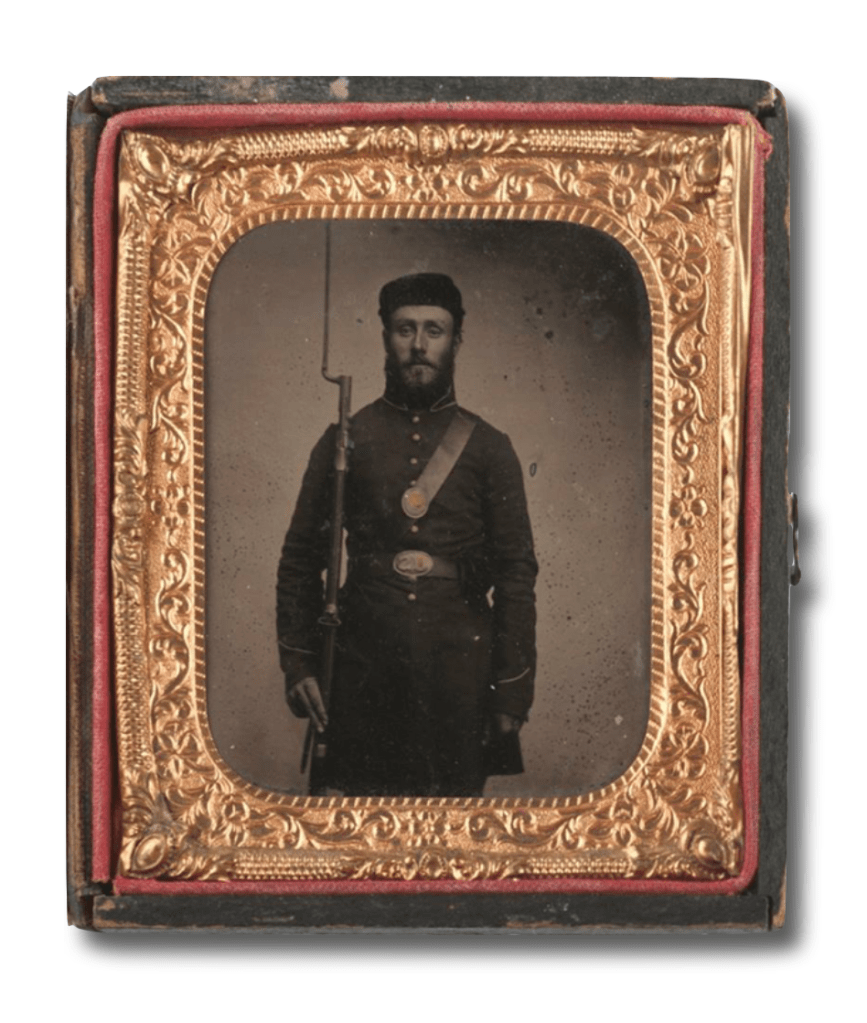
An unidentified Indiana Soldier

The following partial letter, though unsigned, was written by 32 year-old John H. McMillin of Co. B, 91st Indiana Infantry. The regiment was organized at Evansville, Indiana, in October 1862 and had duty in Kentucky until June 1863 when they joined in the pursuit of Morgan’s raiders. They were then ordered to Nashville and back to Kentucky again until January 1864 when they were sent to Cumberland Gap. They remained there until May 1864 and then participated in the Atlanta Campaign and the march through the Carolinas. John entered the service as a private and mustered out as a corporal at Salisbury, North Carolina on 26 June 1865.

I presume that John was the same farmer enumerated in the 1860 US Census in Johnson township, Gibson county, Indiana, and recorded as a Hoosier native, a farmer, and born about 1832. In the household with his was his wife, Sarah J., born in Kentucky about 1839), and their daughter Lucinda, born in Indiana in 1860. Sarah Jane’s maiden name may have been Wilkison but I haven’t confirmed that. Gibson County is adjacent to Warrick County in the toe of southwestern Indiana.

The sketch below, drawn by a member of the regiment, shows what the camp of the 91st Indiana looked like at Cumberland Gap at the time of this letter.

This view was drawn by First Lieutenant Lewis L. Spayd of Company E of the 91st Indiana Infantry, which arrived at the gap in January 1864 and remained through May before marching to join Sherman in his march through Georgia. Spayd presumably drew this view either while at the gap or from memory soon thereafter.

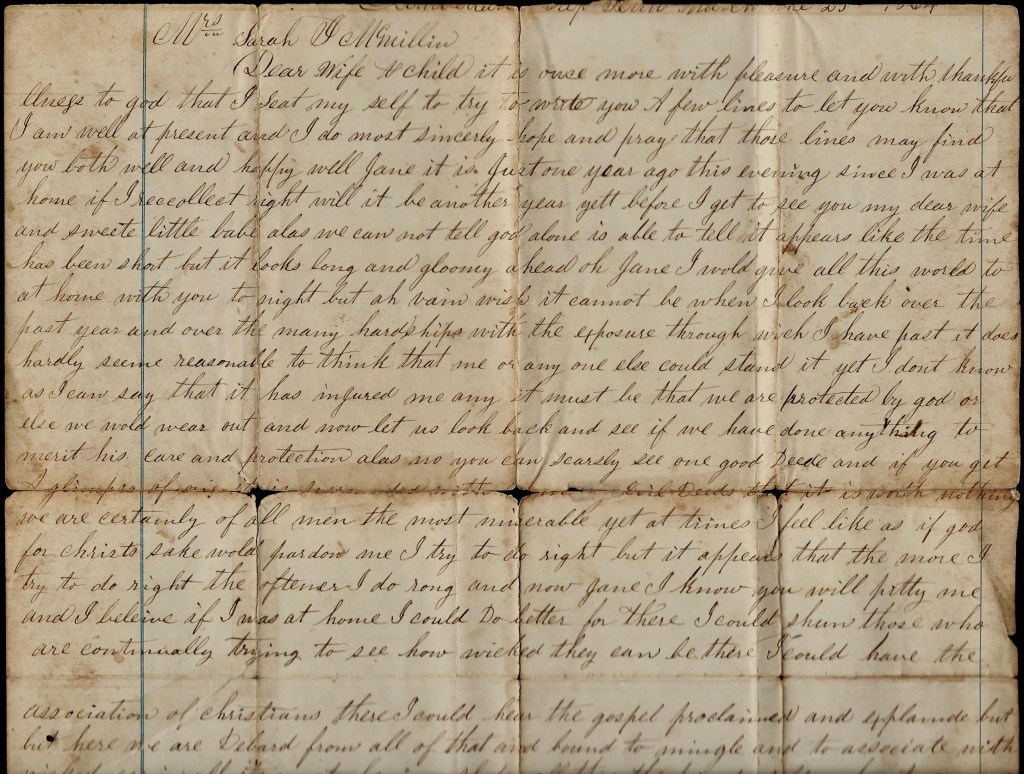
Transcription

Cumberland Gap, Tenn.
March 25, 1864

Mrs. Sarah J. McMillin
Dear wife & child,

It is once more with pleasure and with thankfulness to God that I seat myself to write to write to you a few lines to let you know that I am well at present and I do most sincerely hope and pray that those lines may find you both well and happy. Well, Jane, it is just one year ago this evening since I was at home if I recollect right. Will it be another yet before I get to see you, my dear wife and sweet little babe. Alas, we cannot tell. God alone is able to tell. It appears like the time has been short but it looks long and gloomy ahead. Oh Jane, I would give all this work to be at home with you tonight but oh vain wish—it cannot be.

When I look back over the past year and over the many hardships with the exposure through which I have passed, it does hardly seem reasonable to think that me or anyone else could stand it. Yet I don’t know as I can say that it has injured me any. It must be that we are protected by God or else we would wear out. And now let us look back and see if we have done anything to merit His care and protection. Alas—no. You can scarcely see one good deed. And if you get a glimpse of one, it is surrounded with such evil deeds that it is with worth nothing. We are certainly of all men the most miserable yet at times I feel like as if God, for Christ’s sake, would pardon me. I try to do right but it appears that the more I try to do right, the oftener I do wrong.

And now, Jane, I know you will pity me. And I believe if I was at home, I could do better for there I could shun those who are continually trying to see how wicked they can be. There I could have the association of Christians. There I could hear the gospel proclaimed and explained. But here we are debarred from all of that and bound to mingle and to associate with wickedness in all its most heinous shapes. All this the private soldier has to encounter with temptations too numerable to pen on paper. And yet I have stood the storm in a great many things. But in a great many more, I have erred. But Jane, sometimes I nearly give up. Oh it is awful. And without the assistance of a higher power, I fear I shall fail. God help me. But perhaps you will say, “Why don’t you quit associating with the wicked? Why not seek out the religious of your company and associate with them?” Oh, they are very scarce. There is perhaps three or four that does not swear and…

…expect to have to be up all night but one of the [paper torn] time for me to put on my relief so by that I got to sleep from twelve o’clock until four. Well our duty is very light at present. If it was not, for what scouting we have to do, we would see as easy a time here as we could ask for. But the weather is so changeable here that I fear it will be very sickly after the weather gets warmer. This is the changeablest place I ever saw. It snows or everyday or two. Yesterday and the day before it snowed in the forenoon and rained in the evening. We don’t have more than one pretty day out of a week.

“There is hundreds of dead horses and mules lying around here and if there is not something done with them, the stench from them will kill us faster this summer than ever the rebel bullets have done yet.”

–John H. McMillin, Co. B, 91st Indiana Infantry, 25 March 1864

Well, Jane, there is hundreds of dead horses and mules lying around here and if there is not something done with them, the stench from them will kill us faster this summer than ever the rebel bullets have done yet. There is a great deal of mismanagement in the army and this place has certainly received its share of the mismanagement. And if things don’t change, the war will last for years yet. But I hope that there will be a good man raise up after awhile who will go in for the good of the nation and for the speedy termination of the war.

Well, the Rebs say if we can fill up the last call of the President that we can take any place in the Southern Confederacy and we can scarcely help filling the call by about. Why don’t the loyal [paper tear] and put a stop to the war? Oh, it would be the greatest blessing that could be bestowed on man if the war could only cease. Many is young man that might be saved from filling a drunkard’s grave or perhaps worse, a felon’s grave for vice is certainly growing and the longer the war lasts, the deeper the root of evil is planted in their natures.

Well, Jane, now you will want to know how we get such large paper as this half sheet as it was confiscated last Monday from a rebel. We stopped at a house and found this with several other things and some of the boys brought it in and I swapped with them for this, Jane, so that I could write you a great big letter. I guess you will get tired of reading it but if you do, let me know and I shall write shorter ones after this.

Well, Jane, it has been some time since I have received a letter from you but as our mail comes very irregular, it is nothing strange. But I shall expect two or three this evening. Well, I wrote to you some time ago about my and Will’s business. I wrote to Jno. N. Hart 1 some time late last winter concerning it but he has failed to answer it. I want you as soon as the weather will permit you to go up to Warrick and see him and write to me as soon as you can. Let me know just what he says and if it can’t be fixed without me, you will get some responsible lawyer to write…


1 Possibly John Nelson Hart (1820-1893) of Warrick county, Indiana.

1862: Frederick Erasmus Underwood to his Parents

These two letters were written by Frederick Erasmus Underwood (1841-1889) the son of Albert Underwood (1810-1881) and Susan Moulton (1821-1891) of Brimfield, Portage county, Ohio.

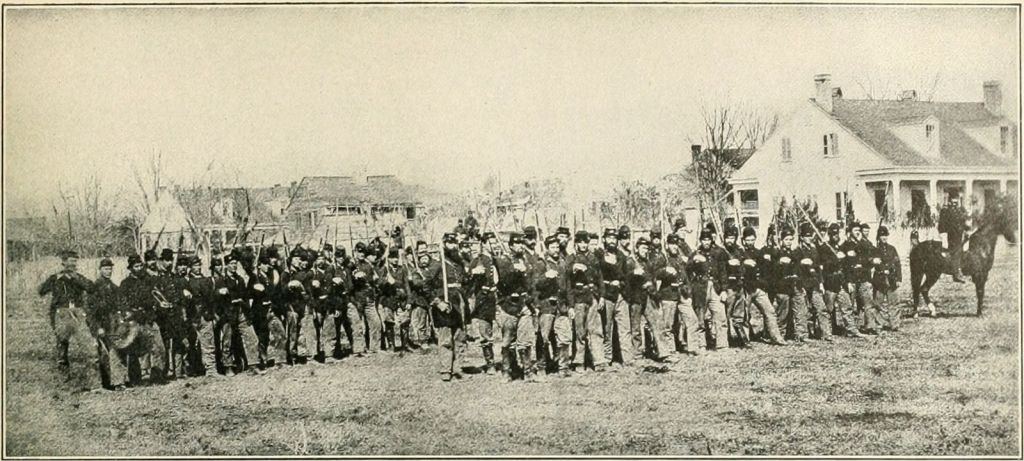
I could not find an image of Erasmus, but here is one of William E. Carlton of Co. B, 42nd OVI (Cowan’s Auctions)

According to muster records, Erasmus entered the service on 20 September 1861 as a private in Co. A, 42nd Ohio Volunteer Infantry (OVI). He mustered out of the service in 20 September 1864 after three years.

Events described in these letters correspond to the following two paragraphs from the regimental history”

On February 1, 1862, the 42nd boarded boats and sailed up the Big Sandy River to Pikeville, Kentucky. On March 14, 1862, the regiment with other Northern units seized Pound Gap, Kentucky. The Union force spent the next few days skirmishing with Confederate guerrillas, before marching for Louisville, Kentucky on March 18. Upon reaching this new location on March 29, 1862, the 42nd entered camp. 

In May 1862, the 42nd boarded railroad cars and traveled to Lexington, Kentucky. The regiment then joined Brigadier-General George W. Morgan’s command and marched to Cumberland Ford, where officials brigaded the organization with the 16th Regiment Ohio Volunteer Infantry and the 14th and 22nd Regiments Kentucky Infantry. On May 15, 1862, the brigade crossed the Cumberland River and entered camp at the junction of the roads leading to Cumberland Gap and to Rogers’s Gap. On June 5, 1862, General Morgan led his troops against Confederate troops at Rogers’s Gap. The 42nd participated in several skirmishes upon reaching this location. On June 18, 1862, the Northerners attempted to strike a Confederate force at Big Spring, but the enemy withdrew as the Union soldiers approached. Morgan ordered his command to Cumberland Gap later that same day, with Confederate soldiers again withdrawing as the Federals approached. The 42nd Ohio entered camp near Yellow Creek and spent the next six weeks participating in various expeditions.

Letter 1

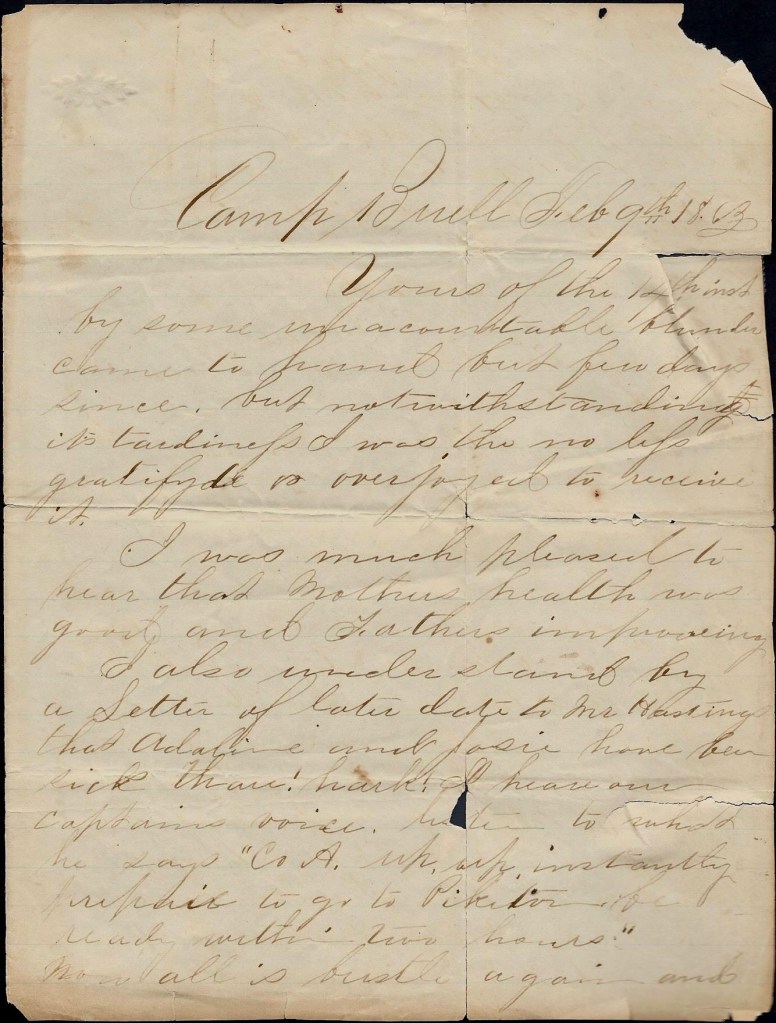
Camp Buell
February 9, 1862

Yours of the 14th inst. by some unaccountable blunder came to hand but few days since but notwithstanding its tardiness, I was the no less gratified & overjoyed to receive it.

I was much pleased to hear that Mother’s health was good and Father’s improving. I also understand by a letter of later date to Mr. Hastings that Adaline and Josie have been sick.

There! Hark! I hear our captain’s voice. Listen to what he says, “Co. A, up, up instantly prepared to go to Piketon. Be ready within two hours.”

Now all is bustle again and I shall have to postpone writing for the present to finish in the future. Good night. — F. E. Underwood

Camp Brownlow
February 11, 1862

Again, dear parents and sisters, after 50 miles ride on a steamboat and after the confusion which ever and eternally accompanies the setting of tents, I find myself settled again and conversing with you.

We are now situated very pleasantly at Piketon—a small town in the Big Sandy about 35 miles from the Cumberland Mountains. We have now cleaned out every vestige of secession in Eastern Kentucky. The rebel regiment under command of Col. Williams have left the state entirely and marshal force have disbanded. How long we shall stay here, I know not but hope that the next move we make will be down the river.

I regret much to inform you that my health has been quite poor for the last three weeks. I am troubled with the dysentery and rheumatism. I am getting to be quite poor. Oh! Mother, I would choose you in preference to a thousand regimental doctors for a nurse. I think though that I shall get along without going to the hospital. I hope so at least. The captain is now administering to my wants. He has given me two doses of “Hygean’s Pills” which sicken me to an alarming extent. I was sent yesterday to see the doctor and in so doing, exposed myself with many others from our company to the “mumps.” I have forgotten whether I ever had them or not. If not, I will consider myself “elected.”

Tell Adaline and Josie to write just how many such sutlers as that last one [ ] there are “amignto.” I shall always receive them with great joy and delight. I am heartily sick of our “stuff” on which we subsist. If I could only have a little potato [and] some soft bread, it would be such a help. I don’t know if we shall be paid as soon as I expected when last I wrote you. The paymaster hasn’t shown himself yet and not much prospect of it. If I had money, I might buy milk, bread and butter, but I would not ask you to send me any for it might not reach me.

Why don’t Lavina and Ellen write to me? I have not hear a word from them since I came to Kentucky. All write and oblige your son, — F. E. Underwood

To Father, Mother, Addie, Josie, and Sumner.


Letter 2

Camp Virginia
Cumberland Gap
July 4, 1862

My dear parents,

Sadly and with a sorrowful heart do I sit down to reply to yours of the 2nd that came to my perusal yesterday. Glad indeed was I to hear from you for my mind—-since I learned of the irrevocable rent so suddenly and unexpectedly made in our dear circle—has been in a state of continual agitation searing, lest the deep affliction so suddenly brought upon you would crush the already bruised and mangled heart of my dear mother.

It is now nearly two weeks since I was appraised by Alice Savina and Ellen of the death of Josie. 1 Could I? Must I believe it? That she whose quick perceptibility’s and bright and untarnished intellect was seldom equalled; whose nature ever seemed to be inspired with the love of truth and acted accordingly, must be so rashly stricken down in this, her life’s springtime. But dear parents, I will cease to agitate your already turbulent ocean of trouble.

When I wrote you last we were encamped in Tennessee on the old Rebel camping grounds. But in consequence of the unpleasant, as well as unhealthy odor that constantly arose from the very earth so long polluted by their foul footsteps, Gen. Morgan gave our officers leave to seek a more congenial atmosphere which was done by moving over into the valley on the Kentucky side and pitching our tents in a beautiful grove of pine about 2.5 miles from the Gap. We shall probably stay here through this month although there is one regiment in our Brigade to be sent as provost guard to Frankfort, Louisville, and Lexington. The rumor through camp today intimates that our regiment is th one detailed. We all hope and trust it is.

The boys are all well from Brimfield with the exception of Jim who I think is threatened with a fever though he tells me today that he feels better.

Write to me often and tell me all the news connected with home and vicinity. And now with a hope that God will level his mighty power in bringing about a speedy restoration of peace that we may once more return to our homes and loved ones, I will close.

Your obedient son, — F. Erasmus

Cumberland Gap via Lexington, Co. I, 42nd OVM

P. S. Tell [sister] Adaline to write me a good long letter and [ ] that I could with my presence console her in her deep affliction. — F. E. U.

1 Mary Josephine (“Josie”) Underwood (1849-1862) died on 11 June 1862.


Letter 2