
The following incomplete letter, written in pencil, lacks a signature page, leaving virtually no tangible evidence to determine its authorship. The heading indicates it was composed by a member of Co. B, 13th Connecticut Infantry, and the content aligns with that identification. However, upon reviewing my Spared & Shared archives of transcribed letters, I found that in 2015, I published 13 letters authored by Franklin S. Twitchell of Co. B, 13th Connecticut, who similarly wrote them in pencil and addressed them to his sister, just as this letter does. By examining the handwriting of this letter and the letters within the archive, I concluded they were penned by the same soldier. Notably, there exists a letter dated “May 1862” in that collection which may represent the conclusion or continuation of this correspondence. See: Franklin S. Twitchell~Co. B, 13th Connecticut Infantry.
Franklin Twitchell (1844-1864) was the son of Isaac Spencer Twitchell and Charlotte Benham. According to a family history, Isaac was born in Oxford, Connecticut about 1807. “He was a watch and clock maker; also a manufacturer of jewelry. Shortly after attaining his majority, he removed to Ballston Spa, New York, where he engaged in the lumbering business in the Adirondacks. Having disposed of his timber and lumbering interest, he removed with his family to New Haven, Connecticut, where he engaged in the manufacture of silverware, in partnership with a person whose name is not now recalled. During Mr. Twitchell’s absence from New Haven, his partner made substitution of some base metal for the percentage of silver stamped upon the manufactured product and before Mr. Twitchell’s return left the country. These deceptions were discovered by purchasers of the silverware and Mr. Twitchell was left penniless in his efforts to make restitution and to secure a return of his good name. He returned to his trade of watch and clock repairing. With his son, Sherman, he finally left Connecticut, and settled in the state of Minnesota where he died.” [Source: Genealogy of the Twitchell Family]
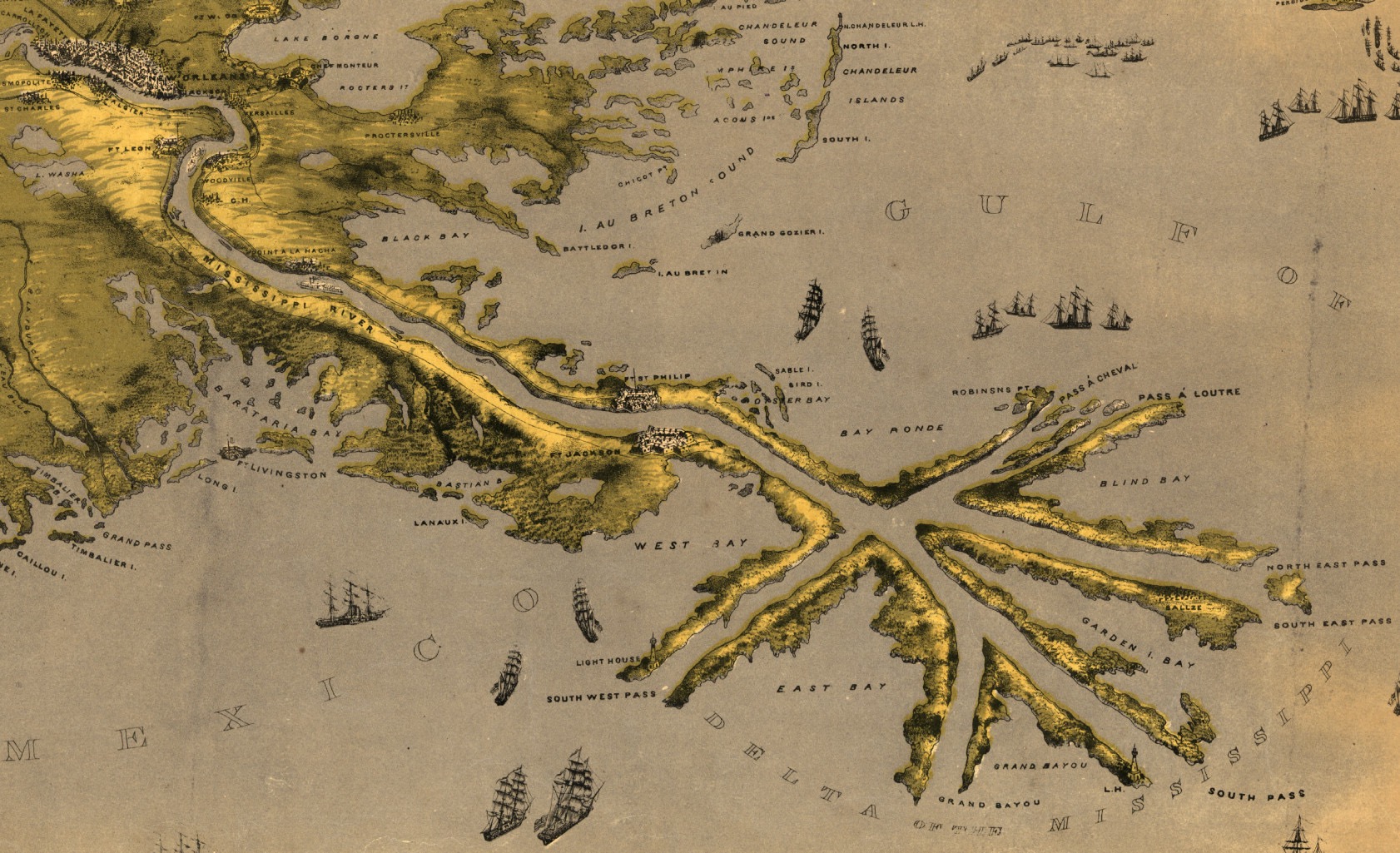
The letter describes the transport of the regiment from Ship Island where it had been since mid-April 1862. The letter contains a description of Fort Jackson, the scene of the late April bombardment, now in possession of the Union army.
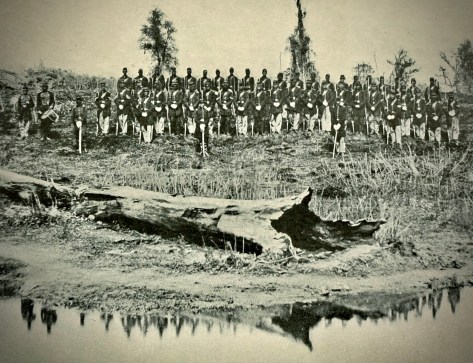
Transcription
Transport Ship City of New York
13th Regt. C. V. Co. B, USA
Col. H. W. Birge, Commanding
May 7th 1862
Dear Sister,
As soon as I mailed my last letter we had orders to march for New Orleans. We struck our tents Sunday afternoon and started. They had an old river steam boat to take us to the ship. We being the last company, we did not get on board till the next morning. We had to lay on the sand through the night. Most of the men spread their blankets and went to sleep. I thought I would not as I expected we should get on board then. I soon got sick of waiting and lay down with the rest and went to sleep.
In the morning we slung our knapsacks and went on the old steam boat to get to the ship and a crazy old craft it was. It was like the pictures you see in the geography of steam boats on the Mississippi river. We have got our same bunks that we had before on board this ship. We have our rifles to sleep with. I found a slave and his family on board that the 9th Regiment C. V. brought from Mississippi with them. I asked him what the Rebels thought of the Yankees. He said they thought they—the Rebels—would get whipped. He said his master had two sons in the Rebel army when the 9th landed. He said that the Rebels had 1,000 men to oppose them but as soon as they got in sight, they took to their heels with the cry, “Gen. Butler’s Division is coming!”
Yesterday we were to work heaving ballast overboard so as to lighten the ship so as to get over the bar to the Mississippi river. Today we are off the mouth of the river. The water looks like the wash off a road after a shower. It is full of floating drift wood.
May 9th. Since writing the above, we have got over the bar in the entrance of the Mississippi river. The current is very strong. There is a narrow strip of land on both sides of us beyond the water as far as I can see. We are opposite a small village. The land is covered with tall grass. It makes the houses look well.

I guess I had better dry up on trying to draw. I expected to send this today but the steamer has gone. We are going up the river towed by a steam boat. The current is so strong that we make but little headway. The river is very narrow. It almost runs over the banks. I have been watching to see if the side [sight?] made any difference. I have watched the banks some four or five hours & I cannot see any. We are now some six or seven miles from the mouth. The water is higher here than outside as every little break in the bank we can see the water running through very swift.
We passed a small house surrounded with beautiful trees. I should have liked to have stayed there two or three weeks. Well I must stop writing till some other day.
May 10th. We are opposite Fort Jackson, the scene of the recent bombardment. The walls are of brick in here as guns in casement. On the top is earth covered with grass. The fort shows the effect of the bombardment. We can see the two guns lying dismounted in the grass, the turf torn up, the walls broken in places. There are some small buildings one side of the fort. They looked hard. We could see where a ball had gone right through the chimney. Another had a ragged hole through the side of the window.
We are at anchor off the fort. The tow boat is taking in coal. A man came on board. He said he lived a half a mile from here. Someone asked him about the bombardment. He said it lasted six days and nights. Someone asked him if it wasn’t time for the Rebels to give up. Not yet you….[remainder of letter is missing]


 Spared & Shared 23