
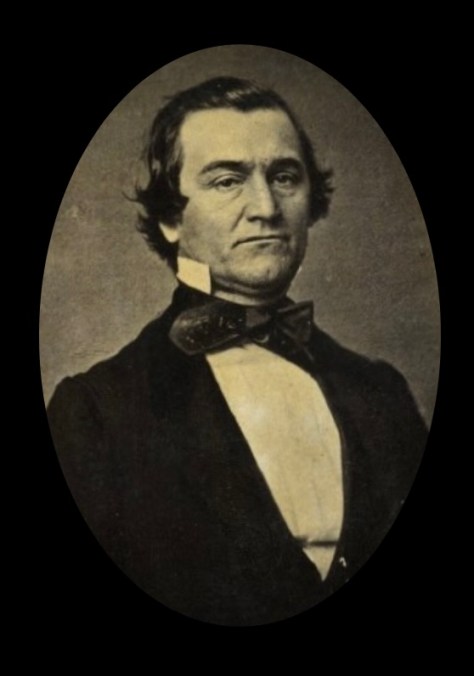
William Lowndes Yancey (1814–1863) was a prominent American politician in the Antebellum South and a “Fire-Eater” who vigorously defended slavery and advocated for Southern secession in light of Northern antislavery movements. Initially critical of John C. Calhoun during the Nullification Crisis, he later became a staunch supporter of Calhoun’s views, opposing the Compromise of 1850. Known as the “Orator of Secession,” he played a key role in dividing the Democratic Party at the 1860 Convention. During the Civil War, he was appointed by Jefferson Davis to seek European recognition of the Confederacy but met with frustration. Yancey subsequently served in the Confederate Senate, where he often criticized the Davis Administration. He was bludgeoned with a glass inkstand on the floor of the Senate during a heated argument with Benjamin Hill of Georgia over differences in a bill intended to create a Confederate Supreme Court, and he passed away in July 1863 at age 48, never fully recovering from his injuries.
In this personal letter to President Jefferson Davis, Yancey offers some advice on the means of obtaining arms from Europe. Yancey’s letter refers to Capt. Caleb Huse, the agent sent by Jefferson Davis to go to Europe for the purpose of purchasing arms. Huse was an 1861 West Point graduate. His decision to serve the Confederacy rather than to remain in the US Army is extensively explored in an excellent article by Ron Maness appearing in Military Images Magazine, March 2024.
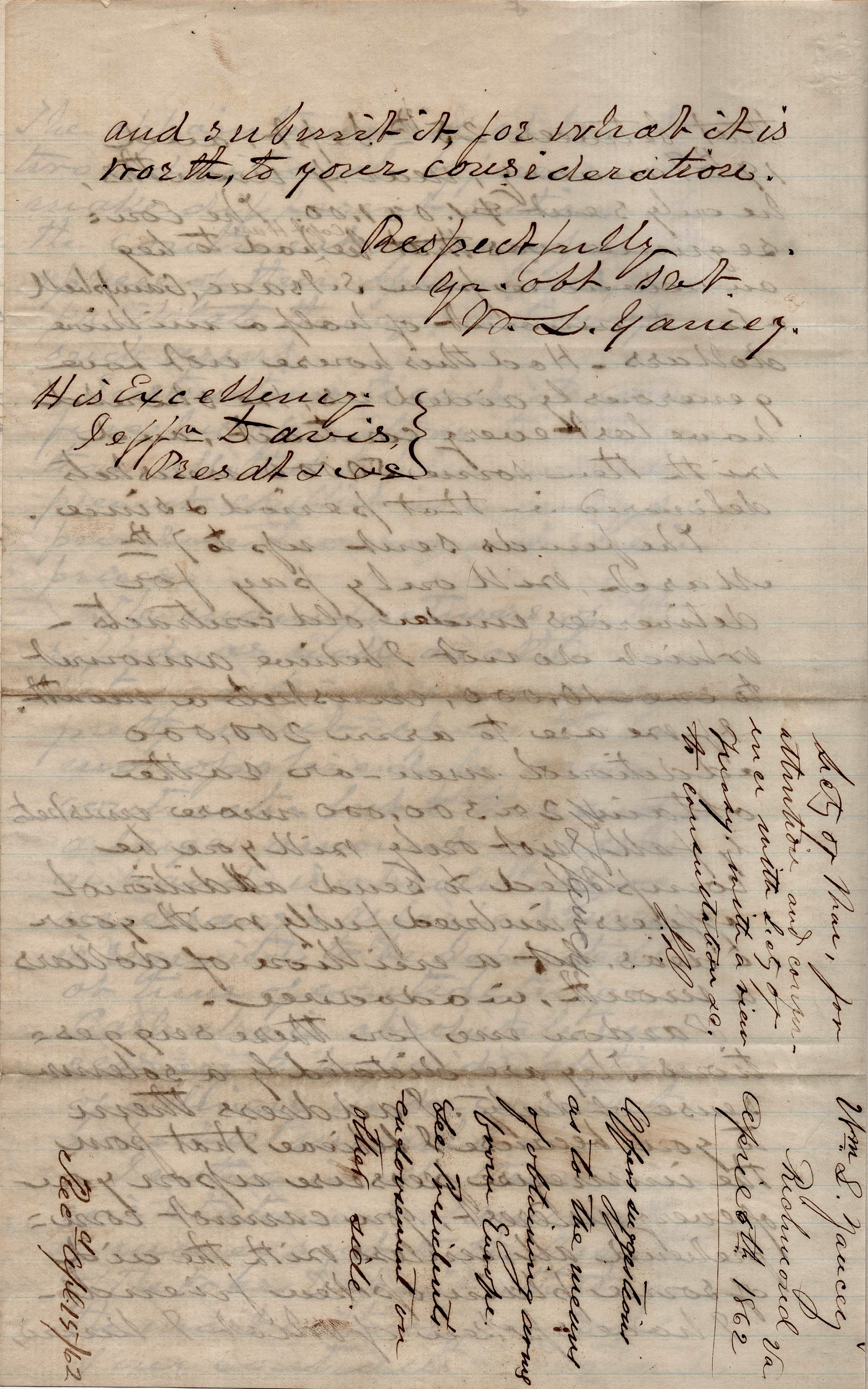
Davis responded to the letter by annotating a short message to his Secretary of War on the reverse side, and signing with his initials.


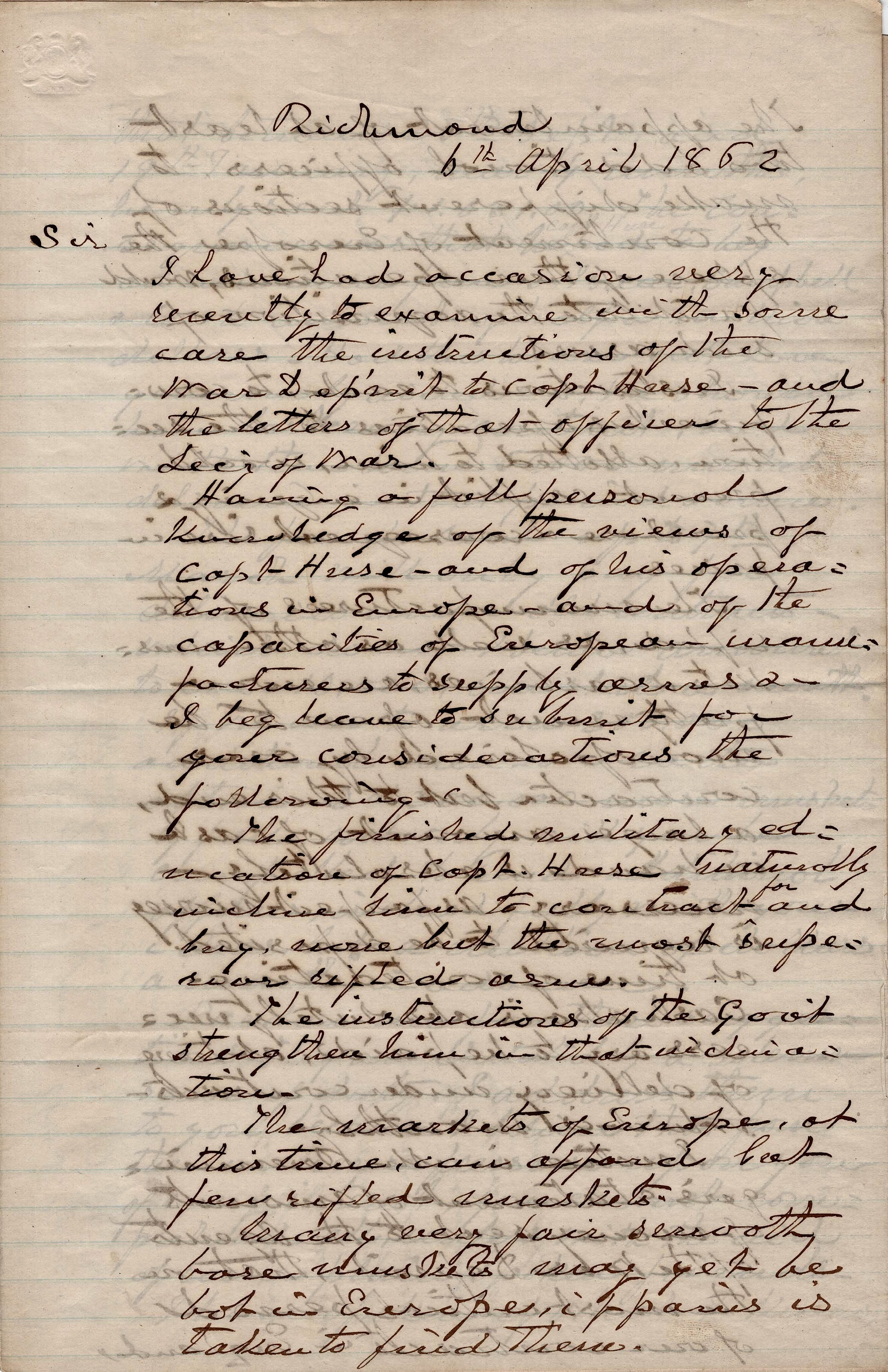
T R A N S C R I P T I O N
Richmond [Virginia]
6th April 1862
Sir,
I have had occasion very recently to examine with some care the instructions of the War Department to Capt. Huse and the letter of that officer to the Secretary of War. Having a full personal knowledge of the views of Capt. Huse and of his operations in Europe, and of the capacities of European manufacturers to supply arms, I beg leave to submit for your considerations the following.
The finished military education of Capt. Huse naturally incline him to contract for and buy none but the most superior rifled arms. The instructions of the Government strengthen him in that inclination. The markets of Europe, at this time, can afford but few rifled muskets. Many very fair smooth bore muskets may yet be bot in Europe if pains is taken to find them.
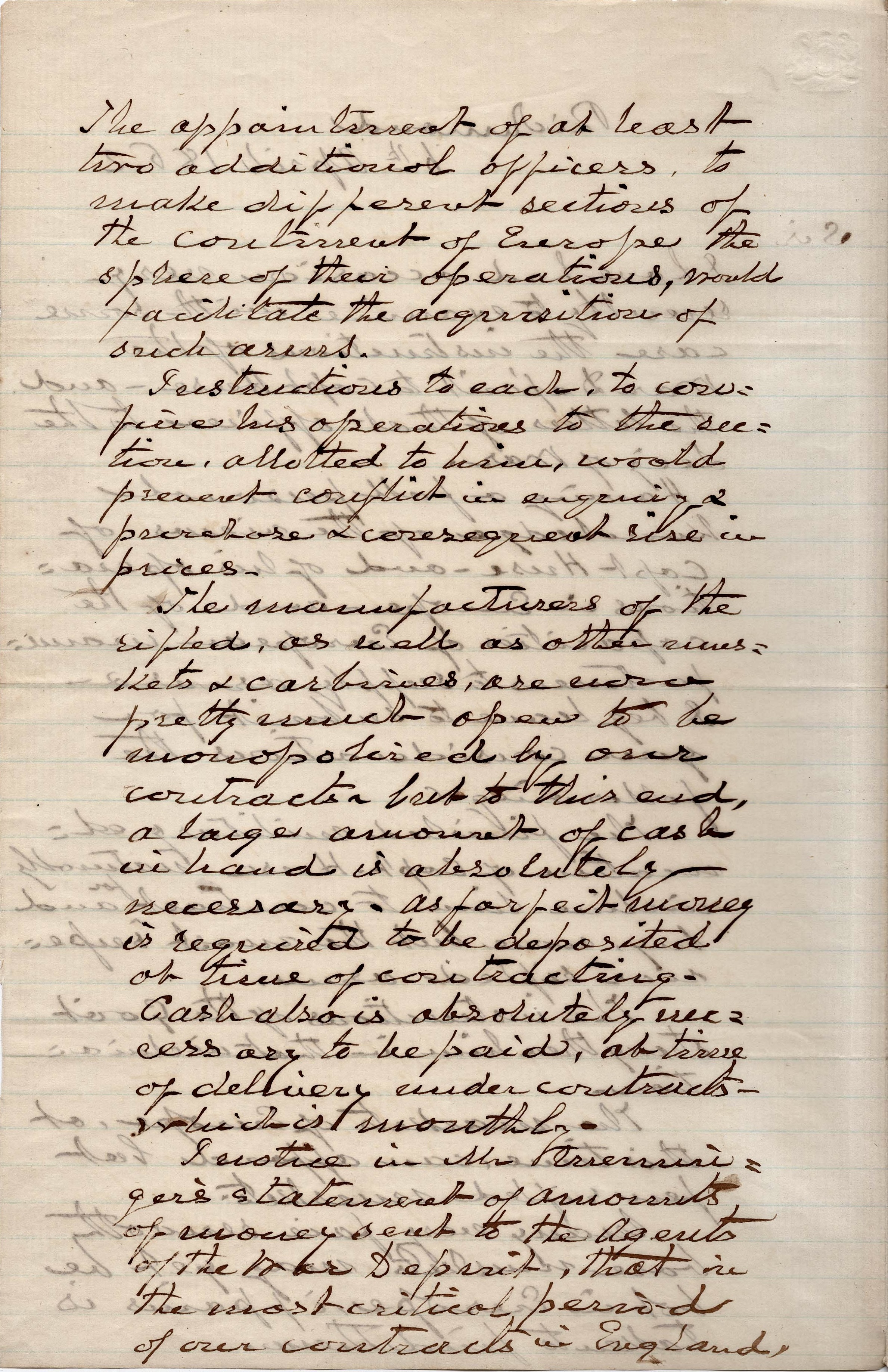
The appointment of at least two additional officers to make different sections of the continent of Europe the sphere of their operations would facilitate the acquisition of such arms. Instructions to each to confine his operations to the section allotted to him, would prevent conflict in securing purchase & consequent rise in prices.
The manufacturers of the riffled, as well as other muskets & carbines, are now pretty much open to be monopolized by our contractor. But to this end, a large amount of cash in hand is absolutely necessary as forfeit money is required to be deposited at time of contracting. Cash also is absolutely necessary to be paid at time of delivery under contracts which is monthly.
I notice in Mr. Memminger’s statement of amounts of money sent to the agents of the War Depatment that in the most critical period of our contacts in England, that between 25th September and 19th January— near 4 months—he only sent $1,031.00. The consequence was that he—Capt. Huse—had to beg an advance from S. Isaac Campbell & Co. to amount of half a million dollars. Had this house not have generously aided us, we should have lost every contract and with them some 50,000 muskets delivered in that period & since.
The funds sent up to 7th March will only pay for deliveries under old contracts which do not, I believe, amount to over 10,000 muskets a month. If we are to arm 200,000 additional men—or rather obtain 2 or 300,000 more muskets by fall, not only will you be compelled to send additional officers imbrued fully with your ideas but a million of dollars a month in advance.
Pardon me for these suggestions. They are dictated by a solemn sense of duty. I address them to you because I believe that from the immense pressure upon you of every interest, you cannot comprehend all unless with the aid of some plain spoken friends. I have spoken of which I know and submit it for what it is worth to your consideration.
Respectfully, your obedient servant, — W. L. Yancey
[To] His excellency Jefferson Davis, President
[annotated on reverse in another hand]
Offers suggestions as to the means of obtaining arms from Europe. See President’s endorsement on other side.
[in Jefferson’s hand]
Secretary of War. For attention and conference with Secretary of Treasury with a view to consultation, &c. — J. D












 Spared & Shared 23