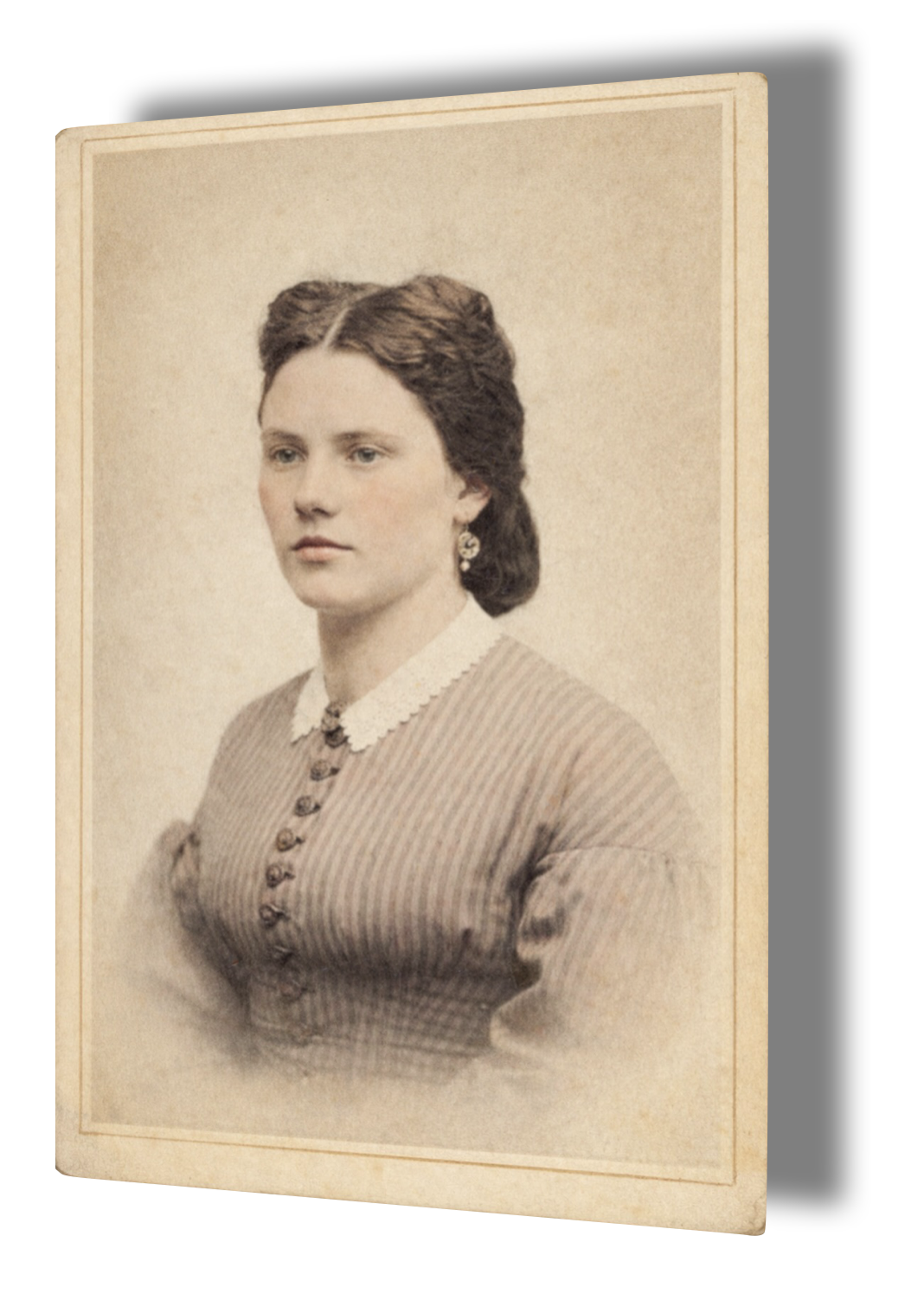
The following letter was written by Jean (“Jennie”) S. Graham (1843-1921), the wife of George Byron Stevens (1839-1926). Jennie was the daughter of William Graham (1812-1866) and Ann Creighton (1812-1856), emigrants from Perth, Scotland. Her brother was Capt. Charles Creighton Graham of Co. E, 29th Maine Infantry.
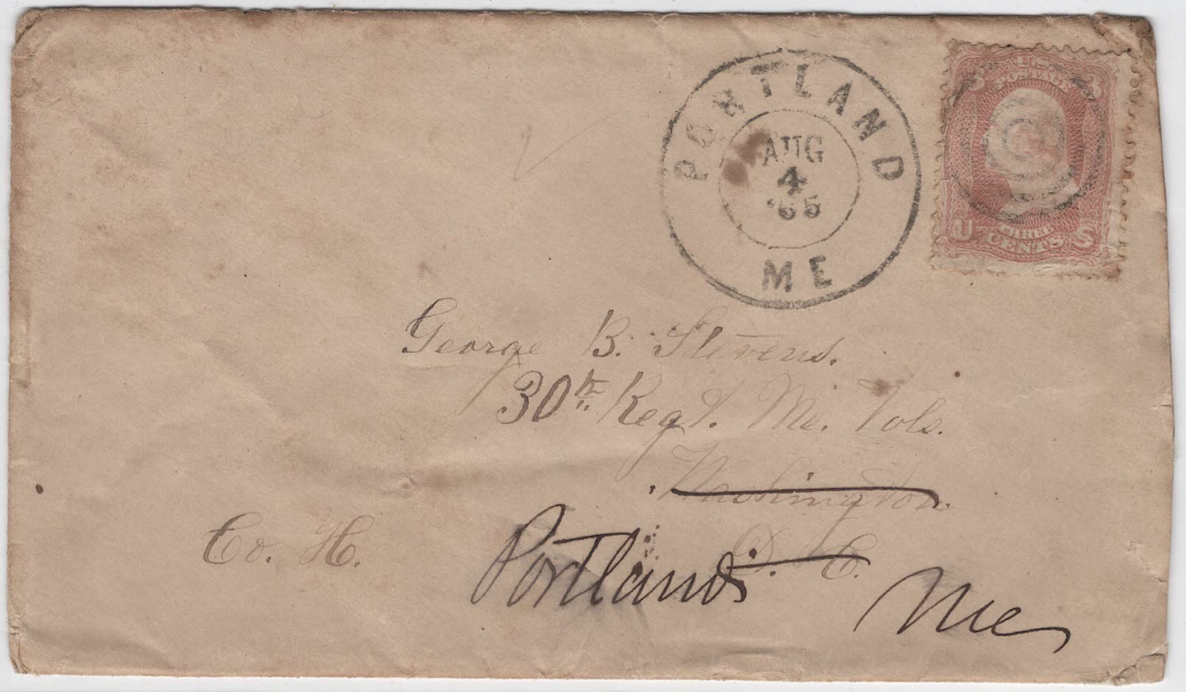
Jennie wrote the letter to her husband who served as a 1st Lieutenant in Co. E, 25th Maine Infantry but then reenlisted again as a private in February 1865 in Co. H, 30th Maine Infantry. Much of the beginning of the letter is doting on their young child, Jean Mae (“May”) Stevens, which is understandable given that their first two children, both boys, died as infants in 1862 and 1864. Jennie’s husband, George, was a teacher in Stevens Plains when he enlisted in Co. E of the 25th Maine Infantry on September 29, 1862 and was soon promoted to 1st Lieutenant. He and Jennie were married on Dec. 1, 1861.
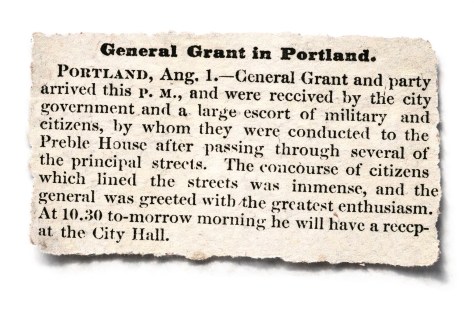
There is a lengthy description of Gen. Grant’s visit to Portland, Maine, with his wife Julia in August 1865.
T R A N S C R I P T I O N
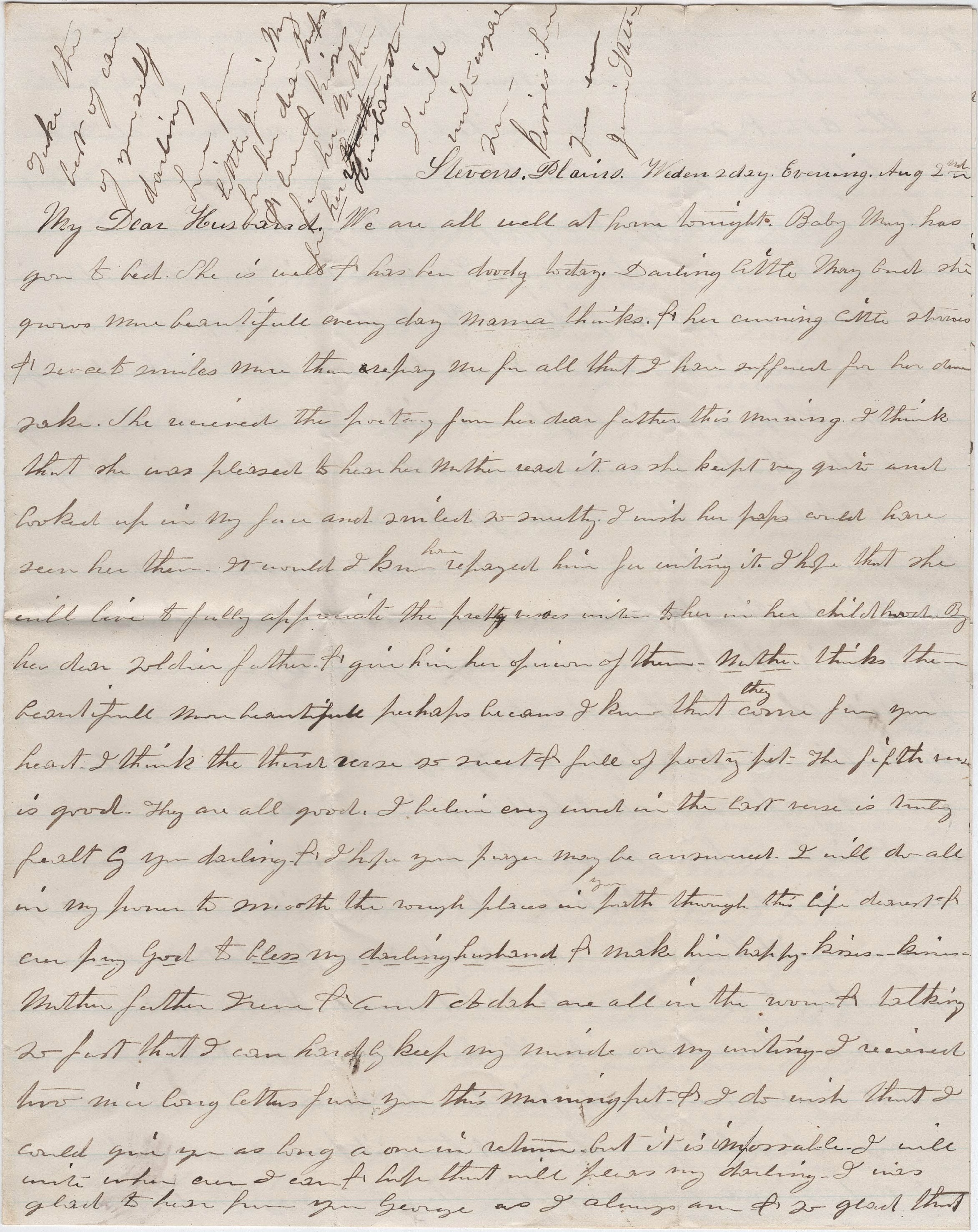
Stevens Plains [Maine] Wednesday evening, August 2nd, 1865
My dear husband,
We are all well at home tonight. Baby May has gone to bed. She is well & has her doody today. Darling little May and she grows more beautiful every day, Mama thinks. Her cunning little [ ] and sweet smiles more than repay me for all that I have suffered for her dear sake. She received the poetry from her dear father this morning. I think that she was pleased to hear her Mother read it as she kept very quiet and looked up in my face and smiled so sweetly. I wish her papa could haveseen her then. It would I know have repaid him for writing it. I hope that she will live to fully appreciate the pretty lines written to her childhood by her dear soldier father & give him her opinion of them. Mother thinks them beautiful—more beautiful perhaps because I know that they come from your heart. I think the third verse so sweet & full of poetry pet. The fifth verse is good. They are all good. I believe every word in the last verse is truly heartfelt by you, darling, & I hope your prayer may be answered. I will do all in my power to smooth the rouygh places in your path through life, dearest, and ever pray God to bless my darling husband & make him happy…
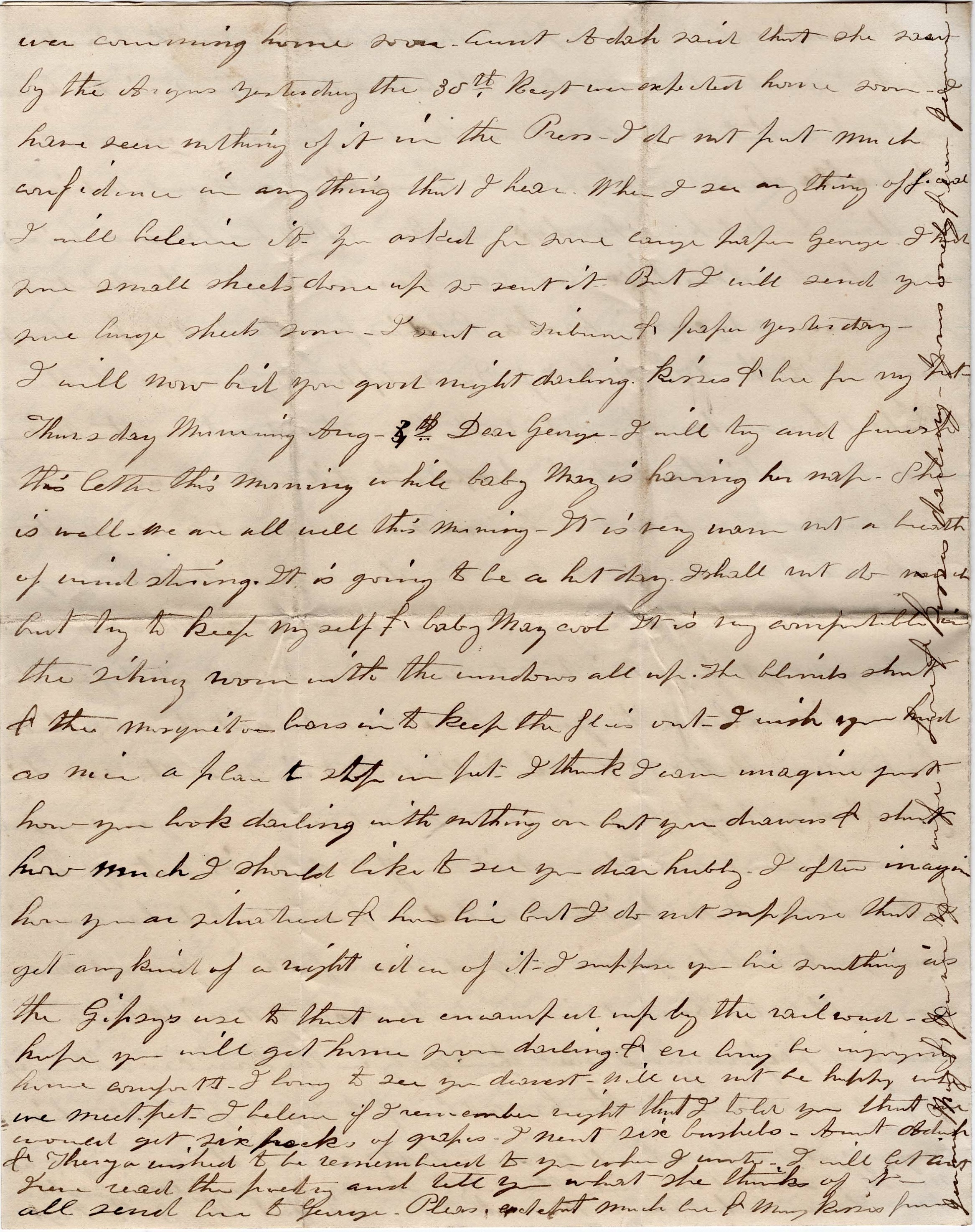
Aunt Ada said that she saw by the Argus yesterday the 30th [Maine] Regiment were expected home soon. I have seen nothing of it in the press. I do not put much confidence in anything that I hear. When I see anything official, I will believe it….
Thursday morning, August 3rd. Dear George, I will try and finish this letter this morning…Itis very warm. Not a breath of wind stirring. It is going to be a hot day. I shall not do much but try to keep myself and baby May cool. It is very comfortable in the sitting room with the windows all up, the blinds shut & the mosquito bars in to keep the flies out. I wish you had a mind to stop in but I thinnk I can imagine just how you look, darling, with nothing on but your drawers & shirt. How much I would like to see you dear hubby. I often imagine how you are situated and how live, but I do not suppose that I get any kind of a right idea of it. I suppose you live something as the gypsies use to that were encamped up by the railroad. I hope you will get home soon darling…
Massachusetts Weekly Spy, 4 August 1865
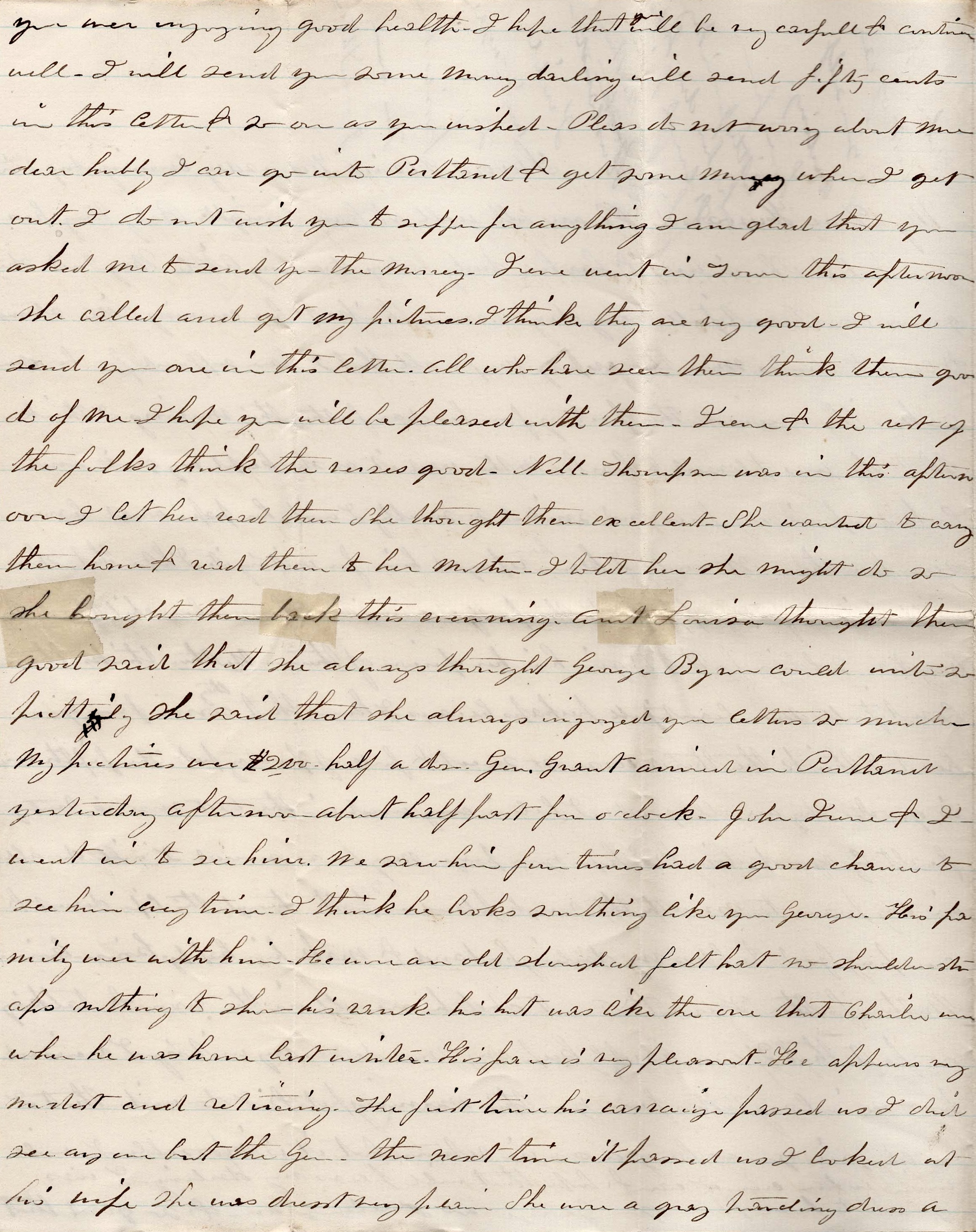
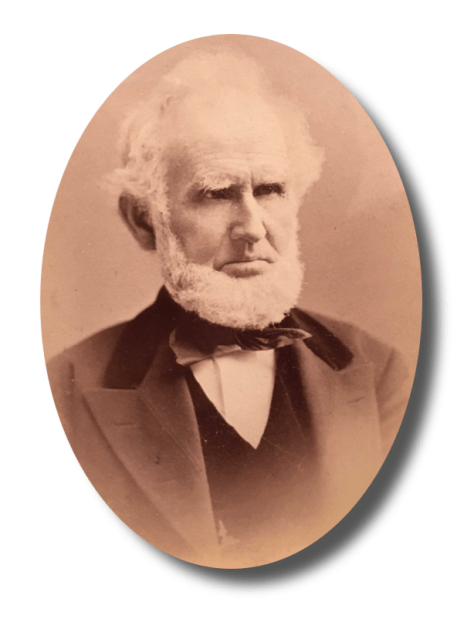
Gen. Grant arrived in Portland yesterday afternoon at half past four o’clock. John, Irene, & I went in to see him. We saw him four times. had a good chance to see him every time. I think he looks something like you George. His family were with him. He wore an old slouched felt hat, no shoulder straps—nothing to show his rank. His hat was like the one that [brother] Charlie wore when he was home last winter. His face is very pleasant. He appears very modest and retiring. The first time his carriage passed us I didn’t see anyone but the General. The next time it passed us I looked at his wife. She was dressed very plain. She wore a gray traveling dress suit, dress & cape alike, a plain straw hat trimmed with black velvet. I could not see her face. She held a large bouquet in her hand right up so that we could not see her face from where we stood.
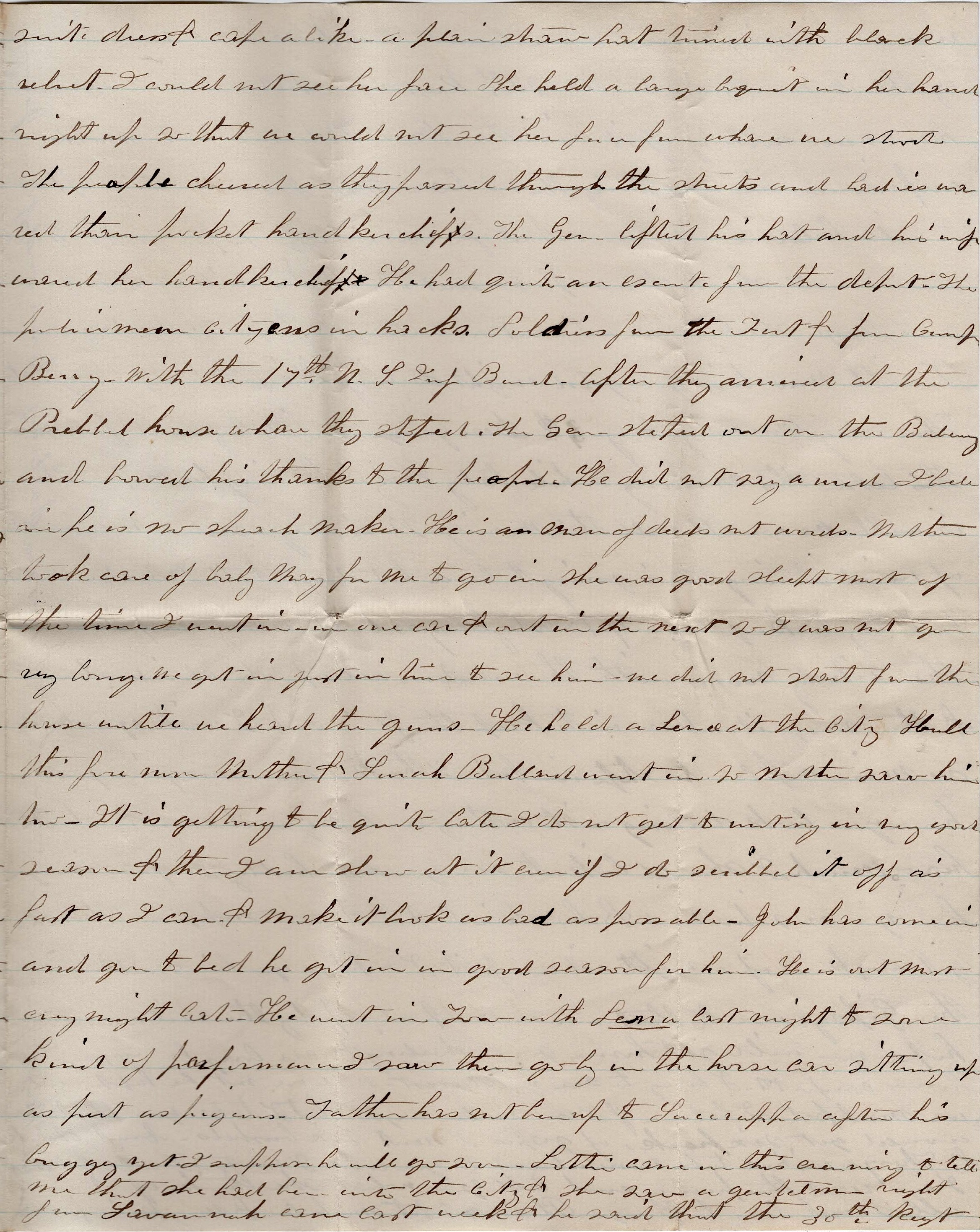
The people cheered as they passed through the streets and ladies waved their pocket handkerchiefs. The General lifted his hat and his wife waved her handkerchief. He had quite an escort from the depot. The policemen, citizens in hacks, soldiers from the fort & from Camp Berry with the 17th U. S. Infantry Band.
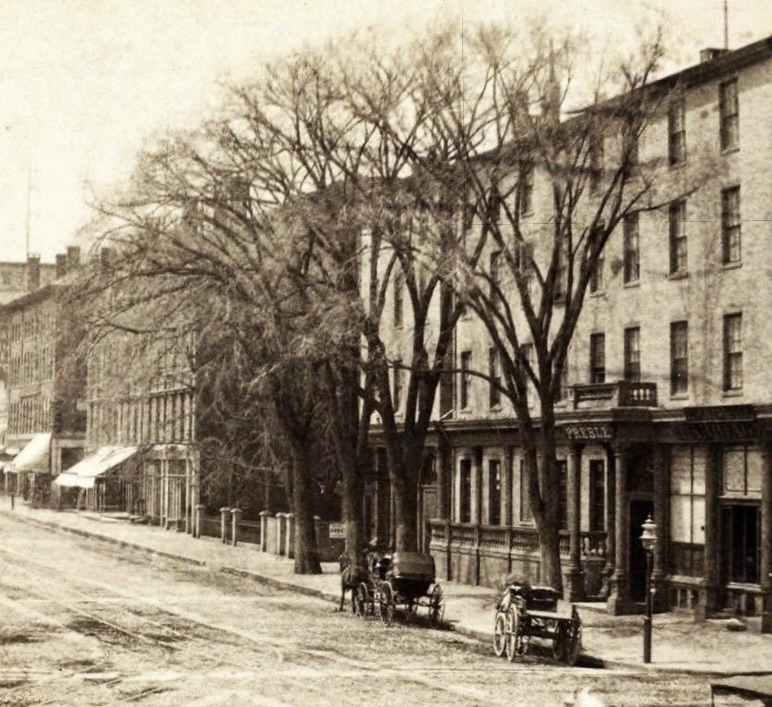
After they arrived at the Preble House where they stopped, the General stepped out on the balcony and showed his thanks to the people. He did not say much. I believe he is no speech maker. He is a man of deeds, not words. Mother took care of baby May for me to go in. She was good—slept most of the time I went in… I was not gone very long. We got in just in time to see him. We did not start for the house until we heard the guns. He held a reception at the City Hall. This forenoon, Mother & Sarah Ballard went in to so Mother saw him too. It is getting to be quite late. I do not get to writing in very good season & then I am slow at it even if I do scribble it off as fast as I can & make it look as bad as possible… Yours only, from Jennie
The Preble House at right on Congress Street in Portland.
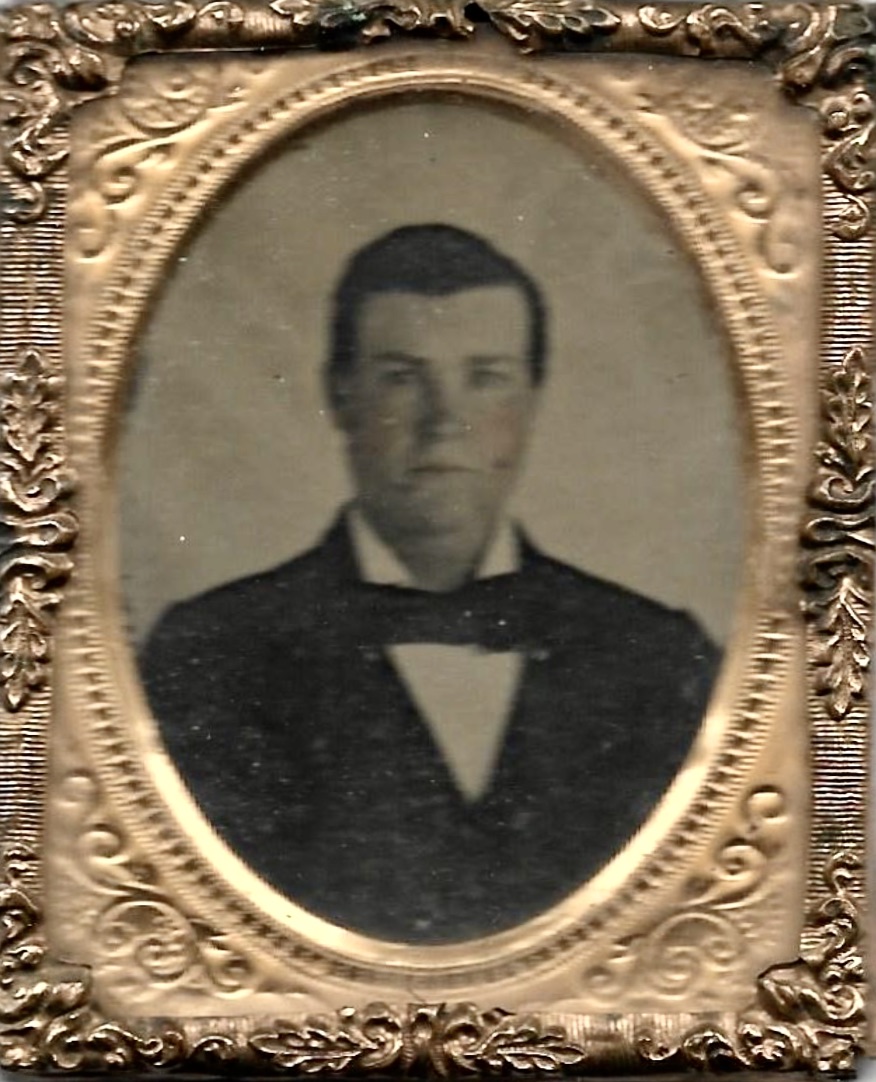
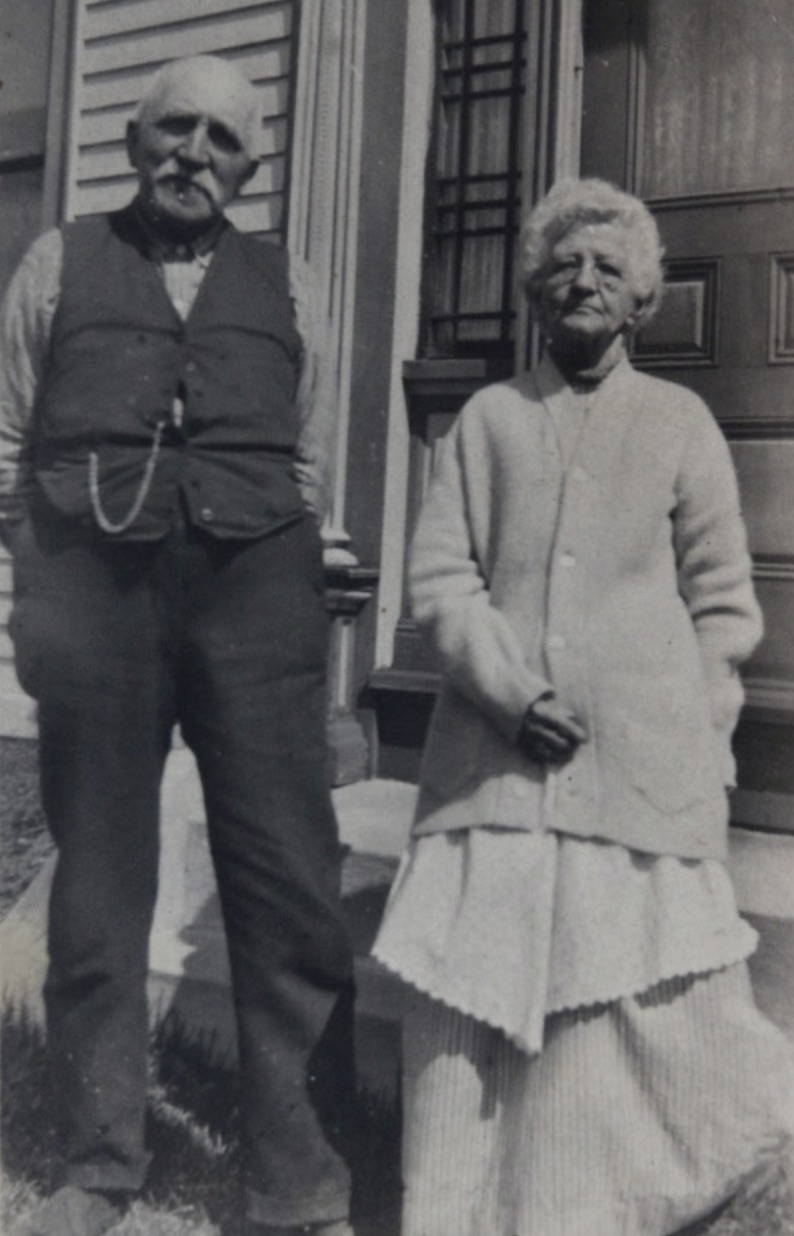
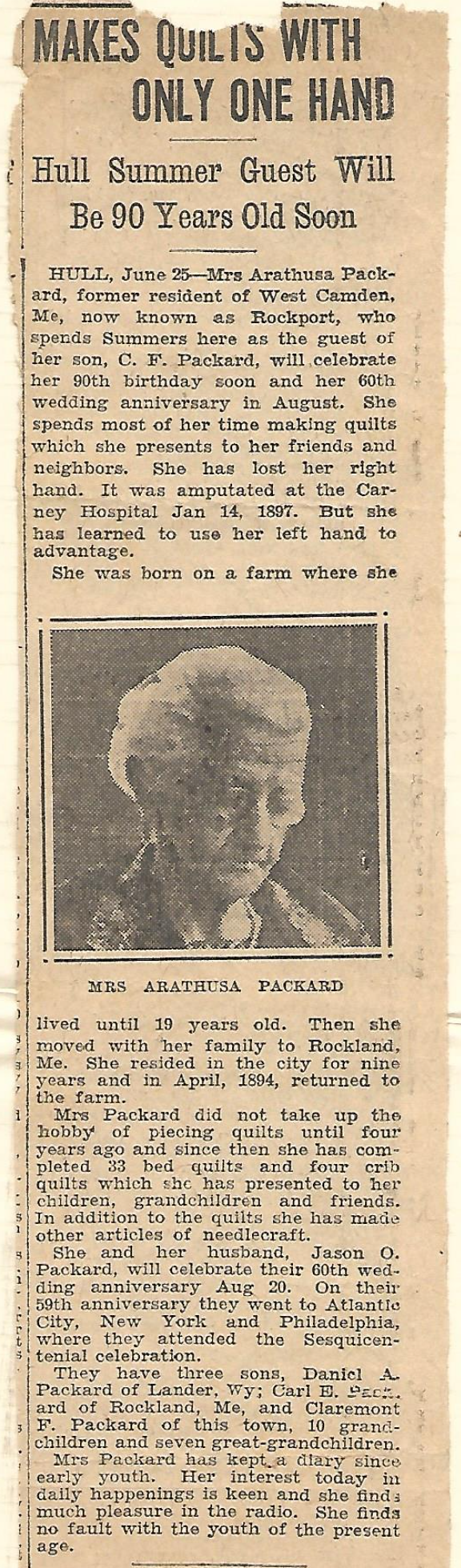
The following letters were written by Jason Oscar Packard (1845-1933) to Arathusa M. Studley (1838-1935) with whom he would marry in 1867. Jason was the son of Daniel and Betsy (Veazie) Packard of Rockport, Knox county, Maine. In 1870, Jason was employed as a house carpenter. But in 1864, when this letter was written, he was taking his mail at 23 South Street, the office of NYC Merchant, Benjamin Franklin Metcalf (1831-1918) and his partner, Duncan. Benjamin was a ship owner and ship broker and at one time maintained a line of sailing vessels between New York and Vera Cruz. He was one of the founders of the New York Stock Exchange and was also a member of the NY Maritime Exchange.
The second letter transcribed below informs us that Jason was a crew member on the Bark Rambler.
Arathusa, a dressmaker in 1860, was the eldest child of Charles and Mary Ann (Fisk) Studley of Camden, Knox county, Maine.
Note: These letters are from the collection of Kate Gilbert and were offered for transcription and publication on Spared & Shared by express consent.
Letter 1
Addressed to Miss Arathusa Studley, Rockville, Maine
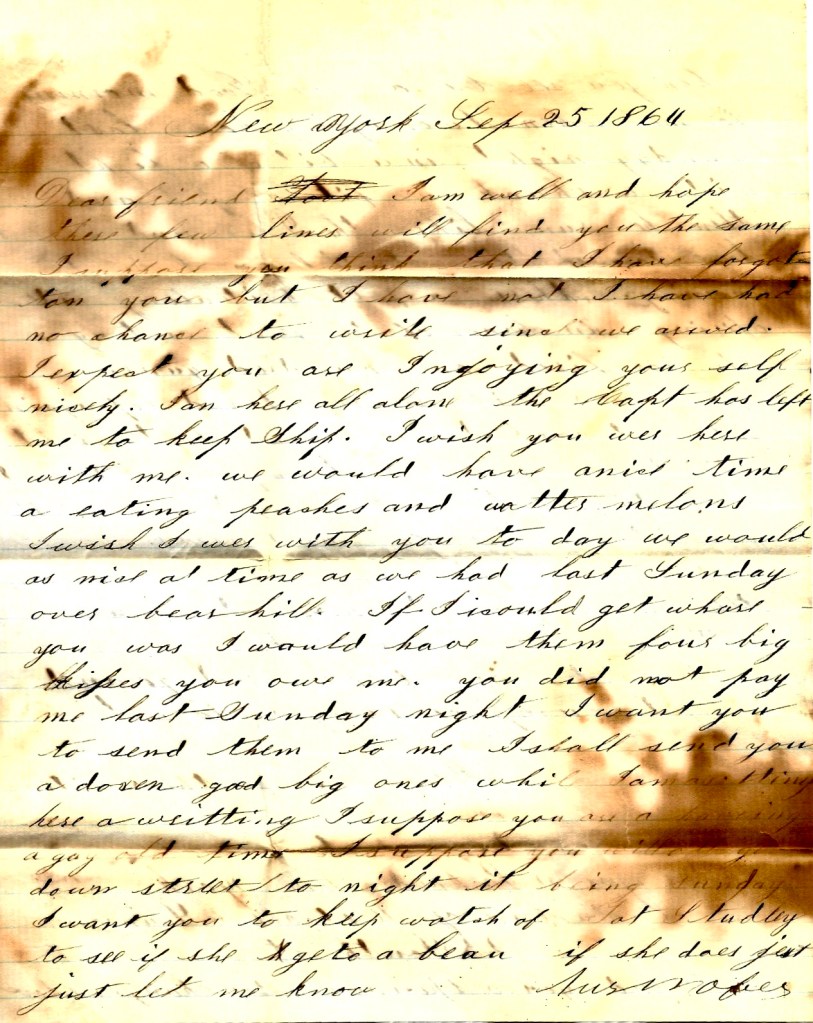
New York [City] September 25, 1864
Dear Friend,
I am well and hope these few lines will find you the same. I suppose you think that I have forgotten you but I have not. I have had no chance to write since we arrived. I expect you are enjoying yourself nicely. I am here all alone. The Captain has left me to keep ship. I wish you were here with me. We would have a nice time a eating peaches and water melons. I wish I were with you today, We would have as nice a time as we had last Sunday over bear hill. If I could get where you was, I would have them four big kisses you owe me. You did not pay me last Sunday night. I want you to send them to me. I shall send you a dozen good big ones while I am sitting here a writing.
I suppose you are a having a gay old time. I suppose you are a going down street tonight, if being Sunday. I want you to keep watch of Toot Studley to see if she gets a beau. If she does, just let me know. Turn over.
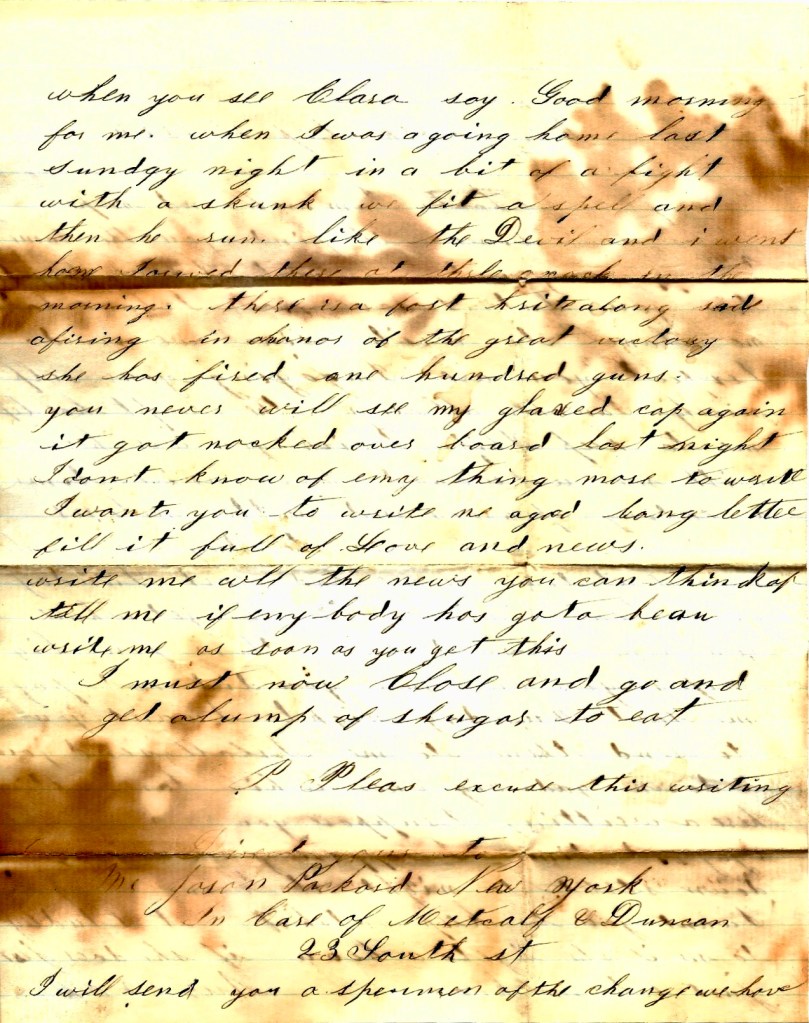
When you see Clara, say good morning for me. When I was a going home last Sunday night [I got] in a bit of a fight with a skunk. We fought a spell and then he run like the Devil and I went home. I arrived there at three o’clock in the morning.
There is a fort right along side a firing in honor of the great victory. 1 She has fired one hundred guns.
You never will see my glazed cap 2 again. It got knocked overboard las night. I don’t know of anything more to write. I want you to write me a good, long letter. Fill it full of love and news. Write me all the news you can think of. Tell me if anybody has got a beau. Write me as soon as you get this.
I must now close and go and get a lump of sugar to eat. Please excuse this writing.
Direct your [letter] to Mr. Jason Packard, New York, in care of Metcalf & Duncan, 23rd South Street.
I will send you a specimen of the change we have.
1 The great celebration was presumably in response to the news of Sheridan’s victory in the Shenandoah Valley (Third Battle of Winchester).
2 A glazed cap is one that was made entirely of enameled cloth, making it waterproof.
Letter 2
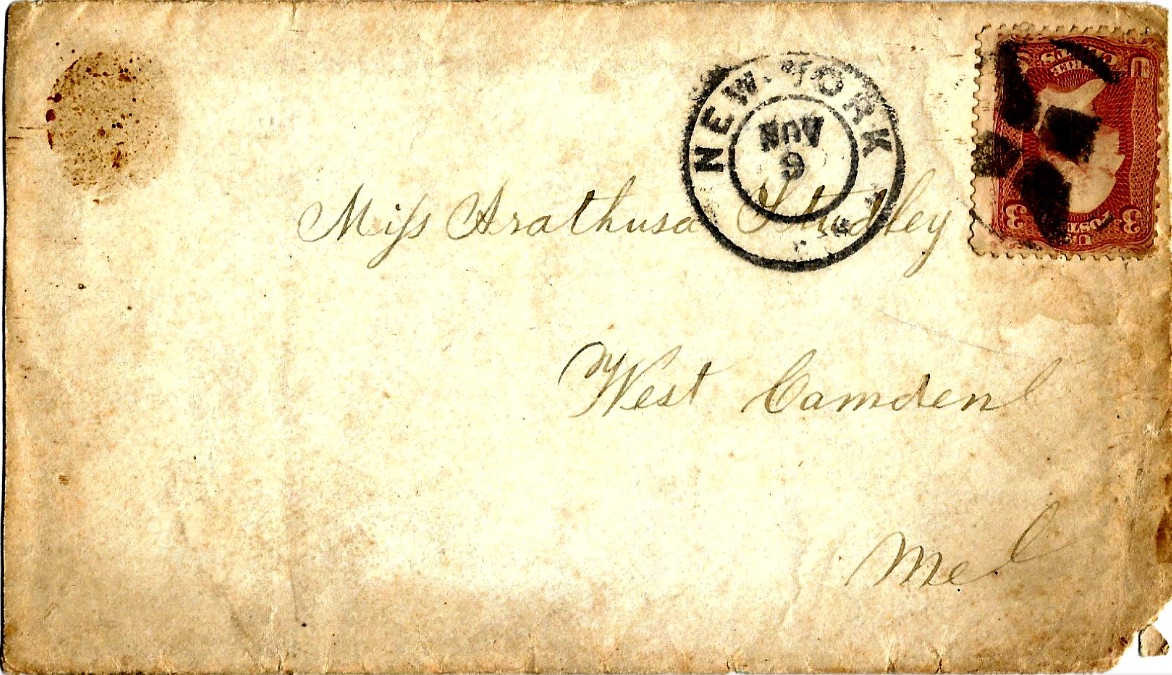
Addressed to Miss Arathusa Studley, West Camden, Maine
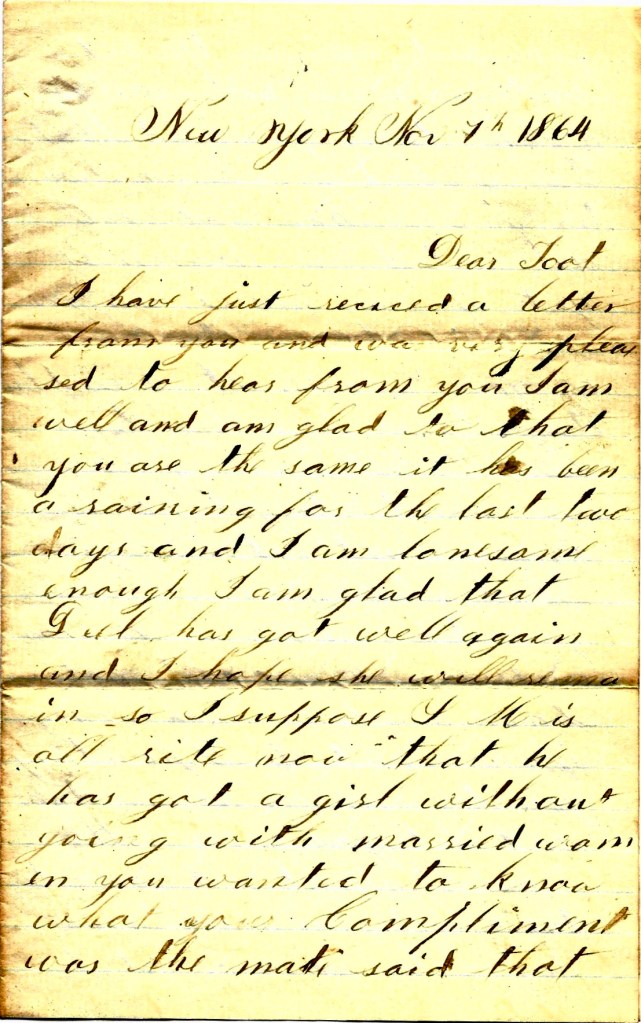
New York [City] November 7th 1864
Dear Toot,
I have just received a letter from you and was very pleased to hear from you. I am well and am glad to [hear] that you are the same. it has been a raining for the last two days and I am lonesome enough. I am glad that Deel has got well again and I hope she will remain so. I suppose J. M. is all right now that he has got a girl without going with married women.
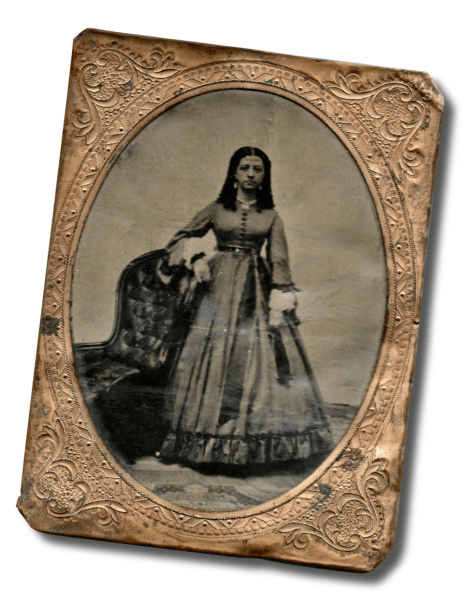
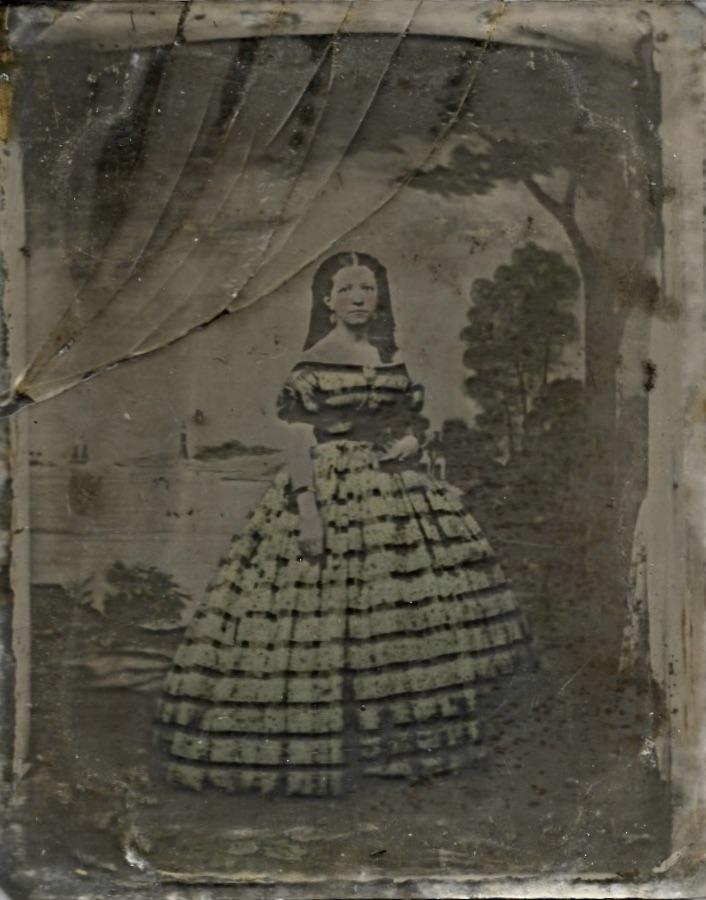
Arathusa M. Studley
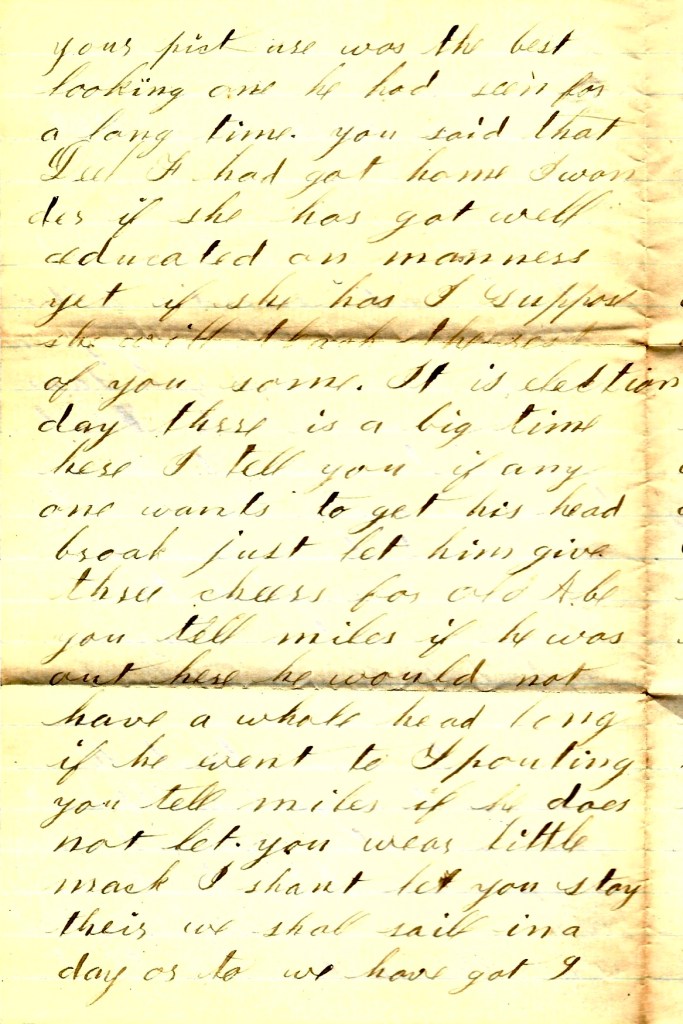
You wanted to know what your compliment was. The mate said that your picture was the best looking one he had seen for a long time. You said that Deel F. had got home. I wonder if she has got well educated on manners yet? If she has, I suppose she will [ ] the rest of you soon.
It is election day. There is a big time here, I tell you. If anyone wants to get his head broke, just let him give three cheers for Old Abe. You tell Miles if he was out here, he would not have a whole head long if he went to spouting. You tell Miles if he does not let you wear Little Mac, I shan’t let you stay there.
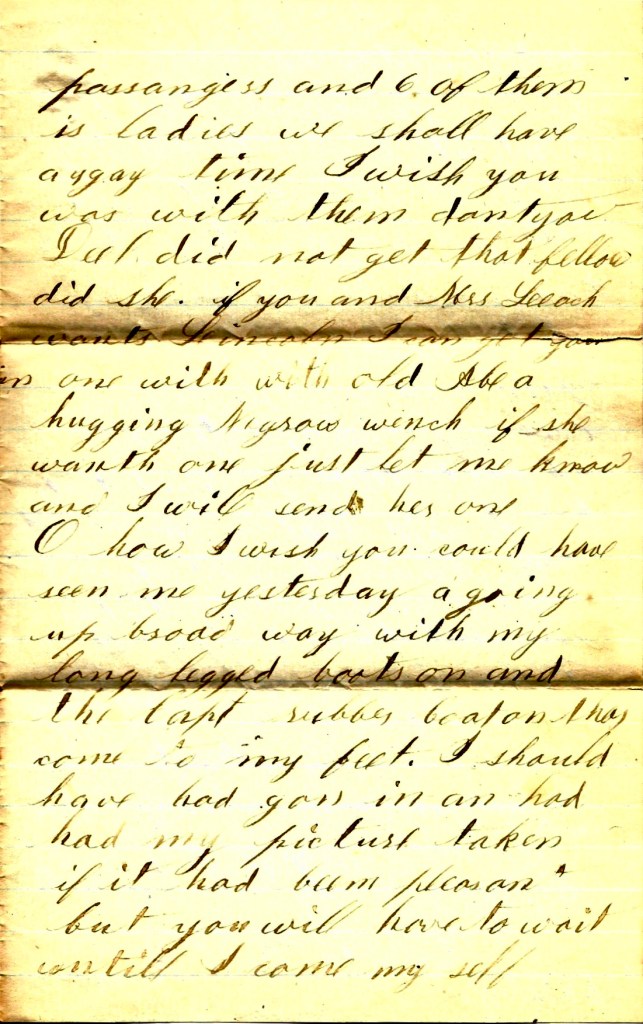
We shall sail in a day or two. We have got nine passengers and six of them is ladies. We shall have a gay time. I wish you was with them, don’t you?
Deel did not get that fellow, did she? If you and Mrs. Leach wants Lincoln, I can get you one with old Abe hugging a Negro wench. If she wants one, I will send her one. Oh how I wish you could have seen me yesterday a going up Broadway with my long-legged boots on and the Captain’s rubber coat on that comes to my feet. I should have had you in and had my picture taken if it had been pleasant but you will have to wait until I come myself.
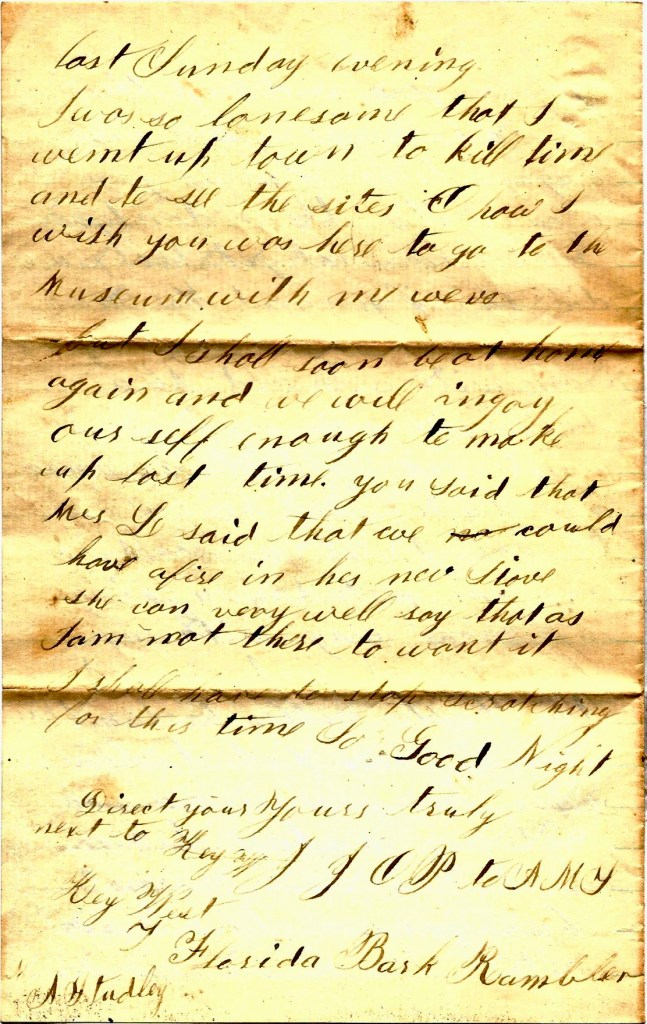
Last Sunday evening I was so lonesome that I went up town to kill time and to see the sights. Oh how I wish you was here to go to the Museum with me. But I shall soon be at home again and we will enjoy ourselves enough to make up lost time. You said that Mrs. Leach said that we could have a fire in her new stove. She can very well say that as I am not there to want it. I shall have to stop scratching for this time. So good night. Yours truly, — J. O. P to A. M. S.
Direct your next to Key West, Florida. Bark Rambler.
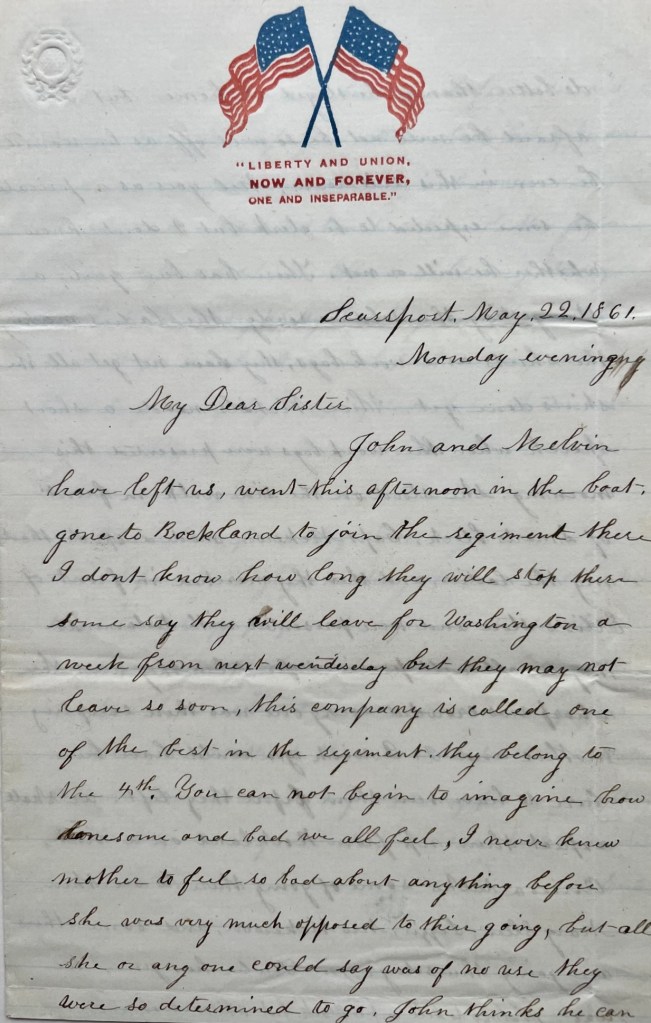
On patriotic stationery bearing the mantra “Liberty and Union, Now and Forever, One and inseparable,” 21 year-old Eveline Maria Wiswell (1840-1922) penned the following letter from Searsport, Waldo county, Maine to one of her sisters. Eveline was the daughter of Joseph Warren Wiswell (1806-1890) and Martha True (1800-1888). In her letter, datelined 22 May 1861, Eveline describes the departure of two brothers to serve in Company I, 4th Maine Infantry. They were Joseph “Melvin” Wiswell (1842-1921) and John Baker Wiswell (1838-1909).
Lt. Melvin Wiswell, 14th Maine Infantry
Melvin was working as a railroad clerk in Searsport at the time of his enlistment. He joined the 4th Maine as a sergeant and was wounded in the Battle of 1st Bull Run. He was afterward discharged for promotion to be commissioned a 2nd Lieutenant in Co. G, 14th Maine Infantry. He was transferred to Co. D when promoted to Captain. Melvin’s older brother John was working as a blacksmith in Searsport and though he apparently intended to join the 4th Maine, he must have changed his mind and not mustered in for he did not enlist until December 1863 in Co. B, 14th Maine (Melvin’s regiment). He would later rise to the rank of 1st Lieutenant of his company before mustering out of the service.
The 4th Maine Volunteer Infantry Regiment was organized in Rockland in May 1861 and was mustered in on June 15, 1861 commanded by Colonel Hiram G. Berry.
[Note: This letter is from the private collection of Greg Herr and was offered for transcription and publication on Spared & Shared by express consent.]
Transcription
Searsport, Waldo county, Maine
Searsport, [Waldo county, Maine] Monday evening, May 22, 1861
My dear sister,
John and Melvin have left us. Went this afternoon in the boat. Gone to Rockland to join the regiment there. I don’t know how long they will stop there. Some say they will leave for Washington a week from next Wednesday but they may not leave so soon. This company is called one of the best in the regiment. They belong to the 4th.
You cannot begin to imagine how lonesome and bad we all feel. I never knew mother to feel so bad about anything before. She was very much opposed to their going, but all she or anyone could say was of no use—they were so determined to go. John thinks he can do better than if he stayed at home but I am afraid he will not be so well off as he would be even in this dull town. Mel goes as a private. He some expected to be clerk but I don’t know whether he will or not.
There has ben quite a stir getting the soldiers ready—the ladies making the shirts and work bags. They have not got all the shirts done yet. Alice Nichols 1 made a short speech when the work bags were presented this morning. She stood on the sidewalk in front of Smart’s Block. Capt. Nickerson made a speech thanking the ladies and then they marched in front of [Amos H.] Ellis’s [grocery & dry goods] store [on East Main Street] and were presented with testaments. They are all well provided for.
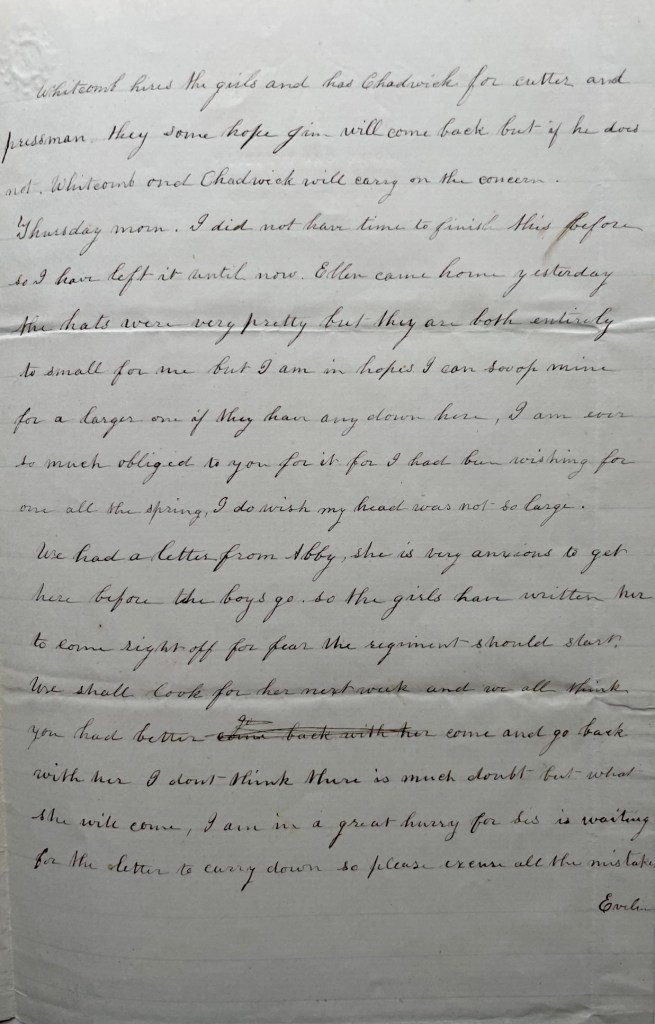
When they went, the wharf was crowded. Everyone was there excepting mother and I. I wish you could have been here to have seen them before they left. 2 We shall expect them up from Rockland on a visit. Orrissa talks some of going there to see them. Mary Ellen, Lizzie, Mrs. Nickerson, and some others are going Thursday. Jim Fowler has gone. He was expecting to sell out to Black, but Whitcomb objected. Whitcomb hires the girls and has Chadwick for cutter and pressman. They some hope Jim will come back but if he does not, Whitcomb and Chadwick will carry on the concern.
Thursday morn. I did not have time to finish this before so I have left it until now. Ellen came home yesterday. The hats were very pretty but they are both entirely too small for me, but I am in hopes I can swap mine for a larger one if they have any down here. I am ever so much obliged to you for it for I had been wishing for one all the spring. I do wish my head was not so large.
We had a letter from [sister] Abby. She is very anxious to get here before the boys go, so the girls have written her to come right off for fear the regiment should start. We shall look for her next week and we all think you had better come and go back with her. I don’t think there is much doubt but what she will come. I am in a great hurry for sis is waiting for the letter to carry down so please excuse all the mistakes. — Eveline
Unveiling of the Civil War Soldier’s Memorial in Searsport in 1866.
1 Possibly Mary Alice Nichols (1834-1916), the daughter of Capt. Peleg Pendleton Nichols & Mary Towle Fowler of Searsport. Alice married Benjamin Carver Smith (1834-1908) in June 1864.
2 The men were transported to Rockland aboard the steamer M Sanford and arrived at Camp Knox, on Tillson’s Hill, northeast Rockland, Knox County, Maine, in the afternoon on 20 May, 1861.
The following letter was written by 32 year-old Electa F. (Sawyer) Miller of West Hampden, Penobscot county, Maine, who served as an officer in the Morning Star Division—a temperance organization. Electa was married to 54 year-old Joseph Buck Miller, a cooper in West Hampden. Her parents were Capt. Samuel Sawyer (1797-1864) and Rebecca Hewes (1798-1870).
Joseph B. Miller was appointed the postmaster of West Hampden on 2 October 1862 and held the position until April 1865. Electa mentions her daughter Ada in this letter who would have been about 8 or 9 years old.
Transcription
Addressed to Miss C. Clarke, West Amesbury, to be left at G. W. Hunt’s Store
West Hampden [Penobscot County, Maine] January 16 [1863]
My true and very dear friend,
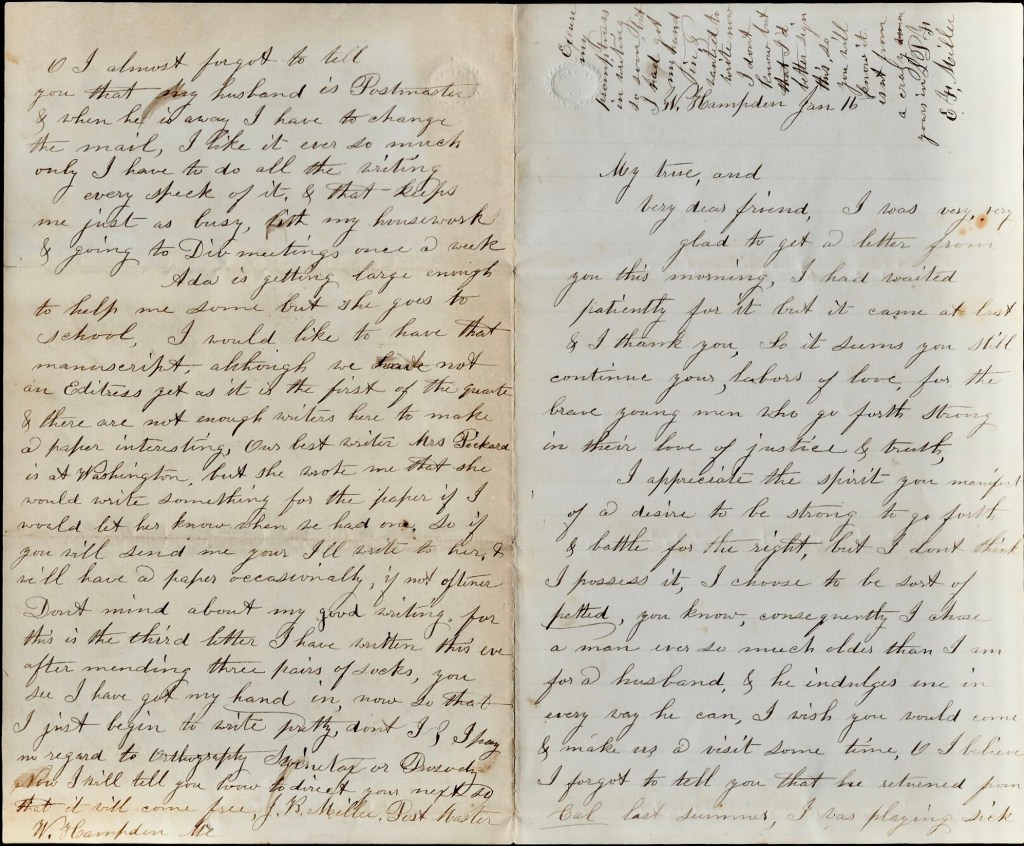
I was very, very glad to get a letter from you this morning. I had waited patiently for it but it came at last & I thank you. So it seems you still continue your labors of love for the brave young men who go forth strong in their love of justice & truth. I appreciate the spirit you manifest of a desire to be strong, to go forth & battle for the right, but I don’t think I possess it. I choose to be sort of petted, you know. Consequently, I chose a man ever so much older than I am for a husband & he indulges me in every way he can. I wish you would come & make us a visit some time. Oh, I believe I forgot to tell you that he returned from California last summer. I was playing sick but he soon talked me out of that notion. Besides, he is a healing medium you know—believes in Spiritualism; but I don’t, do you? He can take the pain out of my head by holding his hands on my head.
About the [Morning Star] Division, we are prospering quite well, considering the circumstances. One of our best members died this winter after winning golden opinions from the company & regiment in which he enlisted as a private soldier, being engaged in several battles, at last was taken sick, sent to a hospital, and after a long time, got a discharge, came home, and a poorer looking object no one ever saw. He was a walking skeleton. He lingered a few weeks, was all ambition to get well, but it was not to be. He sleeps his last sleep. Oh, how very many precious lives have been sacrificed for the Southern traitors. How I wish they would speedily get their just recompense. My husband used to see something of their disposition in California. He hates them. They are so revengeful and overbearing.
Let me see, you wrote that William spent a great part of his time with Mrs. Hoyt. I’ll warrant it. I’m right glad you told me for I want to know all the gossip. You didn’t write half enough. You know I want to know lots of news. I had one little letter from Sarah Huse for a year & then she was very sparing of news. I should think there might be some gossip. There always is in most every town. Do tell me what street Mrs. Hoyt lives on. Sadie wrote that she was keeping boarders there & I have a friend in Washington this winter. She writes me she is boarding with a New Hampshire lady. I thought it might possibly be Mrs. Hoyt. Write me all about it, won’t you, and don’t let any one read this for I write by the jump, just as I happen to think.
Oh, I almost forgot to tell you that my husband is postmaster and when he is away, I have to change the mail. I like it ever so much only I have to do all the writing—every speck of it—& that keeps me just as busy with my housework & going to Div. meetings once a week.
Ada is getting large enough to help me some but she goes to school. I would like to have that manuscript, although we have not an editress yet as it is the first of the quarter & there are not enough writers here to make a paper interesting. Our best writer—Mrs. Packard—is at Washington, but she wrote me that she would write something for the paper if I would let her know when we had one. So if you will send me yours, I’ll write to her & will have a paper occasionally if not oftener. Don’t mind about my good writing for this is the third letter I have written this evening after mending three pairs of socks. You see I have got my hand in now so that I just begin to write pretty, don’t I, & I pay no regard to Orthography, Syntax, or Prosody. Now I will let you how to direct your next so that it will come free; J. B. Miller, Post Master, W. Hampden, Me.
Excuse my promptness in writing so soon but I had got my hand in & wanted to write now. I don’t know but that I’d better sign this so you will know it isn’t from a crazy woman. Yours in L. P. F. — E. F. Miller
There are few identifiers in this letter but I’m confident it was written by Martha G. Russell (1838-Aft1880) who was married to Celon R. Swett (1837-1907), the son of Alfred and Eunice (Strout) Swett of Maine. Martha was the daughter of Amzi Russell (1810-1879) and Eliza Morse George (1814-1905) of Albany, Carroll county, New Hampshire. Martha wrote the letter to her younger sister, Ruth Priscilla (“Priscie”) Russell (1850-1930).
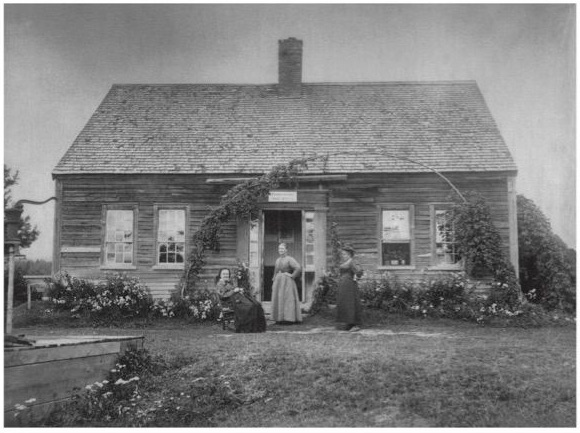
A late 19th Century image of “Priscie” (Russell) Colbath standing in front of her home and post office when it served as the Post Office in Passaconaway, Carroll county, New Hampshire, from 1892 to 1907.
In the letter to her sister Priscie, Martha writes of attending a lecture by one of Jeff Davis’s slaves. The slave was undoubtedly William Andrew Jackson who was a slave in Richmond, Virginia, where he worked as a messenger in the courts and also drove a coach. In 1861, Jackson’s master—G. W. Jones—hired him out to Jefferson Davis, the president of the Confederate States of America, to be his coachman.
“In May of 1862, Jackson found out that Jones was planning on selling him South. Despite the fact that he had a wife and 3 children, Jackson decided to escape to Union lines like many enslaved people before him at that point in the war. When he arrived behind Union lines, he caught the attention of Union commanders due to his relationship to Jefferson Davis. Jackson shared a great deal of information about the low morale of Southerners, even the Davis family itself.
After escaping to Union lines, Jackson became a celebrity in abolitionist circles, offering public lectures. In a speech he delivered in Boston he described escape from slavery, his early life and how he learned to read. The abolitionist newspaper, The Liberator reported that Jackson spoke in the Boston lecture about how enslaved people were able to obtain information about the War’s developments. Jackson also reassured his audience that slavery had prepared Black people to care for themselves and he opposed the idea of colonization for newly freed slaves. Jackson himself claimed that he tried to join a regiment of Black soldiers raised by Governor Edward Sprague in the summer of 1862, but was unable to fight since the United States was not yet enlisting African Americans. Jackson’s talks influenced the debate in the North about the policy of the Federal government toward enslaved Black people.
Newspapers place William A. Jackson in Maine in February 1864; The Portland Daily Press, 12 February 1864
Jackson also traveled to England to lecture about his experiences. While he was in England, he was a guest of noted abolitionist George Thompson. The Liberator reported that Jackson audaciously wrote Jefferson Davis a letter from London that he could not be with the Confederate President for the upcoming Christmas holiday. Because Jackson was a hired slave, Davis forfeited a sizable deposit to G.W. Jones. William A. Jackson remained in the United Kingdom until 1863. He was disappointed when he learned of the considerable English support for the Confederacy and returned to the United States where he continued giving lectures.
Not much information is available about Jackson’s life after the Civil War. A Vermont newspaper reported that he had enrolled at Pierce Academy, a New England preparatory school to prepare for college, but there is no other evidence of that. After that report Jackson disappears from the public record.” [BlackPast Blog]
Transcription
Bridgeton Centre [Maine] February 21 [1864]
Ever Dear Priscie,
This is Sunday and we are sitting here all alone wishing we could hear from you at home. Have hear nothing since Uncle Thomas was here. Hope Mary is better & the rest are well. But Priscie, why don’t you write to me sometime. I think you can get time if you try hard.
Perhaps you would like to know how we are getting along keeping house. We enjoy ourselves much better than we did while hiring our board & it is cheaper. Celon has not been very well for a few days since he had his last sick time. Suppose he will have another before he feels right. He has worked most of the time. I have been sowing some and have made some cone work. Have got two dozen stockings to finish now. Wish they were done for I shall not have any more.
I went up the hill with Mrs. Cole yesterday to get broad cloth for her a saque. Got some very pretty for one dollar, sixty-two cents per yard. Would like one if I could afford it but must wait. Got some bleached sheeting for 22 cents per yard for some pillowcases & Celon’s shirt, some calico for apron for 16 cents per yard. We can certainly get things cheaper here than at Conway but we are obliged to have more.
William A. Jackson, Harper’s Weekly, June 7, 1862
Oh Priscie, we went to hear a lecture by one of Jeff Davis’s slaves. You ought to see his eyes shine & hear him talk. I wish every copperhead in the United States could hear him. They never would hiss again. The hall was crowded full and many could not get in at all. I was fortunate enough to get a front seat and hear every word.
Went to the Lyceum last evening. I can go every Saturday now and not pay any more. Enjoy it very much for I learn something if use to me every time I go. Wish you and the girls could go too.
We have not been to meeting today because we did not like the Universalists. I bought a prize package the other day & I will send you a piece of the envelope with a list of the contents all right, only I did not get but one pen. The jewelry is a National Union League pin, rather small and pretty. Do not care so much for that as for the rest. Think I got the worth of the money.
Bose is very well contented but he is not done looking for Uncle Thomas. When he hears us say anything about any of you, he goes anywhere he likes & does not think of going back alone. Does not bark at people & is called a good dog. Sits at the window a long time every evening to see the factory. They run the factory all night now. I guess you will want me to stop writing soon but I shan’t & if you don’t write to me soon, I will write ten times as much next time & it shall be every word culch. Now remember what I say & write to your sister, — Martha
Tell brother to write. Celon thinks he shall not go up to town meeting—it will cost so much.
These two letters were written by Joseph Appleton Sanborn (1814-1877), the son of Peter and Sally (Fifield) Sanborn of East Readville, Kennebec county, Maine. Joseph was married to Lucy Ann Briggs Upham (1821-1888) and the couple had at least four children, the eldest of which is mentioned in this letter: Gustavus (“Gussy”) A. Sanborn (1845-1879).
Joseph wrote the letters to his niece, Sarah Frances Sanborn (1843-1927), the daughter of Peter Fifield Sanborn (1810-1884) and Desdemona Hunt (1819-1864) of Readville, Maine. Sarah was a graduate of the Maine Wesleyan Seminary and Female College and in 1864 was attending the Hudson River Institute in Claverack, New York. One or more of Sarah’s letters to her father may be found at, “Away at School: Letters Home,” by Candace Kanes.
Letter 1
East Readfield Sunday p.m., May 29, 1864
My dearest Sarah,
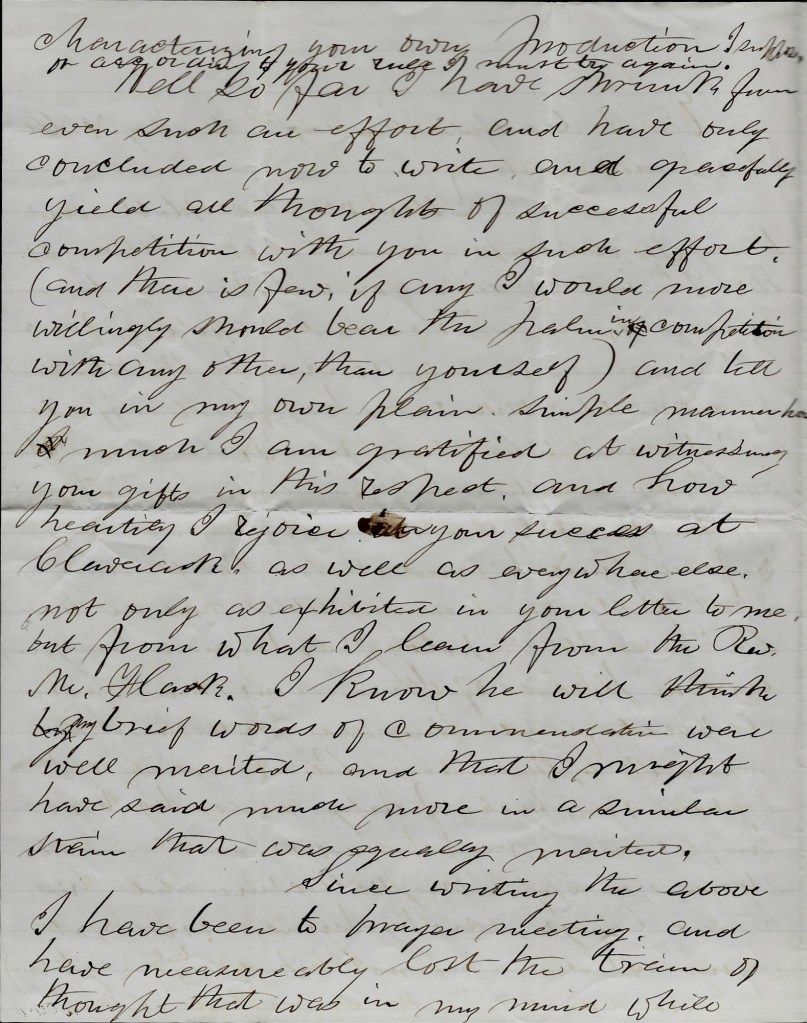
Your very acceptable, and to my poor comprehension, good letter of the 9th inst. which you pleased to characterize as a “miserable apology for a letter” measured of course by the standard of some of your own happiest efforts in that line, was duly received and it it was my intention to have answered it forthwith. But I did not immediately find time to undertake the writing of what I deemed a suitable answer to even the “miserable apology” (so termed by you) and in process of time, another more elaborate and finished production has made its appearance, the reading of portions of which fairly made my blood tingle in my veins and almost made me do as you say Gough’s lecture 1 did his hearers laugh and cry by turns, and yet I am expected (no, not expected, but only to try) to answer such a letter with somewhat of the ability characterizing your own production. I suppose, or according to your rule, I must try again. Well, so far I have shrunk from even such an effort and have only concluded now to write and gracefully yield all thoughts of successful competition with you in such effort (and there is few, if any, I would more willingly should bear the palm in competition with any others than yourself) and tell you in my own, plain, simple manner how much I am gratified at witnessing your gifts in this respect, and how heartily I rejoice in your success at Claverack as well as everywhere else, not only as exhibited in your letter to me, but from what I learn from the Rev. Mr. Flack. I know he will think my brief words of commendation were well merited and that I might have said much more in a similar strain that was equally merited.
Since writing the above, I have been to prayer meeting and have measurably lost the train of thought that was in my mind while writing the above, and as it is now half past seven, I will not pursue it further but proceed to tell you of some home affairs, &c. &c. as that is really about all I can do both for the want of time to write more, and also for the want of ability for I feel that I should need about a week at least to do full justice in answering according to my poor ability your lengthy and most interesting letter, so much so that I could not refrain from perhaps violating your confidence & with, by the reading portions of it to Rev. Mr. Brownold—who pronounced your deli____tions of Gough’s efforts admirable, not to say “splendid” and far better than he himself could give, though he thinks him up to the standard of excellence which you assign him as an orator.
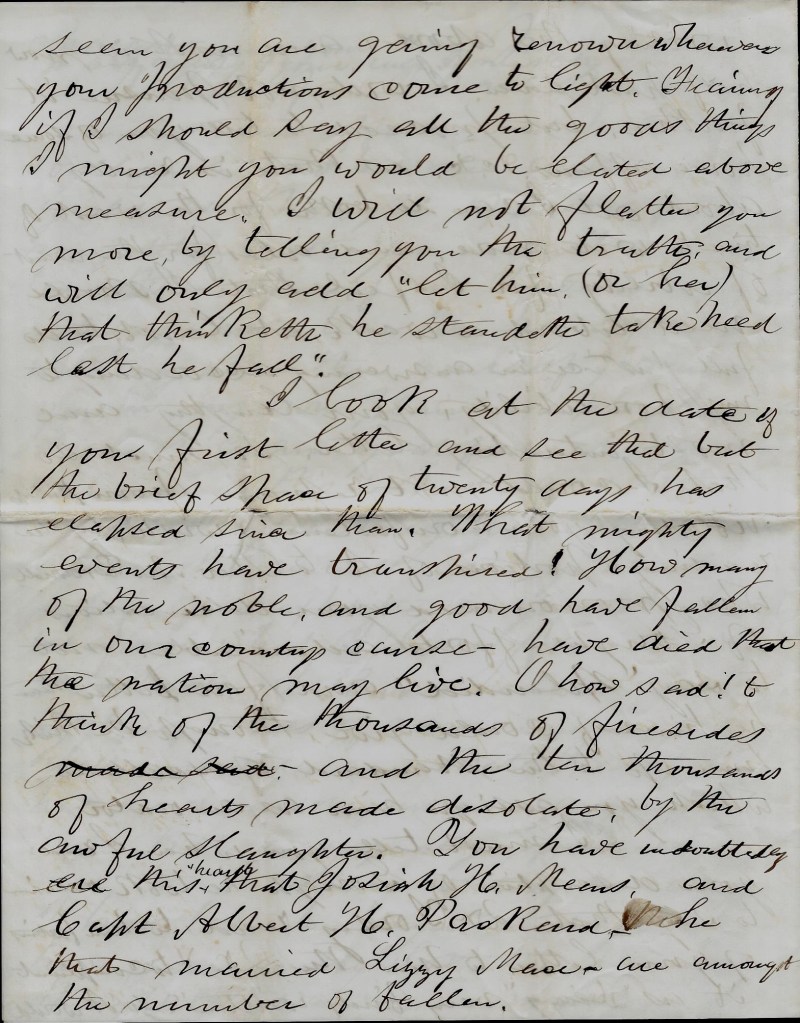
I must tell you when I read your description of Gough, he took occasion to say that Dr. Yorsey read to him portions of your letter to him the Dr. & to compliment it as being “very finely written.” So it would seem you are gaining renown whenever your “productions” come to light. Fearing if I should say all the good things I might you would be elevated above measure, I will not flatter you more by telling you the truth and will only add, “let him (or her) that thinketh he standeth take heed lest he fall.”
I look at the day of your first letter and see that but the brief space of twenty days has elapsed since then. What mighty events have transpired! How many of the noble and good have fallen in our country’s cause—have died that the Nation may live. Oh how sad! to think of the thousands of firesides and the ten thousands of hearts made desolate by the awful slaughter. You have undoubtedly ere this heard that Josiah H. Means and Capt. Albert H. Packard 2—he that married Lizzy Mase—are amongst the number of fallen.
[unsigned]
1 John B. Gough (1817-1886) was a temperance lecturer.
2 Capt. Albert H. Packard served in Co. A, 4th Maine Vol. Infantry. He was mortally wounded in the Wilderness in May 1864 and died of his wounds at Washington D. C.
Letter 2
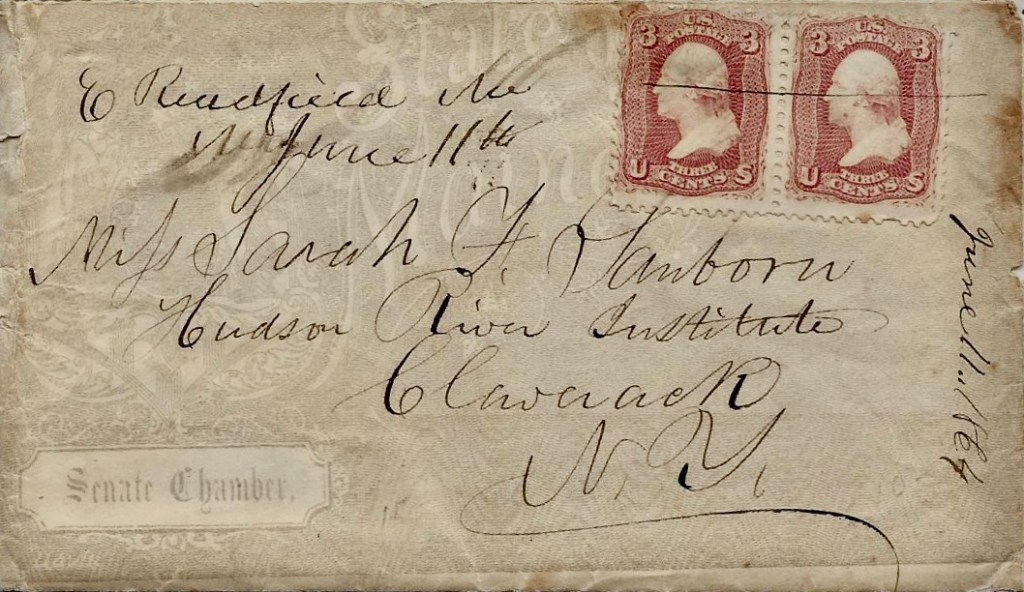
Addressed to Miss Sarah F. Sanborn, Hudson River Institute, Claverack, New York
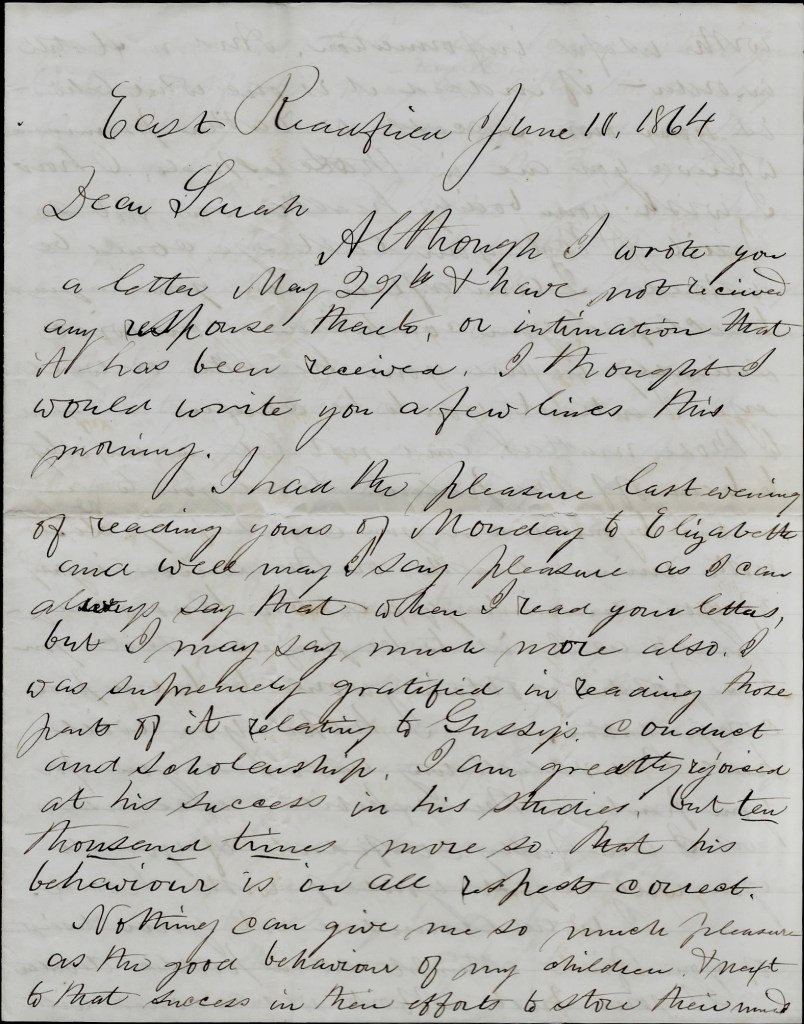
East Readfield June 10, 1864
Dear Sarah,
Although I wrote you a letter May 29th & have not received any response thereto, or intimation that it has been received, I thought I would write you a few lines this morning.
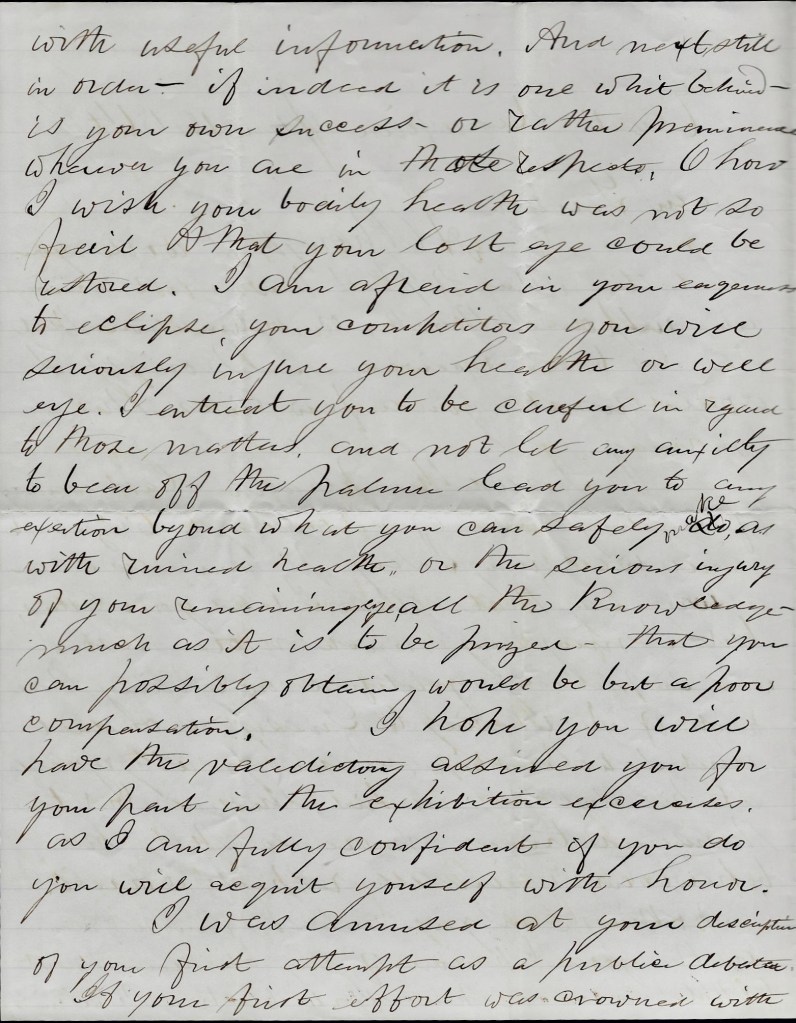
I had the pleasure last evening of reading yours of Monday to Elizabeth and well may I say pleasure as I can always say that when I read your letters, but I may say much more also. I was supremely gratified in reading those parts of it relating to Gussy’s conduct and scholarship. I am greatly rejoiced at his success in his studies but ten thousand times more so that his behavior is in all respects correct. Nothing can give me so much pleasure as the good behavior of my children & next to that success in their efforts to store their minds with useful information. And next still in order—if indeed it is is one whit behind—is your own success, or rather preeminence, wherever you are in those respects. Oh how I wish your bodily health was not so frail & that your lost eye could be restored. I am afraid in your eagerness to eclipse your competitors you will seriously injure your health or well eye. I entreat you to be careful in regard to those matters and not let any anxiety to bear off the palm, lead you to any exertion beyond what you can safely make as with ruined health, or the serious injury of your remaining eye, all the knowledge, much as it is to be prized, that you can possibly obtain, would be but a poor compensation.
I hope you will have the valedictory assured you for your part in the exhibition exercises as I am fully confident if you do you will acquit yourself with honor.
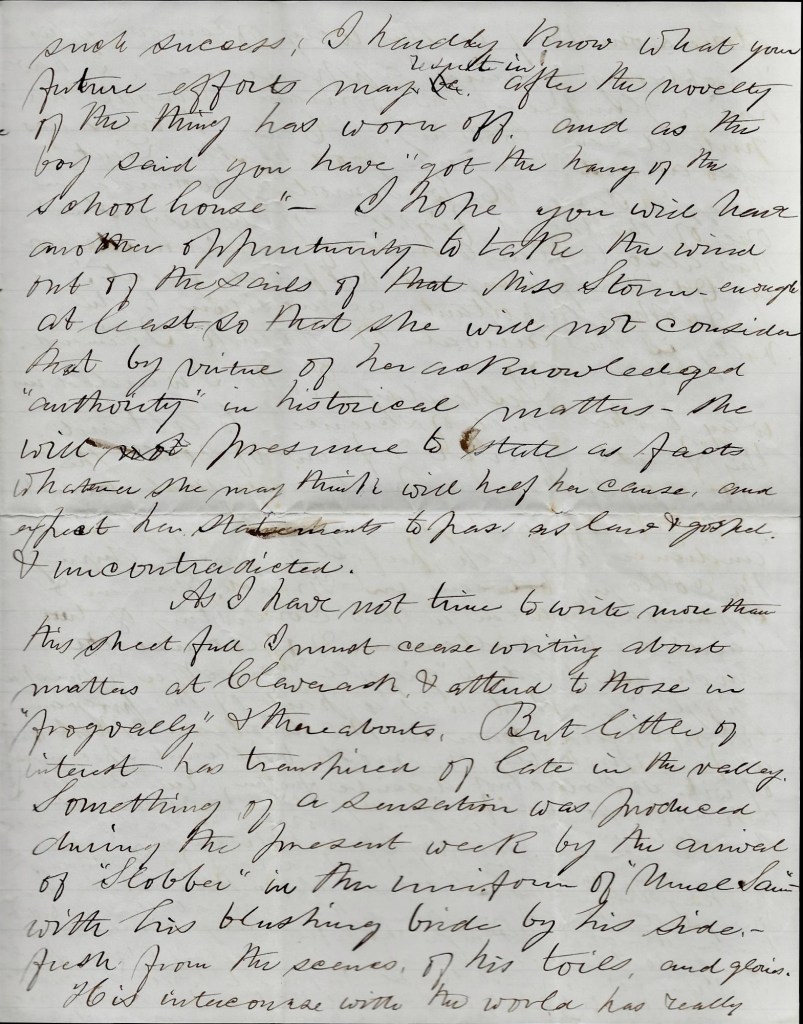
I was amused at your description of your first attempt as a public debater. If your first effort was crowned with such success, I hardly know what your future efforts may result in after the novelty of the thing has worn off and as the boy said, you have “got the hang of the school house.” I hope you will have another opportunity to take the wind out of the sails of that Miss Storm—enough at least so that she will not consider that by virtue of her acknowledged “authority” in historical matters she will presume to state as facts whatever she may think will help her cause, and expect her statements to pass as law & gospel & uncontradicted.
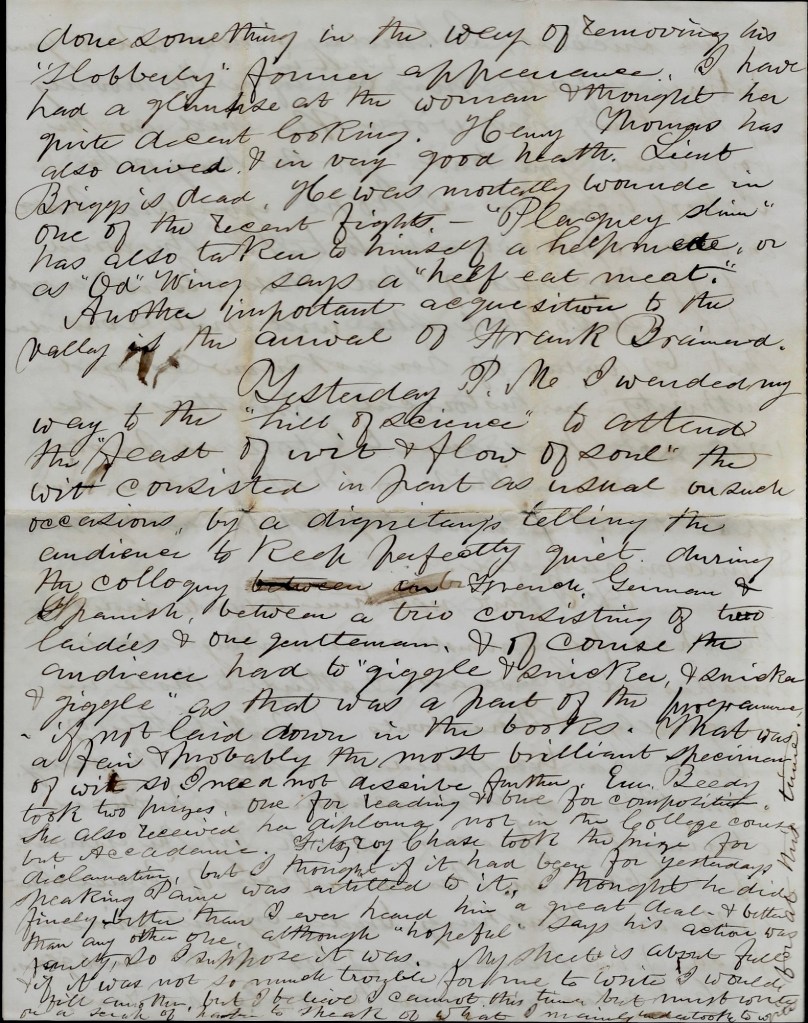
As I have not time to write more than this sheet full I must cease writing about matters at Claverack & attend to those in “Frog Valley” & thereabouts. But little of interest has transpired of late in the valley. Something of a sensation was produced during the present week by the arrival of “Slobber” in the uniform of “Uncle Sam” with his blushing bride by his side, fresh from the scenes of his toils and glories. His intercourse with the world has really done something in the way of removing his “slobberly” former appearance. I have had a glimpse at the woman & thought her quite decent looking. Henry Thomas has also arrived & in very good health. Lieut. Briggs is dead. He was mortally wounded in one of the recent fights. “Plaguey Slim” has also taken to himself a helpmate, or as “Od” Wing says, a “help-eat-meet.” Another important acquisition to the valley is the arrival of Frank Brainard.
Yesterday p.m., I wended my way to the “hill of science” to attend the “feast of wit & flow of soul.” The wit consisted in part as usual in such occasions, by a dignitary’s telling the audience to keep perfectly quiet during the colloquy in French, German, and Spanish, between a trio consisting of ladies & one gentleman, & of course the audience had to “giggle and snicker, * snicker and giggle” as that was a part of the programme—if not laid down in the books. That was a few & probably the most brilliant specimen of wit so I need no describe further. E,. Beedy took two prizes—one for reading and one for composition. She also received her diploma not in the college course but academic. Fitzroy Chase took the prize for declamation but I thought if it had been for yesterday’s speaking, Paine was entitled to it. I thought he did finely and bettter than I ever heard him—a great deal & better than any other one, although “hopeful” says his action was faulty so I suppose it was. My sheet is about full and if it was not so much trouble for me to write, I would fill another but I believe I cannot this time but must write on a scrap of paper to speak of what I mainly took to write for at this time.
In your letter to Lizze you spoke of having some idea of visiting the Catskill Mountains but expressed the opinion you should not so so on account of the cost. Now what I want to say is that I want you to go if you would like to and I will pay the expense. Say nothing to the “Old fellow” about it but when you get ready to go, up & start. I sent Gussy $50 yesterday and I will write him to hand you over enough for your expenses in making the trip, and if gentlemen are permitted to go, & Gussy is one of the favored ones, I want him to go with you and I shall write him the same. So don’t fail to go in account of the expense as I want you to enjoy yourself while you can for the time may come when neither your father nor I can do anything for your enjoyment.
What is right and proper for you to have, I want you should have & I think that would be both right and proper. It is so cold here today as to be uncomfortable. It rained more or less all day yesterday & quite hard a portion of the time in the p.m. and cleared off in the night cold and windy. We are all as well as usual. With much affection, I am ever thine, — J. A. Sanborn
P. S. Only six weeks from tomorrow & we may expect to see you in the “Valley” again. I would like very much to see you sooner at Claverack but think it doubtful if I do as every day brings its cares and labors & the days and weeks roll rapidly away & I doubt if I find it convenient to visit Claverack & the cost too would be considerable. Still I may conclude to go, but I do not want you to make any particular calculation that I shall. I sent you today two papers giving an account of a sad accident at Lewiston resulting in the drowning of three little girls and the funeral services of the occasion. I pity the grieving parents & friends, — J. A. S.
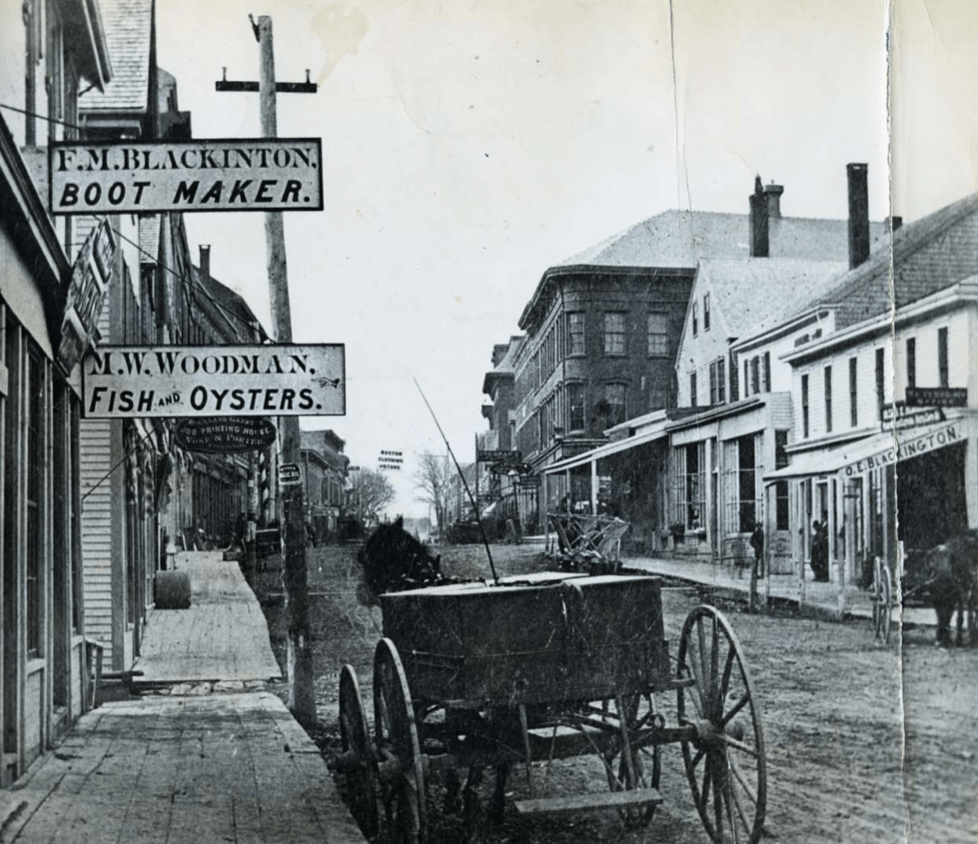
The following letter was written by 37 year-old Lavinia M. Snow (1826-1917), the unwed daughter of Capt. Israel Snow (1801-1875), founder of the Snow Shipyard on Mechanic Street in the south end (Snow’s “Point”) of Rockland, Maine. Snow’s Point Shipyard was begun by Captain Israel Snow during the height of the Civil War, 1863. Captain Snow passed the business on to his son and that process continued until 1946, when Snow’s Point Shipyard became the property of General Seafood. Then, in 1957, General Seafood changed hands and the place was taken over by National Sea Products. Finally, in 1991, the yard became property of Rockland Marine, which still operates on the site of the old Snow’s Shipyard.
A biographical sketch of Lavinia was written by Angela M. Keith which states (in part) that, “though Lavinia Snow remained unmarried and childless in her adult life (indeed, she was long referred to by all as “Aunt Lavinia”), she found adventure aplenty prior to her crusade for women’s suffrage, sailing around the world with her family in the 1850s to locales including San Francisco, Panama, London, the Mariana Islands, and China. In August of 1916, at the age of 90, Lavinia asked a reporter from the mid-coast Courier-Gazette to write her obituary and recounted her adventures, along with her doorstep-view of Rockland’s metamorphosis from small fishing village to an industrially-modern hub of ship and rail. Though she received little in the way of formal education, Lavinia loved poetry, news and politics, and was a “staunch supporter of the things that make for individual and natural righteousness.” She greatly admired Abraham Lincoln and was fortunate enough to attend one of his speeches in Illinois in 1857. That she could not vote for him in the 1860 election was a sore spot for her. Lavinia outlived many of her siblings, and died [of pneumonia] on January 12, 1917 in St. Petersburg, Florida.” [See Biographical Sketch of Lavinia M. Snow.]
Lavinia wrote the letter to her Aunt Nancy (Snow) Stackpole (1799-1877), the widow of William Stackpole (1787-1836) of Pekin, Tazewell county, Illinois. Nancy’s husband died in 1836, just four years after the family relocated from Maine to Illinois, leaving her to raise six children. One of her children, William (b. 1827) went to California in the gold rush of 1849 and actually struck it rich. When he returned home to Pekin, he bought up apple orchards and a coal mine and eventually settled in Fairbury. William did not support the war and probably joined the ranks of the Copperheads, as feared in the last sentence of Lavinia’s letter. See William T. Stackpole’s 1849 Journey from Illinois to the California Gold Fields by Dale C. Maley, 2018.
The Capt. Israel Snow home in Rockland where Lavinia probably wrote his letter.
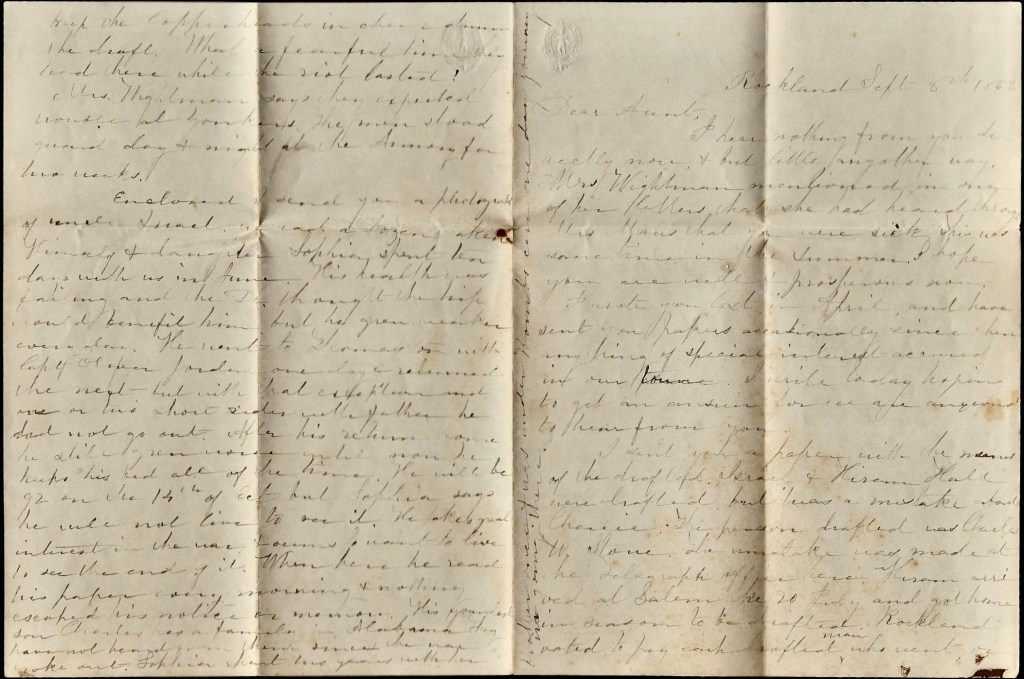
Transcription
Addressed to Mrs. Nancy Stackpole, Pekin, Illinois
Rockland [formerly East Thomaston, Maine] September 8th 1863
Dear Aunt,
I hear nothing from you directly now & but little any other way. Mrs. Wightman mentioned in one of her letters that she had heard through Mrs. Mans that you were sick. This was some time in the summer. I hope you are well & prosperous now. I wrote you last in April and have sent you papers occasionally since when anything of special interest occurred in our town. I write today hoping to get an answer for we are anxious to hear from you.
“The [Copperhead] party in Rockland is made up of a few unprincipled leaders and the ignorant and degraded whom they can control. About six weeks ago, Dr. Rouse—a furious Copperhead—shot a Union man in the street. The excitement was intense for a few minutes & the crowd could hardly be restrained from taking vengeance upon him at once.”
—Name, 8 September 1863
I sent you a paper with the news of the drafted. [My brother] Israel & [brother-in-law] Hiram Hall were drafted but ’twas a mistake about Charlie. The person drafted was Charles W. Stone. The mistake was made at the telegraph Office here. Hiram arrived at Salem the 20th July and got home in season to be drafted. Rockland voted to pay each drafted man who went, or his substitute, $300. Israel & Hiram got substitutes by paying $416 apiece which exempts them for the term of service, three years.
The Maine Farmer, Thursday, 6 Aug., 1863
Have you any patience with this Copperhead Party that has spring up in the North & West to assist the rebels? Were it not for them, I think the rebellion would soon be crushed. The party in Rockland is made up of a few unprincipled leaders and the ignorant and degraded whom they can control. About six weeks ago [on 28 July 1863], Dr. [James] Rouse 1—a furious Copperhead—shot a Union man in the street. The excitement was intense for a few minutes & the crowd could hardly be restrained from taking vengeance upon him at once. He was rescued and taken to the lockup. On his way to Wiscasset the next day, he made his escape from the officer and is over in the British Provinces. Mr. [Cornelius] Hanrahan [1822-1893], though severely wounded, [has] recovered. Some of the Copperheads stood surety for Rouse in the sum of $3,000. They are sure to lose it for he will never dare to come back.
Our fall election takes place soon. We are having mass meetings often. Gen. [O. O.] Howard—the man with the “empty sleeve”—has spoken here. Gen. [Richard] Busteed of New York spoke at Thomaston last week. Thomaston is a Copperhead hole & has been from the first. They voted to pay $300 for each drafted man and keep them at home. Palintic [?] are they not?
You remember the Luman family at the “Point.” Their youngest son Charles has lately been brought home dead. He left here last fall a member of the 28th [Maine] Regiment which went south with Gen. Banks. After the fall of Port Hudson, his time having expired, they came home up the river. Charles was left at Cleveland, Ohio, sick. His father went on to see him but found him dead. Many of the men have died on their return. One was buried yesterday, Morton Snow got through the late battles unhurt. At last account he was in New York to help keep the Copperheads in check during the draft. What a fearful time they had there while the riot lasted! Mrs. Wrightman says they expected worse at Yonkers. The men stood guard day and night at the Armory for two weeks.
Enclosed I send you a photograph of Uncle Israel [Snow]. 2 He had a dozen taken. Himself & daughter Sophia spent ten days with us in June. His health was failing and the doctor thought the trip would benefit him but he grew weaker every day. He went to Thomaston with Capt. Oliver Jordan 3 one day & returned the next but with that exception, not one or two short rides with father, he did not go out. After his return home, he still grew worse until now he keeps his bed all of the time. He will be 92 on the 14th of October but Sophia says he will not live to see it. He takes great interest in the war & seems to want to live to see the end of it. When here he read his paper every morning & nothing escaped his notice or memory. His youngest son Charles has a family in Alabama. They have not heard from them since the war broke out. Sophia spent two years with her brother once and was under Hombs care one day’s journey in going there.
Rockland, Knox county, Maine
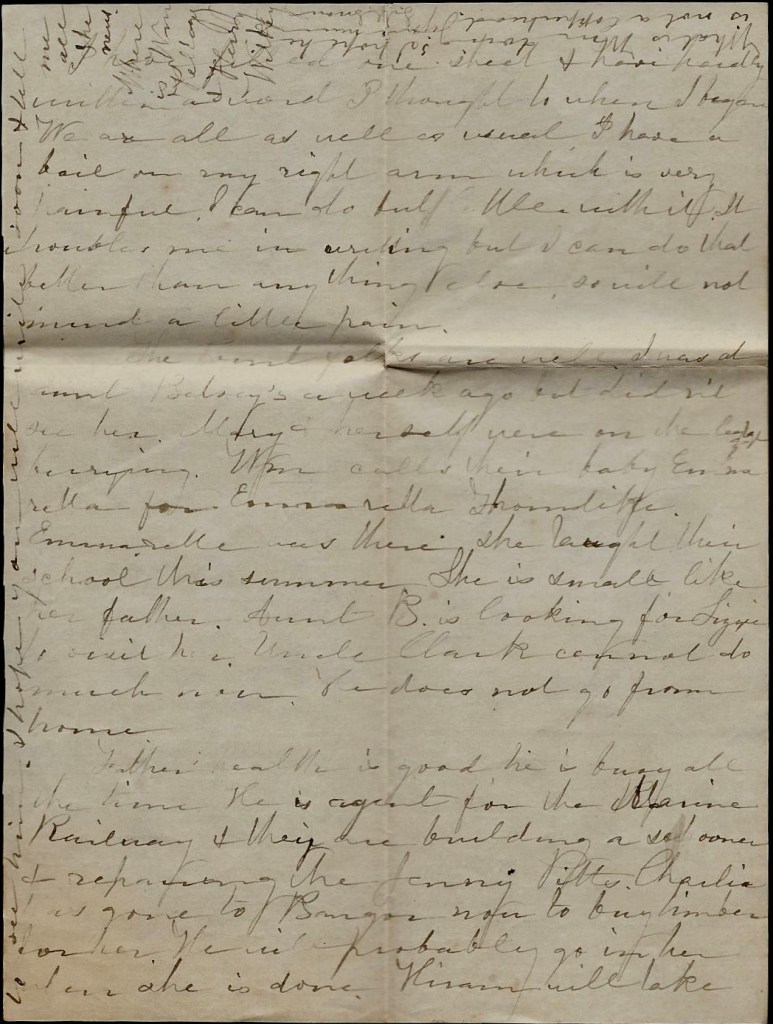
I have filled one sheet and have hardly written a word I thought to when I began. we are all as well as usual. I have a boil on my right arm which is very painful. I can do but little with it. It troubles me in writing but I can do that better than anything else so will not mind a little pain.
The “Point” folks are well. I was at Aunt Betsy’s a week ago but didn’t see her. Mary & herself were on the ledge berrying. William calls their baby Emmarella for Emarella Thorncliff. Emmarella was there. She taught their school this summer. She is small like her father. Aunt Betsy is looking for Lizzie to visit her. Uncle Clark cannot do much now & he does not go from home.
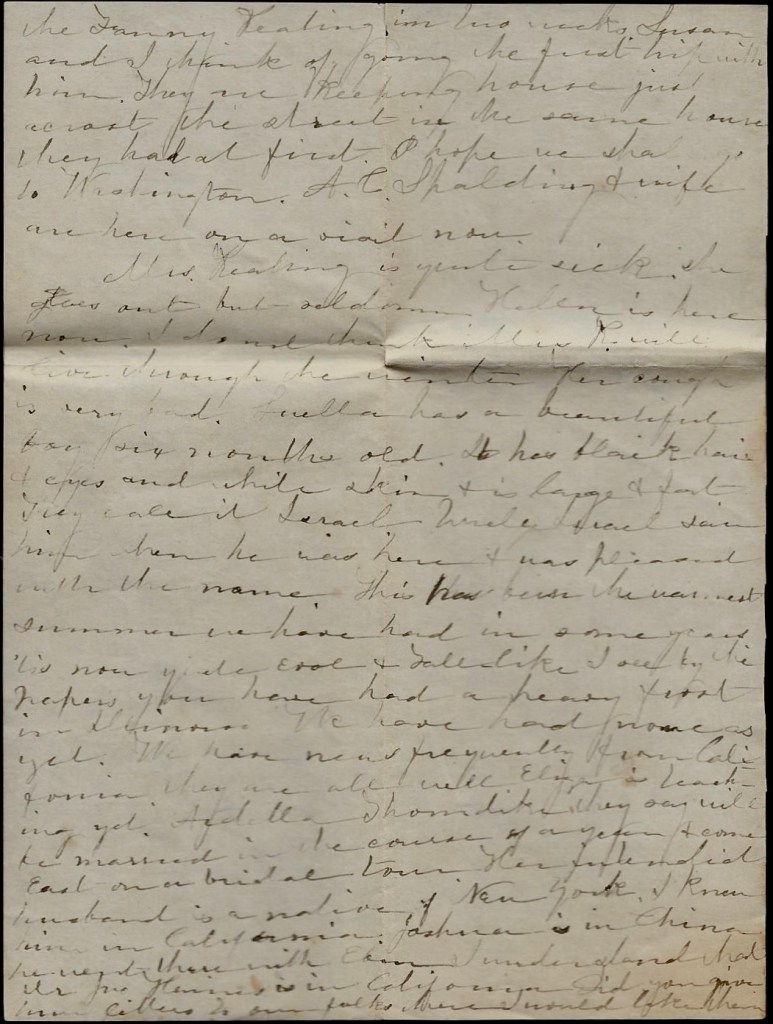
Father’s health is good. He is busy all the time. He is agent for the Maine Railway & they are building a schooner & repairing the Jenny Pitts. Charlie has gone to Bangor now to buy timber for her. He will probably go in her when she is done. Hiram will take the Fanny Keating in two weeks. Susan and I think of going the first trip with him. They are keeping house just across the street in the same house they had at first. I hope we shall go to Washington. A. C. Spalding & wife are here on a visit now.
Mrs. Keating is quite sick. She goes out but seldom. Helen is here now. I do not think Mrs. Keating will live through the winter. Her cough is very bad. Luella has a beautiful boy six months old. It has black hair and eyes and white skin & is large and fat. They call it Israel. Uncle Israel saw him when he was here & was pleased with the name.
This has been the warmest summer we have had in some years. Tis now quite cool and fall like. I see by the papers you have had a heavy frost in Illinois. We have had none as yet. We have news frequently from California. They are all well. [Sister] Eliza is teaching yet. Aidella Thorndike they say will be married in the course of a year & come East on a bridal tour. Her intended husband is a native of New York. I knew him in California. Joshua [Thorndike] is in China. He went there with Ebin. I understand that Mr. John Kinnes is in California. Did you give him letters to our folks there? I would like them to see him. I hope you will write soon & tell me all the news. Where is William Kellogg & Henry Wilkey? What is [your son] William doing? I hope he is not a Copperhead.
Your niece, — L. M. Snow
1 Dr. James Rouse (1821-1878) was enumerated as a physician in Rockland at the time of the 1860 US Census. He was a native of Virginia. He was married to Mary Jane Titus. Though he may have fled to Canada to avoid trial, James apparently returned to the States for he was enumerated as a physician in Calais, Washington county, Maine, in the 1870 US Census. A newspaper clipping from the Portland Press indicates that Dr. Rouse was indicted at the October term of the S. J. Court for Knox county for an assault with intent to kill.
2 Capt. Israel Snow (1771-1863) was the son of Elisha Snow (1739-1832) and Betsy Jordan (1740-1834). Israel died on 15 September 1863 in Bangor, Penobscot, Maine, just a week after this letter was written. His daughter Sophia Maria Snow (1799-1881) appears to have never married.
3 Capt. Oliver Jordan (1790-1879) of Thomaston, Knox County, Maine.
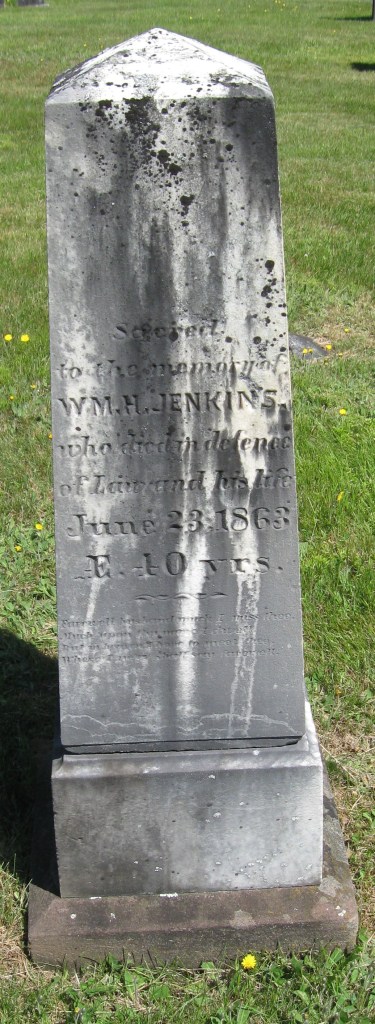
Grave of William H. Jenkins, member of posse killed hunting down deserters who shot local police office in 1863
This letter was written by Henry Lancaster (1825-1865), a farmer in Detroit (Palmyra P. O.), Somerset county, Maine. He was married to Sarah Jane Crosby (1828-1898) in 1851. The letter was addressed to “Brother Byron” but I could not find any family record indicated that Henry had a brother by that name though the records could be incomplete, he may have been a brother in law, or Byron may have been member of the clergy or simply a fellow parishioner.
Henry’s letter describes the fracas caused by two local boys who were described as “deserters” from the army when they went on a spree in Belfast, Waldo county, Maine, stealing horses and robbing stores. A modern-day synopsis of the event appears on the Belfast (Maine) Police Department website which captures the most comprehensive record and I will not repeat it here.
The two deserters were Isaac N. Grant (1837-1863) of Co. G, 5th US Cavalry who deserted on 25 January 1862. He was born in Somerset county, Maine, and had been hiding out from the Provost Marshal for almost a year and a half. The other was Charles E. Knowles (1844-1863) and he deserted on 30 August 1862. Knowles is buried in Rogers Cemetery in Troy.
[Note: This letter is from the personal collection of Richard Weiner and is published by express consent.]
Transcription
Detroit [Somerset county, Maine] June the 26, 1863
Brother Byron,
We have been having a great fight here for a few days past—perhaps you may have heard of it before this time but I will write you the particulars. The case was this. There was two deserters from the army came here & commenced horse stealing & store breaking. They sold their horses in Belfast. The officers came up last Sunday & then the battle commenced. The thieves was well armed, having three revolvers apiece. They fought desperately. The result of that day’s fight was one of the officers [Chief of Police, Charles O. McKenney of Belfast] was mortally wounded & the thieves escaped to the woods.
Monday there was a great turnout to hunt them. Men could be seen marching in every direction with guns in their hands. The names of the thieves was [Isaac N.] Grant of Palmyra & [Charles E.] Knowles of Troy. We did not find them that day.
Tuesday three men from Detroit village went down to the [Sebasticook] river to the point & landed on the other side of the river & came upon them. The thieves rushed upon & fired & killed one of our men dead on the spot. They returned the fire & wounded Grant in the head—put a ball into one ear & out the other. But he then fought desperately. They came to close quarters and fought with the butts of their guns. They killed Grant & beat Knowles so [much] that he died yesterday. The names of the three men was William Jenkins, Lyman Hurd & Joseph Myrick. Jenkins was killed. He was buried yesterday. 1 Sarah and I attended the funeral. Heard is some relation to Mr. Hanscom’s folks. He fought like a tiger. There has been a great excitement here. They think there is more engaged with them. We are all well.
Yours, — H. Lancaster
1 William H. Jenkins (1823-1863) was killed on 23 June 1863. He is buried in the Detroit Village Cemetery beneath a headstone that reads, “Sacred to the Memory of Wm. H. Jenkins who died in defense of Law and his life, June 23, 1863, aged 40 years.”

















 Spared & Shared 23