Category Archives: Mexican War

1847: Francis Markoe, Jr. to James McHenry Boyd

This letter was written by Francis (“Frank”) Markoe (1801-1872), the son of Francis and Sally (Caldwell) Markoe. Following his graduation from Middlebury College in 1823, Markoe studied law in the law office of John Sergeant in Philadelphia and practiced for two years. He then entered government service (1832-1861) serving as Chief, U.S. Consular Bureau and then in the Diplomatic Bureau. He married Mary Galloway Maxey in 1834. He died in Baltimore, Maryland.

An interesting vignette concerning Markoe involves his candidacy for the position as Secretary of the new Smithsonian Institute in Washington D.C. in 1846. The following was said of Markoe:

In his mid-forties, Markoe was a clerk in the Diplomatic Bureau of the State Department, as well as the corresponding secretary of the National Institute for the Promotion of Science, an organization based in Washington and founded with the hope of receiving the Smithson bequest to establish a national museum. Markoe had a botanical collection and was recognized as a mineralogist of some ability. But his most important qualification for the position of secretary was his extensive political connections. He claimed President James K. Polk, as well as current and former members of Congress and cabinet members, among his supporters. His selection would be a sign that the secretaryship was a post to be awarded on the basis of political patronage.

Markoe didn’t get the selection, however. He was passed over for Joseph Henry, a professor of natural philosophy & physics at the College of New Jersey.

Frank wrote the letter to James McHenry Boyd. He was the first husband of Anna Eliza Boyd Barnard (nee Hall). He is mentioned by Fanny Adeline Seward in her 1862-1863 diary as “the groom” when she recounts the unfortunate story of his brief marriage: “the very day of her [Anna Barnard’s] wedding day, while on their tour, the couple stopped at a hotel, in Philadelphia, I believe. Both were preparing for dinner when the groom was stooping over his open trunk and a loaded pistol there went off and killed him!” Boyd died in December 1847.

Transcription

Washington [D. C.]
21 May 1847

Mary & my father got here last night. They propose to go to W. River next Tuesday by railroad to Annapolis.

[George W.] Hughes 1 reached Washington Monday night last, stayed Tuesday & started for W. K. Wednesday morning. He will be back most likely next week, middle or end. My chief object in writing to you now is to impart a kind of secret which you may revolve in your own mind in connection with any remaining ambition you may have on the subject of going to Mexico. The President & [Secretary] Marcy have expressed a wish that he would take command of the Battalion that C. L. Jones expected to command but which was never intended to be given him. Hughes is willing to take it as Lt. Col., drill the body severely here for some time, & then proceed with them by [ ]. I spoke to him of you and he will be charmed if you will go with him. So you must see him as soon as you can. I let you know when he arrives here unless you choose to go down to W. River.

I was aware that something of the sort was in prospect before Hughes returned. When he returned he told me of it & desired me to say nothing about it because he meant to leave it to the President & Marcy to fix it their own way, but I spoke to him in reference to you immediately. Now, however, I think the matter will be generally known because this morning Major Scott, the Navy Agent, told me all about it as a thing known at the Department among many officers and I thought it well to drop you a line.

Hughes was carried to the field of battle Cerro Gordo in an ambulance & lifted into the saddle so he saw all & had a fair chance of being shot, as he was talking to General Scott when a ball knocked off a mule’s head close by them.

Henry, this letter writing is so unsatisfactory compared with talking. So find your way here somehow or other soon. I hope your knee is better. What do you hear from James & how is he? I got a letter two days ago from Ramsey in answer to the papers, &c. I sent him some time ago. He repeats your monstrous notion about the [ ] being Principles.

In haste. Affectionately yours, — Francis Markoe, Jr.

P. S. If you have any Revolutionary autographs, or such as you may have got in Europe & England [ ] may bring or send me some.

I. McH Boyd, Esq.

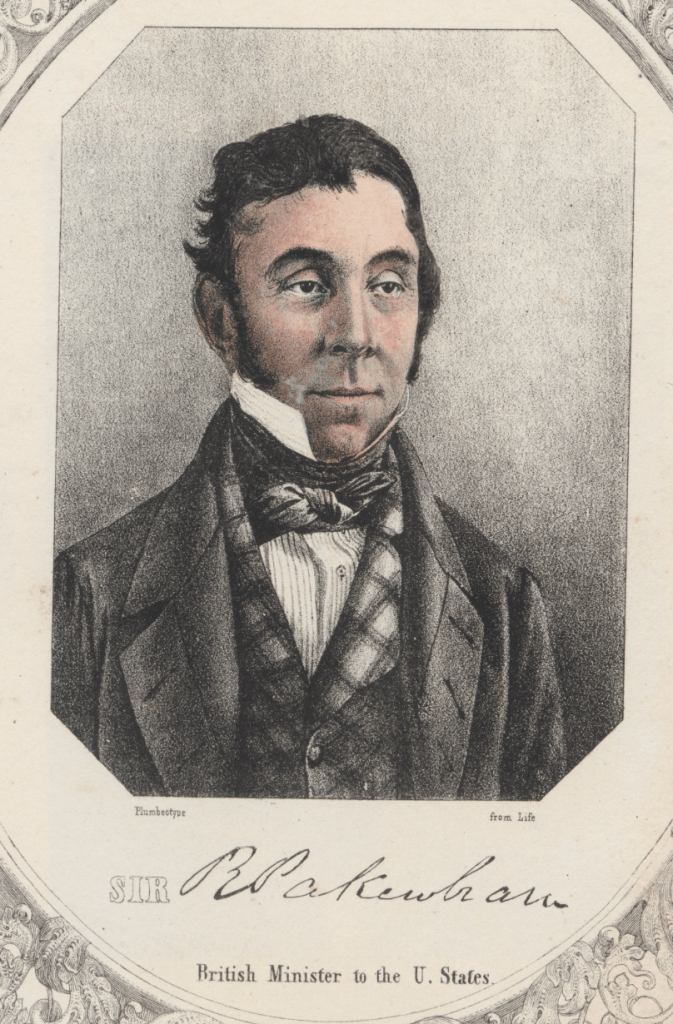
I have opened this letter to say that Mr. [Richard] Pakenham has just called in at my office to pay his final adieu. He goes to Baltimore tomorrow and says he will make it a point to see you & will inquire of your whereabouts from W. McLane whom he will see. He takes with him all our best feeling & wishes & hopes for a return to this country. Has leave of absence for two years & expects to return & will no doubt, unless promoted to some higher post.

1 George Wurtz Hughes (1806-1870) attended the United States Military Academy at West Point from 1823 to 1827, having been appointed by Caleb Baker, but was not commissioned and instead became a civil engineer in New York City. In 1829, Hughes began to work for the New York State Canal Commission. Hughes was appointed to the United States Army on July 7, 1838, as captain of Topographical Engineers. In 1840, he was sent to Europe by the War Department on an inspection tour of mines, public works and military fortifications. Hughes subsequently served in the Mexican–American War, acting as chief engineer on the staff of General John E. Wool in 1846 and General William J. Worth in 1847. He was brevetted major of Topographical Engineers on April 18, 1847 for gallant and meritorious conduct during the Battle of Cerro Gordo. Hughes was promoted to lieutenant colonel of a regiment of Maryland and District of Columbia Volunteers on August 4, 1847, and to colonel on October 1, 1847. In December 1847, he was appointed civil and military governor of the Department of Jalapa and Perote in Veracruz. Hughes was later brevetted lieutenant colonel of Topographical Engineers on May 30, 1848 for meritorious conduct while in Mexico. He was honorably mustered out of the volunteer service on July 24, 1848. From 1849 to 1850, he served as chief engineer of the Panama Railroad, resigning from the regular army on August 4, 1851.
1847: Alfred Norman Proctor to Albert Edgel Proctor

The following letter was written by 24 year-old Alfred Norman Proctor (1822-1901), the son of Nicholson Broughton Proctor (1788-1866) and Lucy Bond (1788-1837) of Essex county, Massachusetts. He wrote the letter to his brother Albert Edgel Proctor (b. 1824).

Alfred was working in the US Naval Yard in Charleston under the direction of the yard’s blacksmith in the Spring of 1847 when he embarked on a journey to Mexico to meet up with the Massachusetts regiment at Matamoras only to arrive there and discover that they had left for Monterey. He decided to follow after them but became seriously ill and so returned to the States. He returned to New Orleans and eventually took a job as a Civil Engineer at the Navy Yard in that city.

This interesting letter was written while Alfred was enroute to Mexico. He describes the processions honoring returning veterans of the War with Mexico which was rapidly drawing to a close—including a description of the funeral procession transporting the bodies of Col. William McKee and Lt. Col. Henry Clay, Jr. from the army to the steamer to be transported home. Both were killed in the Battle of Buena Vista almost four months earlier. The detailed descriptions of the uniforms of Col. Doniphan’s Missourians is priceless.

Alfred’s service record during the Civil War can be found on Find A Grave at Col. Alfred Norman Proctor.

Transcription

New Orleans, [Louisiana]
June 18, 1847

Dear Brother,

I suppose by this time that you have received my last and are anxiously looking for another. I left Pensacola on the 9th for a short pleasure trip, &c., and arrived here on the 11th in good health. I had a very hard ride for about 60 miles on the way—that is, from Pensacola to Mobile in the stage. The road was very rough indeed. I left Pensacola at half past 4 p.m. and arrived at Mobile at 11 on the next day, kinder tired out. I tried my best to get some sleep but could not. The way the coach jumped was a caution to Davy Crockett and it was a tight match to keep on my seat some of the time. The whole distance was through the woods.

But as to my visit here, I suppose you would like to know about it. I will not disguise it. I never did nor never will disguise except it be actually necessary. I think of visiting Mexico to see what the soil is made of and see how they look and so on. I expect to leave for the Brazos tomorrow or the day after. I don’t know how long I shall stop there, but probably but a few days. I wish you to write immediately on the receipt of this to Metamoras. I want you to direct. Don’t fill your letter up with humbug and soft soap, but write the news of the day about the Hancock, &c. It will do no good—only fill up the sheet. If I can get employment at that place for $80 or $90 per month, I shall stop. If not, go on. I shall keep you informed.

They are having great times here—processions, &c., &c. The day before I arrived here they had a great reception of the Mississippi Regiment. And the day after I arrived, there was a great procession in honor of the gallant Feud. I saw the coffins that contained the bodies of the Gallant Colonel’s [Henry] Clay [Jr.] & [William R.] McKee & three others. They were drawn on common carriages and were covered with beautiful velvet palls with silver fringe & characters. It was a mournful sight, I can assure you. Every face was downcast. The poor volunteers looked sorrowful enough. The remains were taken on board the boat and they—the living and the dead—left for their homes together. 1

I was on board of the Massachusetts steamer today. There are a number of sick on board of her too weak to be removed. They are from Vera Cruz. I would not go there for anything at the present time. i saw two that died last night & spoke with one that will die before night. I think they are all emaciated from diarrhea. I believe 5 or 6 have died since she arrived. They were laying on the deck with their clothes on with their faces covered with a jacket thrown over & the well men were running about. them as if they were alive. They laid as they died in different parts of the ship.

A Missouri Mounted Volunteer from Doniphan’s expedition

It is getting rather sickly here. 120 died last week but I thank God that I am well as yet & hope & pray that I may still be preserved. I saw among the wounded that arrived last week one poor Lieutenant of the Mississippi Regiment that lost his leg at Monterey; another, a Colonel of the same regiment, lost two of his fingers & was wounded in the hip. I could not help pitying them although they were in excellent good spirits. Col. [Alexander W.] Doniphan’s Regiment arrived yesterday. They are a fine looking set of men—strong and healthy. They have hard looking clothes. Some of them are made of buff leather entirely and without a stitch of thread or a button on them but made together by a twinning, so called, which are pieces of sinew. It is tied together so to look like a fringe at every seam. Others had on velvet pants lined on the inside with buff so that they would not wear against the saddle. Their hair hangs down almost to their waists. I saw a great many trophies which were taken from the Mexicans—cannons, blunderbusses—saddles—blankets, &c. &c. &c.

I met last Saturday with Charles Blodget from Boston. We met in the street—he knew me; I did not him. He has been through the Lakes & come down the [Mississippi] River last Friday. Both arrived on the same day. His health is much better. He thinks of stopping here somewhere in the South. He is fatted up considerably. He sends his respects. I have had a very bad cold for the last two weeks on my lungs but hope to get well soon. I have no more news at present. Your affectionate brother — Alfred N. Proctor

I left my trunk & $77.50 in care of a responsible man—Mr. James Wright at the Navy Yard. I have no thought of joining the regiment but go to fulfill my promises to them to meet them there. It makes me feel mad to think that I am so tied up by bloody relatives that I cannot do as I think best.


1 The Daily Picayune of Sunday, 13 June 1847 reported that “the remains of Col. McKee, Lieut. Col. Clay, Adjutant Vaughan, Capt. Willis and Private Trotter, of the 2d Kentucky Regiment, who fell at Buena Vista, were yesterday escorted by the Orleans Battalion of Artillery, the staff of the Legion, the commanders of the military corps and a large concourse of citizens, from the Arsenal to the steamer Ringgold. The funeral cortege moved from the Place d’Armes at 4 o’clock, and passed through Chartres Canal and St. Charles streets to Poydras street down which it marched to the Levee. All the vessels in the river carried their flags at half mast during the day, and minute guns were fired whilst the procession was in motion…The bodies were carried upon cannon carriages covered with black velvet and appropriate emblems of mourning…As the solemn pageant passed through our streets, many a sigh was heaved for the brave spirits whose mouldering dust is all that is left of them on earth, except the memories of their virtues and their gallant deeds—many a tear was shed for the hearths made desolate by the chances of war. The bodies were deposited in the Ringgold at 6 o’clock and at 7 she dropped down to the Place d’Arms where a salute was fired…”

“There is no glory to be gained in this war.”

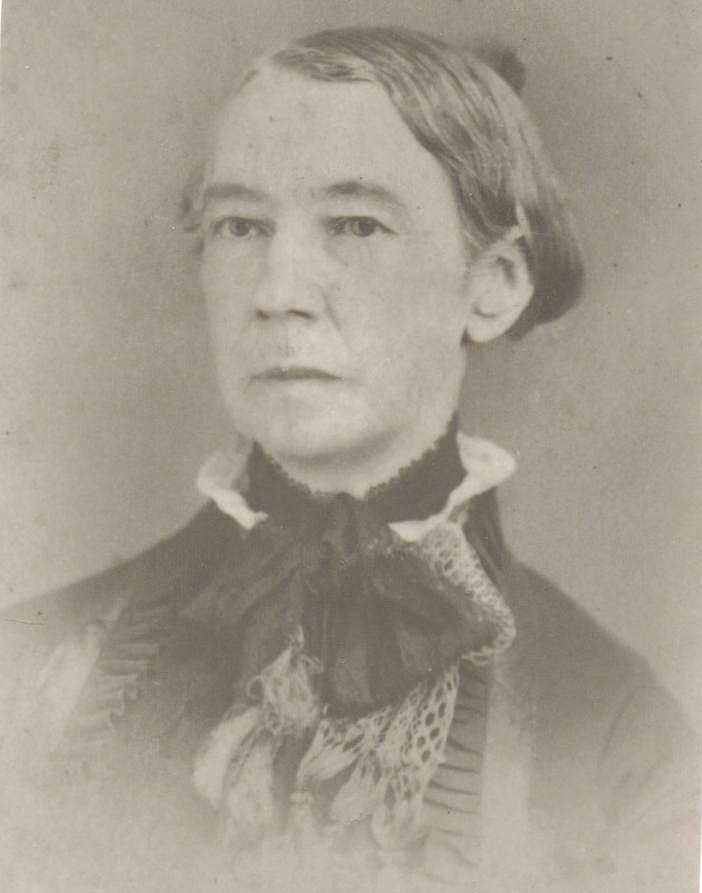
Mary Mitchell (Gatlin) Knox later in life

This letter was written by 35 year-old Mary Mitchell (Gatlin) Knox (1811-1890), the wife of Dr. Franklin Knox (1810-1895) of St. Louis, Missouri. Mary and Franklin had several children, all born in St. Louis: Sarah (“Sallie”) Knox (1838-1926), Emma Knox (1840-1840); Eliza Knox (1842-1842), Annie Knox (1845-1853), Franklin Knox, Jr. (1848-1848), and Richard Gatlin Knox (1851-1914).

Mary grew up in Kinston, Lenoir county, North Carolina, the daughter of John Gatlin and Susannah Caswell. She married Franklin Knox there in May 1837. In her letter, Mary mentions her brother, Richard Caswell Gatlin (1809-1896) who graduated from West Point in 1832 and served as an infantry officer in the War with Mexico (was wounded at the Battle of Monterey) and later on frontier duty in Indian Territory. In 1861, Richard resigned his commission and was appointed Colonel in the CSA. He was then promoted to Brigadier General in August 1861 and was assigned command of the Department of North Carolina and the coast defenses of the State.

Before the 1860 US Census, the Knox family had relocated to Crescent City, Del Norte, California, where Franklin worked as a physician.

Mary wrote the letter to Mary Strachan (Barret) Reavis (1812-1870), the wife of Judge Turner Reavis (1812-1872) of Gainesville, Sumter county, Alabama.

Transcription

St. Louis [Missouri]
March 10th 1847

Dear Mrs. Reavis,

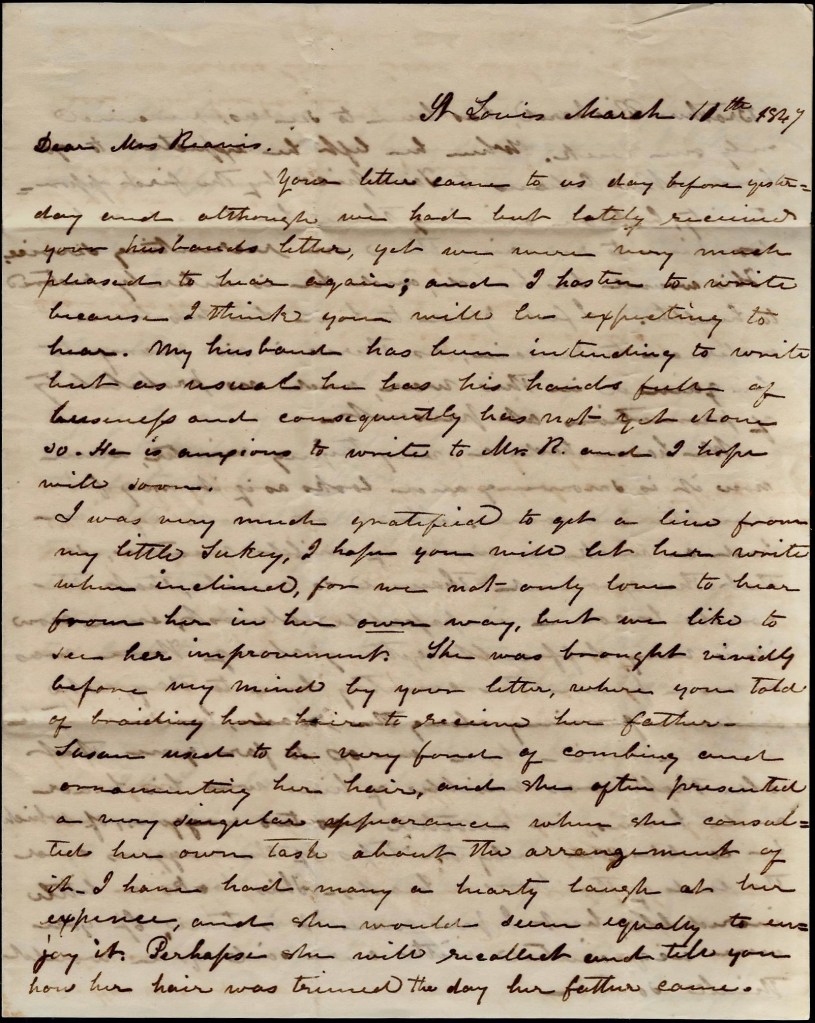
Your letter came to us day before yesterday and although we had but lately received your husband’s letter, yet we were very much pleased to hear again; and I hasten to write because I think you will be expecting to hear. My husband has been intending to write but as usual he has his hands full of business and consequently has not yet done so. He is anxious to write to Mr. Reavis and I hope will soon.

I was very much gratified to get a line from my little Sukey. I hope you will let her write when inclined for we not only love to hear from her in her own way, but we like to see her improvement. She was brought vividly before my mind by your letter, where you told of braiding her hair to receive her father. Susan used to be very fond of combing and ornamenting her hair, and she often presented a very singular appearance when she consulted her own task about the arrangement of it. I have had many a hearty laugh at her expense, and she would seem equally to enjoy it. Perhaps she will recollect and tell you how her hair was trimmed the day her father came.

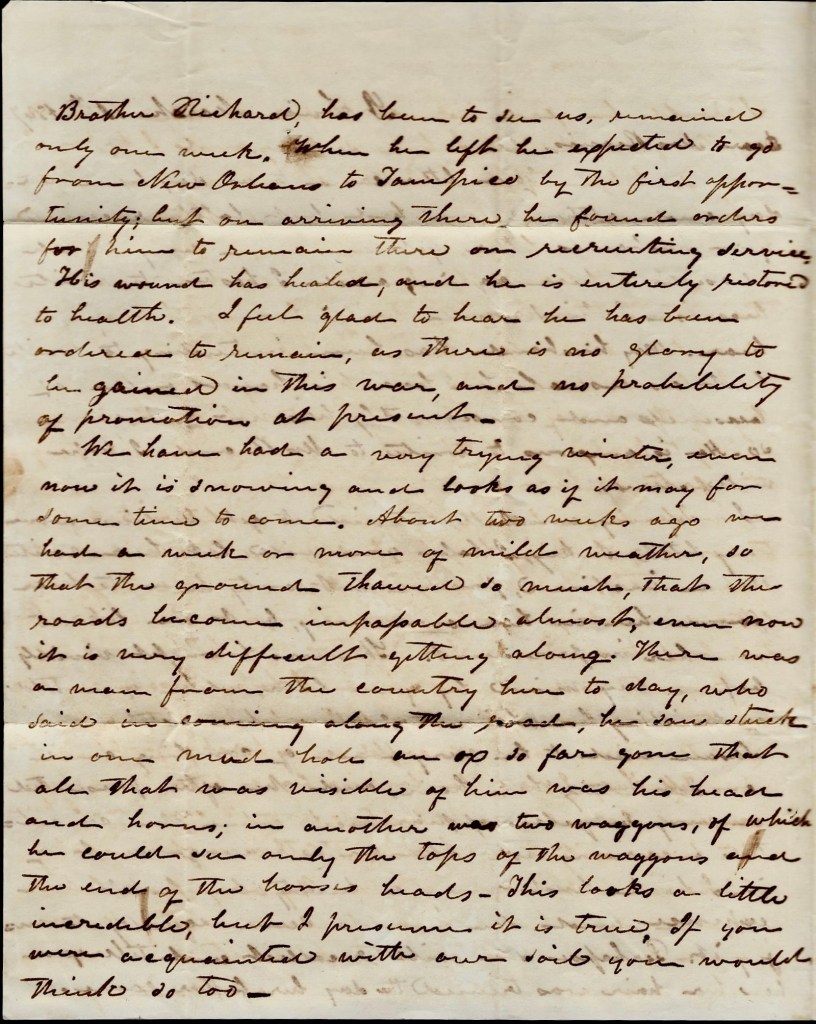
Brother Richard has been to see us, remained only one week. When he left he expected to go from New Orleans to Tampico by the first opportunity; but on arriving there he found orders for him to remain there on recruiting service. His wound has healed and he is entirely restored to health. I feel glad to hear he has been ordered to remain as there is no glory to be gained in this war and no probability of promotion at present

We have had a very trying winter. Even now it is snowing and looks as if it may for some time to come. About two weeks ago we had a week or more of mild weather, so that the ground thawed so much that the roads became impassable almost. Even now it is very difficult getting along. There was a man from the country here today who said in coming along the road, he saw stuck in one mud hole an ox so far gone that all that was visible of him was his head and horns; in another was two wagons and the end of the horses heads. This looks a little incredible but I presume it is true. If you were acquainted with our soil, you would think so too.

I should be glad indeed to spend next winter with you, should I live so long, and I hope it may so happen that I shall spend a few weeks with you. Mr. Reavis incited me to come this spring and was kind enough to offer to meet me at Orleans, but it will not be convenient for me to leave home this summer. Should we all live until another summer, I shall feel as if I ought to go away and try if the air of another climate will do anything to keep my little Annie from sharing the fate of her other sisters of the same age.

Tell Susan I shall commence a letter to her tomorrow, it being her birthday, and send it sometime this month. Sarah is anxious to write and began a letter some days ago, but she thought it was written too bad to send. She has written very little and does not write so well as Susan. I hope Susan will write like her father. Her mother’s hand writing was no better than mine. We could never boast of good penmanship. Tell Lucy I shall be looking for a letter from her soon and I should be delighted soon to see her. I have quite a curiosity to see her—her father so often spoke of her while he was with us.

My very best love to your dear husband and receive the same from your affectionate friend. — M. M. Knox

1846: Lyman Redfield to Pardon Redfield

This incredible letter was written by Lyman Redfield (1821-1847), the son of Pardon Stevens Redfield (1779-1856) and Achsah Evans (1787-1862) of Bainbridge, Chenango county, New York. Lyman was a lawyer by profession and was 24 years old in April 1846 when the hostilities broke out on the US border with Mexico in a dispute over disputed territory. Lyman joined Co. H as a private in the 1st Kentucky Cavalry that served as Gen. Wool’s body guard in the war. He died at Metamoras on 16 January 1847, most likely from disease.

“The 1st Kentucky Mounted Volunteers traveled by steamboat from Louisville to Memphis, Tennessee, and then cross-country to San Antonio, Texas. Like many units, the regiment suffered various illnesses on its journey to the seat of war. Although the Kentuckians missed out on many of the early battles, they fought in what was probably the most dramatic battle of the war, Buena Vista. 

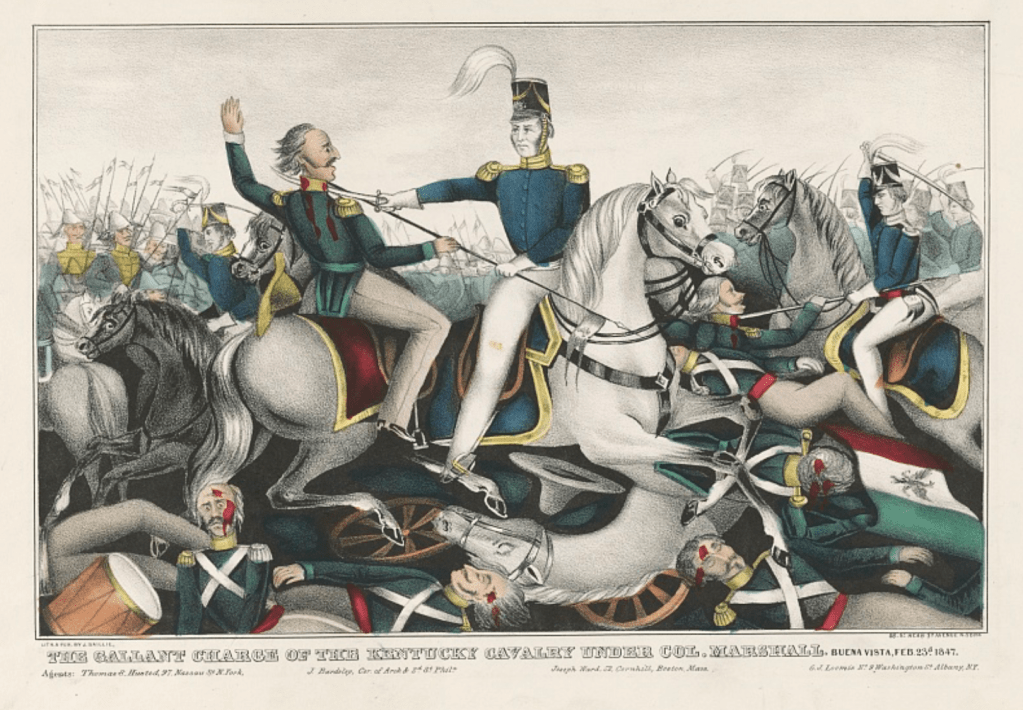
“During the second day of the Battle of Buena Vista, Mexican Gen. Santa Anna attacked, forcing U.S. troops to fall back in disorder. During the Mexican offensive, the 1st Kentucky Mounted Volunteers – fighting on foot – became isolated and was forced to retreat. During the withdrawal, John’s uncle, Alexander Morgan, was killed. The Kentuckians regrouped, mounted their horses, and charged the attacking Mexican force, and, with the support of infantry, drove the enemy back. During the battle the 1st Kentucky Mounted lost 27 dead and 34 wounded. Gen. Zachary Taylor extolled the regiment, noting that “The Kentucky Cavalry, under Colonel Marshall, rendered good service dismounted, acting as light troops on our left, and afterwards, with a portion of the Arkansas Regiment, in meeting and dispersing the column of cavalry at Buena Vista.”

“The 1st Kentucky Mounted Volunteers would not see combat again in the Mexican American War. Their year-long enlistment ended and they were mustered out in New Orleans in June 1847.” [John Hunt Morgan, by Tim Talbott]

In this letter to his older brother Pardon Redfield (b. 1816), a tinner by trade, Lyman shares his impressions of Little Rock, Arkansas, while enroute to San Antonio, Texas. “Horse thieves, robbers, gamblers, and loafers of every description form the majority of the inhabitants,” he believed.

The 1st Kentucky Cavalry in the Battle of Buena Vista, 23 February 1847

Transcription

Little Rock, Pulaski county [Arkansas]
July 28, 1846

Dear Brother,

While the sun is shining with a heat which you in New York can scarcely form an idea, I will try to give you a glimpse of myself and things around me. We are now encamped on an eminence back of the town 1 of Little Rock, Capitol of Arkansas, and 150 miles from Memphis where I wrote to you about two weeks ago. Our march from that place to this has been extremely slow. The country intervening is swampy, abounding in bear of the largest size, at least I should think so if their track, which were seen in great numbers on each side of the road, could at all indicate the size of the animal. We saw several hogs that bore evident marks of having narrowly escaped bruins pork barrel and the inhabitants complained that his bearship was making such havoc among their swine as to deprive them of pork.

The rattlesnake, cotton mouth, copperhead, viper, and others—the names of which I cannot remember—infest the country and render high topped boots quite convenient to the pedestrian.

Little Rock is a mean place for the capitol of a state. As I approached the town, I was astonished at the wildness of the country. Indeed, the wild beast howls up to the very steps of the State House. Business, education, and morals are in a low state. The villain holds up his head unabashed and lust and debauchery holds their revels unawed by law or publick opinion. The grog shop with its never failing attendants is found on every corner. Horse thieves, robbers, gamblers, and loafers of every description form the majority of the inhabitants.

“Little Rock is a mean place for the capitol of a state. As I approached the town, I was astonished at the wildness of the country. Indeed, the wild beast howls up to the very steps of the State House.”

—Lyman Redfield, 1st Kentucky Cavalry, 28 July 1846

We are now on the border of a wild country. Our march to San Antonio will occupy I suppose about six weeks. I shall not be able to write you another letter until we reach San Antonio. If you will write to San Antonio, I shall probably receive the letter on my arrival there.

I am in excellent health and my little war steed in good condition for fighting or traveling. Give my respects to all my friends. Tell Father and Mother that I am getting quite fat and rosy cheeked and that when I return next spring to see them, I suppose they will not know me. The southern climate agrees with my constitution.

With fraternal regards, I remain your brother, — L. Redfield


1 Most likely the troops were encamped on the ridge south of Little Rock where the Federal government had recently completed the construction of the Little Rock arsenal. The arsenal was constructed at the request of Governor James S. Conway in response to the perceived dangers of frontier life and fears of the many Native Americans who were passing through the state on their way to the newly established Indian Territory.

1846: Nelson N. Clark to William W. Reynolds

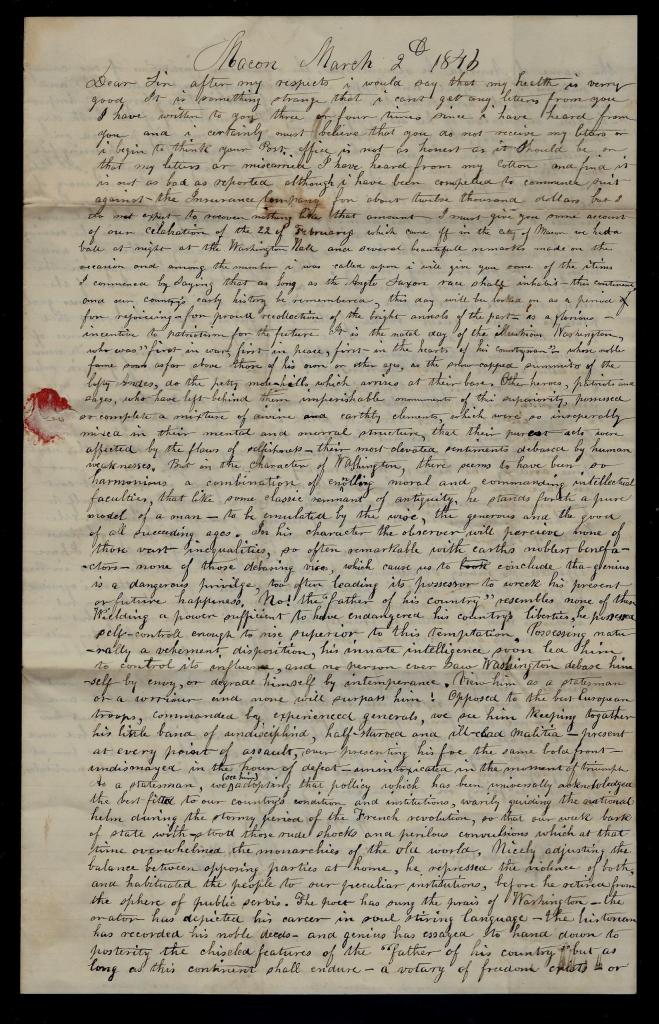
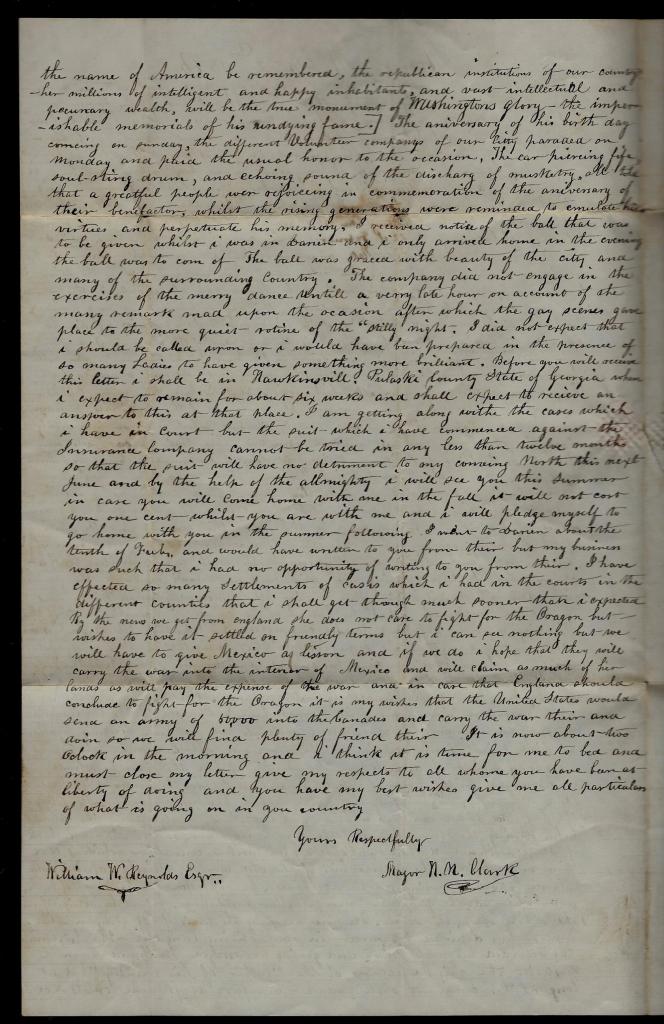
The signature on this letter appears to read “Major N. N. Clark” but I have not been able to identify him definitely. There was a Brevet Major N. N. Clark (sometimes written in N. S. Clark in military records) that led the expedition of the U. S. Army’s 2nd Infantry into Maine during the First Aroostook War and who oversaw the construction of the Hancock Barracks on our northern border. This same individual claimed to be residing in Shelburne, Chittenden county, Vermont, in October 1829 when he requested a 1 year furlough from the military to visit southern France for the purpose of regaining his health. I can’t be certain if he is the same Nelson N. Clark who was a 2nd Lt., 4th Infantry in 1829. I feel there must be a connection, however, as he signed the letter “Major” in this letter even though it appears he was not longer in the military but was employed as a lawyer working out of Macon, Georgia—prominent enough in the community to have been asked to give a speech at the Washington’s Birthday Ball in Macon in 1846. He may have been employed as a lawyer for a cotton factor. He clearly had ties to the North though he was no abolitionist.

In his letter, Clark shares with his friend the content of the extemporaneous speech he gave at the Washington Birthday Ball, extolling the many virtues of George Washington, including having “habituated the people to our peculiar institutions” prior to his leaving office. He then speaks of the potential impeding conflicts with England over the Oregon Territory and with Mexico, particularly with the latter whom he says the U. S. will have to “teach a lesson” and take the war deep into their interior and claim as much land as is needed to pay for the expense of the war.

Clark wrote the letter to William Whitford Reynolds (1816-1876) of Petersburgh, Rensselaer county, New York

Transcription

Macon [Georgia]
March 2nd 1846

Dear Sir,

After my respects, I would say that my health is very good. It is something strange that I can’t get any letters from you. I have written to you three or four times since I have heard from you and I certainly must believe that you do not receive my letters or I begin to think your Post Office is not as honest as it should be or that my letters are miscarried. I have heard from my cotton and find it is not as bad as reported although I have been compelled to commence suit against the Insurance Company for about twelve thousand dollars but I do not expect to recover nothing like that amount.

I must give you some account of our celebration of the 22nd of February [Washington’s Birthday] which came off in the City of Macon. We had a ball at night at the Washington Hall 1 and several beautiful remarks made on the occasion and among the number I was called upon. I will give you some of the items.

I commenced by saying that as long as the Anglo-Saxon race shall inhabit the continent and our early country’s history be remembered, this day will be looked on as a period for rejoicing—for proud recollection of the bright annals of the past—as a glorious incentive to patriotism for the future. It is the natal day of the illustrious Washington who was “first in war, first in peace, first in the hearts of his countrymen”—whose noble fame soars as far above those of his own or other ages as the snow-capped summits of the loft Andes to the petty molehills which arises at their base. Other heroes, patriots and sages, who have left behind them imperishable monuments of this superiority, possessed so complete a mixture of divine and earthly elements, which were so inseparably mixed in their mental and moral structure, that their purest acts were affected by the flaws of their selfishness—their most elevated sentiments debased by human weaknesses.

But in the character of Washington there seems to have been so harmonious a combination of ennobling moral and commanding intellectual faculties, that like some classic remnant of antiquity, he stands forth a pure model of a man, to be emulated by the wise, the generous, and the good of all succeeding ages. In his character, the observer will perceive none of those vast inequalities so often remarkable with earth’s noblest benefactors, none of those debasing vices, which cause us to conclude that genius is a dangerous privilege, too often leading its possessor to reek his present or future happiness. No! the “father of his country” resembles none of these. Wielding a power sufficient to have endangered his country’s liberties, he possessed self-control enough to rise superior to the temptation. Possessing naturally a vehement disposition, his innate intelligence soon led him to control its influence and no person ever saw Washington debase himself by envy, or degrade himself by intemperance. View him as a statesman or a warrior and none will surpass him!

Opposed to the best European troops commanded by experienced generals, we see him keeping together is little band of undisciplined, half-starved and ill-clad militia, present at every point of assault, ever presenting his foe the same bold front, undismayed in the hour of defeat, unintoxicated in the moment of triumph. As a statesman, we see him adopting that policy which has been universally acknowledged the best fitted to our country’s condition and institutions, warily guiding the national helm during the stormy period of the French Revolution, so that our weak bark of state withstood the monarchies of the Old World. Nicely adjusting the balance between opposing parties at home, he repressed the violence of both and habituated the people to our peculiar institutions, 2 before he retired from the sphere of public service. The poet has sung the praises of Washington—the orator has depicted his career in soul stirring language—the historian has recorded his noble deed—and genius has essayed to hand down to posterity the chiseled features of the “father of his country,” but as long as this continent shall endure, a votary of freedom exists, or the name of America be remembered, the republican institutions of our country, her millions of intelligent and happy inhabitants, and vast intellectual and pecuniary wealth, will be the true monument of Washington’s glory—the imperishable memorials of his undying fame.

The anniversary of his birthday coming on Sunday, the different volunteer companies of our city paraded on Monday and paid the usual honor to the occasion. The ear piercing-fife, soul-stirring drum, and echoing sound of the discharge of musketry. all told that a grateful people were rejoicing in commemoration of the anniversary of their benefactor, whilst the rising generations were reminded to emulate his virtues and perpetuate his memory.

I received the notice of the ball that was to be given whilst I was in Darien and I only arrived home in the evening the ball was to come off. The ball was graced with beauty of the city and many of the surrounding country. The company did not engage in the exercises of the merry dance until a very late hour on account of the many remarks made upon the occasion, after which the gay scenes gave place to the more quiet routine of the “stilly night.” I did not expect that I should be called upon or I would have been prepared in the presence of so many Ladies to have given something more brilliant.

Before you shall receive this letter, I shall be in Hawkinsville, Pulaski county, State of Georgia, where I expect to remain for about six weeks and shall expect to receive an answer to this at that place. I am getting along with the cases which I have in court but the suit which I have commenced agains the insurance company cannot be tried in any less than twelve months so that the suit will have no detriment to my coming North this next June and by the help of the Almighty, I will see you this summer. In case you will come home with me in the fall, it will not cost you one cent whilst you are with me and I will pledge myself to go home with you in the summer following. I went to Darien about the tenth of February and would have written to you from there but my business was such that I had no opportunity of writing to you from there. I have effected so many settlements of cases which I had in the courts in the different counties that I shall get through much sooner than I expected.

By the news we get from England, she does not care to fight for the Oregon [territory] but wishes to have it settled on friendly terms, but I can see nothing but we will have to give Mexico a lesson and if we do, I hope that they will carry the war into the interior of Mexico and will claim as much of her lands as will pay the expense of the war. And in case that England should conclude to fight for the Oregon [territory], it is my wish that the United States would send an army of 50,000 into the Canades and carry the war there and doing so, we will find plenty of friends there.

It is now about two o’clock in the morning and I think it is time for me to bed and must close my letter. Give my respects to all whom you have been at liberty of doing and you have my best wishes. Give me all particulars of what is going on in your country.

Yours respectfully, — Major N. N. Clark

[to] William W. Reynolds, Esqr.


1 Washington Hall was completed in February 1827 and was located on the south corner of Mulberry and Second Streets. It was destroyed by a fire in September 1855 with several other structures on Mulberry Street.

2 “Peculiar institution” was a euphemistic term that white southerners used for slavery. John C. Calhoun defended the “peculiar labor” of the South in 1828 and the “peculiar domestick institution: in 1830. Ther term came into general use in the 1830s when the abolitionist William Lloyd Garrison began to attack slavery. [Enclopedia.com]

1847-48: John L. Sample to William Burgher Howard

These two Mexican War letters were written by John L. Sample (1825-Bef1852) who enlisted in Co. B, 16th US Infantry in April 1847 and was discharged on 7 August 1848. He was described at that time as standing 5 foot 10 inches tall, with blue eyes and dark hair.

John married Sarah A. Elizabeth Jenkins (b. 1829) on 27 November 1849.

He wrote the letters to his cousin, William Burgher Howard (1814-1869) of Benton, Marshall county, Kentucky. William was the son of Stephen Howard (1785-1861) and Mary (“Polly”) M. Burgher (1791-1871)

[These two letters come from the private collection of Adam Ochs Fleischer and are published on Spared & Shared by express consent.]

Letter 1

In camp on the Rio Grande
3 miles from [ ]
July the 30th 1847

Dear Cousin.

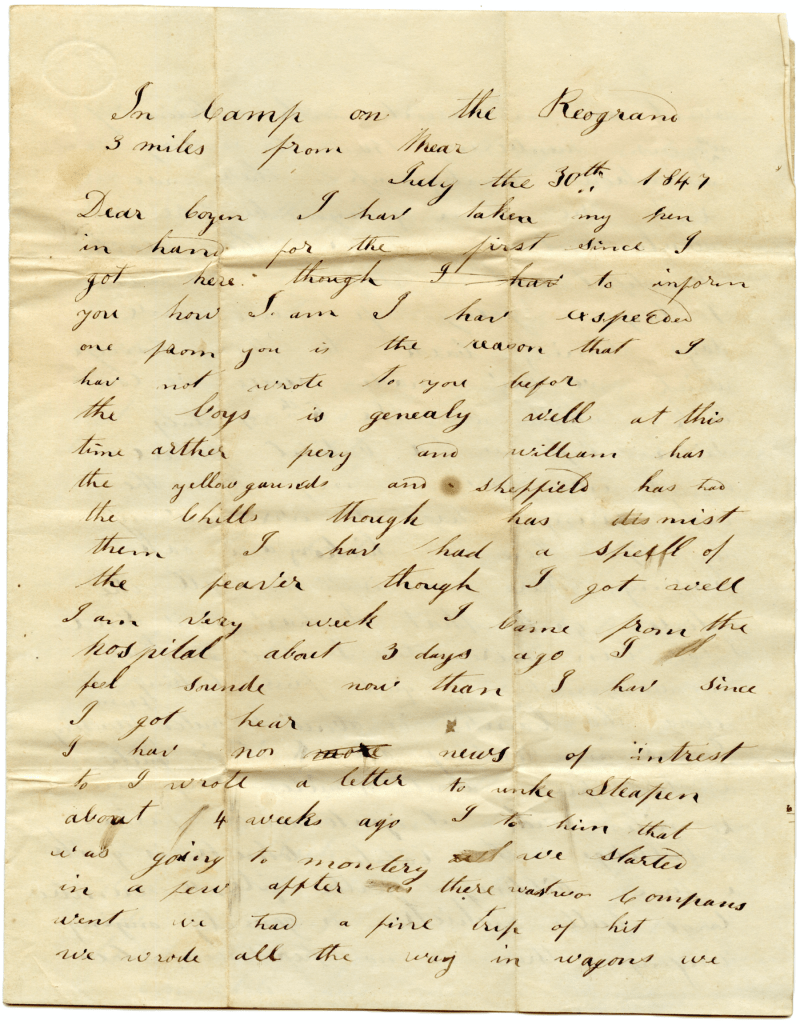
I have taken my pen in hand for the first since I got here to inform you how I am. I had expected one from you is the reason that I have not wrote to you before.

The boys is generally well at this time. Arthur, Perry and William has the yellow jaundice and Sheffield has had the chills though has dismissed them. I have had a spell of the fever though I got well. I am very weak. I came from the hospital about three days ago. I feel sounder now than I have since I got here.

I have no news of interest to [write]. I wrote a letter to Uncle Stephen about 4 weeks ago. I [wrote] to him that [we] was going to Monterrey. We started in a few [days] after. There was two companies went. We had a fine trip of it. We rode all the way in wagons. We went as an escort with a train of wagons numbering 130. It is very mountainous country up there. We could see them 4 days before we would get to them. They look beautiful at a distance. We was 9 days going up and six days coming back to this camp which we had made since we came back—which was the 5th of July.

Taylor’s camp is as beautiful place as I ever saw in my life. The best springs that I ever saw in my life. There is hickory and oak growing there and is all the native growth that I have saw since I have been here.

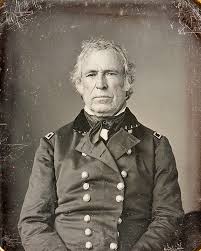
Zachary Taylor, “Old Rough and Ready”

I saw old Ruff and Ready. He is quite [a] fine looking old fellow. The camp is about 4 miles form Monterrey and it is quite a large place—about 4 miles long and 2 miles wide. It’s quite an old fashioned buildings. The Catholic Church is quite a fine building with quite a number of large bells which is generally annoying ringing. There is no profession here.

We have not much news here at this time though what we have is favorable for peace though you can tell more about what is going on than I can for the army is the worst place to get correct news that I ever was in my life. Some days you will hear that peace is made and the boys will mightily whoop it up, and then we will hear that the Mexicans is recruiting and they will be much down at the heel though they will get over it.

I have no more news at present but I want you [to] write all chances. I think that you have almost forgot me as you have never wrote to me since I left. I want you to tell John to wrote and all my friends. I got a letter from [your brother] Alfred to Henry. You had [not] heard of the death of Henry which we regret very much. He died on the 13th of June. I wrote to Hampton a few days ago. I heard that you was a candidate for constable place, Hampton for the Magistrate place. I want you to write how you come out as I heard that there was a good number running. Send Mr. Smith’s folks word that Charley is well and also Mr. Miller’s that William is well. Nothing more at present. Give my best respects to all. — J. L. Sample

N. B. Tell [your brother-in-law] Alfred [Johnston] to write every chance and don’t forget it yourself. Nothing more so remain yours until death, — J. L. Sample


Letter 2

Headquarters, Monterrey, Mexico
January 28, 1848

Dear friend,

I take this opportunity of addressing you with a few lines to let you know that I am well at present and all the boys of your acquaintance is well. And I am in hopes that these few lines may find you enjoying the same blessing though I have heard that you have had a severe spell of sickness though was recovering. I would like very much to hear from you again though I am in hopes that I will get a letter from some of you before many days as I have not had a letter for more than a month. I have looked till I have almost got out of heart.

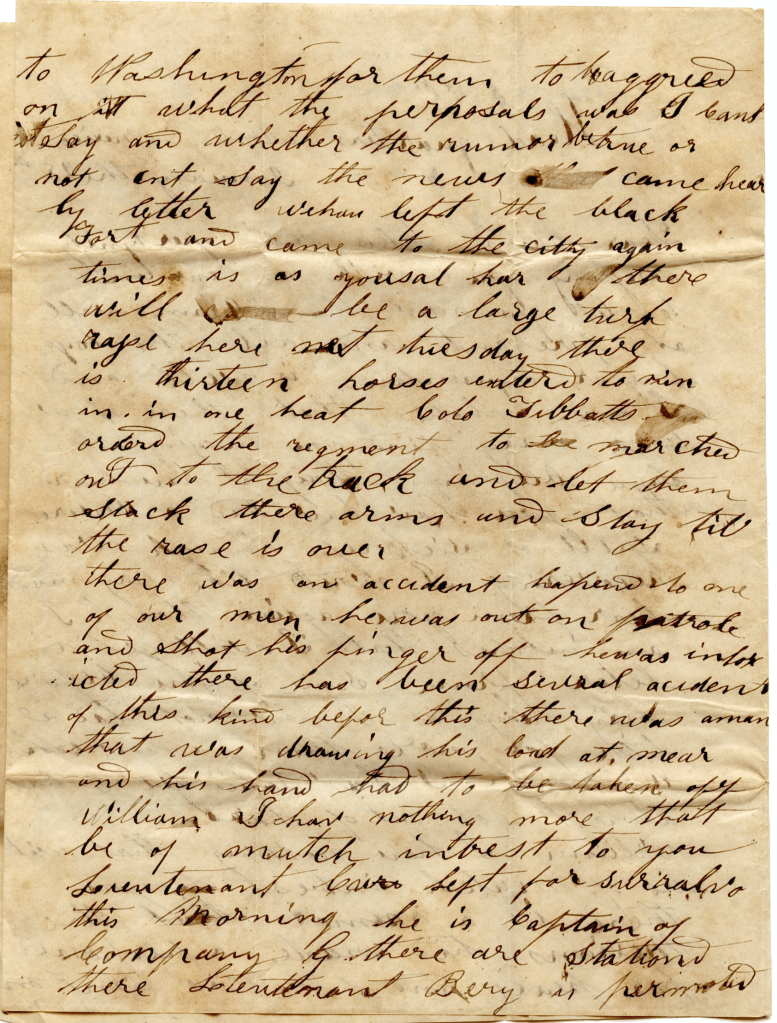
William. I have nothing the would be of much interest to you. There is a rumor that the Mexicans had made a proposal for peace and it was sent to Washington for them to be agreed on it. What the proposal was, I can’t say. And whether the rumor be true or not, I can’t say. The news came here by letter.

Location of Black Fort (B) in relation to Monterrey (from Personal Memoirs of US Grant)

We have left the black Fort and come to the city again. Times is as usual here. There will be a large turf race here next Tuesday. There is thirteen horses entered to run in one heat. Col. [John Wooleston] Tibbatts ordered the regiment marched out to the track and let them stack arms and stay till the race is over.

There was an accident happened to one of our men. He was out on patrol and shot his finger off. He was intoxicated. There has been several accidents of this kind before this. There was a man that was drawing his load at mear [?] and his hand had to be taken off.

William, I have nothing more that [would] be of much interest to you. Lieutenant Cr___ left for Surralvo this morning. He is captain of Company G. that are stationed there. Lieutenant Berry is promoted to our company.

William, I want you to write as often as you can and tell all my friends to. I would [like] to hear from you often. I wrote to [ ] about a week ago. Give my best respects to all. No more at present but remain yours truly, — J. L. Sample


1849: John Wiley Gulick to John Taylor Coit

This letter was written by John “Wiley” Gulick (1829-1898), the son of John V. and Margaret Young (Wiley) Gulick. Wiley was residing with his father in Fayetteville, Cumberland county, North Carolina when he penned this letter in January 1849 (he erroneously datelined it 1848) during the height of Polk’s popularity as President and nearly a year after the close of the War with Mexico. He was married in 1858 to Margaret Jane Sutherland (1835-1879) and moved to Washington county, Texas, where he made a living as a physician. During the Civil War, he served as surgeon of the 18th Texas Infantry, reporting to General Bragg.

Gulick wrote the letter to his friend, John Taylor Coit (1829-1872), the son of John Caulkis and Ann Maria (Campbell) Coit of Cheraw, Chesterfield county, South Carolina. Coit graduated from Princeton University in 1850 and returned to Cheraw where he practiced law. In 1858 he married Catherine Malloy Bunting and relocated to a 320 acre farm straddling Dallas and Collin counties in Texas. During the Civil War, Coit raised a company of cavalry and he became captain of Co. E, 18th Texas Cavalry, later Lt. Col. of the regiment. He was take prisoner with the surrender at Arkansas post in January 1863 and after he was exchanged and returned to his regiment, he was wounded at the Battle of Chickamauga which ended his career as a field officer.

[Note: This letter is from the personal collection of Richard Weiner and is published on Spared & Shared by express consent.]

Transcription

Fayetteville, North Carolina
January 20, 1848 [should be 1849]

Dear Friend,

You may be a little surprised on receiving this epistle from me, but when you consider the intimacy that has subsisted between us for some time, you may take it as a natural consequence. I hope that our intimacy may not be broken by miles but that we may at least think enough of each other as to write occasionally. Your father passed through town on his return from the North. He stayed a short time. I called on him at Mr. McIver’s. He said you had gone to P[rinceton]. Before then I had not heard & that he would like me to write you. So according to promise, as well as inclination, I will make the effort. Hoping that you will have patience in reading until you get through with the above exordium, I will proceed.

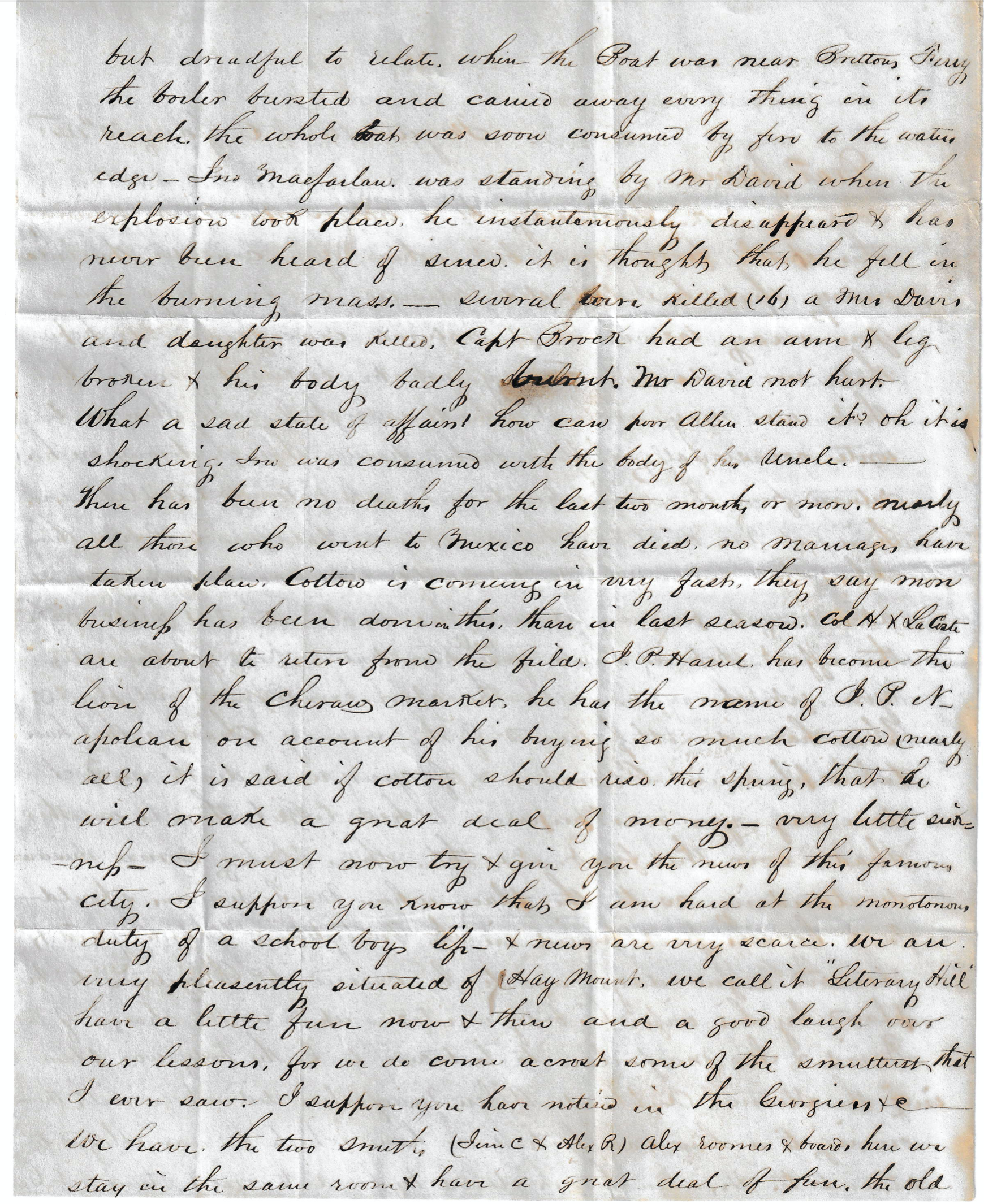
You have doubtless heard of the many changes that have taken place in Cheraw & of your uncle’s death. Such, I dare say, you was prepared to hear. But there is another shade over the first. It is this. There being some misunderstanding as to the place where Mr. [John] Taylor’s remains should rest. He was first buried in the Presbyterian Church yard & removed a few days ago to be carried to Georgetown to be placed by his wife [in the Episcopal Church yard]. His body was taken up & in the charge of [John Taylor’s nephews] Mr. David & John McFarlan to be taken to Georgetown. The body was placed in the steamer Richland. Allen McFarlan did not go with them owing to a law case he had on hand which he was obliged to attend to. He, when through, started by land to meet them at Georgetown, but dreadful to relate, when the boat was [descending the Pee dee River] near Britton’s Ferry, the boiler bursted and carried away everything in its reach. The whole was soon consumed by fire to the waters edge. 1

John McFarlan was standing by Mr. David when the explosion took place. He instantaneously disappeared and has never been heard of since. It is thought that he fell in the burning mass. Several were killed (16). A Mrs. [Henry] Davis and daughter [niece] was killed. Capt. Brock had an arm & leg broken and his body badly burnt. Mr. David not hurt. What a sad state of affairs! How can poor Allen stand it? Oh! it is shocking. John was consumed and the body of his uncle.

There has been no deaths for the last two months or more. Nearly all those who went to Mexico have died. No marriages have taken place. Cotton is coming in very fast. They say more business has been done in this than in last season. Col. H. & LaCoste are about to return from the field. James Presley Harrall has become the lion of the Cheraw market. He has the name of J. P. Napoleon on account of his buying so much cotton (nearly all). It is said if cotton shall rise this spring, that he will make a great deal of money. Very little sickness.

I must now try and give you the news of this famous city. I suppose you know that I am hard at the monotonous duty of a school boy’s life & news are very scarce. We are very pleasantly situated on Hay Mount—we call it “Literary Hill.” Have a little fun now and then and a good laugh over our lessons, for we do come across some of the smuttiest that I ever saw. I suppose you have noticed in the Georgian &c. we have the two Smiths (Jim C. and Alex R.) Alex rooms and boards here. We stay in the same room & have a great deal of fun. The old coon is sitting back reading Polk’s Message—it being the first time he had seen it. 2 He is almost a Democrat & is much pleased with it as far as he has read. Don’t you think it an able & well written document? Don’t you think Polk one of the, or the greatest man of the age? Has he not immortalized himself? I think so.

Alex says he is alive and kicking and that his Uncle John’s Billy don’t grow any smaller. He wishes you much happiness and success, &c.

How do you like General Taylor? Don’t you think he is a pretty Old Coon to be President of the United States? If the northern fanatics should, from their encroachments upon southern rights, cause a civil war, would you not fight? Calhoun is a wheelhorse, is he not? He has taken a bold stand & so ought a southern members. I watch his movements with interest. If you are acquainted with David E. Smith, please give him my regards & kindest shake of the hand. Tell him if he has cut my acquaintance, let him say so & if he does not write me a letter soon, I will be after him.

I shall be glad to hear from you soon & as much news as you can possibly sed. Tell me all about the college & the town people, &c. &c. Believe me to be your friend, — J. Wiley Gulick

To; John T. Coit

1 Lawsuit testimony taken long after the incident revealed that the Richland “left Cheraw for Charleston, taking in Cotton at the landings along the river. On Sunday morning, January 12, 1849, the steamer stopped about two hours at Woodberry’s landing to take in wood. Seven or eight miles below that place, at or near a bend in the river, while the boat was underway, the boiler burst. All the officers, and five or six deck hands, were killed or disabled. Some of the passengers were killed or blown overboard…The anchor was dropped by some person unknown, and the steamer lay about thirty yards from the shore. The boat took fire, which spread so rapidly as to prevent the rescue of several passengers who were not injured by the explosion. All the cotton [1,000 bales] aboard was burnt or destroyed. All the witnesses concurred that, after the explosion, by no efforts of the surviving crew could the cotton have been saved.”

2 Wiley is referring to Polk’s 4th Annual Message to Congress (equivalent to today’s State of the Union Address) which was published in the newspaper in early December 1848. In his message, Polk wrote: “In reviewing the great events of the past year and contrasting the agitated and disturbed state of other countries with our own tranquil and happy condition, we may congratulate ourselves that we are the most favored people on the face of the earth. While the people of other countries are struggling to establish free institutions, under which man may govern himself, we are in the actual enjoyment of them–a rich inheritance from our fathers. While enlightened nations of Europe are convulsed and distracted by civil war or intestine strife, we settle all our political controversies by the peaceful exercise of the rights of freemen at the ballot box.”