Almon Joel Pierce’s Diaries. His Civil War diaries alone are nearly 200,000 words! For comparison, if we were to add Almon’s missing diary of 5.5 months duration, the amount of material describing his Civil War experience would be equal to the size of Gen. Grant’s 2-Volume Memoirs (whichwere not confined to the Civil War alone).
What follows is an astonishing collection of diaries that has captivated me like no other in my journey through primary source materials. These diaries, the gripping tales of Almon Joel Pierce (1842-1900), son of Clark Pierce (1814-1900) and Mary Serepta Royce (1822-1888) from South Haven, Van Buren County, Michigan, beckon with their incredible detail. Almon wasn’t just a writer; he was a relentless chronicler of life. For nearly the entire second half of the 19th Century, he penned daily entries that reveal his deepest thoughts and experiences. I have poured over ten of these diaries, starting in April 1861 and wrapping up in March 1865—a staggering four-year chronicle. Yet, I have chosen to transcribe and unveil only those written during his time in the 19th Michigan Infantry and the Mississippi Marine Brigade, totaling seven diaries. Devoting my spare moments to this labor, I have poured almost seven months into transcribing these seven diaries, which amount to a formidable 190,215 words—an achievement that would demand nearly 17 hours of an average reader’s time to absorb. I hate to think how many hours it took me to transcribe them.
I wish to acknowledge the Michigan’s Military Heritage Museum, and Scott Gerych in particular, for bringing these diaries to my attention and offering me the opportunity to transcribe and publish them on Spared & Shared. They were donated to the museum in December 2022.
Apparently Almon was often asked about his interest in keeping a journal, which prompted him to record the following:
“It might be asked by some whether I ever get tired or feel an inclination to abandon or discontinue this habit which I had begun? I answer that I have not yet, but, on the contrary feel more obliged than ever to continue the practice as long as I can hold the pen. It seems absolutely necessary & unavoidable. I first began the practice on a smaller scale on the first day when we started for Illinois in the spring of 1855…”
The three sons of Clark and Serepta Pierce; Almon (b. 1842), Irving (b. 1844), and Quincy b. 1846). This image would have been taken in the latter half of the 1850s.
In his diary of 1861 we learn that Almon’s younger brother, 15 year-old Quincy, had his leg amputated by Dr. Bolivar Barnum in Schoolcraft, Michigan on June 4th, 1861. He does not reveal how it was that Quincy had injured his leg. An earlier diary would surely contain the answer to this question. It apparently shortened his life, however. Quincy died in 1872.
Almon’s first mention of the war in his diary was on 26 April 1861: “Great war news. Fort Sumpter is in the hands of the South. It was taken 12th and 13th of April. The President of the U. S. has called for 75,000 men to protect the city of Washington.”
Almon reveals his first thoughts of military service in an entry on Sunday, September 22, 1861: “I don’t think there will be much danger of drafting, but if they do, I believe I shall volunteer my precious self. I don’t think that I am qualified for such a glorious duty but I can do something. Oh, if I was only a full grown man.”
Finally, on 14 August 1862, Almon recorded the following: “This day! What shall I say of it? I am on the eve of an epoch, a turning point in my life & which way the scales will turn, the morrow will decide. What stirring, thrilling scenes are just now transpiring throughout the land! how many family ties are and are about to be severed! I introduced the subject of enlisting to Pa for the first time. I wanted to know what his individual opinion was, if he had any. He has been mum, formant, or non curative concerning my liability of having to go. When I introduced the subject & he asked me if I wanted to go, I said yes. He then said that if I want to go that he shouldn’t hinder e, but thought if I wasn’t fit to go, could not stand it, &c. We did not come to any definite conclusion but I took that I shall perform something of the sort in the morn if nothing happens…Mother gives me all the encouragement possible. It’s a holy cause & I should bear my share. Perhaps after I get a thousand miles from home, Father will come to his senses.“
The following day he records:
Almon J. Pierce and his wife Annie in 1888
August 15th 1862. Well the fearful ordeal is past. The first step is taken!! I am now a U. S. man of war! We got underway for South Haven about half past 12 o’clock. Pa and Ma, Al. and Q. in company. Got there just before noon. I went directly to the tavern at the headquarters of the War Department & had not been there two minutes before the two chief officers, Captain [Charles W.] Bigelow and Mr. [Archibald] McLachlin attacked me with a broadside & in about two minutes more, they had me encaptured. They didn’t ask me half a dozen questions. First my age & if I was round, then if I could stand it to travel to which I replied that I once walked 110 miles in one day and went to work again the next. That was enough. Then followed the usual preliminaries of enlistment. I am obliged to sign my name twice. Father stood nearby but did not say a word. He was also required to sign his name. He had some talk with the captain then. Pa had Al. go along to see if he get in as cook but they would not take him. He is bound to go anyhow. He is going to quit work and get ready to go to Rhode Island. I wish that he would go along with us as he would be so much company. I couldn’t get lonesome then. He don’t fancy going as cook anyway… The captain appears a smart energetic man & guess pretty well qualified for the responsible office. I like his appearance. They say that he has served five years in the standing army. I took dinner with the rest at the tavern on Uncle Sam’s expense. The news spread like wild fire about the town that I had enlisted….”
ABOUT THE MISSISSIPPI MARINE BRIGADE
“The concept of a mobile force of mixed combat arms troops borne by modified river boats belonged to BG Alfred W. Ellet Jr. The commander of the Union’s brown water ram fleet had grown disenchanted with the routine duties that were assigned to the surviving rams by the end of 1862 and wanted to move on.
Brig. Gen. Alfred W. Ellet (Dennis Hood Collection)
Wanting to be more actively engaged in the war effort along the river Ellet proposed the formation of the Mississippi Marine Brigade as a means to subdue guerrilla activity along the inland waterways. The idea was accepted by Admiral David Porter and forwarded to Washington for consideration. Desperate for a means to secure extended lines of communication the idea found favor at the War Department. When personal recruiting efforts for his new force lagged Ellet petitioned his old ram fleet benefactor, Secretary of War Stanton, for authority to recruit convalescents from the Union hospitals around St. Louis. As before, Ellet’s radical proposal appealed to Stanton and in December of 1862 he granted the requested permission. Ellet immediately sent two recruiters, CPT James Crandall and CPT William Wright, to scour military hospitals in hopes of filling the unit with recovering soldiers announcing in a recruiting poster that recruits could “become famous in the annals of the Mississippi River warfare.” Pvt. Allan McNeal, writing to his father from the hospital in St. Louis on 15 January 1863, noted the excitement caused by these recruiting efforts. He explained that there was “some excitement about volunteering on board of a fleet” and describing that “they got about 50 out of this hospital.” McNeal, himself, was unconvinced and told his father that “I have no notion of going in to it.” Many others remained unconvinced as well. Despite promises of “no hard marching” and “no carrying knapsacks” and a $100 recruitment bonus the two men failed to attract the necessary manpower to establish the unit. With the idea of the innovative new unit threatened by lack of personnel Stanton again came to the rescue. Responding to a request from Ellet that active duty soldiers be assigned, Stanton used his authority to transfer the 59th Illinois, 63rd Illinois, and Company K 18th Illinois (previously on ram boat duty) to service in the brigade. The recruited men and transfers gathered at Benton Barracks in St Louis to begin their training as “horse marines” under the tutelage of LTC George Currie.
One of the modified steamers used by the Mississippi Marine Brigade, the USS Baltic (Paul Russinoff Collection)
Ellet, meanwhile, concentrated on the other necessary component of his plan; the boats needed to transport the unit. CPT James Brooks, with financing made available through the War Department, was able to purchase seven large steam packets at Louisville and New Albany for a total of $350,000. Five of the new craft, Autocrat, B. J. Adams, Baltic, Diana, and John Raine, were significantly modified for the expected duty. The boats were stripped down to carry 125 cavalry and 250 infantry each. They were given expanded fuel capacity by enlarging the coal bunkers, the boilers were encased in heavy timbers, the pilot houses were clad in boiler plate, and a crane operated gangway capable of disgorging the mounted troops two abreast was fitted out. Of the two remaining boats, the E. H. Fairchild was to serve as a supply vessel and the Woodford as a hospital ship.
On 21 February 1863 all arrangements, except the retrofitting of the Woodford, were complete. The Brigade was mustered for review by Ellet at the Fairgrounds. A total of 527 infantrymen, 368 cavalrymen, and 140 artillerymen stood inspection in standard army uniforms with a distinctive hat complete with a wide green band trimmed with gold lace signifying the special service on which they were about to embark. While still considerably short of the recruiting goal the Mississippi Marine Brigade was declared ready to begin operations.” — Dan O’Connell [Mississippi Marine Brigade]
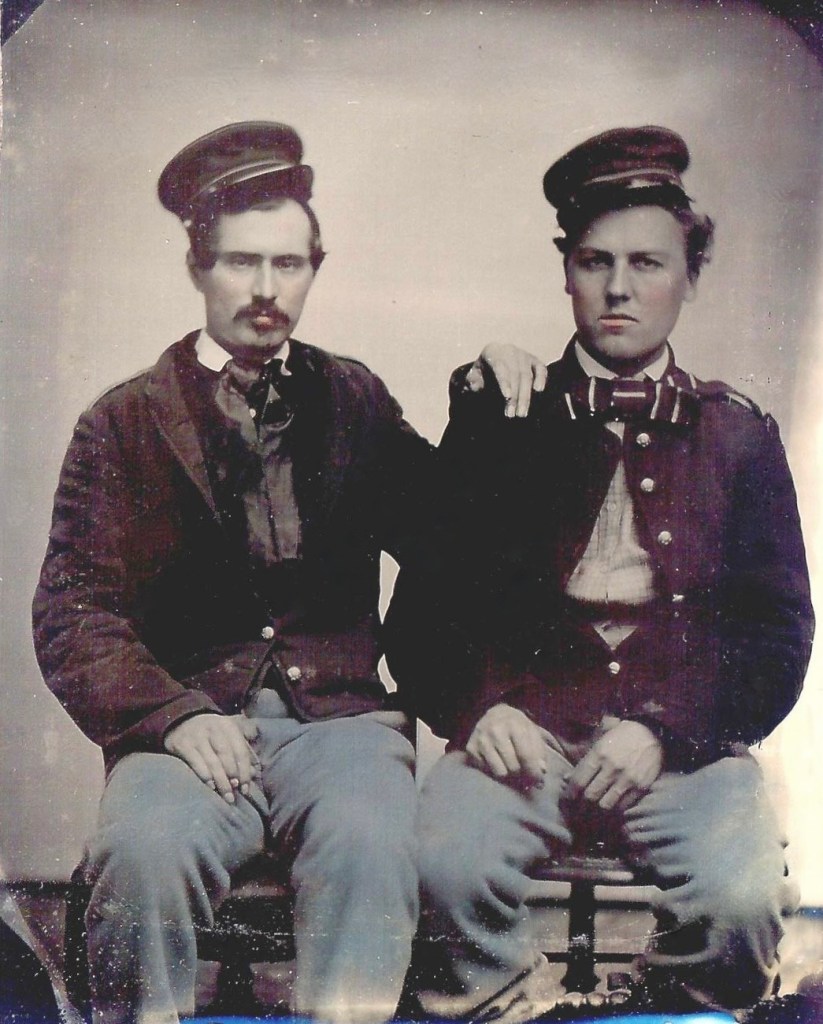
In this tintype Josiah Goodwin (l) sits with a companion wearing the distinctive headgear of the Mississippi Marine Brigade. This consisted of a cap made with full round top, broad straight visor, and a broad green band trimmed with gold lace. The rest of the brigade member’s attire consisted of various army uniforms – reflecting their recruitment from a number of different units. Goodwin served as a musician on the flagship USS Autocrat which was the headquarters for the Mississippi Marine Brigade. The brigade was a U.S. Army unit created to serve the needs of the Ram Fleet. They became controversial due to their seizures of property along the river and were disbanded in August of 1864. (Al Luckenbach Collection)
There are relatively few books on the Mississippi Marine Brigade (MMB). Official records for their activities seem to be lacking and this may be because they were a new branch of service—neither Navy nor Army—and were not compelled at all times to file the same kinds of traditional reports. Lieut. Colonel George E. Curie of the MMB summed it up best when he wrote, “This you see makes us in the military parlance neither Army or Navy, the one or the other, and yet both.”
Readers looking for more material on the MMB may find information from the following published sources:
Ellet’s Brigade. The Strangest Outfit of All, by Chester G. Hearn, 2000. An excellent relatively recent book describing both the Ram Fleet and the MMB.
Warfare Along the Mississippi, The Letters of Lieutenant Colonel George E. Currie, by George E. Currie; edited by Norman E. Clarke, Sr. 1961. Curie was the first officer selected by Capt. Alfred W. Ellet to join the MMB.
Life in the Mississippi Marine Brigade, the Civil War Diary of George Painter, Edited by Beverly Kerr, 2021 Painter was a private in the cavalry aboard one of the MMB’s vessels. Unfortunately his diary entries are cryptic and do not reveal the details of operations that Almon’s diaries do.
MMB: A concise history of the unconventional, untethered and unruly warriors of the Mississippi Marine Brigade, by Paul Rusinoff, Military Images, June 2021. A great recent article summarizing the activities of the Brigade and highlighting a chapter of their history from the one piece of Almon’s diaries that is missing (the diary from mid-April through September 1863).
History of the Ram Fleet and the Mississippi Marine Brigade in the war for the Union on the Mississippi and its tributaries, by Warren D. Crandall and Isaac D. Newell, 1907. In writing his book, Capt. Crandall quoted Almon’s diaries and from one diary in particular which I think Almon may have sent to him which was never returned. In the description of Warren Daniel Crandall’s papers at the Illinois State Historical Library in Springfield are the letters and diaries of several members of the MMB, including the “Letters and Diary” of Almon J. Pierce. It may be that the missing diary is housed in Springfield.
During the fall of 2024, I reached out to Christopher Schnell at the Lincoln Library (repository for the former collections held at the Illinois Historical Library in Springfield). Christopher informed me that there were no diaries of Almon J. Pierce’s within the Crandall collection; however, the log book of the Diana contained handwritten extracts from Pierce’s diary which he agreed to send to me and I intend to transcribe these as I have time. I also enquired about a letter in the Crandall Collection that was supposed to have been written by Pierce, entitled “The Raid Upon Port Gibson and What Caused It.” This three and a half page typed “story” was attached to a cover letter written by Pierce dated 8 December 1899 in which he makes it quite clear he was not author of this story and yet sometime since it has been repeated and attributed. He, in fact, denies any truthfulness in the story. The story claims that the MMB was ordered to “capture and carry back to Vicksburg as prisoners fifty of the most aristocratic Confederate young ladies” of Port Gibson to be held as hostages until they could be exchanged for Northern women school teachers taken prisoners by Confederates. The story was retold recently in the June 2021 issue of the Military Images magazine (see The Mississippi Marine Brigade was a novel Civil War force) and after transcribing Pierce’s diaries, I was left wondering why the episode was not even mentioned, let alone described in great detail as was his custom. To read Pierce’s letter (and scans of it), go to “The Raid Upon Port Gibson.” Since Pierce clearly informed Warren Crandall of the “hostage story” prior to the publication the publication of his book on the Mississippi Marine Brigade in 1907, either Crandall agreed with Pierce that that the story was a wild fabrication or he chose not to include it. I’m inclined to agree with Pierce, “that it’s a huge fake.”
See also previously published letters on Spared & Shared:
Diaries Transcribed & Published on Spared & Shared
(Click on the active link for each diary to go to the transcriptions)
14 September 1862 to 13 October 1862“This book contains just one month of time….There isn’t another one in the company nor the regiment as I can learn that is keeping so extensive & complete an account of daily transactions as myself. There are a few who occasionally make short notes of the most important events only. I don’t think after this that I shall have so much opportunity for writing as I have had but I shall do the best I can. It’s more important I think, or as much so at least, as letter writing.”
14 October 1862 to 26 November 1862“Containing the accounts of our march from Covington to Lexington, Kentucky, & my entry into the hospital at Lexington. The events recorded in this book were written or sketched down generally under trying circumstances & when laboring under oppressive difficulties. The fore part contains the occurrences attending the march & was for the most part written late at night by the campfire or early in the morn, or sometimes I would snatch a few moments of leisure in the day. Then after the 1st f November, I continued the task under the disadvantage of disability. Here I ran up a big batch of sketching.”
1 February 1863 to 6 March 1863“This book is peculiarly interesting as it contains the account of my exit from the hospital where I had been confined for over three months & my introduction into the “Marine Service,” there to lead an altogether new & different life, form new acquaintances & associations, & behold sights and scenes never before conjectured. I think I may safely say it has proved more advantageous to me in more ways than one.”
Other images of members in The Mississippi Marine Brigade
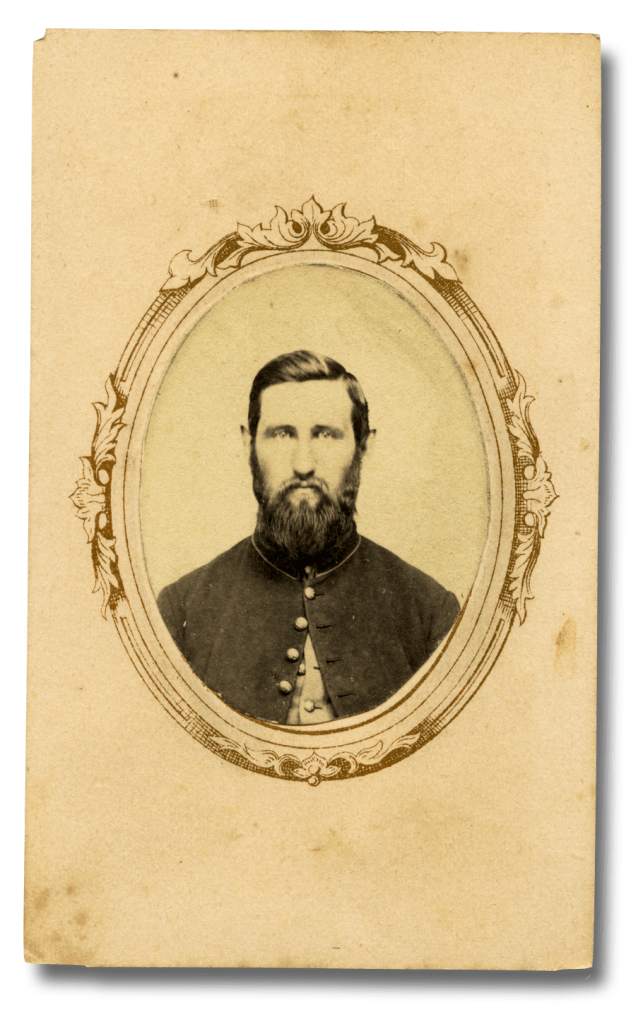
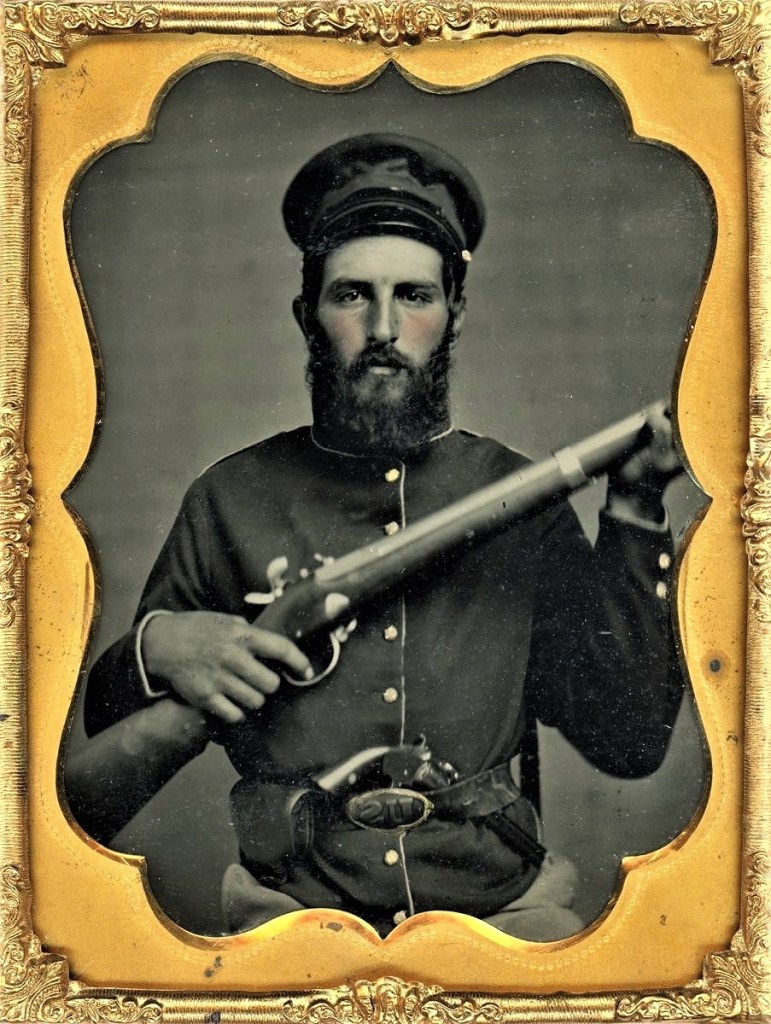
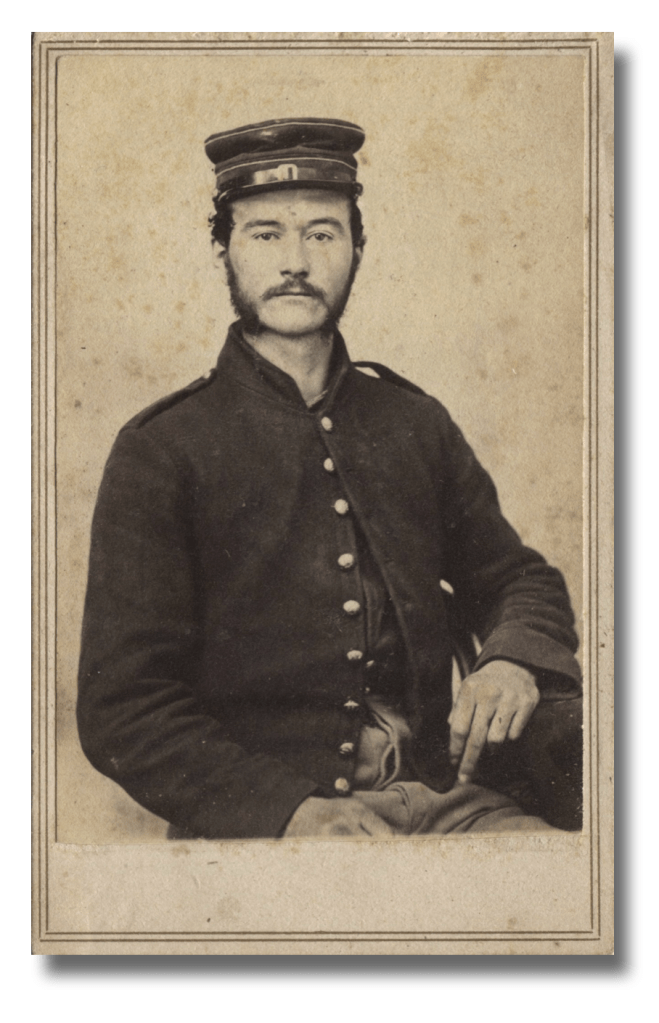
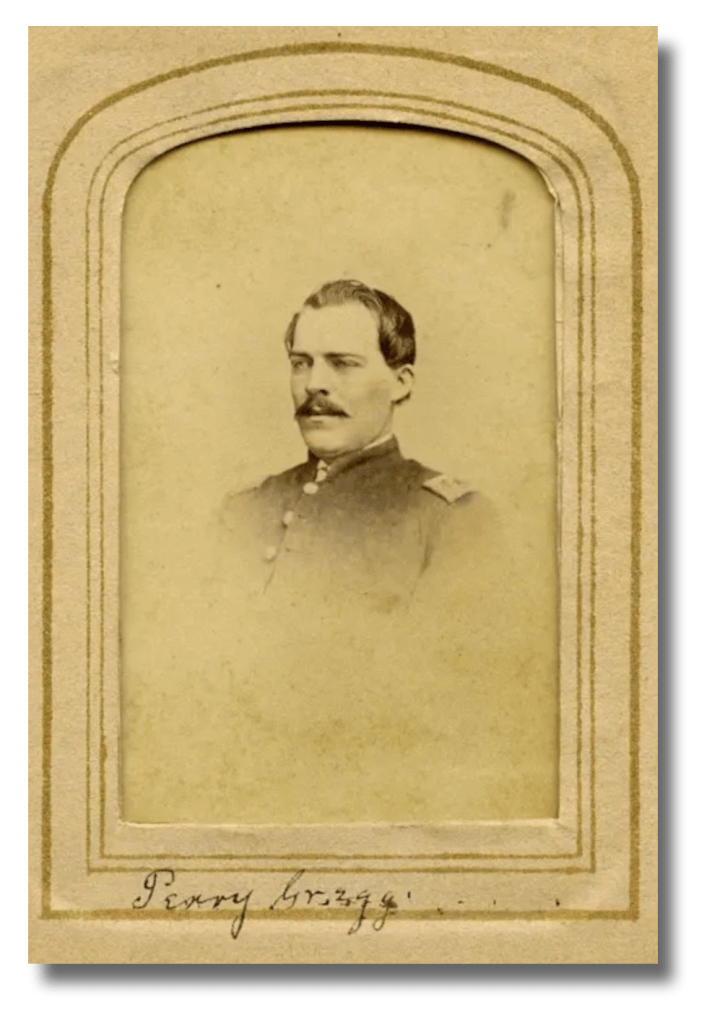
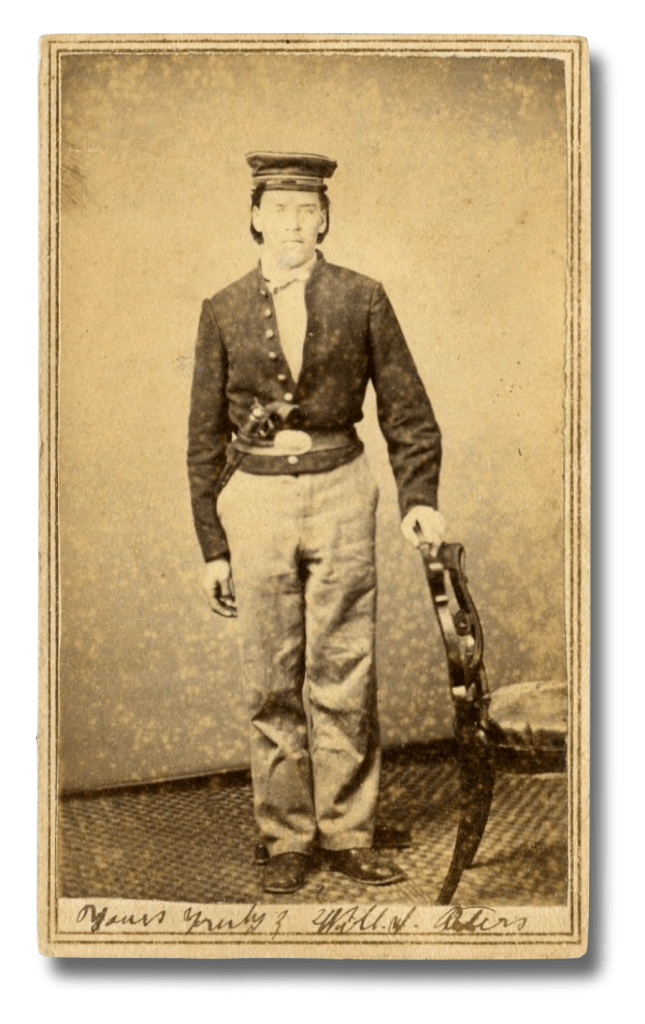
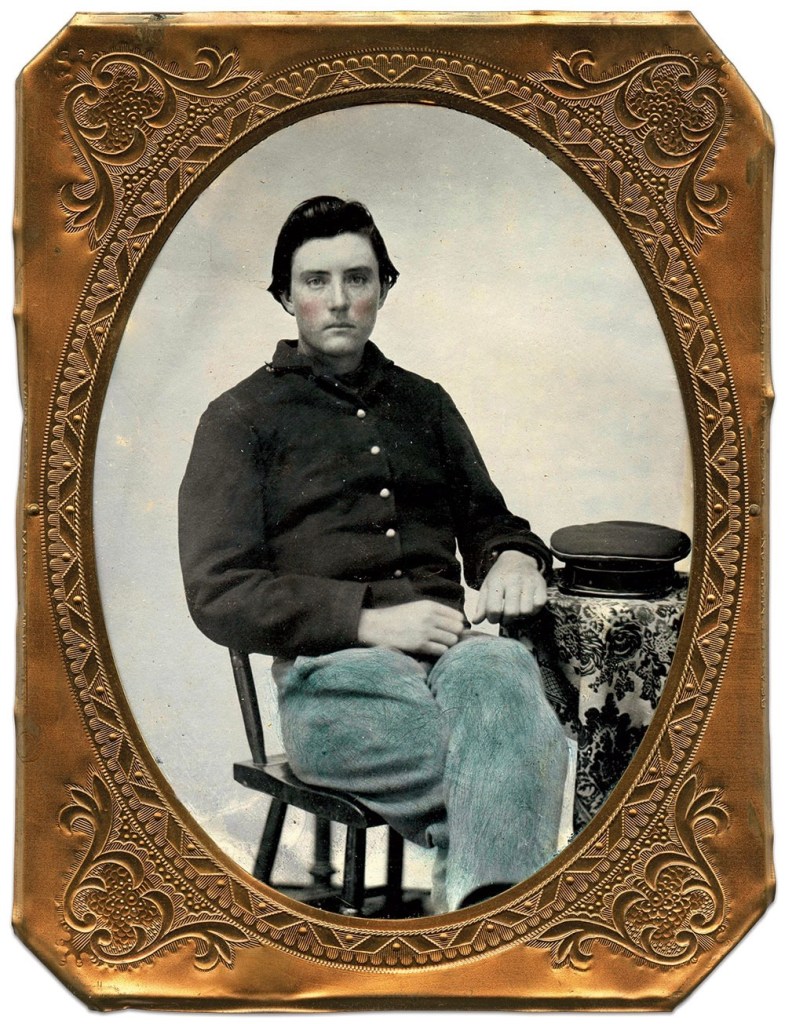
Two unidentified member of the MMB, believed to be descended from the Brown Family in Missouri. (Dennis Hood Collection)James M. VanCamp of Branch Co., MI. Co. B, 11th Michigan; later in Co. E, 1st Mounted Infantry, MMB.(Dale Niesen Collection)Wellington Peck, Co. E, 1st Mounted Infantry, MMB. (Dennis Hood Collection)Possibly a member of MMB. (Sara Thompson Collection)Possibly a member of the MMB. (Dan Binder Collection)An unidentified member of the Mississippi Marine Brigade(Chris Magewick Collection)Capt. John R. Crandall, Co. A, 1st Battalion Cavalry, MMB. (Dennis Hood Collection)Lt. Perry Gregg, Co. A, 1st Battalion Cavalry, MMB (Dennis Hood Collection)Capt. Oscar F. Brown, Co. E, 1st Mounted Infantry, MMB.William Peters, Co. D, 1st Battalion Cavalry, MMB (Lawrence T. Jones III Collection)Three CDV’s of Hiram G. Parker of Jacksonville, Illinois, who served in Co. B, 10th Illinois Infantry, and then in Co. B, Cavalry, MMB; served on the Baltic & Autocrat. (Cowan’s Auctions)
An unidentified member of the Mississippi Marine Brigade, or Ellet’s Brigade (Paul Russinoff Collection)









 Spared & Shared 23